
Nursing Care Of the hospitalized child By Barbara
Nursing Care Of the hospitalized child By: Barbara Willard ND, MNS, RN Edited & Presented by: Pat Braun, RN, MSN
SLO’s n n n Evaluate nursing care of the hospitalized child. Compare and contrast physical assessment of the infant, toddler, and child and adolescent Differentiate stressors for pediatric patients from each other and those of an adult Analyze separation anxiety Differentiate between pediatric expressions of pain and adult expression of pain
Stress n Is when individuals perceive that they can not cope with demands being made on them or with threats to there well-being n Things are only stressful if the person believes they are a stressor n What is stressful to one person may not be stressful to another
Effects on health If stress is excessive or prolonged it can be maladaptive and lead to harm or disease Stress can effect cognitive function Chronic and intense stress can effect brain structure and function ◦ Hippocampus atrophy memory impairments Long term exposure to catecholamine's can ◦ increase cardiovascular disease ◦ Aggravate migraine headaches, IBS, peptic ulcers ◦ Control of diabetes can be affected by stress
Coping n Cognitive and behavioral efforts to manage stress that seems to exceed available resources n Emotional Focused n Problem Focused
Hospitalization of the child n The act of putting a child in the hospital adds stress to a child already coping with illness. n With hospitalization comes a – change from the usual state of health – Change in routine
Stressors of Hospitalization n Separation from family n Change of environment n Loss of control n Bodily injury and pain
Risk Factors That Increase Vulnerability to Stressors of Hospitalization n “Difficult” temperament n Lack of fit between child and parent n Age (especially from 6 months to 5 years) n Male gender n Below-average intelligence n Multiple and continuing stresses (e. g. , frequent hospitalizations)
Changes in the Pediatric Population n More serious and complex problems n Fragile newborns n Children with severe injuries n Children with disabilities who have survived because of increased technologic advances n More frequent and lengthy stays in hospital
Infants and Toddlers Parent child relationship is disturbed n Change in routine promotes distrust n Separation anxiety (6 to 30 months) n – Protest phase § Cry and scream, cling to parent – Despair phase § Crying stops; evidence of depression – Detachment phase § Denial; resignation, not contentment § May seriously affect attachment to parent after separation
Separation anxiety n Nursing Interventions – – – Preserve trust Reassure child parents will return Provide place for parent to stay in hospital to promote attachment Have parents leave personal articles with child (pictures, toys, cloths etc. ) Maintain pre-hospital routines and rituals when possible. Return control to parent and child by providing choices.
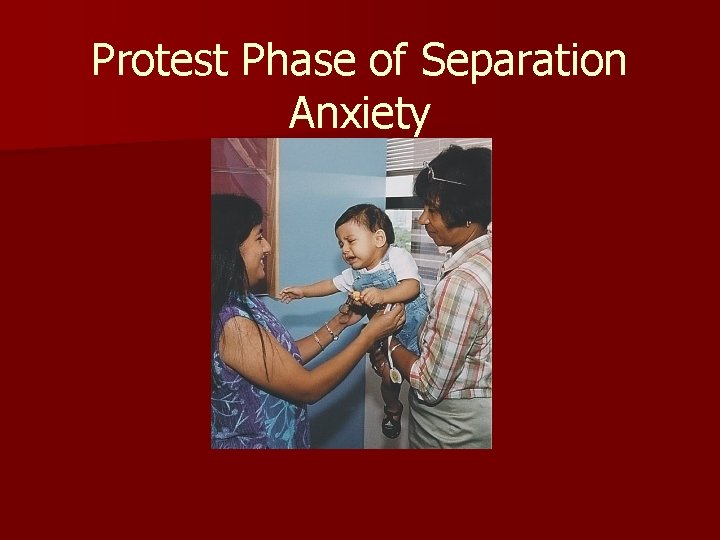
Protest Phase of Separation Anxiety
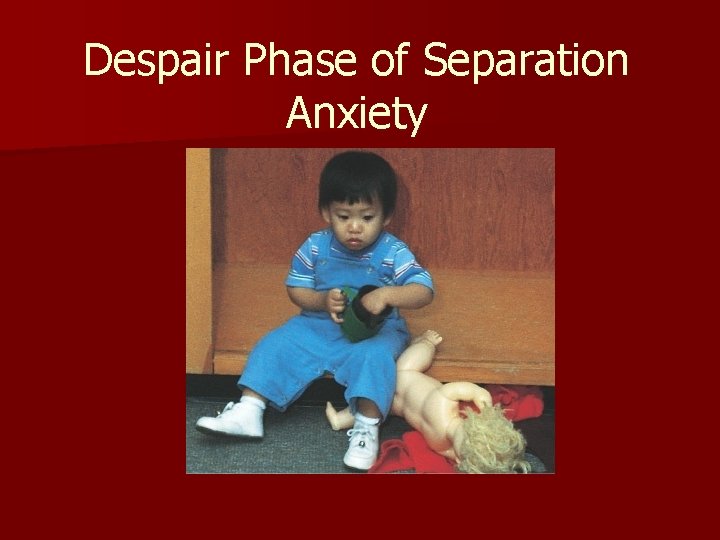
Despair Phase of Separation Anxiety
Loss of Control: Infants’ Needs n Trust n Consistent loving caregivers n Daily routines
Loss of Control: Toddlers’ Needs n Autonomy n Daily routines and rituals n Loss of control may contribute to: – Regression of behavior – Negativity – Temper tantrums
Young Infant’s Response to Pain n Generalized n Loud response of rigidity, thrashing crying n Facial expressions of pain (grimace) n No understanding of relationship between stimuli and subsequent pain
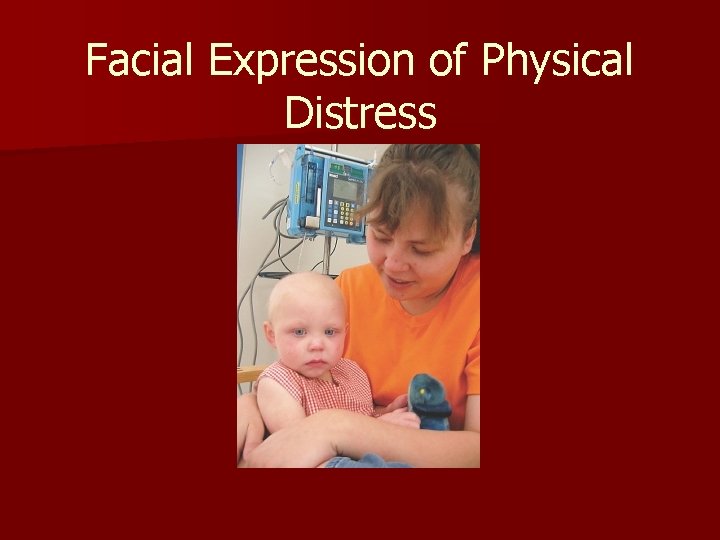
Facial Expression of Physical Distress
Older Infant’s Response to Pain n Withdrawal n Loud from painful stimulus crying n Facial grimace n Physical resistance
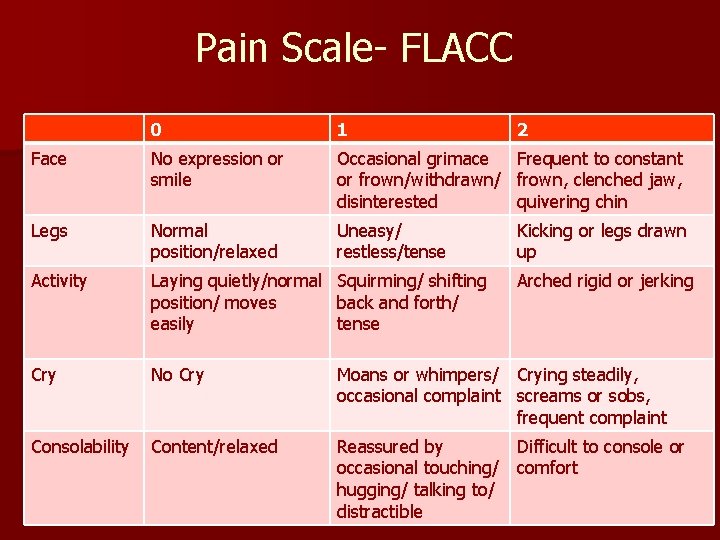
Pain Scale- FLACC 0 1 2 Face No expression or smile Occasional grimace Frequent to constant or frown/withdrawn/ frown, clenched jaw, disinterested quivering chin Legs Normal position/relaxed Uneasy/ restless/tense Activity Laying quietly/normal Squirming/ shifting position/ moves back and forth/ easily tense Cry No Cry Moans or whimpers/ Crying steadily, occasional complaint screams or sobs, frequent complaint Consolability Content/relaxed Reassured by occasional touching/ hugging/ talking to/ distractible Kicking or legs drawn up Arched rigid or jerking Difficult to console or comfort
Infants and Toddlers n Regression- common in toddlers and young children
Preschooler n Fear mutilation n Egocentric, present oriented n Sees illness as punishment n Separation anxiety still exists n May show signs of regression
Loss of Control: Preschoolers n Egocentric and magical thinking typical of age n May view illness or hospitalization as punishment for misdeeds n Preoperational thought
Preschooler nursing interventions n Encourage parents to participate in care n Give simple explanations n Provide therapeutic play n Allow child to play with equipment n Praise the child, give rewards (stickers)
Young Child’s Response to Pain n Loud crying, screaming n Verbalizations: “Ow, ” “Ouch, ” “It hurts” n Thrashing of limbs n Attempts to push away stimulus n May deny pain for fear of an injection n Often can describe location and intensity of pain
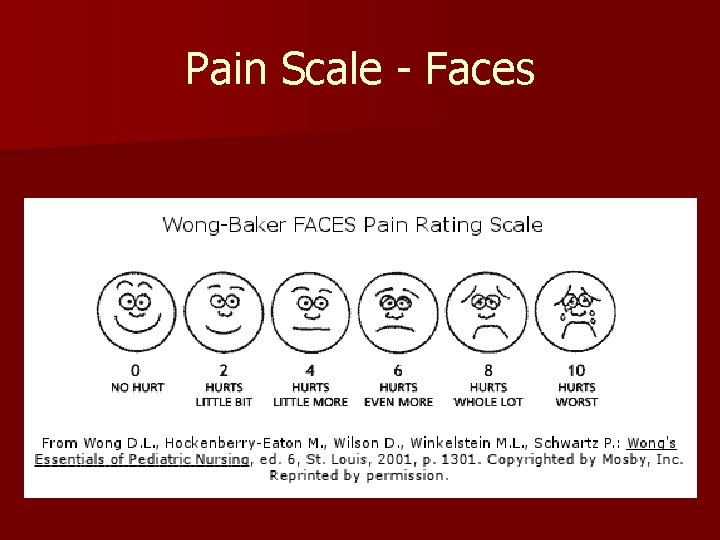
Pain Scale - Faces
Preventing or Minimizing Separation n Primary nursing goal n Especially for children younger than 5 years n Family-centered care n Parents are not “visitors” n Familiar items from home
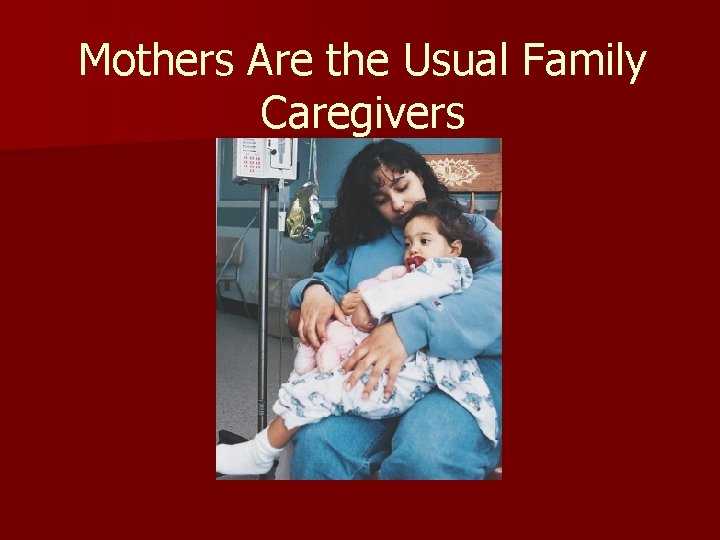
Mothers Are the Usual Family Caregivers
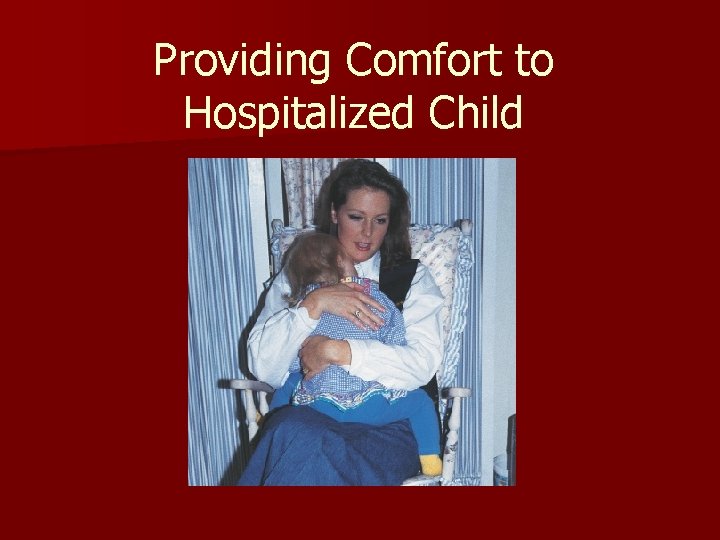
Providing Comfort to Hospitalized Child
School-age n Fear: Pain, bodily injury and loss of control n Fears are often related to school peers and family n Will ask relevant questions and want to know reasons for tests etc. n Have a more realistic understanding of there disease n Become stressed over separation from family and peers.
School age child n Vulnerable to events that lessen their feelings of control and power n Hospital activities that limit control may be a direct threat to children’s security n Allow children to exert control whenever possible n Boredom is a big problem with hospitalized children
Interventions n Communicate openly, explain rules n Clarify misconceptions n Encourage self care n Allow peers and siblings to visit n Age appropriate therapeutic play n Provide explanations; use visual aids n Praise child, focus on behavior
Pain n Able to describe pain n Become concerned with disability and death n May bite, kick, cry when in pain n Stalling behavior (“wait a minute”) n Muscle rigidity n May use all behaviors of young child
Adolescents n Fear: Loss of independence, loss of identity, body image disturbance, rejection by others n Separation from peers is a source of anxiety n Physical appearance is of great importance n May be reluctant to ask questions, may fear being lied to, may verify information from multiple sources to be sure others are being truthful n Often feel they are “invincible” which puts them at risk for noncompliance and risk taking behaviors
Loss of Control: Adolescents n Struggle for independence and liberation n Separation from peer group n May respond with anger, frustration n Need for information about their condition
Adolescent n Less vocal protest, less motor activity n Increased muscle tension and body control n More verbalizations (“It hurts, ” “You’re hurting me”)
Interventions n Involve adolescent in plan of care n Support relationship with family and peers n Provide consistent and truthful explanations n Accept emotional outbursts n Promote communication between adolescent and family
Family n Hospitalizing a child adds stress and anxiety to the entire nuclear family including: – Parents – Siblings n. A child being hospitalized may also change family Roles
Parental Responses to Stressors of Hospitalization n Disbelief, anger, guilt – Especially if sudden illness n Fear, anxiety – Related to child’s pain, seriousness of illness n Frustration – Especially related to need for information n Depression
Sibling Reactions n Loneliness, fear, worry n Anger, resentment, jealousy n Guilt
Altered Family Roles n Anger and jealousy between siblings and ill child n Ill child obligated to play sick role n Parents continue pattern of overprotection and indulgent attention
What We Can Do For Child n Prevent or minimize separation – Parent Participation, minimize effects of separation n Minimize loss of control – Promote free movement, Maintain routine, encourage independence Prevent or minimize Bodily Injury n Provide Developmental Activities n Use Play to Decrease Stress n Maximize Benefits of hospitalization n
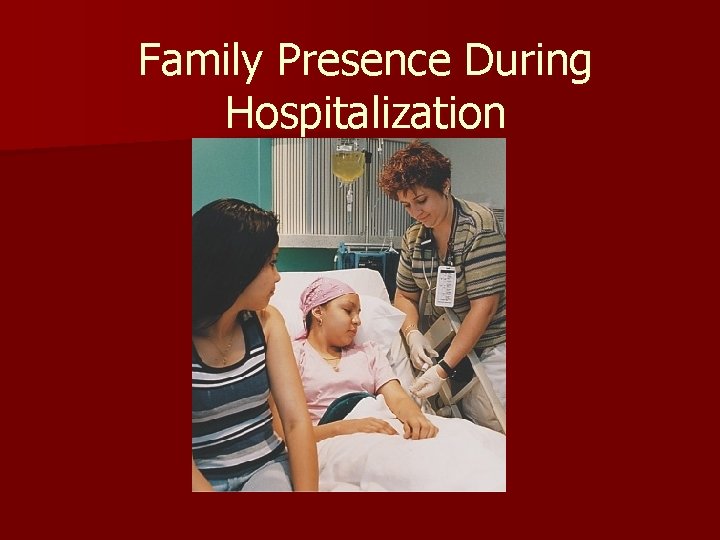
Family Presence During Hospitalization
Providing Developmentally Appropriate Activities n Using stress play/expressive activities to minimize – Divisional activities – Toys – Expressive activities – Play therapy – Dramatic play
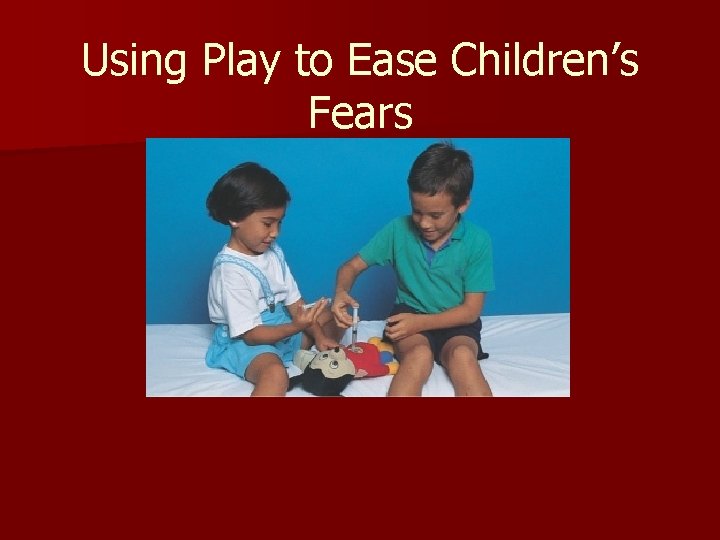
Using Play to Ease Children’s Fears
“Normalizing” the Hospital Environment n Promote freedom of achievement n Maintain child’s routine, if possible n Time structuring n Self-care (age appropriate) n Schoolwork n Friends and visitors
Maximizing Potential Benefits of Hospitalization n Fostering parent-child relationships n Providing educational opportunities n Promoting self-mastery n Providing socialization n Supporting family members
What we Can do for Family n Family centered care n Provide information
Assessment Techniques n Newborn n Infant n Toddler n Preschool n School age n Adolescent
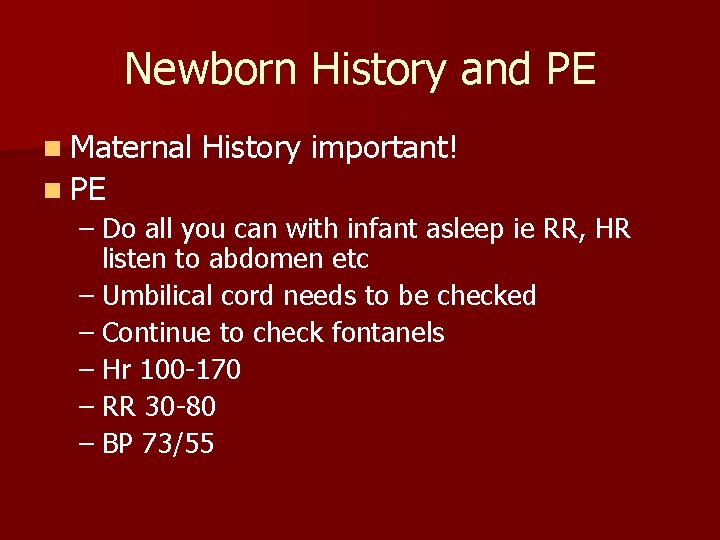
Newborn History and PE n Maternal History important! n PE – Do all you can with infant asleep ie RR, HR listen to abdomen etc – Umbilical cord needs to be checked – Continue to check fontanels – Hr 100 -170 – RR 30 -80 – BP 73/55
Infant History and PE n Maternal history and birth process still addressed n All History from mother n Continue to assess all possible while infant is asleep n Play with older infants n May be more comfortable being assessed in mothers arms
Toddler History and PE n n n n Maternal and birth history continue to be important Establish relationship with mom before trying to talk to child Allow child to play with equipment prior to use if possible Do not separate child from parent! May play with toddlers Allow parent to help when possible with assessment (may need mom to move stethoscope around chest) Stranger/ separation anxiety!!!!
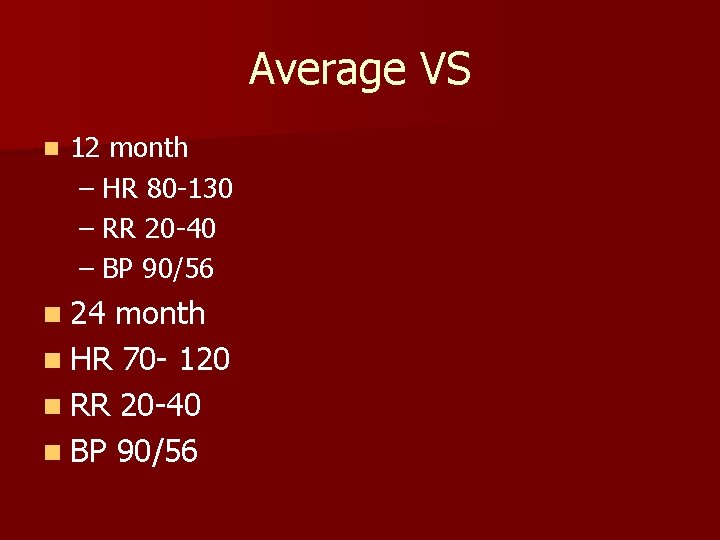
Average VS n 12 month – HR 80 -130 – RR 20 -40 – BP 90/56 n 24 month n HR 70 - 120 n RR 20 -40 n BP 90/56
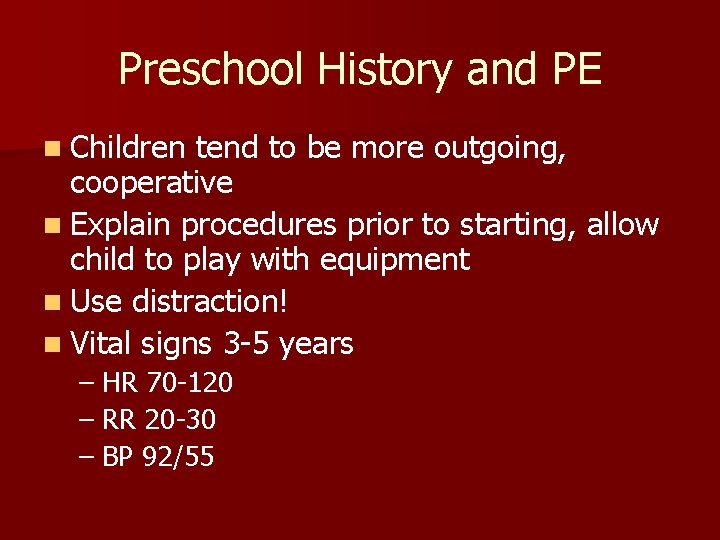
Preschool History and PE n Children tend to be more outgoing, cooperative n Explain procedures prior to starting, allow child to play with equipment n Use distraction! n Vital signs 3 -5 years – HR 70 -120 – RR 20 -30 – BP 92/55
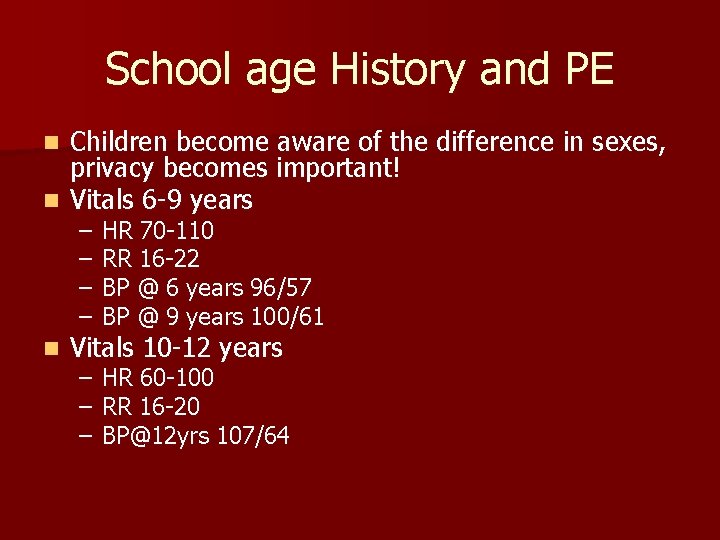
School age History and PE Children become aware of the difference in sexes, privacy becomes important! n Vitals 6 -9 years n n – – HR 70 -110 RR 16 -22 BP @ 6 years 96/57 BP @ 9 years 100/61 – – – HR 60 -100 RR 16 -20 BP@12 yrs 107/64 Vitals 10 -12 years
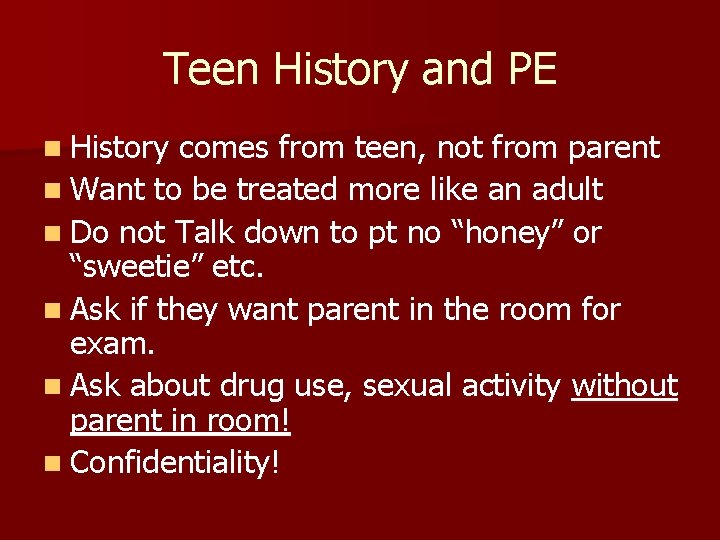
Teen History and PE n History comes from teen, not from parent n Want to be treated more like an adult n Do not Talk down to pt no “honey” or “sweetie” etc. n Ask if they want parent in the room for exam. n Ask about drug use, sexual activity without parent in room! n Confidentiality!
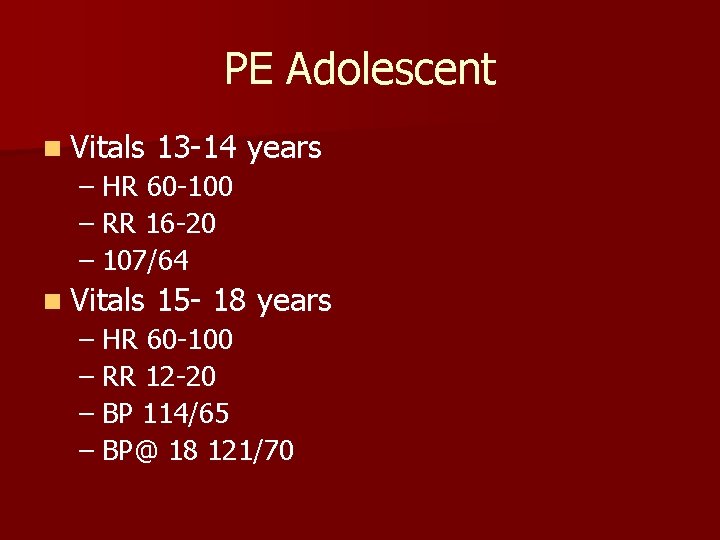
PE Adolescent n Vitals 13 -14 years – HR 60 -100 – RR 16 -20 – 107/64 n Vitals 15 - 18 years – HR 60 -100 – RR 12 -20 – BP 114/65 – BP@ 18 121/70
General Hygiene and Care n Skin care – Bathing n Oral hygiene n Hair care n Feeding n Temperature management

Supporting Infant During Tub Bath
Safety n Name bands n Patient identity n Environment n Activity supervision n Hugs tags
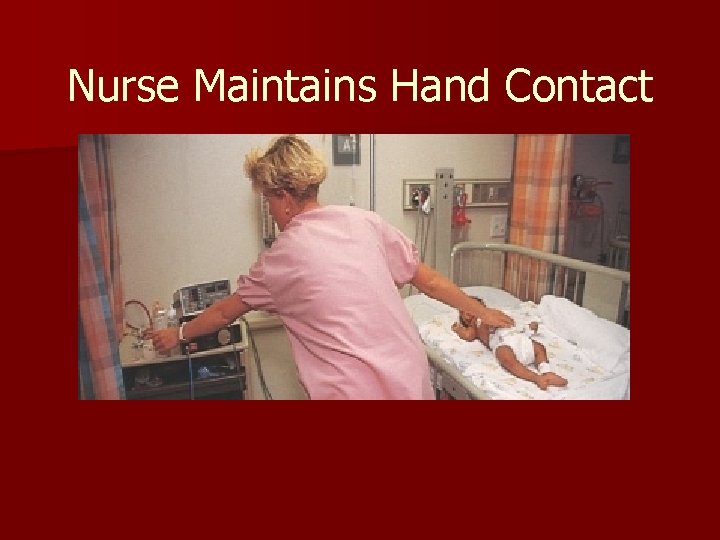
Nurse Maintains Hand Contact
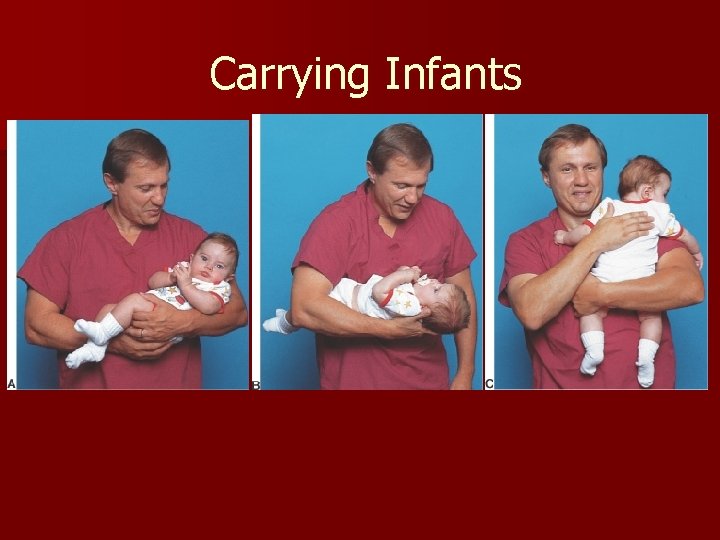
Carrying Infants
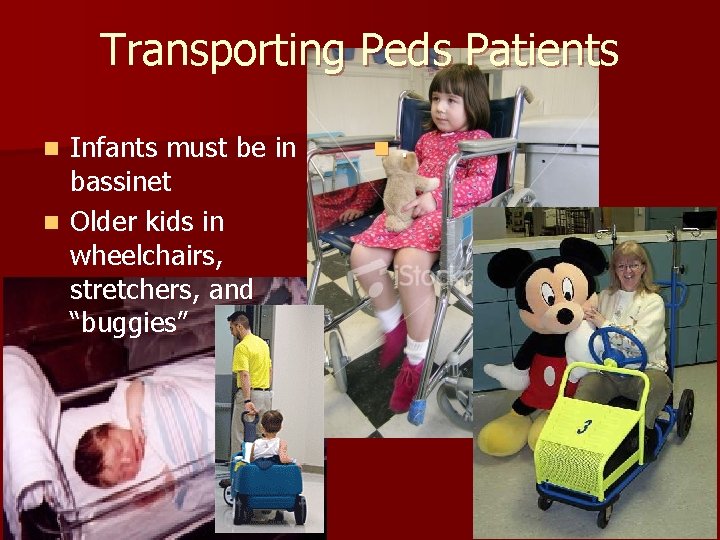
Transporting Peds Patients Infants must be in bassinet n Older kids in wheelchairs, stretchers, and “buggies” n n .
Restraining Methods n n Therapeutic hugging Mummy or swaddle restraint Limb restraints Papoose board

Therapeutic Hugging for Extremity Vein Puncture
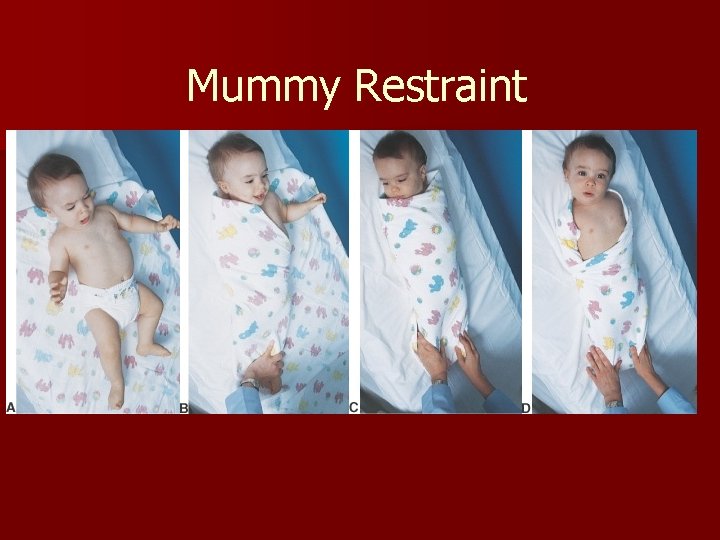
Mummy Restraint
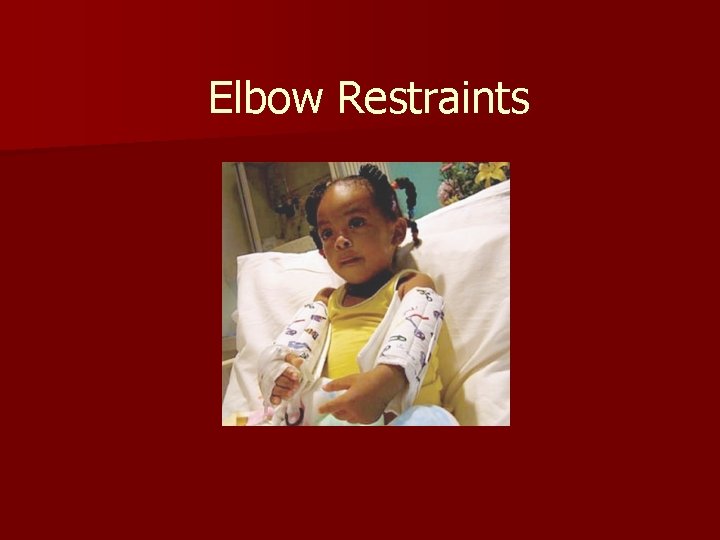
Elbow Restraints
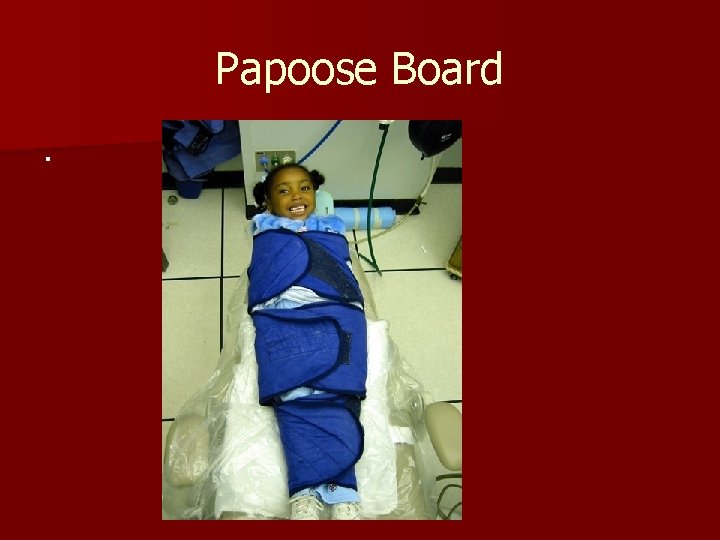
Papoose Board.
SPECIMEN COLLECTION n Urine n Stool n Blood n Sputum
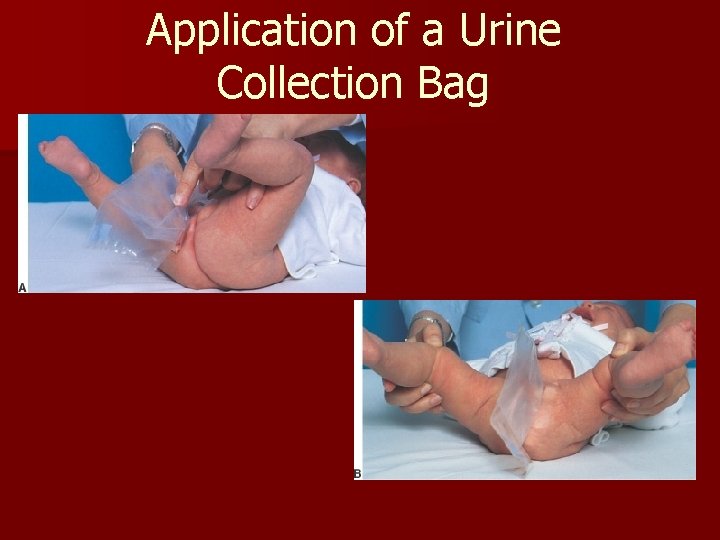
Application of a Urine Collection Bag
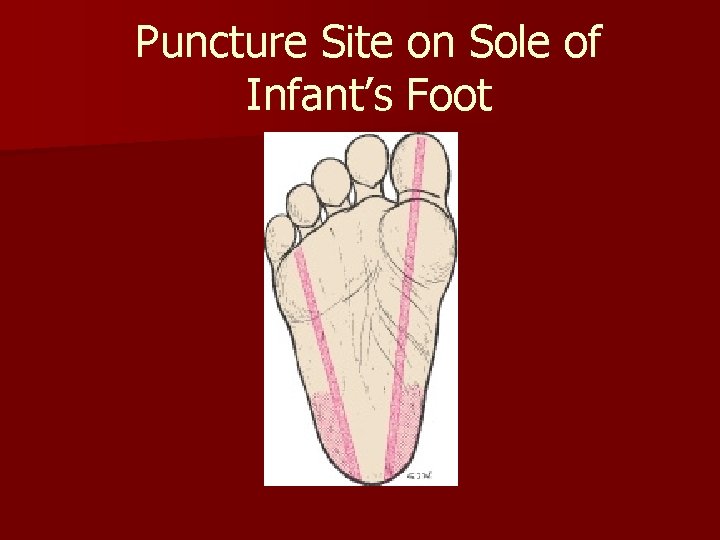
Puncture Site on Sole of Infant’s Foot
The End
References Hockenberry, M. J. , Wilson, D. , (2015) Wong’s Nursing Care of Infants and Children 10 th Edition. Mosby, St Louis MO. n Hogan, M. A. , White, J. E. , Falkenstein, K. , Brancato, V. , (2007) Child Health Nursing Reviews & Rationales 2 nd Edition. Prentice Hall, Upper Saddle River, NJ. n Johns Hopkins Hospital (2005) The Harriet Lane Handbook 7 th Edition. Mosby Philadelphia PA. n Wilson, D. , Hockenberry, M. J. , (2008) Wong’s Clinical Manual of Pediatric Nursing 7 th Edition. Mosby, St Louis MO. n
- Slides: 72