Intrauterine Infections Justin Sanders MD Dept Family and
- Slides: 24
Intrauterine Infections Justin Sanders MD Dept. Family and Social Medicine Albert Einstein College of Medicine June 25, 2009
Case 34 G 6 P 1041 GBS+ at 40 1/7 weeks Pt receiving intrapartum PCN Prolonged labor augmented with Pitocin Pain control with epidural MD notices pt feels warm at the time of delivery Temp 101. 5 F
Objectives Define Intrauterine Infection Diagnosis Differential Diagnosis for peripartum fever Epidemiology Risk factors Etiology/Pathophysiology Sequelae Prevention Management
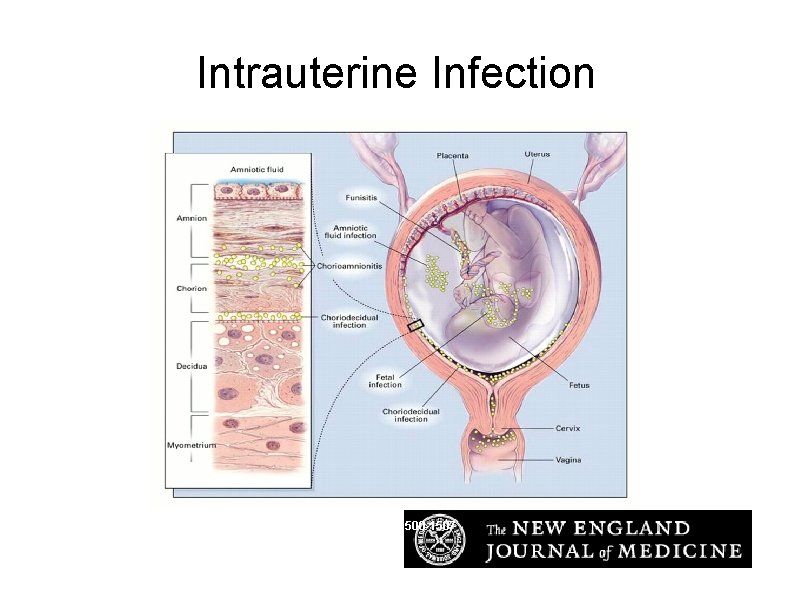
Intrauterine Infection Puerperal infection – can be defined clinically or histopathologically. Can be found in subclinical form Includes infection of amniotic fluid, fetal membranes, placenta and/or decidua Often referred to generally as chorioamnionitis or “chorio” Also includes deciduitis, villitis (placental villi), and funisitis (umbilical cord)
Potential Sites of Bacterial Infection within the Uterus Intrauterine Infection Goldenberg R et al. N Engl J Med 2000; 342: 1500 -1507
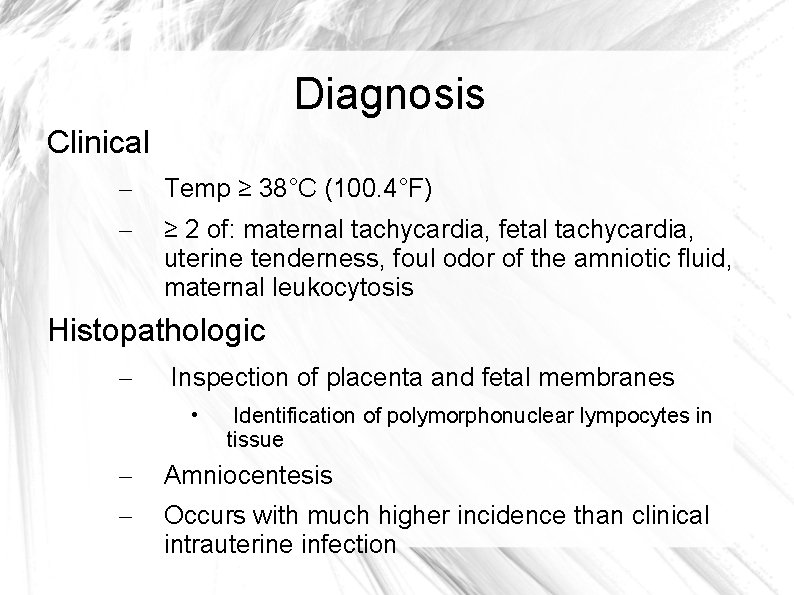
Diagnosis Clinical – Temp ≥ 38°C (100. 4°F) – ≥ 2 of: maternal tachycardia, fetal tachycardia, uterine tenderness, foul odor of the amniotic fluid, maternal leukocytosis Histopathologic – Inspection of placenta and fetal membranes • Identification of polymorphonuclear lympocytes in tissue – Amniocentesis – Occurs with much higher incidence than clinical intrauterine infection
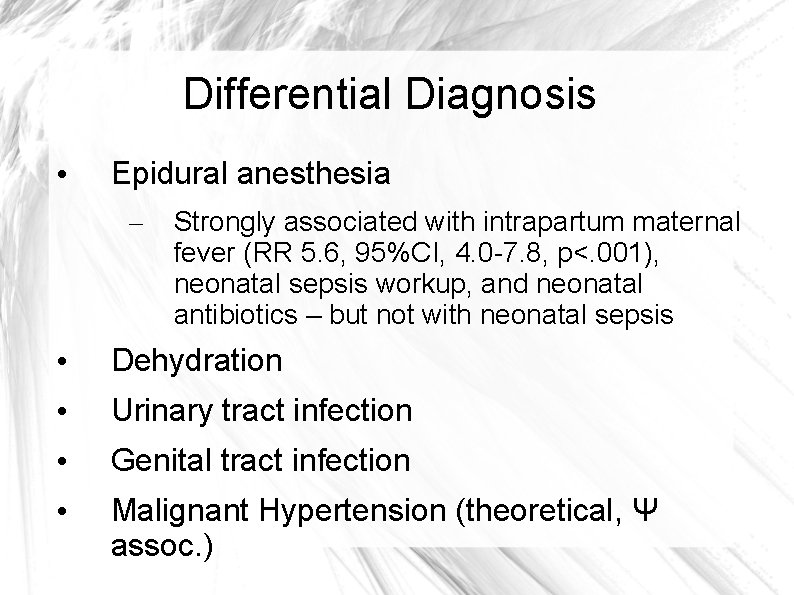
Differential Diagnosis • Epidural anesthesia – Strongly associated with intrapartum maternal fever (RR 5. 6, 95%CI, 4. 0 -7. 8, p<. 001), neonatal sepsis workup, and neonatal antibiotics – but not with neonatal sepsis • Dehydration • Urinary tract infection • Genital tract infection • Malignant Hypertension (theoretical, Ψ assoc. )
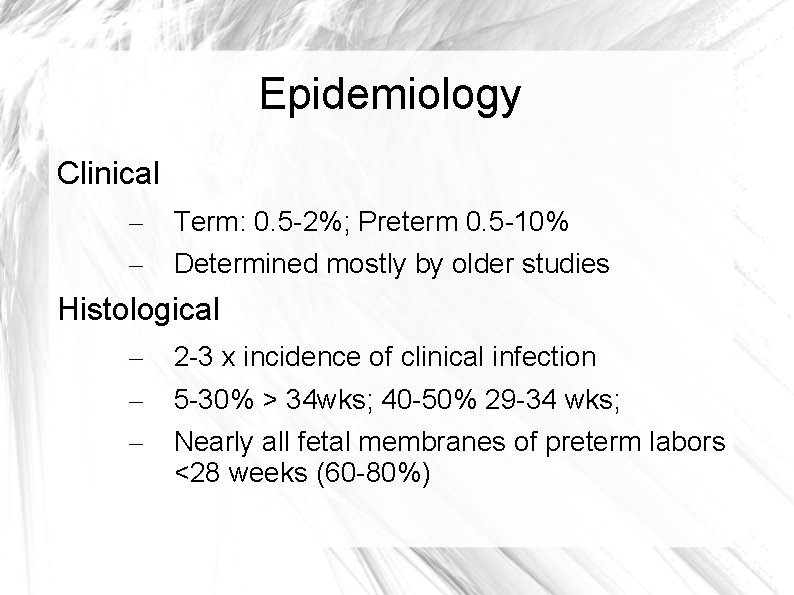
Epidemiology Clinical – – Term: 0. 5 -2%; Preterm 0. 5 -10% Determined mostly by older studies Histological – – – 2 -3 x incidence of clinical infection 5 -30% > 34 wks; 40 -50% 29 -34 wks; Nearly all fetal membranes of preterm labors <28 weeks (60 -80%)
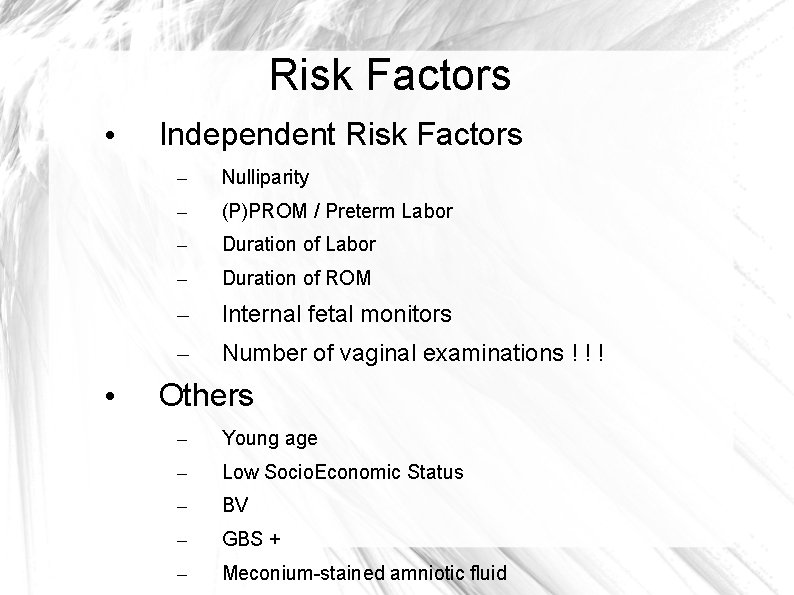
Risk Factors • • Independent Risk Factors – Nulliparity – (P)PROM / Preterm Labor – Duration of ROM – Internal fetal monitors – Number of vaginal examinations ! ! ! Others – Young age – Low Socio. Economic Status – BV – GBS + – Meconium-stained amniotic fluid
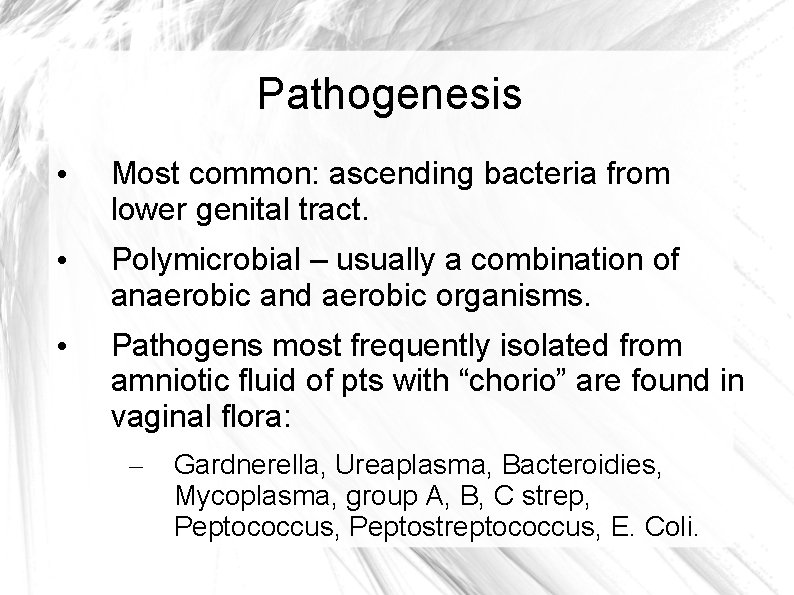
Pathogenesis • Most common: ascending bacteria from lower genital tract. • Polymicrobial – usually a combination of anaerobic and aerobic organisms. • Pathogens most frequently isolated from amniotic fluid of pts with “chorio” are found in vaginal flora: – Gardnerella, Ureaplasma, Bacteroidies, Mycoplasma, group A, B, C strep, Peptococcus, Peptostreptococcus, E. Coli.
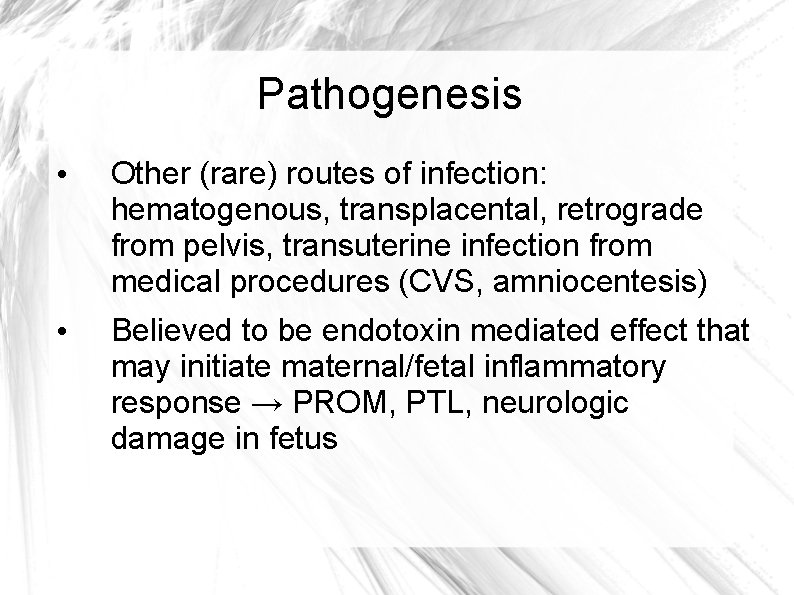
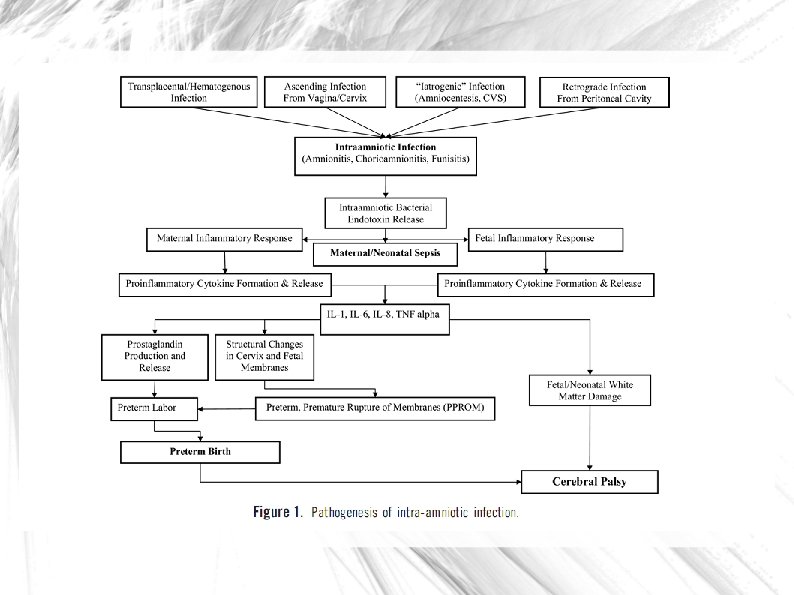
Pathogenesis • Other (rare) routes of infection: hematogenous, transplacental, retrograde from pelvis, transuterine infection from medical procedures (CVS, amniocentesis) • Believed to be endotoxin mediated effect that may initiate maternal/fetal inflammatory response → PROM, PTL, neurologic damage in fetus
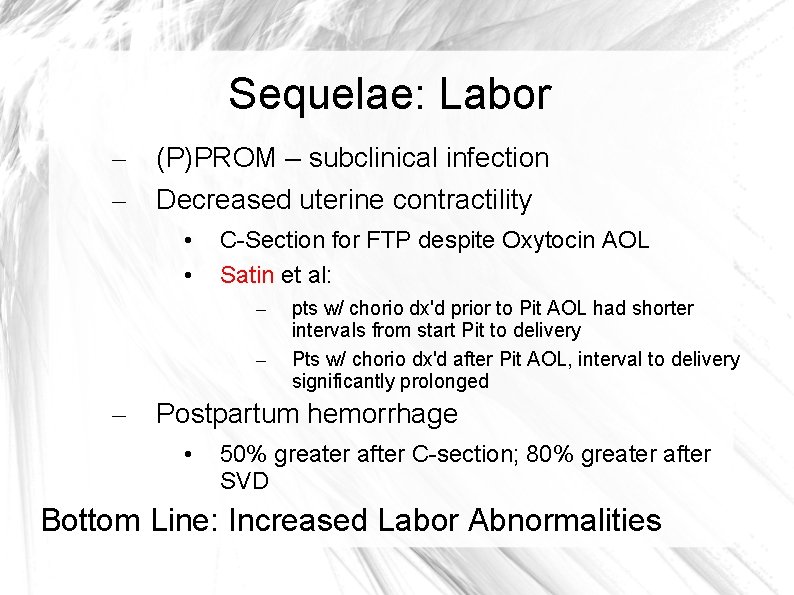
Sequelae: Labor – – (P)PROM – subclinical infection Decreased uterine contractility • • C-Section for FTP despite Oxytocin AOL Satin et al: – – – pts w/ chorio dx'd prior to Pit AOL had shorter intervals from start Pit to delivery Pts w/ chorio dx'd after Pit AOL, interval to delivery significantly prolonged Postpartum hemorrhage • 50% greater after C-section; 80% greater after SVD Bottom Line: Increased Labor Abnormalities
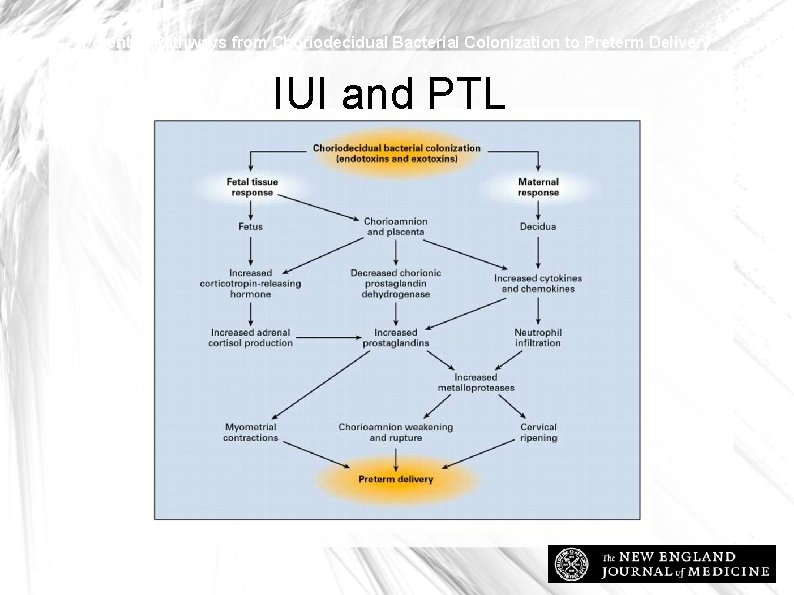
Potential Pathways from Choriodecidual Bacterial Colonization to Preterm Delivery IUI and PTL Goldenberg R et al. N Engl J Med 2000; 342: 1500 -1507
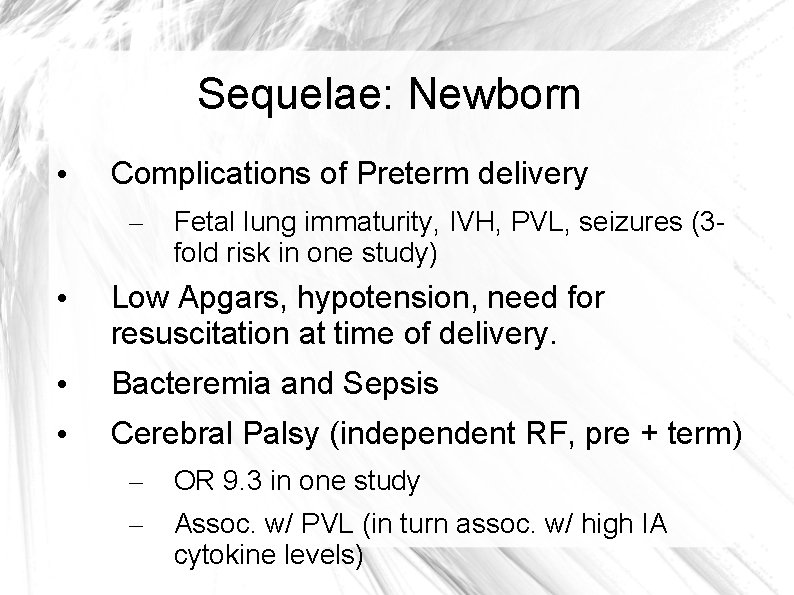
Sequelae: Newborn • Complications of Preterm delivery – Fetal lung immaturity, IVH, PVL, seizures (3 fold risk in one study) • Low Apgars, hypotension, need for resuscitation at time of delivery. • Bacteremia and Sepsis • Cerebral Palsy (independent RF, pre + term) – – OR 9. 3 in one study Assoc. w/ PVL (in turn assoc. w/ high IA cytokine levels)
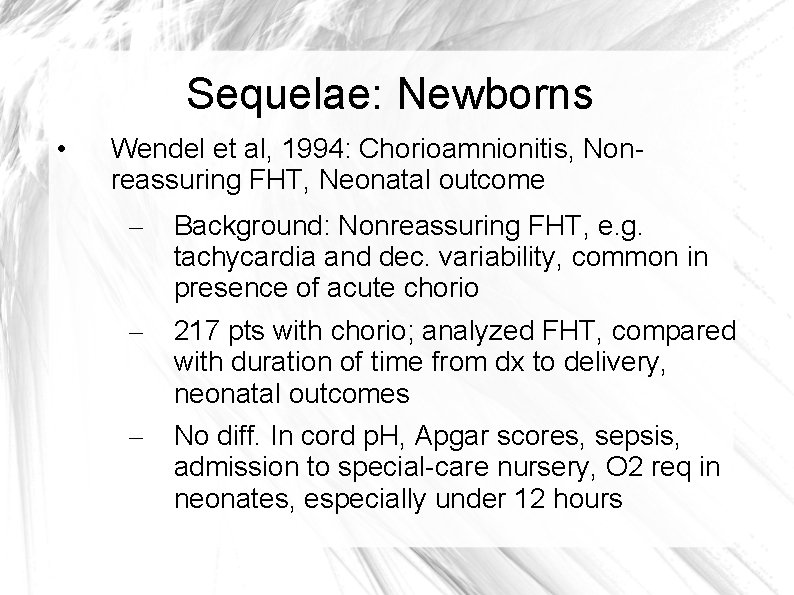
Sequelae: Newborns • Wendel et al, 1994: Chorioamnionitis, Nonreassuring FHT, Neonatal outcome – Background: Nonreassuring FHT, e. g. tachycardia and dec. variability, common in presence of acute chorio – 217 pts with chorio; analyzed FHT, compared with duration of time from dx to delivery, neonatal outcomes – No diff. In cord p. H, Apgar scores, sepsis, admission to special-care nursery, O 2 req in neonates, especially under 12 hours
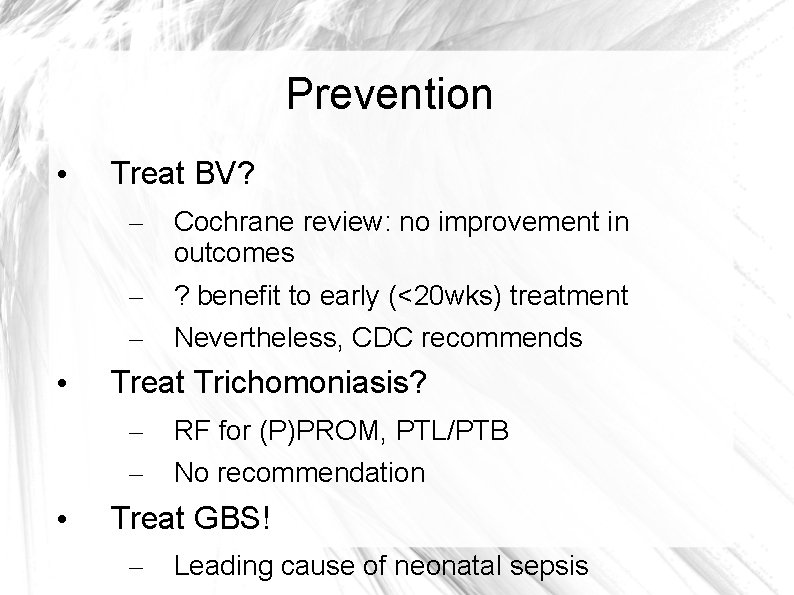
Prevention • • Treat BV? – Cochrane review: no improvement in outcomes – – ? benefit to early (<20 wks) treatment Treat Trichomoniasis? – – • Nevertheless, CDC recommends RF for (P)PROM, PTL/PTB No recommendation Treat GBS! – Leading cause of neonatal sepsis
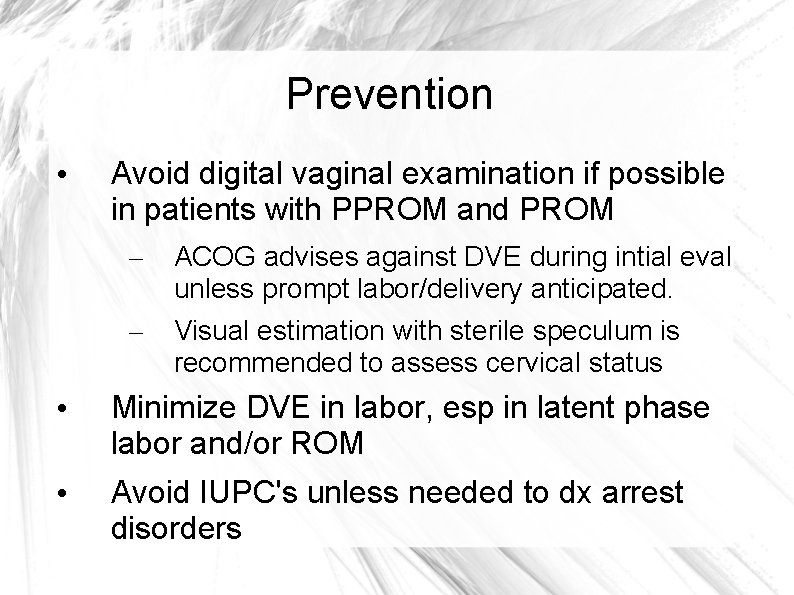
Prevention • Avoid digital vaginal examination if possible in patients with PPROM and PROM – ACOG advises against DVE during intial eval unless prompt labor/delivery anticipated. – Visual estimation with sterile speculum is recommended to assess cervical status • Minimize DVE in labor, esp in latent phase labor and/or ROM • Avoid IUPC's unless needed to dx arrest disorders
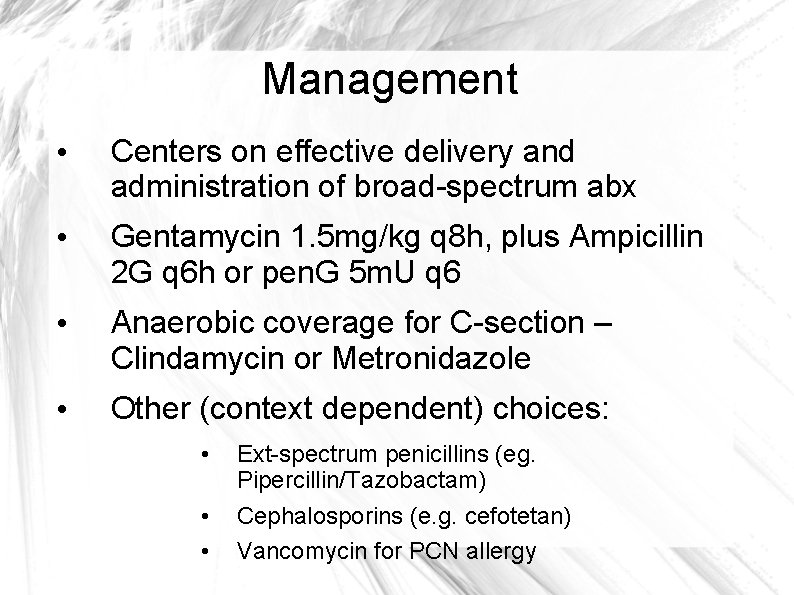
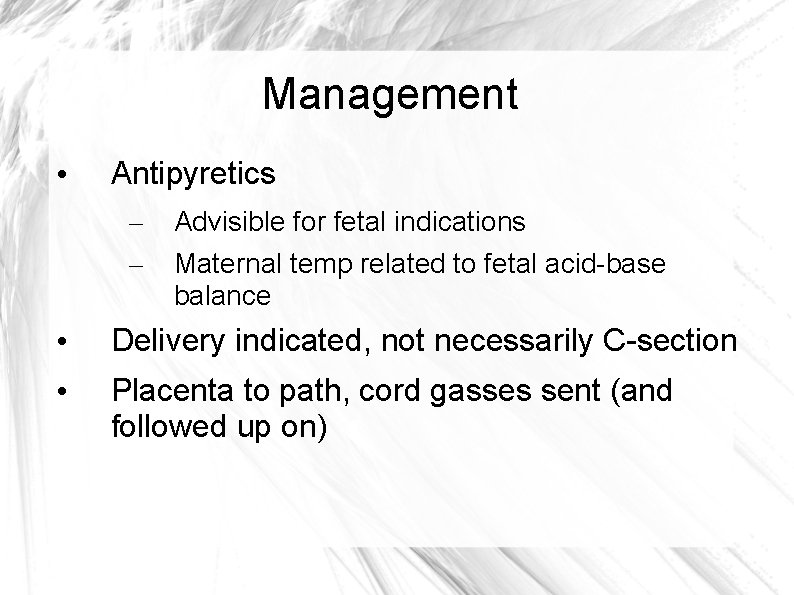
Management • Centers on effective delivery and administration of broad-spectrum abx • Gentamycin 1. 5 mg/kg q 8 h, plus Ampicillin 2 G q 6 h or pen. G 5 m. U q 6 • Anaerobic coverage for C-section – Clindamycin or Metronidazole • Other (context dependent) choices: • • • Ext-spectrum penicillins (eg. Pipercillin/Tazobactam) Cephalosporins (e. g. cefotetan) Vancomycin for PCN allergy
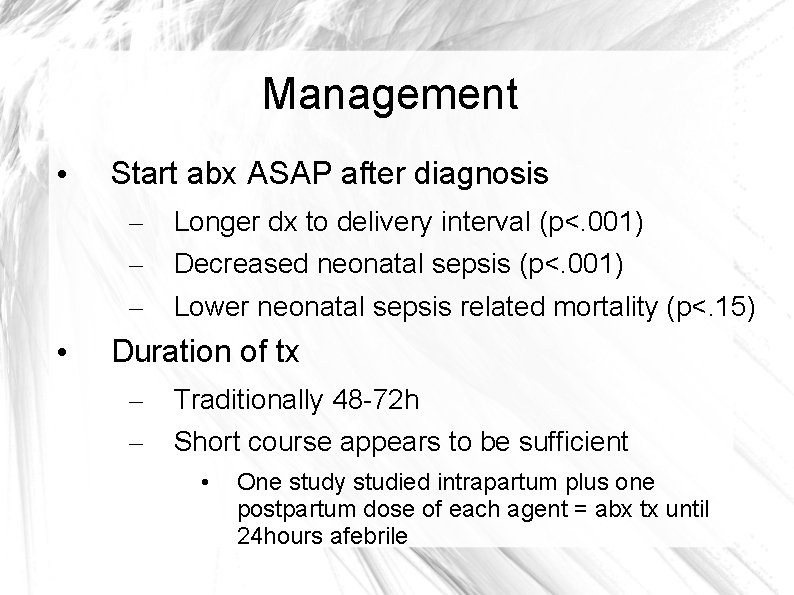
Management • Start abx ASAP after diagnosis – – – • Longer dx to delivery interval (p<. 001) Decreased neonatal sepsis (p<. 001) Lower neonatal sepsis related mortality (p<. 15) Duration of tx – – Traditionally 48 -72 h Short course appears to be sufficient • One study studied intrapartum plus one postpartum dose of each agent = abx tx until 24 hours afebrile
Management • Antipyretics – – Advisible for fetal indications Maternal temp related to fetal acid-base balance • Delivery indicated, not necessarily C-section • Placenta to path, cord gasses sent (and followed up on)
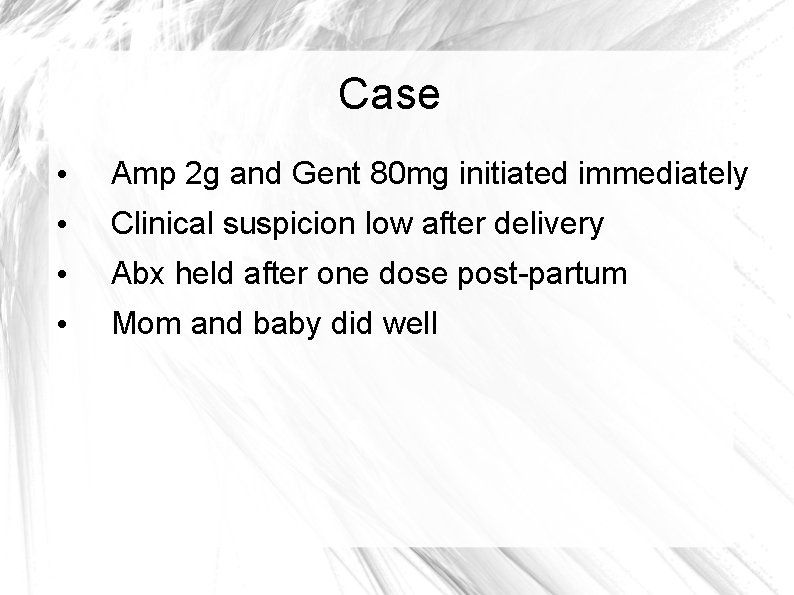
Case • Amp 2 g and Gent 80 mg initiated immediately • Clinical suspicion low after delivery • Abx held after one dose post-partum • Mom and baby did well
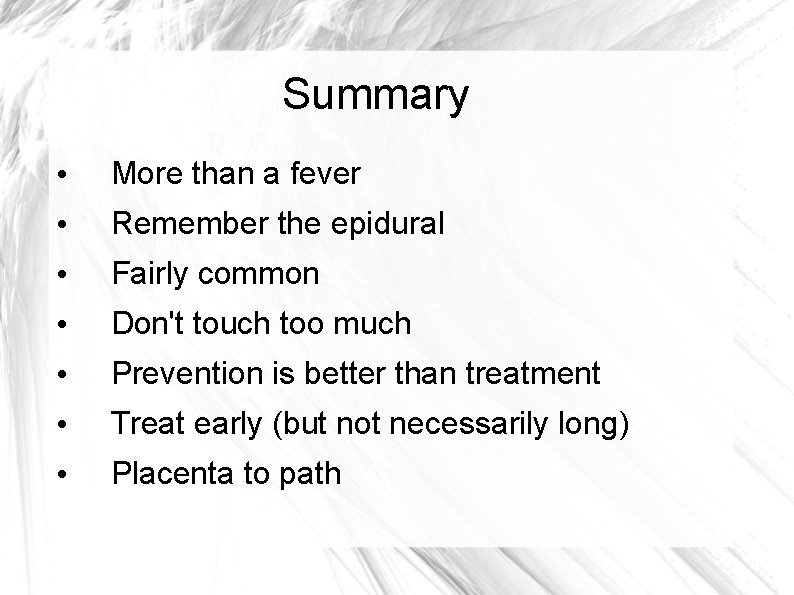
Summary • More than a fever • Remember the epidural • Fairly common • Don't touch too much • Prevention is better than treatment • Treat early (but not necessarily long) • Placenta to path
References • Churgay C, Smith M, Blok B. Maternal Fever During Labor – What does it mean? J Am Board Fam Pract 1994; 7: 14 -24 • Edwards R. Chorioamnionitis and Labor. Obstetrics and Gynecology Clinics of N America 2005; 32: 287 -96 • Fahey J. Clinical management of Intra-amniotic Infection and Chorioamnionitis: A Review of the Literature. J Midwifery Womens Health 2008; 53: 227– 235 • Goldenberg R, Hauth J, Andrews W. Intrauterine Infection and Preterm Delivery. N. Engl J Med 2000; 342: 1500 -1507 • Lieberman E. Epidural analgesia, intrapartum fever, and neonatal sepsis evaluation. Pediatrics 1997; 99: 415 -19 • Marowitz A. Midwifery Management of Premature Rupture of Membranes at Term. J Midwifery Womens Health 2007; 52: 199– 206 • Satin A et al. Chorioamnionitis: a harbinger of dystocia. Obstet Gynecol 1992; 79: 913 -5 • Simhan H, Canavan T. Preterm Premature Rupture of Membranes: diagnosis, evaluation and management strategies. BJOG: Int J Obstetrics and Gynaecology 2005; 112(S 1): 32 -37 • Snyder M, Crawford P, Jamieson B. What treatment approach to intrapartum maternal fever has the best fetal outcomes? J Fam Pract 2007; 56(5) • Wendel P et al. Chorioamnionitis: Associations of Nonreassuring Fetal Heart-Rate Patterns and Interval From Diagnosis to Delivery on Neonatal Outcome. Infectious Disease in Obstetrics and Gynecology 1994; 2: 162 -166