Improved Tower Cranes Operation Using Integrated 3 D








- Slides: 53
Improved Tower Cranes Operation Using Integrated 3 D BIM Model and GPS Technology Salar Maghzi Supervised By: Dr O. Moselhi MASc. Thesis Defense 29 th Oct 2014 1
Agenda • Introduction • Literature review • Problem statement • Methodology • Model implementation and case study • Conclusion and future work 2
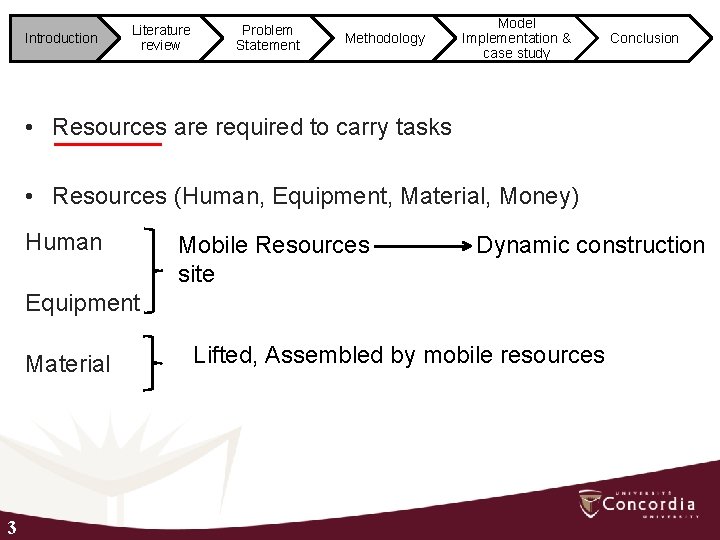
Introduction Literature review Problem Statement Methodology Model Implementation & case study Conclusion • Resources are required to carry tasks • Resources (Human, Equipment, Material, Money) Human Mobile Resources Dynamic construction site Equipment Material Lifted, Assembled by mobile resources 3
Introduction Literature review Problem Statement Why Tower cranes ? ü Wide range of capability in lifting materials ü Common equipment ü Moving mechanism ü Coverage area ü Become more popular 4 Methodology Model Implementation & case study Conclusion
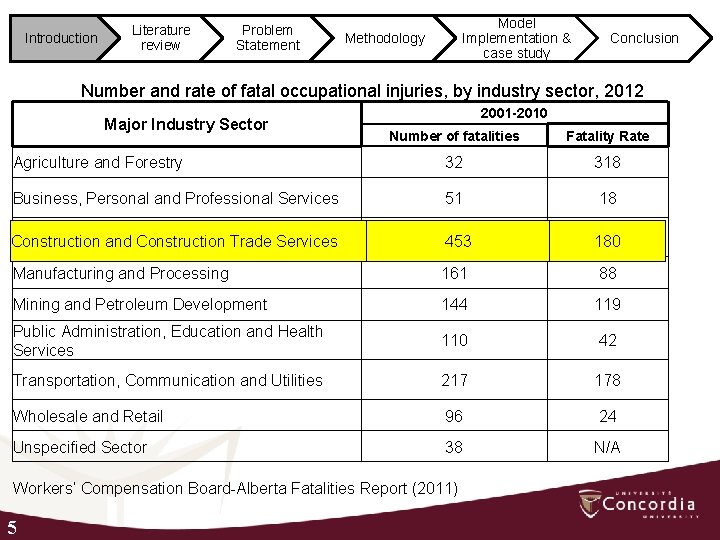
Introduction Literature review Problem Statement Model Implementation & case study Methodology Conclusion Number and rate of fatal occupational injuries, by industry sector, 2012 Major Industry Sector 2001 -2010 Number of fatalities Fatality Rate Agriculture and Forestry 32 318 Business, Personal and Professional Services 51 18 Construction and Construction Trade Services 453 180 Manufacturing and Processing 161 88 Mining and Petroleum Development 144 119 Public Administration, Education and Health Services 110 42 Transportation, Communication and Utilities 217 178 Wholesale and Retail 96 24 Unspecified Sector 38 N/A Workers’ Compensation Board-Alberta Fatalities Report (2011) 5
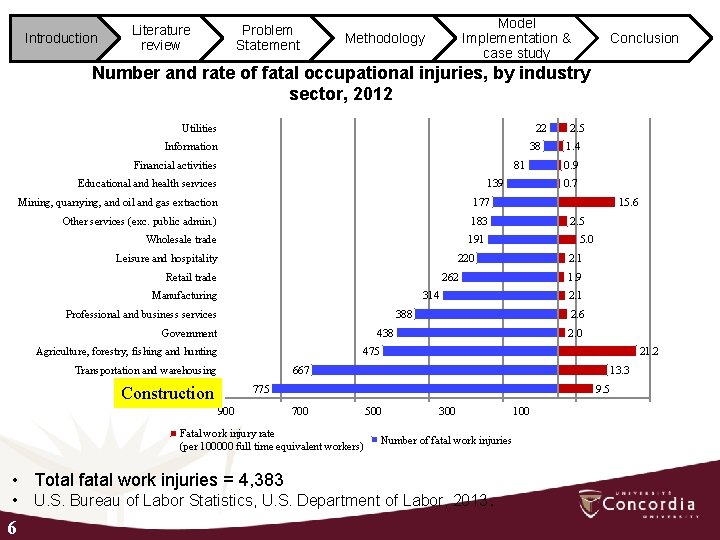
Introduction Literature review Problem Statement Model Implementation & case study Methodology Conclusion Number and rate of fatal occupational injuries, by industry sector, 2012 22 Utilities Information 38 Financial activities 81 Educational and health services 139 Mining, quarrying, and oil and gas extraction 177 Other services (exc. public admin. ) 183 Wholesale trade 191 Leisure and hospitality 2. 1 1. 9 2. 1 2. 6 438 Agriculture, forestry, fishing and hunting 2. 0 475 21. 2 667 Transportation and warehousing Construction 13. 3 775 900 9. 5 700 Fatal work injury rate (per 100000 full time equivalent workers) • Total fatal work injuries = 4, 383 6 5. 0 388 Government • 2. 5 314 Professional and business services 0. 9 15. 6 262 Manufacturing 1. 4 0. 7 220 Retail trade 2. 5 500 300 Number of fatal work injuries U. S. Bureau of Labor Statistics, U. S. Department of Labor, 2013. 100
Fatal occupational injuries for Construction Industry (Canada-AB) Other Bodily Reaction/Exertion Bodily Reaction 1% or Exertion Unknown 18% 2% Overexertion 2% Contact with Objects and Equipment 31% Assaults and Violent Acts 4% Fires and Explosions 4% Exposure to Harmful Substances Transportation 9% Accidents 11% 7 Falls 18% Workers’ Compensation Board-Alberta Fatalities Report (2011)
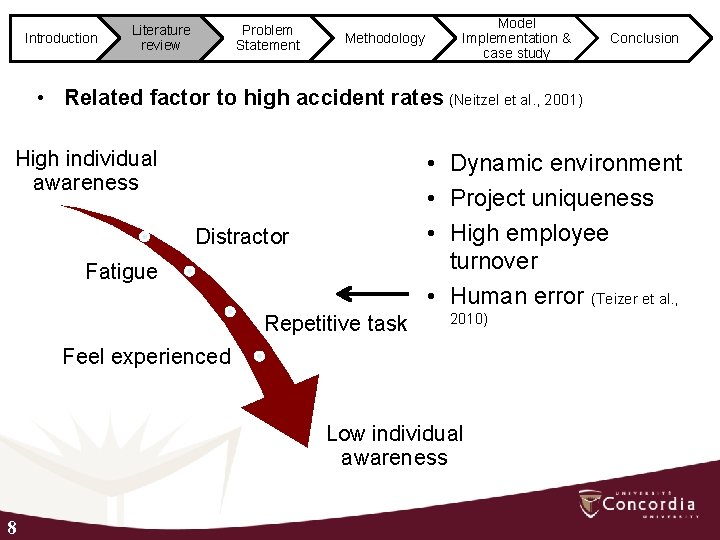
Introduction Literature review Problem Statement Methodology Model Implementation & case study Conclusion • Related factor to high accident rates (Neitzel et al. , 2001) High individual awareness • Dynamic environment • Project uniqueness • High employee turnover • Human error (Teizer et al. , Distractor Fatigue Repetitive task 2010) Feel experienced Low individual awareness 8
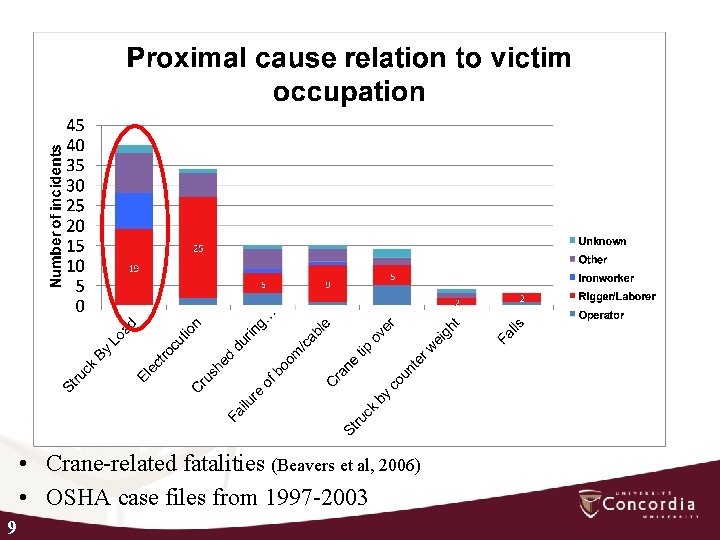
• Crane-related fatalities (Beavers et al, 2006) • OSHA case files from 1997 -2003 9
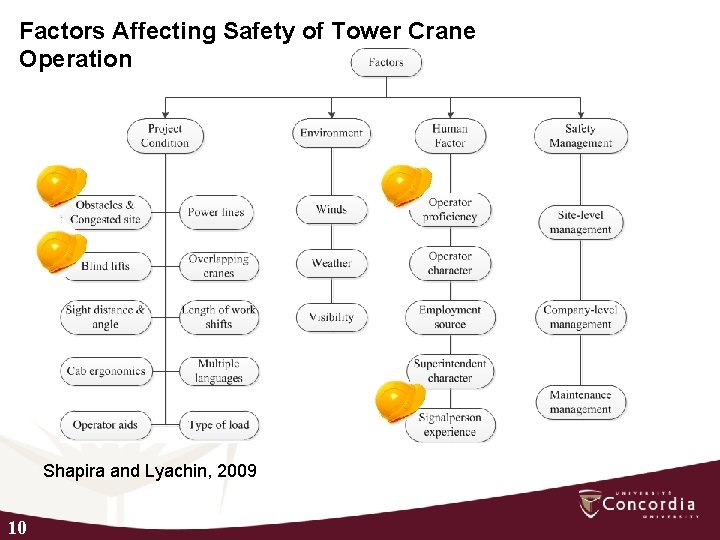
Factors Affecting Safety of Tower Crane Operation Shapira and Lyachin, 2009 10
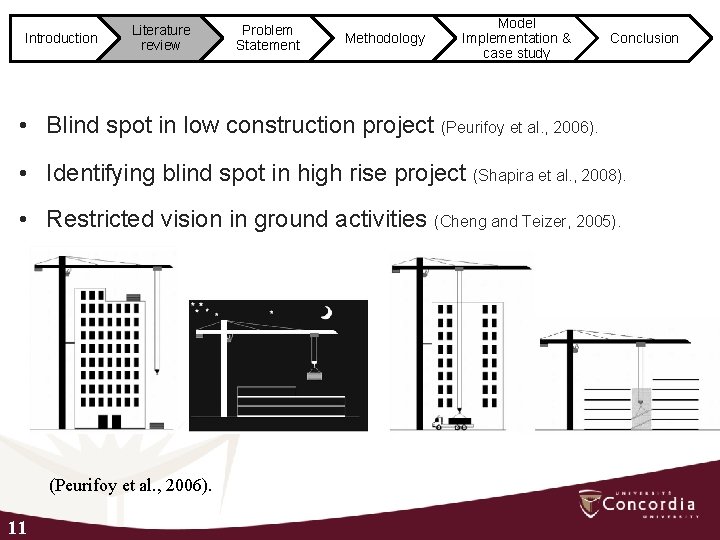
Introduction Literature review Problem Statement Methodology Model Implementation & case study Conclusion • Blind spot in low construction project (Peurifoy et al. , 2006). • Identifying blind spot in high rise project (Shapira et al. , 2008). • Restricted vision in ground activities (Cheng and Teizer, 2005). (Peurifoy et al. , 2006). 11
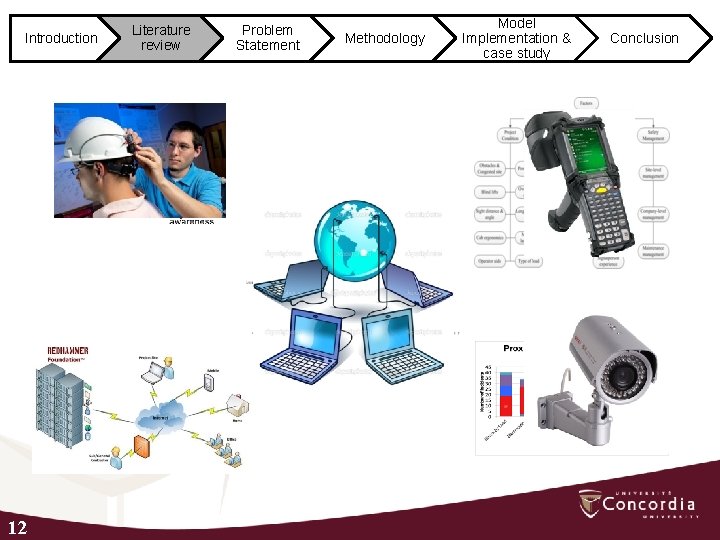
Introduction 12 Literature review Problem Statement Methodology Model Implementation & case study Conclusion
Introduction Literature review Problem Statement Methodology Model Implementation & case study Conclusion Productivity : • Crane type and location (Al-Hussein et al. 2001, Hannah & lotfollah) • Workspace requirements of crane to support conflict (Tantisevi and akinci 2007) • Crane lifts path check management system (Lei et al. 2013) • Near real time motion planning and simulation (Al. Bahnassi & Hammad 2012) 13
Introduction Literature review Problem Statement Methodology Image-Based technology: • Equipped crane boom with video camera (Everett and Slocum, 1993) • Effect of video camera on productivity (Shapira et al. , 2008) • Develop tower crane navigation system (Lee et al. , 2012) • Utilizing wireless video tech. and RFID (Lee et al. , 2006) 14 Model Implementation & case study Conclusion
Introduction Literature review Problem Statement Methodology Model Implementation & case study Conclusion Range-Based technology: • RFID technology to prevent collision accidents (Chae & Yoshida 2010) • Applying UWB to prevent tower crane collision (Hwang, 2012) • Improving workers safety using BIM and RTLS (Zhang et al 2012) • Improve safety monitoring system by GPS and RFID (Li et al. , 2013) • Path re-planning of crane using RTLS (Zhang et al. 2012) 15
Introduction Literature review Problem Statement Methodology Model Implementation & case study Conclusion GPS technology: • Effect of GPS on crane efficiency (Lee et al. , 2002) • Spatio-temporal safety using GPS data (Pradhananga & Teizer 2012) • Clash detection among construction equipment (Oloufa et al. , 2002) • Acquiring dynamic resources location (Pradhananga and Teizer, 2012) • Improve crane safety by GPS and RFID (Li et al. , 2013) 16
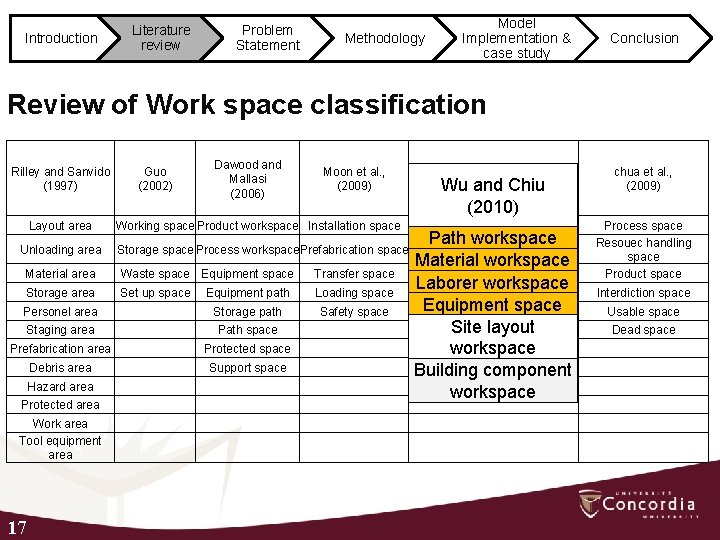
Introduction Literature review Problem Statement Methodology Model Implementation & case study Conclusion Review of Work space classification Rilley and Sanvido (1997) Layout area Unloading area Guo (2002) Dawood and Mallasi (2006) Moon et al. , (2009) chua et al. , (2009) (2010) Working space Product workspace Installation space Storage space Process workspace. Prefabrication space Material area Waste space Equipment space Transfer space Storage area Set up space Equipment path Loading space Personel area Storage path Safety space Staging area Path space Prefabrication area Protected space Debris area Support space Hazard area Protected area Work area Tool equipment area 17 Wu and Chiu (2010) Wu and Chiu Path workspace Material workspace Laborer workspace Equipment space Site layout workspace Site layout Building component workspace Building component workspace Process space Resouec handling space Product space Interdiction space Usable space Dead space
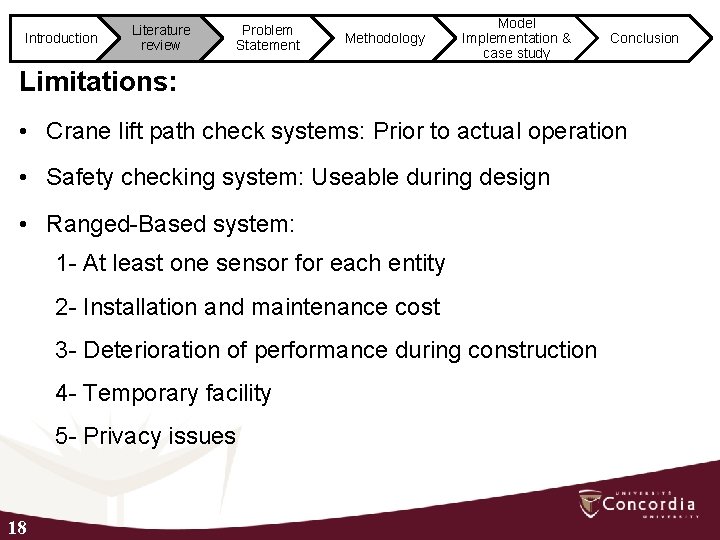
Introduction Literature review Problem Statement Methodology Model Implementation & case study Conclusion Limitations: • Crane lift path check systems: Prior to actual operation • Safety checking system: Useable during design • Ranged-Based system: 1 - At least one sensor for each entity 2 - Installation and maintenance cost 3 - Deterioration of performance during construction 4 - Temporary facility 5 - Privacy issues 18
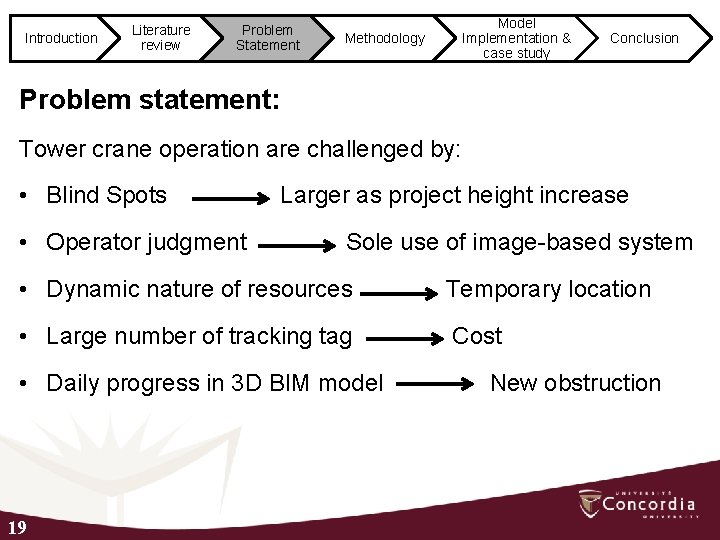
Introduction Literature review Problem Statement Methodology Model Implementation & case study Conclusion Problem statement: Tower crane operation are challenged by: • Blind Spots Larger as project height increase • Operator judgment Sole use of image-based system • Dynamic nature of resources Temporary location • Large number of tracking tag Cost • Daily progress in 3 D BIM model New obstruction 19
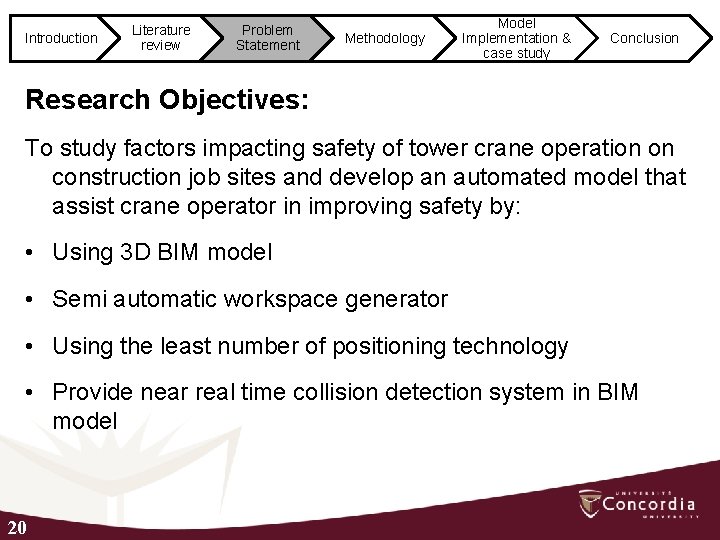
Introduction Literature review Problem Statement Methodology Model Implementation & case study Conclusion Research Objectives: To study factors impacting safety of tower crane operation on construction job sites and develop an automated model that assist crane operator in improving safety by: • Using 3 D BIM model • Semi automatic workspace generator • Using the least number of positioning technology • Provide near real time collision detection system in BIM model 20
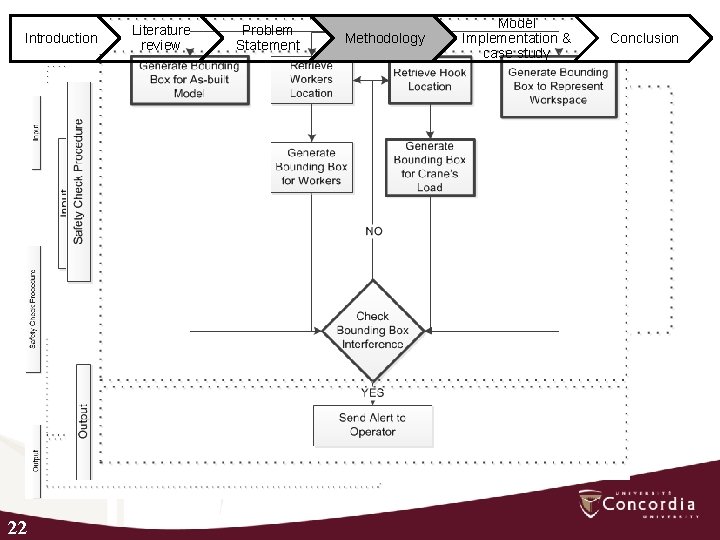
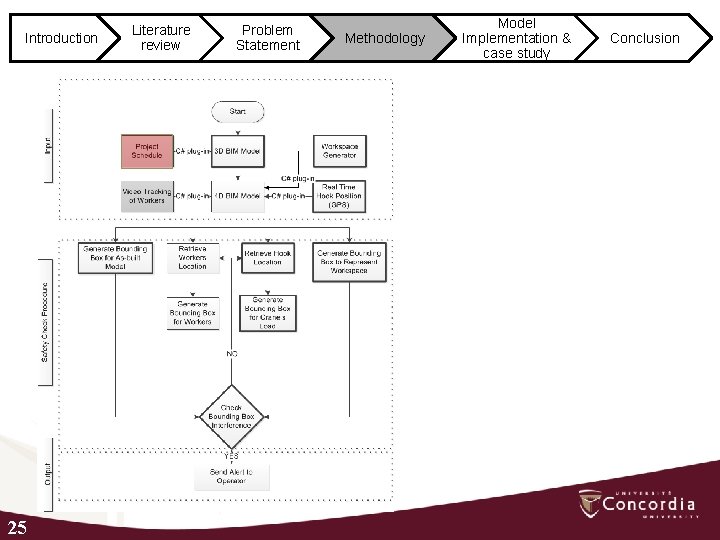
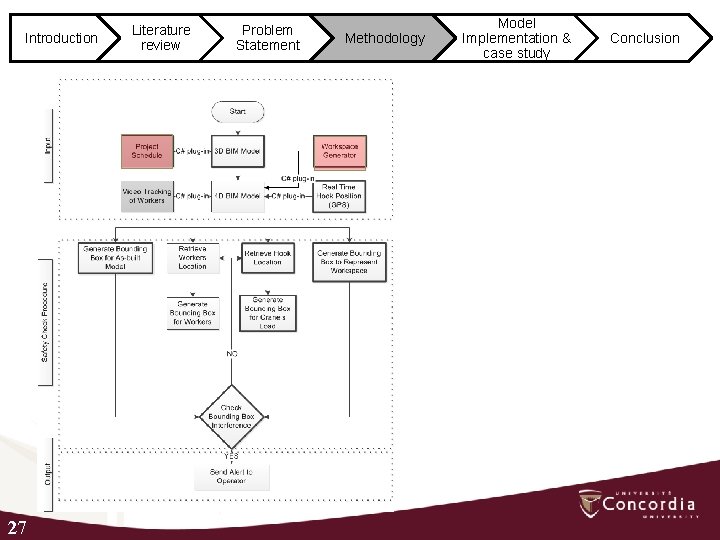
Introduction Literature review • Schematic view • Module: BIM model • Sub-modules: Schedule Video stereo GPS data Workspaces 21 Problem Statement Methodology Model Implementation & case study Conclusion
Introduction 22 Literature review Problem Statement Methodology Model Implementation & case study Conclusion
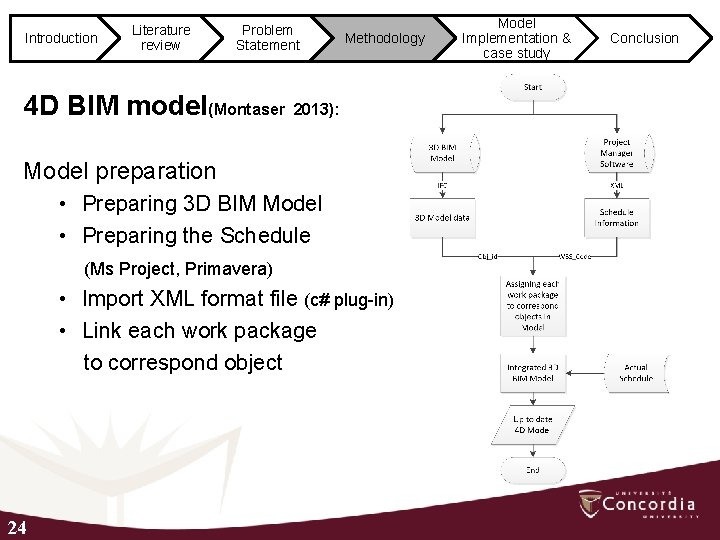
Introduction Literature review Problem Statement 4 D BIM model(Montaser Methodology 2013): Model preparation • Preparing 3 D BIM Model • Preparing the Schedule (Ms Project, Primavera) • Import XML format file (c# plug-in) • Link each work package to correspond object 24 Model Implementation & case study Conclusion
Introduction 25 Literature review Problem Statement Methodology Model Implementation & case study Conclusion
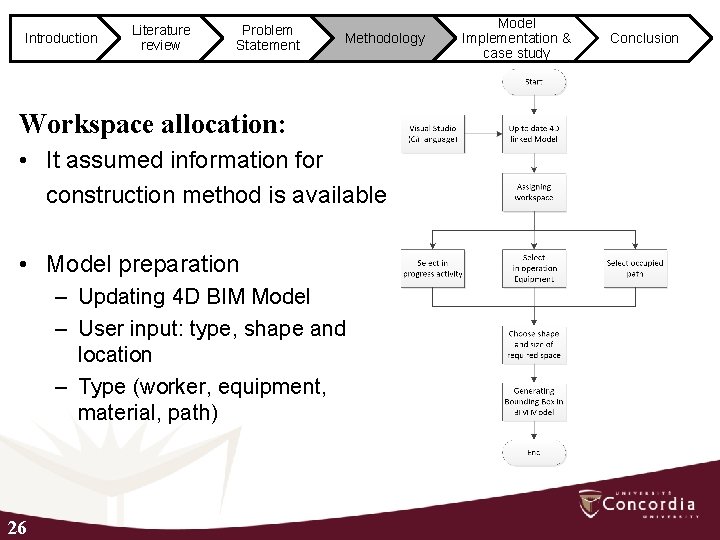
Introduction Literature review Problem Statement Methodology Workspace allocation: • It assumed information for construction method is available • Model preparation – Updating 4 D BIM Model – User input: type, shape and location – Type (worker, equipment, material, path) 26 Model Implementation & case study Conclusion
Introduction 27 Literature review Problem Statement Methodology Model Implementation & case study Conclusion
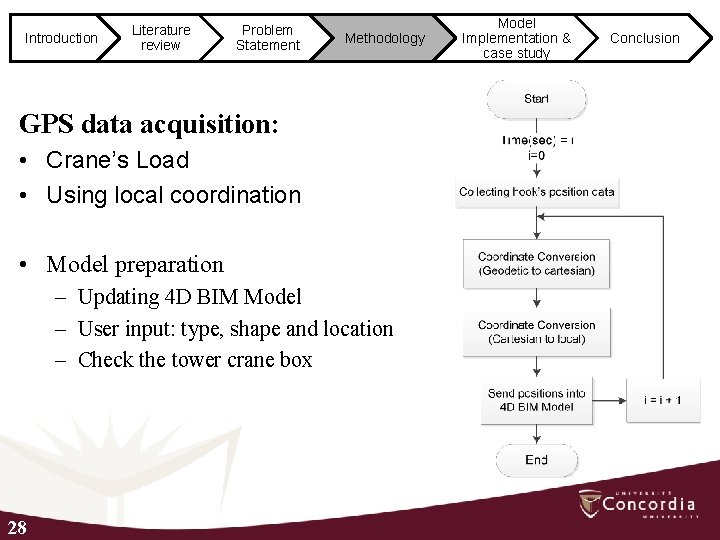
Introduction Literature review Problem Statement Methodology GPS data acquisition: • Crane’s Load • Using local coordination • Model preparation – Updating 4 D BIM Model – User input: type, shape and location – Check the tower crane box 28 Model Implementation & case study Conclusion
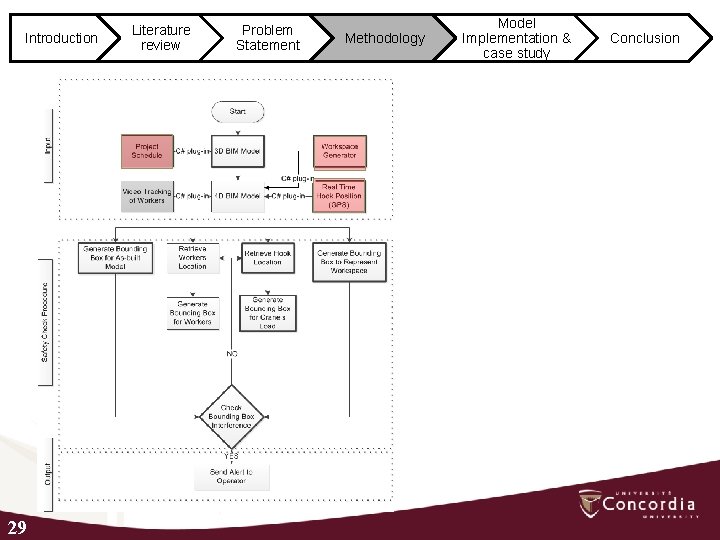
Introduction 29 Literature review Problem Statement Methodology Model Implementation & case study Conclusion
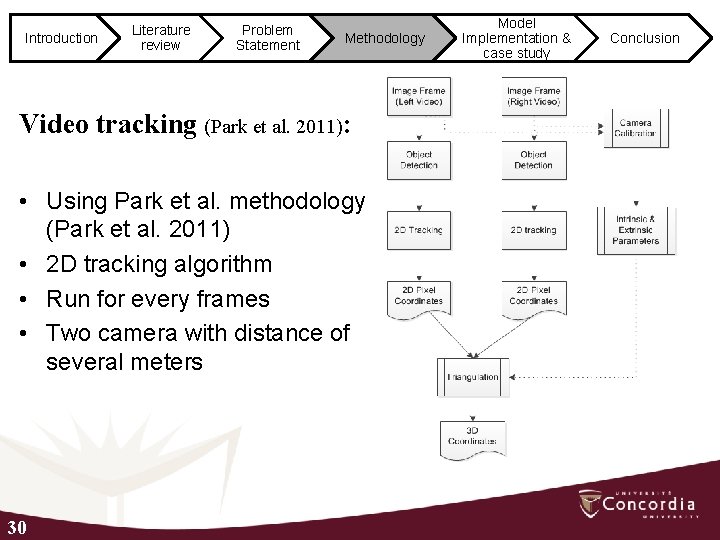
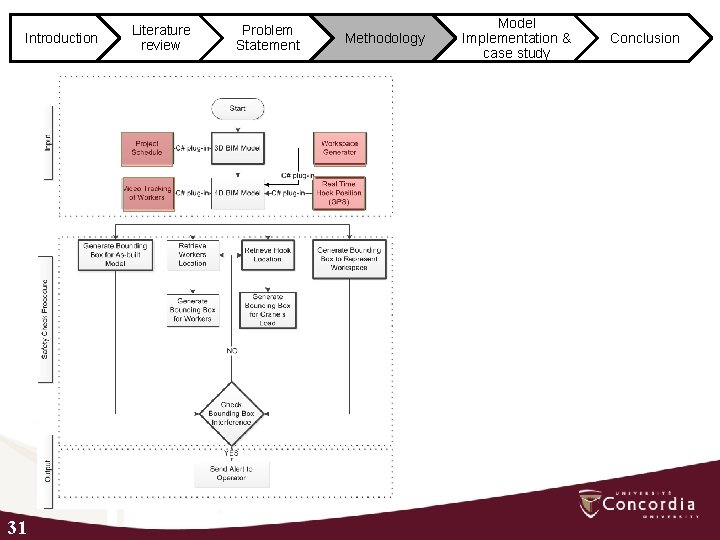
Introduction Literature review Problem Statement Methodology Video tracking (Park et al. 2011): • Using Park et al. methodology (Park et al. 2011) • 2 D tracking algorithm • Run for every frames • Two camera with distance of several meters 30 Model Implementation & case study Conclusion
Introduction 31 Literature review Problem Statement Methodology Model Implementation & case study Conclusion
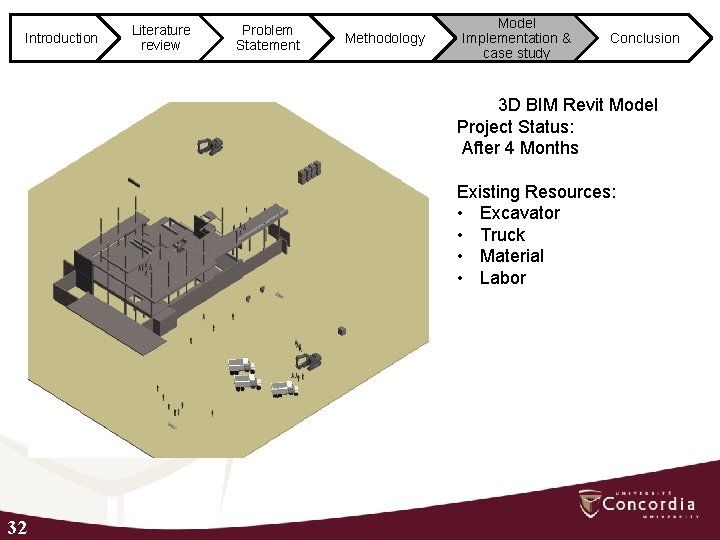
Introduction Literature review Problem Statement Methodology Model Implementation & case study Conclusion 3 D BIM Revit Model Project Status: After 4 Months Existing Resources: • Excavator • Truck • Material • Labor 32
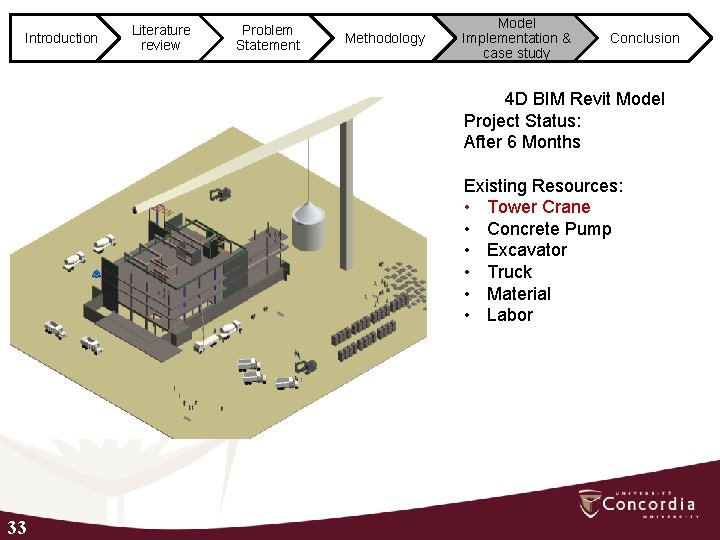
Introduction Literature review Problem Statement Methodology Model Implementation & case study Conclusion 4 D BIM Revit Model Project Status: After 6 Months Existing Resources: • Tower Crane • Concrete Pump • Excavator • Truck • Material • Labor 33
Introduction Literature review Problem Statement Methodology Model Implementation & case study Conclusion Safety Issues: • Struck Crane Load by: Equipment, Labor, Building • Swinging Load over unauthorized zone Existing Approach: • Signalman • Anti collision system • Load indicator • Tracking sensors • Video camera 34
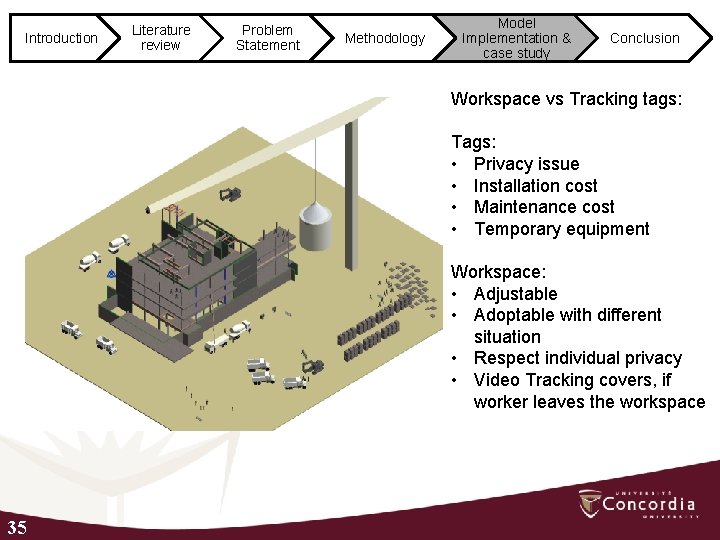
Introduction Literature review Problem Statement Methodology Model Implementation & case study Conclusion Workspace vs Tracking tags: Tags: • Privacy issue • Installation cost • Maintenance cost • Temporary equipment Workspace: • Adjustable • Adoptable with different situation • Respect individual privacy • Video Tracking covers, if worker leaves the workspace 35
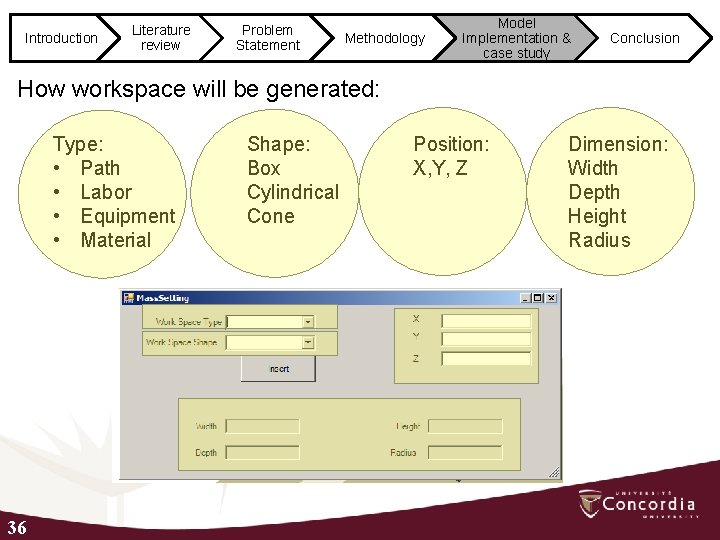
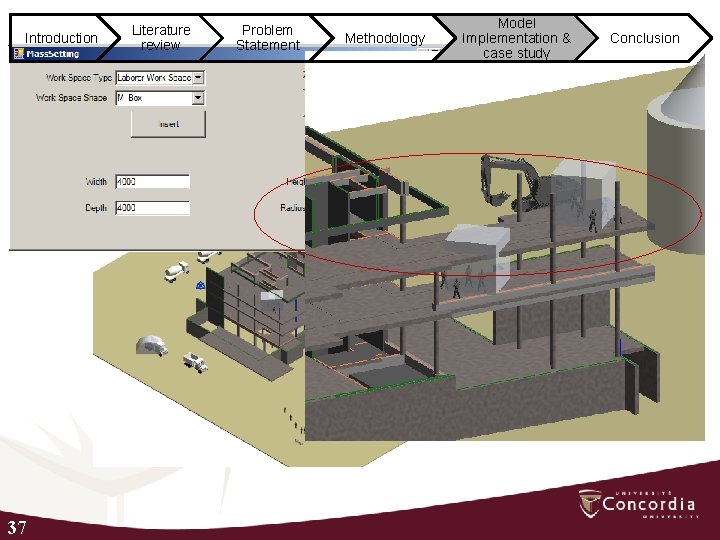
Introduction Literature review Problem Statement Methodology Model Implementation & case study Conclusion How workspace will be generated: Type: • Path • Labor • Equipment • Material 36 Shape: Box Cylindrical Cone Position: Dimension: X, Y, Z Width Depth Height Radius
Introduction 37 Literature review Problem Statement Methodology Model Implementation & case study Conclusion
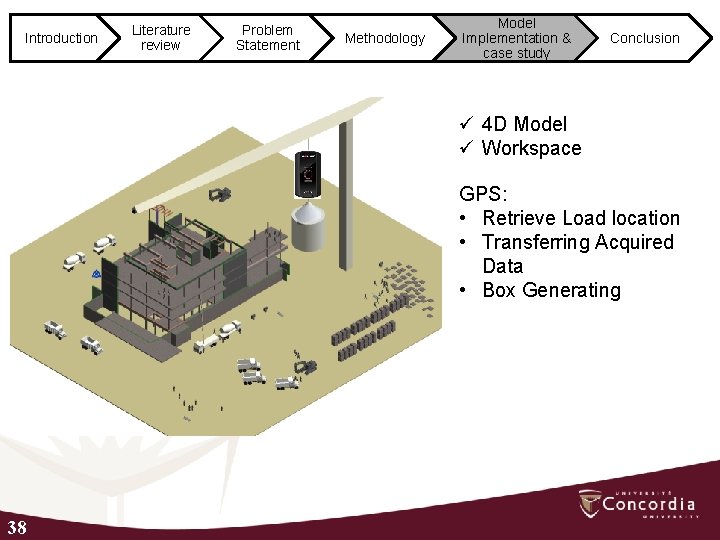
Introduction Literature review Problem Statement Methodology Model Implementation & case study Conclusion ü 4 D Model ü Workspace GPS: • Retrieve Load location • Transferring Acquired Data • Box Generating 38
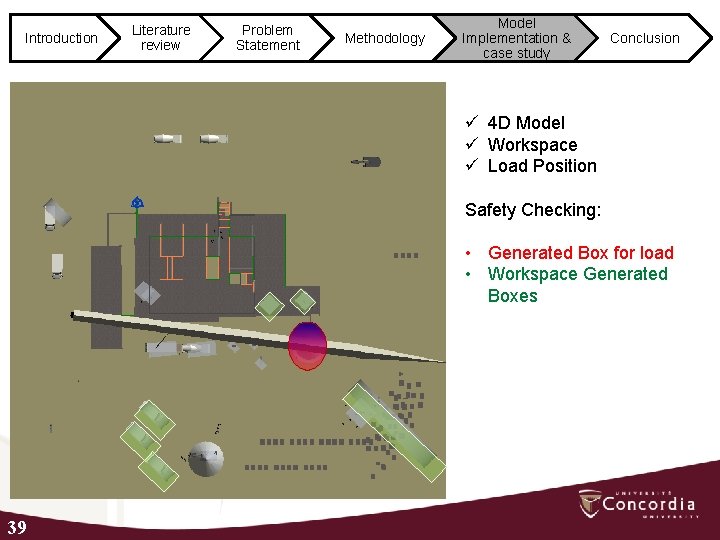
Introduction Literature review Problem Statement Methodology Model Implementation & case study Conclusion ü 4 D Model ü Workspace ü Load Position Safety Checking: • Generated Box for load • Workspace Generated Boxes 39
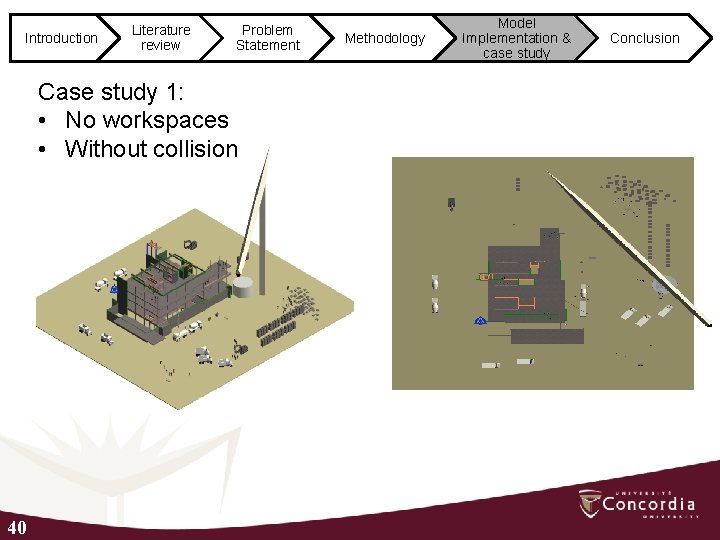
Introduction Literature review Problem Statement Case study 1: • No workspaces • Without collision 40 Methodology Model Implementation & case study Conclusion
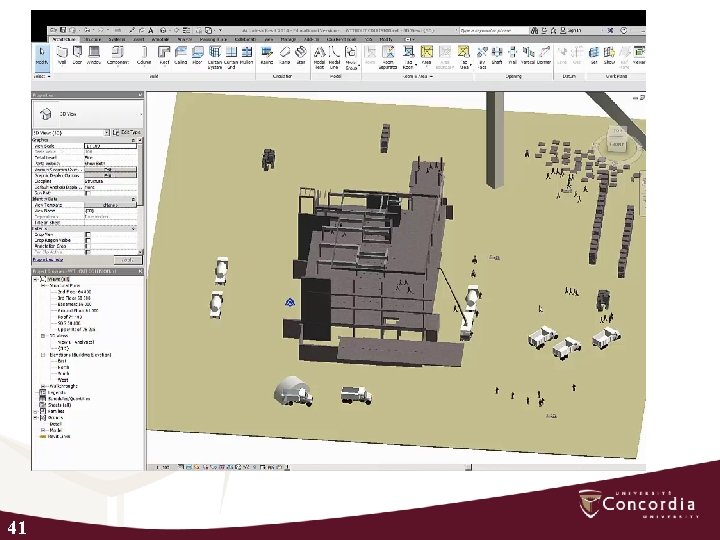
Validation 41
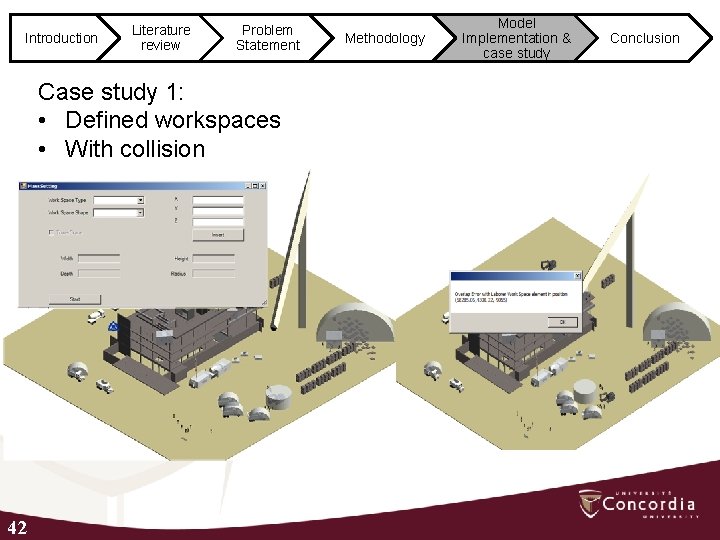
Introduction Literature review Problem Statement Case study 1: • Defined workspaces • With collision 42 Methodology Model Implementation & case study Conclusion
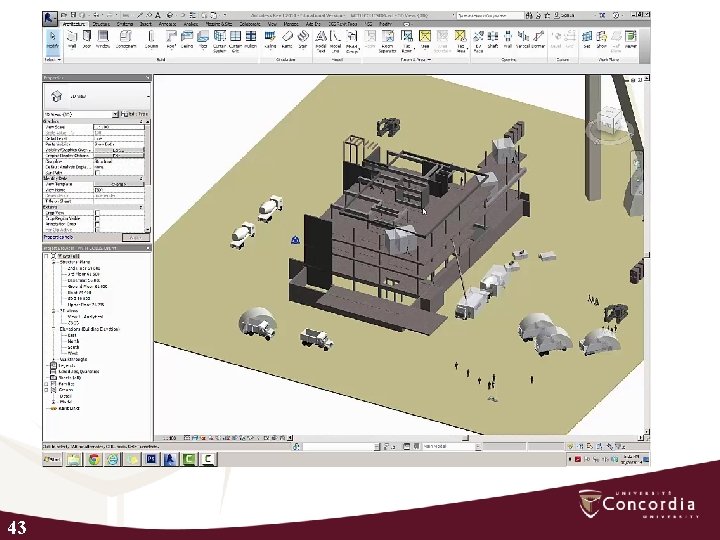
43
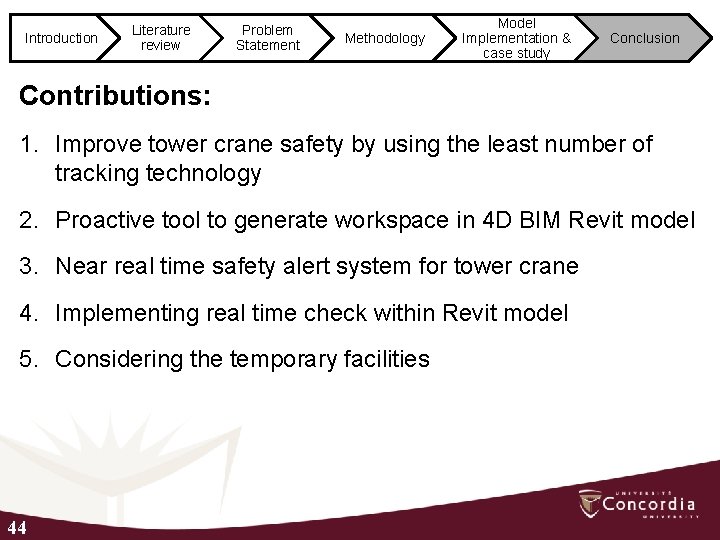
Introduction Literature review Problem Statement Methodology Model Implementation & case study Conclusion Contributions: 1. Improve tower crane safety by using the least number of tracking technology 2. Proactive tool to generate workspace in 4 D BIM Revit model 3. Near real time safety alert system for tower crane 4. Implementing real time check within Revit model 5. Considering the temporary facilities 44
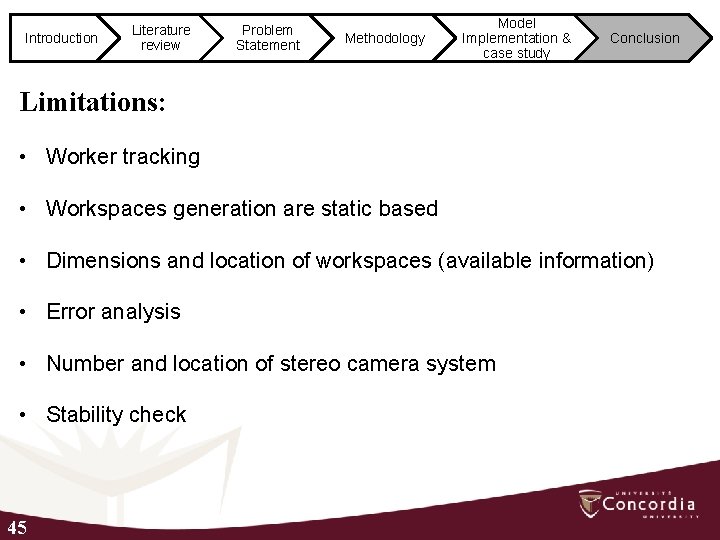
Introduction Literature review Problem Statement Methodology Model Implementation & case study Conclusion Limitations: • Worker tracking • Workspaces generation are static based • Dimensions and location of workspaces (available information) • Error analysis • Number and location of stereo camera system • Stability check 45
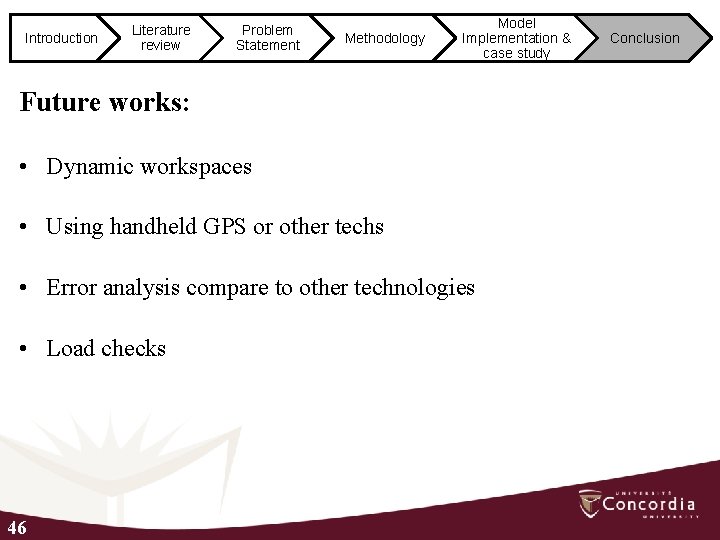
Introduction Literature review Problem Statement Methodology Model Implementation & case study Future works: • Dynamic workspaces • Using handheld GPS or other techs • Error analysis compare to other technologies • Load checks 46 Conclusion
Thank you for your attention 47
TRACKING TECHNOLOGY Tracking System RFID 48 Ultra Wide Band Video Tracking GPS
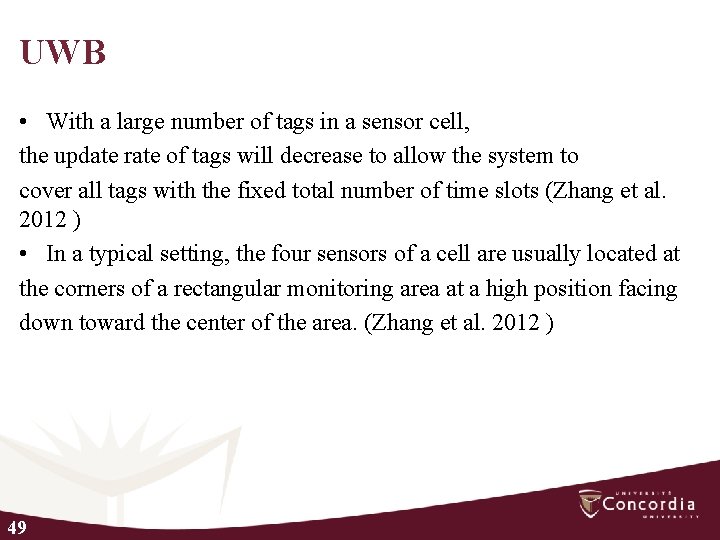
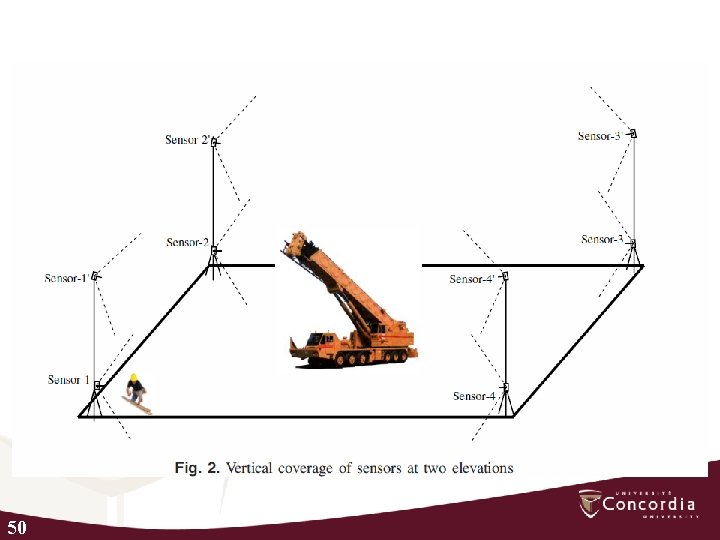
UWB • With a large number of tags in a sensor cell, the update rate of tags will decrease to allow the system to cover all tags with the fixed total number of time slots (Zhang et al. 2012 ) • In a typical setting, the four sensors of a cell are usually located at the corners of a rectangular monitoring area at a high position facing down toward the center of the area. (Zhang et al. 2012 ) 49
50
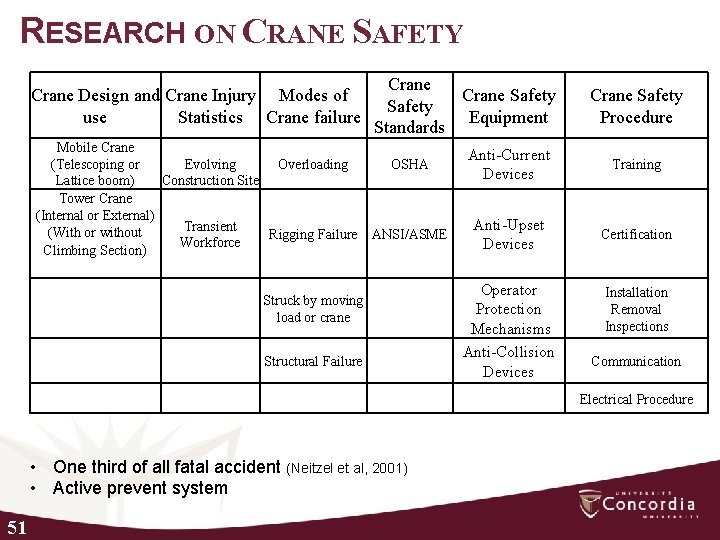
RESEARCH ON CRANE SAFETY Crane Design and Crane Injury Modes of use Statistics Crane failure Mobile Crane (Telescoping or Evolving Overloading Lattice boom) Construction Site Tower Crane (Internal or External) Transient (With or without Rigging Failure Workforce Climbing Section) Crane Safety Equipment Standards OSHA Anti-Current Devices Training ANSI/ASME Anti-Upset Devices Certification Struck by moving load or crane Structural Failure • One third of all fatal accident (Neitzel et al, 2001) • Active prevent system 51 Crane Safety Procedure Operator Protection Mechanisms Anti-Collision Devices Installation Removal Inspections Communication Electrical Procedure
U. S. Bureau of Labor Statistics, U. S. Department of Labor, 2013. 52
Building Information Modelling • Digital representation • Shared knowledge platform • A BIM- and sensor-based tower crane navigation system for blind lifts (Lee et al. 2012) • improving workers safety using BIM and RTLS (Zhang et al 2012) • Check Crane instability using BIM (Hasan, 2012) • Construction workspace management (Chavada et al. 2012) 53
Proposed Method Proactive safety monitoring system to warn crane operator when: load visibility is restricted due to being in blind spot zone or darkness time If Crane Components close to any obstruction or passing over occupied work space by labor or temporary equipment 54