
Types of Bioreactors Fermenters 1 Bioreactor Fermenter A
Types of Bioreactors / Fermenters 1
Bioreactor / Fermenter A bioreactor is basically a device in which the organisms are cultivated to form the desired products. It is a containment system designed to give right environment for optimal growth and metabolic activity of the organism. 2
1. Stirred Tank Bioreactor 2. Airlift Bioreactor 3. Packed Bioreactor 4. Fluidized Bioreactor 5. Photo Bioreactor 6. Membrane Bioreactor 7. Rotary Drum Bioreactor 8. Mist Bioreactor 3
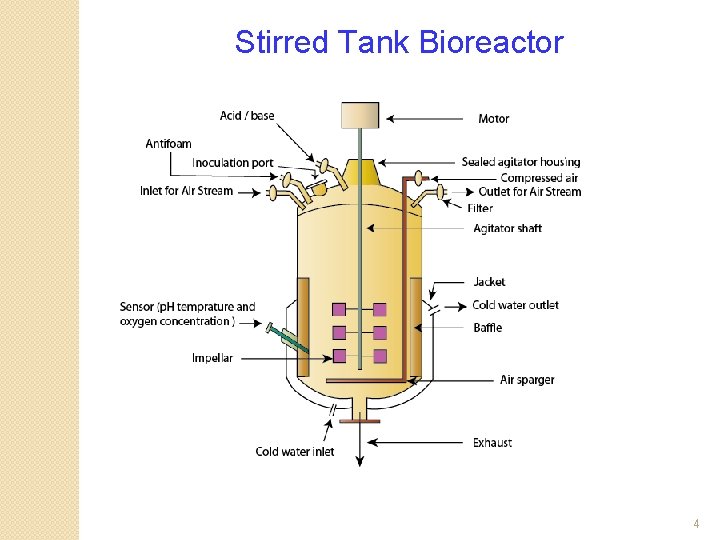
Stirred Tank Bioreactor 4

Advantages of Stirred Tank Bioreactor. Continuous operation. Good temperature control. Easily adapts to two phase runs. Good control. Simplicity of construction. Low operating cost. Easy to clean. 5

Disadvantages of Stirred Tank Bioreactor The need for shaft seals and bearings. Size limitation by motor size, shaft length & weight 6
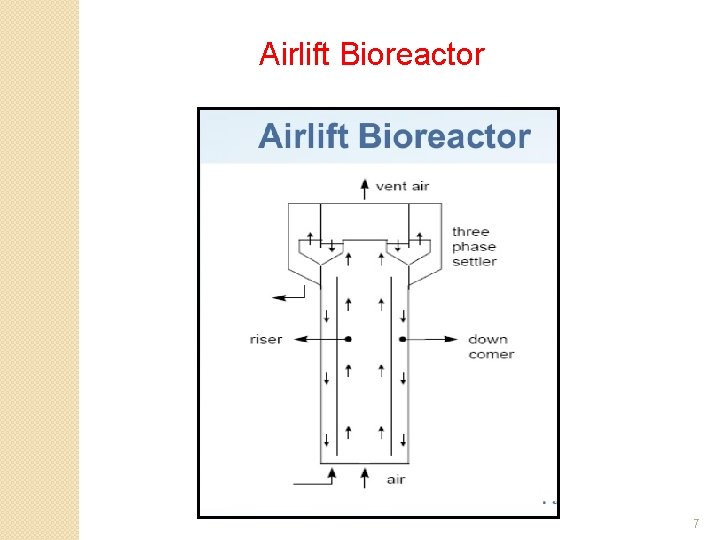
Airlift Bioreactor 7

Advantages of Airlift Fermenter Simple design Easier sterilization (no agitator shaft parts). Low Energy requirement vs stirred tank. Greater heat-removal vs stirred tank. Very low cost. 8
Disadvantages of Airlift Fermenter Greater air throughput and higher pressures needed. Inefficient break the foam when foaming occurs. No bubbles breaker 9
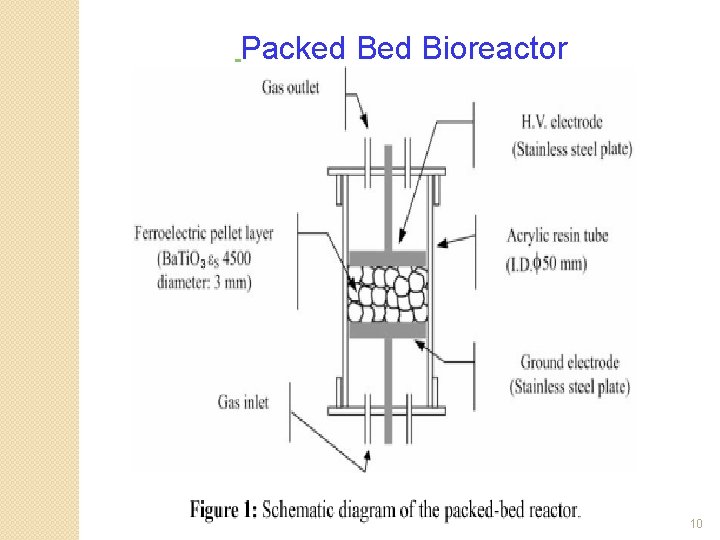
Packed Bioreactor 10
Advantages of Packed Bed Reactor Higher conversion per unit mass of catalyst than other catalytic reactors. Continuous operation No moving parts to wear out. Low operating cost Catalyst stays in the reactor Reaction mixture/catalyst separation is easy. Effective at high temperatures and pressure 11
Disadvantages of Packed Bed Reactor Undesired heat gradients. Poor temperature control. Difficult to clean. Difficult to replace catalyst. Undesirable side reactions. 12
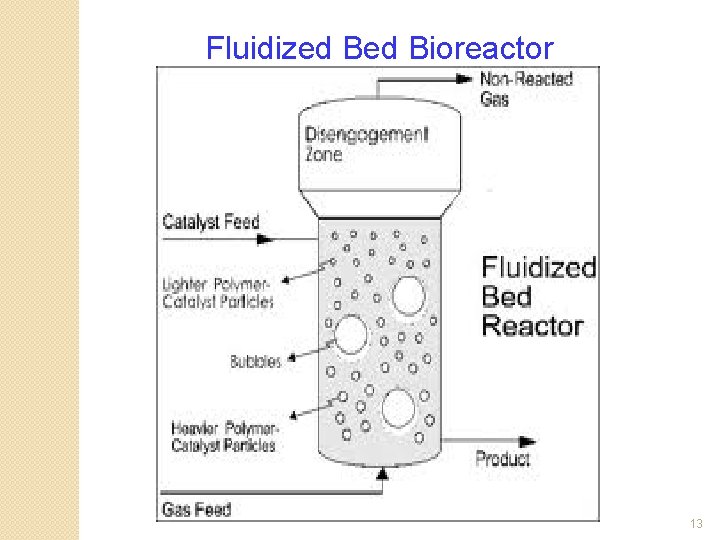
Fluidized Bioreactor 13
Advantages of Fluidized Bed Reactor Uniform Particle Mixing. Uniform Temperature Gradients. Ability to Operate Reactor in Continuous State. 14
Disadvantages of Fluidized Bed Reactor Increased Reactor Vessel Size Pumping Requirements and Pressure Drop Particle Entrainment Lack of Current Understanding Erosion of Internal Components Pressure Loss Scenarios 15

Photo Bioreactor 16
Advantages of Photobioreactor Higher productivity. Large surface-to-volume ratio. Better control of gas transfer. Reduction in evaporation of growth medium. More uniform temperature. 17
Disadvantages of Photobioreactor Capital cost is very high. The productivity and production cost in some enclosed photobioreactor systems are not much better than those achievable in open-pond cultures. The technical difficulty in sterilizing. 18

Membrane Bioreactor 19
Advantages of membrane bioreactor The loss of enzyme is reduced. Enzyme lost by denaturation can be made up by periodic addition of enzyme. Substrate and enzyme can be easily repla 20

Rotary Drum Bioreactor 21
Advantages of Rotary Drum Reactor High oxygen transfer. Good mixing facilitates better growth and impart less hydrodynamic stress. 22
Disadvantages of Rotary Drum Reactor Difficult to scale up 23
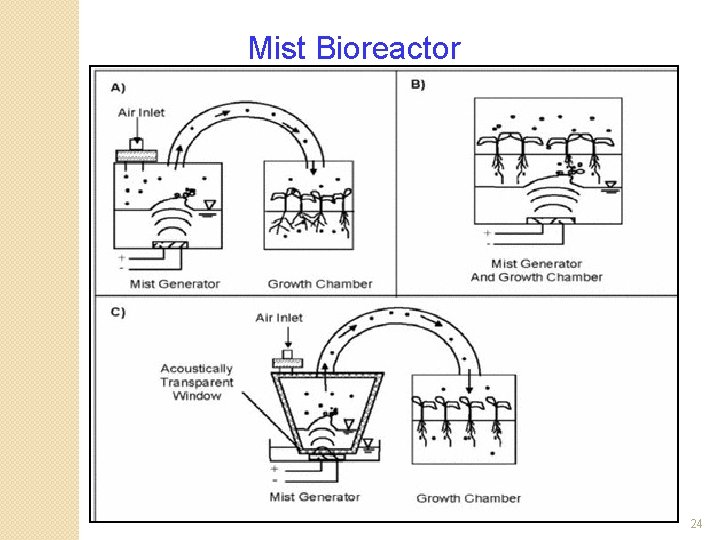
Mist Bioreactor 24
Advantages of Mist Bioreactor High oxygen transfer. . Hydrodynamic stress elimination. Low production cost. 25
Disadvantages of Mist Bioreactor Mesh trays and cylindrical stainless steel meshes are required 26

Tower Fermenter 27
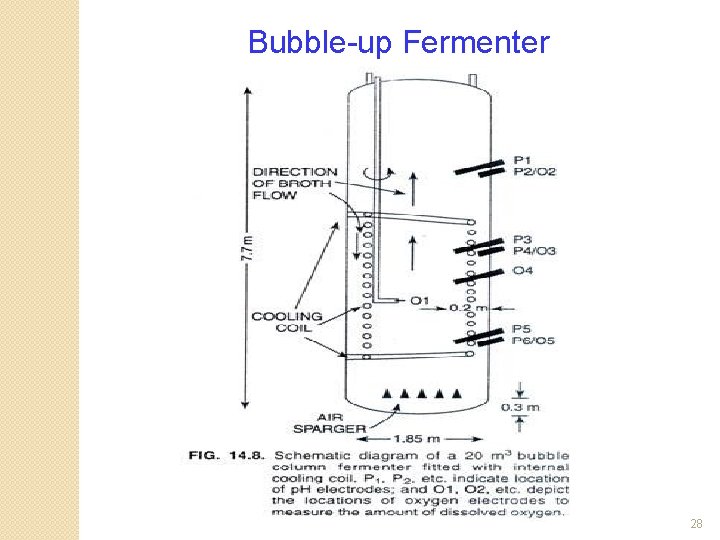
Bubble-up Fermenter 28

THANK YOU 29
- Slides: 29