Immune reconstitution inflammatory syndrome JLF Kock Overview Introduction

- Slides: 32
Immune reconstitution inflammatory syndrome JLF Kock
Overview �Introduction �Immunopathogenesis �Risk factors for IRIS �Diagnosis �Treatment �Review
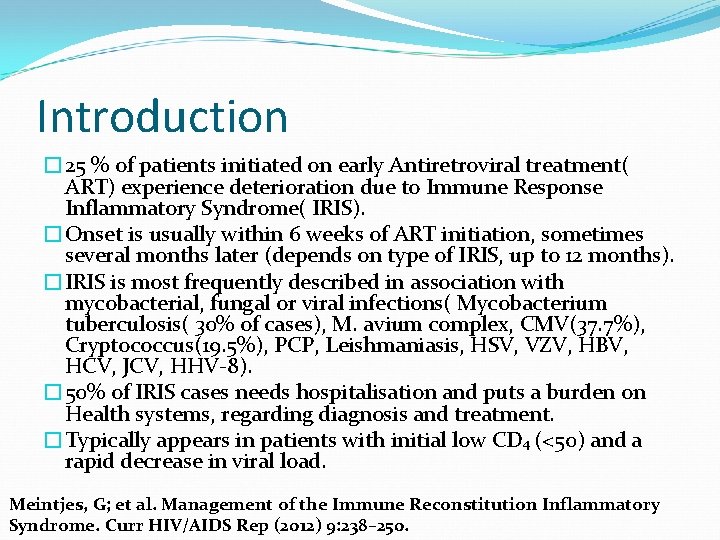
Introduction � 25 % of patients initiated on early Antiretroviral treatment( ART) experience deterioration due to Immune Response Inflammatory Syndrome( IRIS). �Onset is usually within 6 weeks of ART initiation, sometimes several months later (depends on type of IRIS, up to 12 months). �IRIS is most frequently described in association with mycobacterial, fungal or viral infections( Mycobacterium tuberculosis( 30% of cases), M. avium complex, CMV(37. 7%), Cryptococcus(19. 5%), PCP, Leishmaniasis, HSV, VZV, HBV, HCV, JCV, HHV-8). � 50% of IRIS cases needs hospitalisation and puts a burden on Health systems, regarding diagnosis and treatment. �Typically appears in patients with initial low CD 4 (<50) and a rapid decrease in viral load. Meintjes, G; et al. Management of the Immune Reconstitution Inflammatory Syndrome. Curr HIV/AIDS Rep (2012) 9: 238– 250.
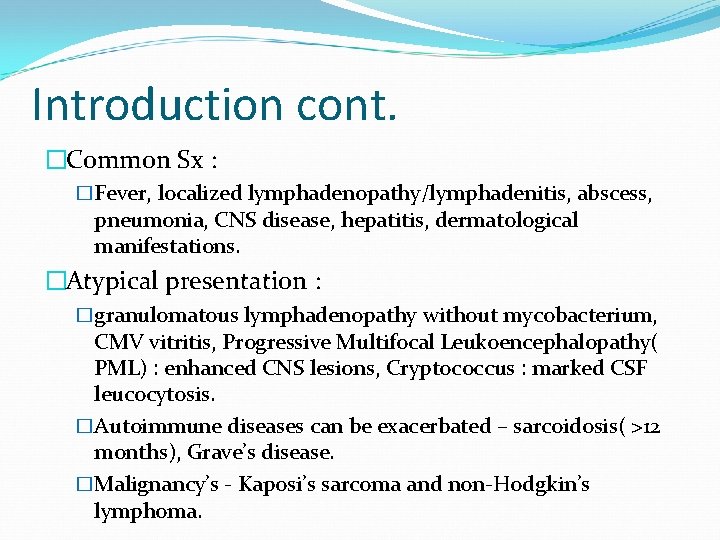
Introduction cont. �Common Sx : �Fever, localized lymphadenopathy/lymphadenitis, abscess, pneumonia, CNS disease, hepatitis, dermatological manifestations. �Atypical presentation : �granulomatous lymphadenopathy without mycobacterium, CMV vitritis, Progressive Multifocal Leukoencephalopathy( PML) : enhanced CNS lesions, Cryptococcus : marked CSF leucocytosis. �Autoimmune diseases can be exacerbated – sarcoidosis( >12 months), Grave’s disease. �Malignancy’s - Kaposi’s sarcoma and non-Hodgkin’s lymphoma.
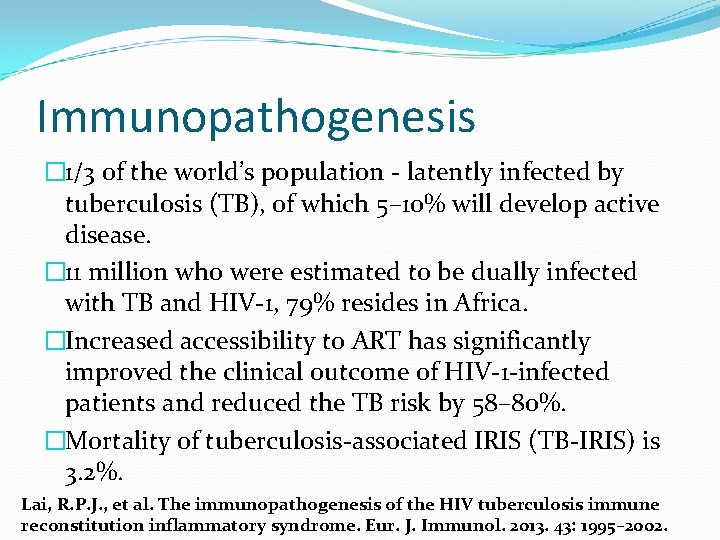
Immunopathogenesis � 1/3 of the world’s population - latently infected by tuberculosis (TB), of which 5– 10% will develop active disease. � 11 million who were estimated to be dually infected with TB and HIV-1, 79% resides in Africa. �Increased accessibility to ART has significantly improved the clinical outcome of HIV-1 -infected patients and reduced the TB risk by 58– 80%. �Mortality of tuberculosis-associated IRIS (TB-IRIS) is 3. 2%. Lai, R. P. J. , et al. The immunopathogenesis of the HIV tuberculosis immune reconstitution inflammatory syndrome. Eur. J. Immunol. 2013. 43: 1995– 2002.
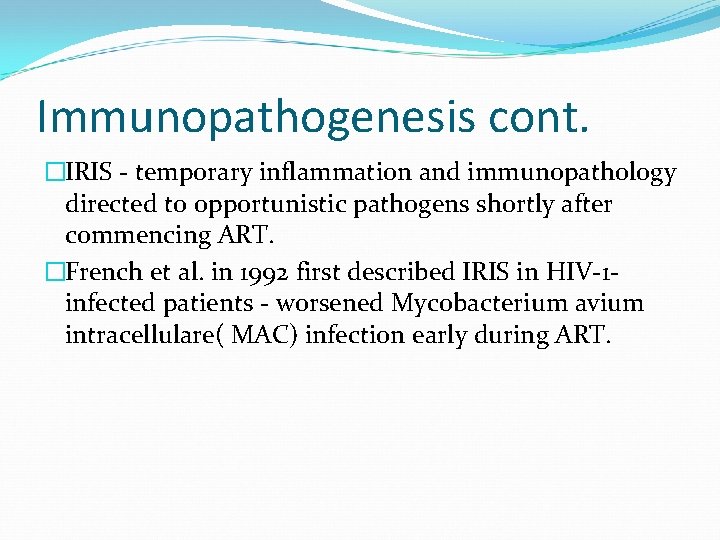
Immunopathogenesis cont. �IRIS - temporary inflammation and immunopathology directed to opportunistic pathogens shortly after commencing ART. �French et al. in 1992 first described IRIS in HIV-1 infected patients - worsened Mycobacterium avium intracellulare( MAC) infection early during ART.
Immunopathogenesis cont. �IFN-γ-producing Th 1 cell numbers increase sharply during paradoxical TB-IRIS after commencing ART. �Also found to have increased levels of interleukin (IL)2, IL-12, IFN-γ, IP-10 and MIG. �Th 2 cytokines (IL-4, IL-5, IL-13, and IL-15), were below detection level. �Peak of nonspecific inflammatory cytokines/chemokine’s (tumour necrosis factor (TNF), IL-6, IL-1β, IL-10, RANTES, and MCP-1)
Immunopathogenesis cont. �Study by Meintjes et al. showed that IFN-γ-secreting T cells showed similar patterns of expansion and contraction in both the paradoxical TB-IRIS and non. IRIS groups. �Some cases of paradoxical TB-IRIS were not characterized by Th 1 -cell expansions.
Immunopathogenesis cont. �Question whether Th 1 -cell expansions are truly causal in paradoxical TB-IRIS? �Tieu et al. and Elliott et al. IGRA based tests. Found that paradoxical TB-IRIS cases did not show differential IFN-γ responses in comparison with controls up to 24 weeks after ART initiation. �But a rapid increase in mycobacteria specific IFN-γ T cells were found in post-ART unmasking TB.
Immunopathogenesis cont. �Antonelli et al. reported an increased expression of PD 1 on both CD 4+ and CD 8+ T cells and higher levels of HLA-DR+ CD 4+ T cells in IRIS patients - high antigen load that may stimulate an activated phenotype. �Elevated, Th 1/Th 17 production of IFN-γ, and other cytokines/chemokine’s. �CD 4+ T cells have a significant contribution to IRIS pathogenesis, is a consequence, not the cause, of the syndrome.
Immunopathogenesis cont. �Hypothesis is that the regulation of Th 1 -cell expansion is in some way defective in TB-IRIS. �Meintjes et al. didn’t find evidence of this in their study.
Dysregulated cytokine release �Elevation of both effector and regulatory cytokines – proportional to Ag load. �Increased levels of IL-1β, IL-2, IL-6, IL-8, IL-10, IL-12 p 40, IFN-γ, GM-CSF and TNF in paradoxical TB-IRIS. �IL-17, IL-18, and IL-22 have also been noted to be elevated in both paradoxical and unmasking TB-IRIS. �IL-17 and IL-22 produced by innate cells(e. g. lymphoid tissue inducer/like cells, Th 17, NKT cells). �IL-18 is secreted by macrophages and dendritic cells. �IL-17, IL-18 and IL-22 in TB-IRIS - dysregulated inflammatory response - contribution of innate immunity to TB-IRIS.
Innate responses in TB-IRIS �Elements of the innate immune system implicated include pattern recognition receptors (PRRs), monocytes/macrophages, dendritic cells (DCs), neutrophils, and natural killer (NK) cells. �Van der Berg et al. suggested that ART might also restore previously dysfunctional or immunosuppressed macrophages, lead to hyperactivation of macrophages. �Lawn et al. – Demostrated in a fatal unmasking TBIRIS case; predominantly CD 68+ macrophages in lung tissue.
Innate response cont. �Tan et al. , TLR 2 was found to be expressed at higher levels in both paradoxical and unmasking TB-IRIS patients. �Higher NK cells activity and neutrophils levels, unmasking TB-IRIS. �NK-cell degranulation activity were higher in paradoxical TB-IRIS. �Recent evidence indicates that neutrophils may contribute to the pathogenesis of TB-IRIS( TBM). �High TNF and low IFN-γ at TBM diagnosis predicted TBM-IRIS.
Conclusion of Immunopathogenesis �Intricate and interconnected network of both innate and adaptive immunity is involved.
Risk factors for IRIS �Fungal infection. �Higher level of viremia at baseline and the degree of viral decline on ART. �Low-baseline CD 4+ T-cell count (<50– 100 cells/μL) who respond favourably to ART with a significant increase in CD 4+ T cells �Short-time interval between the initiation of TB treatment and starting ART.
Risk factors for IRIS cont. �Dissemination of TB to extra pulmonary sites, which poses a significantly higher risk (eightfold in one study) of developing TB-IRIS, �Early initiation of ART or timing of ART was not associated with IRIS( CAMELIA study).
Diagnosis
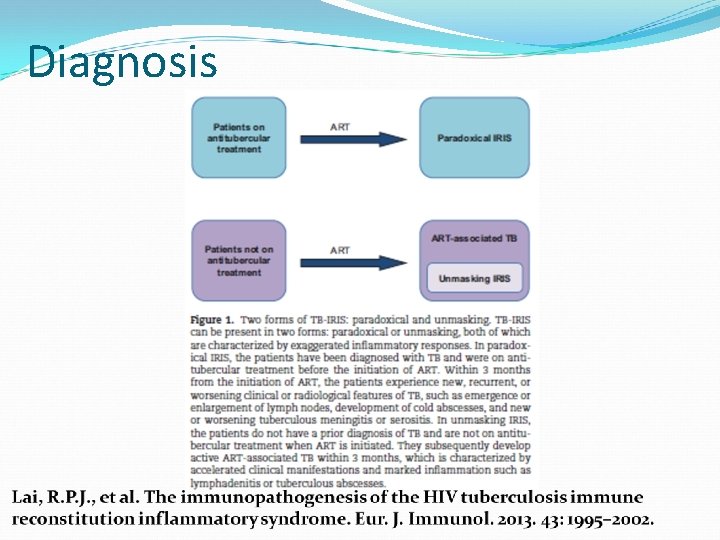
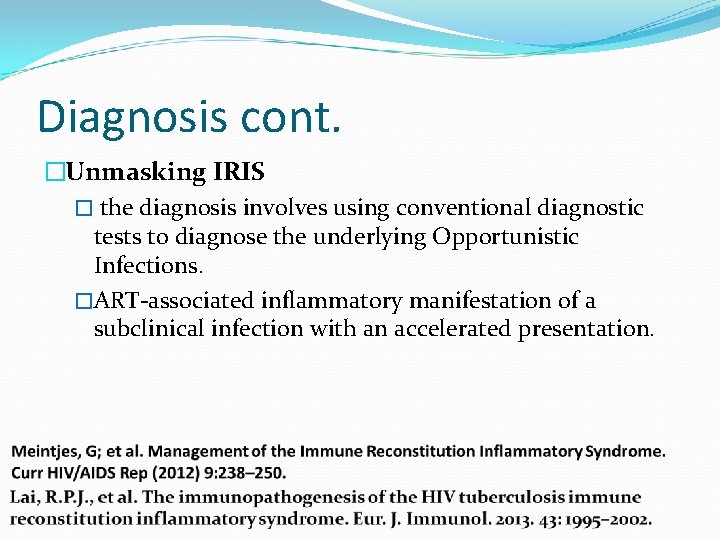
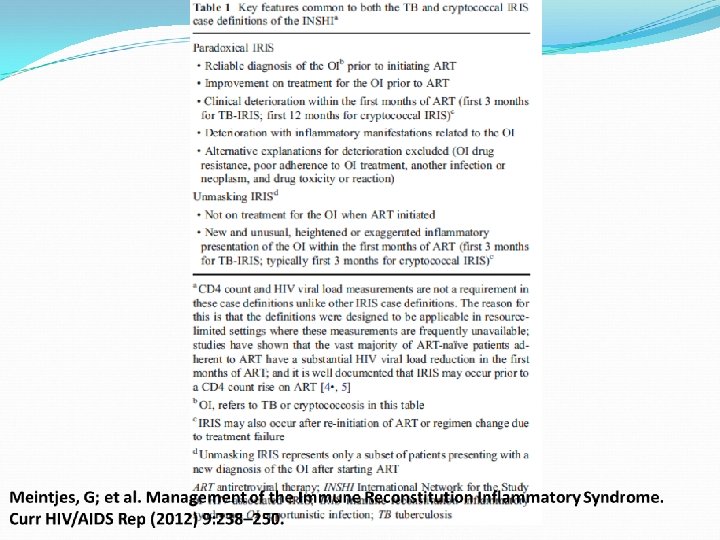
Diagnosis cont. �Unmasking IRIS � the diagnosis involves using conventional diagnostic tests to diagnose the underlying Opportunistic Infections. �ART-associated inflammatory manifestation of a subclinical infection with an accelerated presentation.
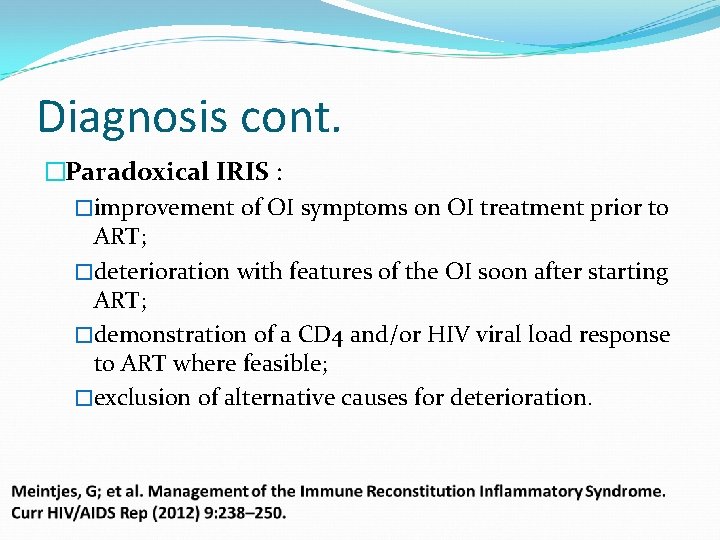
Diagnosis cont. �Paradoxical IRIS : �improvement of OI symptoms on OI treatment prior to ART; �deterioration with features of the OI soon after starting ART; �demonstration of a CD 4 and/or HIV viral load response to ART where feasible; �exclusion of alternative causes for deterioration.
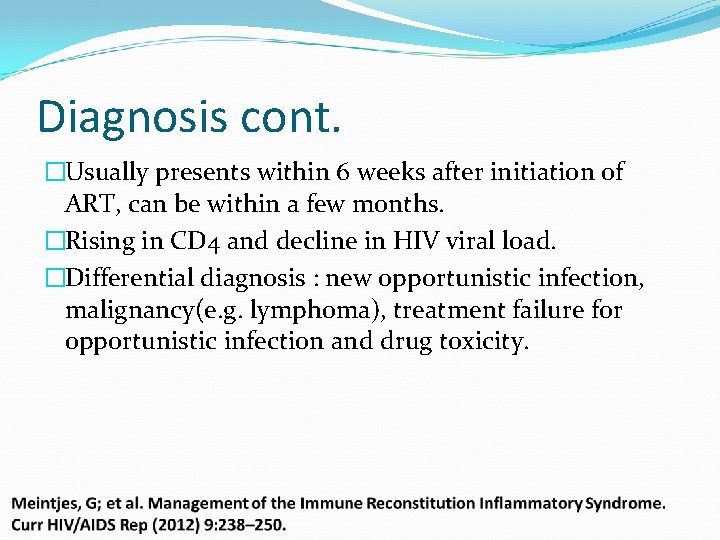
Diagnosis cont. �Usually presents within 6 weeks after initiation of ART, can be within a few months. �Rising in CD 4 and decline in HIV viral load. �Differential diagnosis : new opportunistic infection, malignancy(e. g. lymphoma), treatment failure for opportunistic infection and drug toxicity.
Diagnosis cont. . �Half of IRIS cases require hospitalization. �Mortality associated with IRIS varies according to the underlying Opportunistic Infection( Central nervous system, which accounts for 12% of all TB-IRIS cases and has a mortality rate of up to 30%). �Certain cases IRIS only diagnosis of exclusion( e. g. new infiltrates on CXR).
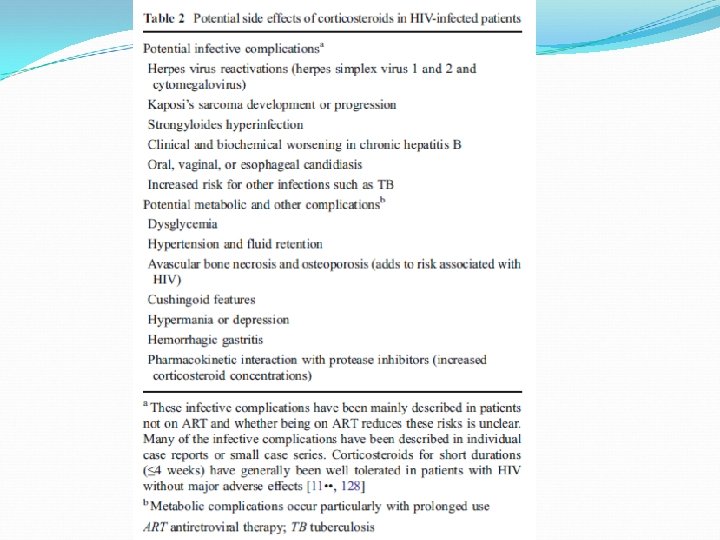
Treatment �Continue ART, except if inflammatory response is life threatening. �Anti-inflammatory treatment - NSAID �Response to corticosteroids is usually rapid. �Other anti-inflammatory or immunomodulatory drugs : thalidomide, pentoxifylline, tocilizumab, hydroxychloroquine, montelukast, maraviroc( CADIRIS trial), aspirin, statins and monoclonal Ab( CNS TB-IRIS).
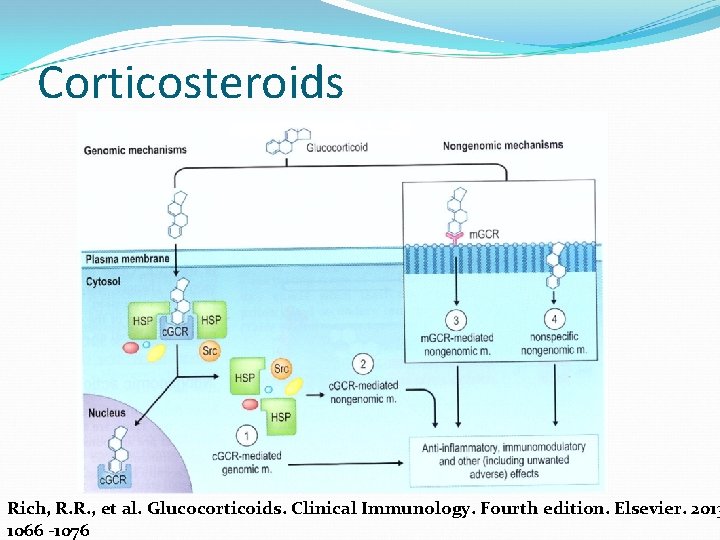
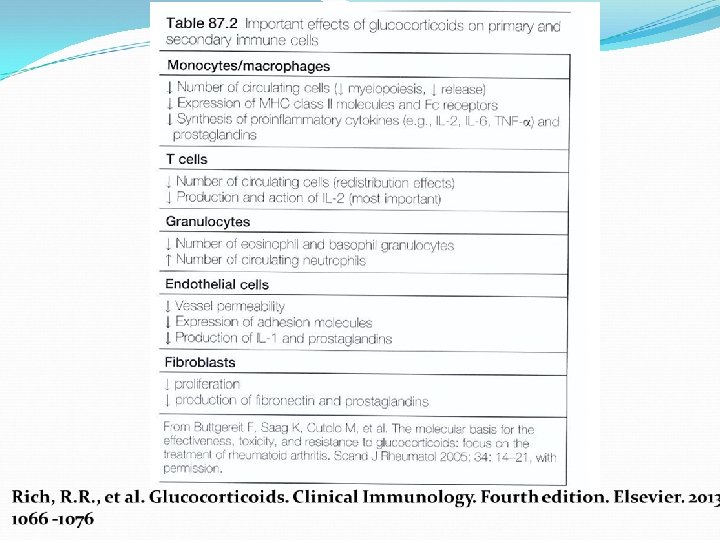
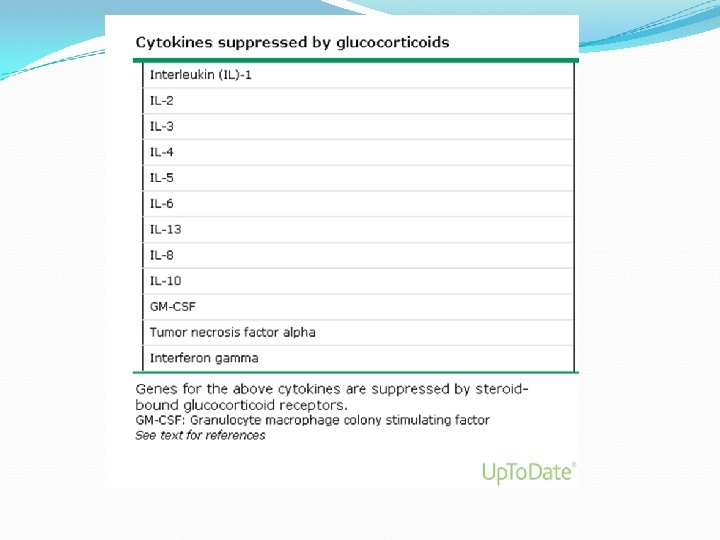
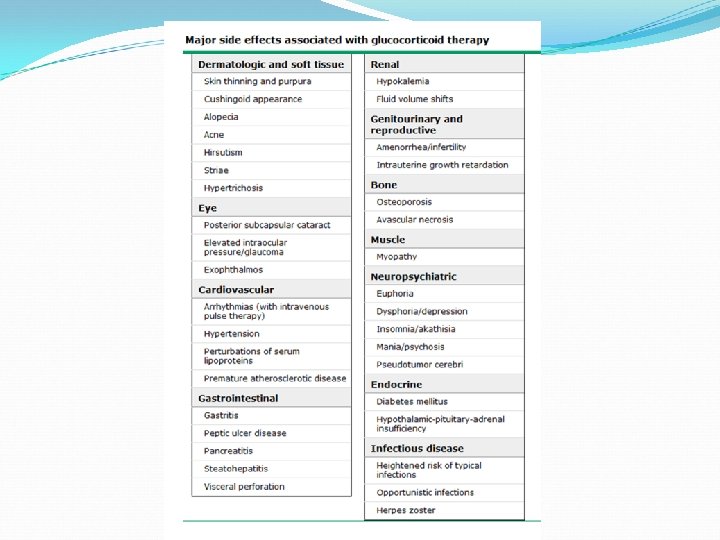
Corticosteroids Rich, R. R. , et al. Glucocorticoids. Clinical Immunology. Fourth edition. Elsevier. 2013 1066 -1076
PREVENTION �Possible to avoid IRIS by treating identified OI prior to initiation of HAART. �Reduce a high burden of organisms.
Review �Immunopathogenesis � 25 % of patients deteriorate after ART initiation. �Onset is usually within 6 weeks of ART initiation. �Mortality associated with IRIS varies according to the underlying Opportunistic Infection and area affected( 3, 2%). �Unmasking IRIS/Paradoxical IRIS �Risk factors �Treatment
Thank you