Hexavalent Chromium chrome 6 Training on the hazards

- Slides: 44
Hexavalent Chromium (chrome 6) Training on the hazards of hexavalent chromium in the workplace Developed by the Division of Occupational Safety & Health (DOSH) for employee training August, 2009
What This Training Will Cover • Characteristics of hexavalent chromium • Health hazards of hexavalent chromium • How you can be exposed to hexavalent chromium • Control of your hexavalent chromium exposure • Medical surveillance • DOSH rules on hexavalent chromium 2
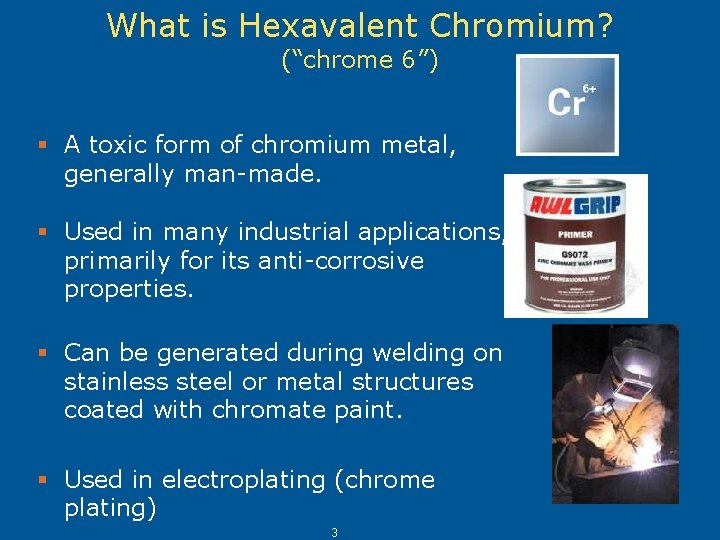
What is Hexavalent Chromium? (“chrome 6”) § A toxic form of chromium metal, generally man-made. § Used in many industrial applications, primarily for its anti-corrosive properties. § Can be generated during welding on stainless steel or metal structures coated with chromate paint. § Used in electroplating (chrome plating) 3
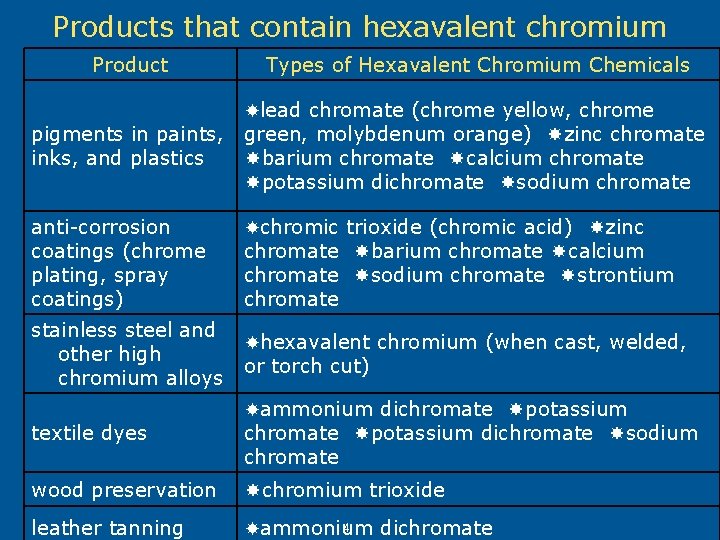
Products that contain hexavalent chromium Product Types of Hexavalent Chromium Chemicals lead chromate (chrome yellow, chrome pigments in paints, green, molybdenum orange) zinc chromate barium chromate calcium chromate inks, and plastics potassium dichromate sodium chromate anti-corrosion coatings (chrome plating, spray coatings) stainless steel and other high chromium alloys chromic trioxide (chromic acid) zinc chromate barium chromate calcium chromate sodium chromate strontium chromate hexavalent chromium (when cast, welded, or torch cut) ammonium dichromate potassium textile dyes chromate potassium dichromate sodium chromate wood preservation chromium trioxide leather tanning 4 ammonium dichromate
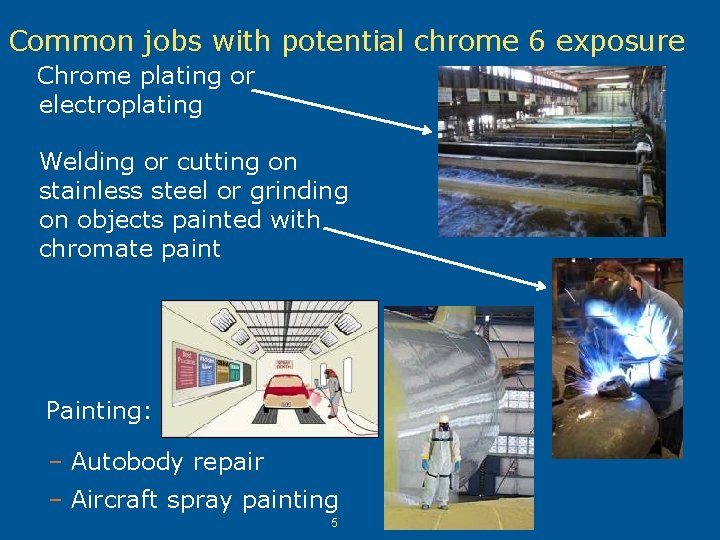
Common jobs with potential chrome 6 exposure Chrome plating or electroplating Welding or cutting on stainless steel or grinding on objects painted with chromate paint Painting: – Autobody repair – Aircraft spray painting 5
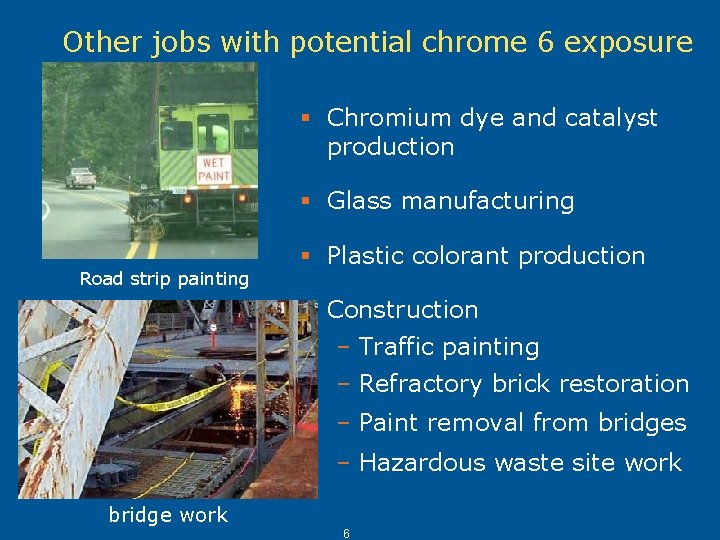
Other jobs with potential chrome 6 exposure § Chromium dye and catalyst production § Glass manufacturing Road strip painting § Plastic colorant production § Construction – Traffic painting – Refractory brick restoration – Paint removal from bridges – Hazardous waste site work bridge work 6
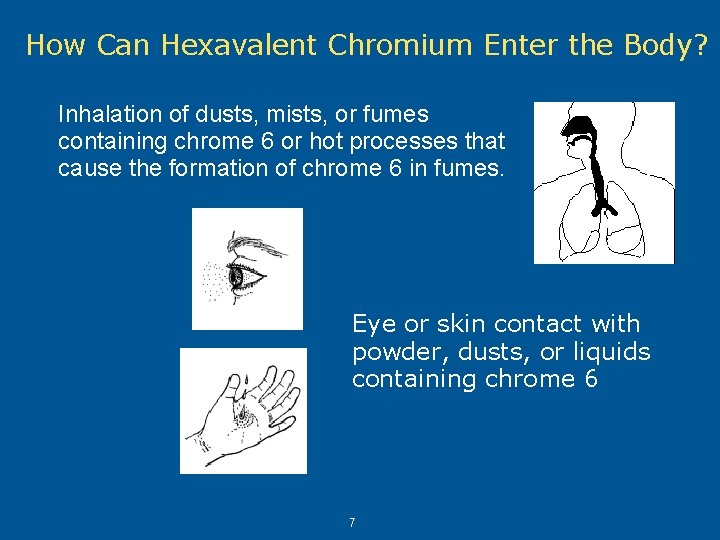
How Can Hexavalent Chromium Enter the Body? Inhalation of dusts, mists, or fumes containing chrome 6 or hot processes that cause the formation of chrome 6 in fumes. Eye or skin contact with powder, dusts, or liquids containing chrome 6 7
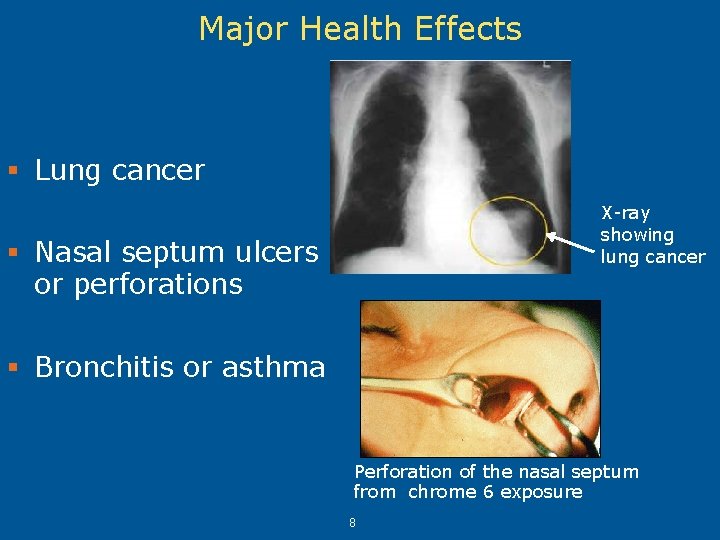
Major Health Effects § Lung cancer X-ray showing lung cancer § Nasal septum ulcers or perforations § Bronchitis or asthma Perforation of the nasal septum from chrome 6 exposure 8
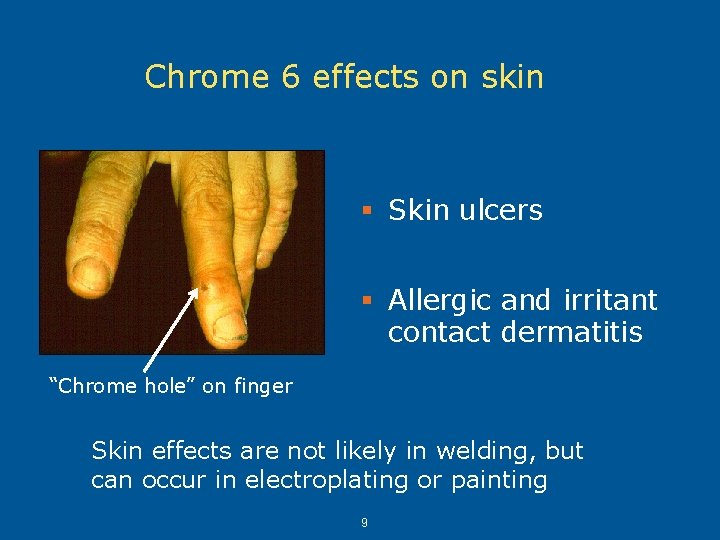
Chrome 6 effects on skin § Skin ulcers § Allergic and irritant contact dermatitis “Chrome hole” on finger Skin effects are not likely in welding, but can occur in electroplating or painting 9
The following operations/work areas where you may be exposed to chrome 6 are: [List the operations or work areas where chrome 6 is present. ] 10
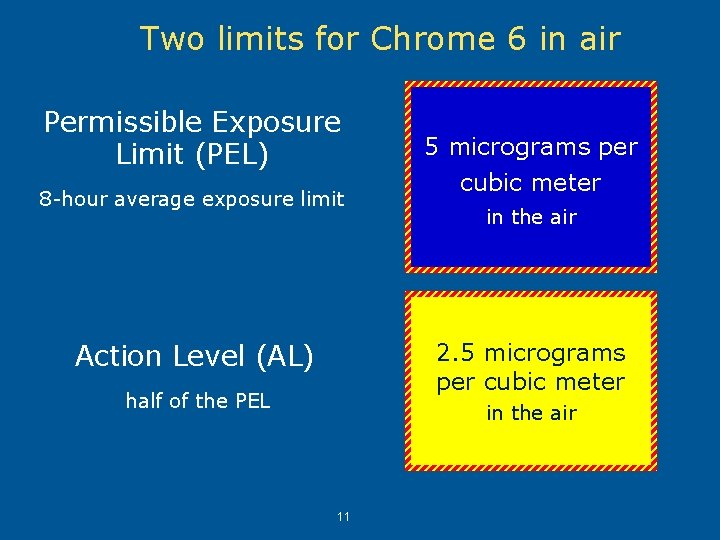
Two limits for Chrome 6 in air Permissible Exposure Limit (PEL) 8 -hour average exposure limit 5 micrograms per cubic meter in the air 2. 5 micrograms per cubic meter Action Level (AL) half of the PEL in the air 11
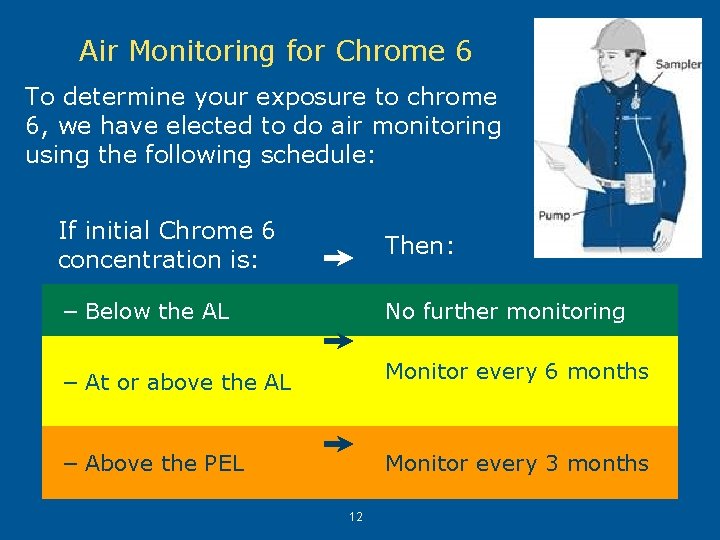
Air Monitoring for Chrome 6 To determine your exposure to chrome 6, we have elected to do air monitoring using the following schedule: If initial Chrome 6 concentration is: Then: − Below the AL No further monitoring − At or above the AL Monitor every 6 months − Above the PEL Monitor every 3 months 12
Other ways we have determined your chrome 6 exposure: [Indentify or describe how you have done this determination] 13
Notification of air monitoring results If air monitoring shows chrome 6 levels in the air exceed the PEL we must: - Notify you within 5 days in construction or within 15 days in general industry - Describe to you in writing what corrective actions we will take to reduce your exposure below the PEL. 14
The results of our exposure determination were as follows: [List results here. ] 15
Regulated Areas where employee exposures do exceed or can be expected to exceed the PEL - These area are clearly marked by: (describe method) - Access is limited to: – authorized persons required by work duties to be there – designated representatives of employees for the purpose of observing monitoring procedures – employees entering must be wearing appropriate personal protective equipment such as a respirator. 16
Our Regulated Areas are as follows: [ List specific locations] 17
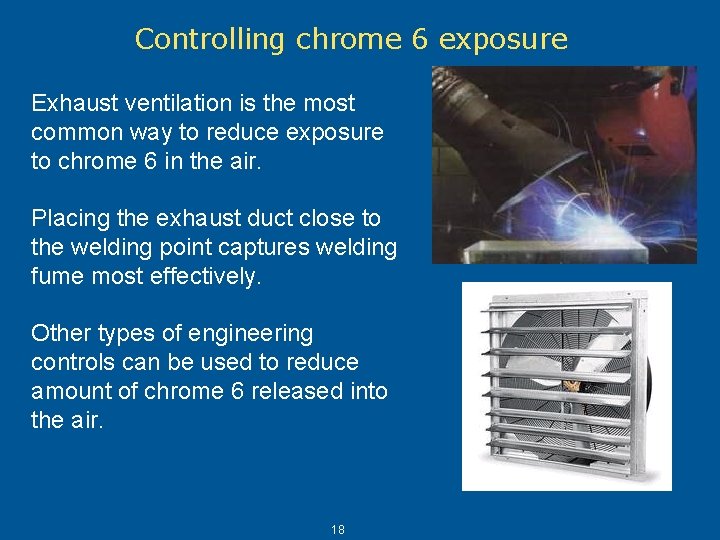
Controlling chrome 6 exposure Exhaust ventilation is the most common way to reduce exposure to chrome 6 in the air. Placing the exhaust duct close to the welding point captures welding fume most effectively. Other types of engineering controls can be used to reduce amount of chrome 6 released into the air. 18
We use the following controls to reduce the amount of chrome 6 you are exposed to: [List controls here] 19
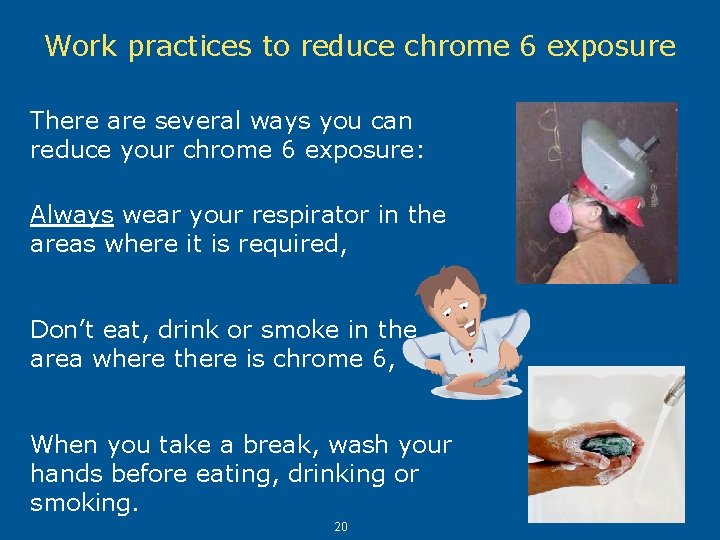
Work practices to reduce chrome 6 exposure There are several ways you can reduce your chrome 6 exposure: Always wear your respirator in the areas where it is required, Don’t eat, drink or smoke in the area where there is chrome 6, When you take a break, wash your hands before eating, drinking or smoking. 20
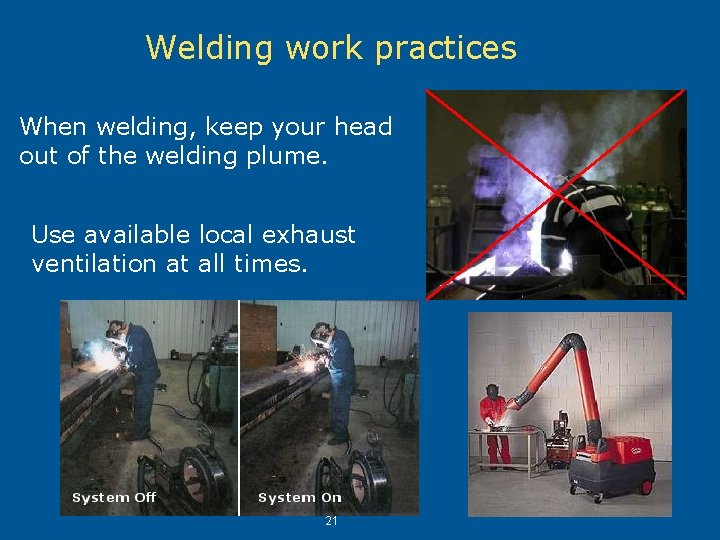
Welding work practices When welding, keep your head out of the welding plume. Use available local exhaust ventilation at all times. 21
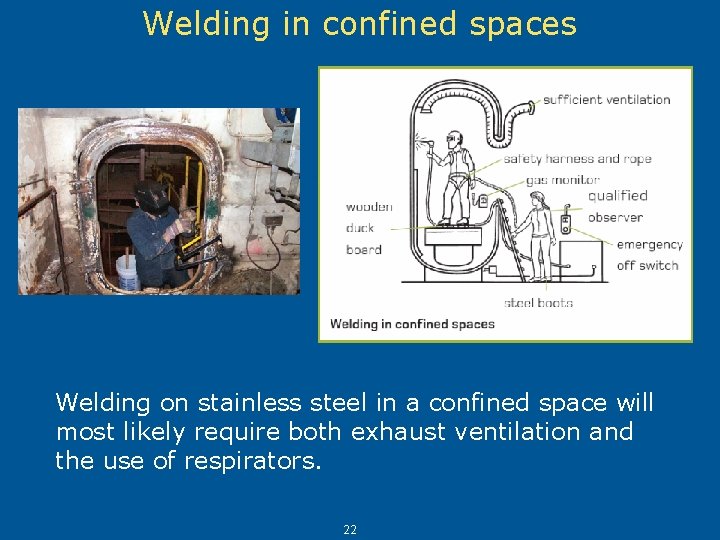
Welding in confined spaces Welding on stainless steel in a confined space will most likely require both exhaust ventilation and the use of respirators. 22
We follow these work practices: [List worksite-specific work practices that reduce or control exposures here. ] 23
Types of Respirators for Chrome 6 In some jobs involving chrome 6 exposure, you may need to wear a respirator. The type of respirator worn depends on the amount of chrome 6 in the air. We will provide you with the proper respirator and provide medical evaluations, fit-testing, and additional training. 24
If chrome 6 levels in the air are above the PEL the DOSH rule requires respirator use in the following cases: § During time needed to install or implement engineering and work practice controls. § During maintenance or repair operations where engineering and work practice controls are not feasible § Operations where all feasible controls have been used and exposures are still above the PEL. § Operations where chrome 6 levels are above the PEL for less than 30 days per year. (your employer’s option. ) § Emergencies (uncontrolled releases of chrome 6) 25
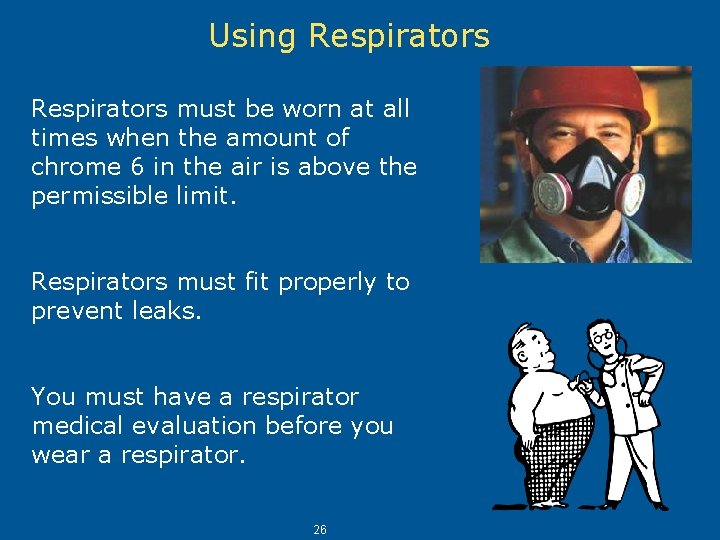
Using Respirators must be worn at all times when the amount of chrome 6 in the air is above the permissible limit. Respirators must fit properly to prevent leaks. You must have a respirator medical evaluation before you wear a respirator. 26
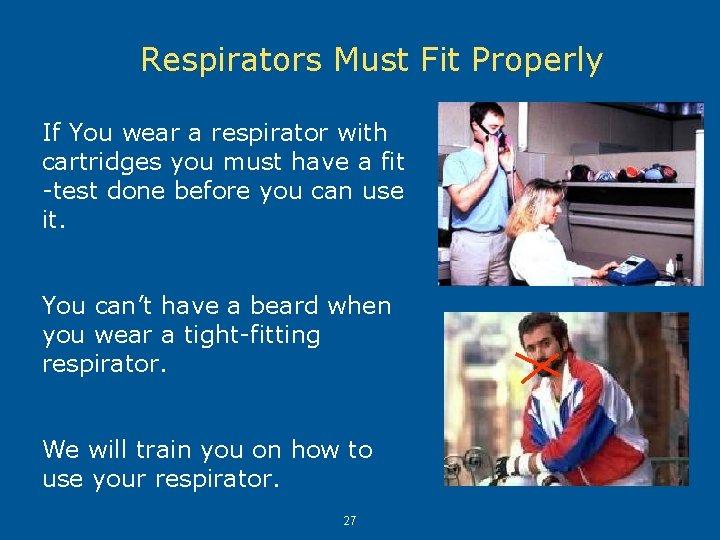
Respirators Must Fit Properly If You wear a respirator with cartridges you must have a fit -test done before you can use it. You can’t have a beard when you wear a tight-fitting respirator. We will train you on how to use your respirator. 27
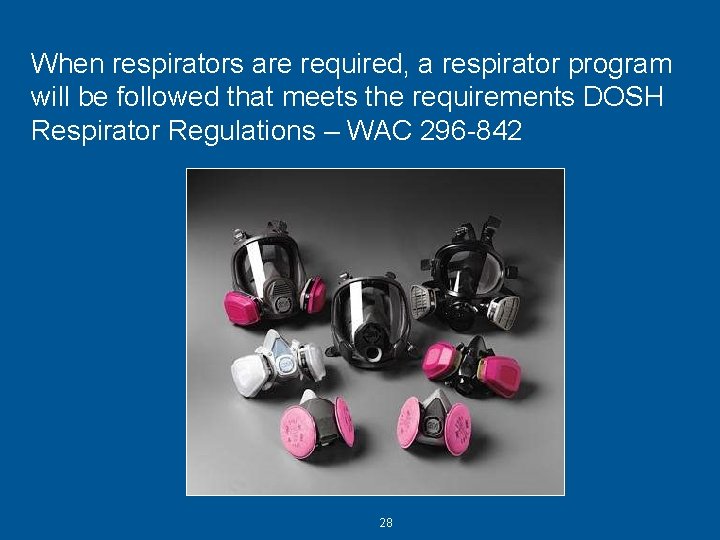
When respirators are required, a respirator program will be followed that meets the requirements DOSH Respirator Regulations – WAC 296 -842 28
Type of Respirator You Will Use List or describe what respirators must be used under what conditions, job tasks, or locations here] 29
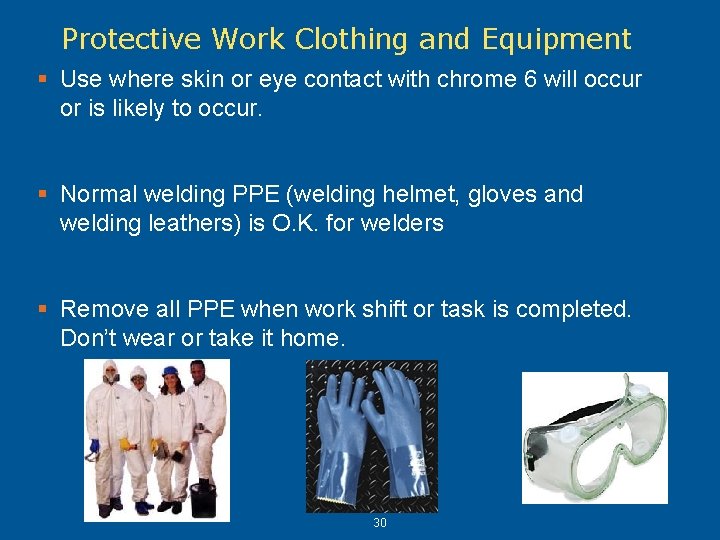
Protective Work Clothing and Equipment § Use where skin or eye contact with chrome 6 will occur or is likely to occur. § Normal welding PPE (welding helmet, gloves and welding leathers) is O. K. for welders § Remove all PPE when work shift or task is completed. Don’t wear or take it home. 30
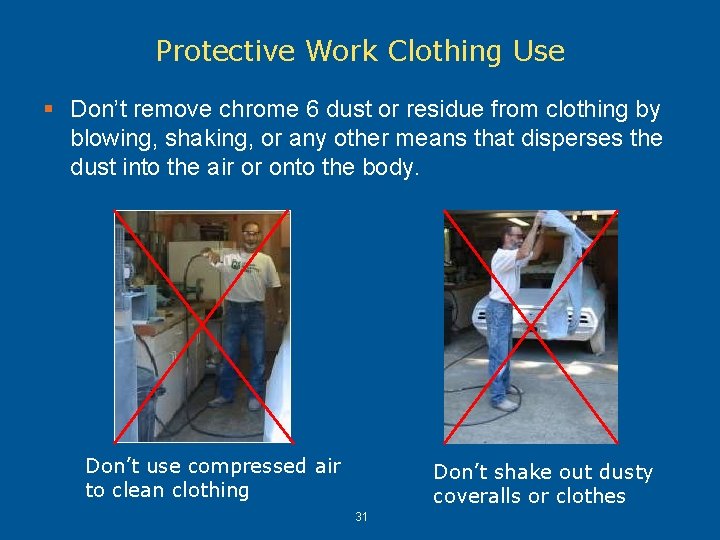
Protective Work Clothing Use § Don’t remove chrome 6 dust or residue from clothing by blowing, shaking, or any other means that disperses the dust into the air or onto the body. Don’t use compressed air to clean clothing Don’t shake out dusty coveralls or clothes 31
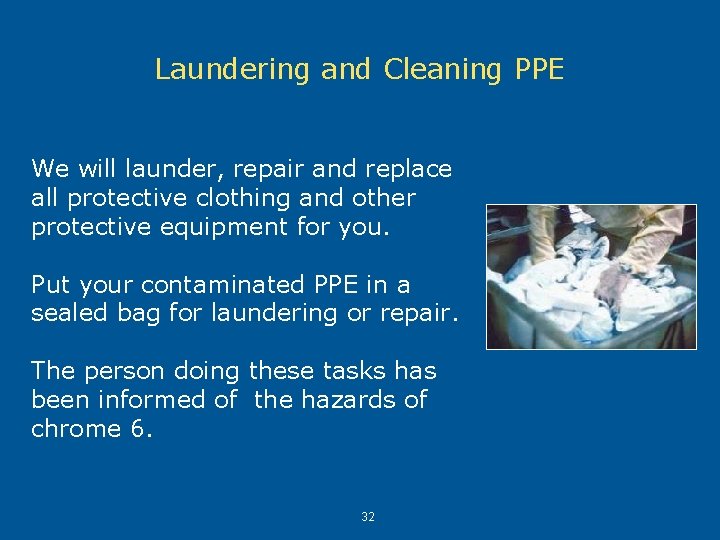
Laundering and Cleaning PPE We will launder, repair and replace all protective clothing and other protective equipment for you. Put your contaminated PPE in a sealed bag for laundering or repair. The person doing these tasks has been informed of the hazards of chrome 6. 32
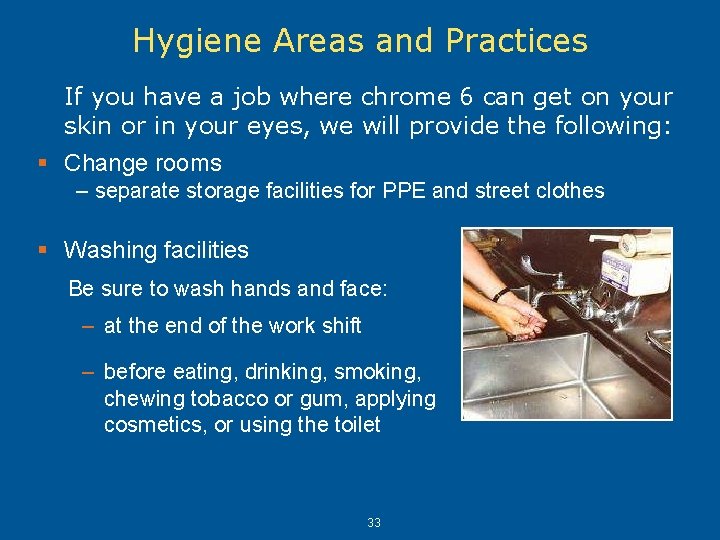
Hygiene Areas and Practices If you have a job where chrome 6 can get on your skin or in your eyes, we will provide the following: § Change rooms – separate storage facilities for PPE and street clothes § Washing facilities Be sure to wash hands and face: – at the end of the work shift – before eating, drinking, smoking, chewing tobacco or gum, applying cosmetics, or using the toilet 33
Housekeeping § Keep all surfaces as free as practicable of accumulations of dust containing chrome 6. § Promptly clean up all spills and releases of chrome 6 containing materials § Use a HEPA vacuum or wet methods for cleaning areas contaminated with dust or other materials containing chrome 6 § Dispose of chrome 6 contaminated waste in labeled & sealed bags or containers. 34
Who Must Be Provided Medical Exams? § Any employee exposed at or above the action level for 30 or more days per year. § Any employee experiencing signs or symptoms of chrome 6 exposure. § Any employee exposed in an uncontrolled release of large amounts of chrome 6 in any form. 35
Medical Exams (cont. ) § Are done by or under the supervision of a physician or other licensed health care professional § Provided at no cost to you at a reasonable place and time 36
Medical Exams will do the following: § Determine if you can be exposed to Chrome 6 without experiencing adverse health effects. § Identify chrome 6 related adverse health effects so that appropriate measures can be taken. § Determine your fitness to use respirators. 37
Medical exams will include the following: § Medical and work history – Cr(VI) exposure (past, present, future) – History of respiratory system dysfunction – History of asthma, dermatitis, skin ulceration or nasal system perforation – Smoking status and history § Physical examination, with emphasis on the respiratory tract and skin § Any additional tests deemed appropriate by the healthcare professional 38
Medical Exams are offered: § Within 30 days after initial assignment and annually thereafter § Within 30 days after a doctor recommends additional examinations § When employees shows signs or symptoms of Chrome 6 exposure § Within 30 days after exposure during an emergency § At the termination of employment 39
Healthcare professional’s written medical opinion § After your medical exam the health care professional will give a written medical opinion to us within thirty days § Specific findings or diagnoses unrelated to occupational exposure to chrome 6 will be not revealed to us § We will give you a copy of the written medical opinion within two weeks after we receive it 40
Worksite Medical Surveillance Program [Describe details of your worksite specific medical surveillance program here. ] 41
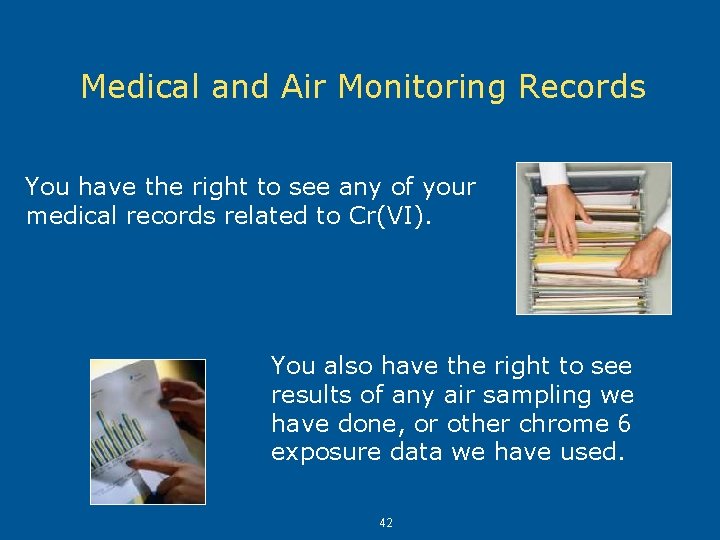
Medical and Air Monitoring Records You have the right to see any of your medical records related to Cr(VI). You also have the right to see results of any air sampling we have done, or other chrome 6 exposure data we have used. 42
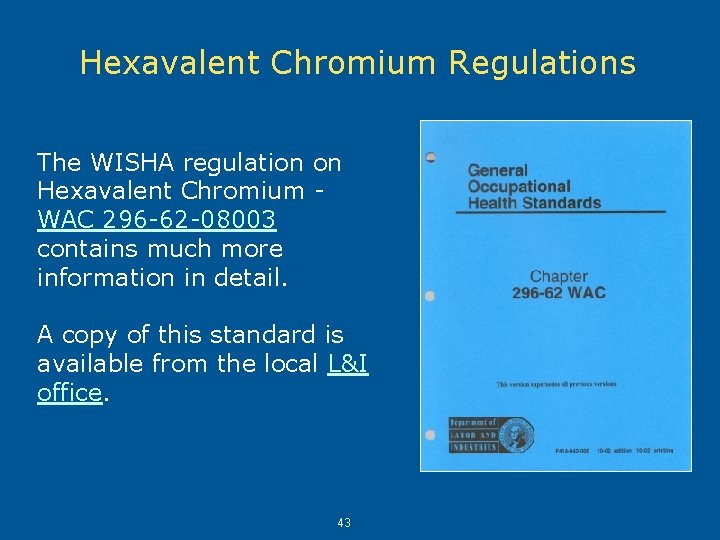
Hexavalent Chromium Regulations The WISHA regulation on Hexavalent Chromium WAC 296 -62 -08003 contains much more information in detail. A copy of this standard is available from the local L&I office. 43
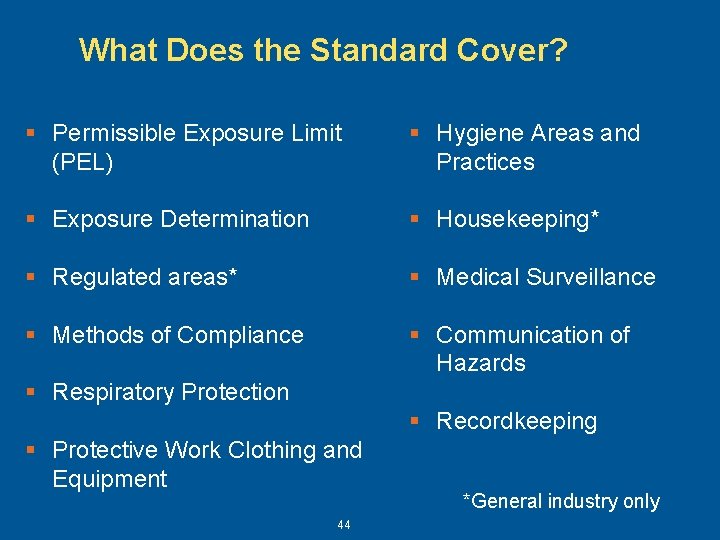
What Does the Standard Cover? § Permissible Exposure Limit (PEL) § Hygiene Areas and Practices § Exposure Determination § Housekeeping* § Regulated areas* § Medical Surveillance § Methods of Compliance § Communication of Hazards § Respiratory Protection § Recordkeeping § Protective Work Clothing and Equipment 44 *General industry only