
The Atomic Theory CH 2 Discovering the Atom

- Slides: 72
The Atomic Theory CH. 2
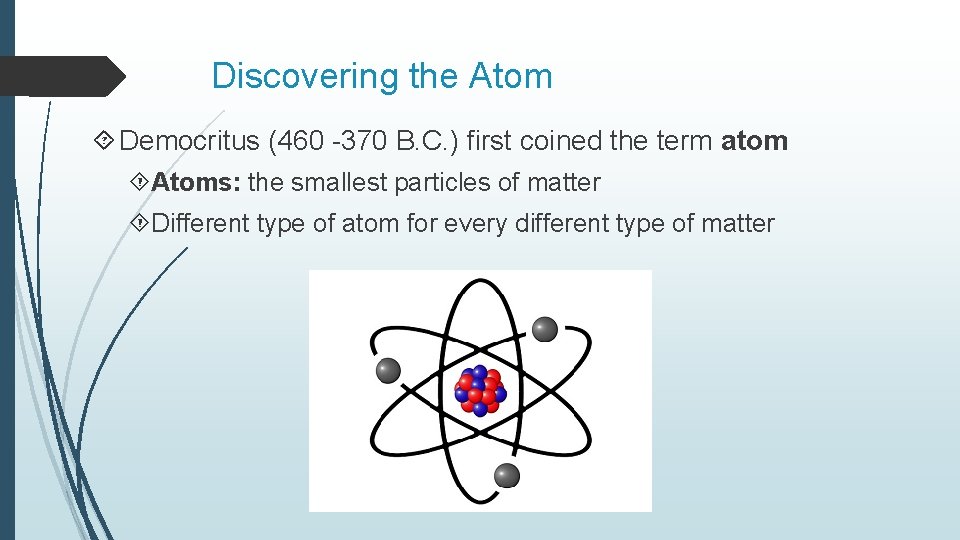
Discovering the Atom Democritus (460 -370 B. C. ) first coined the term atom Atoms: the smallest particles of matter Different type of atom for every different type of matter
Law of Conservation of Matter Mass of reactants (before reaction) is equal to the mass of the products (after the reaction) Matter can neither be created nor destroyed only changed AKA Las of conservation of Mass
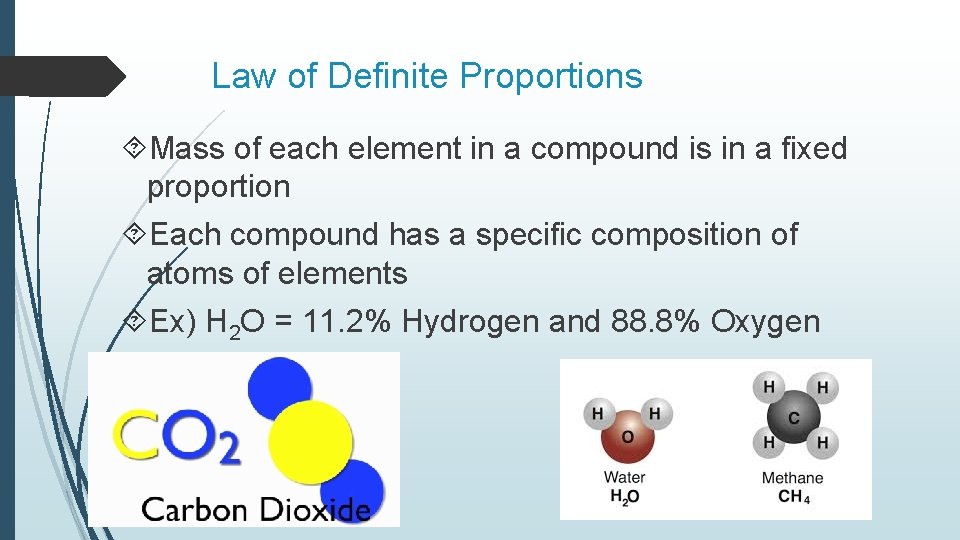
Law of Definite Proportions Mass of each element in a compound is in a fixed proportion Each compound has a specific composition of atoms of elements Ex) H 2 O = 11. 2% Hydrogen and 88. 8% Oxygen
Dalton’s Atomic Theory All matter is made of Atoms are indestructible and cannot be divided into smaller particles Atoms are indivisible All atoms of one element are the same, but they are different from atoms of other elements
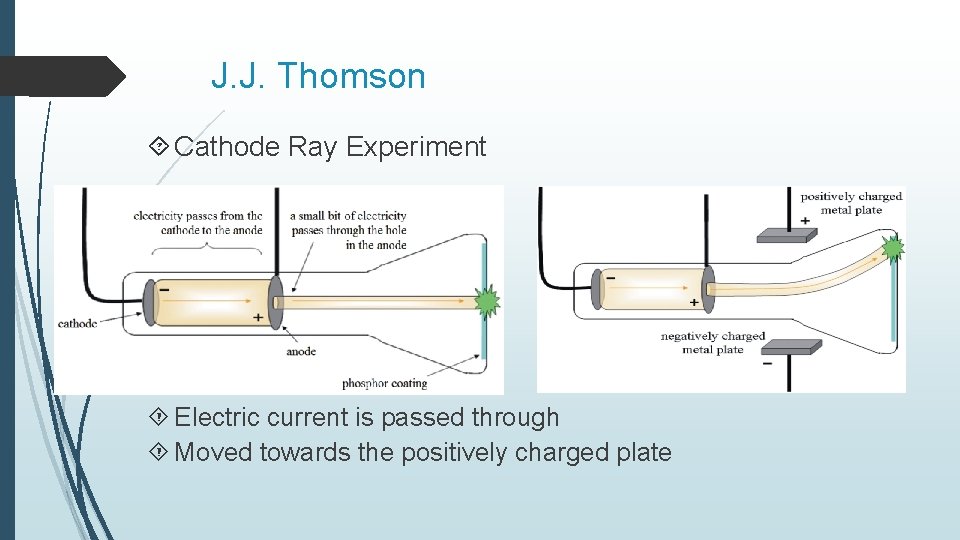
J. J. Thomson Cathode Ray Experiment Electric current is passed through Moved towards the positively charged plate
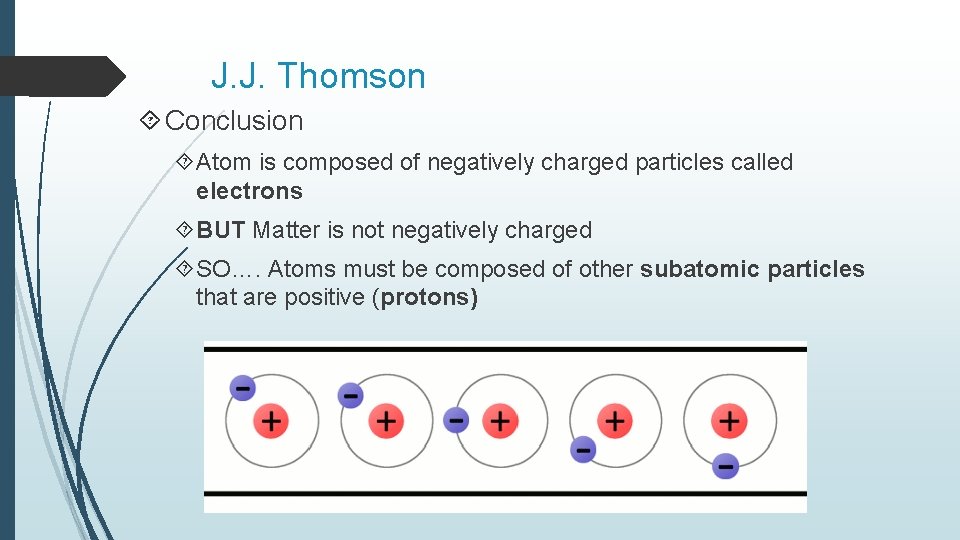
J. J. Thomson Conclusion Atom is composed of negatively charged particles called electrons BUT Matter is not negatively charged SO…. Atoms must be composed of other subatomic particles that are positive (protons)
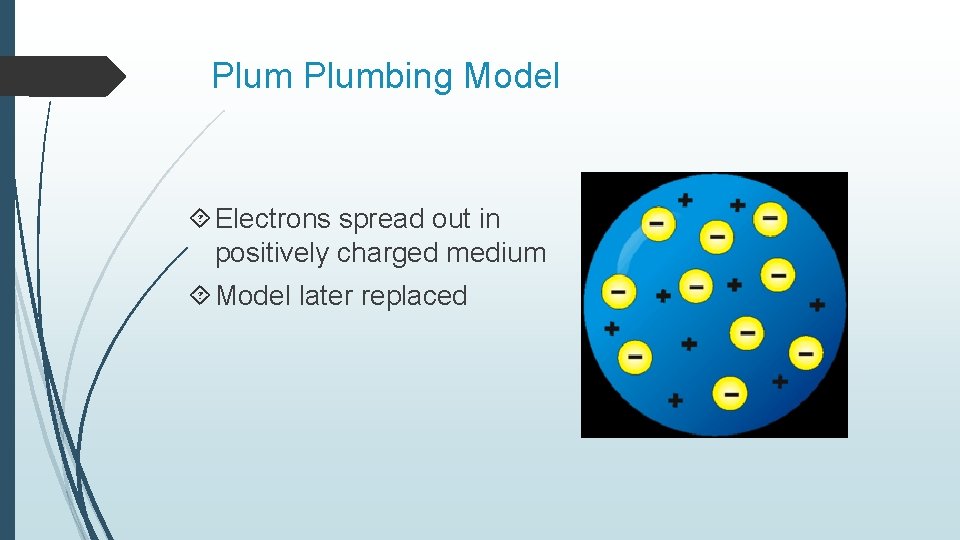
Plumbing Model Electrons spread out in positively charged medium Model later replaced
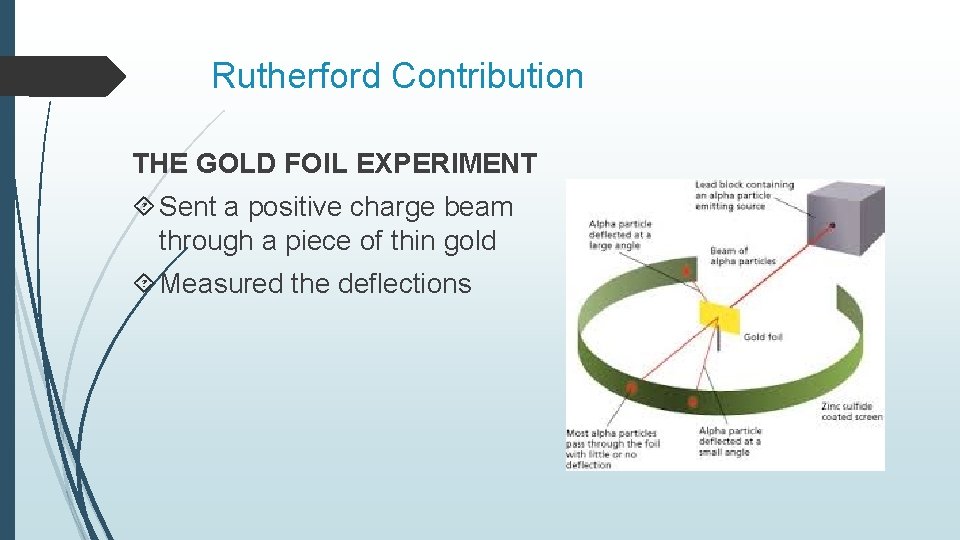
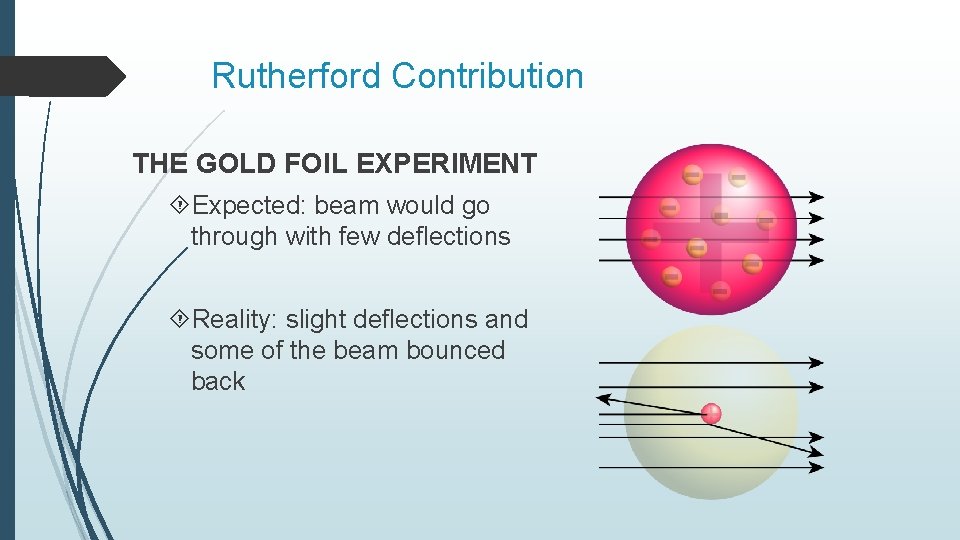
Rutherford Contribution THE GOLD FOIL EXPERIMENT Sent a positive charge beam through a piece of thin gold Measured the deflections
Rutherford Contribution THE GOLD FOIL EXPERIMENT Expected: beam would go through with few deflections Reality: slight deflections and some of the beam bounced back
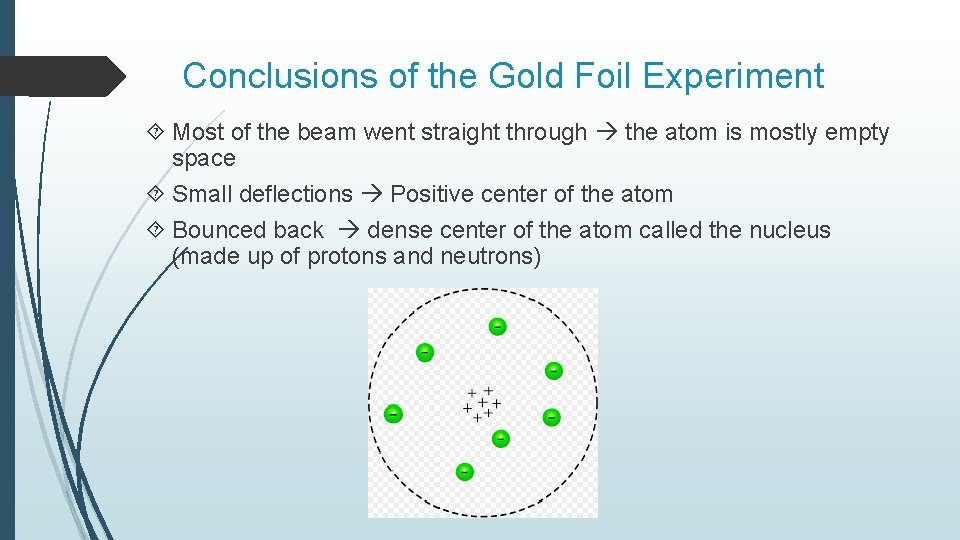
Conclusions of the Gold Foil Experiment Most of the beam went straight through the atom is mostly empty space Small deflections Positive center of the atom Bounced back dense center of the atom called the nucleus (made up of protons and neutrons)
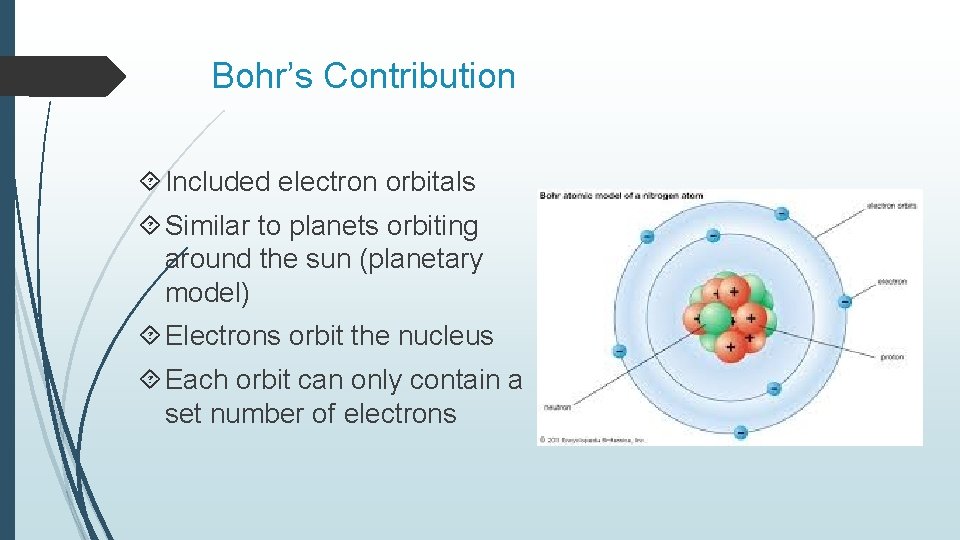
Bohr’s Contribution Included electron orbitals Similar to planets orbiting around the sun (planetary model) Electrons orbit the nucleus Each orbit can only contain a set number of electrons
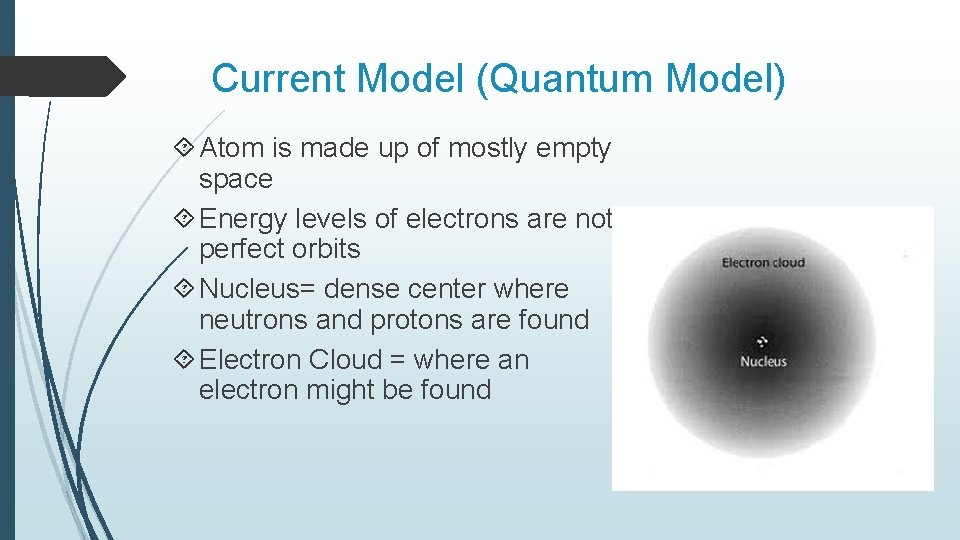
Current Model (Quantum Model) Atom is made up of mostly empty space Energy levels of electrons are not perfect orbits Nucleus= dense center where neutrons and protons are found Electron Cloud = where an electron might be found
Subatomic Particles of an Atom Subatomic Particles: particles smaller than an atom and are found in different areas within the atom Electron Proton Neutron
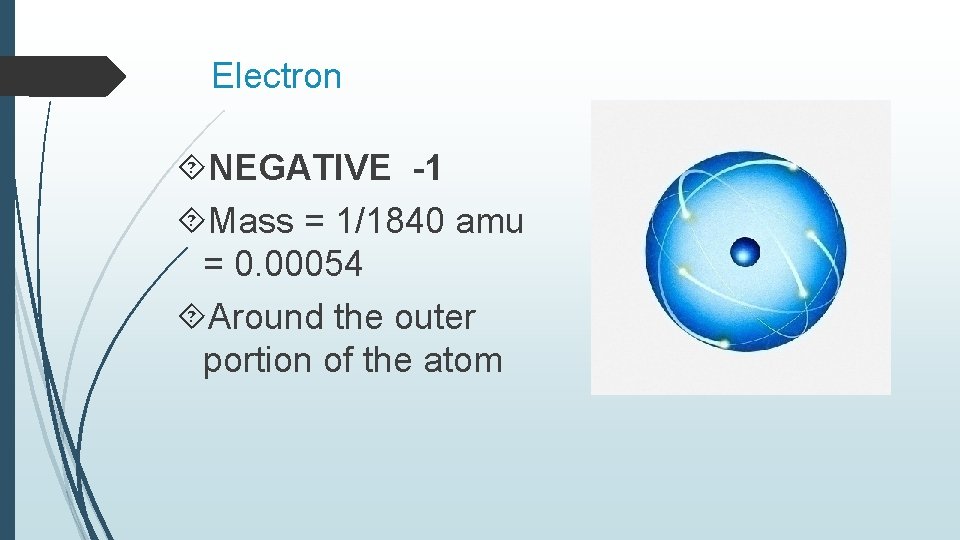
Electron NEGATIVE -1 Mass = 1/1840 amu = 0. 00054 Around the outer portion of the atom
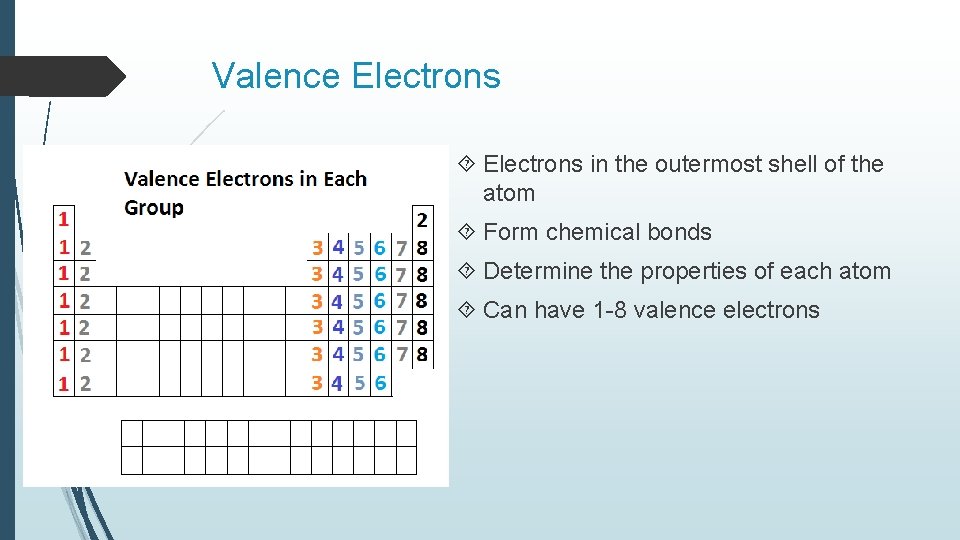
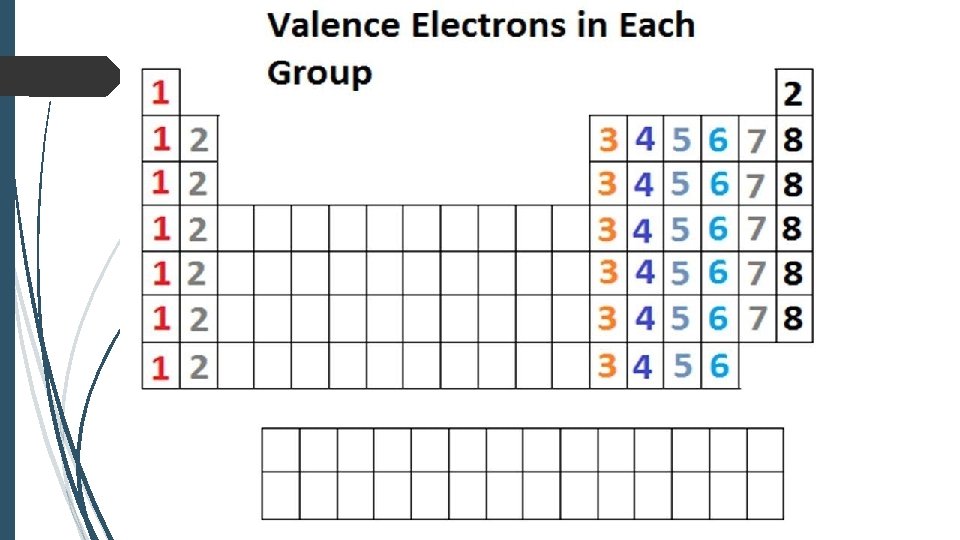
Valence Electrons in the outermost shell of the atom Form chemical bonds Determine the properties of each atom Can have 1 -8 valence electrons
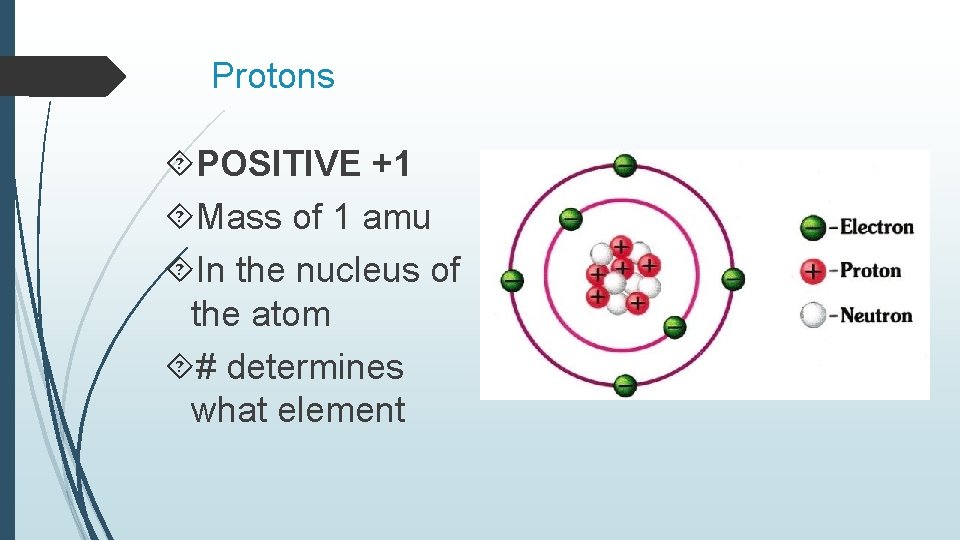
Protons POSITIVE +1 Mass of 1 amu In the nucleus of the atom # determines what element
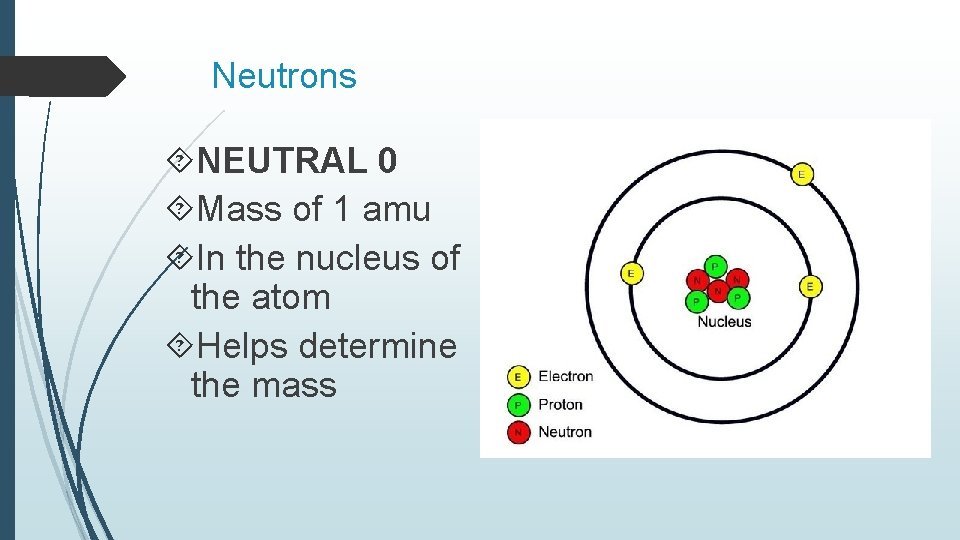
Neutrons NEUTRAL 0 Mass of 1 amu In the nucleus of the atom Helps determine the mass
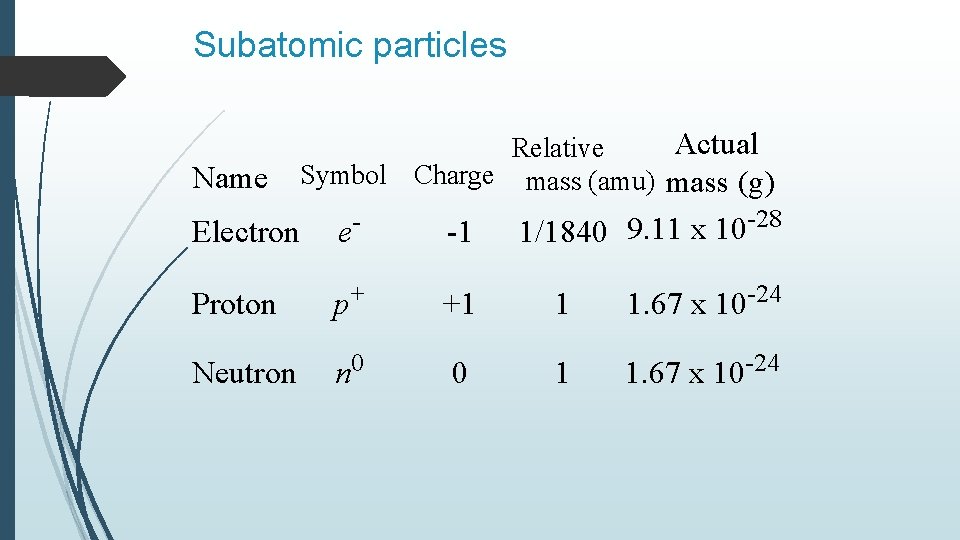
Subatomic particles Name Actual Relative Symbol Charge mass (amu) mass (g) -28 9. 11 x 10 1/1840 Electron e- -1 Proton p+ +1 1 1. 67 x 10 -24 Neutron n 0 0 1 1. 67 x 10 -24
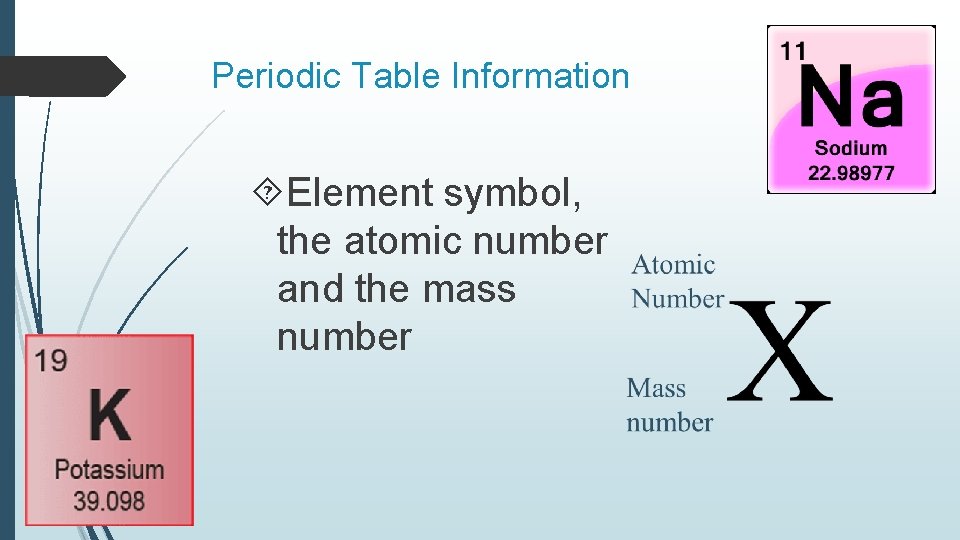
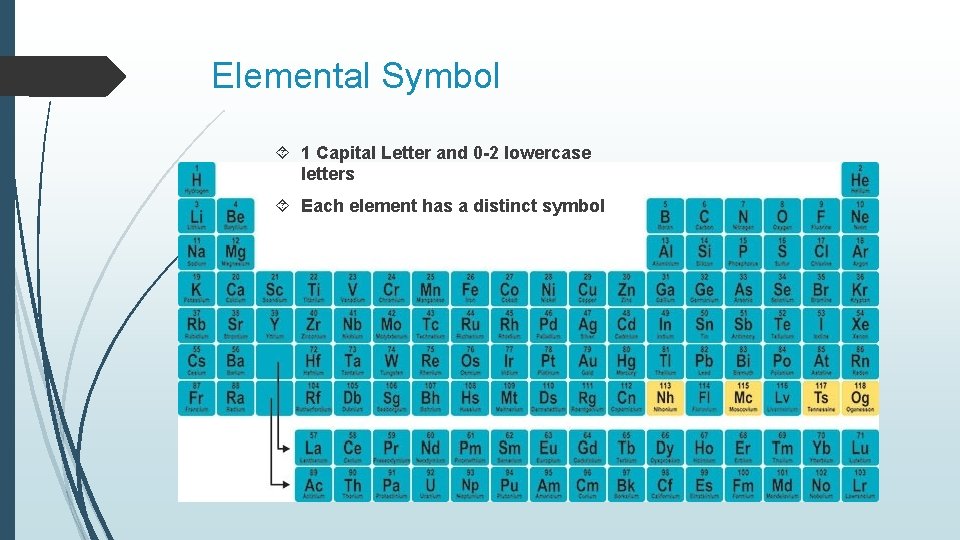
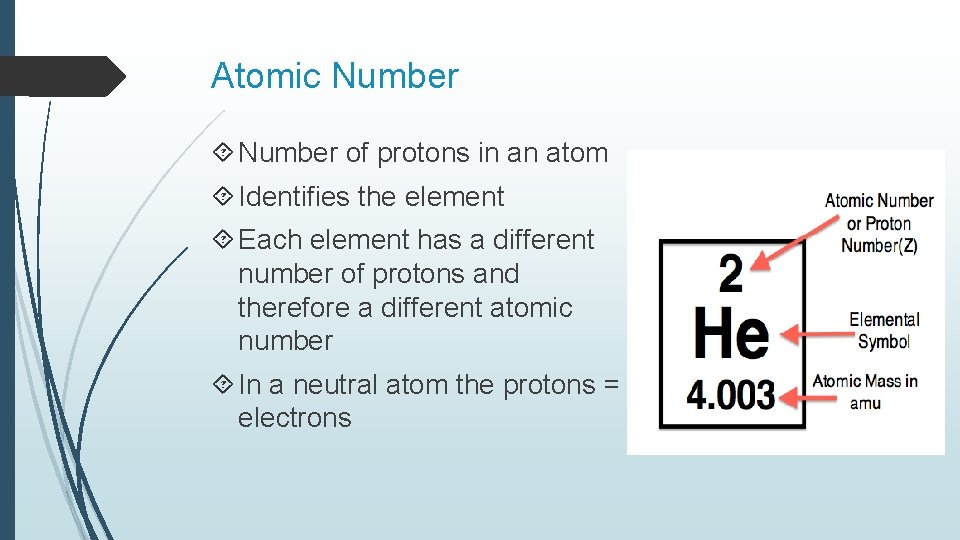
Periodic Table Information Element symbol, the atomic number and the mass number
Elemental Symbol 1 Capital Letter and 0 -2 lowercase letters Each element has a distinct symbol
Atomic Number of protons in an atom Identifies the element Each element has a different number of protons and therefore a different atomic number In a neutral atom the protons = electrons
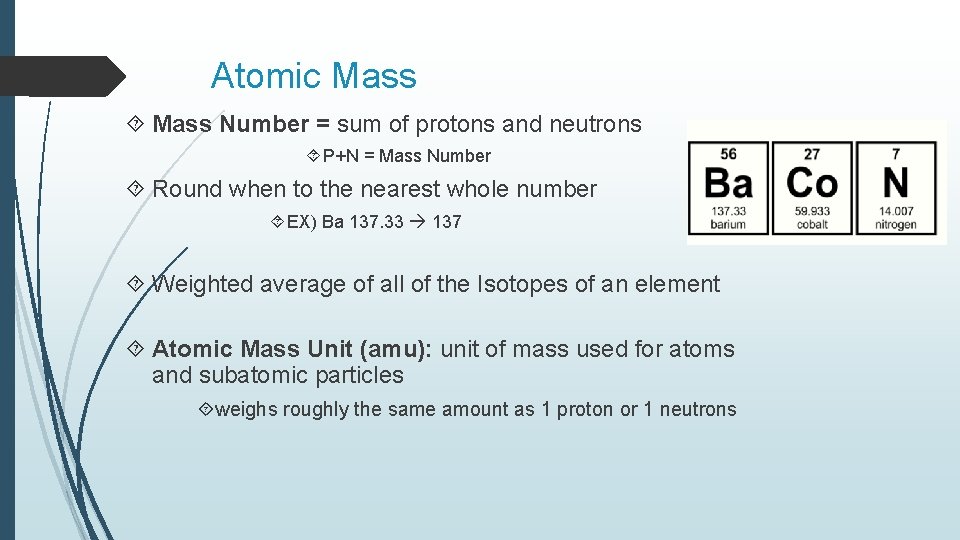
Atomic Mass Number = sum of protons and neutrons P+N = Mass Number Round when to the nearest whole number EX) Ba 137. 33 137 Weighted average of all of the Isotopes of an element Atomic Mass Unit (amu): unit of mass used for atoms and subatomic particles weighs roughly the same amount as 1 proton or 1 neutrons
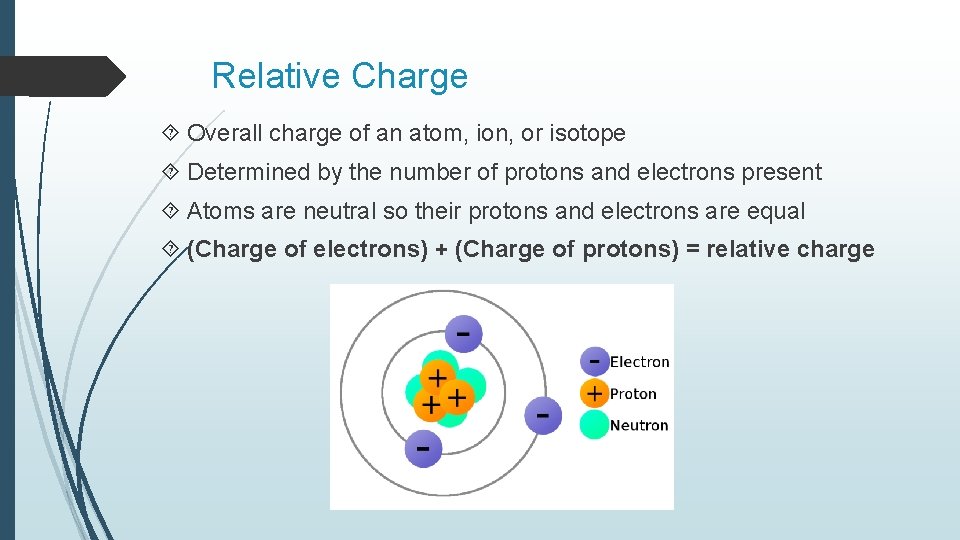
Relative Charge Overall charge of an atom, ion, or isotope Determined by the number of protons and electrons present Atoms are neutral so their protons and electrons are equal (Charge of electrons) + (Charge of protons) = relative charge
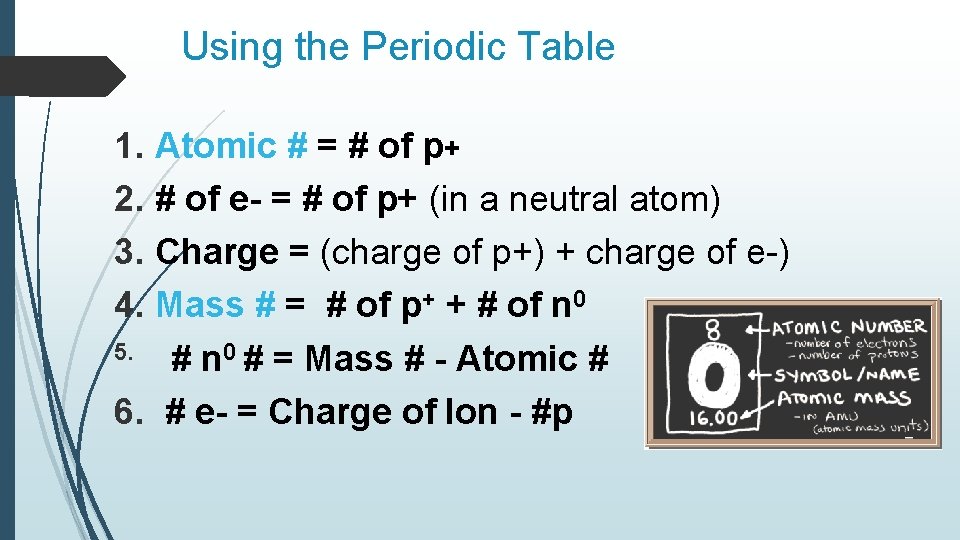
Using the Periodic Table 1. Atomic # = # of p+ 2. # of e- = # of p+ (in a neutral atom) 3. Charge = (charge of p+) + charge of e-) 4. Mass # = # of p+ + # of n 0 5. # n 0 # = Mass # - Atomic # 6. # e- = Charge of Ion - #p
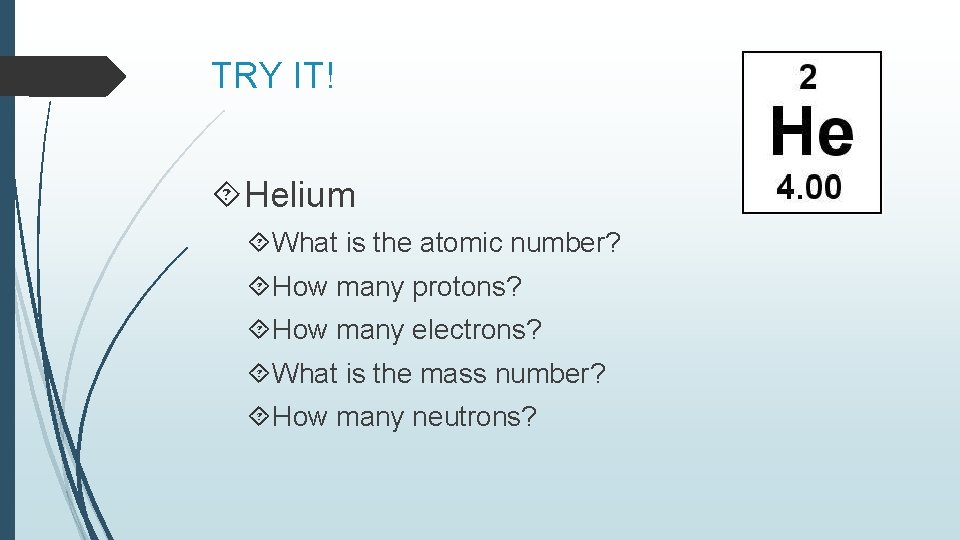
TRY IT! Helium What is the atomic number? How many protons? How many electrons? What is the mass number? How many neutrons?
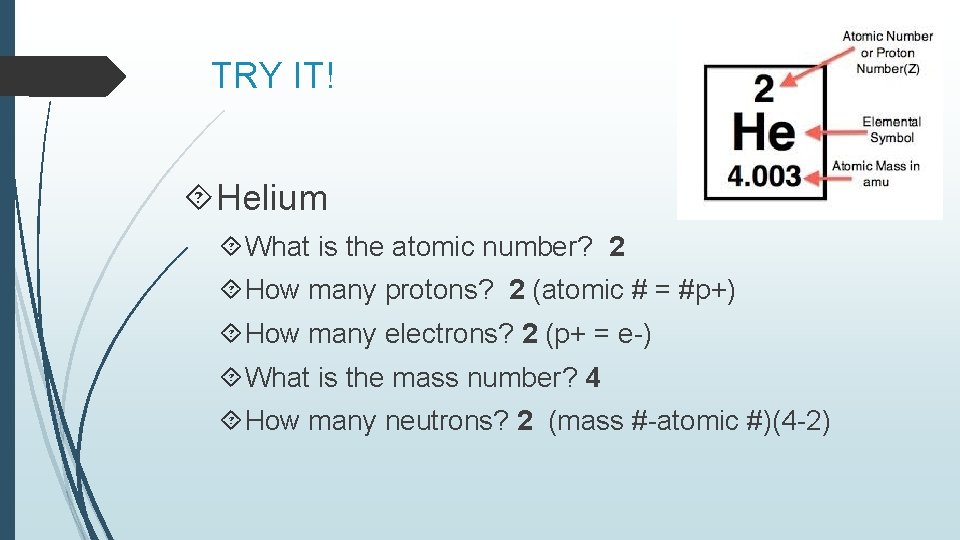
TRY IT! Helium What is the atomic number? 2 How many protons? 2 (atomic # = #p+) How many electrons? 2 (p+ = e-) What is the mass number? 4 How many neutrons? 2 (mass #-atomic #)(4 -2)
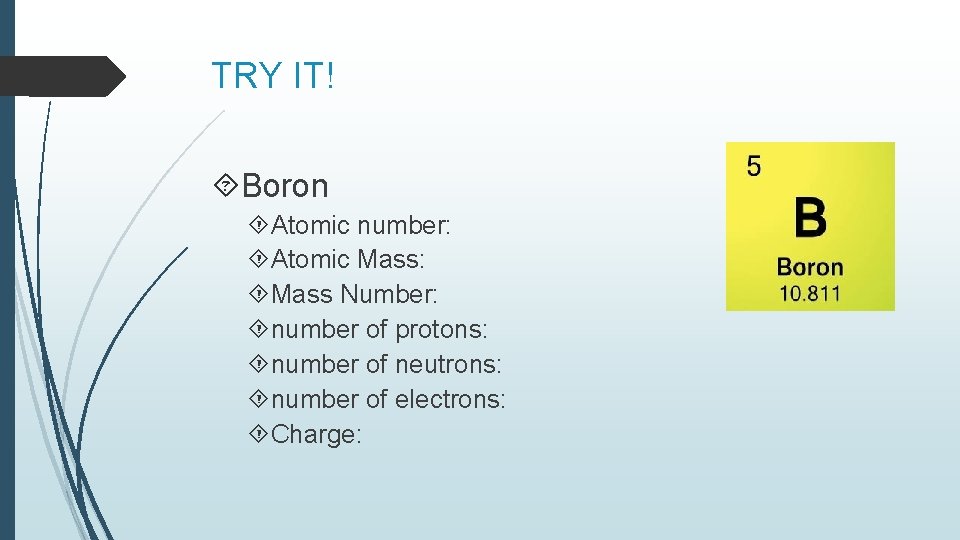
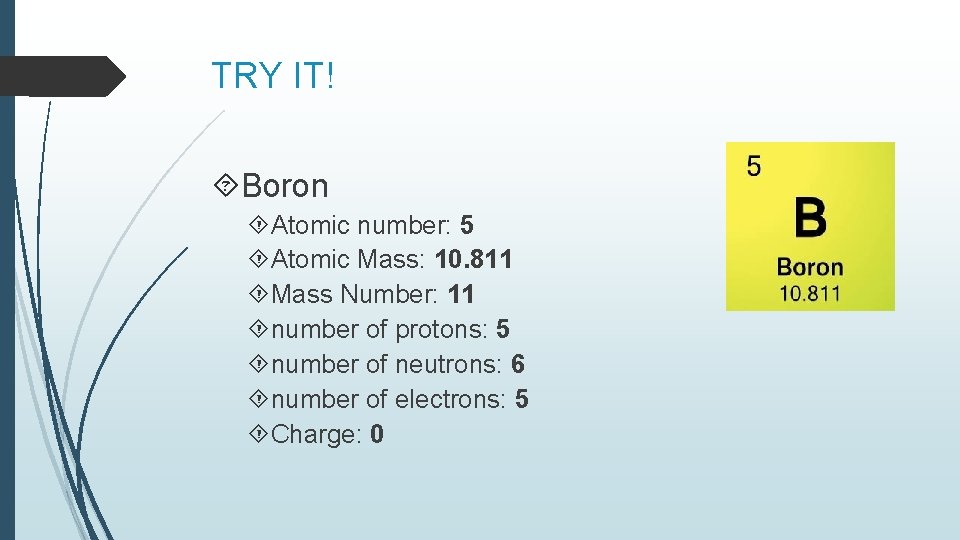
TRY IT! Boron Atomic number: Atomic Mass: Mass Number: number of protons: number of neutrons: number of electrons: Charge:
TRY IT! Boron Atomic number: 5 Atomic Mass: 10. 811 Mass Number: 11 number of protons: 5 number of neutrons: 6 number of electrons: 5 Charge: 0
TRY IT! n An element has 35 electrons and 45 neutrons what is the – Atomic number – Mass number – number of protons – charge – symbol – Name
TRY IT! n An element has 35 electrons and 45 neutrons what is the – Atomic number 35 – Mass number 80 – number of protons 35 – Charge 0 – Symbol Br – Name Bromine
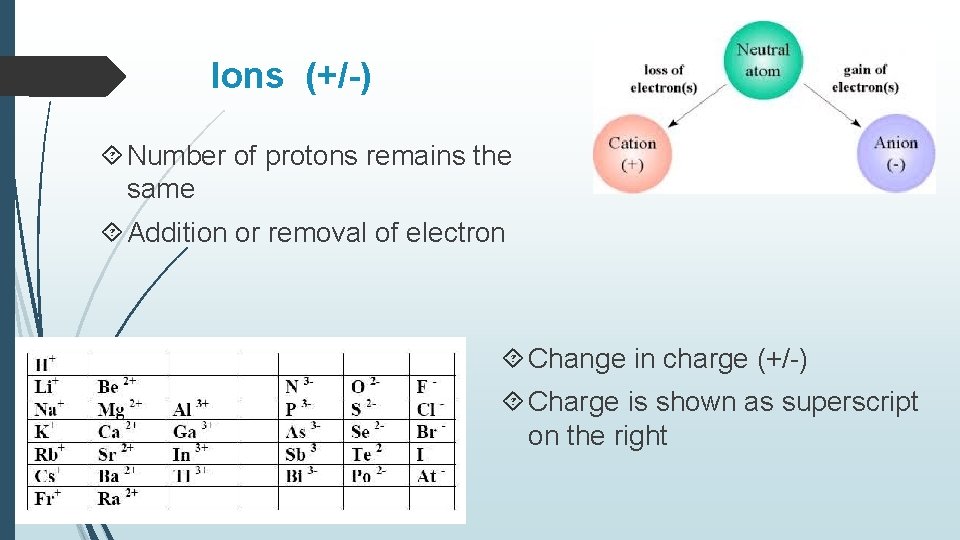
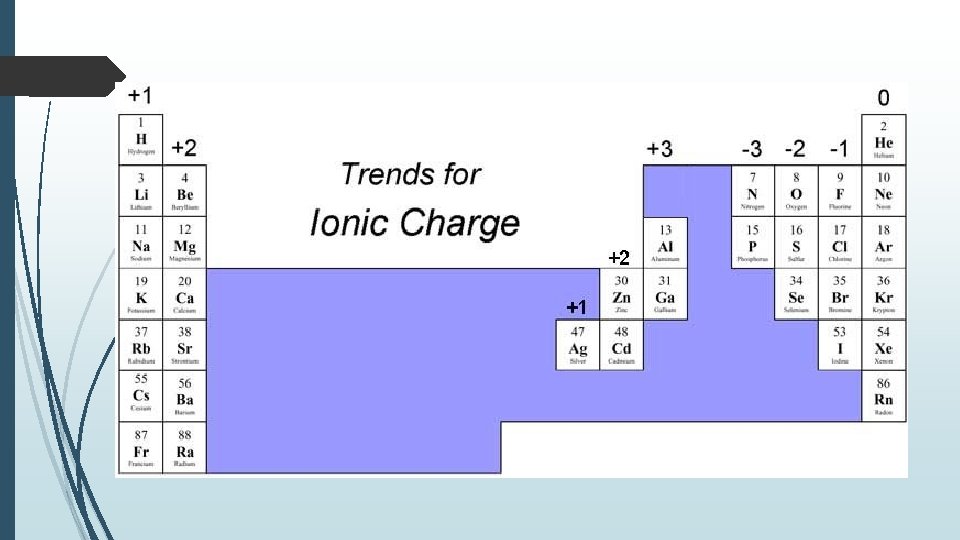
Ions (+/-) Number of protons remains the same Addition or removal of electron Change in charge (+/-) Charge is shown as superscript on the right
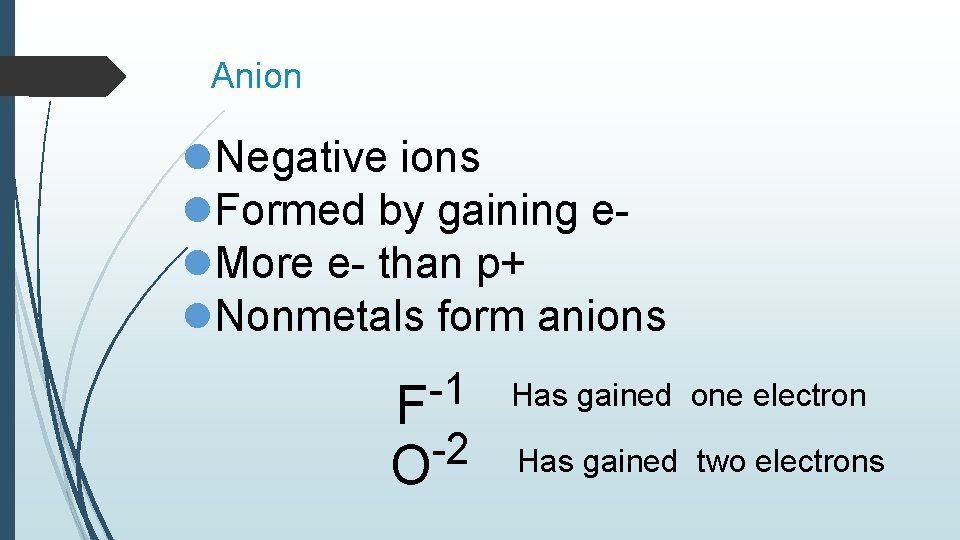
Anion l. Negative ions l. Formed by gaining el. More e- than p+ l. Nonmetals form anions -1 F -2 O Has gained one electron Has gained two electrons
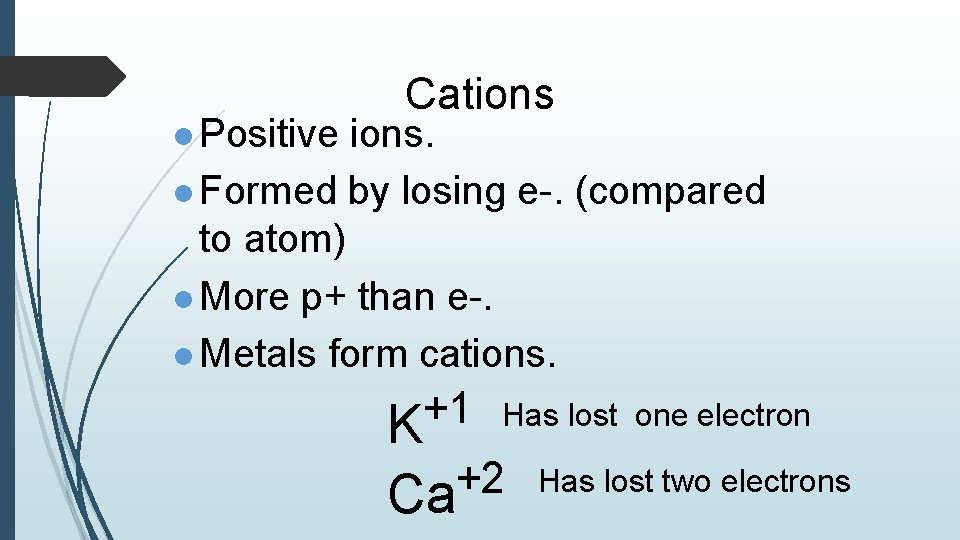
l Positive Cations. l Formed by losing e-. (compared to atom) l More p+ than e-. l Metals form cations. +1 K Has lost one electron +2 Ca Has lost two electrons
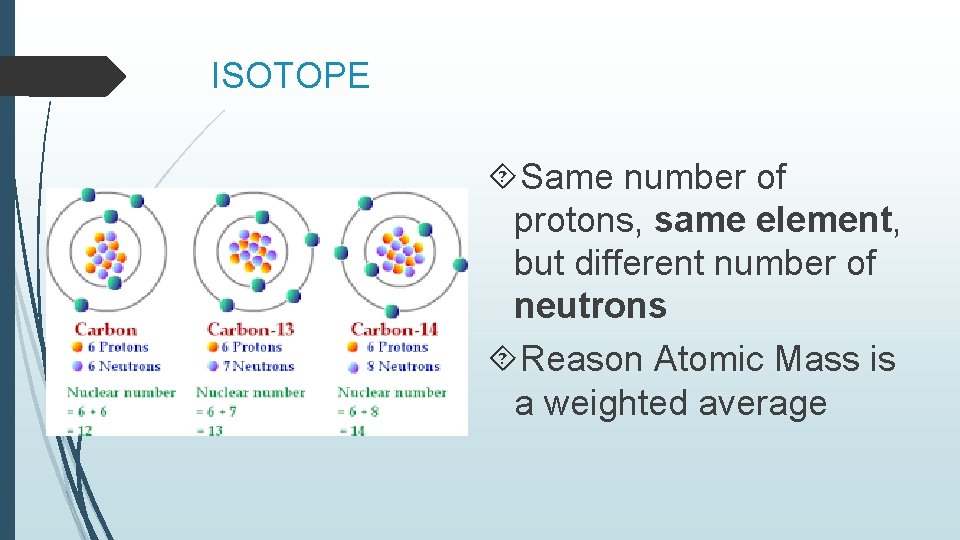
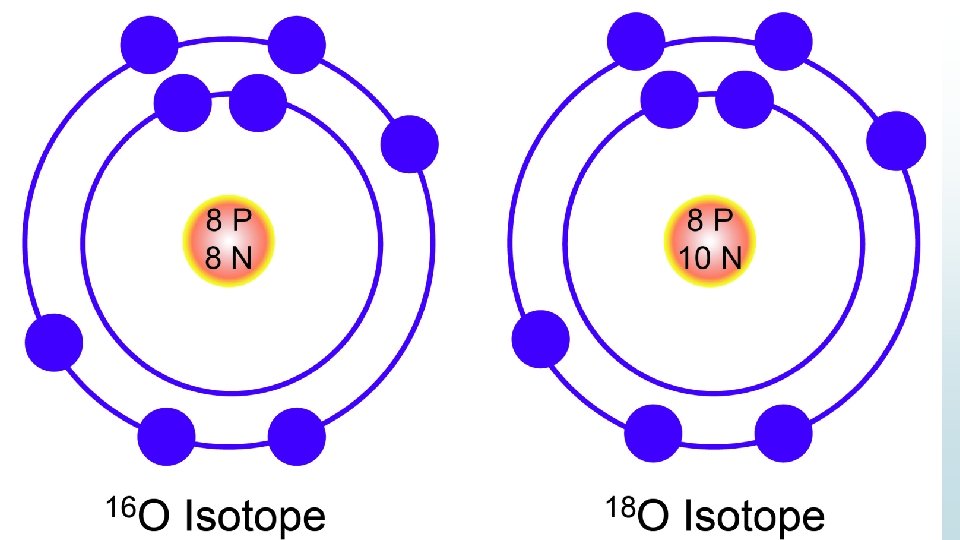
ISOTOPE Same number of protons, same element, but different number of neutrons Reason Atomic Mass is a weighted average
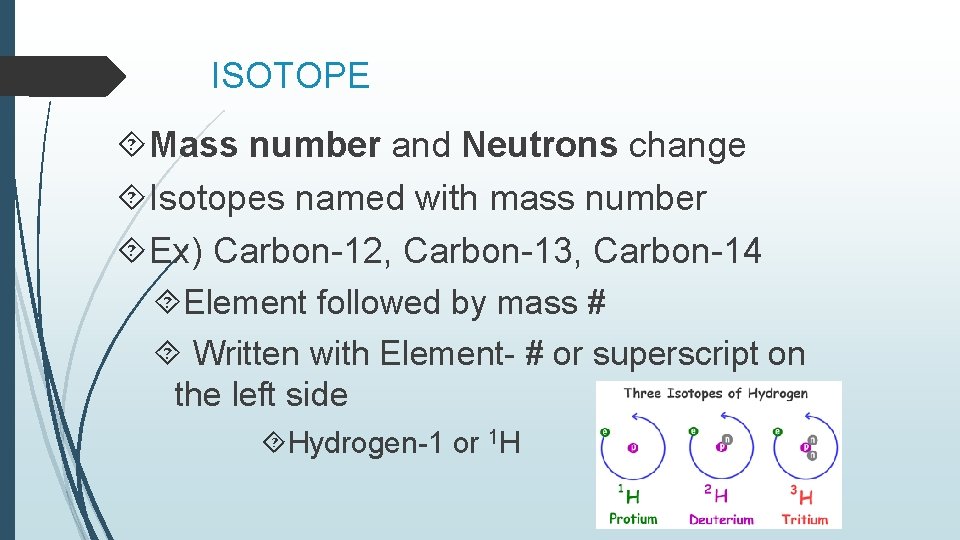
ISOTOPE Mass number and Neutrons change Isotopes named with mass number Ex) Carbon-12, Carbon-13, Carbon-14 Element followed by mass # Written with Element- # or superscript on the left side Hydrogen-1 or 1 H
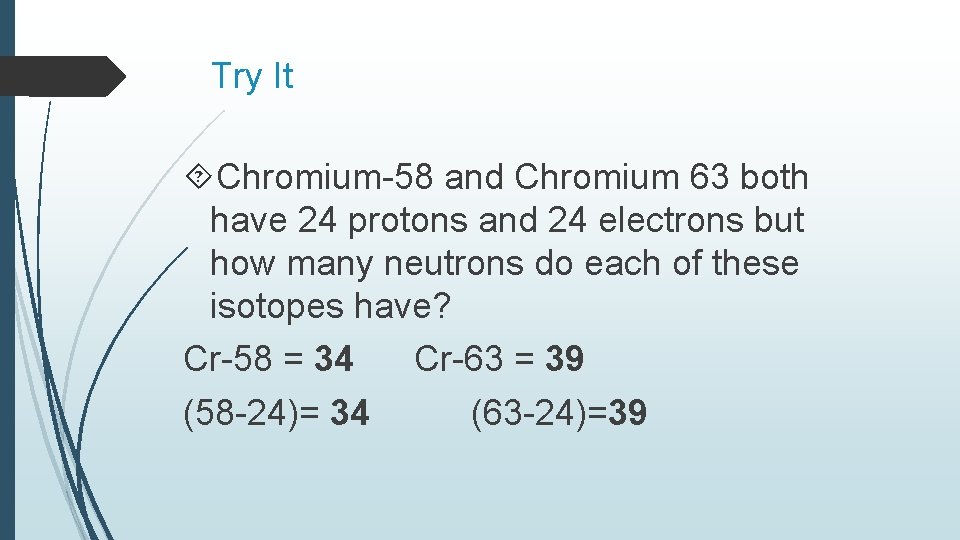
Try It Chromium-58 and Chromium 63 both have 24 protons and 24 electrons but how many neutrons do each of these isotopes have?
Try It Chromium-58 and Chromium 63 both have 24 protons and 24 electrons but how many neutrons do each of these isotopes have? Cr-58 = 34 Cr-63 = 39 (58 -24)= 34 (63 -24)=39
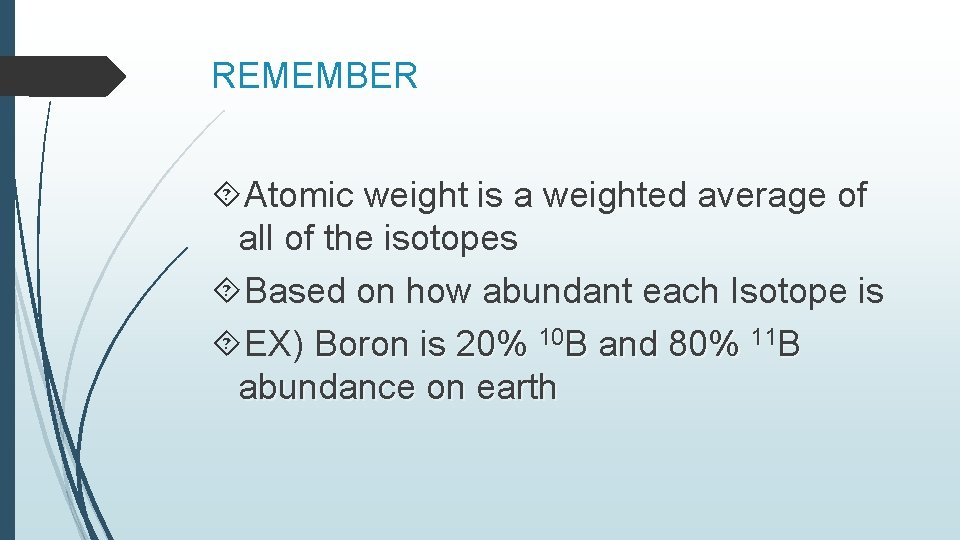
REMEMBER Atomic weight is a weighted average of all of the isotopes Based on how abundant each Isotope is EX) Boron is 20% 10 B and 80% 11 B abundance on earth
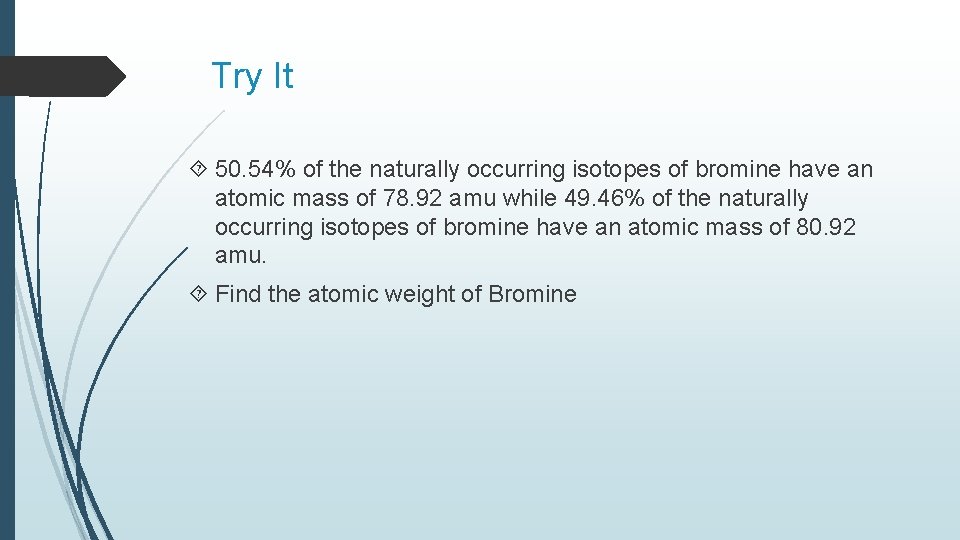
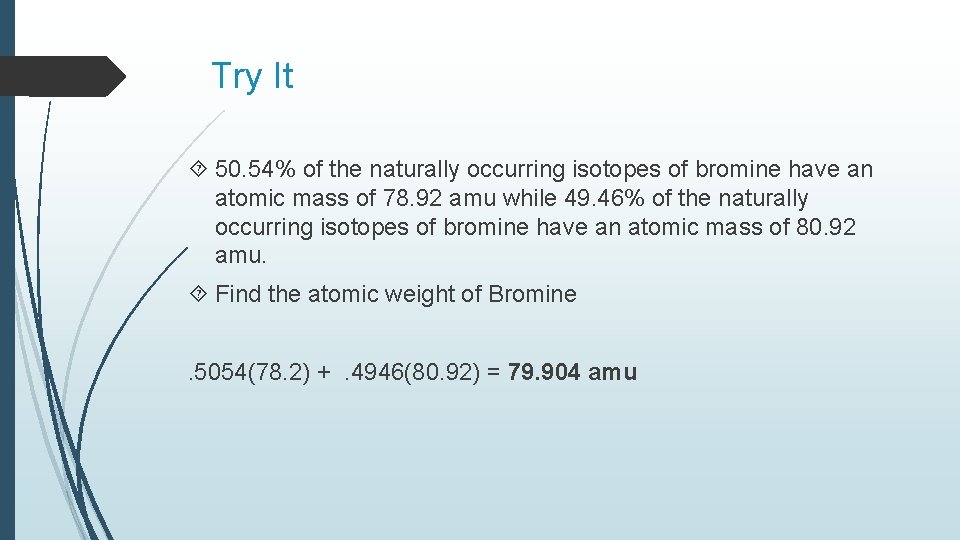
Try It 50. 54% of the naturally occurring isotopes of bromine have an atomic mass of 78. 92 amu while 49. 46% of the naturally occurring isotopes of bromine have an atomic mass of 80. 92 amu. Find the atomic weight of Bromine
Try It 50. 54% of the naturally occurring isotopes of bromine have an atomic mass of 78. 92 amu while 49. 46% of the naturally occurring isotopes of bromine have an atomic mass of 80. 92 amu. Find the atomic weight of Bromine. 5054(78. 2) +. 4946(80. 92) = 79. 904 amu
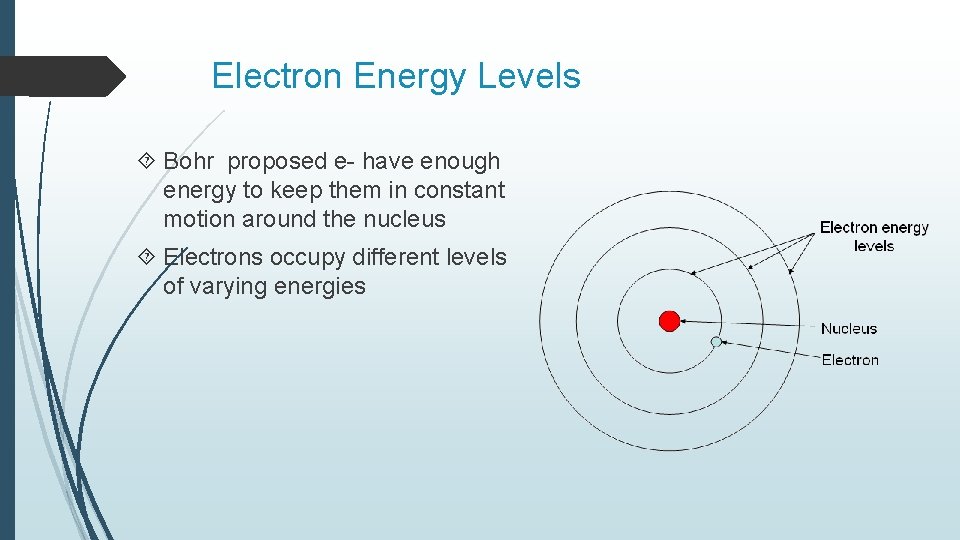
Electron Energy Levels Bohr proposed e- have enough energy to keep them in constant motion around the nucleus Electrons occupy different levels of varying energies
Electron Energy Levels Electrons only have certain amounts of energy, they move around the nucleus only at certain energy levels The closer the electron is to the nucleus, the less energy it has The farther the electron moves away from the nucleus, the more energy it has Electrons can move up and down to different energy levels Can not be found in between levels
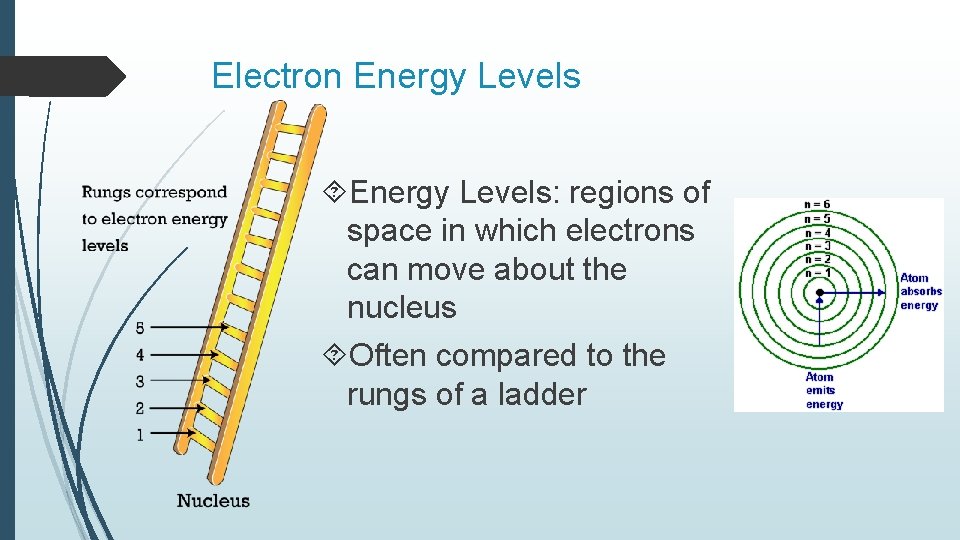
Electron Energy Levels: regions of space in which electrons can move about the nucleus Often compared to the rungs of a ladder
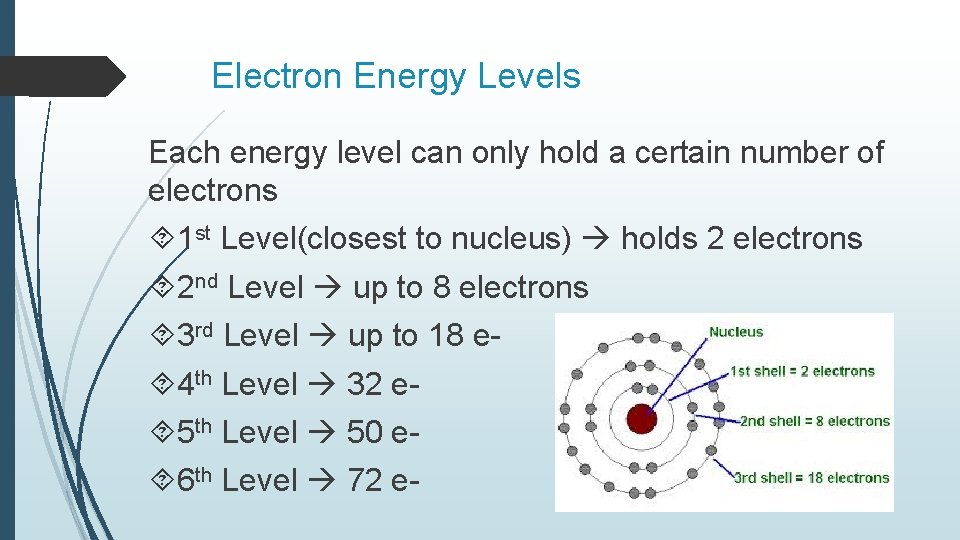
Electron Energy Levels Each energy level can only hold a certain number of electrons 1 st Level(closest to nucleus) holds 2 electrons 2 nd Level up to 8 electrons 3 rd Level up to 18 e 4 th Level 32 e 5 th Level 50 e 6 th Level 72 e-
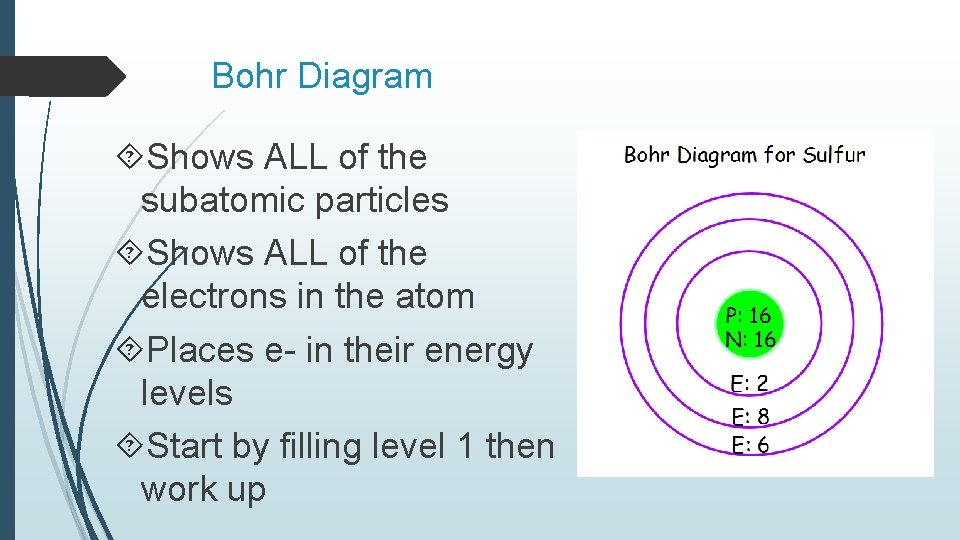
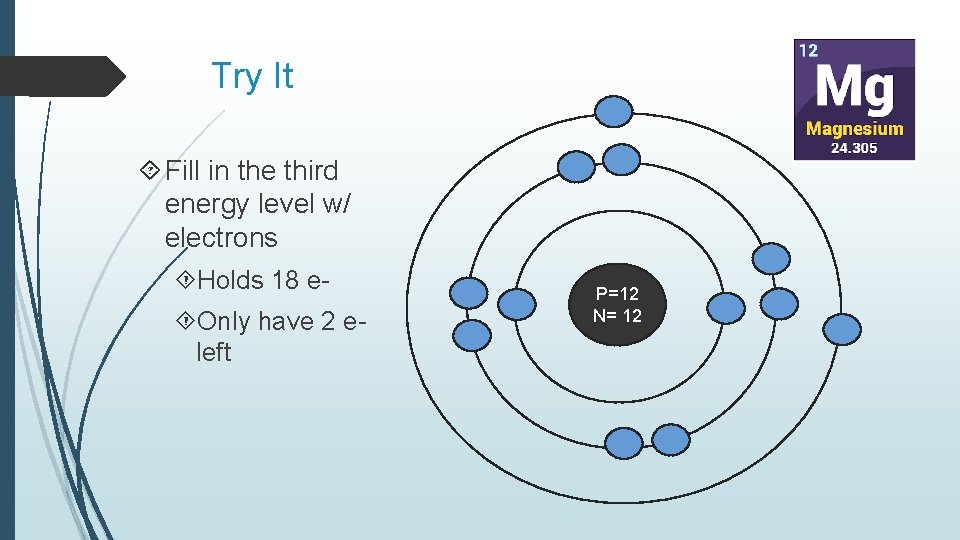
Bohr Diagram Shows ALL of the subatomic particles Shows ALL of the electrons in the atom Places e- in their energy levels Start by filling level 1 then work up
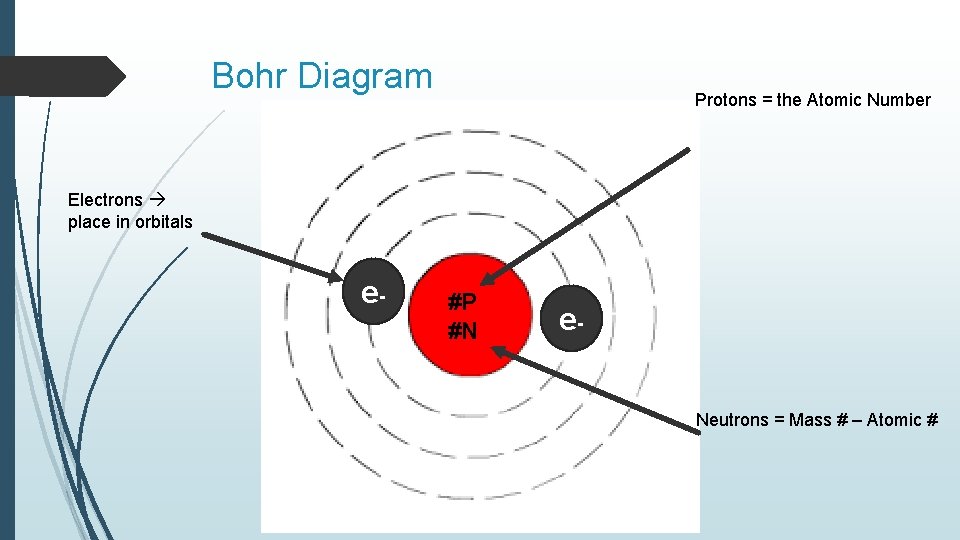
Bohr Diagram Protons = the Atomic Number Electrons place in orbitals e- #P #N e. Neutrons = Mass # – Atomic #
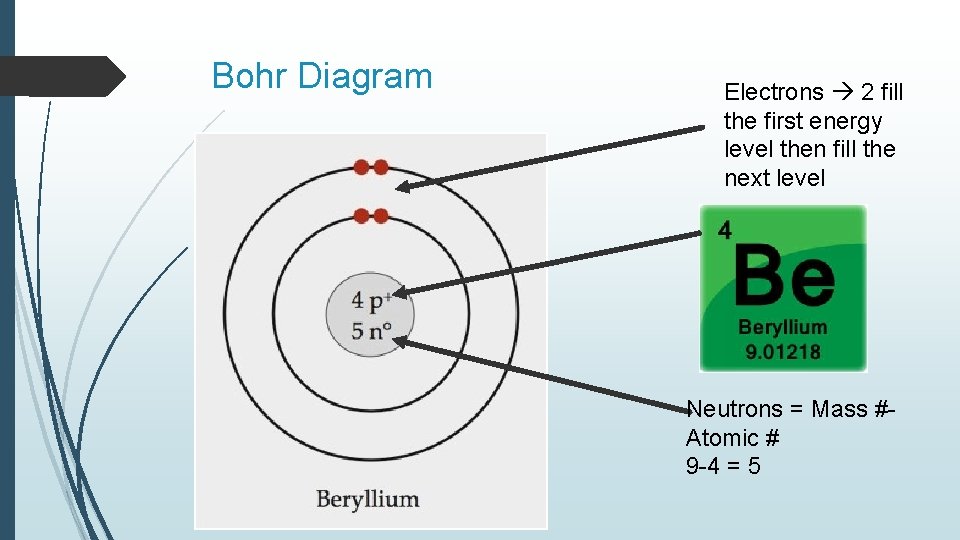
Bohr Diagram Electrons 2 fill the first energy level then fill the next level Neutrons = Mass #Atomic # 9 -4 = 5
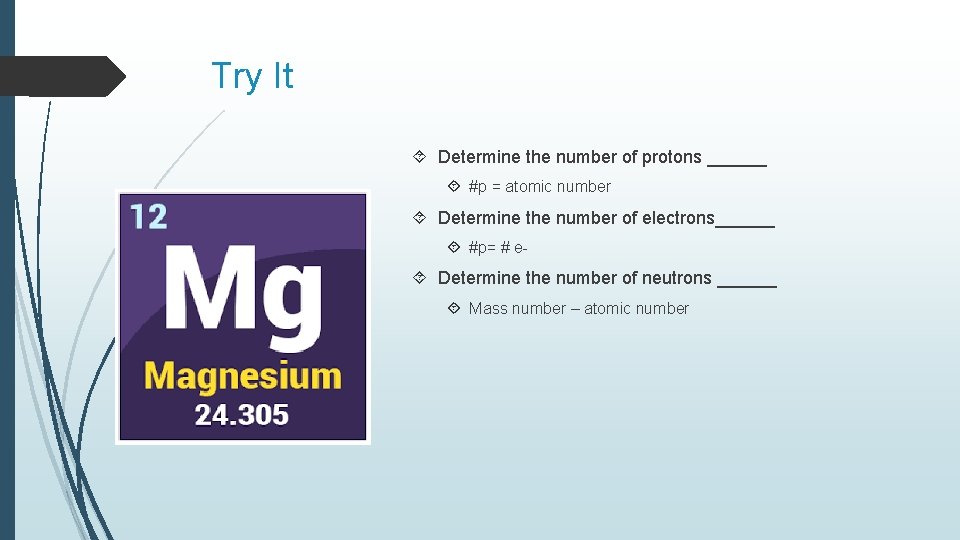
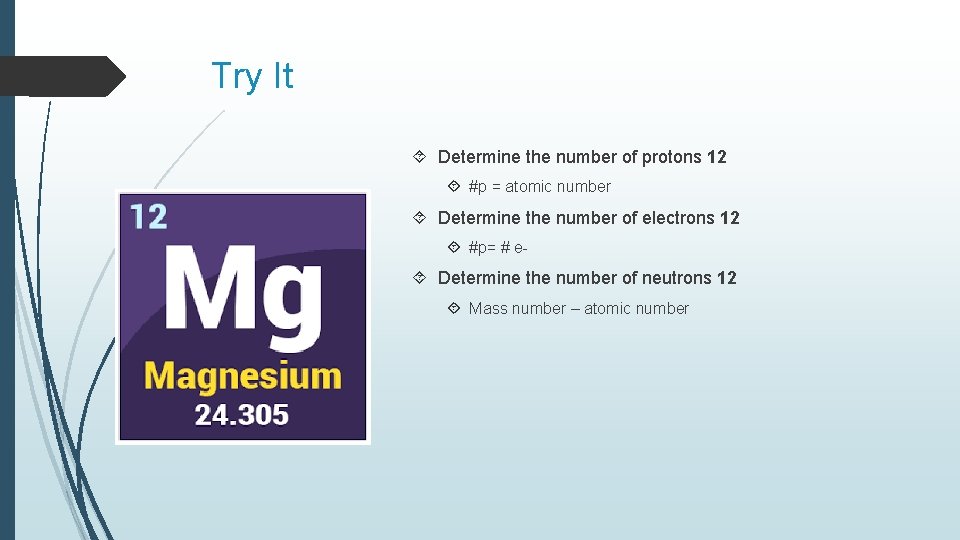
Try It Determine the number of protons ______ #p = atomic number Determine the number of electrons______ #p= # e- Determine the number of neutrons ______ Mass number – atomic number
Try It Determine the number of protons 12 #p = atomic number Determine the number of electrons 12 #p= # e- Determine the number of neutrons 12 Mass number – atomic number
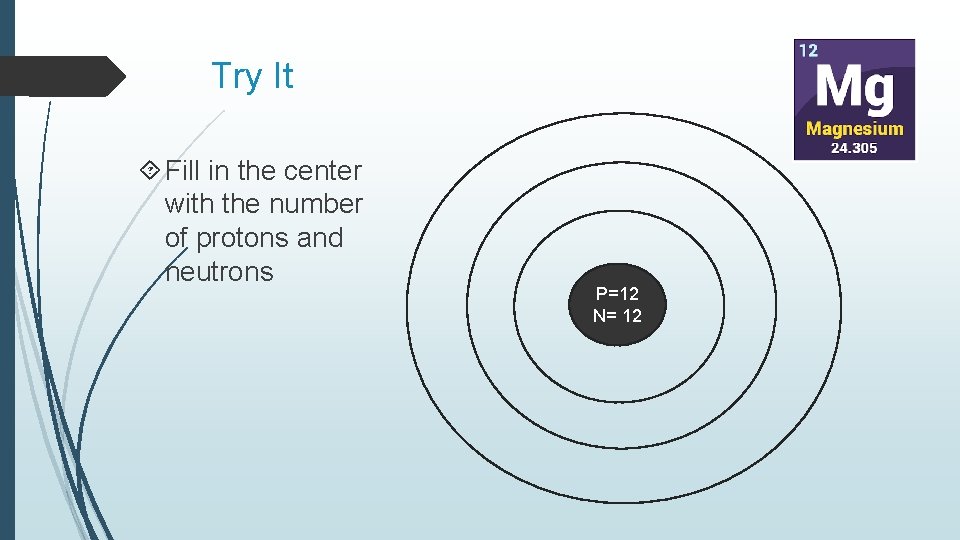
Try It Fill in the center with the number of protons and neutrons P=12 N= 12
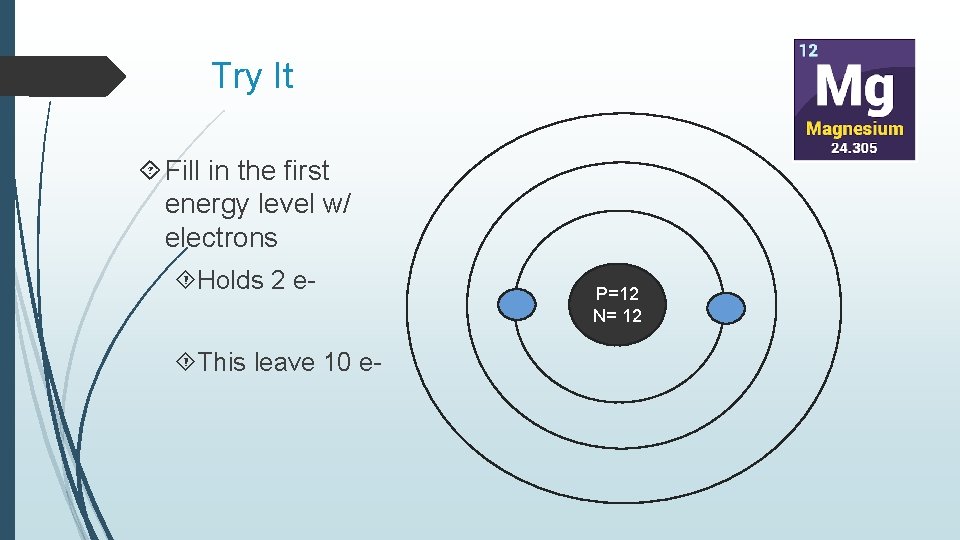
Try It Fill in the first energy level w/ electrons Holds 2 e This leave 10 e- P=12 N= 12
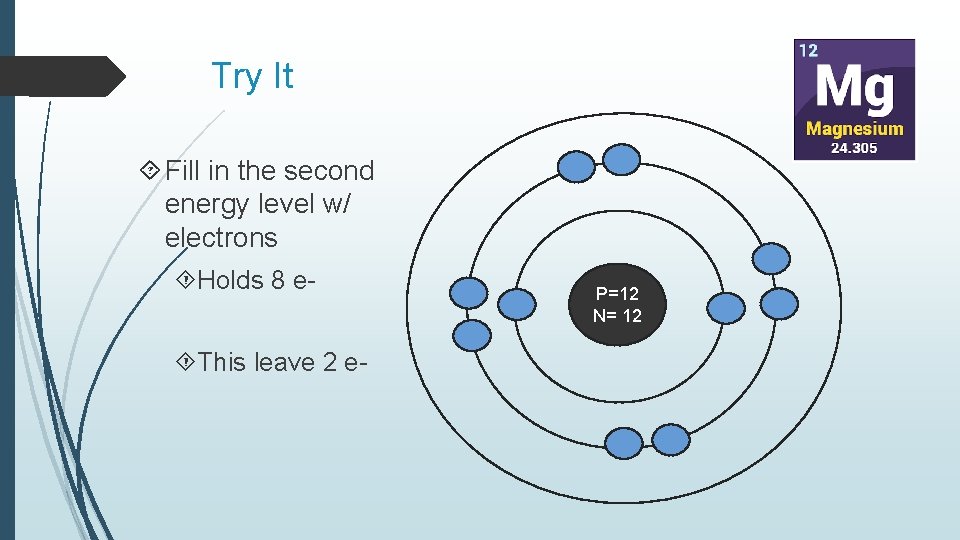
Try It Fill in the second energy level w/ electrons Holds 8 e This leave 2 e- P=12 N= 12
Try It Fill in the third energy level w/ electrons Holds 18 e Only have 2 eleft P=12 N= 12
Valence Electrons in the outermost shell of the electron Chemical and physical properties are related to these valence electrons Elements are stable when they have 8 valence e- (H and He want 2) Want to reach this point
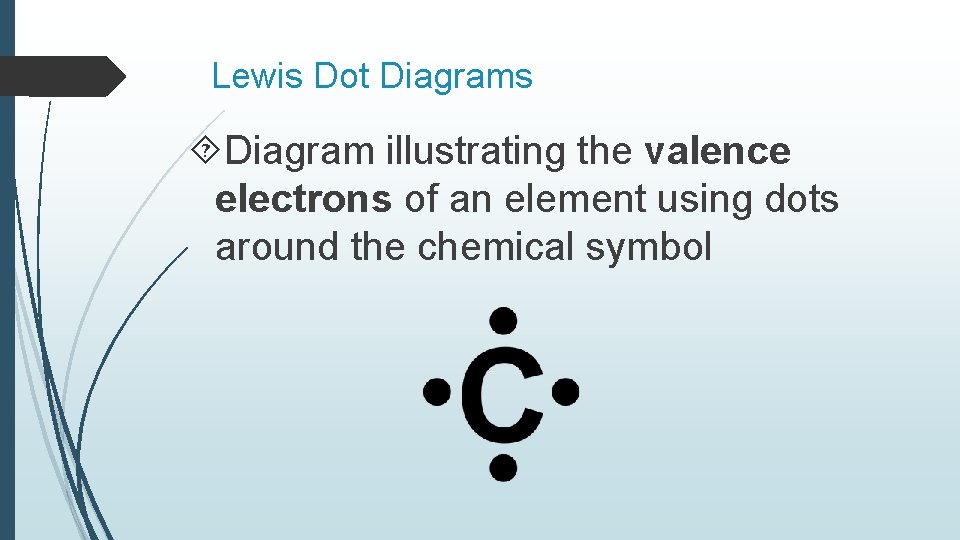
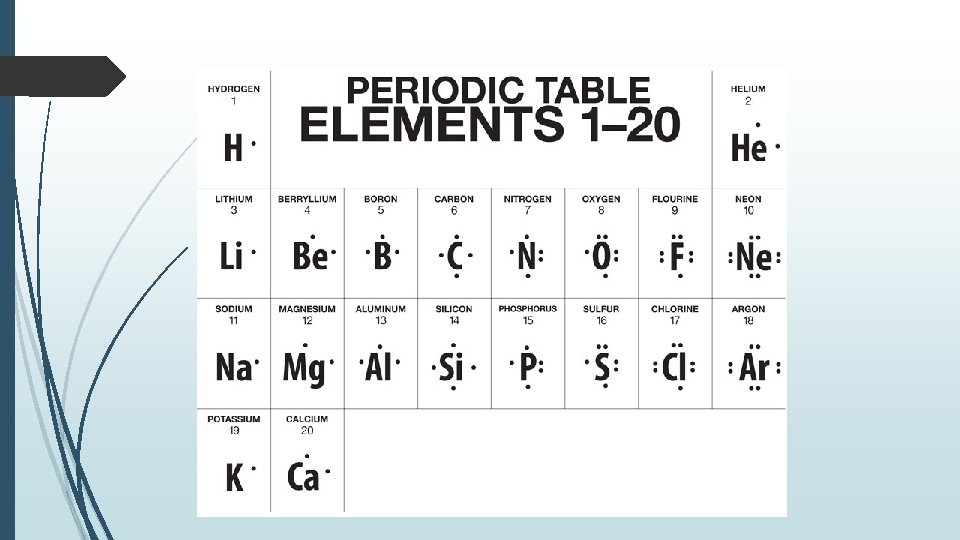
Lewis Dot Diagrams Diagram illustrating the valence electrons of an element using dots around the chemical symbol
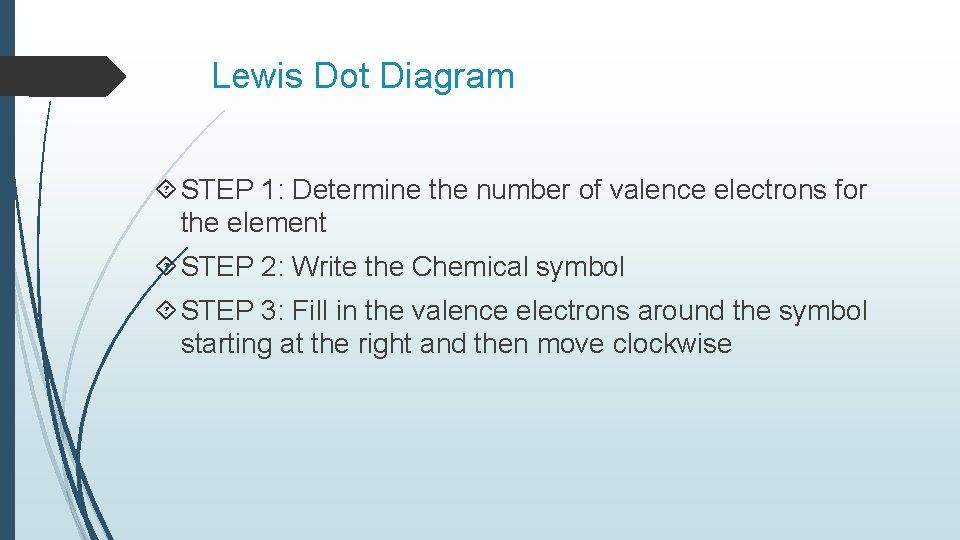
Lewis Dot Diagram STEP 1: Determine the number of valence electrons for the element STEP 2: Write the Chemical symbol STEP 3: Fill in the valence electrons around the symbol starting at the right and then move clockwise
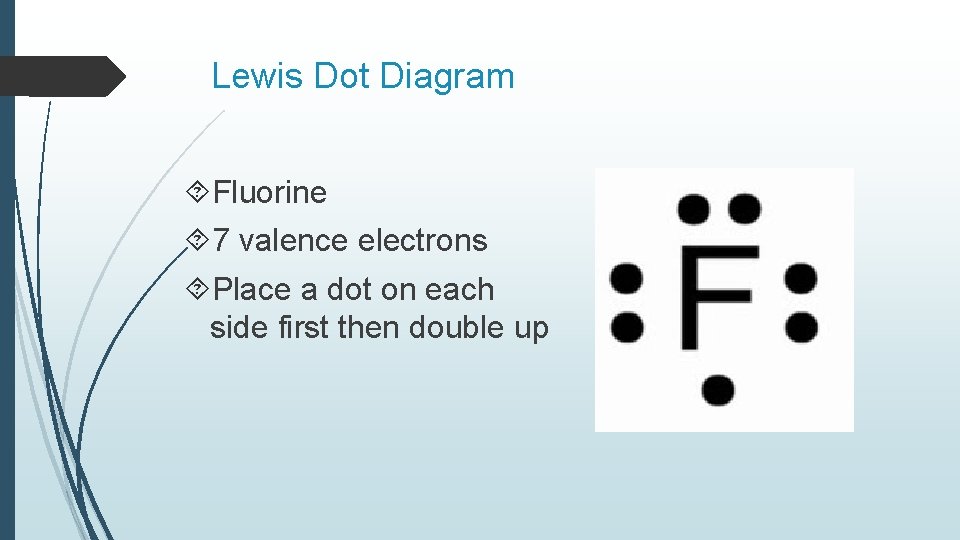
Lewis Dot Diagram Fluorine 7 valence electrons Place a dot on each side first then double up
Electromagnetic Radiation High-voltage electricity or electromagnetic radiation can increase the energy of an atom Electromagnetic radiation travels in the form of waves that have both electric and magnetic properties
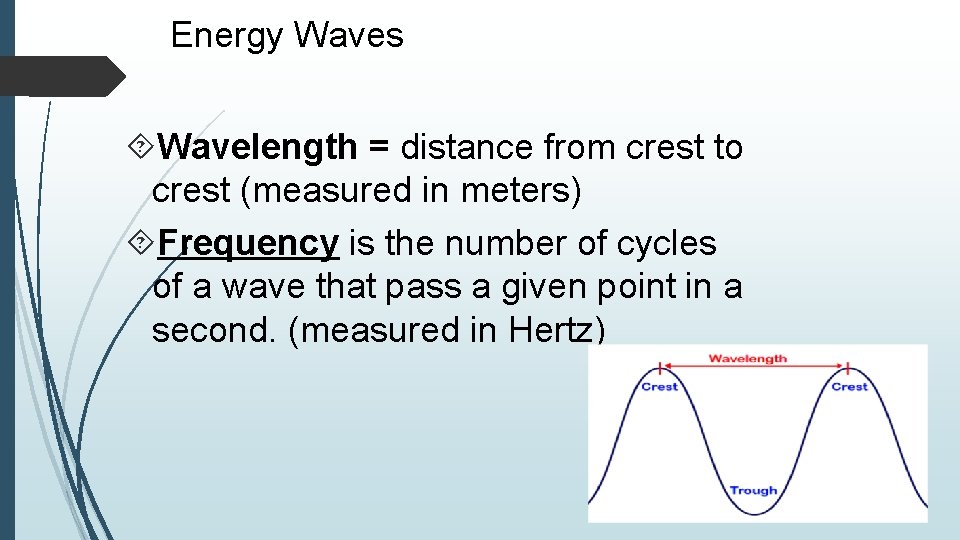
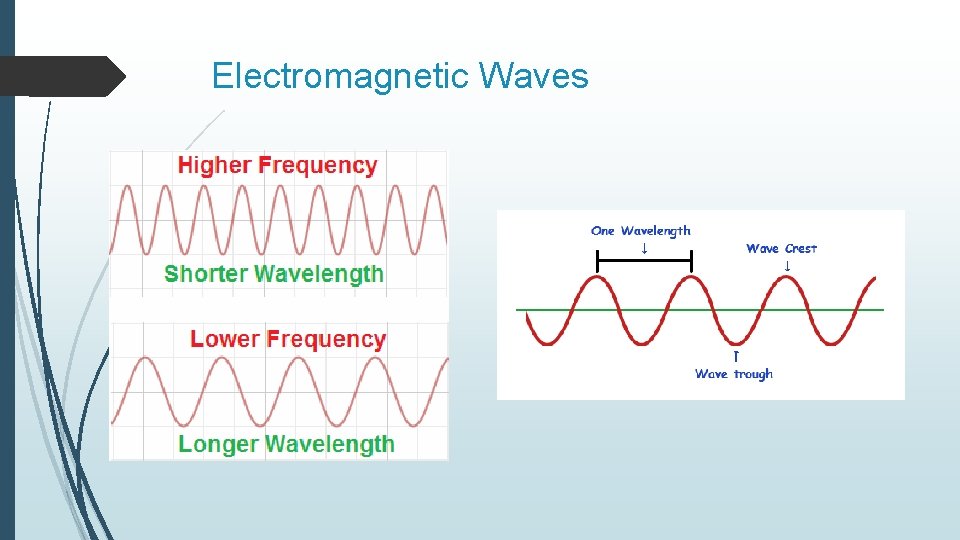
Energy Waves Wavelength = distance from crest to crest (measured in meters) Frequency is the number of cycles of a wave that pass a given point in a second. (measured in Hertz)
Electromagnetic Waves
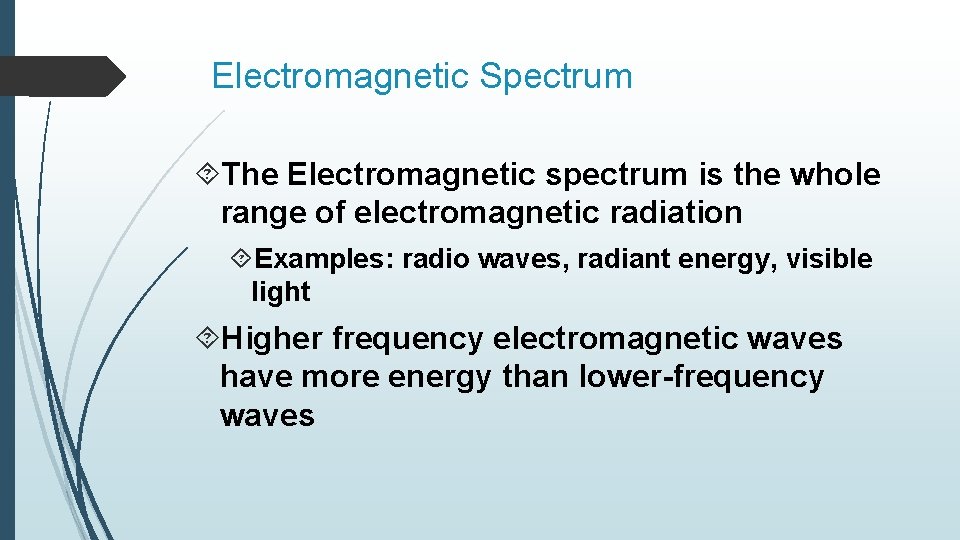
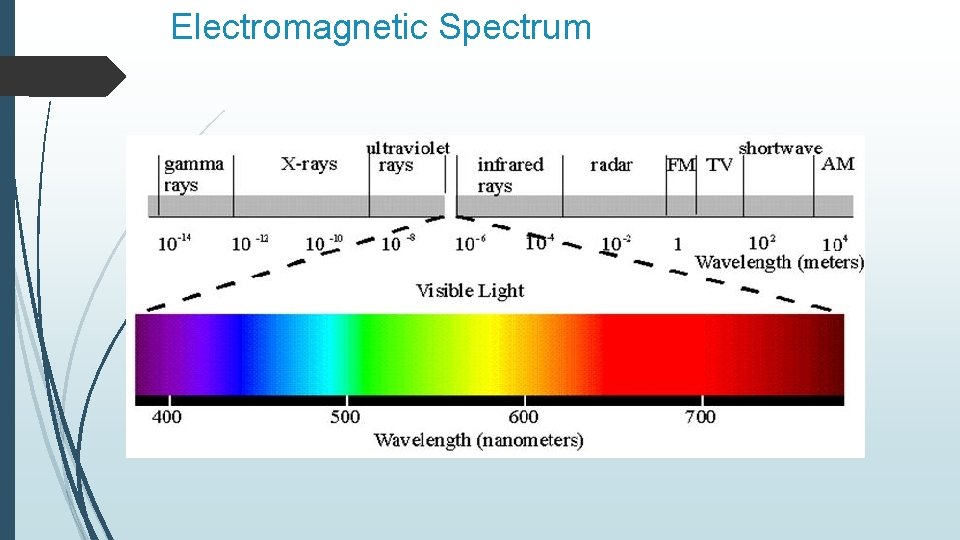
Electromagnetic Spectrum The Electromagnetic spectrum is the whole range of electromagnetic radiation Examples: radio waves, radiant energy, visible light Higher frequency electromagnetic waves have more energy than lower-frequency waves
Electromagnetic Spectrum
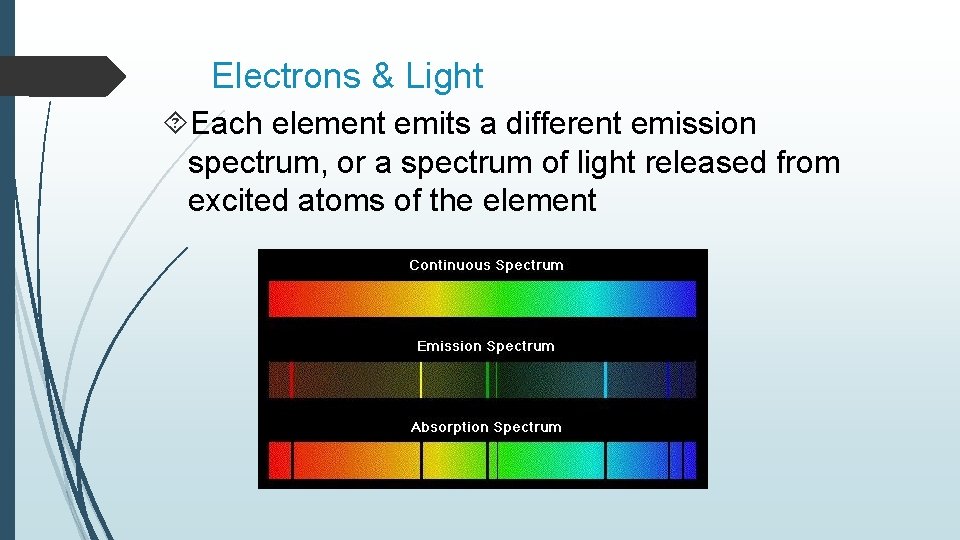
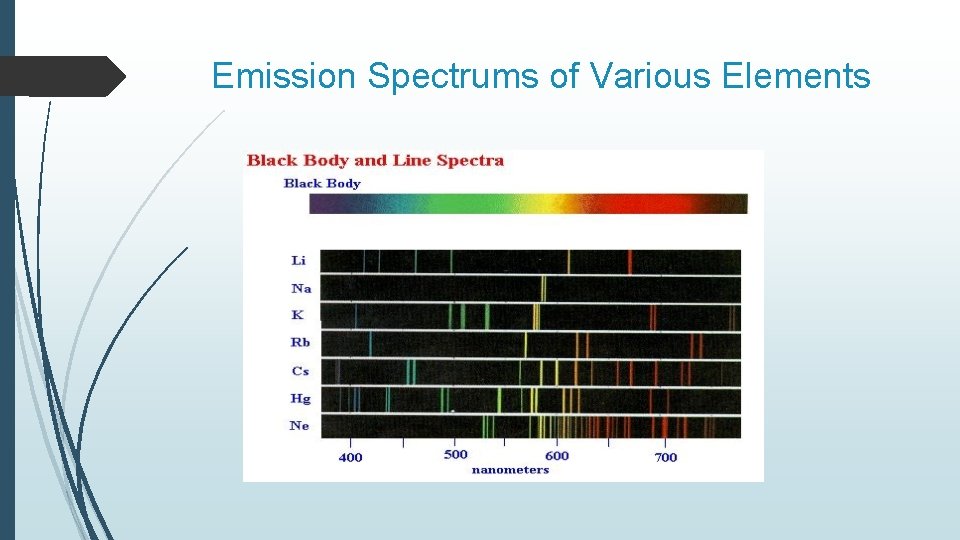
Electrons & Light Each element emits a different emission spectrum, or a spectrum of light released from excited atoms of the element
Emission Spectrums of Various Elements