GENETICS OF CANCER Salwa Hassan Teama M D


- Slides: 48
GENETICS OF CANCER Salwa Hassan Teama M. D. Molecular Biology Department/ Medical Research Center Ain Shams University/ Cairo/ Egypt
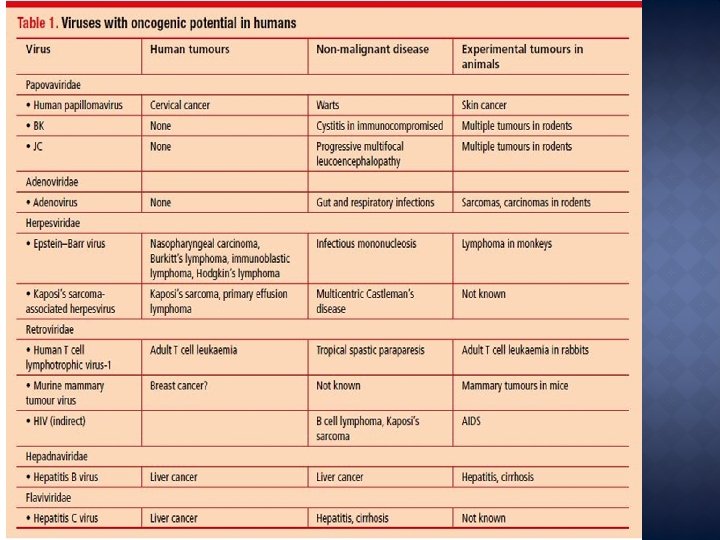
Contents § § Cancer The Genetic Nature of Cancer Causes: Genetic Mutation Genes That play a Role in Cancer q Oncogenes q Tumor Suppressor Gene § Viruses and Cancer
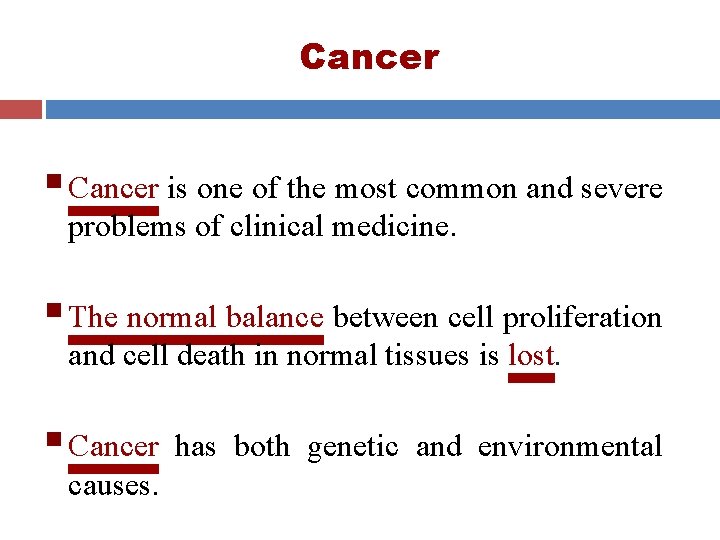
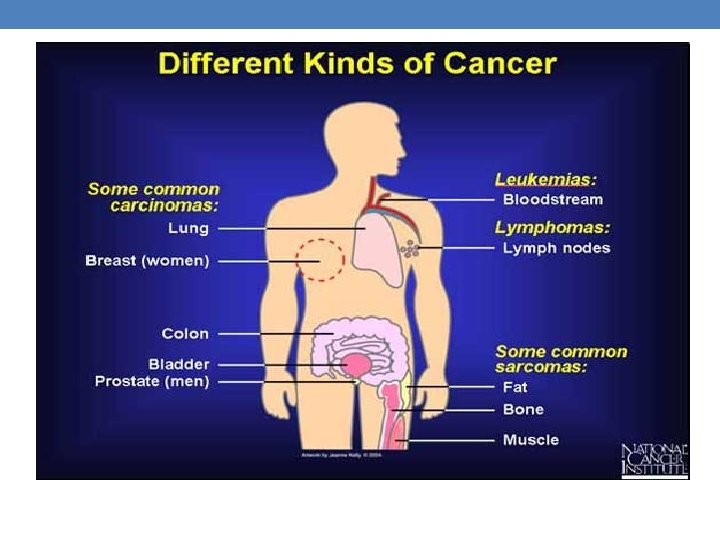
Cancer § Cancer is one of the most common and severe problems of clinical medicine. § The normal balance between cell proliferation and cell death in normal tissues is lost. § Cancer has both genetic and environmental causes.
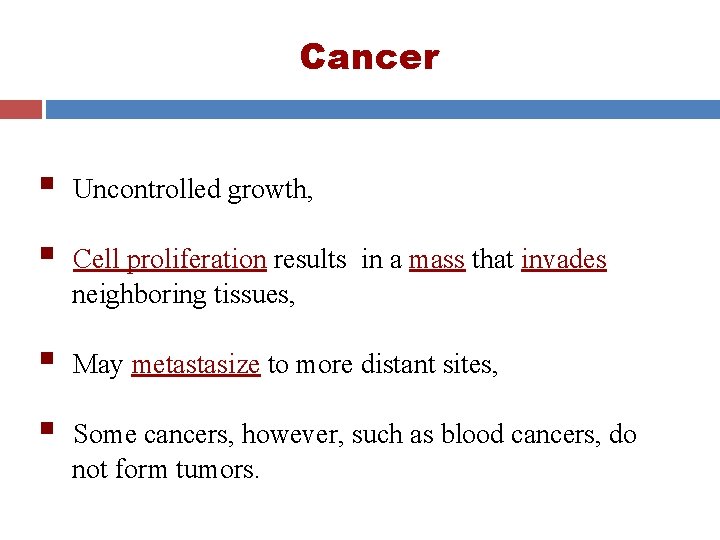
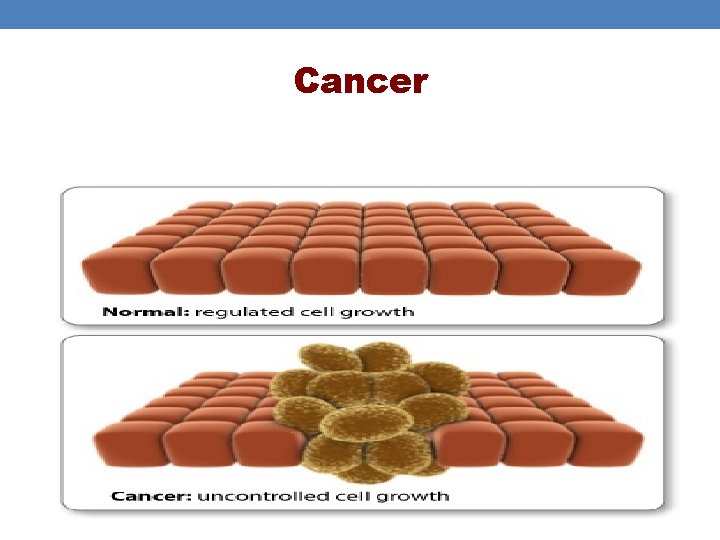
Cancer § Uncontrolled growth, § Cell proliferation results in a mass that invades neighboring tissues, § § May metastasize to more distant sites, Some cancers, however, such as blood cancers, do not form tumors.
Cancer
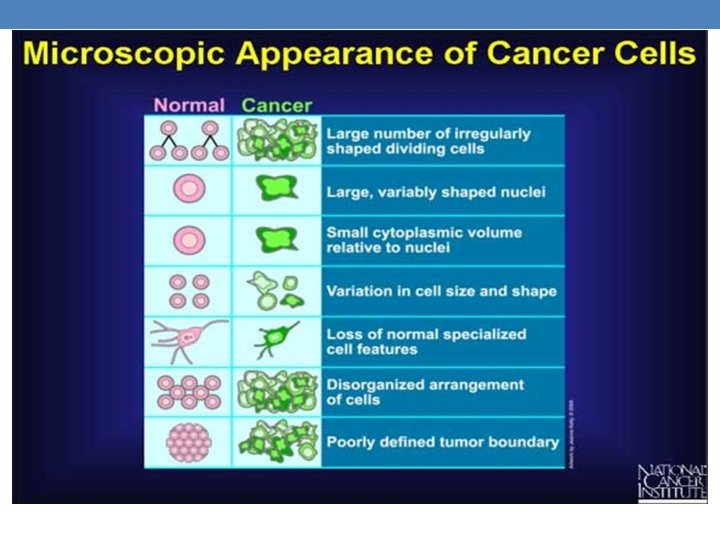
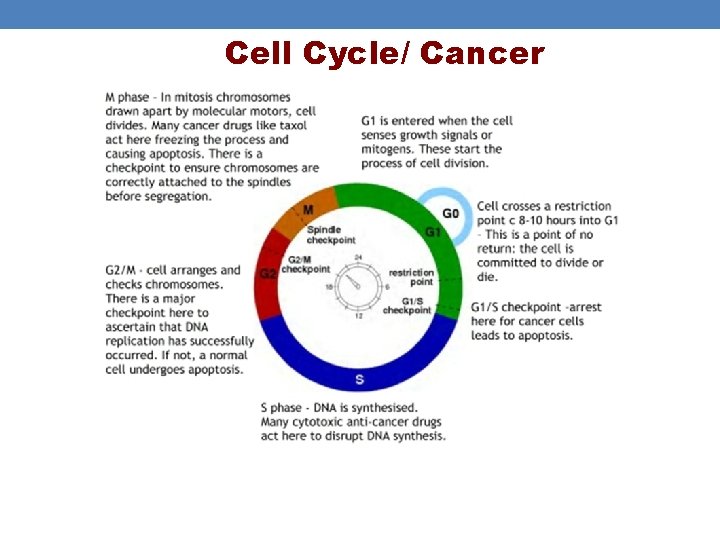
Characteristic's of Cancer Cells § Dedifferentiated; § Less adherent; § Loss of cell cycle control; § Tissue invasion and metastasis; § Evading apoptosis; § Insensitivity to antigrowth factor; § Increased mutation rate; § Induce local blood vessel formation angiogenesis.
Cell Cycle/ Cancer
Environmental & Genetic Factors Environmental factors are of primary importance e. g. Industrial cancer which result from prolonged exposure to carcinogenic chemicals as cancer of the skin in tar workers , cancer of the bladder in aniline dye workers, …. . Genetic factors play an important role e. g. breast and bowel cancer, , but not exclusive role in the etiology.
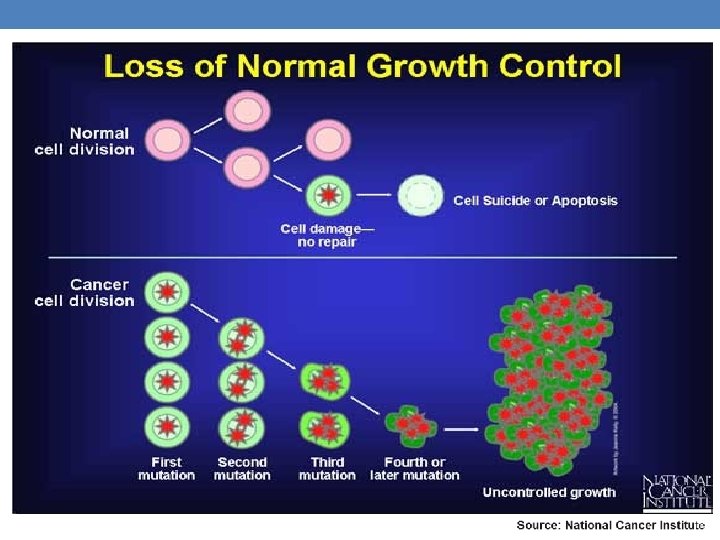
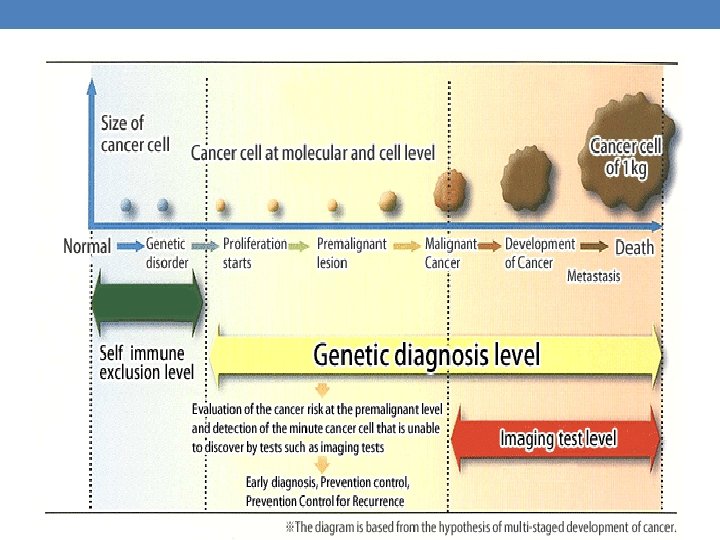
The Genetic Nature of Cancer § Abnormalities in the genetic material of the transformed cell. § Genes which regulate cell growth and differentiation must be altered.
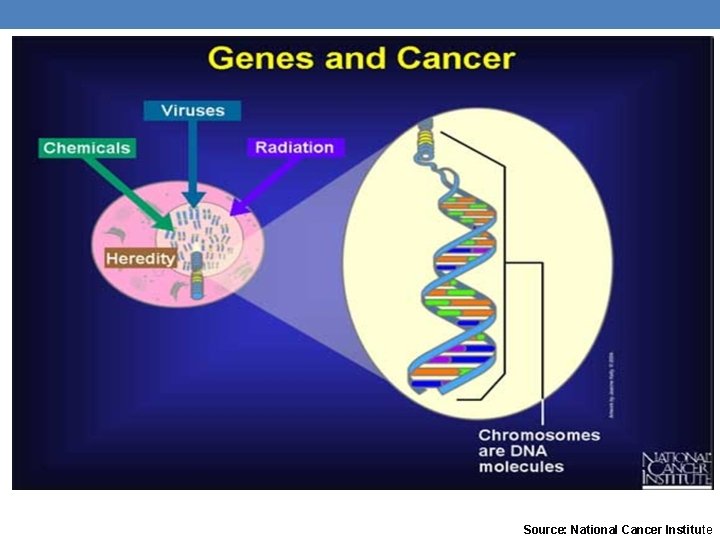
Source: National Cancer Institute
Genetic changes can occur at many levels: § Gain or loss of entire chromosomes. § Mutation affecting a single DNA nucleotide. § DNA methylation and § Micro. RNAs increasingly recognized.
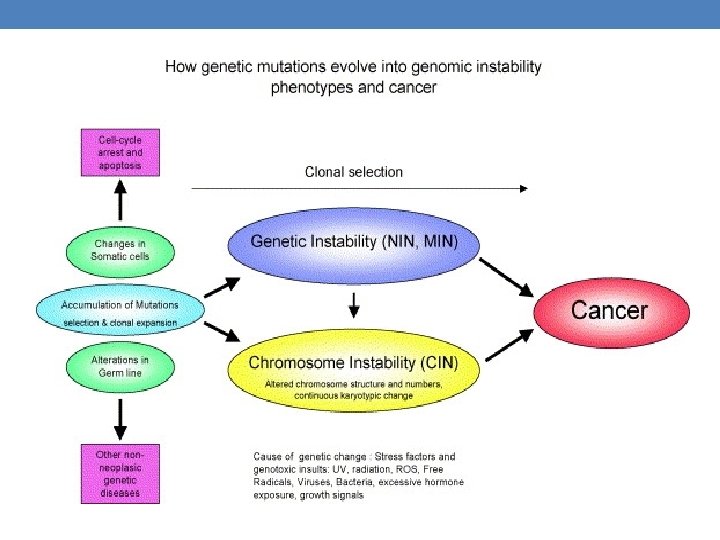
Causes: Genetic Mutation Germline mutations § Familial cancer § 5% to 10% of cancer cases. Sporadic cancer or somatic mutation. § Acquired mutation caused by tobacco, over-exposure to UV radiation, and other toxins and chemicals, … § Not present in every cell of the body and § Not passed from parent to child
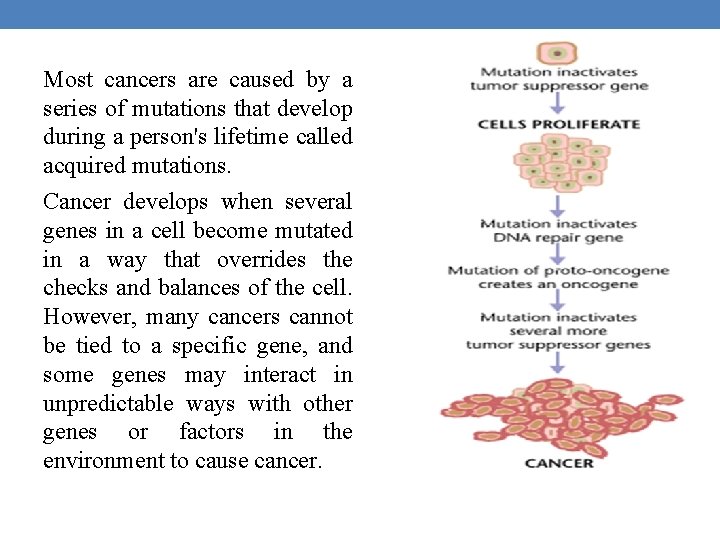
Most cancers are caused by a series of mutations that develop during a person's lifetime called acquired mutations. Cancer develops when several genes in a cell become mutated in a way that overrides the checks and balances of the cell. However, many cancers cannot be tied to a specific gene, and some genes may interact in unpredictable ways with other genes or factors in the environment to cause cancer.
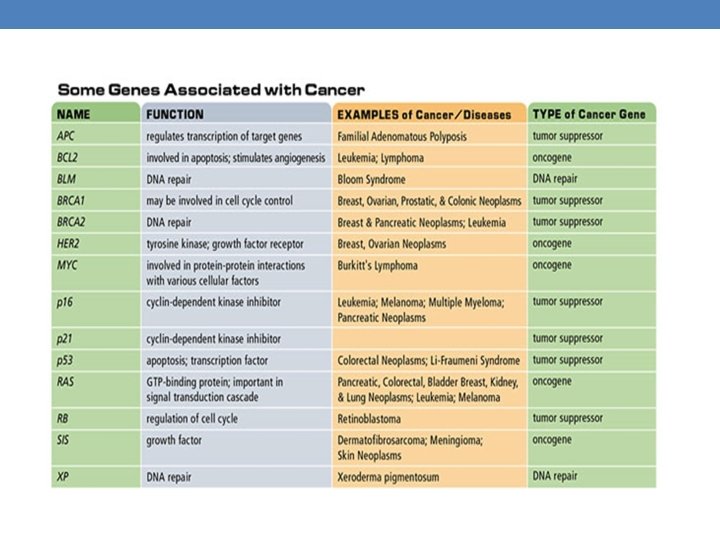
Genes That play a Role in Cancer Oncogene Tumor suppressor gene
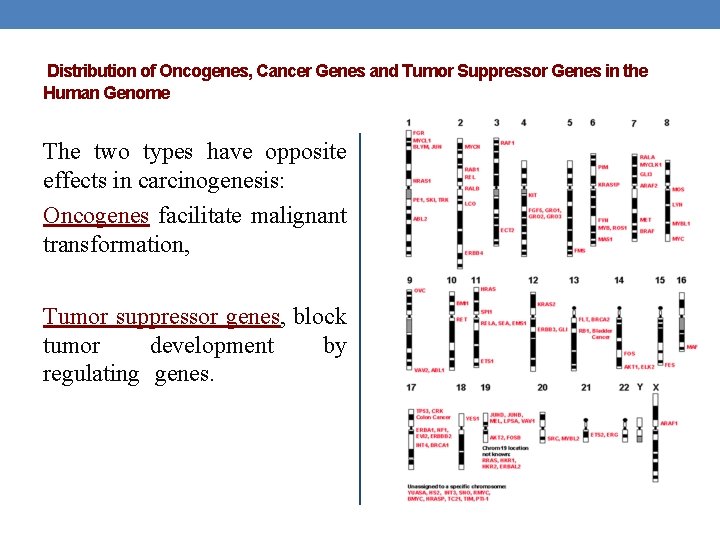
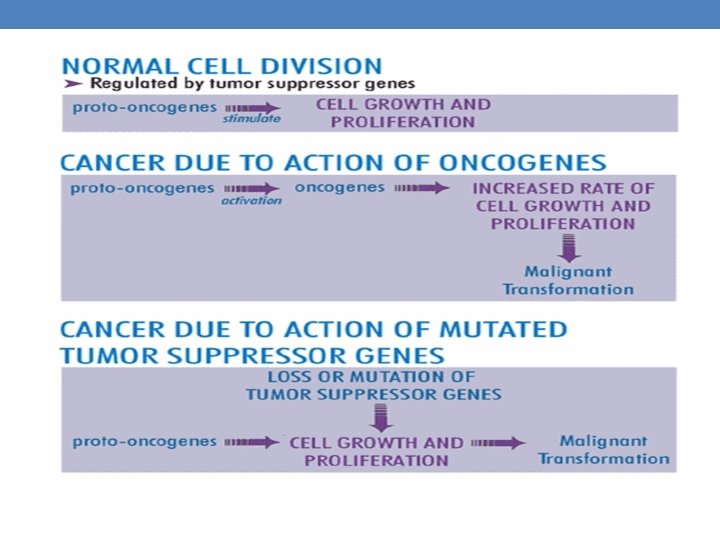
Distribution of Oncogenes, Cancer Genes and Tumor Suppressor Genes in the Human Genome The two types have opposite effects in carcinogenesis: Oncogenes facilitate malignant transformation, Tumor suppressor genes, block tumor development by regulating genes. involved in cell growth.
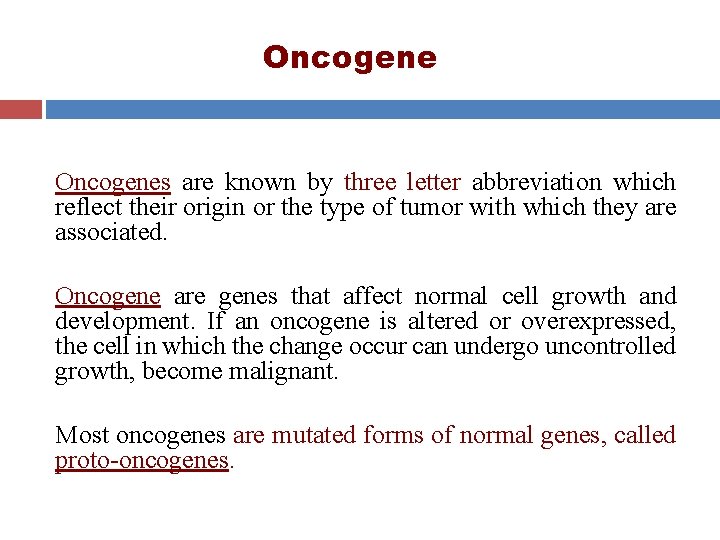
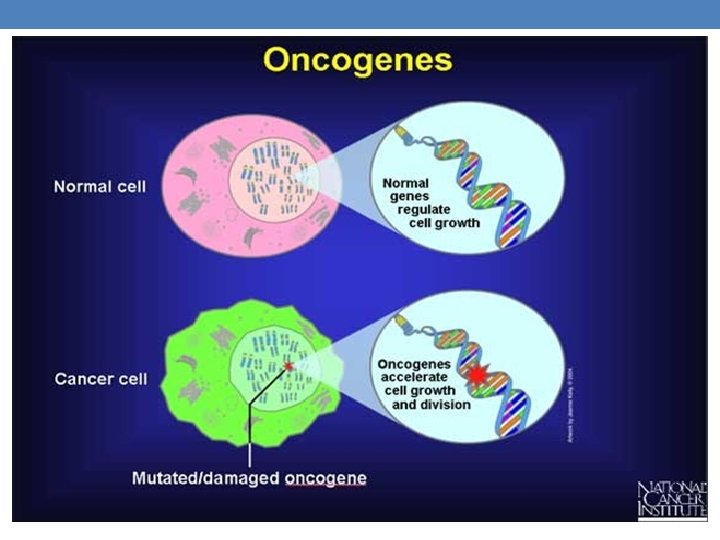
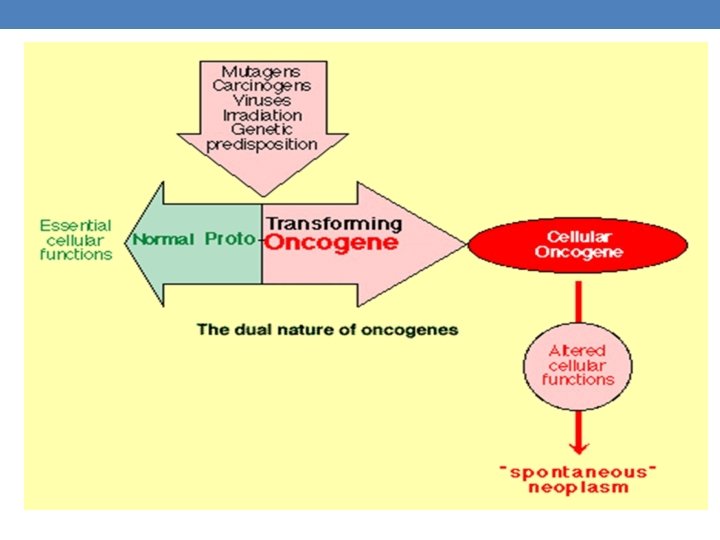
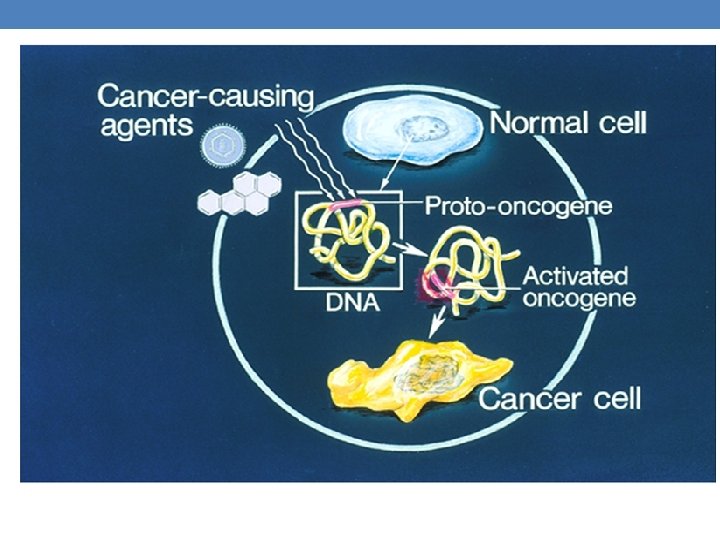
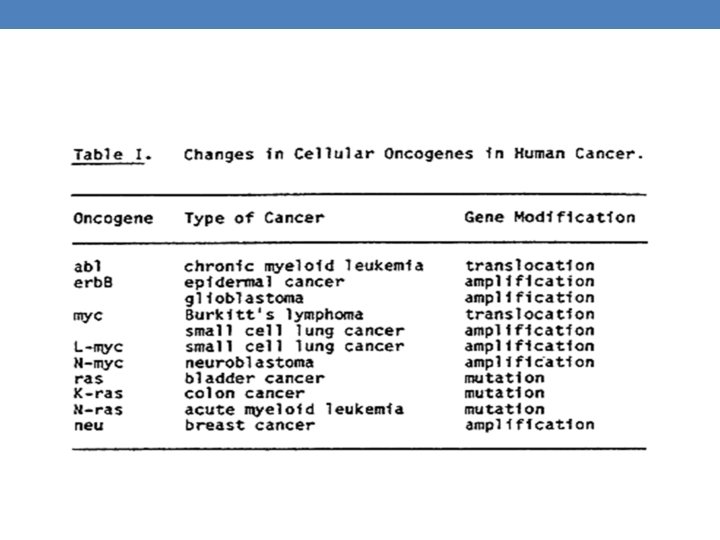
Oncogenes are known by three letter abbreviation which reflect their origin or the type of tumor with which they are associated. Oncogene are genes that affect normal cell growth and development. If an oncogene is altered or overexpressed, the cell in which the change occur can undergo uncontrolled growth, become malignant. Most oncogenes are mutated forms of normal genes, called proto-oncogenes.
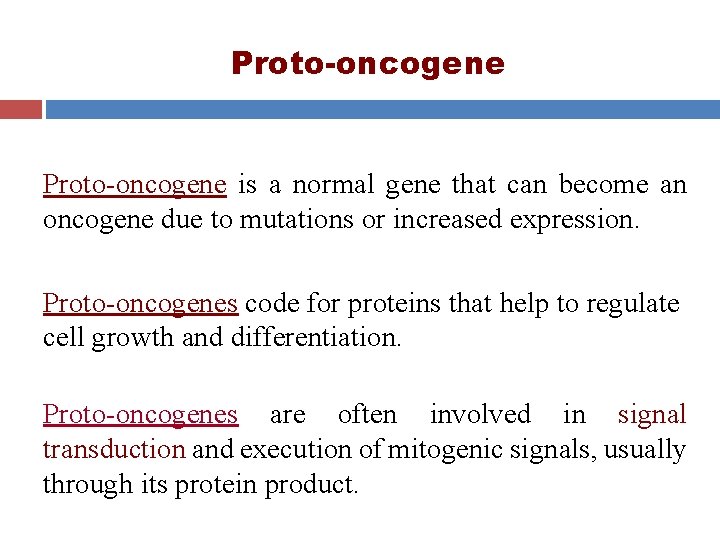
Proto-oncogene is a normal gene that can become an oncogene due to mutations or increased expression. Proto-oncogenes code for proteins that help to regulate cell growth and differentiation. Proto-oncogenes are often involved in signal transduction and execution of mitogenic signals, usually through its protein product.
Types of Oncogene can be classified according to their cellular location and function of their encoded oncoproteins in the signal transduction pathway: § Growth factors § Growth factor receptors § GTP binding proteins § Post receptor tyrosine kinase § Cytoplasmic oncogenes § Nuclear oncogenes § Apoptotic oncogenes
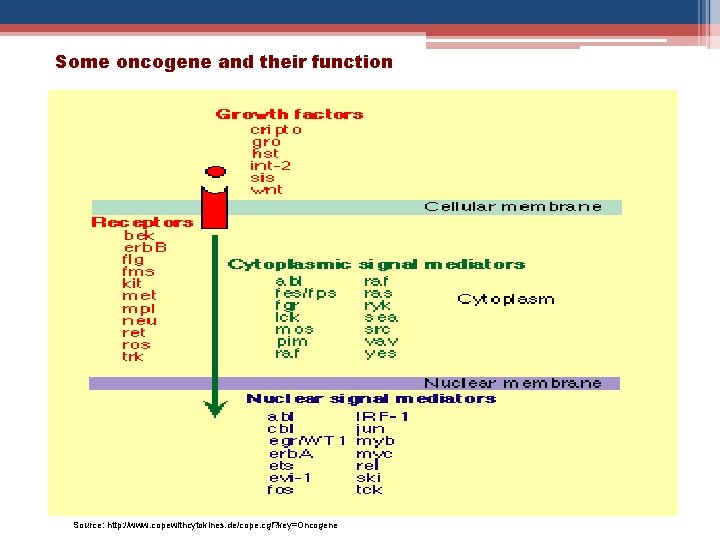
Some oncogene and their function Source: http: //www. copewithcytokines. de/cope. cgi? key=Oncogene
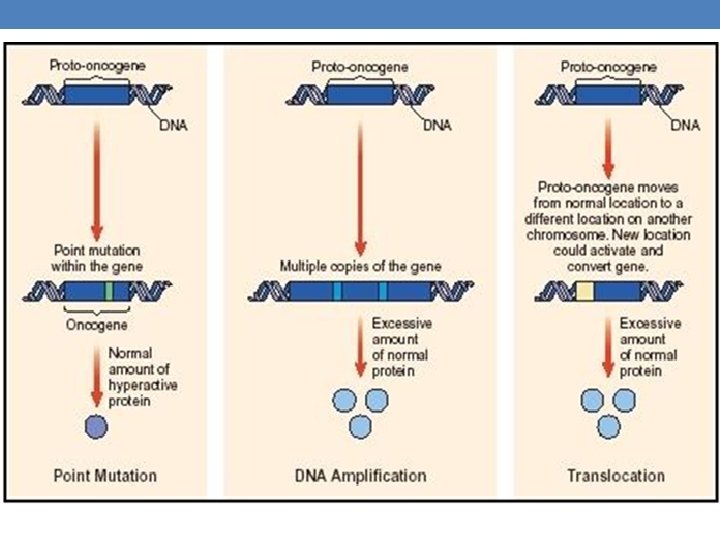
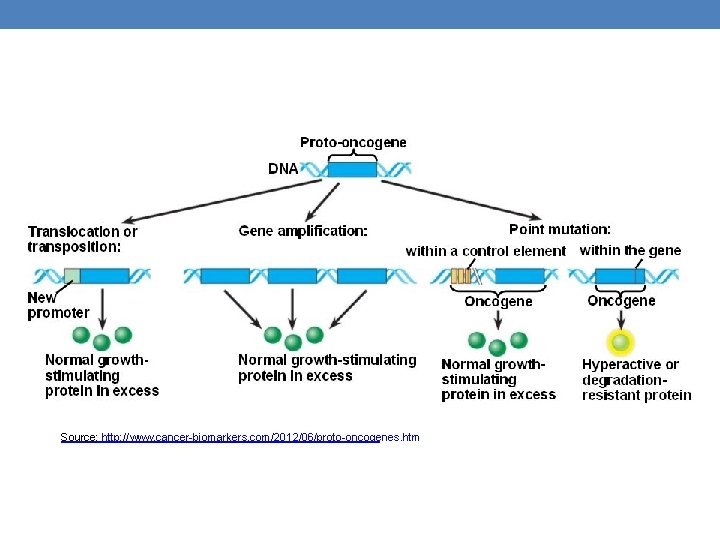
Activation of Proto-oncogene to Oncogene Point mutations in a somatic cell of the tumor, lead to synthesis of an abnormal gene product. Gene amplification events leading to extra chromosomal copies of a proto-oncogene. Chromosomal translocation Relocation of a proto-oncogene to a new chromosomal site that leads to higher expression. Source: http: //www. nature. com/scitable/topicpage/proto-oncogenes-to-cancer-883
Source: http: //cancergenome. nih. gov
Source: http: //www. cancer-biomarkers. com/2012/06/proto-oncogenes. htm
Oncogene/ Dominant Mutation Most oncogenes are dominant mutations; a single Copy of this gene is sufficient for expression of the growth trait. Most oncogenes are gain of function mutation because the cells with the mutant form of the protein have gained a new function not present in cells with the normal gene.
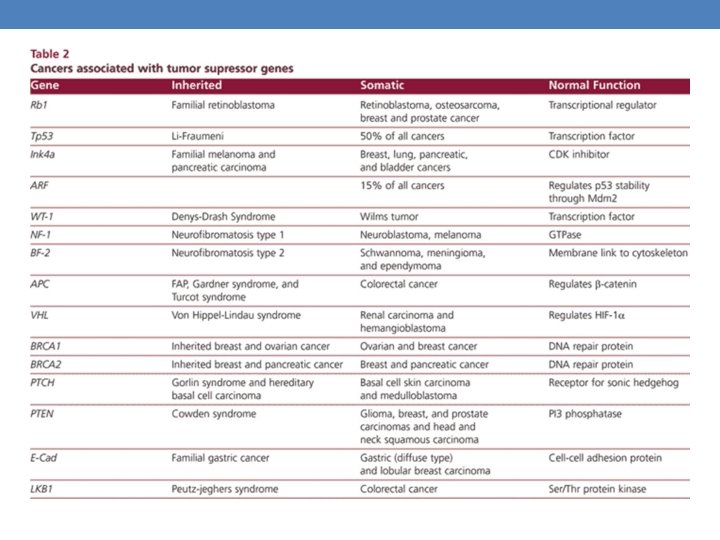
Tumor Suppressor Gene Tumor suppressor gene or anti oncogene; normal genes implicated in the control of cell cycle, repair DNA mistakes, and tell cells when to die (apoptosis or programmed cell death). Tumor suppressor gene or anti oncogene are genes when deleted or mutated, the loss of their function result in malignant transformation.
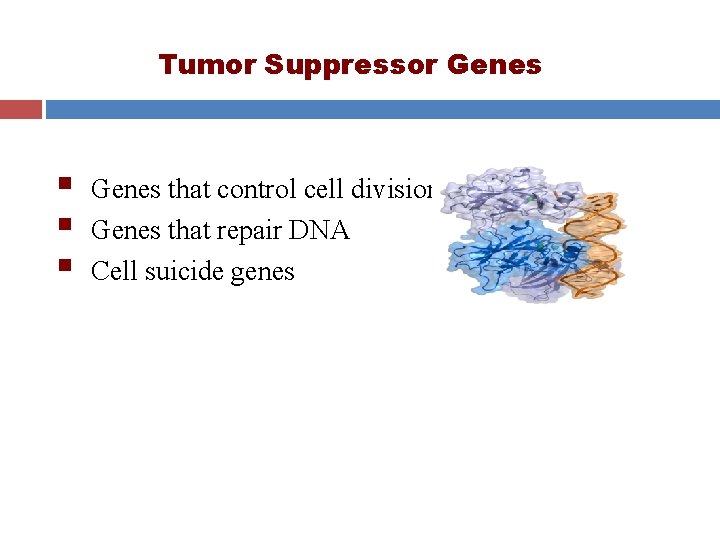
Tumor Suppressor Genes § § § Genes that control cell division Genes that repair DNA Cell suicide genes
GENES THAT CONTROL CELL DIVISION Some tumor suppressor genes help control cell cycle regulation, cell growth and reproduction. The (RB 1) retinoblastoma gene Abnormalities of the RB 1 gene can lead to a type of eye cancer (retinoblastoma) in infants, as well as to other cancers.
CELL "SUICIDE" GENES P 53 gene: About 50% of human cancers can be associated with a p 53 mutation including cancers of the bladder, breast, cervix, colon, lung, liver, prostate, and skin.
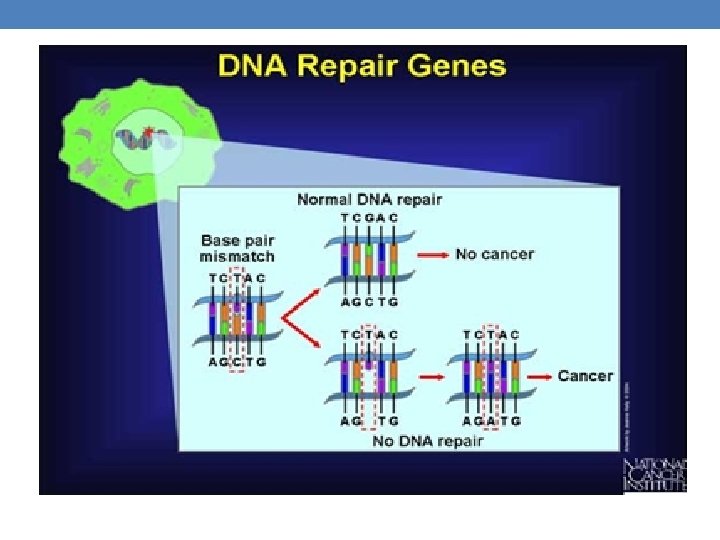
DNA REPAIR GENES The genes responsible for HNPCC (hereditary non-polyposis colon cancer). HNPCC accounts for up to 5% of all colon cancers and some endometrial cancers.
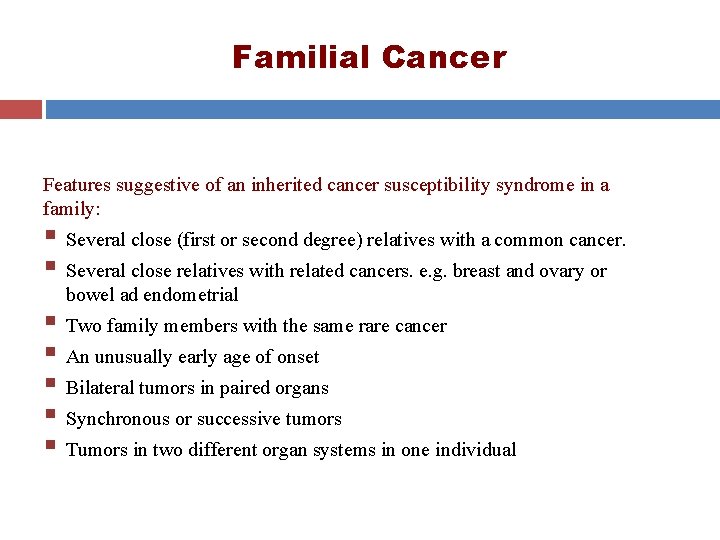
Familial Cancer Features suggestive of an inherited cancer susceptibility syndrome in a family: § Several close (first or second degree) relatives with a common cancer. § Several close relatives with related cancers. e. g. breast and ovary or bowel ad endometrial § Two family members with the same rare cancer § An unusually early age of onset § Bilateral tumors in paired organs § Synchronous or successive tumors § Tumors in two different organ systems in one individual
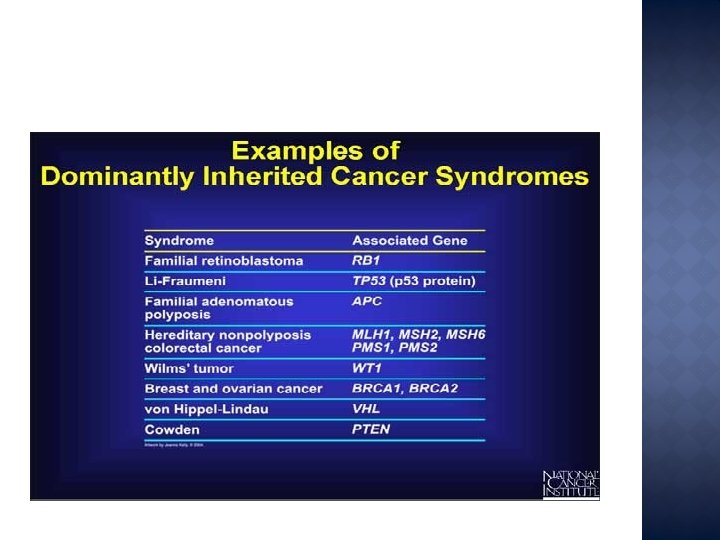
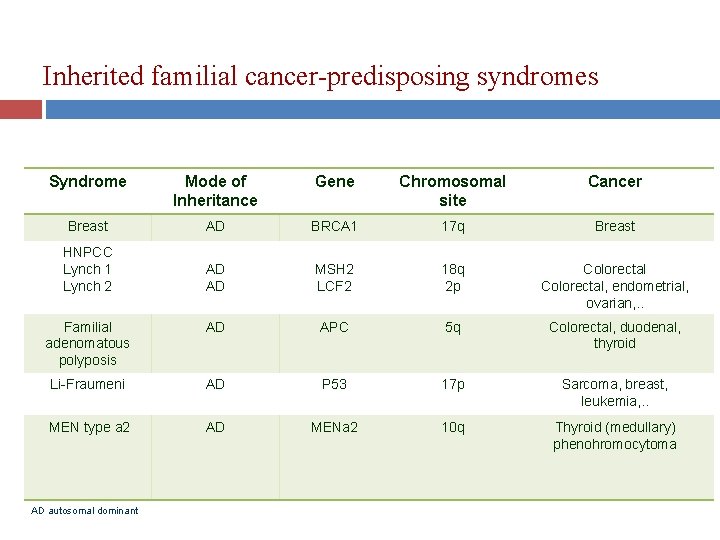
Inherited familial cancer-predisposing syndromes Syndrome Mode of Inheritance Gene Chromosomal site Cancer Breast AD BRCA 1 17 q Breast HNPCC Lynch 1 Lynch 2 AD AD MSH 2 LCF 2 18 q 2 p Colorectal, endometrial, ovarian, . . Familial adenomatous polyposis AD APC 5 q Colorectal, duodenal, thyroid Li-Fraumeni AD P 53 17 p Sarcoma, breast, leukemia, . . MEN type a 2 AD MENa 2 10 q Thyroid (medullary) phenohromocytoma AD autosomal dominant
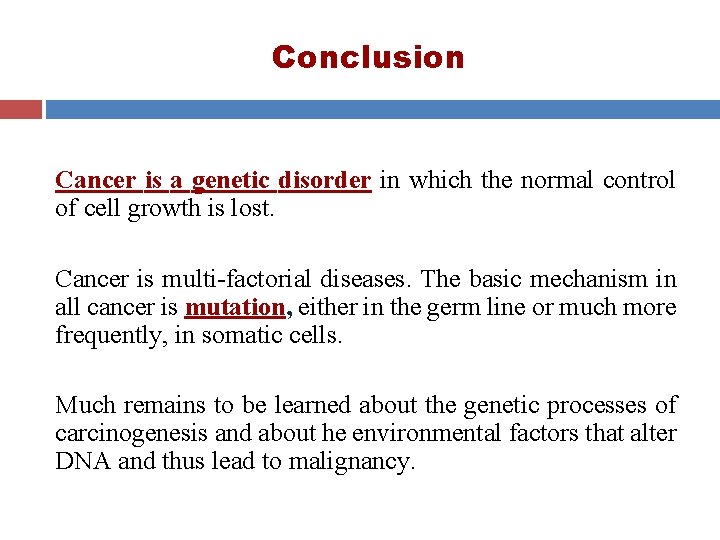
Conclusion Cancer is a genetic disorder in which the normal control of cell growth is lost. Cancer is multi-factorial diseases. The basic mechanism in all cancer is mutation, either in the germ line or much more frequently, in somatic cells. Much remains to be learned about the genetic processes of carcinogenesis and about he environmental factors that alter DNA and thus lead to malignancy.
References and Further Reading § Robert F. Mueller, Ian D. Young. Emery's Elements of Medical Genetics: Publisher: Churchill Livingstone. 1995. ISBN. 044307125 X. Available in paper copy from the publisher. § § Strachan T, Read AP. Human Molecular Genetics. 2 nd edition. New York: Wiley-Liss; 1999 § Chial, H. (2008) Proto-oncogenes to cancer. Nature Education 1. Comprehensive Cancer Information: National institute of cancer. www. cancer. gov American cancer society: http: //www. cancer. org/American. Cancer. http: //www. nlm. nih. gov/medlineplus/cancer. html
THANK YOU