Fuel for Thought The Promise of Alternative Energy






- Slides: 38
Fuel for Thought: The Promise of Alternative Energy Presented by: The Eco-Sci Club of The Academy of Mount St. Ursula
The Truth is…Fossil Fuels are History! Through technological advancements and public awareness, people and scientists alike are realizing that fossil fuels are contributing to the destruction of the environment. With the growing popularity of renewable alternative energy resources, there is still hope for the future with the development of efficient energy sources that may one day fully replace fossil fuels.
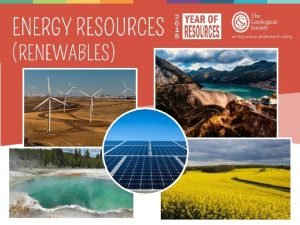
Major Alternative Energy Resources Wind Power Solar Power Hydroelectric Power Geothermal Power
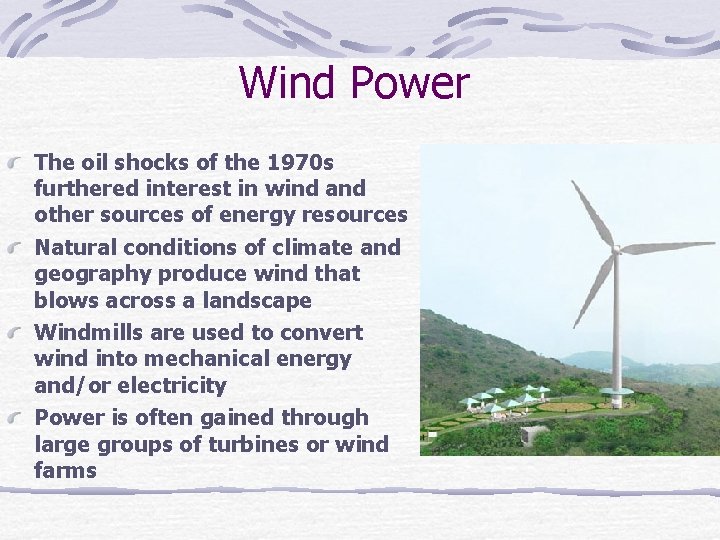
Wind Power The oil shocks of the 1970 s furthered interest in wind and other sources of energy resources Natural conditions of climate and geography produce wind that blows across a landscape Windmills are used to convert wind into mechanical energy and/or electricity Power is often gained through large groups of turbines or wind farms
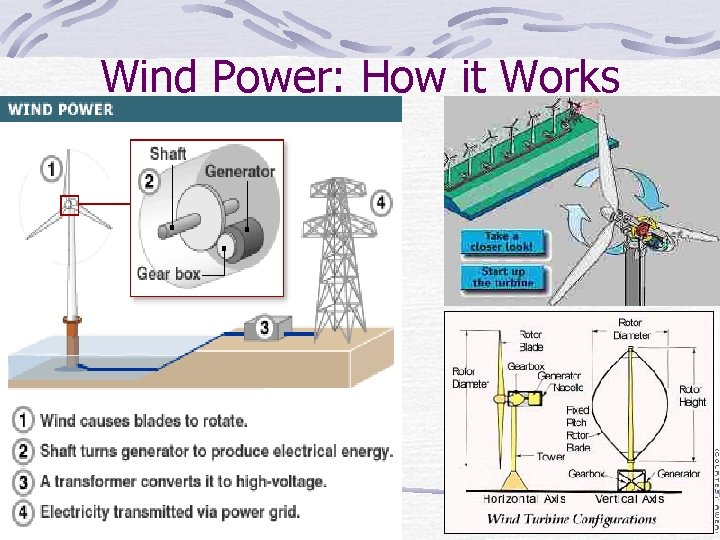
Wind Power: How it Works
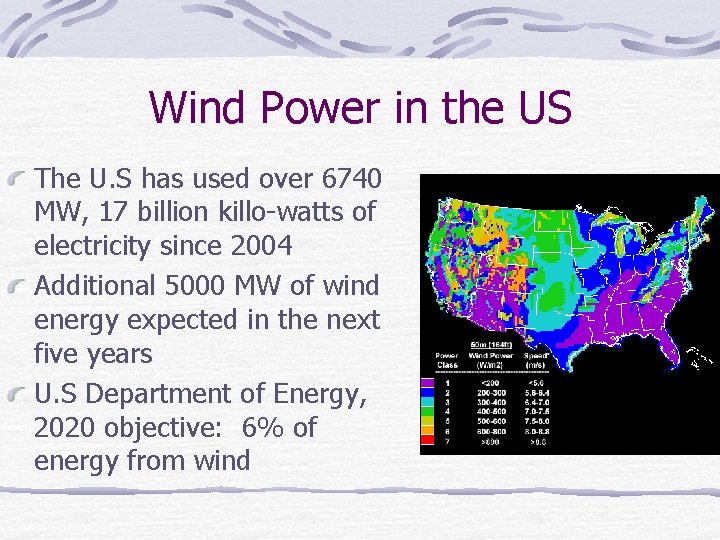
Wind Power in the US The U. S has used over 6740 MW, 17 billion killo-watts of electricity since 2004 Additional 5000 MW of wind energy expected in the next five years U. S Department of Energy, 2020 objective: 6% of energy from wind
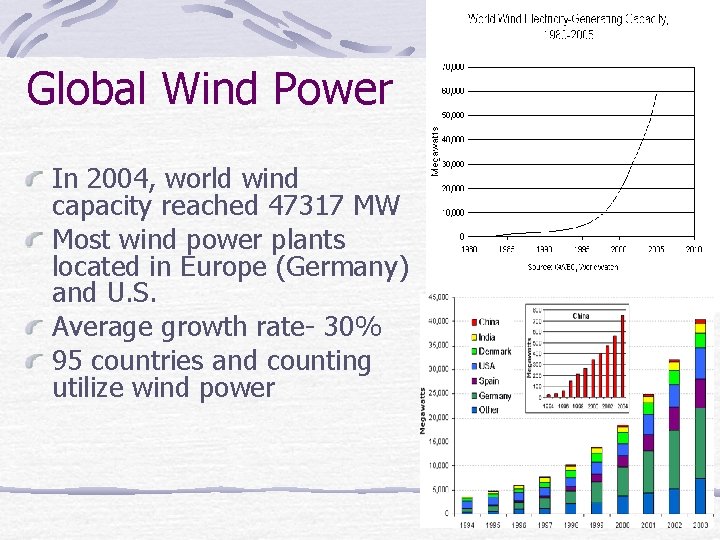
Global Wind Power In 2004, world wind capacity reached 47317 MW Most wind power plants located in Europe (Germany) and U. S. Average growth rate- 30% 95 countries and counting utilize wind power
How Much Does It Cost? Cost depends on the speed of wind, the cost of the turbines and the size of the farm Wind power cost ranges from 6 -14 cents per k. Wh No fuel costs Operating costs are steadily decreasing 3 -5%
Advantages A better lifetime investment than fossil fuels Doesn’t emit CO 2 or other greenhouse gases Prevents the emission of 2. 5 billion lbs of CO 2 and 15 million lbs of other pollutants Disadvantages Noise Pollution Visual pollution Kills birds Wind patterns are subject to change Wind energy can only be stored through a battery Turbines spin 65 -80% of the time, on average
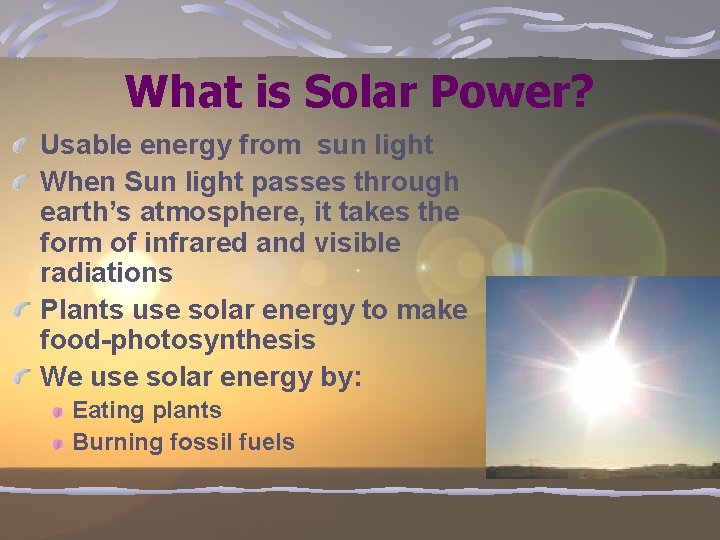
What is Solar Power? Usable energy from sun light When Sun light passes through earth’s atmosphere, it takes the form of infrared and visible radiations Plants use solar energy to make food-photosynthesis We use solar energy by: Eating plants Burning fossil fuels
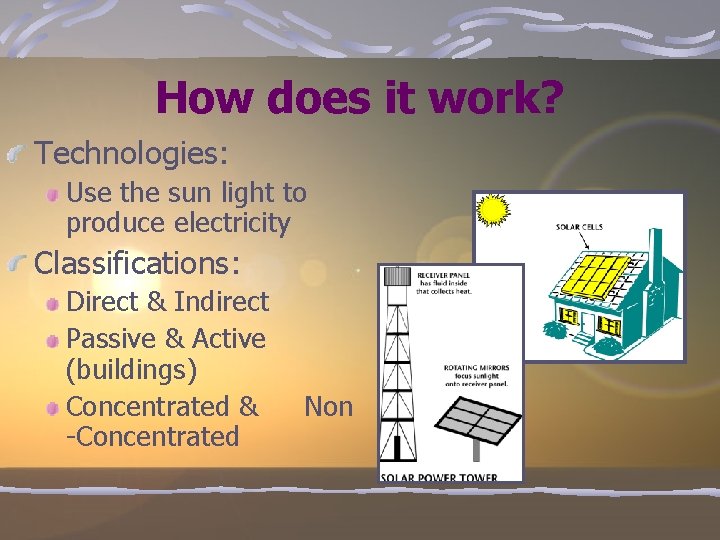
How does it work? Technologies: Use the sun light to produce electricity Classifications: Direct & Indirect Passive & Active (buildings) Concentrated & -Concentrated Non
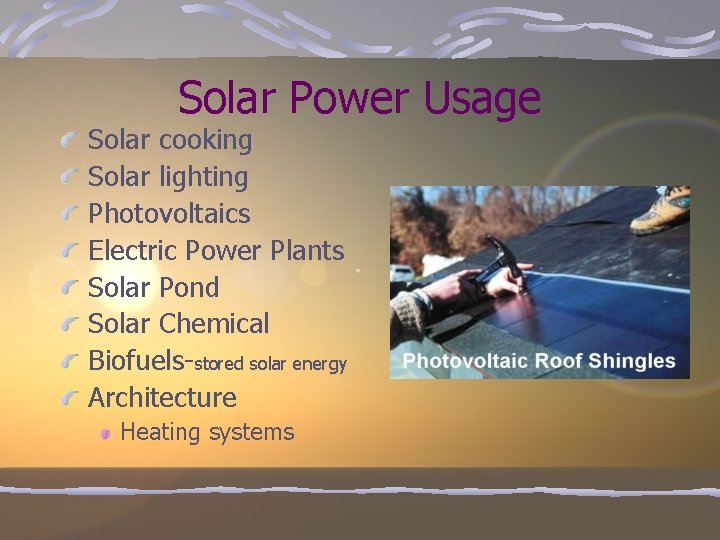
Solar Power Usage Solar cooking Solar lighting Photovoltaics Electric Power Plants Solar Pond Solar Chemical Biofuels-stored solar energy Architecture Heating systems
Advantages Sunlight is abundant Solar energy is very dense Pollution-free! Easy maintenance of facilities Economical Low operating costs
Disadvantages Requires large plots of land In order to generate a lot of energy, many photovoltaic cells are required Solar density is limited Automobiles Has to be transformed into another form of energy Initial set up is costly Polysilicon solar cells are expensive Costs are expected to decrease
What is hydroelectric energy? • Hydroelectric energy is kinetic energy derived from rivers or waterfalls
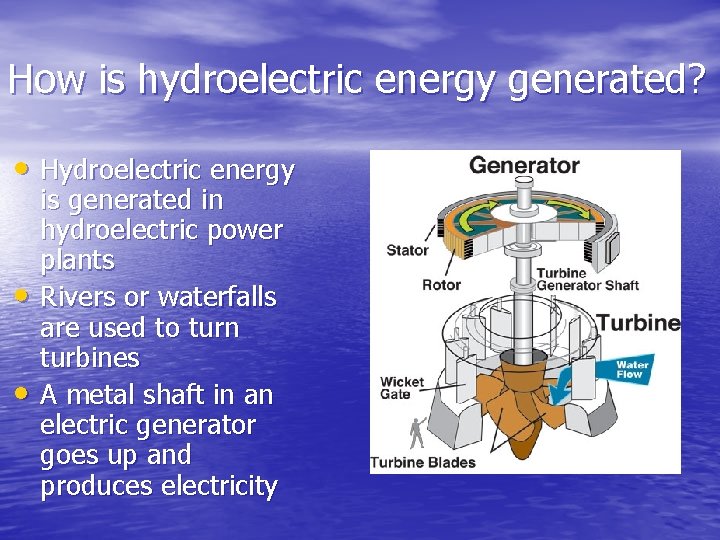
How is hydroelectric energy generated? • Hydroelectric energy • • is generated in hydroelectric power plants Rivers or waterfalls are used to turn turbines A metal shaft in an electric generator goes up and produces electricity
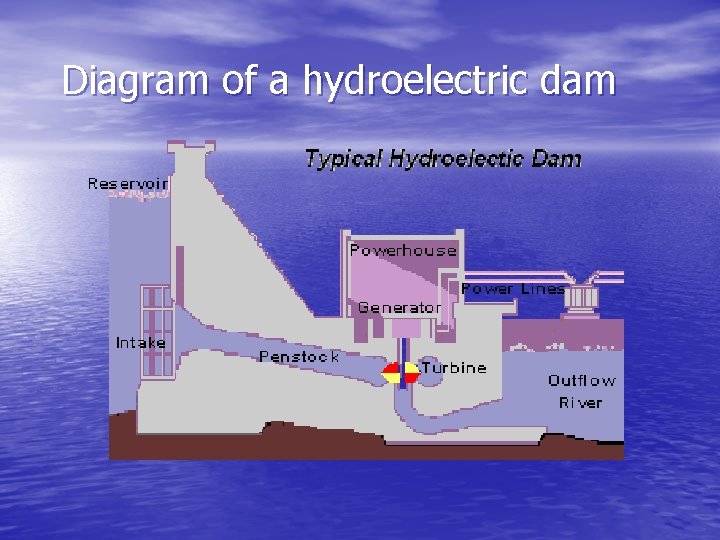
Diagram of a hydroelectric dam
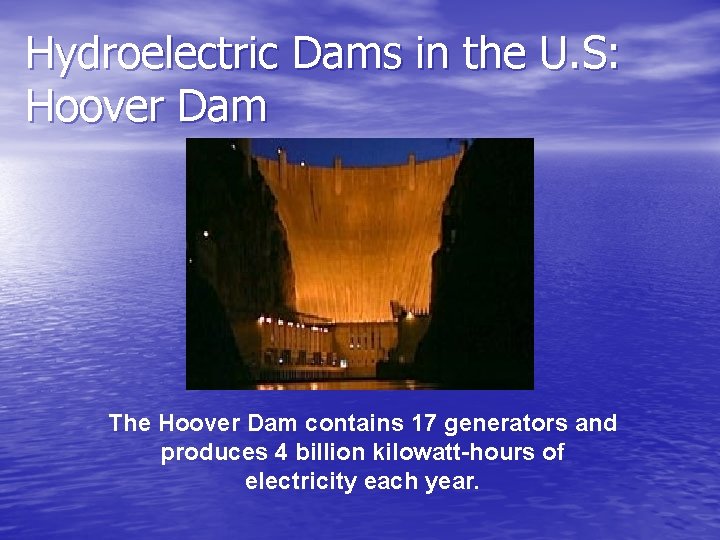
Hydroelectric Dams in the U. S: Hoover Dam The Hoover Dam contains 17 generators and produces 4 billion kilowatt-hours of electricity each year.
Pros • Some large hydroelectric plants have the • • • capacity to generate 300 -400 megawatts. 300 megawatts is enough energy to power about 3, 000 one hundred watt light bulbs! It is entirely renewable with no CO 2 emissions Hydroelectric energy contributed 13% of the electricity produced in 2001.
Cons • Hydroelectric power generation requires a lot of land • Most major sites are being used or are unavailable because of environmental reasons • Dam production usually involves flooding large areas of land, which greatly changes natural habitats • Can potentially endanger local and non-local wildlife. • It’s estimated that it will decrease to 12. 4% by 2010
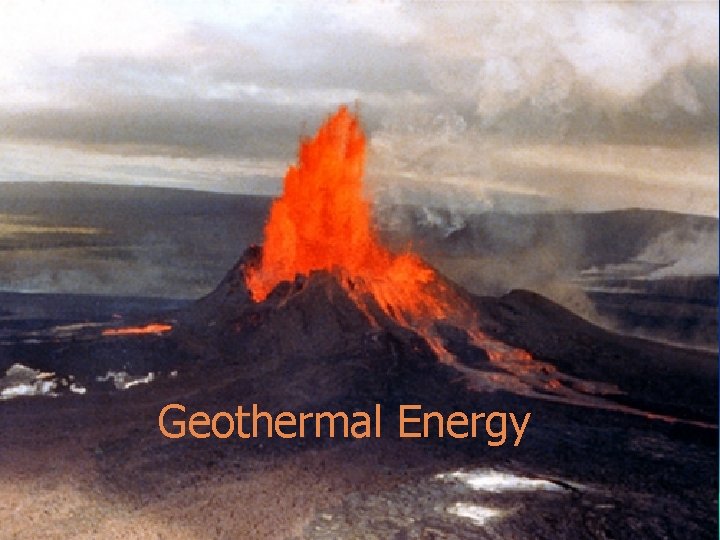
Geothermal Energy
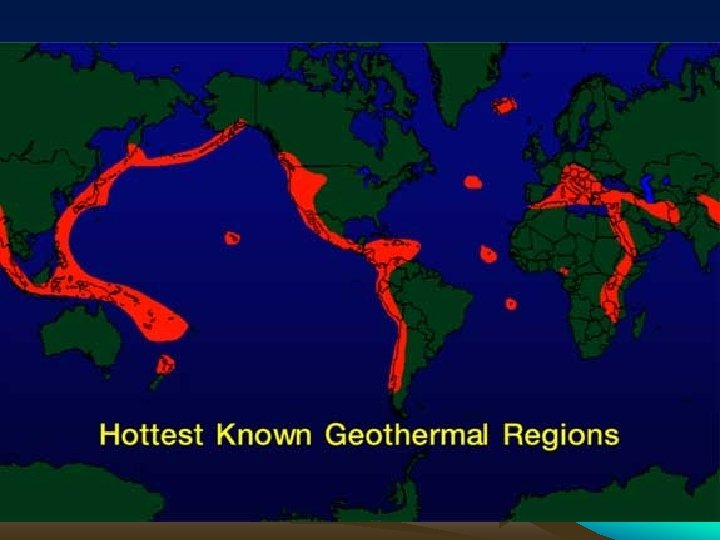
What is Geothermal Power? • The use of geothermal heat to generate electricity • From heat within the earth • "geothermal" is Greek: – geo, meaning earth – therme, meaning "heat. "
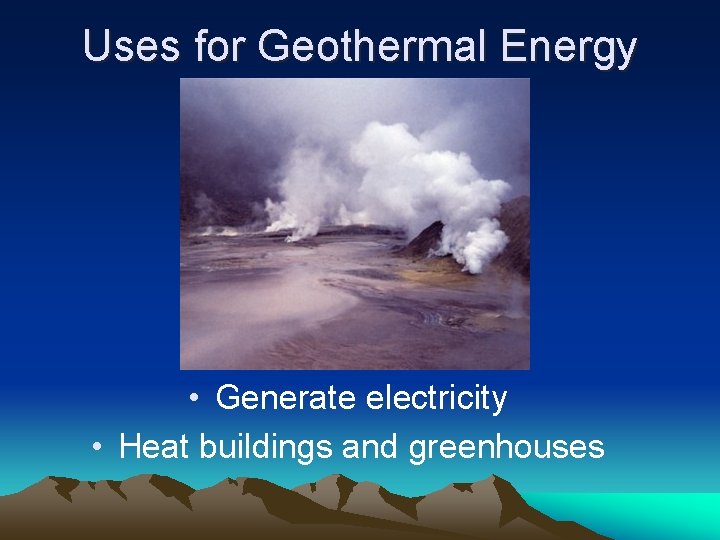
Uses for Geothermal Energy • Generate electricity • Heat buildings and greenhouses
One Exception • Although geothermal energy is often referred to as a form of a renewable resource, because the heat at any location can eventually be depleted it is not strictly renewable
Electric Generation • Three types of power plants are used to generate power from geothermal energy: • Dry steam • Flash • Binary
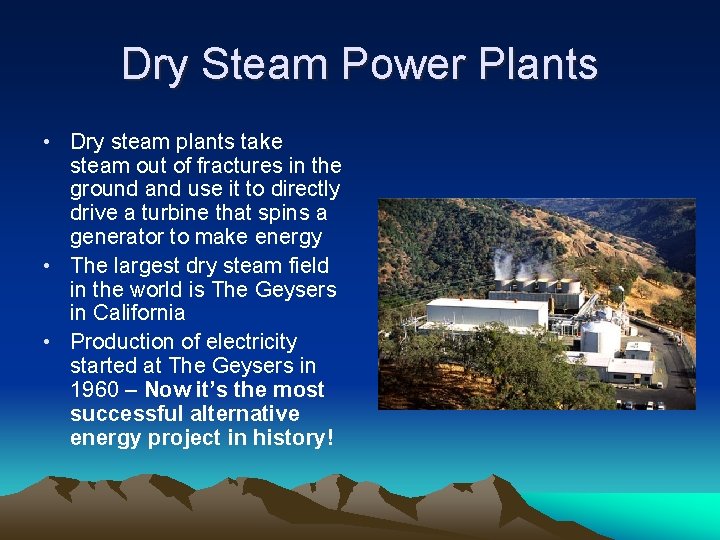
Dry Steam Power Plants • Dry steam plants take steam out of fractures in the ground and use it to directly drive a turbine that spins a generator to make energy • The largest dry steam field in the world is The Geysers in California • Production of electricity started at The Geysers in 1960 – Now it’s the most successful alternative energy project in history!
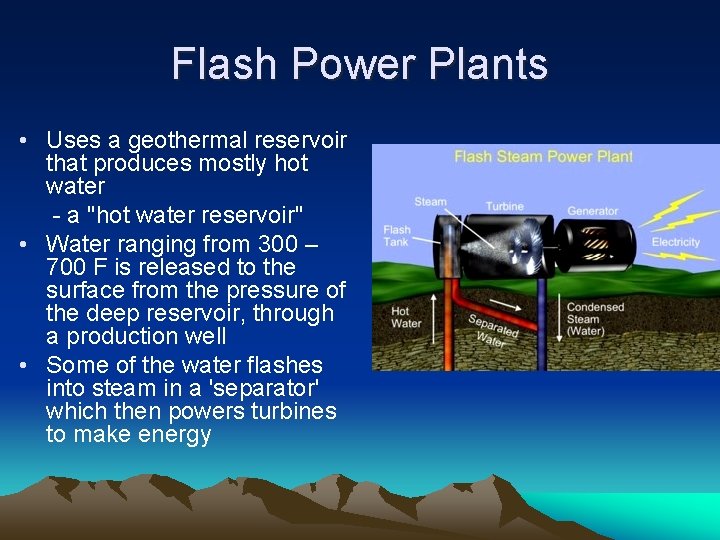
Flash Power Plants • Uses a geothermal reservoir that produces mostly hot water - a "hot water reservoir" • Water ranging from 300 – 700 F is released to the surface from the pressure of the deep reservoir, through a production well • Some of the water flashes into steam in a 'separator' which then powers turbines to make energy
Binary Power Plants • A reservoir with temperatures between 250 - 360 degrees F • Geothermal water is passed through a heat exchanger, where its heat is transferred into a second (binary) liquid, such as isopentane • The binary liquid flashes to vapor expands across and spins the turbine blades. The vapor is then re-condensed to a liquid and is reused repeatedly
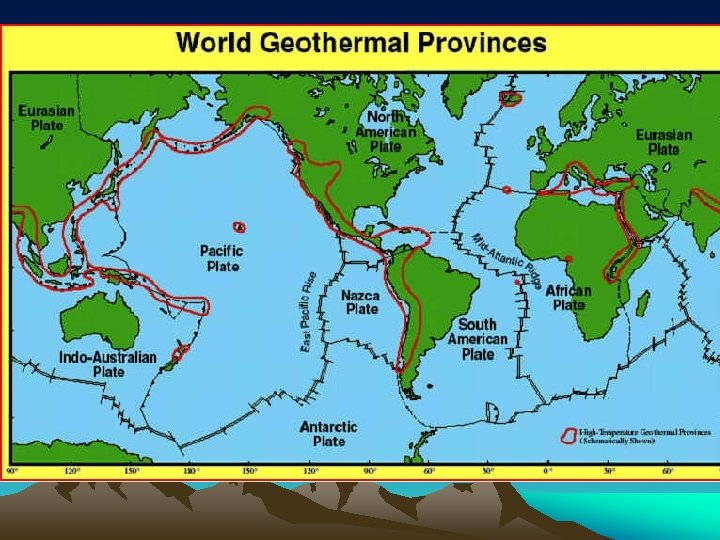
Geothermal Energy Countries • • Mexico U. S. Canada Russia Japan Philippines Indonesia New Zealand • Iceland
Pros • Geothermal energy can be found almost anywhere; from the remote, deep wells of Indonesia to our backyards! • An affordable and sustainable solution to reducing our dependence on fossil fuels, as well as the global warming and public health risks that result from their use
Cons • Ground water can potentially be contaminated with sulfides and other pollutants if well casings are not managed properly • Carbon dioxide and hydrogen sulfide are released by geothermal plants • Many geothermal reservoirs are located in sensitive and pristine wilderness areas
In General ¬Despite their cons, alternative energy still proves to be a safer, more effective approach to fighting global warming caused by fossil fuels ¬Alternative energy can provide clean energy around the world for years ¬With public action, we can make a better environment for our future!
Ways You Can Help! ¬At Home: – Use Energy-saving appliances – Reduce/Conserve electricity – Switch to a hybrid or an electric car ¬Get involved!: – New Energy Congress – Global Institute for New Energy Technologies – An-Inconvienitent-Truth(. com)
References – – “Facts About Hydropower” - Waterpower - The World's Leading Renewable Energy Source. www. wvic (mht) Solar power info: http: //www. eia. doe. gov/kids/energyfacts/sources/renewable/solar. html Photovoltaic cells: http: //www. epa. gov/epahome/enviroeye/archive. html Hoover Dam and Hydroelectric Power www. teachersdomain. com Wind power information and graphics sources www. oregon. gov/ENERGY/RENEW/inform. shtml www. library. thinkquest. org/26026/Science/wind_energy. html www. awea. org/faq/wwt_statistics. html www. solarnavigator. net www. cnn. com www. chinapage. com X www 1. eere. energy. gov www. ucsusa. org www. compositesnews. com ? www. news. bbc. co. uk ? ?
Alternative Energy? Saving our Earth? Now That’s Food For Thought!
I Need to Wake Up Lyrics Melissa Etheridge ¬ I want to change I need to shake up I need to speak out Oh, Something’s got to break up I’ve been asleep And I need to wake up Now!
Fuel for Thought: The Promise of Alternative Energy Presented by: The Eco-Sci Club of The Academy of Mount St. Ursula