Free Water and Osmolar Clearances The process of



- Slides: 24
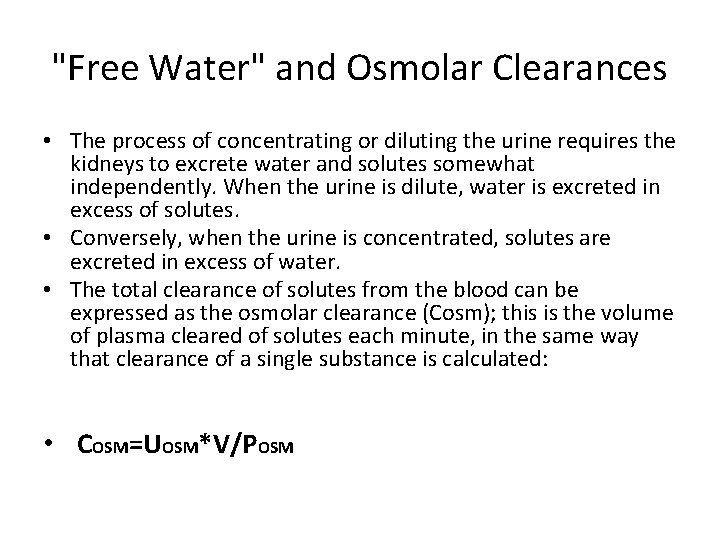
"Free Water" and Osmolar Clearances • The process of concentrating or diluting the urine requires the kidneys to excrete water and solutes somewhat independently. When the urine is dilute, water is excreted in excess of solutes. • Conversely, when the urine is concentrated, solutes are excreted in excess of water. • The total clearance of solutes from the blood can be expressed as the osmolar clearance (Cosm); this is the volume of plasma cleared of solutes each minute, in the same way that clearance of a single substance is calculated: • COSM=UOSM*V/POSM
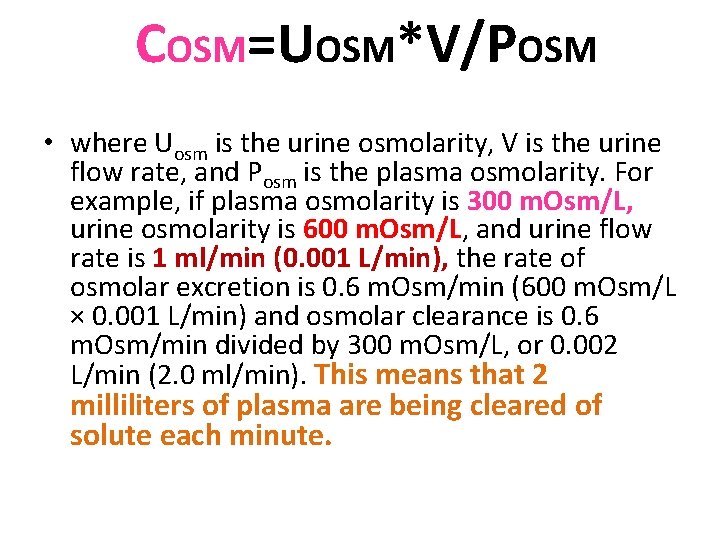
COSM=UOSM*V/POSM • where Uosm is the urine osmolarity, V is the urine flow rate, and Posm is the plasma osmolarity. For example, if plasma osmolarity is 300 m. Osm/L, urine osmolarity is 600 m. Osm/L, and urine flow rate is 1 ml/min (0. 001 L/min), the rate of osmolar excretion is 0. 6 m. Osm/min (600 m. Osm/L × 0. 001 L/min) and osmolar clearance is 0. 6 m. Osm/min divided by 300 m. Osm/L, or 0. 002 L/min (2. 0 ml/min). This means that 2 milliliters of plasma are being cleared of solute each minute.
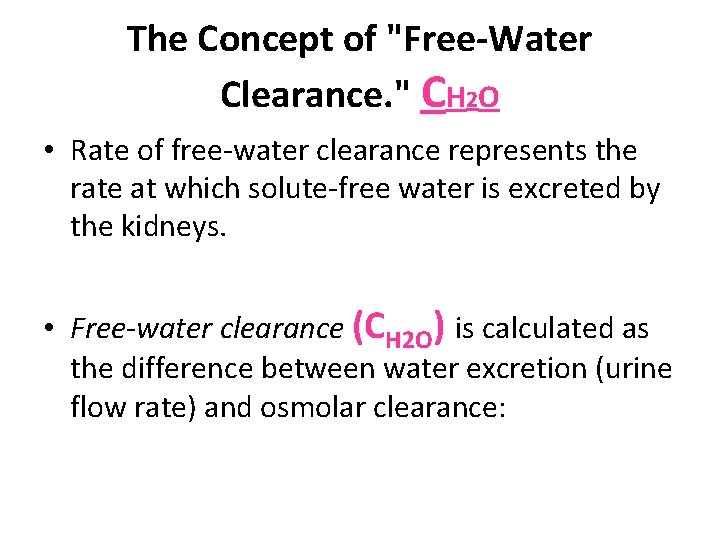
The Concept of "Free-Water Clearance. " CH 2 O • Rate of free-water clearance represents the rate at which solute-free water is excreted by the kidneys. • Free-water clearance (CH 2 O) is calculated as the difference between water excretion (urine flow rate) and osmolar clearance:
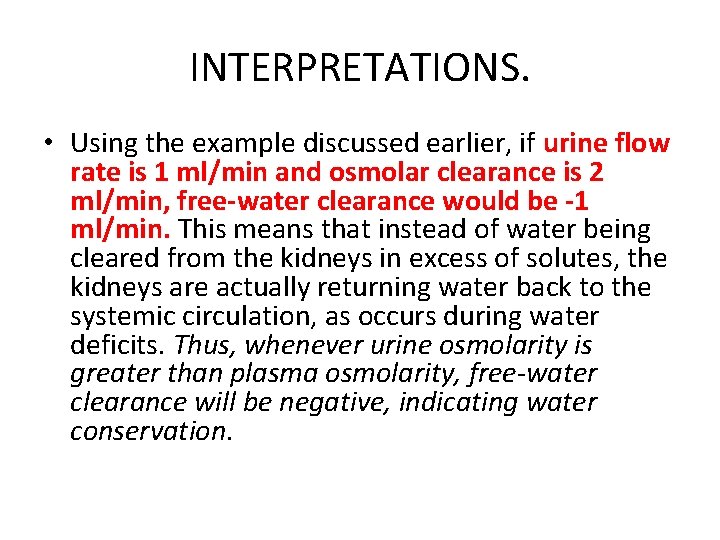
INTERPRETATIONS. • Using the example discussed earlier, if urine flow rate is 1 ml/min and osmolar clearance is 2 ml/min, free-water clearance would be -1 ml/min. This means that instead of water being cleared from the kidneys in excess of solutes, the kidneys are actually returning water back to the systemic circulation, as occurs during water deficits. Thus, whenever urine osmolarity is greater than plasma osmolarity, free-water clearance will be negative, indicating water conservation.
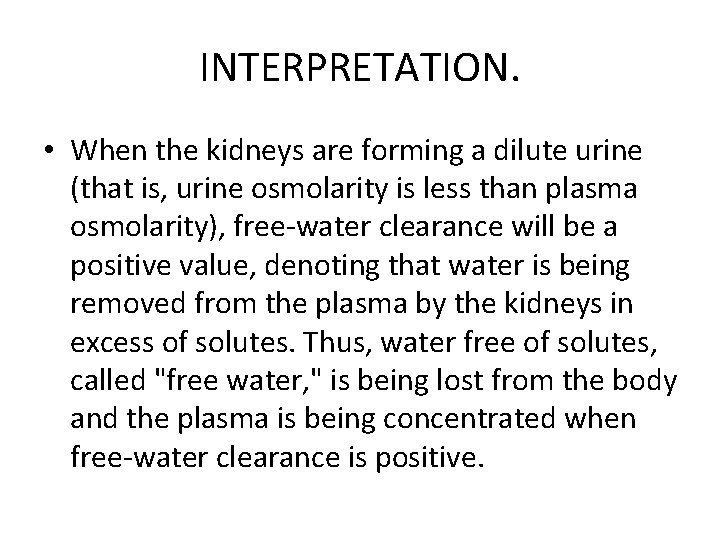
INTERPRETATION. • When the kidneys are forming a dilute urine (that is, urine osmolarity is less than plasma osmolarity), free-water clearance will be a positive value, denoting that water is being removed from the plasma by the kidneys in excess of solutes. Thus, water free of solutes, called "free water, " is being lost from the body and the plasma is being concentrated when free-water clearance is positive.
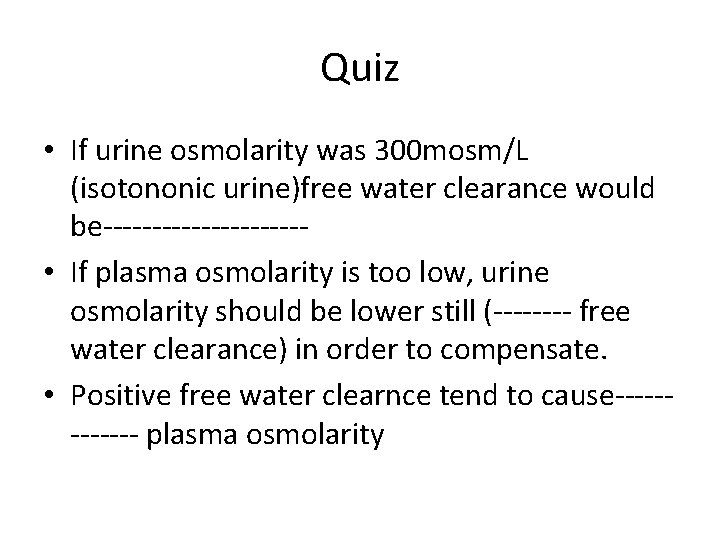
Quiz • If urine osmolarity was 300 mosm/L (isotononic urine)free water clearance would be---------- • If plasma osmolarity is too low, urine osmolarity should be lower still (---- free water clearance) in order to compensate. • Positive free water clearnce tend to cause------ plasma osmolarity
Remember • Negative free water clearance causes-----plasma osmolarity. • CH 2 o (+) = hypotonic urine is formed, <300 m. Osm/L • CH 2 o (-)= hypertonic urine is formed, >300 m. Osm/L
DILUTE URINE FORMATION • The Kidneys Excrete Excess Water by Forming a Dilute Urine • The normal kidney has tremendous capability to vary the relative proportions of solutes and water in the urine in response to various challenges. When there is excess water in the body and body fluid osmolarity is reduced, the kidney can excrete urine with an osmolarity as low as 50 m. Osm/L, a concentration that is only about one sixth the osmolarity of normal extracellular fluid. Conversely, when there is a deficit of water and extracellular fluid osmolarity is high, the kidney can excrete urine with a concentration of 1200 to 1400 m. Osm/L. Equally important, the kidney can excrete a large volume of dilute urine or a small volume of concentrated urine without major changes in rates of excretion of solutes such as sodium and potassium.
• The mechanism forming a dilute urine is to continue reabsorbing solutes from the distal segments of the tubular system while failing to reabsorb water. In healthy kidneys, fluid leaving the ascending loop of Henle and early distal tubule is always dilute, regardless of the level of ADH. In the absence of ADH, the urine is further diluted in the late distal tubule and collecting ducts, and a large volume of dilute urine is excreted.
Renal Mechanisms for Excreting a Dilute Urine. • Tubular Fluid Remains Isosmotic in the Proximal Tubule. • Tubular Fluid Becomes Dilute in the Ascending Loop of Henle. • Tubular Fluid in Distal and Collecting Tubules Is Further Diluted in the Absence of ADH.
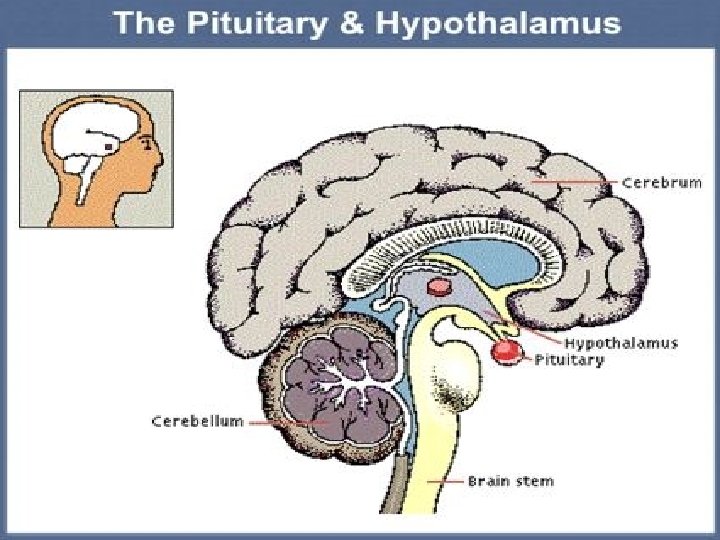
ADH: Anti. Diuretic Hormone • Formed in the supraoptic and paraventricular nuclei of the hypothalamus. • Transported to the posterior lobe of the Pituitary Gland stored. • ADH is released: in response to an increase in intravascular osmotic pressure, hypovolemia, decrease in pulse pressure. And in response to fear, pain, anxiety.
Function of ADH • ADH increases the permeability of the renal distal tubule and collecting ducts to water. • Less free water is excreted in urine • Urine volume is decreased • Concentration of urine is increased
Diabetes Insipidus • DI is a clinical condition due to a deficit of ADH or due to the kidney’s resistance to the effects of ADH. • DI may be central (neurogenic) or nephrogenic. • DI may be a transient or a permanent condition.
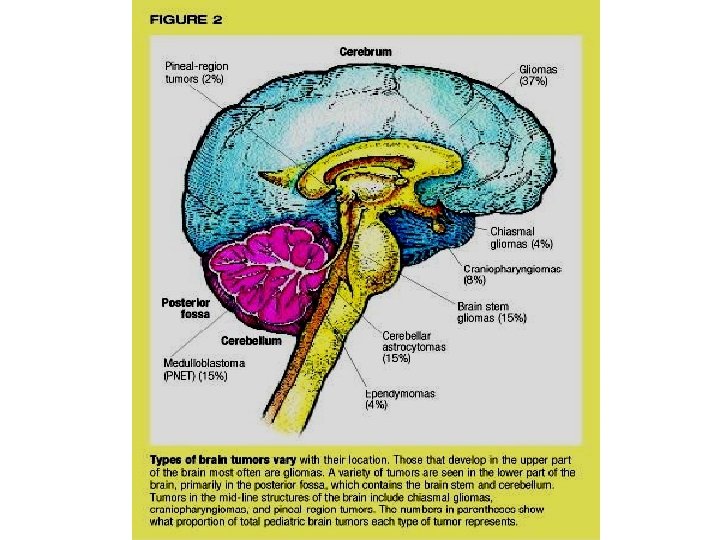
Etiologies of NEUROGENIC DI • CNS disorders that damage or create pressure in the area of the hypothalamus, pituitary stalk, or posterior pituitary gland • Head Injuries • CNS infections • Intraventricular Hemorrhage • Neurosurgical Procedures: common postoperatively with resection of craniopharyngiomas, pituitary gland tumors, or suprasellar tumors. • Associated with certain drugs: Ethanol, phenytoin, halothane, opiate antagonists, lithium
NEPHROGENIC DI • Inability of renal tubules to respond to normal levels of ADH • There is excretion of hyperosmolar urine and severe dehydration even after administration of large doses of ADH. • First makes its appearance in infancy. • Hereditary • More common in male infants.
Signs and Symptoms of DI • • • POLYURIA- first sign Low Urine osmolality (less than 100 -200 m. Osm/L) Urine specific gravity <1. 010 Hypernatremia (serum sodium greater than 145 m. Eq/L) Serum hyperosmolar (greater than 300 m. Osm/L) Thirst, polydipsia Irritability or mental status changes Dehydration Shock
Clinical Management of DI • Goal is to prevent circulatory failure and hyperosmolar encephalopathy. • Replace volume deficit and ongoing losses • Replace ADH • Close monitoring of serum and urine lytes/osmolality
FOR NEUROGENIC DI---- • HORMONE REPLACEMENT THERAPY IN THE FORM OF NASAL SPRAY OR SUBCUTANEOUS INJECTION OF DEMOPRESSIN( SYNTHETIC ADH)
IN NEPHROGENIC DI--- • MORE DIFFICULT TO CONTROL • RESTRICTION OF SALT IN DIET • PARADOXICALLY BY USING DIURETICS— CAUSING CHRONIC ECF VOLUME CONTRACTION----LEADING TO COMPENSATORY MECHANISMS.
Complications • • Cardiac collapse Shock Cerebral Edema Herniation Death Electrolyte imbalances Water intoxication and fluid overload