Formalization Institutions The Law of Impersonal Transactions Meaning






- Slides: 25
Formalization Institutions: The Law of Impersonal Transactions— Meaning and Difficulties Building Market Institutions: Property Rights, Business Formalization and Economic Development University of Chicago Press, 2010 Benito ARRUÑADA Pompeu Fabra University ISNIE 13 th Annual Conference UC Berkeley, June 19, 2009
Outline ▪ The problem of impersonal exchange ♦ Sequential exchange ▪ The contract formalization solution: ♦ Efficiently diluting property rights ▪ Prevalence of ‘sequential’ exchange ▪ Consequences & difficulties: ♦ E. g. , rules are not enough & luddite lawyers
1. The problem
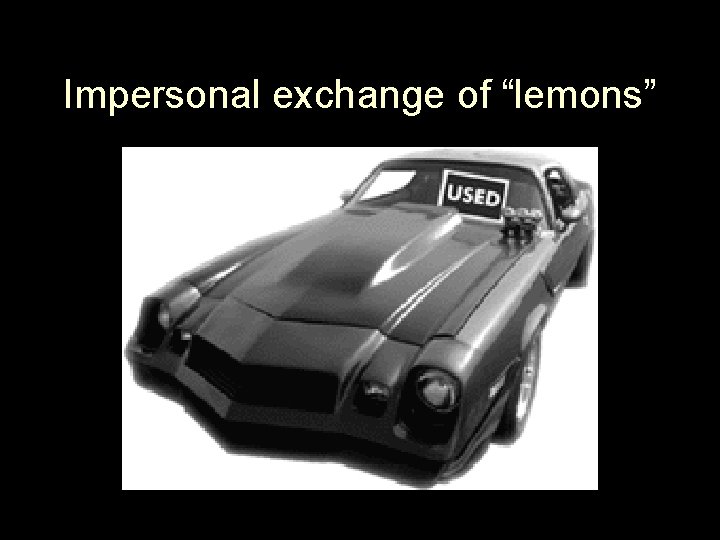
Impersonal exchange of “lemons”
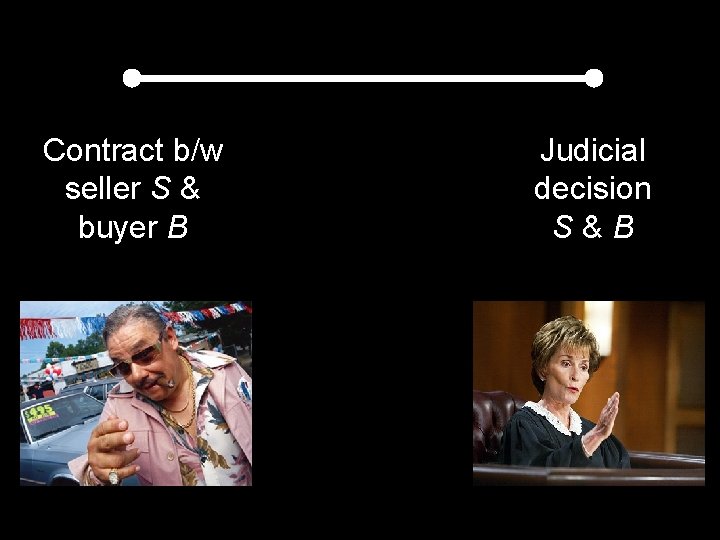
Contract b/w seller S & buyer B Judicial decision S&B
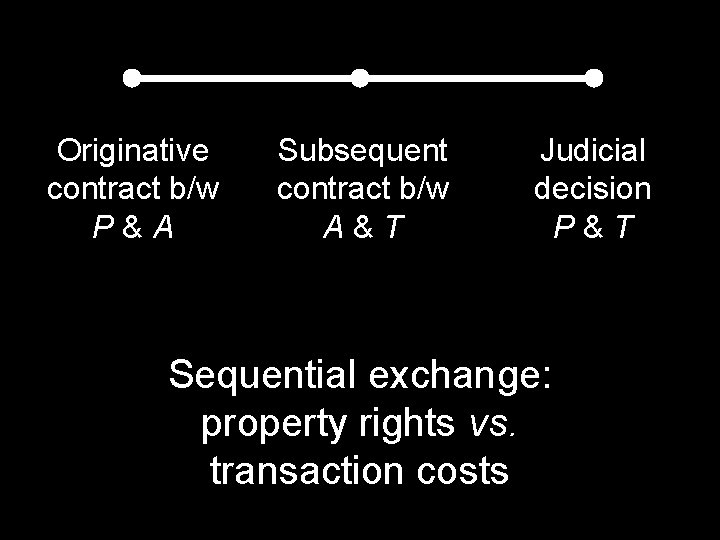
Originative contract b/w P&A Subsequent contract b/w A&T Judicial decision P&T Sequential exchange: property rights vs. transaction costs
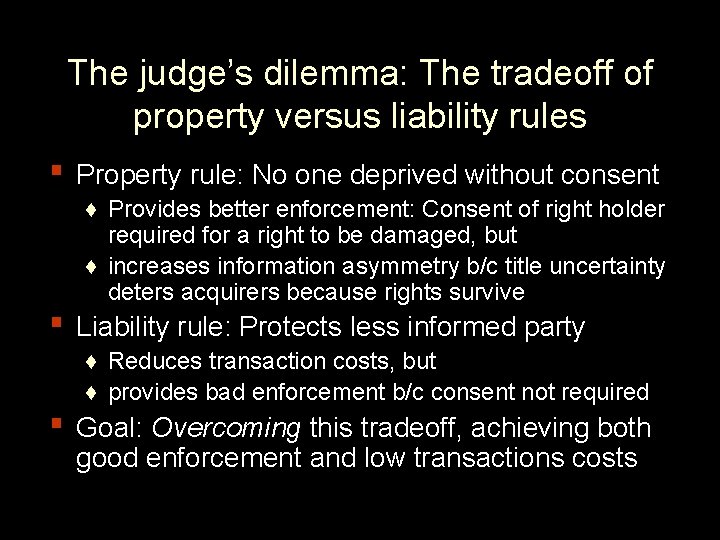
The judge’s dilemma: The tradeoff of property versus liability rules ▪ Property rule: No one deprived without consent ♦ Provides better enforcement: Consent of right holder required for a right to be damaged, but ♦ increases information asymmetry b/c title uncertainty deters acquirers because rights survive ▪ Liability rule: Protects less informed party ♦ Reduces transaction costs, but ♦ provides bad enforcement b/c consent not required ▪ Goal: Overcoming this tradeoff, achieving both good enforcement and low transactions costs
2. The solution
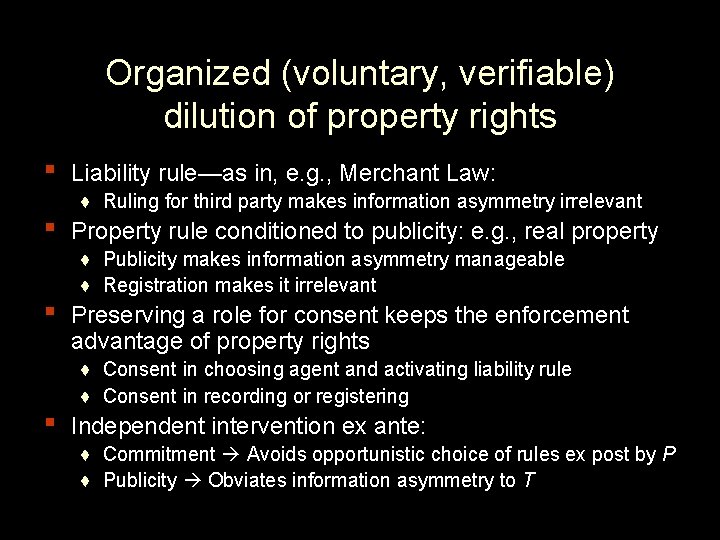
Organized (voluntary, verifiable) dilution of property rights ▪ ▪ Liability rule—as in, e. g. , Merchant Law: ♦ Ruling for third party makes information asymmetry irrelevant Property rule conditioned to publicity: e. g. , real property ♦ Publicity makes information asymmetry manageable ♦ Registration makes it irrelevant Preserving a role for consent keeps the enforcement advantage of property rights ♦ Consent in choosing agent and activating liability rule ♦ Consent in recording or registering Independent intervention ex ante: ♦ Commitment Avoids opportunistic choice of rules ex post by P ♦ Publicity Obviates information asymmetry to T
3. Cases: The prevalence of “sequential” exchange
Business transactions
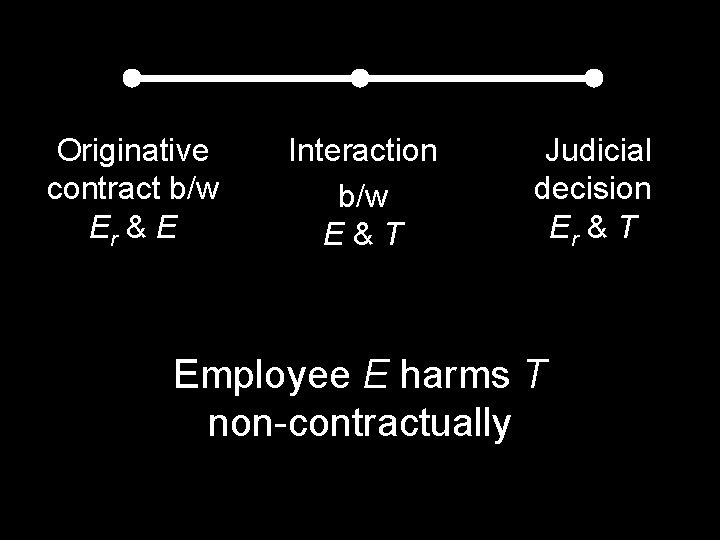
Originative contract b/w Er & E Interaction b/w E&T • Judicial decision Er & T Employee E harms T non-contractually
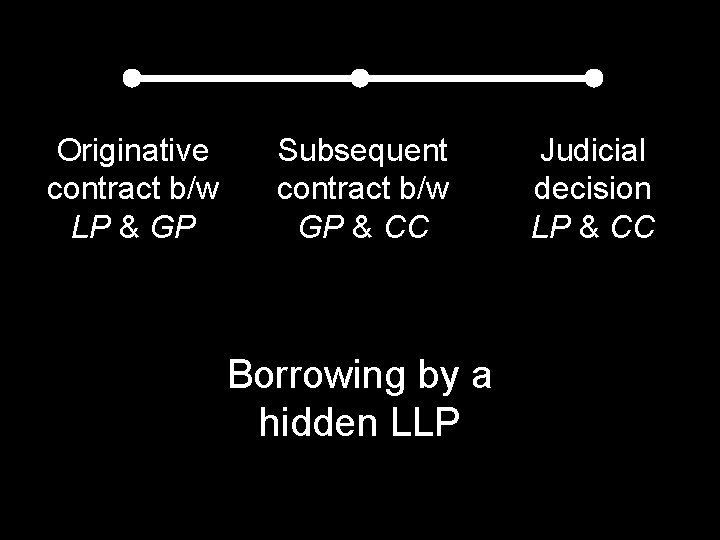
Originative contract b/w LP & GP Subsequent contract b/w GP & CC Borrowing by a hidden LLP Judicial decision LP & CC
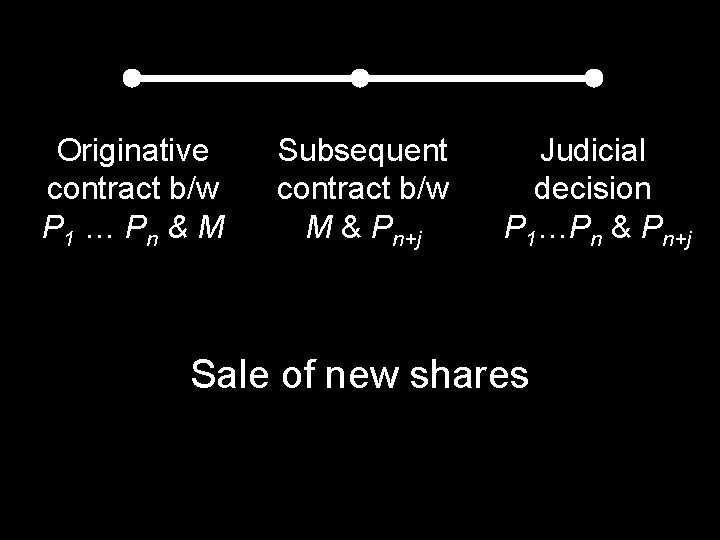
Originative contract b/w P 1 … Pn & M Subsequent contract b/w M & Pn+j Judicial decision P 1…Pn & Pn+j Sale of new shares
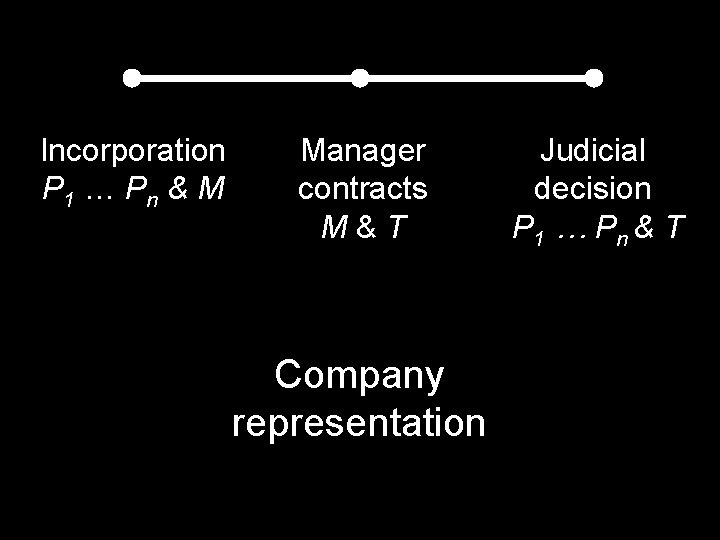
Incorporation P 1 … Pn & M Manager contracts M&T Company representation Judicial decision P 1 … Pn & T
Real property and ‘secured’ transactions
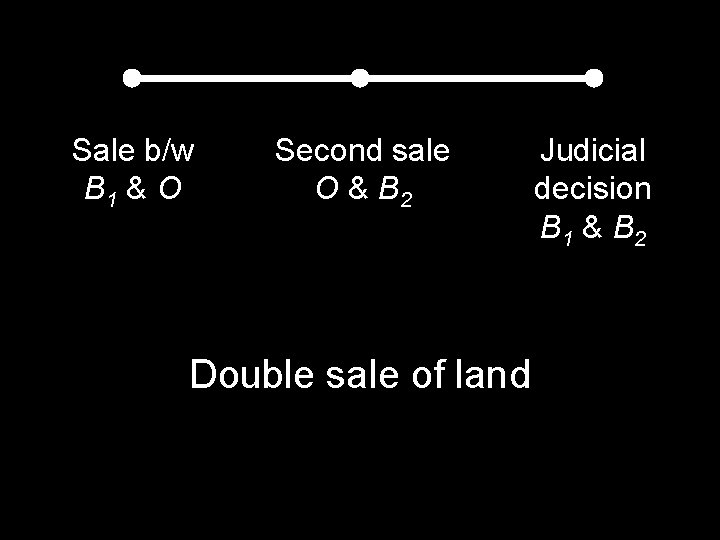
Sale b/w B 1 & O Second sale O & B 2 Double sale of land Judicial decision B 1 & B 2
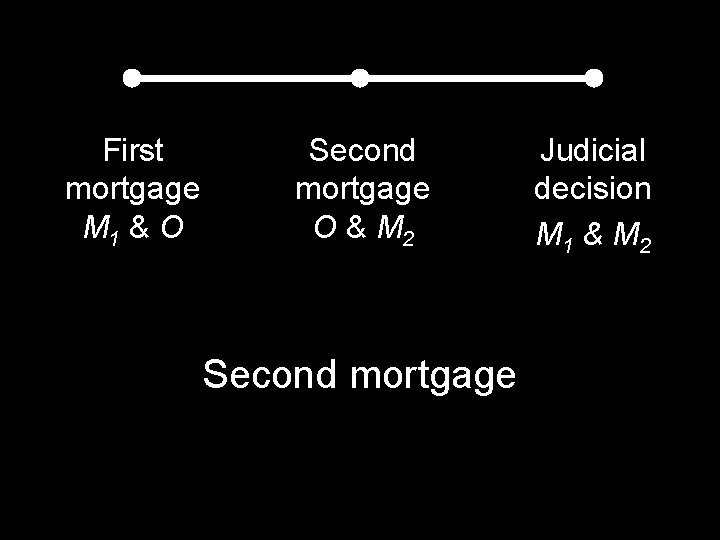
First mortgage M 1 & O Second mortgage O & M 2 Second mortgage Judicial decision M 1 & M 2
Two types of solution
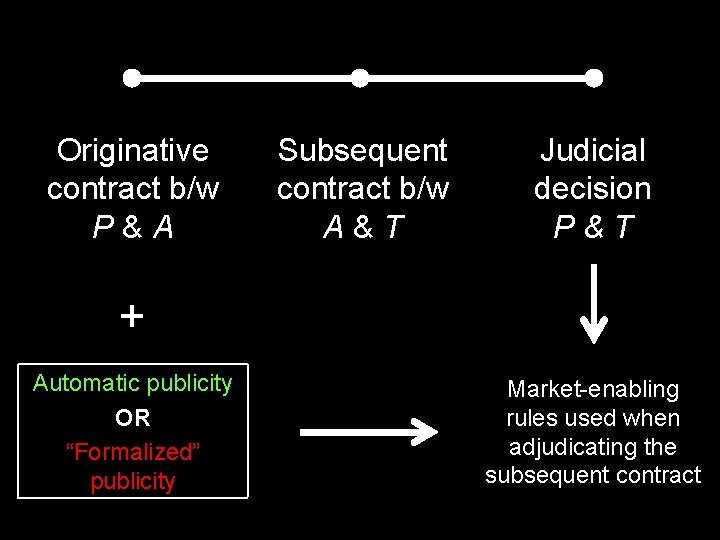
Originative contract b/w P&A Subsequent contract b/w A&T Judicial decision P&T + Automatic publicity OR “Formalized” publicity Market-enabling rules used when adjudicating the subsequent contract
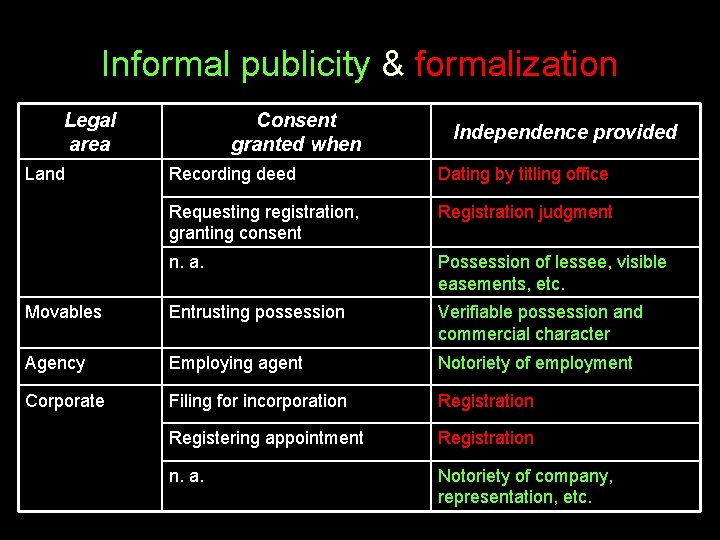
Informal publicity & formalization Legal area Land Consent granted when Independence provided Recording deed Dating by titling office Requesting registration, granting consent Registration judgment n. a. Possession of lessee, visible easements, etc. Movables Entrusting possession Verifiable possession and commercial character Agency Employing agent Notoriety of employment Corporate Filing for incorporation Registering appointment Registration n. a. Notoriety of company, representation, etc.
4. Consequences & interpretation
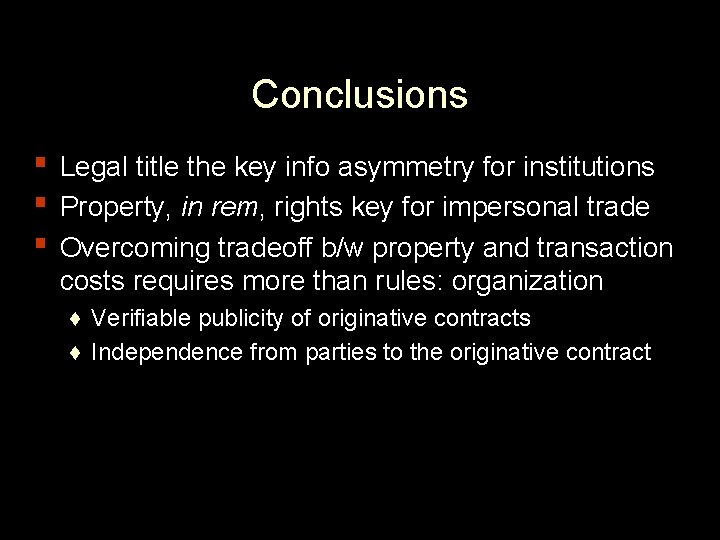
Conclusions ▪ Legal title the key info asymmetry for institutions ▪ Property, in rem, rights key for impersonal trade ▪ Overcoming tradeoff b/w property and transaction costs requires more than rules: organization ♦ Verifiable publicity of originative contracts ♦ Independence from parties to the originative contract
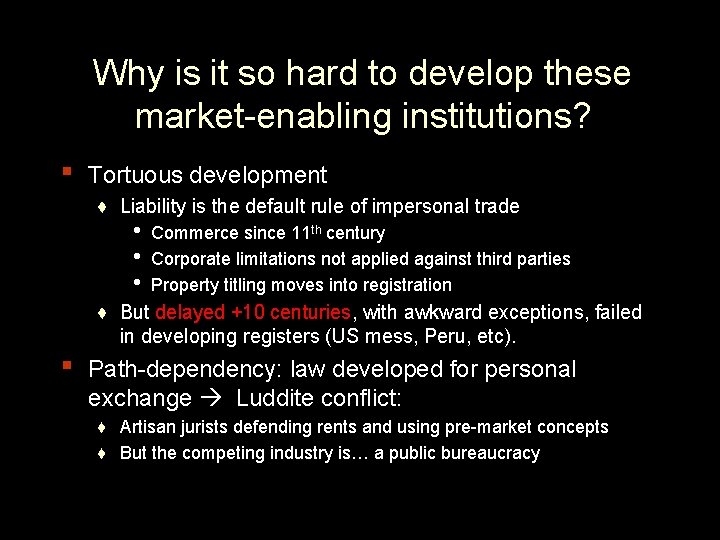
Why is it so hard to develop these market-enabling institutions? ▪ Tortuous development ♦ Liability is the default rule of impersonal trade • • • ▪ Commerce since 11 th century Corporate limitations not applied against third parties Property titling moves into registration ♦ But delayed +10 centuries, with awkward exceptions, failed in developing registers (US mess, Peru, etc). Path-dependency: law developed for personal exchange Luddite conflict: ♦ Artisan jurists defending rents and using pre-market concepts ♦ But the competing industry is… a public bureaucracy
Thanks