Developed in association with the European Thoracic Oncology



- Slides: 55
Developed in association with the European Thoracic Oncology Platform AACR Virtual Annual Meeting 27– 28 April and 22– 24 June 2020 Supported by Eli Lilly and Company has not influenced the content of this publication
Letter from Prof Rolf Stahel Dear Colleagues It is my pleasure to present this ETOP slide set which has been designed to highlight and summarise key findings in thoracic cancers from the major congresses in 2020. This slide set specifically focuses on the American Association for Cancer Research (AACR) 2020 Virtual Annual Meeting and is available in 4 languages – English, French, Chinese and Japanese. The area of clinical research in oncology is a challenging and ever changing environment. Within this environment we all value access to scientific data and research which helps to educate and inspire further advancements in our roles as scientists, clinicians and educators. I hope you find this review of the latest developments in thoracic cancers of benefit to you in your practice. If you would like to share your thoughts with us we would welcome your comments. Please send any correspondence to etop@etop. eu-org. I would like to thank our ETOP members Drs Enriqueta Felip, Solange Peters and Martin Reck for their roles as Editors – for prioritising abstracts and reviewing slide content. The slide set you see before you would not be possible without their commitment and hard work. Finally, we are also very grateful to Lilly Oncology for their financial, administrative and logistical support in the realisation of this complex yet rewarding activity. Yours sincerely, Rolf Stahel President, ETOP Foundation Council
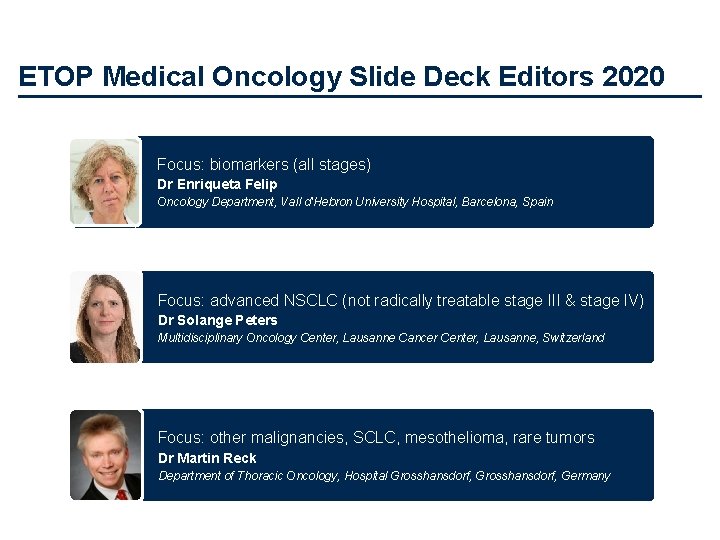
ETOP Medical Oncology Slide Deck Editors 2020 Focus: biomarkers (all stages) Dr Enriqueta Felip Oncology Department, Vall d'Hebron University Hospital, Barcelona, Spain Focus: advanced NSCLC (not radically treatable stage III & stage IV) Dr Solange Peters Multidisciplinary Oncology Center, Lausanne Cancer Center, Lausanne, Switzerland Focus: other malignancies, SCLC, mesothelioma, rare tumors Dr Martin Reck Department of Thoracic Oncology, Hospital Grosshansdorf, Germany
Contents • Screening, biomarkers and preclinical studies • Advanced NSCLC – Not radically treatable stage III and stage IV – Immunotherapy strategies – Targeted therapies • Other malignancies – SCLC, mesothelioma and thymic epithelial tumors The copyright of the meeting abstracts referred to in this publication is owned by the American Association for Cancer Research. Although great care has been taken in compiling the content of this publication, neither Springer Healthcare, the American Association for Cancer Research, nor their employees or subcontractors are responsible or liable in any way for the currency of the information; for any errors, omissions, or inaccuracies in the original or following translation; or for any consequences arising therefrom. Approved product information should be reviewed before use.
Screening, biomarkers and preclinical studies
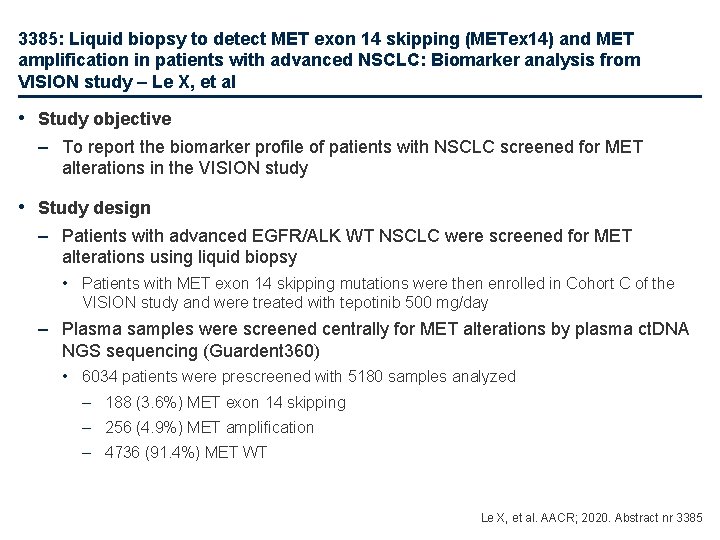
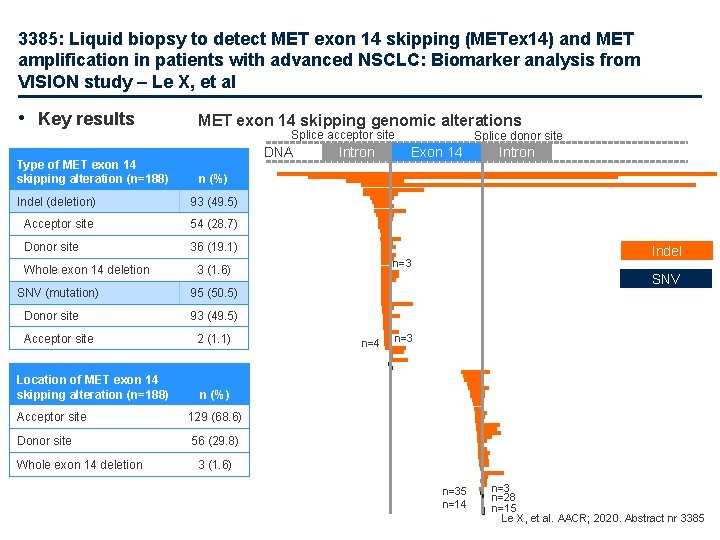
3385: Liquid biopsy to detect MET exon 14 skipping (METex 14) and MET amplification in patients with advanced NSCLC: Biomarker analysis from VISION study – Le X, et al • Study objective – To report the biomarker profile of patients with NSCLC screened for MET alterations in the VISION study • Study design – Patients with advanced EGFR/ALK WT NSCLC were screened for MET alterations using liquid biopsy • Patients with MET exon 14 skipping mutations were then enrolled in Cohort C of the VISION study and were treated with tepotinib 500 mg/day – Plasma samples were screened centrally for MET alterations by plasma ct. DNA NGS sequencing (Guardent 360) • 6034 patients were prescreened with 5180 samples analyzed – 188 (3. 6%) MET exon 14 skipping – 256 (4. 9%) MET amplification – 4736 (91. 4%) MET WT Le X, et al. AACR; 2020. Abstract nr 3385
3385: Liquid biopsy to detect MET exon 14 skipping (METex 14) and MET amplification in patients with advanced NSCLC: Biomarker analysis from VISION study – Le X, et al • Key results Type of MET exon 14 skipping alteration (n=188) MET exon 14 skipping genomic alterations Splice acceptor site DNA 93 (49. 5) Acceptor site 54 (28. 7) Donor site 36 (19. 1) SNV (mutation) Donor site Acceptor site Location of MET exon 14 skipping alteration (n=188) Intron Indel n=3 3 (1. 6) SNV 95 (50. 5) 93 (49. 5) 2 (1. 1) n=4 n=3 n (%) Acceptor site 129 (68. 6) Donor site 56 (29. 8) Whole exon 14 deletion Exon 14 n (%) Indel (deletion) Whole exon 14 deletion Intron Splice donor site 3 (1. 6) n=35 n=14 n=3 n=28 n=15 Le X, et al. AACR; 2020. Abstract nr 3385
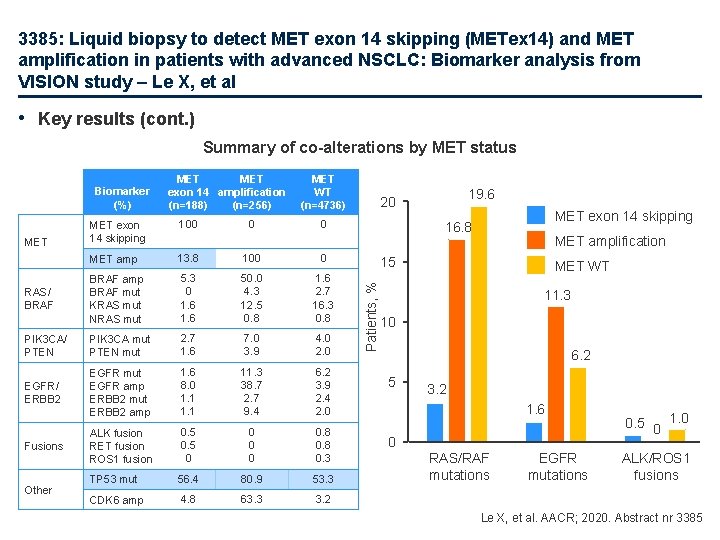
3385: Liquid biopsy to detect MET exon 14 skipping (METex 14) and MET amplification in patients with advanced NSCLC: Biomarker analysis from VISION study – Le X, et al • Key results (cont. ) Summary of co-alterations by MET status MET RAS/ BRAF PIK 3 CA/ PTEN EGFR/ ERBB 2 Fusions Other MET exon 14 amplification (n=188) (n=256) 0 MET WT (n=4736) MET exon 14 skipping 100 MET amp 13. 8 100 0 BRAF amp BRAF mut KRAS mut NRAS mut 5. 3 0 1. 6 50. 0 4. 3 12. 5 0. 8 1. 6 2. 7 16. 3 0. 8 PIK 3 CA mut PTEN mut 2. 7 1. 6 7. 0 3. 9 4. 0 2. 0 EGFR mut EGFR amp ERBB 2 mut ERBB 2 amp 1. 6 8. 0 1. 1 11. 3 38. 7 2. 7 9. 4 6. 2 3. 9 2. 4 2. 0 ALK fusion RET fusion ROS 1 fusion 0. 5 0 0 0. 8 0. 3 TP 53 mut 56. 4 80. 9 53. 3 CDK 6 amp 4. 8 63. 3 3. 2 19. 6 20 0 MET exon 14 skipping 16. 8 MET amplification 15 Patients, % Biomarker (%) MET WT 11. 3 10 6. 2 5 3. 2 1. 6 0 RAS/RAF mutations EGFR mutations 0. 5 0 1. 0 ALK/ROS 1 fusions Le X, et al. AACR; 2020. Abstract nr 3385
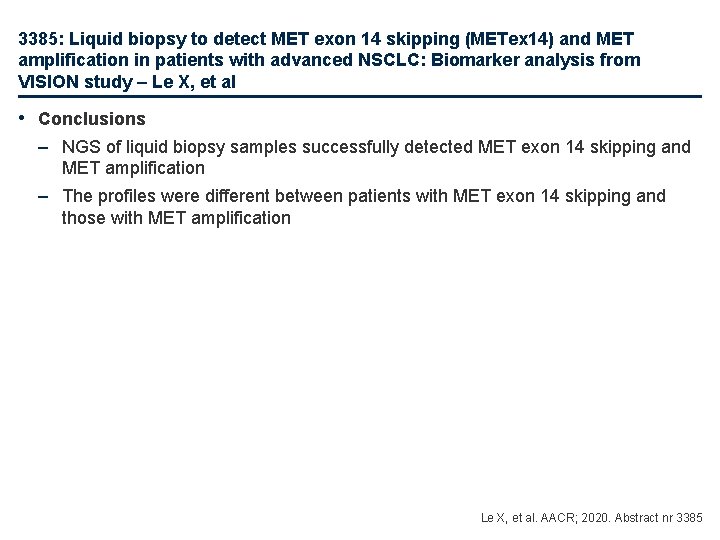
3385: Liquid biopsy to detect MET exon 14 skipping (METex 14) and MET amplification in patients with advanced NSCLC: Biomarker analysis from VISION study – Le X, et al • Conclusions – NGS of liquid biopsy samples successfully detected MET exon 14 skipping and MET amplification – The profiles were different between patients with MET exon 14 skipping and those with MET amplification Le X, et al. AACR; 2020. Abstract nr 3385
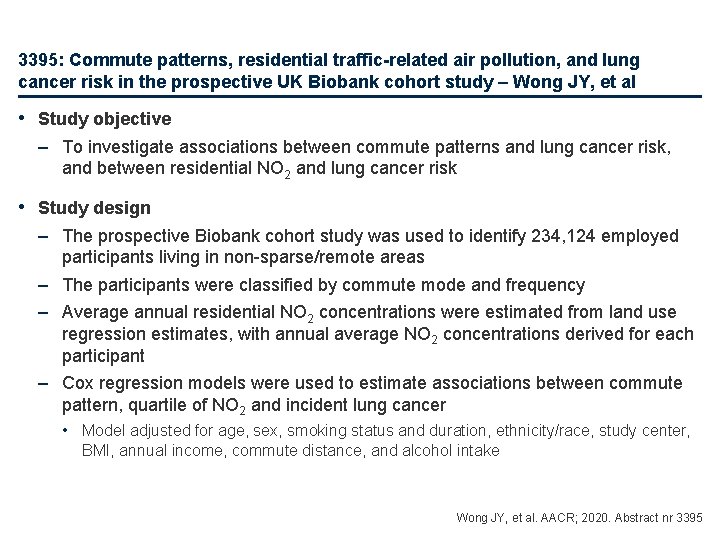
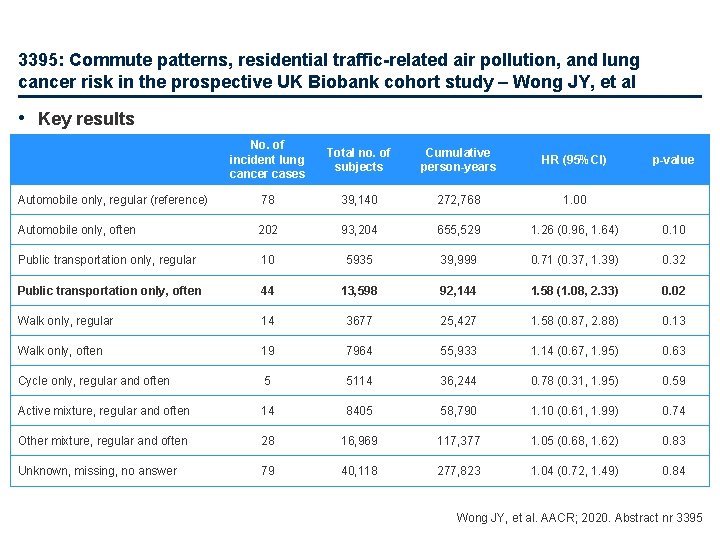
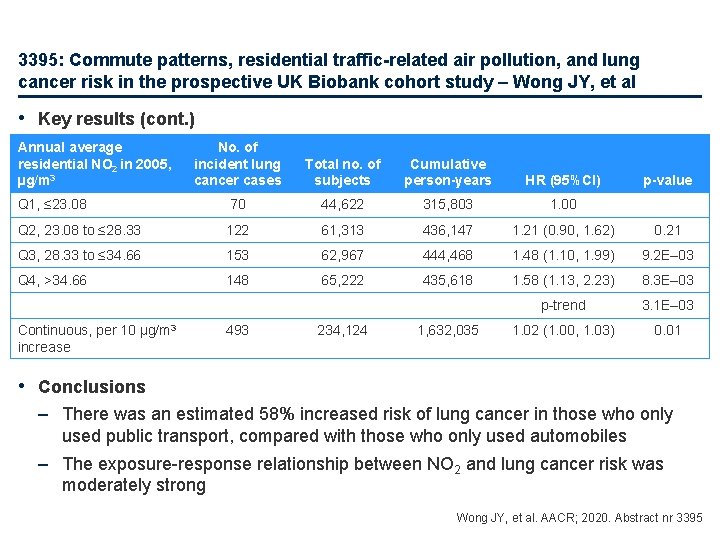
3395: Commute patterns, residential traffic-related air pollution, and lung cancer risk in the prospective UK Biobank cohort study – Wong JY, et al • Study objective – To investigate associations between commute patterns and lung cancer risk, and between residential NO 2 and lung cancer risk • Study design – The prospective Biobank cohort study was used to identify 234, 124 employed participants living in non-sparse/remote areas – The participants were classified by commute mode and frequency – Average annual residential NO 2 concentrations were estimated from land use regression estimates, with annual average NO 2 concentrations derived for each participant – Cox regression models were used to estimate associations between commute pattern, quartile of NO 2 and incident lung cancer • Model adjusted for age, sex, smoking status and duration, ethnicity/race, study center, BMI, annual income, commute distance, and alcohol intake Wong JY, et al. AACR; 2020. Abstract nr 3395
3395: Commute patterns, residential traffic-related air pollution, and lung cancer risk in the prospective UK Biobank cohort study – Wong JY, et al • Key results No. of incident lung cancer cases Total no. of subjects Cumulative person-years HR (95%CI) Automobile only, regular (reference) 78 39, 140 272, 768 1. 00 Automobile only, often 202 93, 204 655, 529 1. 26 (0. 96, 1. 64) 0. 10 Public transportation only, regular 10 5935 39, 999 0. 71 (0. 37, 1. 39) 0. 32 Public transportation only, often 44 13, 598 92, 144 1. 58 (1. 08, 2. 33) 0. 02 Walk only, regular 14 3677 25, 427 1. 58 (0. 87, 2. 88) 0. 13 Walk only, often 19 7964 55, 933 1. 14 (0. 67, 1. 95) 0. 63 Cycle only, regular and often 5 5114 36, 244 0. 78 (0. 31, 1. 95) 0. 59 Active mixture, regular and often 14 8405 58, 790 1. 10 (0. 61, 1. 99) 0. 74 Other mixture, regular and often 28 16, 969 117, 377 1. 05 (0. 68, 1. 62) 0. 83 Unknown, missing, no answer 79 40, 118 277, 823 1. 04 (0. 72, 1. 49) 0. 84 p-value Wong JY, et al. AACR; 2020. Abstract nr 3395
3395: Commute patterns, residential traffic-related air pollution, and lung cancer risk in the prospective UK Biobank cohort study – Wong JY, et al • Key results (cont. ) Annual average residential NO 2 in 2005, µg/m 3 No. of incident lung cancer cases Total no. of subjects Cumulative person-years HR (95%CI) Q 1, ≤ 23. 08 70 44, 622 315, 803 1. 00 Q 2, 23. 08 to ≤ 28. 33 122 61, 313 436, 147 1. 21 (0. 90, 1. 62) 0. 21 Q 3, 28. 33 to ≤ 34. 66 153 62, 967 444, 468 1. 48 (1. 10, 1. 99) 9. 2 E– 03 Q 4, >34. 66 148 65, 222 435, 618 1. 58 (1. 13, 2. 23) 8. 3 E– 03 p-trend 3. 1 E– 03 1. 02 (1. 00, 1. 03) 0. 01 Continuous, per 10 µg/m 3 increase 493 234, 124 1, 632, 035 p-value • Conclusions – There was an estimated 58% increased risk of lung cancer in those who only used public transport, compared with those who only used automobiles – The exposure-response relationship between NO 2 and lung cancer risk was moderately strong Wong JY, et al. AACR; 2020. Abstract nr 3395
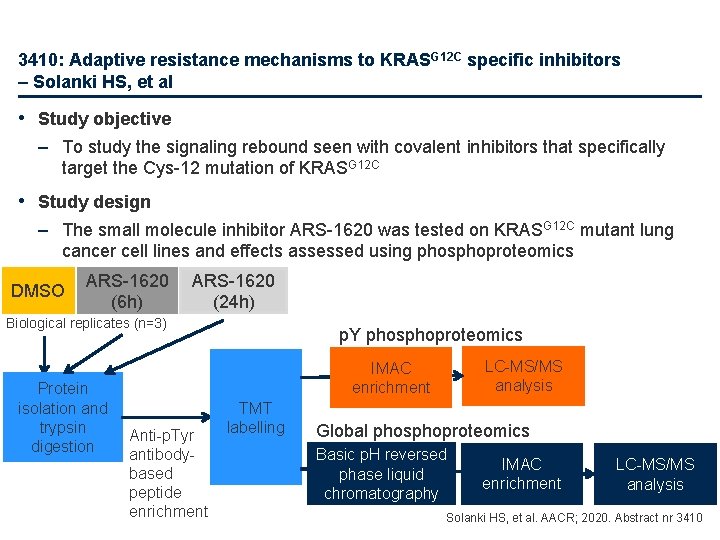
3410: Adaptive resistance mechanisms to KRASG 12 C specific inhibitors – Solanki HS, et al • Study objective – To study the signaling rebound seen with covalent inhibitors that specifically target the Cys-12 mutation of KRASG 12 C • Study design – The small molecule inhibitor ARS-1620 was tested on KRASG 12 C mutant lung cancer cell lines and effects assessed using phosphoproteomics DMSO ARS-1620 (6 h) ARS-1620 (24 h) Biological replicates (n=3) Protein isolation and trypsin digestion p. Y phosphoproteomics LC-MS/MS analysis IMAC enrichment Anti-p. Tyr antibodybased peptide enrichment TMT labelling Global phosphoproteomics Basic p. H reversed phase liquid chromatography IMAC enrichment LC-MS/MS analysis Solanki HS, et al. AACR; 2020. Abstract nr 3410
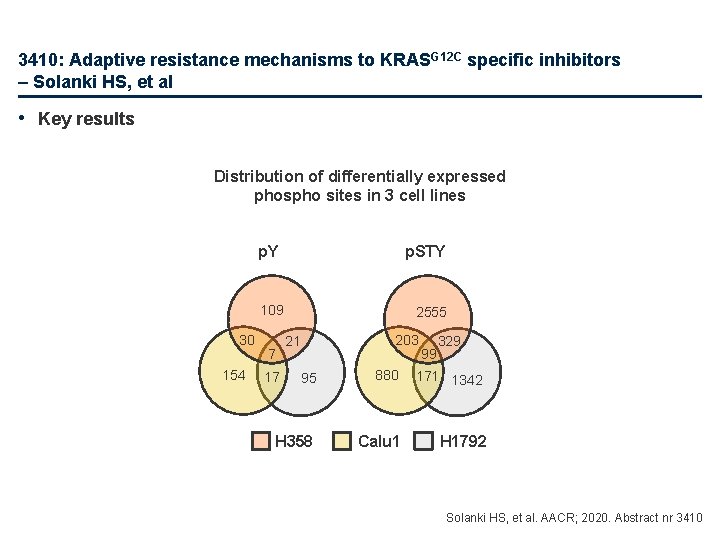
3410: Adaptive resistance mechanisms to KRASG 12 C specific inhibitors – Solanki HS, et al • Key results Distribution of differentially expressed phospho sites in 3 cell lines p. Y p. STY 109 30 154 7 2555 203 21 95 880 H 358 Calu 1 17 99 329 171 1342 H 1792 Solanki HS, et al. AACR; 2020. Abstract nr 3410
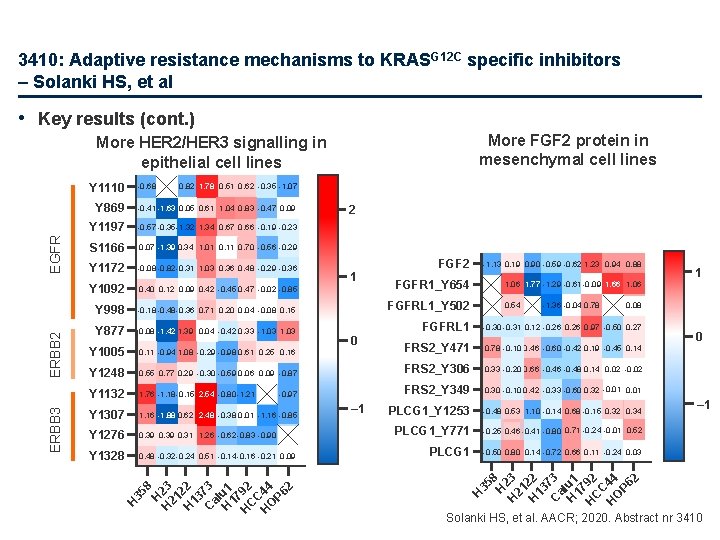
3410: Adaptive resistance mechanisms to KRASG 12 C specific inhibitors – Solanki HS, et al • Key results (cont. ) More FGF 2 protein in mesenchymal cell lines More HER 2/HER 3 signalling in epithelial cell lines -0. 68 -0. 82 1. 78 0. 51 0. 62 -0. 35 -1. 07 Y 869 -0. 41 -1. 63 -0. 05 0. 61 1. 04 0. 83 -0. 47 0. 09 Y 1197 -0. 57 -0. 35 -1. 32 1. 34 0. 67 0. 66 -0. 19 -0. 23 S 1166 0. 07 -1. 39 0. 34 1. 01 0. 11 0. 70 -0. 56 -0. 29 Y 1172 -0. 08 -0. 82 -0. 31 1. 03 0. 36 0. 48 -0. 29 -0. 36 2 FGF 2 -1. 13 0. 19 -0. 90 -0. 59 -0. 62 1. 23 0. 94 0. 88 Y 1092 0. 40 0. 12 -0. 09 0. 42 -0. 45 0. 47 -0. 02 -0. 85 FGFR 1_Y 654 1. 06 -1. 77 -1. 29 -0. 61 -0. 09 1. 66 1. 06 Y 998 -0. 18 -0. 48 -0. 36 0. 71 0. 20 0. 04 -0. 08 0. 15 FGFRL 1_Y 502 Y 877 0. 08 -1. 42 1. 39 0. 04 -0. 42 0. 33 -1. 03 FGFRL 1 -0. 30 -0. 31 -0. 12 -0. 26 0. 97 -0. 50 0. 27 Y 1005 0. 11 -0. 94 1. 08 -0. 29 -0. 98 0. 61 0. 25 0. 16 FRS 2_Y 471 0. 78 -0. 10 0. 46 -0. 60 -0. 42 0. 19 -0. 45 0. 14 Y 1248 0. 55 0. 77 0. 29 -0. 30 -0. 59 0. 06 0. 09 -0. 87 FRS 2_Y 306 0. 33 -0. 20 0. 66 -0. 48 0. 14 0. 02 -0. 02 Y 1132 1. 76 -1. 18 -0. 15 2. 54 -0. 80 -1. 21 FRS 2_Y 349 0. 30 -0. 10 -1. 1 0. 42 -0. 33 -0. 60 0. 32 -0. 01 Y 1307 1. 16 -1. 88 0. 62 2. 48 -0. 38 0. 01 -1. 16 -0. 85 PLCG 1_Y 1253 -0. 48 0. 53 -1. 10 -0. 14 0. 68 -0. 15 0. 32 0. 34 Y 1276 0. 39 0. 31 1. 26 -0. 62 -0. 83 -0. 90 PLCG 1_Y 771 -0. 25 0. 46 -0. 41 -0. 80 0. 71 -0. 24 -0. 01 0. 52 Y 1328 0. 48 -0. 32 -0. 24 0. 51 -0. 14 -0. 16 -0. 21 0. 09 PLCG 1 -0. 50 0. 80 12↓ -0. 14 -0. 72 0. 66 0. 11 -0. 24 0. 03 – 1 -1. 36 -0. 04 0. 78 0. 08 0 – 1 35 8 H 2 H 3 21 H 22 13 7 C 3 al H u 1 17 H 92 C C H 44 O P 6 2 0 0. 54 1 H 1 -0. 97 35 8 H 2 H 3 21 2 H 2 13 C 73 al H u 1 17 H 92 C C H 44 O P 6 2 H ERBB 3 ERBB 2 EGFR Y 1110 Solanki HS, et al. AACR; 2020. Abstract nr 3410
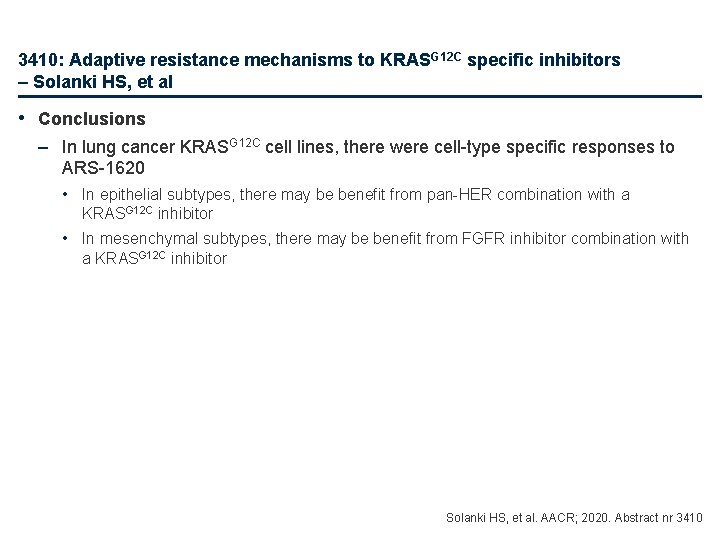
3410: Adaptive resistance mechanisms to KRASG 12 C specific inhibitors – Solanki HS, et al • Conclusions – In lung cancer KRASG 12 C cell lines, there were cell-type specific responses to ARS-1620 • In epithelial subtypes, there may be benefit from pan-HER combination with a KRASG 12 C inhibitor • In mesenchymal subtypes, there may be benefit from FGFR inhibitor combination with a KRASG 12 C inhibitor Solanki HS, et al. AACR; 2020. Abstract nr 3410
Advanced NSCLC Not radically treatable stage III and stage IV Immunotherapy strategies
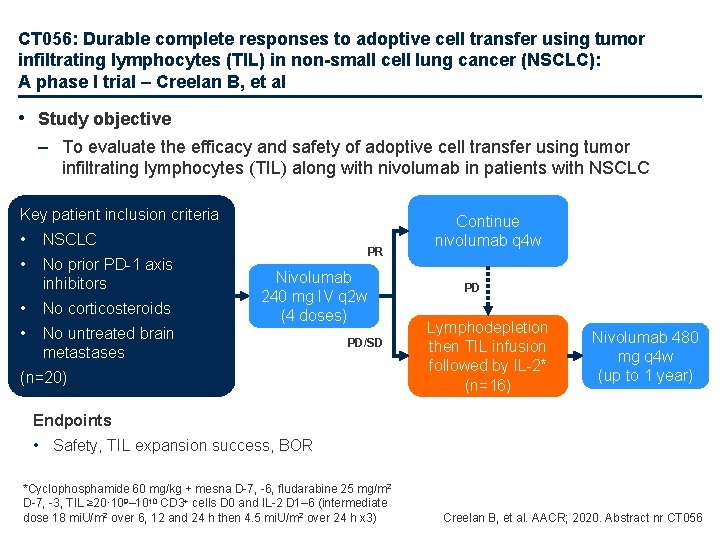
CT 056: Durable complete responses to adoptive cell transfer using tumor infiltrating lymphocytes (TIL) in non-small cell lung cancer (NSCLC): A phase I trial – Creelan B, et al • Study objective – To evaluate the efficacy and safety of adoptive cell transfer using tumor infiltrating lymphocytes (TIL) along with nivolumab in patients with NSCLC Key patient inclusion criteria • NSCLC • No prior PD-1 axis inhibitors • No corticosteroids • No untreated brain metastases PR Nivolumab 240 mg IV q 2 w (4 doses) PD/SD (n=20) Continue nivolumab q 4 w PD Lymphodepletion then TIL infusion followed by IL-2* (n=16) Nivolumab 480 mg q 4 w (up to 1 year) Endpoints • Safety, TIL expansion success, BOR *Cyclophosphamide 60 mg/kg + mesna D-7, -6, fludarabine 25 mg/m 2 D-7, -3, TIL ≥ 20· 109– 1010 CD 3+ cells D 0 and IL-2 D 1– 6 (intermediate dose 18 mi. U/m 2 over 6, 12 and 24 h then 4. 5 mi. U/m 2 over 24 h x 3) Creelan B, et al. AACR; 2020. Abstract nr CT 056
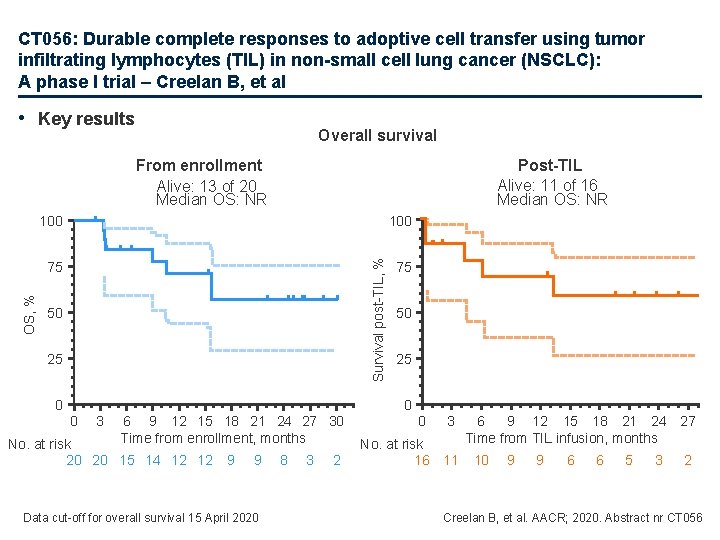
CT 056: Durable complete responses to adoptive cell transfer using tumor infiltrating lymphocytes (TIL) in non-small cell lung cancer (NSCLC): A phase I trial – Creelan B, et al • Key results Overall survival From enrollment Alive: 13 of 20 Median OS: NR Post-TIL Alive: 11 of 16 Median OS: NR 100 Survival post-TIL, % 100 OS, % 75 50 25 0 0 0 3 6 9 12 15 18 21 24 27 30 Time from enrollment, months No. at risk 20 20 15 14 12 12 9 9 Data cut-off for overall survival 15 April 2020 8 3 2 0 3 No. at risk 16 11 6 9 12 15 18 21 24 27 Time from TIL infusion, months 10 9 9 6 6 5 3 2 Creelan B, et al. AACR; 2020. Abstract nr CT 056
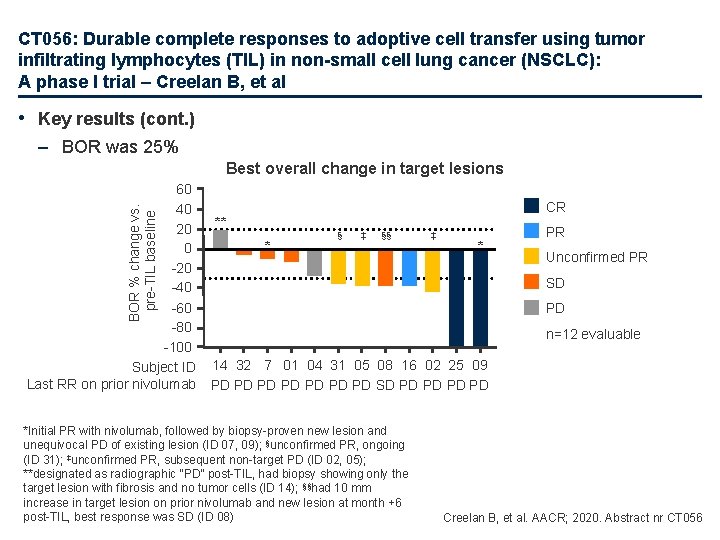
CT 056: Durable complete responses to adoptive cell transfer using tumor infiltrating lymphocytes (TIL) in non-small cell lung cancer (NSCLC): A phase I trial – Creelan B, et al • Key results (cont. ) – BOR was 25% Best overall change in target lesions BOR % change vs. pre-TIL baseline 60 40 20 0 -20 -40 -60 -80 -100 Subject ID Last RR on prior nivolumab CR ** * § ‡ §§ ‡ * PR Unconfirmed PR SD PD n=12 evaluable 14 32 7 01 04 31 05 08 16 02 25 09 PD PD SD PD PD *Initial PR with nivolumab, followed by biopsy-proven new lesion and unequivocal PD of existing lesion (ID 07, 09); §unconfirmed PR, ongoing (ID 31); ‡unconfirmed PR, subsequent non-target PD (ID 02, 05); **designated as radiographic “PD” post-TIL, had biopsy showing only the target lesion with fibrosis and no tumor cells (ID 14); §§had 10 mm increase in target lesion on prior nivolumab and new lesion at month +6 post-TIL, best response was SD (ID 08) Creelan B, et al. AACR; 2020. Abstract nr CT 056
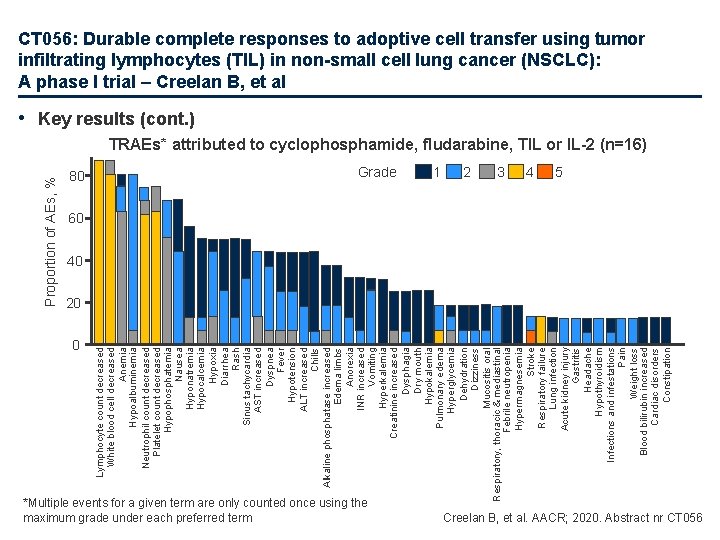
80 0 *Multiple events for a given term are only counted once using the maximum grade under each preferred term Lymphocyte count decreased White blood cell decreased Anemia Hypoalbuminemia Neutrophil count decreased Platelet count decreased Hypophosphatemia Nausea Hyponatremia Hypocalcemia Hypoxia Diarrhea Rash Sinus tachycardia AST increased Dyspnea Fever Hypotension ALT increased Chills Alkaline phosphatase increased Edema limbs Anorexia INR increased Vomiting Hyperkalemia Creatinine increased Dysphagia Dry mouth Hypokalemia Pulmonary edema Hyperglycemia Dehydration Dizziness Mucositis oral Respiratory, thoracic & mediastinal Febrile neutropenia Hypermagnesemia Stroke Respiratory failure Lung infection Acute kidney injury Gastritis Headache Hypothyroidism Infections and infestations Pain Weight loss Blood bilirubin increased Cardiac disorders Constipation Proportion of AEs, % CT 056: Durable complete responses to adoptive cell transfer using tumor infiltrating lymphocytes (TIL) in non-small cell lung cancer (NSCLC): A phase I trial – Creelan B, et al • Key results (cont. ) TRAEs* attributed to cyclophosphamide, fludarabine, TIL or IL-2 (n=16) Grade 1 2 3 4 5 60 40 20 Creelan B, et al. AACR; 2020. Abstract nr CT 056
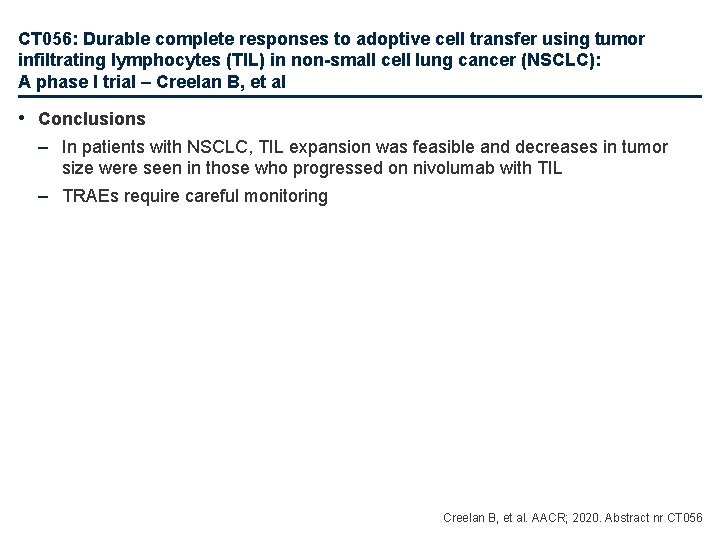
CT 056: Durable complete responses to adoptive cell transfer using tumor infiltrating lymphocytes (TIL) in non-small cell lung cancer (NSCLC): A phase I trial – Creelan B, et al • Conclusions – In patients with NSCLC, TIL expansion was feasible and decreases in tumor size were seen in those who progressed on nivolumab with TIL – TRAEs require careful monitoring Creelan B, et al. AACR; 2020. Abstract nr CT 056
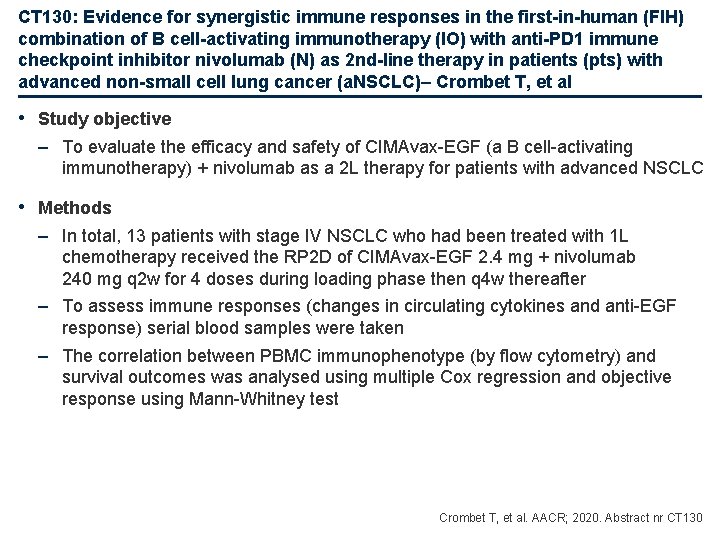
CT 130: Evidence for synergistic immune responses in the first-in-human (FIH) combination of B cell-activating immunotherapy (IO) with anti-PD 1 immune checkpoint inhibitor nivolumab (N) as 2 nd-line therapy in patients (pts) with advanced non-small cell lung cancer (a. NSCLC)– Crombet T, et al • Study objective – To evaluate the efficacy and safety of CIMAvax-EGF (a B cell-activating immunotherapy) + nivolumab as a 2 L therapy for patients with advanced NSCLC • Methods – In total, 13 patients with stage IV NSCLC who had been treated with 1 L chemotherapy received the RP 2 D of CIMAvax-EGF 2. 4 mg + nivolumab 240 mg q 2 w for 4 doses during loading phase then q 4 w thereafter – To assess immune responses (changes in circulating cytokines and anti-EGF response) serial blood samples were taken – The correlation between PBMC immunophenotype (by flow cytometry) and survival outcomes was analysed using multiple Cox regression and objective response using Mann-Whitney test Crombet T, et al. AACR; 2020. Abstract nr CT 130
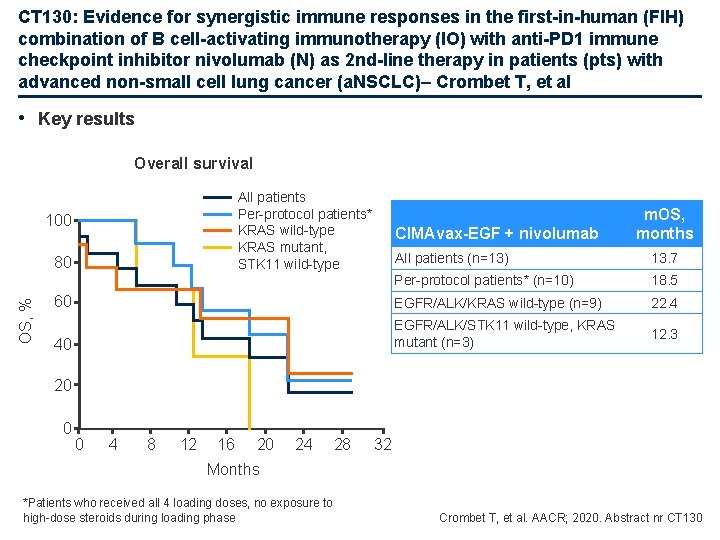
CT 130: Evidence for synergistic immune responses in the first-in-human (FIH) combination of B cell-activating immunotherapy (IO) with anti-PD 1 immune checkpoint inhibitor nivolumab (N) as 2 nd-line therapy in patients (pts) with advanced non-small cell lung cancer (a. NSCLC)– Crombet T, et al • Key results Overall survival All patients Per-protocol patients* KRAS wild-type KRAS mutant, STK 11 wild-type 100 All patients (n=13) 13. 7 Per-protocol patients* (n=10) 18. 5 60 EGFR/ALK/KRAS wild-type (n=9) 22. 4 40 EGFR/ALK/STK 11 wild-type, KRAS mutant (n=3) 12. 3 80 OS, % CIMAvax-EGF + nivolumab m. OS, months 20 0 0 4 8 12 16 20 24 28 32 Months *Patients who received all 4 loading doses, no exposure to high-dose steroids during loading phase Crombet T, et al. AACR; 2020. Abstract nr CT 130
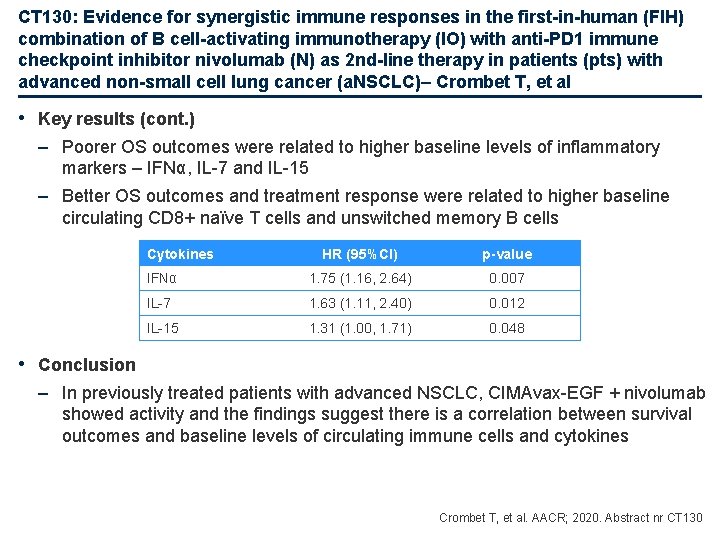
CT 130: Evidence for synergistic immune responses in the first-in-human (FIH) combination of B cell-activating immunotherapy (IO) with anti-PD 1 immune checkpoint inhibitor nivolumab (N) as 2 nd-line therapy in patients (pts) with advanced non-small cell lung cancer (a. NSCLC)– Crombet T, et al • Key results (cont. ) – Poorer OS outcomes were related to higher baseline levels of inflammatory markers – IFNα, IL-7 and IL-15 – Better OS outcomes and treatment response were related to higher baseline circulating CD 8+ naïve T cells and unswitched memory B cells Cytokines HR (95%CI) p-value IFNα 1. 75 (1. 16, 2. 64) 0. 007 IL-7 1. 63 (1. 11, 2. 40) 0. 012 IL-15 1. 31 (1. 00, 1. 71) 0. 048 • Conclusion – In previously treated patients with advanced NSCLC, CIMAvax-EGF + nivolumab showed activity and the findings suggest there is a correlation between survival outcomes and baseline levels of circulating immune cells and cytokines Crombet T, et al. AACR; 2020. Abstract nr CT 130
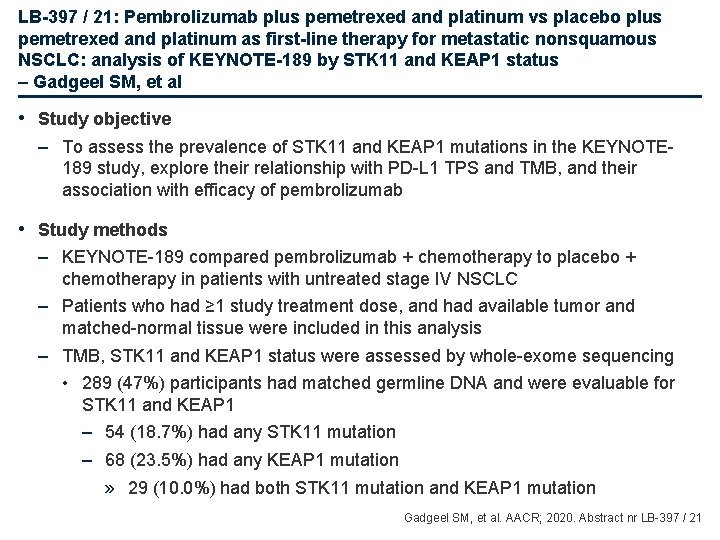
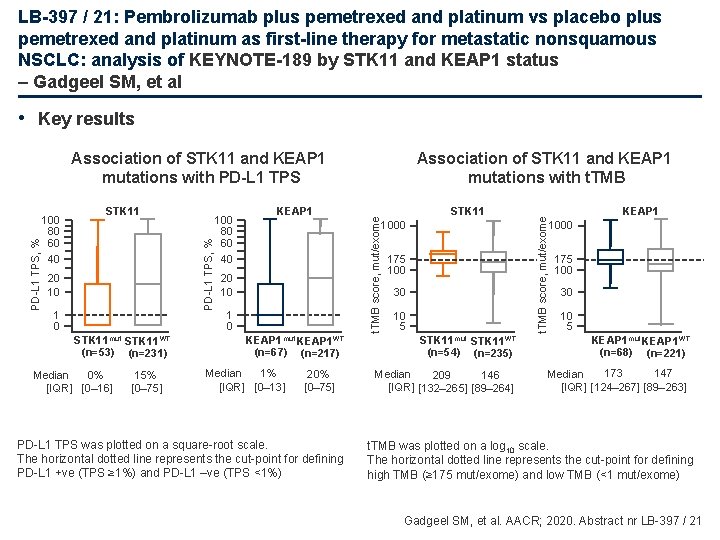
LB-397 / 21: Pembrolizumab plus pemetrexed and platinum vs placebo plus pemetrexed and platinum as first-line therapy for metastatic nonsquamous NSCLC: analysis of KEYNOTE-189 by STK 11 and KEAP 1 status – Gadgeel SM, et al • Study objective – To assess the prevalence of STK 11 and KEAP 1 mutations in the KEYNOTE 189 study, explore their relationship with PD-L 1 TPS and TMB, and their association with efficacy of pembrolizumab • Study methods – KEYNOTE-189 compared pembrolizumab + chemotherapy to placebo + chemotherapy in patients with untreated stage IV NSCLC – Patients who had ≥ 1 study treatment dose, and had available tumor and matched-normal tissue were included in this analysis – TMB, STK 11 and KEAP 1 status were assessed by whole-exome sequencing • 289 (47%) participants had matched germline DNA and were evaluable for STK 11 and KEAP 1 – 54 (18. 7%) had any STK 11 mutation – 68 (23. 5%) had any KEAP 1 mutation » 29 (10. 0%) had both STK 11 mutation and KEAP 1 mutation Gadgeel SM, et al. AACR; 2020. Abstract nr LB-397 / 21
LB-397 / 21: Pembrolizumab plus pemetrexed and platinum vs placebo plus pemetrexed and platinum as first-line therapy for metastatic nonsquamous NSCLC: analysis of KEYNOTE-189 by STK 11 and KEAP 1 status – Gadgeel SM, et al • Key results 20 10 1 0 STK 11 mut STK 11 WT (n=53) (n=231) Median 0% [IQR] [0– 16] 15% [0– 75] 100 80 60 40 KEAP 1 20 10 1 0 KEAP 1 mut KEAP 1 WT (n=67) (n=217) 1% Median [IQR] [0– 13] 20% [0– 75] PD-L 1 TPS was plotted on a square-root scale. The horizontal dotted line represents the cut-point for defining PD-L 1 +ve (TPS ≥ 1%) and PD-L 1 –ve (TPS <1%) STK 11 1000 175 100 30 10 5 STK 11 mut STK 11 WT (n=54) (n=235) Median 209 146 [IQR] [132– 265] [89– 264] t. TMB score, mut/exome STK 11 Association of STK 11 and KEAP 1 mutations with t. TMB score, mut/exome 100 80 60 40 PD-L 1 TPS, % Association of STK 11 and KEAP 1 mutations with PD-L 1 TPS KEAP 1 1000 175 100 30 10 5 KEAP 1 mut KEAP 1 WT (n=68) (n=221) 173 147 Median [IQR] [124– 267] [89– 263] t. TMB was plotted on a log 10 scale. The horizontal dotted line represents the cut-point for defining high TMB (≥ 175 mut/exome) and low TMB (<1 mut/exome) Gadgeel SM, et al. AACR; 2020. Abstract nr LB-397 / 21
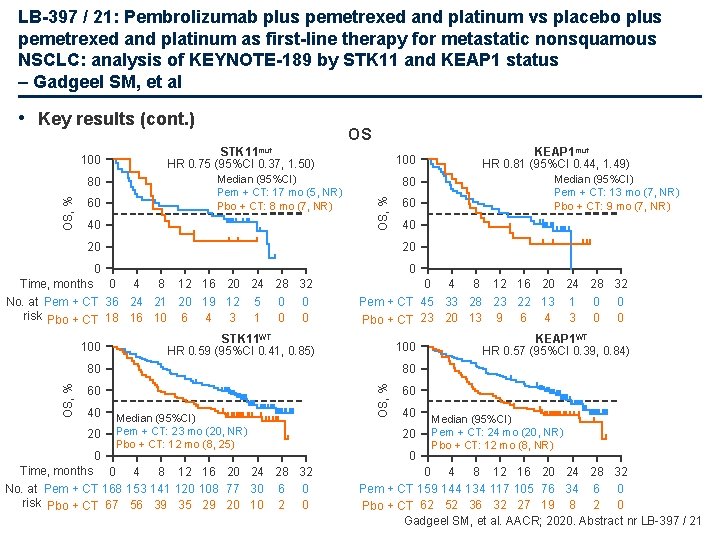
LB-397 / 21: Pembrolizumab plus pemetrexed and platinum vs placebo plus pemetrexed and platinum as first-line therapy for metastatic nonsquamous NSCLC: analysis of KEYNOTE-189 by STK 11 and KEAP 1 status – Gadgeel SM, et al • Key results (cont. ) OS, % 80 60 STK 11 mut HR 0. 75 (95%CI 0. 37, 1. 50) Median (95%CI) Pem + CT: 17 mo (5, NR) Pbo + CT: 8 mo (7, NR) 40 100 80 OS, % 100 OS 20 0 4 8 12 16 20 24 28 32 No. at Pem + CT 36 24 21 20 19 12 5 0 0 risk Pbo + CT 18 16 10 6 4 3 1 0 0 100 0 4 8 12 16 20 24 28 32 Pem + CT 45 33 28 23 22 13 1 0 0 Pbo + CT 23 20 13 9 6 4 3 0 0 STK 11 WT HR 0. 59 (95%CI 0. 41, 0. 85) 100 60 20 0 Time, months KEAP 1 WT HR 0. 57 (95%CI 0. 39, 0. 84) 80 Median (95%CI) Pem + CT: 23 mo (20, NR) Pbo + CT: 12 mo (8, 25) 0 4 8 12 16 20 24 28 32 No. at Pem + CT 168 153 141 120 108 77 30 6 0 risk Pbo + CT 67 56 39 35 29 20 10 2 0 OS, % 80 40 Median (95%CI) Pem + CT: 13 mo (7, NR) Pbo + CT: 9 mo (7, NR) 40 20 Time, months OS, % 60 KEAP 1 mut HR 0. 81 (95%CI 0. 44, 1. 49) 60 40 20 0 Median (95%CI) Pem + CT: 24 mo (20, NR) Pbo + CT: 12 mo (8, NR) 0 4 8 12 16 20 24 28 32 Pem + CT 159 144 134 117 105 76 34 6 0 Pbo + CT 62 52 36 32 27 19 8 2 0 Gadgeel SM, et al. AACR; 2020. Abstract nr LB-397 / 21
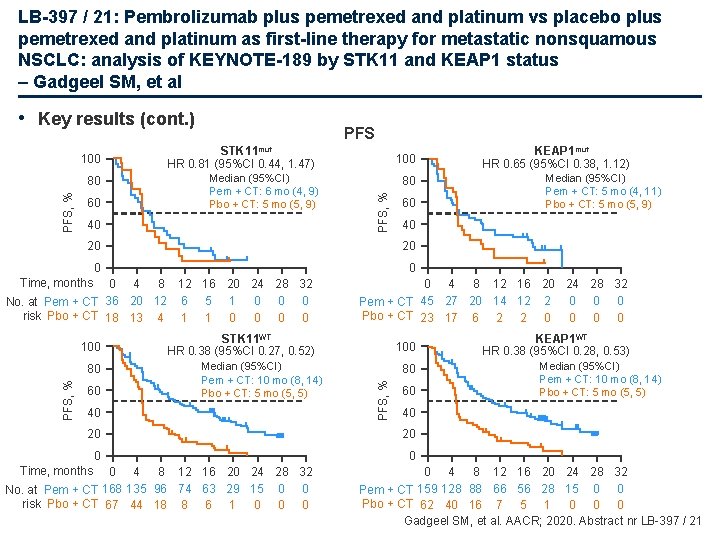
LB-397 / 21: Pembrolizumab plus pemetrexed and platinum vs placebo plus pemetrexed and platinum as first-line therapy for metastatic nonsquamous NSCLC: analysis of KEYNOTE-189 by STK 11 and KEAP 1 status – Gadgeel SM, et al • Key results (cont. ) 60 HR 0. 81 (95%CI 0. 44, 1. 47) Median (95%CI) Pem + CT: 6 mo (4, 9) Pbo + CT: 5 mo (5, 9) 40 60 20 0 4 8 12 16 20 24 28 32 No. at Pem + CT 36 20 12 6 5 1 0 0 0 risk Pbo + CT 18 13 4 1 1 0 0 100 80 60 40 100 80 60 20 0 4 8 12 16 20 24 28 32 No. at Pem + CT 168 135 96 74 63 29 15 0 0 risk Pbo + CT 67 44 18 8 6 1 0 0 0 KEAP 1 WT HR 0. 38 (95%CI 0. 28, 0. 53) Median (95%CI) Pem + CT: 10 mo (8, 14) Pbo + CT: 5 mo (5, 5) 40 20 Time, months Median (95%CI) Pem + CT: 5 mo (4, 11) Pbo + CT: 5 mo (5, 9) 0 4 8 12 16 20 24 28 32 Pem + CT 45 27 20 14 12 2 0 0 0 Pbo + CT 23 17 6 2 2 0 0 STK 11 WT HR 0. 38 (95%CI 0. 27, 0. 52) Median (95%CI) Pem + CT: 10 mo (8, 14) Pbo + CT: 5 mo (5, 5) KEAP 1 mut HR 0. 65 (95%CI 0. 38, 1. 12) 40 20 Time, months PFS, % 80 100 PFS, % 100 PFS STK 11 mut 0 4 8 12 16 20 24 28 32 Pem + CT 159 128 88 66 56 28 15 0 0 Pbo + CT 62 40 16 7 5 1 0 0 0 Gadgeel SM, et al. AACR; 2020. Abstract nr LB-397 / 21
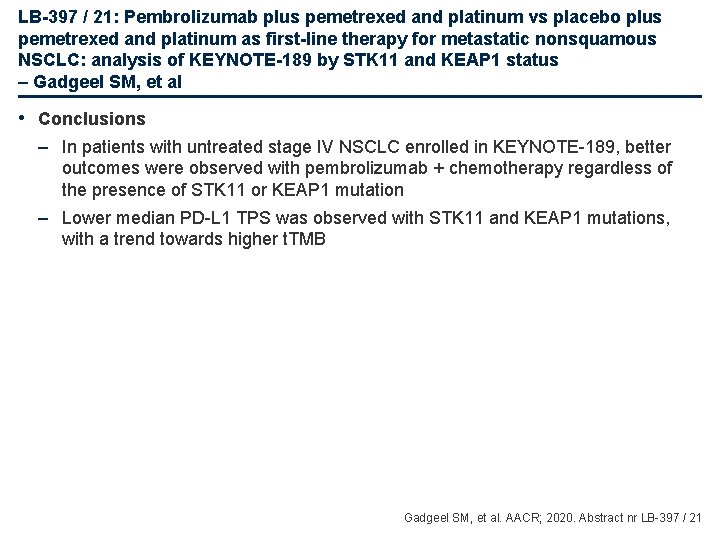
LB-397 / 21: Pembrolizumab plus pemetrexed and platinum vs placebo plus pemetrexed and platinum as first-line therapy for metastatic nonsquamous NSCLC: analysis of KEYNOTE-189 by STK 11 and KEAP 1 status – Gadgeel SM, et al • Conclusions – In patients with untreated stage IV NSCLC enrolled in KEYNOTE-189, better outcomes were observed with pembrolizumab + chemotherapy regardless of the presence of STK 11 or KEAP 1 mutation – Lower median PD-L 1 TPS was observed with STK 11 and KEAP 1 mutations, with a trend towards higher t. TMB Gadgeel SM, et al. AACR; 2020. Abstract nr LB-397 / 21
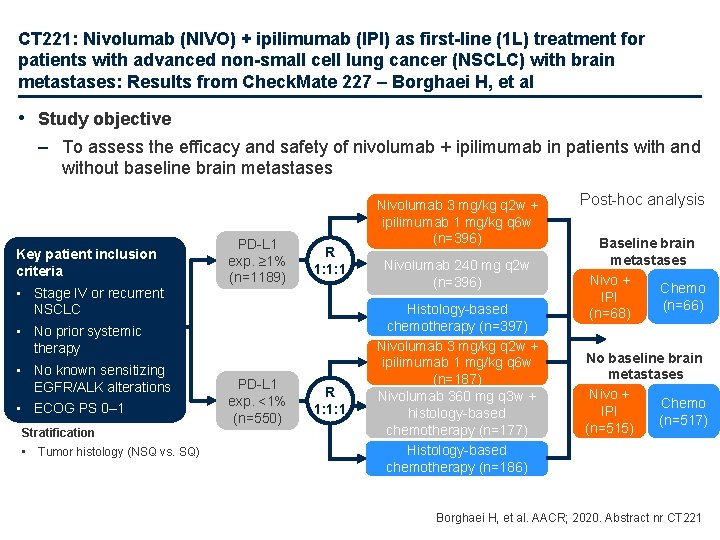
CT 221: Nivolumab (NIVO) + ipilimumab (IPI) as first-line (1 L) treatment for patients with advanced non-small cell lung cancer (NSCLC) with brain metastases: Results from Check. Mate 227 – Borghaei H, et al • Study objective – To assess the efficacy and safety of nivolumab + ipilimumab in patients with and without baseline brain metastases Key patient inclusion criteria • Stage IV or recurrent NSCLC PD-L 1 exp. ≥ 1% (n=1189) R 1: 1: 1 • No prior systemic therapy • No known sensitizing EGFR/ALK alterations • ECOG PS 0– 1 Stratification • Tumor histology (NSQ vs. SQ) PD-L 1 exp. <1% (n=550) R 1: 1: 1 Nivolumab 3 mg/kg q 2 w + ipilimumab 1 mg/kg q 6 w (n=396) Nivolumab 240 mg q 2 w (n=396) Histology-based chemotherapy (n=397) Nivolumab 3 mg/kg q 2 w + ipilimumab 1 mg/kg q 6 w (n=187) Nivolumab 360 mg q 3 w + histology-based chemotherapy (n=177) Histology-based chemotherapy (n=186) Post-hoc analysis Baseline brain metastases Nivo + Chemo IPI (n=66) (n=68) No baseline brain metastases Nivo + Chemo IPI (n=517) (n=515) Borghaei H, et al. AACR; 2020. Abstract nr CT 221
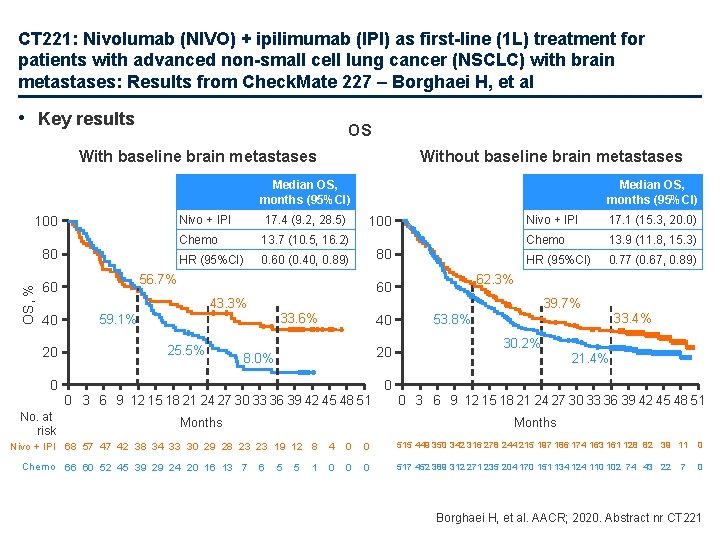
CT 221: Nivolumab (NIVO) + ipilimumab (IPI) as first-line (1 L) treatment for patients with advanced non-small cell lung cancer (NSCLC) with brain metastases: Results from Check. Mate 227 – Borghaei H, et al • Key results OS Without baseline brain metastases With baseline brain metastases Median OS, months (95%CI) 100 OS, % 80 Nivo + IPI 17. 4 (9. 2, 28. 5) Chemo 13. 7 (10. 5, 16. 2) HR (95%CI) 0. 60 (0. 40, 0. 89) 80 25. 5% 40 20 8. 0% 0 Chemo 13. 9 (11. 8, 15. 3) HR (95%CI) 0. 77 (0. 67, 0. 89) 53. 8% 30. 2% 33. 4% 21. 4% 0 0 3 6 9 12 15 18 21 24 27 30 33 36 39 42 45 48 51 No. at risk 17. 1 (15. 3, 20. 0) 39. 7% 33. 6% 59. 1% Nivo + IPI 62. 3% 60 43. 3% 20 100 56. 7% 60 40 Median OS, months (95%CI) Months Nivo + IPI 68 57 47 42 38 34 33 30 29 28 23 23 19 12 8 Chemo 66 60 52 45 39 29 24 20 16 13 7 0 3 6 9 12 15 18 21 24 27 30 33 36 39 42 45 48 51 6 5 5 1 4 0 0 515 449 350 342 316 278 244 215 197 186 174 163 161 128 82 39 11 0 0 517 452 389 312 271 235 204 170 151 134 124 110 102 74 43 22 0 7 Borghaei H, et al. AACR; 2020. Abstract nr CT 221
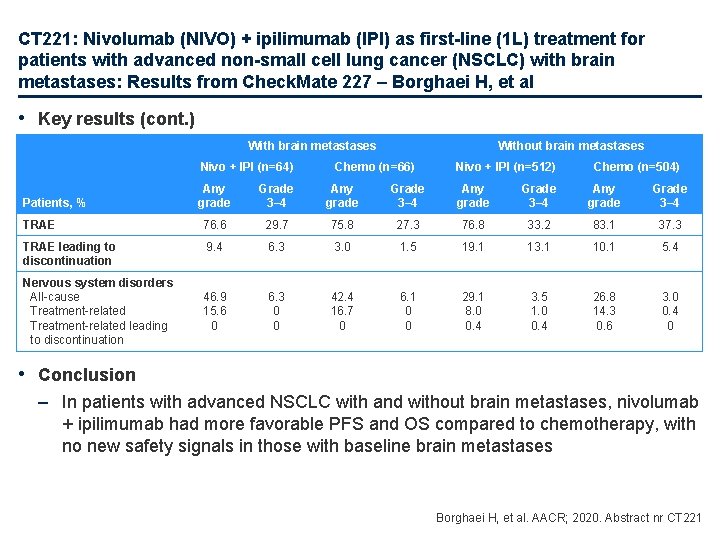
CT 221: Nivolumab (NIVO) + ipilimumab (IPI) as first-line (1 L) treatment for patients with advanced non-small cell lung cancer (NSCLC) with brain metastases: Results from Check. Mate 227 – Borghaei H, et al • Key results (cont. ) With brain metastases Nivo + IPI (n=64) Without brain metastases Chemo (n=66) Nivo + IPI (n=512) Chemo (n=504) Any grade Grade 3– 4 TRAE 76. 6 29. 7 75. 8 27. 3 76. 8 33. 2 83. 1 37. 3 TRAE leading to discontinuation 9. 4 6. 3 3. 0 1. 5 19. 1 13. 1 10. 1 5. 4 46. 9 15. 6 0 6. 3 0 0 42. 4 16. 7 0 6. 1 0 0 29. 1 8. 0 0. 4 3. 5 1. 0 0. 4 26. 8 14. 3 0. 6 3. 0 0. 4 0 Patients, % Nervous system disorders All-cause Treatment-related leading to discontinuation • Conclusion – In patients with advanced NSCLC with and without brain metastases, nivolumab + ipilimumab had more favorable PFS and OS compared to chemotherapy, with no new safety signals in those with baseline brain metastases Borghaei H, et al. AACR; 2020. Abstract nr CT 221
Advanced NSCLC Not radically treatable stage III and stage IV Targeted therapies
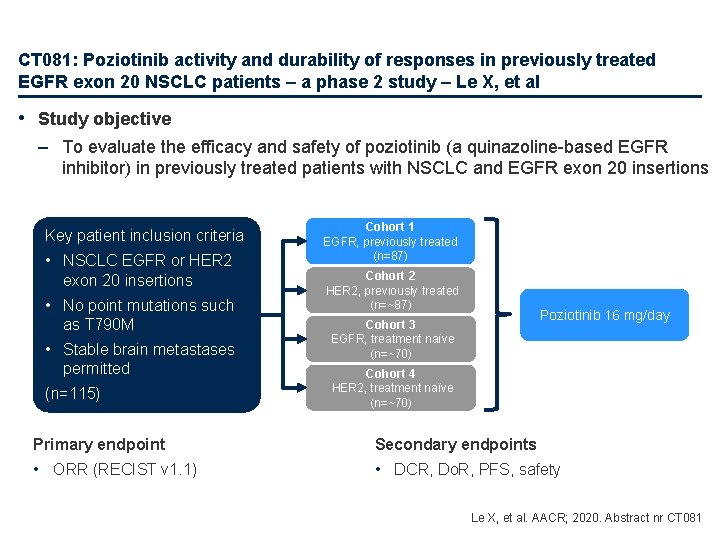
CT 081: Poziotinib activity and durability of responses in previously treated EGFR exon 20 NSCLC patients – a phase 2 study – Le X, et al • Study objective – To evaluate the efficacy and safety of poziotinib (a quinazoline-based EGFR inhibitor) in previously treated patients with NSCLC and EGFR exon 20 insertions Key patient inclusion criteria • NSCLC EGFR or HER 2 exon 20 insertions • No point mutations such as T 790 M • Stable brain metastases permitted (n=115) Cohort 1 EGFR, previously treated (n=87) Cohort 2 HER 2, previously treated (n=~87) Poziotinib 16 mg/day Cohort 3 EGFR, treatment naïve (n=~70) Cohort 4 HER 2, treatment naïve (n=~70) Primary endpoint Secondary endpoints • ORR (RECIST v 1. 1) • DCR, Do. R, PFS, safety Le X, et al. AACR; 2020. Abstract nr CT 081
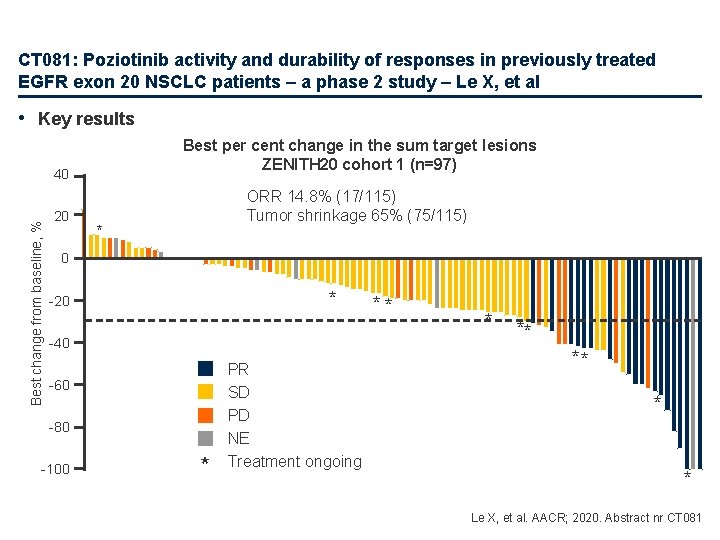
CT 081: Poziotinib activity and durability of responses in previously treated EGFR exon 20 NSCLC patients – a phase 2 study – Le X, et al • Key results Best per cent change in the sum target lesions ZENITH 20 cohort 1 (n=97) Best change from baseline, % 40 20 ORR 14. 8% (17/115) Tumor shrinkage 65% (75/115) * 0 * -20 -40 -60 -80 -100 * PR SD PD NE Treatment ongoing ** ** * * Le X, et al. AACR; 2020. Abstract nr CT 081
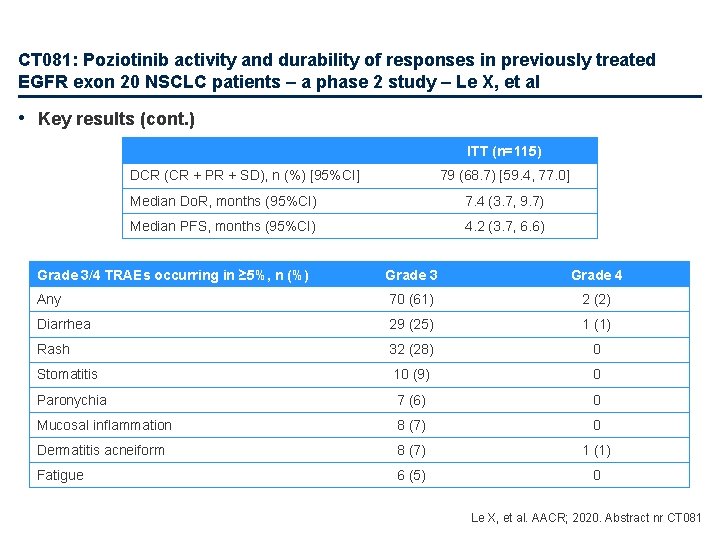
CT 081: Poziotinib activity and durability of responses in previously treated EGFR exon 20 NSCLC patients – a phase 2 study – Le X, et al • Key results (cont. ) ITT (n=115) DCR (CR + PR + SD), n (%) [95%CI] 79 (68. 7) [59. 4, 77. 0] Median Do. R, months (95%CI) 7. 4 (3. 7, 9. 7) Median PFS, months (95%CI) 4. 2 (3. 7, 6. 6) Grade 3/4 TRAEs occurring in ≥ 5%, n (%) Grade 3 Grade 4 Any 70 (61) 2 (2) Diarrhea 29 (25) 1 (1) Rash 32 (28) 0 Stomatitis 10 (9) 0 Paronychia 7 (6) 0 Mucosal inflammation 8 (7) 0 Dermatitis acneiform 8 (7) 1 (1) Fatigue 6 (5) 0 Le X, et al. AACR; 2020. Abstract nr CT 081
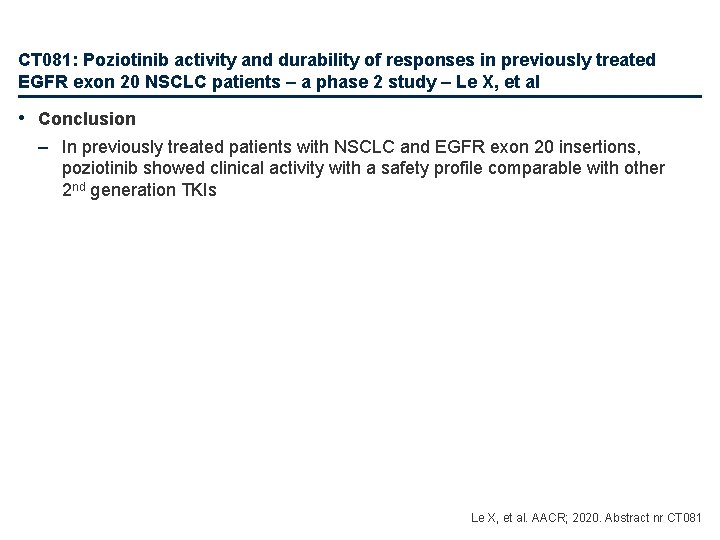
CT 081: Poziotinib activity and durability of responses in previously treated EGFR exon 20 NSCLC patients – a phase 2 study – Le X, et al • Conclusion – In previously treated patients with NSCLC and EGFR exon 20 insertions, poziotinib showed clinical activity with a safety profile comparable with other 2 nd generation TKIs Le X, et al. AACR; 2020. Abstract nr CT 081
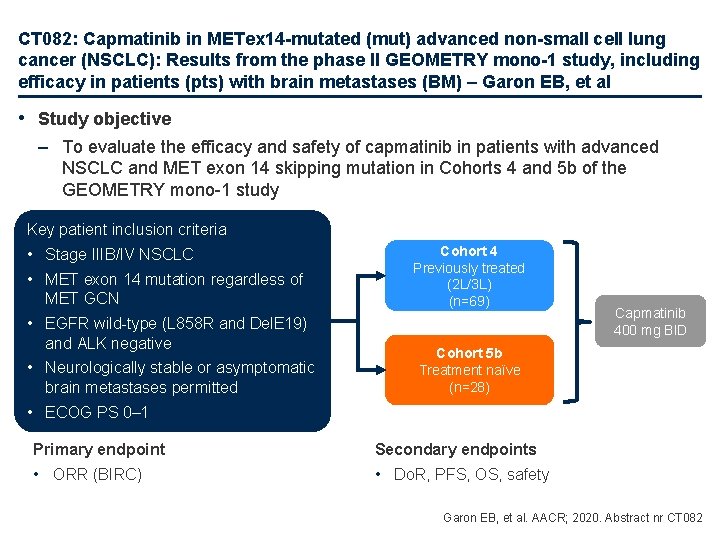
CT 082: Capmatinib in METex 14 -mutated (mut) advanced non-small cell lung cancer (NSCLC): Results from the phase II GEOMETRY mono-1 study, including efficacy in patients (pts) with brain metastases (BM) – Garon EB, et al • Study objective – To evaluate the efficacy and safety of capmatinib in patients with advanced NSCLC and MET exon 14 skipping mutation in Cohorts 4 and 5 b of the GEOMETRY mono-1 study Key patient inclusion criteria • Stage IIIB/IV NSCLC • MET exon 14 mutation regardless of MET GCN • EGFR wild-type (L 858 R and Del. E 19) and ALK negative • Neurologically stable or asymptomatic brain metastases permitted Cohort 4 Previously treated (2 L/3 L) (n=69) Capmatinib 400 mg BID Cohort 5 b Treatment naïve (n=28) • ECOG PS 0– 1 Primary endpoint Secondary endpoints • ORR (BIRC) • Do. R, PFS, OS, safety Garon EB, et al. AACR; 2020. Abstract nr CT 082
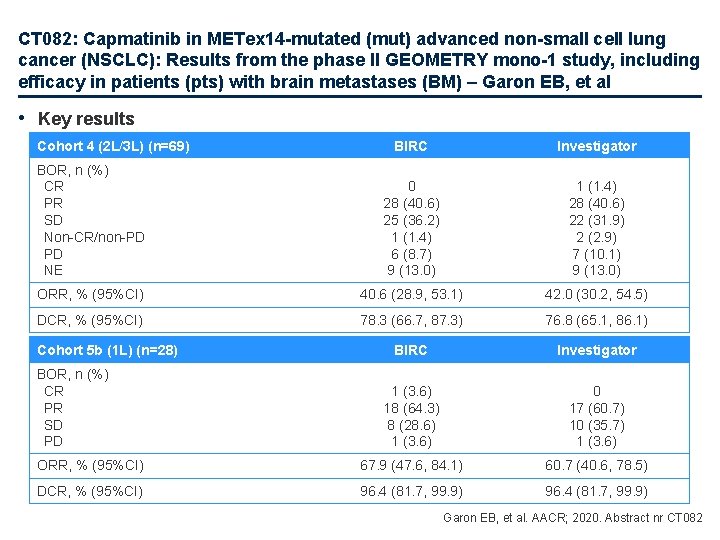
CT 082: Capmatinib in METex 14 -mutated (mut) advanced non-small cell lung cancer (NSCLC): Results from the phase II GEOMETRY mono-1 study, including efficacy in patients (pts) with brain metastases (BM) – Garon EB, et al • Key results Cohort 4 (2 L/3 L) (n=69) BIRC Investigator BOR, n (%) CR PR SD Non-CR/non-PD PD NE 0 28 (40. 6) 25 (36. 2) 1 (1. 4) 6 (8. 7) 9 (13. 0) 1 (1. 4) 28 (40. 6) 22 (31. 9) 2 (2. 9) 7 (10. 1) 9 (13. 0) ORR, % (95%CI) 40. 6 (28. 9, 53. 1) 42. 0 (30. 2, 54. 5) DCR, % (95%CI) 78. 3 (66. 7, 87. 3) 76. 8 (65. 1, 86. 1) BIRC Investigator 1 (3. 6) 18 (64. 3) 8 (28. 6) 1 (3. 6) 0 17 (60. 7) 10 (35. 7) 1 (3. 6) ORR, % (95%CI) 67. 9 (47. 6, 84. 1) 60. 7 (40. 6, 78. 5) DCR, % (95%CI) 96. 4 (81. 7, 99. 9) Cohort 5 b (1 L) (n=28) BOR, n (%) CR PR SD PD Garon EB, et al. AACR; 2020. Abstract nr CT 082
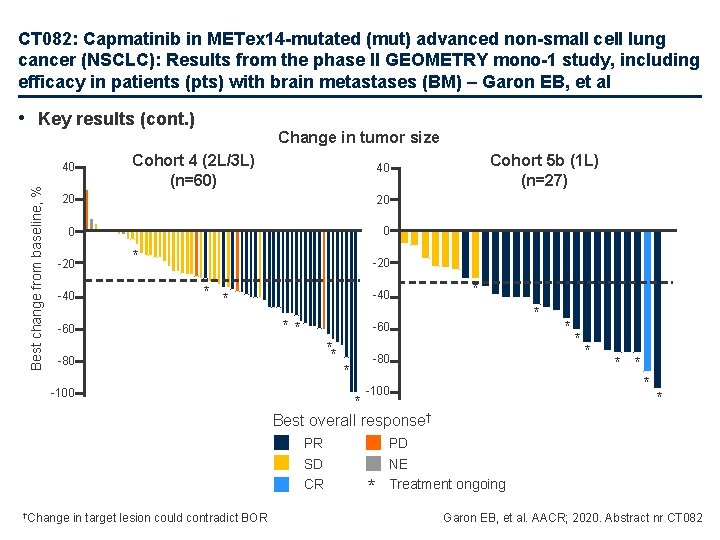
CT 082: Capmatinib in METex 14 -mutated (mut) advanced non-small cell lung cancer (NSCLC): Results from the phase II GEOMETRY mono-1 study, including efficacy in patients (pts) with brain metastases (BM) – Garon EB, et al • Key results (cont. ) Best change from baseline, % 40 Change in tumor size Cohort 4 (2 L/3 L) (n=60) 20 20 0 0 -20 -40 Cohort 5 b (1 L) (n=27) 40 * -20 * * -60 -40 ** * * -60 ** -80 -100 -80 * * * * -100 * Best overall response† PR SD CR †Change in target lesion could contradict BOR * PD NE Treatment ongoing Garon EB, et al. AACR; 2020. Abstract nr CT 082
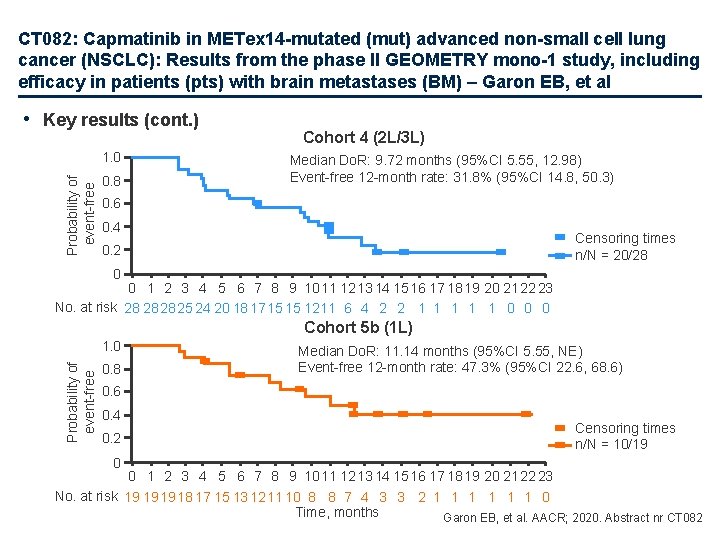
CT 082: Capmatinib in METex 14 -mutated (mut) advanced non-small cell lung cancer (NSCLC): Results from the phase II GEOMETRY mono-1 study, including efficacy in patients (pts) with brain metastases (BM) – Garon EB, et al • Key results (cont. ) Probability of event-free 1. 0 0. 8 Cohort 4 (2 L/3 L) Median Do. R: 9. 72 months (95%CI 5. 55, 12. 98) Event-free 12 -month rate: 31. 8% (95%CI 14. 8, 50. 3) 0. 6 0. 4 Censoring times n/N = 20/28 0. 2 0 0 1 2 3 4 5 6 7 8 9 10 11 12 13 14 1516 17 18 19 20 21 22 23 No. at risk 28 2828 25 24 20 18 17 15 15 1211 6 4 2 2 1 1 1 0 0 0 Cohort 5 b (1 L) Probability of event-free 1. 0 0. 8 Median Do. R: 11. 14 months (95%CI 5. 55, NE) Event-free 12 -month rate: 47. 3% (95%CI 22. 6, 68. 6) 0. 6 0. 4 0. 2 0 Censoring times n/N = 10/19 0 1 2 3 4 5 6 7 8 9 10 11 12 13 14 1516 17 18 19 20 21 22 23 No. at risk 19 1919 18 17 15 13 12 11 10 8 8 7 4 3 3 2 1 1 1 0 Time, months Garon EB, et al. AACR; 2020. Abstract nr CT 082
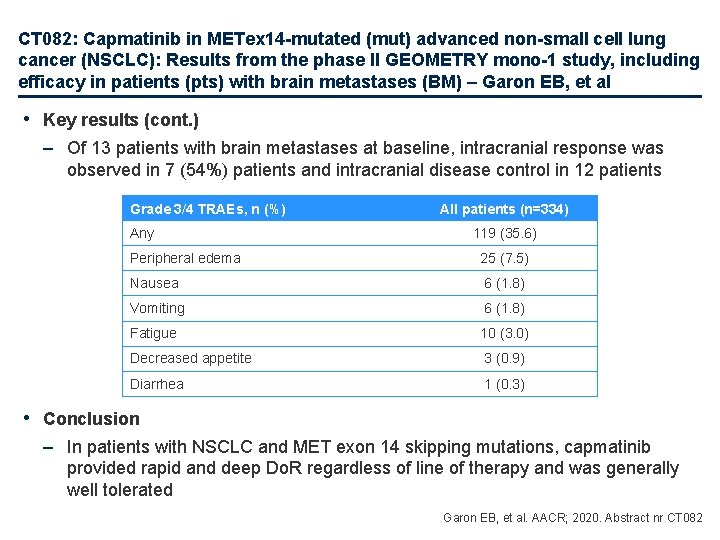
CT 082: Capmatinib in METex 14 -mutated (mut) advanced non-small cell lung cancer (NSCLC): Results from the phase II GEOMETRY mono-1 study, including efficacy in patients (pts) with brain metastases (BM) – Garon EB, et al • Key results (cont. ) – Of 13 patients with brain metastases at baseline, intracranial response was observed in 7 (54%) patients and intracranial disease control in 12 patients Grade 3/4 TRAEs, n (%) Any All patients (n=334) 119 (35. 6) Peripheral edema 25 (7. 5) Nausea 6 (1. 8) Vomiting 6 (1. 8) Fatigue 10 (3. 0) Decreased appetite 3 (0. 9) Diarrhea 1 (0. 3) • Conclusion – In patients with NSCLC and MET exon 14 skipping mutations, capmatinib provided rapid and deep Do. R regardless of line of therapy and was generally well tolerated Garon EB, et al. AACR; 2020. Abstract nr CT 082
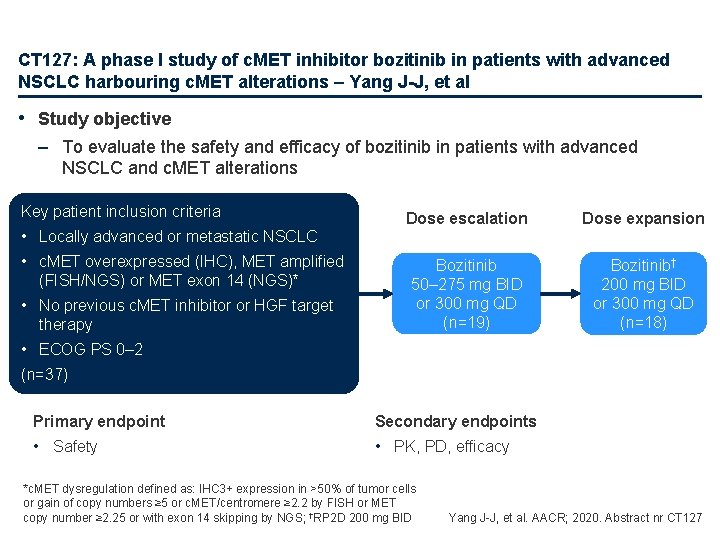
CT 127: A phase I study of c. MET inhibitor bozitinib in patients with advanced NSCLC harbouring c. MET alterations – Yang J-J, et al • Study objective – To evaluate the safety and efficacy of bozitinib in patients with advanced NSCLC and c. MET alterations Key patient inclusion criteria Dose escalation Dose expansion Bozitinib 50– 275 mg BID or 300 mg QD (n=19) Bozitinib† 200 mg BID or 300 mg QD (n=18) • Locally advanced or metastatic NSCLC • c. MET overexpressed (IHC), MET amplified (FISH/NGS) or MET exon 14 (NGS)* • No previous c. MET inhibitor or HGF target therapy • ECOG PS 0– 2 (n=37) Primary endpoint Secondary endpoints • Safety • PK, PD, efficacy *c. MET dysregulation defined as: IHC 3+ expression in >50% of tumor cells or gain of copy numbers ≥ 5 or c. MET/centromere ≥ 2. 2 by FISH or MET copy number ≥ 2. 25 or with exon 14 skipping by NGS; †RP 2 D 200 mg BID Yang J-J, et al. AACR; 2020. Abstract nr CT 127
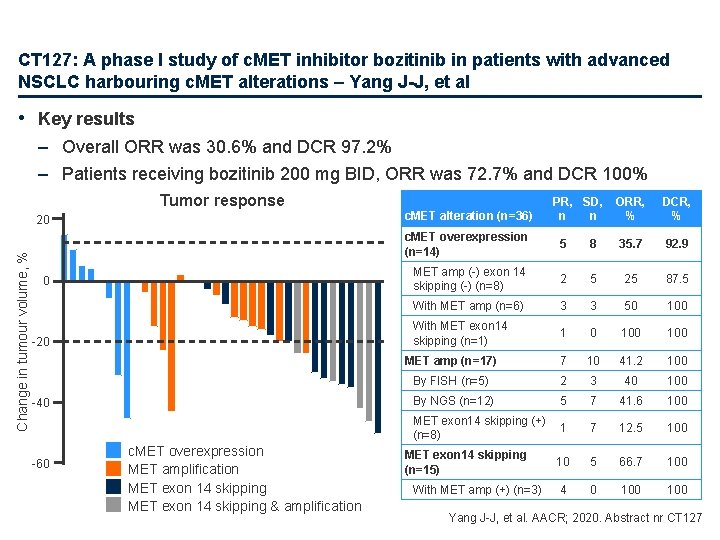
CT 127: A phase I study of c. MET inhibitor bozitinib in patients with advanced NSCLC harbouring c. MET alterations – Yang J-J, et al • Key results – Overall ORR was 30. 6% and DCR 97. 2% – Patients receiving bozitinib 200 mg BID, ORR was 72. 7% and DCR 100% Tumor response Change in tumour volume, % 20 0 -20 -40 -60 c. MET overexpression MET amplification MET exon 14 skipping & amplification c. MET alteration (n=36) PR, SD, n n ORR, % DCR, % c. MET overexpression (n=14) 5 8 35. 7 92. 9 MET amp (-) exon 14 skipping (-) (n=8) 2 5 25 87. 5 With MET amp (n=6) 3 3 50 100 With MET exon 14 skipping (n=1) 1 0 100 MET amp (n=17) 7 10 41. 2 100 By FISH (n=5) 2 3 40 100 By NGS (n=12) 5 7 41. 6 100 MET exon 14 skipping (+) (n=8) 1 7 12. 5 100 10 5 66. 7 100 4 0 100 MET exon 14 skipping (n=15) With MET amp (+) (n=3) Yang J-J, et al. AACR; 2020. Abstract nr CT 127
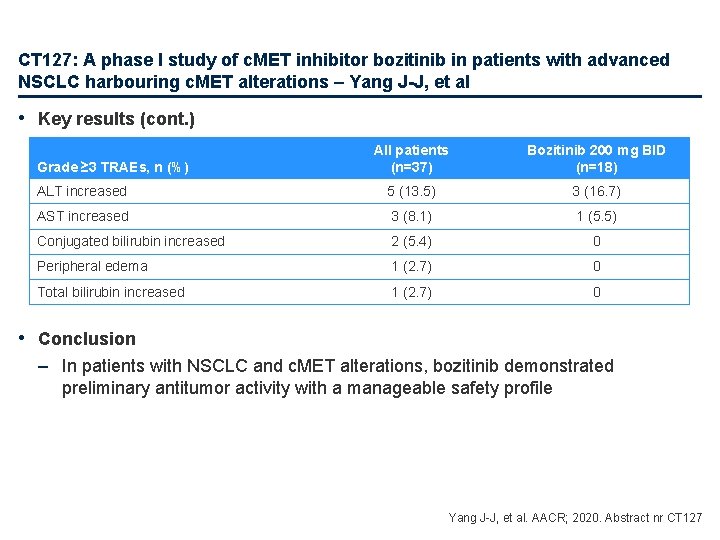
CT 127: A phase I study of c. MET inhibitor bozitinib in patients with advanced NSCLC harbouring c. MET alterations – Yang J-J, et al • Key results (cont. ) All patients (n=37) Bozitinib 200 mg BID (n=18) ALT increased 5 (13. 5) 3 (16. 7) AST increased 3 (8. 1) 1 (5. 5) Conjugated bilirubin increased 2 (5. 4) 0 Peripheral edema 1 (2. 7) 0 Total bilirubin increased 1 (2. 7) 0 Grade ≥ 3 TRAEs, n (%) • Conclusion – In patients with NSCLC and c. MET alterations, bozitinib demonstrated preliminary antitumor activity with a manageable safety profile Yang J-J, et al. AACR; 2020. Abstract nr CT 127
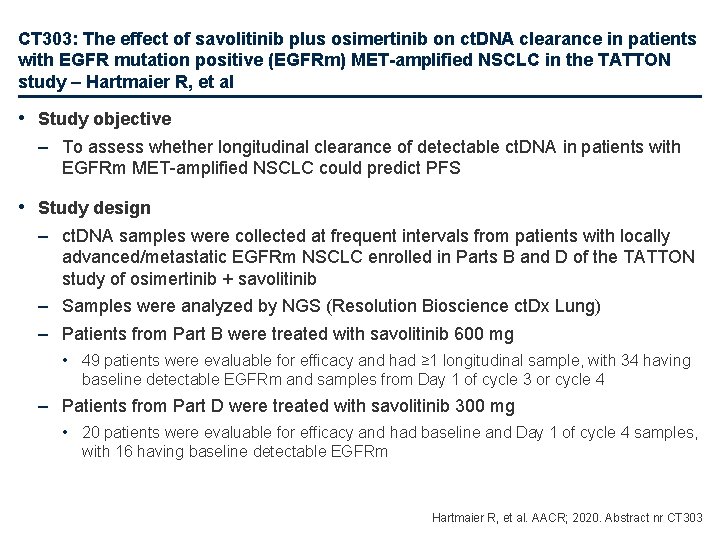
CT 303: The effect of savolitinib plus osimertinib on ct. DNA clearance in patients with EGFR mutation positive (EGFRm) MET-amplified NSCLC in the TATTON study – Hartmaier R, et al • Study objective – To assess whether longitudinal clearance of detectable ct. DNA in patients with EGFRm MET-amplified NSCLC could predict PFS • Study design – ct. DNA samples were collected at frequent intervals from patients with locally advanced/metastatic EGFRm NSCLC enrolled in Parts B and D of the TATTON study of osimertinib + savolitinib – Samples were analyzed by NGS (Resolution Bioscience ct. Dx Lung) – Patients from Part B were treated with savolitinib 600 mg • 49 patients were evaluable for efficacy and had ≥ 1 longitudinal sample, with 34 having baseline detectable EGFRm and samples from Day 1 of cycle 3 or cycle 4 – Patients from Part D were treated with savolitinib 300 mg • 20 patients were evaluable for efficacy and had baseline and Day 1 of cycle 4 samples, with 16 having baseline detectable EGFRm Hartmaier R, et al. AACR; 2020. Abstract nr CT 303
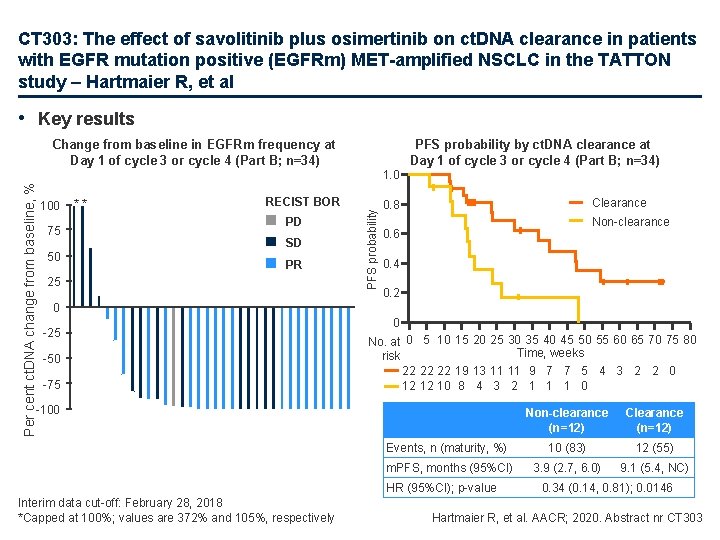
CT 303: The effect of savolitinib plus osimertinib on ct. DNA clearance in patients with EGFR mutation positive (EGFRm) MET-amplified NSCLC in the TATTON study – Hartmaier R, et al • Key results Change from baseline in EGFRm frequency at Day 1 of cycle 3 or cycle 4 (Part B; n=34) PFS probability by ct. DNA clearance at Day 1 of cycle 3 or cycle 4 (Part B; n=34) 100 75 50 ** RECIST BOR PD SD PR 25 PFS probability Per cent ct. DNA change from baseline, % 1. 0 Clearance 0. 8 Non-clearance 0. 6 0. 4 0. 2 0 -25 -50 -75 0 No. at 0 5 10 15 20 25 30 35 40 45 50 55 60 65 70 75 80 Time, weeks risk 22 22 22 19 13 11 11 9 7 7 5 4 3 2 2 0 12 12 10 8 4 3 2 1 1 1 0 -100 Non-clearance (n=12) Clearance (n=12) Events, n (maturity, %) 10 (83) 12 (55) m. PFS, months (95%CI) 3. 9 (2. 7, 6. 0) 9. 1 (5. 4, NC) HR (95%CI); p-value Interim data cut-off: February 28, 2018 *Capped at 100%; values are 372% and 105%, respectively 0. 34 (0. 14, 0. 81); 0. 0146 Hartmaier R, et al. AACR; 2020. Abstract nr CT 303
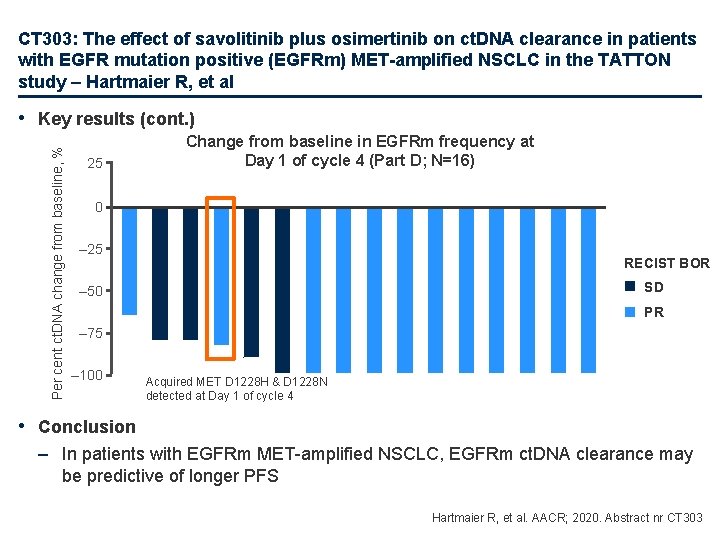
CT 303: The effect of savolitinib plus osimertinib on ct. DNA clearance in patients with EGFR mutation positive (EGFRm) MET-amplified NSCLC in the TATTON study – Hartmaier R, et al Per cent ct. DNA change from baseline, % • Key results (cont. ) 25 Change from baseline in EGFRm frequency at Day 1 of cycle 4 (Part D; N=16) 0 – 25 RECIST BOR SD – 50 PR – 75 – 100 Acquired MET D 1228 H & D 1228 N detected at Day 1 of cycle 4 • Conclusion – In patients with EGFRm MET-amplified NSCLC, EGFRm ct. DNA clearance may be predictive of longer PFS Hartmaier R, et al. AACR; 2020. Abstract nr CT 303
Other malignancies SCLC, mesothelioma and thymic epithelial tumors
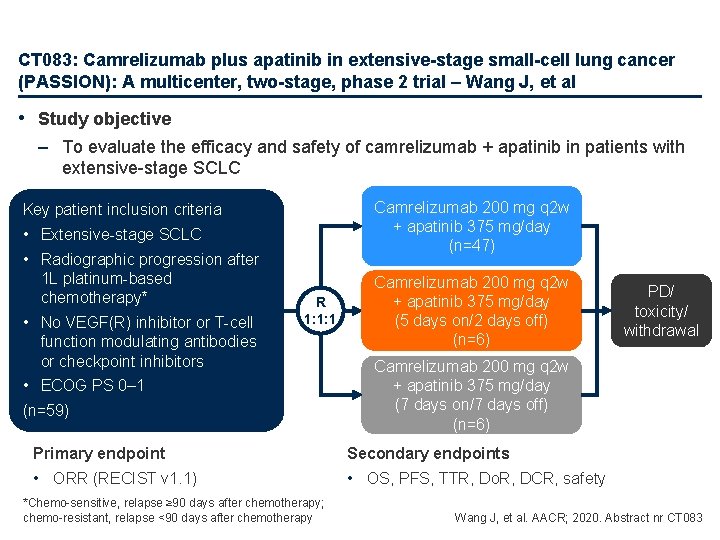
CT 083: Camrelizumab plus apatinib in extensive-stage small-cell lung cancer (PASSION): A multicenter, two-stage, phase 2 trial – Wang J, et al • Study objective – To evaluate the efficacy and safety of camrelizumab + apatinib in patients with extensive-stage SCLC Camrelizumab 200 mg q 2 w + apatinib 375 mg/day (n=47) Key patient inclusion criteria • Extensive-stage SCLC • Radiographic progression after 1 L platinum-based chemotherapy* • No VEGF(R) inhibitor or T-cell function modulating antibodies or checkpoint inhibitors R 1: 1: 1 • ECOG PS 0– 1 (n=59) Camrelizumab 200 mg q 2 w + apatinib 375 mg/day (5 days on/2 days off) (n=6) Camrelizumab 200 mg q 2 w + apatinib 375 mg/day (7 days on/7 days off) (n=6) Primary endpoint Secondary endpoints • ORR (RECIST v 1. 1) • OS, PFS, TTR, Do. R, DCR, safety *Chemo-sensitive, relapse ≥ 90 days after chemotherapy; chemo-resistant, relapse <90 days after chemotherapy PD/ toxicity/ withdrawal Wang J, et al. AACR; 2020. Abstract nr CT 083
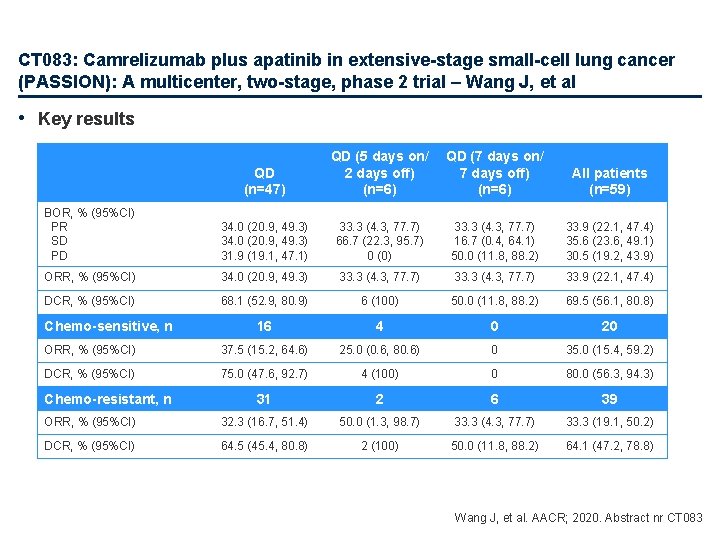
CT 083: Camrelizumab plus apatinib in extensive-stage small-cell lung cancer (PASSION): A multicenter, two-stage, phase 2 trial – Wang J, et al • Key results QD (n=47) QD (5 days on/ 2 days off) (n=6) QD (7 days on/ 7 days off) (n=6) All patients (n=59) BOR, % (95%CI) PR SD PD 34. 0 (20. 9, 49. 3) 31. 9 (19. 1, 47. 1) 33. 3 (4. 3, 77. 7) 66. 7 (22. 3, 95. 7) 0 (0) 33. 3 (4. 3, 77. 7) 16. 7 (0. 4, 64. 1) 50. 0 (11. 8, 88. 2) 33. 9 (22. 1, 47. 4) 35. 6 (23. 6, 49. 1) 30. 5 (19. 2, 43. 9) ORR, % (95%CI) 34. 0 (20. 9, 49. 3) 33. 3 (4. 3, 77. 7) 33. 9 (22. 1, 47. 4) DCR, % (95%CI) 68. 1 (52. 9, 80. 9) 6 (100) 50. 0 (11. 8, 88. 2) 69. 5 (56. 1, 80. 8) 16 4 0 20 ORR, % (95%CI) 37. 5 (15. 2, 64. 6) 25. 0 (0. 6, 80. 6) 0 35. 0 (15. 4, 59. 2) DCR, % (95%CI) 75. 0 (47. 6, 92. 7) 4 (100) 0 80. 0 (56. 3, 94. 3) 31 2 6 39 ORR, % (95%CI) 32. 3 (16. 7, 51. 4) 50. 0 (1. 3, 98. 7) 33. 3 (4. 3, 77. 7) 33. 3 (19. 1, 50. 2) DCR, % (95%CI) 64. 5 (45. 4, 80. 8) 2 (100) 50. 0 (11. 8, 88. 2) 64. 1 (47. 2, 78. 8) Chemo-sensitive, n Chemo-resistant, n Wang J, et al. AACR; 2020. Abstract nr CT 083
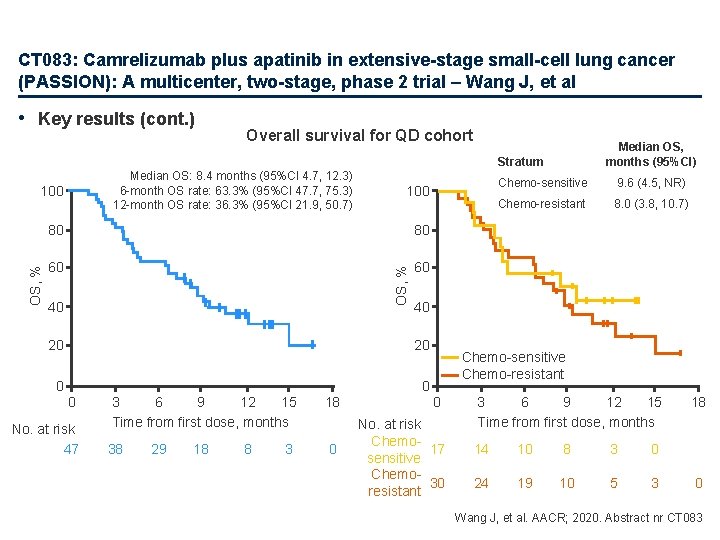
CT 083: Camrelizumab plus apatinib in extensive-stage small-cell lung cancer (PASSION): A multicenter, two-stage, phase 2 trial – Wang J, et al • Key results (cont. ) Overall survival for QD cohort Median OS, months (95%CI) Stratum Median OS: 8. 4 months (95%CI 4. 7, 12. 3) 6 -month OS rate: 63. 3% (95%CI 47. 7, 75. 3) 12 -month OS rate: 36. 3% (95%CI 21. 9, 50. 7) 100 80 80 60 60 OS, % 100 40 20 0 0 No. at risk 47 3 6 9 12 15 Time from first dose, months 18 38 0 29 18 8 3 9. 6 (4. 5, NR) Chemo-resistant 8. 0 (3. 8, 10. 7) 40 20 0 Chemo-sensitive Chemo-resistant 0 No. at risk Chemo 17 sensitive Chemo 30 resistant 3 6 9 12 15 Time from first dose, months 14 10 8 3 0 24 19 10 5 3 18 0 Wang J, et al. AACR; 2020. Abstract nr CT 083
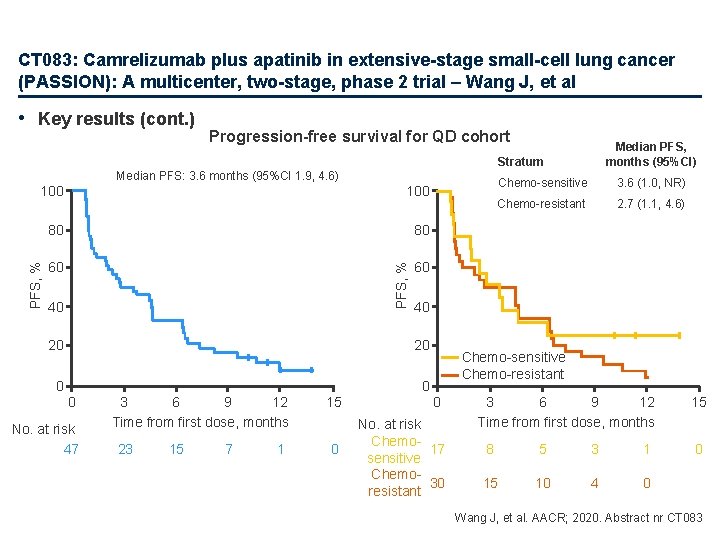
CT 083: Camrelizumab plus apatinib in extensive-stage small-cell lung cancer (PASSION): A multicenter, two-stage, phase 2 trial – Wang J, et al • Key results (cont. ) Progression-free survival for QD cohort Median PFS, months (95%CI) Stratum Median PFS: 3. 6 months (95%CI 1. 9, 4. 6) 80 80 60 60 PFS, % 100 40 20 0 0 No. at risk 47 3 6 9 12 Time from first dose, months 23 15 7 1 15 0 3. 6 (1. 0, NR) Chemo-resistant 2. 7 (1. 1, 4. 6) 40 20 0 Chemo-sensitive Chemo-resistant 0 No. at risk Chemo 17 sensitive Chemo 30 resistant 3 6 9 12 Time from first dose, months 8 5 3 1 15 10 4 0 15 0 Wang J, et al. AACR; 2020. Abstract nr CT 083
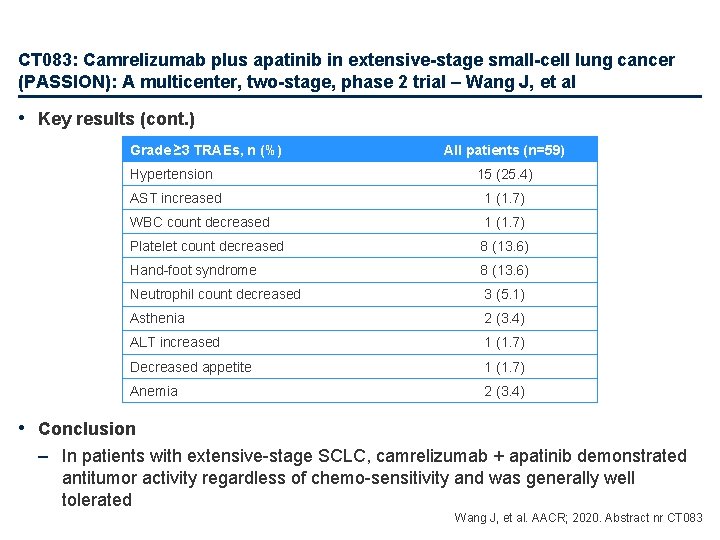
CT 083: Camrelizumab plus apatinib in extensive-stage small-cell lung cancer (PASSION): A multicenter, two-stage, phase 2 trial – Wang J, et al • Key results (cont. ) Grade ≥ 3 TRAEs, n (%) Hypertension All patients (n=59) 15 (25. 4) AST increased 1 (1. 7) WBC count decreased 1 (1. 7) Platelet count decreased 8 (13. 6) Hand-foot syndrome 8 (13. 6) Neutrophil count decreased 3 (5. 1) Asthenia 2 (3. 4) ALT increased 1 (1. 7) Decreased appetite 1 (1. 7) Anemia 2 (3. 4) • Conclusion – In patients with extensive-stage SCLC, camrelizumab + apatinib demonstrated antitumor activity regardless of chemo-sensitivity and was generally well tolerated Wang J, et al. AACR; 2020. Abstract nr CT 083