CURRICULUM DEVELOPMENT An Overview July 23 2012 Prema


- Slides: 45
CURRICULUM DEVELOPMENT An Overview July 23, 2012 Prema Gaikwad
BASIC QUESTIONS IN EDUCATION QUESTION AREA DIMENSIONS WHY? Philosophy reality, truth, values WHO? Foundations history, sociology, psychology WHAT? Curriculum scope, sequence, pacing HOW? Instruction climate, methods, means WHEN? WHERE? Administration personnel, facilities, finances
The Curriculum Cycle Needs Assessment Evaluation Implementation Development Orientation
Components of the Presentation A. B. C. D. Curriculum as a Process and Product Curriculum Participants Curriculum Development Models Curriculum Designs
A. Curriculum as a Process and Product
Curriculum processes and products l May be found at two stages l Like a blue print and a building
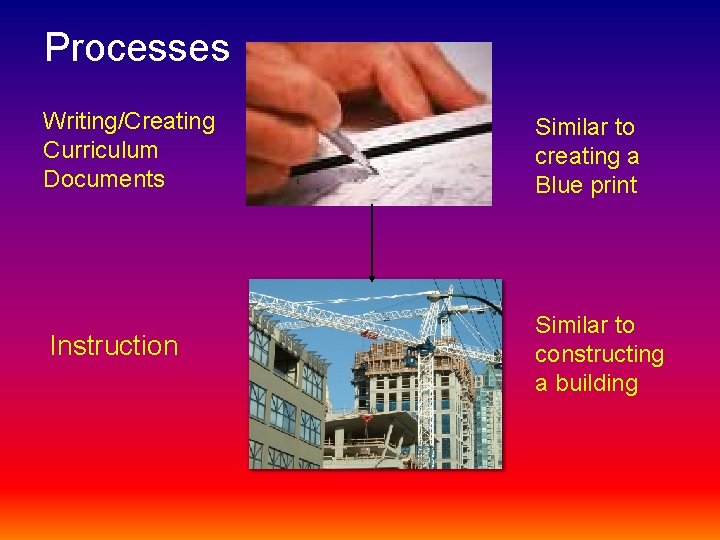
Processes Writing/Creating Curriculum Documents Similar to creating a Blue print Instruction Similar to constructing a building
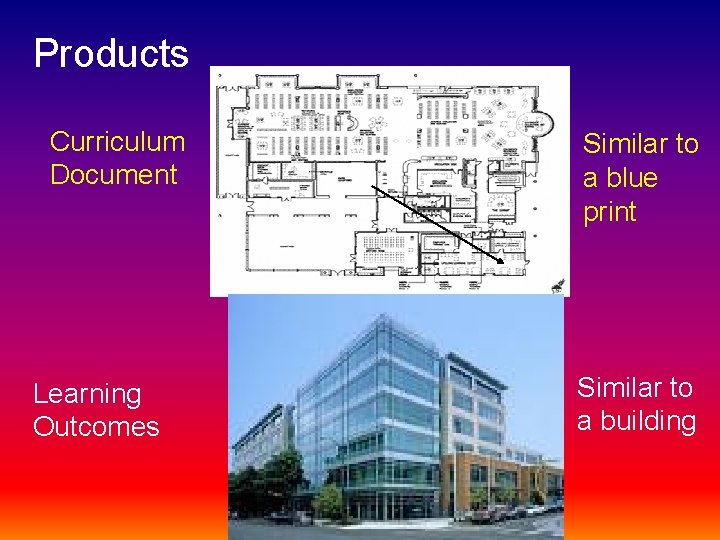
Products Curriculum Document Learning Outcomes Similar to a blue print Similar to a building
Types of Curriculum Activities Transform theory and knowledge into practice l Looking at the past, chart directions for future curriculum practices l Conduct research on curriculum issues l Write curriculum documents l Provide leadership to teachers l Teach l Evaluate curriculum l
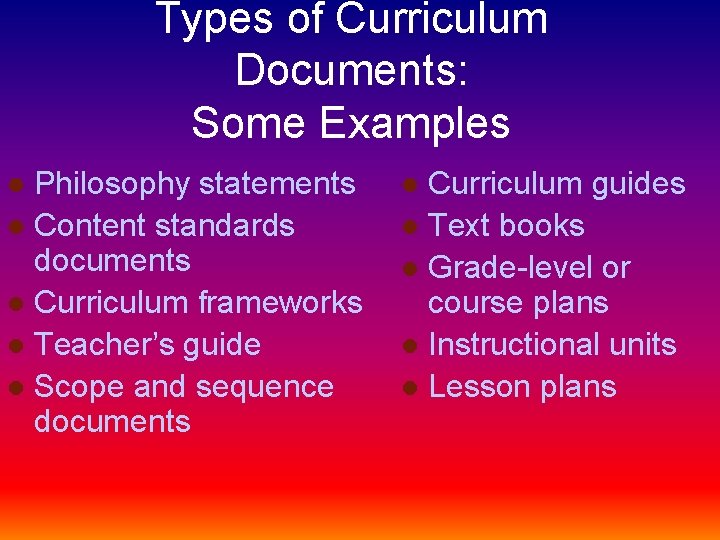
Types of Curriculum Documents: Some Examples Philosophy statements l Content standards documents l Curriculum frameworks l Teacher’s guide l Scope and sequence documents l Curriculum guides l Text books l Grade-level or course plans l Instructional units l Lesson plans l
B. Curriculum Participants
Stakeholders Who are they? l Why are they important? l How do you identify them? l How do you involve them? l What should be their roles/responsibilities? l What are the consequences for non-involvement? l
Stakeholders Who should you involve? Those with formal power to make a decision l Those with power to block a decision l Those affected by the decision l Those with relevant information or expertise l
A List of Typical Stakeholders Curriculum Specialists l Other Specialists l Administrators l Teachers l Parents l Students l Community Members l Faceless Members l
C. Curriculum Development Models
TYLER’S CURRICULUM DEVELOPMENT MODEL Based on his book, Basic Principles of Curriculum and Instruction)
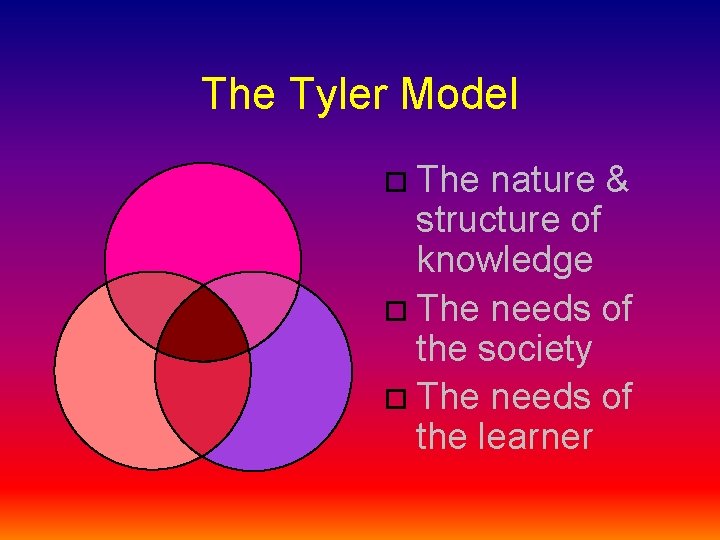
The Tyler Model The nature & structure of knowledge The needs of the society The needs of the learner
Fundamental Questions in Developing Curriculum 1. What educational purposes should the school seek to attain?
Fundamental Questions in Developing Curriculum 2. What educational experiences can be provided that are likely to attain these purposes?
Fundamental Questions in Developing Curriculum 3. How can these educational experiences be effectively organized?
Fundamental Questions in Developing Curriculum 4. How can we determine whether and to what extent these purposes are being attained?
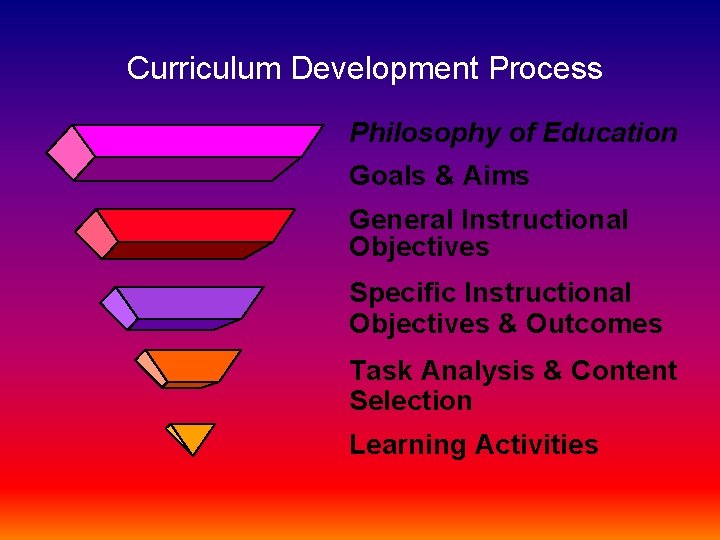
Curriculum Development Process Philosophy of Education Goals & Aims General Instructional Objectives Specific Instructional Objectives & Outcomes Task Analysis & Content Selection Learning Activities
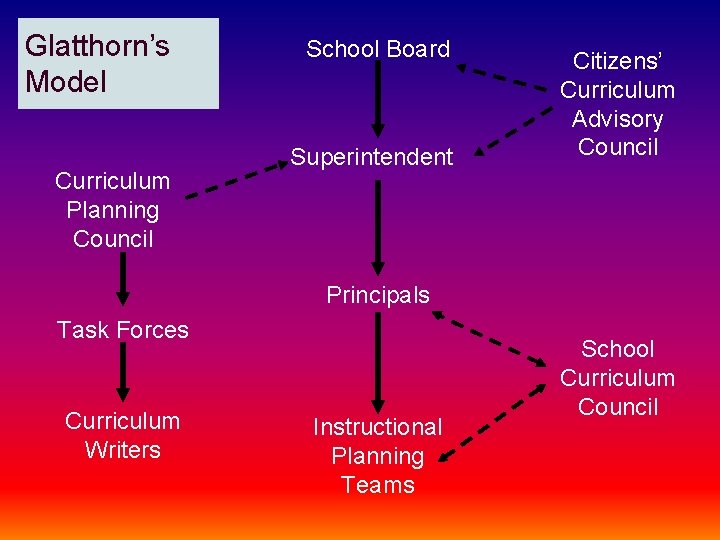
Glatthorn’s Model Curriculum Planning Council School Board Superintendent Citizens’ Curriculum Advisory Council Principals Task Forces Curriculum Writers Instructional Planning Teams School Curriculum Council
Hilda Taba’s Model An inductive model with five major steps
l Taba believed that those who teach the curriculum should be the ones to develop it. l The model uses a grassroots approach
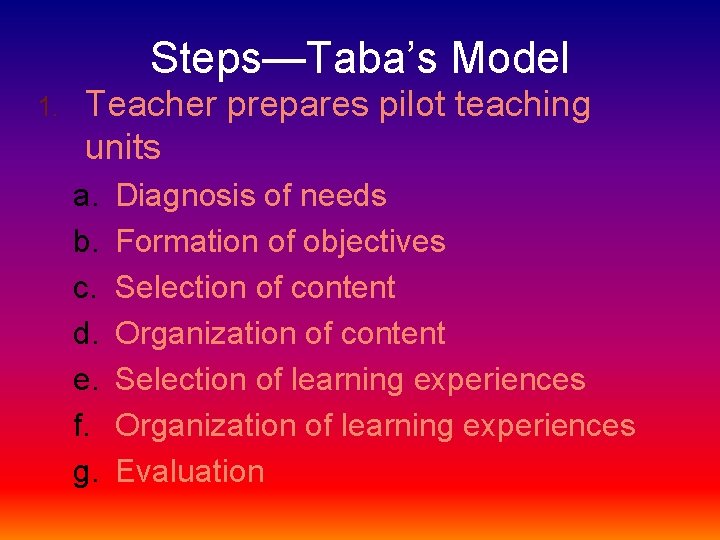
Steps—Taba’s Model 1. Teacher prepares pilot teaching units a. b. c. d. e. f. g. Diagnosis of needs Formation of objectives Selection of content Organization of content Selection of learning experiences Organization of learning experiences Evaluation
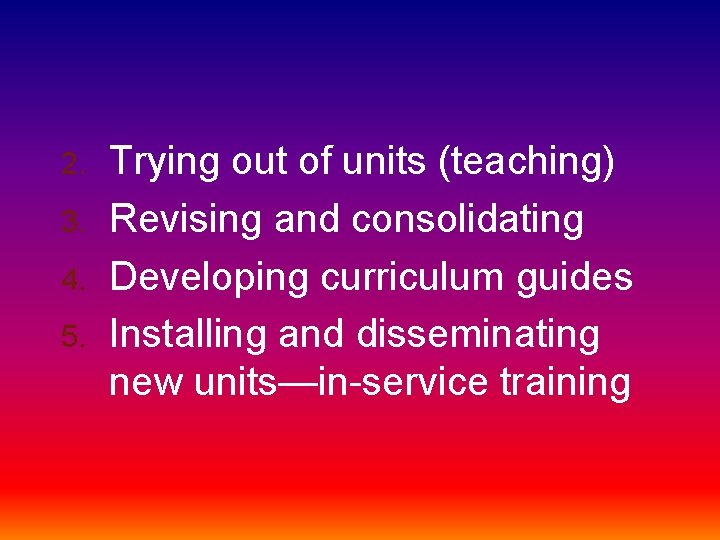
2. 3. 4. 5. Trying out of units (teaching) Revising and consolidating Developing curriculum guides Installing and disseminating new units—in-service training
D. CURRICULUM DESIGNS Design: Arrangement of the parts of the curriculum
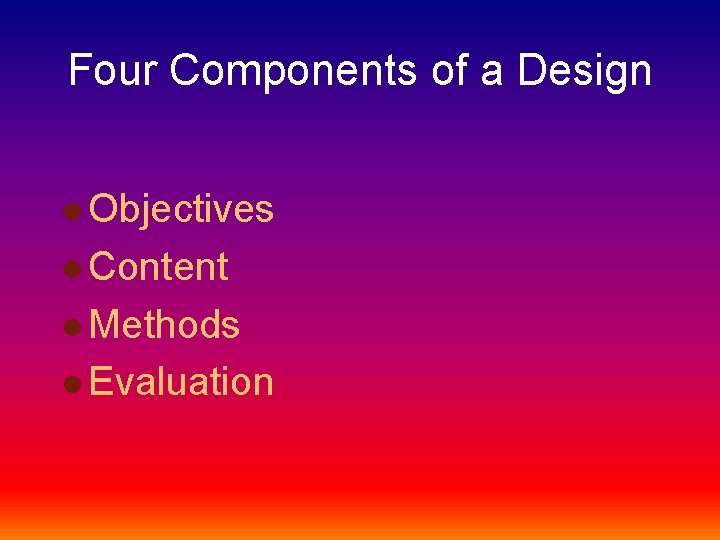
Four Components of a Design l Objectives l Content l Methods l Evaluation
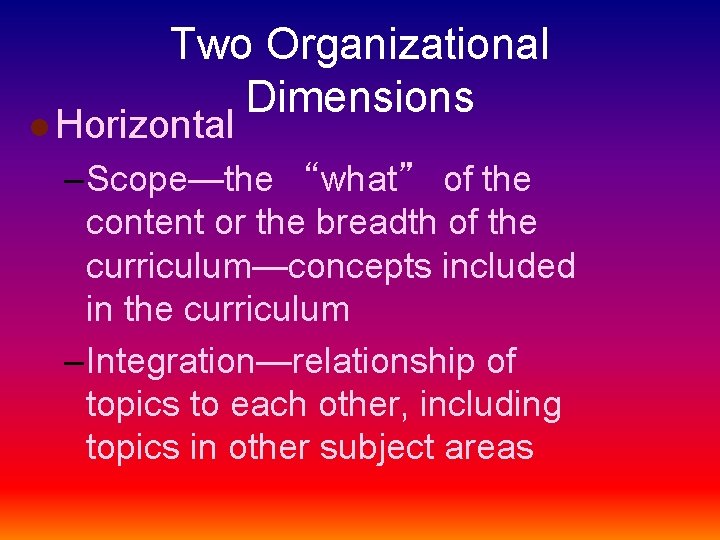
Two Organizational Dimensions l Horizontal – Scope—the “what” of the content or the breadth of the curriculum—concepts included in the curriculum – Integration—relationship of topics to each other, including topics in other subject areas
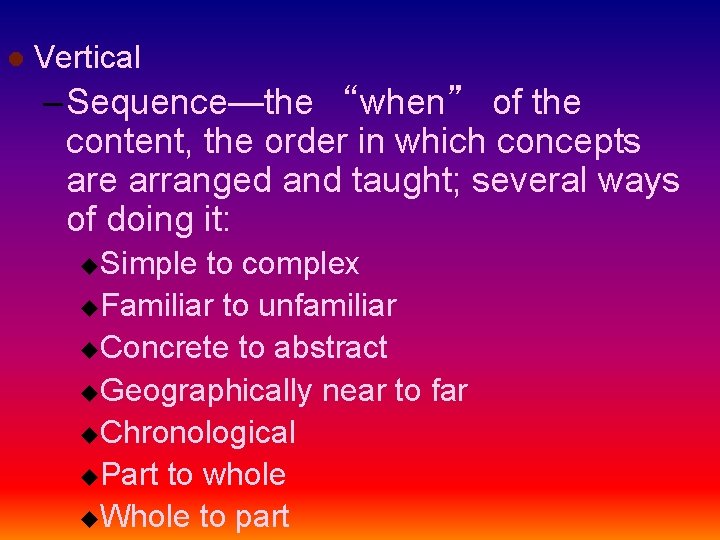
l Vertical – Sequence—the “when” of the content, the order in which concepts are arranged and taught; several ways of doing it: u. Simple to complex u. Familiar to unfamiliar u. Concrete to abstract u. Geographically near to far u. Chronological u. Part to whole u. Whole to part
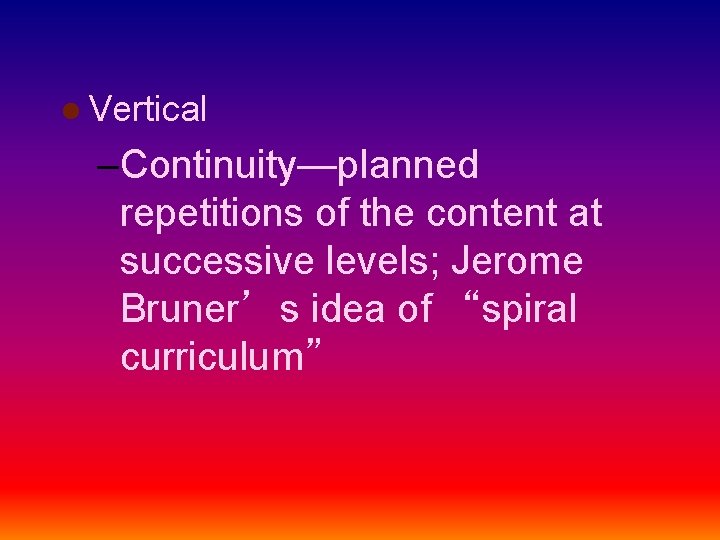
l Vertical –Continuity—planned repetitions of the content at successive levels; Jerome Bruner’s idea of “spiral curriculum”
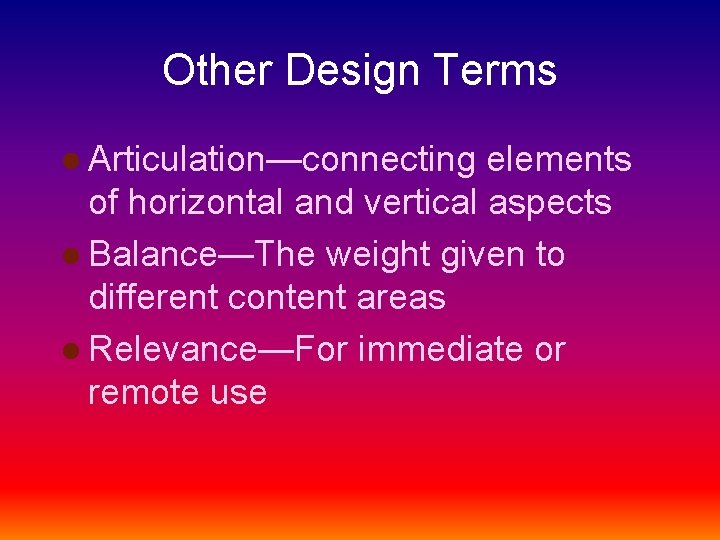
Other Design Terms l Articulation—connecting elements of horizontal and vertical aspects l Balance—The weight given to different content areas l Relevance—For immediate or remote use
Three Types of Designs l Subject Centered Design l Student Centered Design l Society/Problem Centered Design
Subject Centered Designs l Separate Subject Design – Curriculum is organized into various subject areas – Most popular u. Convenient to prepare materials and teach u. Familiar for teachers and parents u. Assessment is easier – Disadvantage is in segmentation or separation of subjects
l Broad-fields Design – Also called interdisciplinary design – Variation of subject-centered to correct fragmentation – Integrate content that fit logically u. Social science—geography, history, economics, etc. u. General science—biology, chemistry, physics u. Language arts—grammar, literature, spelling, composition – Becoming more popular – Disadvantage of superficial depth
l Correlation Design – Midpoint between separate subject design and broad-fields designs – Combines two or more subjects such as English literature and history; science and math – Identities of both are retained – Very few are using today u. Difficult for scheduling u. Rare to find experts in both areas at the same time
l Fusion Design – Combines two subject areas without retaining their identities – More recent trend – Examples—biophysics, genetic engineering
Student-centered Designs l Child-centered – Mostly found in elementary levels – Integration through units of lessons—thematic instruction
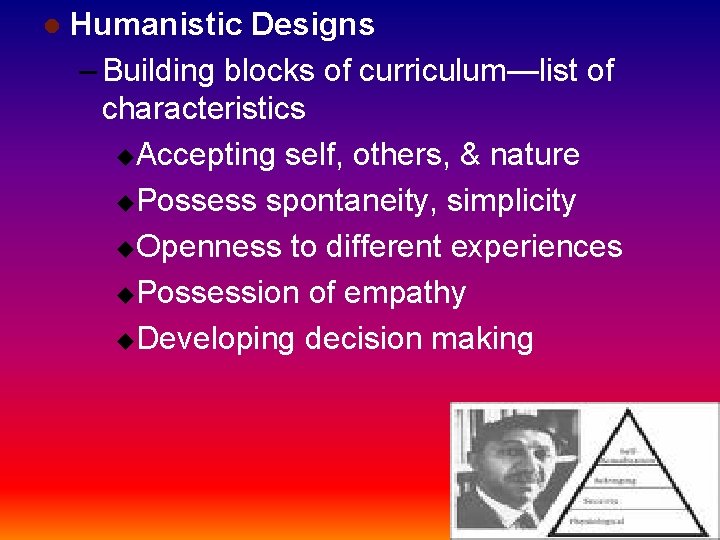
l Humanistic Designs – Building blocks of curriculum—list of characteristics u. Accepting self, others, & nature u. Possess spontaneity, simplicity u. Openness to different experiences u. Possession of empathy u. Developing decision making
l Humanistic Designs – Examples of schools: Waldorf, Sudbury – Adventist schools are also designed primarily for character development
l Core Curriculum Designs –Required of all students –Emphasis on social needs –Mainly used in middle school and high school levels
Society/Problem Centered Design l Activities or experience curriculum – Emphasizes social skills – Involves students directly in solving problems in society l Needs of Society Curriculum – Emphasizes vocational and career training – Instruction in the school caters for adult world of work
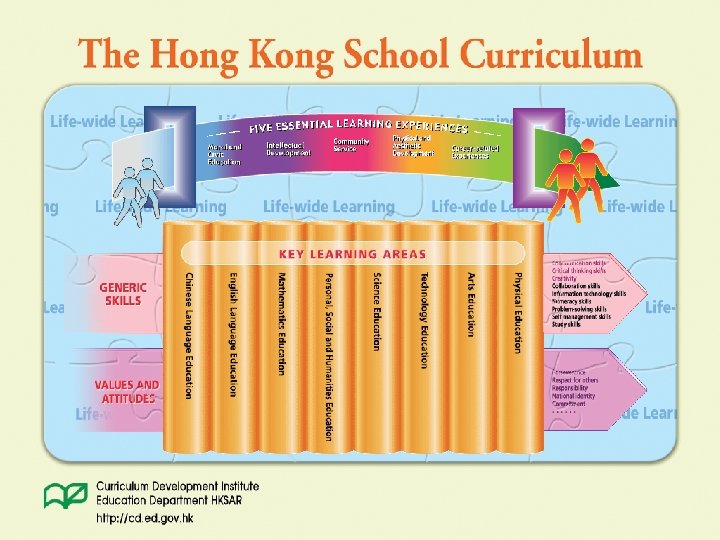
An Example of a School Curriculum Framework