Crucial Conversations Tools for Talking When Stakes are

- Slides: 26
Crucial Conversations Tools for Talking When Stakes are High
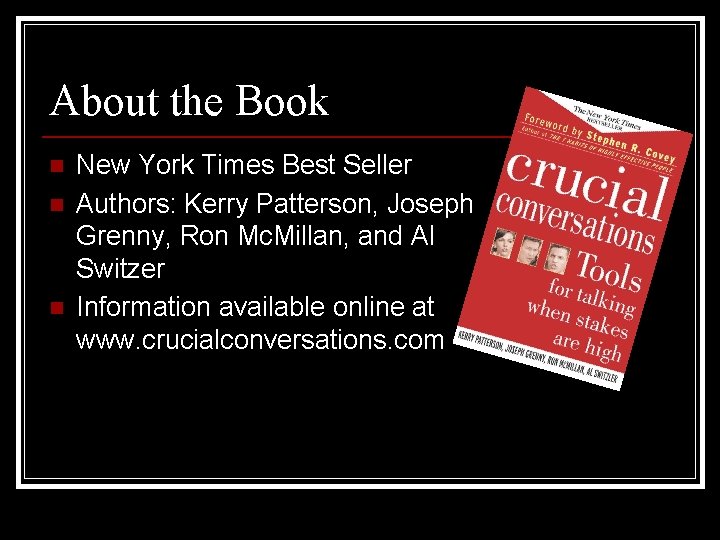
About the Book n n n New York Times Best Seller Authors: Kerry Patterson, Joseph Grenny, Ron Mc. Millan, and Al Switzer Information available online at www. crucialconversations. com
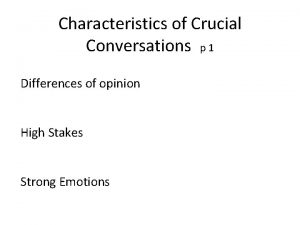
What is a Crucial Conversation? n A Crucial Conversation is a discussion between two or more people where: n n n Stakes are high, Opinions vary, and Emotions run strong.
Some Examples n n n Talking to a coworker who behaves offensively Giving the boss feedback about his/her behavior Critiquing a colleague’s work Talking to a team member who is not keeping commitments Giving an unfavorable performance review Talking to a coworker about a personal hygiene problem
Three Options n When faced with a Crucial Conversation you can do one of three things: 1. 2. 3. Avoid it Face it and handle it poorly Face it and handle it well
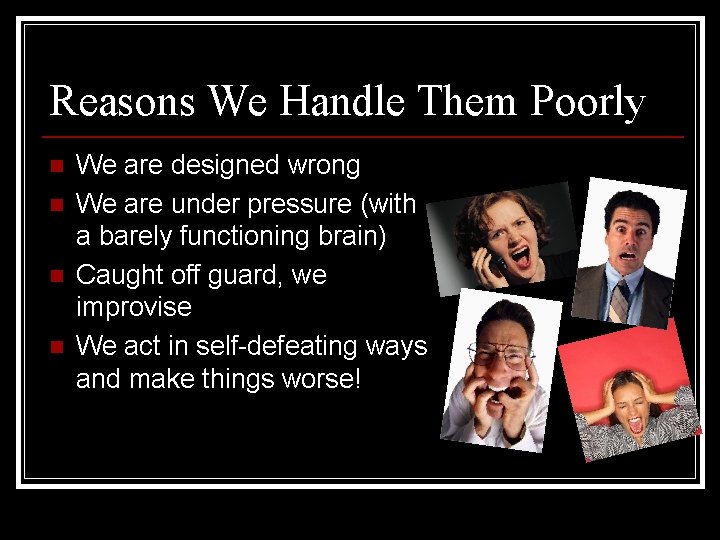
Reasons We Handle Them Poorly n n We are designed wrong We are under pressure (with a barely functioning brain) Caught off guard, we improvise We act in self-defeating ways and make things worse!
Reasons to Learn to Handle Them Well Improve your career n Improve your organization n Improve your relationships n Improve your personal health n Revitalize your community n
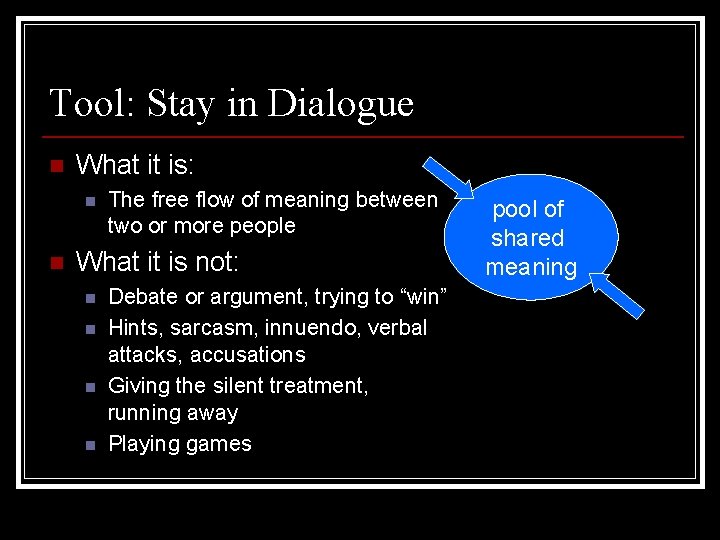
Tool: Stay in Dialogue n What it is: n n The free flow of meaning between two or more people What it is not: n n Debate or argument, trying to “win” Hints, sarcasm, innuendo, verbal attacks, accusations Giving the silent treatment, running away Playing games pool of shared meaning
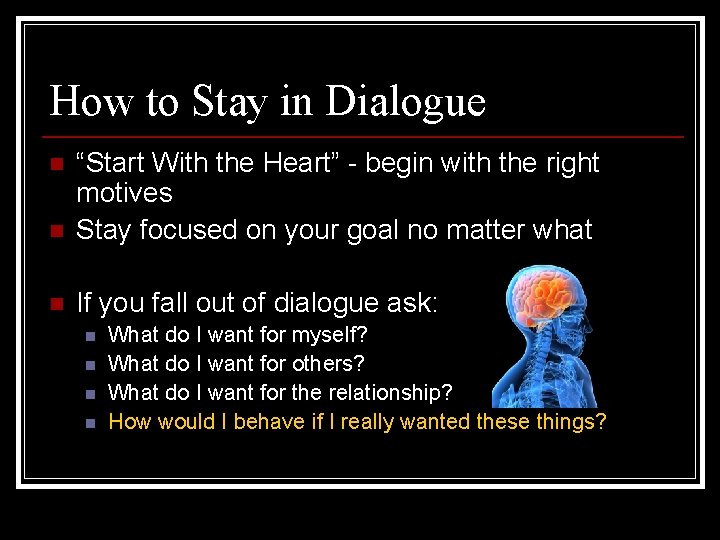
How to Stay in Dialogue n “Start With the Heart” - begin with the right motives Stay focused on your goal no matter what n If you fall out of dialogue ask: n n n What do I want for myself? What do I want for others? What do I want for the relationship? How would I behave if I really wanted these things?
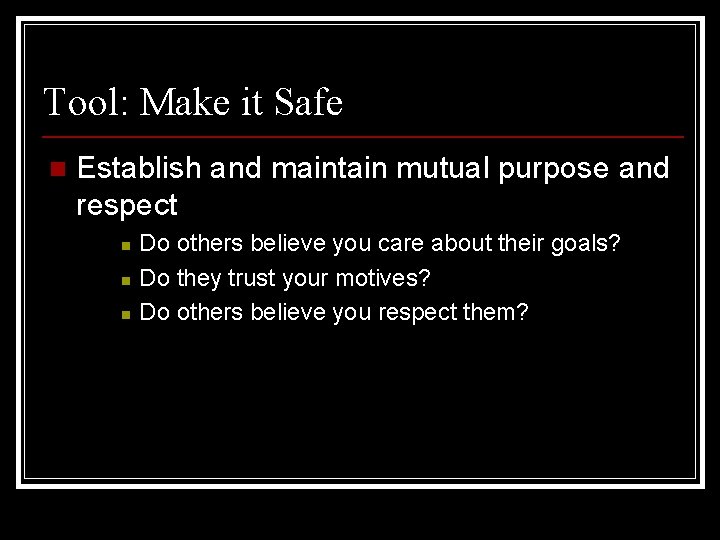
Tool: Make it Safe n Establish and maintain mutual purpose and respect n n n Do others believe you care about their goals? Do they trust your motives? Do others believe you respect them?
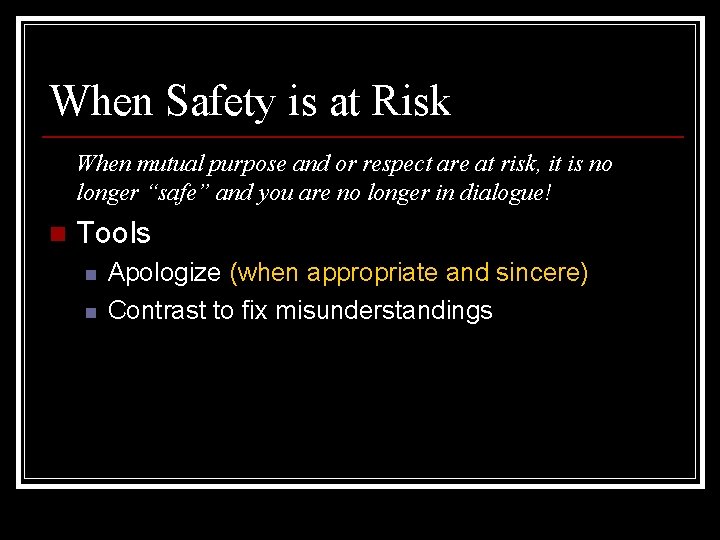
When Safety is at Risk When mutual purpose and or respect are at risk, it is no longer “safe” and you are no longer in dialogue! n Tools n n Apologize (when appropriate and sincere) Contrast to fix misunderstandings
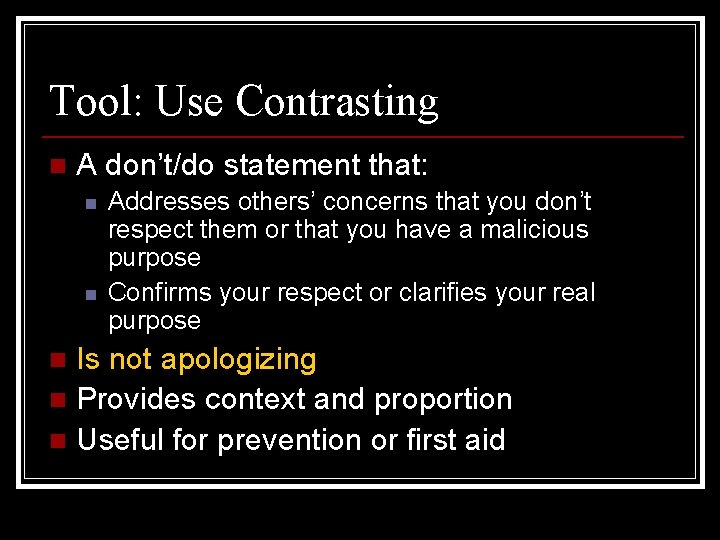
Tool: Use Contrasting n A don’t/do statement that: n n Addresses others’ concerns that you don’t respect them or that you have a malicious purpose Confirms your respect or clarifies your real purpose Is not apologizing n Provides context and proportion n Useful for prevention or first aid n
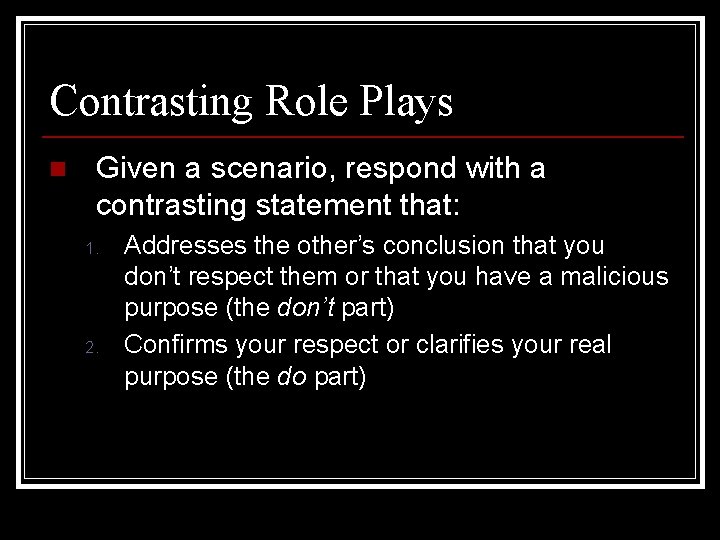
Contrasting Role Plays n Given a scenario, respond with a contrasting statement that: 1. 2. Addresses the other’s conclusion that you don’t respect them or that you have a malicious purpose (the don’t part) Confirms your respect or clarifies your real purpose (the do part)
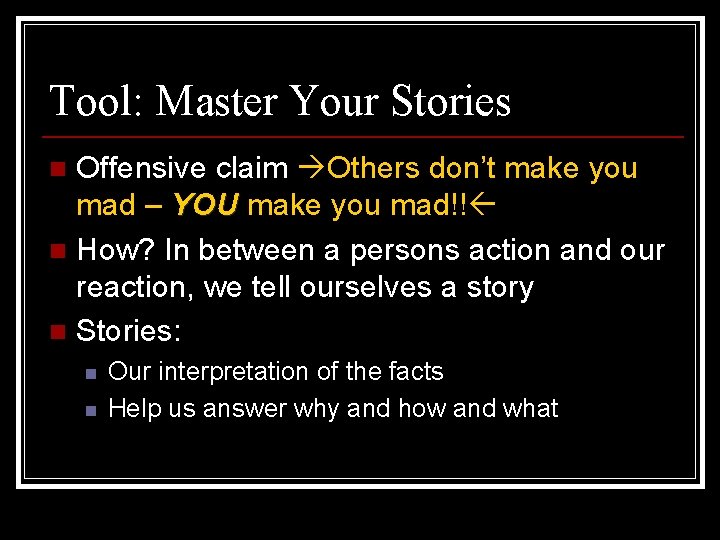
Tool: Master Your Stories Offensive claim Others don’t make you mad – YOU make you mad!! n How? In between a persons action and our reaction, we tell ourselves a story n Stories: n n n Our interpretation of the facts Help us answer why and how and what
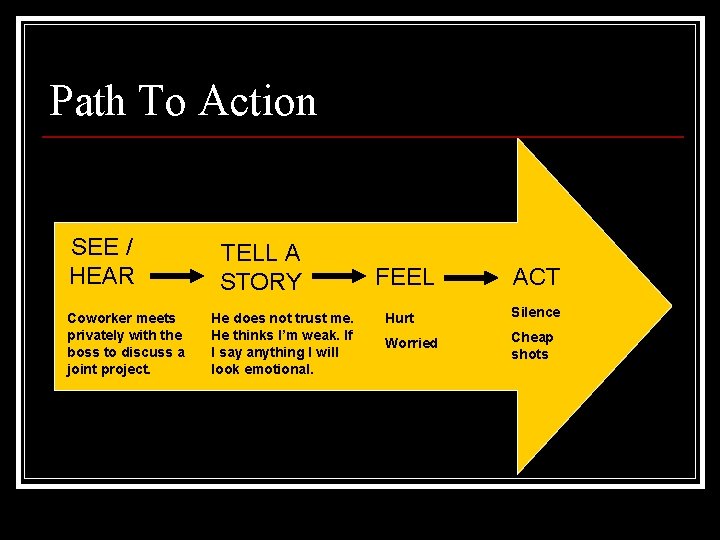
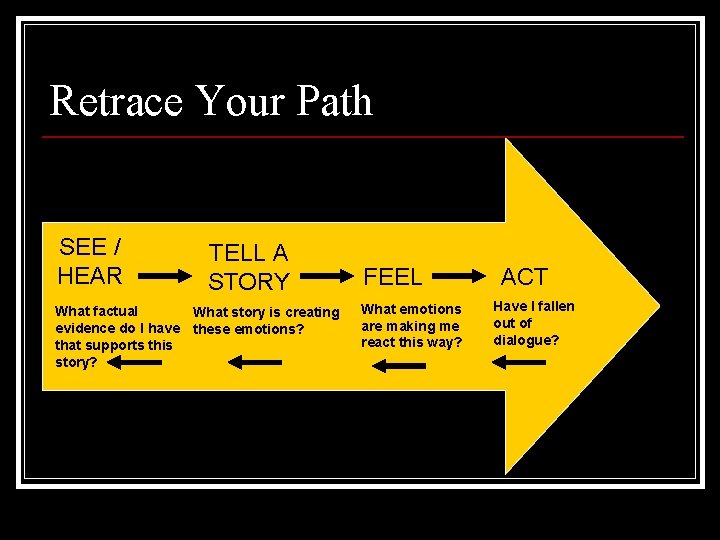
Path To Action SEE / HEAR Coworker meets privately with the boss to discuss a joint project. TELL A STORY He does not trust me. He thinks I’m weak. If I say anything I will look emotional. FEEL ACT Hurt Silence Worried Cheap shots
Retrace Your Path SEE / HEAR TELL A STORY What factual What story is creating evidence do I have these emotions? that supports this story? FEEL What emotions are making me react this way? ACT Have I fallen out of dialogue?
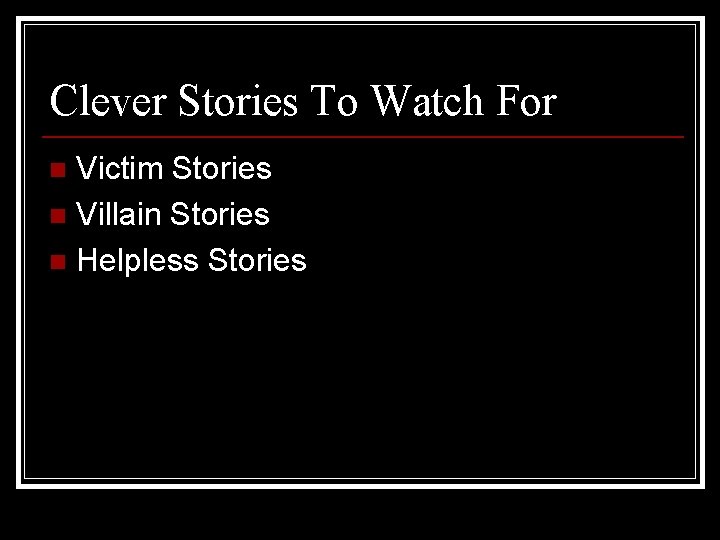
Clever Stories To Watch For Victim Stories n Villain Stories n Helpless Stories n
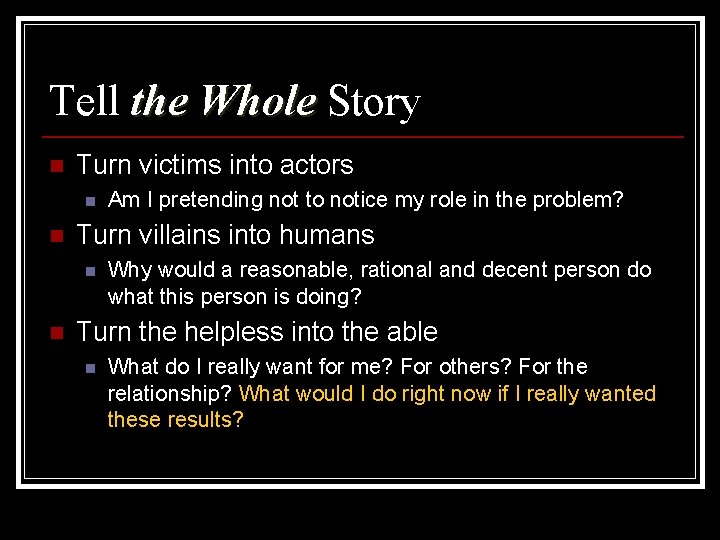
Tell the Whole Story n Turn victims into actors n n Turn villains into humans n n Am I pretending not to notice my role in the problem? Why would a reasonable, rational and decent person do what this person is doing? Turn the helpless into the able n What do I really want for me? For others? For the relationship? What would I do right now if I really wanted these results?
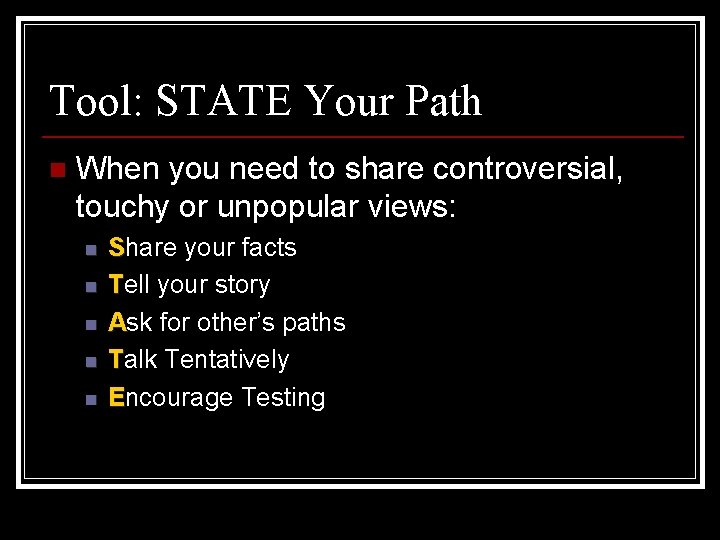
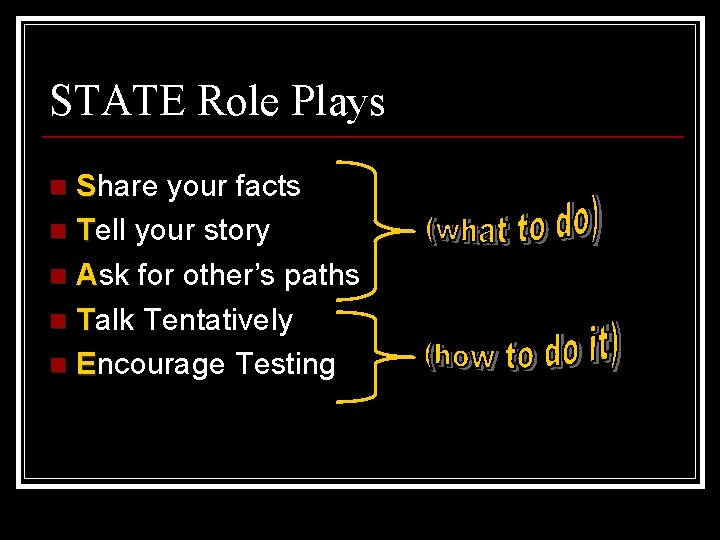
Tool: STATE Your Path n When you need to share controversial, touchy or unpopular views: n n n Share your facts Tell your story Ask for other’s paths Talk Tentatively Encourage Testing
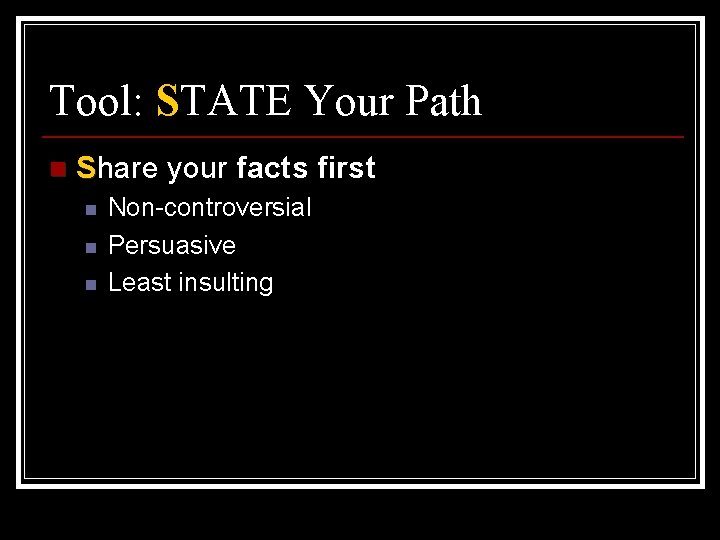
Tool: STATE Your Path n Share your facts first n n n Non-controversial Persuasive Least insulting
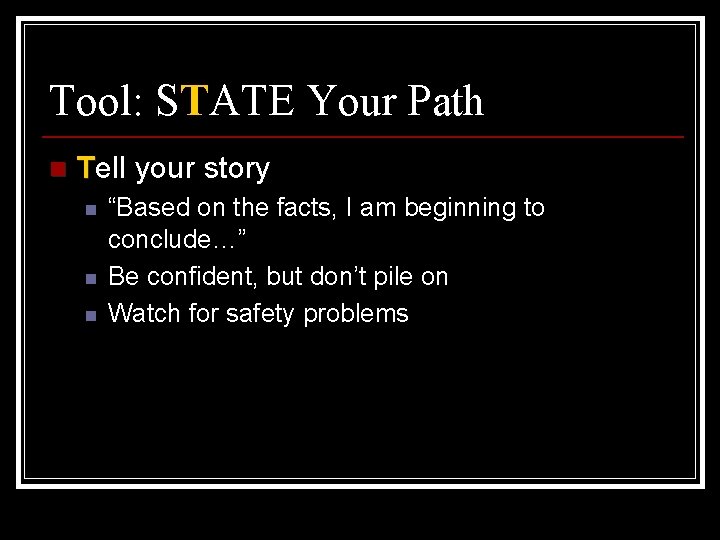
Tool: STATE Your Path n Tell your story n n n “Based on the facts, I am beginning to conclude…” Be confident, but don’t pile on Watch for safety problems
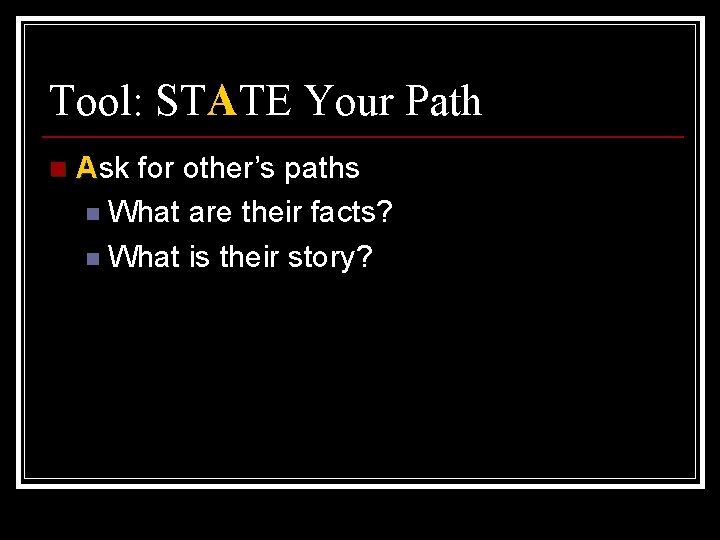
Tool: STATE Your Path n Ask for other’s paths n What are their facts? n What is their story?
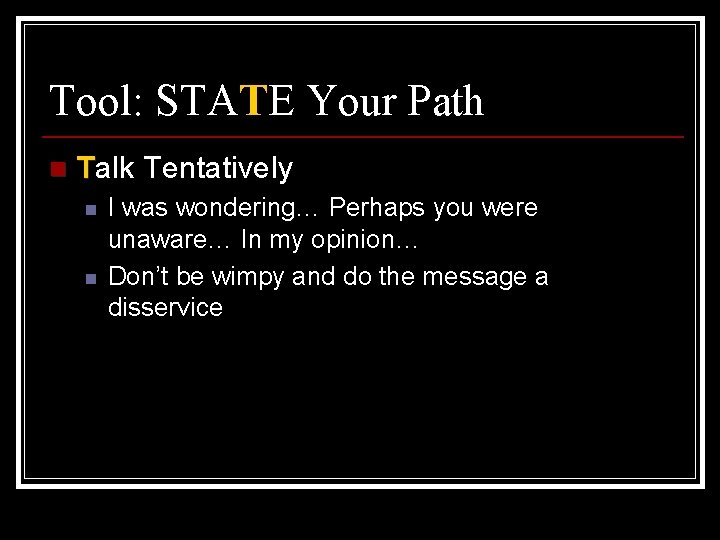
Tool: STATE Your Path n Talk Tentatively n n I was wondering… Perhaps you were unaware… In my opinion… Don’t be wimpy and do the message a disservice
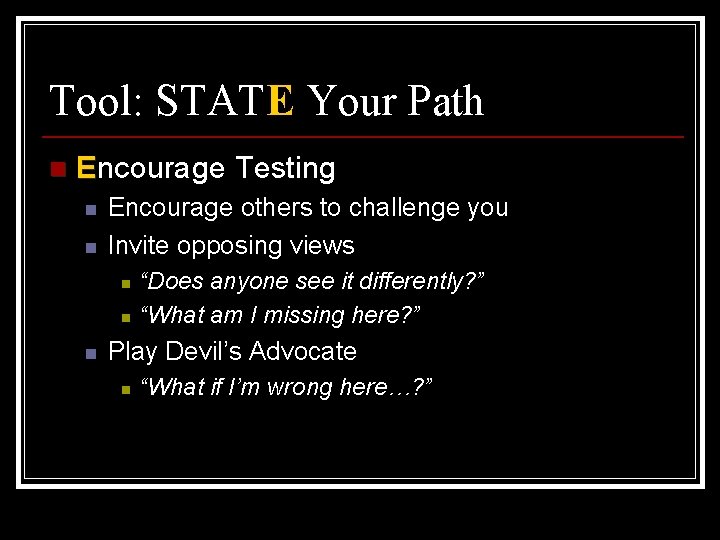
Tool: STATE Your Path n Encourage Testing n n Encourage others to challenge you Invite opposing views n n n “Does anyone see it differently? ” “What am I missing here? ” Play Devil’s Advocate n “What if I’m wrong here…? ”
STATE Role Plays Share your facts n Tell your story n Ask for other’s paths n Talk Tentatively n Encourage Testing n
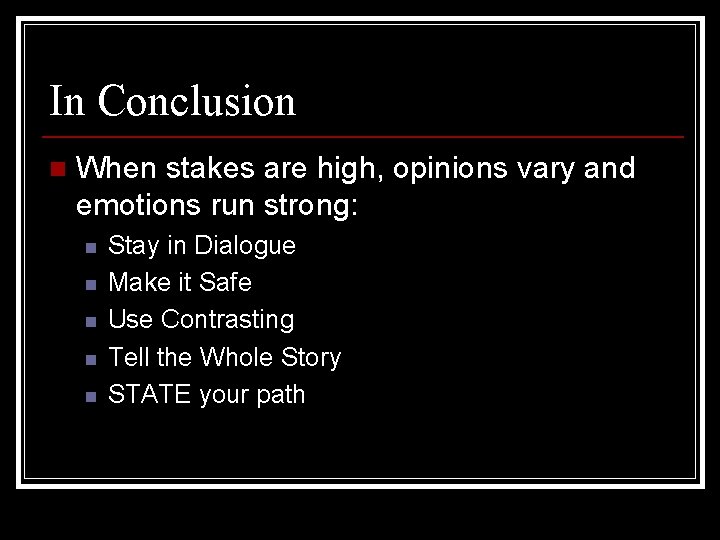
In Conclusion n When stakes are high, opinions vary and emotions run strong: n n n Stay in Dialogue Make it Safe Use Contrasting Tell the Whole Story STATE your path