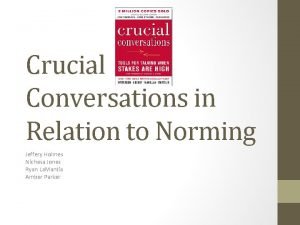
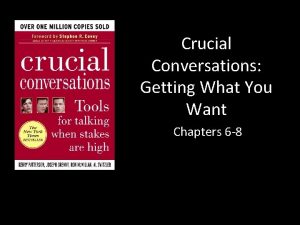
CRUCIAL CONVERSATIONS CONFLICT RESOLUTION TIPS FOR TALKING WHEN
- Slides: 26
CRUCIAL CONVERSATIONS & CONFLICT RESOLUTION: TIPS FOR TALKING WHEN THE STAKES ARE HIGH GVSU PACES Program
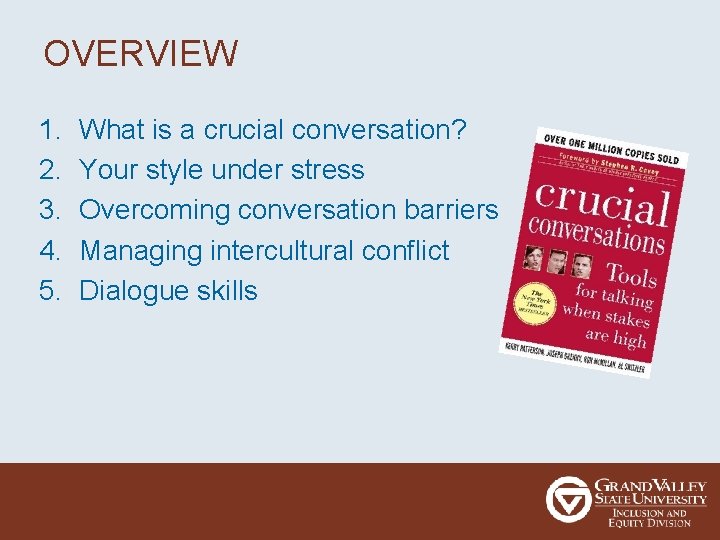
OVERVIEW 1. 2. 3. 4. 5. What is a crucial conversation? Your style under stress Overcoming conversation barriers Managing intercultural conflict Dialogue skills
CRUCIAL CONVERSATIONS Patterson, Grenny, Mc. Millan and Switzler(2002) ØWhat is it? ØThree characteristics Ø Difference of opinion Ø The stakes are HIGH Ø Emotions are strong ØCasual conversations can become CRUCIAL Ø When emotions intensify Ø Everyday workplace conversations can become crucial Ø Personnel reviews can become crucial conversations
CRUCIAL CONVERSATIONS ØEnding a relationship ØAsking a friend to repay a loan ØResolving child custody issues with an ex-spouse/partner ØAsking a roommate to move out ØAsking in-laws or parents to quit interfering ØGiving your boss feedback about their behavior ØCritiquing a colleague’s work (Patterson, et al. 2002, p. 8)
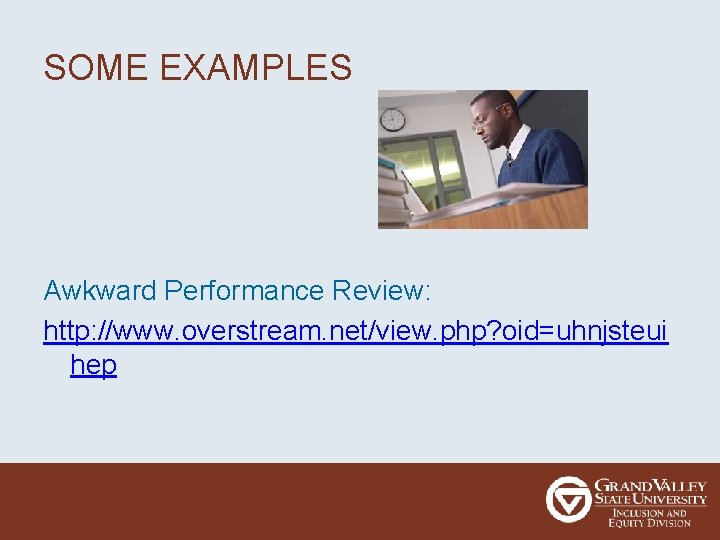
SOME EXAMPLES Awkward Performance Review: http: //www. overstream. net/view. php? oid=uhnjsteui hep
CRUCIAL CONVERSATIONS “Your Style Under Stress”
THE CONTEXT ØThe human brain under stress – Ø“Fight or Flight” ØPersonal Tendency Ø“Silence or Violence” ØExamples ØIs our style context dependent?
OVERCOMING CONVERSATION BARRIERS What happens to relationships over time if we avoid resolving our conflicts – avoid having crucial conversations? DO EMOTIONS ACCUMULATE? DOES STRESS ACCUMULATE?
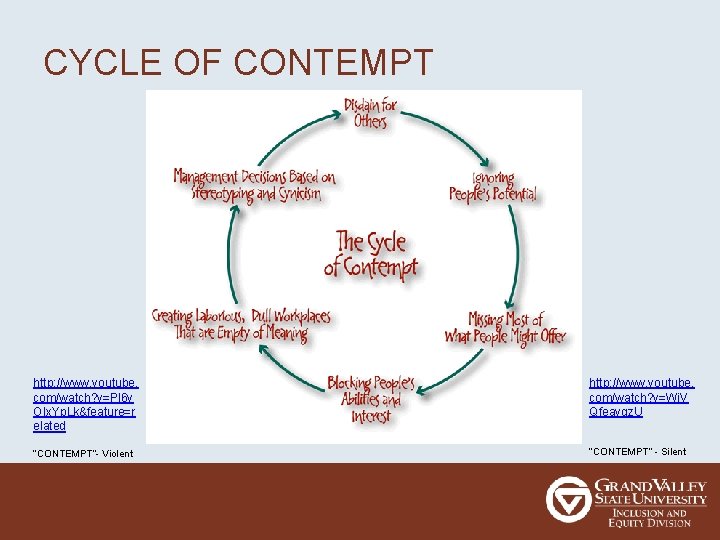
CYCLE OF CONTEMPT http: //www. youtube. com/watch? v=Pl 6 y OIx. Yp. Lk&feature=r elated http: //www. youtube. com/watch? v=Wj. V Qfeavgz. U “CONTEMPT”- Violent “CONTEMPT” - Silent
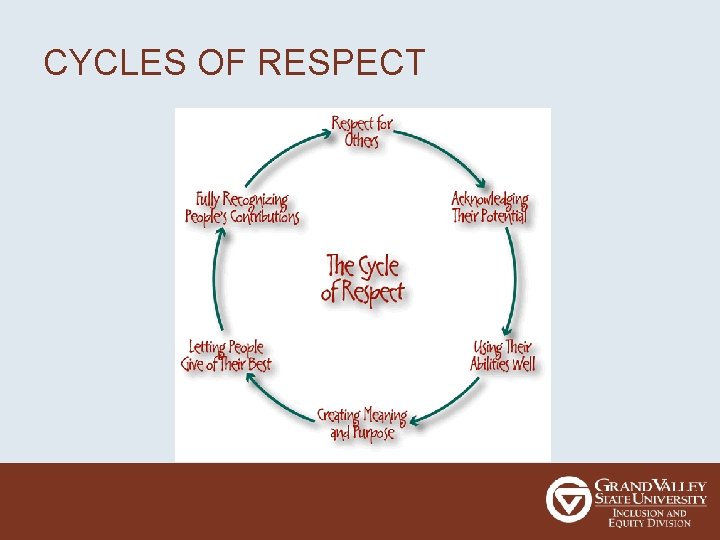
CYCLES OF RESPECT
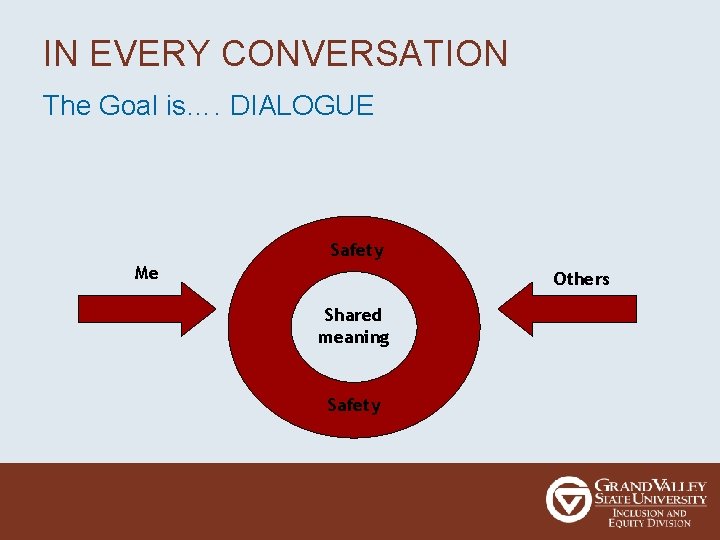
IN EVERY CONVERSATION The Goal is…. DIALOGUE Safety Me Others Shared meaning Safety
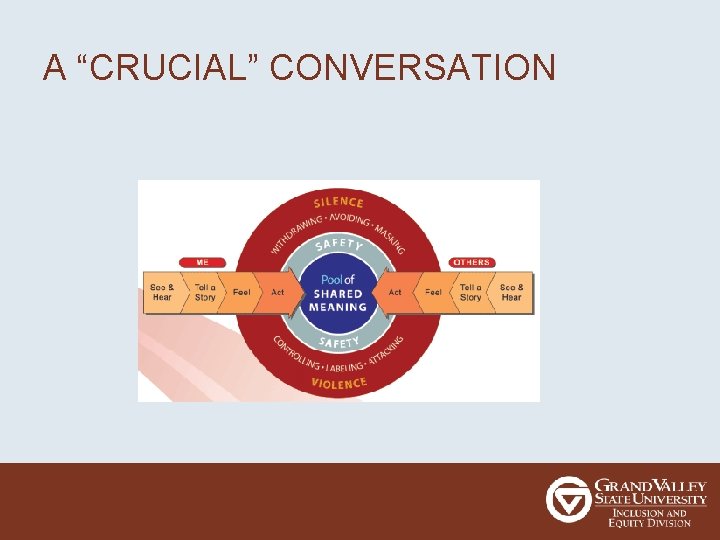
A “CRUCIAL” CONVERSATION
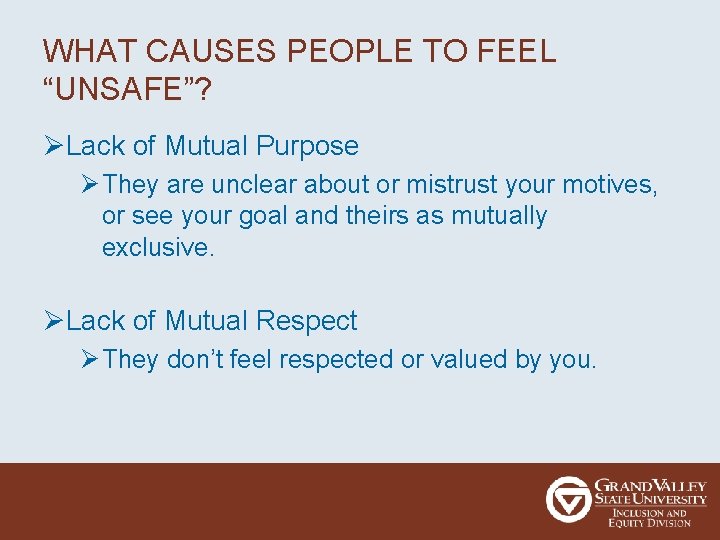
WHAT CAUSES PEOPLE TO FEEL “UNSAFE”? ØLack of Mutual Purpose Ø They are unclear about or mistrust your motives, or see your goal and theirs as mutually exclusive. ØLack of Mutual Respect Ø They don’t feel respected or valued by you.
INTERCULTURAL CONFLICT Ø What are the sources of intercultural conflict? Ø What assumptions, biases and goals drive intercultural conflict? Ø How can you manage intercultural conflict? Ø Some application…
INTERCULTURAL CONFLICT Ø Okay…but what about culture? ØWhat if the differences are cultural? ØWhat is a “dominant culture”? Ø Cultural Values Exercise
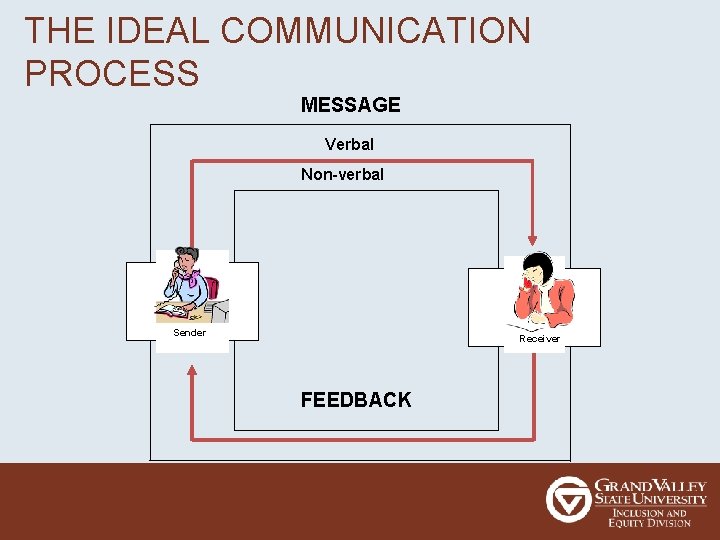
THE IDEAL COMMUNICATION PROCESS MESSAGE Verbal Non-verbal Sender Receiver FEEDBACK
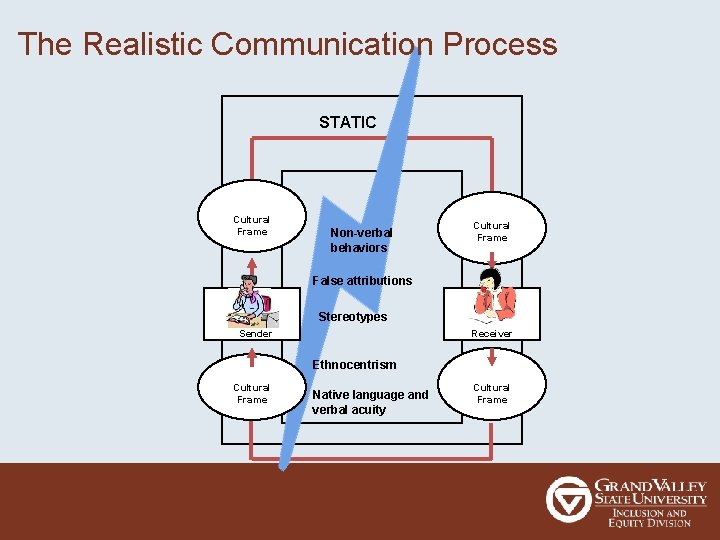
The Realistic Communication Process STATIC Cultural Frame Non-verbal behaviors Cultural Frame False attributions Stereotypes Sender Receiver Ethnocentrism Cultural Frame Native language and verbal acuity Cultural Frame
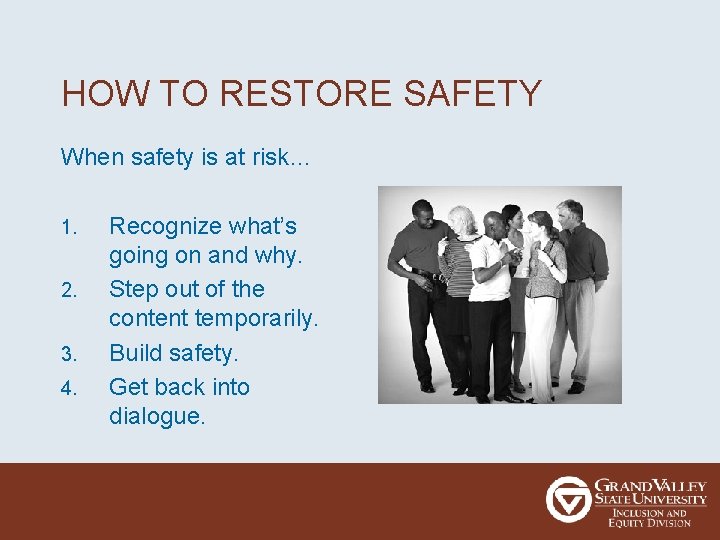
HOW TO RESTORE SAFETY When safety is at risk… 1. 2. 3. 4. Recognize what’s going on and why. Step out of the content temporarily. Build safety. Get back into dialogue.
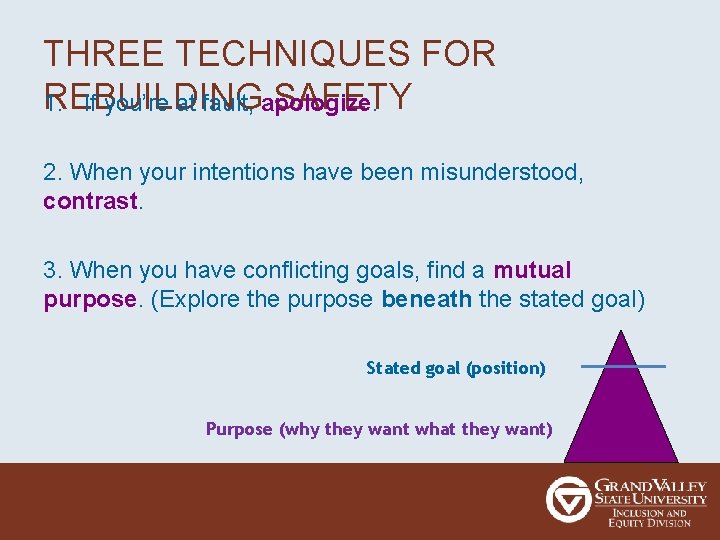
THREE TECHNIQUES FOR REBUILDING SAFETY 1. If you’re at fault, apologize. 2. When your intentions have been misunderstood, contrast. 3. When you have conflicting goals, find a mutual purpose. (Explore the purpose beneath the stated goal) Stated goal (position) Purpose (why they want what they want)
WHEN IN DIALOGUE…. ØBe specific about what happened. Avoid watering down the facts. ØBe honest and respectful. ØDiscuss what’s recent and relevant. ØWatch for signals that the other person feels unsafe, and take appropriate action. ØEmploy active listening skills.
ACTIVE LISTENING SKILLS ØUse positive body language. ØMinimize interruptions. ØAsk probing questions. ØParaphrase to check understanding. ØRespond to both content and emotion.
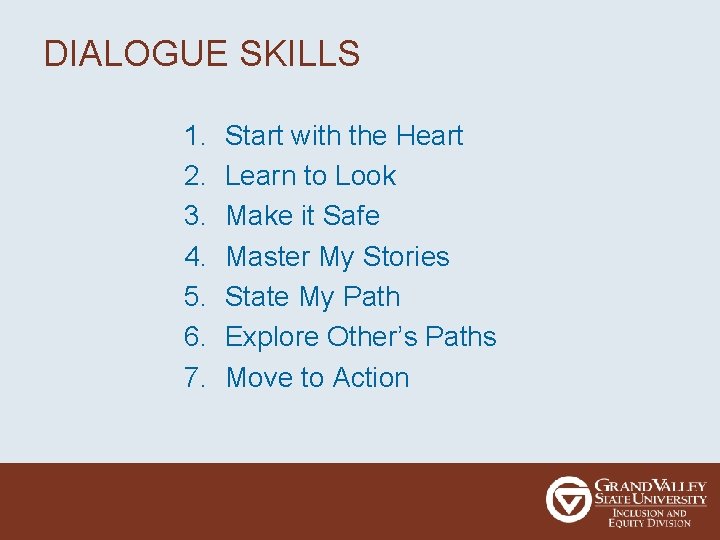
DIALOGUE SKILLS 1. 2. 3. 4. 5. 6. 7. Start with the Heart Learn to Look Make it Safe Master My Stories State My Path Explore Other’s Paths Move to Action
DIALOGUE SKILLS Ø Move to Action Ø Build consensus Ø Recognize when the conversation is recycling Ø Shift the conversation to “what next” or “how can we? ”
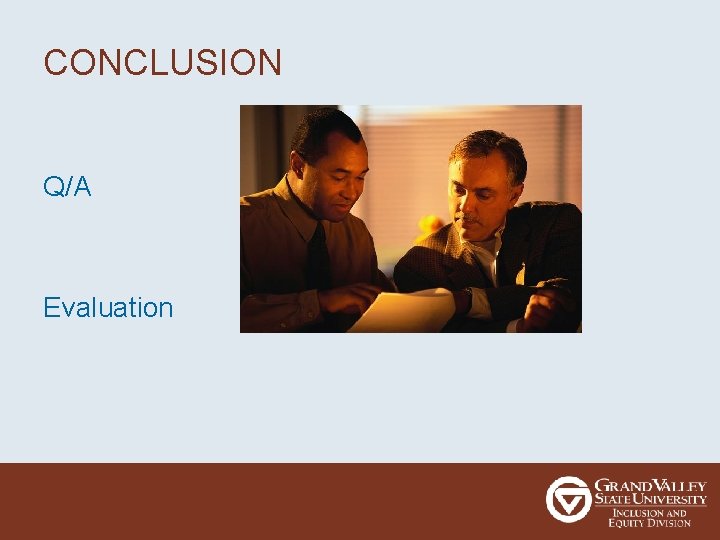
CONCLUSION Q/A Evaluation
REFERENCES De Lucia, R. J. (2008). Managing intercultural conflict. University of Pennsylvania. Landis, D. Bennett, J. M. , & Bennett, M. J. (2004). The handbook of intercultural training (3 rd Ed. ) Thousand Oaks, CA: Sage Publications. Landis, D. & Bhaghat, R. S. (1996). The handbook of intercultural training (2 nd Ed. ) Thousand Oaks, CA: Sage Publications. Patterson, K. , Grenny, J. , Mc. Millan, R. & Switler, A. (2002). Crucial conversations: Tips for talking when stakes are high. New York: Mc. Graw-Hill
THANK YOU! FOR MORE INFORMATION CONTACT Sean Huddleston Grand Valley State University Intercultural Training Director 222 Student Services Building Allendale, MI 49401 (616) 331 -3296 huddless@gvsu. edu OR VISIT www. gvsu. edu/inclusion