
CONFLICT RESOLUTION By Saadia Maqbool Lubna Haque Aims
CONFLICT RESOLUTION By Saadia Maqbool & Lubna Haque
Aims & Objetives • To provide knowledge of anger, aggression and violence • How to attempt to de-escalate the situation and deal with it appropriately • How verbal and non verbal communication can be used to prevent escalation • Recognize one’s own safety and remove from potentially volatile situation.
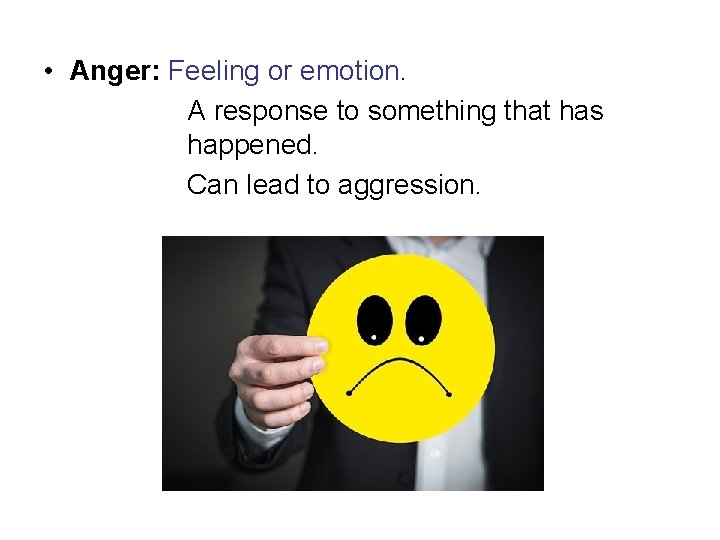
• Anger: Feeling or emotion. A response to something that has happened. Can lead to aggression.
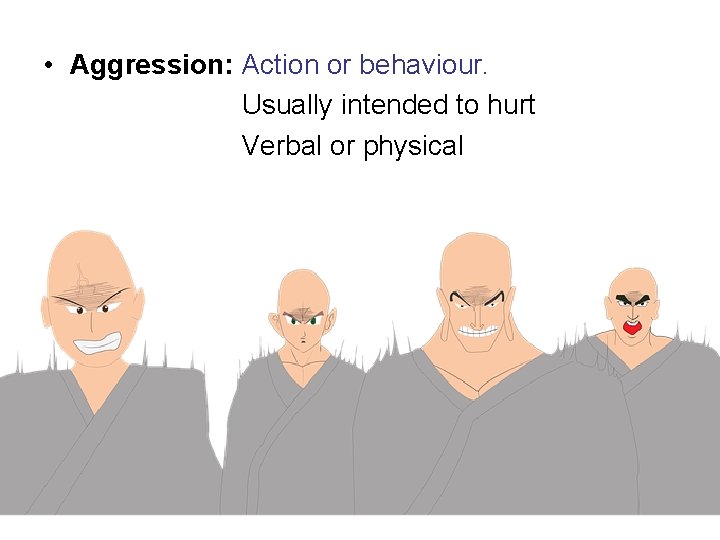
• Aggression: Action or behaviour. Usually intended to hurt Verbal or physical
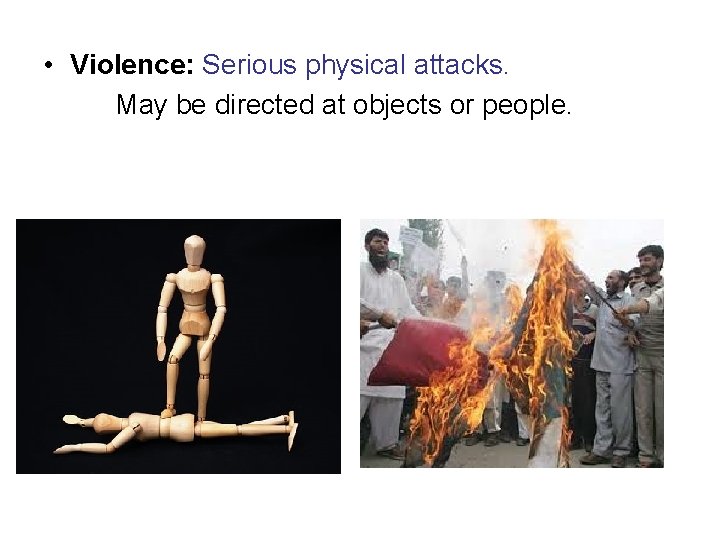
• Violence: Serious physical attacks. May be directed at objects or people.
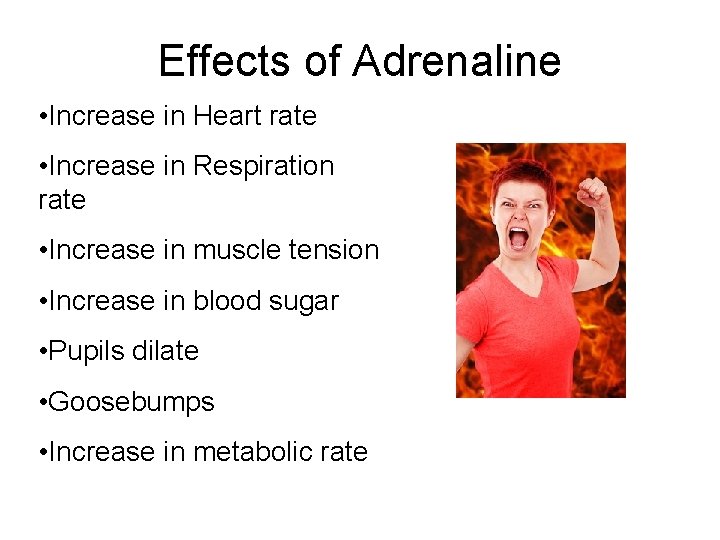
Effects of Adrenaline • Increase in Heart rate • Increase in Respiration rate • Increase in muscle tension • Increase in blood sugar • Pupils dilate • Goosebumps • Increase in metabolic rate
Adrenaline • Fight: body defends self by standing and fighting • Flight: body responding to a burst of energy • Fright: confused, unable to respond immediately.
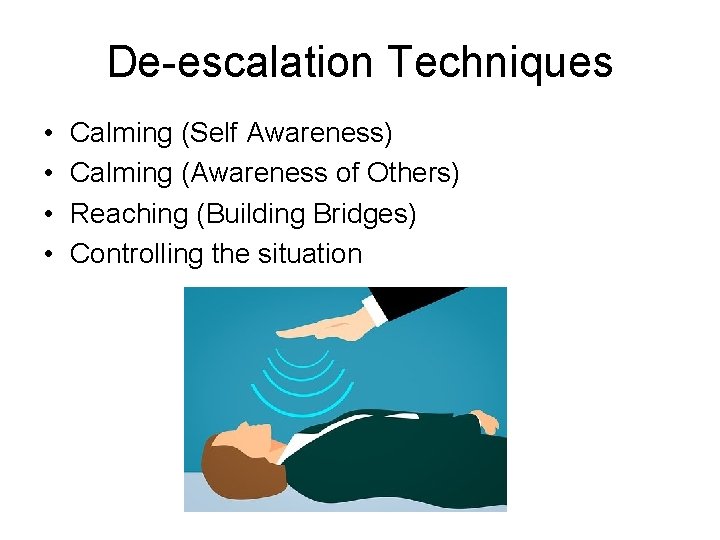
De-escalation Techniques • • Calming (Self Awareness) Calming (Awareness of Others) Reaching (Building Bridges) Controlling the situation
Calming (Self Awareness) • Voice: Steady, calm and clear Appropriate Language • Eyes: Regular eye contact • Position/Posture Unconfronting Non-threatening, relaxed • Face: Show attentiveness, nods to signal interest.
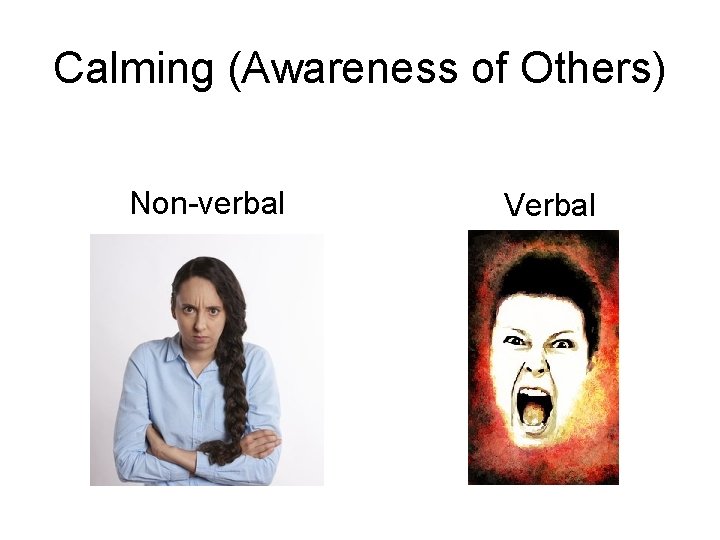
Calming (Awareness of Others) Non-verbal Verbal
How we communicate. • Body language 55% of meaning is in facial expression and body language. • Tone 38% of meaning is in the way the words are said. • Words 7% of meaning is in the words that are spoken. (source: Mehrabian A. (1971) Silent messages)
Calming (awareness of others) 1. Make sure they know you are listening • Listen for feelings, concerns, intentions. 2. Resist arguments 3. Be Yourself 4. Watch for: • Relaxation of facial muscles • Steadier breathing • Change in tone of voice/posture
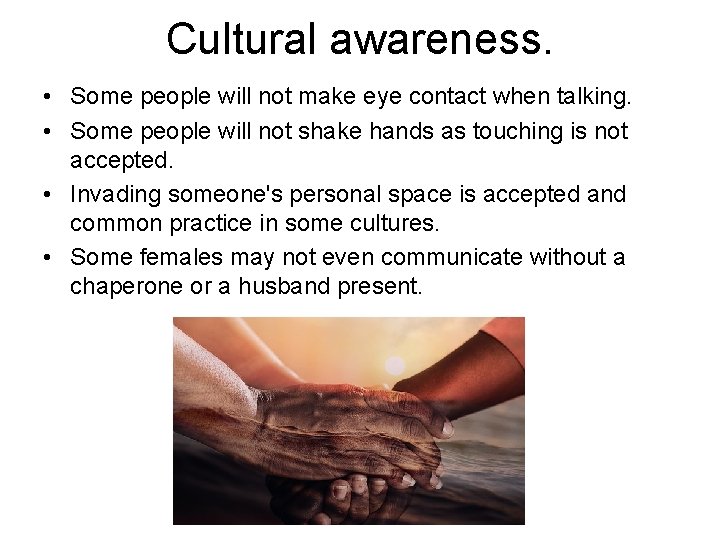
Cultural awareness. • Some people will not make eye contact when talking. • Some people will not shake hands as touching is not accepted. • Invading someone's personal space is accepted and common practice in some cultures. • Some females may not even communicate without a chaperone or a husband present.
Building Bridges • Make a gift of: – Sit down – A drink • Don’t patronise • Ask questions you need to ask • Ensure they know the reason why • Let them ask you questions-only answer if you are sure of the answers. • Use simple, straightforward language
Controlling the Situations • • Be realistic No false promises What is achievable and what is not Be Honest Take each issue separately Offer alternatives Do not blame Do not hurry
When communication fails! • When dealing with other people, we must be continually alert to what is going on around us. A situation can change very rapidly. A simple strategy for coping with conflict situations includes the following actions: Be alert; constantly observe what is Be aware going on around you. Assess Plan Acknowledge that situations can change rapidly and will call for regular assessment. Prepare for unforeseen circumstances.
Warning and danger signs. When a person is getting angry and they feel they need to exert their presence verbally, they will present with WARNING SIGNS If you can recognise these, you may be able to prevent the onset of DANGER SIGNS These are the bodies natural reaction in preparation for physical violence.
Warning Signs n. Prolonged n. Facial n. Head Colour Darkens Back n. Standing n. Large eye contact Tall Movements n. Breathing n. Ground accelerates kicking
Danger Signs n. Fist clenching n. Facial colour pales n. Head drops n. Body lowers n. Lips tighten over teeth n. Hands come above waist
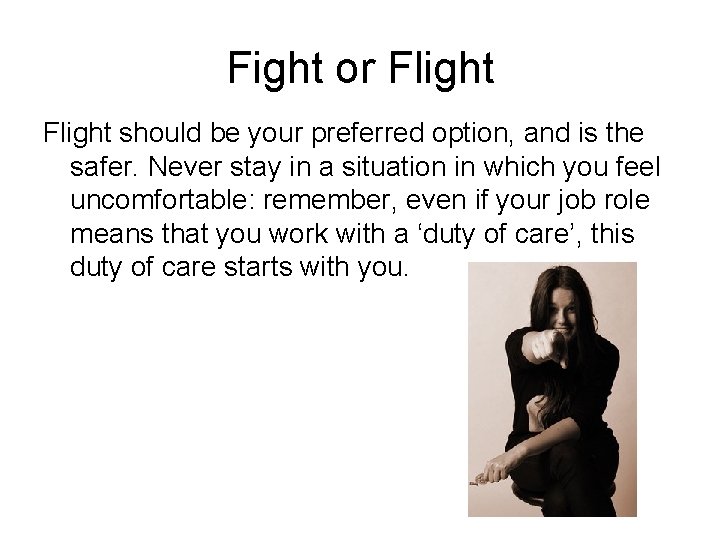
Fight or Flight should be your preferred option, and is the safer. Never stay in a situation in which you feel uncomfortable: remember, even if your job role means that you work with a ‘duty of care’, this duty of care starts with you.
If fight is your only option: • Be aware of your limitations and legal requirements. • Attempting/achieving three aims would fulfil the requirements of law: Temporise Disengage Some physical withdrawal
PLAN P = Proportionate – am I using the right level of force? (Don’t use a sledgehammer to crack a nut) L = Legal – am I covered by law to do what I’m doing? A =Accountable – am I accountable for my actions? Can I justify what I did, how I did it and why? N =Necessary – was the action taken necessary?
Law • In Common law it is the person’s right to defend themselves from attacks and to act as a defence to others and prevent a crime. • Section 3, Criminal Law Act 1967 A person may use force as is REASONABLE in the circumstances in the prevention of crime, or in effecting or assisting in the lawful arrest of offenders or suspected offenders or persons unlawfully at large’.
Thanks!!!
- Slides: 24