
Crucial Conversations Getting What You Want Chapters 6
- Slides: 13
Crucial Conversations: Getting What You Want Chapters 6 -8
Getting a grip “You make you mad. ” Once you’ve created an emotion, you can either act on it or be acted on by it. Your call! So, how to get a grip: • Is this the only way I can react? • Would everyone react this way? • Are you faking it?
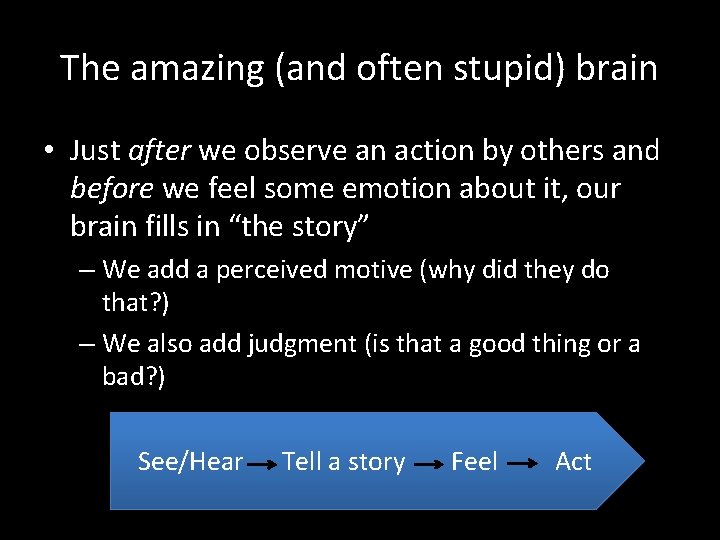
The amazing (and often stupid) brain • Just after we observe an action by others and before we feel some emotion about it, our brain fills in “the story” – We add a perceived motive (why did they do that? ) – We also add judgment (is that a good thing or a bad? ) See/Hear Tell a story Feel Act
“If you want improved results from your crucial conversations, change the stories you tell yourself – even while you’re in the middle of the fray. ” Okay, but how?
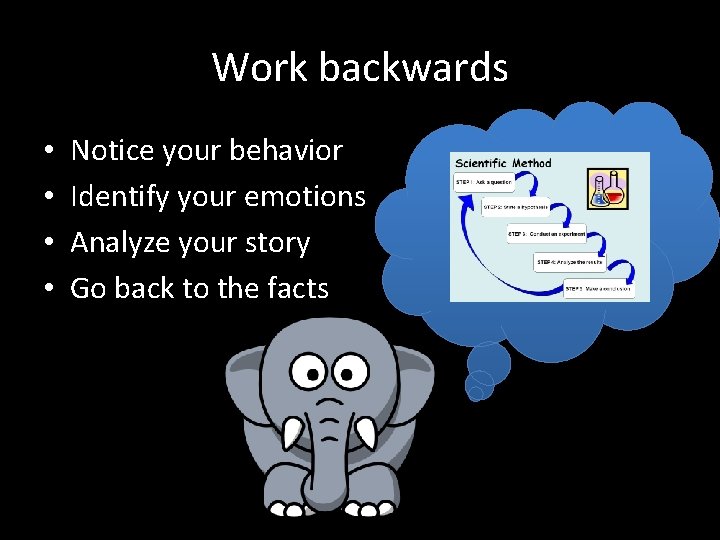
Work backwards • • Notice your behavior Identify your emotions Analyze your story Go back to the facts
Work backwards • Notice your behavior – Admit it to yourself! • Identify your emotions – Remember, emotions are complicated • Analyze your story – open yourself up to accept the possibility of other stories • Go back to the facts – Separate story from fact – identify pieces that just “feel” like facts
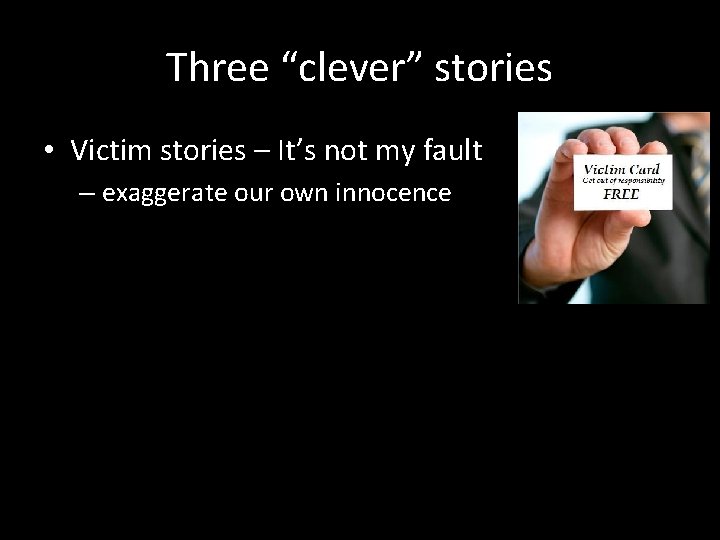
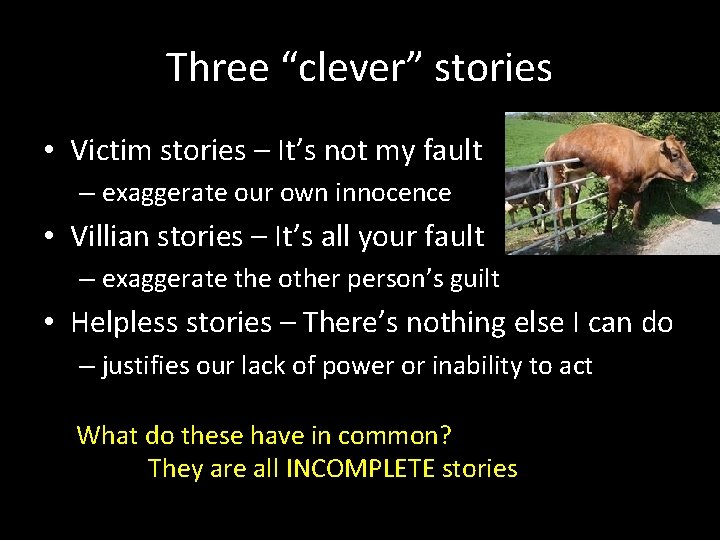
Three “clever” stories • Victim stories – It’s not my fault – exaggerate our own innocence
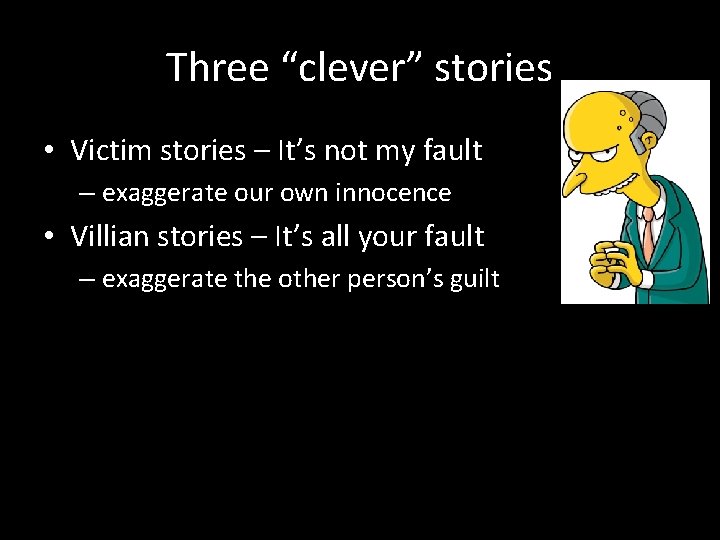
Three “clever” stories • Victim stories – It’s not my fault – exaggerate our own innocence • Villian stories – It’s all your fault – exaggerate the other person’s guilt
Three “clever” stories • Victim stories – It’s not my fault – exaggerate our own innocence • Villian stories – It’s all your fault – exaggerate the other person’s guilt • Helpless stories – There’s nothing else I can do – justifies our lack of power or inability to act What do these have in common? They are all INCOMPLETE stories
Tell the rest of the story • What is my role in the problem? • Why would a reasonable, sane person do this? • What result do I really want? • What should I do to get these results?
The recipe • Equal parts confidence, humility, and skill • Remember: STATE – Share your facts – Tell your story – Ask for others’ paths – Talk tentatively – Encourage testing
Breaking the violence/silence cycle • Be sincere • Stay curious • Be patient – emotions take longer to work through than thoughts
Skills for listening (not reacting) • Ask to get things rolling – an invitation to talk • Mirror to confirm feelings – don’t “take them for their word” • Paraphrase to acknowledge the story • Prime when you’re getting nowhere – toss out your best guess on the reason behind their actions