
Crucial Conversations in Relation to Norming Jeffery Holmes
- Slides: 19
Crucial Conversations in Relation to Norming Jeffery Holmes Nichesa Jones Ryan La. Mantia Amber Parker
Brief overview • Crucial Conversations – Tools for talking when the stakes are high by Kerry Patterson, Joseph Grenny, Ron Mc. Millan, Al Switzler. • Our book relates to norming in that it focuses on ending group conflict and progressing so the group can move to performing. The book focuses on two main methods of doing so: • Mental steps to succeed a crucial conversation • Verbal steps to succeed a crucial conversation
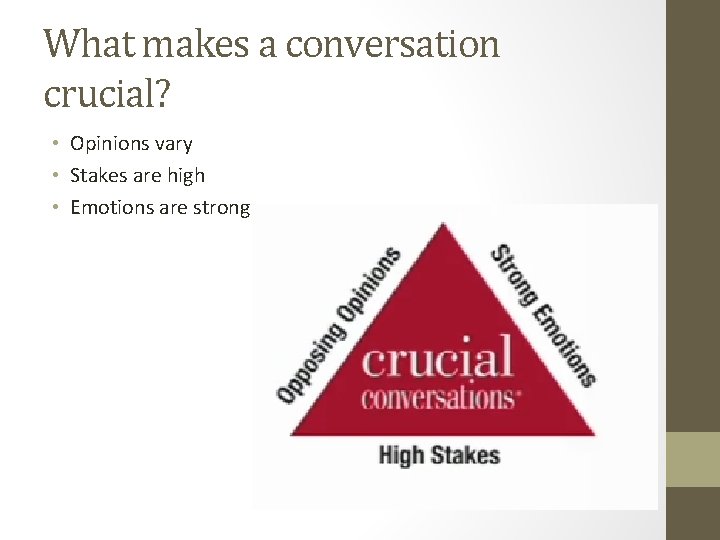
What makes a conversation crucial? • Opinions vary • Stakes are high • Emotions are strong
Conflict Video • http: //www. youtube. com/watch? v=Kde 9 fl. V 3 Ol. E
Possible responses to crucial conversations • • Avoidance Face them poorly Handle them well Body natural response are negative (adrenalin, instincts and natural programming. )
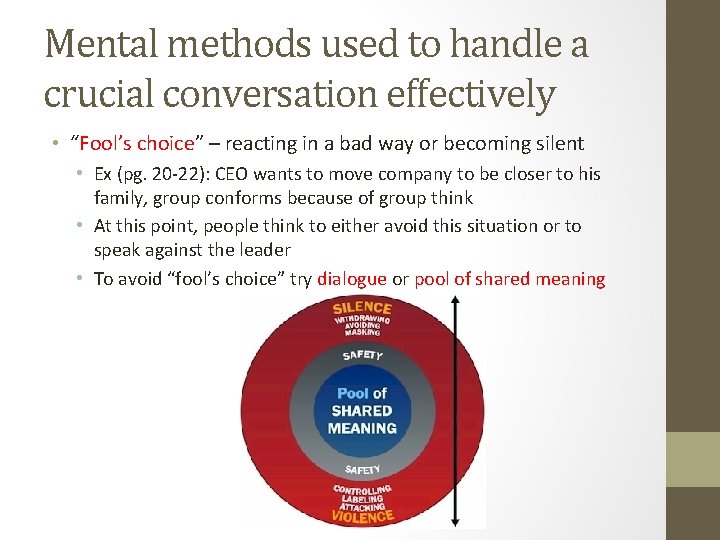
Mental methods used to handle a crucial conversation effectively • “Fool’s choice” – reacting in a bad way or becoming silent • Ex (pg. 20 -22): CEO wants to move company to be closer to his family, group conforms because of group think • At this point, people think to either avoid this situation or to speak against the leader • To avoid “fool’s choice” try dialogue or pool of shared meaning
Mental methods used to handle a crucial conversation effectively • “Start with heart” – work on me first, us second • Ex (pg. 34 -35): Sisters fighting about who should use the bathroom first • At this point, motivations change to winning the fight not necessarily getting what they want • To avoid this, think about what you truly want and don’t get sidetracked
Mental methods used to handle a crucial conversation effectively • “Safety” – knowing when a conversation is going to turn into a crucial conversation based on body movements and behavioral changes • Ex (pg. 55): think about a time when you received feedback or criticism and you weren’t defensive? You felt safe in the situation. • At this point, if the person isn’t feeling safe, they have fear in mind
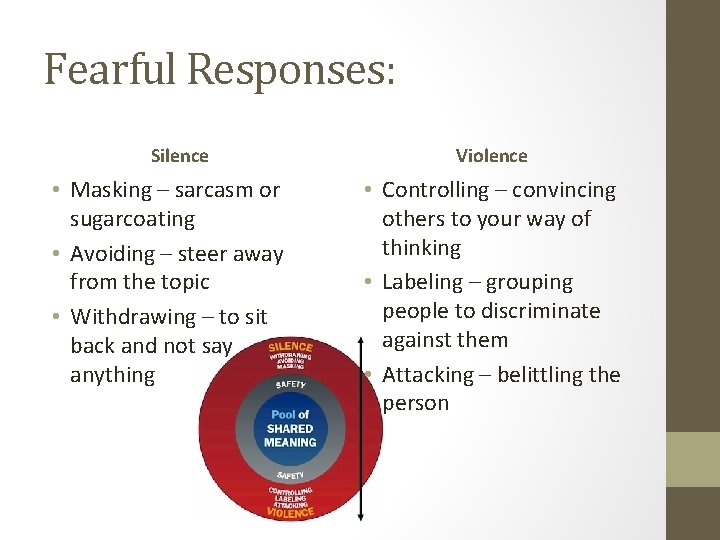
Fearful Responses: Silence • Masking – sarcasm or sugarcoating • Avoiding – steer away from the topic • Withdrawing – to sit back and not say anything Violence • Controlling – convincing others to your way of thinking • Labeling – grouping people to discriminate against them • Attacking – belittling the person
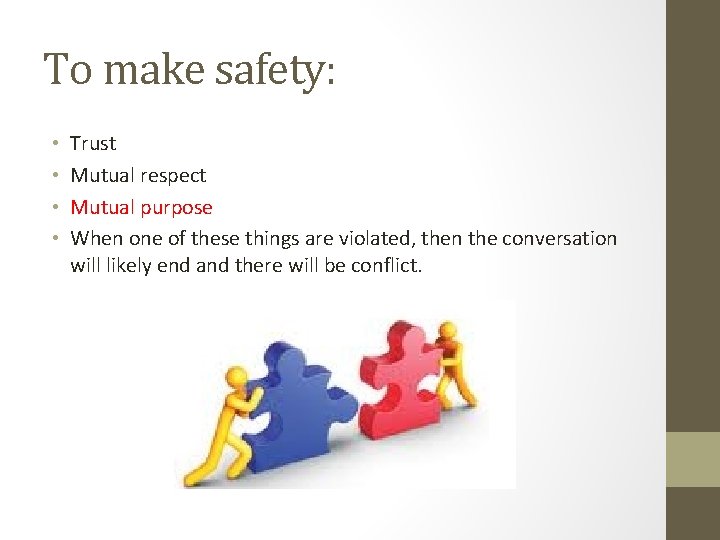
To make safety: • • Trust Mutual respect Mutual purpose When one of these things are violated, then the conversation will likely end and there will be conflict.
Methods to restore safety: • Step out – “take a breather” and find what condition of safety has been broken • Apologize – make a true sincere apology • Contrast – to repair safety by using the don’t/do statement • Don’t want to cause the irritative action • Do want to fix the problem • Create mutual purpose – goal attainment
Mental methods used to handle crucial conversations • “Stories” – the way the individual perceives what is said that leads to feelings being developed. • Ex (pg. 110): A fellow student starts laughing during a presentation and the presenter gets angry and immediately becomes defensive • To avoid this, master your “stories” by Act, Feel, Tell Story, See/Hear • Act- notice how you are acting • Feel- notice what emotions you are experiencing • Tell story- how have you interpreted what was said • See/Hear- Get back to focusing on facts, not the story.
“Stories” • Clever Stories – stories we use to avoid responsibility, or get us off the hook. • We use these to avoid getting punished • Victim Stories – “it’s not my fault” • Villain Stories – “it’s all your fault” • Helpless Stories – “there wasn’t anything I could do” • To avoid using these stories, ask yourself if you are noticing your own role in the problem.
Verbal methods to handle a crucial conversation • “State my path” - say what’s on your mind but don’t say it harshly • • • Share your facts Tell your story Ask for others path Talk tentatively Encourage testing
Verbal methods to handle a crucial conversation • “Maintain Safety” while talking • Use confidence • Humility • Skill
“Work on us” to get others to be active in dialogue. • Encourage others to retrace their path • Inquiry skills: • • Ask Mirror Paraphrase Prime
“Work on us” to constructively disagree • After you’ve received their side of the story • Don’t agree with the situation, but still want their input: • Agree – start with common grounds • Build – further increase common ground • Compare
How to wrap up a crucial conversation • “Move to Action” – decide how to decide on situations • Group Leader – ultimately has final decision • Jointly Decide – helps make final decision (in case of no leader) • • Command – Group leader / Manager Consult – Professional outside of group Vote Consensus
Put decisions into action • Now that the decision is made the group must allocate their resources into completing the decision. • • Who? Does what? By when? How will you follow up?