Characteristics of Crucial Conversations p 1 Differences of

- Slides: 19
Characteristics of Crucial Conversations p 1 Differences of opinion High Stakes Strong Emotions
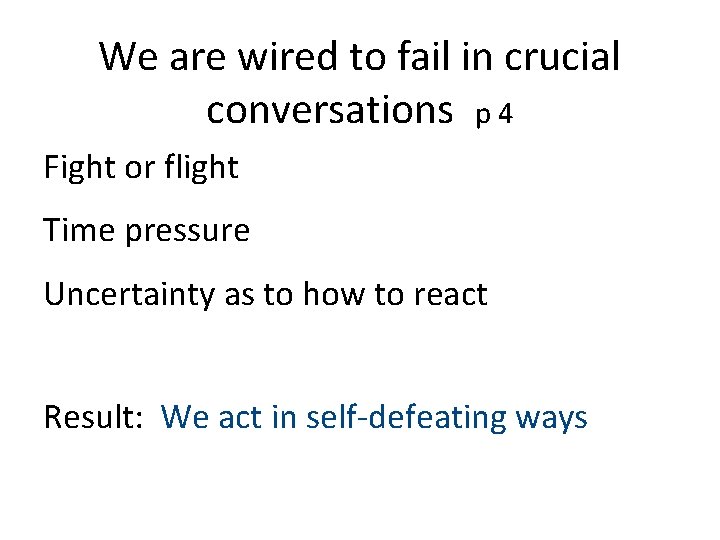
We are wired to fail in crucial conversations p 4 Fight or flight Time pressure Uncertainty as to how to react Result: We act in self-defeating ways
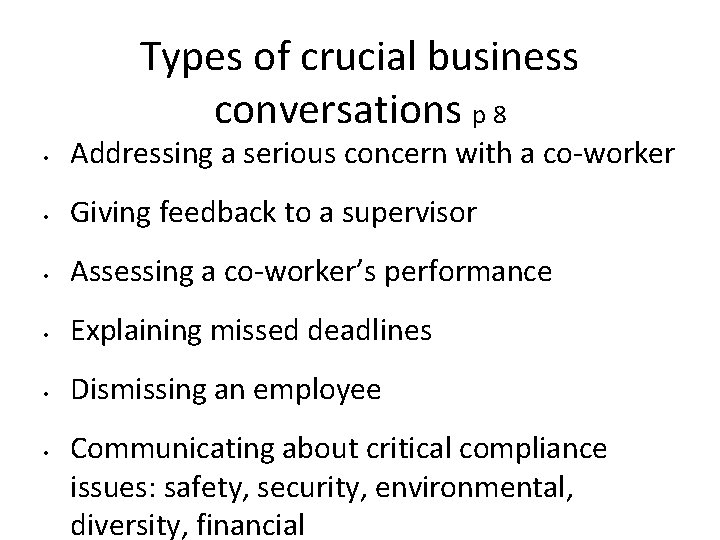
Types of crucial business conversations p 8 • Addressing a serious concern with a co-worker • Giving feedback to a supervisor • Assessing a co-worker’s performance • Explaining missed deadlines • Dismissing an employee • Communicating about critical compliance issues: safety, security, environmental, diversity, financial
Benefits of mastering crucial conversations pps. 11 -18 Improve career Strengthen relationships Improve health
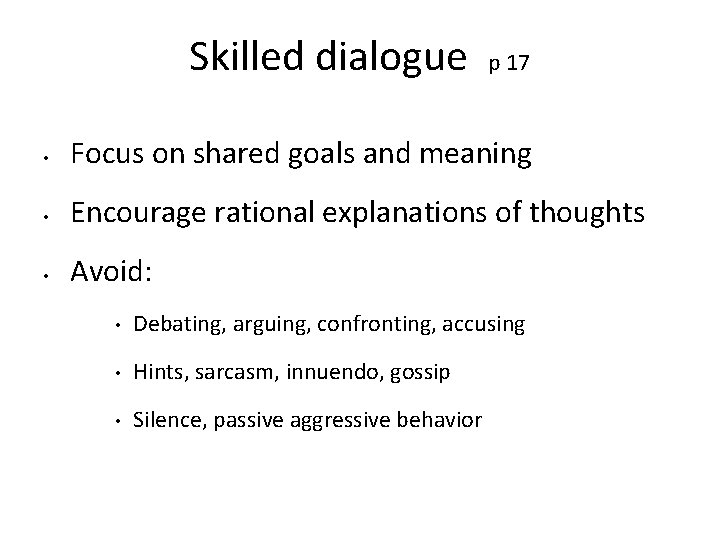
Skilled dialogue p 17 • Focus on shared goals and meaning • Encourage rational explanations of thoughts • Avoid: • Debating, arguing, confronting, accusing • Hints, sarcasm, innuendo, gossip • Silence, passive aggressive behavior
Filling the pool of shared meaning, p. 21 Catch problems before they get out of hand “Learn to create conditions in yourself and others that make dialogue the path of least resistance” Skills: talking, listening, & acting together
Becoming effective at dialogue p 27 • • Be humble. Work on self first Realize your communication often predicts/creates the subsequent behavior of others
Establish a mental model for success criteria p 32 • • Know what you want for – self, – others, – & your relationship Define criteria for communication success – Outcome: specific, measurable, challenging – Acceptable to all parties
Crucial Decisions, pp 32 ff Clarify what you do want Clarify what you do not want Present your brain with a more complex question: E. g. , How can I express my real concerns without offending the other person?
Becoming effective at dialogue p 49 • Keep it safe • Know what you don’t want – • Attack or withdraw Consider a plan for how you can achieve what you want while minimizing interpersonal distractions from goals
Adopting a dual perspective p 51 • • Importance of holding a dual perspective, keeping own objectives in mind while looking at situation through the eyes of the other. Look for physical and emotional signs of a crucial conversation
Sounds of silence, p 52 • Masking: Sarcasm or couching • Avoiding • Withdrawing
Violence, p. 53 • Controlling • Labeling • Attacking
Build safety p 65 Focus on mutual purpose: good entry position for dialogue mutual respect Approaches apologize, when appropriate contrast to confirm understanding and respect brainstorm for effective strategies
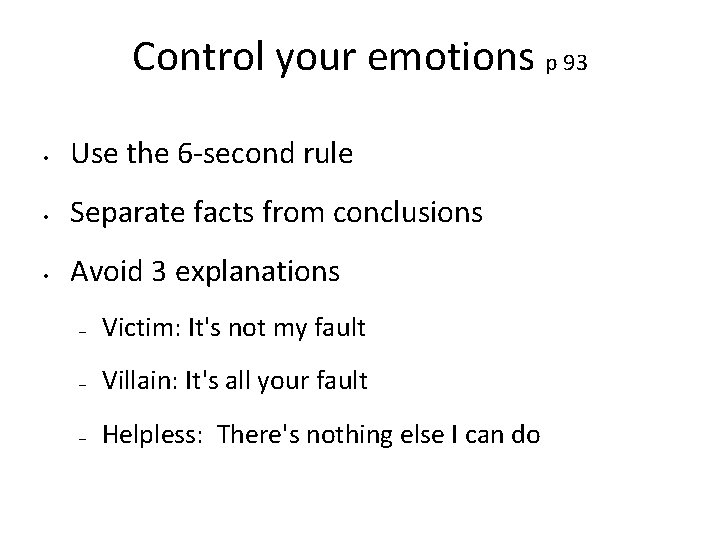
Control your emotions p 93 • Use the 6 -second rule • Separate facts from conclusions • Avoid 3 explanations – Victim: It's not my fault – Villain: It's all your fault – Helpless: There's nothing else I can do
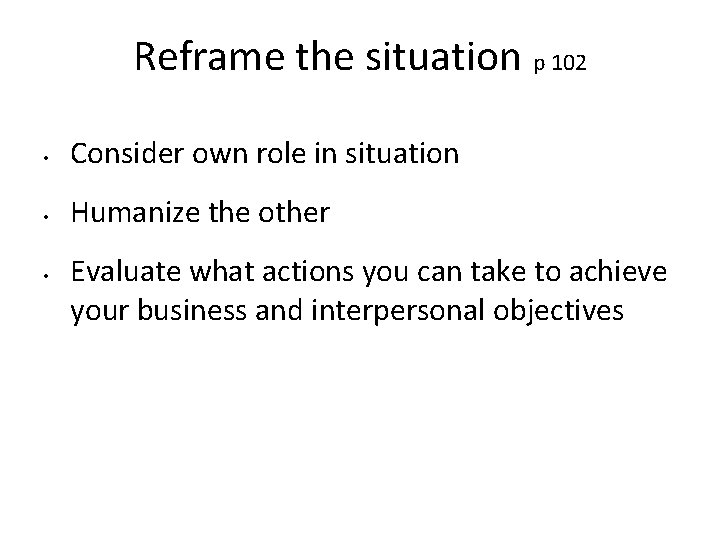
Reframe the situation p 102 • Consider own role in situation • Humanize the other • Evaluate what actions you can take to achieve your business and interpersonal objectives
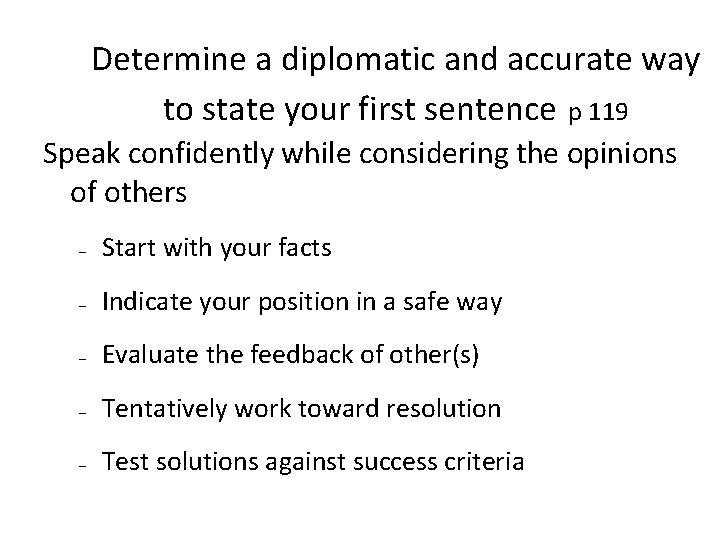
Determine a diplomatic and accurate way to state your first sentence p 119 Speak confidently while considering the opinions of others – Start with your facts – Indicate your position in a safe way – Evaluate the feedback of other(s) – Tentatively work toward resolution – Test solutions against success criteria
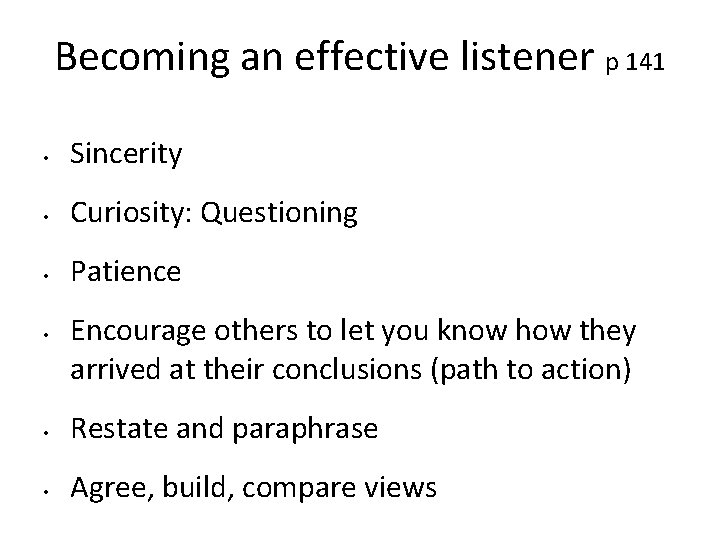
Becoming an effective listener p 141 • Sincerity • Curiosity: Questioning • Patience • Encourage others to let you know how they arrived at their conclusions (path to action) • Restate and paraphrase • Agree, build, compare views
Crucial conversation preparation p 186 • • • Mentally evaluate how well you use the skills in low controversy situations Be a perceptive observer of others’ conversations Mentally rehearse for your crucial conversations, testing and retesting alternative scenarios