
Classification of Living Organisms Why do we want
- Slides: 33
Classification of Living Organisms Why do we want to do this?
Carolus Linnaeus • Swedish • System of naming organisms – 2 kingdoms originally • Binomial nomenclature 2 name naming system • Changed to 5 kingdoms, then 3 Domains
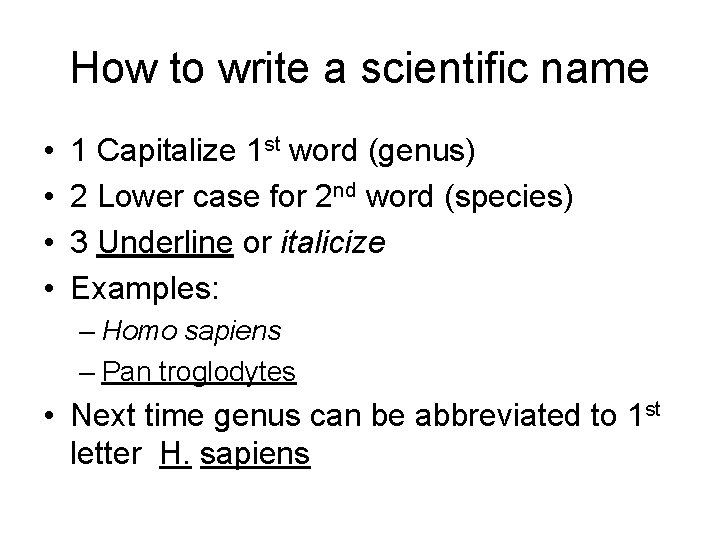
How to write a scientific name • • 1 Capitalize 1 st word (genus) 2 Lower case for 2 nd word (species) 3 Underline or italicize Examples: – Homo sapiens – Pan troglodytes • Next time genus can be abbreviated to 1 st letter H. sapiens
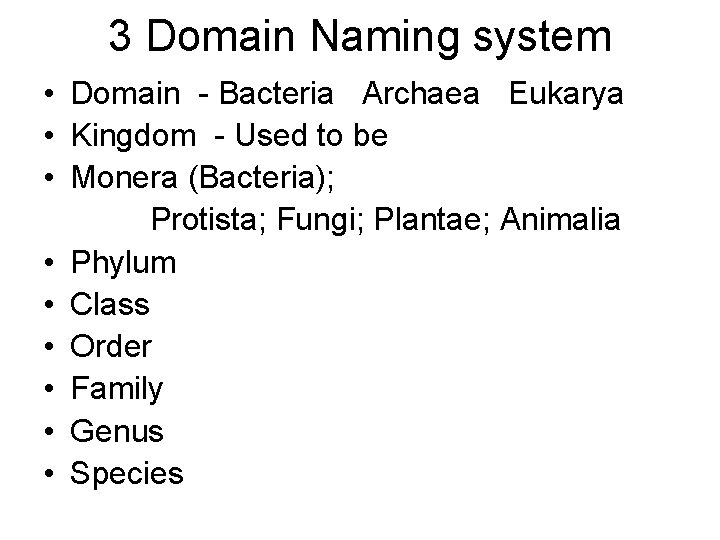
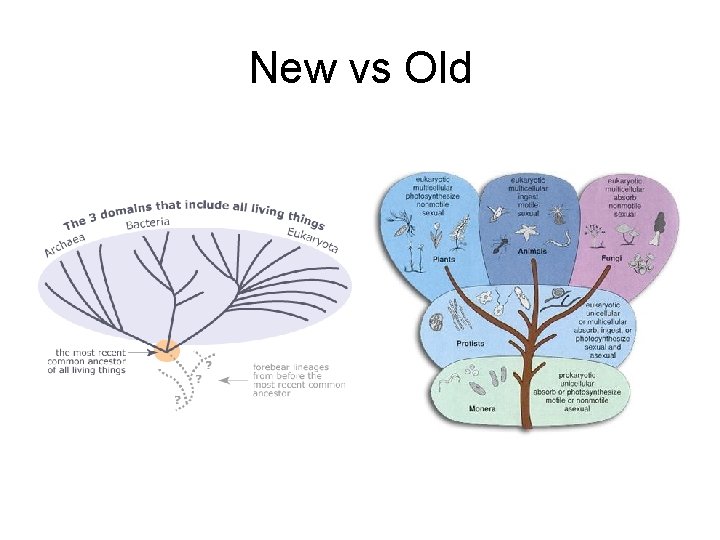
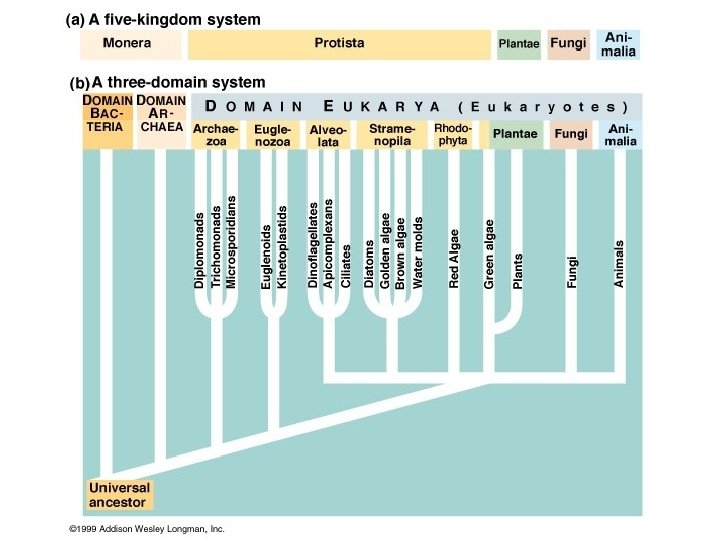
3 Domain Naming system • Domain - Bacteria Archaea Eukarya • Kingdom - Used to be • Monera (Bacteria); Protista; Fungi; Plantae; Animalia • Phylum • Class • Order • Family • Genus • Species
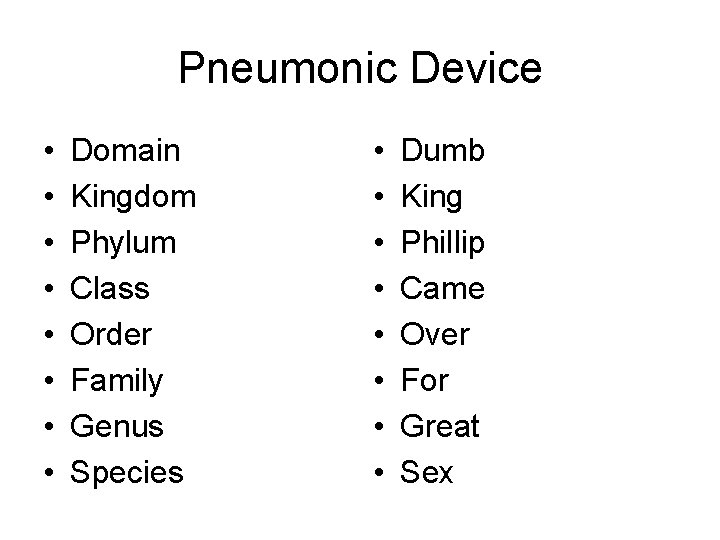
Pneumonic Device • • Domain Kingdom Phylum Class Order Family Genus Species • • Dumb King Phillip Came Over For Great Sex
New vs Old
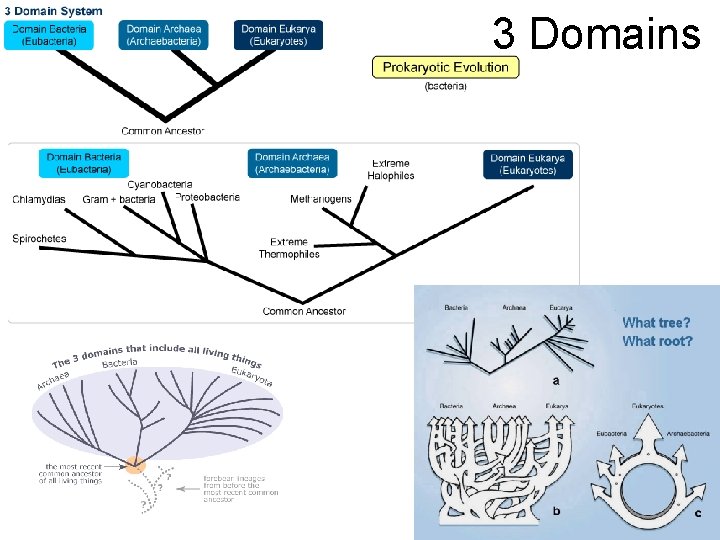
3 Domains
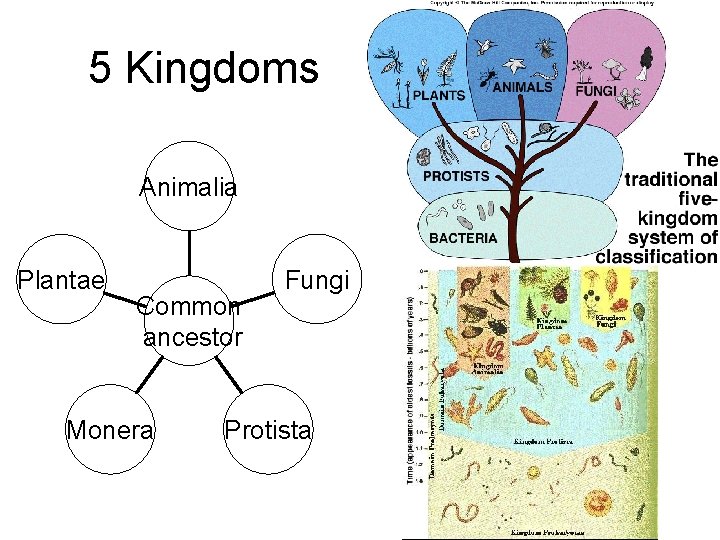
5 Kingdoms Animalia Plantae Common ancestor Monera Fungi Protista
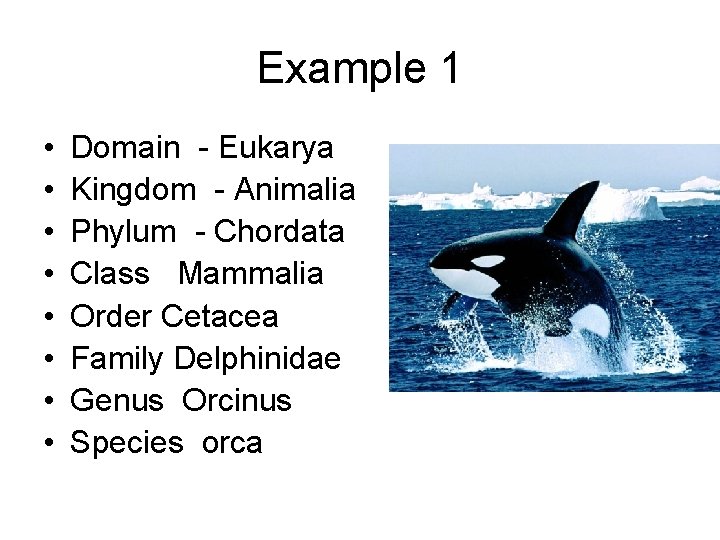
Example 1 • • Domain - Eukarya Kingdom - Animalia Phylum - Chordata Class Mammalia Order Cetacea Family Delphinidae Genus Orcinus Species orca
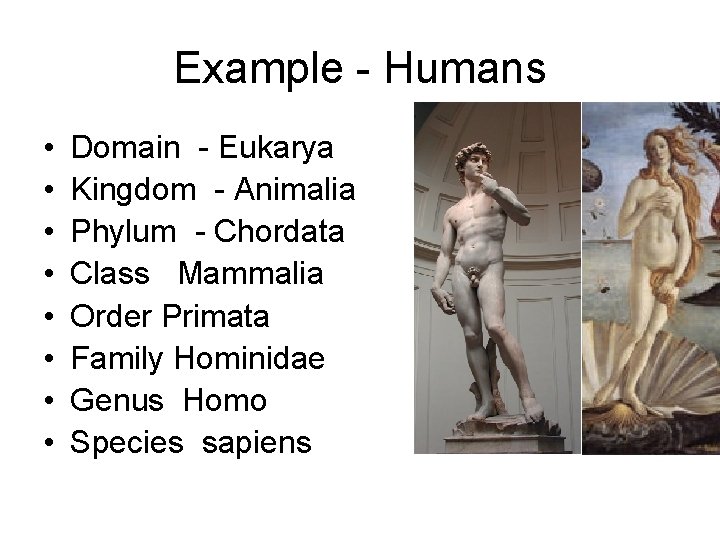
Example - Humans • • Domain - Eukarya Kingdom - Animalia Phylum - Chordata Class Mammalia Order Primata Family Hominidae Genus Homo Species sapiens
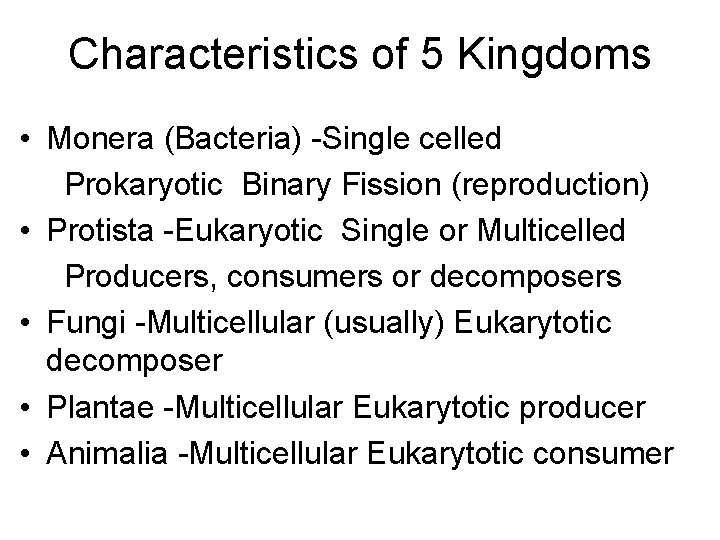
Characteristics of 5 Kingdoms • Monera (Bacteria) -Single celled Prokaryotic Binary Fission (reproduction) • Protista -Eukaryotic Single or Multicelled Producers, consumers or decomposers • Fungi -Multicellular (usually) Eukarytotic decomposer • Plantae -Multicellular Eukarytotic producer • Animalia -Multicellular Eukarytotic consumer
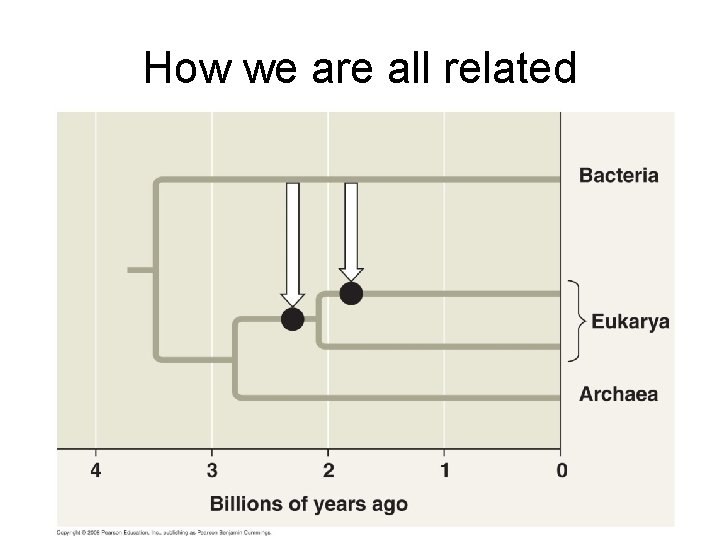
How we are all related
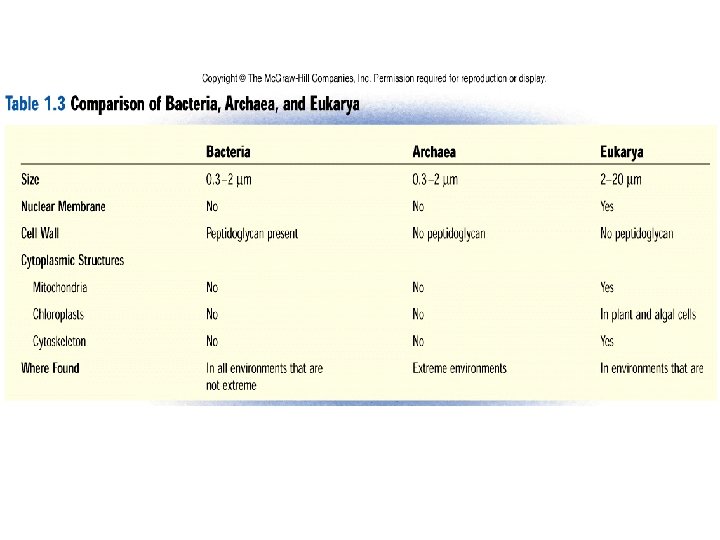
Domain Archaea • Unicellular • Prokaryotes • Lacks peptidoglycan in cell wall (Gram -) • Extreme living – probably poor competitors Ø Thermophiles – heat loving (Deep sea Thermal vents) Ø Halophiles – salt loving (Dead sea, Great Salt Lake) Ø Methanogens – produce methane Ø Sulfur producing
Domain Bacteria • • Unicellular Prokaryotes Has peptidoglycan in cell wall (Gram +) Can be colonial or filamentous Ø Blue green (algae) Cyanobacteria Ø Chemoautotrophs (probably first cells ever) Ø Nitrogen fixing bacteria
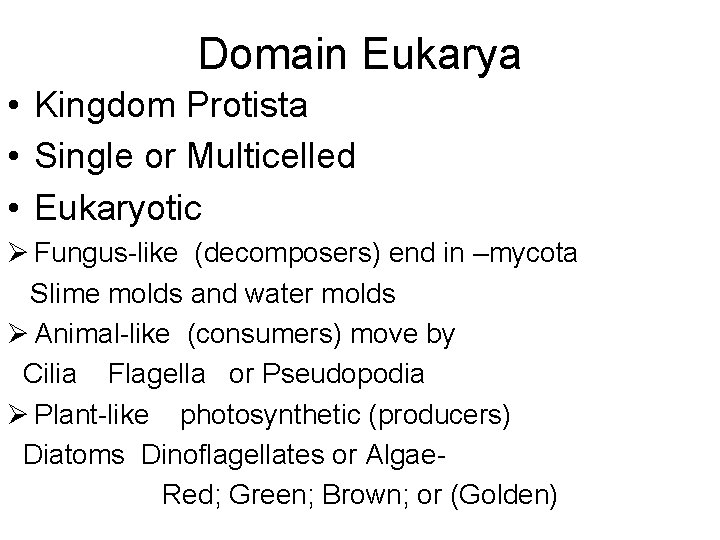
Domain Eukarya • Kingdom Protista • Single or Multicelled • Eukaryotic Ø Fungus-like (decomposers) end in –mycota Slime molds and water molds Ø Animal-like (consumers) move by Cilia Flagella or Pseudopodia Ø Plant-like photosynthetic (producers) Diatoms Dinoflagellates or Algae. Red; Green; Brown; or (Golden)
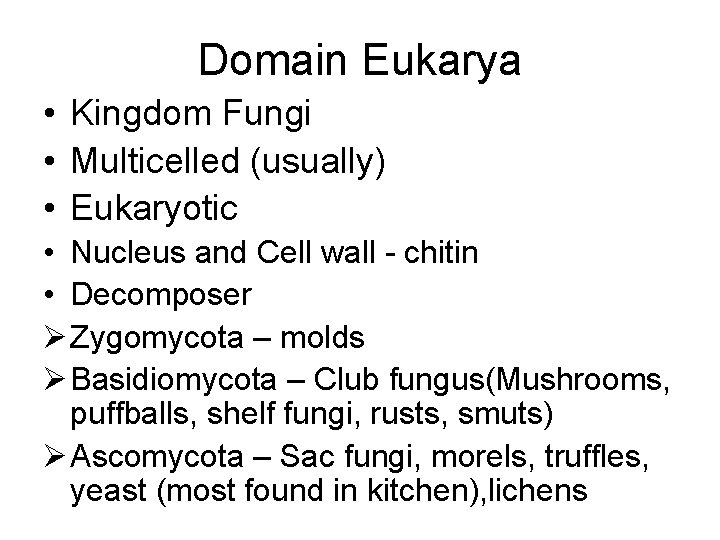
Domain Eukarya • Kingdom Fungi • Multicelled (usually) • Eukaryotic • Nucleus and Cell wall - chitin • Decomposer Ø Zygomycota – molds Ø Basidiomycota – Club fungus(Mushrooms, puffballs, shelf fungi, rusts, smuts) Ø Ascomycota – Sac fungi, morels, truffles, yeast (most found in kitchen), lichens
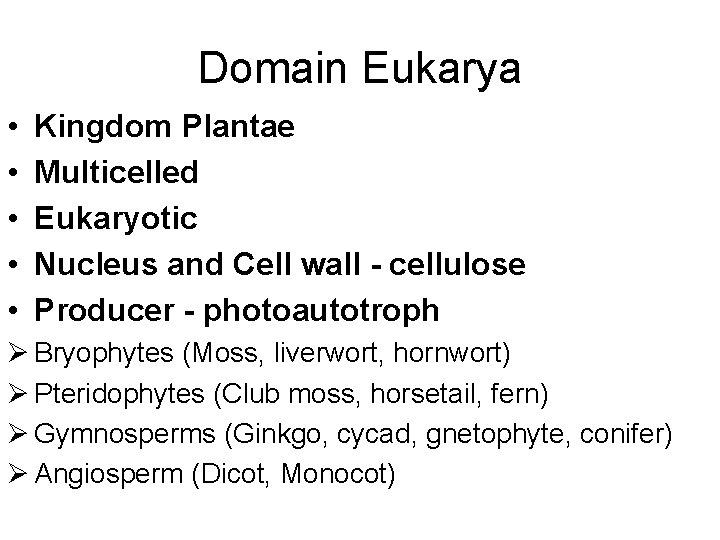
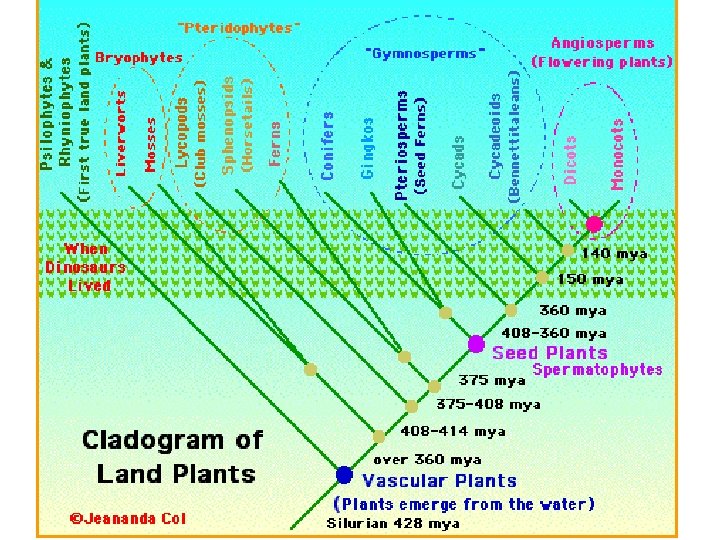
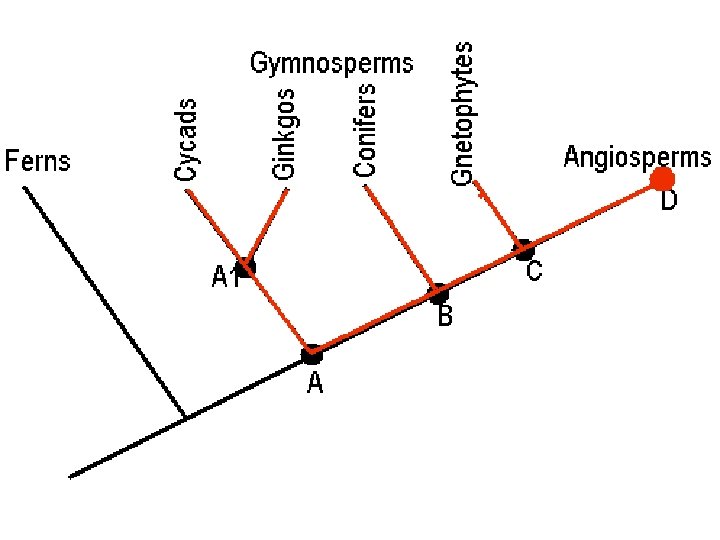
Domain Eukarya • • • Kingdom Plantae Multicelled Eukaryotic Nucleus and Cell wall - cellulose Producer - photoautotroph Ø Bryophytes (Moss, liverwort, hornwort) Ø Pteridophytes (Club moss, horsetail, fern) Ø Gymnosperms (Ginkgo, cycad, gnetophyte, conifer) Ø Angiosperm (Dicot, Monocot)
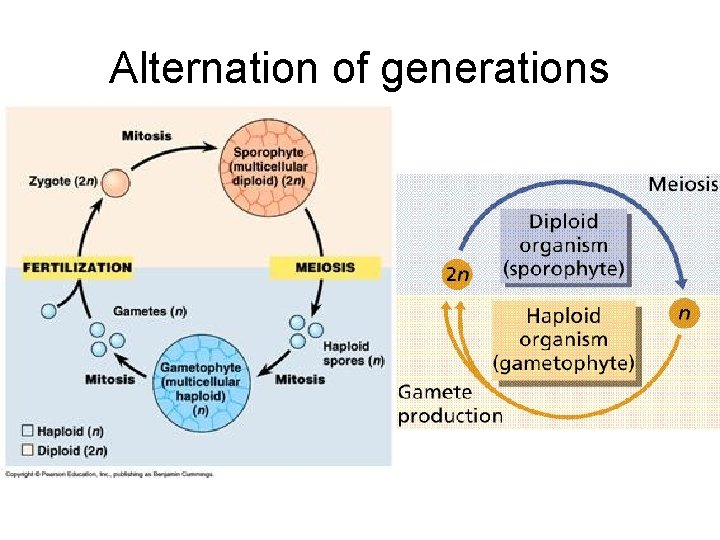
Alternation of generations
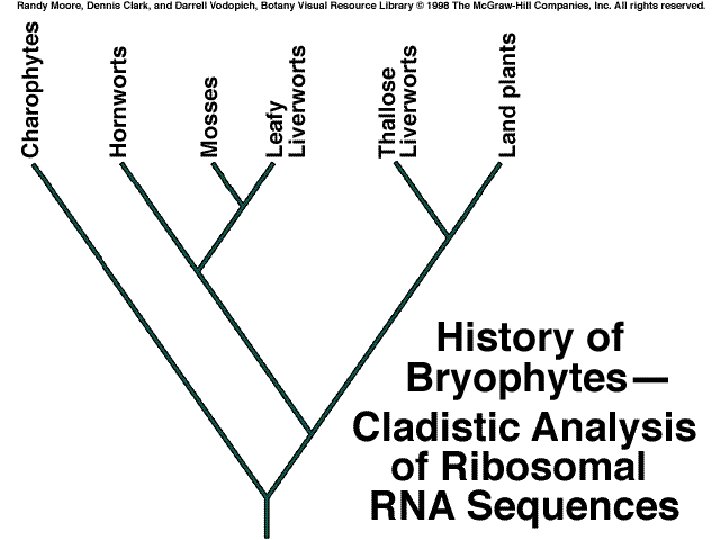
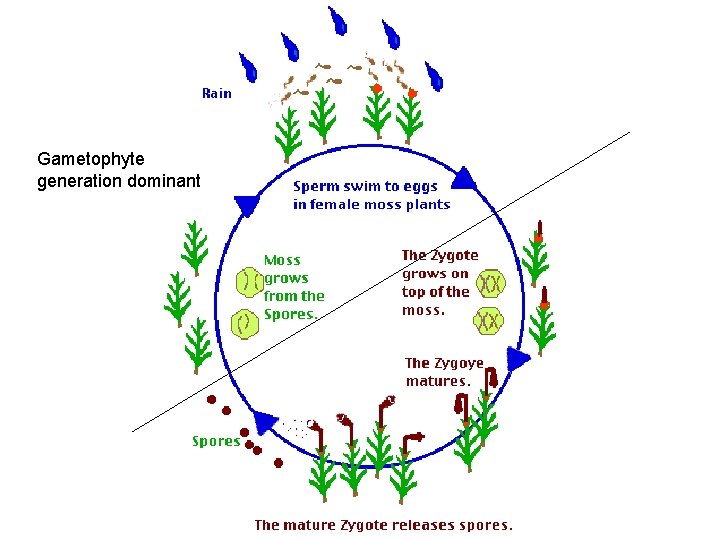
Bryophytes • Live on land • No vascular tissue • Need water to reproduce (swimming sperm, just like us) • Gametophyte generation dominant, sporophyte dependent Ø Moss Ø Liverwort Ø Hornwort
Gametophyte generation dominant
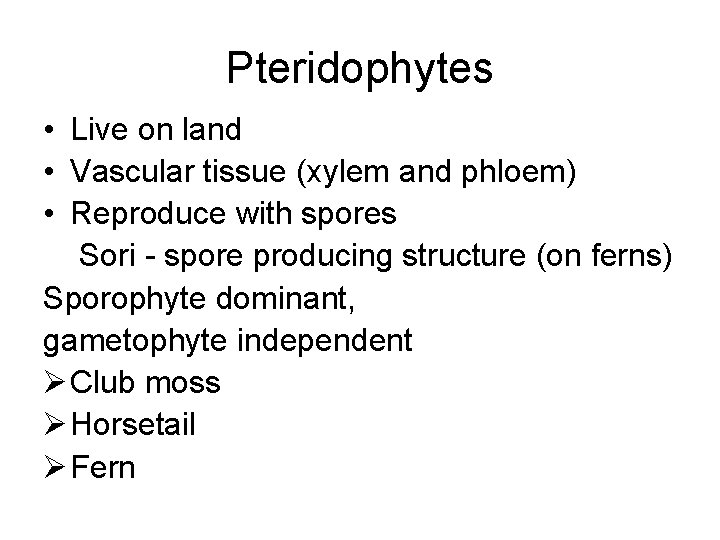
Pteridophytes • Live on land • Vascular tissue (xylem and phloem) • Reproduce with spores Sori - spore producing structure (on ferns) Sporophyte dominant, gametophyte independent Ø Club moss Ø Horsetail Ø Fern
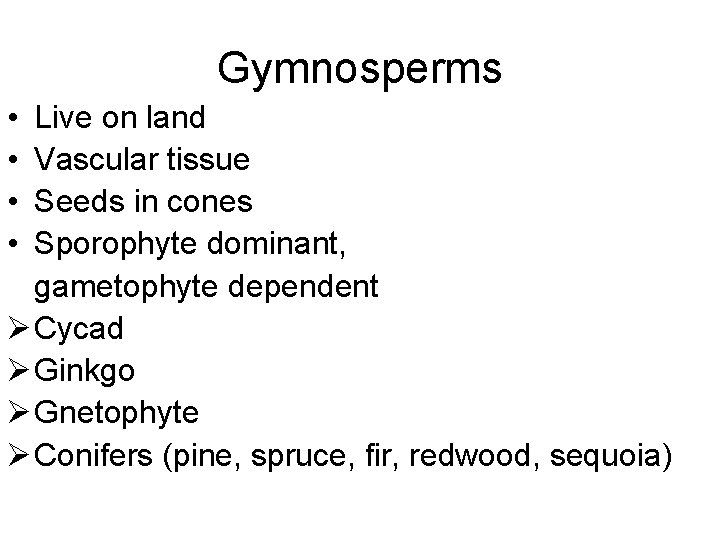
Gymnosperms • • Live on land Vascular tissue Seeds in cones Sporophyte dominant, gametophyte dependent Ø Cycad Ø Ginkgo Ø Gnetophyte Ø Conifers (pine, spruce, fir, redwood, sequoia)
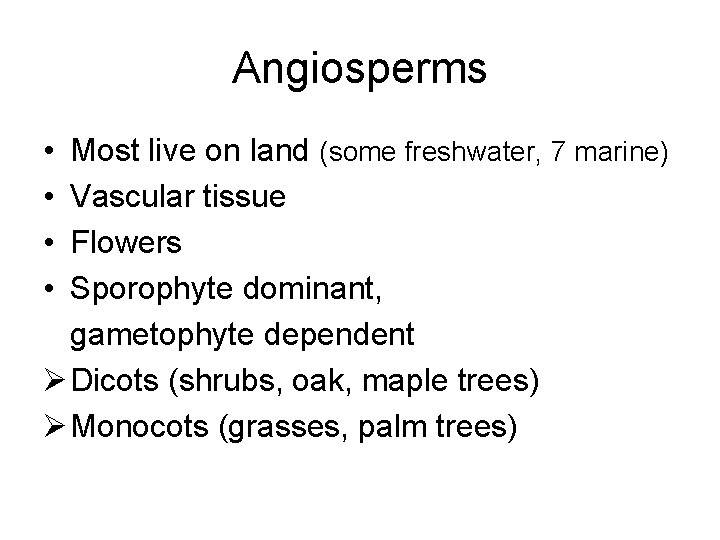
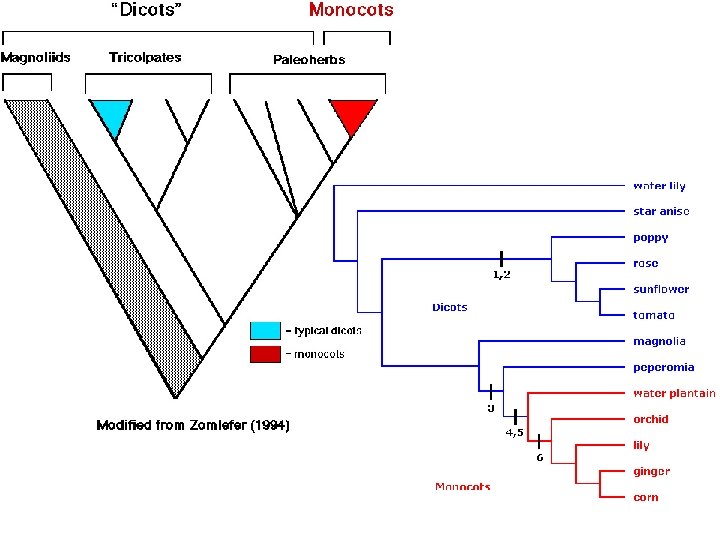
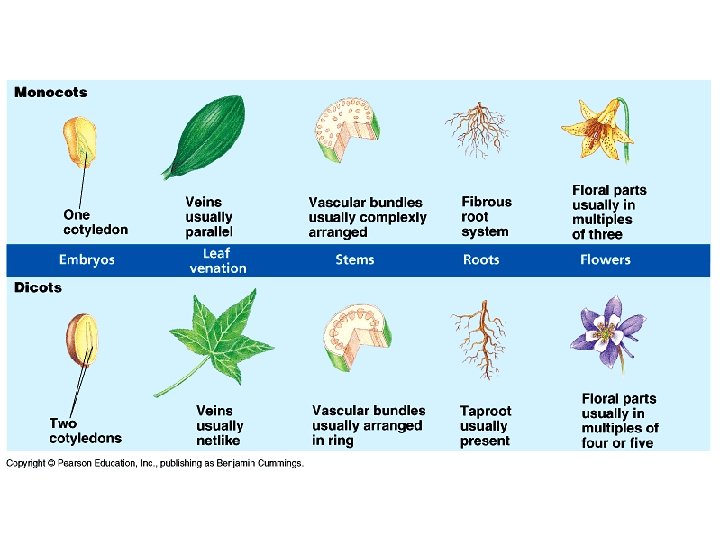
Angiosperms • • Most live on land (some freshwater, 7 marine) Vascular tissue Flowers Sporophyte dominant, gametophyte dependent Ø Dicots (shrubs, oak, maple trees) Ø Monocots (grasses, palm trees)
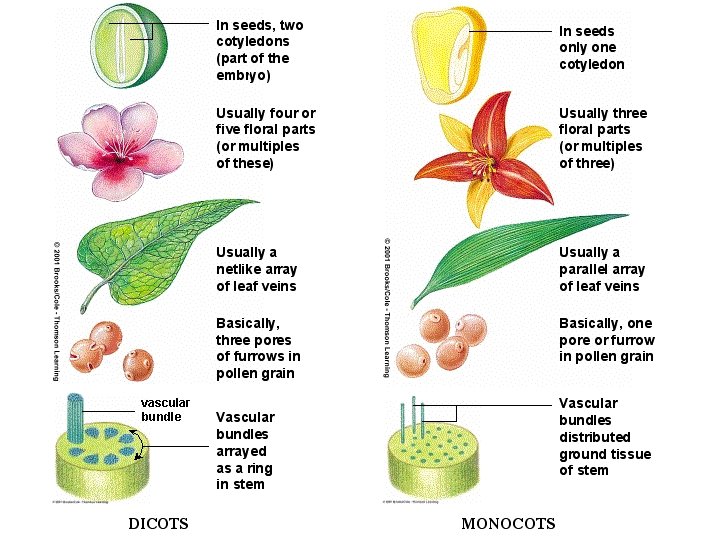
Dicot • Two cotyledons in seed • Branching veins in leaves • Flower petals – 4 or 5 (or multiples) • Vascular tissue in bundles in ring • Tap root Ø Oak, Maple, aspen trees Ø Shrubs Ø Most ornamental flowers
Monocot • Single cotyledon in seed • Parallel veins in leaf • Flower petals – 3 (or multiples) • Vascular tissue in scattered bundles • Fibrous root ball Ø Grasses Ø Palms Ø Lily, orchid, iris