
REPRODUCTION IN LIVING ORGANISMS All living organisms show


- Slides: 46
REPRODUCTION IN LIVING ORGANISMS
All living organisms show reproduction. • Reproduction: Reproduction is defined as a biological process that make more of the same kind of organismsnew individuals.
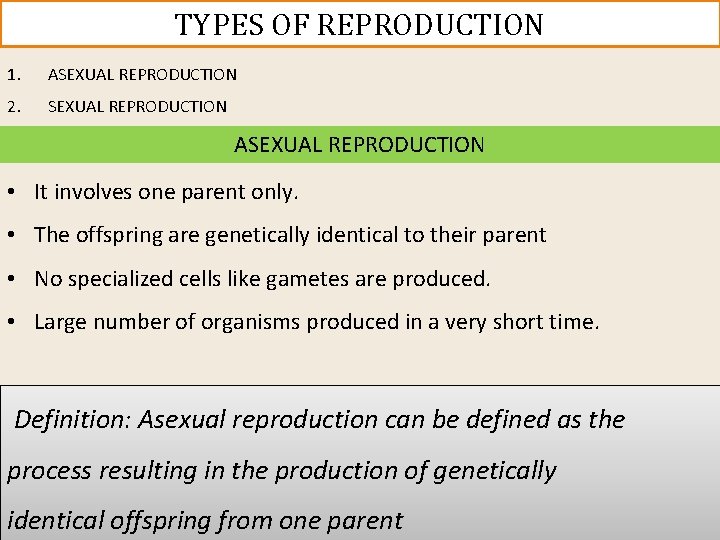
TYPES OF REPRODUCTION 1. ASEXUAL REPRODUCTION 2. SEXUAL REPRODUCTION ASEXUAL REPRODUCTION • It involves one parent only. • The offspring are genetically identical to their parent • No specialized cells like gametes are produced. • Large number of organisms produced in a very short time. Definition: Asexual reproduction can be defined as the process resulting in the production of genetically identical offspring from one parent
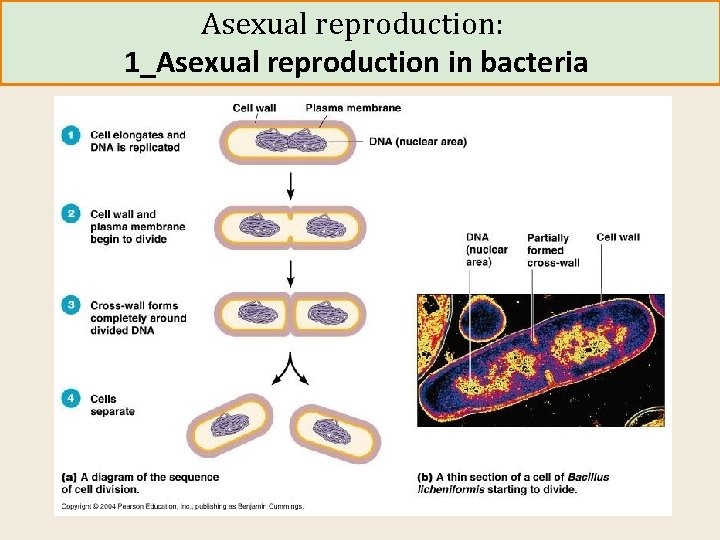
Asexual reproduction: 1_Asexual reproduction in bacteria
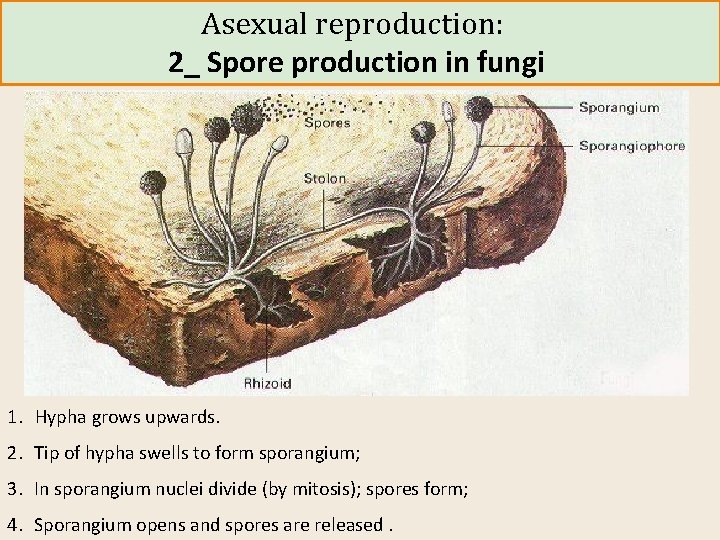
Asexual reproduction: 2_ Spore production in fungi 1. Hypha grows upwards. 2. Tip of hypha swells to form sporangium; 3. In sporangium nuclei divide (by mitosis); spores form; 4. Sporangium opens and spores are released.
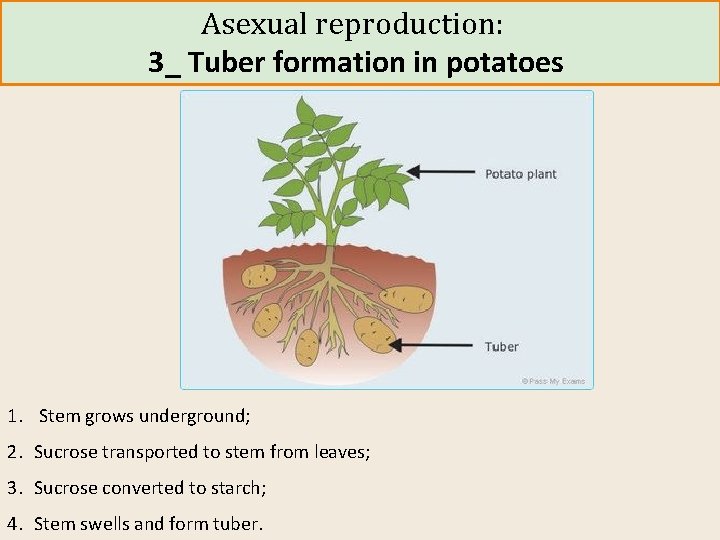
Asexual reproduction: 3_ Tuber formation in potatoes 1. Stem grows underground; 2. Sucrose transported to stem from leaves; 3. Sucrose converted to starch; 4. Stem swells and form tuber.
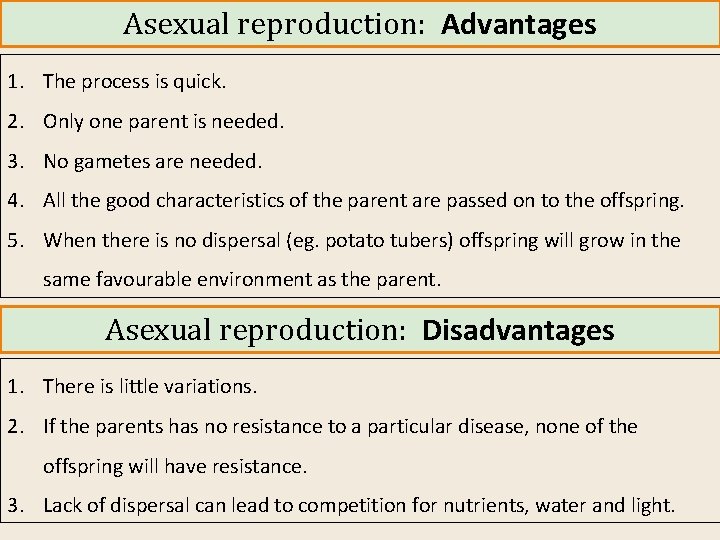
Asexual reproduction: Advantages 1. The process is quick. 2. Only one parent is needed. 3. No gametes are needed. 4. All the good characteristics of the parent are passed on to the offspring. 5. When there is no dispersal (eg. potato tubers) offspring will grow in the same favourable environment as the parent. Asexual reproduction: Disadvantages 1. There is little variations. 2. If the parents has no resistance to a particular disease, none of the offspring will have resistance. 3. Lack of dispersal can lead to competition for nutrients, water and light.
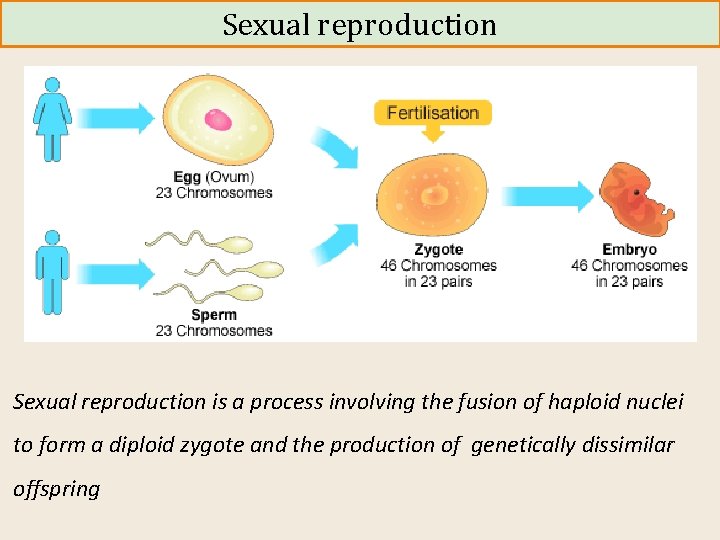
Sexual reproduction is a process involving the fusion of haploid nuclei to form a diploid zygote and the production of genetically dissimilar offspring
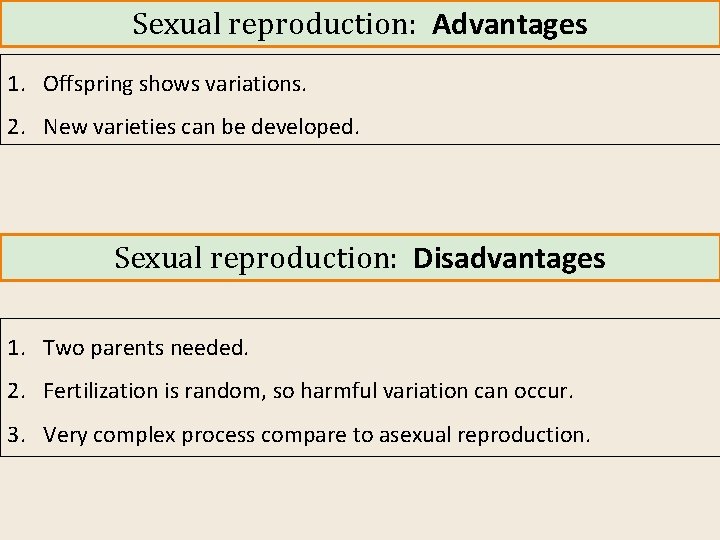
Sexual reproduction: Advantages 1. Offspring shows variations. 2. New varieties can be developed. Sexual reproduction: Disadvantages 1. Two parents needed. 2. Fertilization is random, so harmful variation can occur. 3. Very complex process compare to asexual reproduction.
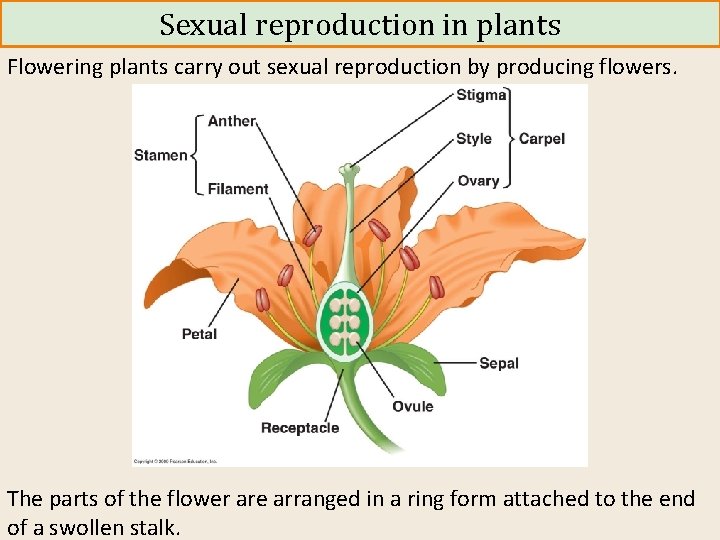
Sexual reproduction in plants Flowering plants carry out sexual reproduction by producing flowers. The parts of the flower are arranged in a ring form attached to the end of a swollen stalk.
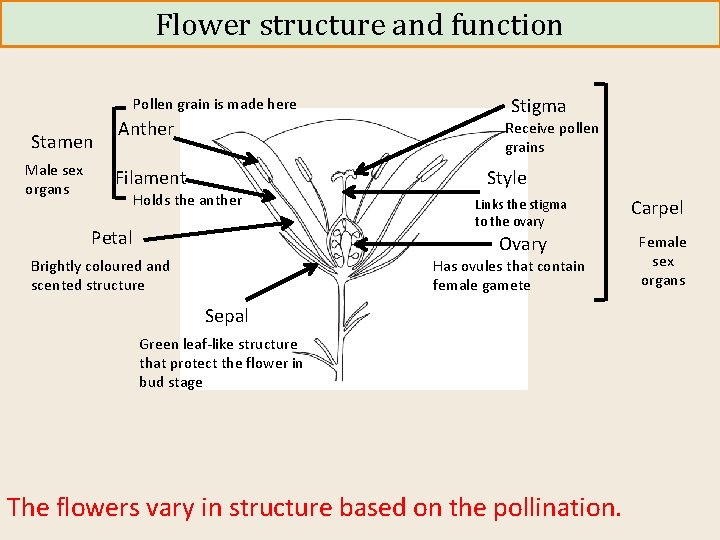
Flower structure and function Pollen grain is made here Stamen Male sex organs Anther Stigma Receive pollen grains Filament Holds the anther Petal Style Links the stigma to the ovary Ovary Brightly coloured and scented structure Has ovules that contain female gamete Sepal Green leaf-like structure that protect the flower in bud stage The flowers vary in structure based on the pollination. Carpel Female sex organs
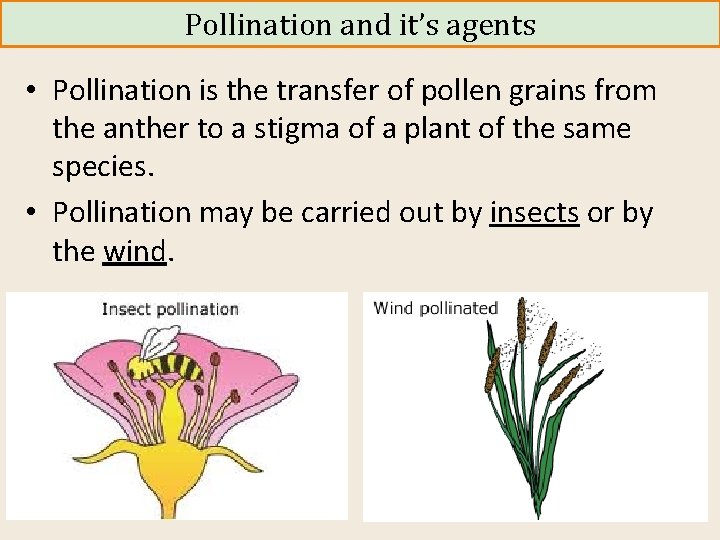
Pollination and it’s agents • Pollination is the transfer of pollen grains from the anther to a stigma of a plant of the same species. • Pollination may be carried out by insects or by the wind.
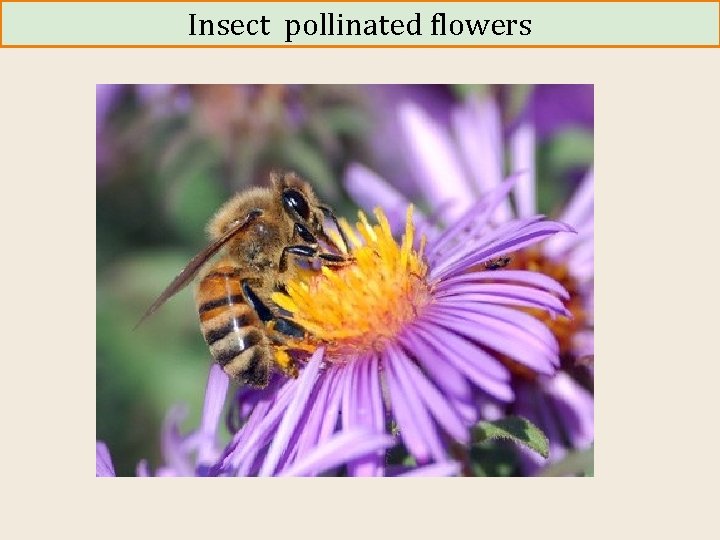
Insect pollinated flowers
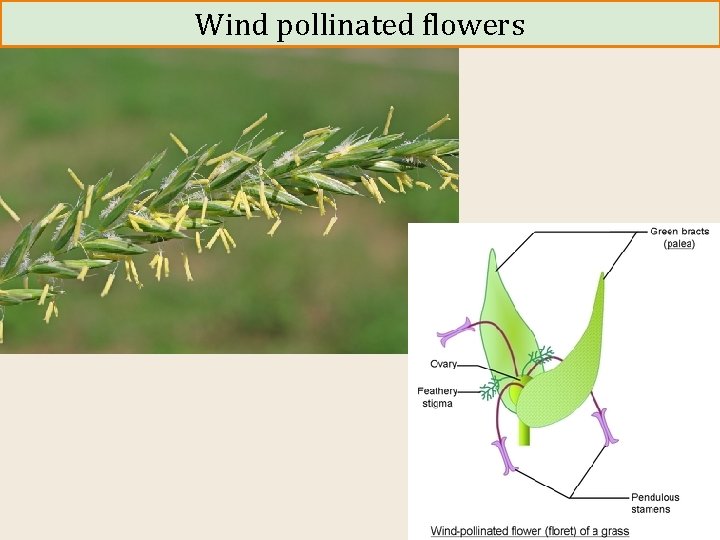
Wind pollinated flowers
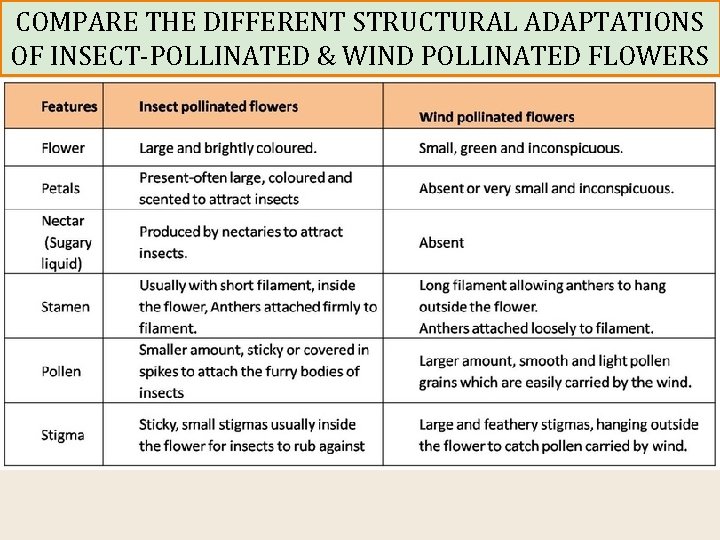
COMPARE THE DIFFERENT STRUCTURAL ADAPTATIONS OF INSECT-POLLINATED & WIND POLLINATED FLOWERS
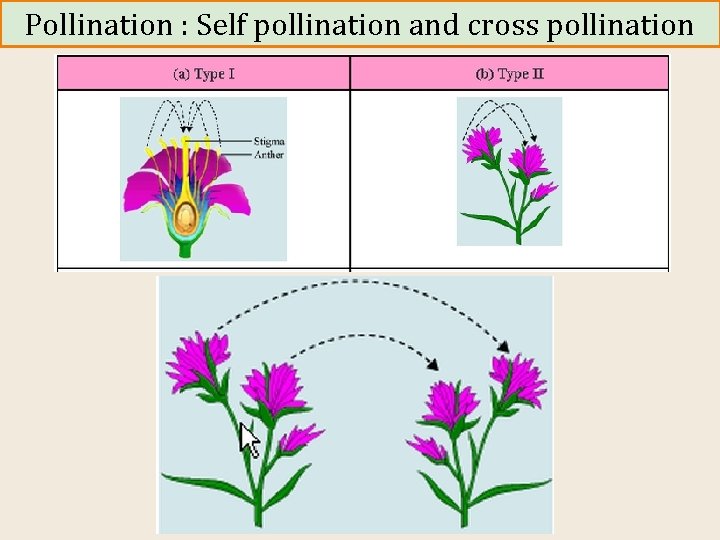
Pollination : Self pollination and cross pollination
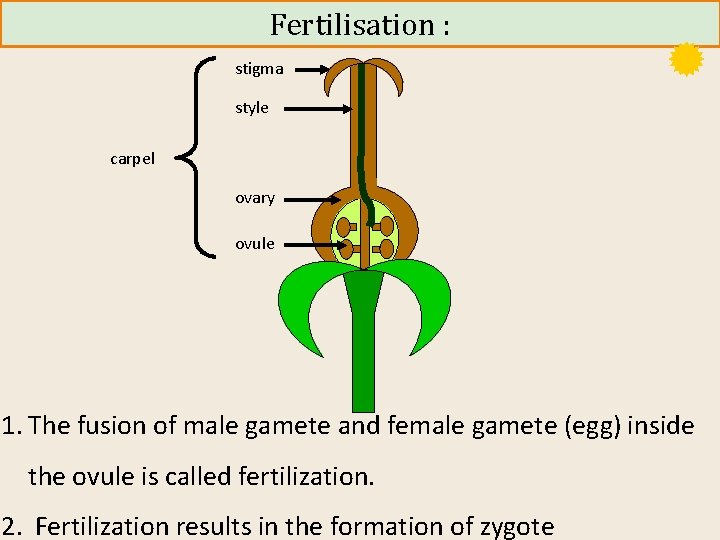
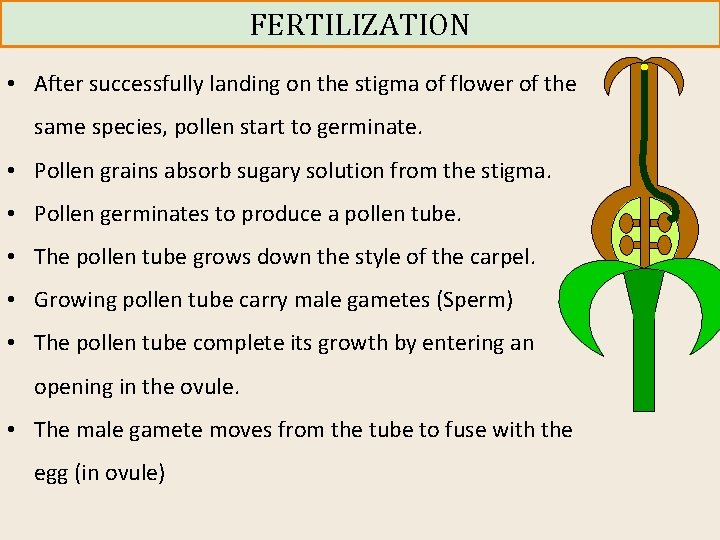
Fertilisation : stigma style carpel ovary ovule 1. The fusion of male gamete and female gamete (egg) inside the ovule is called fertilization. 2. Fertilization results in the formation of zygote
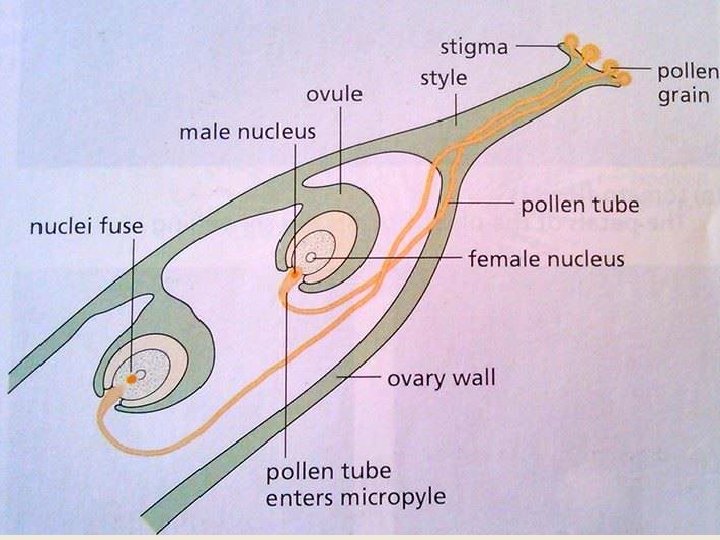
FERTILIZATION • After successfully landing on the stigma of flower of the same species, pollen start to germinate. • Pollen grains absorb sugary solution from the stigma. • Pollen germinates to produce a pollen tube. • The pollen tube grows down the style of the carpel. • Growing pollen tube carry male gametes (Sperm) • The pollen tube complete its growth by entering an opening in the ovule. • The male gamete moves from the tube to fuse with the egg (in ovule)
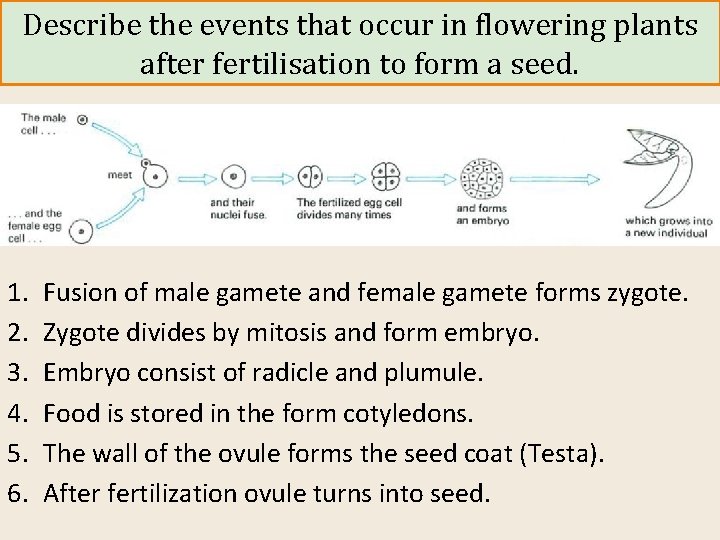
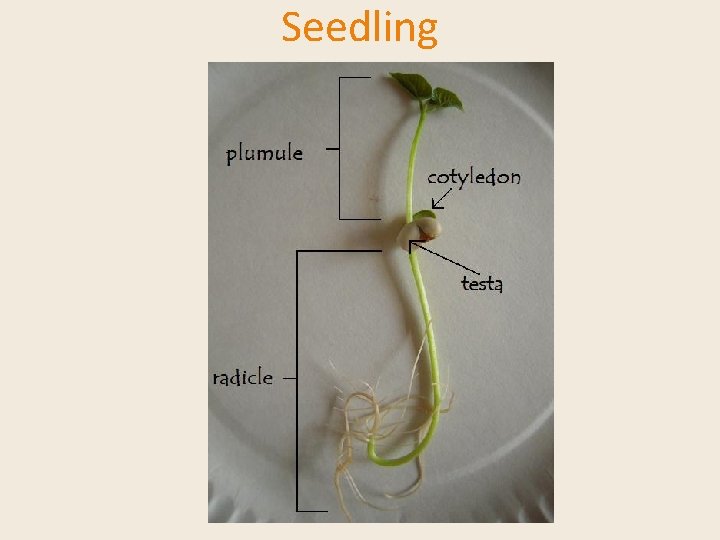
Describe the events that occur in flowering plants after fertilisation to form a seed. 1. 2. 3. 4. 5. 6. Fusion of male gamete and female gamete forms zygote. Zygote divides by mitosis and form embryo. Embryo consist of radicle and plumule. Food is stored in the form cotyledons. The wall of the ovule forms the seed coat (Testa). After fertilization ovule turns into seed.
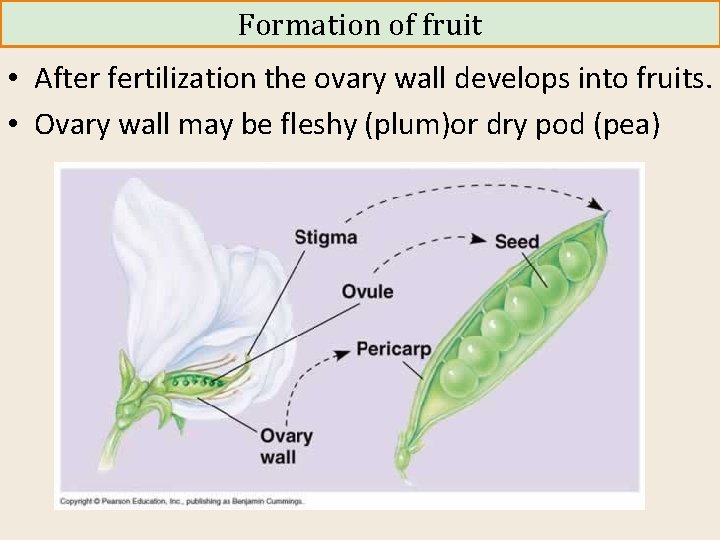
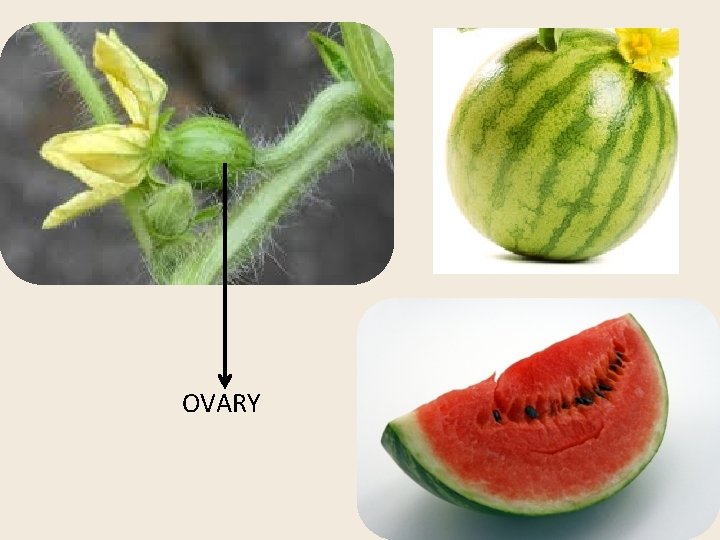
Formation of fruit • After fertilization the ovary wall develops into fruits. • Ovary wall may be fleshy (plum)or dry pod (pea)
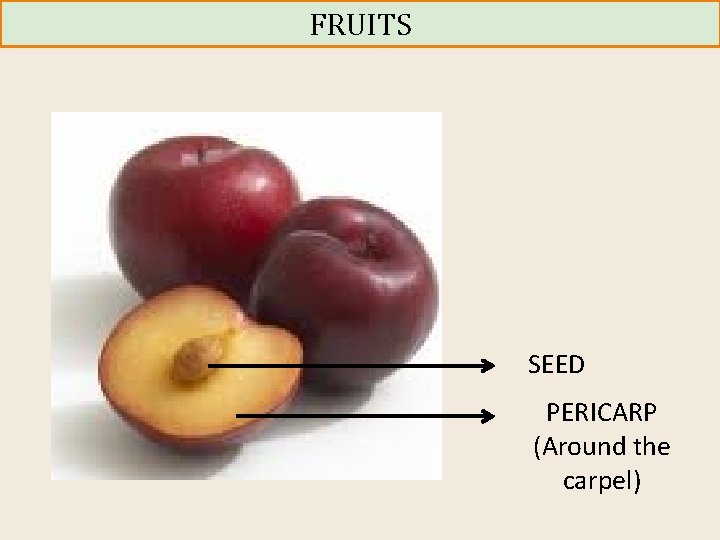
FRUITS SEED PERICARP (Around the carpel)
OVARY
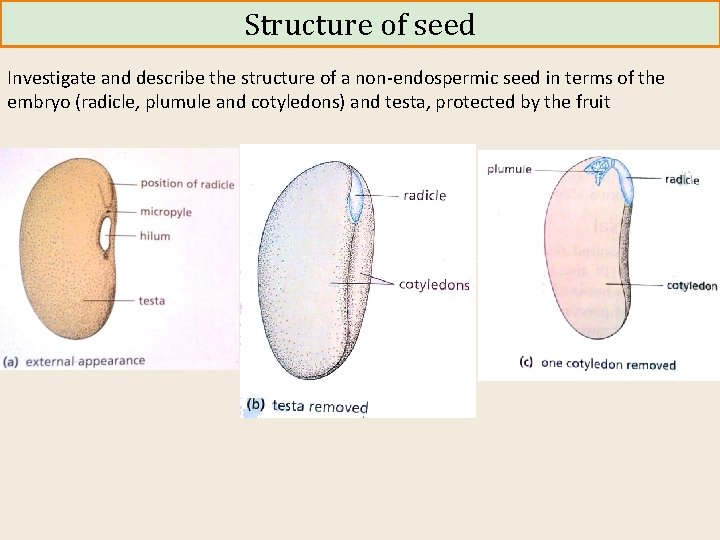
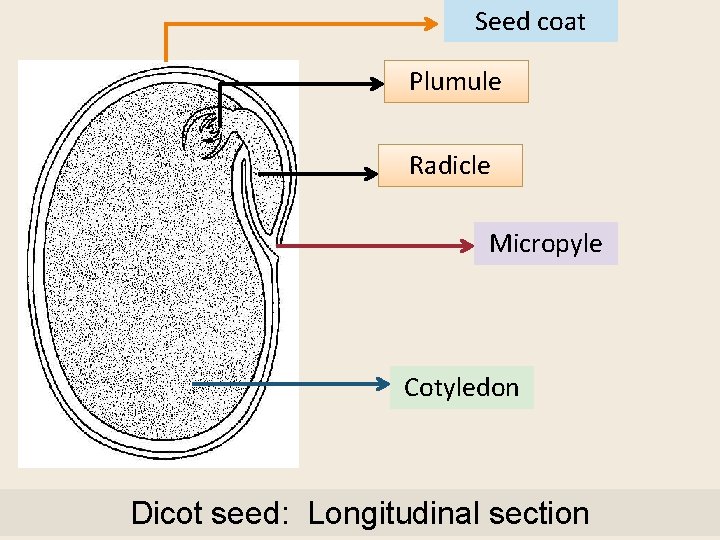
Structure of seed Investigate and describe the structure of a non-endospermic seed in terms of the embryo (radicle, plumule and cotyledons) and testa, protected by the fruit
Seed coat Plumule Radicle Micropyle Cotyledon Dicot seed: Longitudinal section
Seed and fruit dispersal Seed dispersal is the scattering of the seeds all over the place to colonize the area away from the parent plant. • Seeds need to be dispersed away from the parent plant in order to reduce competition for 1. Space, 2. Light, 3. Nutrients 4. Water.
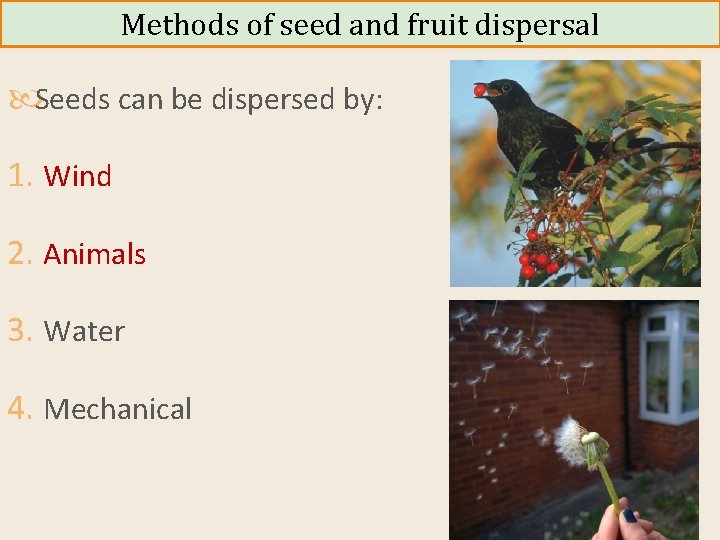
Methods of seed and fruit dispersal Seeds can be dispersed by: 1. Wind 2. Animals 3. Water 4. Mechanical
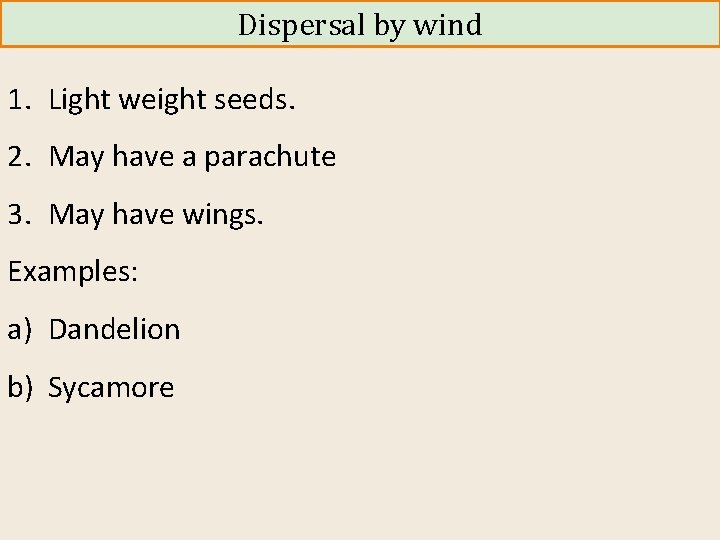
Dispersal by wind 1. Light weight seeds. 2. May have a parachute 3. May have wings. Examples: a) Dandelion b) Sycamore
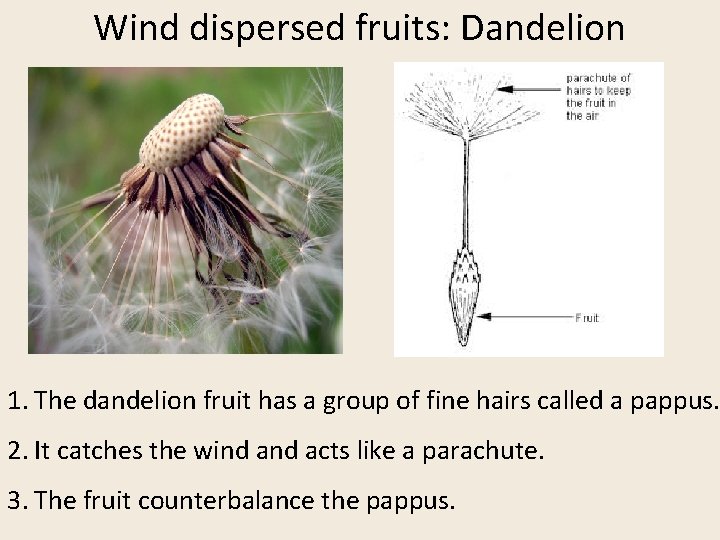
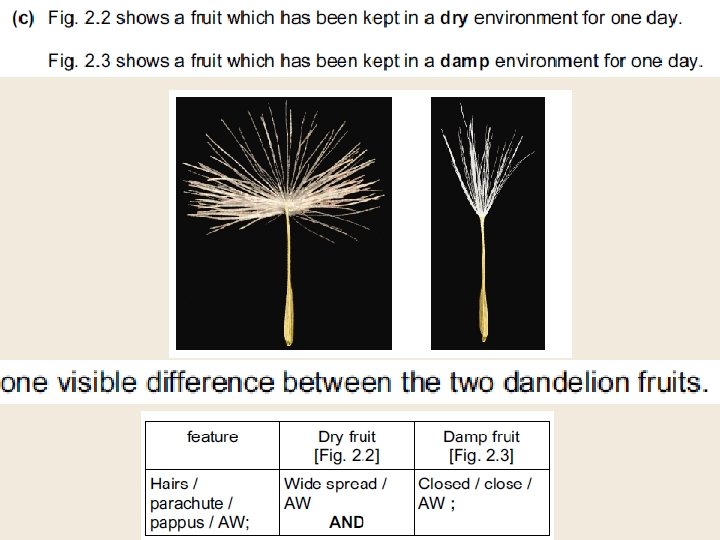
Wind dispersed fruits: Dandelion 1. The dandelion fruit has a group of fine hairs called a pappus. 2. It catches the wind acts like a parachute. 3. The fruit counterbalance the pappus.
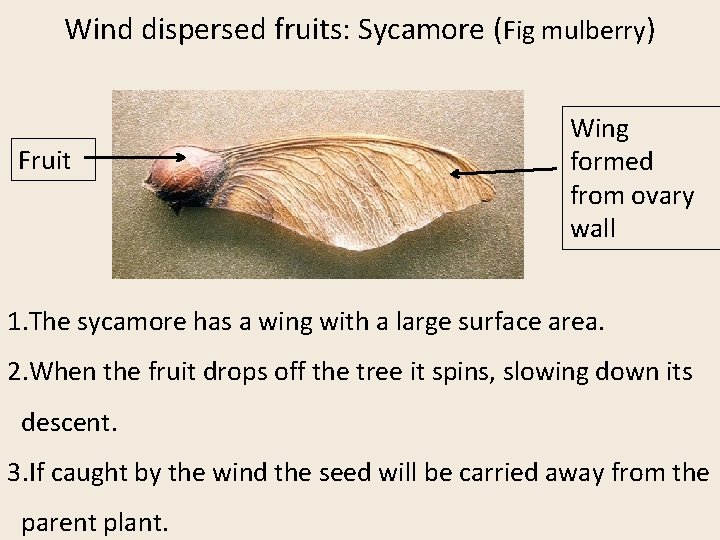
Wind dispersed fruits: Sycamore (Fig mulberry) Fruit Wing formed from ovary wall 1. The sycamore has a wing with a large surface area. 2. When the fruit drops off the tree it spins, slowing down its descent. 3. If caught by the wind the seed will be carried away from the parent plant.
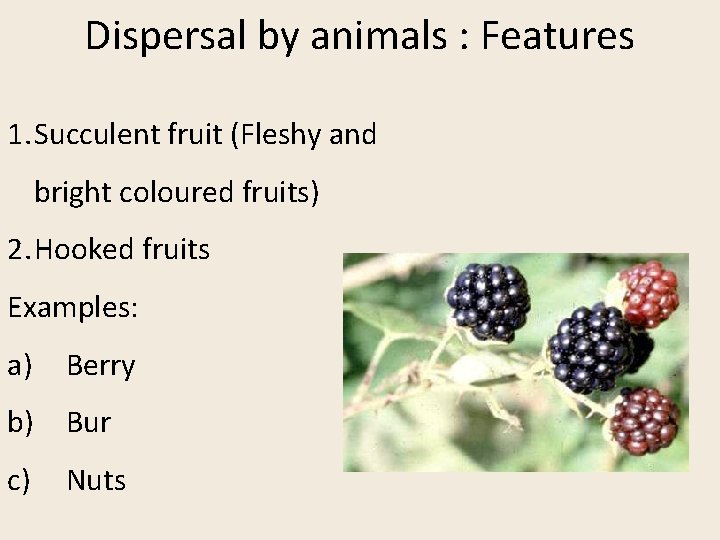
Dispersal by animals : Features 1. Succulent fruit (Fleshy and bright coloured fruits) 2. Hooked fruits Examples: a) Berry b) Bur c) Nuts
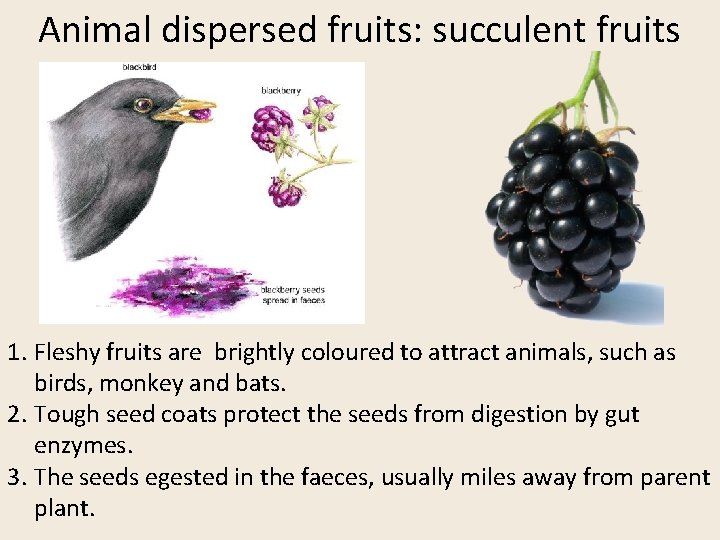
Animal dispersed fruits: succulent fruits 1. Fleshy fruits are brightly coloured to attract animals, such as birds, monkey and bats. 2. Tough seed coats protect the seeds from digestion by gut enzymes. 3. The seeds egested in the faeces, usually miles away from parent plant.
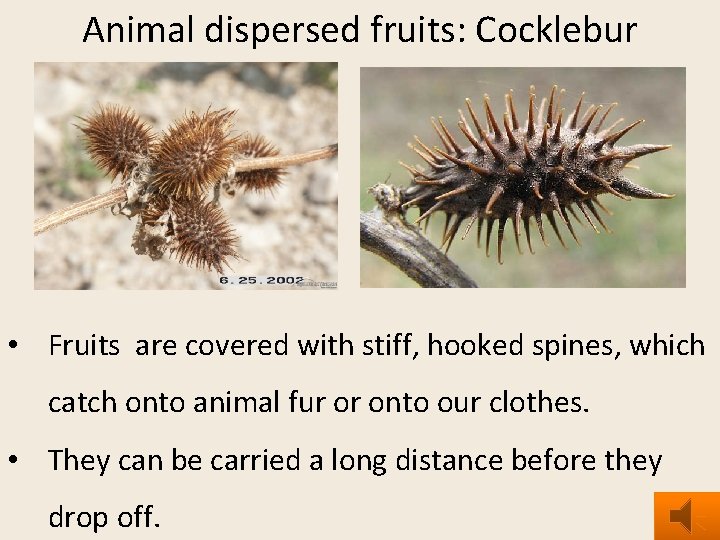
Animal dispersed fruits: Cocklebur • Fruits are covered with stiff, hooked spines, which catch onto animal fur or onto our clothes. • They can be carried a long distance before they drop off.
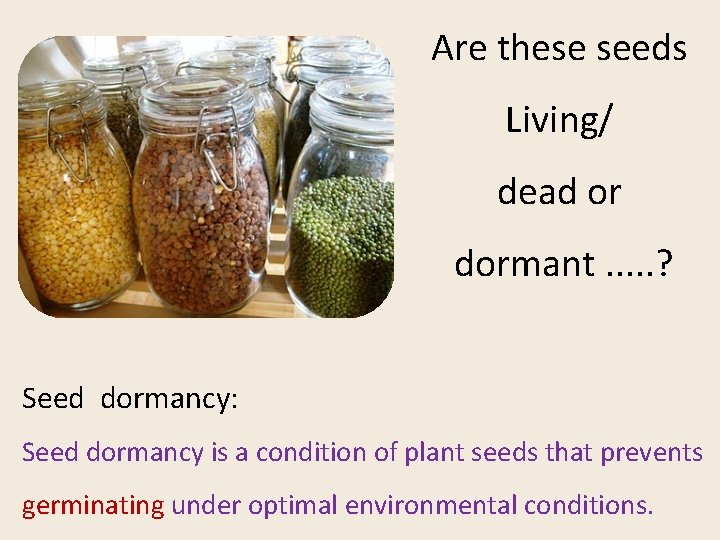
Are these seeds Living/ dead or dormant. . . ? Seed dormancy: Seed dormancy is a condition of plant seeds that prevents germinating under optimal environmental conditions.
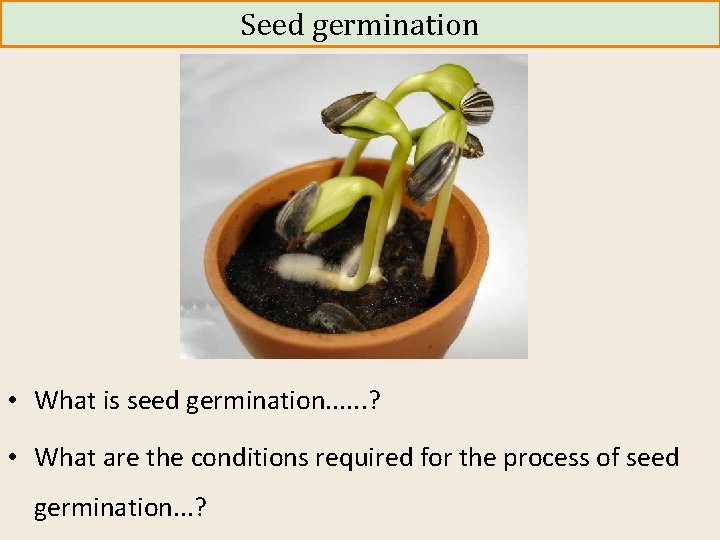
Seed germination • What is seed germination. . . ? • What are the conditions required for the process of seed germination. . . ?
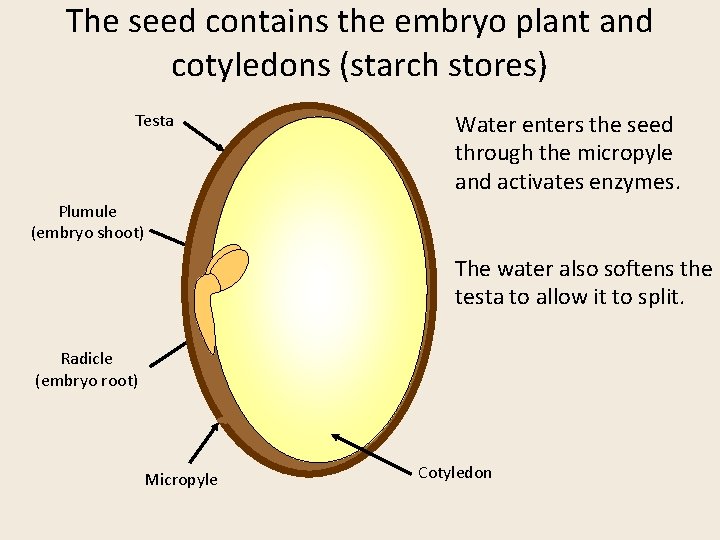
The seed contains the embryo plant and cotyledons (starch stores) Testa Water enters the seed through the micropyle and activates enzymes. Plumule (embryo shoot) The water also softens the testa to allow it to split. Radicle (embryo root) Micropyle Cotyledon
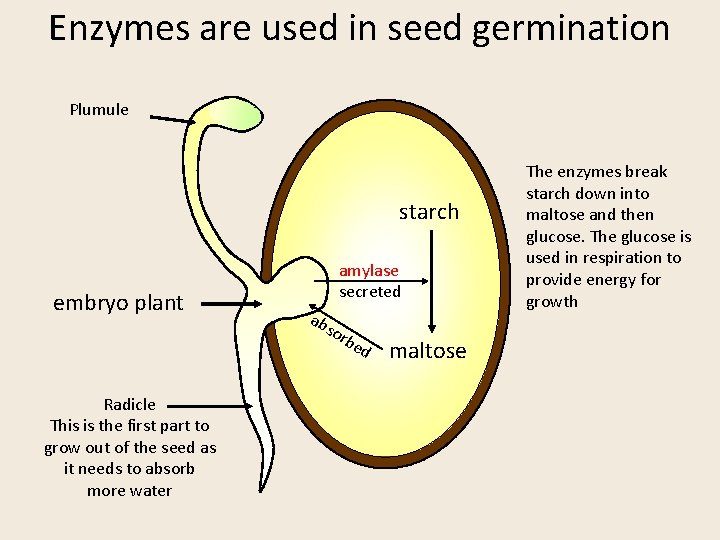
Enzymes are used in seed germination Plumule starch embryo plant amylase secreted ab sor be Radicle This is the first part to grow out of the seed as it needs to absorb more water d maltose The enzymes break starch down into maltose and then glucose. The glucose is used in respiration to provide energy for growth
Seedling
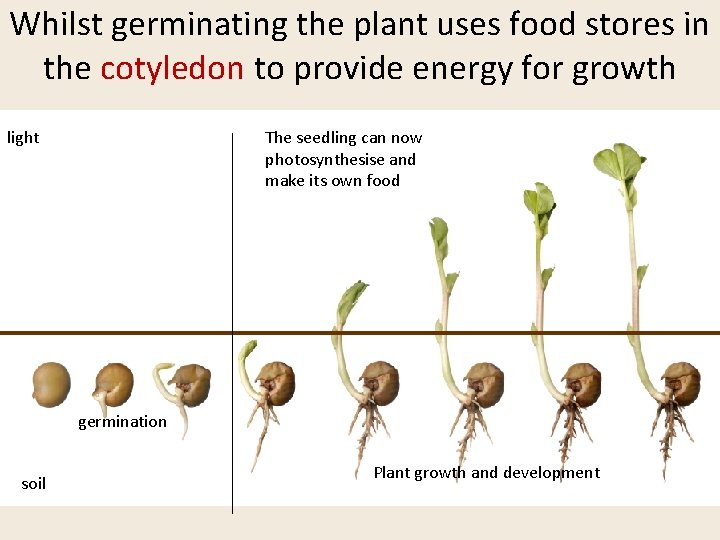
Whilst germinating the plant uses food stores in the cotyledon to provide energy for growth The seedling can now photosynthesise and make its own food light germination soil Plant growth and development
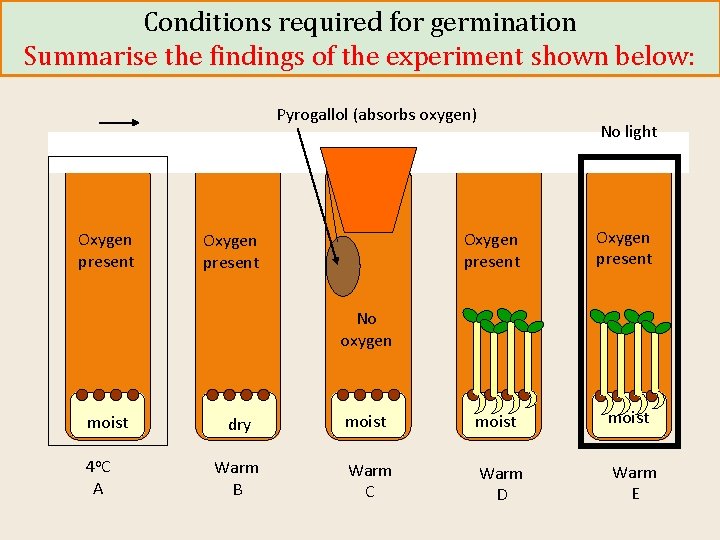
Conditions required for germination Summarise the findings of the experiment shown below: Pyrogallol (absorbs oxygen) Oxygen present No light Oxygen present No oxygen moist 4 o. C A dry moist Warm B Warm C Warm D Warm E
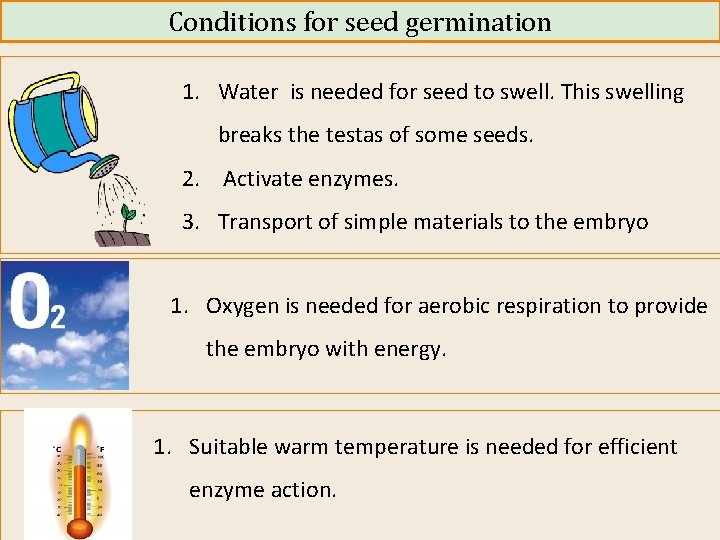
Conditions for seed germination 1. Water is needed for seed to swell. This swelling breaks the testas of some seeds. 2. Activate enzymes. 3. Transport of simple materials to the embryo 1. Oxygen is needed for aerobic respiration to provide the embryo with energy. 1. Suitable warm temperature is needed for efficient enzyme action.
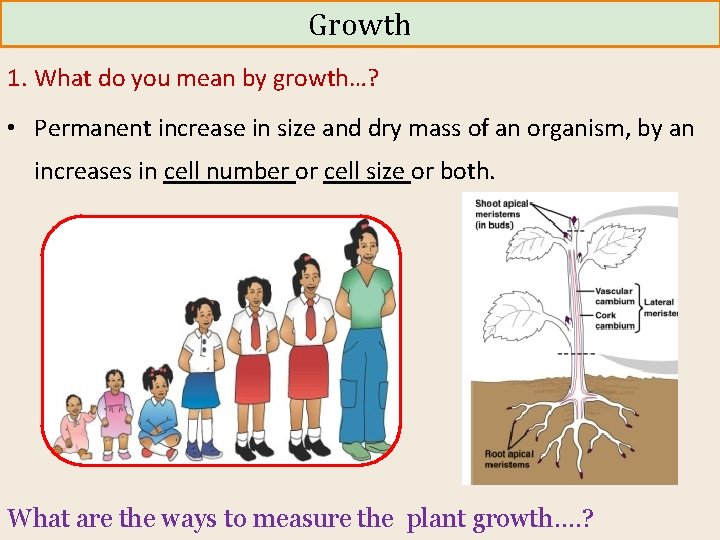
Growth 1. What do you mean by growth…? • Permanent increase in size and dry mass of an organism, by an increases in cell number or cell size or both. What are the ways to measure the plant growth…. ?
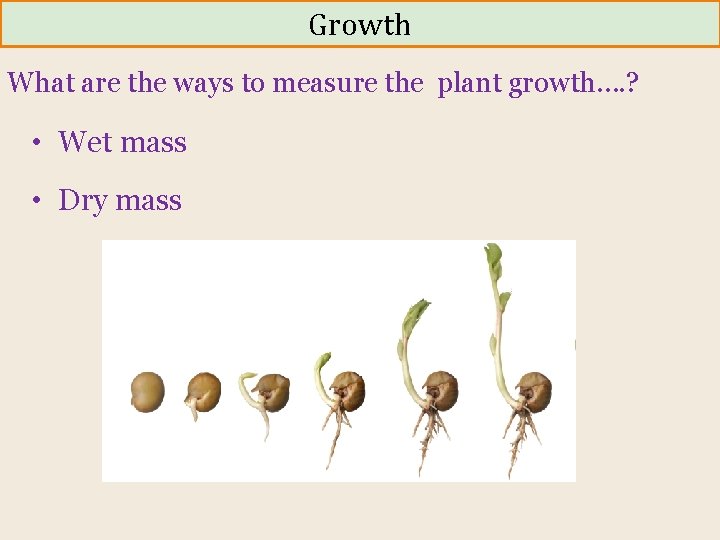
Growth What are the ways to measure the plant growth…. ? • Wet mass • Dry mass
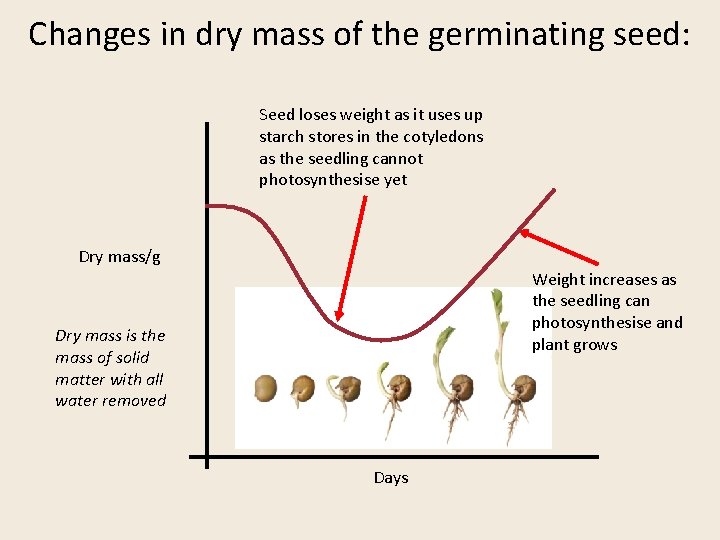
Changes in dry mass of the germinating seed: Seed loses weight as it uses up starch stores in the cotyledons as the seedling cannot photosynthesise yet Dry mass/g Weight increases as the seedling can photosynthesise and plant grows Dry mass is the mass of solid matter with all water removed Days
Development…………. ? – As the plant and animal grow, the cells of an organism become specialized and the organism becomes more complex. This is termed development.