Chapter 14 Agricultural Changes in the South 1790





- Slides: 30
Chapter 14 Agricultural Changes in the South (1790 -1860)
Chapter 14 Agricultural Changes in the South (1790 -1860) Section 1 The Growth of Cotton
The South’s Agricultural Economy • Southerner’s prided themselves on their ties to the land – Believed future of U. S. rested on agriculture • Southern agriculture began to decline after American Revolution – South’s first major cash crop = tobacco (took longer to produce) – Prices for major cash crops (indigo, rice and tobacco) fell – As prices fell, Upper South switched to crops that needed less labor (wheat) which led to drop in the value of slaves
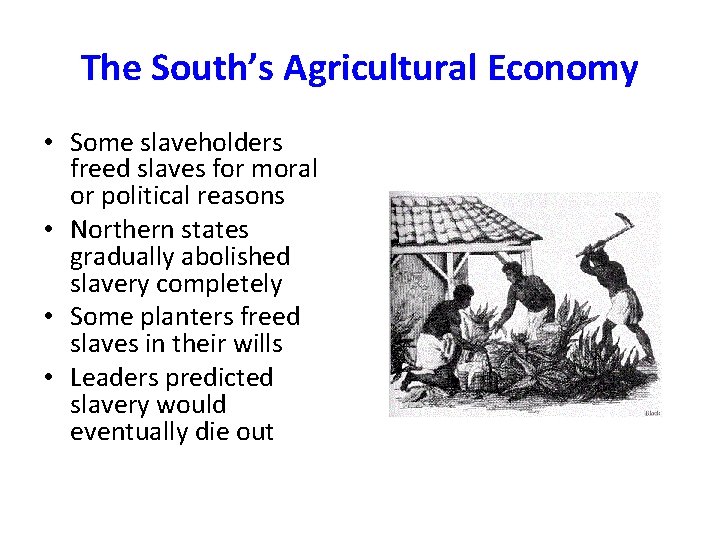
The South’s Agricultural Economy • Some slaveholders freed slaves for moral or political reasons • Northern states gradually abolished slavery completely • Some planters freed slaves in their wills • Leaders predicted slavery would eventually die out
Whitney and the Cotton Gin • Some southerners saw cotton as a cash crop that would help the economy • Expanding British and American textile industries used cotton the make cloth – Farmers had trouble keeping up with demand because cotton was difficult to grow and process • Southerners had been growing small amounts of cotton since Jamestown was founded (1607) – Preferred Long-staple (black seed) because it was easiest to process; downside = only grew in few places – Short-staple (green seed) grew well, but difficult to remove seed
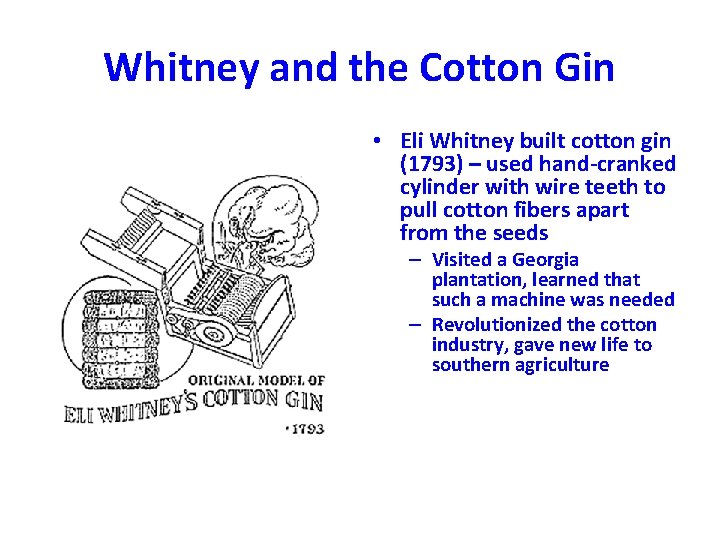
Whitney and the Cotton Gin • Eli Whitney built cotton gin (1793) – used hand-cranked cylinder with wire teeth to pull cotton fibers apart from the seeds – Visited a Georgia plantation, learned that such a machine was needed – Revolutionized the cotton industry, gave new life to southern agriculture
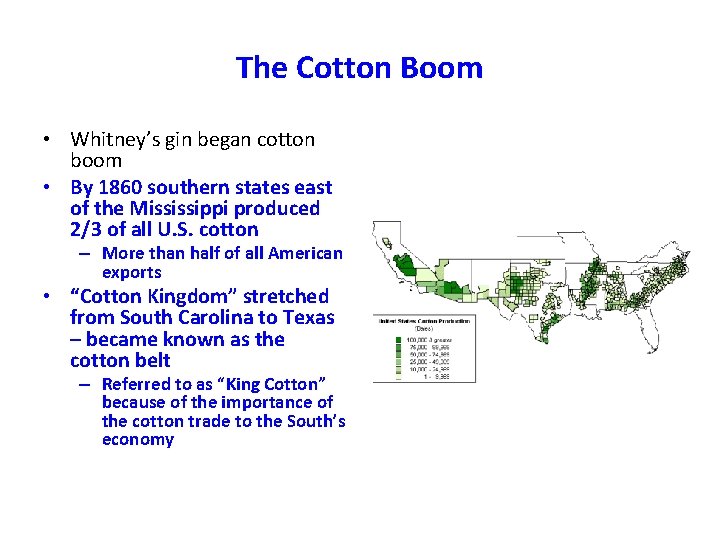
The Cotton Boom • Whitney’s gin began cotton boom • By 1860 southern states east of the Mississippi produced 2/3 of all U. S. cotton – More than half of all American exports • “Cotton Kingdom” stretched from South Carolina to Texas – became known as the cotton belt – Referred to as “King Cotton” because of the importance of the cotton trade to the South’s economy
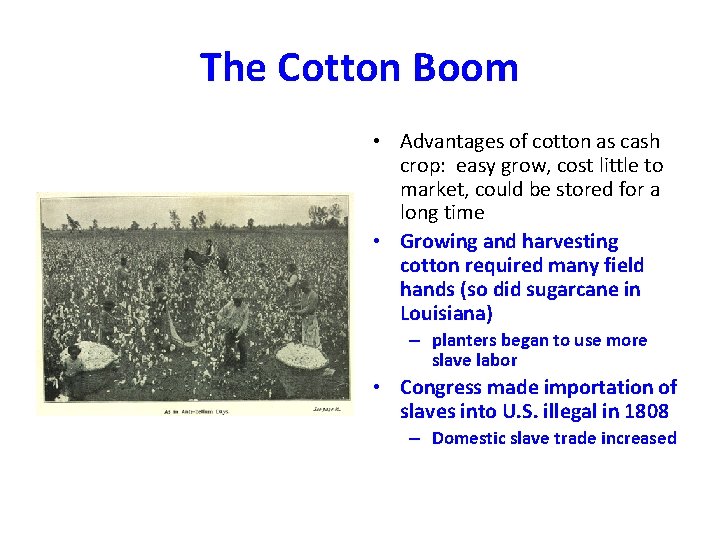
The Cotton Boom • Advantages of cotton as cash crop: easy grow, cost little to market, could be stored for a long time • Growing and harvesting cotton required many field hands (so did sugarcane in Louisiana) – planters began to use more slave labor • Congress made importation of slaves into U. S. illegal in 1808 – Domestic slave trade increased
Chapter 14 Agricultural Changes in the South (1790 -1860) Section 2 The Southern Economy
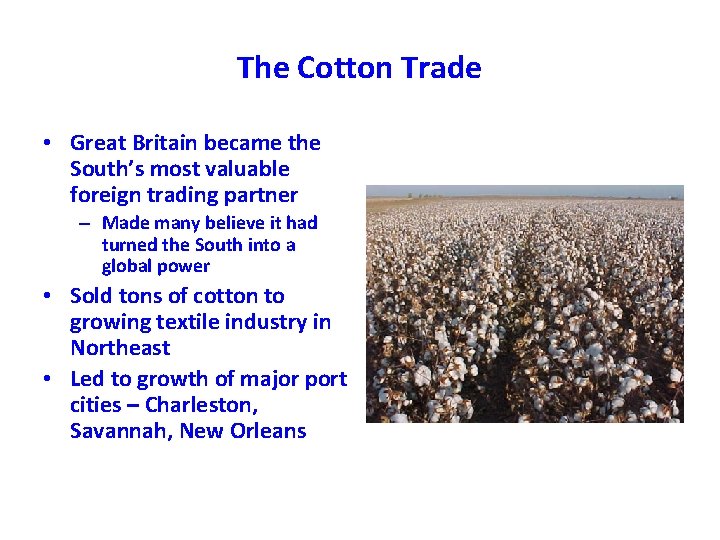
The Cotton Trade • Great Britain became the South’s most valuable foreign trading partner – Made many believe it had turned the South into a global power • Sold tons of cotton to growing textile industry in Northeast • Led to growth of major port cities – Charleston, Savannah, New Orleans
The Cotton Trade • Crop brokers called factors managed the cotton trade – Farmers sold cotton to merchants who made deals with factors • Most farmers relied on navigable rivers to get product to port • Shipping cotton by land was very difficult in the South – Roads projects limited, south was slow to build canals, fewer miles of railroad – Transportation Revolution had a wider impact in North than South
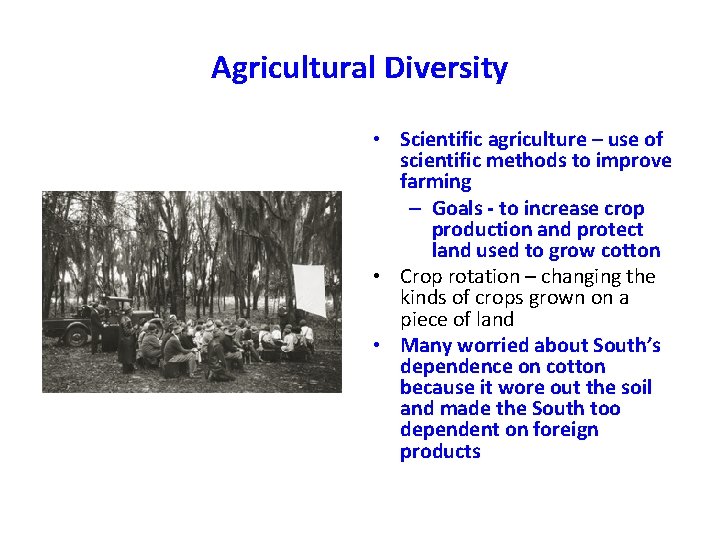
Agricultural Diversity • Scientific agriculture – use of scientific methods to improve farming – Goals - to increase crop production and protect land used to grow cotton • Crop rotation – changing the kinds of crops grown on a piece of land • Many worried about South’s dependence on cotton because it wore out the soil and made the South too dependent on foreign products
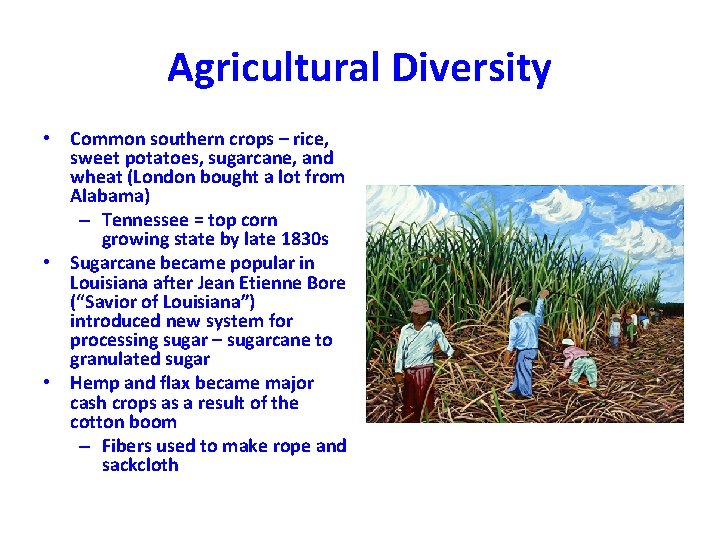
Agricultural Diversity • Common southern crops – rice, sweet potatoes, sugarcane, and wheat (London bought a lot from Alabama) – Tennessee = top corn growing state by late 1830 s • Sugarcane became popular in Louisiana after Jean Etienne Bore (“Savior of Louisiana”) introduced new system for processing sugar – sugarcane to granulated sugar • Hemp and flax became major cash crops as a result of the cotton boom – Fibers used to make rope and sackcloth
Southern Factories • Many of first factories built to process crops – Rope industry (Kentucky, Missouri, Tennessee), turning sugarcane into sugar • Tredegar Iron Works (Richmond) – only large southern factory that made iron products (started by Joseph R. Anderson) – One of nation’s most productive iron works – Produced boilers, bridge materials, cannons, locomotives, steam engines and other products • South’s industrial growth lagged behind the North – Cash crops seemed to promise great wealth – most farmers invested in more land slaves in order to grow more cotton – Profits went into developing plantation system, not southern industry
Chapter 14 Agricultural Changes in the South (1790 -1860) Section 3 Southern Society
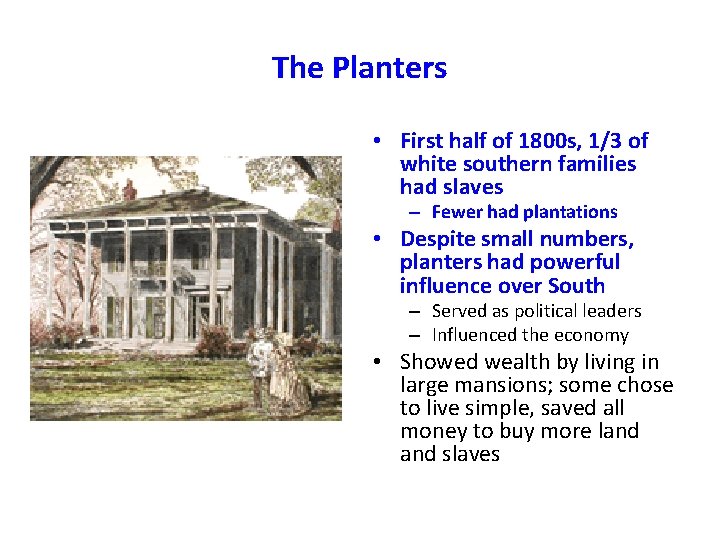
The Planters • First half of 1800 s, 1/3 of white southern families had slaves – Fewer had plantations • Despite small numbers, planters had powerful influence over South – Served as political leaders – Influenced the economy • Showed wealth by living in large mansions; some chose to live simple, saved all money to buy more land slaves
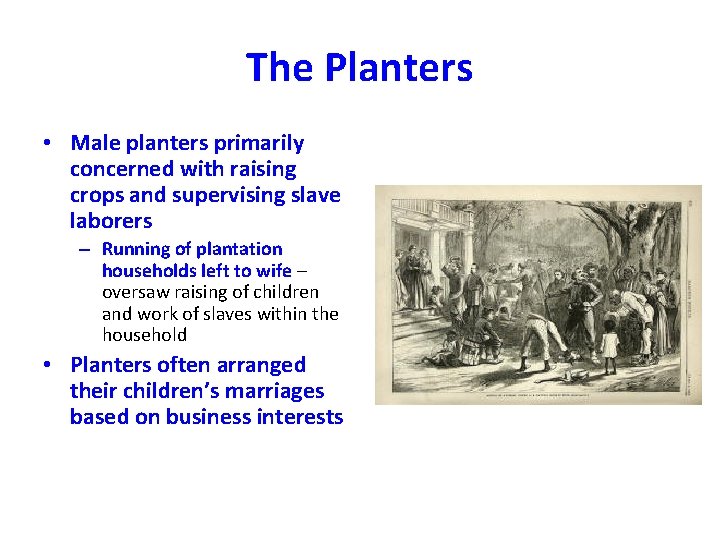
The Planters • Male planters primarily concerned with raising crops and supervising slave laborers – Running of plantation households left to wife – oversaw raising of children and work of slaves within the household • Planters often arranged their children’s marriages based on business interests
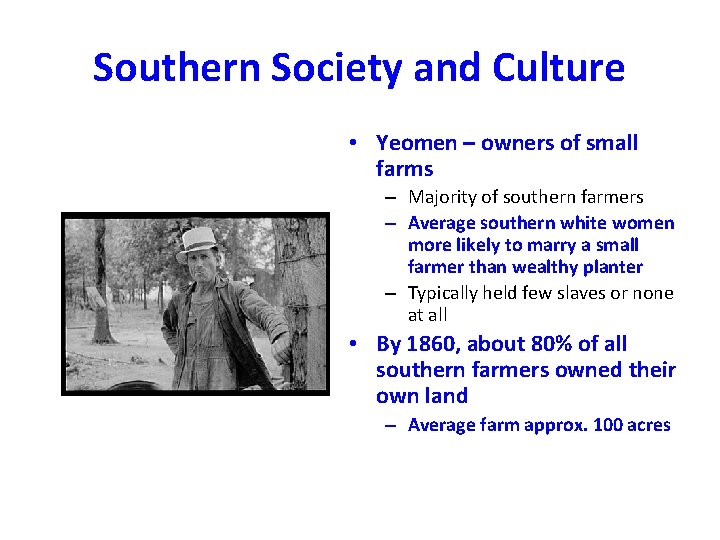
Southern Society and Culture • Yeomen – owners of small farms – Majority of southern farmers – Average southern white women more likely to marry a small farmer than wealthy planter – Typically held few slaves or none at all • By 1860, about 80% of all southern farmers owned their own land – Average farm approx. 100 acres
Southern Society and Culture • Some earned enough to buy a few slaves; usually worked side by side with them • Planters and yeomen often looked down on the landless - poorest of white southerners – less than 10% of white American population – Lived on land not suited for growing cash crops – Survived by hunting, fishing, raising animals, tending small gardens, doing odd jobs for money
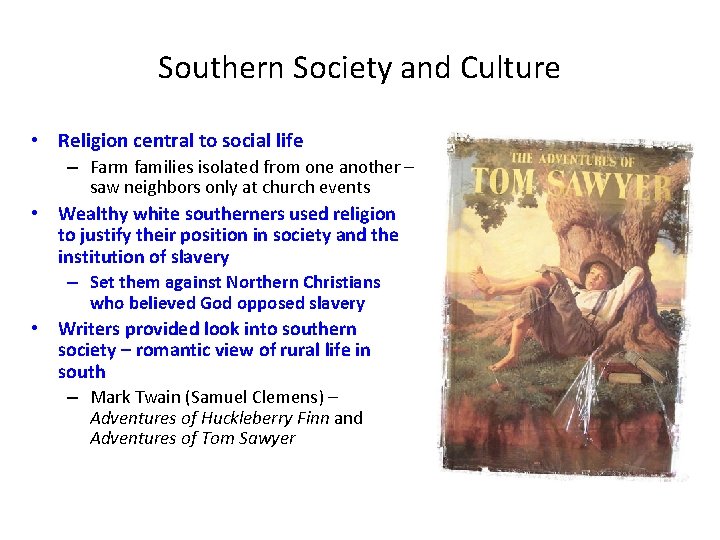
Southern Society and Culture • Religion central to social life • • – Farm families isolated from one another – saw neighbors only at church events Wealthy white southerners used religion to justify their position in society and the institution of slavery – Set them against Northern Christians who believed God opposed slavery Writers provided look into southern society – romantic view of rural life in south – Mark Twain (Samuel Clemens) – Adventures of Huckleberry Finn and Adventures of Tom Sawyer
The Urban South • Urban economy was influenced by plantations • Southern cities like northern cities in many ways – City governments built public water systems and provided well-maintained streets – Public education available in some places • Southern urban leaders wanted their cities to appear as modern as possible – Hoped to impress foreign visitors who came to do business • Slaves did much of the work in the cities – Worked as domestic servants, in mills, in shipyards, and at skilled jobs – Urban whites more likely to hold slaves
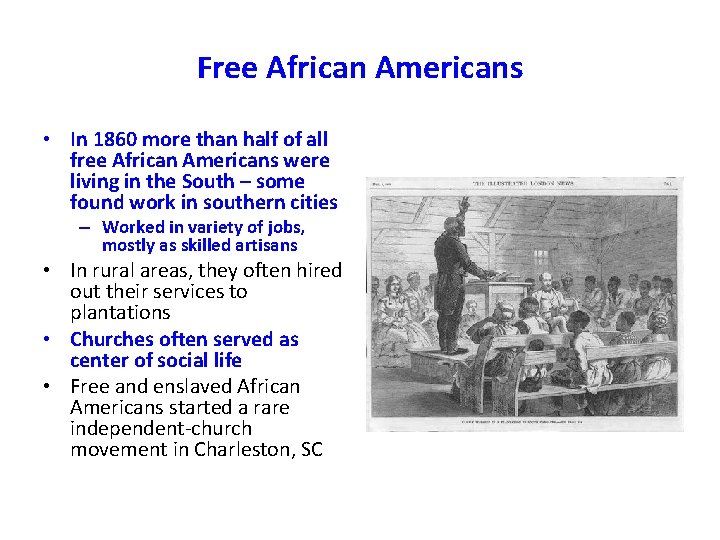
Free African Americans • In 1860 more than half of all free African Americans were living in the South – some found work in southern cities – Worked in variety of jobs, mostly as skilled artisans • In rural areas, they often hired out their services to plantations • Churches often served as center of social life • Free and enslaved African Americans started a rare independent-church movement in Charleston, SC
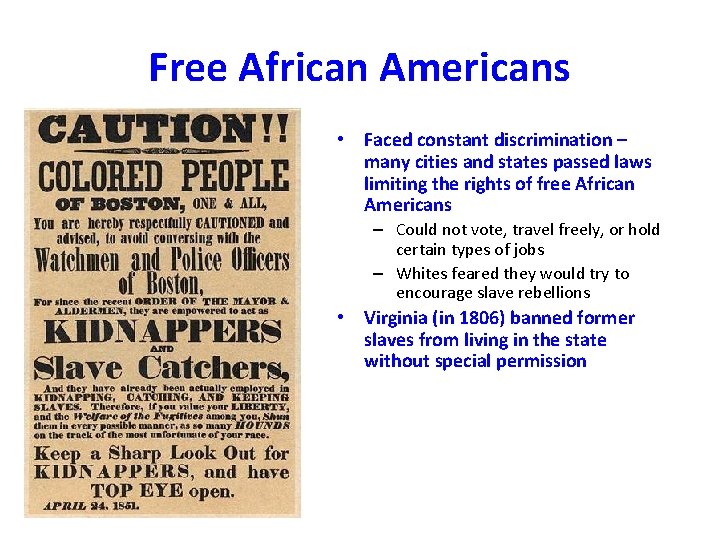
Free African Americans • Faced constant discrimination – many cities and states passed laws limiting the rights of free African Americans – Could not vote, travel freely, or hold certain types of jobs – Whites feared they would try to encourage slave rebellions • Virginia (in 1806) banned former slaves from living in the state without special permission
Chapter 14 Agricultural Changes in the South (1790 -1860) Section 4 The Slave System
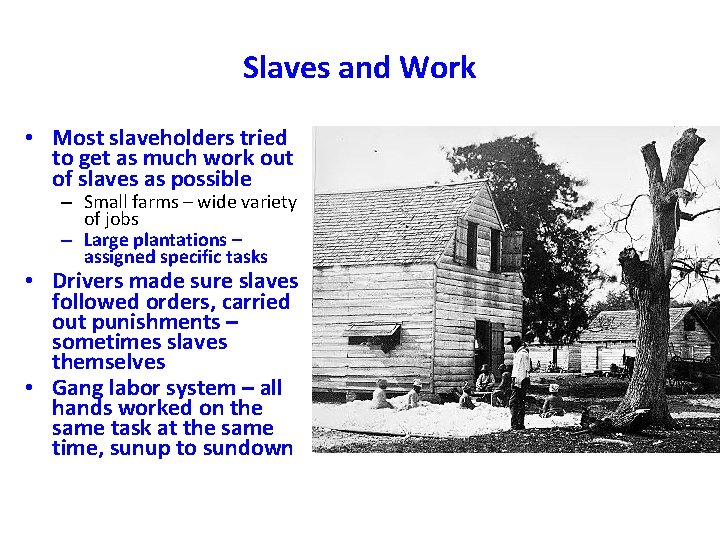
Slaves and Work • Most slaveholders tried to get as much work out of slaves as possible – Small farms – wide variety of jobs – Large plantations – assigned specific tasks • Drivers made sure slaves followed orders, carried out punishments – sometimes slaves themselves • Gang labor system – all hands worked on the same task at the same time, sunup to sundown
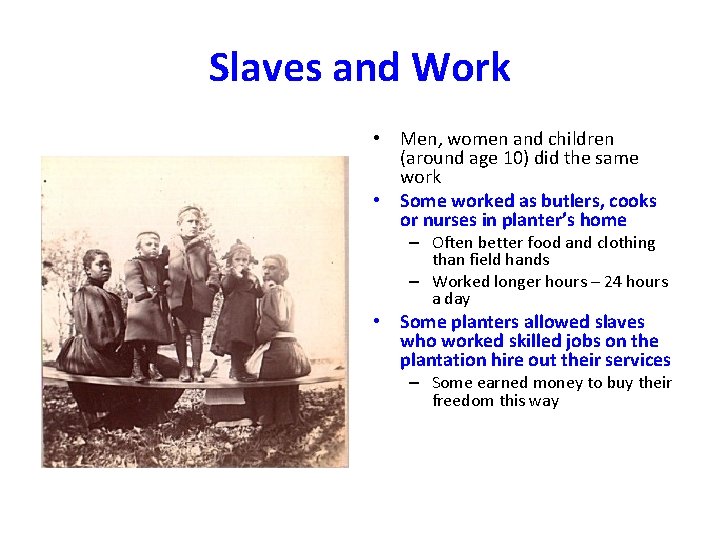
Slaves and Work • Men, women and children (around age 10) did the same work • Some worked as butlers, cooks or nurses in planter’s home – Often better food and clothing than field hands – Worked longer hours – 24 hours a day • Some planters allowed slaves who worked skilled jobs on the plantation hire out their services – Some earned money to buy their freedom this way
Life Under Slavery • Slaveholders tended to view slaves as property, not people – Some bought, worked and sold to make profit • Some slave traders kidnapped free African Americans to sell into slavery • Slaves received poor clothing and shelter, lived in small cabins with dirt floors, leaky roofs, and few furnishings • Some planters allowed slaves to keep their own vegetable gardens • Some planters offered more food or better living conditions to encourage slaves’ obedience, but most used punishment • Many states had strict slave codes that limited what slaves could do – Prohibited from traveling far from home – Teaching slaves to read or write usually illegal
Slave Culture • Despite harsh conditions, many took comfort in their community and culture • Strong ties to one another and their heritage • Family = most important unit of community – Feared being separated from family more than physical punishment • Passed down family histories as well as African customs and traditions • Told folktales (stories with a moral) to teach lessons about how to survive under slavery – Warned not to trust slaveholders • Religion was important – by 1800 s, many slaves = Christians – Used spirituals to express religious beliefs (songs that blended African and European music) – Style of worship blended aspects of traditional African religions with those of Christianity
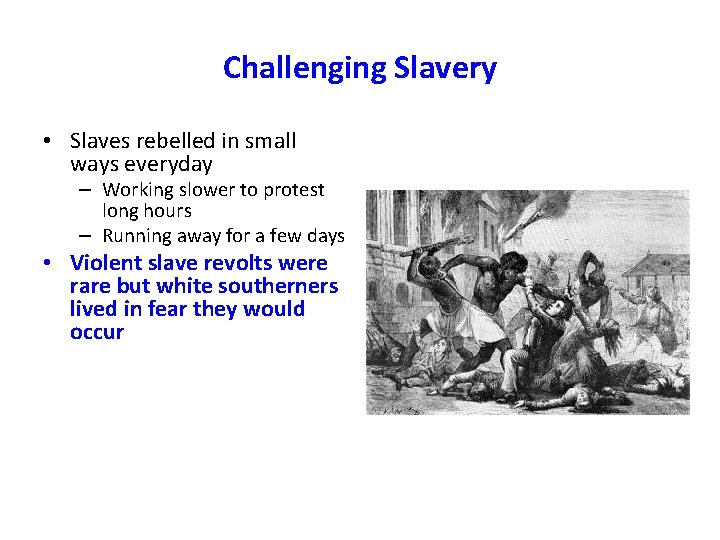
Challenging Slavery • Slaves rebelled in small ways everyday – Working slower to protest long hours – Running away for a few days • Violent slave revolts were rare but white southerners lived in fear they would occur
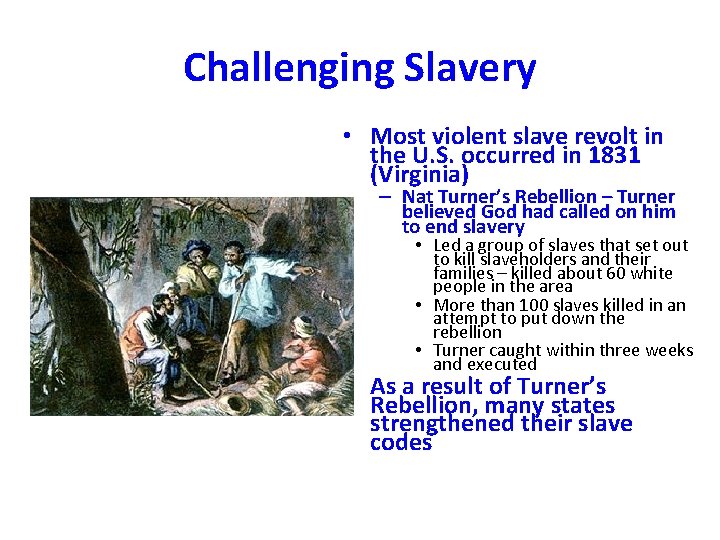
Challenging Slavery • Most violent slave revolt in the U. S. occurred in 1831 (Virginia) – Nat Turner’s Rebellion – Turner believed God had called on him to end slavery • Led a group of slaves that set out to kill slaveholders and their families – killed about 60 white people in the area • More than 100 slaves killed in an attempt to put down the rebellion • Turner caught within three weeks and executed • As a result of Turner’s Rebellion, many states strengthened their slave codes