Chapter 13 14 Energy Generation in Mitochondria Generation
- Slides: 37
Chapter 13 &14 Energy Generation in Mitochondria
Generation of Energy • Millions of years ago there was no O 2 available for oxidative phosphorylation to occur • Organisms produced energy from fermentation, still see this today • As O 2 became available, a more efficient method of energy production developed – Based on the transfer of e- along the membrane
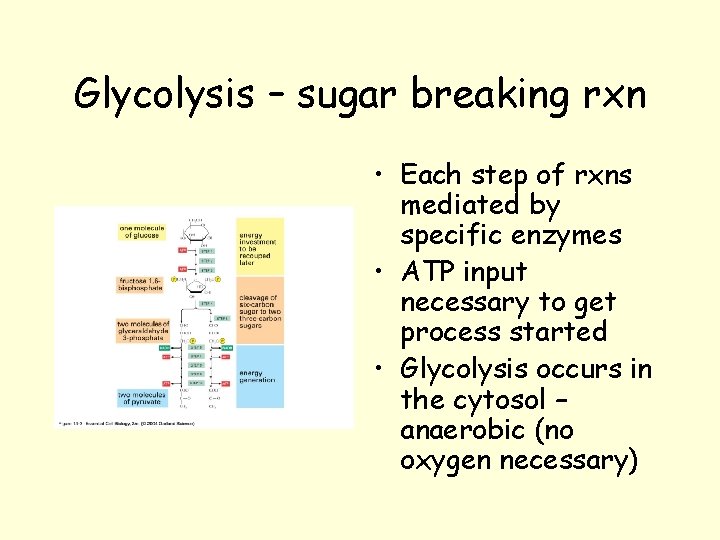
Glycolysis – sugar breaking rxn • Each step of rxns mediated by specific enzymes • ATP input necessary to get process started • Glycolysis occurs in the cytosol – anaerobic (no oxygen necessary)
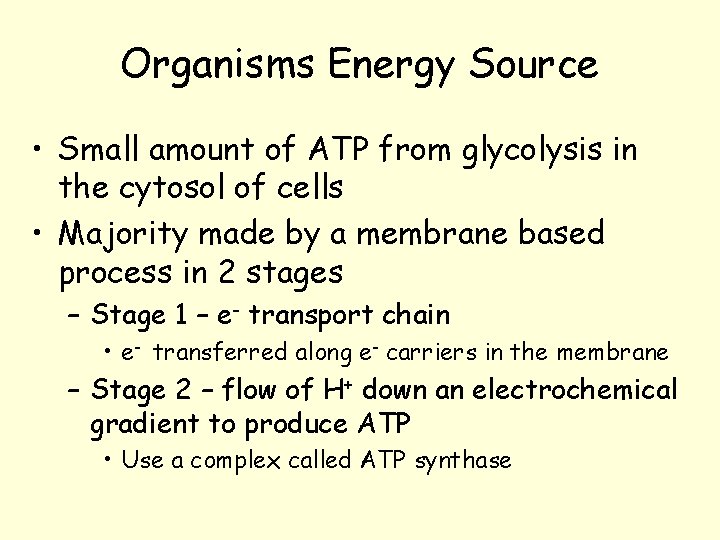
Organisms Energy Source • Small amount of ATP from glycolysis in the cytosol of cells • Majority made by a membrane based process in 2 stages – Stage 1 – e- transport chain • e- transferred along e- carriers in the membrane – Stage 2 – flow of H+ down an electrochemical gradient to produce ATP • Use a complex called ATP synthase
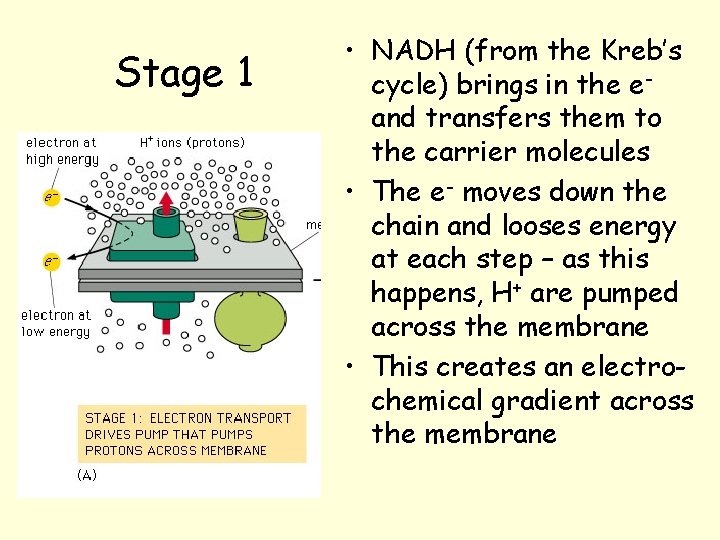
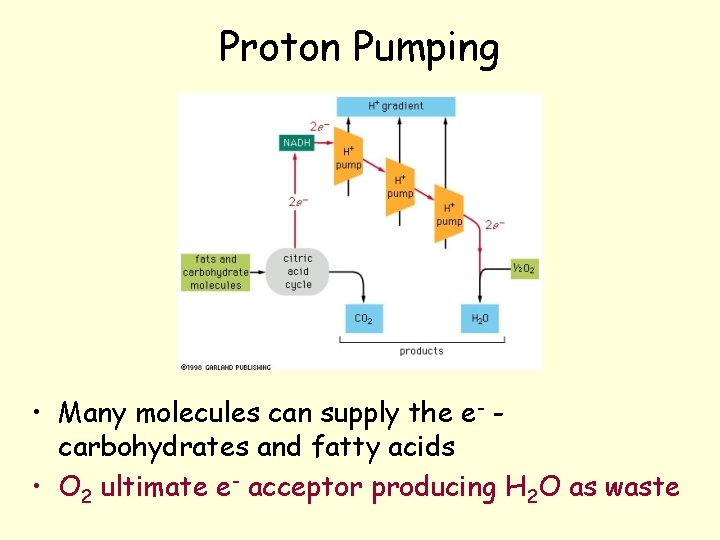
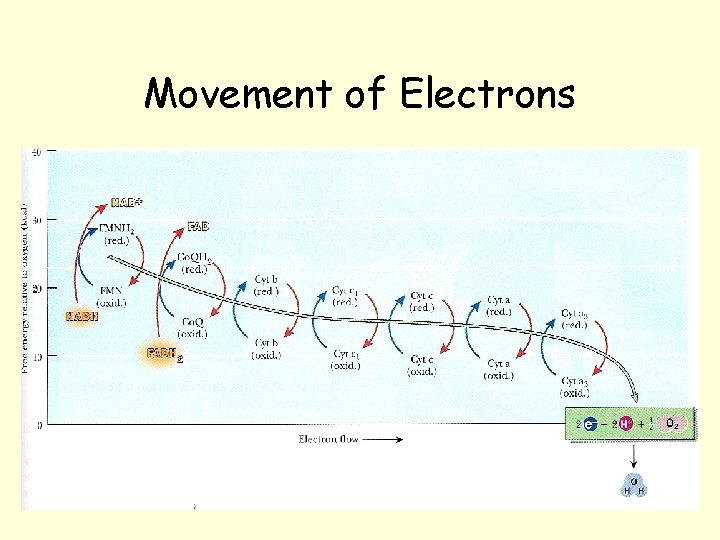
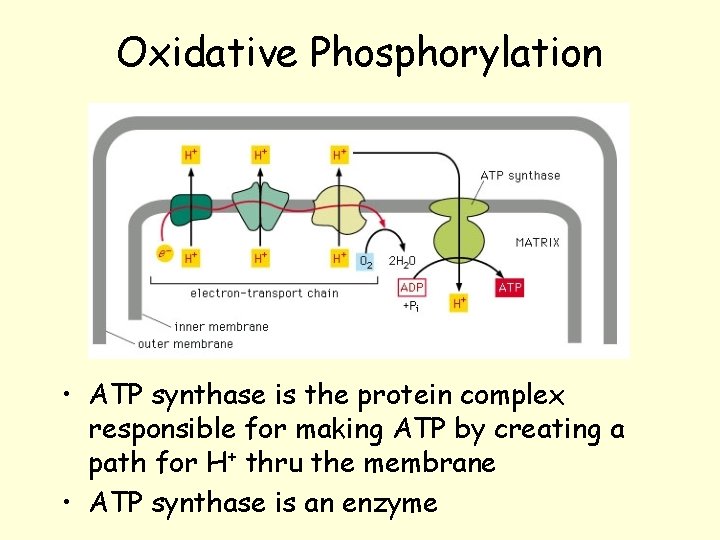
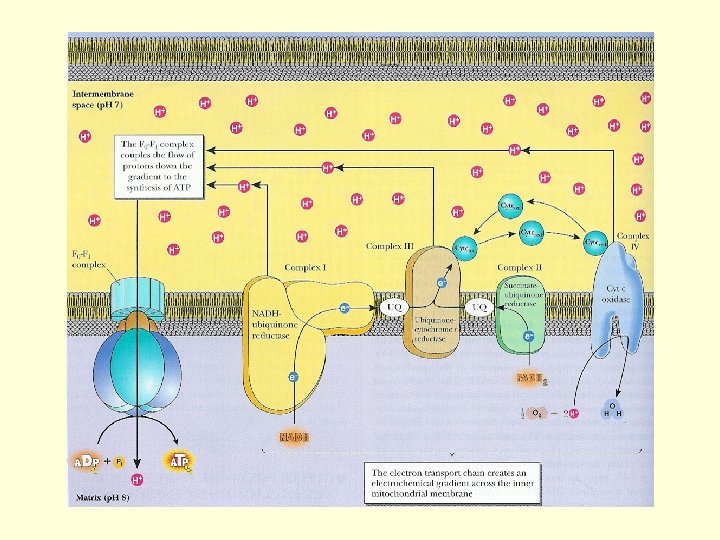
Stage 1 • NADH (from the Kreb’s cycle) brings in the eand transfers them to the carrier molecules • The e- moves down the chain and looses energy at each step – as this happens, H+ are pumped across the membrane • This creates an electrochemical gradient across the membrane
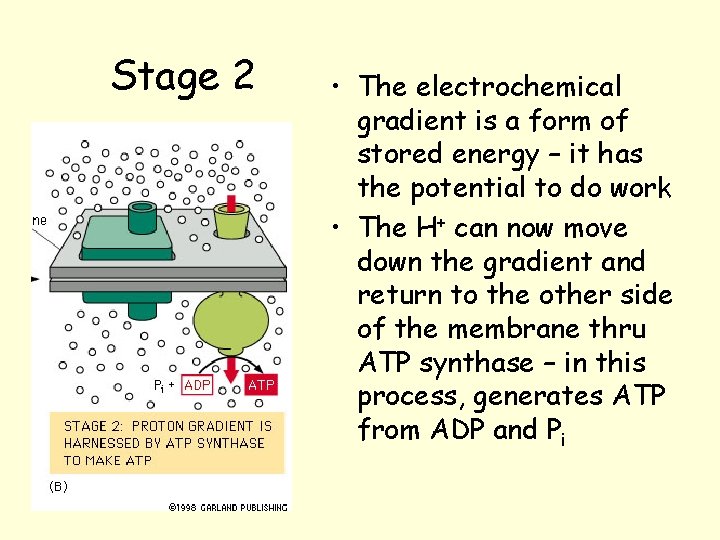
Stage 2 • The electrochemical gradient is a form of stored energy – it has the potential to do work • The H+ can now move down the gradient and return to the other side of the membrane thru ATP synthase – in this process, generates ATP from ADP and Pi
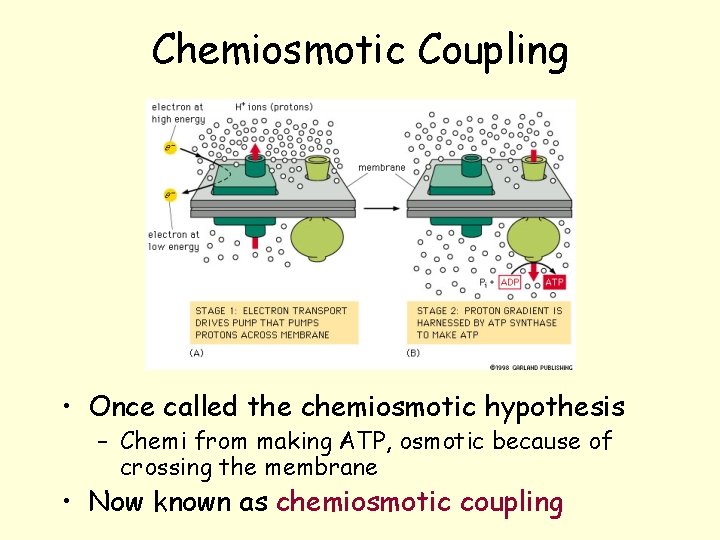
Chemiosmotic Coupling • Once called the chemiosmotic hypothesis – Chemi from making ATP, osmotic because of crossing the membrane • Now known as chemiosmotic coupling
Proton Pumping • Many molecules can supply the e- carbohydrates and fatty acids • O 2 ultimate e- acceptor producing H 2 O as waste
Movement of Electrons
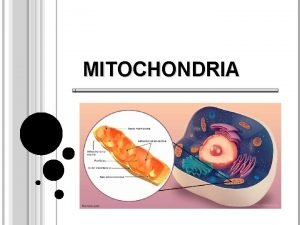
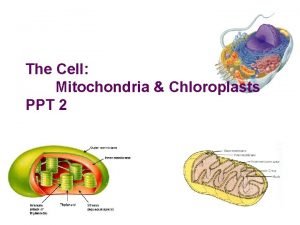
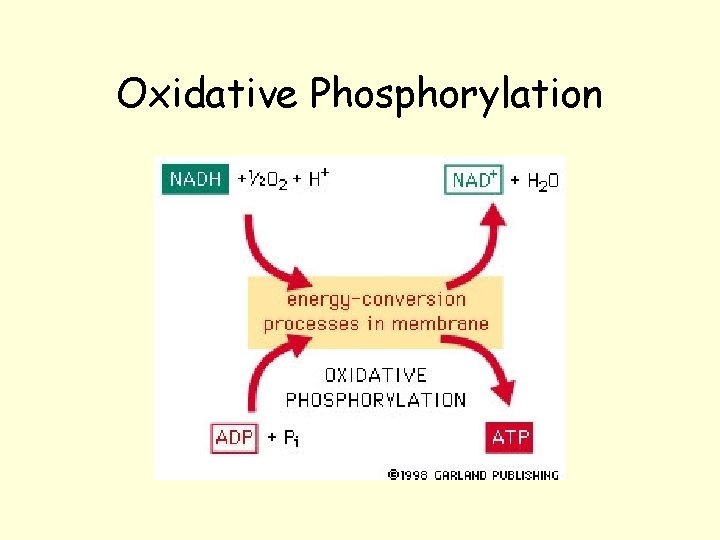
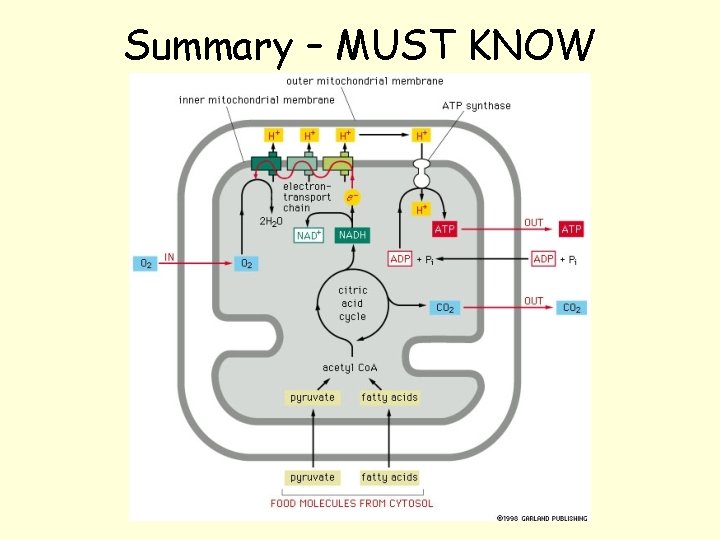
Mitochondria • Produce most of a cells ATP – acetyl groups in the Kreb’s cycle producing CO 2 and NADH • NADH donates the e- to the electron transport chain and becomes oxidized to NAD+ • e- transfer promotes proton pump and ATP synthesis in process called oxidative phosphorylation • Cells that require large amounts of energy such as the heart have large numbers of mitochondria
Oxidative Phosphorylation
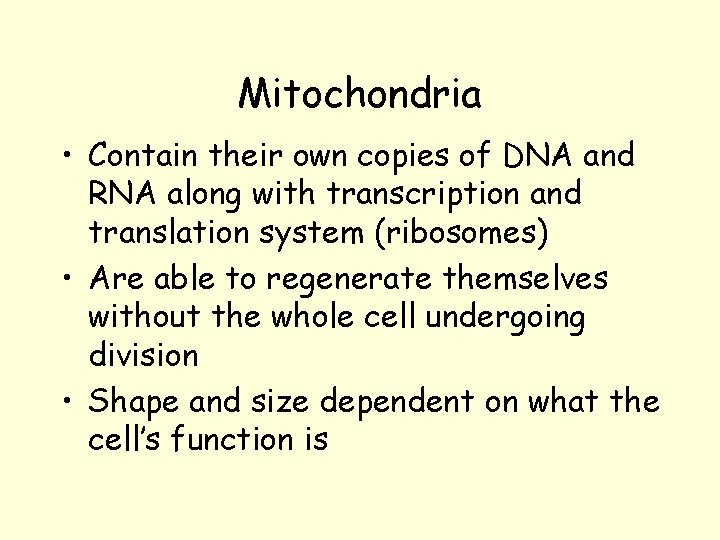
Mitochondria • Contain their own copies of DNA and RNA along with transcription and translation system (ribosomes) • Are able to regenerate themselves without the whole cell undergoing division • Shape and size dependent on what the cell’s function is
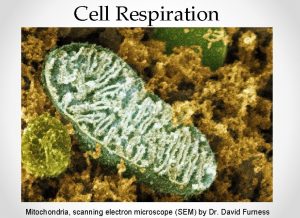
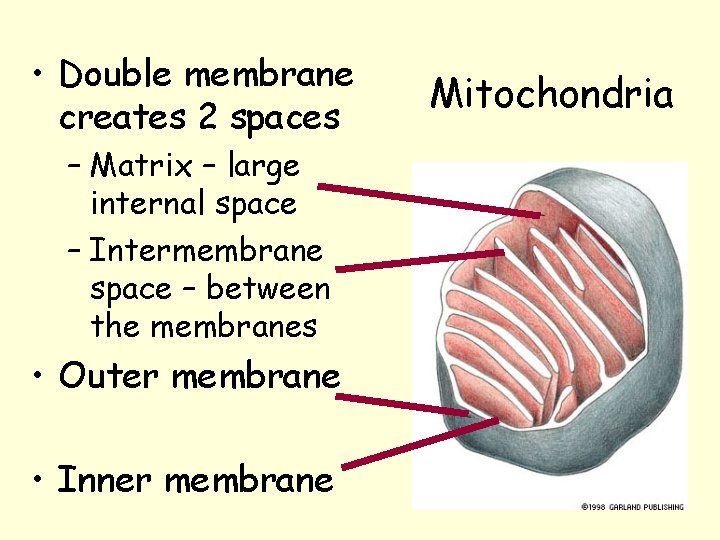
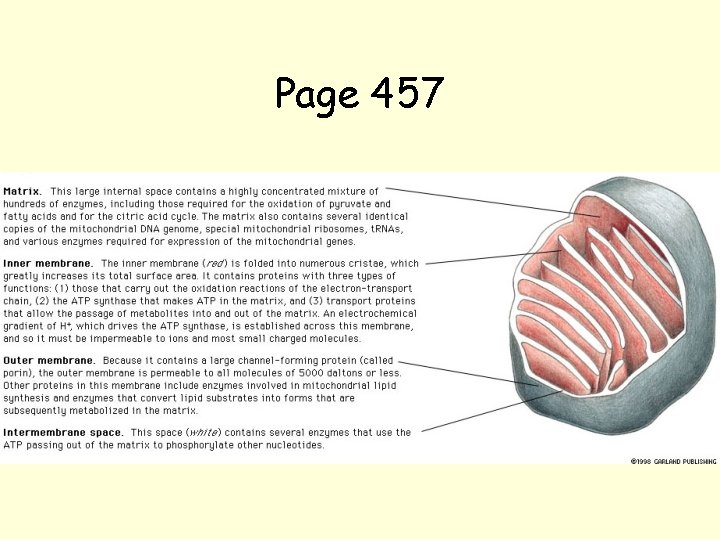
• Double membrane creates 2 spaces – Matrix – large internal space – Intermembrane space – between the membranes • Outer membrane • Inner membrane Mitochondria
Page 457
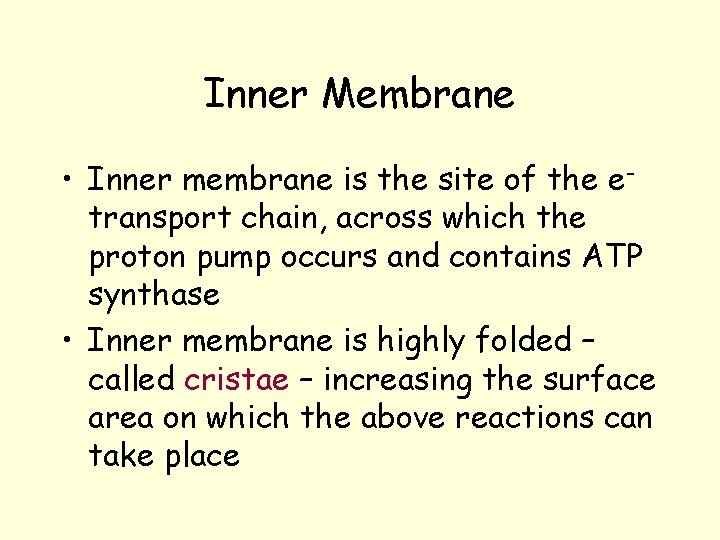
Inner Membrane • Inner membrane is the site of the etransport chain, across which the proton pump occurs and contains ATP synthase • Inner membrane is highly folded – called cristae – increasing the surface area on which the above reactions can take place
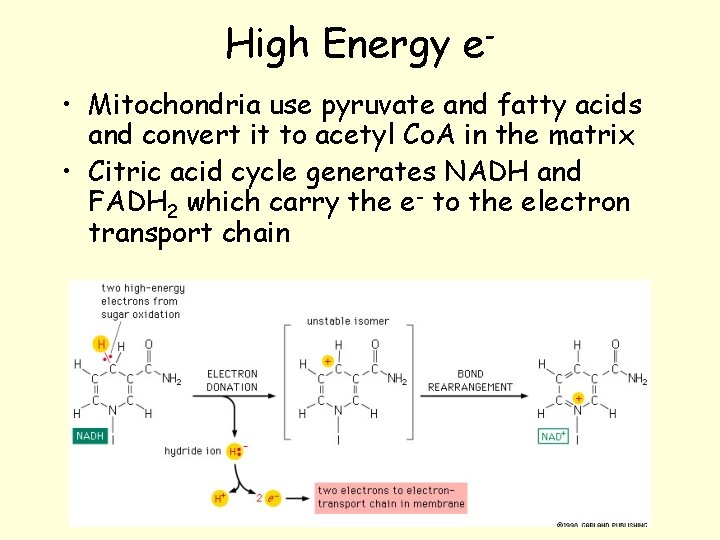
High Energy e • Mitochondria use pyruvate and fatty acids and convert it to acetyl Co. A in the matrix • Citric acid cycle generates NADH and FADH 2 which carry the e- to the electron transport chain
Summary – MUST KNOW
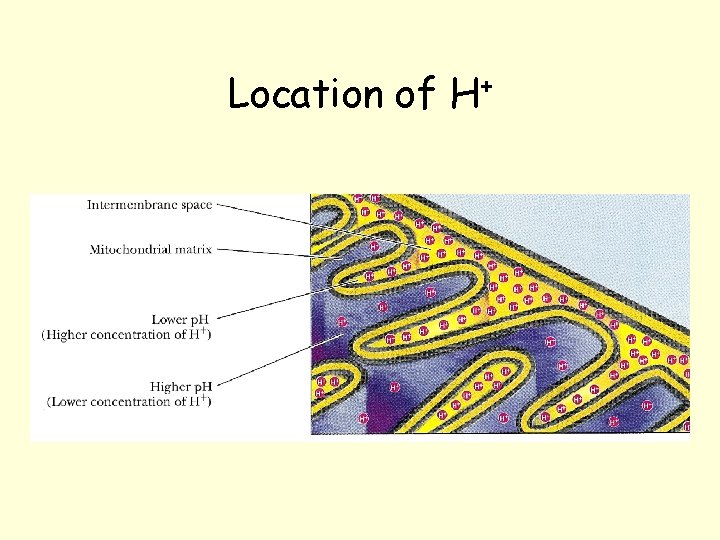
Location of H+
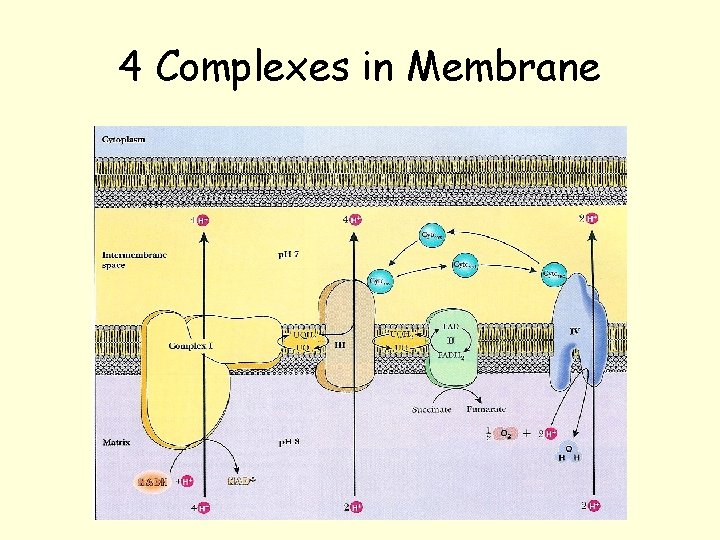
4 Complexes in Membrane
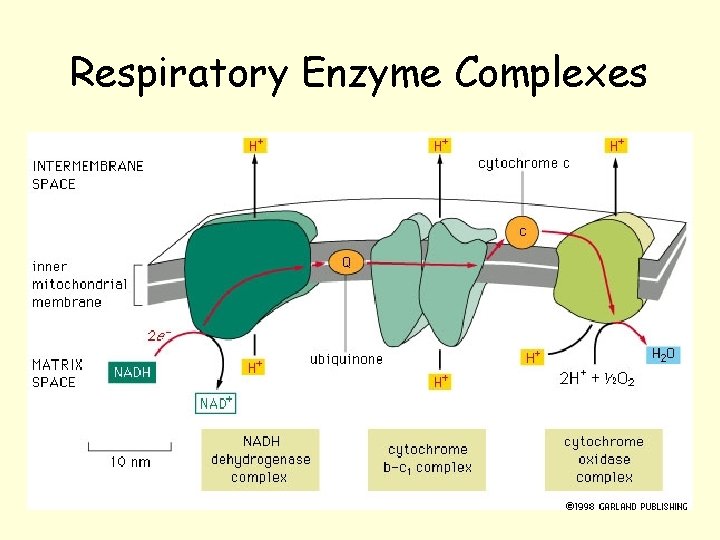
Electron Transport Chain • Resides in the inner mitochondrial membrane – also called respiratory chain • 15 proteins involved in the chain – grouped in 3 large respiratory enzyme complexes – NADH dehydrogenase complex – Cytochrome b-c 1 complex – Cytochrome oxidase complex • Pumps protons across the membrane as e- are transferred thru them
Respiratory Enzyme Complexes
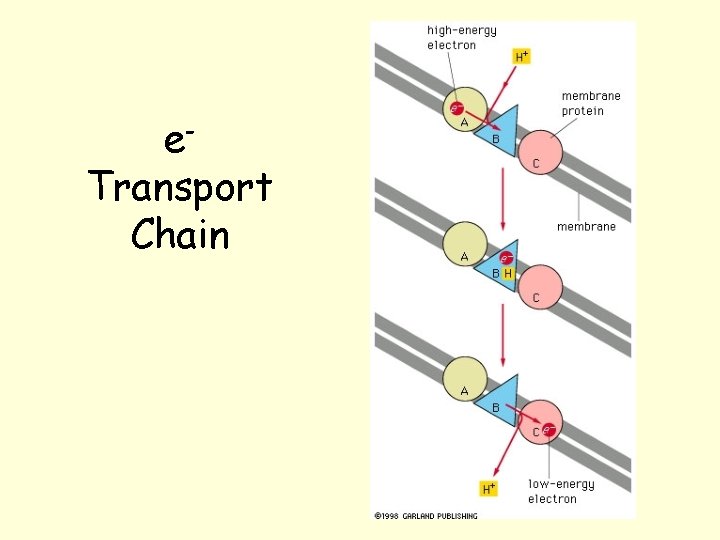
Proton Gradient • e- transfer is an oxidation/reduction reaction • NADH has high-energy e- has a low electron affinity so the e- is readily passed to NADH dehydrogenase and so on down the chain • Each transfer couples the energy released with the uptake of a H+ from the matrix to the intermembrane space setting up the electrochemical gradient
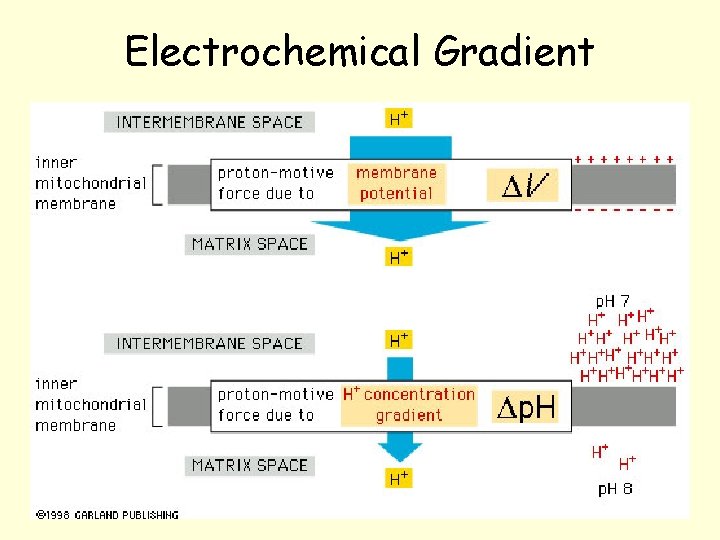
Proton Gradient • Gradient of proton (H+) concentration across the inner mitochondrial membrane – a p. H gradient with the p. H in the matrix higher than in the intermembrane space • Proton pumping also generates a membrane potential – matrix side is negative and intermembrane space is positive
Electrochemical Gradient
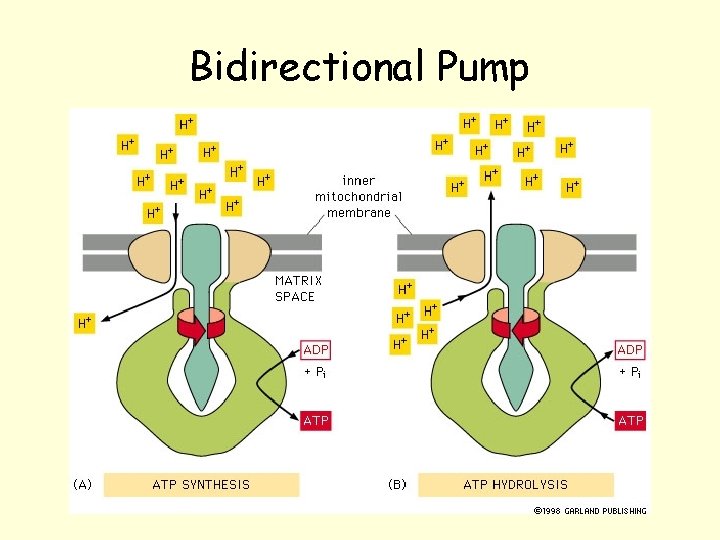
Oxidative Phosphorylation • ATP synthase is the protein complex responsible for making ATP by creating a path for H+ thru the membrane • ATP synthase is an enzyme
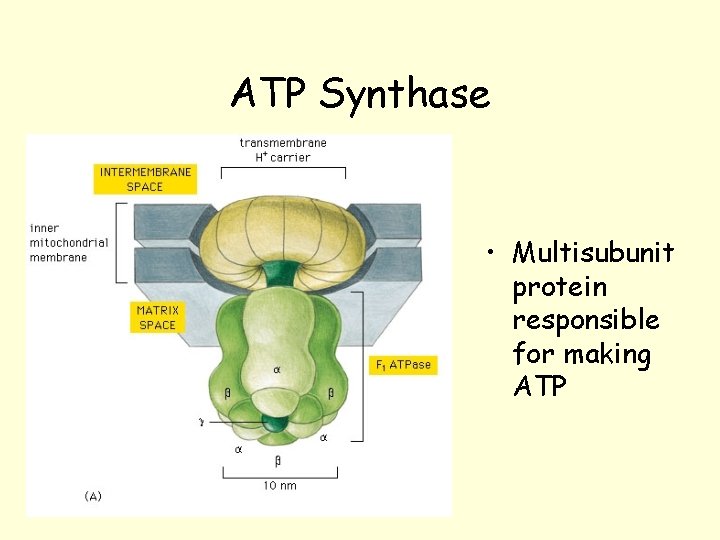
ATP Synthase • Multisubunit protein responsible for making ATP
Bidirectional Pump
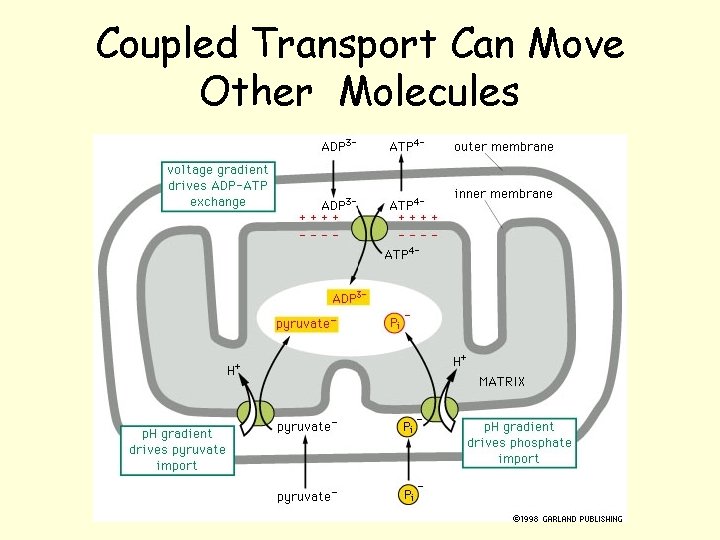
Coupled Transport Can Move Other Molecules
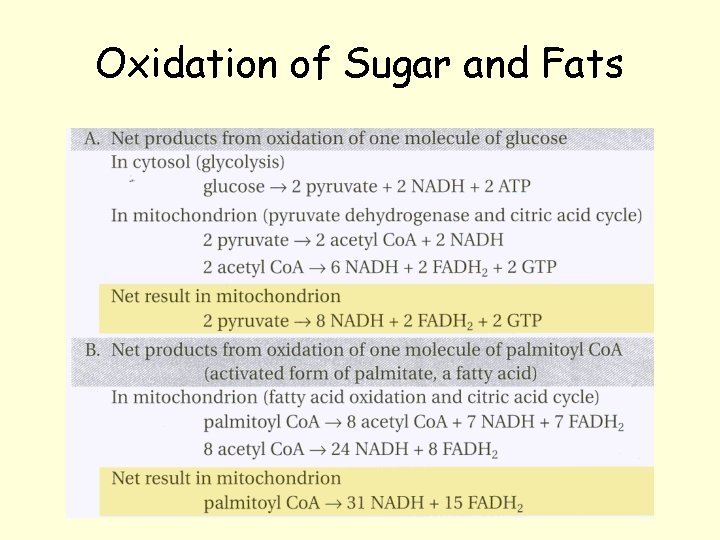
Oxidation of Sugar and Fats
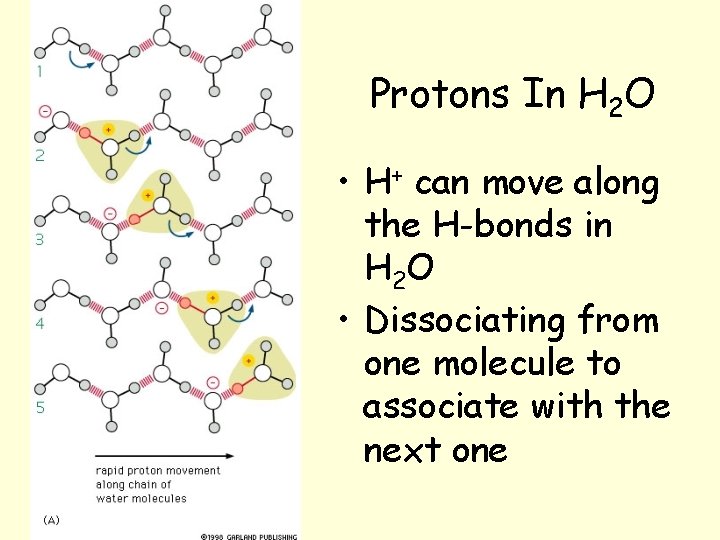
Protons In H 2 O • H+ can move along the H-bonds in H 2 O • Dissociating from one molecule to associate with the next one
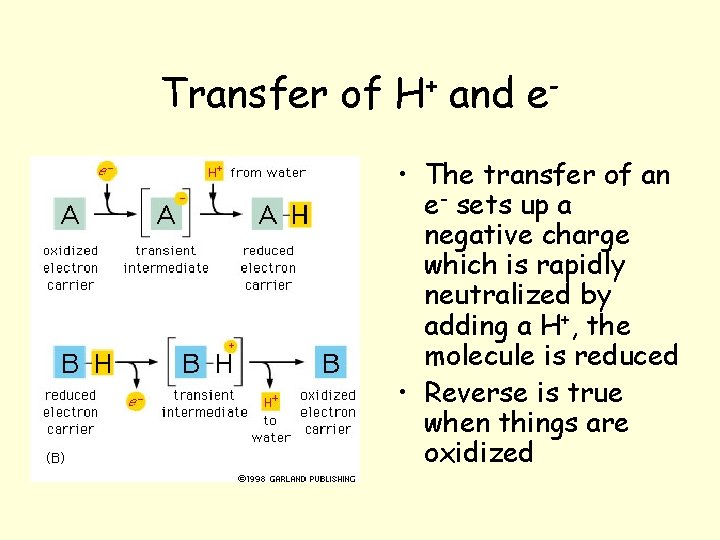
Transfer of H+ and e • The transfer of an e- sets up a negative charge which is rapidly neutralized by adding a H+, the molecule is reduced • Reverse is true when things are oxidized
e. Transport Chain
Redox Potential • Redox = oxidation-reduction reactions • Depends on the affinity for electrons of the molecules involved in each reaction • Redox pairs – two molecules such as NADH and NAD+ - NADH is a strong electron donor (oxidizing agent) while NAD+ is a weak electron acceptor (reducing agent) • Redox Potential – a measure of the tendency of a given system to donate or accept electrons
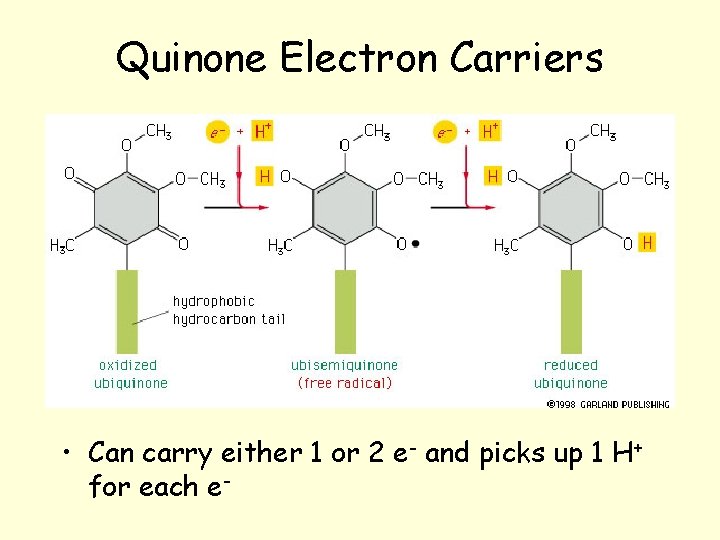
Versatile Electron Carriers • The respiratory complexes are made up of a metal ion bound to a protein molecule • The metal ion is responsible for the movement of the e-, skipping from one ion to another • Ubiquinone, a hydrophobic molecule, that can move electrons without being bound to a protein
Quinone Electron Carriers • Can carry either 1 or 2 e- and picks up 1 H+ for each e-
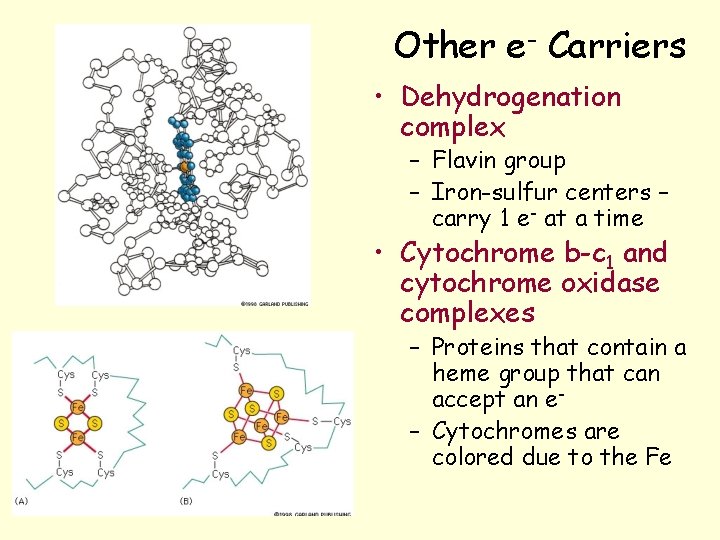
Other e- Carriers • Dehydrogenation complex – Flavin group – Iron-sulfur centers – carry 1 e- at a time • Cytochrome b-c 1 and cytochrome oxidase complexes – Proteins that contain a heme group that can accept an e– Cytochromes are colored due to the Fe