
Classifications of Mitochondrial Disorders M R Ashrafi Professor

- Slides: 42
Classifications of Mitochondrial Disorders M. R Ashrafi Professor of Pediatric Neurology Children’s Medical Center Tehran University of Medical Sciences
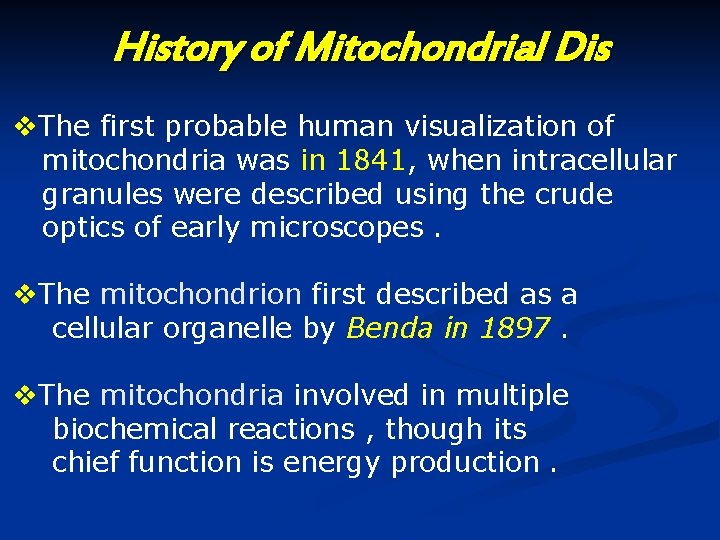
History of Mitochondrial Dis v. The first probable human visualization of mitochondria was in 1841, when intracellular granules were described using the crude optics of early microscopes. v. The mitochondrion first described as a cellular organelle by Benda in 1897. v. The mitochondria involved in multiple biochemical reactions , though its chief function is energy production.
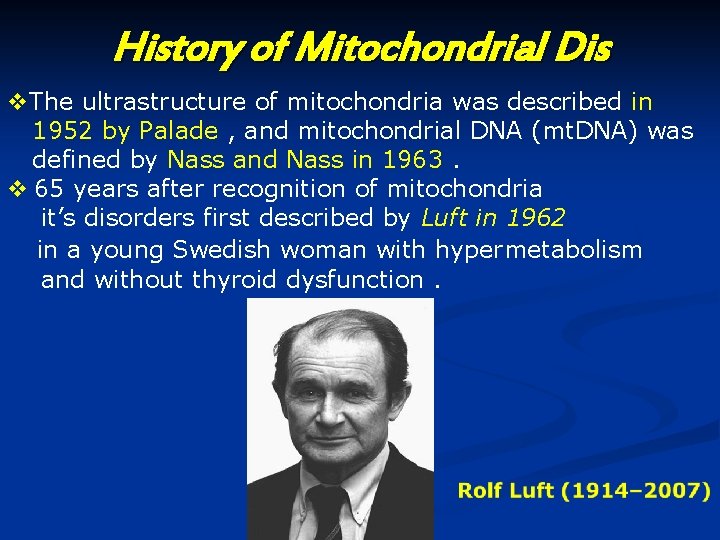
History of Mitochondrial Dis v. The ultrastructure of mitochondria was described in 1952 by Palade , and mitochondrial DNA (mt. DNA) was defined by Nass and Nass in 1963. v 65 years after recognition of mitochondria it’s disorders first described by Luft in 1962 in a young Swedish woman with hypermetabolism and without thyroid dysfunction.
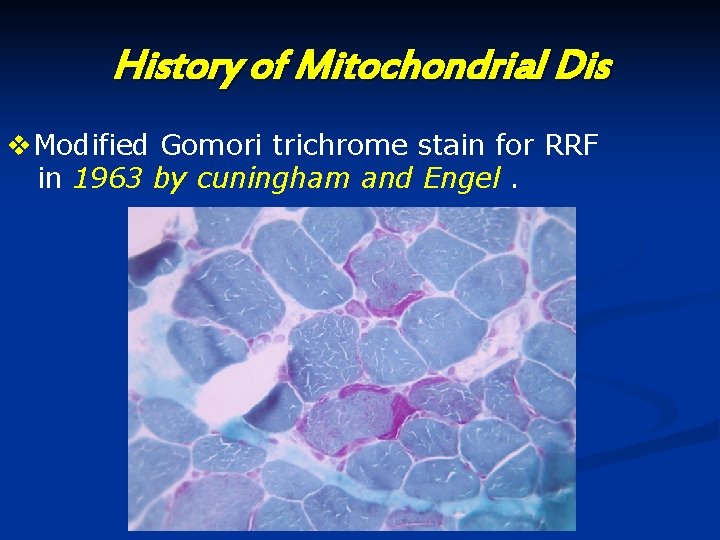
History of Mitochondrial Dis v. Modified Gomori trichrome stain for RRF in 1963 by cuningham and Engel.
History of Mitochondrial Dis v. The correlation between mitochondrial abnormalities and neurologic syndromes was first reported in 1972 by Olson. v. The term of “Mitochondrial encephalomyopathies, ” introduced in 1977 by Yehuda Shapira.
History of Mitochondrial Dis v. The application of specific biochemical assays led to the description of increasing numbers of metabolic defects, including : PDHC deficiency (Blass et al. 1970) palmitoylcarnitine transferase (Di. Mauro 1973) carnitine (Engel and Angelini 1973; Karpati 1975) complex III of Res chain (Spiro et al. 1970) complex IV of Res chain (Willems et al. 1977)
History of Mitochondrial Dis v. Many individuals display a cluster of clinical features that fall into a discrete clinical syndromes , such as : KSS , CPEO MELAS MERRF NARP Leigh syndrome [Moraes et al 1989] [Hirano et al 1992] [Hammans et al 1993] [Holt et al 1990] [Ciafaloni et al 1993]
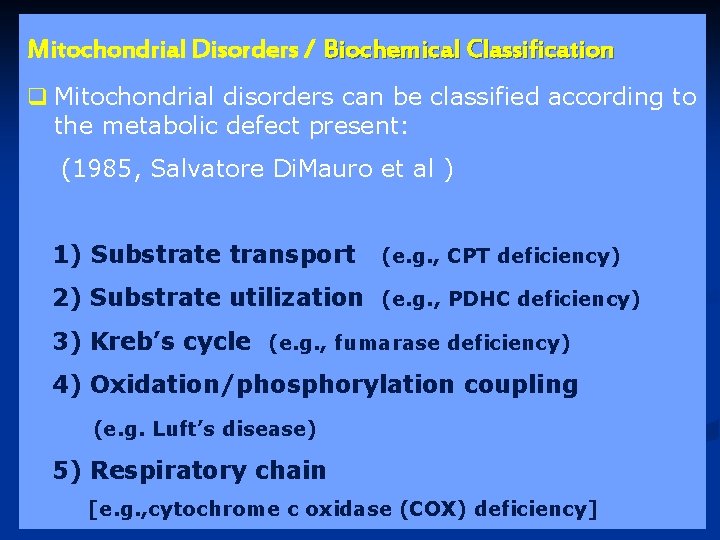
History of Mitochondrial Dis v. In 1985, Salvatore Di. Mauro et al. proposed a general biochemical classification of the mitochondrial diseases based on the five main steps of mitochondrial metabolism. v Genetic classification of mitochondrial Diseases proposed in 1993 by Di. Mauro et al.
Classification of Mitochondrial Disorders v. Biochemical Classification v. Genetic Classification v. Clinical phenotypes
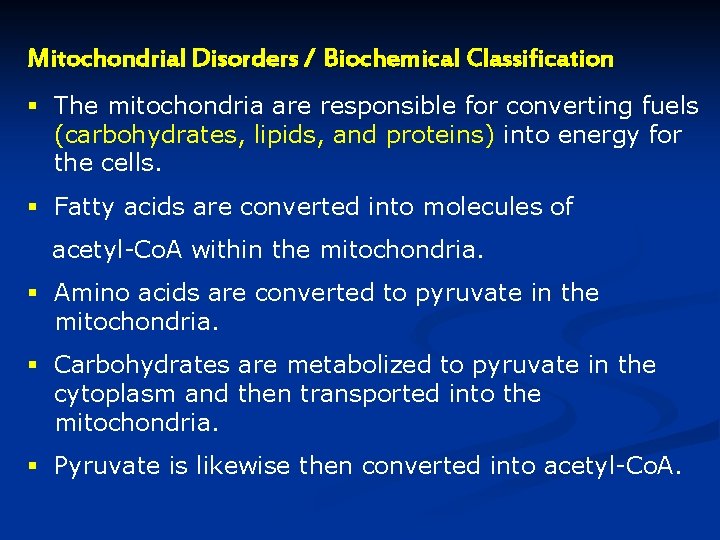
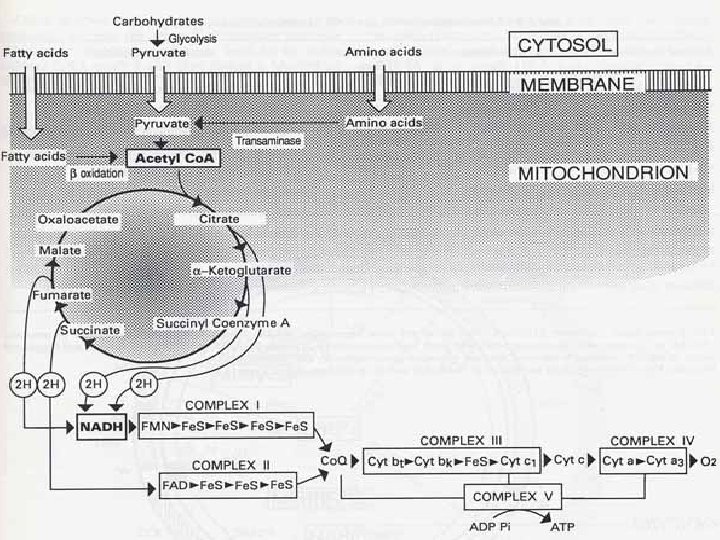
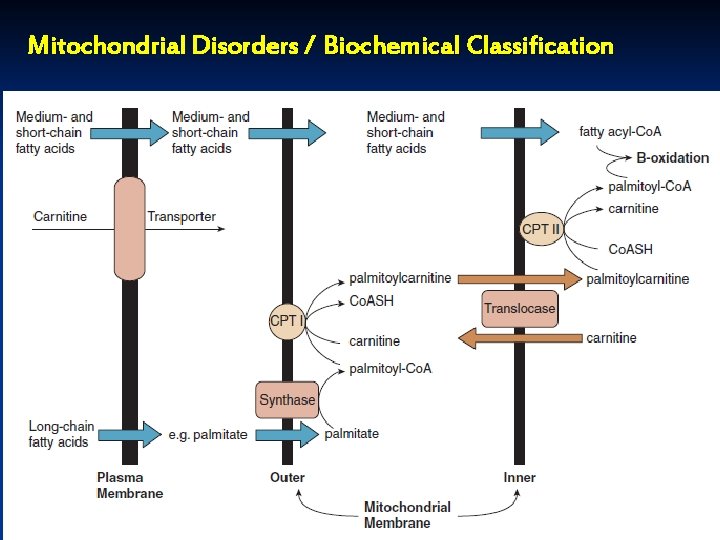
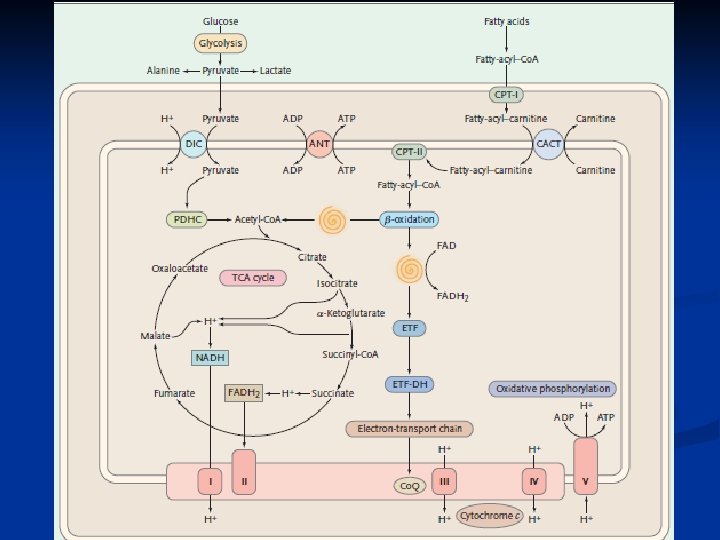
Mitochondrial Disorders / Biochemical Classification § The mitochondria are responsible for converting fuels (carbohydrates, lipids, and proteins) into energy for the cells. § Fatty acids are converted into molecules of acetyl-Co. A within the mitochondria. § Amino acids are converted to pyruvate in the mitochondria. § Carbohydrates are metabolized to pyruvate in the cytoplasm and then transported into the mitochondria. § Pyruvate is likewise then converted into acetyl-Co. A.
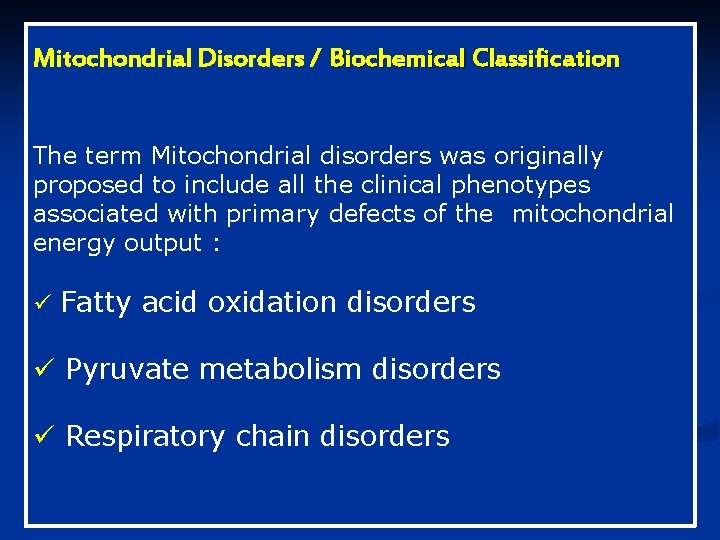
Mitochondrial Disorders / Biochemical Classification The term Mitochondrial disorders was originally proposed to include all the clinical phenotypes associated with primary defects of the mitochondrial energy output : ü Fatty acid oxidation disorders ü Pyruvate metabolism disorders ü Respiratory chain disorders
Mitochondrial Disorders / Biochemical Classification
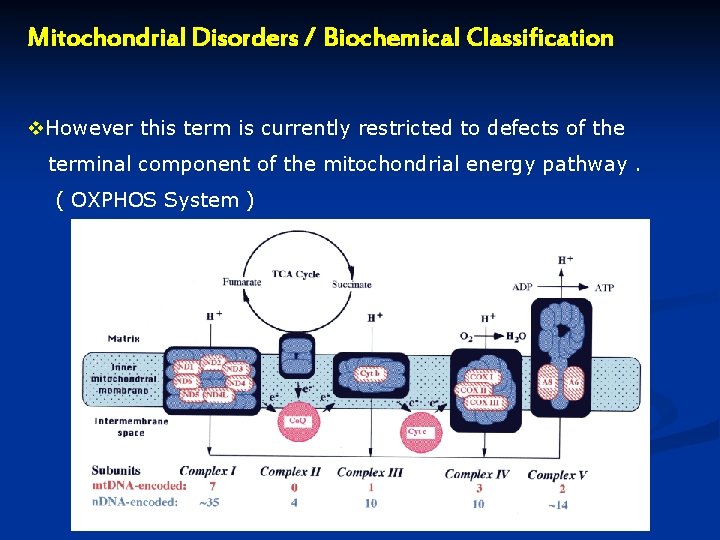
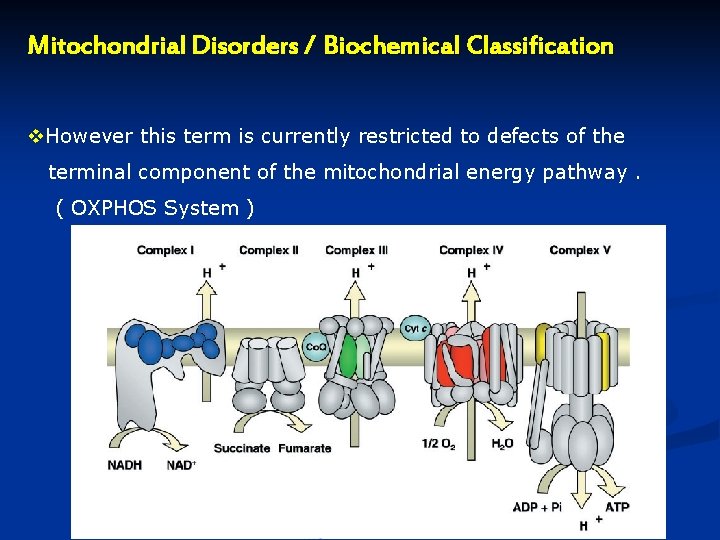
Mitochondrial Disorders / Biochemical Classification v. However this term is currently restricted to defects of the terminal component of the mitochondrial energy pathway. ( OXPHOS System )
Mitochondrial Disorders / Biochemical Classification q Mitochondrial disorders can be classified according to the metabolic defect present: (1985, Salvatore Di. Mauro et al ) 1) Substrate transport (e. g. , CPT deficiency) 2) Substrate utilization (e. g. , PDHC deficiency) 3) Kreb’s cycle (e. g. , fumarase deficiency) 4) Oxidation/phosphorylation coupling (e. g. Luft’s disease) 5) Respiratory chain [e. g. , cytochrome c oxidase (COX) deficiency]
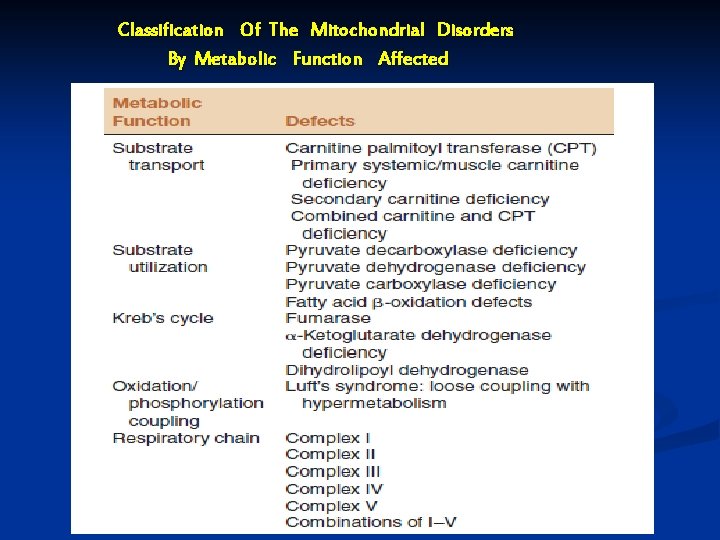
Classification Of The Mitochondrial Disorders By Metabolic Function Affected
Mitochondrial Disorders / Biochemical Classification v. However this term is currently restricted to defects of the terminal component of the mitochondrial energy pathway. ( OXPHOS System )
Classification of Mitochondrial Disorders v. Biochemical Classification v. Genetic Classification v. Clinical phenotypes
Genetic Classification v Mitochondria is the major site of ATP production and also contribute to human genetics since it have a DNA separate from that of nuclear DNA. v It takes about 3000 genes to make a mitochondrion and only about 3% of these (100 genes) are involved in the making of ATP. v Mitochondrial DNA encodes just 37 of these genes; the remaining genes are encoded in the cell nucleus and the resultant proteins are transported to the mitochondria.
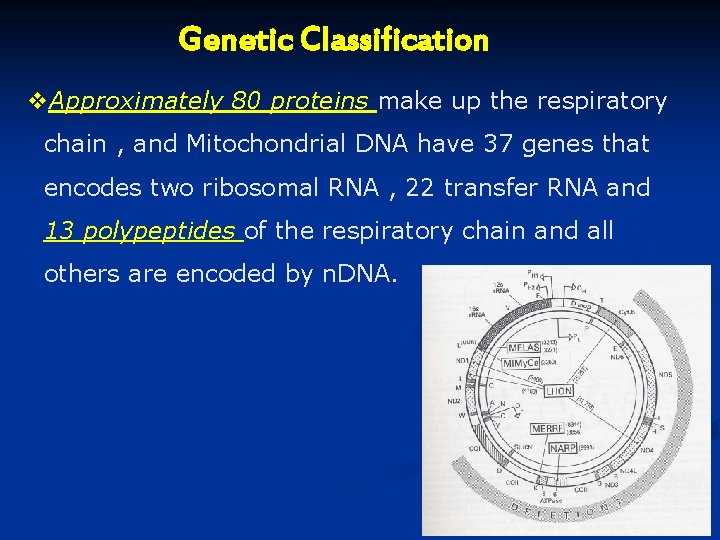
Genetic Classification v. Approximately 80 proteins make up the respiratory chain , and Mitochondrial DNA have 37 genes that encodes two ribosomal RNA , 22 transfer RNA and 13 polypeptides of the respiratory chain and all others are encoded by n. DNA.
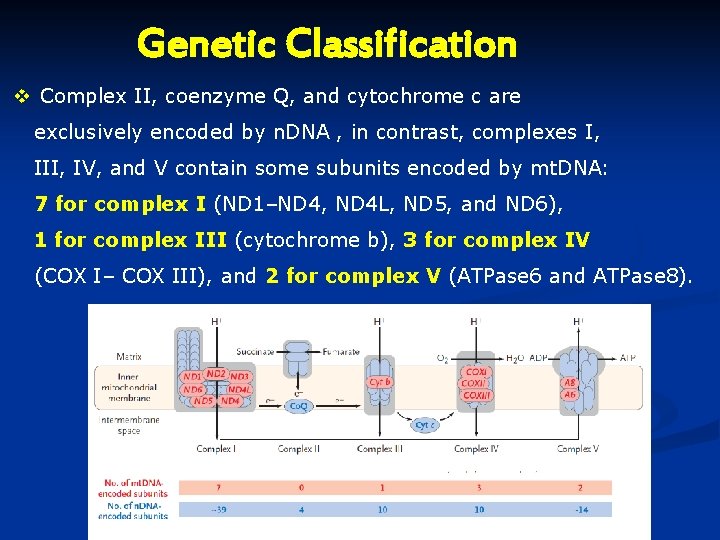
Genetic Classification v Complex II, coenzyme Q, and cytochrome c are exclusively encoded by n. DNA , in contrast, complexes I, III, IV, and V contain some subunits encoded by mt. DNA: 7 for complex I (ND 1–ND 4, ND 4 L, ND 5, and ND 6), 1 for complex III (cytochrome b), 3 for complex IV (COX I– COX III), and 2 for complex V (ATPase 6 and ATPase 8).
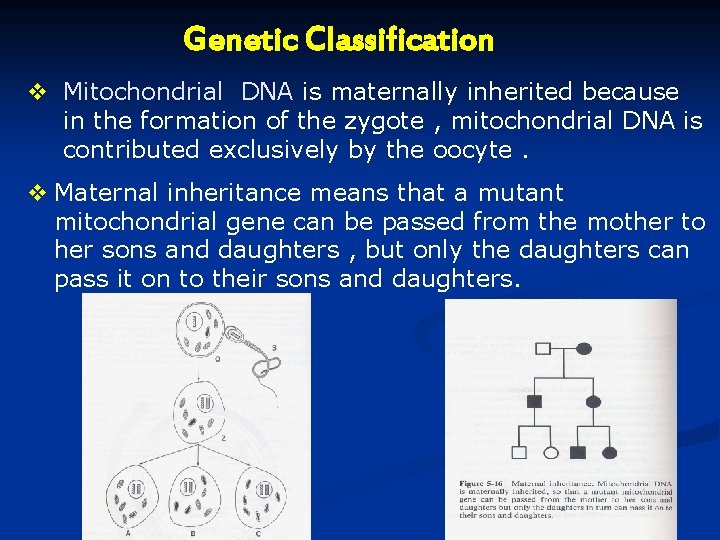
Genetic Classification v Mitochondrial DNA is maternally inherited because in the formation of the zygote , mitochondrial DNA is contributed exclusively by the oocyte. v Maternal inheritance means that a mutant mitochondrial gene can be passed from the mother to her sons and daughters , but only the daughters can pass it on to their sons and daughters.
Genetic Classification ü If a mutation in mt. DNA occurs in the ovum or zygote, it may be passed on randomly to subsequent generations of cells. ü Some receive few or no mutant genomes (normal or wild-type Homoplasmy), others receive a mixed population of mutant and wild-type mt. DNAs (Heteroplasmy), and others receive primarily or exclusively mutant genomes (mutant Homoplasmy).
Genetic Classification § Mitochondrial disorders may be caused by defects of nuclear DNA or mitochondrial DNA. § Diseases caused by defects of mt. DNA can be divided into those due to point mutations and those due to deletions or duplications.
Genetic Classification of Mitochondrial Diseases n Defects of mt DNA § Large-scale rearrangements Ø Ø Ø ( mt. DNA Deletions & Duplications ) Large-scale rearrangements of mt. DNA can be either partial deletions of mt. DNA or less frequently, partial duplications. Both types are heteroplasmic since they co-exist with normal mt. DNA. The majority of single large-scale rearrangements of mt. DNA are sporadic and are therefore believed to occur de novo and thus cause disease in one family member only, with no significant risk to other family
Genetic Classification of Mitochondrial Diseases n Defects of mt DNA § Large-scale rearrangements (mt. DNA Deletions or Duplication) ü Kearns-Sayre Syndrome (KSS) ü Progressive External Ophthalmoplegia (PEO) ü Pearson's Syndrome (congenital pancytopenia with sideroblastic anemia, and intestinal malabsorption due to insufficiency of the exocrine pancreas)
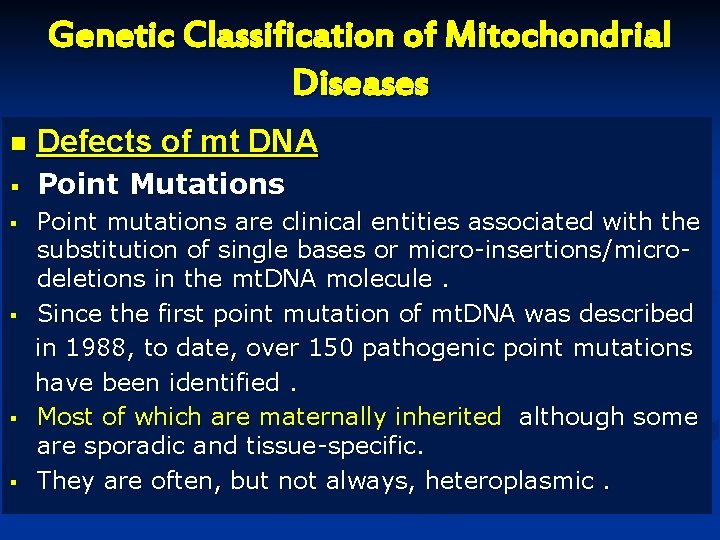
Genetic Classification of Mitochondrial Diseases n Defects of mt DNA § Point Mutations § § Point mutations are clinical entities associated with the substitution of single bases or micro-insertions/microdeletions in the mt. DNA molecule. Since the first point mutation of mt. DNA was described in 1988, to date, over 150 pathogenic point mutations have been identified. Most of which are maternally inherited although some are sporadic and tissue-specific. They are often, but not always, heteroplasmic.
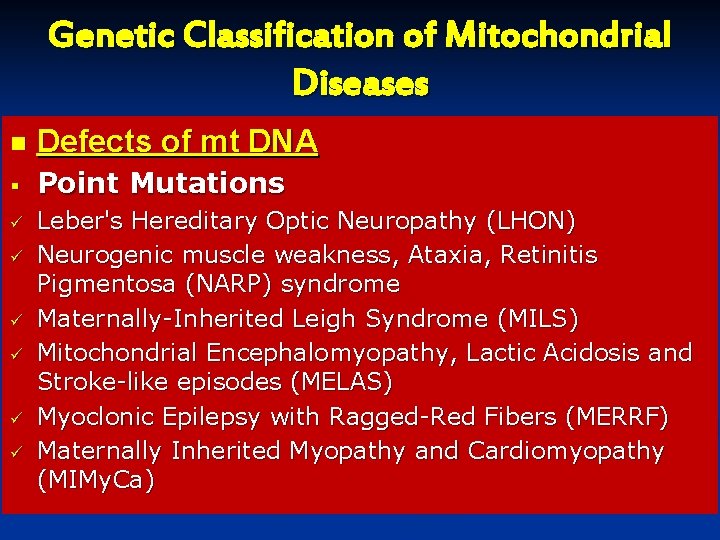
Genetic Classification of Mitochondrial Diseases n Defects of mt DNA § Point Mutations ü ü ü Leber's Hereditary Optic Neuropathy (LHON) Neurogenic muscle weakness, Ataxia, Retinitis Pigmentosa (NARP) syndrome Maternally-Inherited Leigh Syndrome (MILS) Mitochondrial Encephalomyopathy, Lactic Acidosis and Stroke-like episodes (MELAS) Myoclonic Epilepsy with Ragged-Red Fibers (MERRF) Maternally Inherited Myopathy and Cardiomyopathy (MIMy. Ca)
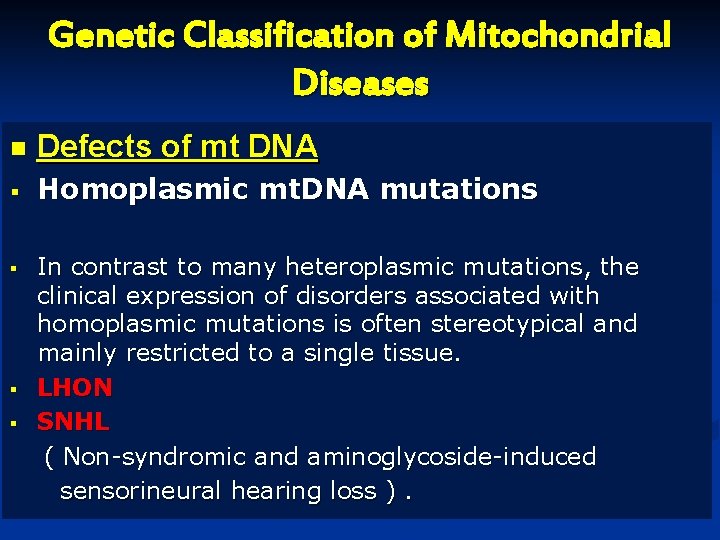
Genetic Classification of Mitochondrial Diseases n Defects of mt DNA § Homoplasmic mt. DNA mutations § § § In contrast to many heteroplasmic mutations, the clinical expression of disorders associated with homoplasmic mutations is often stereotypical and mainly restricted to a single tissue. LHON SNHL ( Non-syndromic and aminoglycoside-induced sensorineural hearing loss ).
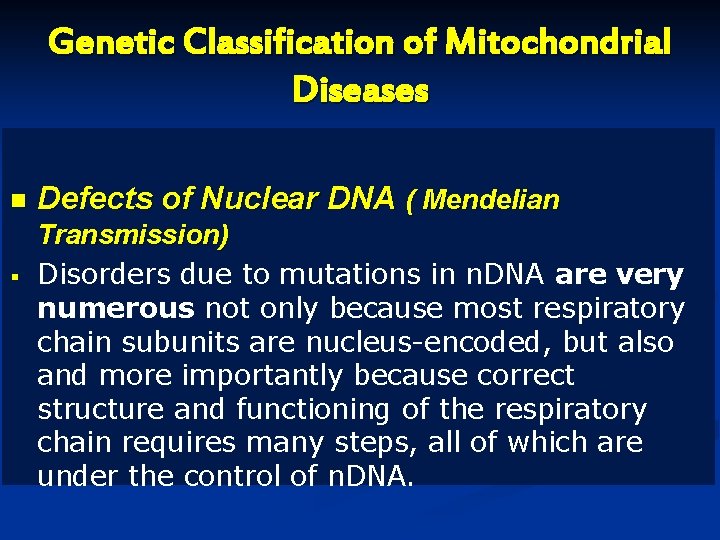
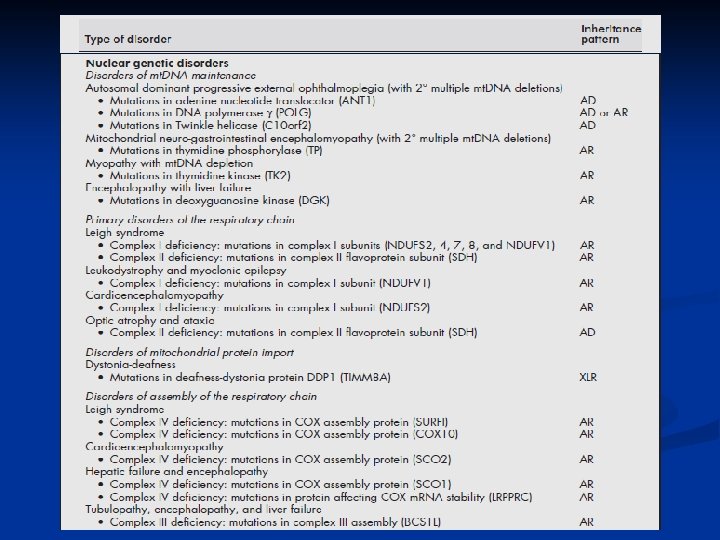
Genetic Classification of Mitochondrial Diseases n § Defects of Nuclear DNA ( Mendelian Transmission) Disorders due to mutations in n. DNA are very numerous not only because most respiratory chain subunits are nucleus-encoded, but also and more importantly because correct structure and functioning of the respiratory chain requires many steps, all of which are under the control of n. DNA.
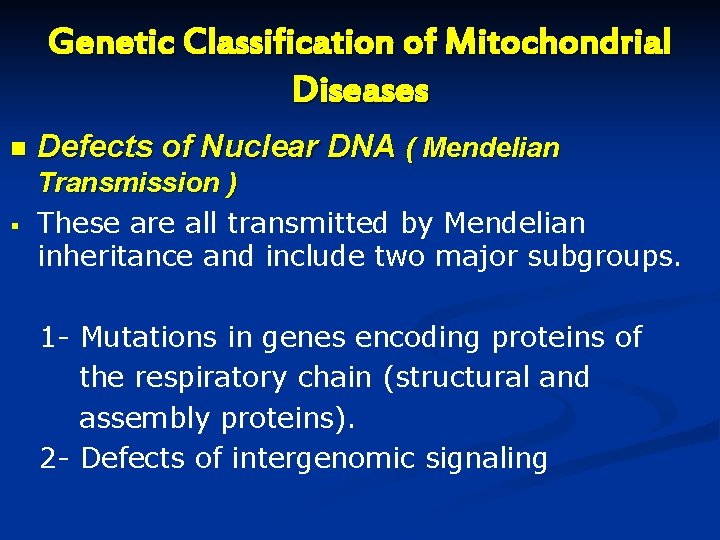
Genetic Classification of Mitochondrial Diseases n Defects of Nuclear DNA ( Mendelian § Transmission ) These are all transmitted by Mendelian inheritance and include two major subgroups. 1 - Mutations in genes encoding proteins of the respiratory chain (structural and assembly proteins). 2 - Defects of intergenomic signaling
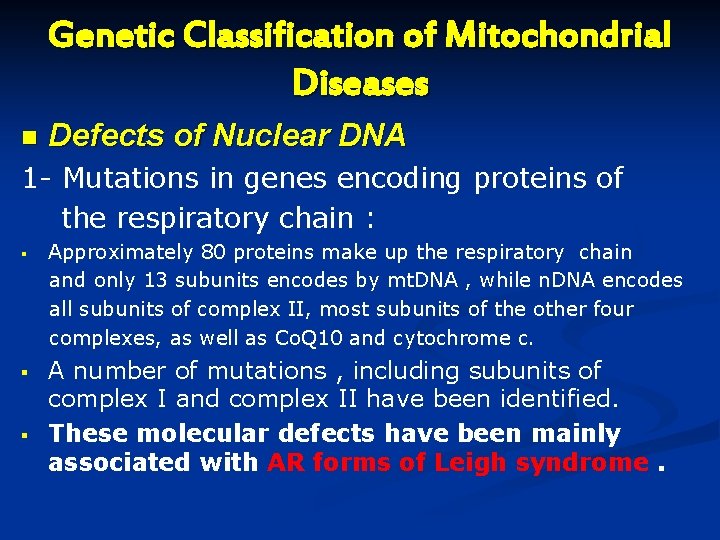
Genetic Classification of Mitochondrial Diseases n Defects of Nuclear DNA 1 - Mutations in genes encoding proteins of the respiratory chain : § § § Approximately 80 proteins make up the respiratory chain and only 13 subunits encodes by mt. DNA , while n. DNA encodes all subunits of complex II, most subunits of the other four complexes, as well as Co. Q 10 and cytochrome c. A number of mutations , including subunits of complex I and complex II have been identified. These molecular defects have been mainly associated with AR forms of Leigh syndrome.
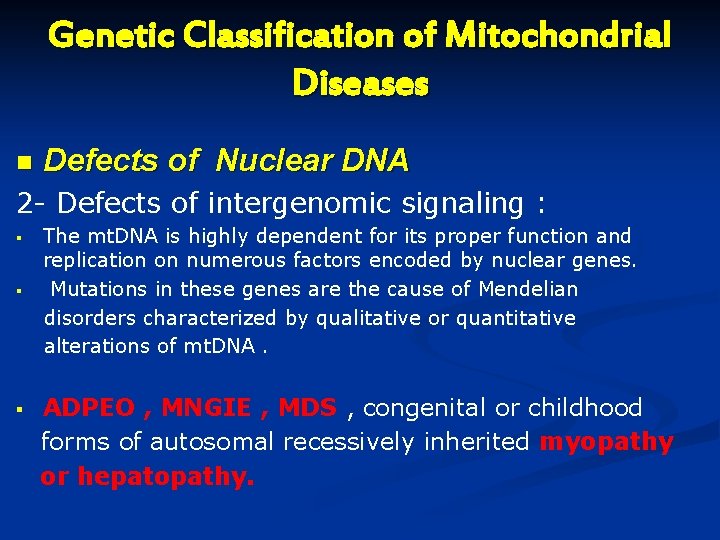
Genetic Classification of Mitochondrial Diseases n Defects of Nuclear DNA 2 - Defects of intergenomic signaling : § § § The mt. DNA is highly dependent for its proper function and replication on numerous factors encoded by nuclear genes. Mutations in these genes are the cause of Mendelian disorders characterized by qualitative or quantitative alterations of mt. DNA. ADPEO , MNGIE , MDS , congenital or childhood forms of autosomal recessively inherited myopathy or hepatopathy.
Classification of Mitochondrial Disorders v. Biochemical Classification v. Genetic Classification v. Clinical phenotypes
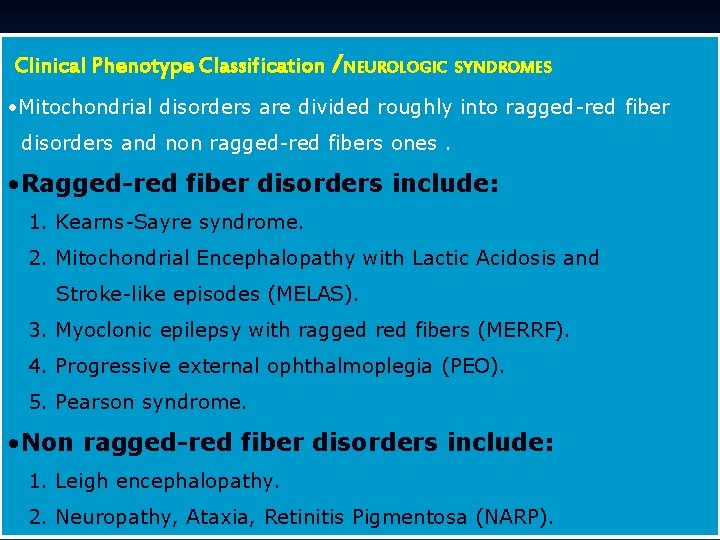
Clinical Phenotype Classification /NEUROLOGIC SYNDROMES • Mitochondrial disorders are divided roughly into ragged-red fiber disorders and non ragged-red fibers ones. • Ragged-red fiber disorders include: 1. Kearns-Sayre syndrome. 2. Mitochondrial Encephalopathy with Lactic Acidosis and Stroke-like episodes (MELAS). 3. Myoclonic epilepsy with ragged red fibers (MERRF). 4. Progressive external ophthalmoplegia (PEO). 5. Pearson syndrome. • Non ragged-red fiber disorders include: 1. Leigh encephalopathy. 2. Neuropathy, Ataxia, Retinitis Pigmentosa (NARP).
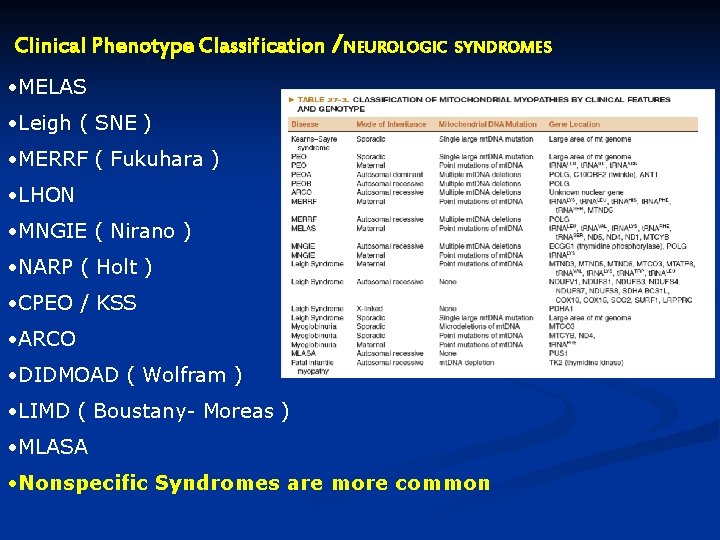
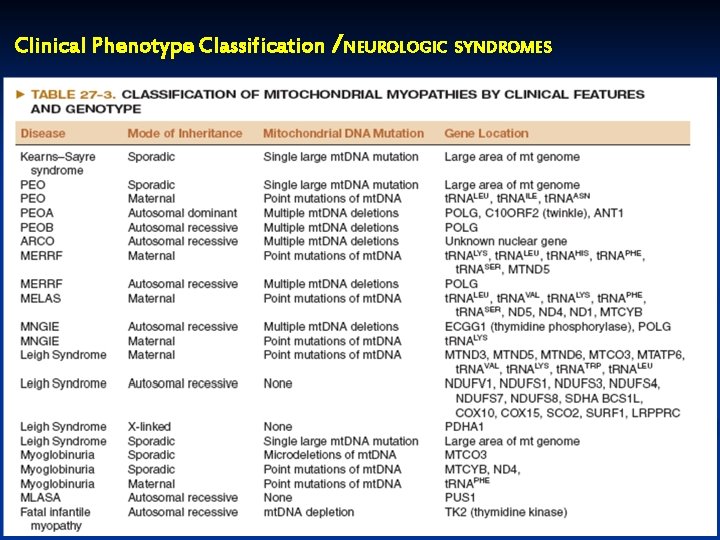
Clinical Phenotype Classification /NEUROLOGIC SYNDROMES • MELAS • Leigh ( SNE ) • MERRF ( Fukuhara ) • LHON • MNGIE ( Nirano ) • NARP ( Holt ) • CPEO / KSS • ARCO • DIDMOAD ( Wolfram ) • LIMD ( Boustany- Moreas ) • MLASA • Nonspecific Syndromes are more common
Clinical Phenotype Classification /NEUROLOGIC SYNDROMES
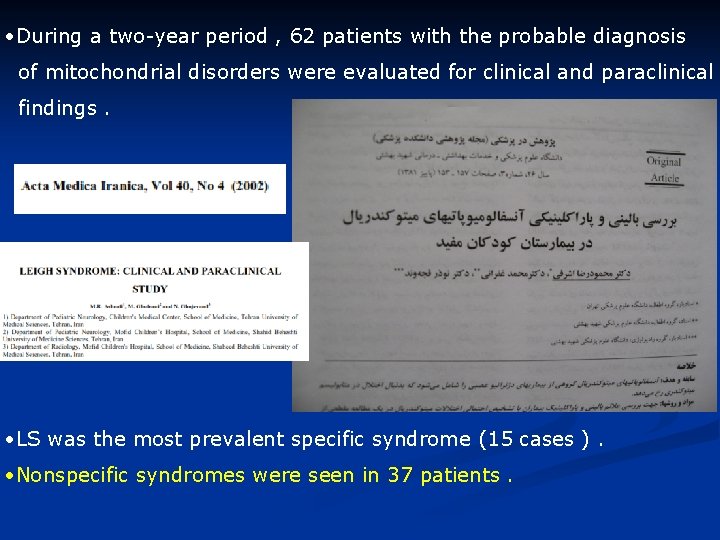
• During a two-year period , 62 patients with the probable diagnosis of mitochondrial disorders were evaluated for clinical and paraclinical findings. • LS was the most prevalent specific syndrome (15 cases ). • Nonspecific syndromes were seen in 37 patients.
Thank you for your attention