
Bellwork Wed Oct 24 2018 Words concentration gradient
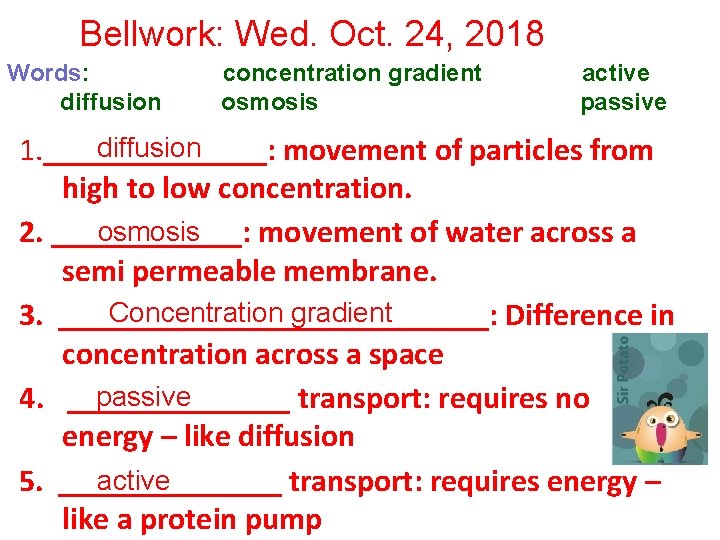
Bellwork: Wed. Oct. 24, 2018 Words: concentration gradient active diffusion osmosis passive diffusion 1. _______: movement of particles from high to low concentration. osmosis 2. ______: movement of water across a semi permeable membrane. Concentration gradient 3. ______________: Difference in concentration across a space passive 4. _______ transport: requires no energy – like diffusion active 5. _______ transport: requires energy – like a protein pump

That was the last Bellwork of the Cell Unit! the Bellworks for this unit started on: Bellwork: Oct. 3, 2018 & end on: Bellwork: Oct 24, 2018 Draw a line after today’s Bellwork!
Remember: Friday is the “Cell Test” you have the review: make sure you complete it and study it!! And have your Notebook ready to be graded tomorrow!!
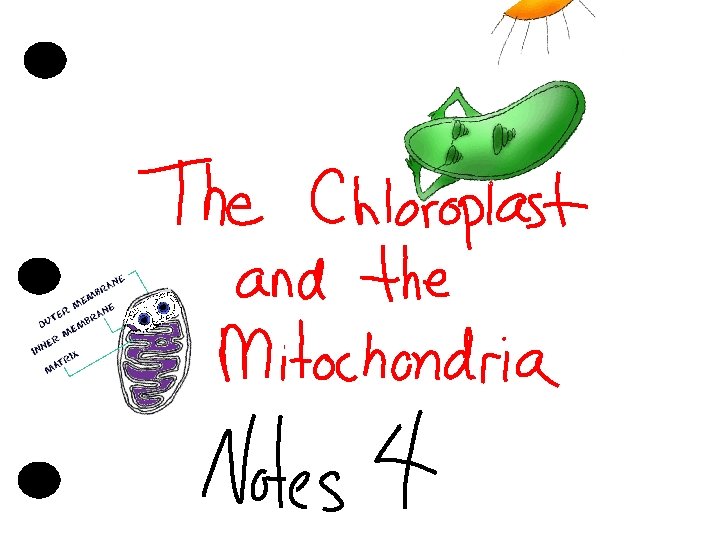
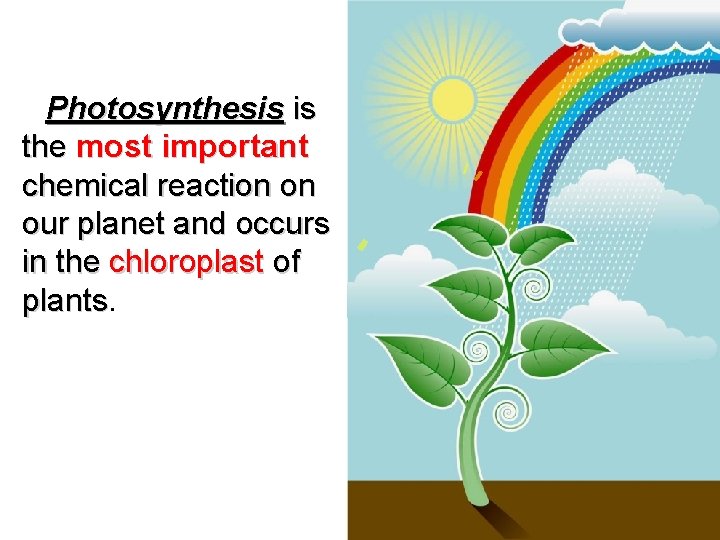
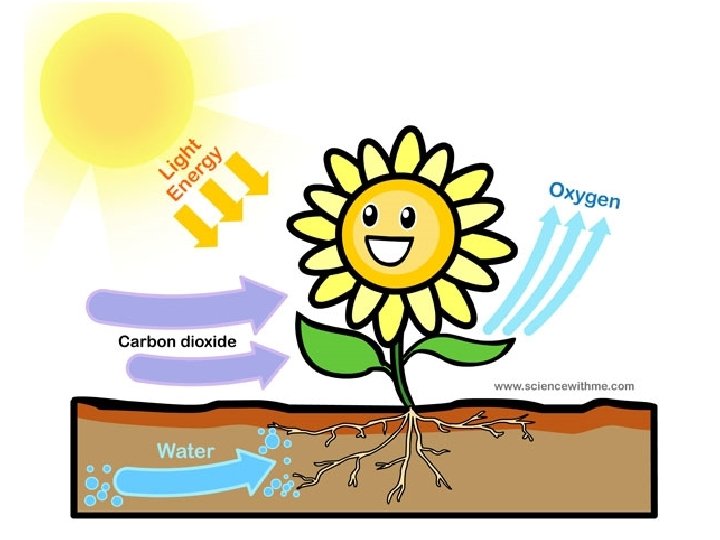
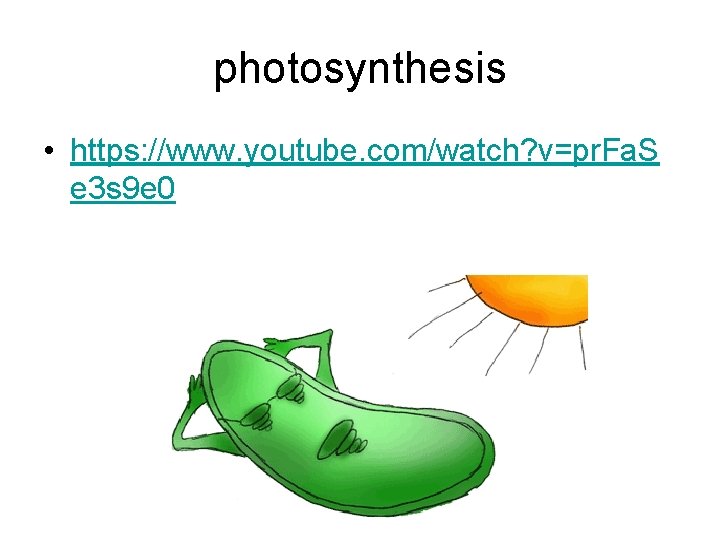
Photosynthesis is the most important chemical reaction on our planet and occurs in the chloroplast of plants
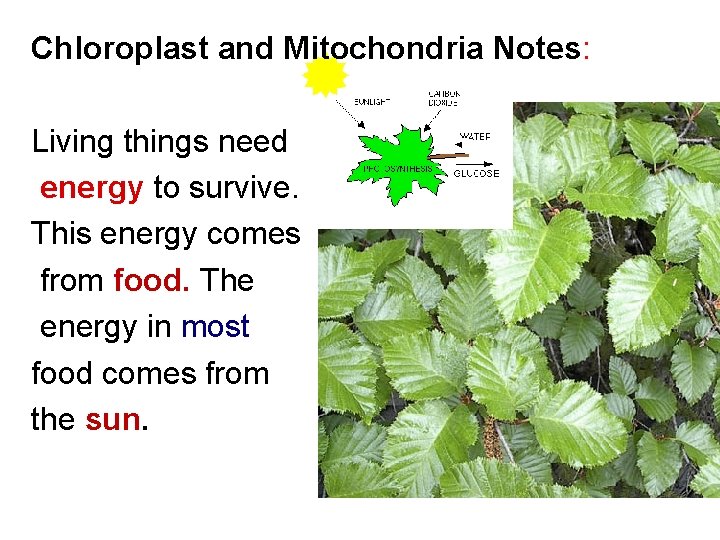
Chloroplast and Mitochondria Notes: Living things need energy to survive. This energy comes from food. The energy in most food comes from the sun.
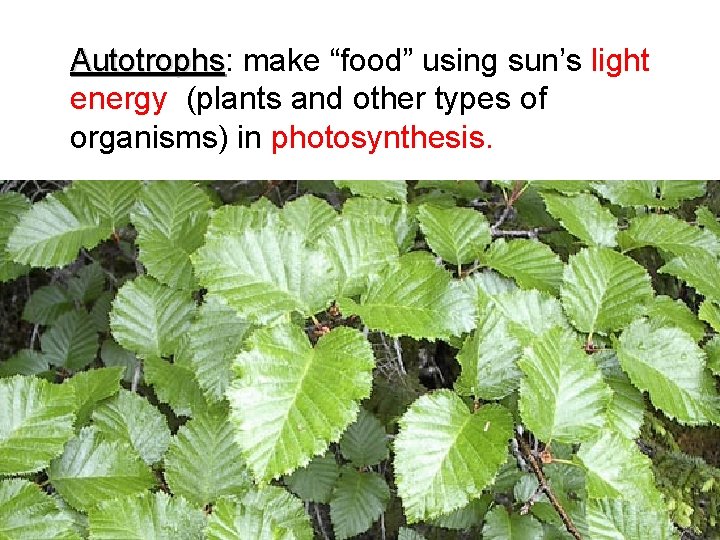
Autotrophs: make “food” using sun’s light Autotrophs energy (plants and other types of organisms) in photosynthesis.
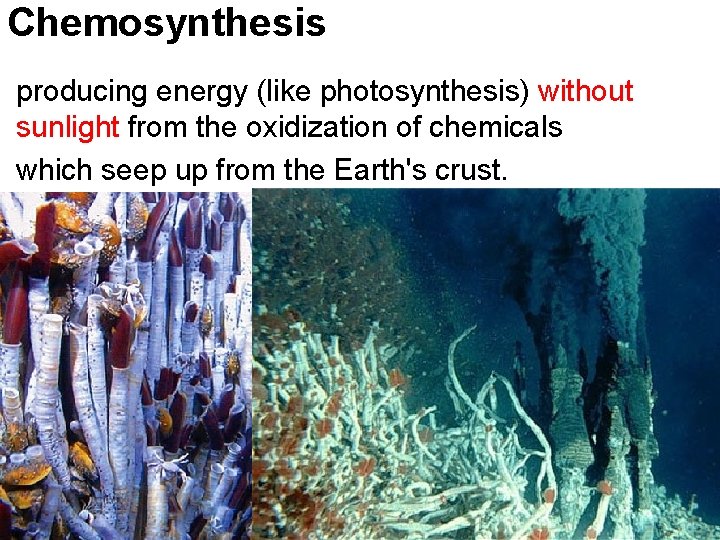
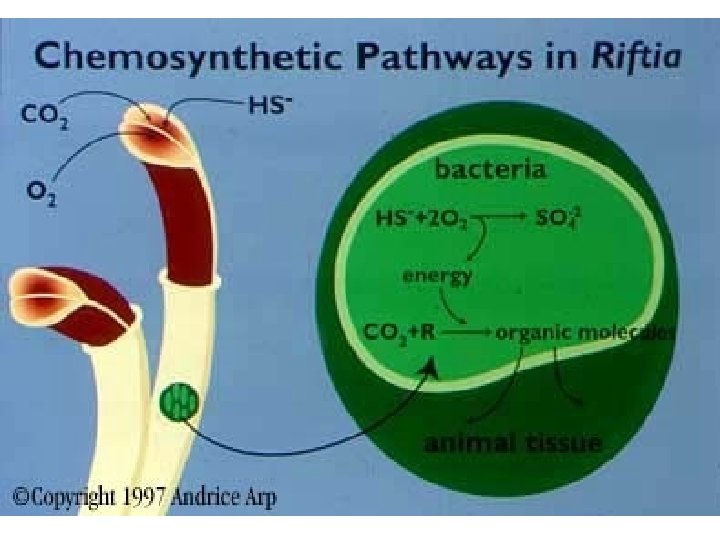
Chemosynthesis producing energy (like photosynthesis) without sunlight from the oxidization of chemicals which seep up from the Earth's crust.
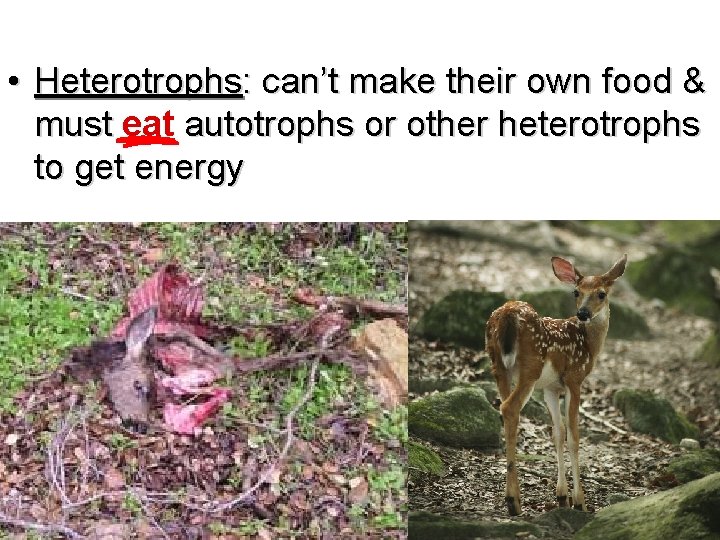
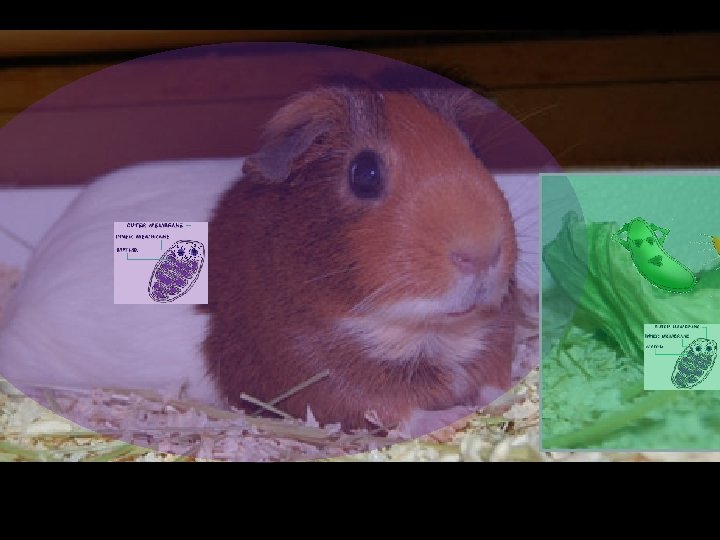
• Heterotrophs: can’t make their own food & must eat must autotrophs or other heterotrophs to get energy
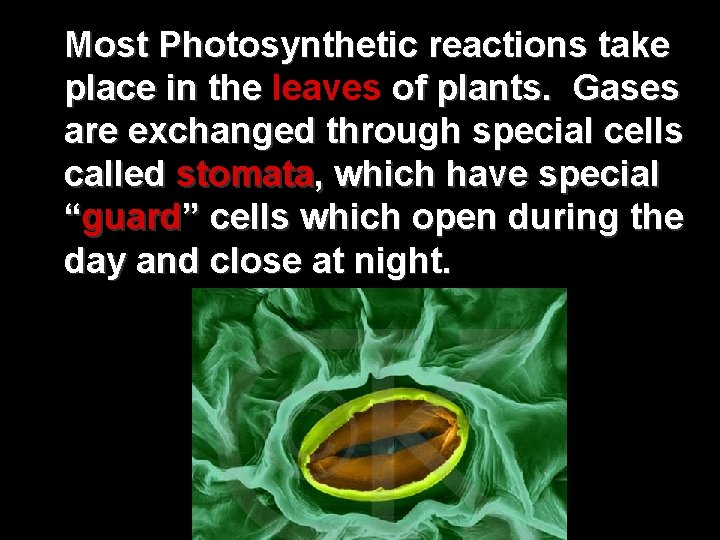
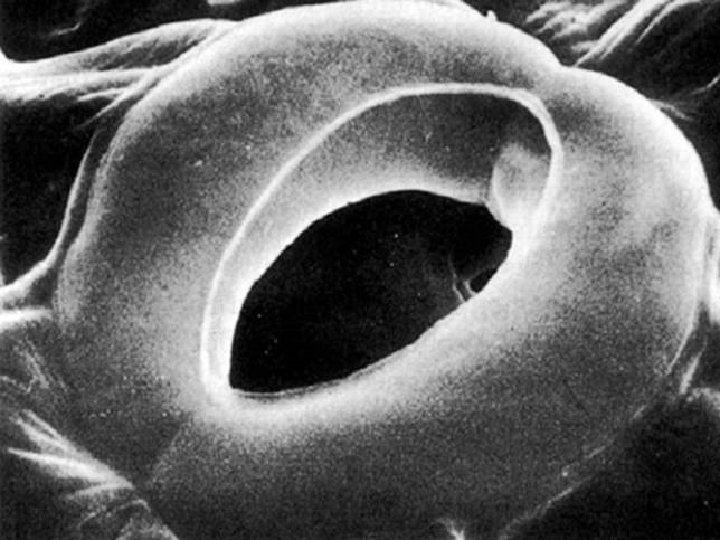
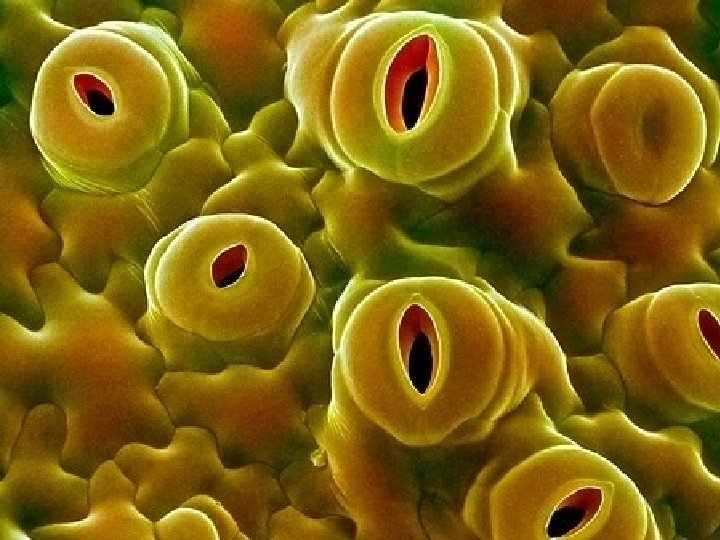
Most Photosynthetic reactions take place in the leaves of plants. Gases place in the are exchanged through special cells called stomata, which have special “guard” cells which open during the day and close at night.
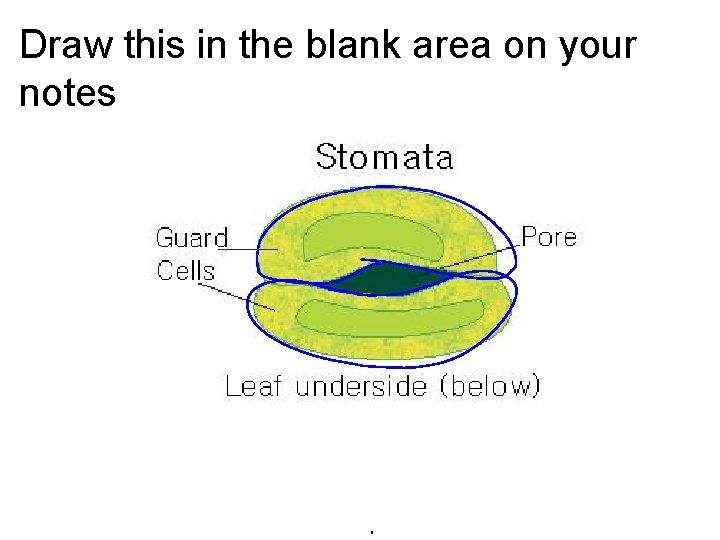
Draw this in the blank area on your notes
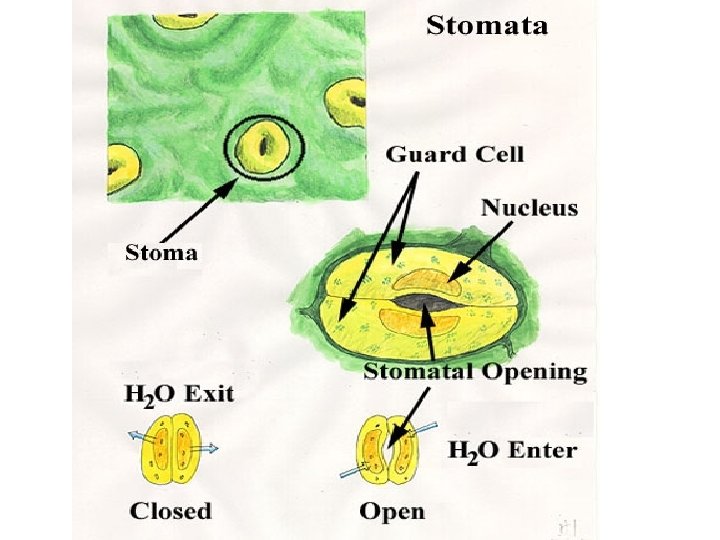
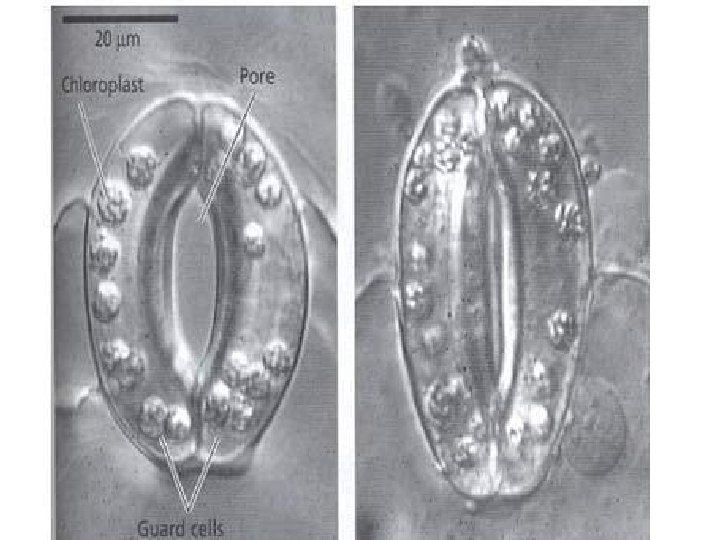
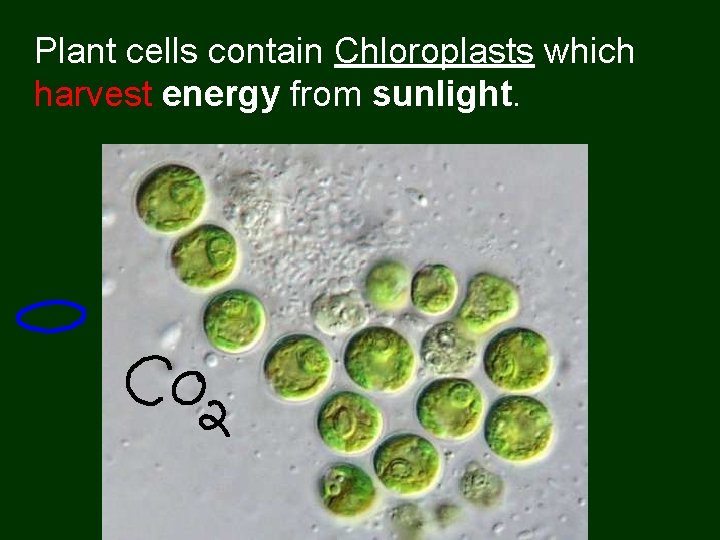
Plant cells contain Chloroplasts which harvest energy from sunlight.
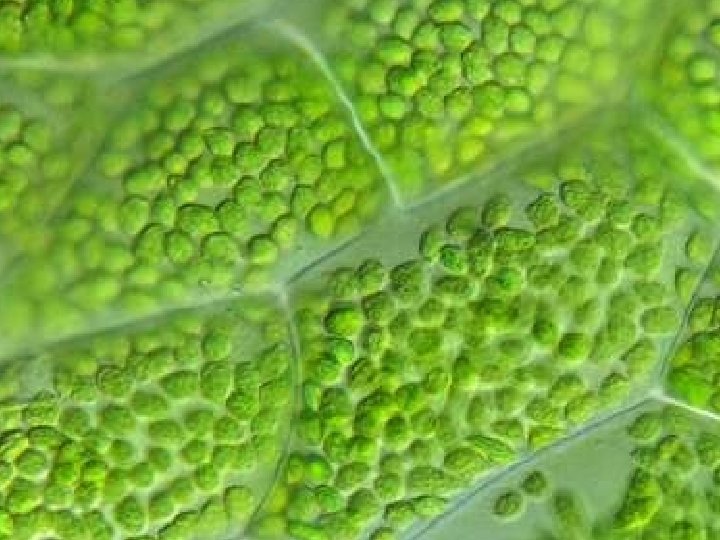
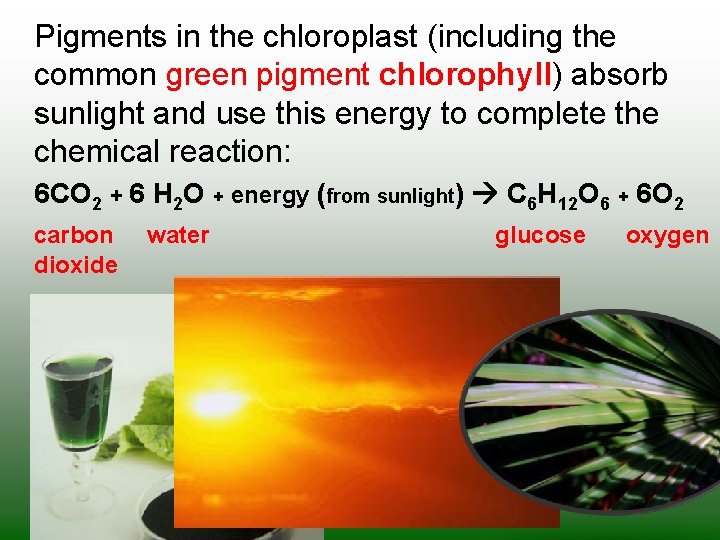
Pigments in the chloroplast (including the common green pigment chlorophyll) absorb sunlight and use this energy to complete the chemical reaction: 6 CO 2 + 6 H 2 O + energy (from sunlight) C 6 H 12 O 6 + 6 O 2 carbon water glucose oxygen dioxide
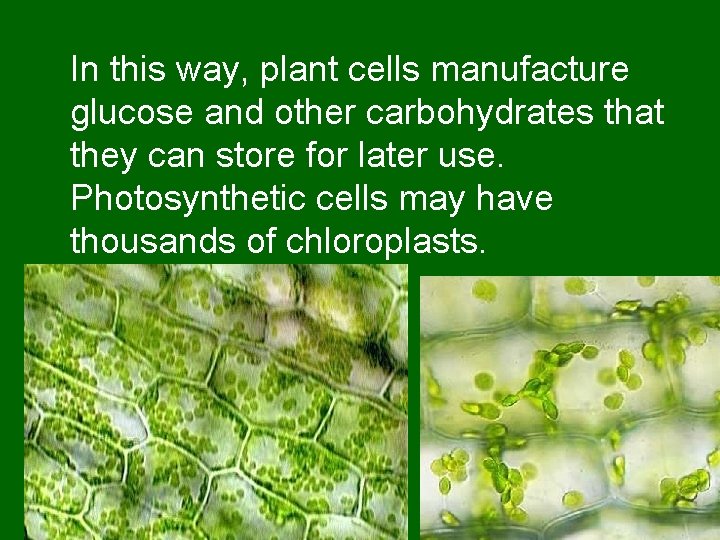
In this way, plant cells manufacture glucose and other carbohydrates that they can store for later use. Photosynthetic cells may have thousands of chloroplasts.
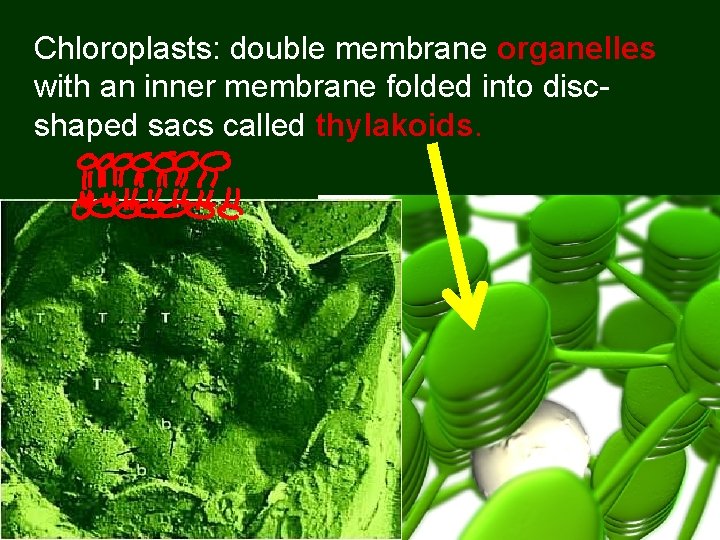
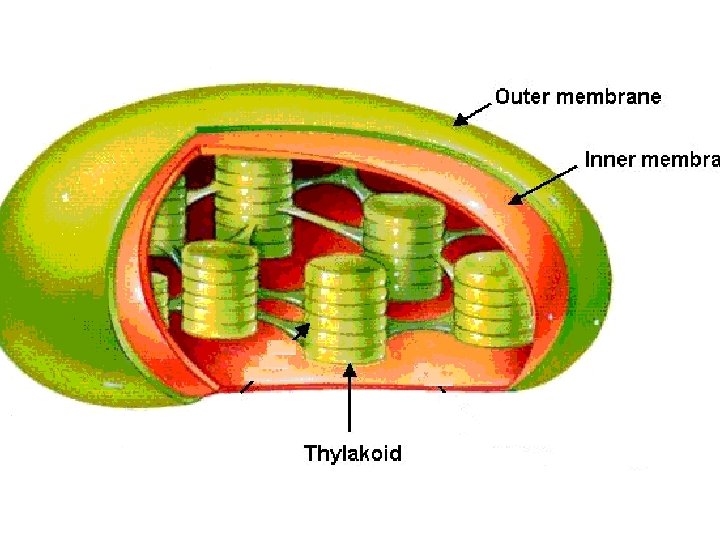
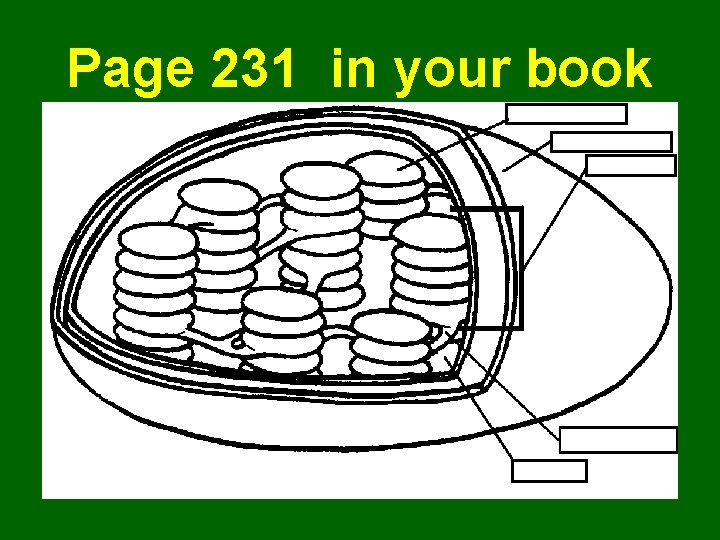
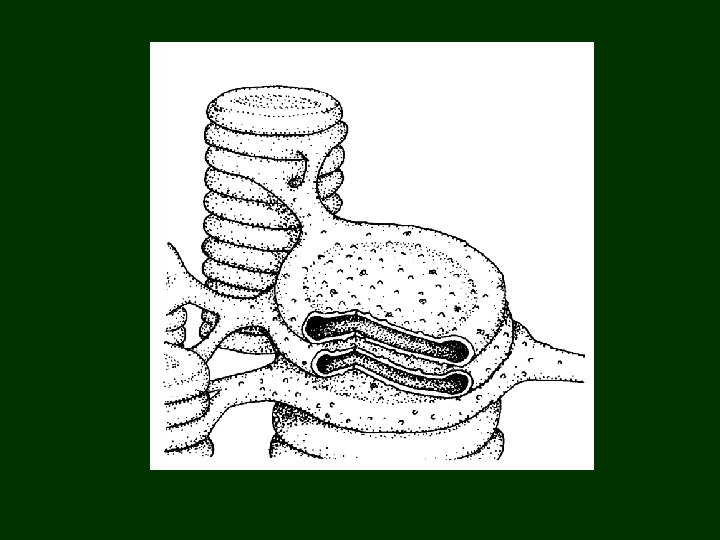
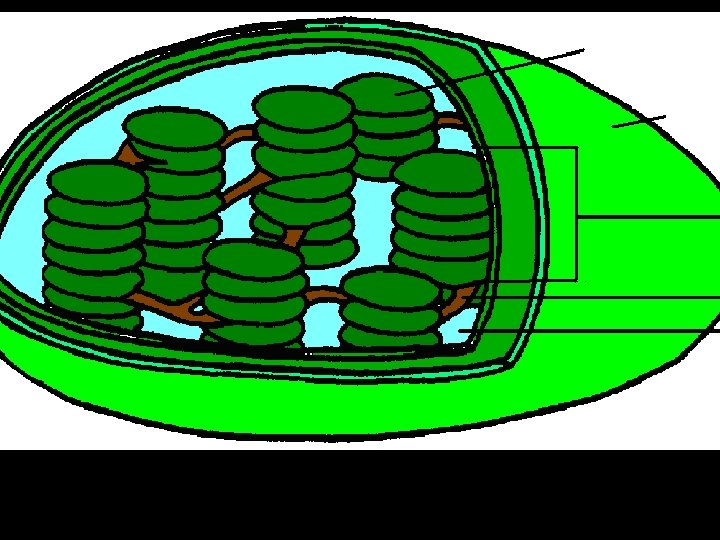
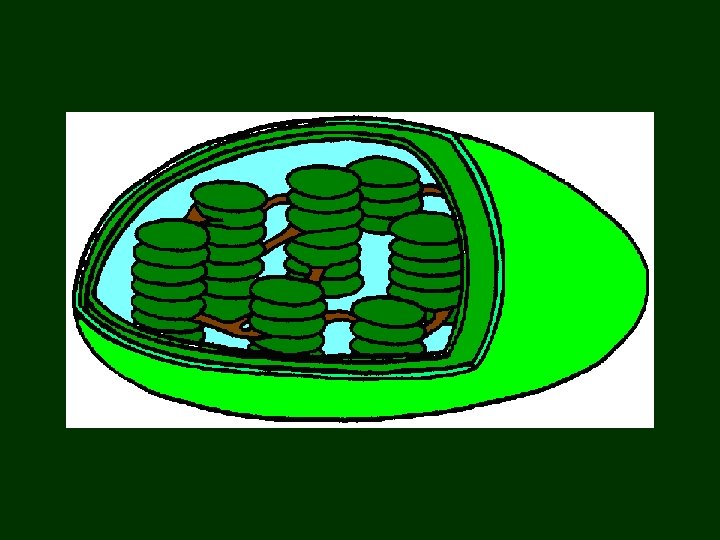
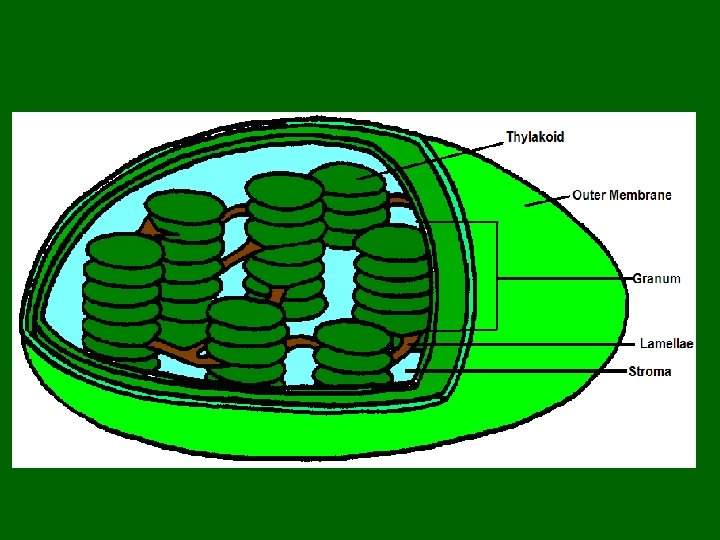
Chloroplasts: double membrane organelles with an inner membrane folded into discshaped sacs called thylakoids.
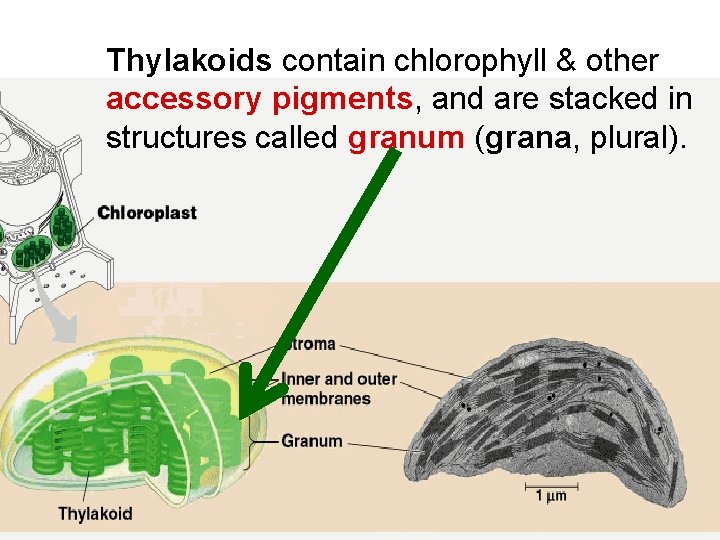
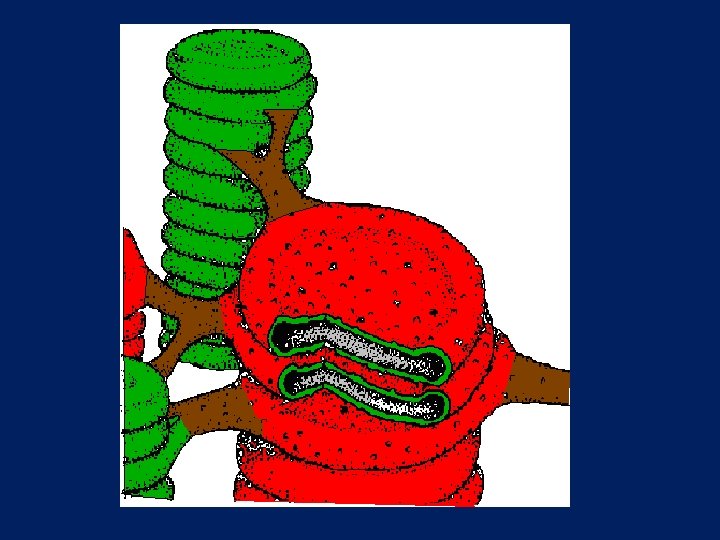
Thylakoids contain chlorophyll & other accessory pigments, and are stacked in structures called granum (grana, plural).
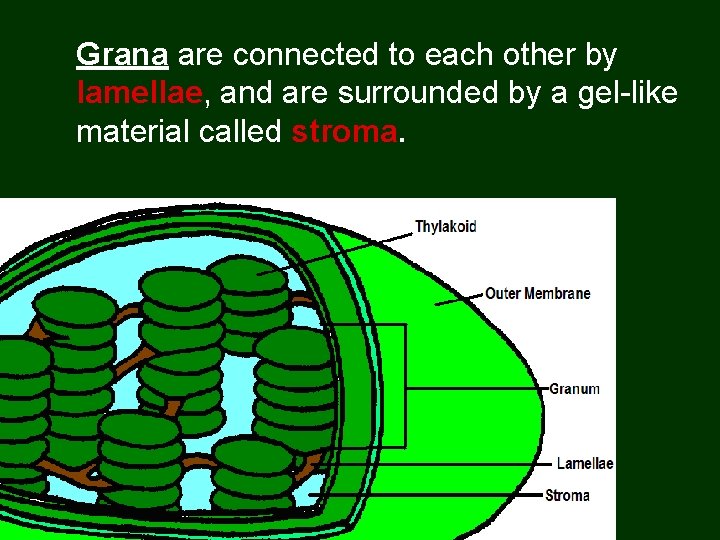
Grana are connected to each other by lamellae, and are surrounded by a gel-like material called stroma.
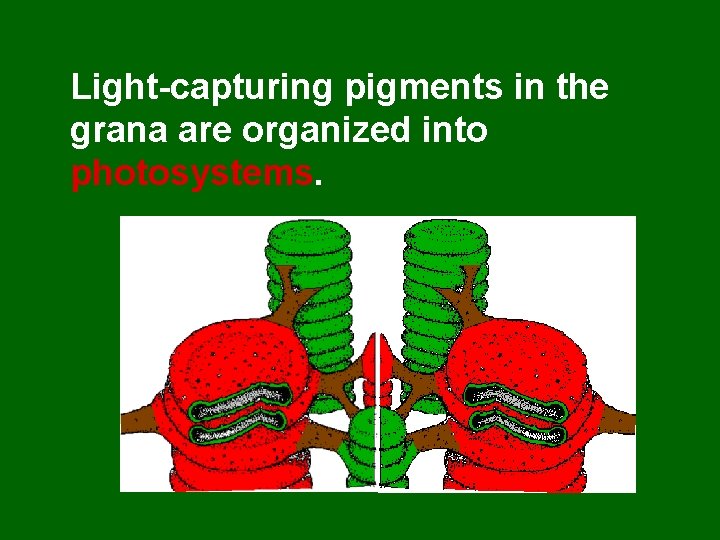
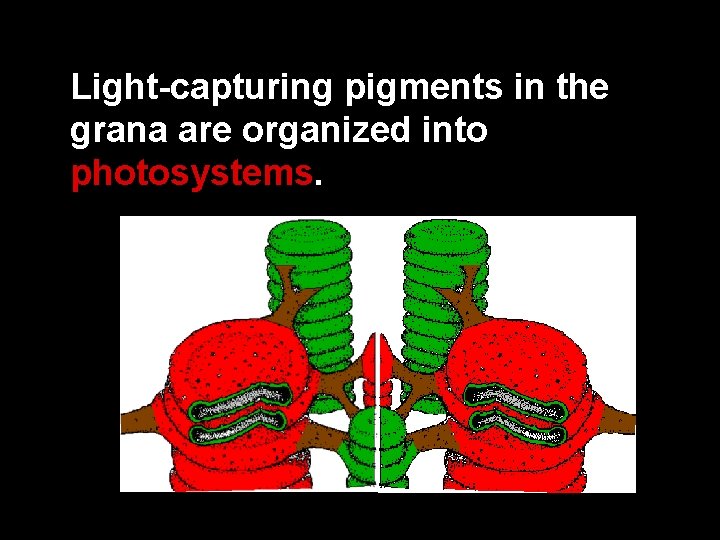
Light-capturing pigments in the grana are organized into photosystems.
The Mitochondria: site of Respiration
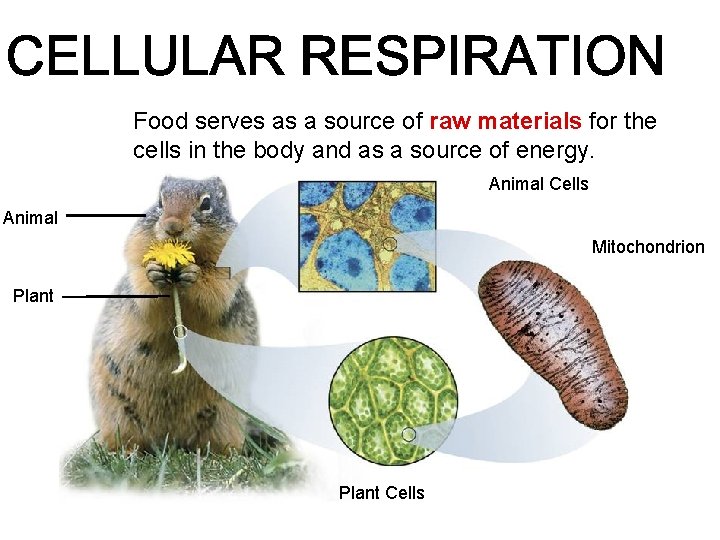
Food serves as a source of raw materials for the cells in the body and as a source of energy. Animal Cells Animal Mitochondrion Plant Cells
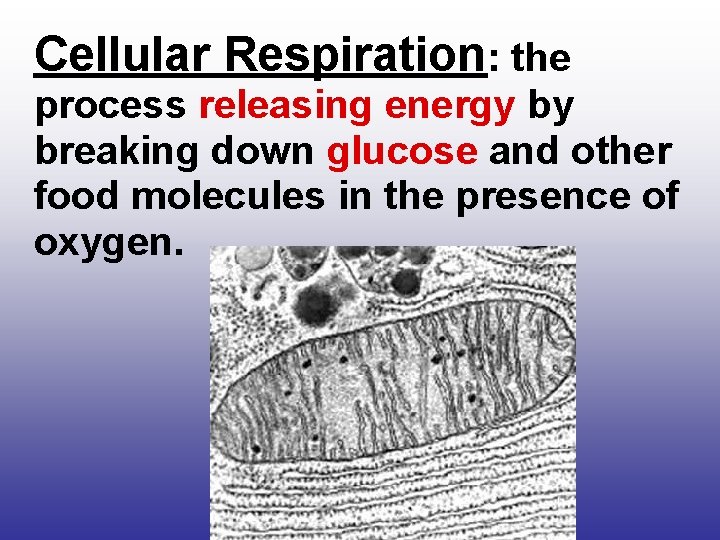
Cellular Respiration: the process releasing energy by breaking down glucose and other food molecules in the presence of oxygen.
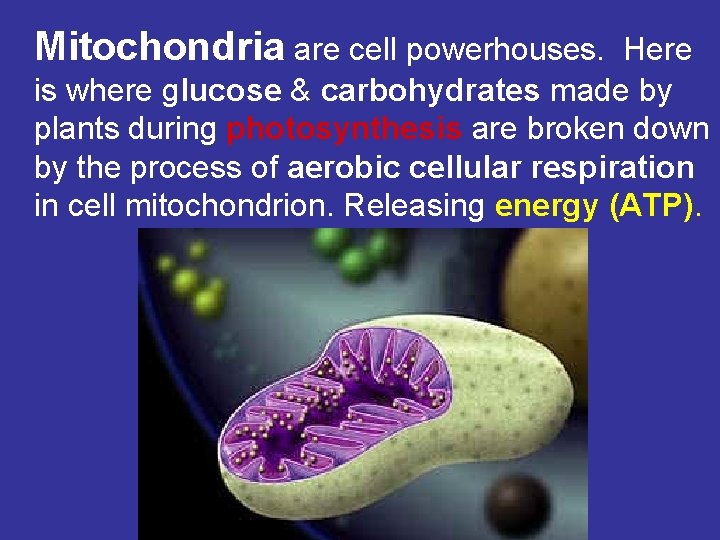
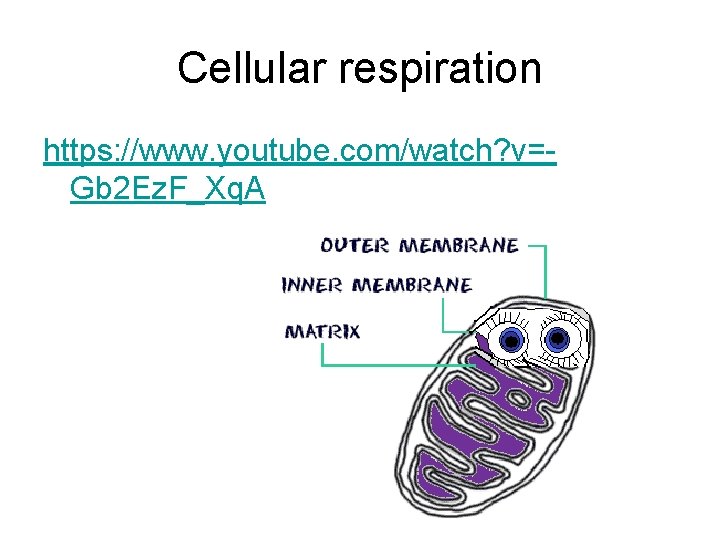
Mitochondria are cell powerhouses. Here is where glucose & carbohydrates made by plants during photosynthesis are broken down by the process of aerobic cellular respiration in cell mitochondrion. Releasing energy (ATP).
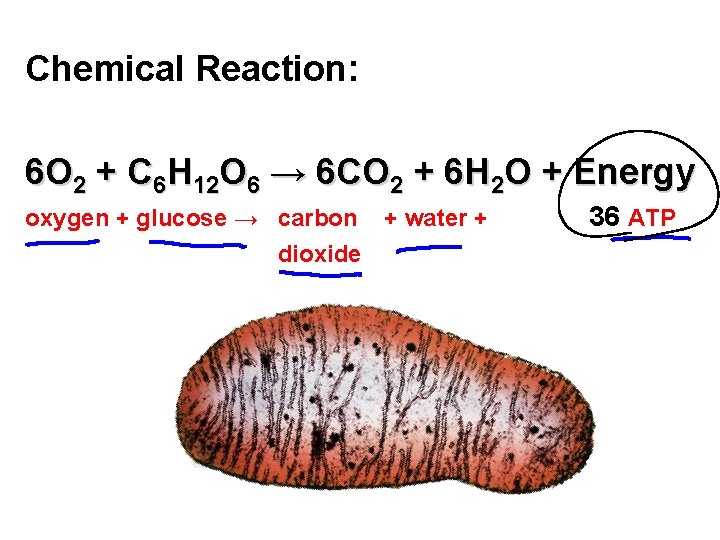
Chemical Reaction: 6 O 2 + C 6 H 12 O 6 → 6 CO 2 + 6 H 2 O + Energy oxygen + glucose → carbon + water + 36 ATP dioxide
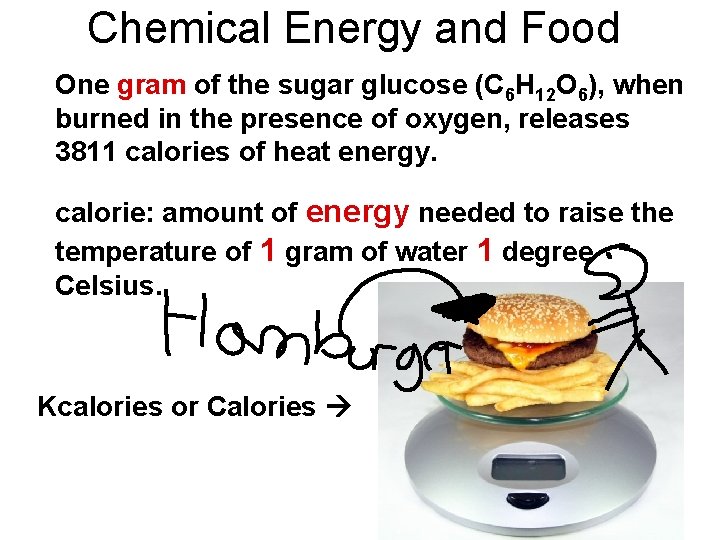
Chemical Energy and Food One gram of the sugar glucose (C 6 H 12 O 6), when burned in the presence of oxygen, releases 3811 calories of heat energy. calorie: amount of energy needed to raise the temperature of 1 gram of water 1 degree Celsius. Kcalories or Calories
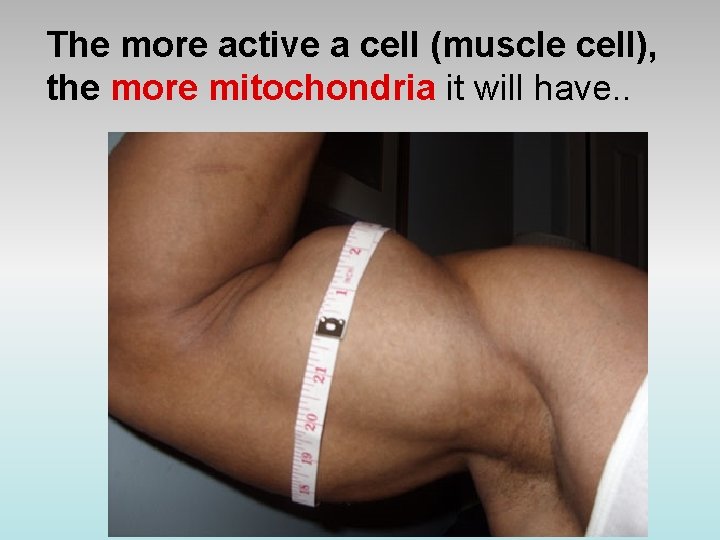
The more active a cell (muscle cell), the more mitochondria it will have. .
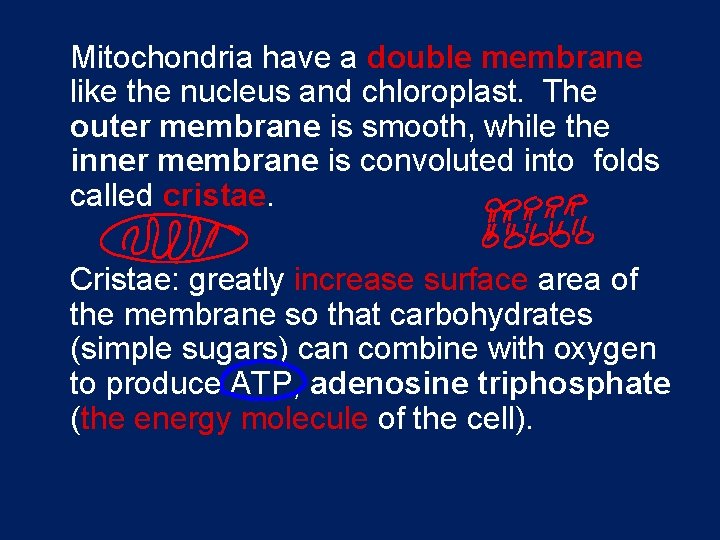
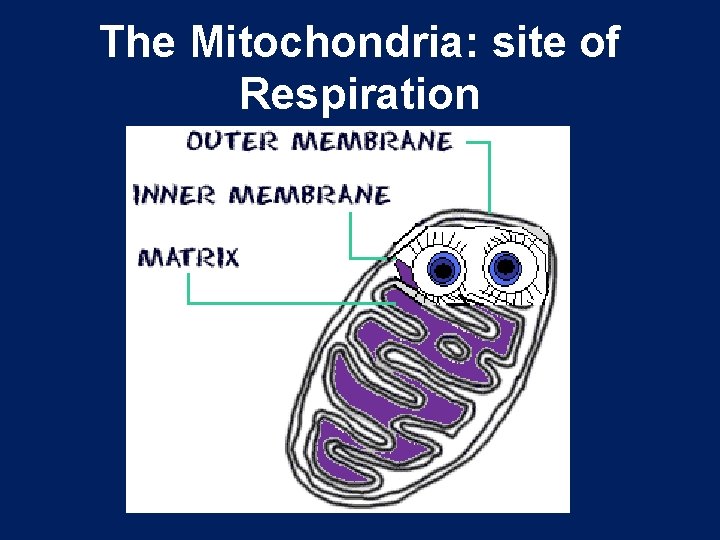
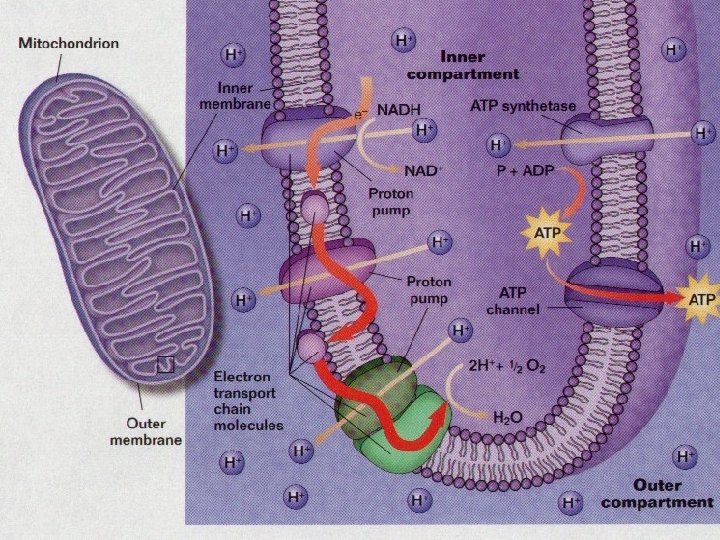
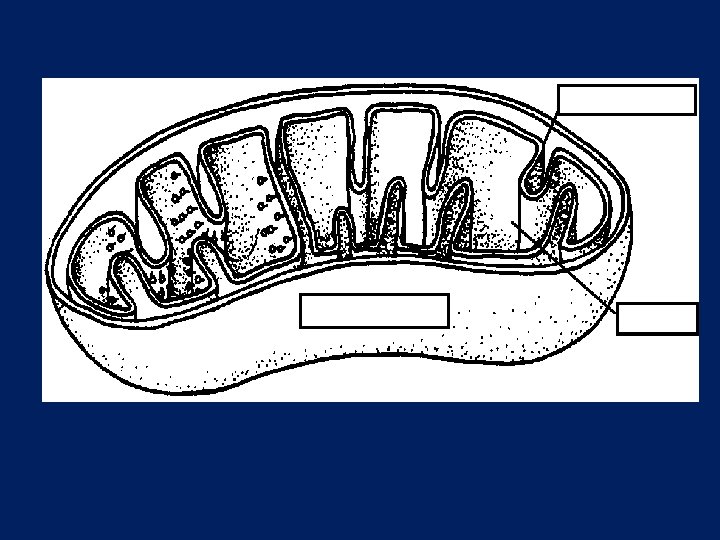
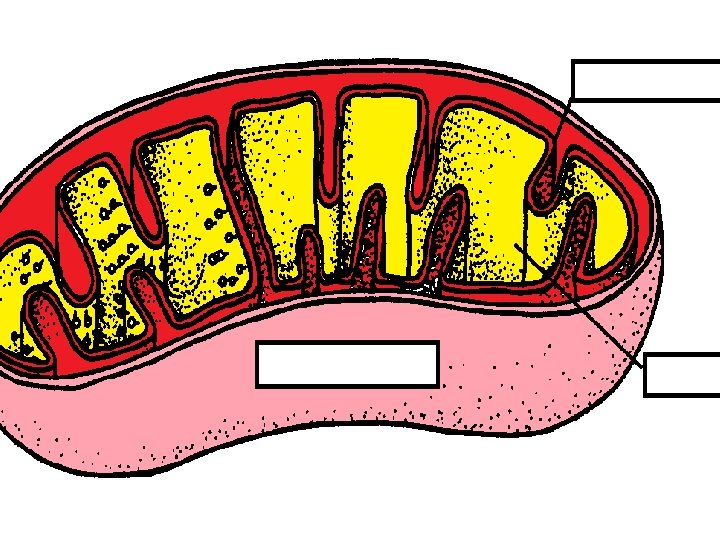
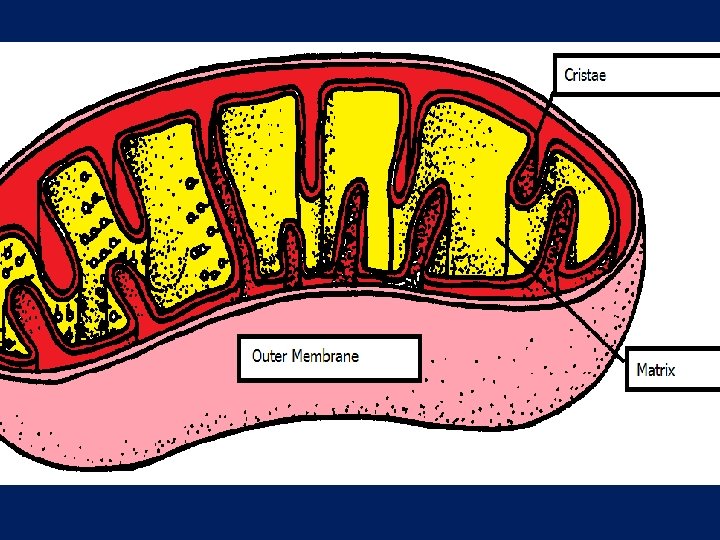
Mitochondria have a double membrane like the nucleus and chloroplast. The outer membrane is smooth, while the inner membrane is convoluted into folds called cristae. Cristae: greatly increase surface area of the membrane so that carbohydrates (simple sugars) can combine with oxygen to produce ATP, adenosine triphosphate (the energy molecule of the cell).
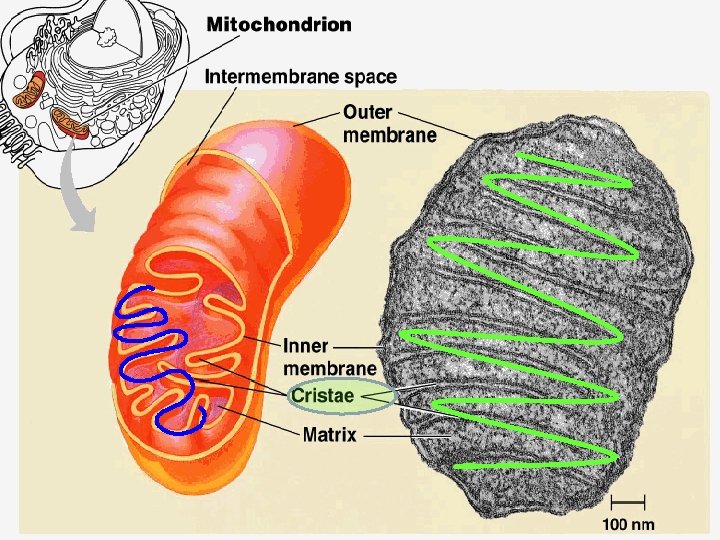
The electron transport chain takes place across the membranes of the cristae (crista, singular). Inside the folds or cristae is a space called the Matrix that contains enzymes needed for the Kreb's Cycle.
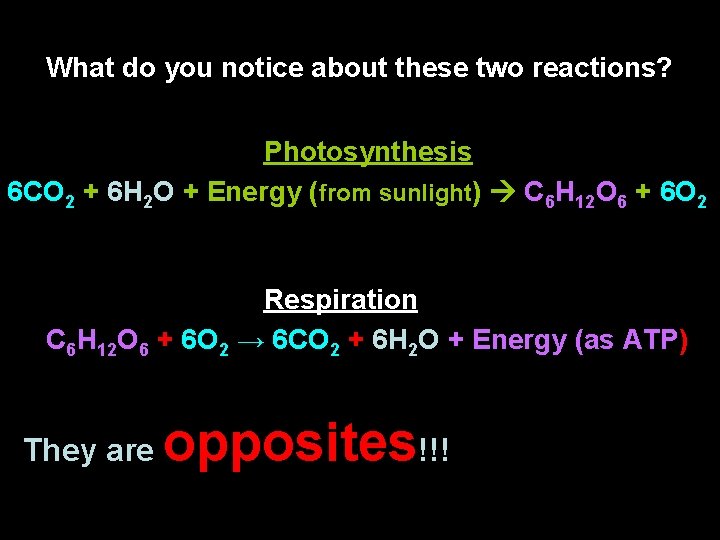
What do you notice about these two reactions? Photosynthesis 6 CO 2 + 6 H 2 O + Energy (from sunlight) C 6 H 12 O 6 + 6 O 2 Respiration C 6 H 12 O 6 + 6 O 2 → 6 CO 2 + 6 H 2 O + Energy (as ATP) They are opposites!!!
The Seed Play this http: //www. youtube. com/watch? v=J 62 ffc 0 RR 8 Q&feature=related

Cellular respiration https: //www. youtube. com/watch? v=Gb 2 Ez. F_Xq. A
photosynthesis • https: //www. youtube. com/watch? v=pr. Fa. S e 3 s 9 e 0
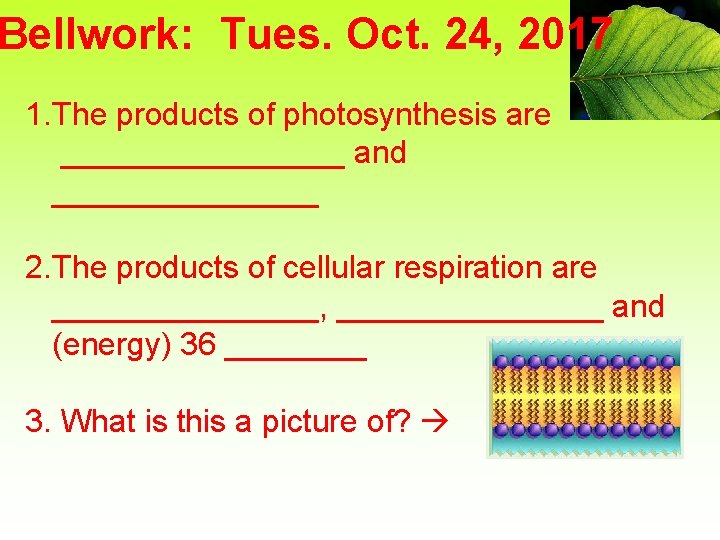
Bellwork: Tues. Oct. 24, 2017 1. The products of photosynthesis are ________ and ________ 2. The products of cellular respiration are ________, ________ and (energy) 36 ____ 3. What is this a picture of?
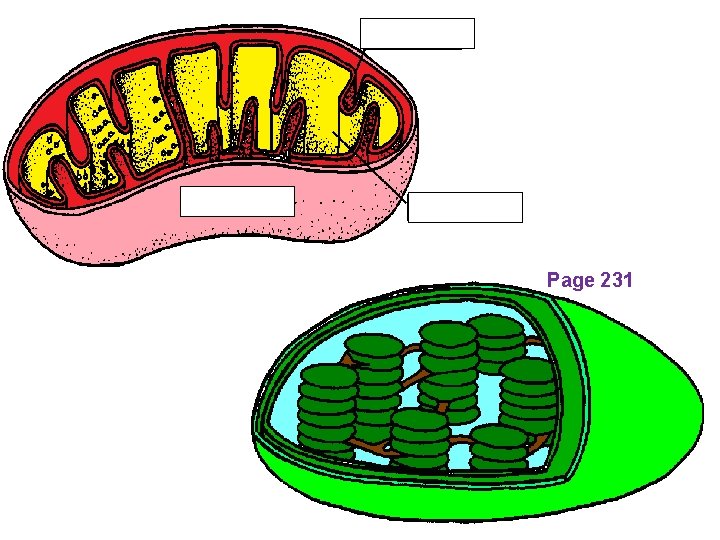
Page 231 in your book
Light-capturing pigments in the grana are organized into photosystems.
Page 231
- Slides: 56