
Biology EOC MYA Highlight Review Mitochondria Singular Mitochondrion
Biology EOC MYA Highlight Review
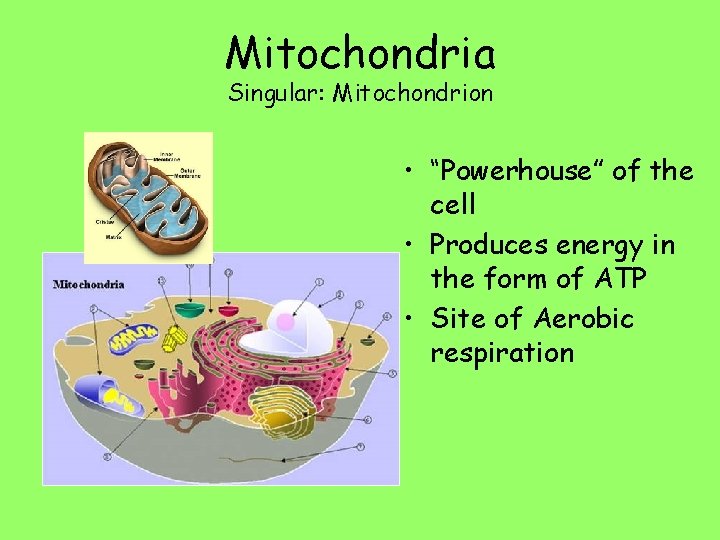
Mitochondria Singular: Mitochondrion • “Powerhouse” of the cell • Produces energy in the form of ATP • Site of Aerobic respiration
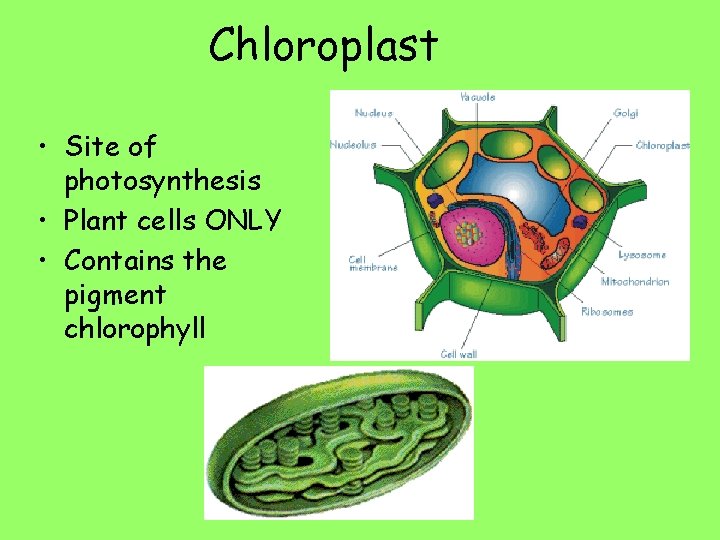
Chloroplast • Site of photosynthesis • Plant cells ONLY • Contains the pigment chlorophyll
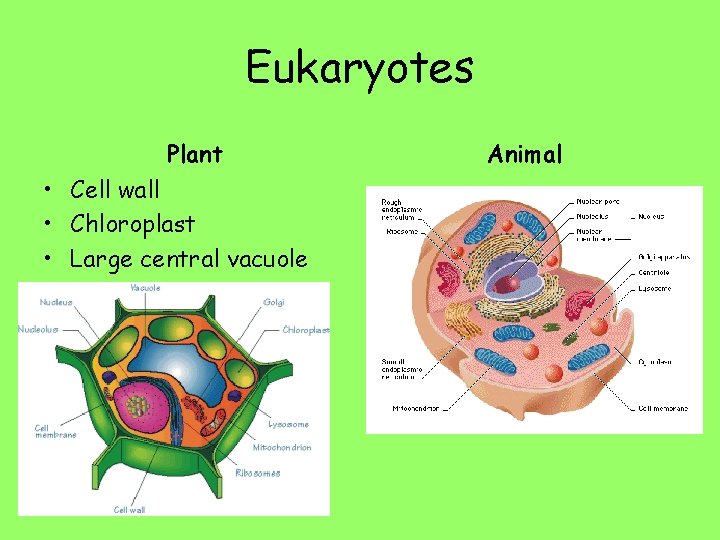
Eukaryotes Plant • Cell wall • Chloroplast • Large central vacuole Animal
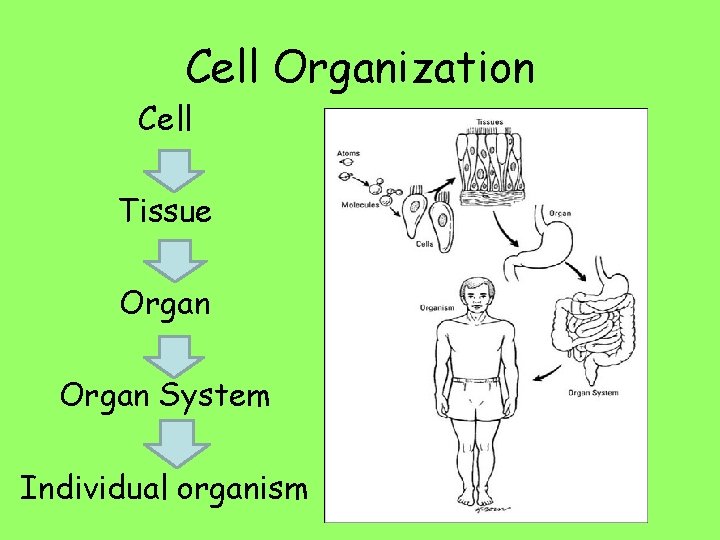
Cell Organization Cell Tissue Organ System Individual organism
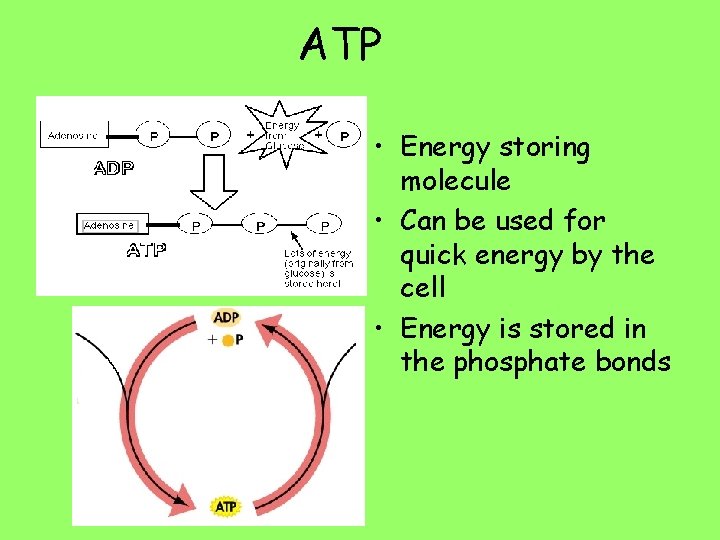
ATP • Energy storing molecule • Can be used for quick energy by the cell • Energy is stored in the phosphate bonds
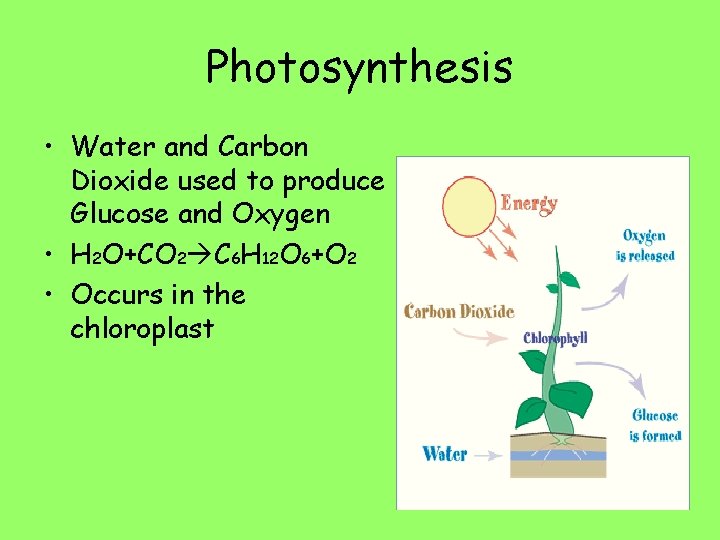
Photosynthesis • Water and Carbon Dioxide used to produce Glucose and Oxygen • H 2 O+CO 2 C 6 H 12 O 6+O 2 • Occurs in the chloroplast
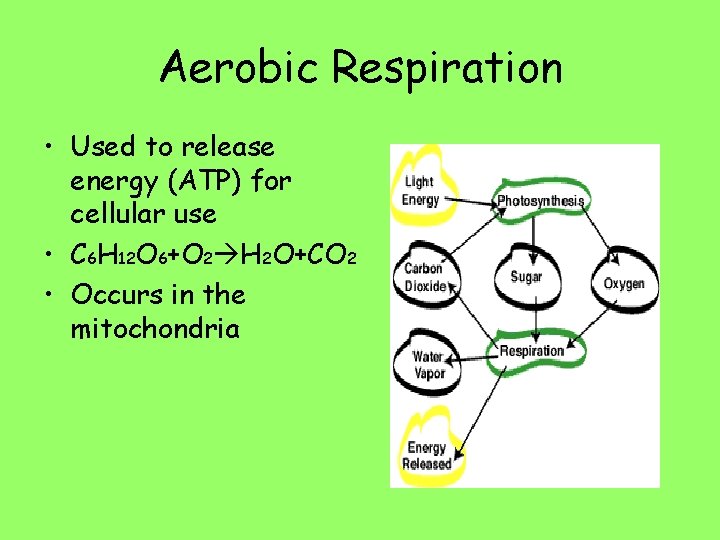
Aerobic Respiration • Used to release energy (ATP) for cellular use • C 6 H 12 O 6+O 2 H 2 O+CO 2 • Occurs in the mitochondria
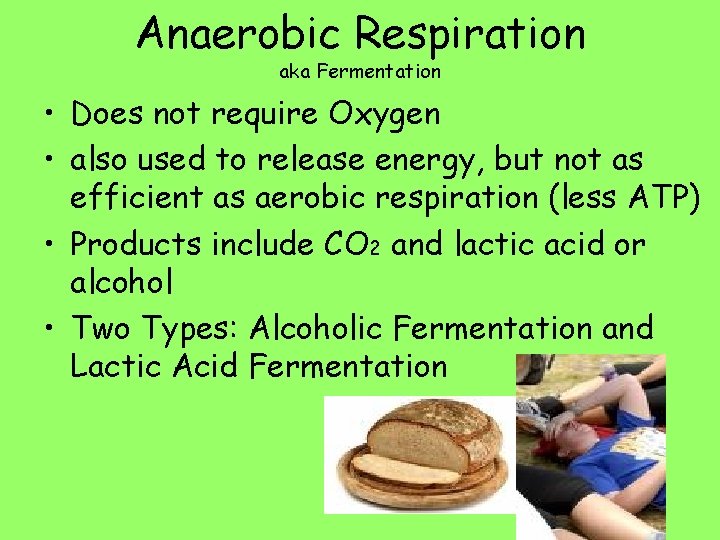
Anaerobic Respiration aka Fermentation • Does not require Oxygen • also used to release energy, but not as efficient as aerobic respiration (less ATP) • Products include CO 2 and lactic acid or alcohol • Two Types: Alcoholic Fermentation and Lactic Acid Fermentation
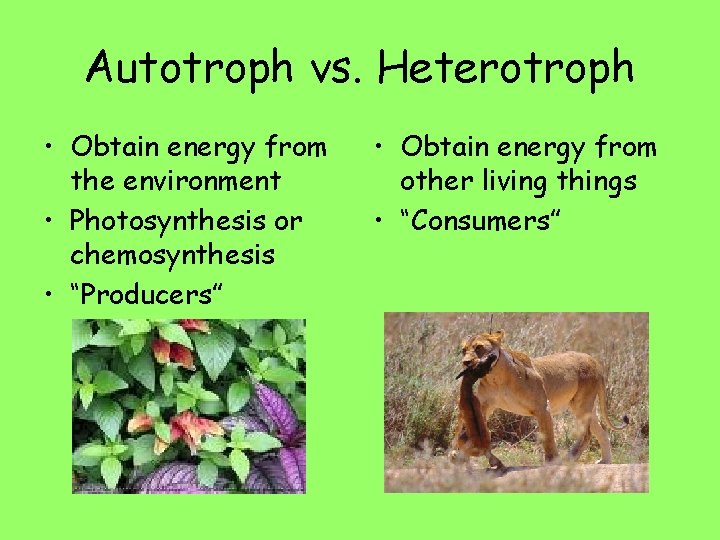
Autotroph vs. Heterotroph • Obtain energy from the environment • Photosynthesis or chemosynthesis • “Producers” • Obtain energy from other living things • “Consumers”
Asexual vs. Sexual Reproduction Asexual • One parent • Identical offspring • Variation only thru mutations • Examples: budding, fragmentation, fission Sexual • Two parents • Offspring different from parents • More variation • Fertilization (fusion of gametes)
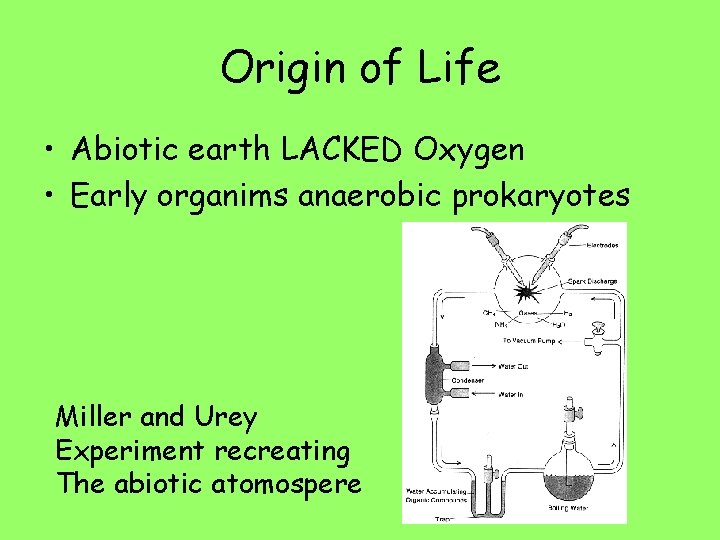
Origin of Life • Abiotic earth LACKED Oxygen • Early organims anaerobic prokaryotes Miller and Urey Experiment recreating The abiotic atomospere
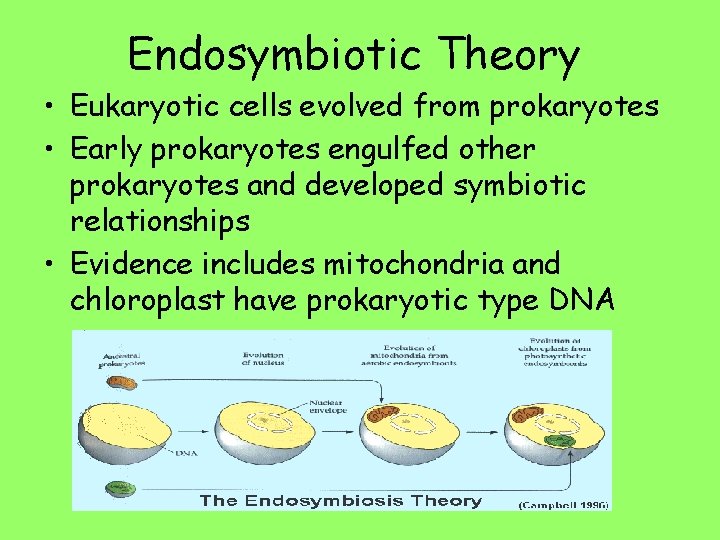
Endosymbiotic Theory • Eukaryotic cells evolved from prokaryotes • Early prokaryotes engulfed other prokaryotes and developed symbiotic relationships • Evidence includes mitochondria and chloroplast have prokaryotic type DNA
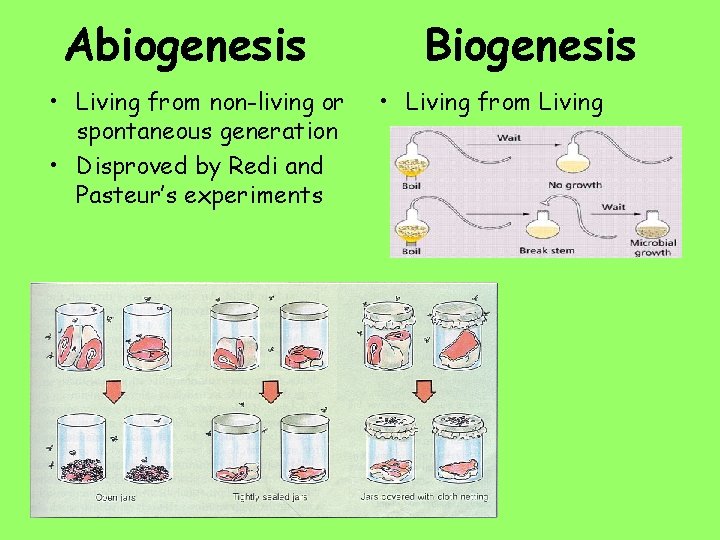
Abiogenesis • Living from non-living or spontaneous generation • Disproved by Redi and Pasteur’s experiments Biogenesis • Living from Living
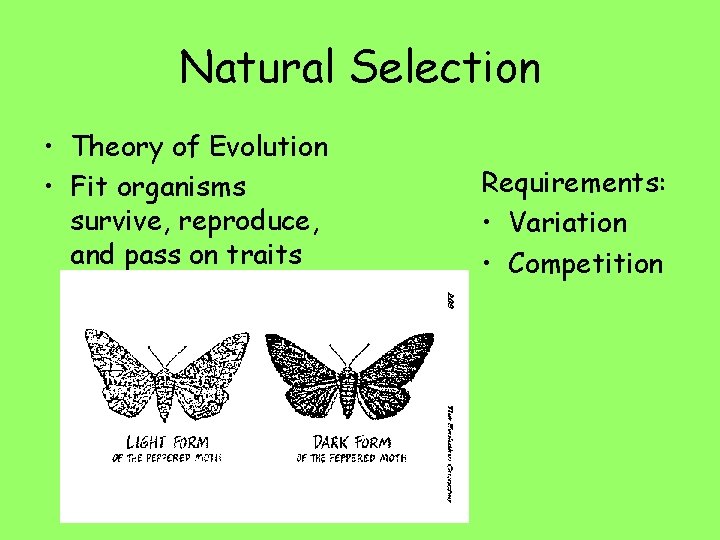
Natural Selection • Theory of Evolution • Fit organisms survive, reproduce, and pass on traits Requirements: • Variation • Competition
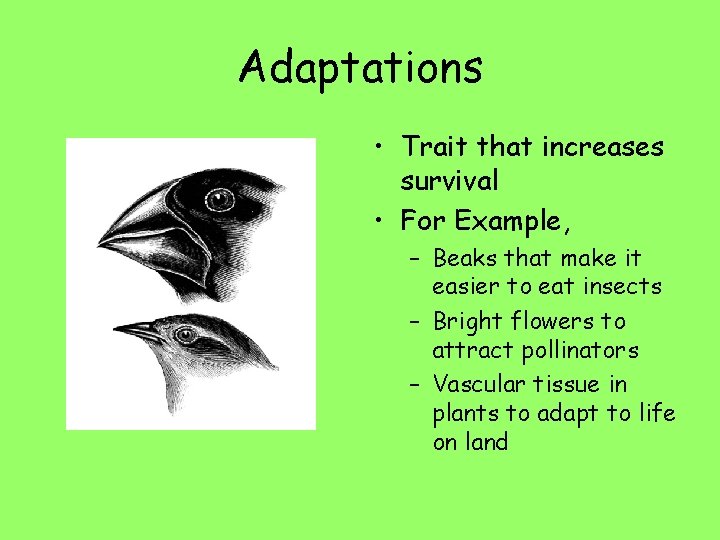
Adaptations • Trait that increases survival • For Example, – Beaks that make it easier to eat insects – Bright flowers to attract pollinators – Vascular tissue in plants to adapt to life on land
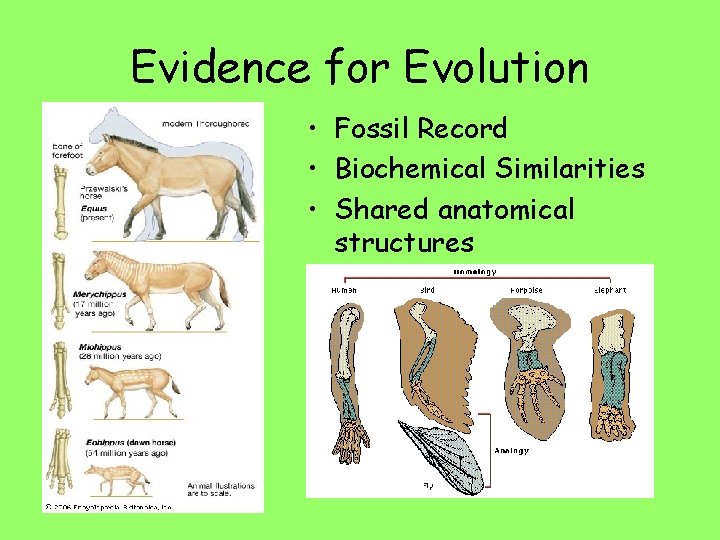
Evidence for Evolution • Fossil Record • Biochemical Similarities • Shared anatomical structures
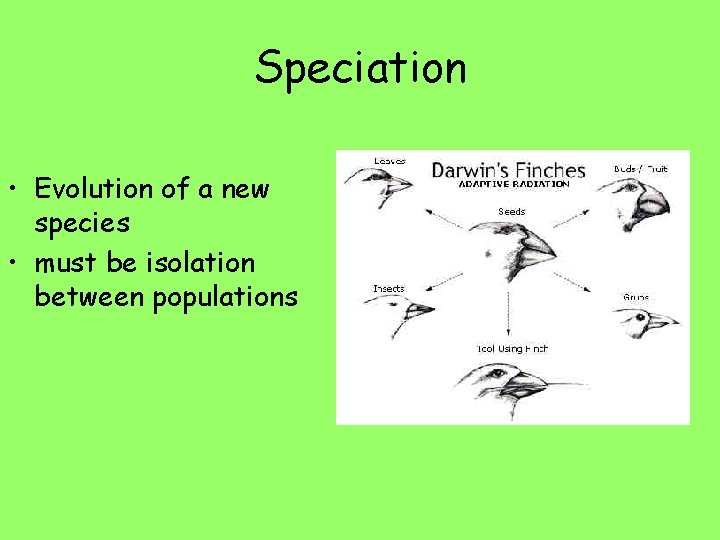
Speciation • Evolution of a new species • must be isolation between populations
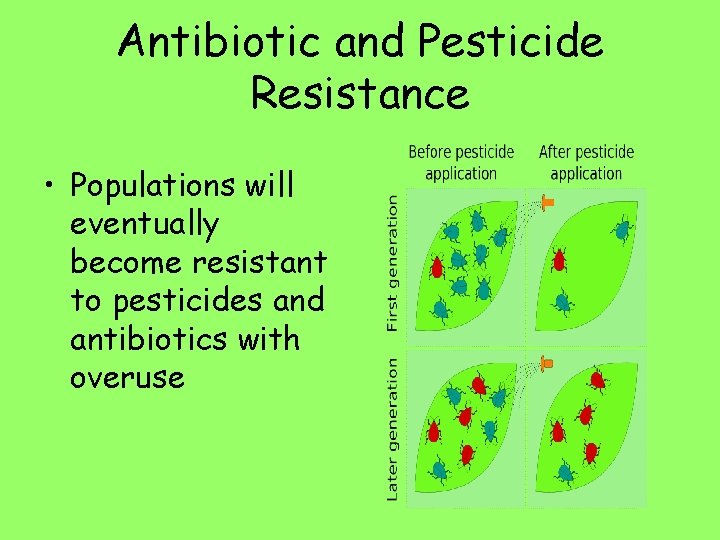
Antibiotic and Pesticide Resistance • Populations will eventually become resistant to pesticides and antibiotics with overuse
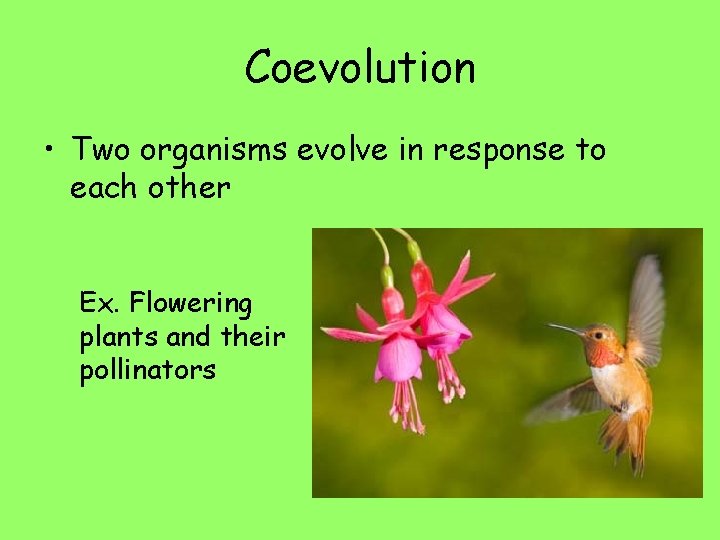
Coevolution • Two organisms evolve in response to each other Ex. Flowering plants and their pollinators
Binomial Nomenclature • • Two word naming system Scientific name Uses Genus and Species names Ex. Dogs: Canis familiaris
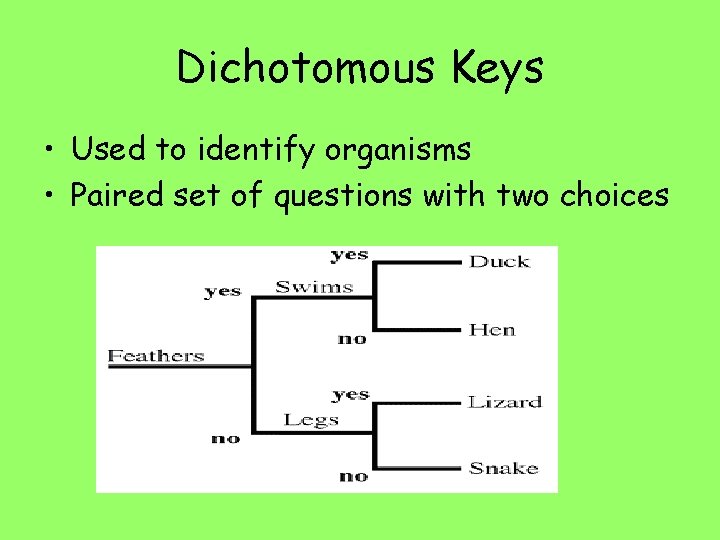
Dichotomous Keys • Used to identify organisms • Paired set of questions with two choices
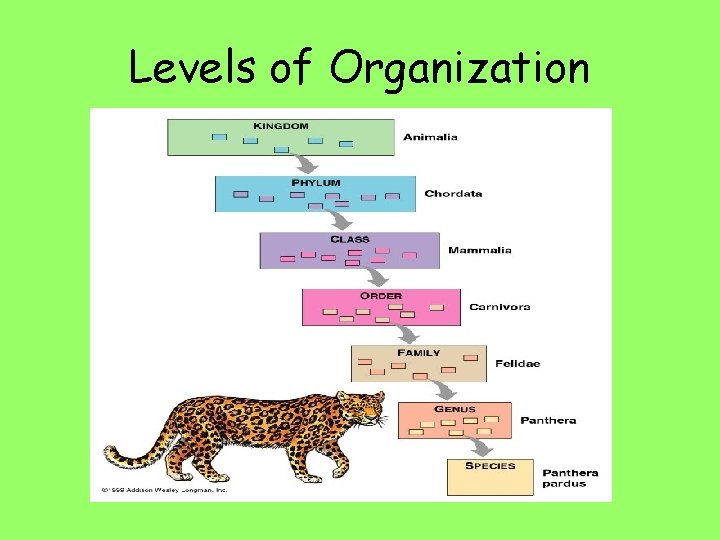
Levels of Organization

Phylogenic tree
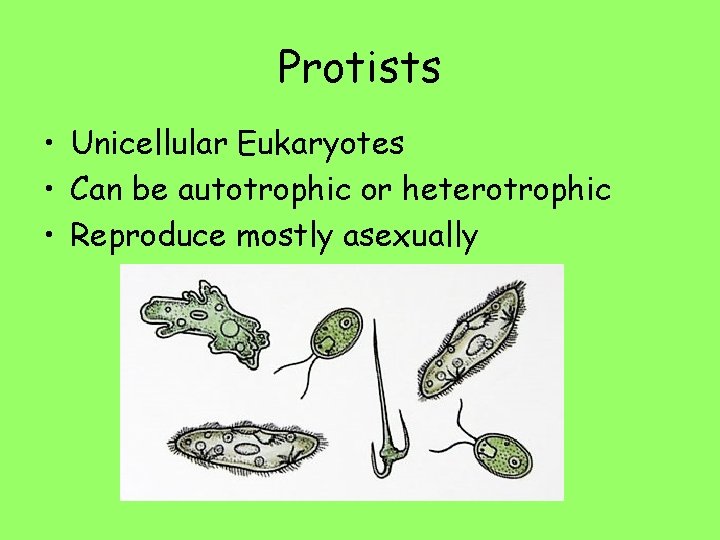
Protists • Unicellular Eukaryotes • Can be autotrophic or heterotrophic • Reproduce mostly asexually
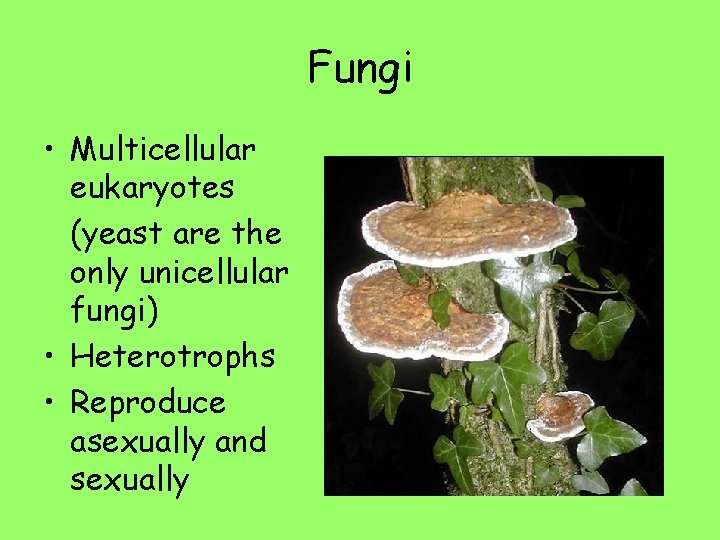
Fungi • Multicellular eukaryotes (yeast are the only unicellular fungi) • Heterotrophs • Reproduce asexually and sexually
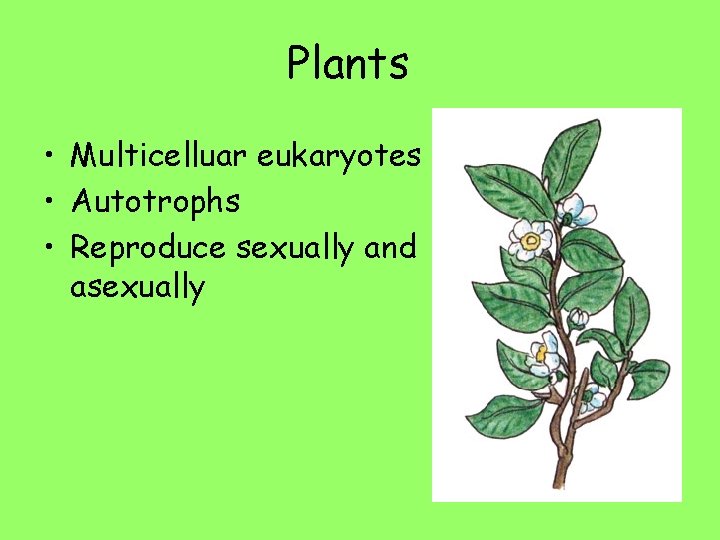
Plants • Multicelluar eukaryotes • Autotrophs • Reproduce sexually and asexually
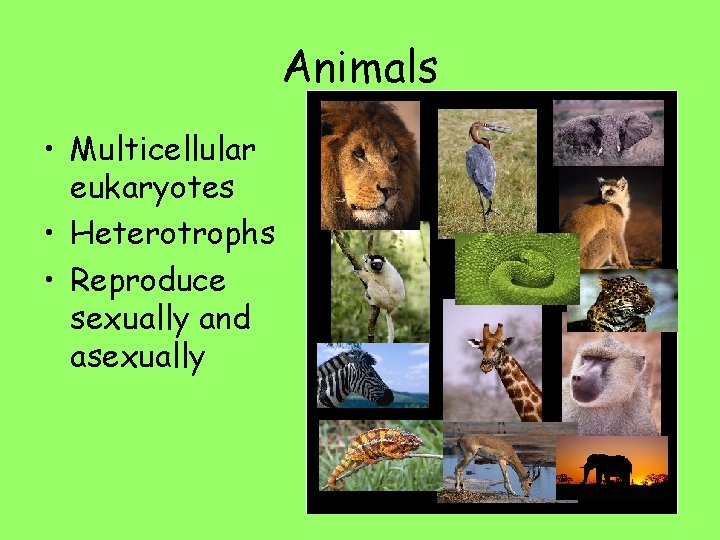
Animals • Multicellular eukaryotes • Heterotrophs • Reproduce sexually and asexually
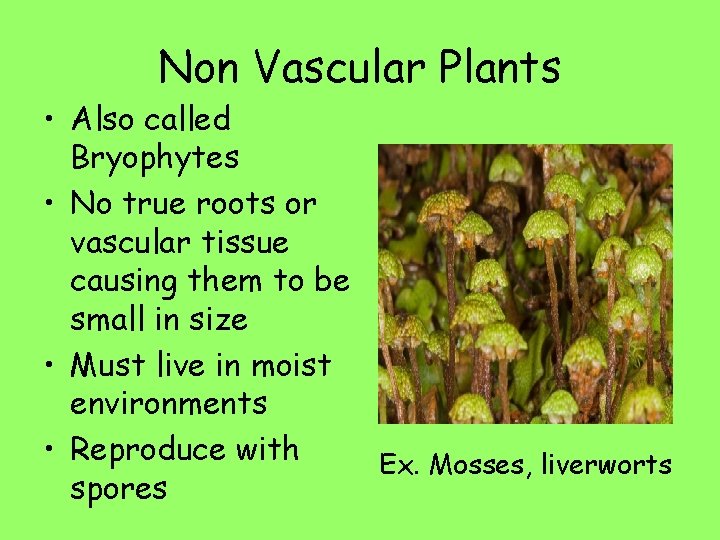
Non Vascular Plants • Also called Bryophytes • No true roots or vascular tissue causing them to be small in size • Must live in moist environments • Reproduce with Ex. Mosses, liverworts spores
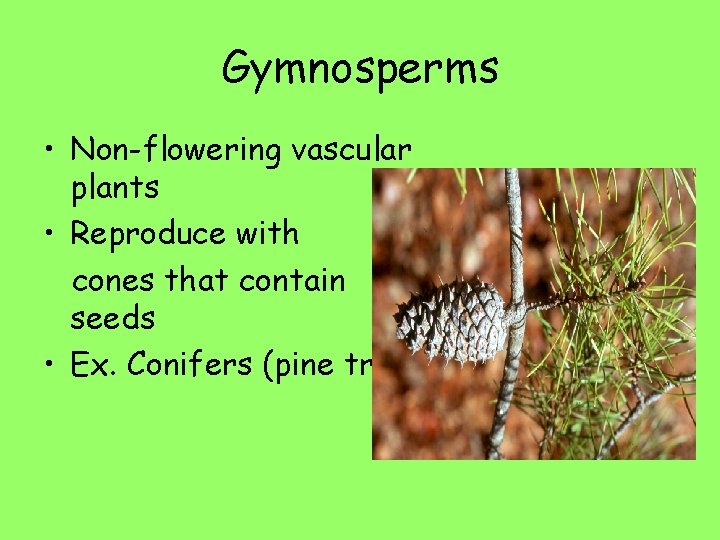
Gymnosperms • Non-flowering vascular plants • Reproduce with cones that contain seeds • Ex. Conifers (pine trees)
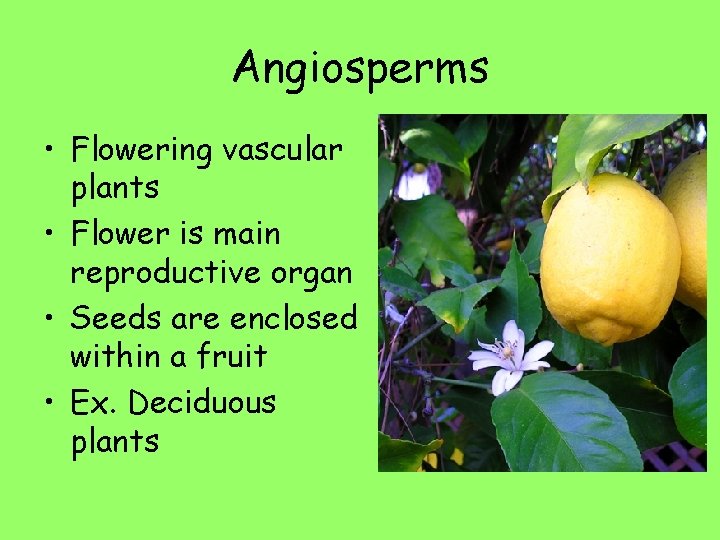
Angiosperms • Flowering vascular plants • Flower is main reproductive organ • Seeds are enclosed within a fruit • Ex. Deciduous plants
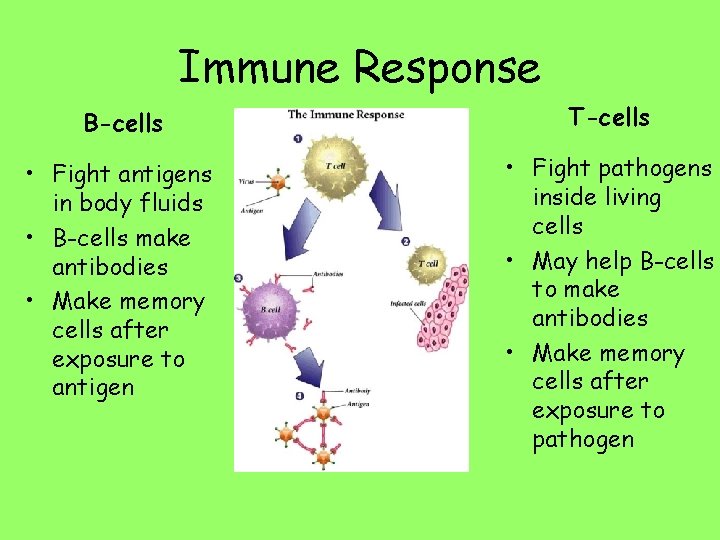
Immune Response B-cells T-cells • Fight antigens in body fluids • B-cells make antibodies • Make memory cells after exposure to antigen • Fight pathogens inside living cells • May help B-cells to make antibodies • Make memory cells after exposure to pathogen
Immunity Passive Immunity Active Immunity • Antibodies are introduced into the body • Short term • Such as mother transfers antibodies to infant through breast feeding • Antibodies are acquired when an immune response is activated in the body • Long term • Ex. Vaccines are weak/dead antigens that are introduced to the body
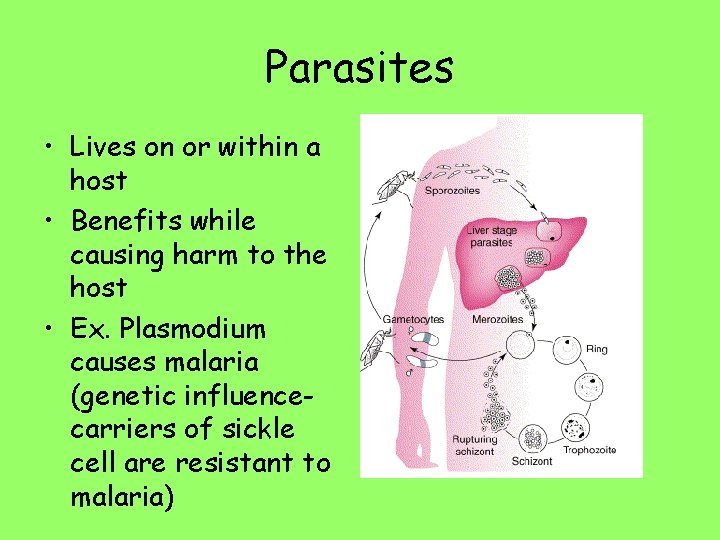
Parasites • Lives on or within a host • Benefits while causing harm to the host • Ex. Plasmodium causes malaria (genetic influencecarriers of sickle cell are resistant to malaria)
Toxins • Chemical that causes harm to the body • Can be man-made or produced by microorganisms • Ex. Mercury and Lead
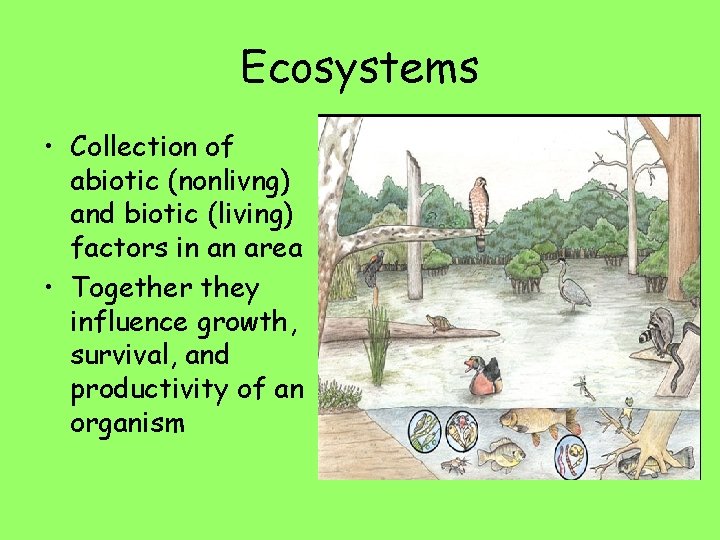
Ecosystems • Collection of abiotic (nonlivng) and biotic (living) factors in an area • Together they influence growth, survival, and productivity of an organism
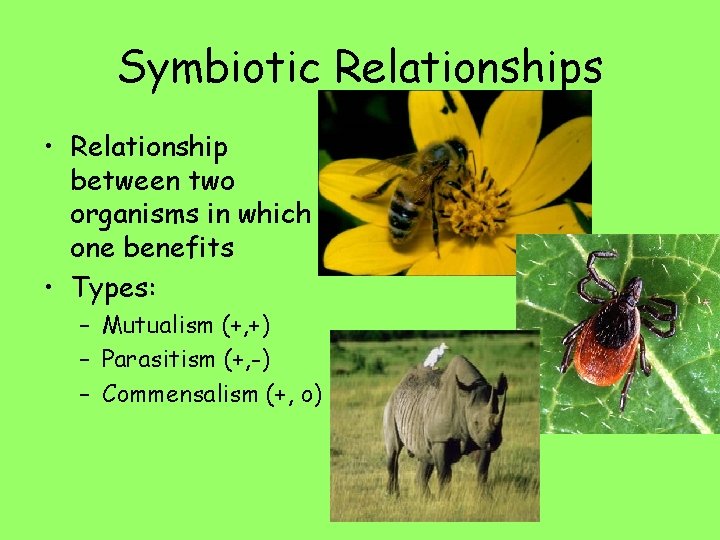
Symbiotic Relationships • Relationship between two organisms in which one benefits • Types: – Mutualism (+, +) – Parasitism (+, -) – Commensalism (+, o)
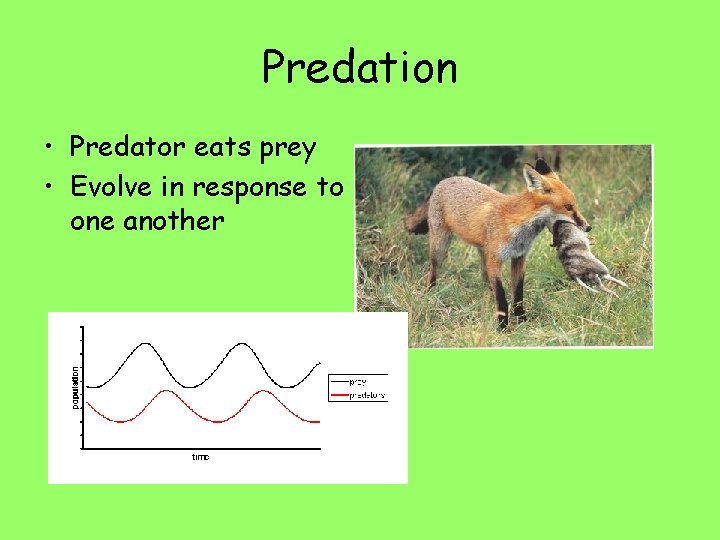
Predation • Predator eats prey • Evolve in response to one another
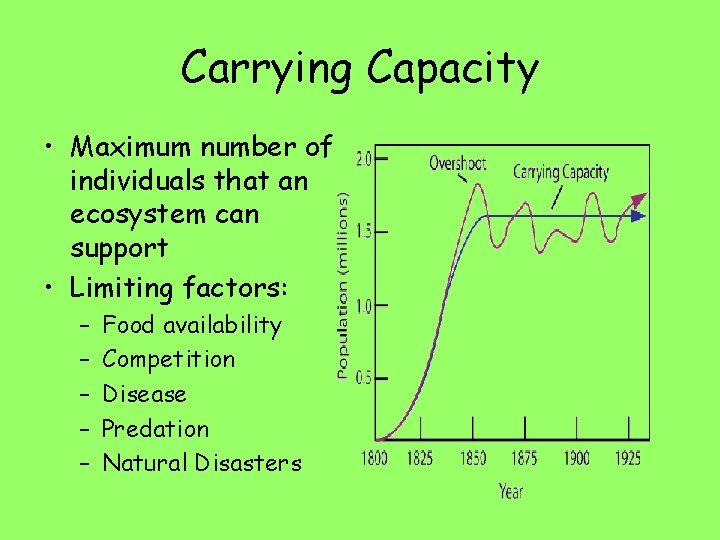
Carrying Capacity • Maximum number of individuals that an ecosystem can support • Limiting factors: – – – Food availability Competition Disease Predation Natural Disasters
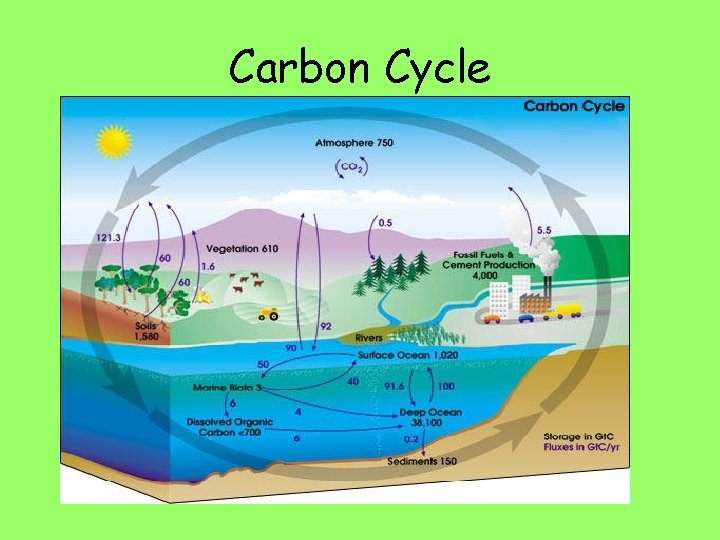
Carbon Cycle
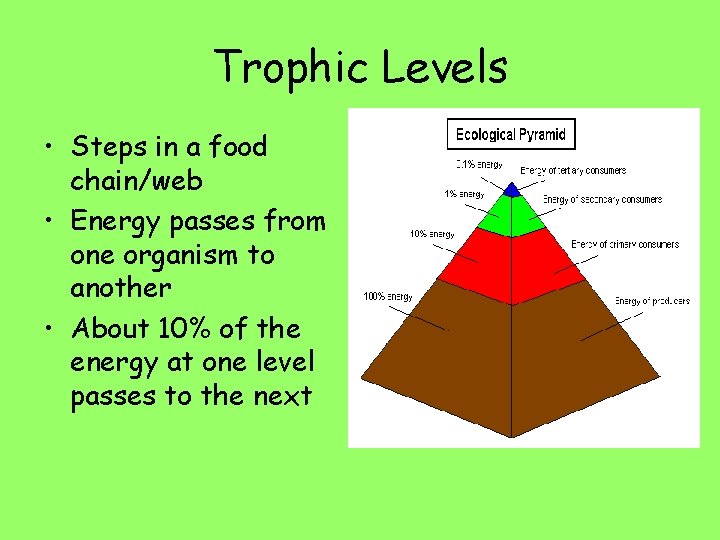
Trophic Levels • Steps in a food chain/web • Energy passes from one organism to another • About 10% of the energy at one level passes to the next
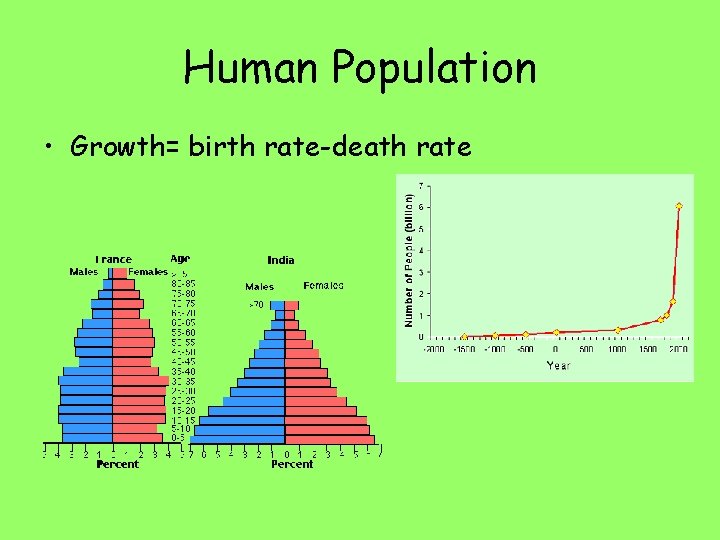
Human Population • Growth= birth rate-death rate
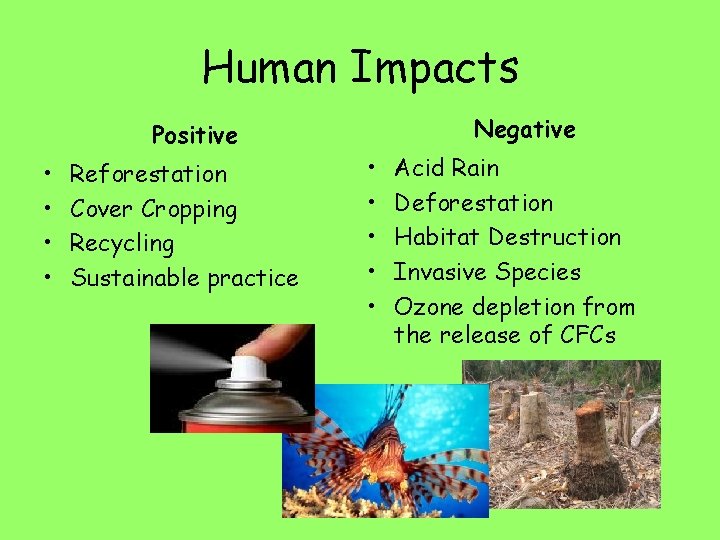
Human Impacts Positive • • Reforestation Cover Cropping Recycling Sustainable practice Negative • • • Acid Rain Deforestation Habitat Destruction Invasive Species Ozone depletion from the release of CFCs
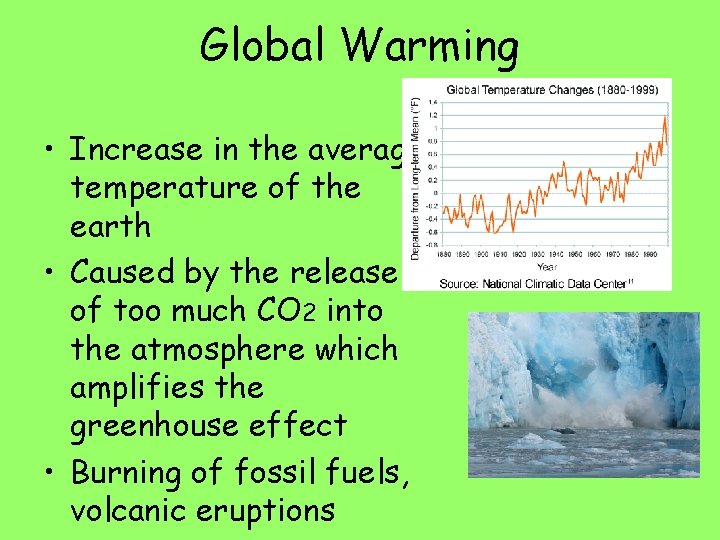
Global Warming • Increase in the average temperature of the earth • Caused by the release of too much CO 2 into the atmosphere which amplifies the greenhouse effect • Burning of fossil fuels, volcanic eruptions
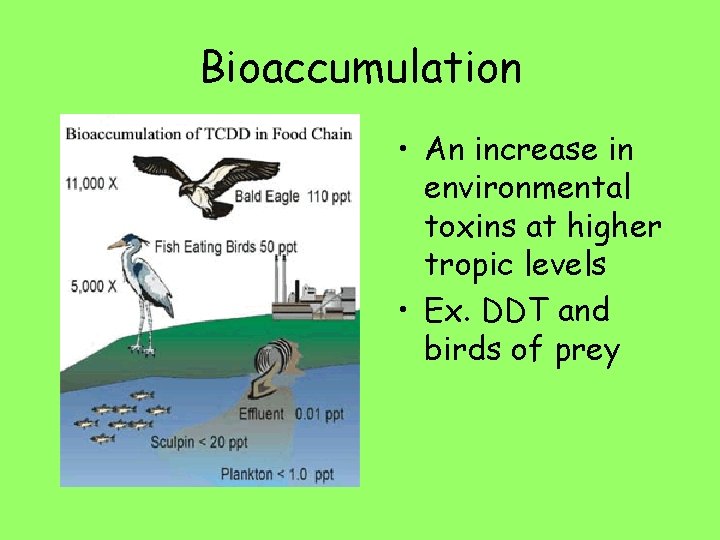
Bioaccumulation • An increase in environmental toxins at higher tropic levels • Ex. DDT and birds of prey
- Slides: 45