Cell Structure and Function Chapter 4 Cell Theory
- Slides: 29
Cell Structure and Function Chapter 4
Cell Theory 1) Every organism is composed of one or more cells 2) Cell is smallest unit having properties of life 3) Continuity of life arises from growth and division of single cells
Cell • Smallest unit of life • Can survive on its own or has potential to do so • Is highly organized for metabolism • Senses and responds to environment • Has potential to reproduce
Structure of Cells All start out life with: Two types: – Plasma membrane – Prokaryotic – Region where DNA is stored – Eukaryotic – Cytoplasm
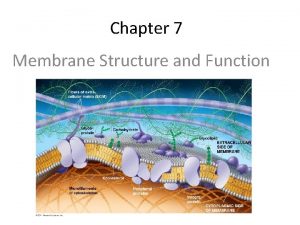
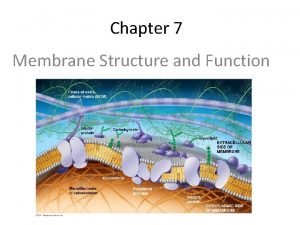
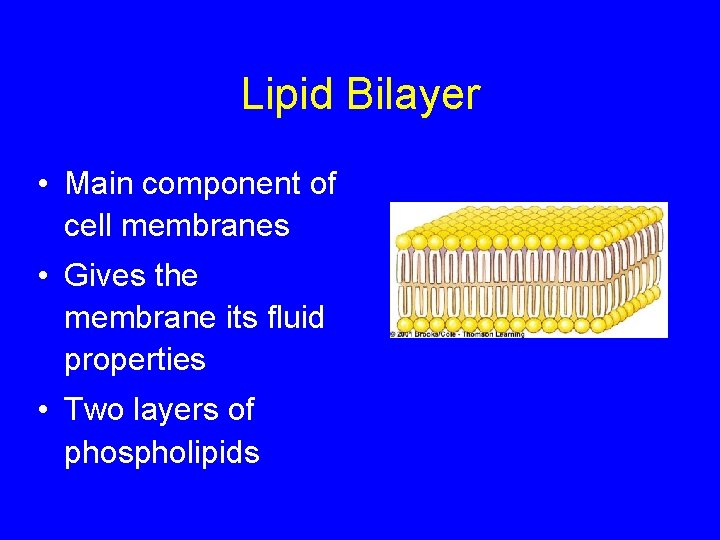
Lipid Bilayer • Main component of cell membranes • Gives the membrane its fluid properties • Two layers of phospholipids
Fluid Mosaic Model • Membrane is a mosaic of – Phospholipids – Glycolipids – Sterols – Proteins • Most phospholipids and some proteins can drift through membrane
Membrane Proteins • Transport proteins • Receptor proteins • Recognition proteins • Adhesion proteins
Eukaryotic Cells • Have a nucleus and other organelles • Eukaryotic organisms – Plants – Animals – Protistans – Fungi
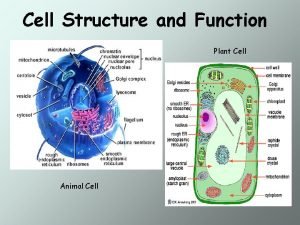
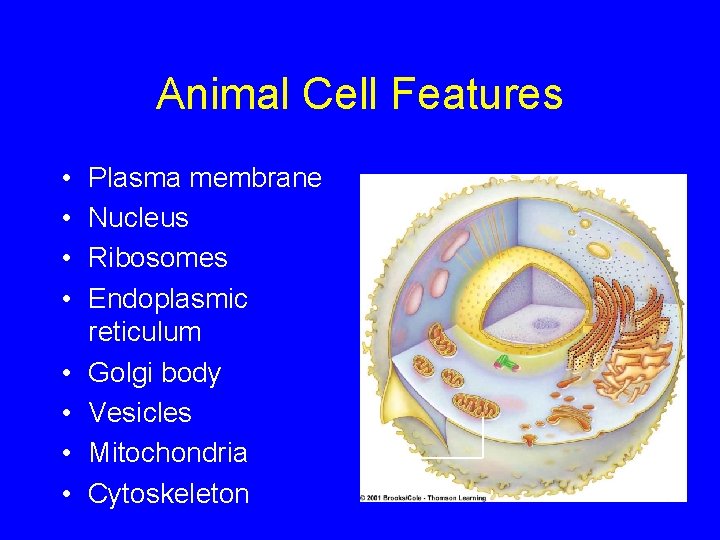
Animal Cell Features • • Plasma membrane Nucleus Ribosomes Endoplasmic reticulum Golgi body Vesicles Mitochondria Cytoskeleton
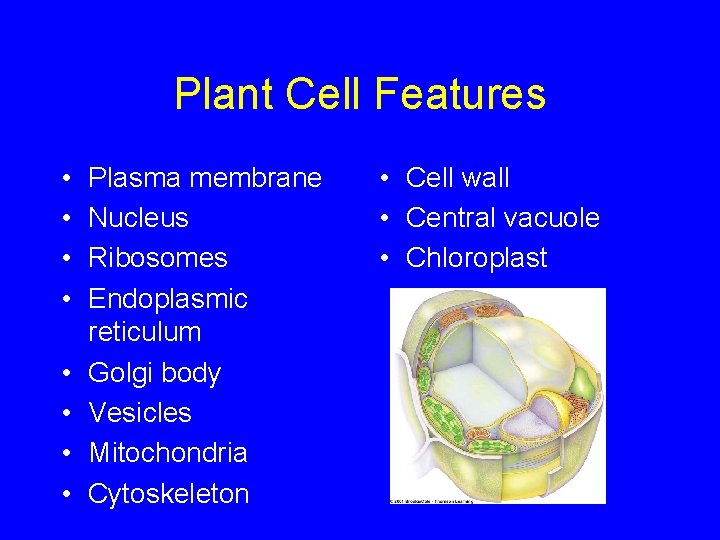
Plant Cell Features • • Plasma membrane Nucleus Ribosomes Endoplasmic reticulum Golgi body Vesicles Mitochondria Cytoskeleton • Cell wall • Central vacuole • Chloroplast
Functions of Nucleus • Keeps the DNA molecules of eukaryotic cells separated from metabolic machinery of cytoplasm • Makes it easier to organize DNA and to copy it before parent cells divide into daughter cells
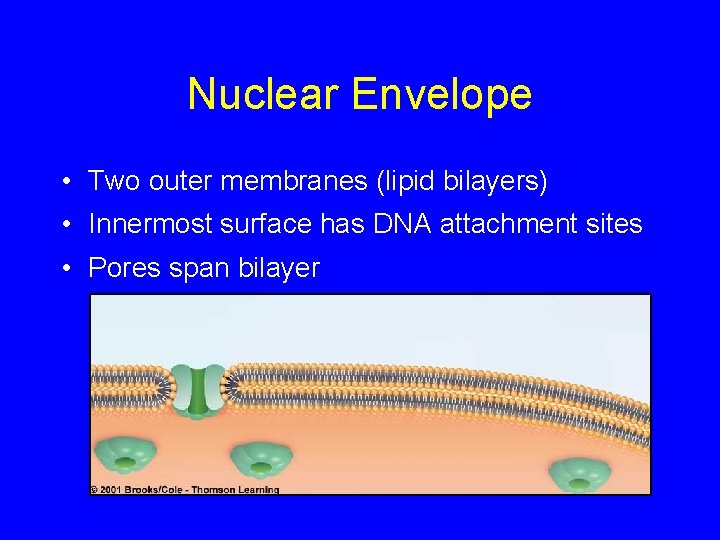
Nuclear Envelope • Two outer membranes (lipid bilayers) • Innermost surface has DNA attachment sites • Pores span bilayer
Nucleolus • • Dense mass of material in nucleus May be one or more Cluster of DNA and proteins Materials from which ribosomal subunits are built • Subunits must pass through nuclear pores to reach cytoplasm
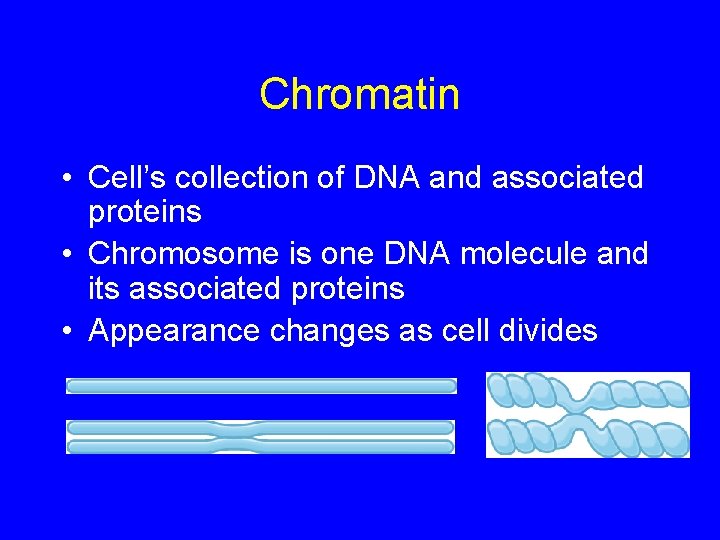
Chromatin • Cell’s collection of DNA and associated proteins • Chromosome is one DNA molecule and its associated proteins • Appearance changes as cell divides
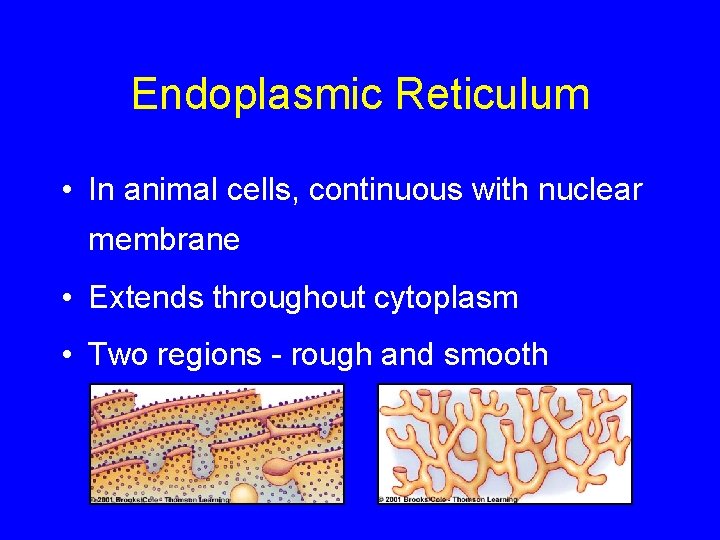
Endoplasmic Reticulum • In animal cells, continuous with nuclear membrane • Extends throughout cytoplasm • Two regions - rough and smooth
Rough ER • Arranged into flattened sacs • Ribosomes on surface give it a rough appearance • Some polypeptide chains enter rough ER and are modified • Cells that specialize in secreting proteins have lots of rough ER
Smooth ER • • A series of interconnected tubules No ribosomes on surface Lipids assembled inside tubules Smooth ER of liver inactivates wastes, drugs • Sarcoplasmic reticulum of muscle is a specialized form
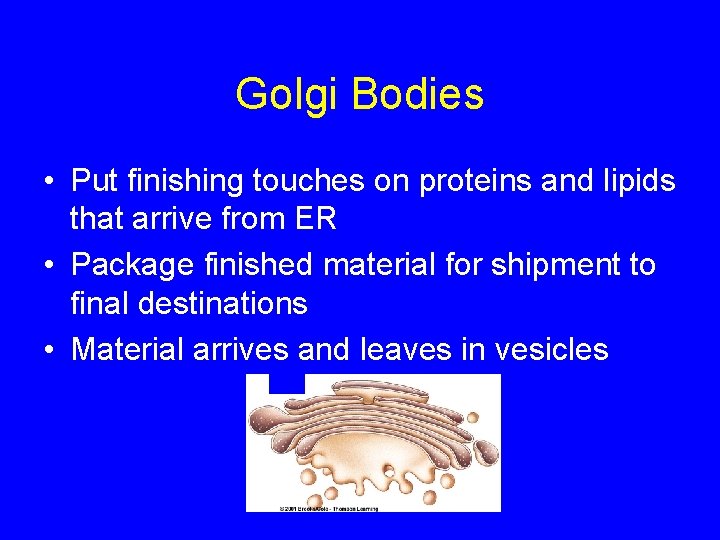
Golgi Bodies • Put finishing touches on proteins and lipids that arrive from ER • Package finished material for shipment to final destinations • Material arrives and leaves in vesicles
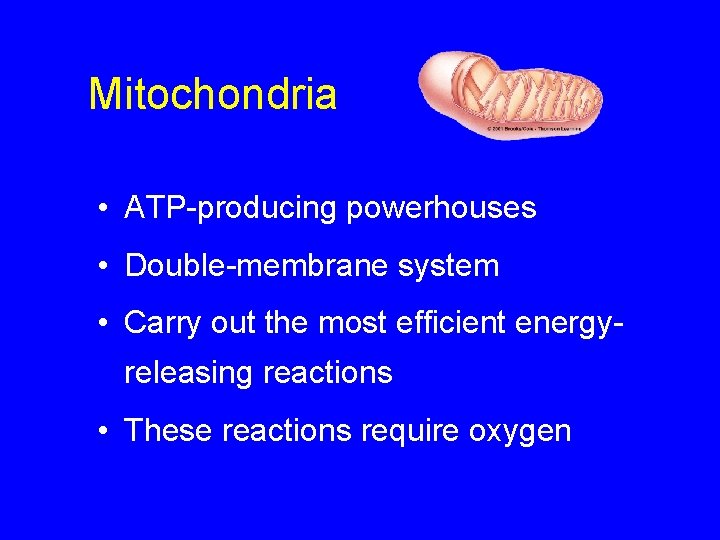
Mitochondria • ATP-producing powerhouses • Double-membrane system • Carry out the most efficient energyreleasing reactions • These reactions require oxygen
Mitochondrial Origins • Mitochondria resemble bacteria – Have own DNA, ribosomes – Divide on their own • May have evolved from ancient bacteria that were engulfed but not digested
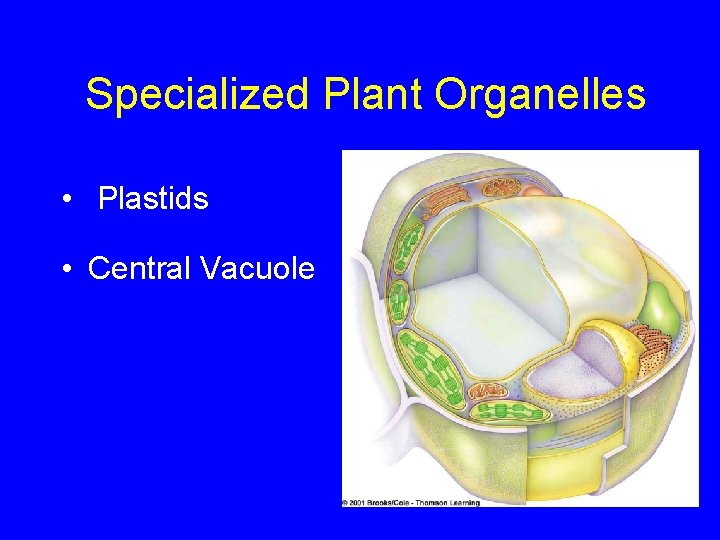
Specialized Plant Organelles • Plastids • Central Vacuole
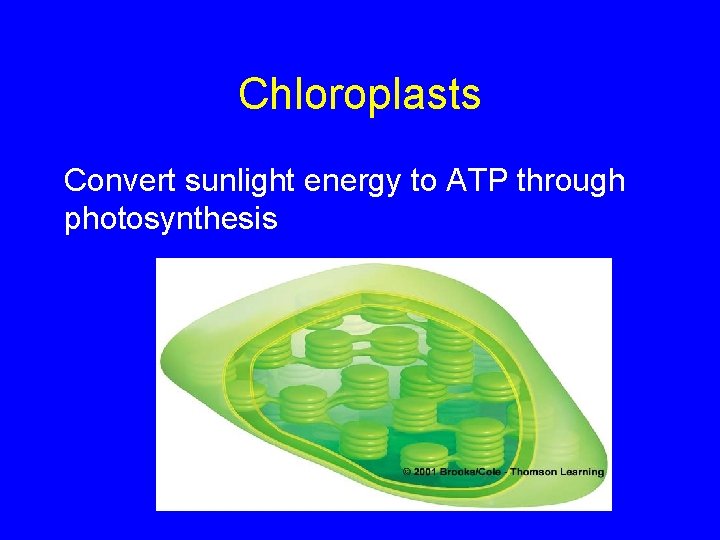
Chloroplasts Convert sunlight energy to ATP through photosynthesis
Central Vacuole • Fluid-filled organelle • Stores amino acids, sugars, wastes • As cell grows, expansion of vacuole as a result of fluid pressure forces cell wall to expand • In mature cell, central vacuole takes up 50 -90 percent of cell interior
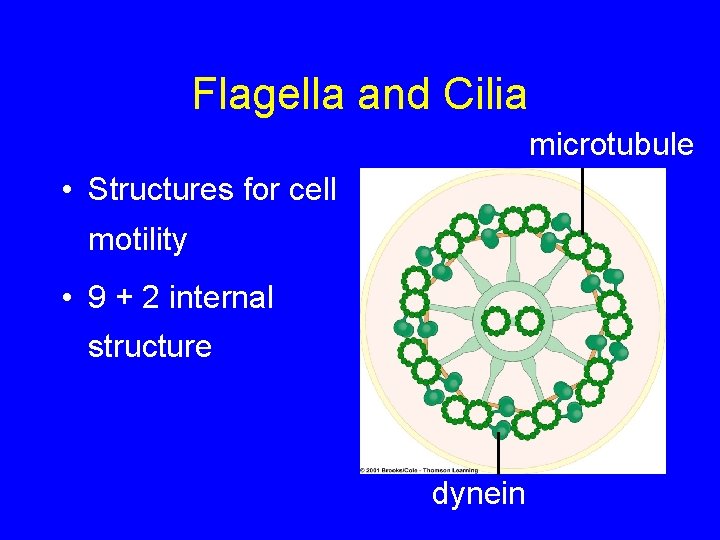
Flagella and Cilia microtubule • Structures for cell motility • 9 + 2 internal structure dynein
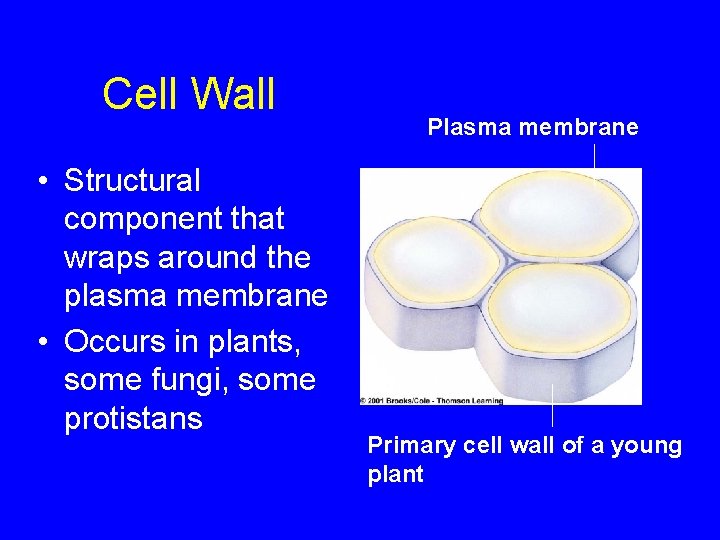
Cell Wall • Structural component that wraps around the plasma membrane • Occurs in plants, some fungi, some protistans Plasma membrane Primary cell wall of a young plant
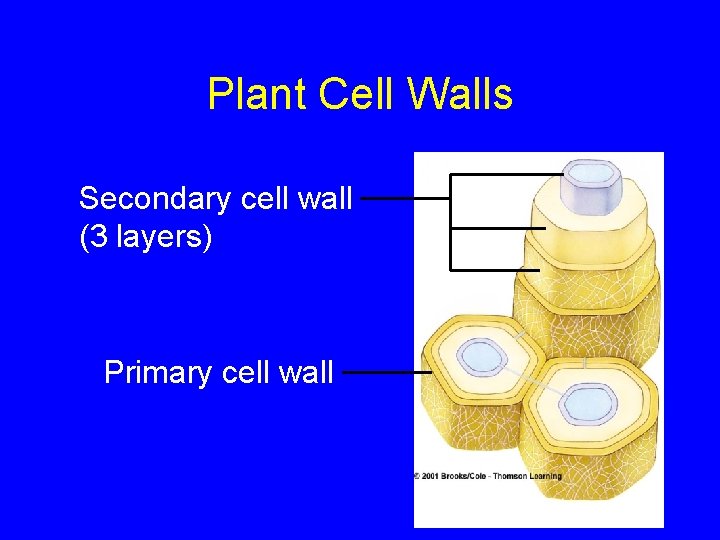
Plant Cell Walls Secondary cell wall (3 layers) Primary cell wall
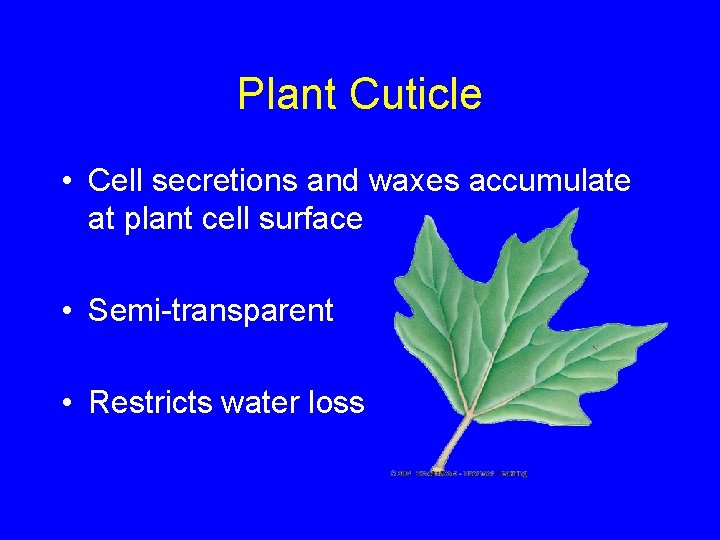
Plant Cuticle • Cell secretions and waxes accumulate at plant cell surface • Semi-transparent • Restricts water loss
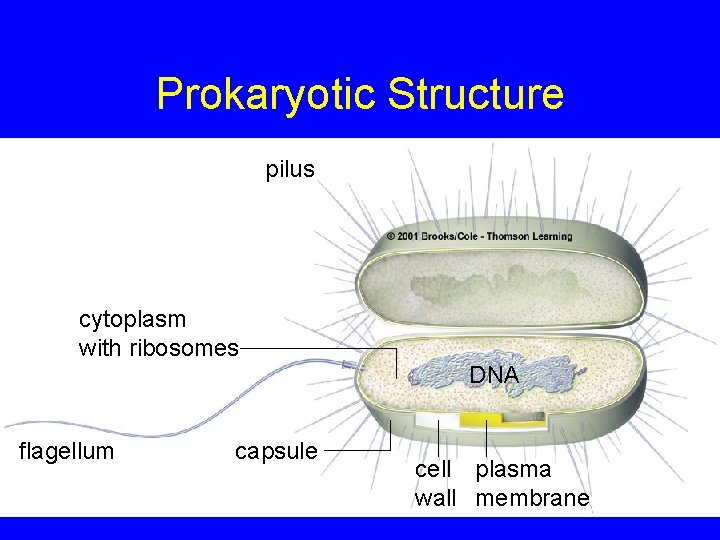
Prokaryotic Cells • Archaebacteria and Eubacteria • DNA is NOT enclosed in nucleus • Generally the smallest, simplest cells • No organelles
Prokaryotic Structure pilus cytoplasm with ribosomes DNA flagellum capsule cell plasma wall membrane