
Plants Chapter 21 23 Objectives Tell the function
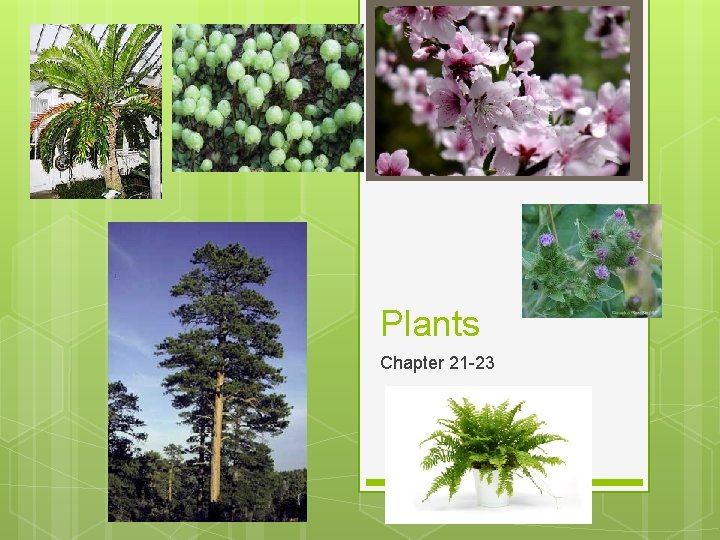
Plants Chapter 21 -23
Objectives: Tell the function and Diagram and label parts of plant organs. Root, Stem, Leaf, Flower, Seed, Archegonium, Antheridium Veins, Stomata, Xylem, Phloem, Cambium, Tip, Elongation, Hairs. Compare the Fern and Peach reproductive systems.
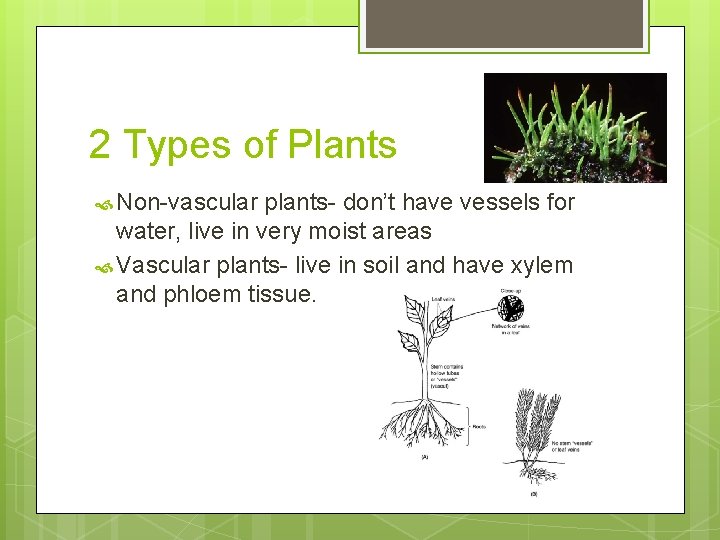
2 Types of Plants Non-vascular plants- don’t have vessels for water, live in very moist areas Vascular plants- live in soil and have xylem and phloem tissue.
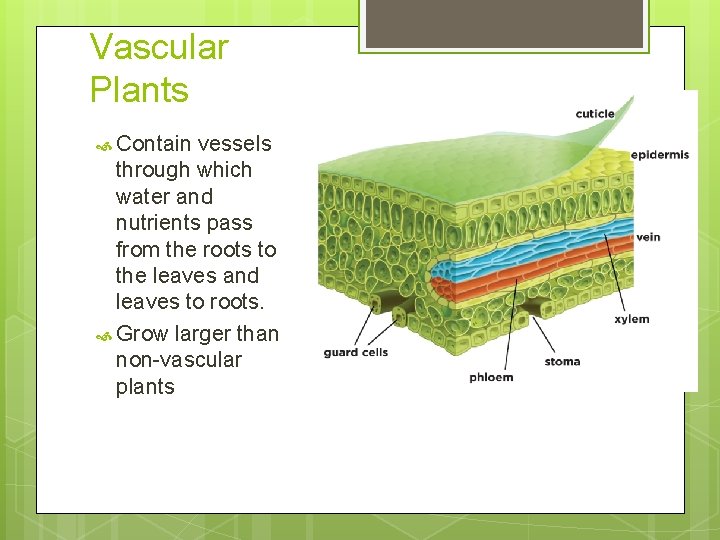
Vascular Plants Contain vessels through which water and nutrients pass from the roots to the leaves and leaves to roots. Grow larger than non-vascular plants
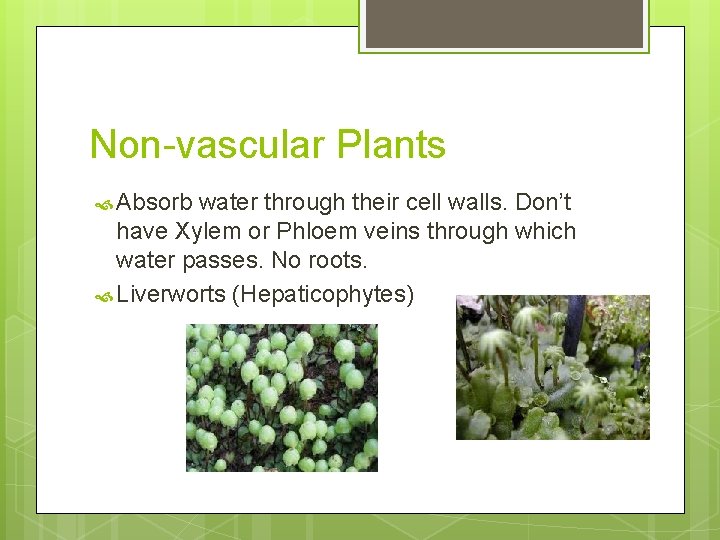
Non-vascular Plants Absorb water through their cell walls. Don’t have Xylem or Phloem veins through which water passes. No roots. Liverworts (Hepaticophytes)
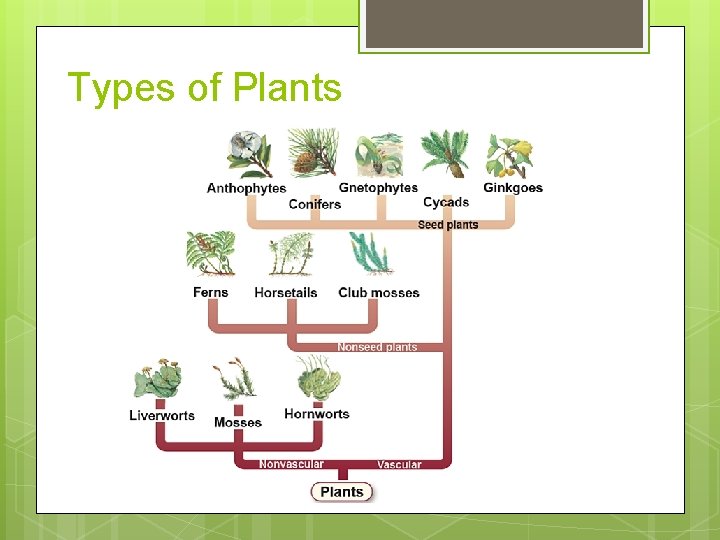
Types of Plants
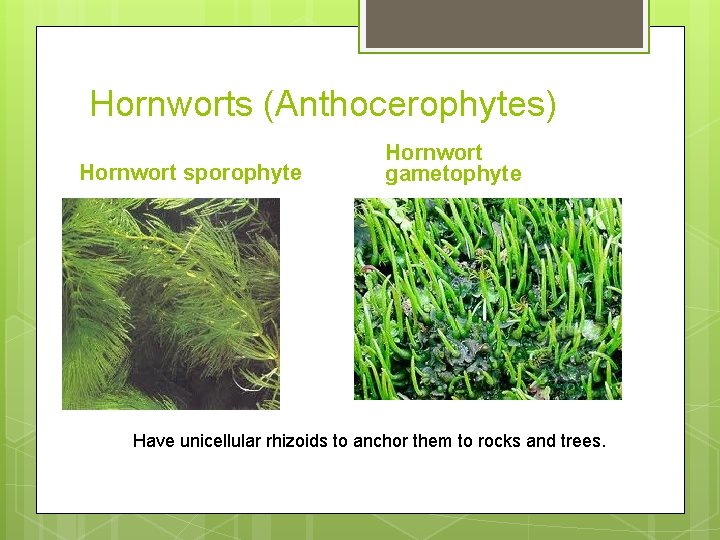
Hornworts (Anthocerophytes) Hornwort sporophyte Hornwort gametophyte Have unicellular rhizoids to anchor them to rocks and trees.
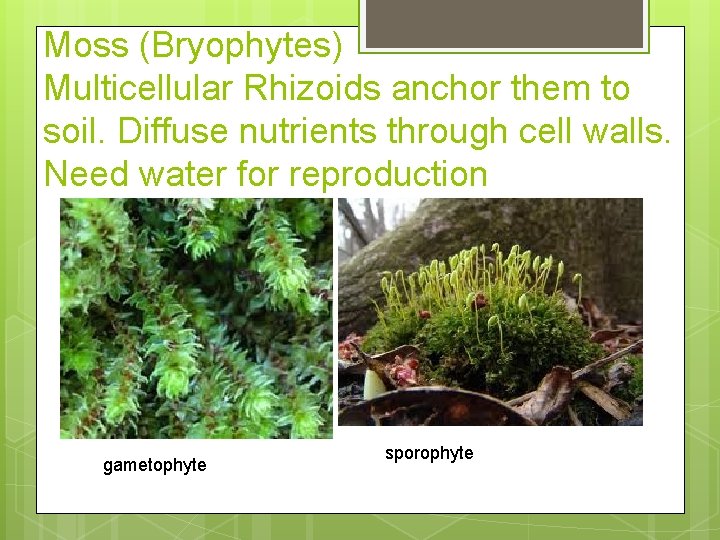
Moss (Bryophytes) Multicellular Rhizoids anchor them to soil. Diffuse nutrients through cell walls. Need water for reproduction gametophyte sporophyte
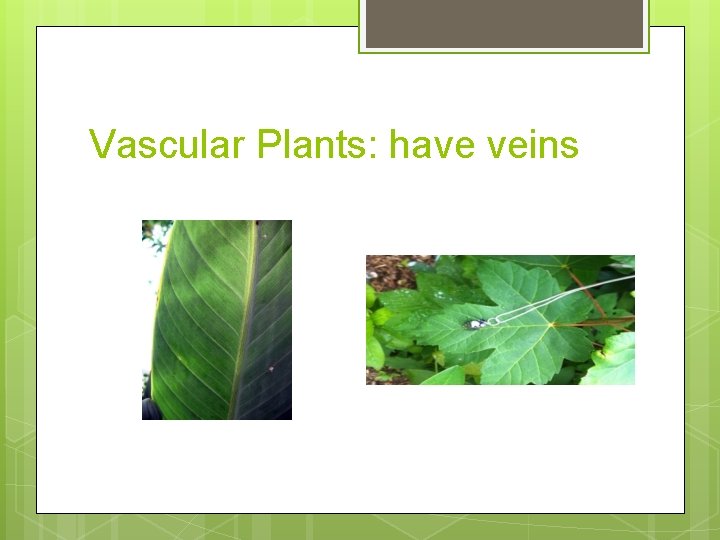
Vascular Plants: have veins
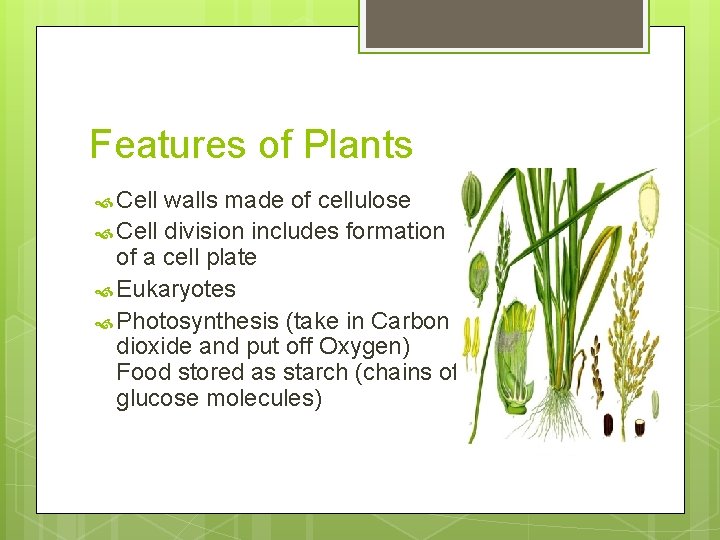
Features of Plants Cell walls made of cellulose Cell division includes formation of a cell plate Eukaryotes Photosynthesis (take in Carbon dioxide and put off Oxygen) Food stored as starch (chains of glucose molecules)
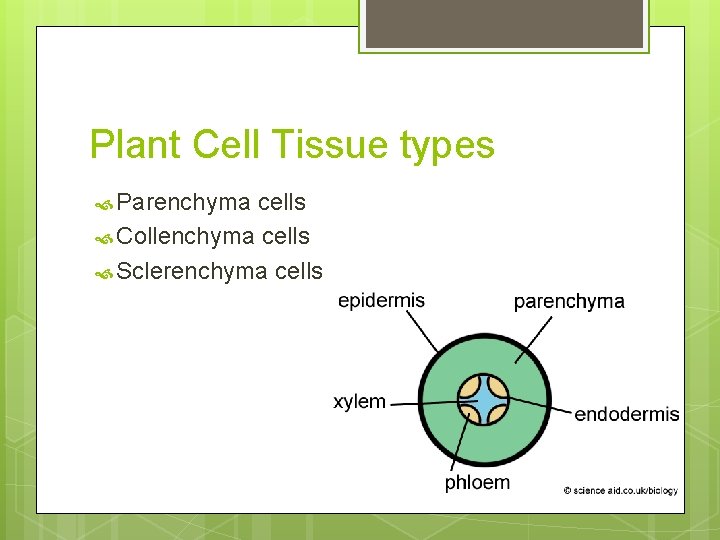
Plant Cell Tissue types Parenchyma cells Collenchyma cells Sclerenchyma cells
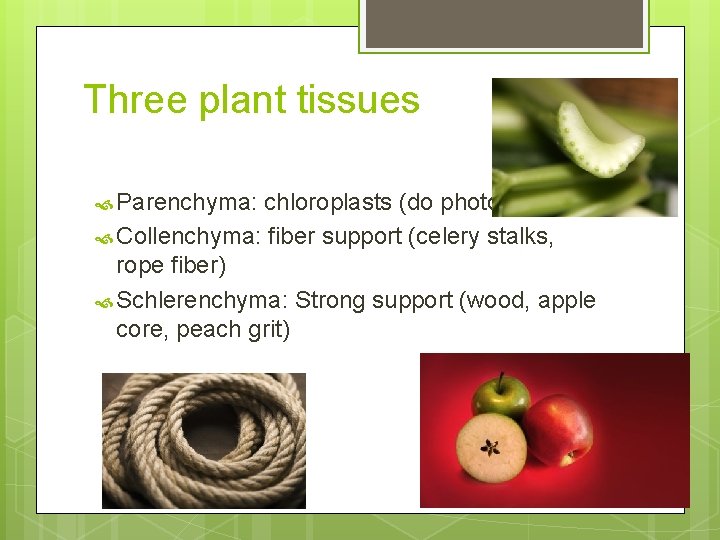
Three plant tissues Parenchyma: chloroplasts (do photosynthesis) Collenchyma: fiber support (celery stalks, rope fiber) Schlerenchyma: Strong support (wood, apple core, peach grit)
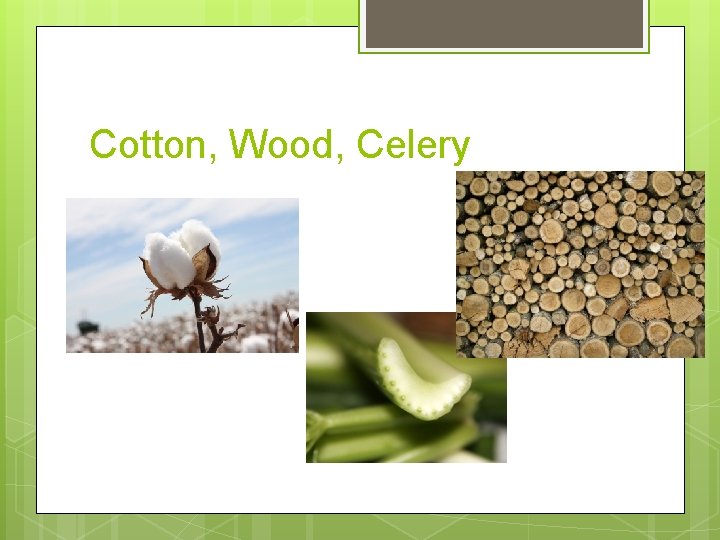
Cotton, Wood, Celery
4 Plant Tissues Ground Meristematic Vascular Dermal
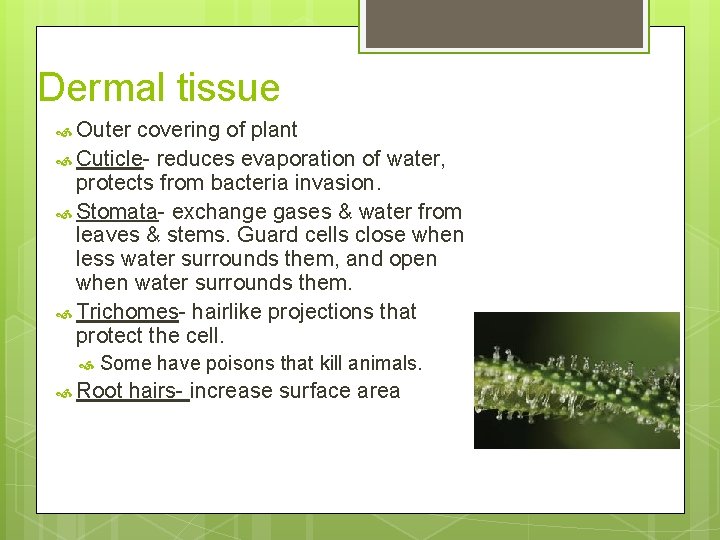
Dermal tissue Outer covering of plant Cuticle- reduces evaporation of water, protects from bacteria invasion. Stomata- exchange gases & water from leaves & stems. Guard cells close when less water surrounds them, and open when water surrounds them. Trichomes- hairlike projections that protect the cell. Some have poisons that kill animals. Root hairs- increase surface area
Ground tissue Parenchyma- cells that do photosynthesis Collenchyma- flexible, long strands for support, in celery Sclerenchyma- no cytoplasm, support, thick, gritty part of pear, wood Sclereids-gritty texture of pears, and seed coats Fiber- needle shaped. (Ropes, fibers)
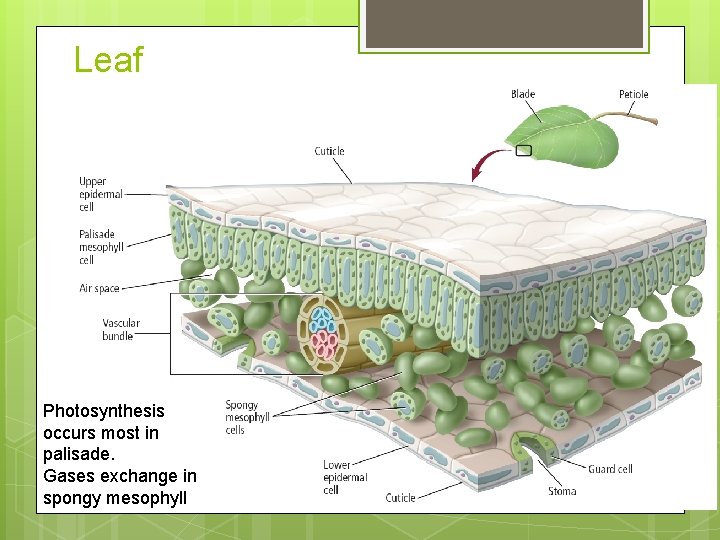
Leaf Photosynthesis occurs most in palisade. Gases exchange in spongy mesophyll
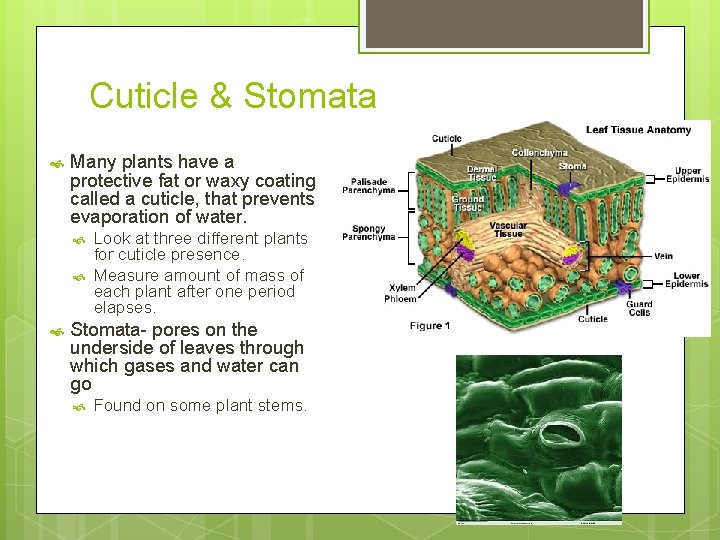
Cuticle & Stomata Many plants have a protective fat or waxy coating called a cuticle, that prevents evaporation of water. Look at three different plants for cuticle presence. Measure amount of mass of each plant after one period elapses. Stomata- pores on the underside of leaves through which gases and water can go Found on some plant stems.
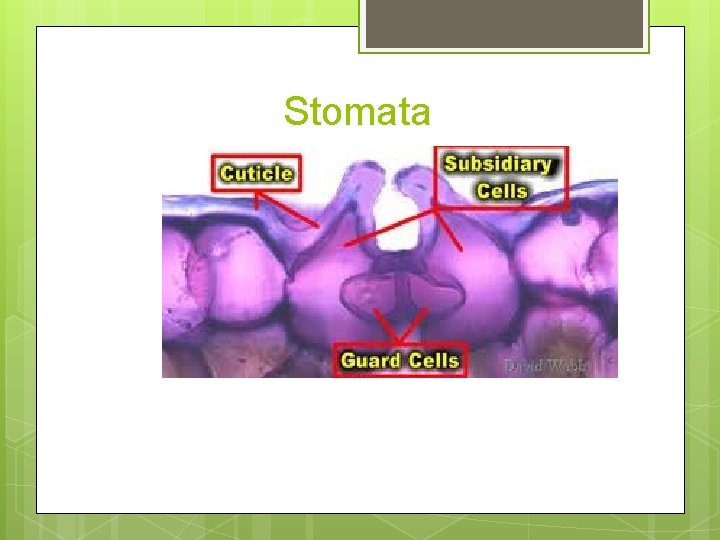
Stomata
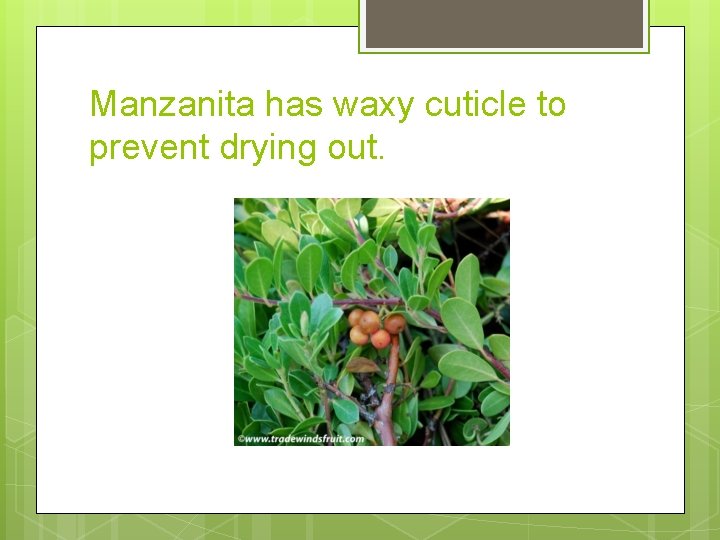
Manzanita has waxy cuticle to prevent drying out.
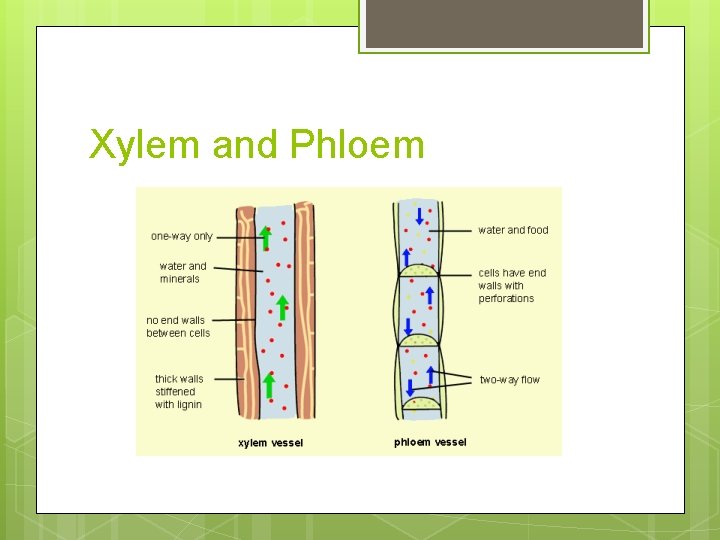
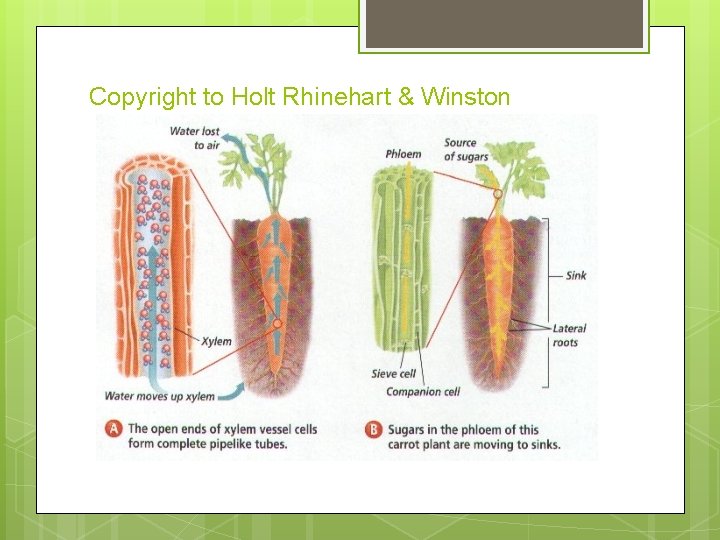
Xylem and Phloem
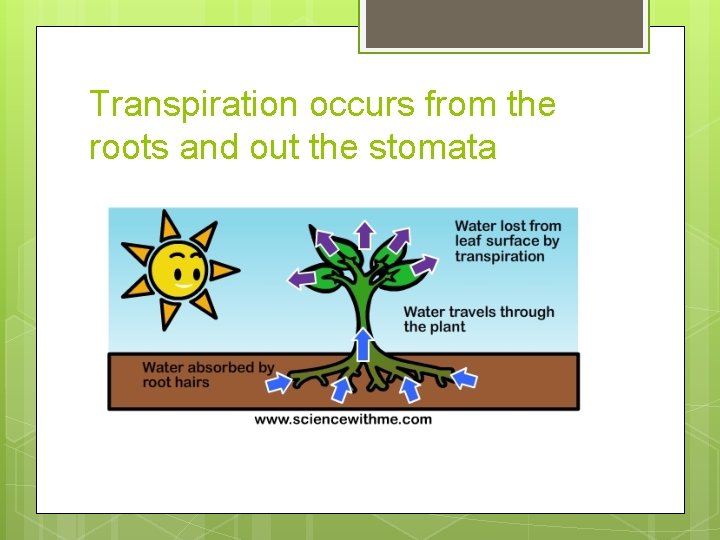
Transpiration occurs from the roots and out the stomata
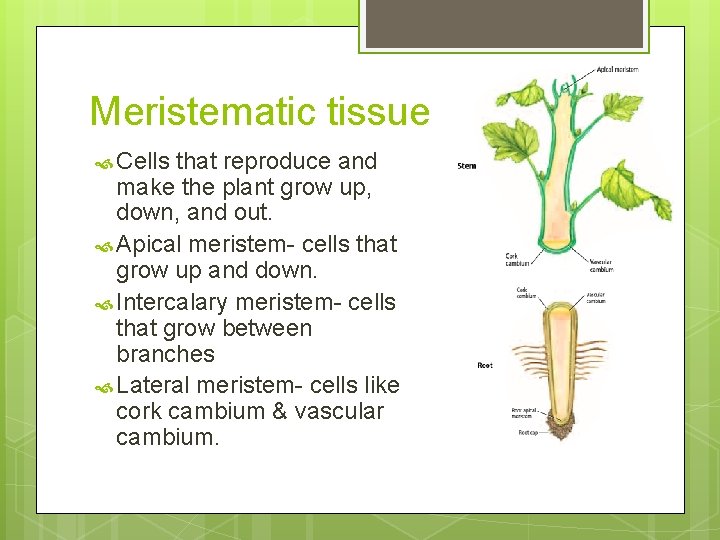
Meristematic tissue Cells that reproduce and make the plant grow up, down, and out. Apical meristem- cells that grow up and down. Intercalary meristem- cells that grow between branches Lateral meristem- cells like cork cambium & vascular cambium.
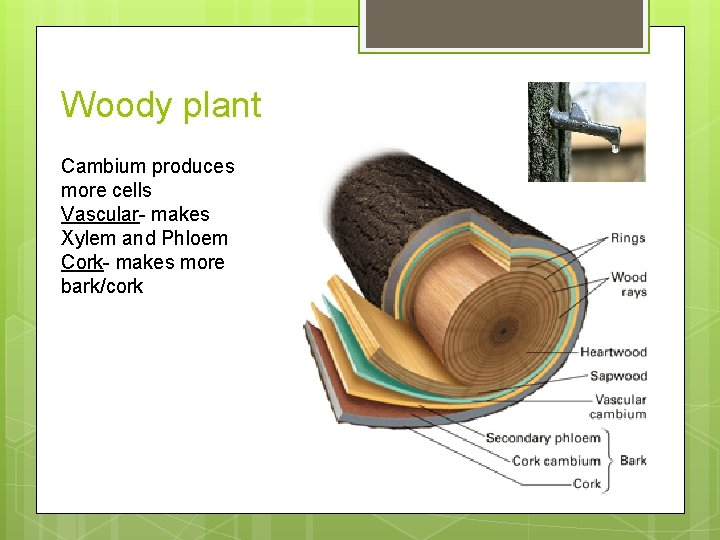
Woody plant Cambium produces more cells Vascular- makes Xylem and Phloem Cork- makes more bark/cork
Copyright to Holt Rhinehart & Winston
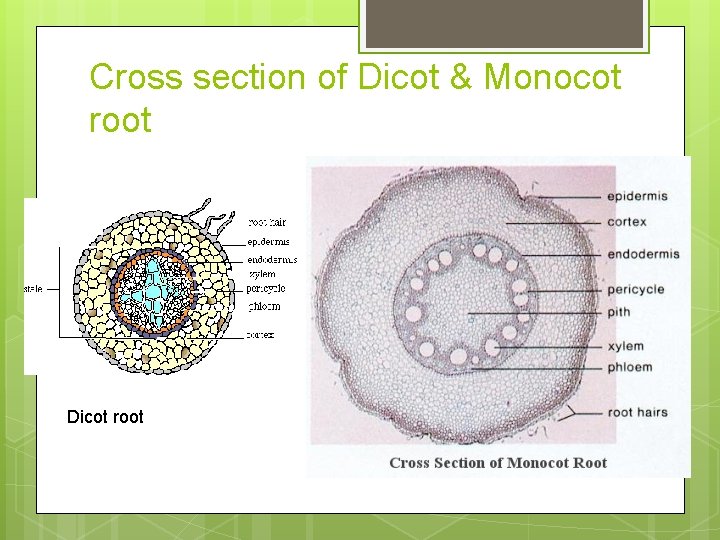
Cross section of Dicot & Monocot root Dicot root
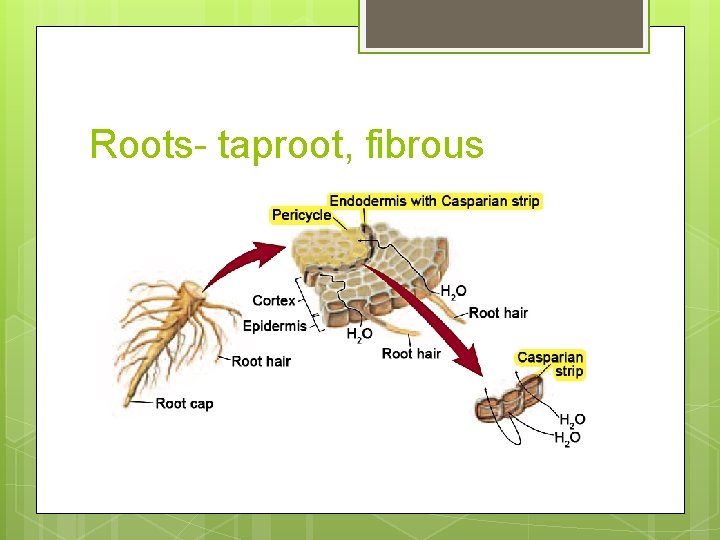
Roots- taproot, fibrous
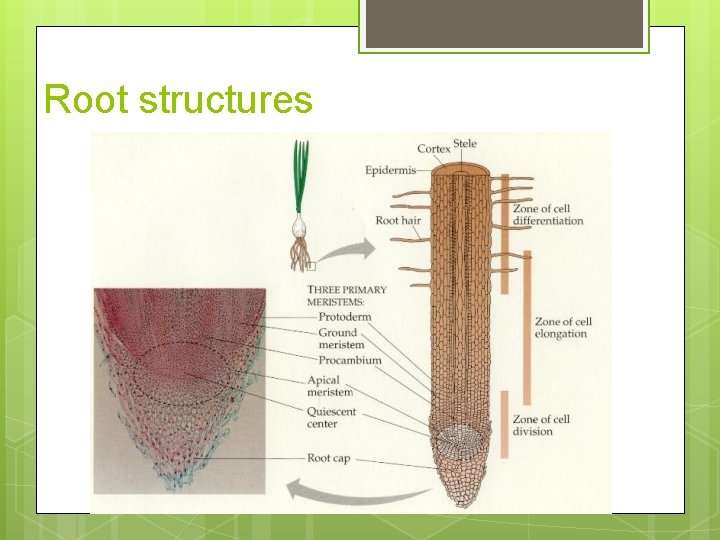
Root structures
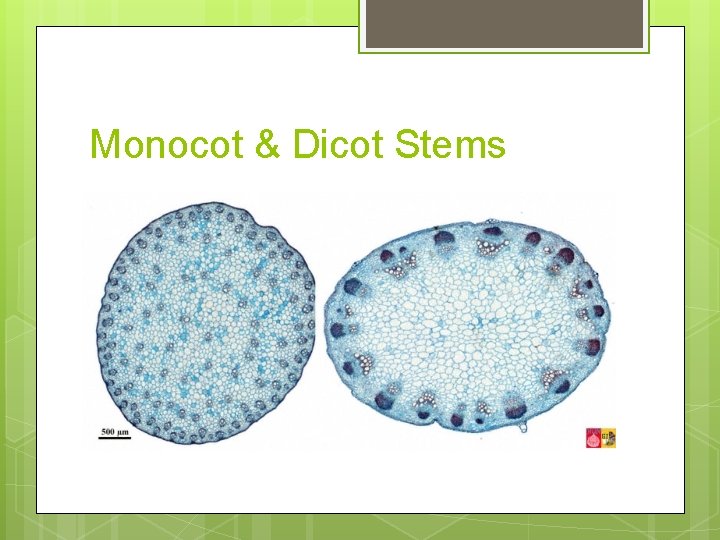
Monocot & Dicot Stems
Overview Presentation of Plants http: //www. youtube. com/watch? v=z. Hp_voyo 7 MY http: //www. youtube. com/watch? v=eb. Qdr. Un. V 6 E&safe=active
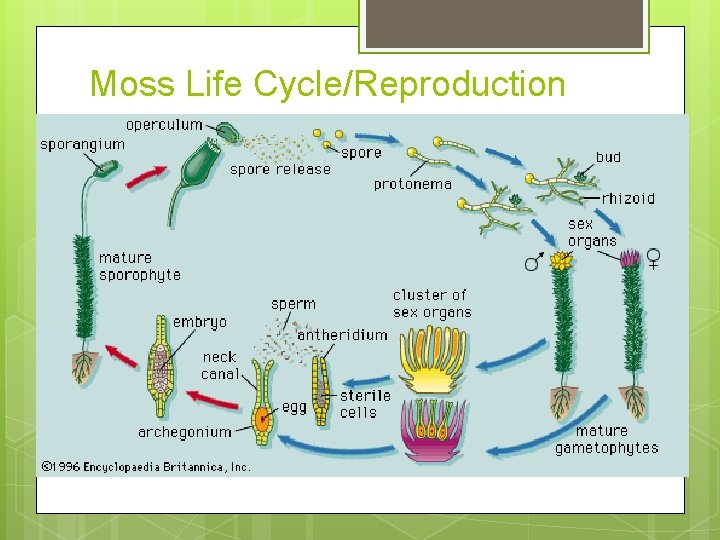
Moss Life Cycle/Reproduction
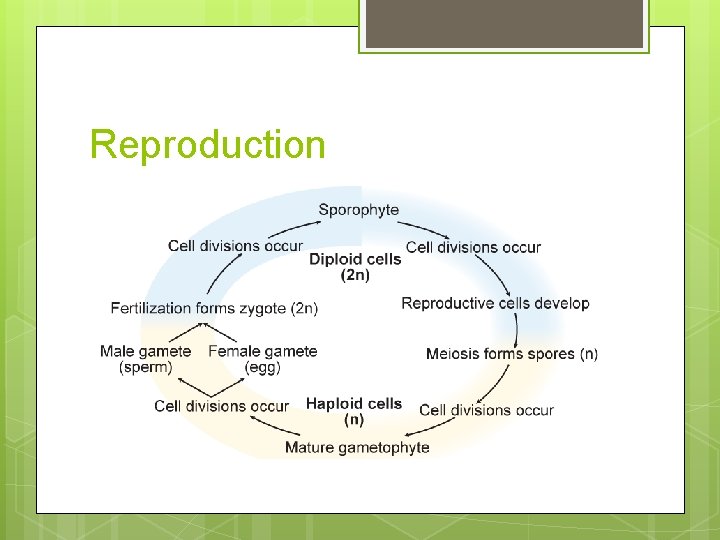
Reproduction Sexual and Asexual phase Spores are produced in asexual phase and grow into a gametophyte Gametophytes produce haploid sperm on one type of plant and egg on another type of plant which swim through the water in sexual phase and later grow into a diploid sporophyte.
Vascular Plants Non-seed Vascular Plants: Ferns & Horsetails (Pterophytes), Club mosses (Lycophytes)
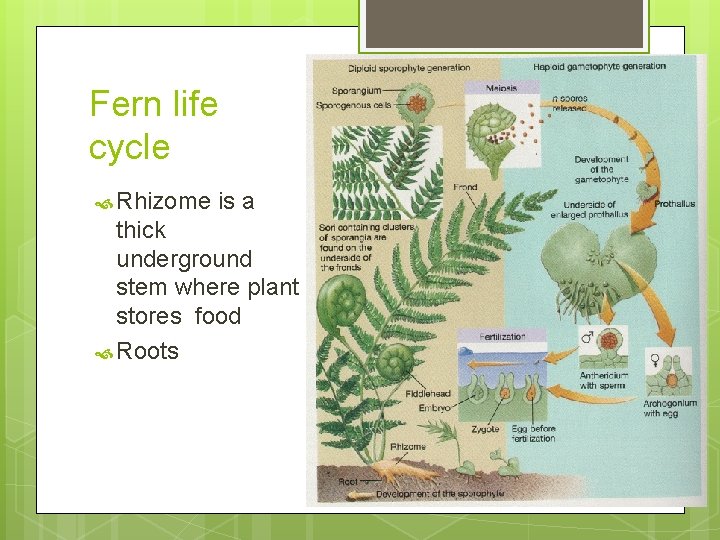
Fern life cycle Rhizome is a thick underground stem where plant stores food Roots
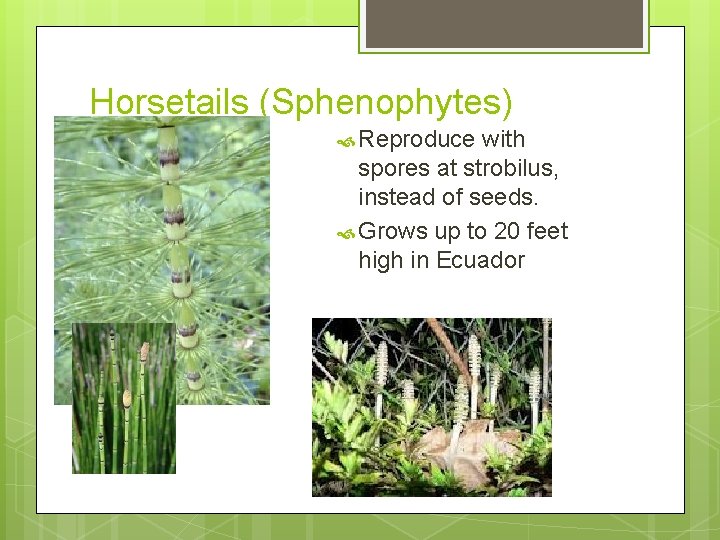
Horsetails (Sphenophytes) Reproduce with spores at strobilus, instead of seeds. Grows up to 20 feet high in Ecuador
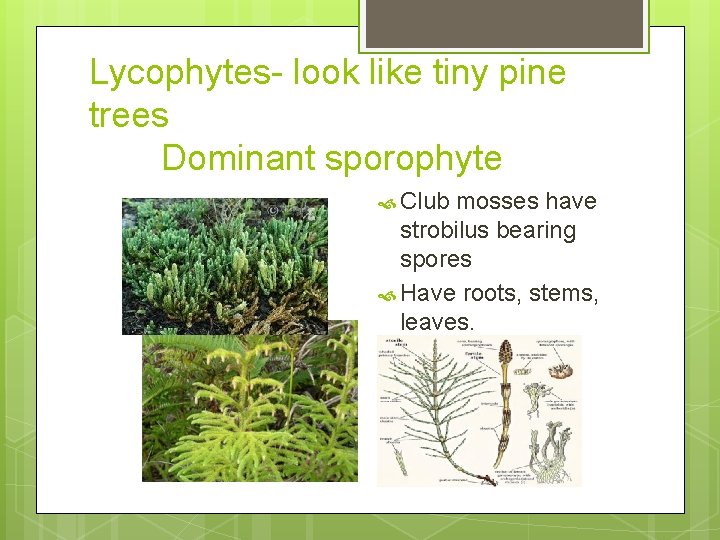
Lycophytes- look like tiny pine trees Dominant sporophyte Club mosses have strobilus bearing spores Have roots, stems, leaves.
Reproduction Seeds are produced in sexual phase contains an embryo with a seed coat and food source for the embryo to grow from when water diffuses into the embryo. The sporophyte generation is where pollen and eggs are produced. The plant growing in the seed is a sporophyte generation
Reproduction
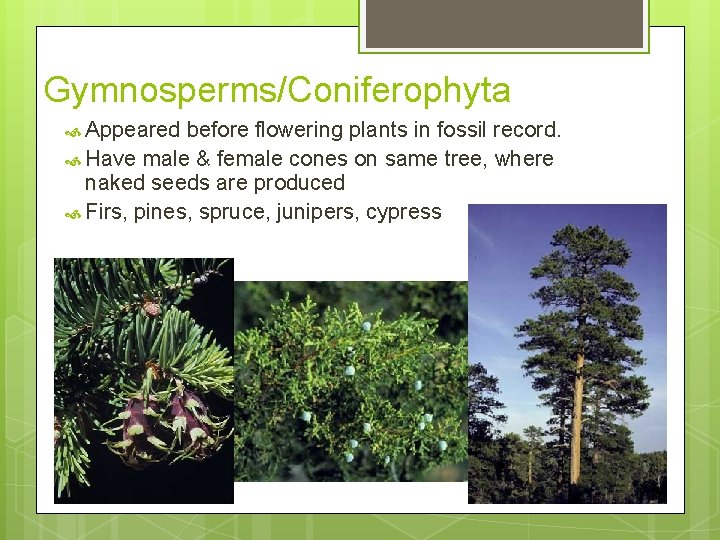
Gymnosperms/Coniferophyta Appeared before flowering plants in fossil record. Have male & female cones on same tree, where naked seeds are produced Firs, pines, spruce, junipers, cypress
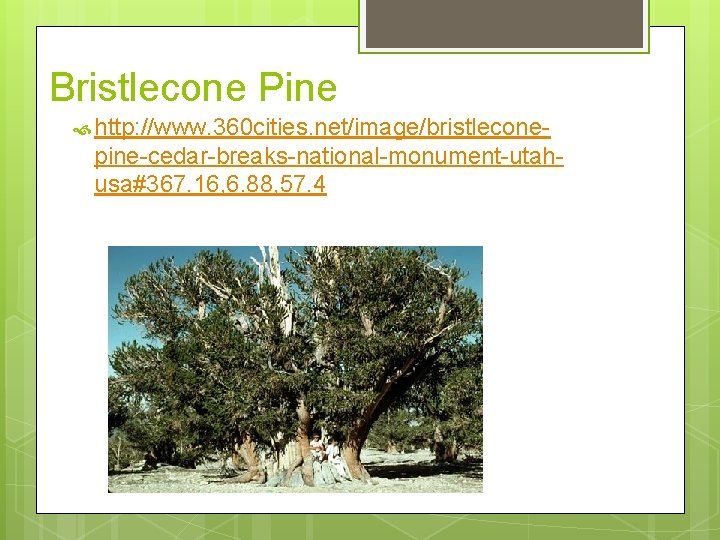
Bristlecone Pine http: //www. 360 cities. net/image/bristlecone- pine-cedar-breaks-national-monument-utahusa#367. 16, 6. 88, 57. 4
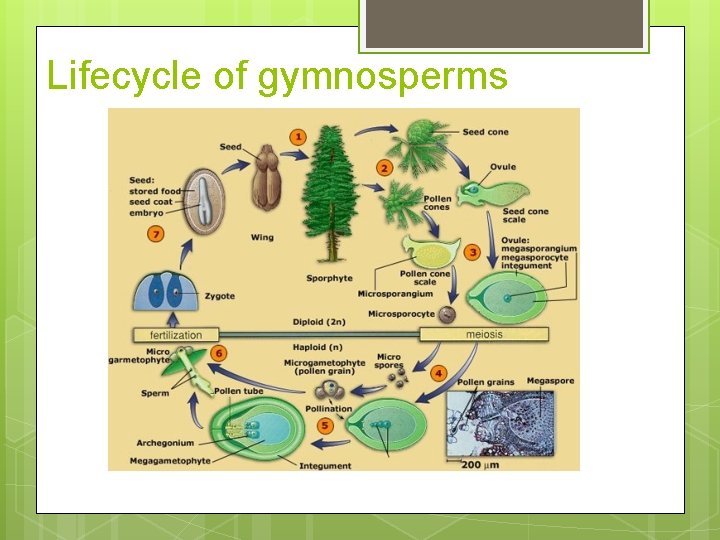
Lifecycle of gymnosperms
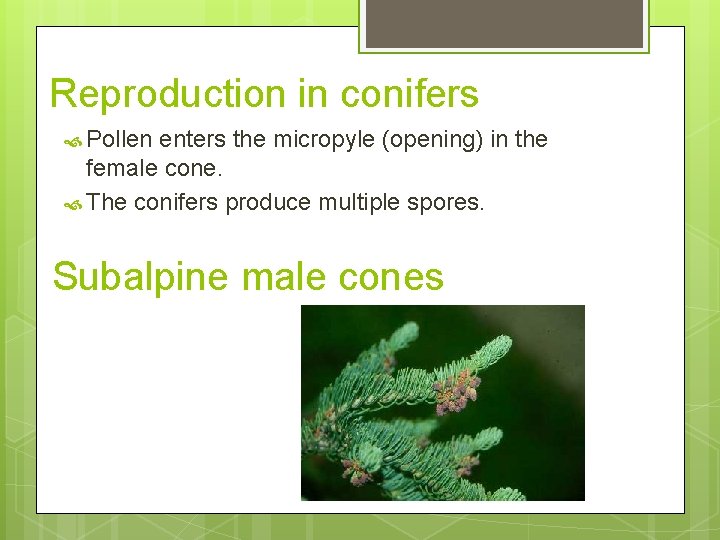
Reproduction in conifers Pollen enters the micropyle (opening) in the female cone. The conifers produce multiple spores. Subalpine male cones
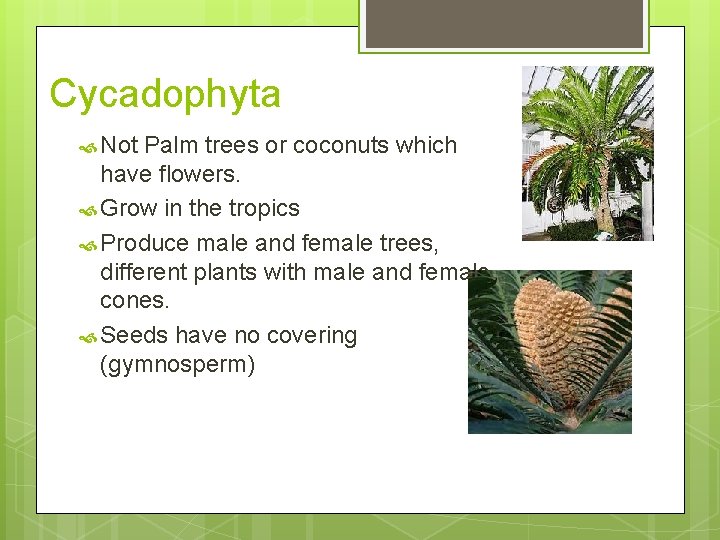
Cycadophyta Not Palm trees or coconuts which have flowers. Grow in the tropics Produce male and female trees, different plants with male and female cones. Seeds have no covering (gymnosperm)
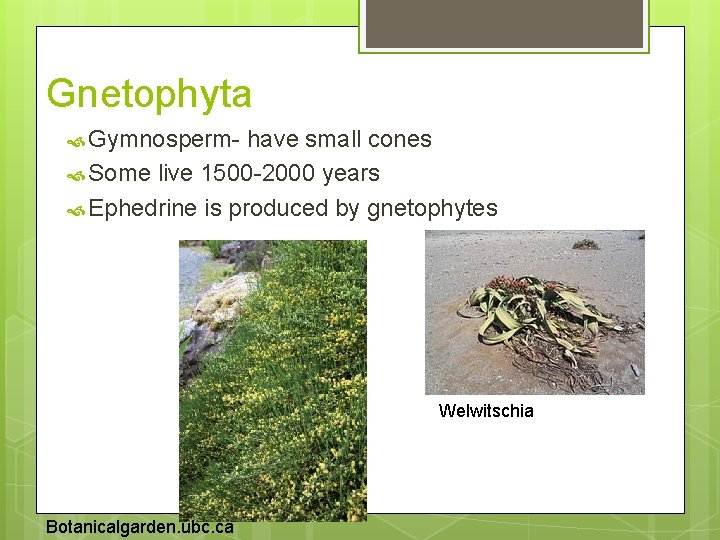
Gnetophyta Gymnosperm- have small cones Some live 1500 -2000 years Ephedrine is produced by gnetophytes Welwitschia Botanicalgarden. ubc. ca
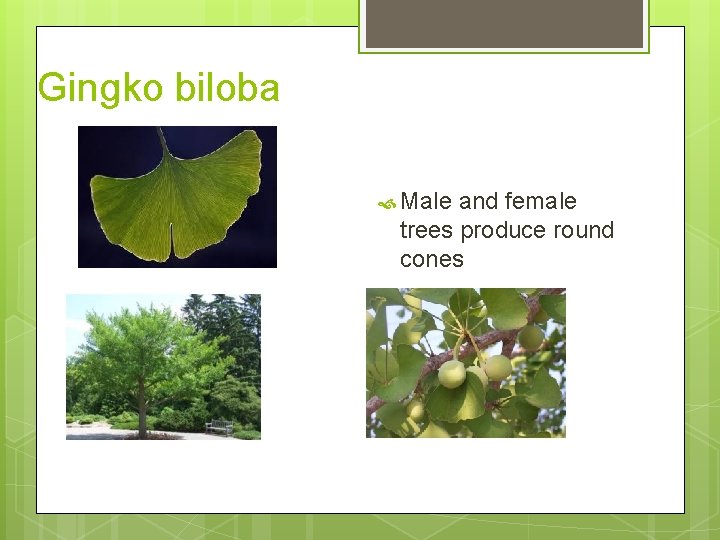
Gingko biloba Male and female trees produce round cones
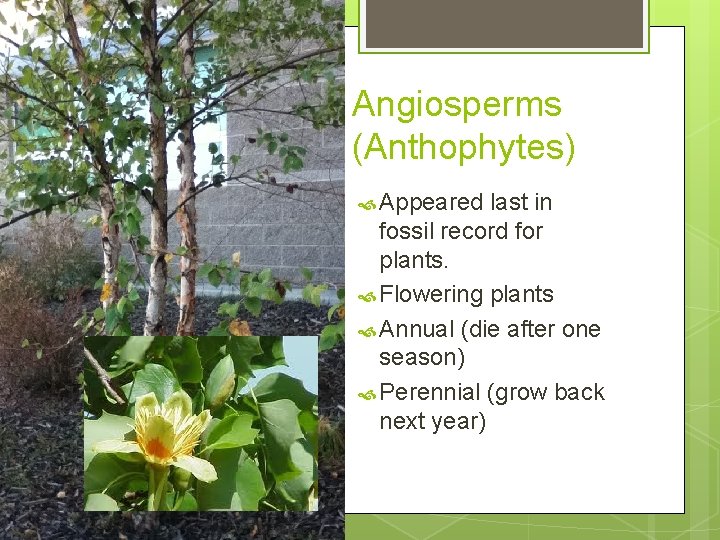
Angiosperms (Anthophytes) Appeared last in fossil record for plants. Flowering plants Annual (die after one season) Perennial (grow back next year)
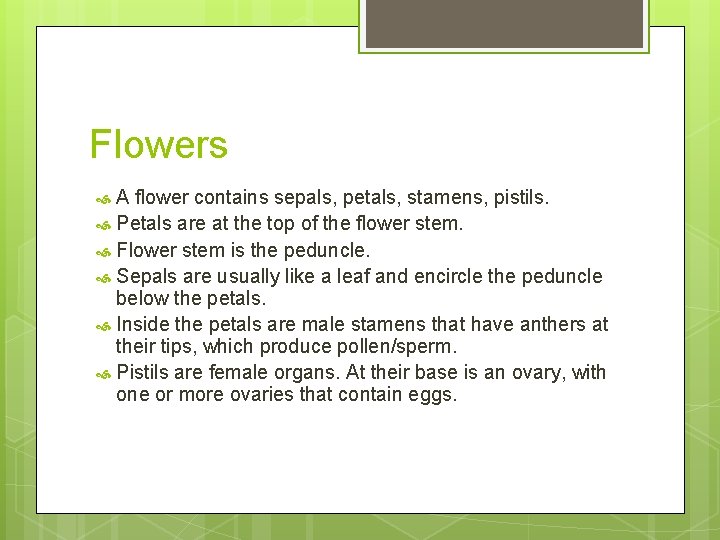
Flowers A flower contains sepals, petals, stamens, pistils. Petals are at the top of the flower stem. Flower stem is the peduncle. Sepals are usually like a leaf and encircle the peduncle below the petals. Inside the petals are male stamens that have anthers at their tips, which produce pollen/sperm. Pistils are female organs. At their base is an ovary, with one or more ovaries that contain eggs.
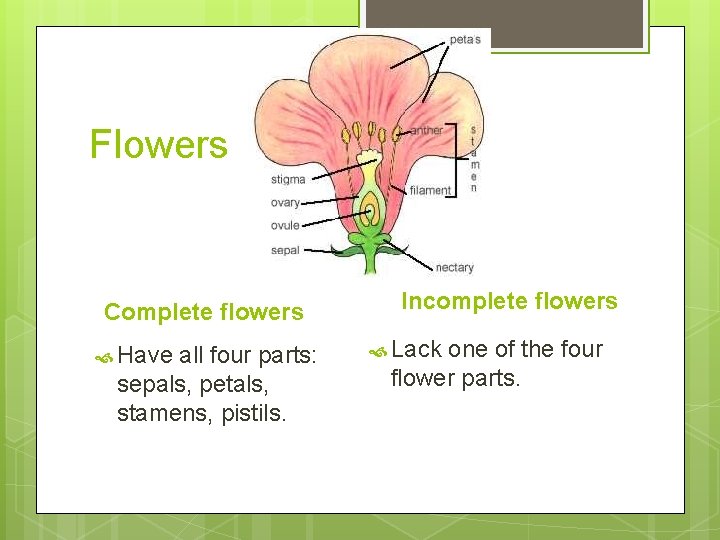
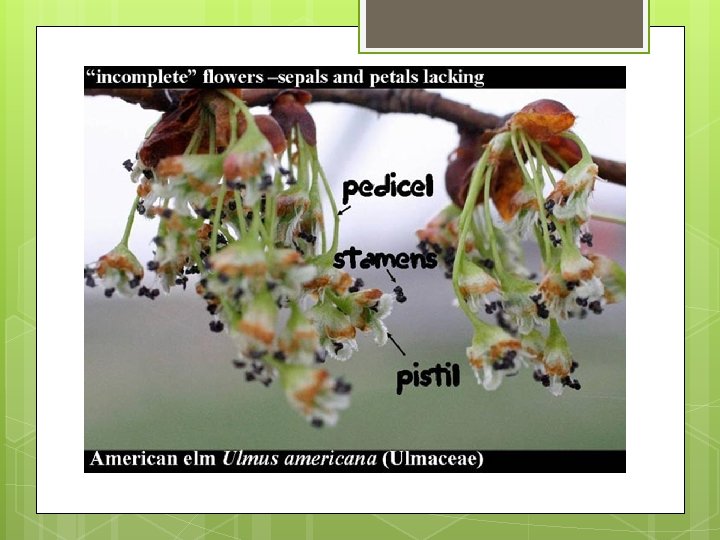
Flowers Complete flowers Have all four parts: sepals, petals, stamens, pistils. Incomplete flowers Lack one of the four flower parts.
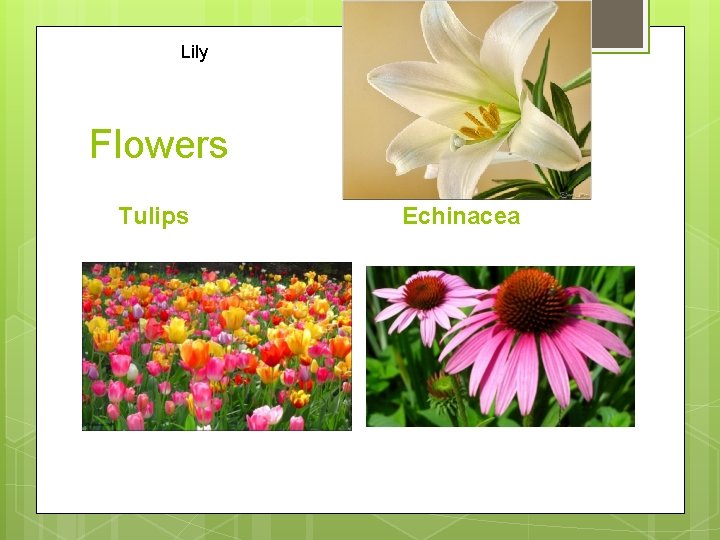
Lily Flowers Tulips Echinacea
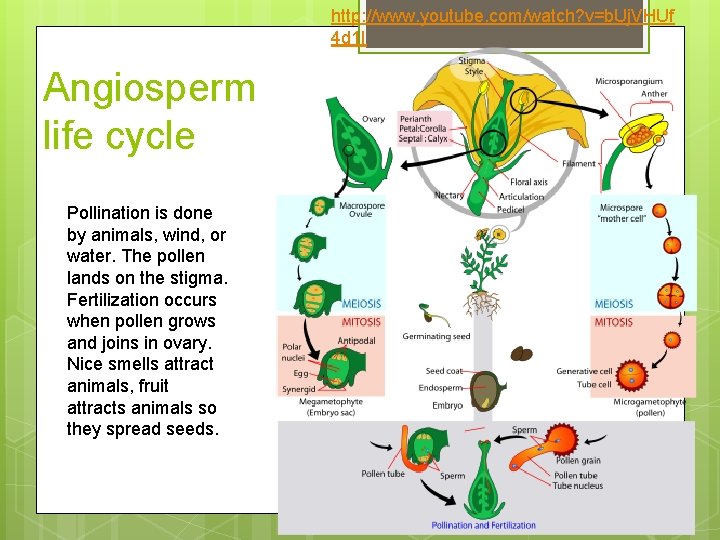
http: //www. youtube. com/watch? v=b. Uj. VHUf 4 d 1 I Angiosperm life cycle Pollination is done by animals, wind, or water. The pollen lands on the stigma. Fertilization occurs when pollen grows and joins in ovary. Nice smells attract animals, fruit attracts animals so they spread seeds.
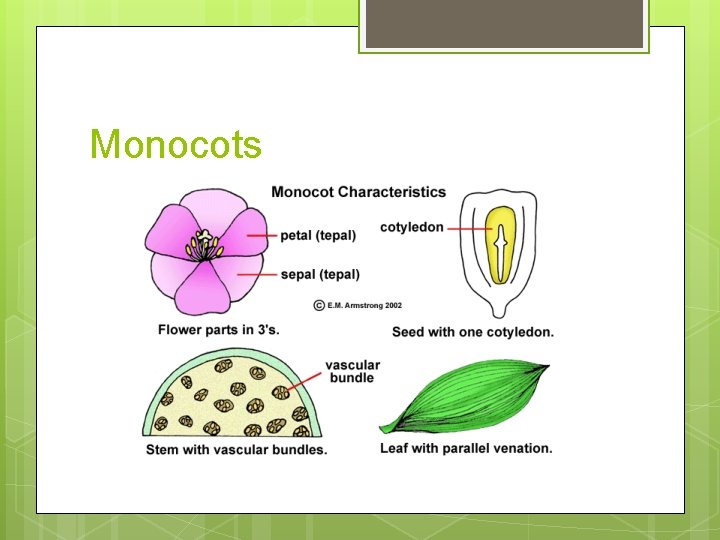
Monocots
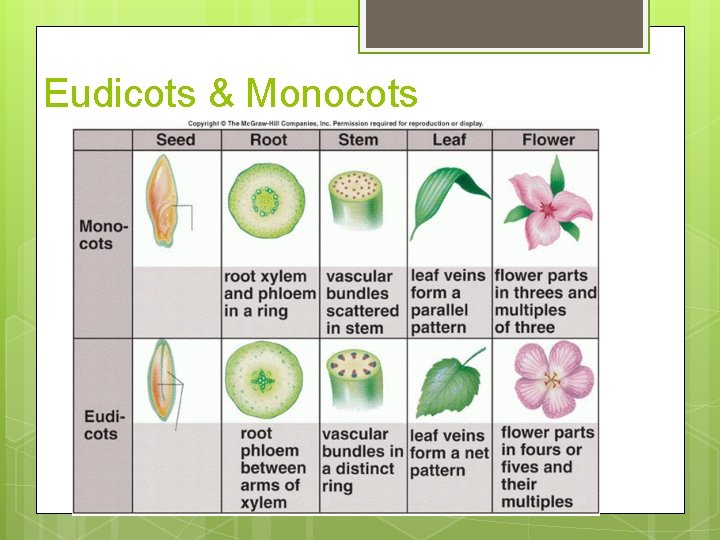
Eudicots & Monocots
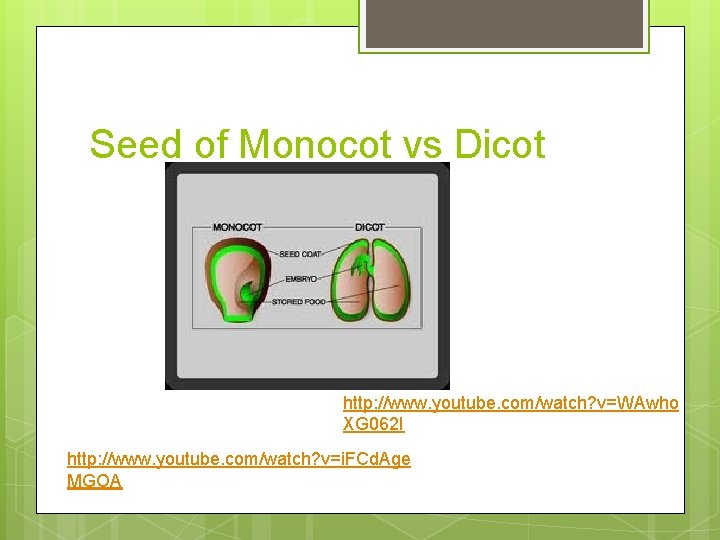
Seed of Monocot vs Dicot http: //www. youtube. com/watch? v=WAwho XG 062 I http: //www. youtube. com/watch? v=i. FCd. Age MGOA
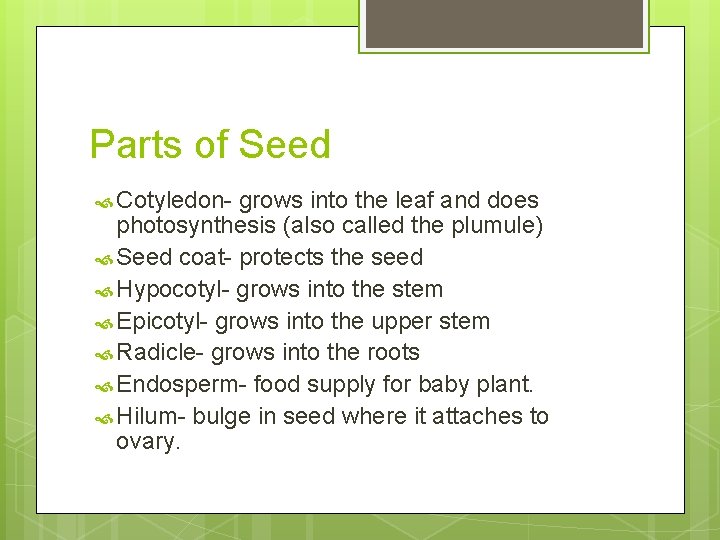
Parts of Seed Cotyledon- grows into the leaf and does photosynthesis (also called the plumule) Seed coat- protects the seed Hypocotyl- grows into the stem Epicotyl- grows into the upper stem Radicle- grows into the roots Endosperm- food supply for baby plant. Hilum- bulge in seed where it attaches to ovary.
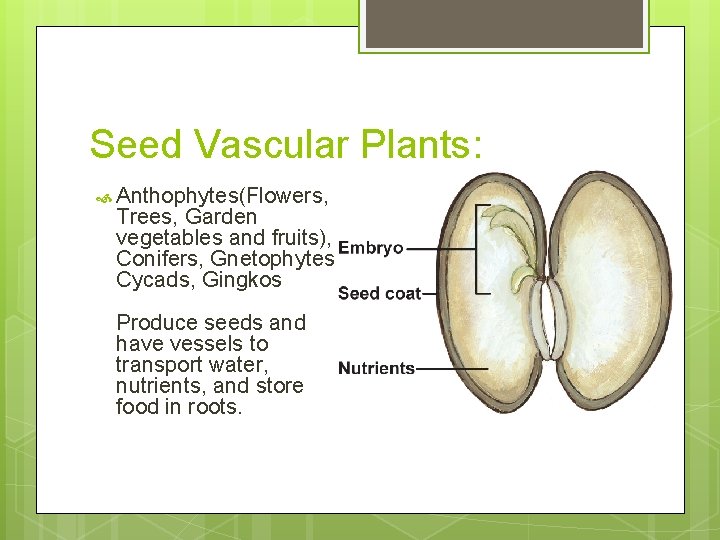
Seed Vascular Plants: Anthophytes(Flowers, Trees, Garden vegetables and fruits), Conifers, Gnetophytes, Cycads, Gingkos Produce seeds and have vessels to transport water, nutrients, and store food in roots.
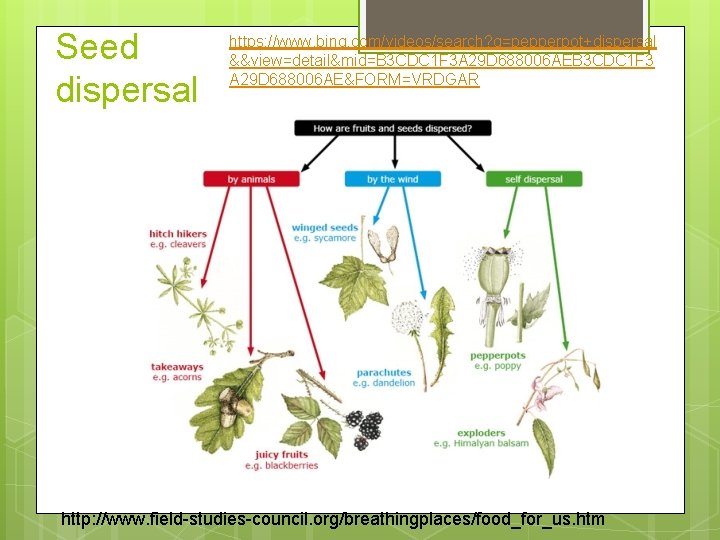
Seed dispersal https: //www. bing. com/videos/search? q=pepperpot+dispersal &&view=detail&mid=B 3 CDC 1 F 3 A 29 D 688006 AEB 3 CDC 1 F 3 A 29 D 688006 AE&FORM=VRDGAR http: //www. field-studies-council. org/breathingplaces/food_for_us. htm
Annuals & Perennials Annual plants like petunias die after one season. Perennials live several years producing fruits and seeds year to year. (Apple tree)
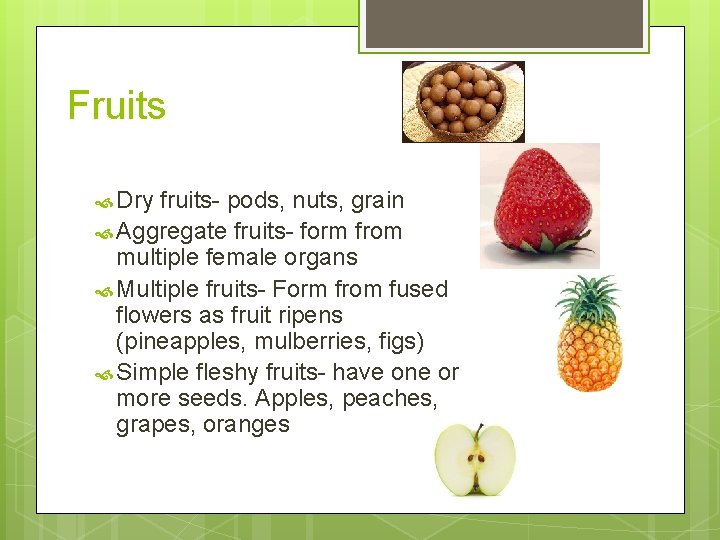
Fruits Dry fruits- pods, nuts, grain Aggregate fruits- form from multiple female organs Multiple fruits- Form from fused flowers as fruit ripens (pineapples, mulberries, figs) Simple fleshy fruits- have one or more seeds. Apples, peaches, grapes, oranges
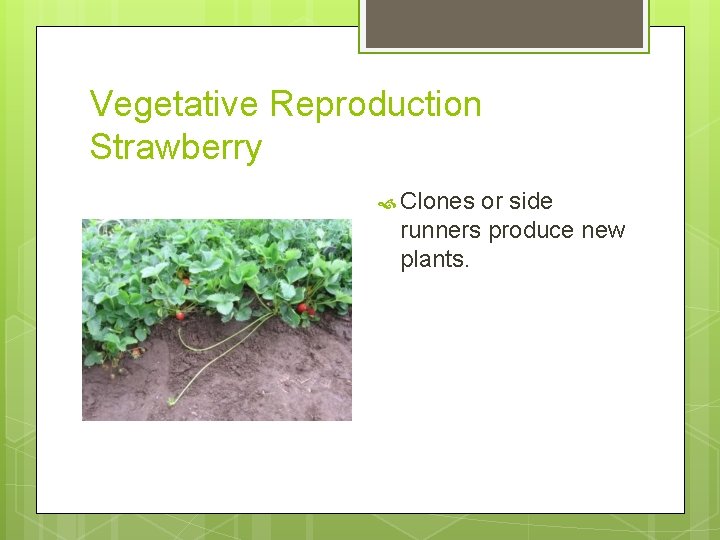
Vegetative Reproduction Strawberry Clones or side runners produce new plants.
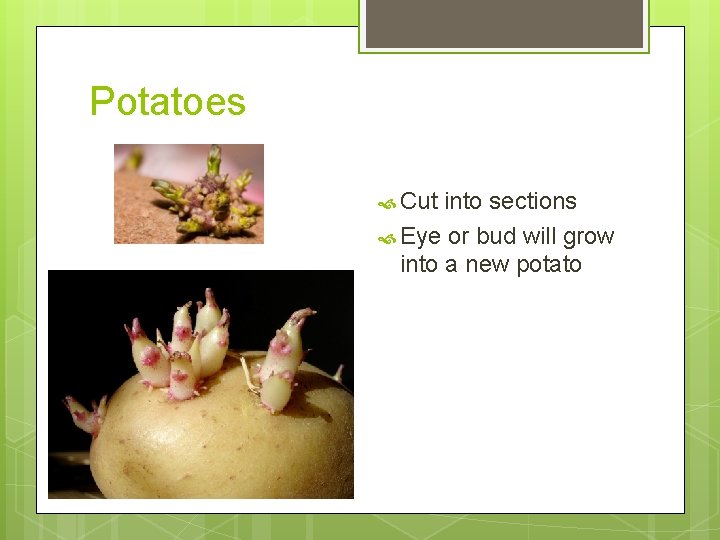
Potatoes Cut into sections Eye or bud will grow into a new potato
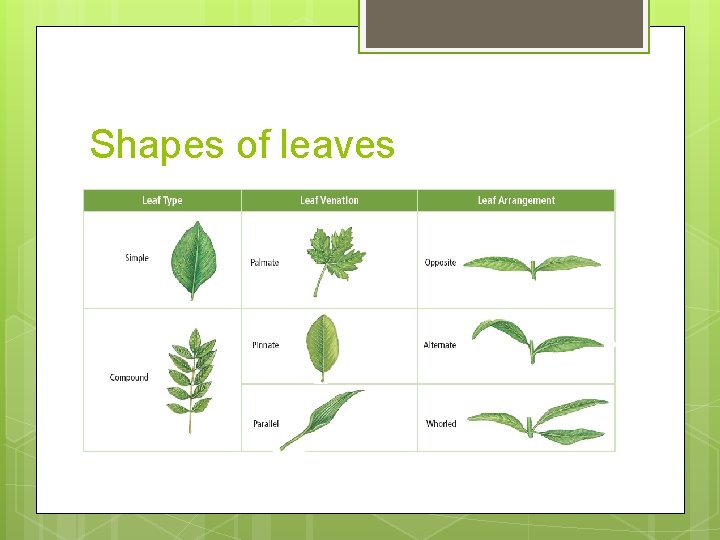
Shapes of leaves
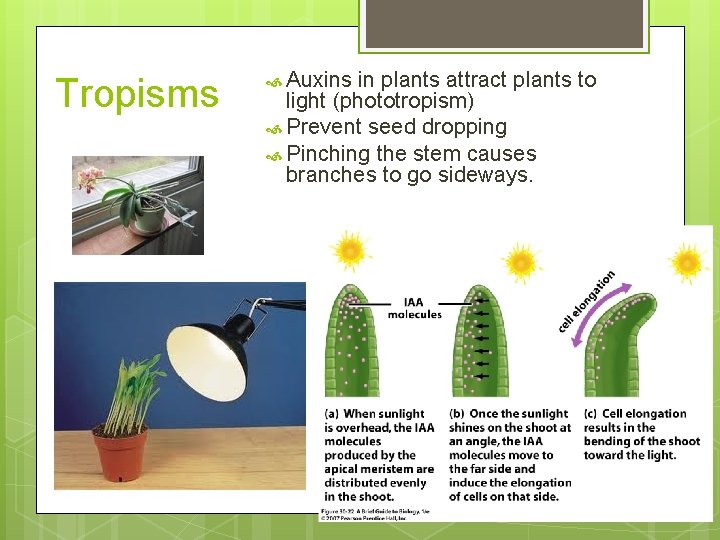
Tropisms Auxins in plants attract plants to light (phototropism) Prevent seed dropping Pinching the stem causes branches to go sideways.
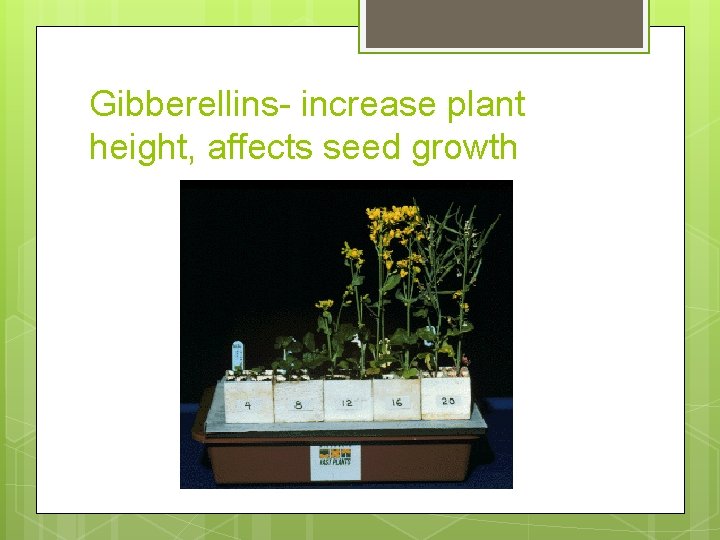
Gibberellins- increase plant height, affects seed growth
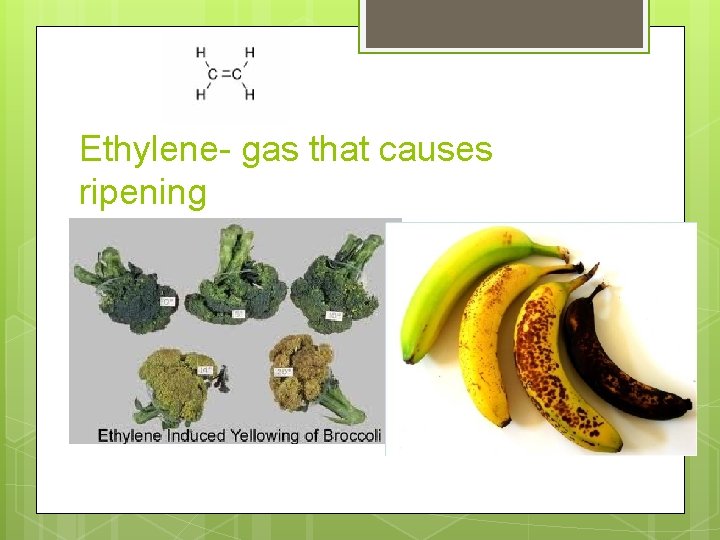
Ethylene- gas that causes ripening
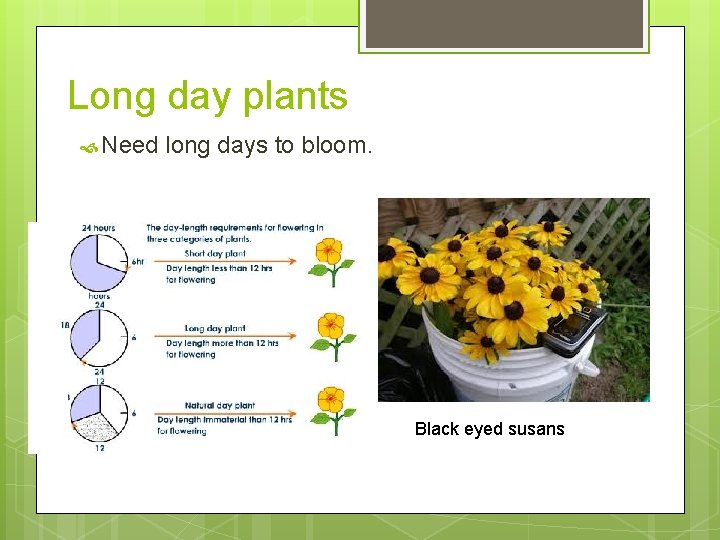
Long day plants Need long days to bloom. Black eyed susans
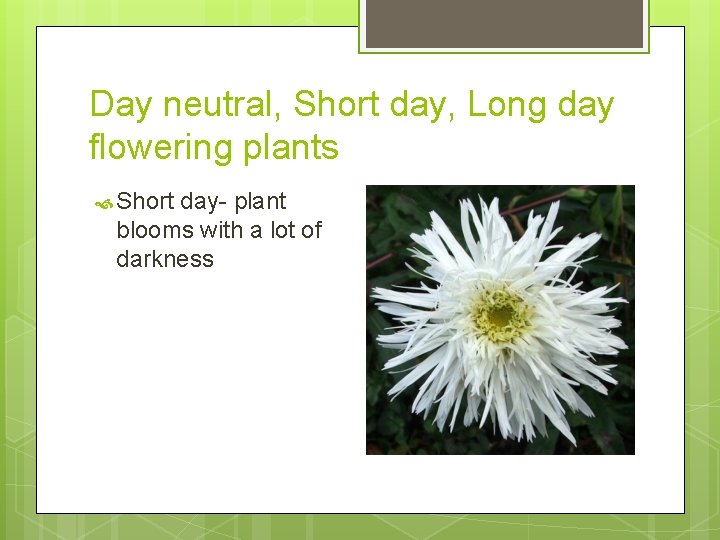
Day neutral, Short day, Long day flowering plants Short day- plant blooms with a lot of darkness
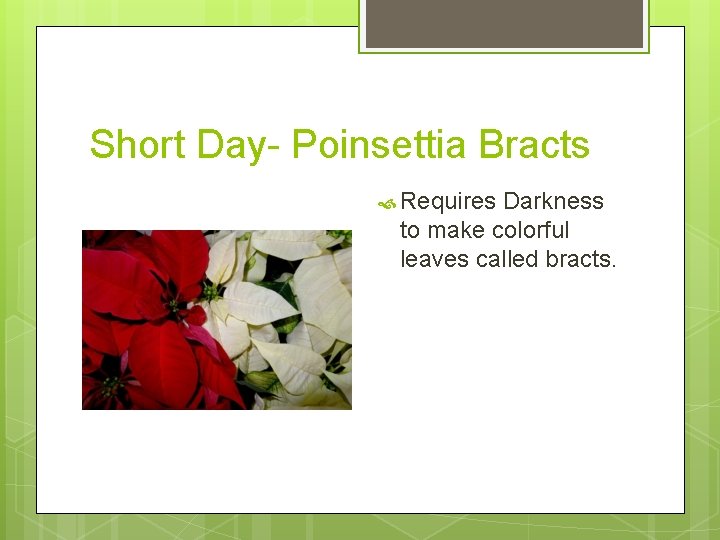
Short Day- Poinsettia Bracts Requires Darkness to make colorful leaves called bracts.
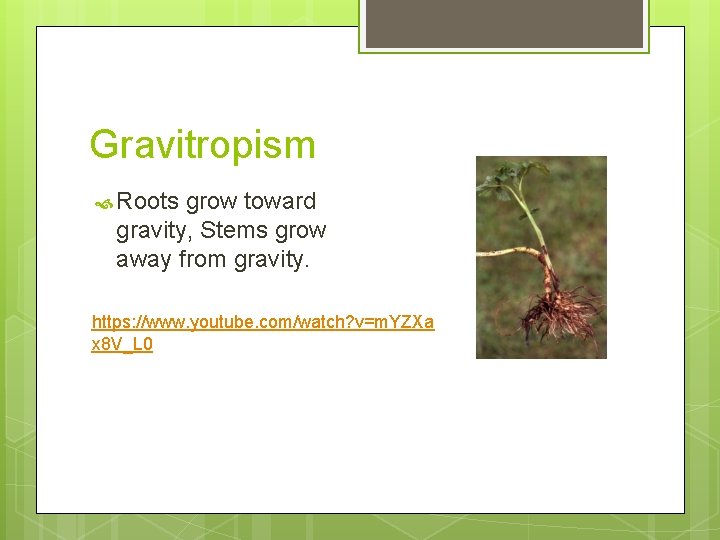
Gravitropism Roots grow toward gravity, Stems grow away from gravity. https: //www. youtube. com/watch? v=m. YZXa x 8 V_L 0
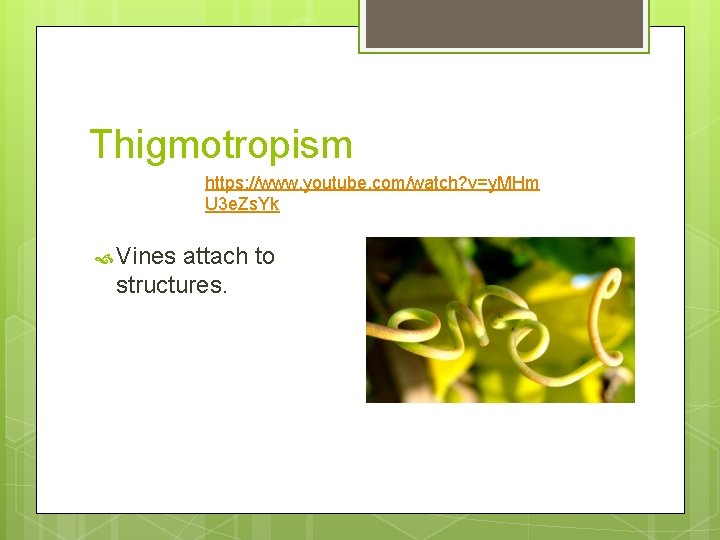
Thigmotropism https: //www. youtube. com/watch? v=y. MHm U 3 e. Zs. Yk Vines attach to structures.
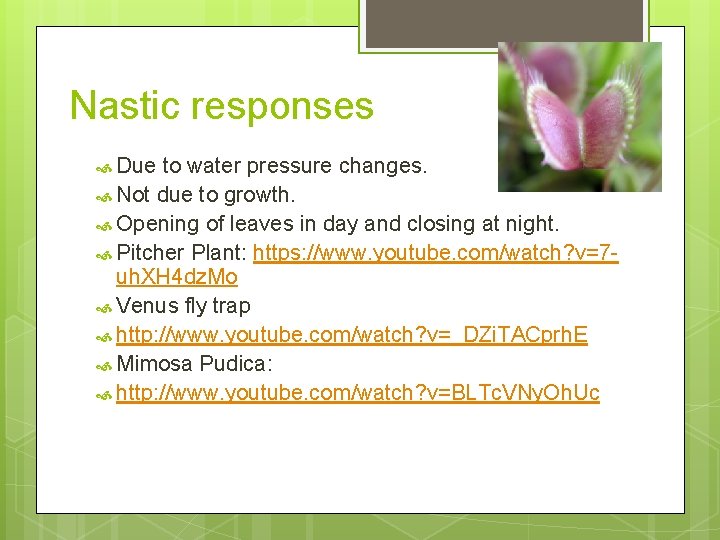
Nastic responses Due to water pressure changes. Not due to growth. Opening of leaves in day and closing at night. Pitcher Plant: https: //www. youtube. com/watch? v=7 uh. XH 4 dz. Mo Venus fly trap http: //www. youtube. com/watch? v=_DZi. TACprh. E Mimosa Pudica: http: //www. youtube. com/watch? v=BLTc. VNy. Oh. Uc
- Slides: 72