Antiepileptic drugs Prof Mohammad Alhumayyd Dept of Pharmacology

- Slides: 44
Antiepileptic drugs Prof. Mohammad Alhumayyd Dept. of Pharmacology Tel. 4671350 E-mail: humayyd@yahoo. com
Objectives Epilepsy (1) Describe types of epilepsy Classify antiepileptic drugs according to the type of epilepsy treated and generation introduced Expand on pharmacokinetic and dynamic patterns of first generation antiepileptic drugs and specify their mechanism of action , therapeutic indications and adverse effects.
Ø Objectives At the end of the lectures, students should 1 - Describe types of epilepsy 2 - List the antiepileptic drugs 3 - Describe briefly the mechanism of action of antiepileptic drugs. 4 - Enumerate the clinical uses of each drug 5 - Describe the adverse effects of each antiepileptic drug 6 - Describe treatment of status epilepticus
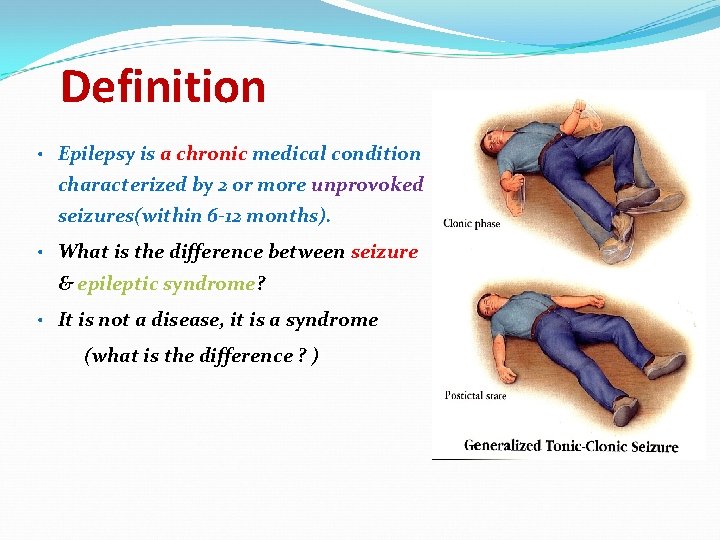
Definition • Epilepsy is a chronic medical condition characterized by 2 or more unprovoked seizures(within 6 -12 months). • What is the difference between seizure & epileptic syndrome? • It is not a disease, it is a syndrome (what is the difference ? )
Etiology Congenital defects, head injuries, trauma, hypoxia Infection ( bacteria or virus ) e. g. meningitis, brain abscess, viral encephalitis. Concussion, depressed skull, fractures. Brain tumors (including tuberculoma), vascular occlusion, stroke. Drug withdrawal, e. g. CNS depressants, alcohol or drug abuse or drug overdose, e. g. penicillin. A poison, like lead Fever in children (febrile convulsion). Hypoglycemia Phenylalanine hydroxylase PKU( phenylalanine tyrosine ) Photo epilepsy
Triggers Fatigue Stress Sleep deprivation Poor nutrition Alcohol
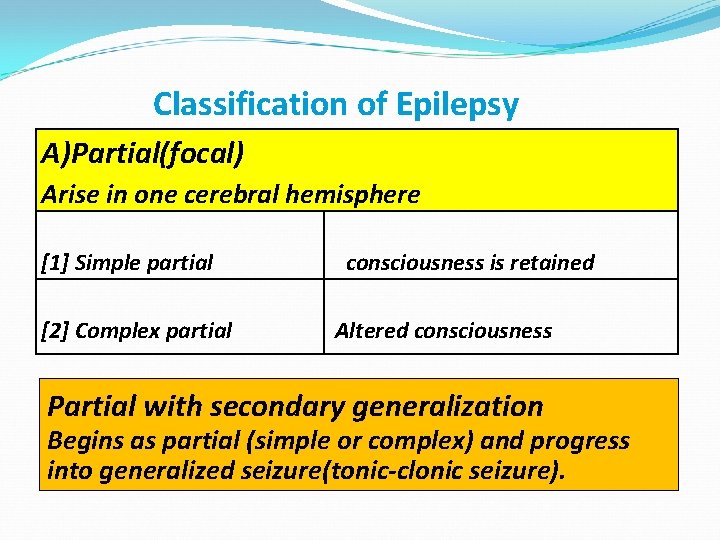
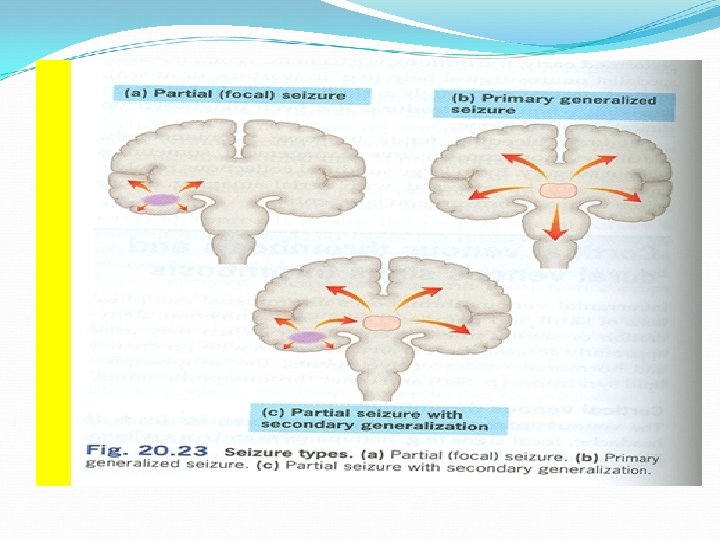
Classification of Epilepsy A)Partial(focal) Arise in one cerebral hemisphere [1] Simple partial consciousness is retained [2] Complex partial Altered consciousness Partial with secondary generalization Begins as partial (simple or complex) and progress into generalized seizure(tonic-clonic seizure).
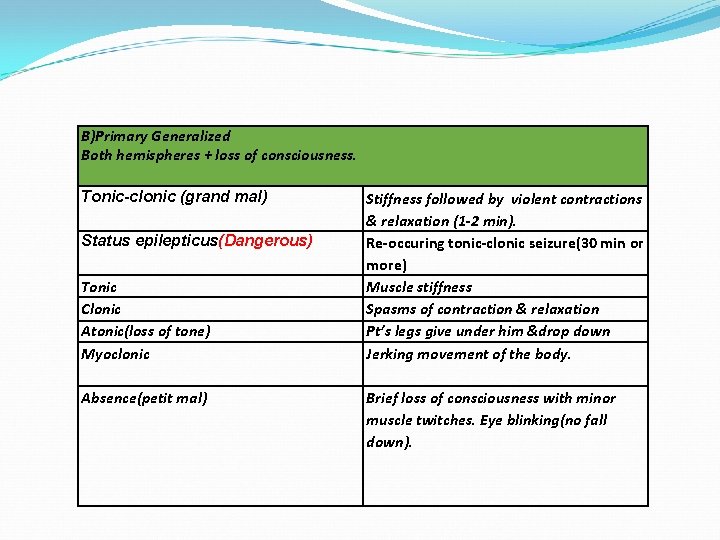
B)Primary Generalized Both hemispheres + loss of consciousness. Tonic-clonic (grand mal) Stiffness followed by violent contractions & relaxation (1 -2 min). Status epilepticus(Dangerous) Re-occuring tonic-clonic seizure(30 min or more) Tonic Muscle stiffness Clonic Spasms of contraction & relaxation Atonic(loss of tone) Pt’s legs give under him &drop down Myoclonic Jerking movement of the body. Absence(petit mal) Brief loss of consciousness with minor muscle twitches. Eye blinking(no fall down).
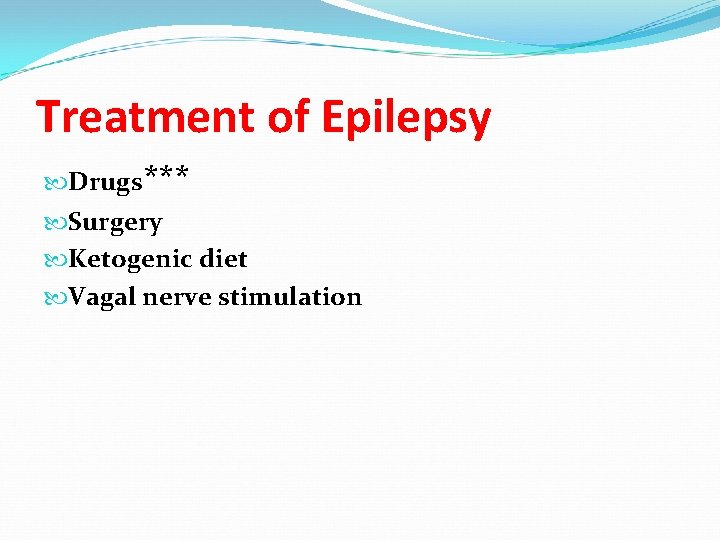
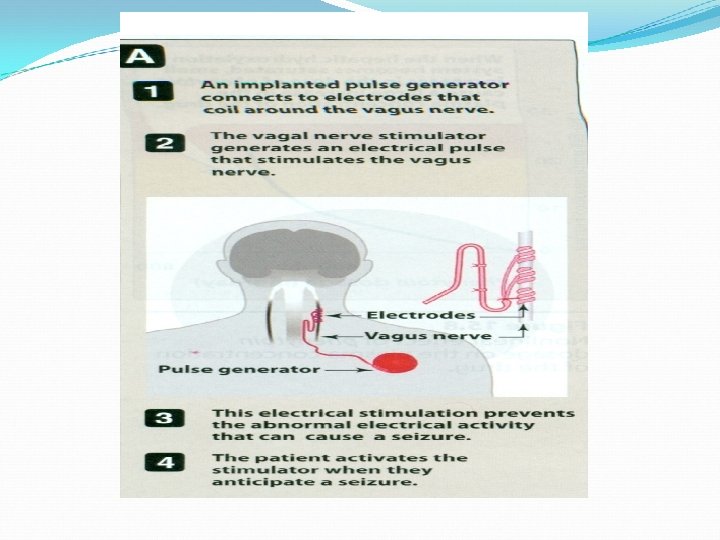
Treatment of Epilepsy Drugs*** Surgery Ketogenic diet Vagal nerve stimulation
General rules for treatment of epilepsy Epilepsy is usually controlled but not cured with medication. Up to 80% of pts can expect partial or complete control of seizures with appropriate treatment. Antiepileptic drugs are indicated when there is two or more seizures occurred in short interval (6 m -1 y). An initial therapeutic aim is to use only one drug(mono therapy).
Drugs are usually administered orally Monitoring plasma drug level is useful Triggering factors can affect seizure control by drugs. Sudden withdrawal of drugs should be avoided
Withdrawal considered Seizure –free period of 2 -5 yrs or longer Normal IQ Normal EEG prior to withdrawal NO juvenile myoclonic epilepsy Relapse rate when antiepileptics are withdrawn is 20 -40%.
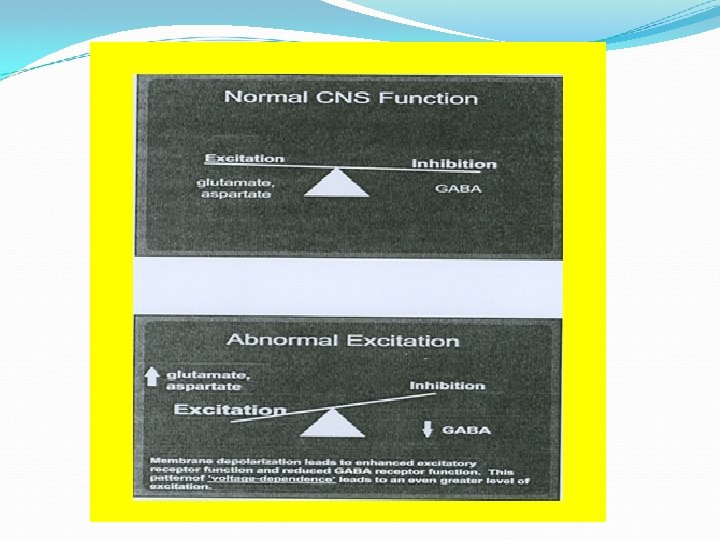
Mechanism of Anti-Epileptic Drugs Antiepileptic drugs inhibit depolarization of neurons by following mechanisms: Inhibition of excitatory neurotransmission (Glutamate ) Enhancement of inhibitory neurotransmission (GABA ) Blockage of voltage-gated positive current (Na+ ) (Ca 2+ ) Increase outward positive current (K+ )
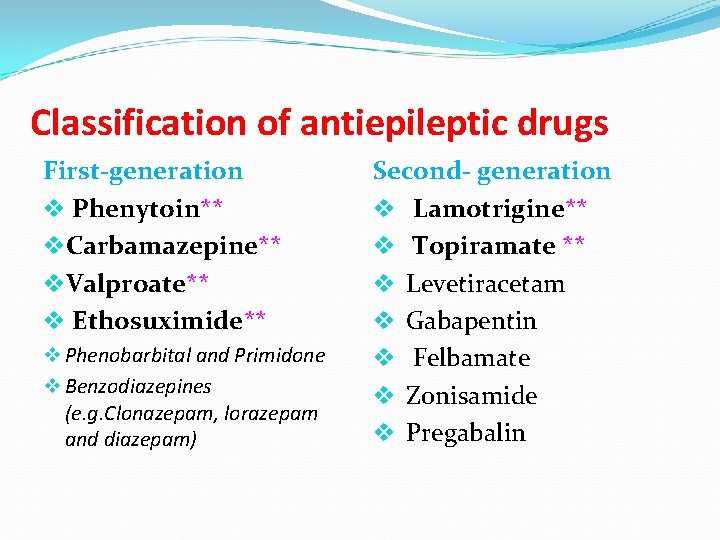
Classification of antiepileptic drugs First-generation v Phenytoin** v. Carbamazepine** v. Valproate** v Ethosuximide** v Phenobarbital and Primidone v Benzodiazepines (e. g. Clonazepam, lorazepam and diazepam) Second- generation v Lamotrigine** v Topiramate ** v Levetiracetam v Gabapentin v Felbamate v Zonisamide v Pregabalin
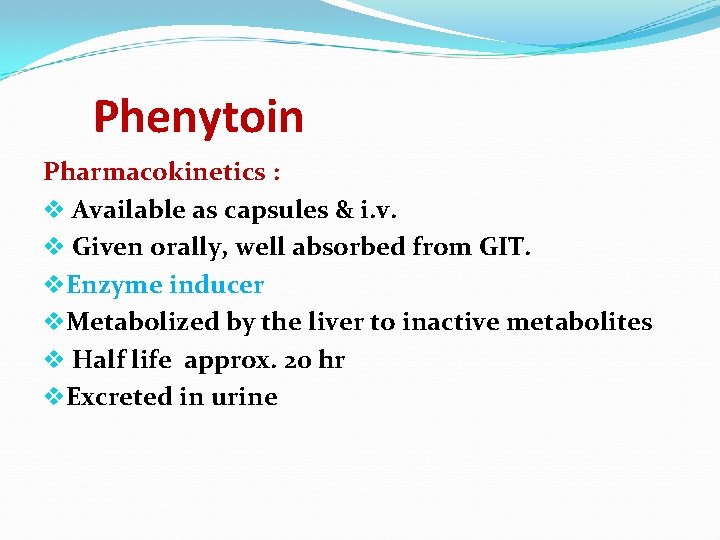
Phenytoin Pharmacokinetics : v Available as capsules & i. v. v Given orally, well absorbed from GIT. v. Enzyme inducer v. Metabolized by the liver to inactive metabolites v Half life approx. 20 hr v. Excreted in urine
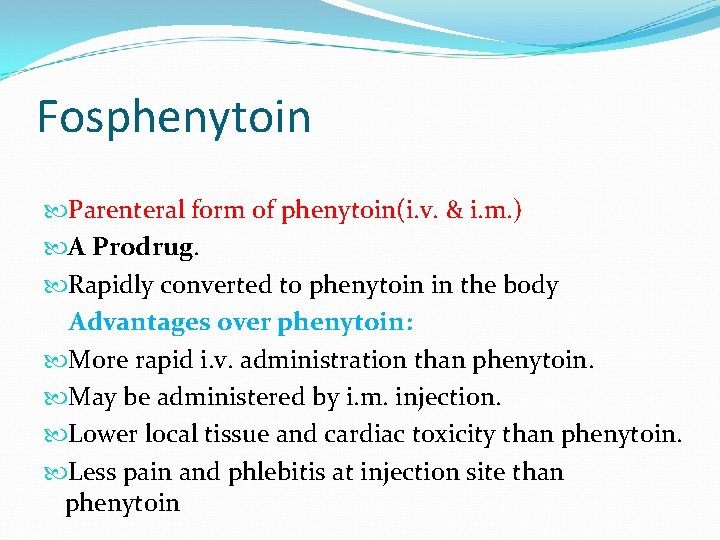
Fosphenytoin Parenteral form of phenytoin(i. v. & i. m. ) A Prodrug. Rapidly converted to phenytoin in the body Advantages over phenytoin: More rapid i. v. administration than phenytoin. May be administered by i. m. injection. Lower local tissue and cardiac toxicity than phenytoin. Less pain and phlebitis at injection site than phenytoin
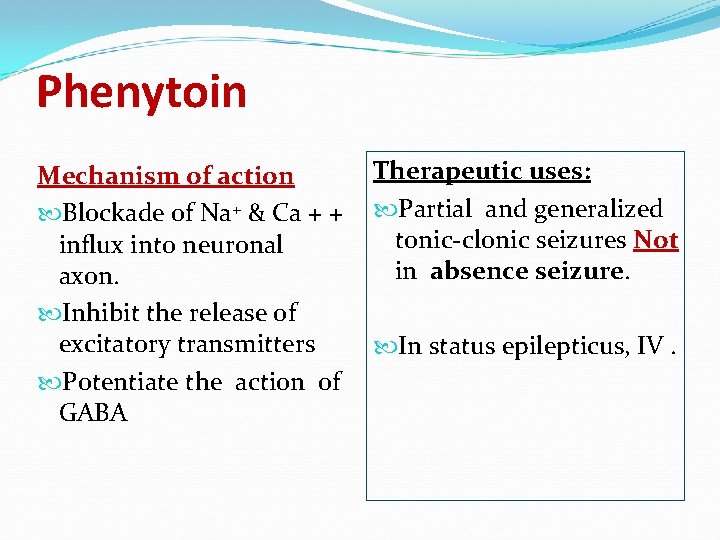
Phenytoin Mechanism of action Blockade of Na+ & Ca + + influx into neuronal axon. Inhibit the release of excitatory transmitters Potentiate the action of GABA Therapeutic uses: Partial and generalized tonic-clonic seizures Not in absence seizure. In status epilepticus, IV.
Side effects Nausea or vomiting Headache, vertigo, ataxia, diplopia , nystagmus Sedation Gum(gingival) hyperplasia Hirsutism Acne Folic acid deficiency(megaloblastic anemia) Vit D deficiency (osteomalcia) Teratogenic effects
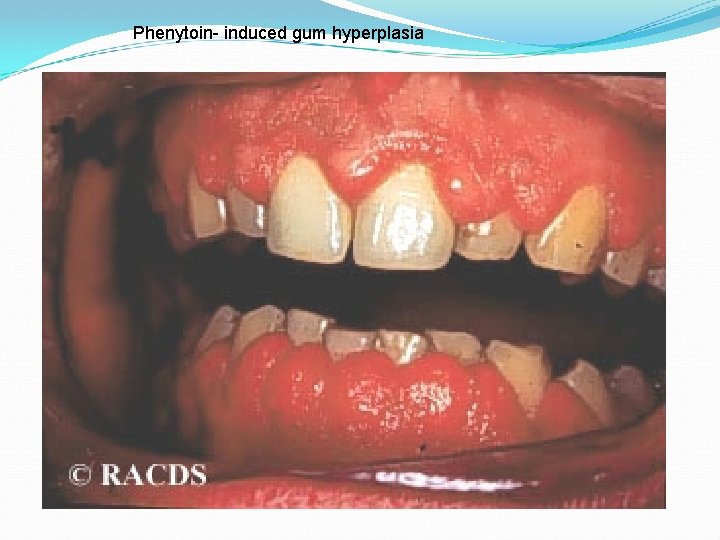
Phenytoin- induced gum hyperplasia
Carbamazepine Pharmacokinetics : Ø Available as capsules &Syrup only orally Ø Well absorbed Ø Strong enzyme inducer including its own metabolism Ø Metabolized by the liver to active & inactive metabolites Ø Half life 18 -35 hr Ø Excreted in urine
Carbamazepine Therapeutic uses: Drug of choice in partial Mechanism of action seizures. Blockade of Na+ & Ca + + influx into neuronal axon. Tonic-clonic seizures (1 ry & 2 ry generalized) Inhibit the release of but Not in absence excitatory transmitters seizures. Potentiate the action of Other uses: GABA Bipolar depression. Trigeminal neuralgia
Side effects GIT upset. Hypersensitivity reactions Drowziness , ataxia, headache & diplopia Hyponatremia & water intoxication Teratogenicity
Sodium Valproate Broad spectrum antiepileptic Pharmacokinetics : o Available as capsules, Syrup , I. V o Metabolized by the liver ( inactive ) o Enzyme inhibitor o Half life 12 -16 hr o Excreted in urine
Sodium valproate Mechanism of action Blocks activated Na+ channels. Enhances GABA synthesis & reduces degradation Suppress glutamate action. Blocks T-type Ca 2+ channels [II] Other uses: • Bipolar disorder and mania • Prophylaxis of migraine • Lennox-Gastaut syndrome Therapeutic Uses [I] Epilepsy: It is effective for all forms of epilepsy Generalized tonic-clonic seizures (1 ry or 2 ry ). Absence seizures Complex partial seizures Myoclonic Atonic photosensitive epilepsy
Side effects: GI(nausea, vomiting , heart burn). Weight gain ( appetite ). Transient hair loss, with re-growth of curly hair Thrombocytopenia(not used with aspirin or coumadin Transient increase in liver enzymes & hepatotoxicity Teratogenicity(neural tube defect)
Ethosuximide Mechanism of action Inhibits T- type Ca 2+ channels in thalamocortical neurons.
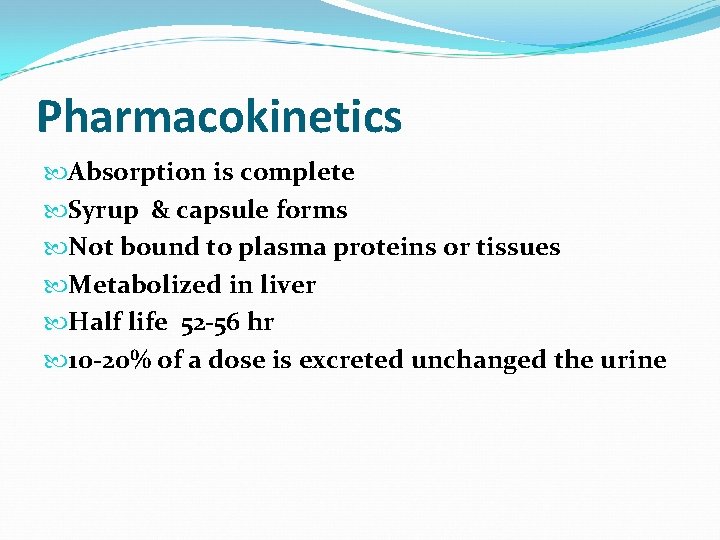
Pharmacokinetics Absorption is complete Syrup & capsule forms Not bound to plasma proteins or tissues Metabolized in liver Half life 52 -56 hr 10 -20% of a dose is excreted unchanged the urine
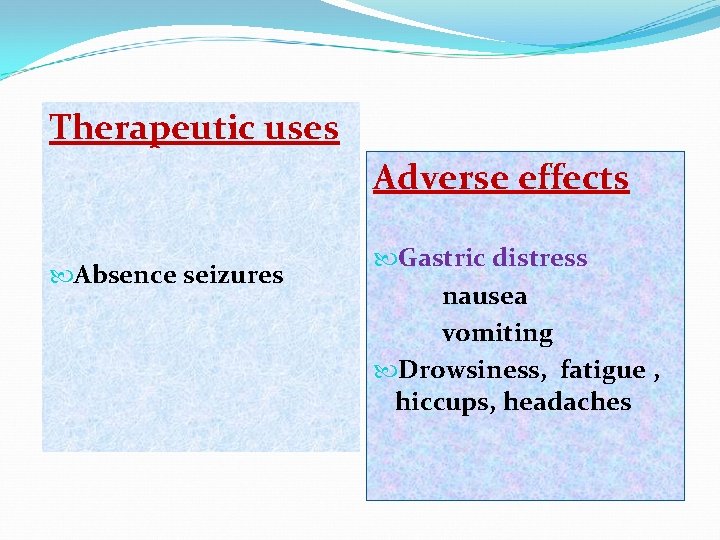
Therapeutic uses Adverse effects Absence seizures Gastric distress nausea vomiting Drowsiness, fatigue , hiccups, headaches
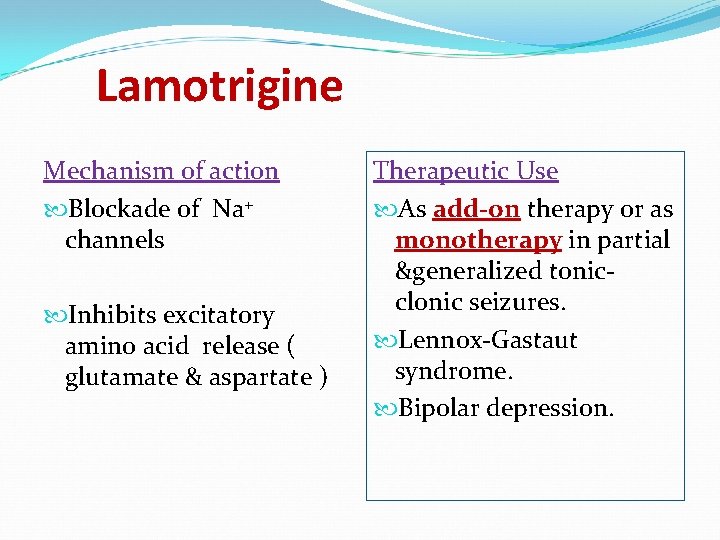
Lamotrigine Mechanism of action Blockade of Na+ channels Inhibits excitatory amino acid release ( glutamate & aspartate ) Therapeutic Use As add-on therapy or as monotherapy in partial &generalized tonicclonic seizures. Lennox-Gastaut syndrome. Bipolar depression.
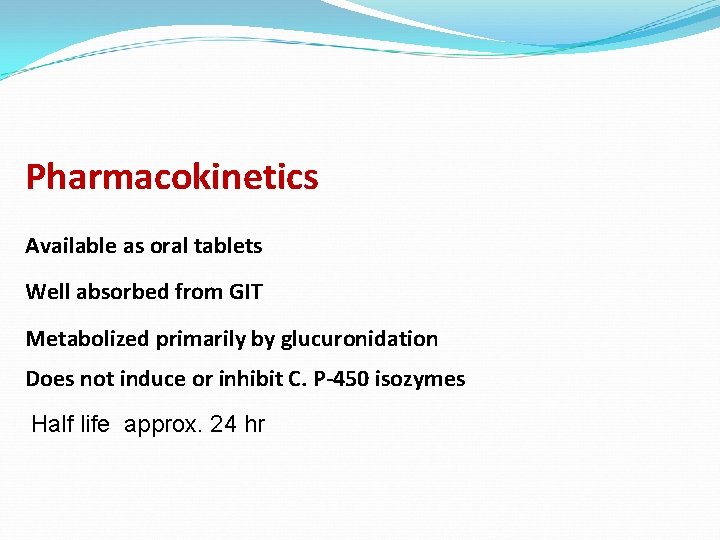
Pharmacokinetics Available as oral tablets Well absorbed from GIT Metabolized primarily by glucuronidation Does not induce or inhibit C. P-450 isozymes Half life approx. 24 hr
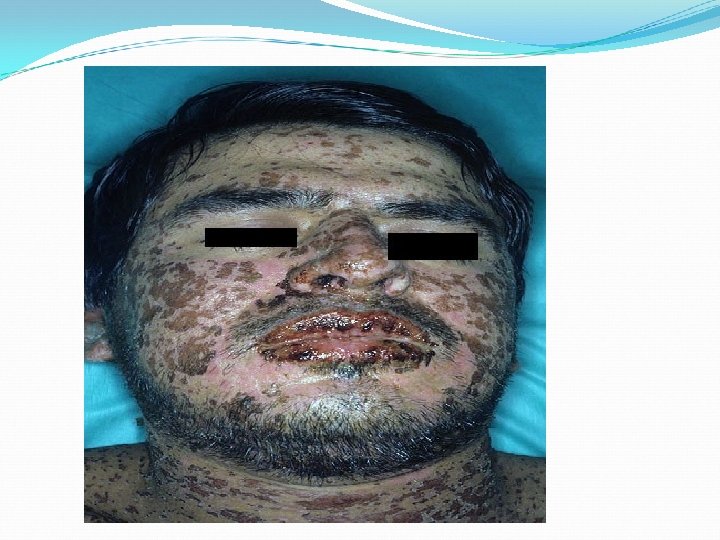
Side effects Influenza-like symptoms. Skin rashes(may progress to Steven –Johnson syndrome) Somnolence Blurred vision Diplopia Ataxia
Topiramate Pharmacological Effects: Well absorbed orally ( 80 % ) Food has no effect on absorption Has no effect on microsomal enzymes 9 -17 % protein bound ( minimal ) Mostly excreted unchanged in urine Plasma t½ 18 -24 hrs Mechanism of Action: Blocks sodium channels (membrane stabilization) and also potentiates the inhibitory effect of GABA.
Topiramate ( Cont. ) Clinical Uses: Can be used alone for partial, generalized tonic-clonic, and absence seizures. Lennox- Gastaut syndrome ( or lamotrigine, or valproate ). Side effects: Psychological or cognitive dysfunction Weight loss ( can be desirable side effect) Sedation Dizziness Fatigue Urolithiasis Paresthesias (abnormal sensation ) Teratogenecity (in animal but not in human)
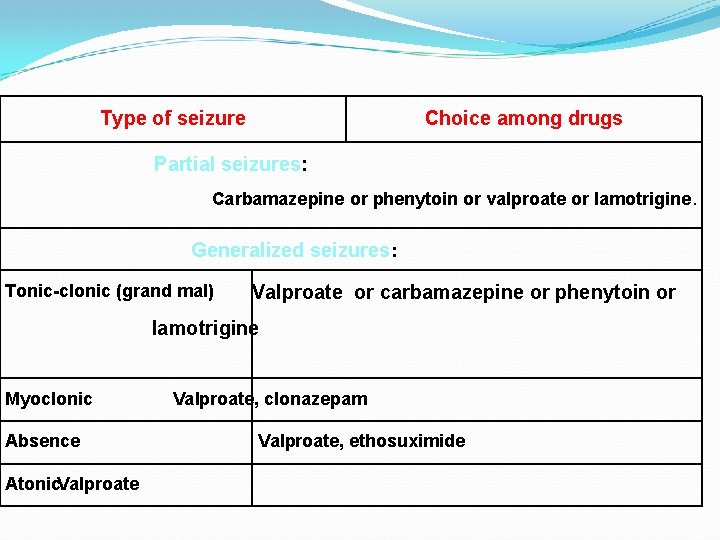
Type of seizure Choice among drugs Partial seizures: Carbamazepine or phenytoin or valproate or lamotrigine. Generalized seizures: Tonic-clonic (grand mal) Valproate or carbamazepine or phenytoin or lamotrigine Myoclonic Absence Atonic. Valproate, clonazepam Valproate, ethosuximide
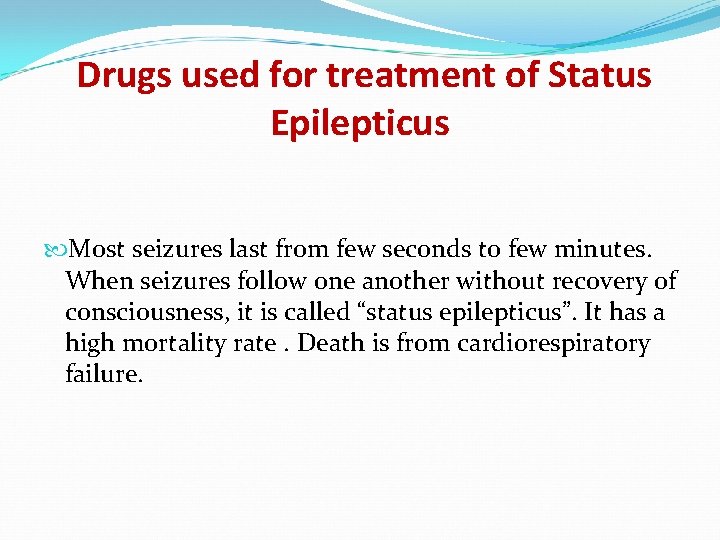
Drugs used for treatment of Status Epilepticus Most seizures last from few seconds to few minutes. When seizures follow one another without recovery of consciousness, it is called “status epilepticus”. It has a high mortality rate. Death is from cardiorespiratory failure.
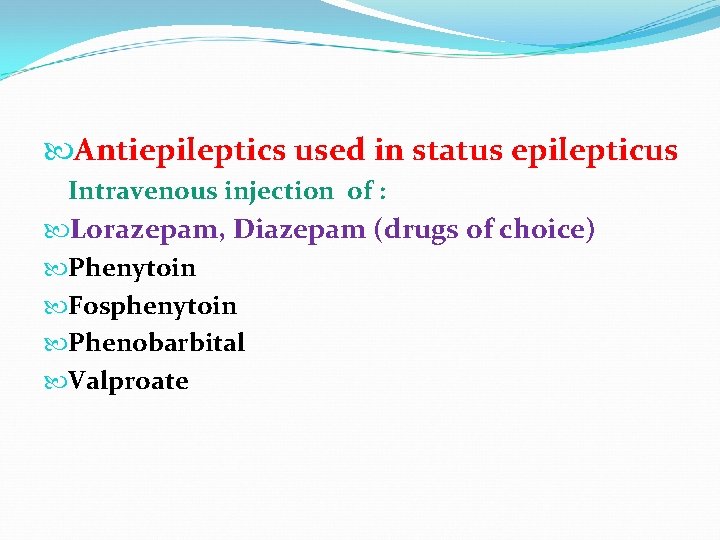
Antiepileptics used in status epilepticus Intravenous injection of : Lorazepam, Diazepam (drugs of choice) Phenytoin Fosphenytoin Phenobarbital Valproate
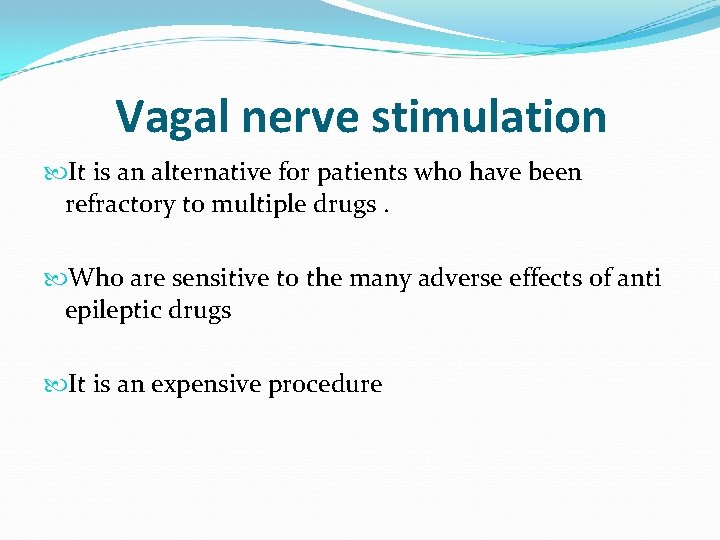
Vagal nerve stimulation It is an alternative for patients who have been refractory to multiple drugs. Who are sensitive to the many adverse effects of anti epileptic drugs It is an expensive procedure
Pregnancy & antiepileptics Seizure is very harmful for pregnant woman. NO antiepileptic drug is safe in pregnancy. Monotherapy usually better than drug combination. Valproate & phenytoin are contraindicated during pregnancy. Patient has to continue therapy.
Summary - Epilepsy is classified into partial or generalized according to the site of lesion. The exact mechanism of action of antiepileptics is not known. Phenytoin is mainly used for treatment of generalized tonic-clonic seizures. Carbamazepine is mainly used for treatment of partial seizures
Summary ( con. ) Sodium valproate is a broad spectrum antiepileptic drug. Lamotrigine & levetiracetam are used as monotherapy or adjunctive therapy in refractory cases. Lorazepam , diazepam , phenytoin are used intravenously for treatment of status epilepticus.