
Mechanism of action of Antiepileptic Drugs B Gitanjali1
Mechanism of action of Antiepileptic Drugs B. Gitanjali-1: 1
Cellular Mechanisms of Seizure Generation v Excitation (too much) • Ionic-inward Na+, Ca++ currents • Neurotransmitter: glutamate, aspartate v Inhibition (too little) • Ionic-inward Cl; outward K+ currents • Neurotransmitter: GABA Gitanjali-5: 2
AEDs: Molecular and Cellular Mechanisms v. Phenytoin, Carbamazepine • Block voltage-dependent sodium channels at high firing frequencies Gitanjali-6: 3

Na+ Activation gate Open Na+ Inactivation gate Na+ Gitanjali-7: 4
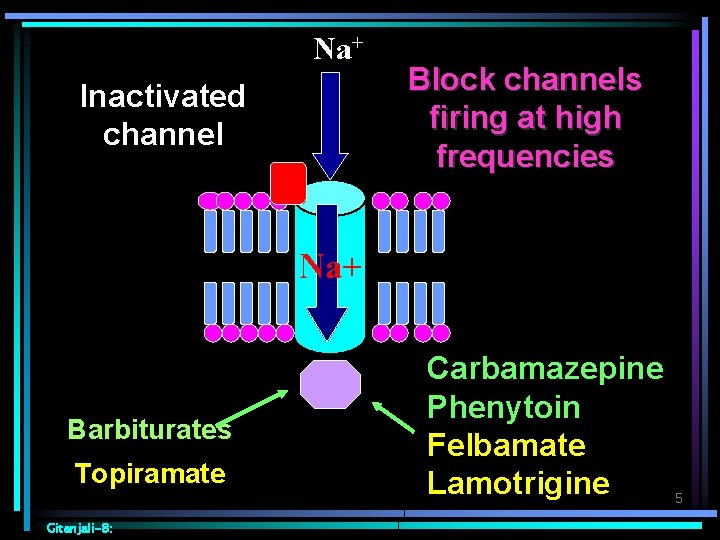
Na+ Inactivated channel Block channels firing at high frequencies Na+ Barbiturates Topiramate Gitanjali-8: Carbamazepine Phenytoin Felbamate Lamotrigine 5
AEDs: Molecular and Cellular Mechanisms v Barbiturates • Prolong GABA-mediated chloride channel openings • Some blockade of voltagedependent sodium channels Gitanjali-9: 6
AEDs: Molecular and Cellular Mechanisms v Benzodiazepines • Increase frequency of GABAmediated chloride channel openings 7 Gitanjali-10:
AEDs: Molecular and Cellular Mechanisms Valproate v May enhance GABA transmission in specific circuits v Blocks voltage-dependent sodium channels v Blocks T-type calcium currents 8 Gitanjali-11:
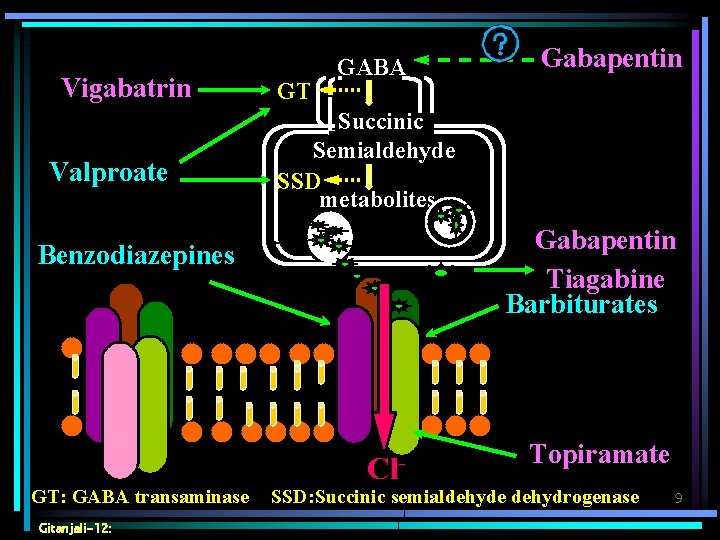
Vigabatrin Valproate GT GABA Succinic Semialdehyde SSD metabolites Gabapentin Tiagabine Barbiturates Benzodiazepines GT: GABA transaminase Gitanjali-12: Gabapentin Cl- Topiramate SSD: Succinic semialdehyde dehydrogenase 9
AEDs: Molecular and Cellular Mechanisms v Ethosuximide • Blocks slow, threshold, “transient” (T-type) calcium channels in thalamic neurons Gitanjali-13: 10
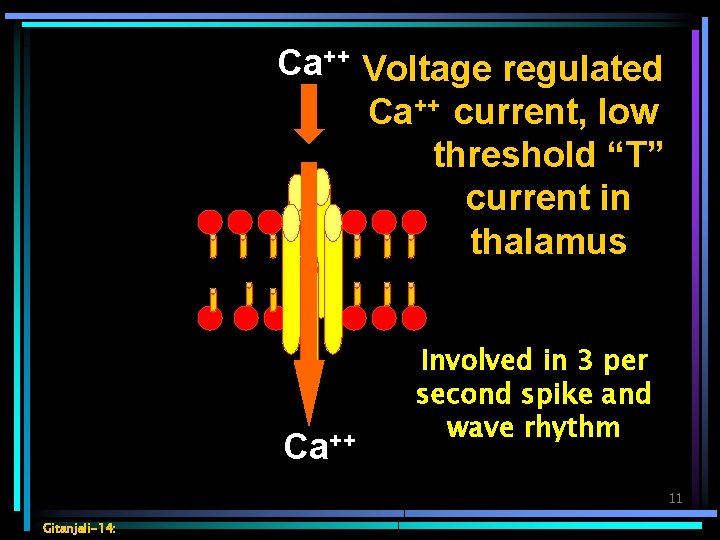
Ca++ Voltage regulated Ca++ current, low threshold “T” current in thalamus Ca++ Involved in 3 per second spike and wave rhythm 11 Gitanjali-14:
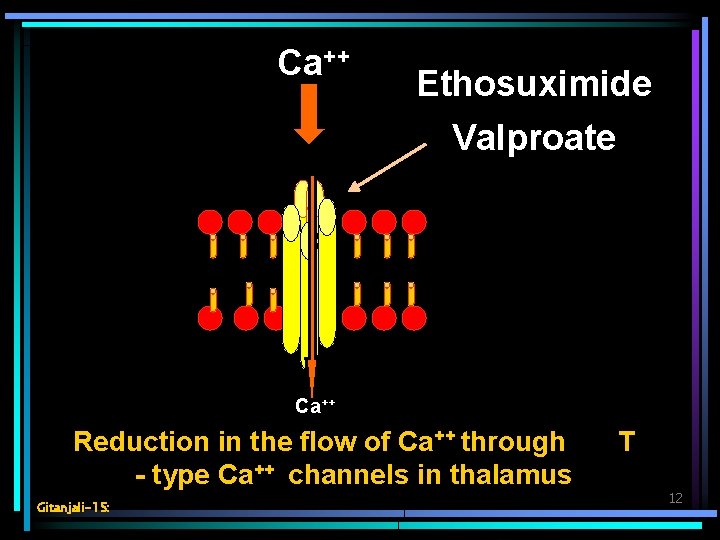
Ca++ Ethosuximide Valproate Ca++ Reduction in the flow of Ca++ through - type Ca++ channels in thalamus Gitanjali-15: T 12
Newer AEDs: Molecular and cellular Mechanisms Vigabatrin • Irreversibly inhibits GABAtransaminase Tiagabine • Interferes with GABA re-uptake 13 Gitanjali-16:
Newer AEDs: Molecular and cellular Mechanisms Topiramate ? Blocks voltage-dependent sodium channels at high firing frequencies ? Increases frequency at which GABA opens Cl- channels (different site from benzodiazepines) ? Antagonizes glutamate actions at receptor subtype Gitanjali-17: 14
Newer AEDs: Molecular and Cellular Mechanisms • • Felbamate May block voltage-dependent sodium channel at high firing frequencies May modulate NMDA receptor via strychnine insensitive glycine receptor 15 Gitanjali-18:
AEDs: Molecular and Cellular Mechanisms • • Gabapentin May modulate amino acid transport into brain May interfere with GABA re-uptake 16 Gitanjali-19:
Newer AEDs: Molecular and Cellular Mechanisms Lamotrigine • Blocks voltage-dependent sodium channels at high firing frequencies • May interfere with pathologic glutamate release 17 Gitanjali-20:
- Slides: 17