1 Limits and Their Properties Copyright Cengage Learning
- Slides: 42
1 Limits and Their Properties Copyright © Cengage Learning. All rights reserved.
1. 3 Evaluating Limits Analytically Copyright © Cengage Learning. All rights reserved.
Objectives n Evaluate a limit using properties of limits. n Develop and use a strategy for finding limits. n Evaluate a limit using dividing out and rationalizing techniques. n Evaluate a limit using the Squeeze Theorem. 3
Properties of Limits 4
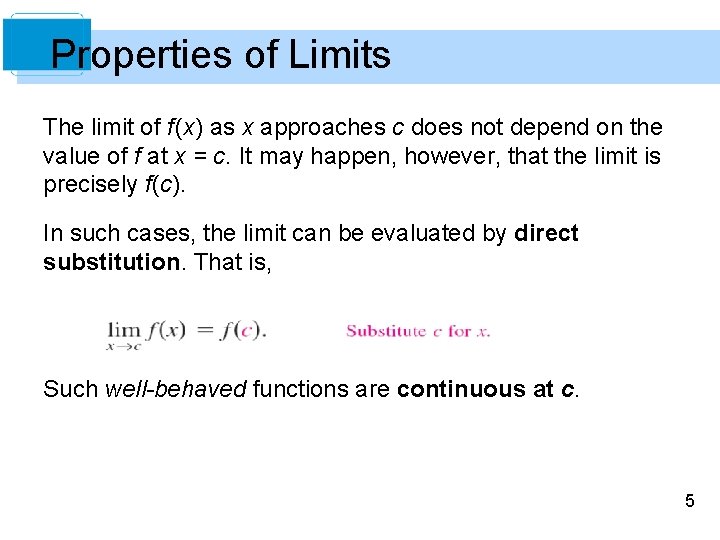
Properties of Limits The limit of f (x) as x approaches c does not depend on the value of f at x = c. It may happen, however, that the limit is precisely f (c). In such cases, the limit can be evaluated by direct substitution. That is, Such well-behaved functions are continuous at c. 5
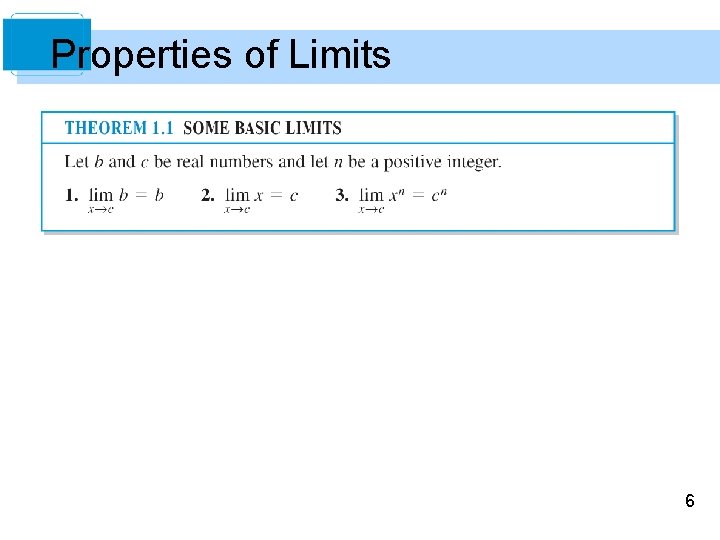
Properties of Limits 6
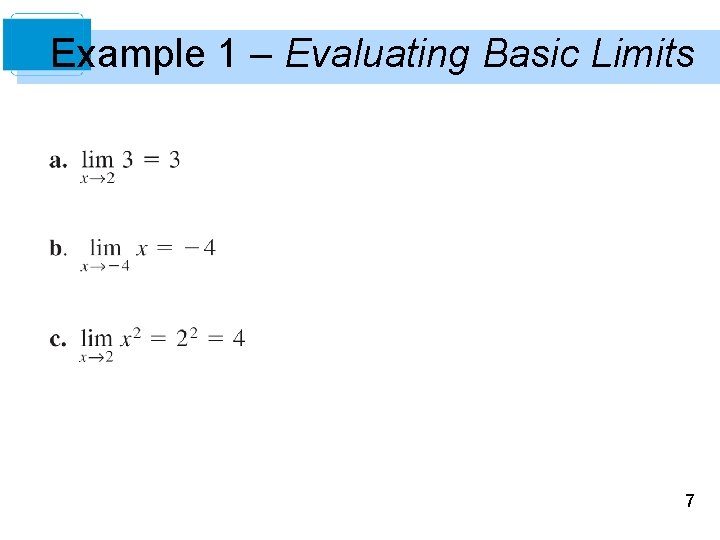
Example 1 – Evaluating Basic Limits 7
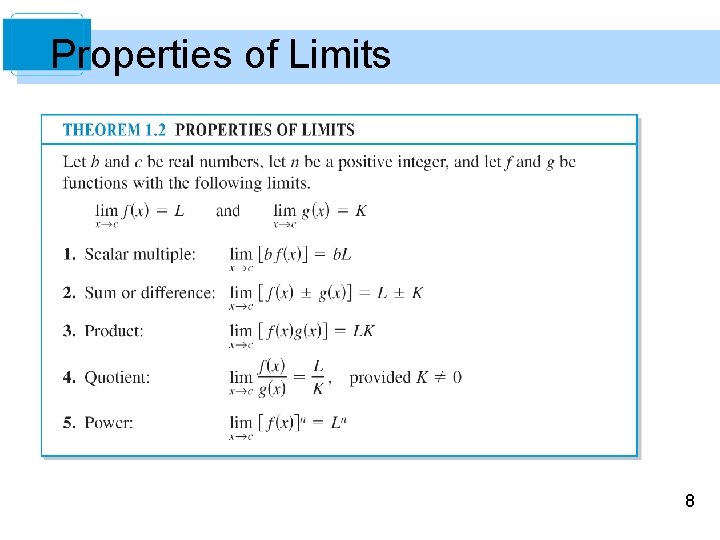
Properties of Limits 8
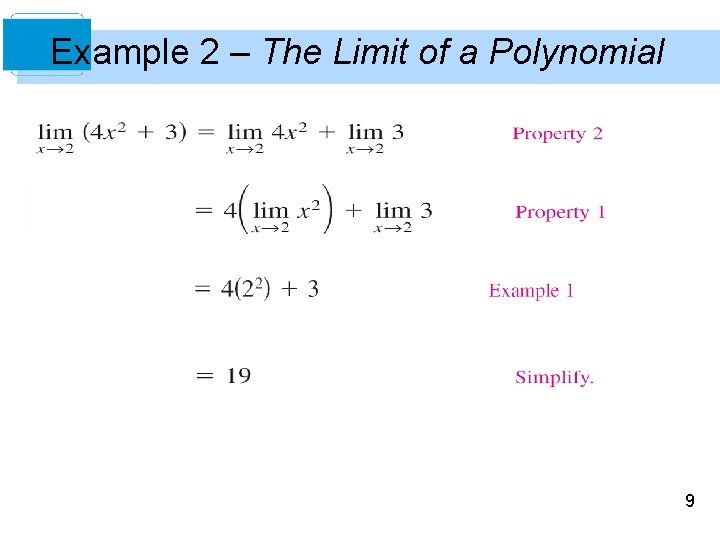
Example 2 – The Limit of a Polynomial 9
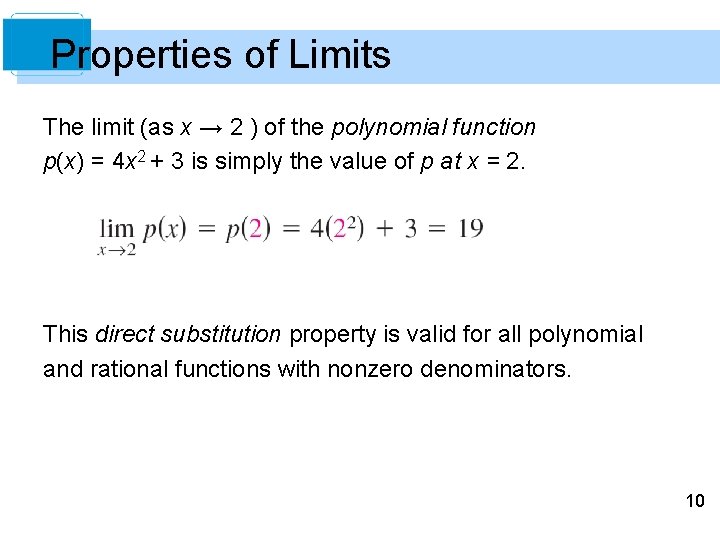
Properties of Limits The limit (as x → 2 ) of the polynomial function p(x) = 4 x 2 + 3 is simply the value of p at x = 2. This direct substitution property is valid for all polynomial and rational functions with nonzero denominators. 10
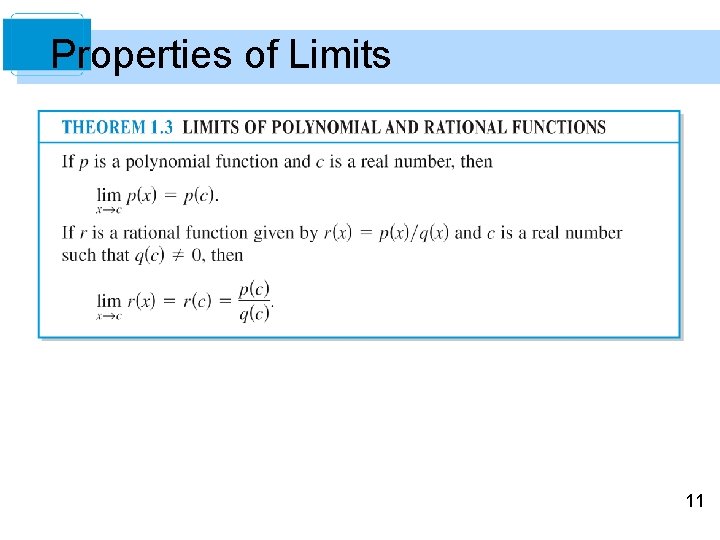
Properties of Limits 11
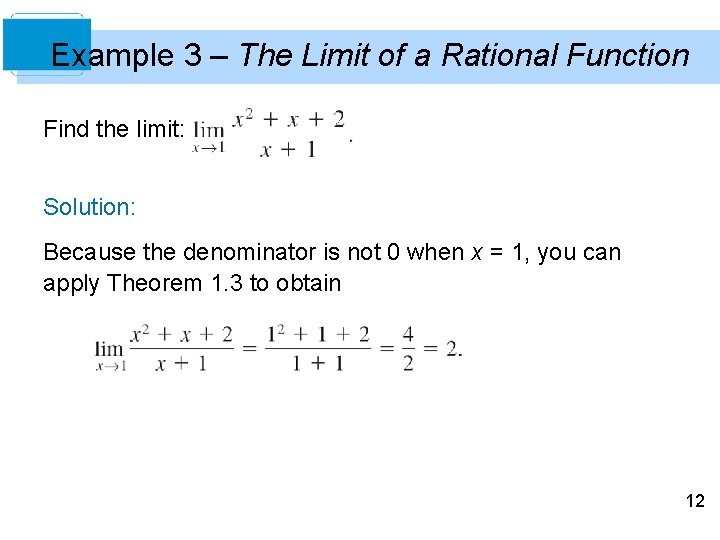
Example 3 – The Limit of a Rational Function Find the limit: Solution: Because the denominator is not 0 when x = 1, you can apply Theorem 1. 3 to obtain 12
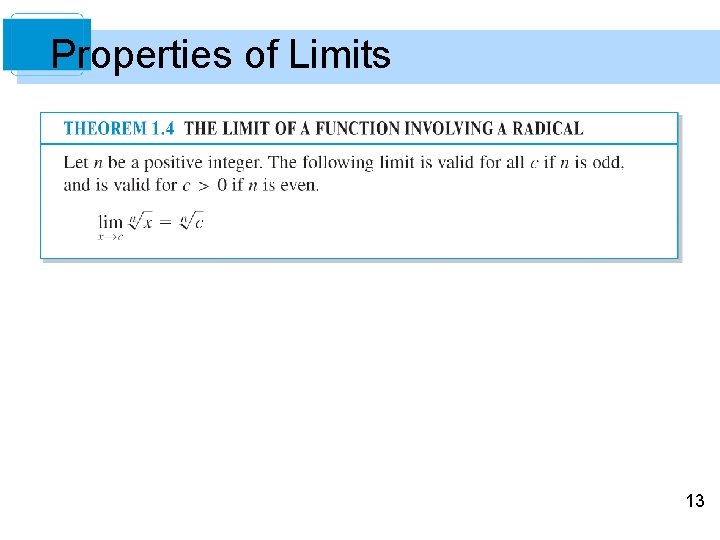
Properties of Limits 13
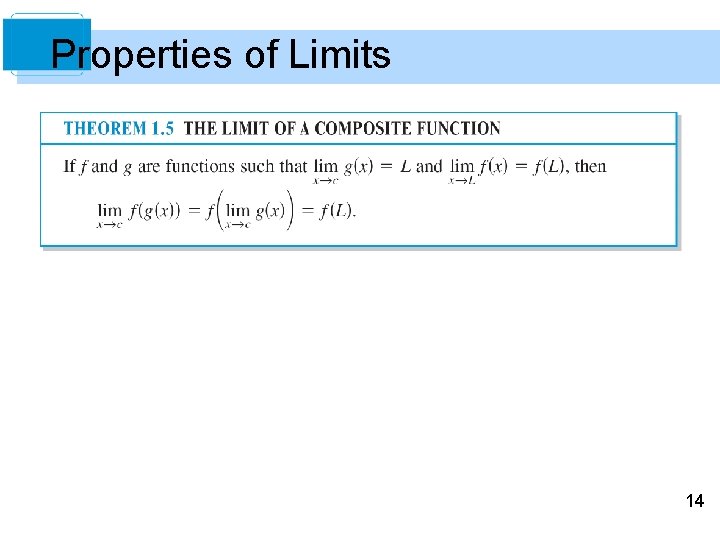
Properties of Limits 14
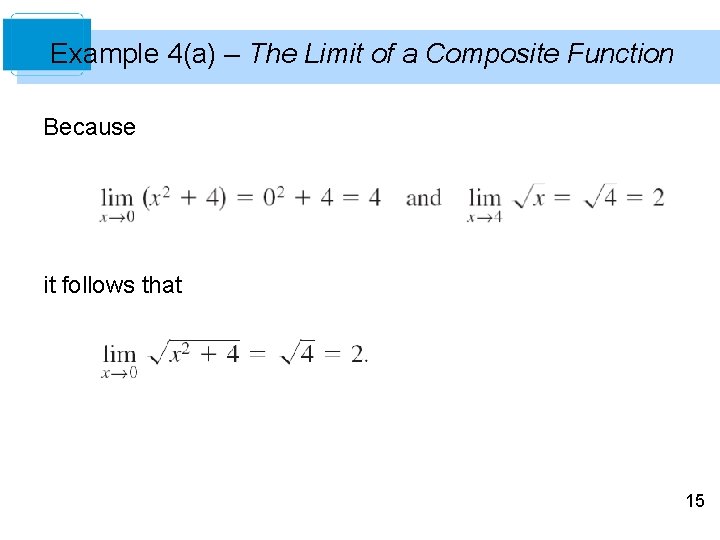
Example 4(a) – The Limit of a Composite Function Because it follows that 15
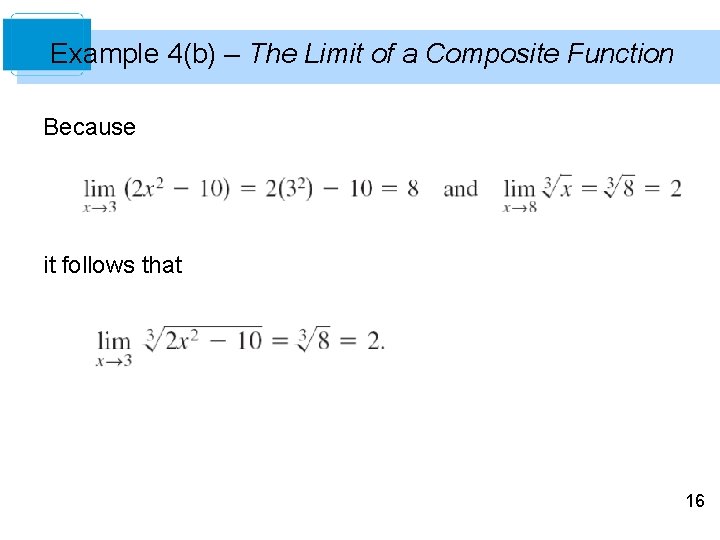
Example 4(b) – The Limit of a Composite Function Because it follows that 16
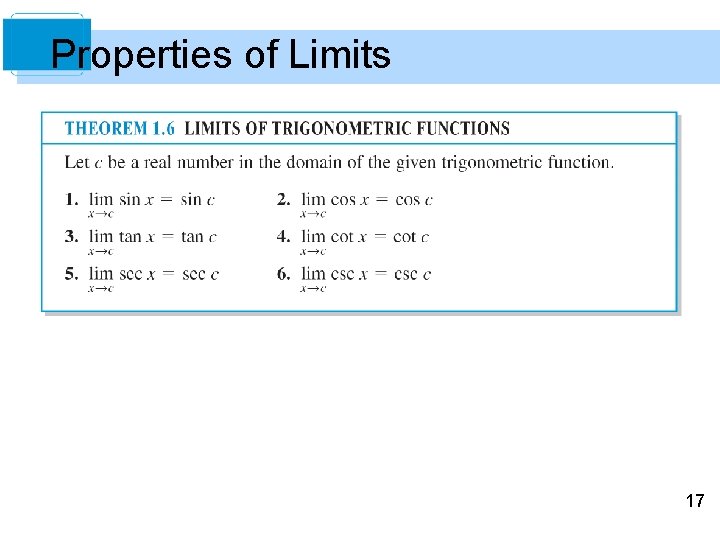
Properties of Limits 17
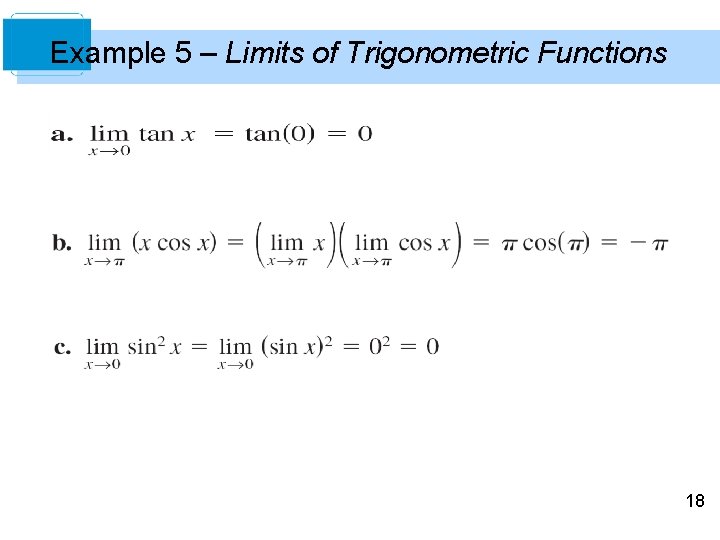
Example 5 – Limits of Trigonometric Functions 18
A Strategy for Finding Limits 19
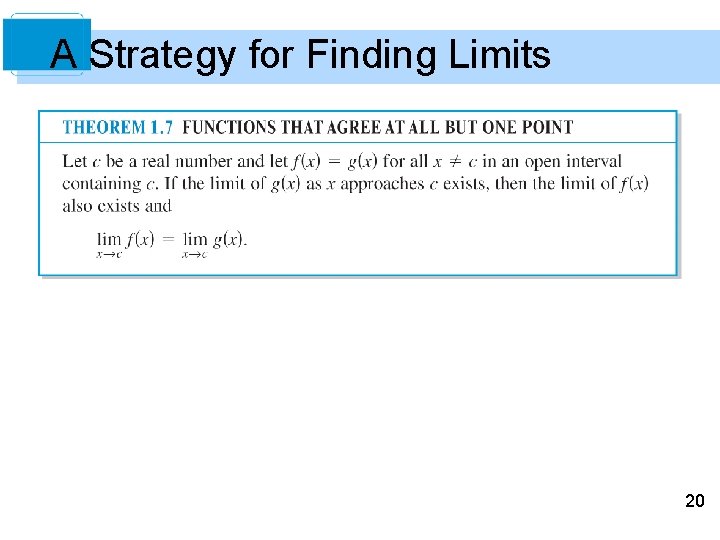
A Strategy for Finding Limits 20
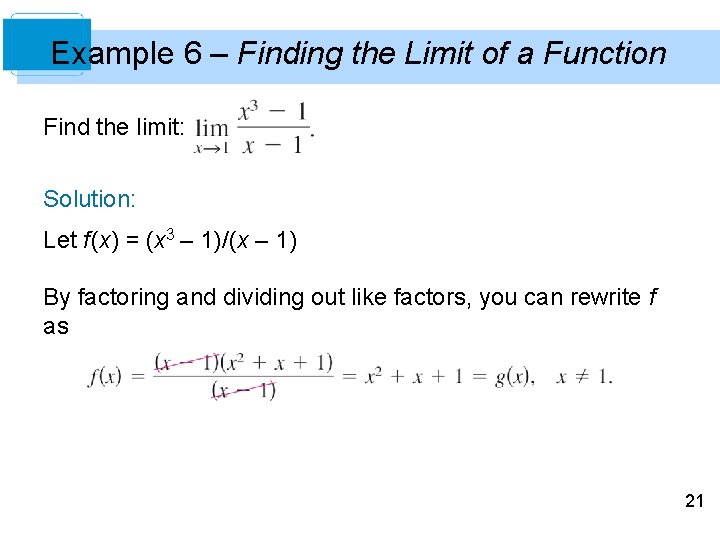
Example 6 – Finding the Limit of a Function Find the limit: Solution: Let f (x) = (x 3 – 1) /(x – 1) By factoring and dividing out like factors, you can rewrite f as 21
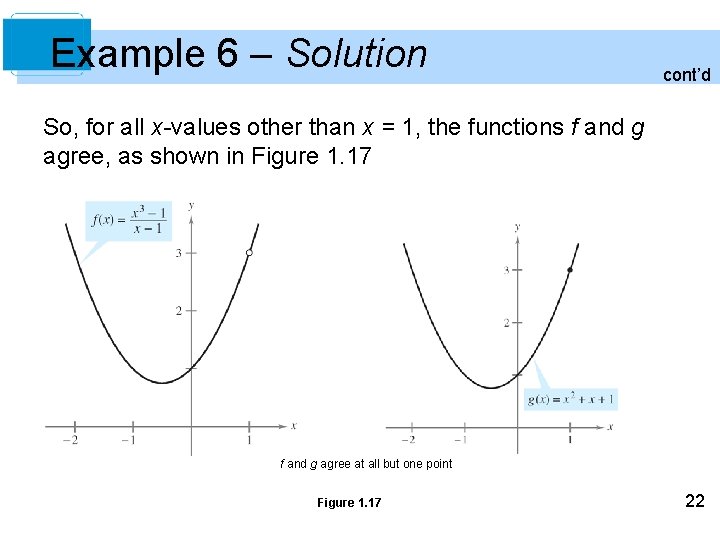
Example 6 – Solution cont’d So, for all x-values other than x = 1, the functions f and g agree, as shown in Figure 1. 17 f and g agree at all but one point Figure 1. 17 22
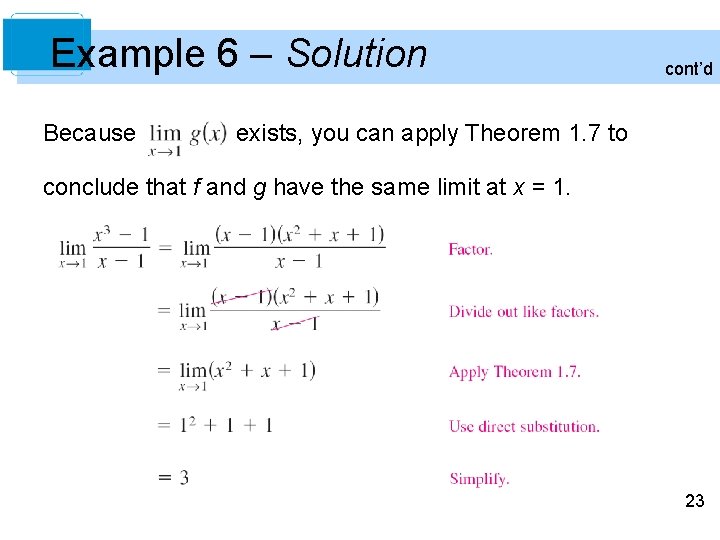
Example 6 – Solution Because cont’d exists, you can apply Theorem 1. 7 to conclude that f and g have the same limit at x = 1. 23
A Strategy for Finding Limits 24
Dividing Out and Rationalizing Techniques 25
Dividing Out and Rationalizing Techniques Two techniques for finding limits analytically are shown in Examples 7 and 8. The dividing out technique involves dividing out common factors, and the rationalizing technique involves rationalizing the numerator of a fractional expression. 26
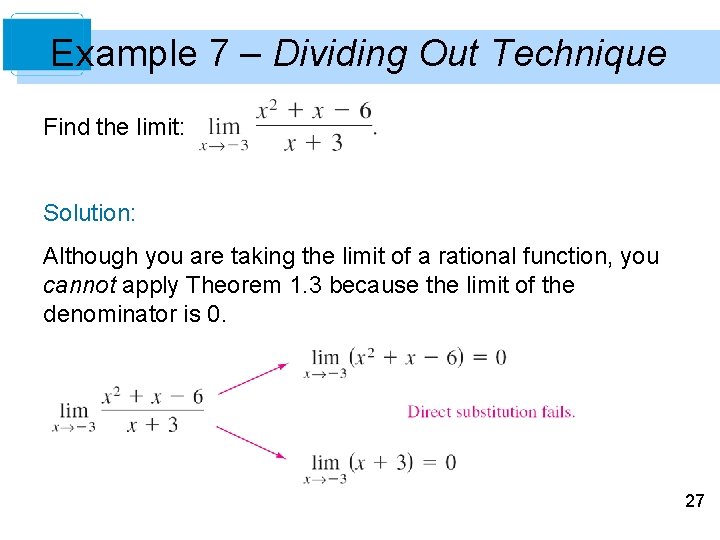
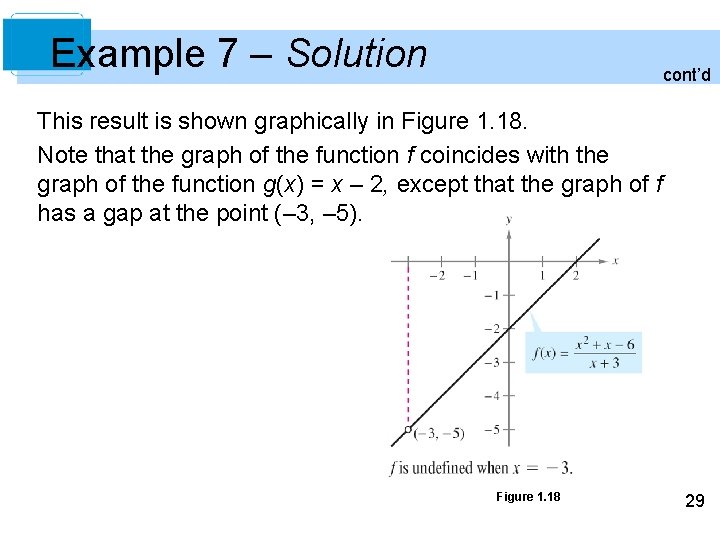
Example 7 – Dividing Out Technique Find the limit: Solution: Although you are taking the limit of a rational function, you cannot apply Theorem 1. 3 because the limit of the denominator is 0. 27
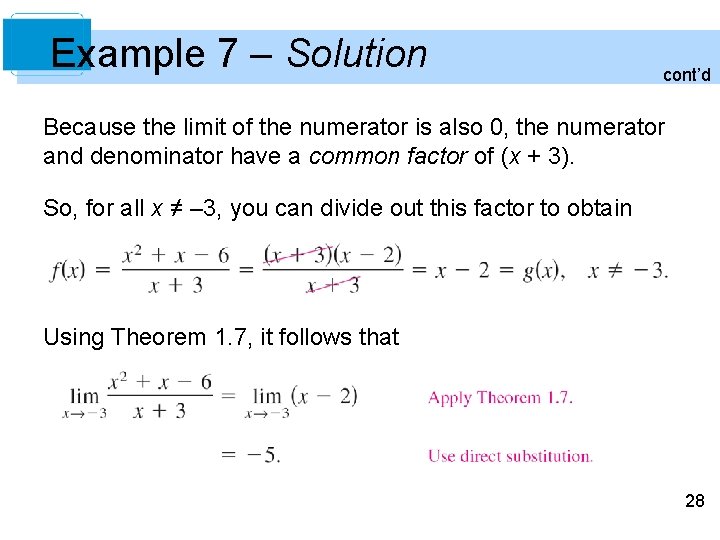
Example 7 – Solution cont’d Because the limit of the numerator is also 0, the numerator and denominator have a common factor of (x + 3). So, for all x ≠ – 3, you can divide out this factor to obtain Using Theorem 1. 7, it follows that 28
Example 7 – Solution cont’d This result is shown graphically in Figure 1. 18. Note that the graph of the function f coincides with the graph of the function g(x) = x – 2, except that the graph of f has a gap at the point (– 3, – 5). Figure 1. 18 29
Dividing Out and Rationalizing Techniques An expression such as 0/0 is called an indeterminate form because you cannot (from the form alone) determine the limit. When you try to evaluate a limit and encounter this form, remember that you must rewrite the fraction so that the new denominator does not have 0 as its limit. One way to do this is to divide out like factors, as shown in Example 7. A second way is to rationalize the numerator, as shown in Example 8. 30
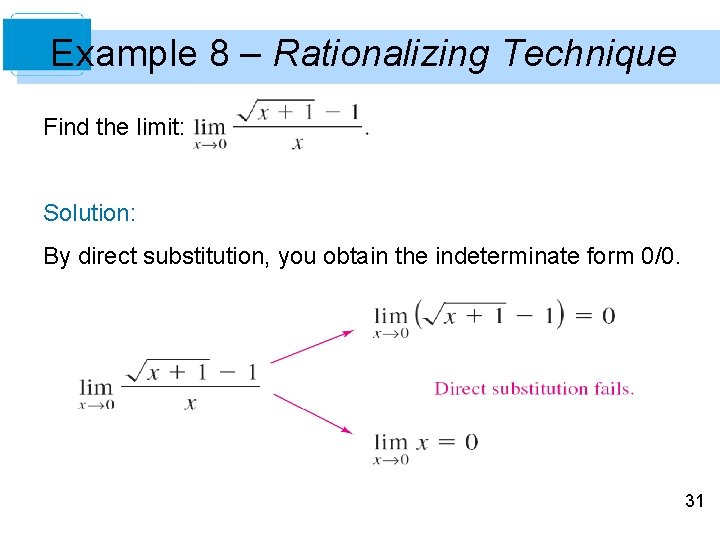
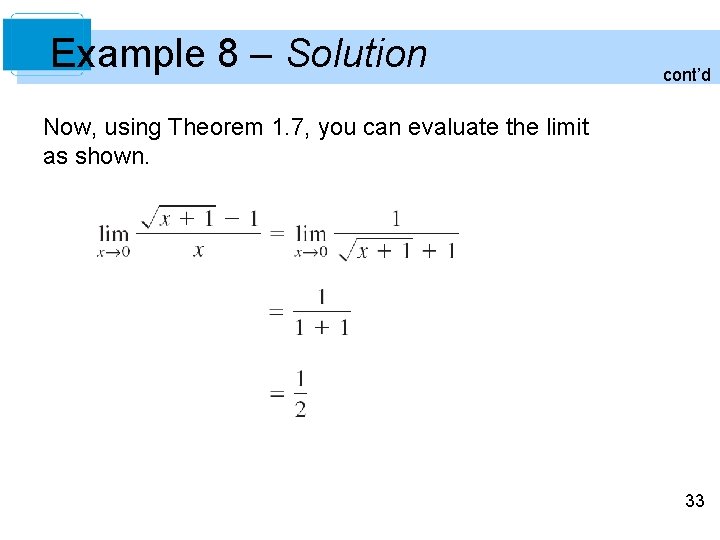
Example 8 – Rationalizing Technique Find the limit: Solution: By direct substitution, you obtain the indeterminate form 0/0. 31
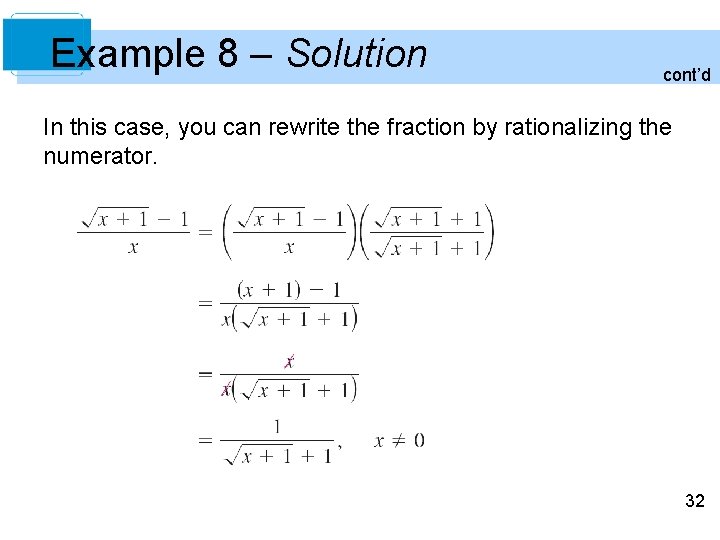
Example 8 – Solution cont’d In this case, you can rewrite the fraction by rationalizing the numerator. 32
Example 8 – Solution cont’d Now, using Theorem 1. 7, you can evaluate the limit as shown. 33
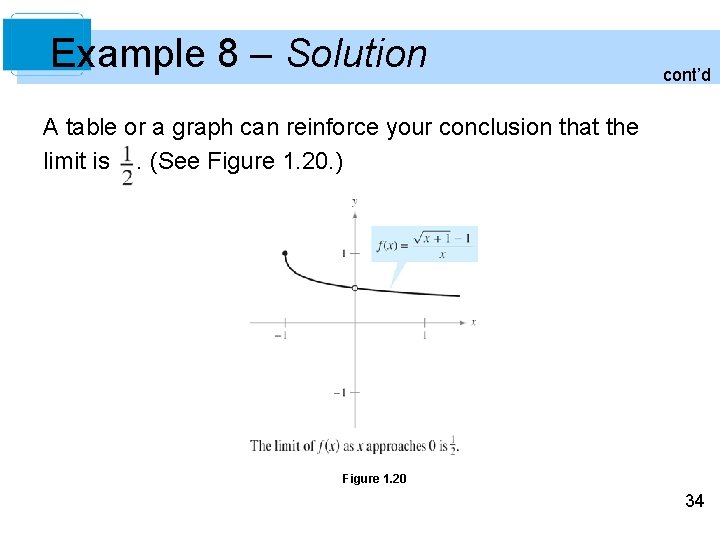
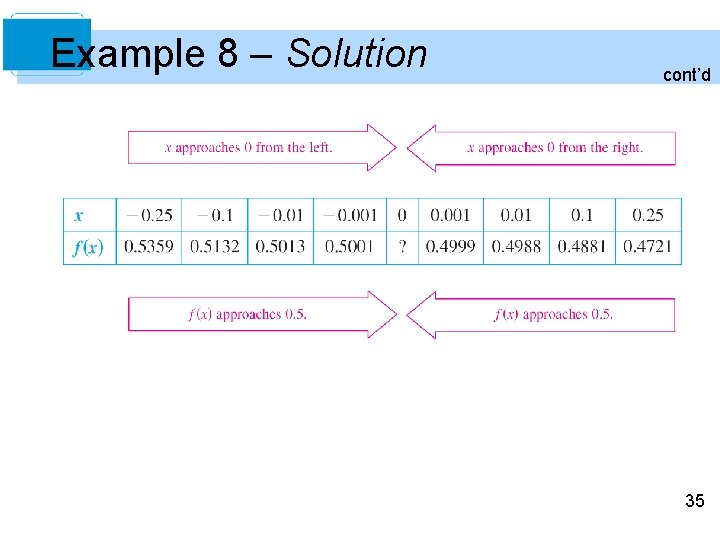
Example 8 – Solution cont’d A table or a graph can reinforce your conclusion that the limit is. (See Figure 1. 20. ) Figure 1. 20 34
Example 8 – Solution cont’d 35
The Squeeze Theorem 36
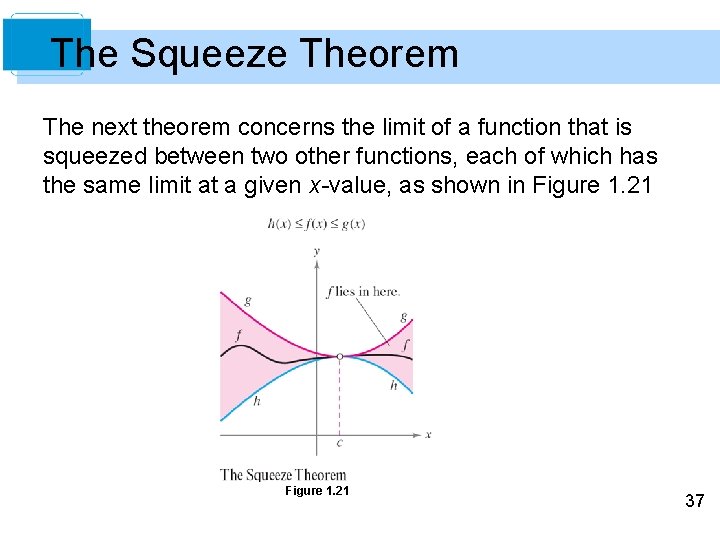
The Squeeze Theorem The next theorem concerns the limit of a function that is squeezed between two other functions, each of which has the same limit at a given x-value, as shown in Figure 1. 21 37
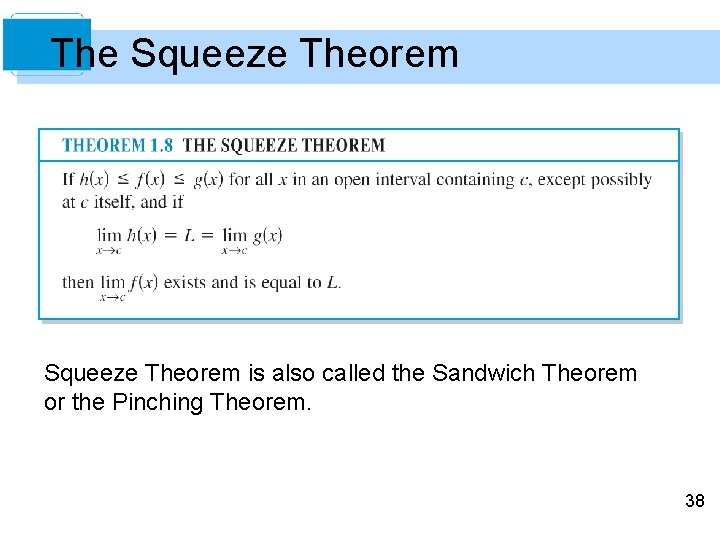
The Squeeze Theorem is also called the Sandwich Theorem or the Pinching Theorem. 38
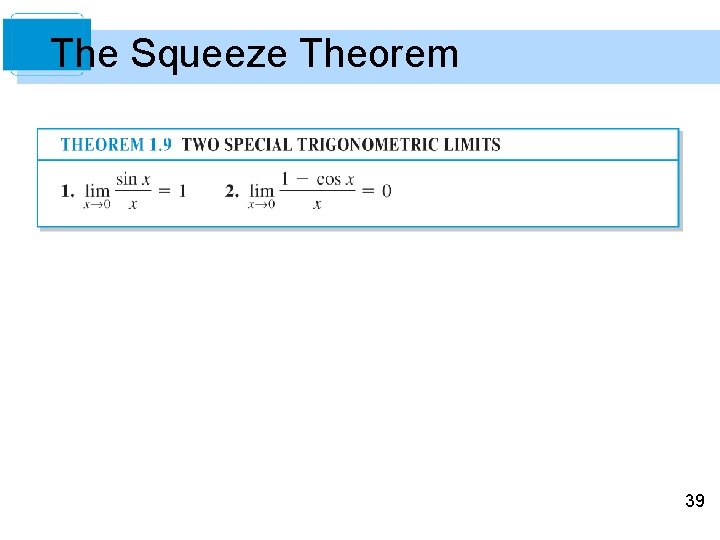
The Squeeze Theorem 39
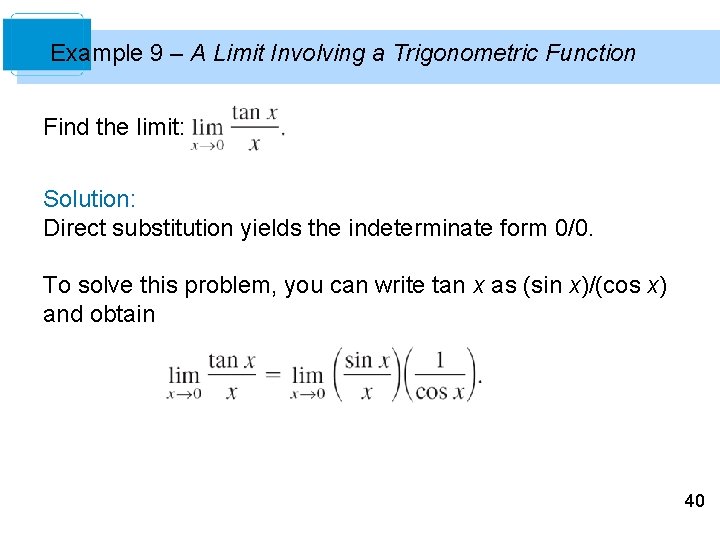
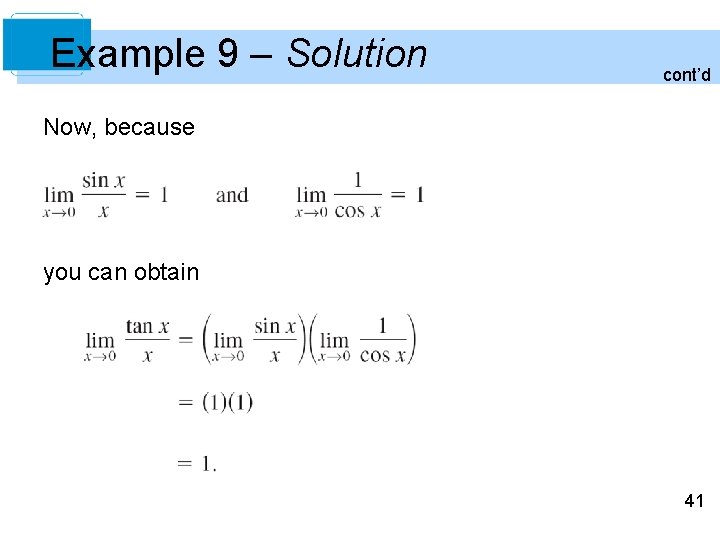
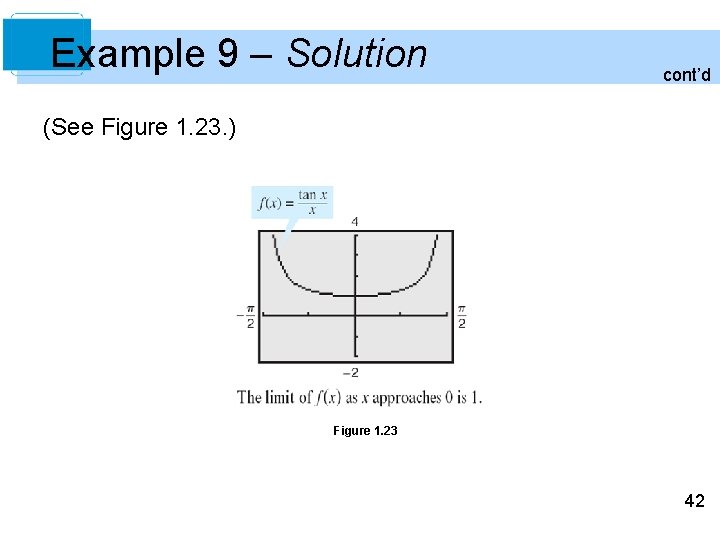
Example 9 – A Limit Involving a Trigonometric Function Find the limit: Solution: Direct substitution yields the indeterminate form 0/0. To solve this problem, you can write tan x as (sin x)/(cos x) and obtain 40
Example 9 – Solution cont’d Now, because you can obtain 41
Example 9 – Solution cont’d (See Figure 1. 23. ) Figure 1. 23 42