WHAT Right medical intervention Good outcomes Personal interaction




- Slides: 77
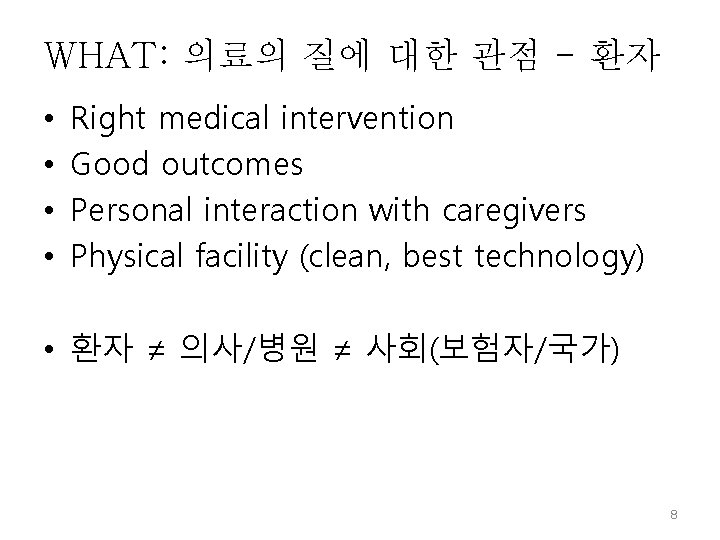
WHAT: 의료의 질에 대한 관점 - 환자 • • Right medical intervention Good outcomes Personal interaction with caregivers Physical facility (clean, best technology) • 환자 ≠ 의사/병원 ≠ 사회(보험자/국가) 8
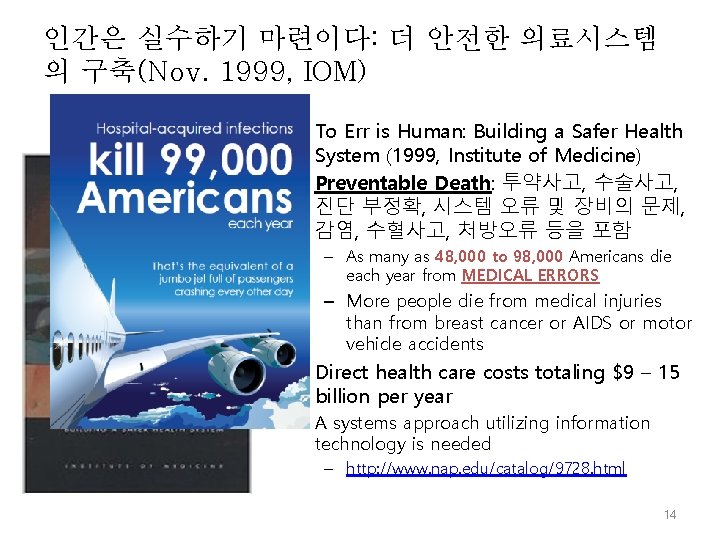
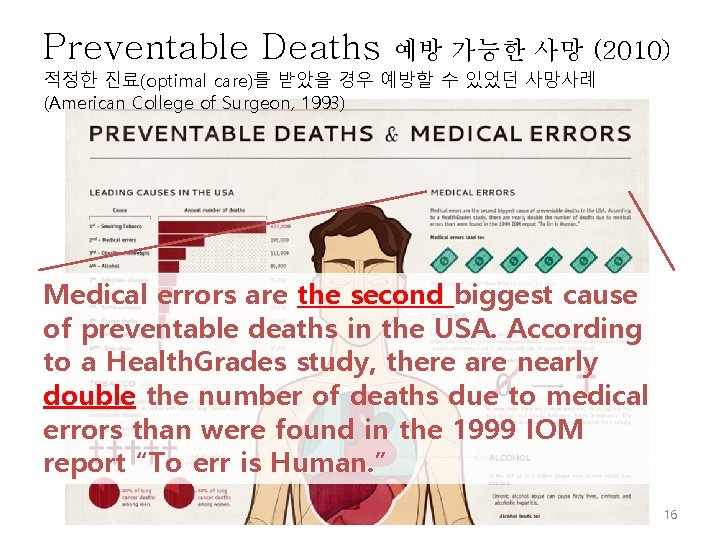
인간은 실수하기 마련이다: 더 안전한 의료시스템 의 구축(Nov. 1999, IOM) • To Err is Human: Building a Safer Health System (1999, Institute of Medicine) • Preventable Death: 투약사고, 수술사고, 진단 부정확, 시스템 오류 및 장비의 문제, 감염, 수혈사고, 처방오류 등을 포함 – As many as 48, 000 to 98, 000 Americans die each year from MEDICAL ERRORS – More people die from medical injuries than from breast cancer or AIDS or motor vehicle accidents • Direct health care costs totaling $9 – 15 billion per year • A systems approach utilizing information technology is needed – http: //www. nap. edu/catalog/9728. html 14
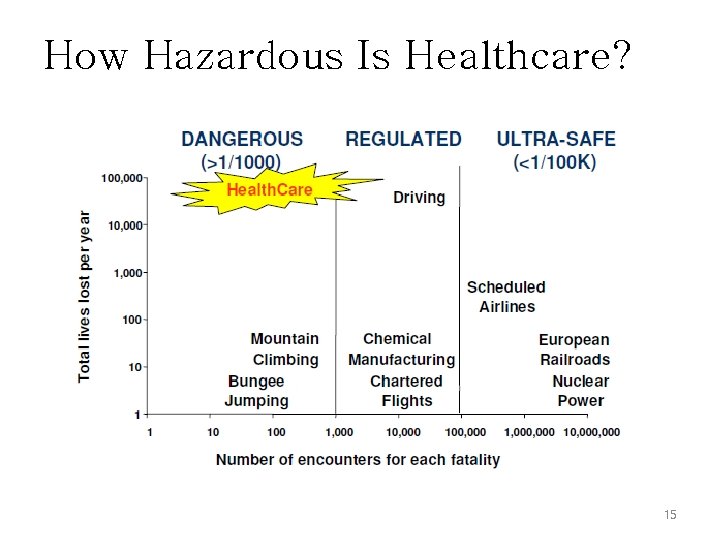
How Hazardous Is Healthcare? 15
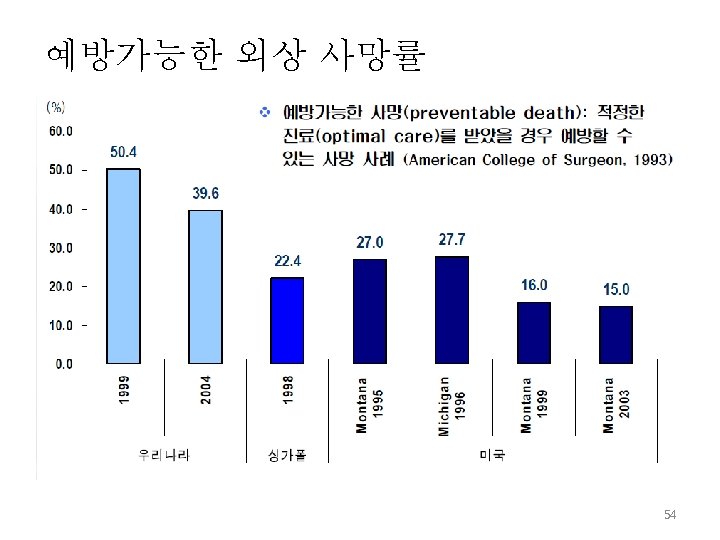
Preventable Deaths 예방 가능한 사망 (2010) 적정한 진료(optimal care)를 받았을 경우 예방할 수 있었던 사망사례 (American College of Surgeon, 1993) Medical errors are the second biggest cause of preventable deaths in the USA. According to a Health. Grades study, there are nearly double the number of deaths due to medical errors than were found in the 1999 IOM report “To err is Human. ” 16
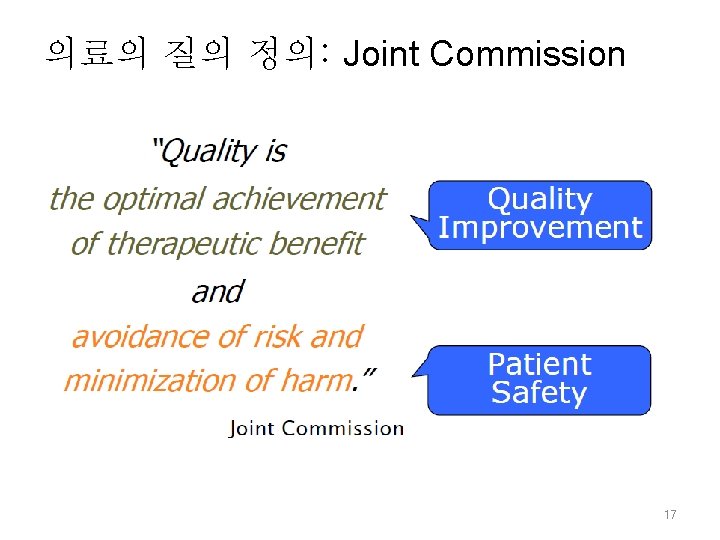
의료의 질의 정의: Joint Commission 17
의료의 질의 정의: IOM(2001) • 개인 및 집단에 대한 보건의료가 건강에 있어 바람직한 결과를 나타낼 가능성을 증 가시키며 현재의 전문적 지식에 부합하는 정도 The degree to which health services for individuals and populations increase the likelihood of desired health outcomes and are consistent with current professional knowledge 18
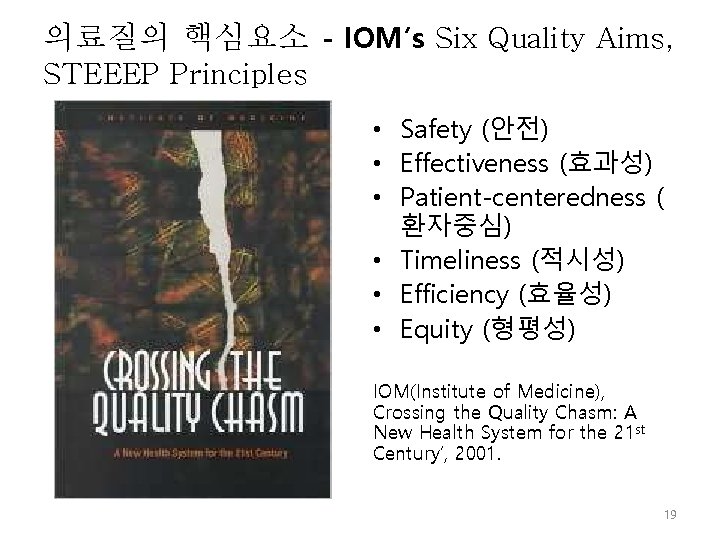
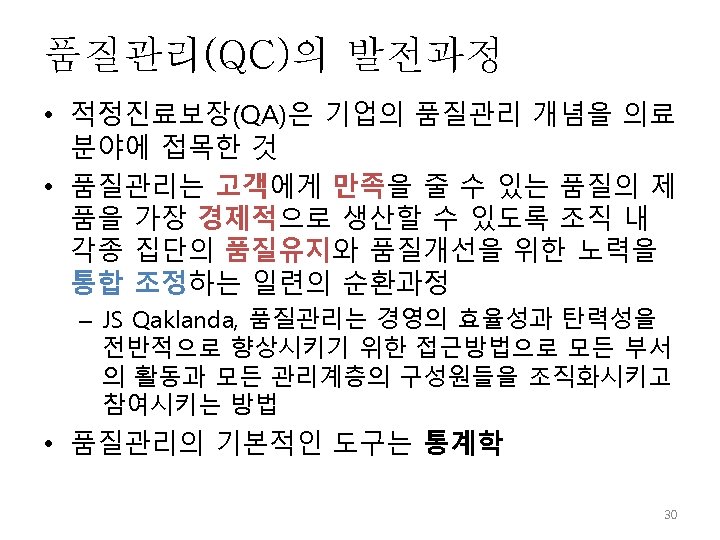
의료질의 핵심요소 - IOM’s Six Quality Aims, STEEEP Principles • Safety (안전) • Effectiveness (효과성) • Patient-centeredness ( 환자중심) • Timeliness (적시성) • Efficiency (효율성) • Equity (형평성) IOM(Institute of Medicine), Crossing the Quality Chasm: A New Health System for the 21 st Century’, 2001. 19
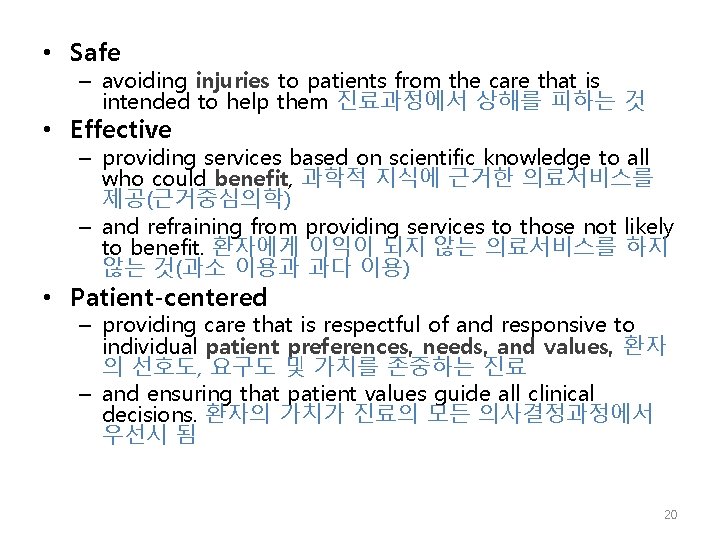
• Safe – avoiding injuries to patients from the care that is intended to help them 진료과정에서 상해를 피하는 것 • Effective – providing services based on scientific knowledge to all who could benefit, 과학적 지식에 근거한 의료서비스를 제공(근거중심의학) – and refraining from providing services to those not likely to benefit. 환자에게 이익이 되지 않는 의료서비스를 하지 않는 것(과소 이용과 과다 이용) • Patient-centered – providing care that is respectful of and responsive to individual patient preferences, needs, and values, 환자 의 선호도, 요구도 및 가치를 존중하는 진료 – and ensuring that patient values guide all clinical decisions. 환자의 가치가 진료의 모든 의사결정과정에서 우선시 됨 20
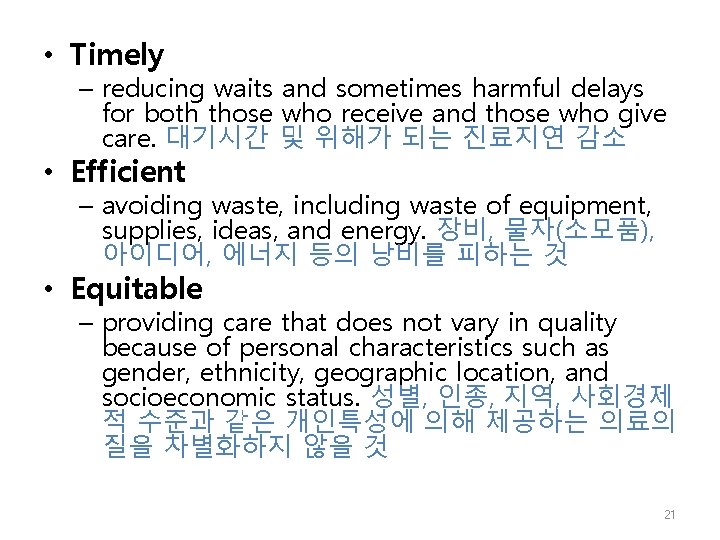
• Timely – reducing waits and sometimes harmful delays for both those who receive and those who give care. 대기시간 및 위해가 되는 진료지연 감소 • Efficient – avoiding waste, including waste of equipment, supplies, ideas, and energy. 장비, 물자(소모품), 아이디어, 에너지 등의 낭비를 피하는 것 • Equitable – providing care that does not vary in quality because of personal characteristics such as gender, ethnicity, geographic location, and socioeconomic status. 성별, 인종, 지역, 사회경제 적 수준과 같은 개인특성에 의해 제공하는 의료의 질을 차별화하지 않을 것 21
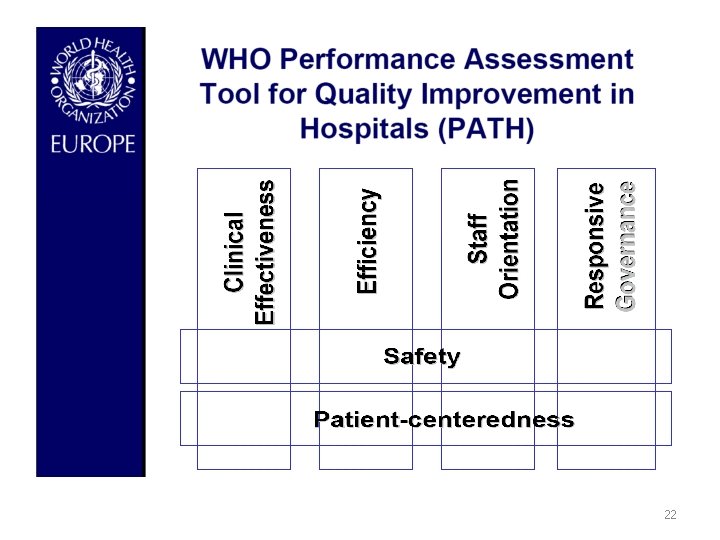
22
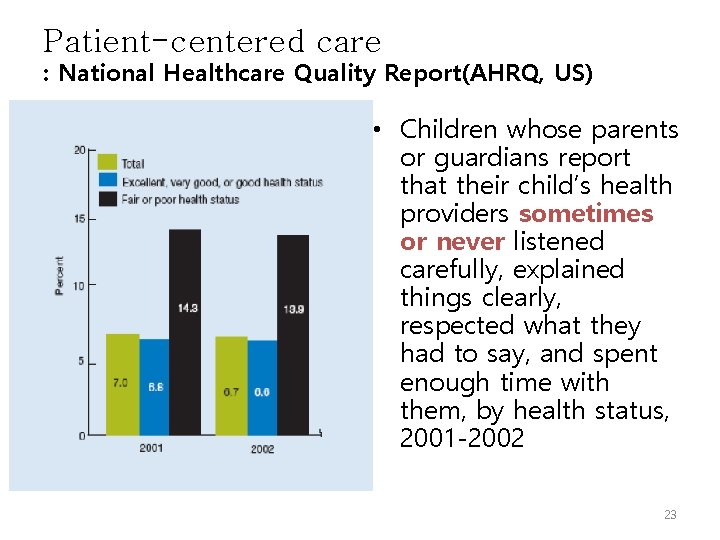
Patient-centered care : National Healthcare Quality Report(AHRQ, US) • Children whose parents or guardians report that their child’s health providers sometimes or never listened carefully, explained things clearly, respected what they had to say, and spent enough time with them, by health status, 2001 -2002 23
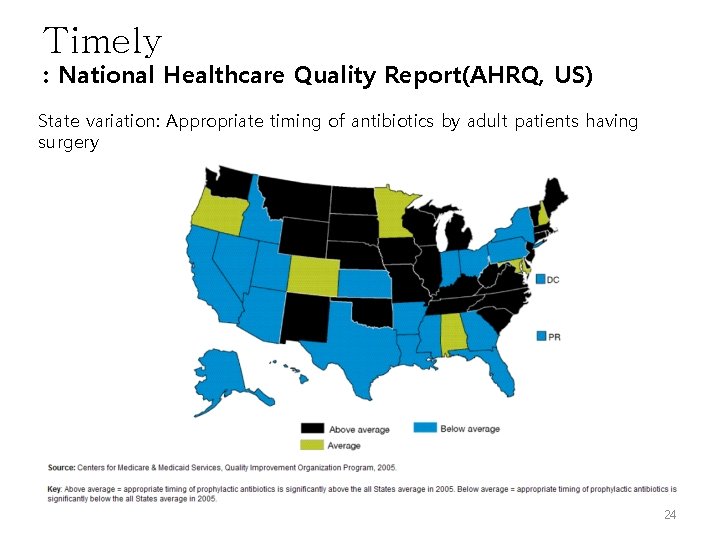
Timely : National Healthcare Quality Report(AHRQ, US) State variation: Appropriate timing of antibiotics by adult patients having surgery 24
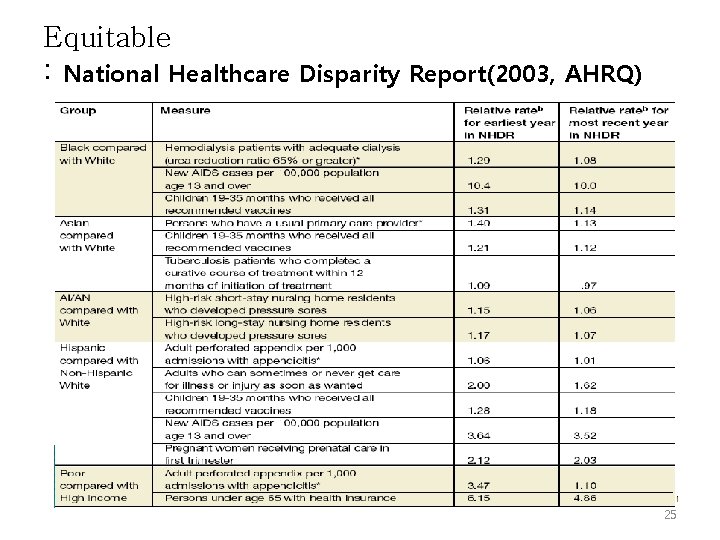
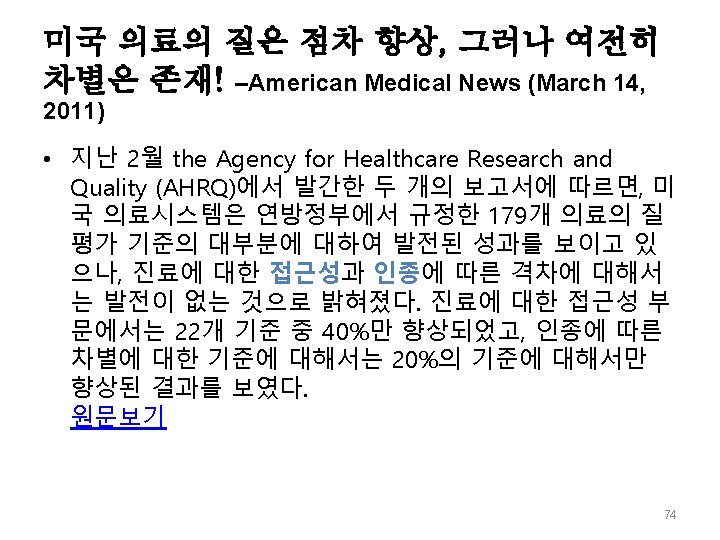
Equitable : National Healthcare Disparity Report(2003, AHRQ) 25
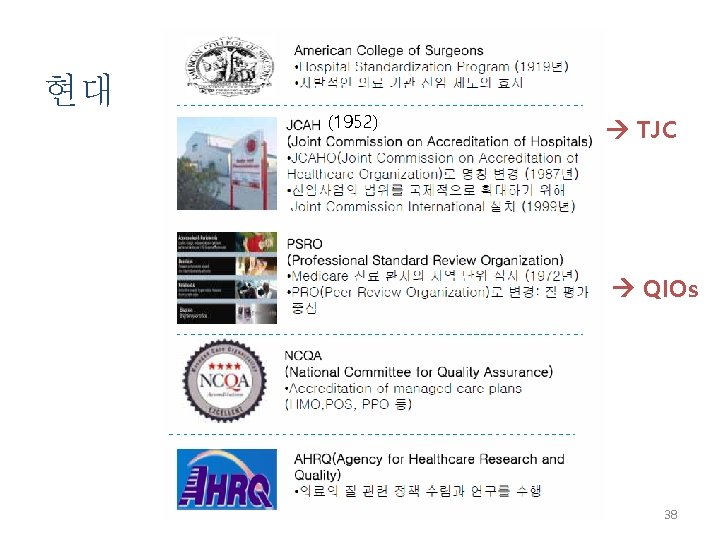
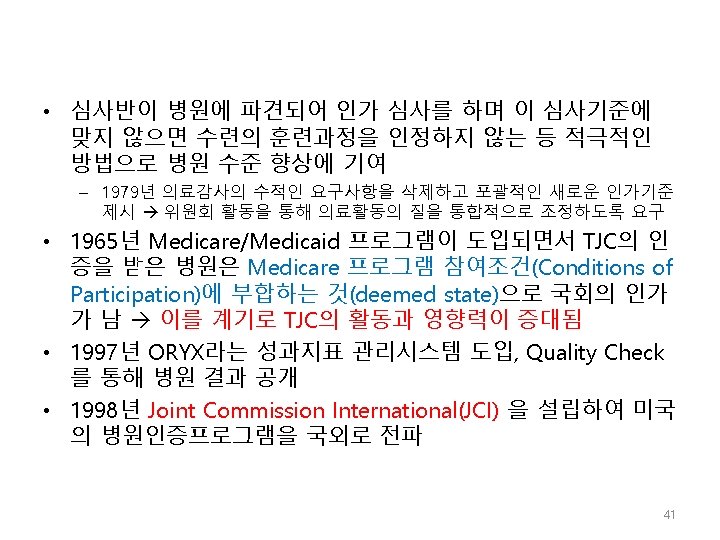
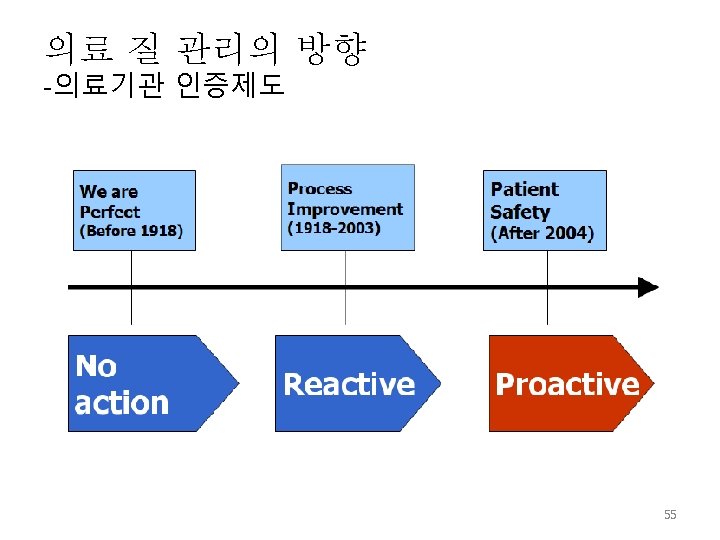
현대 (1952) TJC QIOs 38
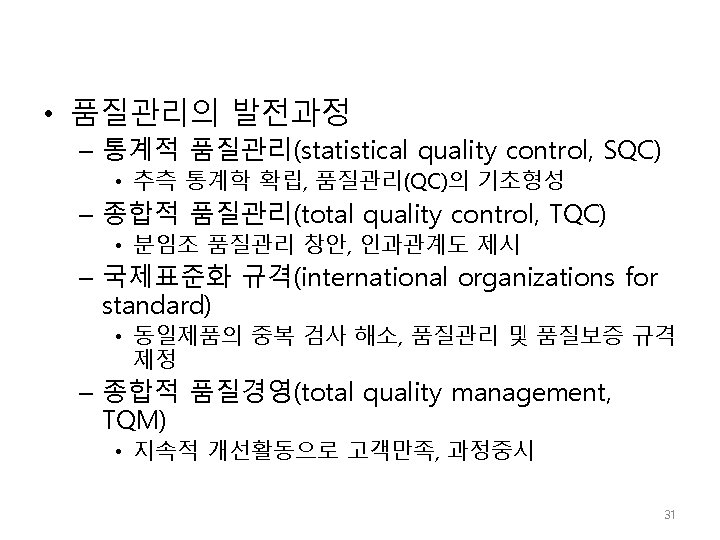
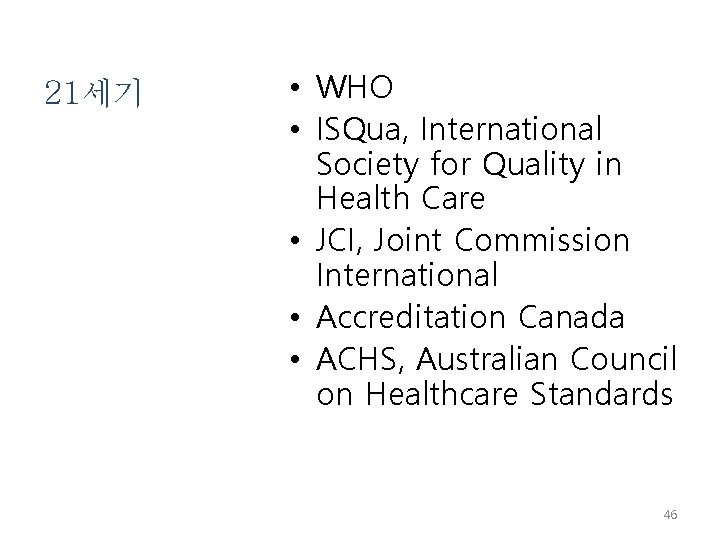
21세기 • WHO • ISQua, International Society for Quality in Health Care • JCI, Joint Commission International • Accreditation Canada • ACHS, Australian Council on Healthcare Standards 46
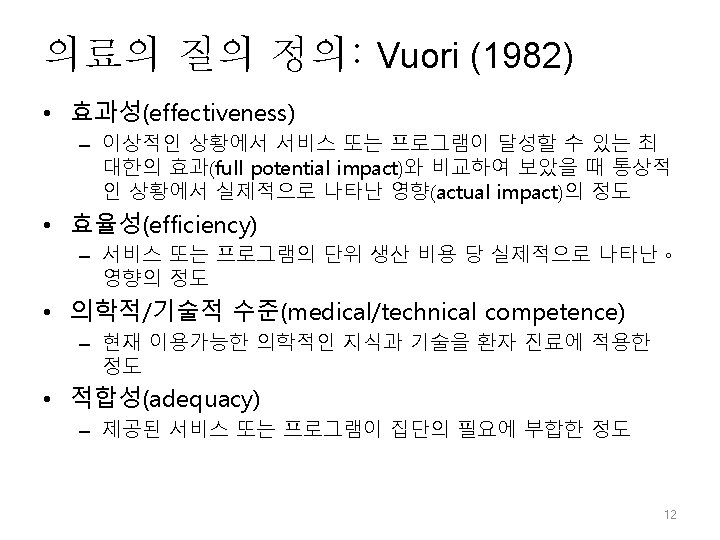
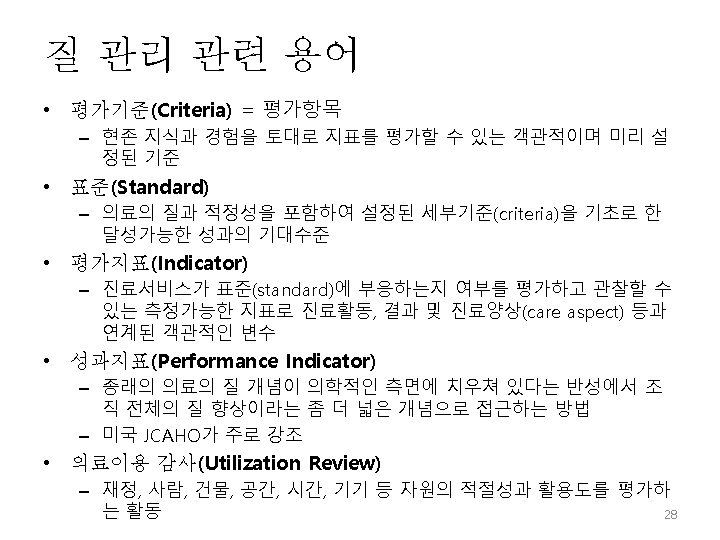
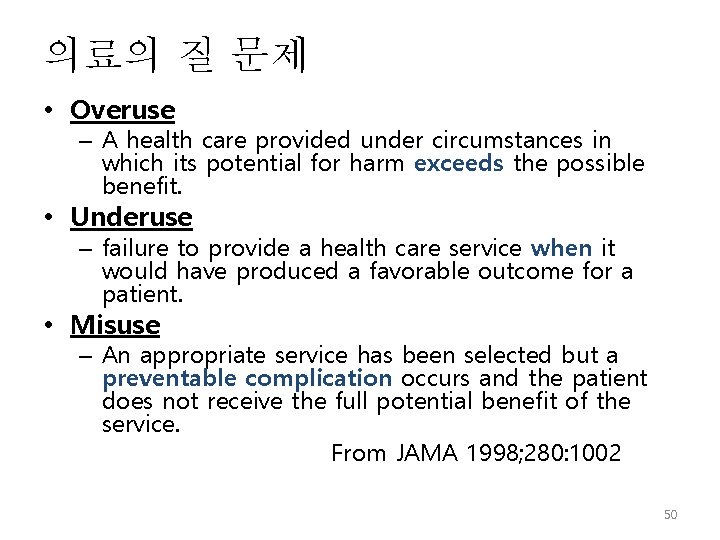
의료의 질 문제 • Overuse – A health care provided under circumstances in which its potential for harm exceeds the possible benefit. • Underuse – failure to provide a health care service when it would have produced a favorable outcome for a patient. • Misuse – An appropriate service has been selected but a preventable complication occurs and the patient does not receive the full potential benefit of the service. From JAMA 1998; 280: 1002 50
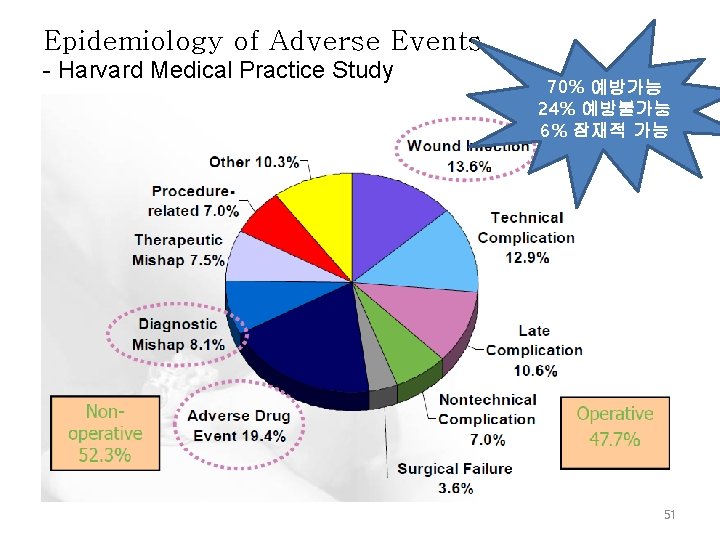
Epidemiology of Adverse Events - Harvard Medical Practice Study 70% 예방가능 24% 예방불가능 6% 잠재적 가능 51
52
53
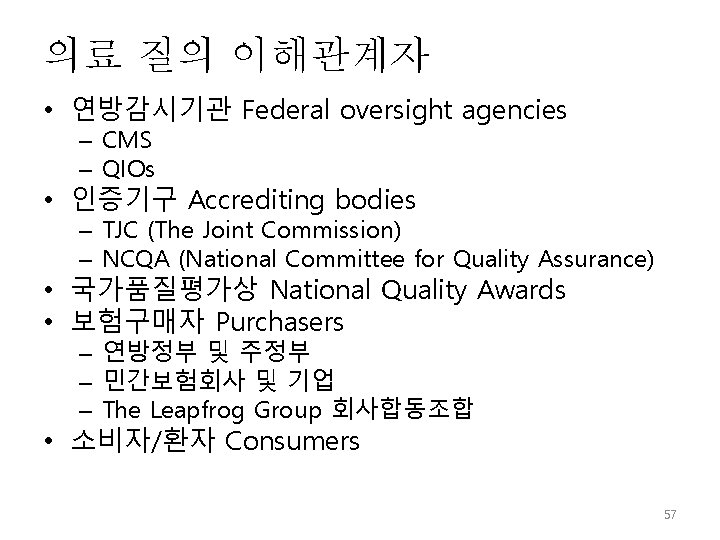
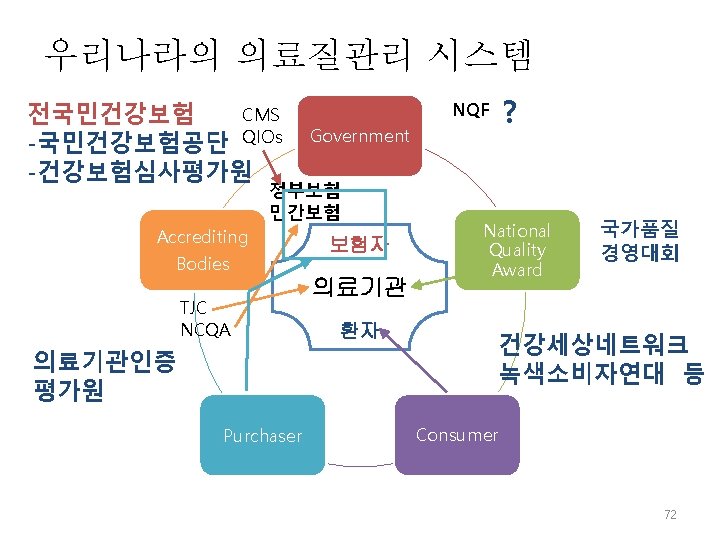
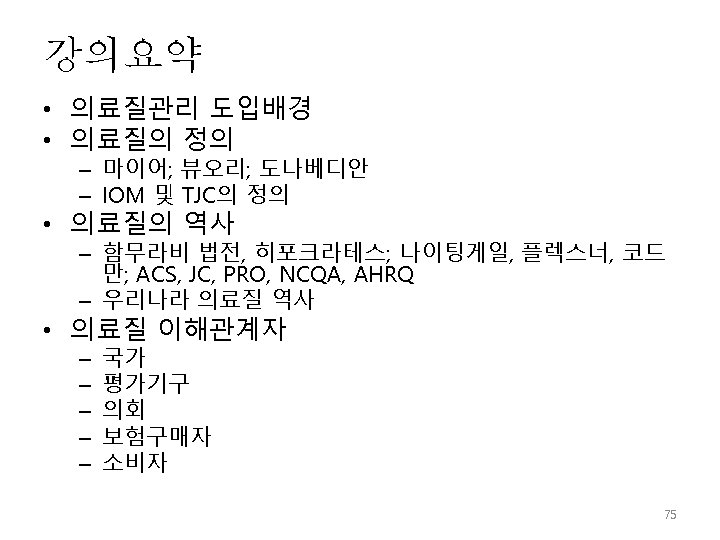
의료 질의 이해관계자 • 연방감시기관 Federal oversight agencies – CMS – QIOs • 인증기구 Accrediting bodies – TJC (The Joint Commission) – NCQA (National Committee for Quality Assurance) • 국가품질평가상 National Quality Awards • 보험구매자 Purchasers – 연방정부 및 주정부 – 민간보험회사 및 기업 – The Leapfrog Group 회사합동조합 • 소비자/환자 Consumers 57
CMS Centers for Medicare & Medicaid Services • Conditions of Participation (Co. Ps) – 의료기관이 국가의료보험 Medicare에 가입하기 위한 조건을 명기해 놓음 [기본적인 의료의 질관리] • 의료기관은 기관전체에 걸쳐 효과적이고 데이터 에 근거한 질 평가 프로그램을 개발, 실행, 유지 관리하여야 함 an effective organization-wide, datadriven quality assessment and performance improvement program • The Federal Register revisions and addenda 58
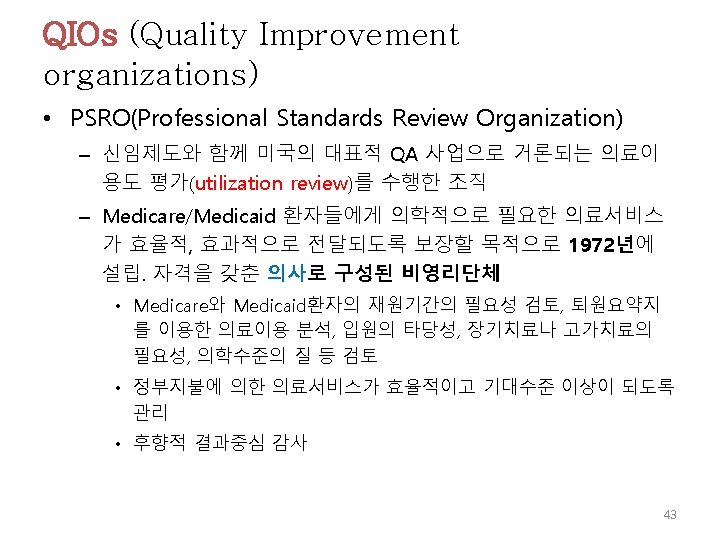
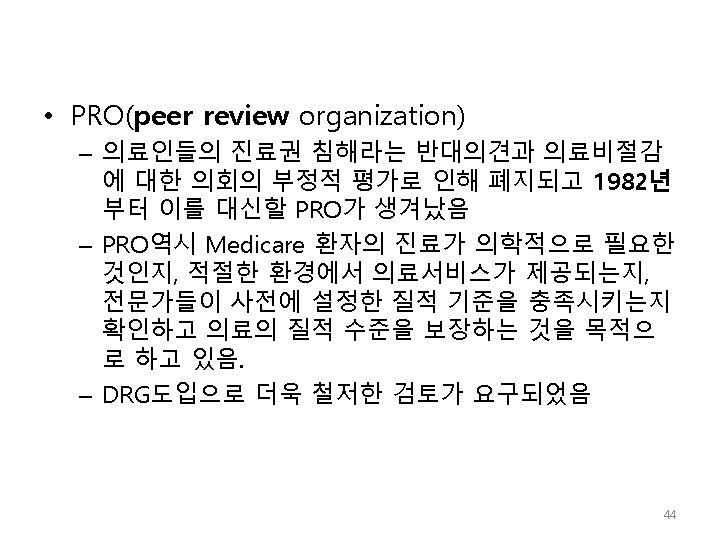
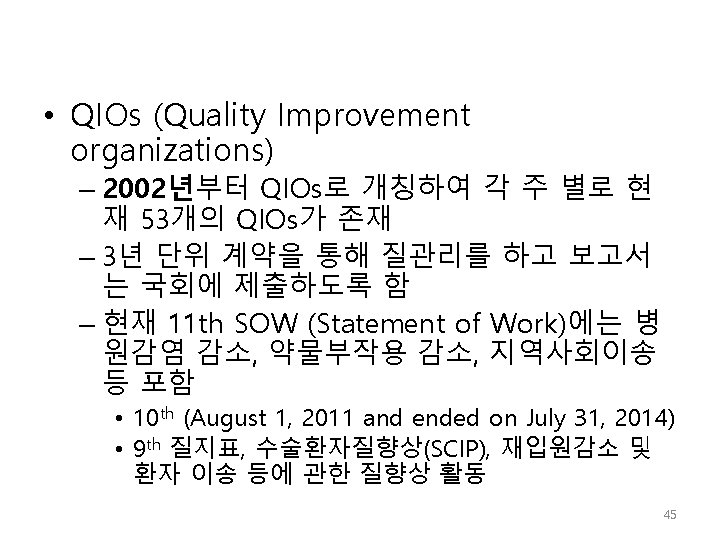
QIOs* Quality Improvement Organization • 연방기구인 CMS가 각 주별로 QIO와 계약을 맺고 주별 로 질 향상 활동을 활성화시킴 • 민간 비영리 기관으로 3년 단위 계약 – 보고서는 국회에 제출하도록 함 • 계약서 SOW (Statements of Work): 10 th SOW (2011. 82014. 7) – Reduce Healthcare-Associated Infections (HAIs) in Hospitals – Reduce Healthcare-Acquired Conditions (HACs) in Nursing Homes – Reducing Adverse Drug Events (ADE) – Community-Based Care Transitions Program 59
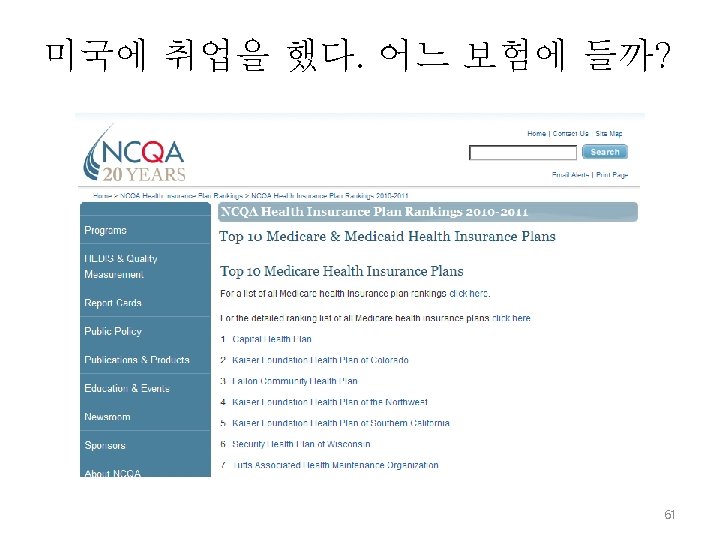
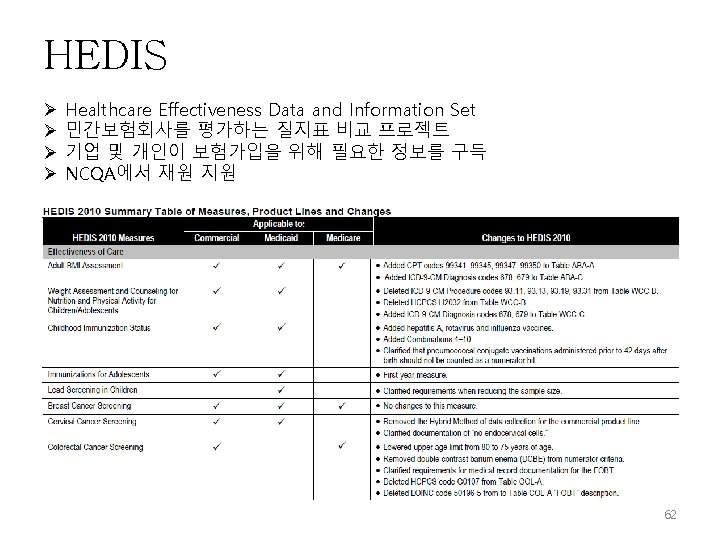
인증기구 Accrediting bodies • 많은 의료기관들이 병원인증프로그램accreditation programs에 자발적으로 참여하고 있음 *Accreditation is a credential given to an organization that meets a defined set of standards • The Joint Commission (1953) 의료기관 인증 – 비영리 민간기구 – 의료질/환자안전에 대한 교육, 평가, 컨설팅 – CORE measure data: AMI, heart failure, CAP, pregnancy and related conditions • NCQA National Committee for Quality Assurance (1991) 보험회사Health (Insurance) Plans 인증 – 비영리 민간기구 – HMO(Health maintenance organization)~PPO(preferred provider organization) – 미국민의 70%가 NCQA에서 인증한 민간보험에 가입 60
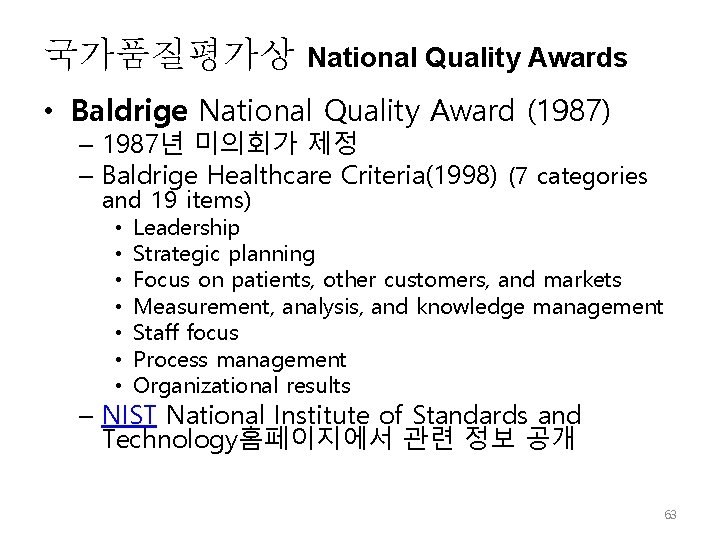
국가품질평가상 National Quality Awards • Baldrige National Quality Award (1987) – 1987년 미의회가 제정 – Baldrige Healthcare Criteria(1998) (7 categories and 19 items) • • Leadership Strategic planning Focus on patients, other customers, and markets Measurement, analysis, and knowledge management Staff focus Process management Organizational results – NIST National Institute of Standards and Technology홈페이지에서 관련 정보 공개 63
• American Health Care Association’s Quality Award long-term care facilities • American Hospital Association’s Quest for Quality Prize 64
보험구매자 • 정부 Purchasers Federal and state governments – 의료의 질을 COP와 주정부 규정state health department regulations에 따라 관리 • 보험회사/기업 & Employers Private health insurance companies – 의료비용의 상승에 따라 환자안전과 질향상에 대한 관심과 역할이 확대됨 – Leapfrog Group(1998) – a collaboration of large employers 회사협동조합 65
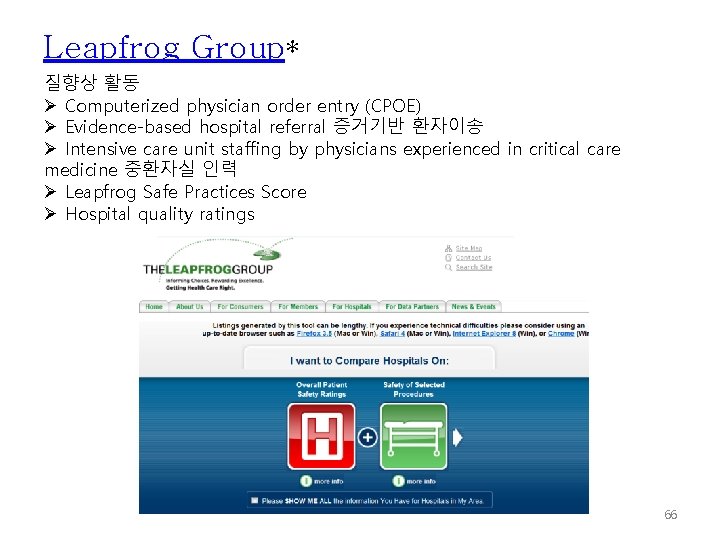
Leapfrog Group* 질향상 활동 Ø Computerized physician order entry (CPOE) Ø Evidence-based hospital referral 증거기반 환자이송 Ø Intensive care unit staffing by physicians experienced in critical care medicine 중환자실 인력 Ø Leapfrog Safe Practices Score Ø Hospital quality ratings 66
Pay for Performance (P 4 P) • 의료기관이 특정 의료질 및 환자안전 목표 성취도에 따라 재정적 보상을 받는 제도 • 원칙 – 1) 공통질지표common performance measures를 평가: 환자만족도, 예방, 장기치료환자관리 long-term care management – 2) 성과에 근거한 재정적 보상 significant health plan financial payments on the basis of performance 67
Never events (2008) • 예방 가능한, 고비용․다빈도, 추가적인 비용을 발생하게 만드 는 사건 또는 질환 • 2008년부터 CMS에서는 입원환자에 대해 'Never events' 비율 이 높은 의료기관에 대해서는 ‘진료비 보상’을 하지 않음 ① ② ③ ④ ⑤ ⑥ ⑦ ⑧ Foreign object retained after surgery 수술 후 이물질 잔존 Air embolism 공기색전증 Blood incompatibility 수혈 부적합 Stage III and IV pressure ulcers 욕창 Injury following falls and other trauma 낙상 Catheter-associated urinary tract infection 카테터 비뇨기감염 Vascular catheter-associated infection 혈관 카테터 감염 Surgical site infections after coronary artery bypass graft, certain orthopedic procedures, and bariatric surgeries 수술감염 ⑨ Certain manifestations of poor control of blood sugar levels 혈당관리실패 ⑩ Deep vein thrombosis or pulmonary embolism following total knee replacement and hip replacement 심부정맥혈전 /폐색전 68
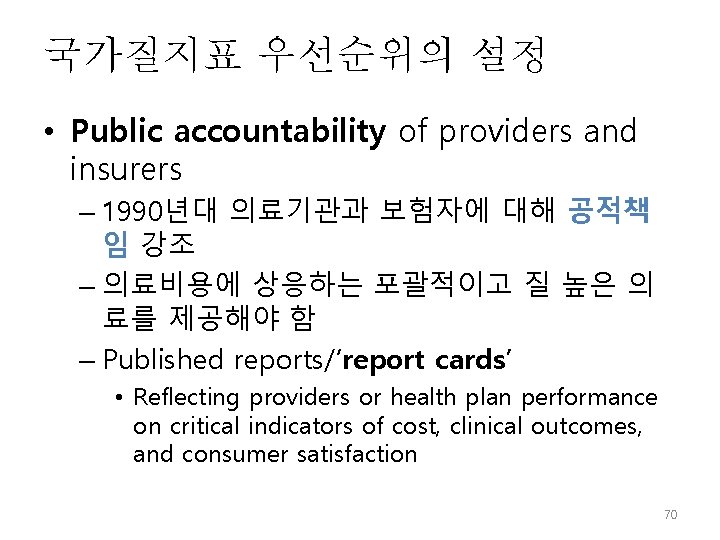
국가질지표 우선순위의 설정 • Public accountability of providers and insurers – 1990년대 의료기관과 보험자에 대해 공적책 임 강조 – 의료비용에 상응하는 포괄적이고 질 높은 의 료를 제공해야 함 – Published reports/’report cards’ • Reflecting providers or health plan performance on critical indicators of cost, clinical outcomes, and consumer satisfaction 70
References • 권영대. 의료의 질관리. 크레듀, 2006. • Abdelhak M, Grostick S, Hanken MA, Jacobs E. Health Information: Management of a strategic resource. fourth edition. Philadelphia: Saunders; 2011. • 김윤. 의료질 관리의 이해. 서울대학교 의 과대학 의료관리학교실(대학원 강의록). 2008. 77