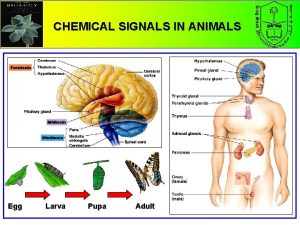
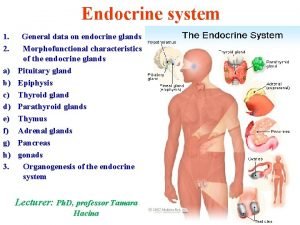
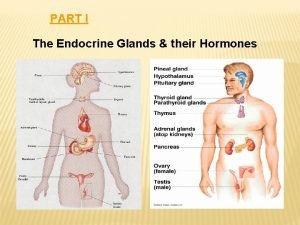
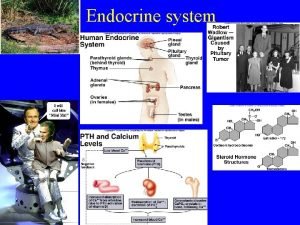
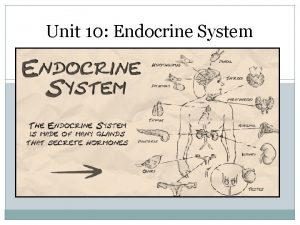
What is the endocrine system thyroid adrenal glands













- Slides: 60
What is the endocrine system?
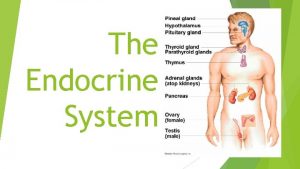
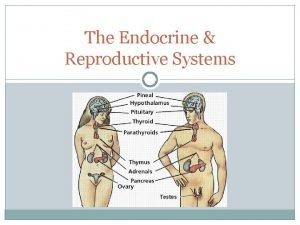
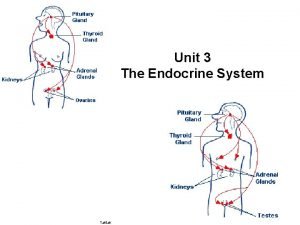
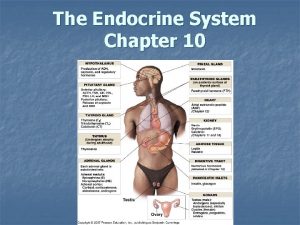
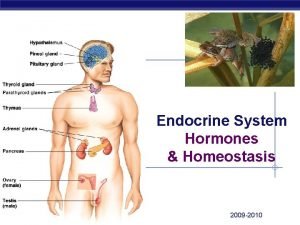
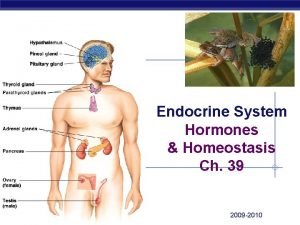
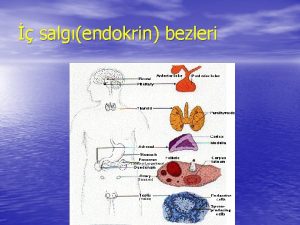
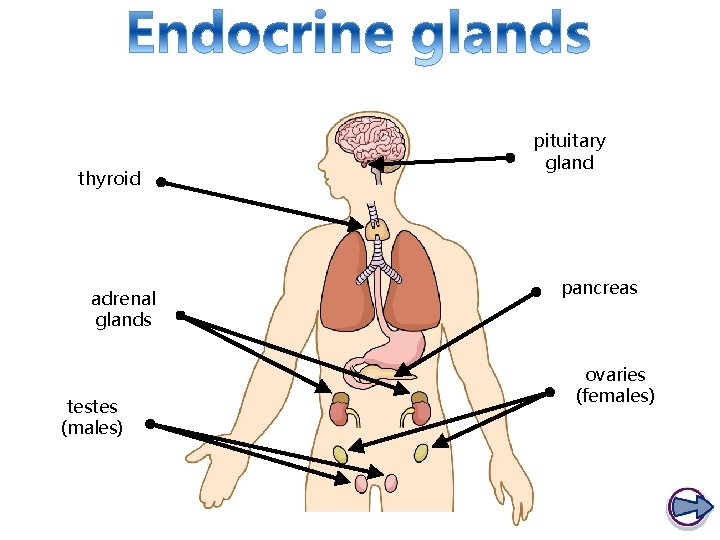
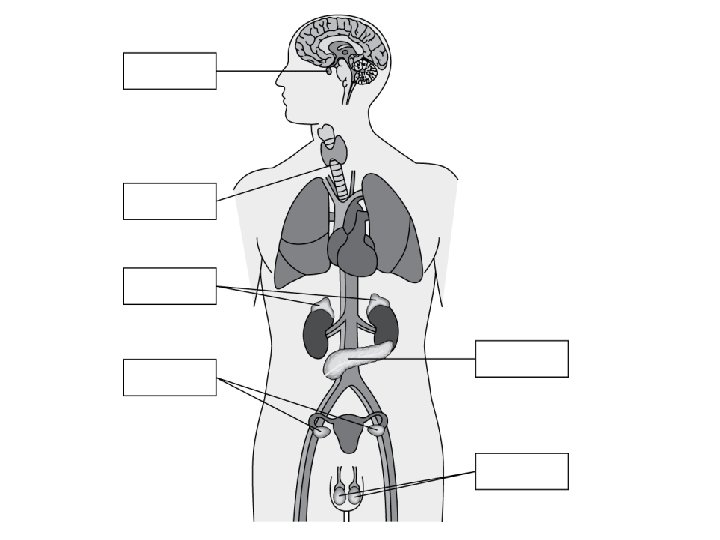
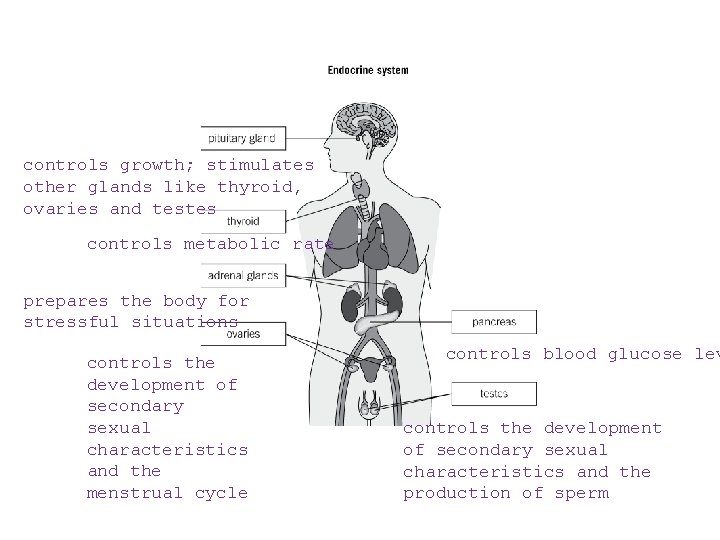
thyroid adrenal glands testes (males) pituitary gland pancreas ovaries (females)
controls growth; stimulates other glands like thyroid, ovaries and testes controls metabolic rate prepares the body for stressful situations controls the development of secondary sexual characteristics and the menstrual cycle controls blood glucose lev controls the development of secondary sexual characteristics and the production of sperm
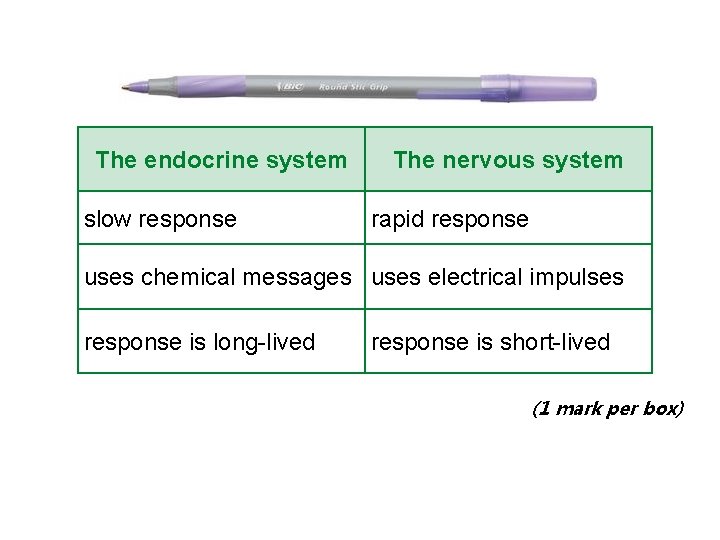
The endocrine system slow response The nervous system rapid response uses chemical messages uses electrical impulses response is long-lived response is short-lived (1 mark per box)
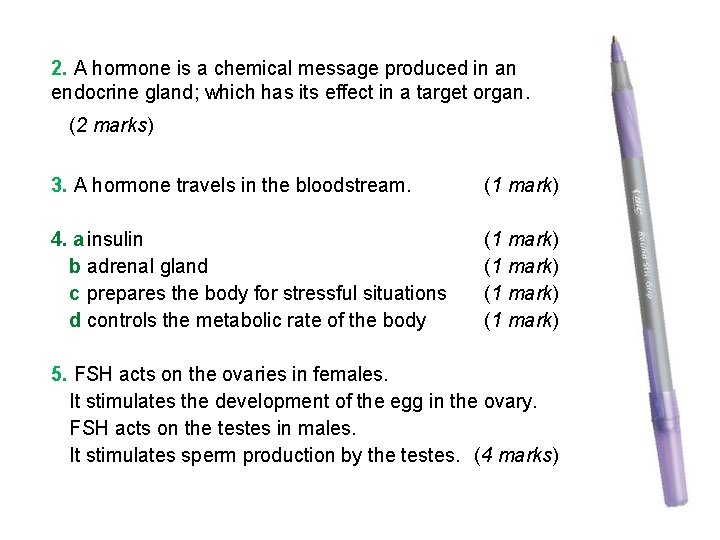
2. A hormone is a chemical message produced in an endocrine gland; which has its effect in a target organ. (2 marks) 3. A hormone travels in the bloodstream. (1 mark) 4. a insulin b adrenal gland c prepares the body for stressful situations d controls the metabolic rate of the body (1 mark) 5. FSH acts on the ovaries in females. It stimulates the development of the egg in the ovary. FSH acts on the testes in males. It stimulates sperm production by the testes. (4 marks)
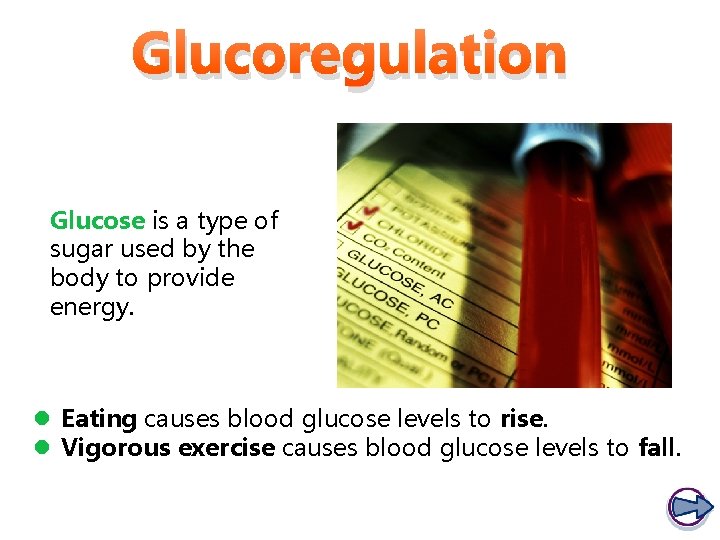
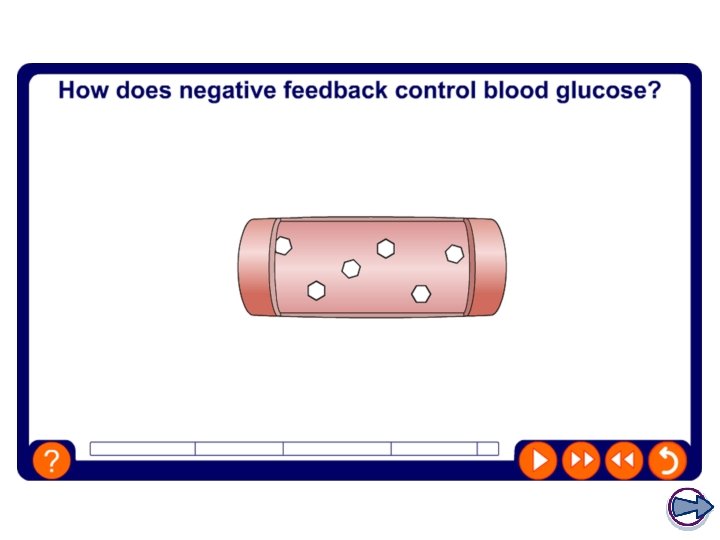
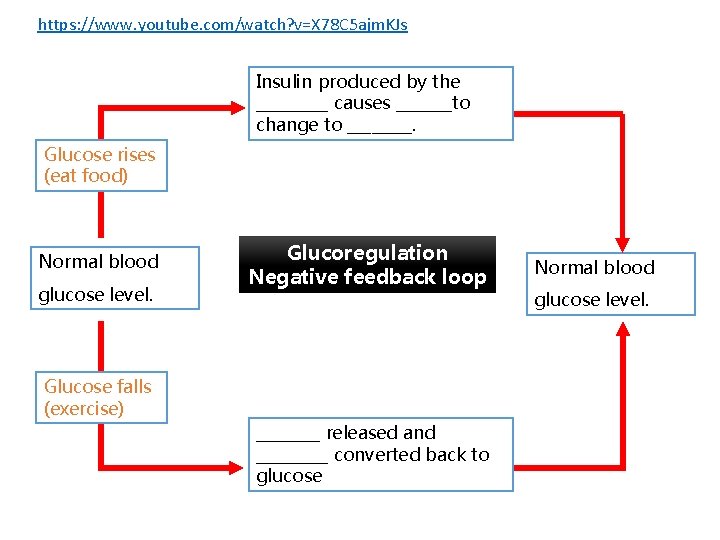
Glucoregulation Glucose is a type of sugar used by the body to provide energy. l Eating causes blood glucose levels to rise. l Vigorous exercise causes blood glucose levels to fall.
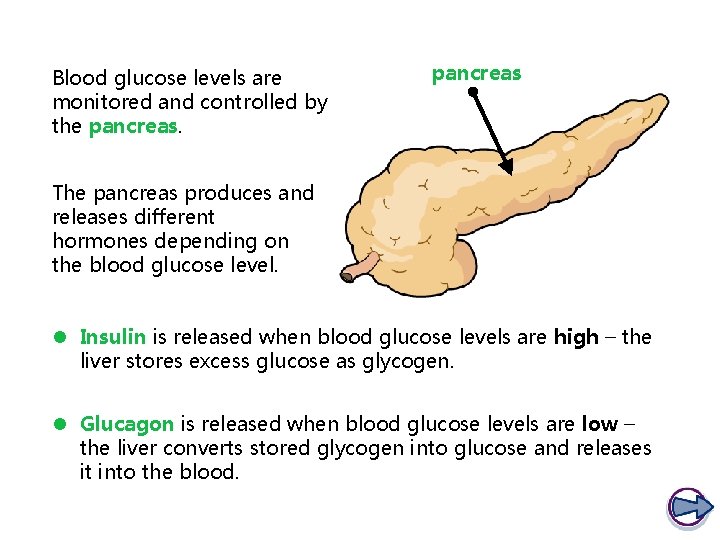
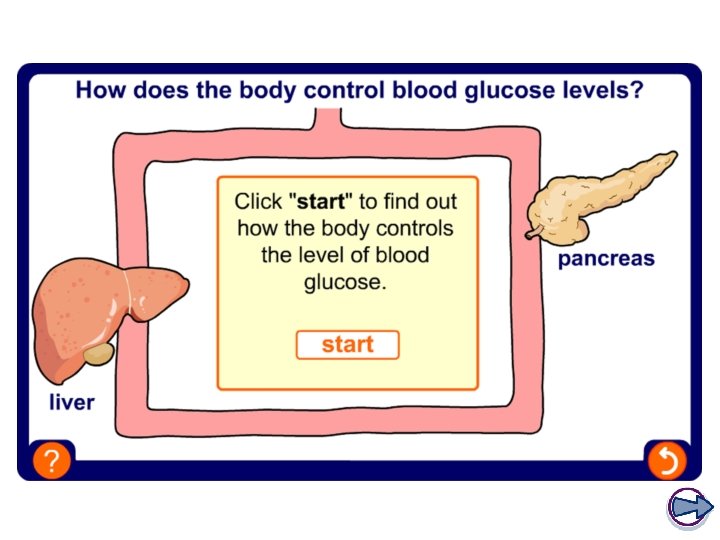
Blood glucose levels are monitored and controlled by the pancreas The pancreas produces and releases different hormones depending on the blood glucose level. l Insulin is released when blood glucose levels are high – the liver stores excess glucose as glycogen. l Glucagon is released when blood glucose levels are low – the liver converts stored glycogen into glucose and releases it into the blood.
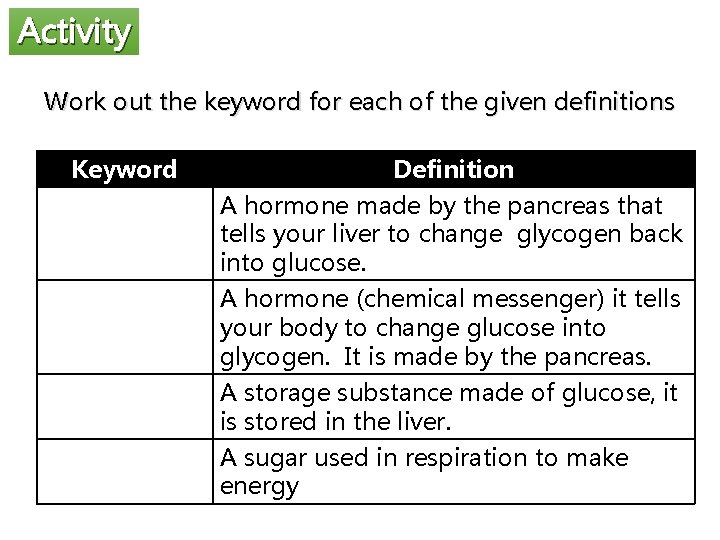
Activity Work out the keyword for each of the given definitions Keyword Definition A hormone made by the pancreas that tells your liver to change glycogen back into glucose. A hormone (chemical messenger) it tells your body to change glucose into glycogen. It is made by the pancreas. A storage substance made of glucose, it is stored in the liver. A sugar used in respiration to make energy
https: //www. youtube. com/watch? v=X 78 C 5 ajm. KJs Insulin produced by the _____ causes _______to change to ____. Glucose rises (eat food) Normal blood glucose level. Glucoregulation Negative feedback loop Glucose falls (exercise) ____ released and _____ converted back to glucose Normal blood glucose level.
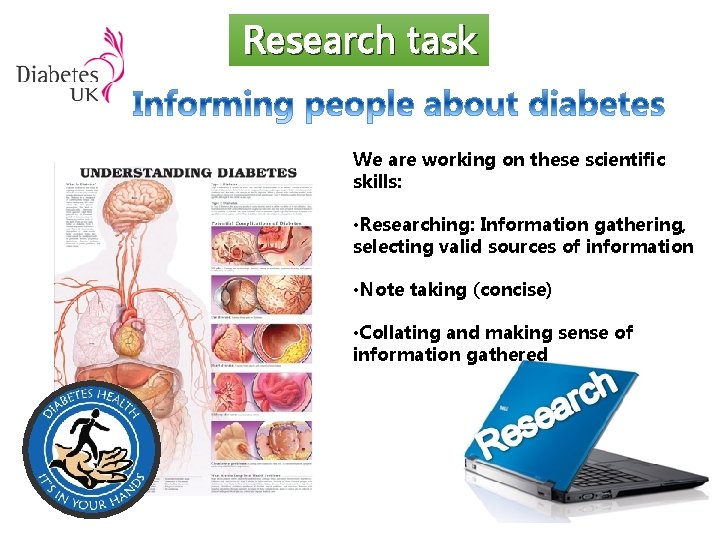
Research task We are working on these scientific skills: • Researching: Information gathering, selecting valid sources of information • Note taking (concise) • Collating and making sense of information gathered
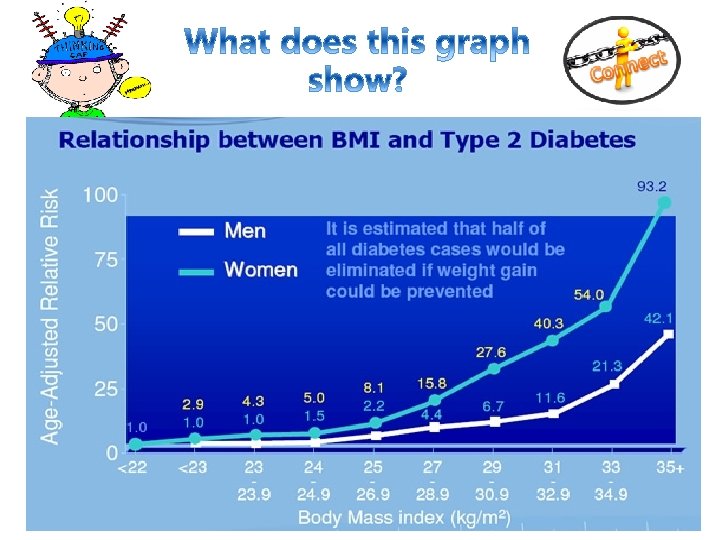
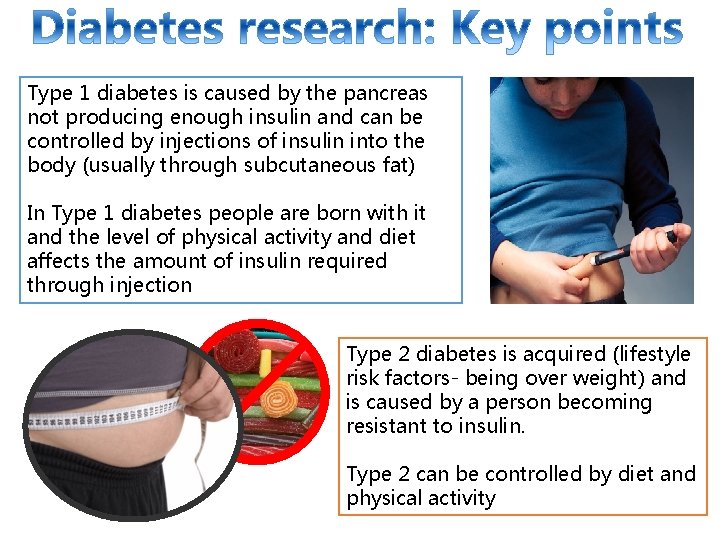
Type 1 diabetes is caused by the pancreas not producing enough insulin and can be controlled by injections of insulin into the body (usually through subcutaneous fat) In Type 1 diabetes people are born with it and the level of physical activity and diet affects the amount of insulin required through injection Type 2 diabetes is acquired (lifestyle risk factors- being over weight) and is caused by a person becoming resistant to insulin. Type 2 can be controlled by diet and physical activity
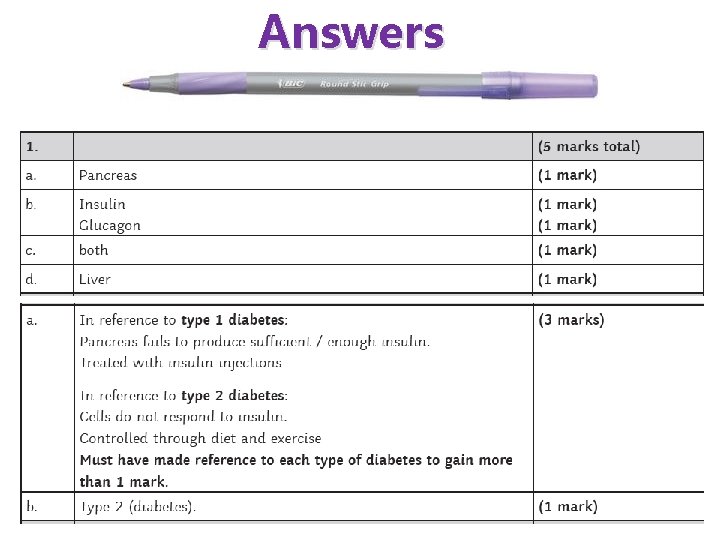
Answers
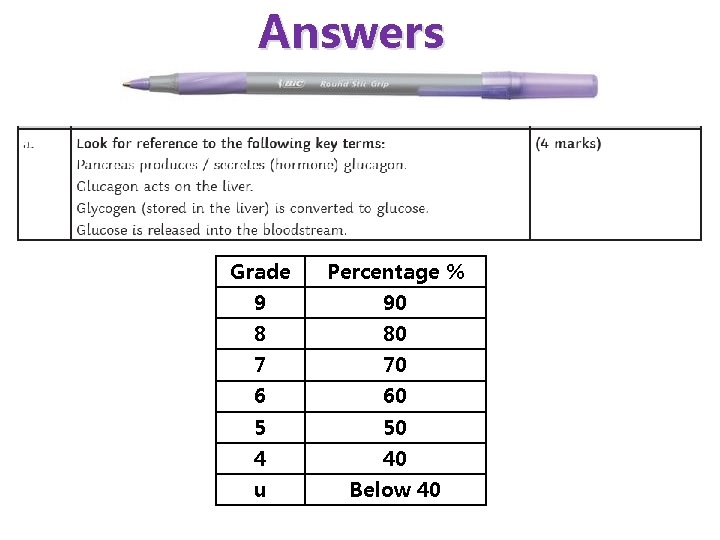
Answers Grade Percentage % 9 90 8 80 7 70 6 60 5 50 4 40 u Below 40
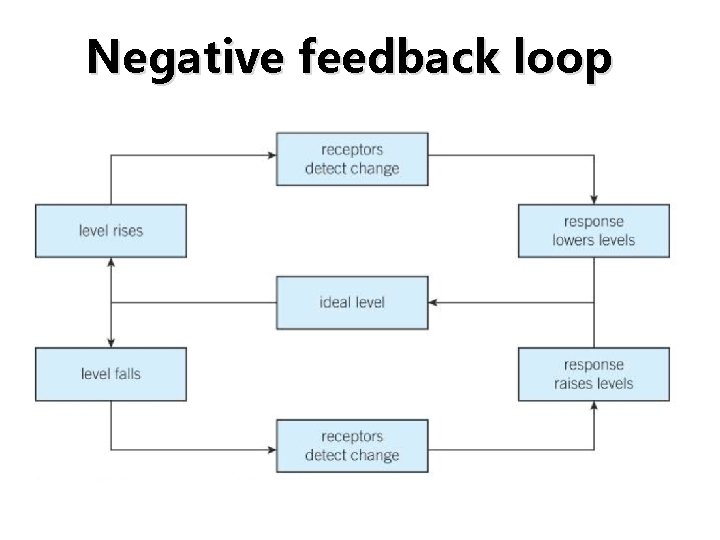
Negative feedback loop
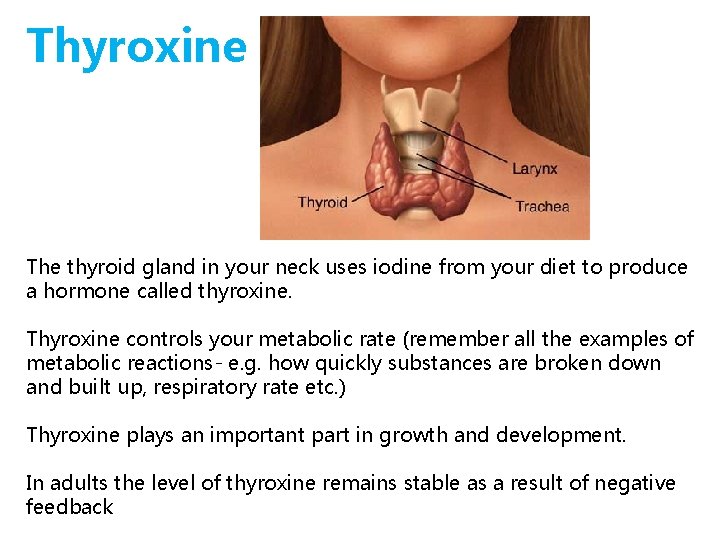
Thyroxine The thyroid gland in your neck uses iodine from your diet to produce a hormone called thyroxine. Thyroxine controls your metabolic rate (remember all the examples of metabolic reactions- e. g. how quickly substances are broken down and built up, respiratory rate etc. ) Thyroxine plays an important part in growth and development. In adults the level of thyroxine remains stable as a result of negative feedback
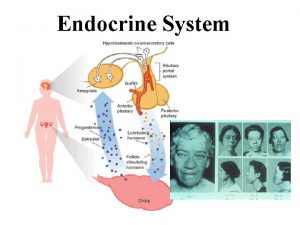
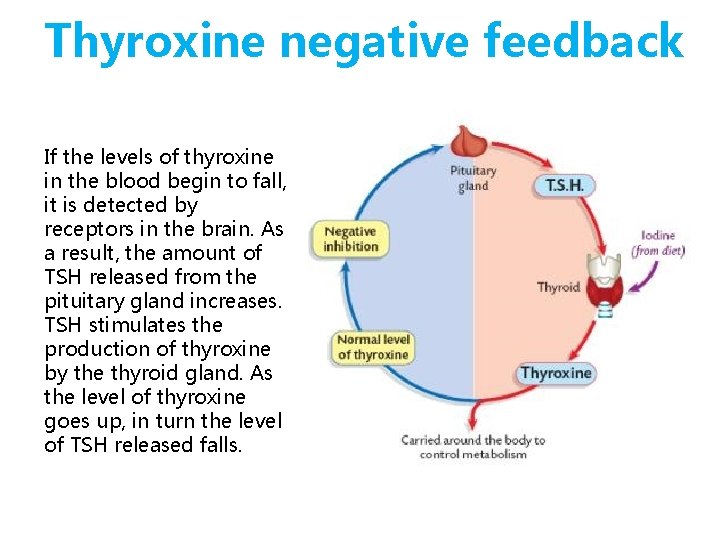
Thyroxine negative feedback If the levels of thyroxine in the blood begin to fall, it is detected by receptors in the brain. As a result, the amount of TSH released from the pituitary gland increases. TSH stimulates the production of thyroxine by the thyroid gland. As the level of thyroxine goes up, in turn the level of TSH released falls.
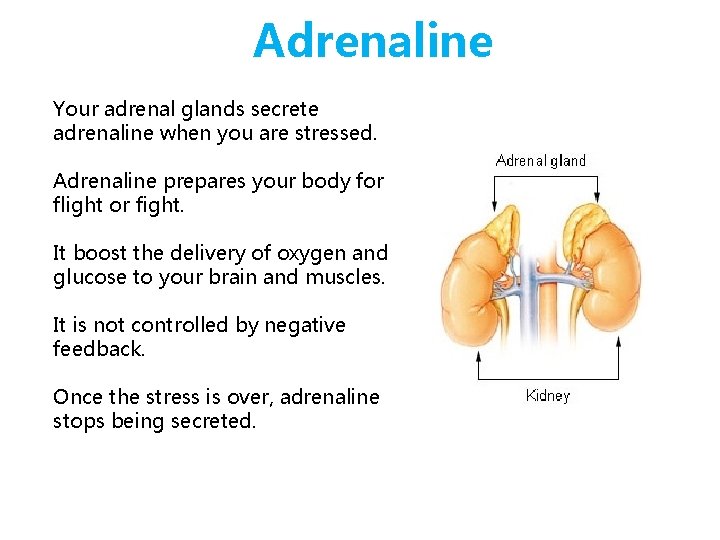
Adrenaline Your adrenal glands secrete adrenaline when you are stressed. Adrenaline prepares your body for flight or fight. It boost the delivery of oxygen and glucose to your brain and muscles. It is not controlled by negative feedback. Once the stress is over, adrenaline stops being secreted.
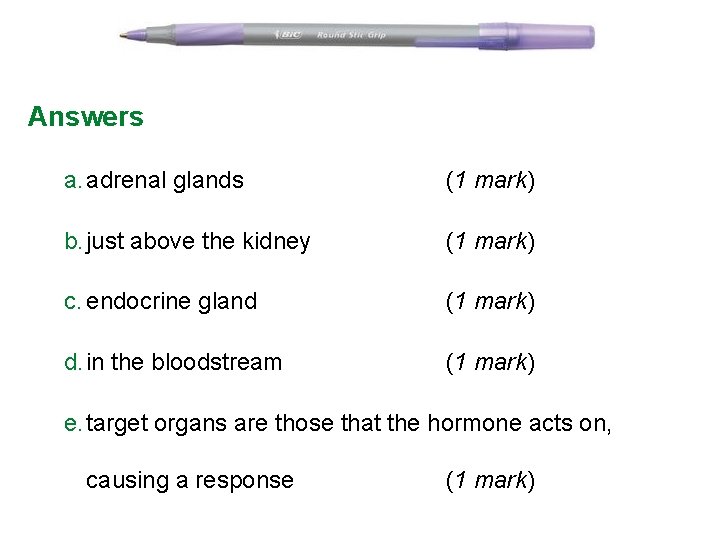
Change occurring in the body How this change helps us deal with a stressful situation Increases heart rate To circulate blood to vital organs. This will take oxygen and glucose to the muscles faster, to release energy to run or fight. Increases breathing rate To increase ventilation rate. This will increase the uptake of oxygen, and remove carbon dioxide. This allows us to release energy faster to run or fight. Stored glycogen in the The glucose is taken to the muscles and used in respiration to liver is converted to release more energy for movement. glucose and released into the blood Pupils dilate This allows more light to enter the eye, improving vision. More oxygen and glucose Increases mental awareness. This helps us to think faster and goes to the brain respond quicker. Blood is diverted away Digestion is stopped as it is not important during stress. The from the digestive system skeletal muscles have a better supply of blood to run or fight. to the big skeletal muscles
Answers a. adrenal glands (1 mark) b. just above the kidney (1 mark) c. endocrine gland (1 mark) d. in the bloodstream (1 mark) e. target organs are those that the hormone acts on, causing a response (1 mark)
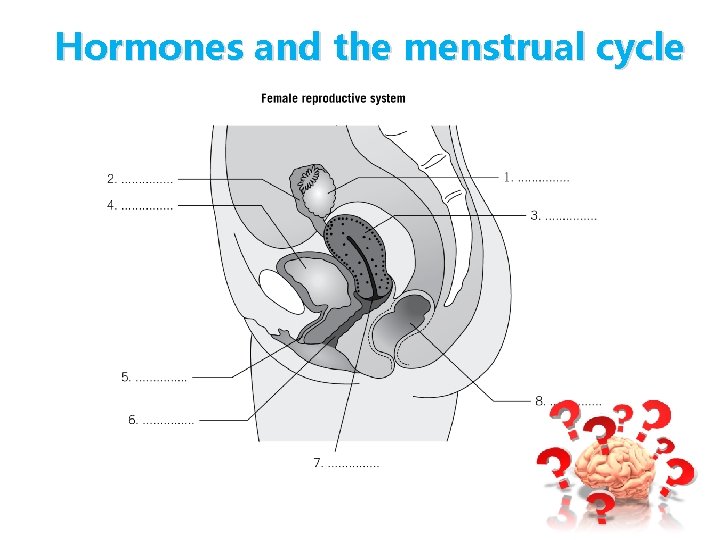
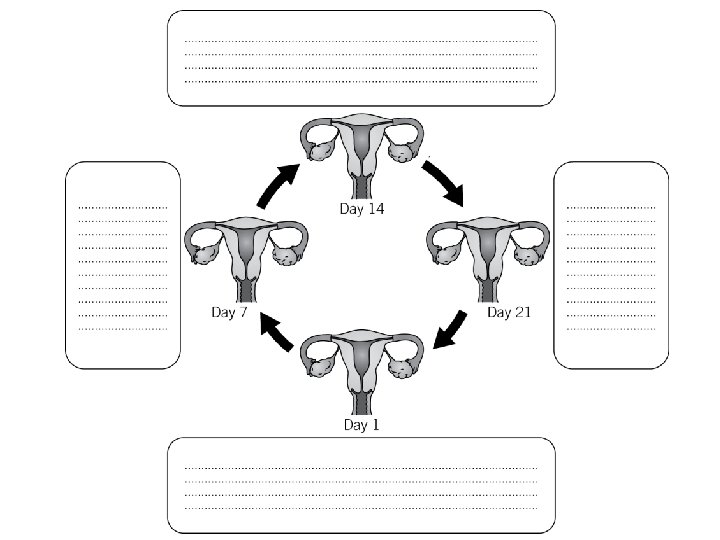
Hormones and the menstrual cycle
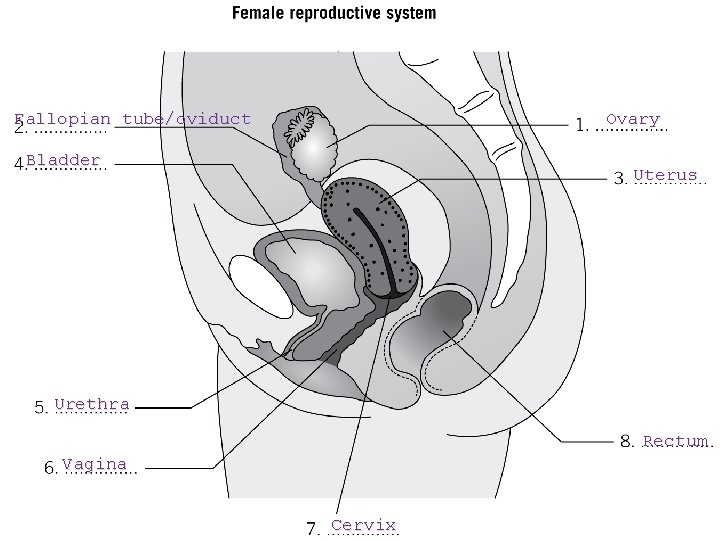
Fallopian tube/oviduct Ovary Bladder Uterus Urethra Rectum Vagina Cervix
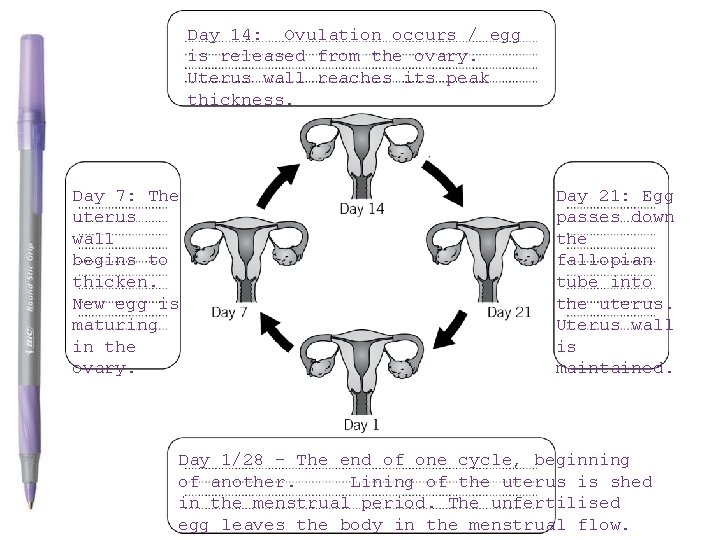
Day 14: Ovulation occurs / egg is released from the ovary. Uterus wall reaches its peak thickness. Day 7: The uterus wall begins to thicken. New egg is maturing in the ovary. Day 21: Egg passes down the fallopian tube into the uterus. Uterus wall is maintained. Day 1/28 – The end of one cycle, beginning of another. Lining of the uterus is shed in the menstrual period. The unfertilised egg leaves the body in the menstrual flow.
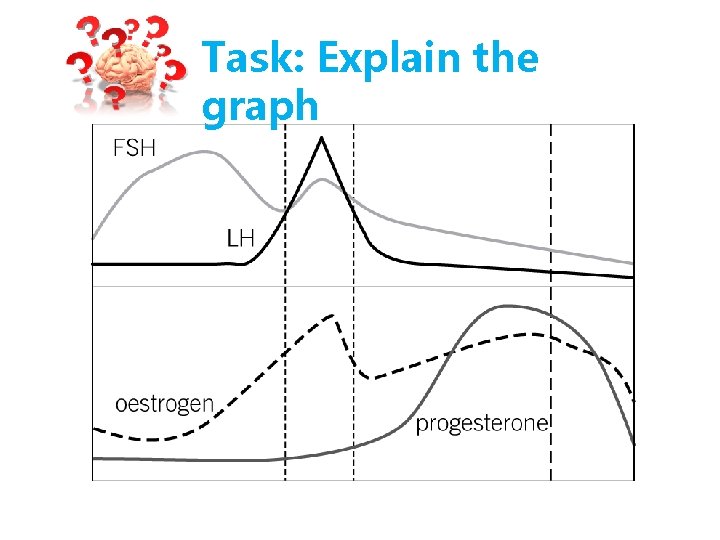
Task: Explain the graph
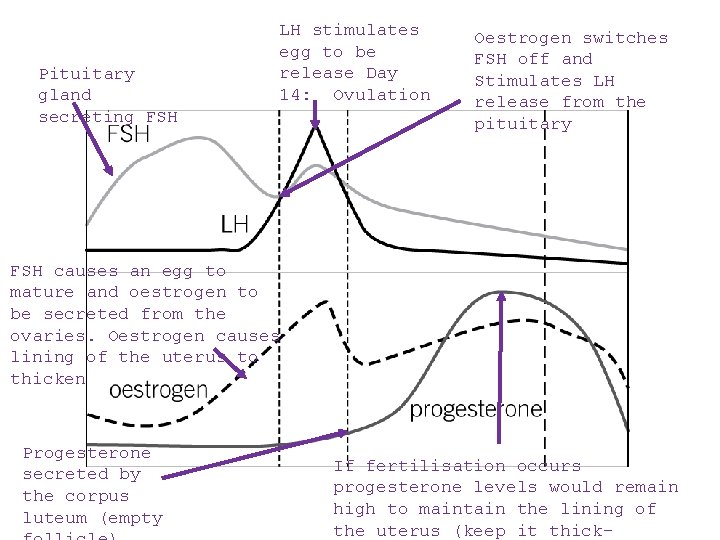
Pituitary gland secreting FSH LH stimulates egg to be release Day 14: Ovulation Oestrogen switches FSH off and Stimulates LH release from the pituitary FSH causes an egg to mature and oestrogen to be secreted from the ovaries. Oestrogen causes lining of the uterus to thicken Progesterone secreted by the corpus luteum (empty If fertilisation occurs progesterone levels would remain high to maintain the lining of the uterus (keep it thick-
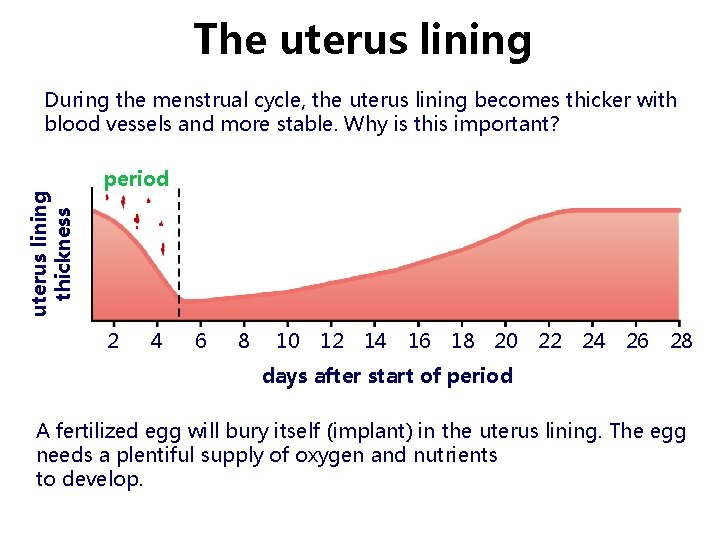
The uterus lining thickness During the menstrual cycle, the uterus lining becomes thicker with blood vessels and more stable. Why is this important? period 2 4 6 8 10 12 14 16 18 20 22 24 26 28 days after start of period A fertilized egg will bury itself (implant) in the uterus lining. The egg needs a plentiful supply of oxygen and nutrients to develop.
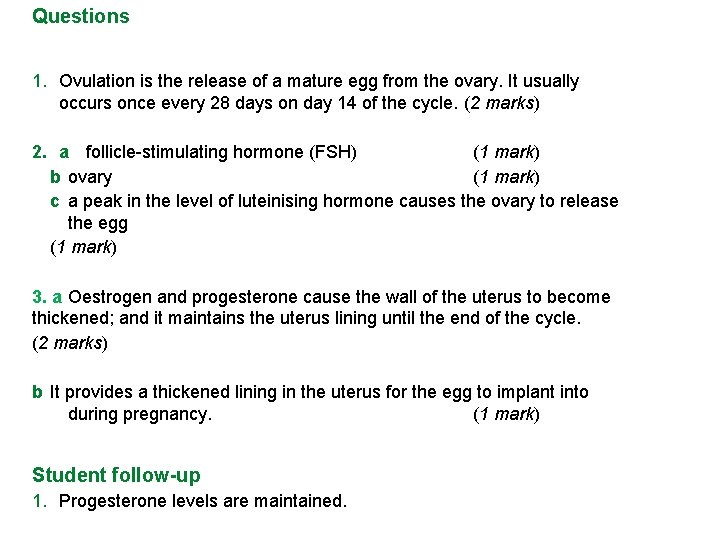
Questions 1. Ovulation is the release of a mature egg from the ovary. It usually occurs once every 28 days on day 14 of the cycle. (2 marks) 2. a follicle-stimulating hormone (FSH) (1 mark) b ovary (1 mark) c a peak in the level of luteinising hormone causes the ovary to release the egg (1 mark) 3. a Oestrogen and progesterone cause the wall of the uterus to become thickened; and it maintains the uterus lining until the end of the cycle. (2 marks) b It provides a thickened lining in the uterus for the egg to implant into during pregnancy. (1 mark) Student follow-up 1. Progesterone levels are maintained.
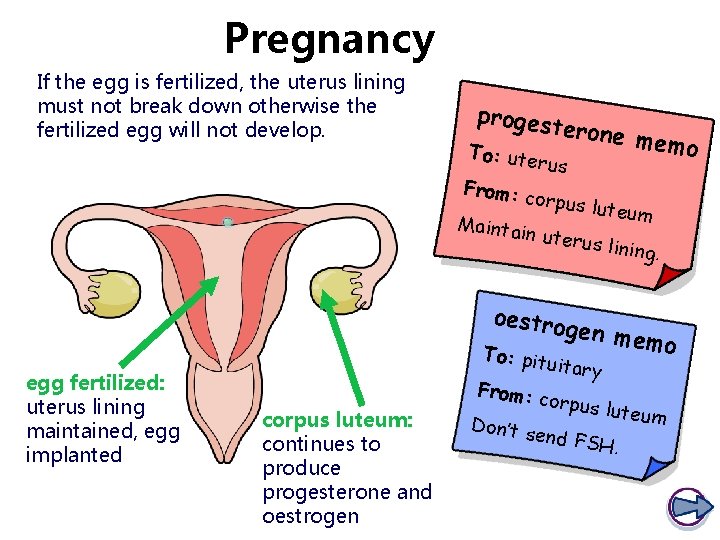
Pregnancy If the egg is fertilized, the uterus lining must not break down otherwise the fertilized egg will not develop. progest erone m emo To: ute From: c rus orpus lu teum Maintai n uteru s lining. oestrog egg fertilized: uterus lining maintained, egg implanted To: pit en mem o uitary corpus luteum: continues to produce progesterone and oestrogen From: c o Don’t s rpus lut end FS H. eum
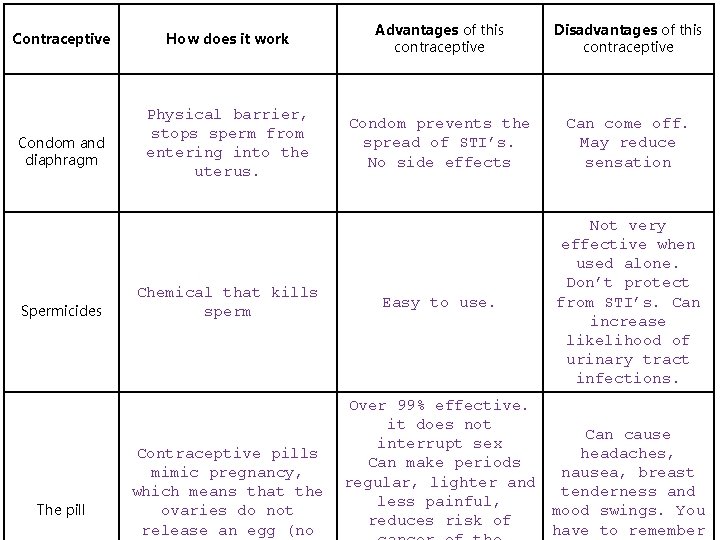
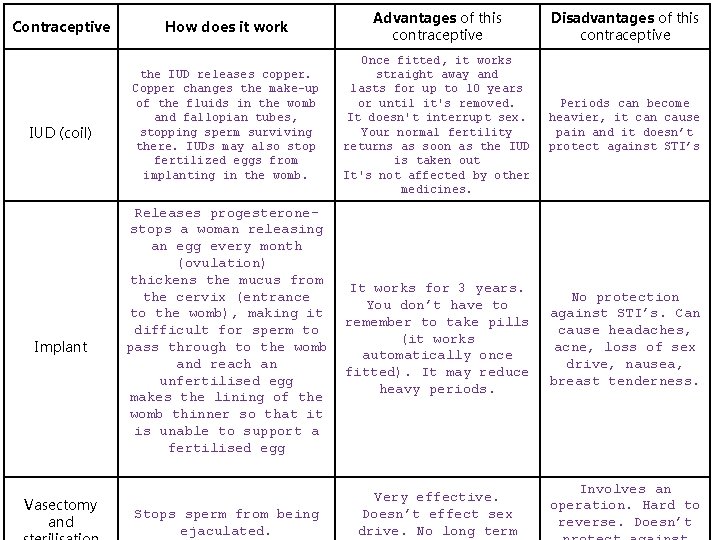
Contraceptive Condom and diaphragm Spermicides The pill How does it work Advantages of this contraceptive Disadvantages of this contraceptive Physical barrier, stops sperm from entering into the uterus. Condom prevents the spread of STI’s. No side effects Can come off. May reduce sensation Easy to use. Not very effective when used alone. Don’t protect from STI’s. Can increase likelihood of urinary tract infections. Chemical that kills sperm Contraceptive pills mimic pregnancy, which means that the ovaries do not release an egg (no Over 99% effective. it does not Can cause interrupt sex headaches, Can make periods nausea, breast regular, lighter and tenderness and less painful, mood swings. You reduces risk of have to remember
Contraceptive IUD (coil) Implant Vasectomy and How does it work Advantages of this contraceptive Disadvantages of this contraceptive the IUD releases copper. Copper changes the make-up of the fluids in the womb and fallopian tubes, stopping sperm surviving there. IUDs may also stop fertilized eggs from implanting in the womb. Once fitted, it works straight away and lasts for up to 10 years or until it's removed. It doesn't interrupt sex. Your normal fertility returns as soon as the IUD is taken out It's not affected by other medicines. Periods can become heavier, it can cause pain and it doesn’t protect against STI’s It works for 3 years. You don’t have to remember to take pills (it works automatically once fitted). It may reduce heavy periods. No protection against STI’s. Can cause headaches, acne, loss of sex drive, nausea, breast tenderness. Releases progesteronestops a woman releasing an egg every month (ovulation) thickens the mucus from the cervix (entrance to the womb), making it difficult for sperm to pass through to the womb and reach an unfertilised egg makes the lining of the womb thinner so that it is unable to support a fertilised egg Stops sperm from being ejaculated. Very effective. Doesn’t effect sex drive. No long term Involves an operation. Hard to reverse. Doesn’t
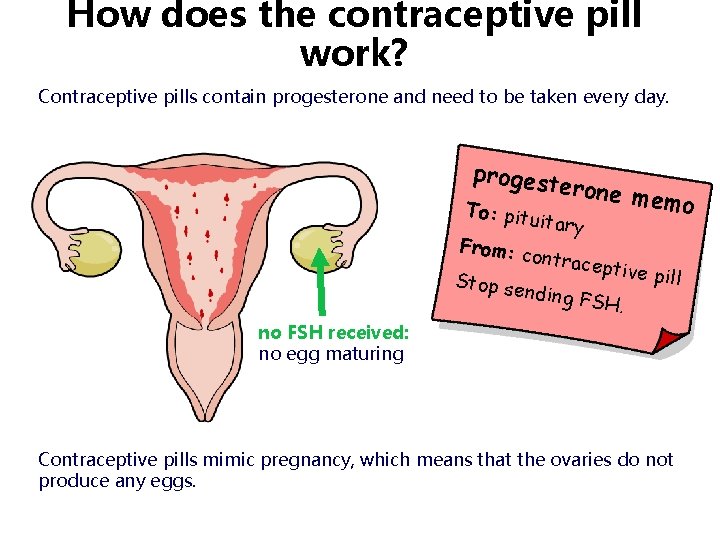
How does the contraceptive pill work? Contraceptive pills contain progesterone and need to be taken every day. progest To: pitu itary From: c Stop se erone m emo ontrace p nding F tive pill SH. no FSH received: no egg maturing Contraceptive pills mimic pregnancy, which means that the ovaries do not produce any eggs.
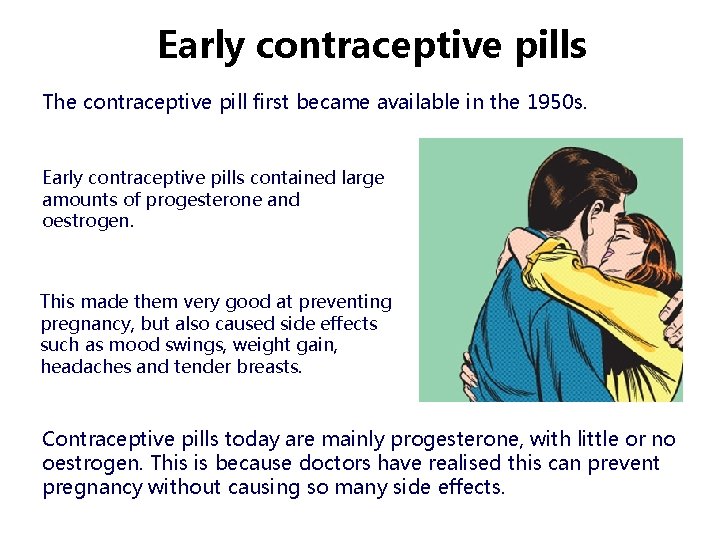
Early contraceptive pills The contraceptive pill first became available in the 1950 s. Early contraceptive pills contained large amounts of progesterone and oestrogen. This made them very good at preventing pregnancy, but also caused side effects such as mood swings, weight gain, headaches and tender breasts. Contraceptive pills today are mainly progesterone, with little or no oestrogen. This is because doctors have realised this can prevent pregnancy without causing so many side effects.
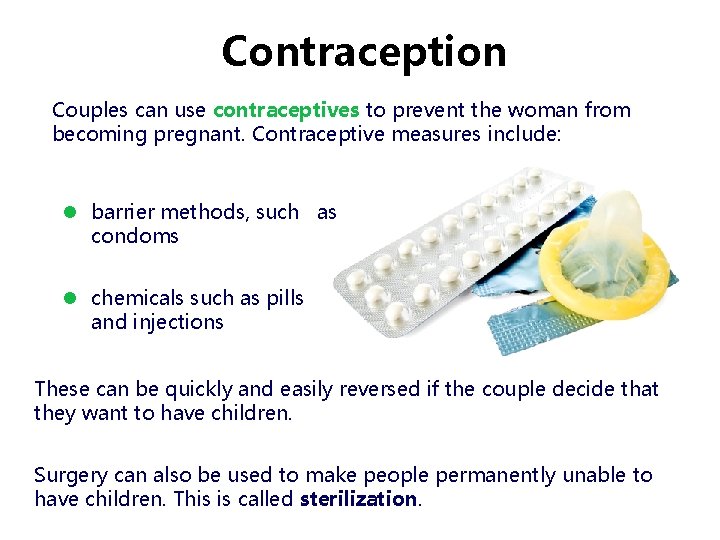
Contraception Couples can use contraceptives to prevent the woman from becoming pregnant. Contraceptive measures include: l barrier methods, such as condoms l chemicals such as pills and injections These can be quickly and easily reversed if the couple decide that they want to have children. Surgery can also be used to make people permanently unable to have children. This is called sterilization.
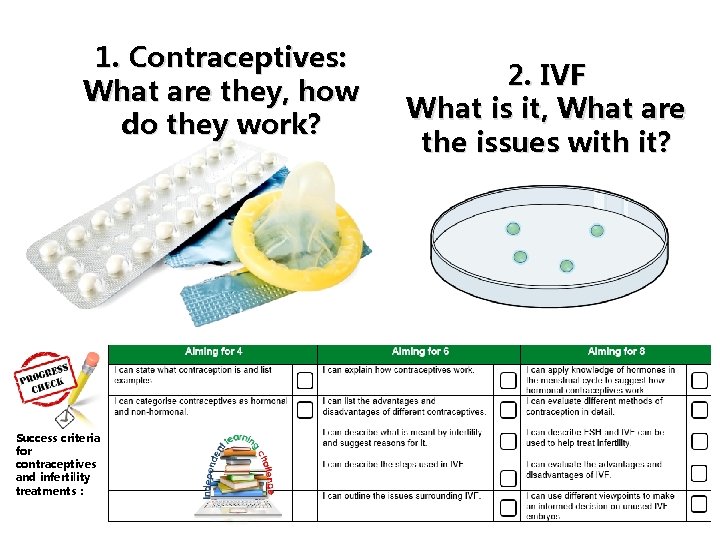
1. Contraceptives: What are they, how do they work? Success criteria for contraceptives and infertility treatments : 2. IVF What is it, What are the issues with it?
IVF and infertility What is meant by infertility? ……………………………………………………. . . . …………………………………………………………………………. List some reasons for infertility: The stages of IVF Issues surrounding IVF
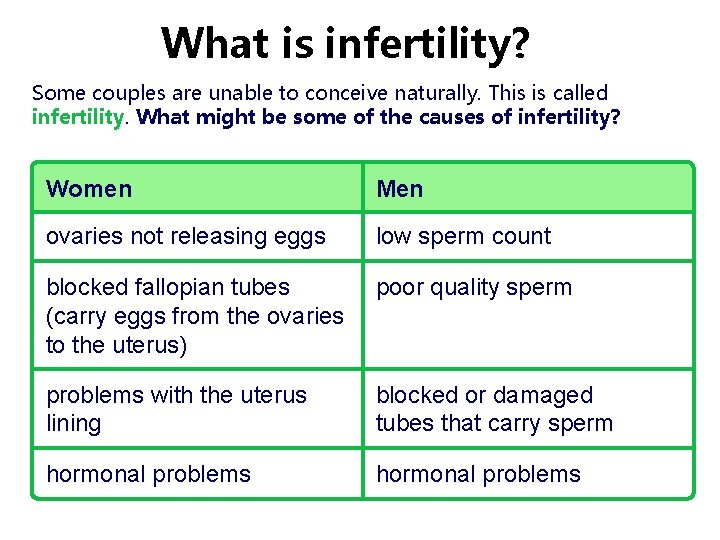
What is infertility? Some couples are unable to conceive naturally. This is called infertility. What might be some of the causes of infertility? Women Men ovaries not releasing eggs low sperm count blocked fallopian tubes (carry eggs from the ovaries to the uterus) poor quality sperm problems with the uterus lining blocked or damaged tubes that carry sperm hormonal problems
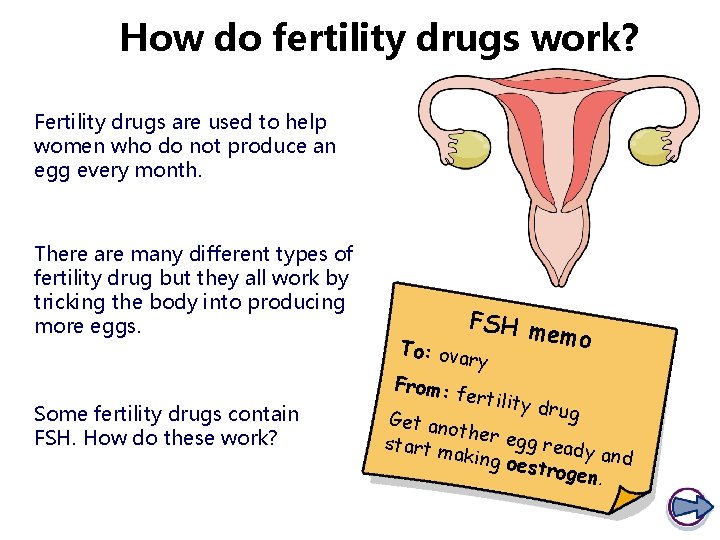
How do fertility drugs work? Fertility drugs are used to help women who do not produce an egg every month. There are many different types of fertility drug but they all work by tricking the body into producing more eggs. Some fertility drugs contain FSH. How do these work? To: ova From: FSH m emo ry fertilit y drug Get ano th start m er egg ready aking o a estroge nd n.
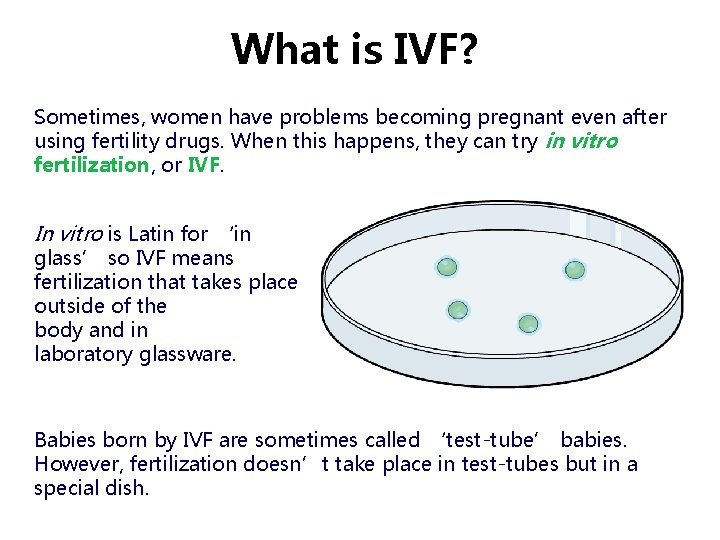
What is IVF? Sometimes, women have problems becoming pregnant even after using fertility drugs. When this happens, they can try in vitro fertilization, or IVF. In vitro is Latin for ‘in glass’ so IVF means fertilization that takes place outside of the body and in laboratory glassware. Babies born by IVF are sometimes called ‘test-tube’ babies. However, fertilization doesn’t take place in test-tubes but in a special dish.
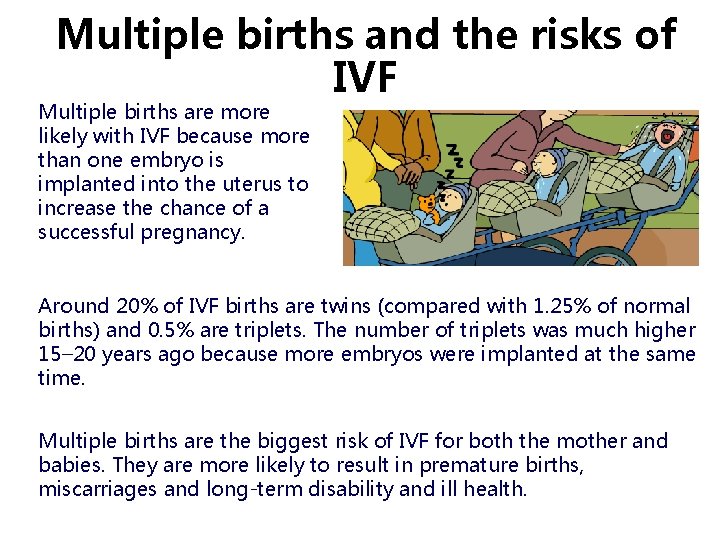
Multiple births and the risks of IVF Multiple births are more likely with IVF because more than one embryo is implanted into the uterus to increase the chance of a successful pregnancy. Around 20% of IVF births are twins (compared with 1. 25% of normal births) and 0. 5% are triplets. The number of triplets was much higher 15– 20 years ago because more embryos were implanted at the same time. Multiple births are the biggest risk of IVF for both the mother and babies. They are more likely to result in premature births, miscarriages and long-term disability and ill health.
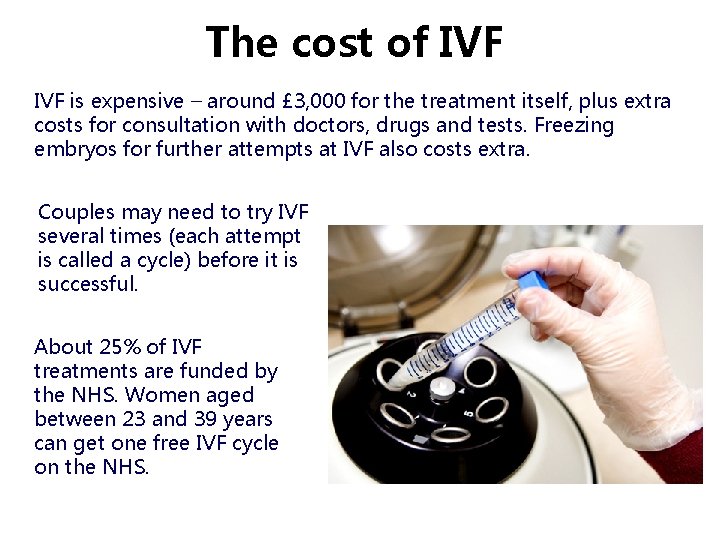
The cost of IVF is expensive – around £ 3, 000 for the treatment itself, plus extra costs for consultation with doctors, drugs and tests. Freezing embryos for further attempts at IVF also costs extra. Couples may need to try IVF several times (each attempt is called a cycle) before it is successful. About 25% of IVF treatments are funded by the NHS. Women aged between 23 and 39 years can get one free IVF cycle on the NHS.
Exam practice
Glossary