Upcoming Deadlines Have clicker ready Ninth Homework Stopmotion

- Slides: 61
Upcoming Deadlines Have clicker ready Ninth Homework (Stop-motion Character Animation) Due Tuesday, October 30 th (Next week) 20 points (10 points if late) Tenth Homework (Outline of Second Term Paper) Due Tuesday, November 6 th (In 2 weeks) 10 points (5 points if late) For full schedule, visit course website: www. Animation 123. com
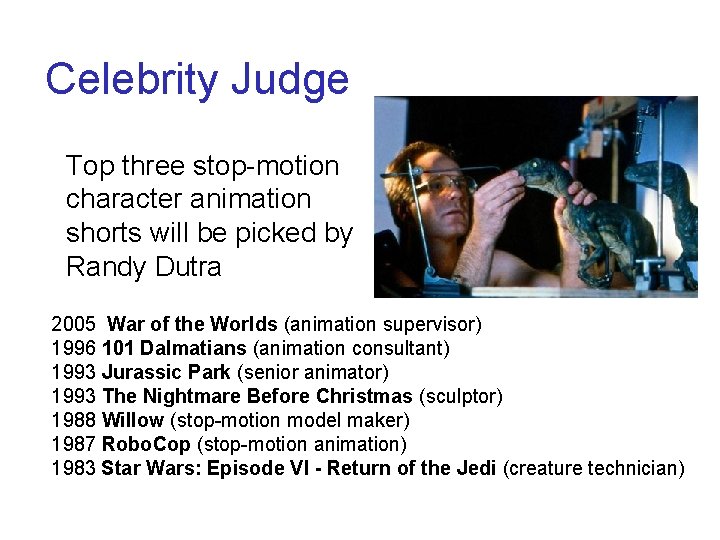
Celebrity Judge Top three stop-motion character animation shorts will be picked by Randy Dutra 2005 War of the Worlds (animation supervisor) 1996 101 Dalmatians (animation consultant) 1993 Jurassic Park (senior animator) 1993 The Nightmare Before Christmas (sculptor) 1988 Willow (stop-motion model maker) 1987 Robo. Cop (stop-motion animation) 1983 Star Wars: Episode VI - Return of the Jedi (creature technician)
Survey Question For your stop-motion character animation you’re planning to: A) Do it by yourself B) Do it as a two-person team C) Do it as part of a team of three or more persons
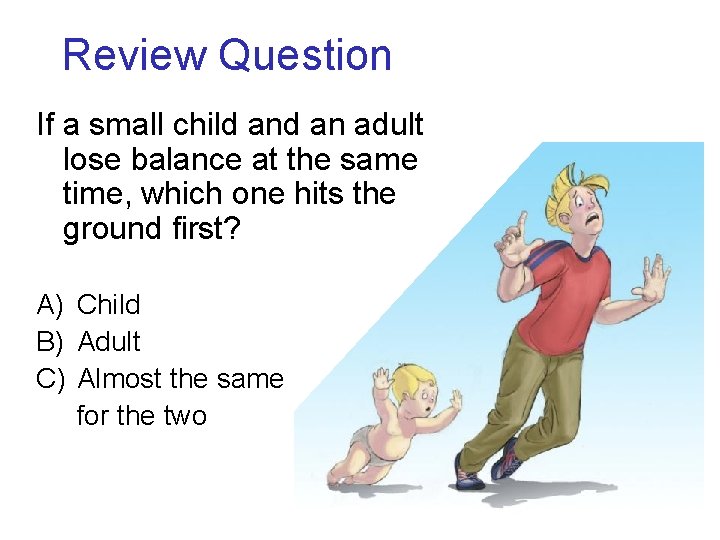
Review Question If a small child an adult lose balance at the same time, which one hits the ground first? A) Child B) Adult C) Almost the same for the two
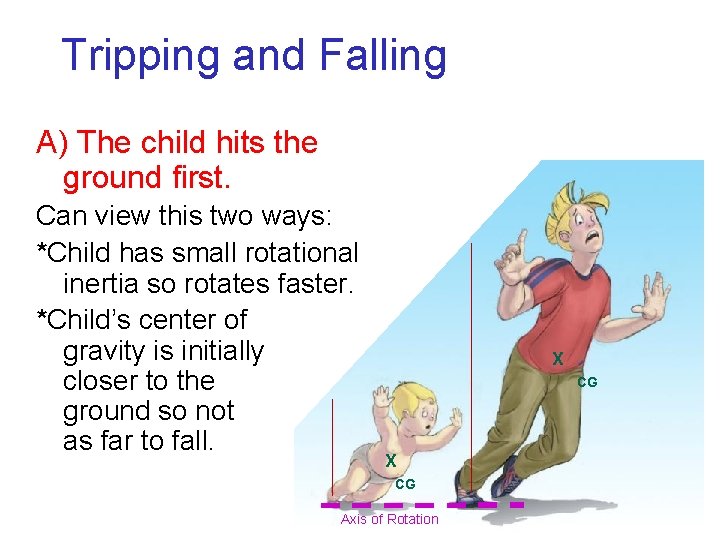
Tripping and Falling A) The child hits the ground first. Can view this two ways: *Child has small rotational inertia so rotates faster. *Child’s center of gravity is initially closer to the ground so not as far to fall. X CG Axis of Rotation
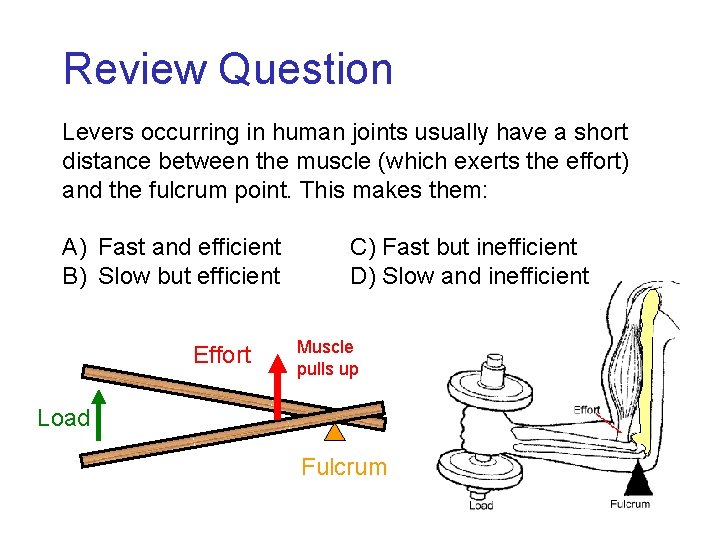
Review Question Levers occurring in human joints usually have a short distance between the muscle (which exerts the effort) and the fulcrum point. This makes them: A) Fast and efficient B) Slow but efficient Effort C) Fast but inefficient D) Slow and inefficient Muscle pulls up Load Fulcrum
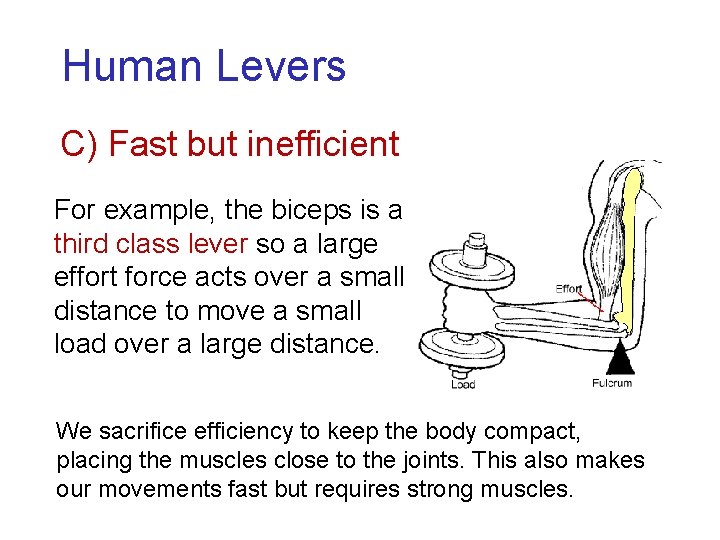
Human Levers C) Fast but inefficient For example, the biceps is a third class lever so a large effort force acts over a small distance to move a small load over a large distance. We sacrifice efficiency to keep the body compact, placing the muscles close to the joints. This also makes our movements fast but requires strong muscles.
Joints & Levers (cont. )
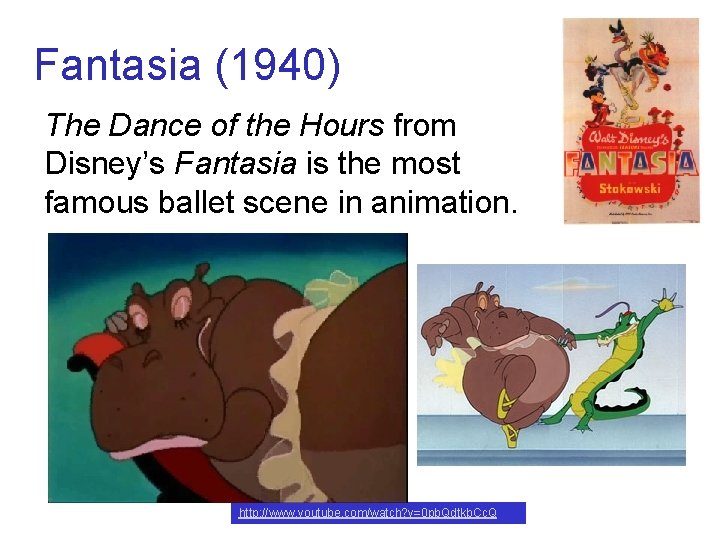
Fantasia (1940) The Dance of the Hours from Disney’s Fantasia is the most famous ballet scene in animation. http: //www. youtube. com/watch? v=0 pb. Qdtkb. Cc. Q
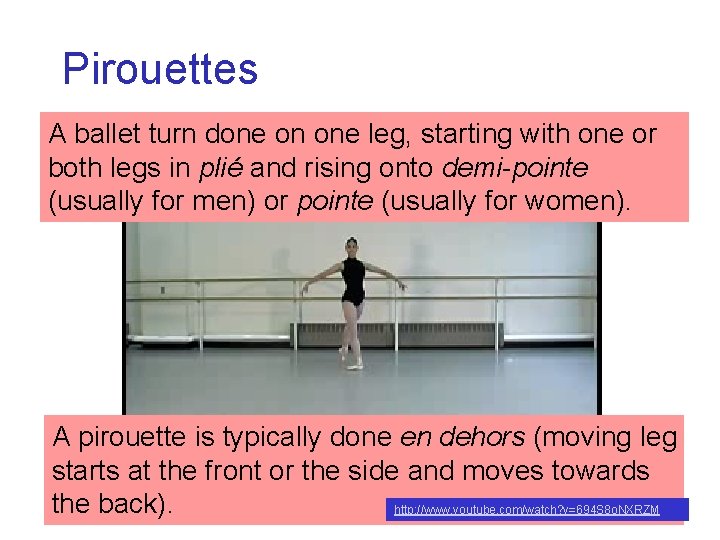
Pirouettes A ballet turn done on one leg, starting with one or both legs in plié and rising onto demi-pointe (usually for men) or pointe (usually for women). A pirouette is typically done en dehors (moving leg starts at the front or the side and moves towards the back). http: //www. youtube. com/watch? v=694 S 8 o. NXRZM
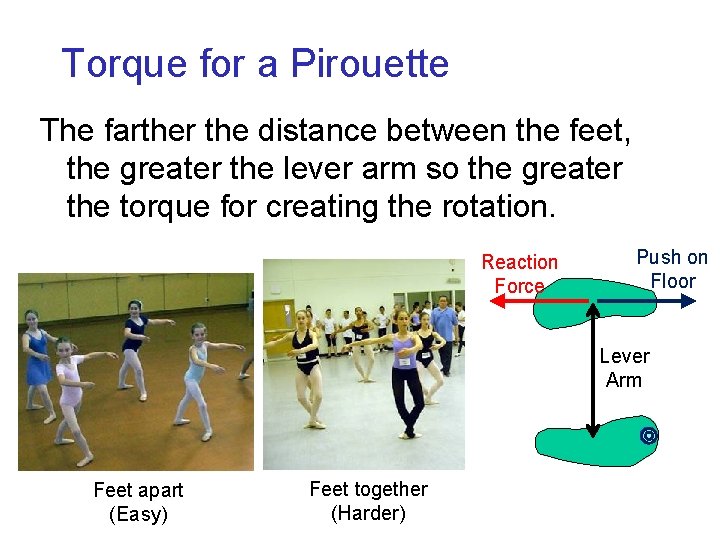
Torque for a Pirouette The farther the distance between the feet, the greater the lever arm so the greater the torque for creating the rotation. Reaction Force Push on Floor Lever Arm Feet apart (Easy) Feet together (Harder)
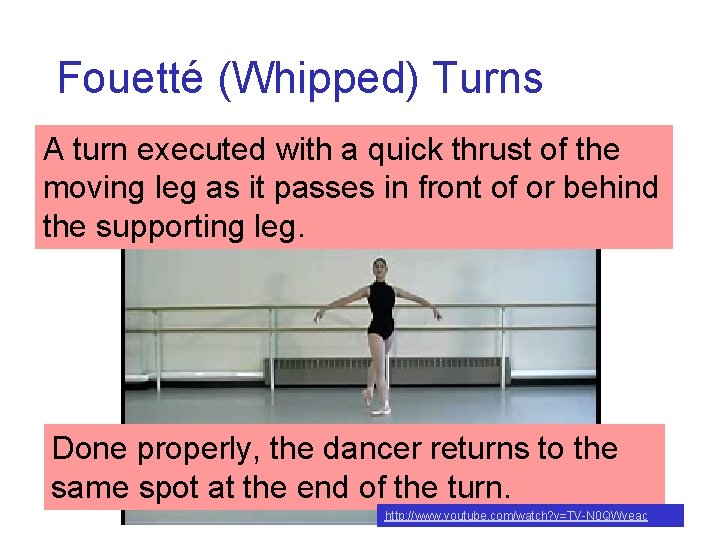
Fouetté (Whipped) Turns A turn executed with a quick thrust of the moving leg as it passes in front of or behind the supporting leg. Done properly, the dancer returns to the same spot at the end of the turn. http: //www. youtube. com/watch? v=TV-N 0 QWyeac
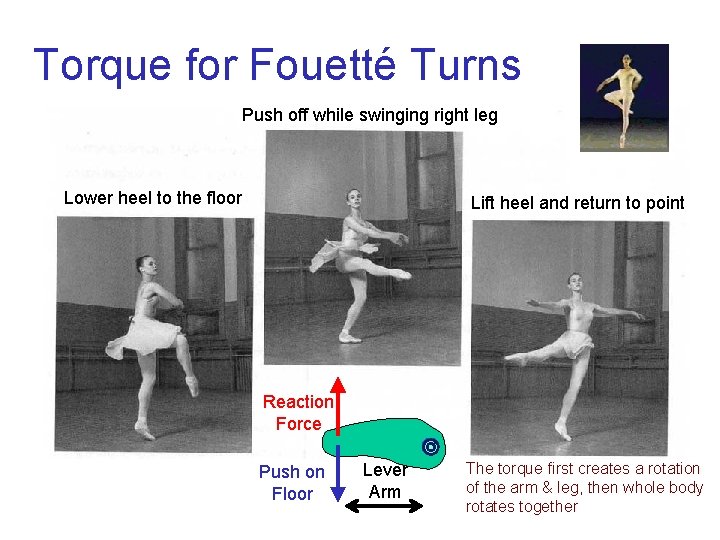
Torque for Fouetté Turns Push off while swinging right leg Lower heel to the floor Lift heel and return to point Reaction Force Push on Floor Lever Arm The torque first creates a rotation of the arm & leg, then whole body rotates together
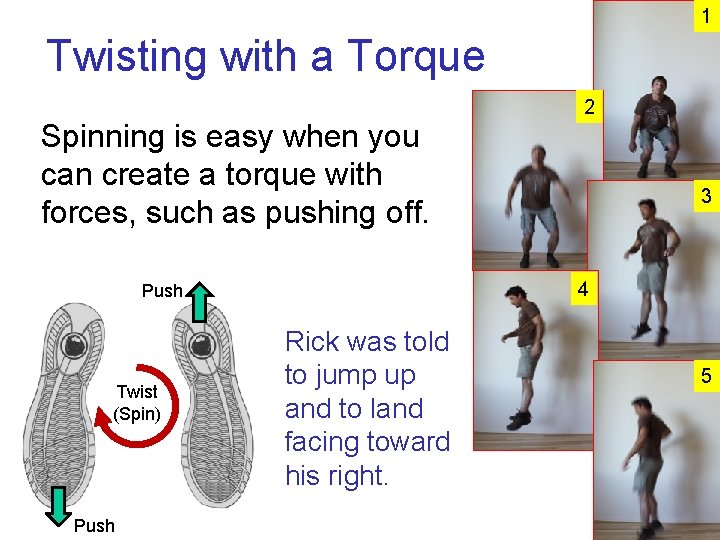
1 Twisting with a Torque Spinning is easy when you can create a torque with forces, such as pushing off. Push 3 4 Push Twist (Spin) 2 Rick was told to jump up and to land facing toward his right. 5
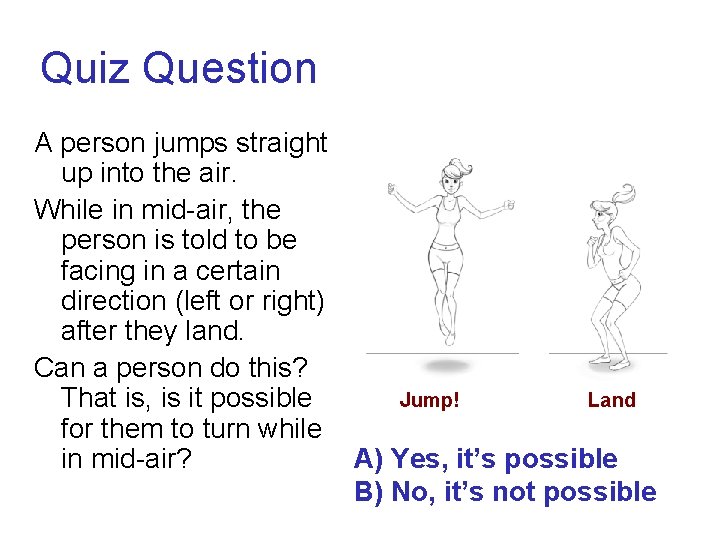
Quiz Question A person jumps straight up into the air. While in mid-air, the person is told to be facing in a certain direction (left or right) after they land. Can a person do this? Jump! Land That is, is it possible for them to turn while A) Yes, it’s possible in mid-air? B) No, it’s not possible
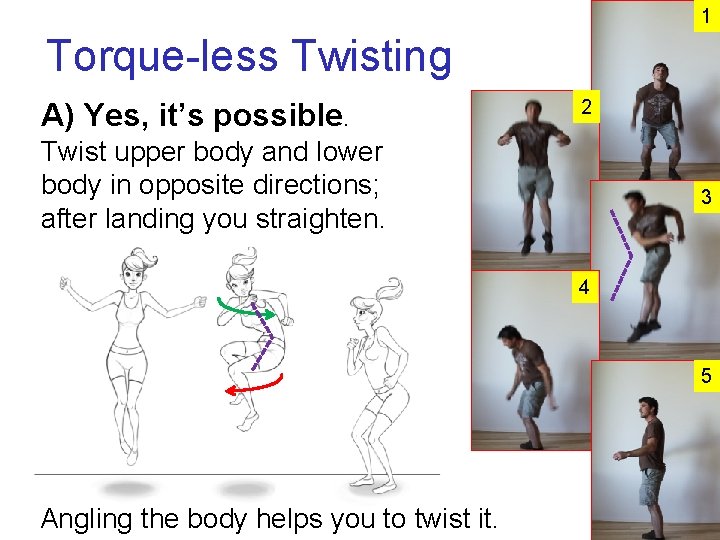
1 Torque-less Twisting A) Yes, it’s possible. 2 Twist upper body and lower body in opposite directions; after landing you straighten. 3 4 5 Angling the body helps you to twist it.
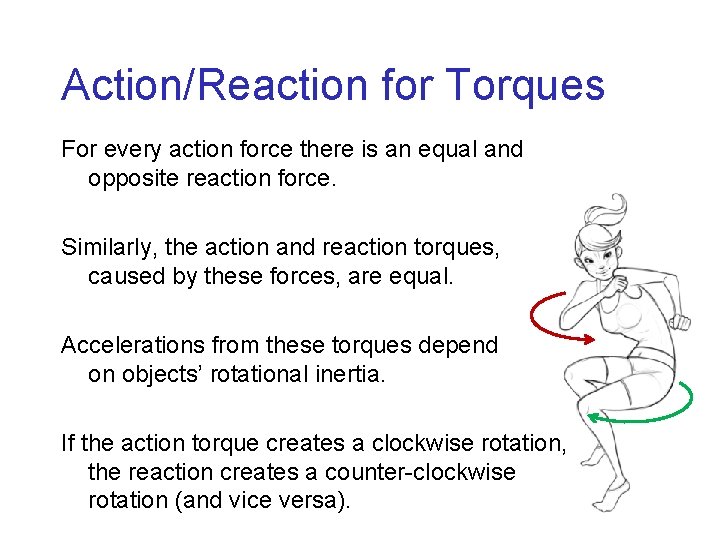
Action/Reaction for Torques For every action force there is an equal and opposite reaction force. Similarly, the action and reaction torques, caused by these forces, are equal. Accelerations from these torques depend on objects’ rotational inertia. If the action torque creates a clockwise rotation, the reaction creates a counter-clockwise rotation (and vice versa).
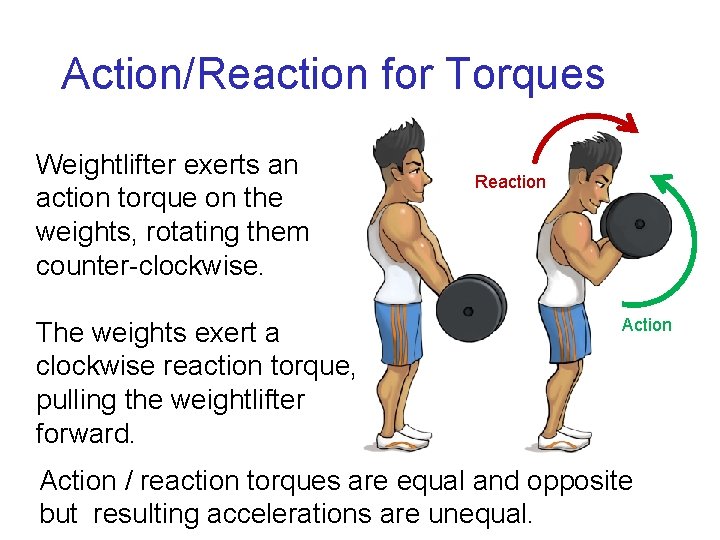
Action/Reaction for Torques Weightlifter exerts an action torque on the weights, rotating them counter-clockwise. The weights exert a clockwise reaction torque, pulling the weightlifter forward. Reaction Action / reaction torques are equal and opposite but resulting accelerations are unequal.
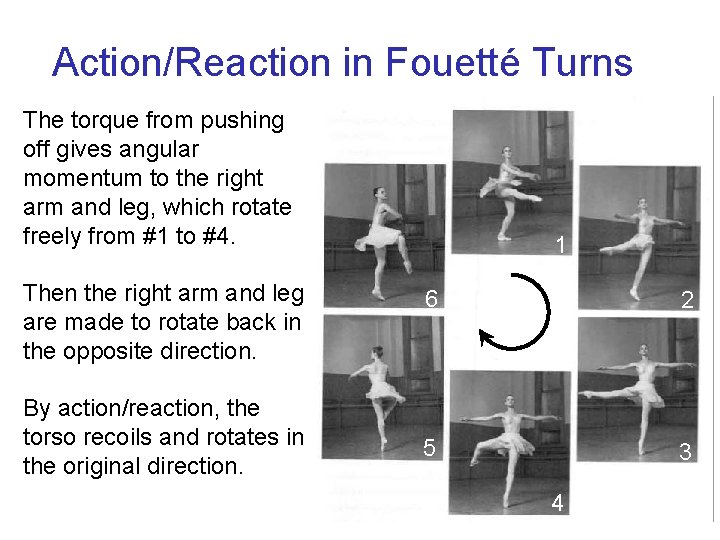
Action/Reaction in Fouetté Turns The torque from pushing off gives angular momentum to the right arm and leg, which rotate freely from #1 to #4. Then the right arm and leg are made to rotate back in the opposite direction. By action/reaction, the torso recoils and rotates in the original direction. 1 6 2 5 3 4
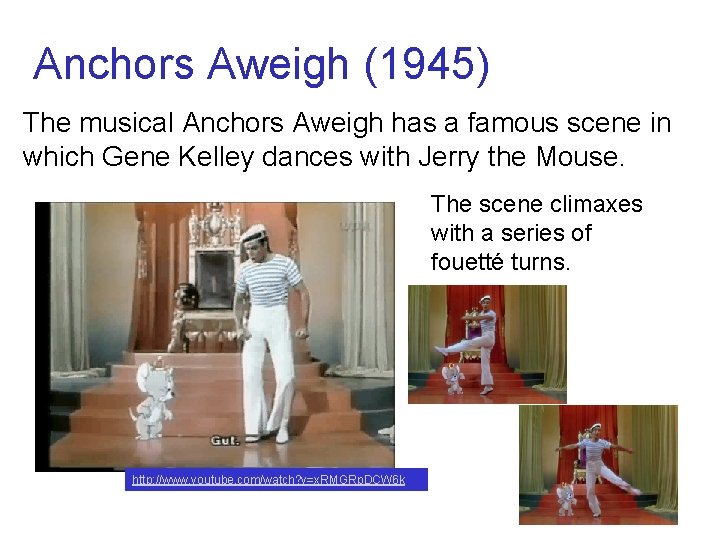
Anchors Aweigh (1945) The musical Anchors Aweigh has a famous scene in which Gene Kelley dances with Jerry the Mouse. The scene climaxes with a series of fouetté turns. http: //www. youtube. com/watch? v=x. RMGRp. DCW 6 k
Creating Scale
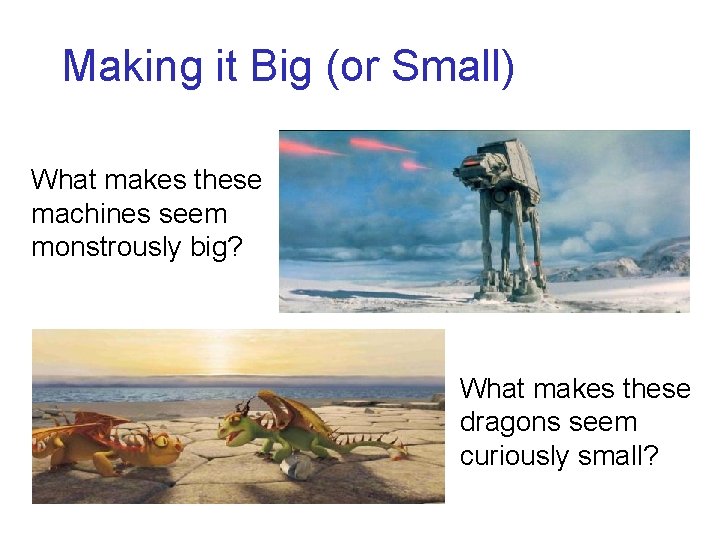
Making it Big (or Small) What makes these machines seem monstrously big? What makes these dragons seem curiously small?
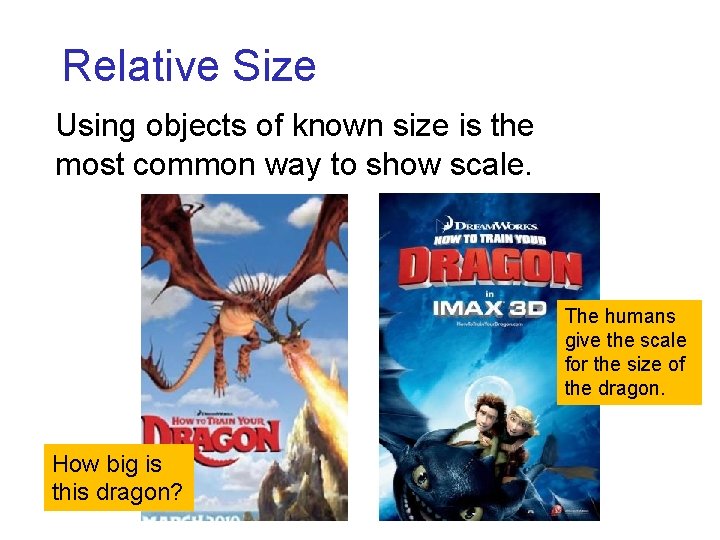
Relative Size Using objects of known size is the most common way to show scale. The humans give the scale for the size of the dragon. How big is this dragon?
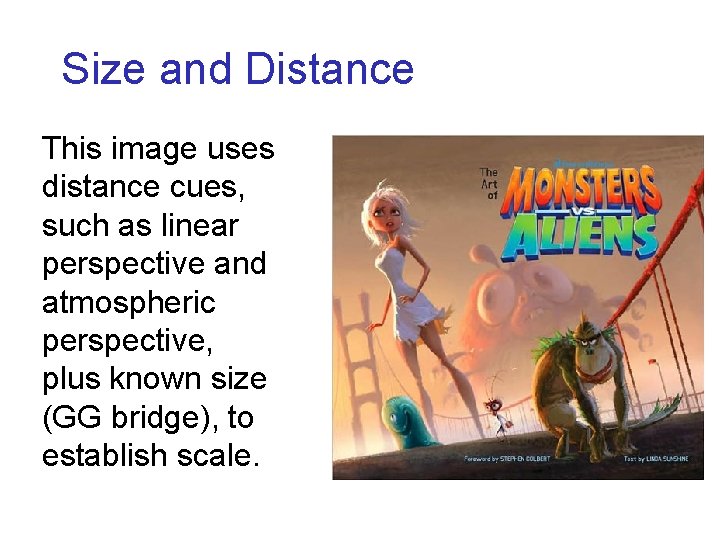
Size and Distance This image uses distance cues, such as linear perspective and atmospheric perspective, plus known size (GG bridge), to establish scale.
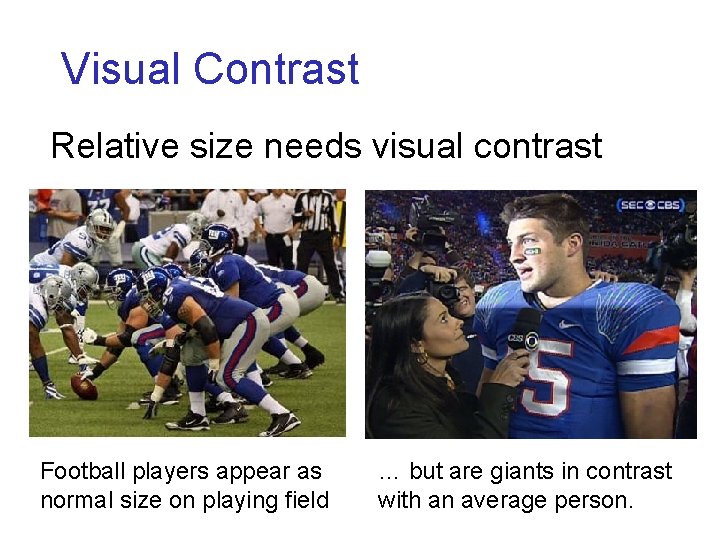
Visual Contrast Relative size needs visual contrast Football players appear as normal size on playing field … but are giants in contrast with an average person.
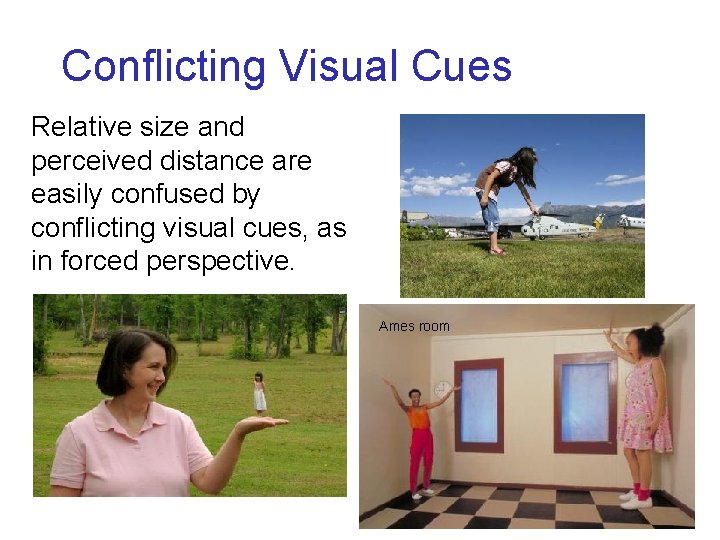
Conflicting Visual Cues Relative size and perceived distance are easily confused by conflicting visual cues, as in forced perspective. Ames room
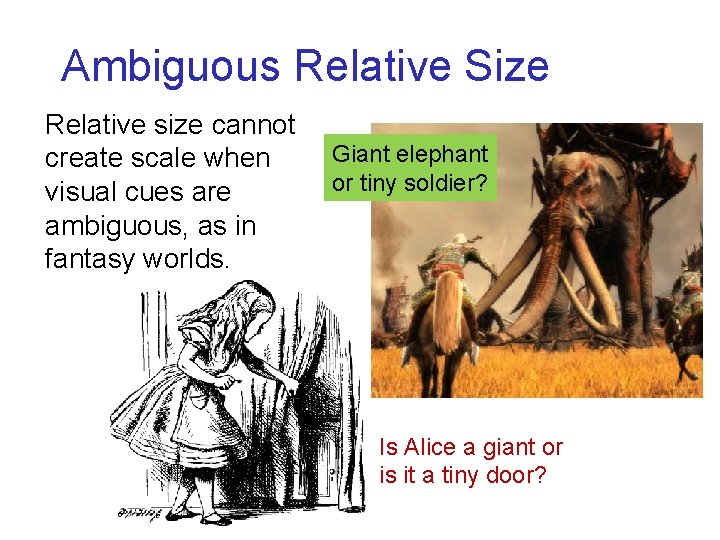
Ambiguous Relative Size Relative size cannot create scale when visual cues are ambiguous, as in fantasy worlds. Giant elephant or tiny soldier? Is Alice a giant or is it a tiny door?
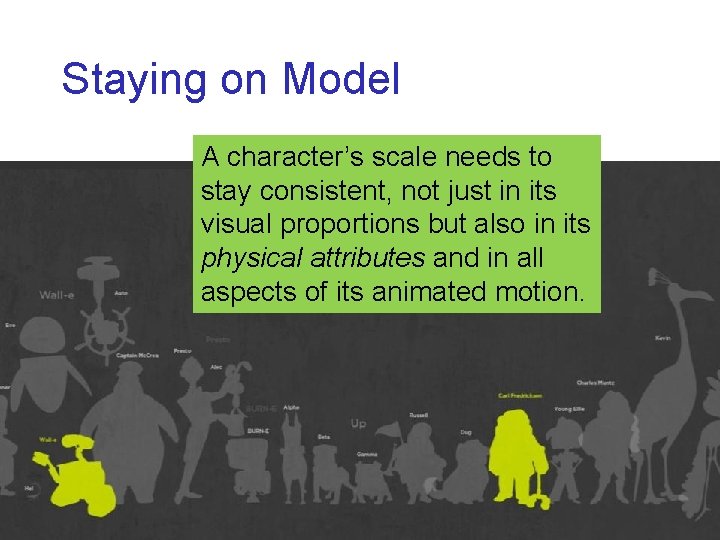
Staying on Model A character’s scale needs to stay consistent, not just in its visual proportions but also in its physical attributes and in all aspects of its animated motion.
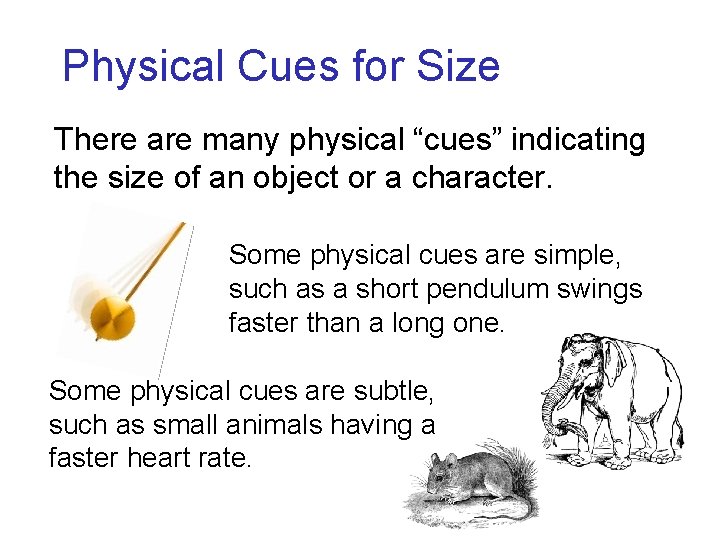
Physical Cues for Size There are many physical “cues” indicating the size of an object or a character. Some physical cues are simple, such as a short pendulum swings faster than a long one. Some physical cues are subtle, such as small animals having a faster heart rate.
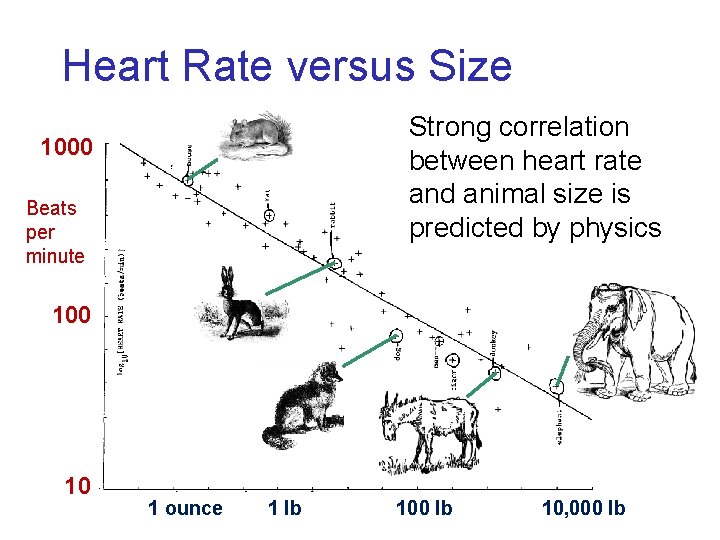
Heart Rate versus Size Strong correlation between heart rate and animal size is predicted by physics 1000 Beats per minute 100 10 1 ounce 1 lb 100 lb 10, 000 lb
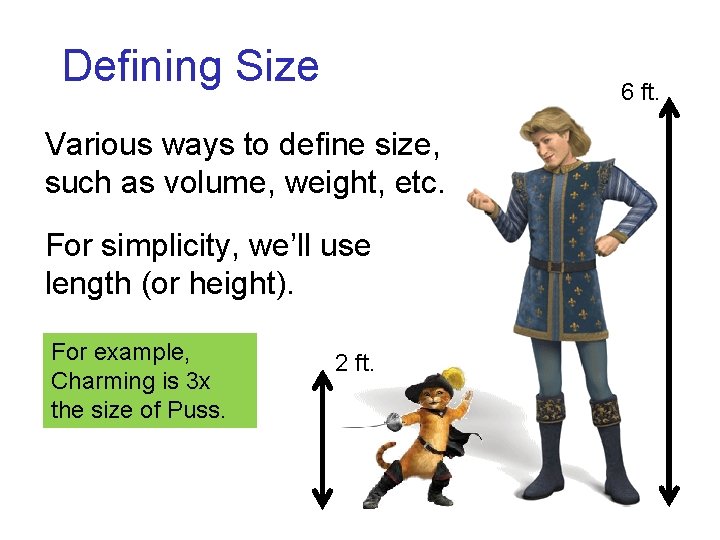
Defining Size 6 ft. Various ways to define size, such as volume, weight, etc. For simplicity, we’ll use length (or height). For example, Charming is 3 x the size of Puss. 2 ft.
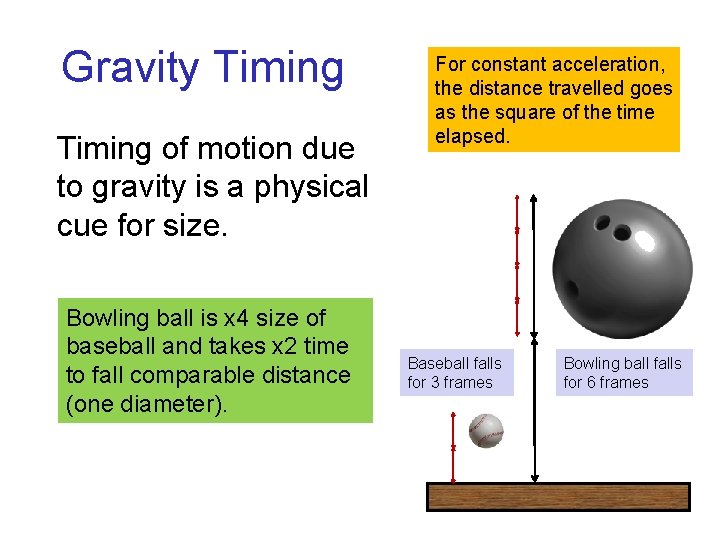
Gravity Timing of motion due to gravity is a physical cue for size. Bowling ball is x 4 size of baseball and takes x 2 time to fall comparable distance (one diameter). For constant acceleration, the distance travelled goes as the square of the time elapsed. Baseball falls for 3 frames Bowling ball falls for 6 frames
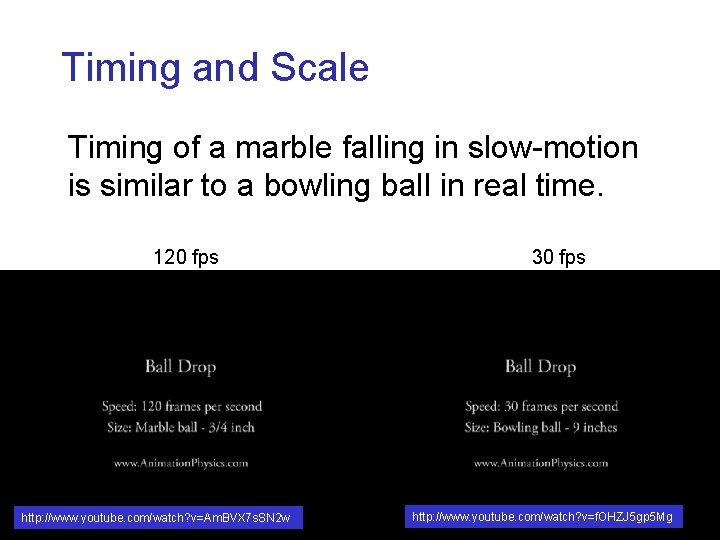
Timing and Scale Timing of a marble falling in slow-motion is similar to a bowling ball in real time. 120 fps http: //www. youtube. com/watch? v=Am. BVX 7 s. SN 2 w 30 fps http: //www. youtube. com/watch? v=f. OHZJ 5 gp 5 Mg
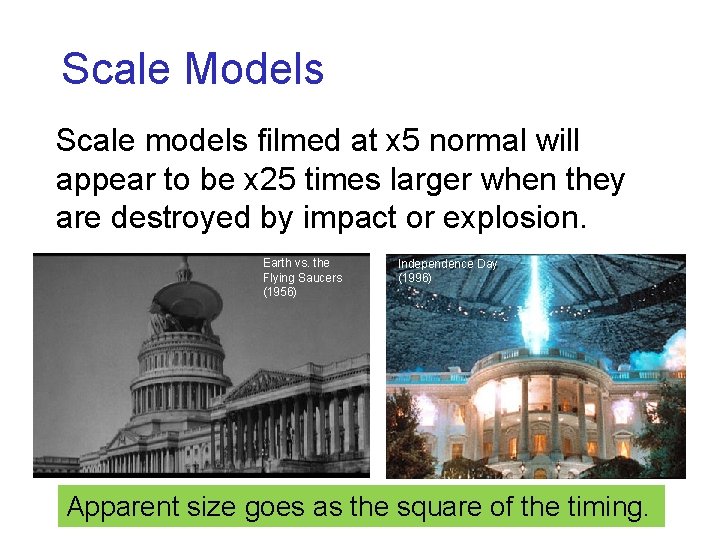
Scale Models Scale models filmed at x 5 normal will appear to be x 25 times larger when they are destroyed by impact or explosion. Earth vs. the Flying Saucers (1956) Independence Day (1996) Apparent size goes as the square of the timing.
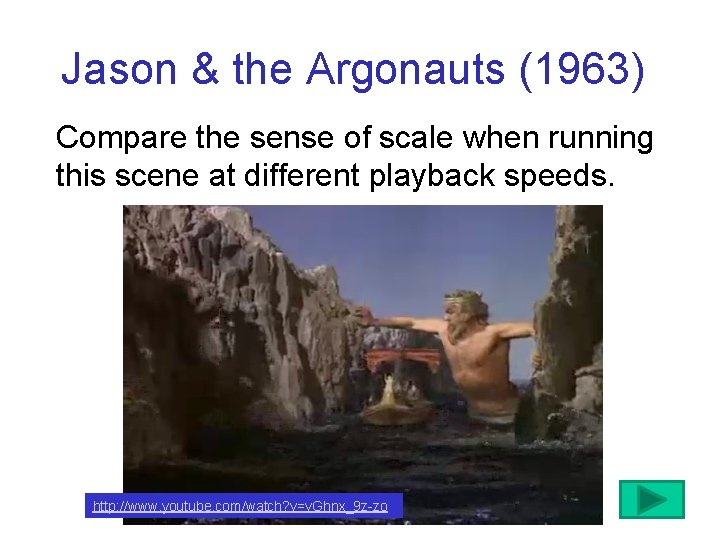
Jason & the Argonauts (1963) Compare the sense of scale when running this scene at different playback speeds. http: //www. youtube. com/watch? v=v. Ghnx_9 z-zo
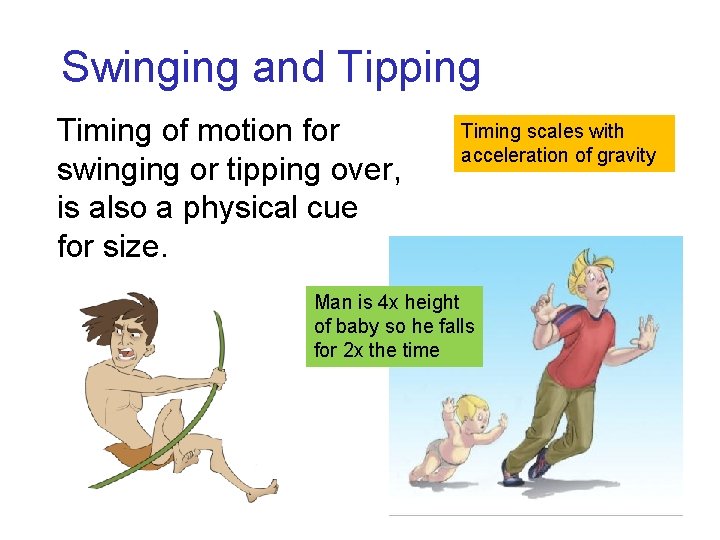
Swinging and Tipping Timing of motion for swinging or tipping over, is also a physical cue for size. Timing scales with acceleration of gravity Man is 4 x height of baby so he falls for 2 x the time
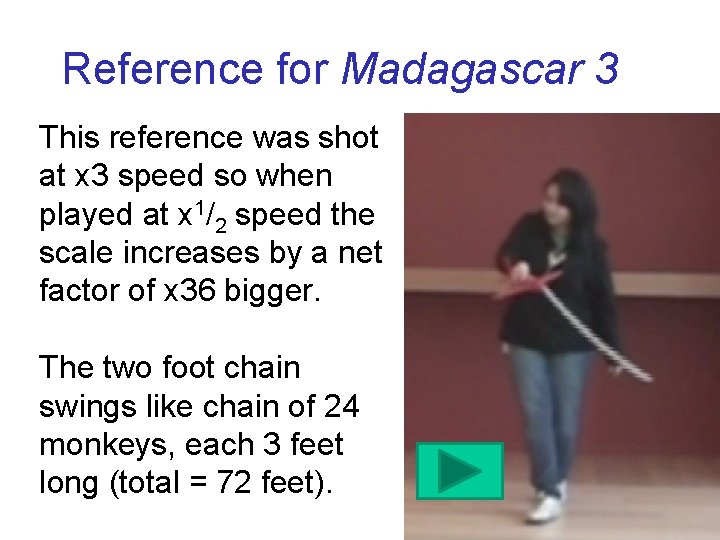
Reference for Madagascar 3 This reference was shot at x 3 speed so when played at x 1/2 speed the scale increases by a net factor of x 36 bigger. The two foot chain swings like chain of 24 monkeys, each 3 feet long (total = 72 feet).
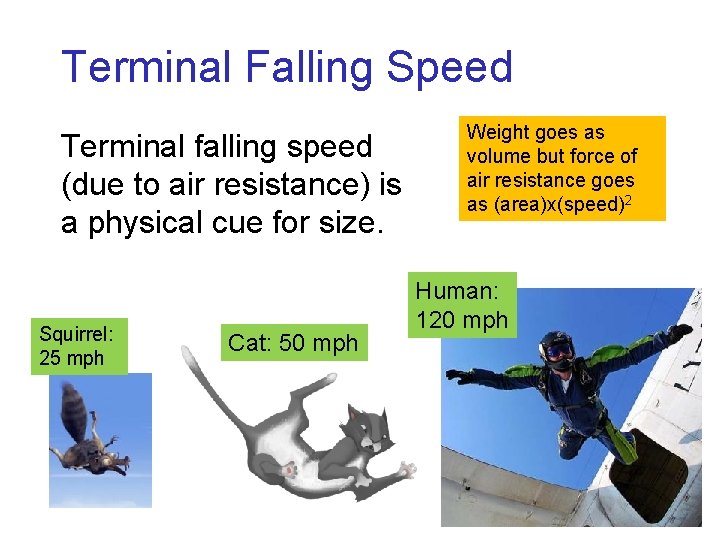
Terminal Falling Speed Terminal falling speed (due to air resistance) is a physical cue for size. Squirrel: 25 mph Cat: 50 mph Weight goes as volume but force of air resistance goes as (area)x(speed)2 Human: 120 mph
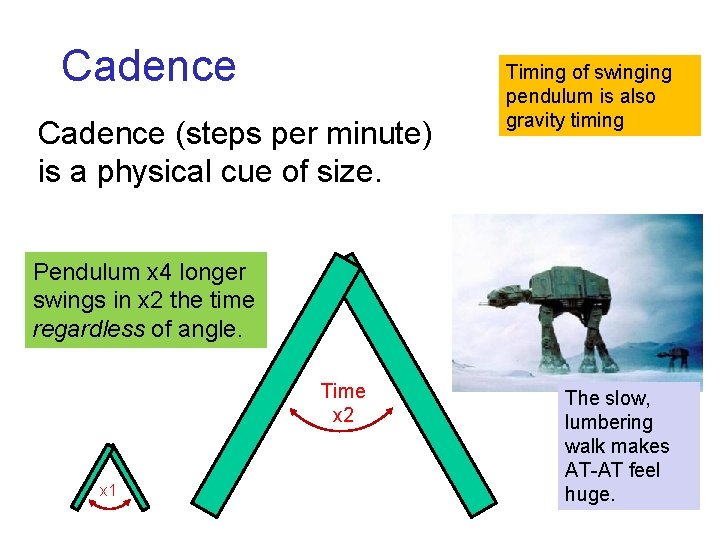
Cadence (steps per minute) is a physical cue of size. Timing of swinging pendulum is also gravity timing Pendulum x 4 longer swings in x 2 the time regardless of angle. Time x 2 x 1 The slow, lumbering walk makes AT-AT feel huge.
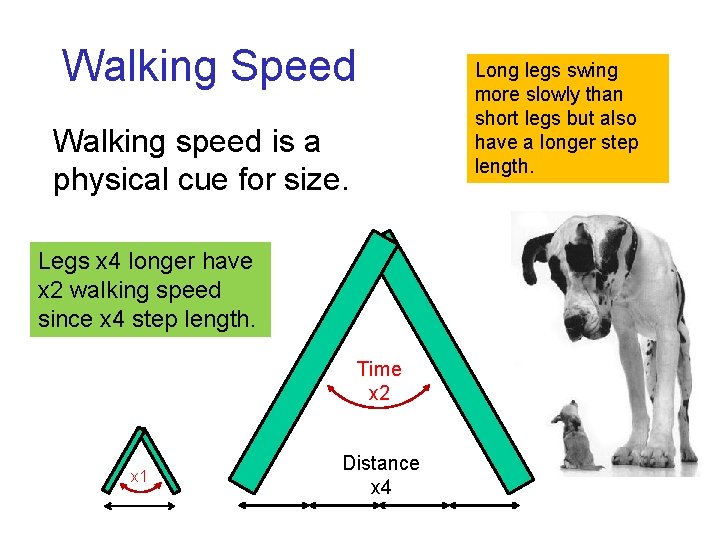
Walking Speed Long legs swing more slowly than short legs but also have a longer step length. Walking speed is a physical cue for size. Legs x 4 longer have x 2 walking speed since x 4 step length. Time x 2 x 1 Distance x 4
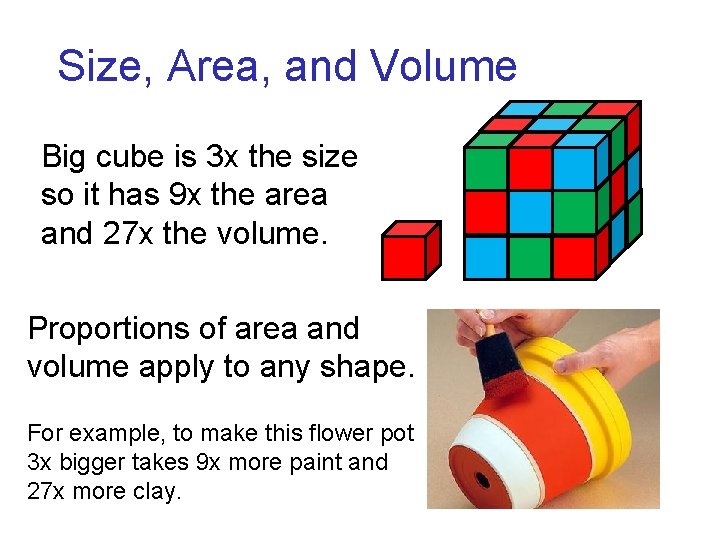
Size, Area, and Volume Big cube is 3 x the size so it has 9 x the area and 27 x the volume. Proportions of area and volume apply to any shape. For example, to make this flower pot 3 x bigger takes 9 x more paint and 27 x more clay.
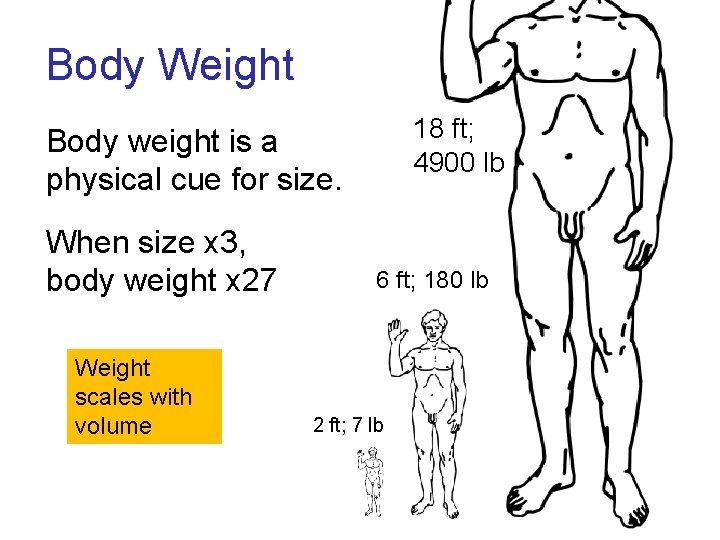
Body Weight 18 ft; 4900 lb Body weight is a physical cue for size. When size x 3, body weight x 27 Weight scales with volume 6 ft; 180 lb 2 ft; 7 lb
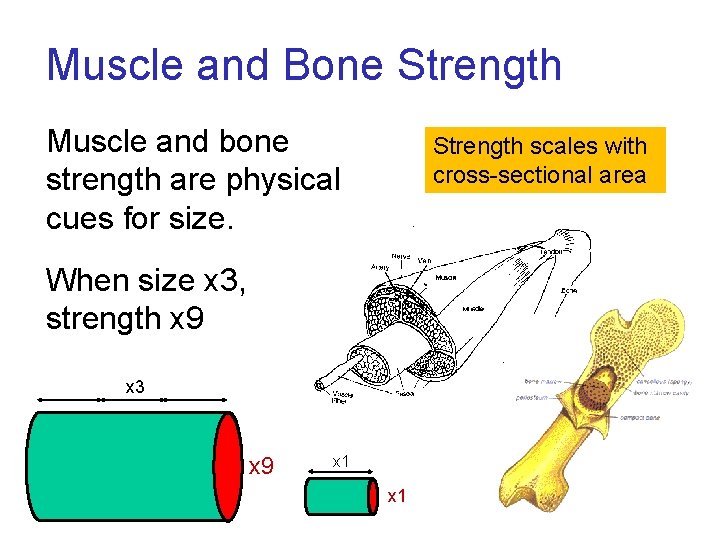
Muscle and Bone Strength Muscle and bone strength are physical cues for size. Strength scales with cross-sectional area When size x 3, strength x 9 x 3 x 9 x 1
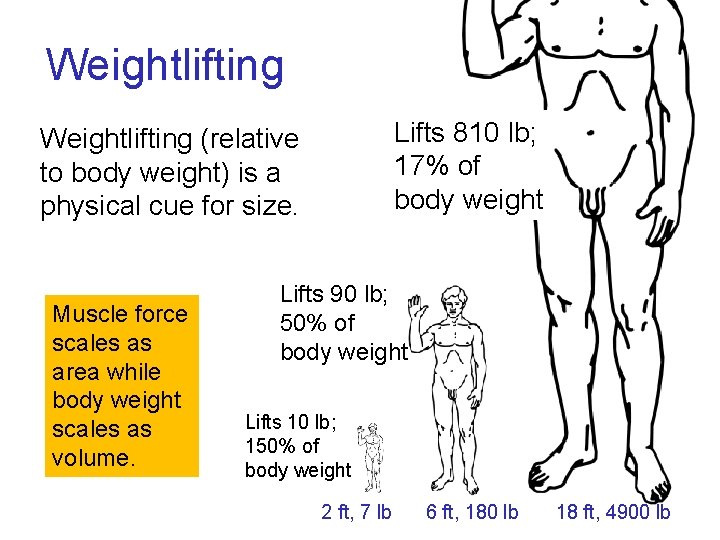
Weightlifting Lifts 810 lb; 17% of body weight Weightlifting (relative to body weight) is a physical cue for size. Muscle force scales as area while body weight scales as volume. Lifts 90 lb; 50% of body weight Lifts 10 lb; 150% of body weight 2 ft, 7 lb 6 ft, 180 lb 18 ft, 4900 lb
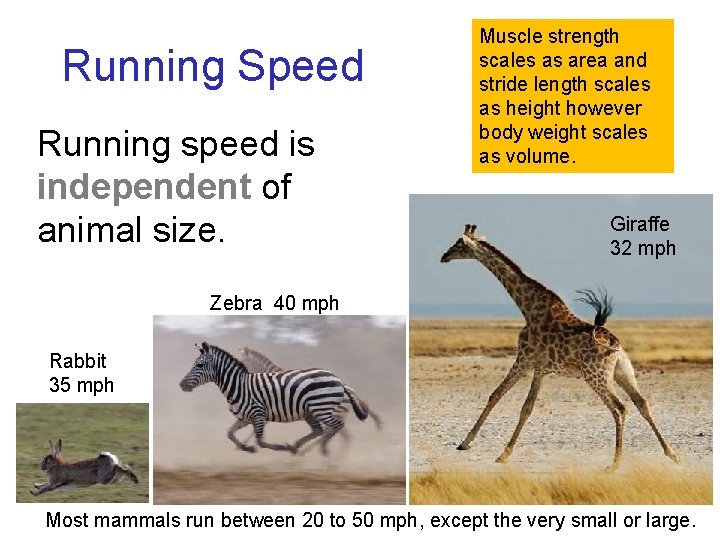
Running Speed Running speed is independent of animal size. Muscle strength scales as area and stride length scales as height however body weight scales as volume. Giraffe 32 mph Zebra 40 mph Rabbit 35 mph Most mammals run between 20 to 50 mph, except the very small or large.
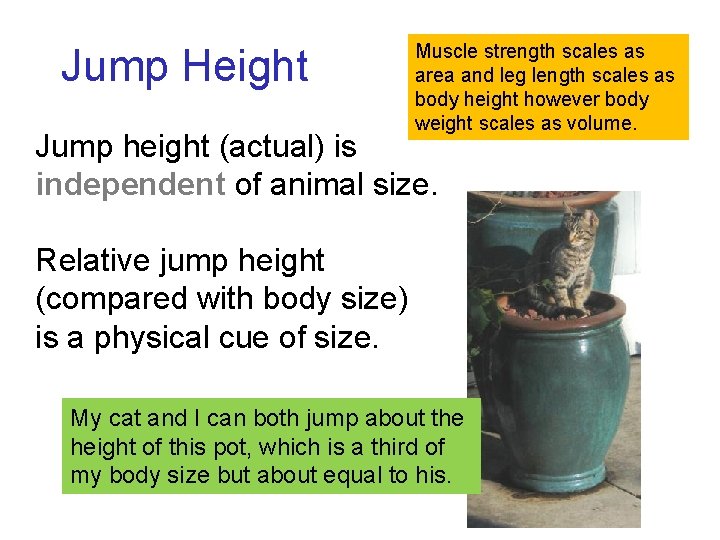
Jump Height Muscle strength scales as area and leg length scales as body height however body weight scales as volume. Jump height (actual) is independent of animal size. Relative jump height (compared with body size) is a physical cue of size. My cat and I can both jump about the height of this pot, which is a third of my body size but about equal to his.
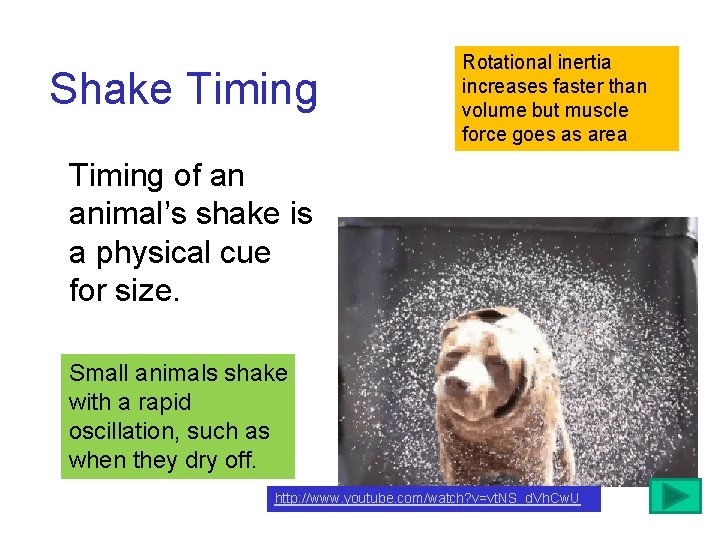
Shake Timing Rotational inertia increases faster than volume but muscle force goes as area Timing of an animal’s shake is a physical cue for size. Small animals shake with a rapid oscillation, such as when they dry off. http: //www. youtube. com/watch? v=vt. NS_d. Vh. Cw. U
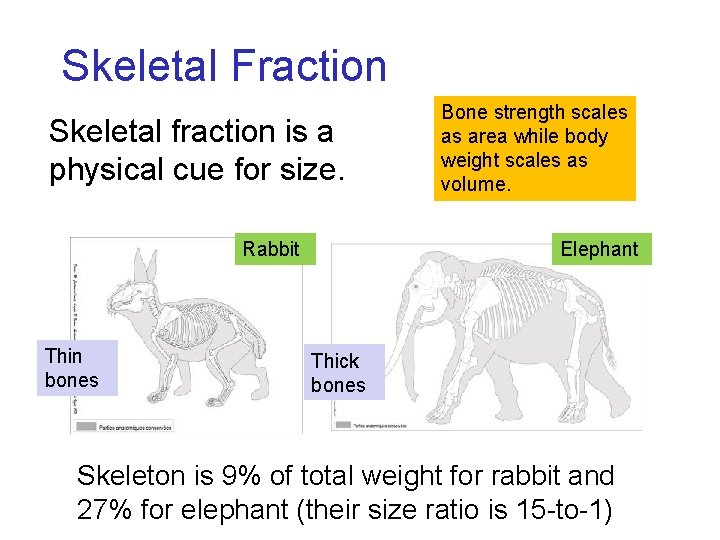
Skeletal Fraction Skeletal fraction is a physical cue for size. Rabbit Thin bones Bone strength scales as area while body weight scales as volume. Elephant Thick bones Skeleton is 9% of total weight for rabbit and 27% for elephant (their size ratio is 15 -to-1)
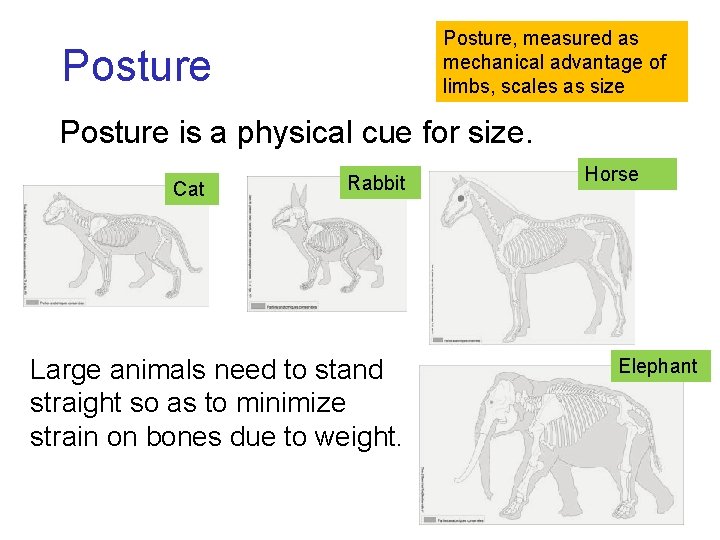
Posture, measured as mechanical advantage of limbs, scales as size Posture is a physical cue for size. Cat Rabbit Large animals need to stand straight so as to minimize strain on bones due to weight. Horse Elephant
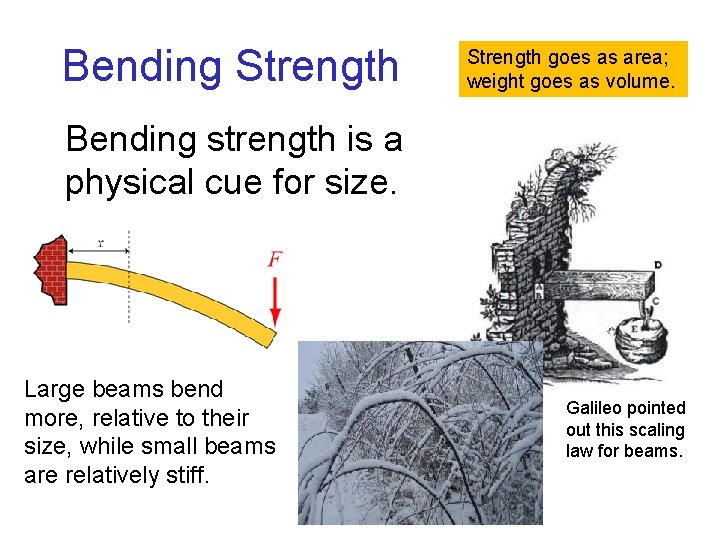
Bending Strength goes as area; weight goes as volume. Bending strength is a physical cue for size. Large beams bend more, relative to their size, while small beams are relatively stiff. Galileo pointed out this scaling law for beams.
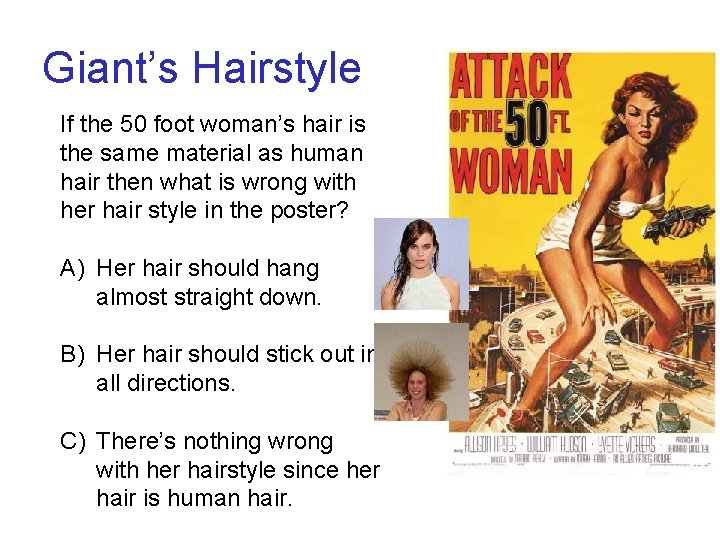
Giant’s Hairstyle If the 50 foot woman’s hair is the same material as human hair then what is wrong with her hair style in the poster? A) Her hair should hang almost straight down. B) Her hair should stick out in all directions. C) There’s nothing wrong with her hairstyle since her hair is human hair.
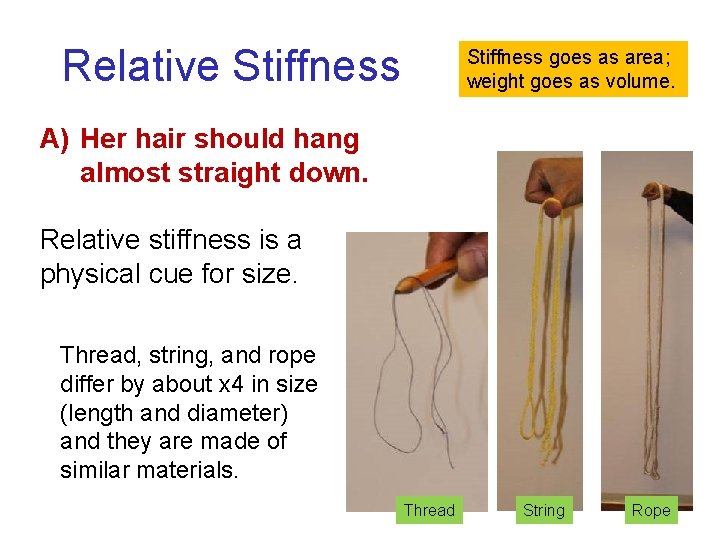
Relative Stiffness goes as area; weight goes as volume. A) Her hair should hang almost straight down. Relative stiffness is a physical cue for size. Thread, string, and rope differ by about x 4 in size (length and diameter) and they are made of similar materials. Thread String Rope
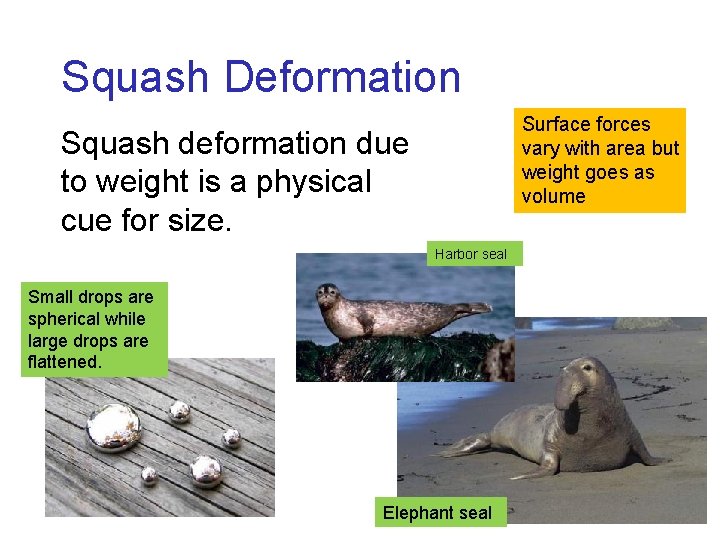
Squash Deformation Surface forces vary with area but weight goes as volume Squash deformation due to weight is a physical cue for size. Harbor seal Small drops are spherical while large drops are flattened. Elephant seal
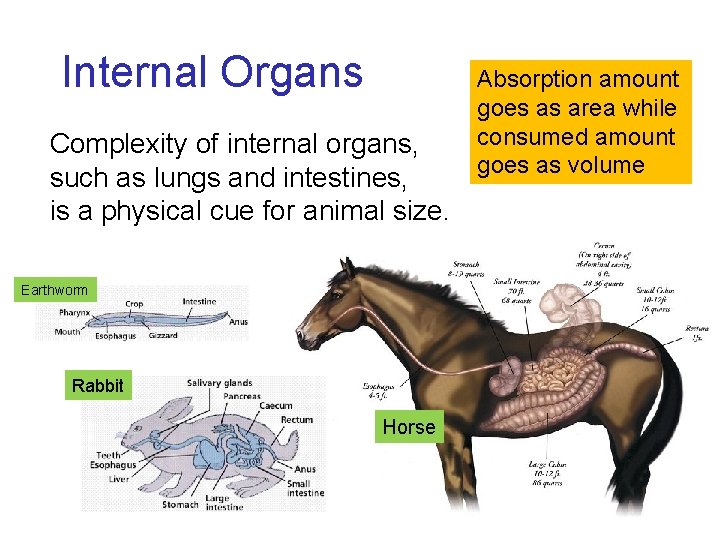
Internal Organs Complexity of internal organs, such as lungs and intestines, is a physical cue for animal size. Earthworm Rabbit Horse Absorption amount goes as area while consumed amount goes as volume
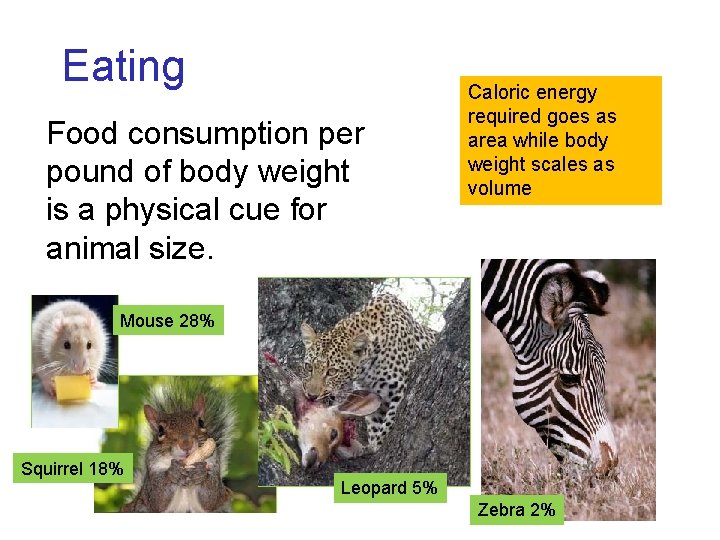
Eating Food consumption per pound of body weight is a physical cue for animal size. Caloric energy required goes as area while body weight scales as volume Mouse 28% Squirrel 18% Leopard 5% Zebra 2%
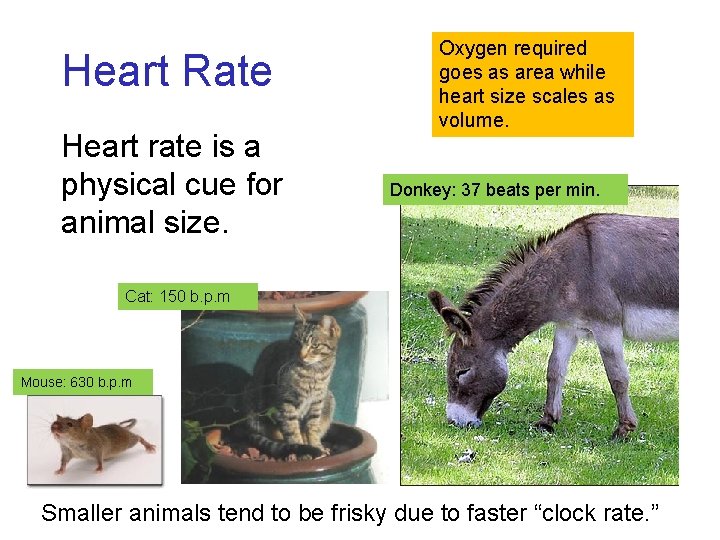
Heart Rate Heart rate is a physical cue for animal size. Oxygen required goes as area while heart size scales as volume. Donkey: 37 beats per min. Cat: 150 b. p. m Mouse: 630 b. p. m Smaller animals tend to be frisky due to faster “clock rate. ”
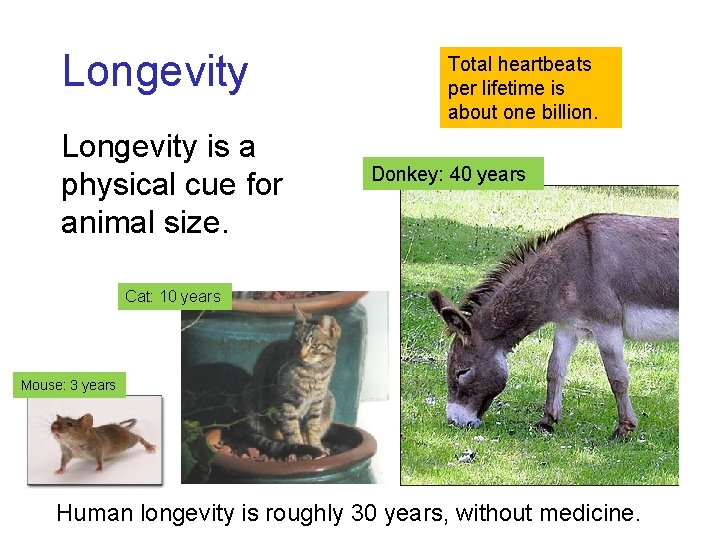
Longevity is a physical cue for animal size. Total heartbeats per lifetime is about one billion. Donkey: 40 years Cat: 10 years Mouse: 3 years Human longevity is roughly 30 years, without medicine.
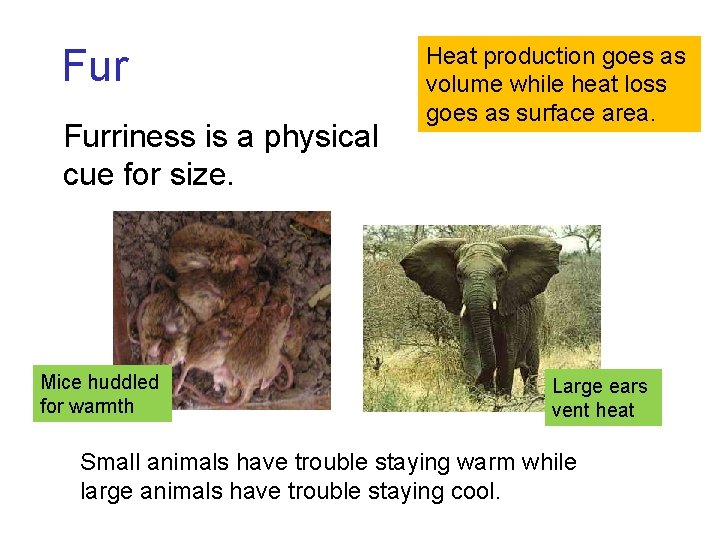
Fur Furriness is a physical cue for size. Mice huddled for warmth Heat production goes as volume while heat loss goes as surface area. Large ears vent heat Small animals have trouble staying warm while large animals have trouble staying cool.
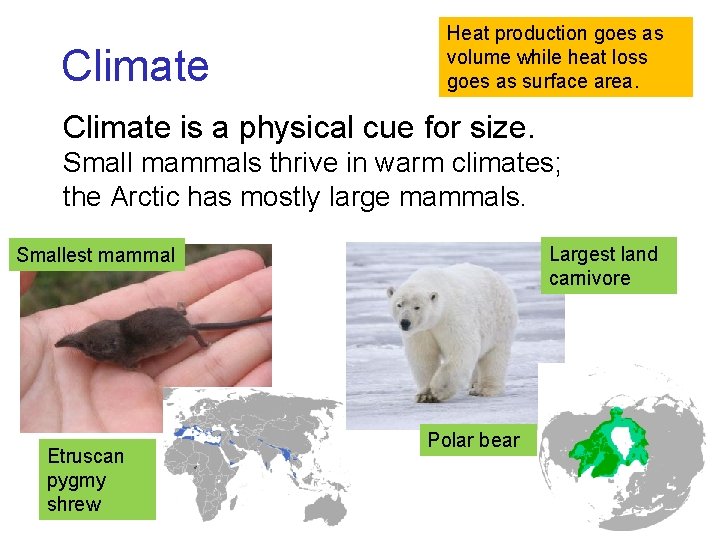
Climate Heat production goes as volume while heat loss goes as surface area. Climate is a physical cue for size. Small mammals thrive in warm climates; the Arctic has mostly large mammals. Largest land carnivore Smallest mammal Etruscan pygmy shrew Polar bear
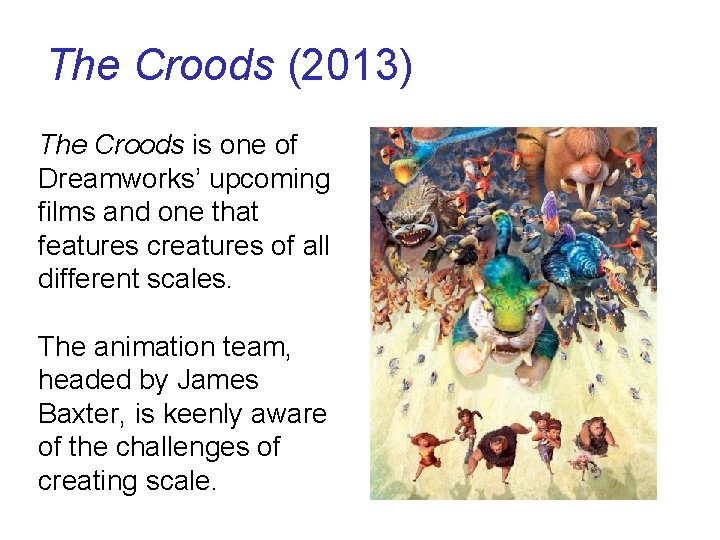
The Croods (2013) The Croods is one of Dreamworks’ upcoming films and one that features creatures of all different scales. The animation team, headed by James Baxter, is keenly aware of the challenges of creating scale.
Next Lecture Waves, Part I Homework 9 (Character Animation) Due Tuesday, October 30 th (Next week)