Twoport networks n n n n Review of








- Slides: 72
Two-port networks n n n n Review of one ports Various two-port descriptions Terminated nonlinear two-ports Impedance and admittance matrices of two-ports Other two-port parameter matrices The hybrid matrices The transmission matrices
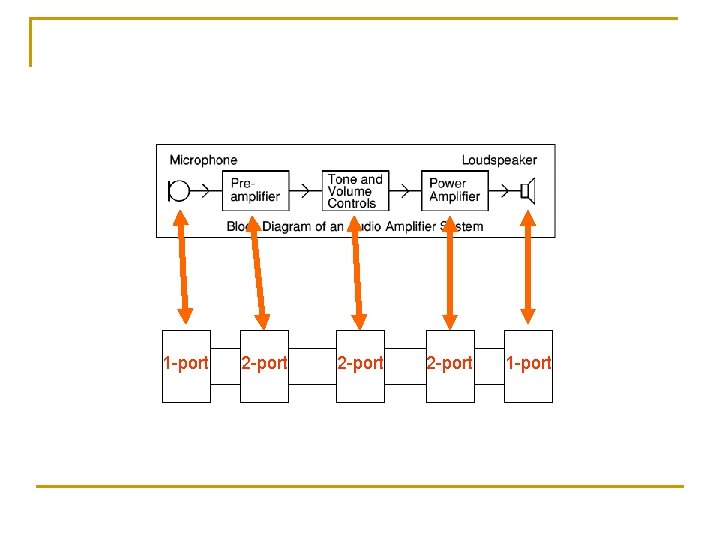
1 -port 2 -port 1 -port
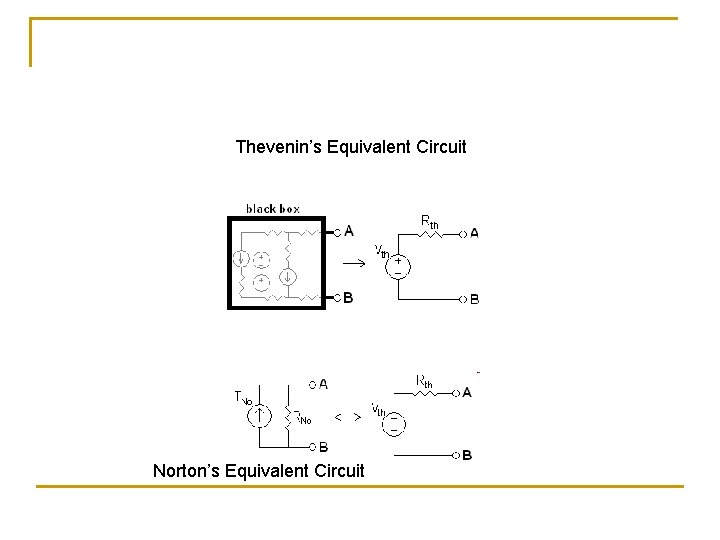
Thevenin’s Equivalent Circuit Norton’s Equivalent Circuit
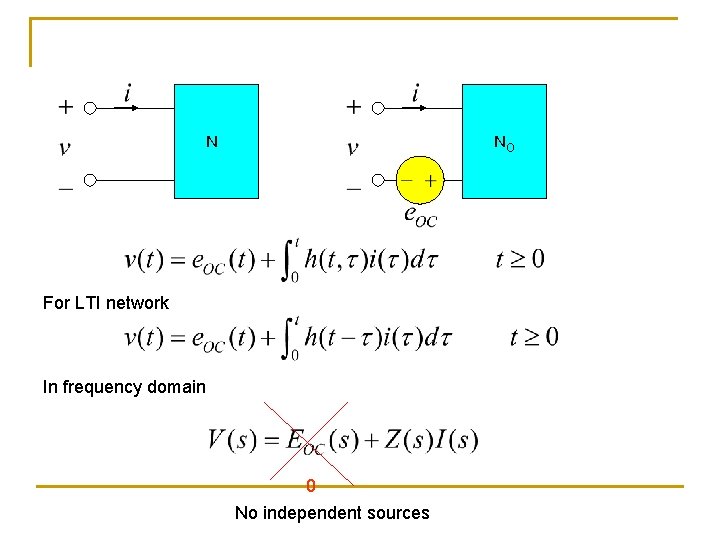
N NO For LTI network In frequency domain 0 No independent sources
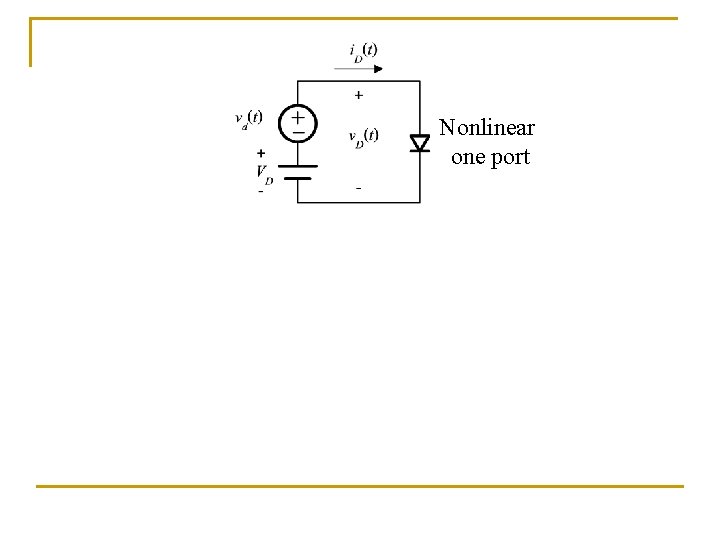
Nonlinear one port
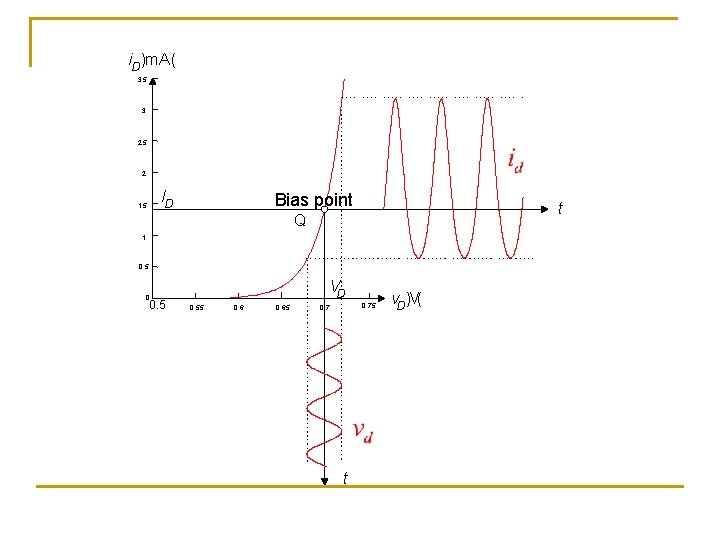
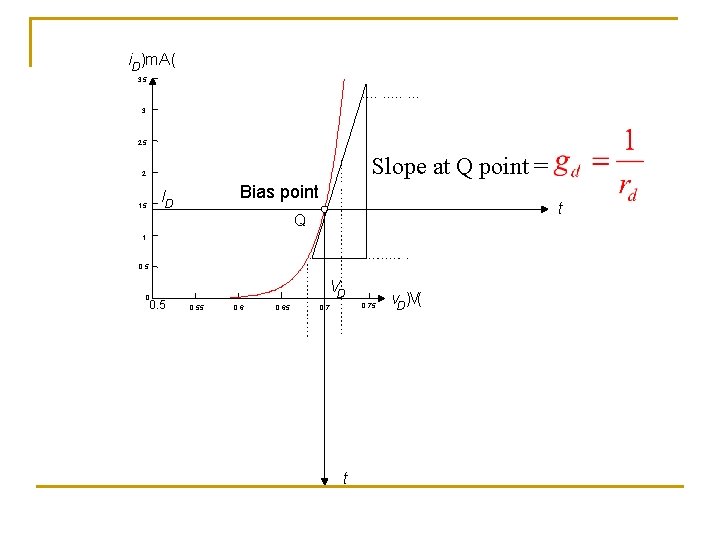
i. D)m. A( 3. 5 3 2. 5 2 ID 1. 5 Bias point t Q 1 0. 5 VD 0 0. 55 0. 65 0. 7 t v. D)V(
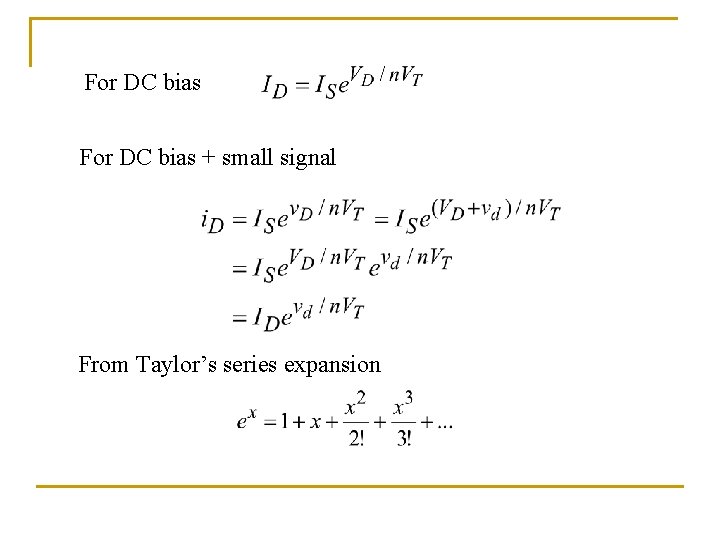
For small
For DC bias + small signal From Taylor’s series expansion
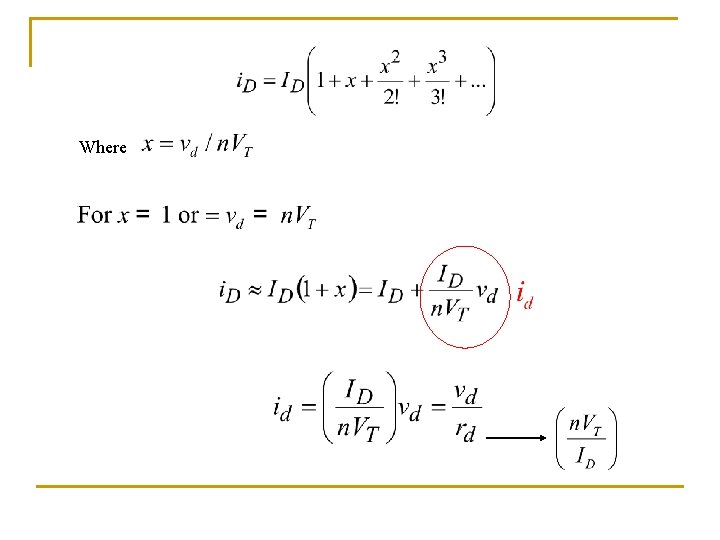
Where
i. D)m. A( 3. 5 3 2. 5 Slope at Q point = 2 Bias point ID 1. 5 t Q 1 0. 5 VD 0 0. 55 0. 65 0. 7 t v. D)V(
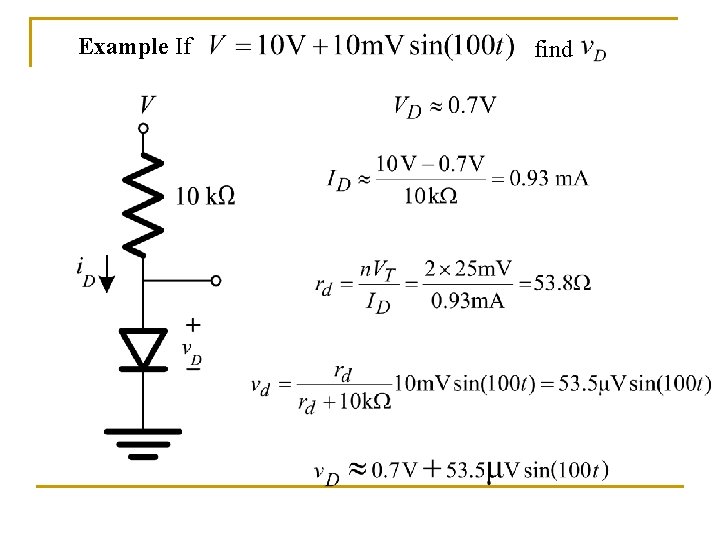
Example If find
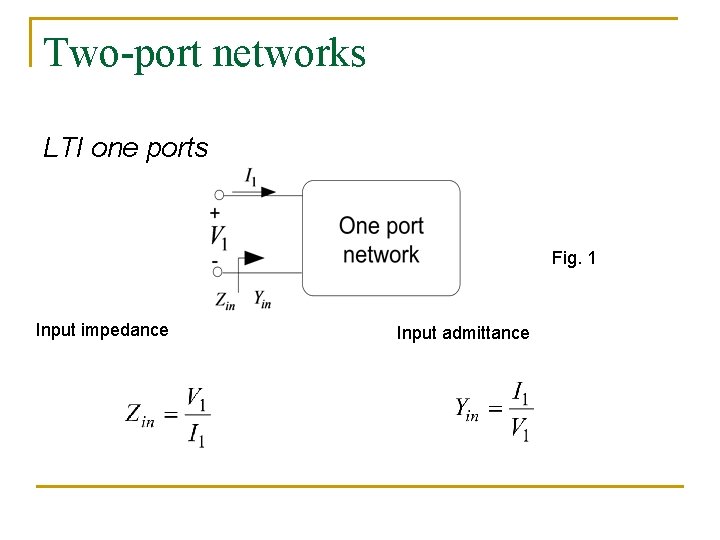
Two-port networks LTI one ports Fig. 1 Input impedance Input admittance
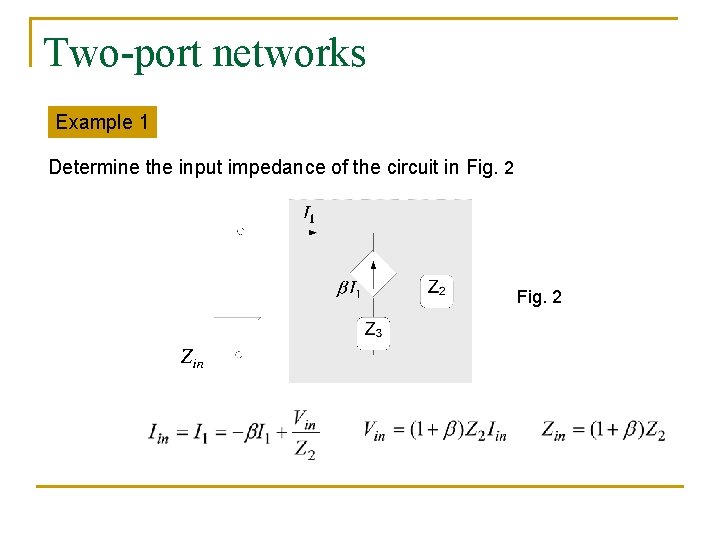
Two-port networks Example 1 Determine the input impedance of the circuit in Fig. 2
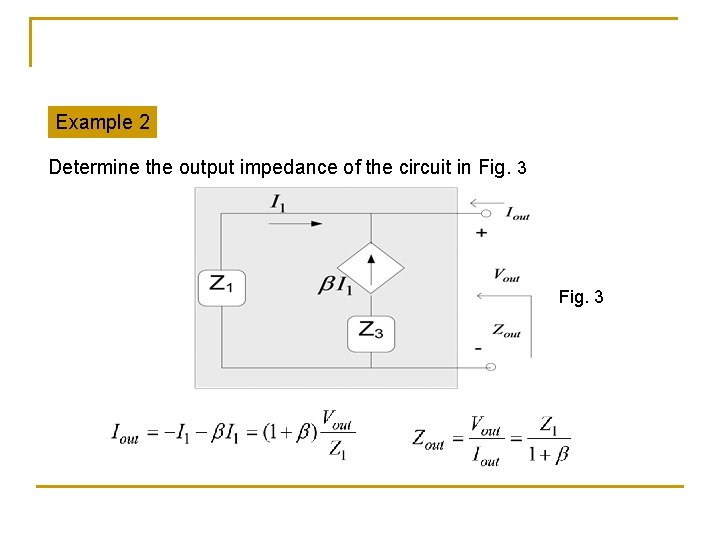
Example 2 Determine the output impedance of the circuit in Fig. 3
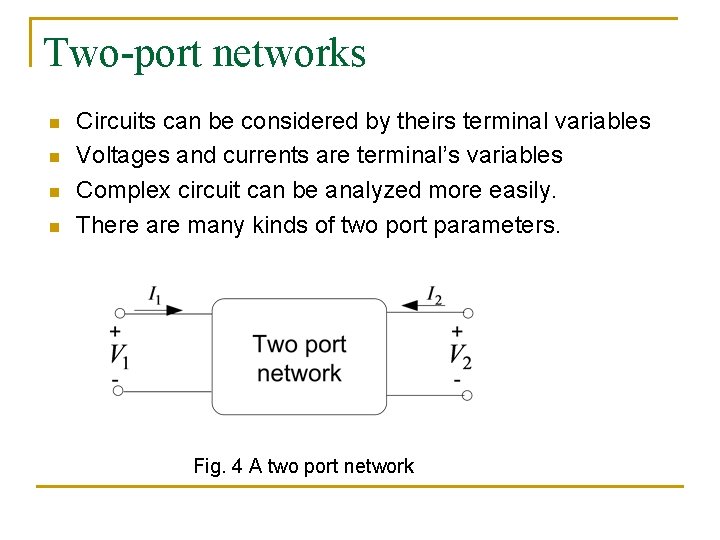
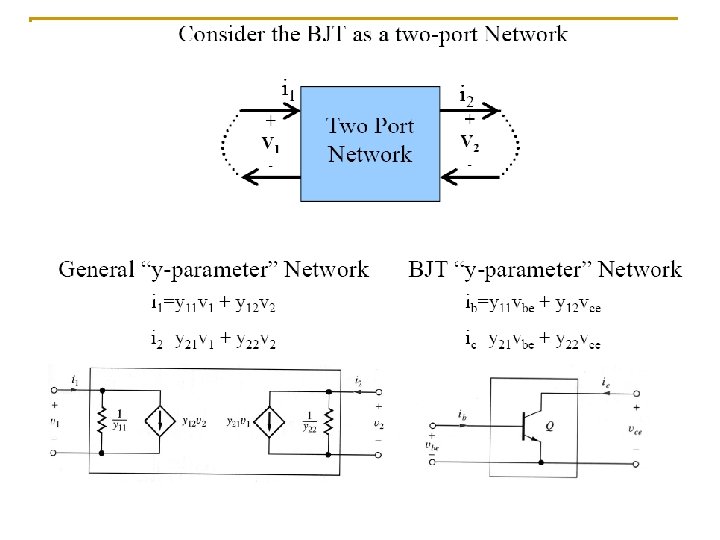
Two-port networks n n Circuits can be considered by theirs terminal variables Voltages and currents are terminal’s variables Complex circuit can be analyzed more easily. There are many kinds of two port parameters. Fig. 4 A two port network
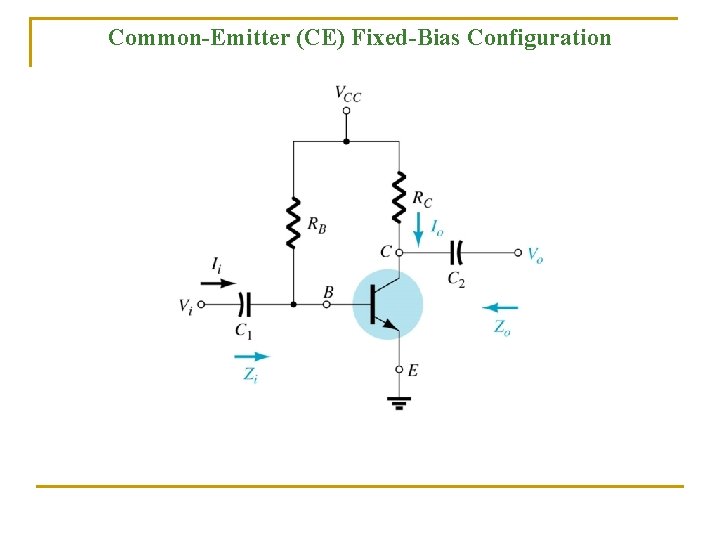
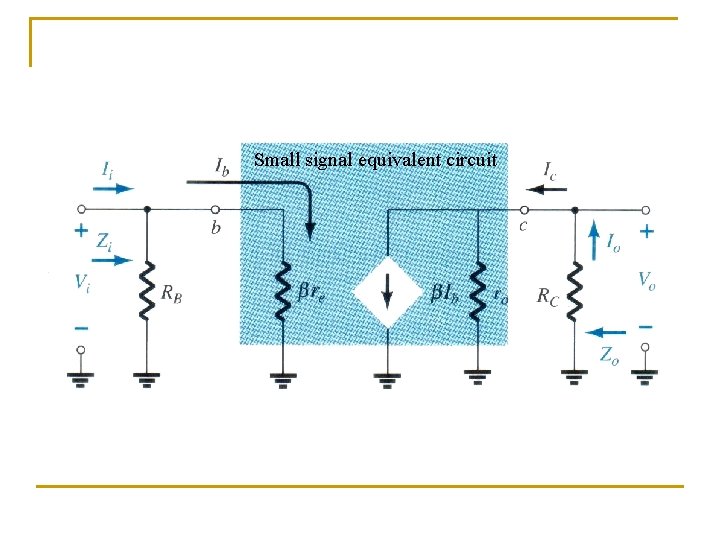
Common-Emitter (CE) Fixed-Bias Configuration
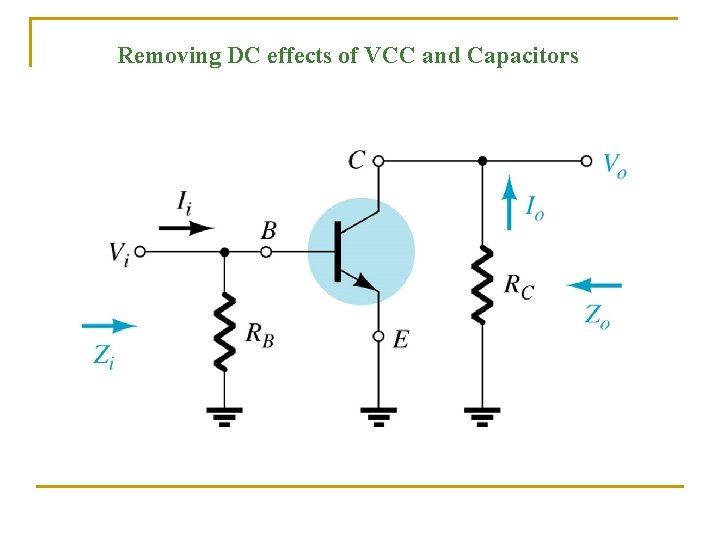
Removing DC effects of VCC and Capacitors
Small signal equivalent circuit
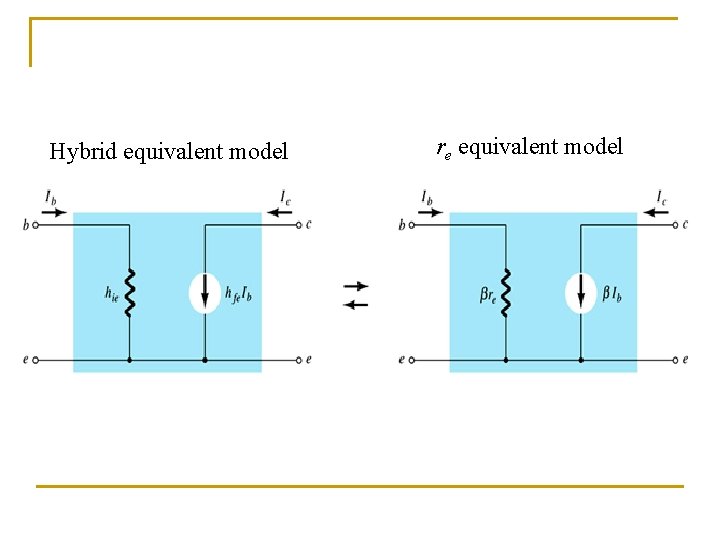
Hybrid equivalent model re equivalent model
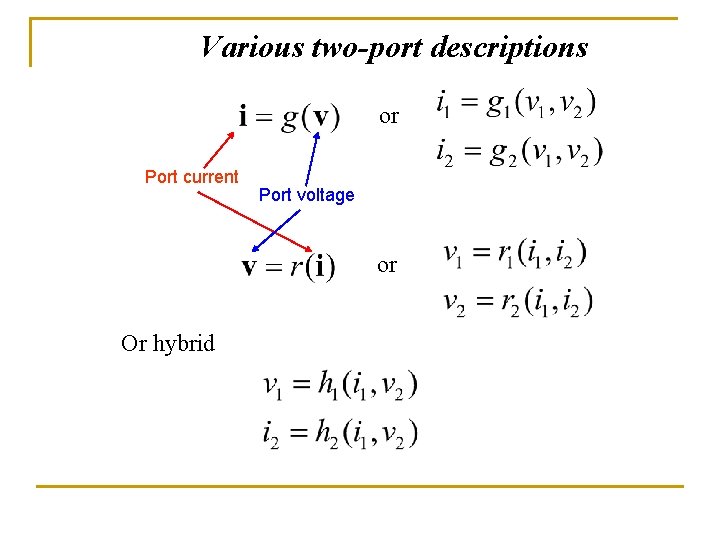
Various two-port descriptions or Port current Port voltage or Or hybrid
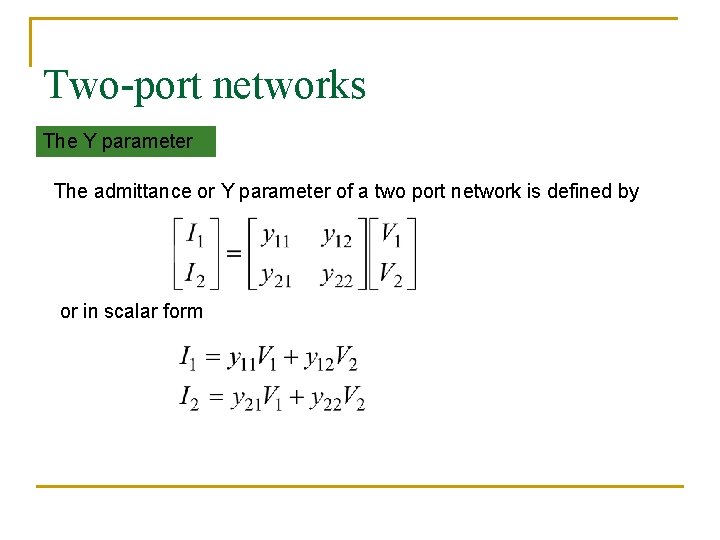
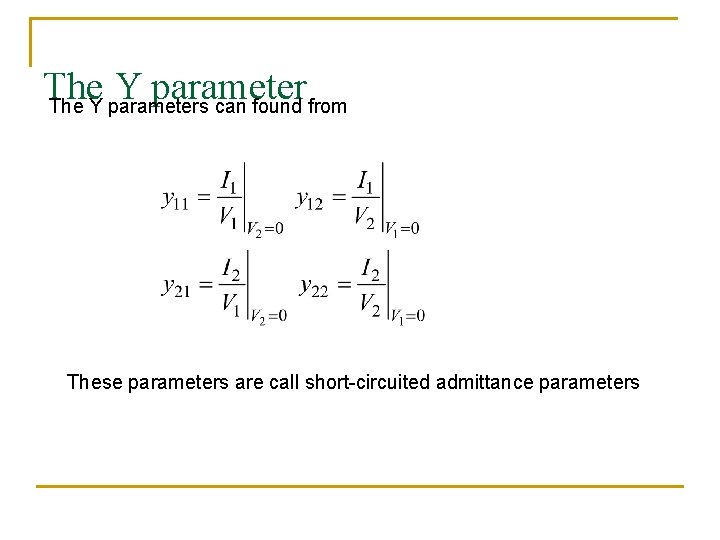
Two-port networks The Y parameter The admittance or Y parameter of a two port network is defined by or in scalar form
The Y parameters can found from These parameters are call short-circuited admittance parameters
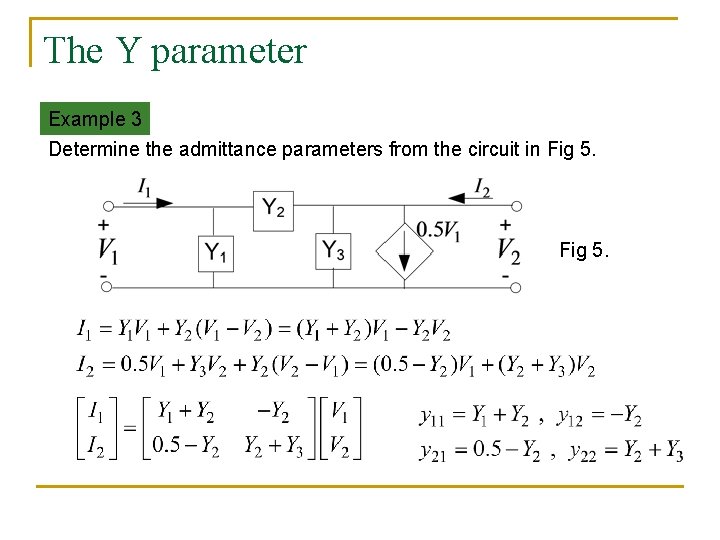
The Y parameter Example 3 Determine the admittance parameters from the circuit in Fig 5.
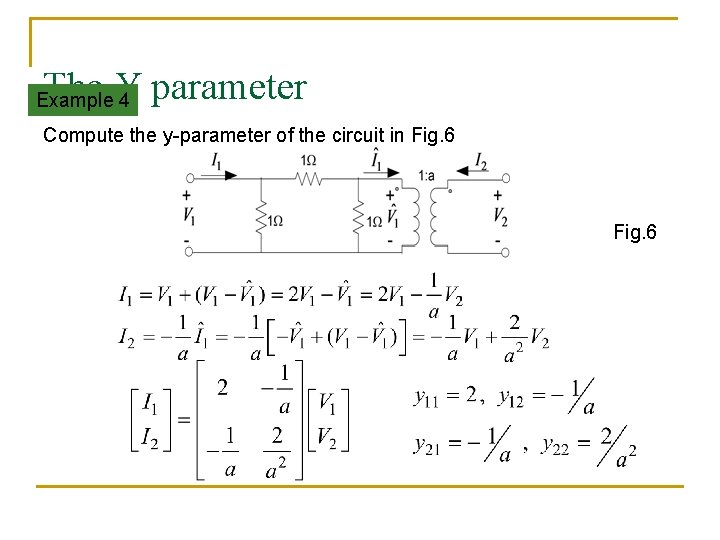
The Y parameter Example 4 Compute the y-parameter of the circuit in Fig. 6
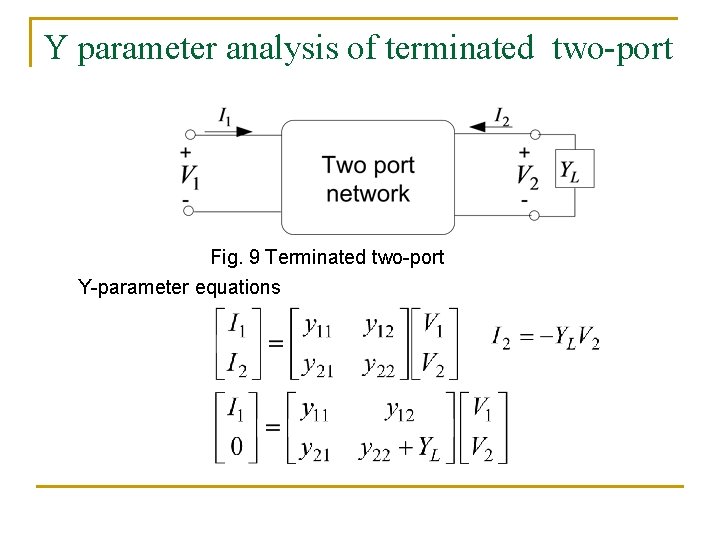
Y parameter analysis of terminated two-port Fig. 9 Terminated two-port Y-parameter equations
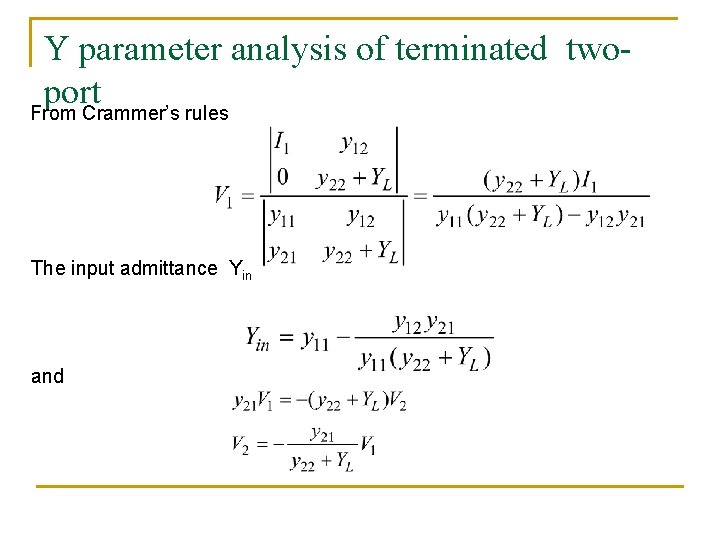
Y parameter analysis of terminated twoport From Crammer’s rules The input admittance Yin and
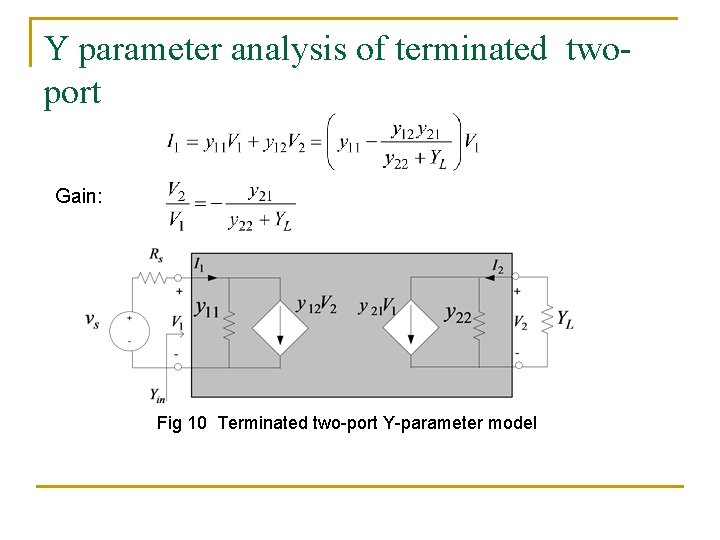
Y parameter analysis of terminated twoport Gain: Fig 10 Terminated two-port Y-parameter model
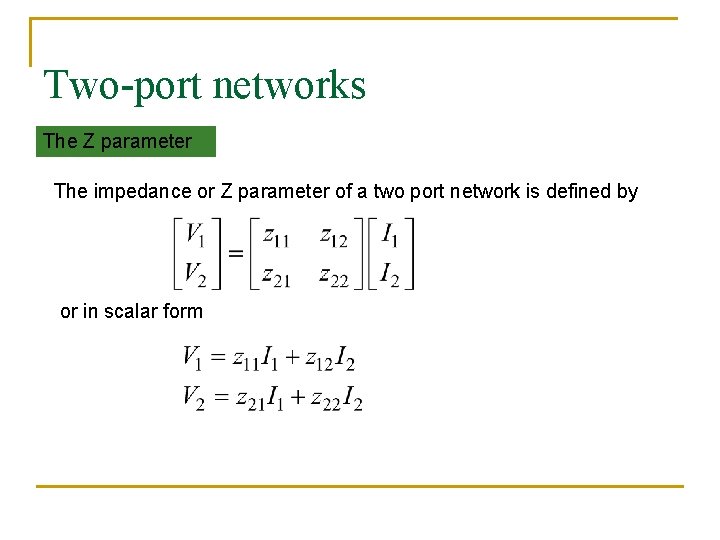
Two-port networks The Z parameter The impedance or Z parameter of a two port network is defined by or in scalar form
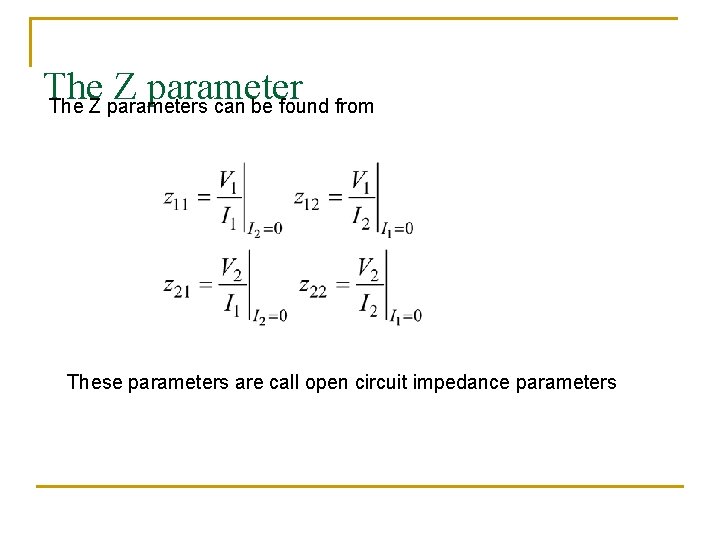
The Z parameters can be found from These parameters are call open circuit impedance parameters
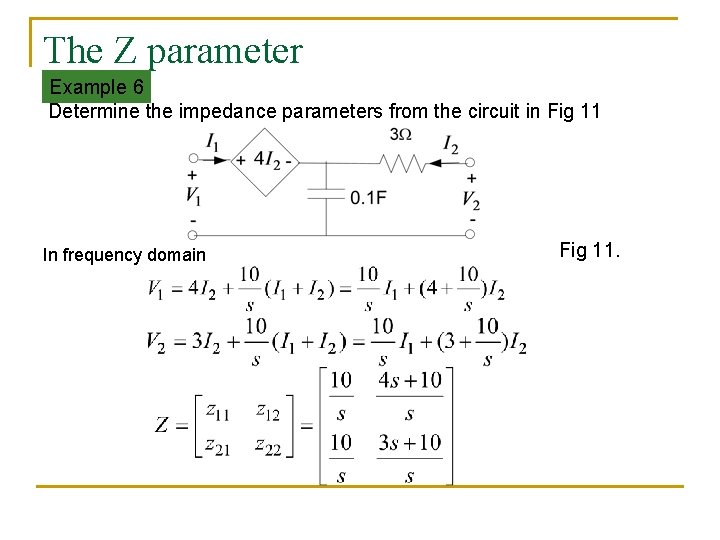
The Z parameter Example 6 Determine the impedance parameters from the circuit in Fig 11 In frequency domain Fig 11.
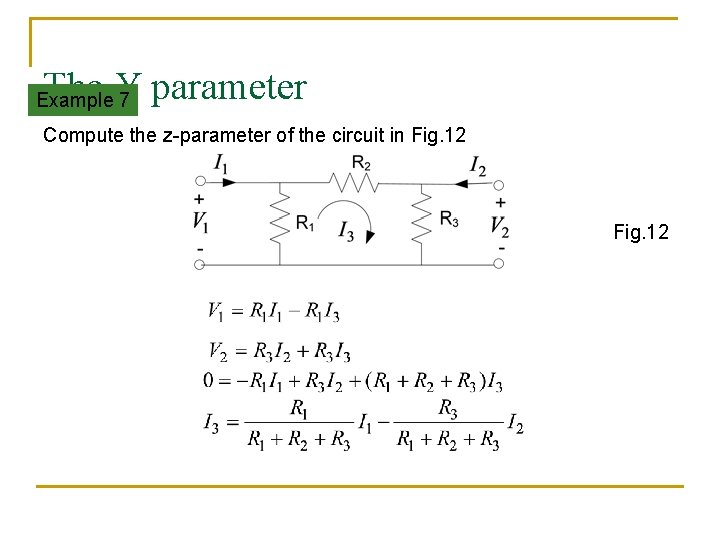
The Y parameter Example 7 Compute the z-parameter of the circuit in Fig. 12
The Z parameter
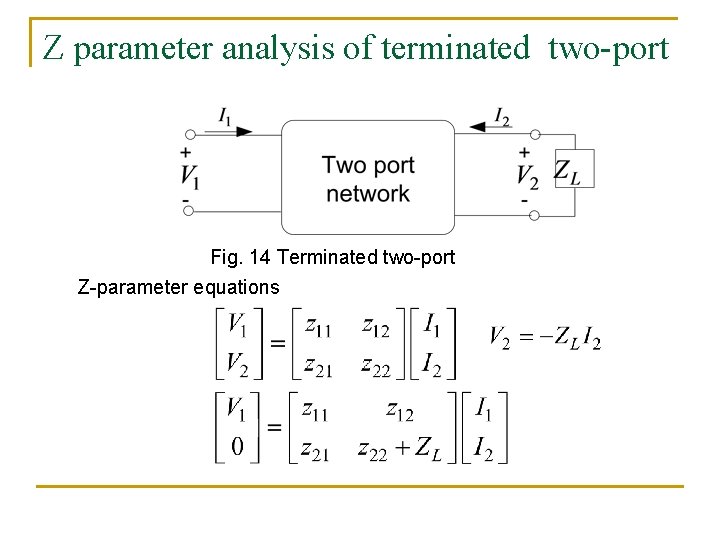
Z parameter analysis of terminated two-port Fig. 14 Terminated two-port Z-parameter equations
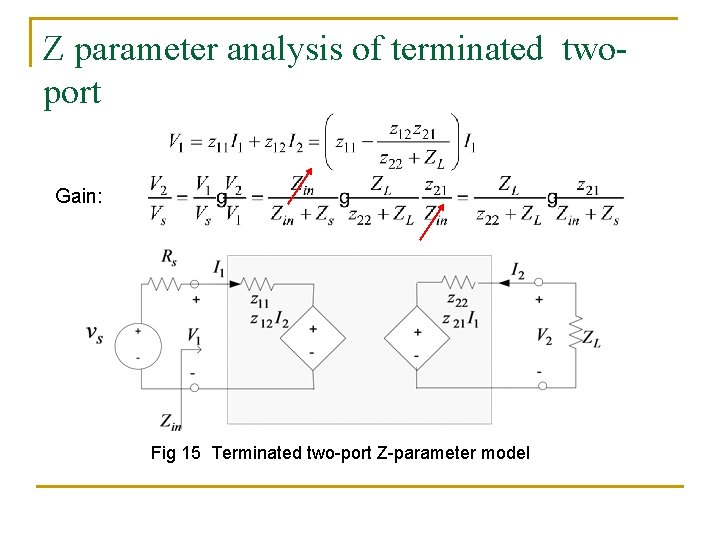
Z parameter analysis of terminated twoport From Crammer’s rules The input impedance Zin and
Z parameter analysis of terminated twoport Gain: Fig 15 Terminated two-port Z-parameter model
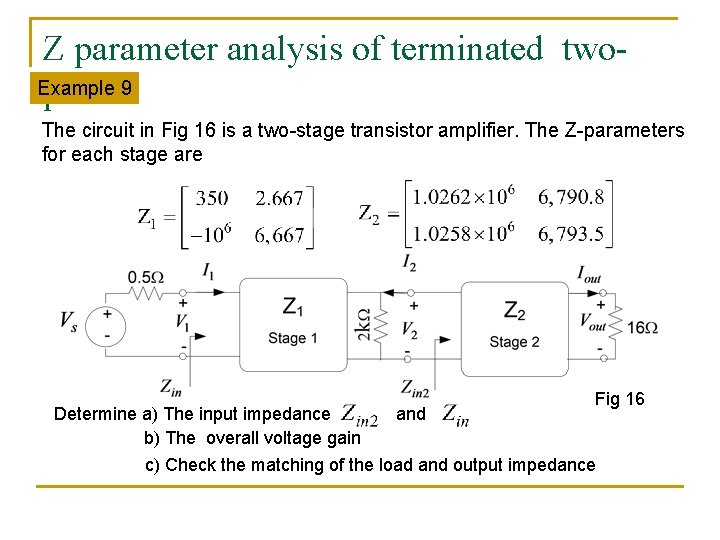
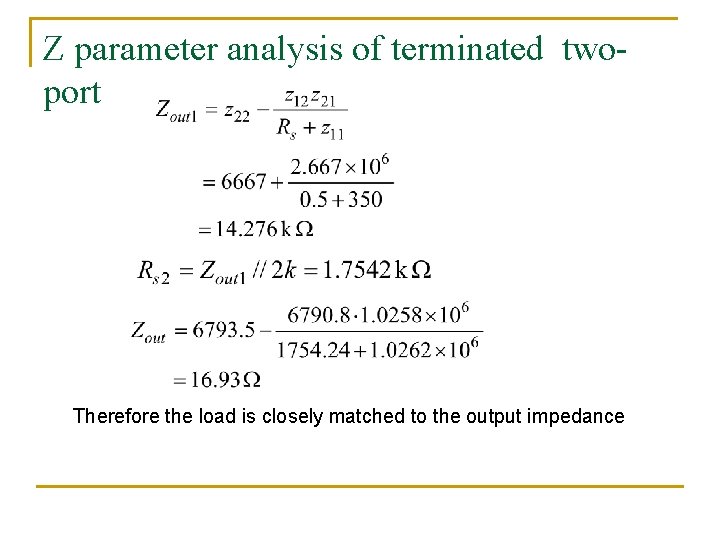
Z parameter analysis of terminated two. Example port 9 The circuit in Fig 16 is a two-stage transistor amplifier. The Z-parameters for each stage are Determine a) The input impedance b) The overall voltage gain and Fig 16 c) Check the matching of the load and output impedance
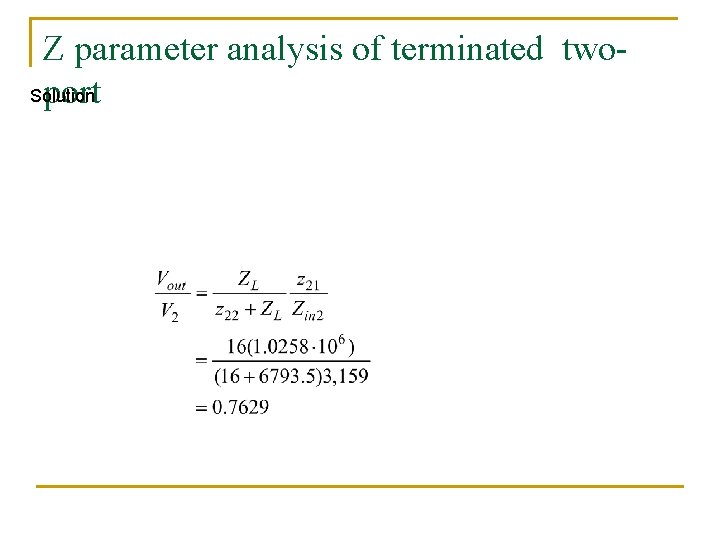
Z parameter analysis of terminated two. Solution port
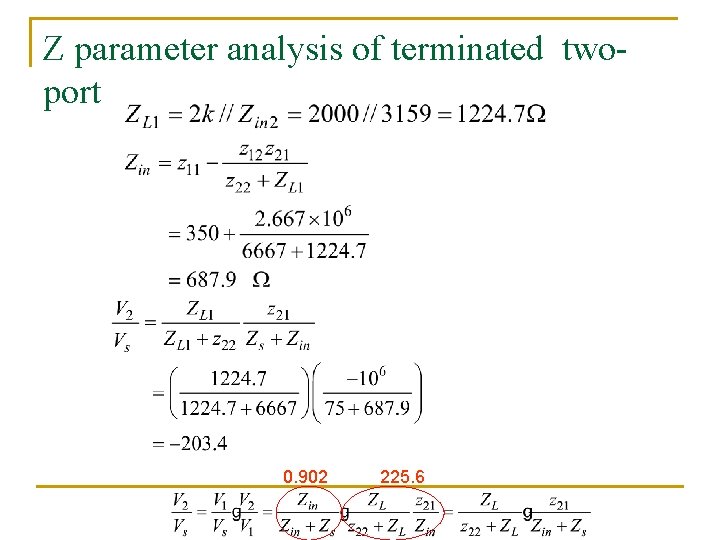
Z parameter analysis of terminated twoport 0. 902 225. 6
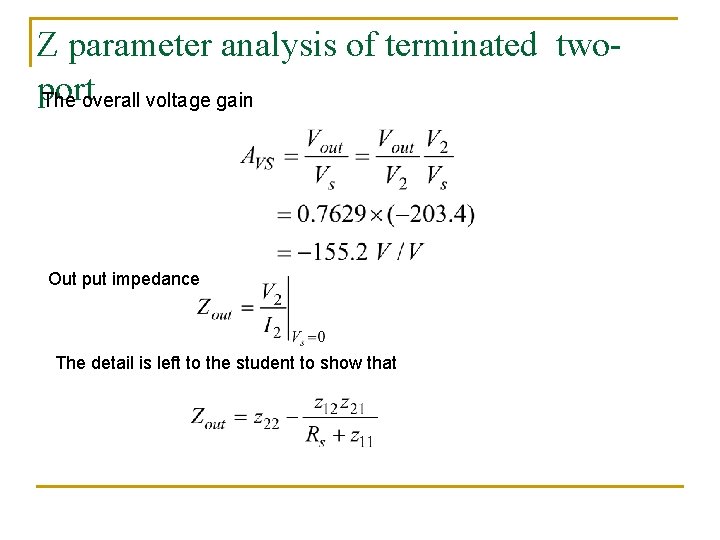
Z parameter analysis of terminated twoport The overall voltage gain Out put impedance The detail is left to the student to show that
Z parameter analysis of terminated twoport Therefore the load is closely matched to the output impedance
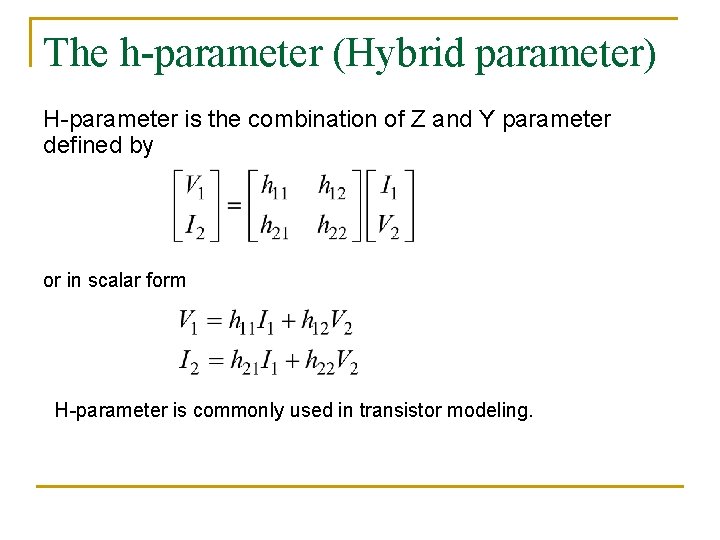
The h-parameter (Hybrid parameter) H-parameter is the combination of Z and Y parameter defined by or in scalar form H-parameter is commonly used in transistor modeling.
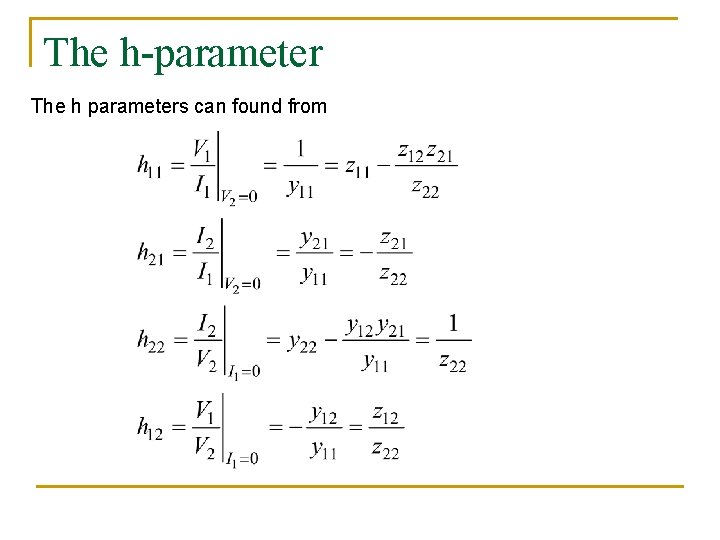
The h-parameter The h parameters can found from
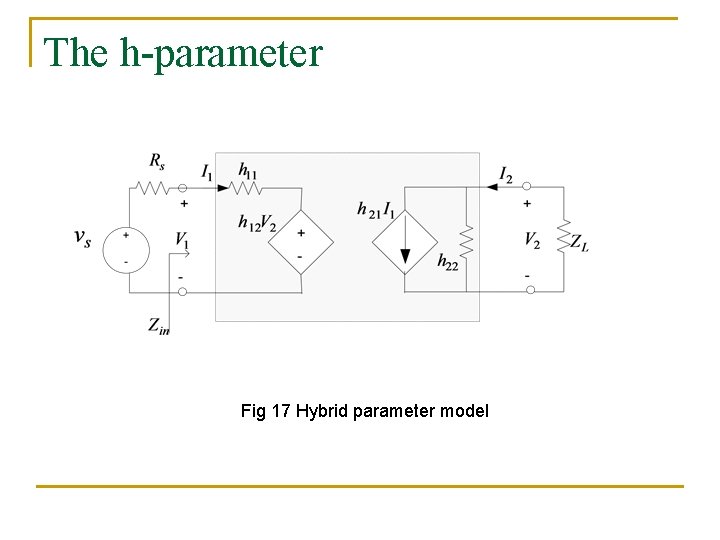
The h-parameter Fig 17 Hybrid parameter model
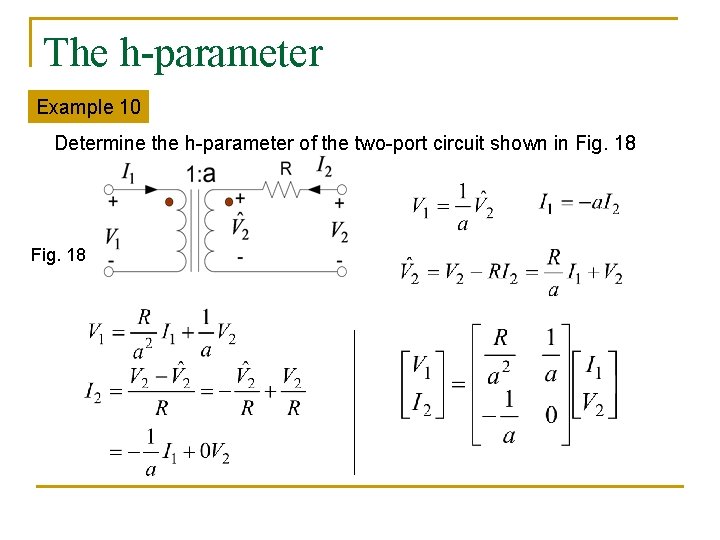
The h-parameter Example 10 Determine the h-parameter of the two-port circuit shown in Fig. 18
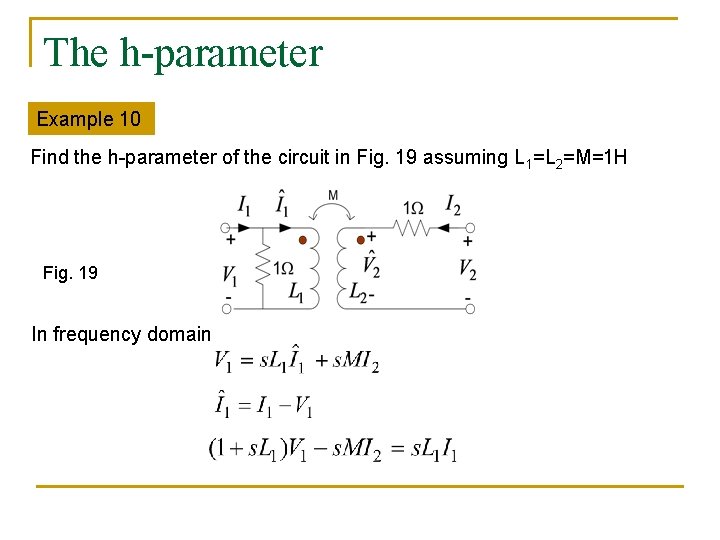
The h-parameter Example 10 Find the h-parameter of the circuit in Fig. 19 assuming L 1=L 2=M=1 H Fig. 19 In frequency domain
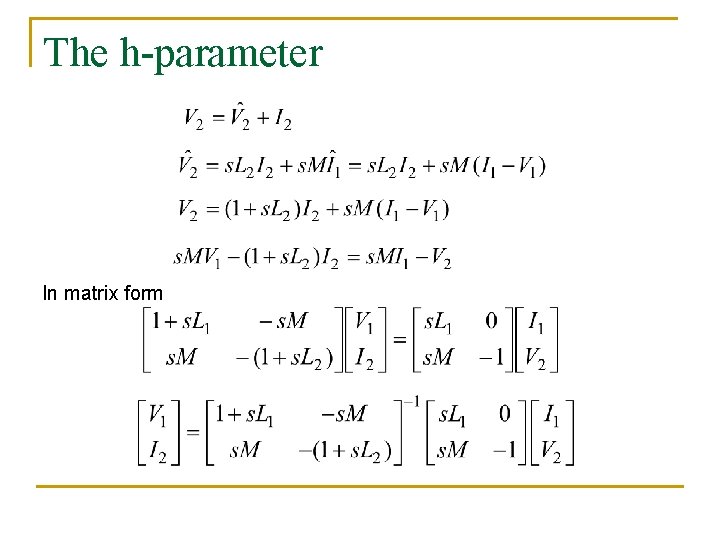
The h-parameter In matrix form
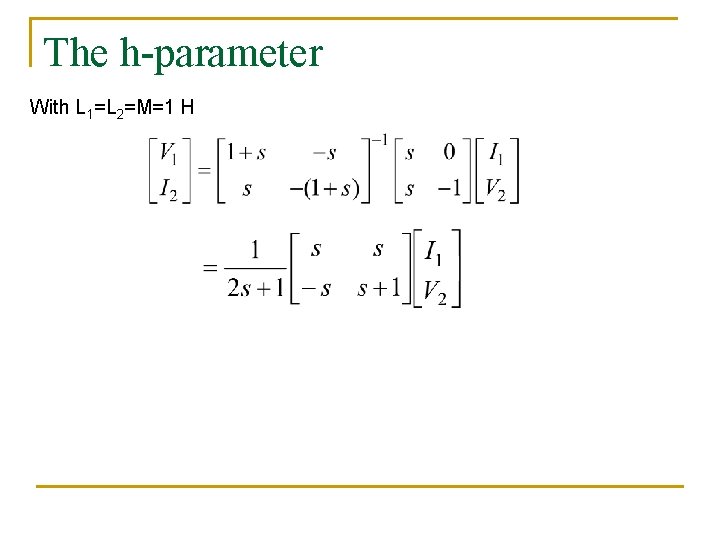
The h-parameter With L 1=L 2=M=1 H
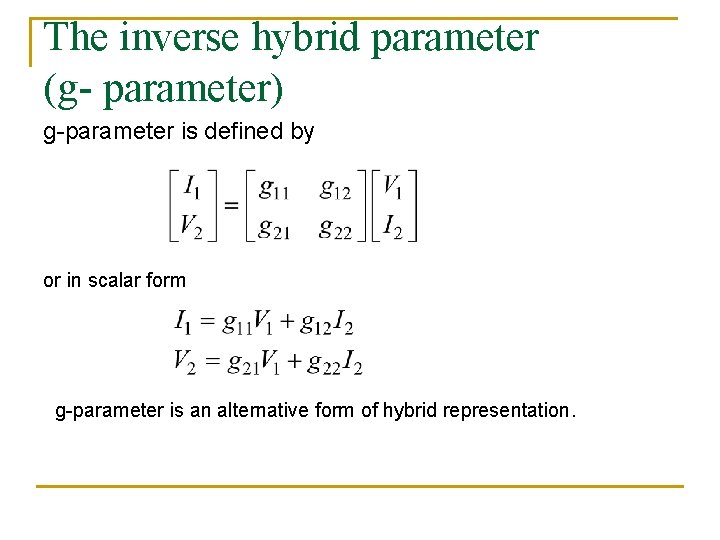
The inverse hybrid parameter (g- parameter) g-parameter is defined by or in scalar form g-parameter is an alternative form of hybrid representation.
The g parameters can found from
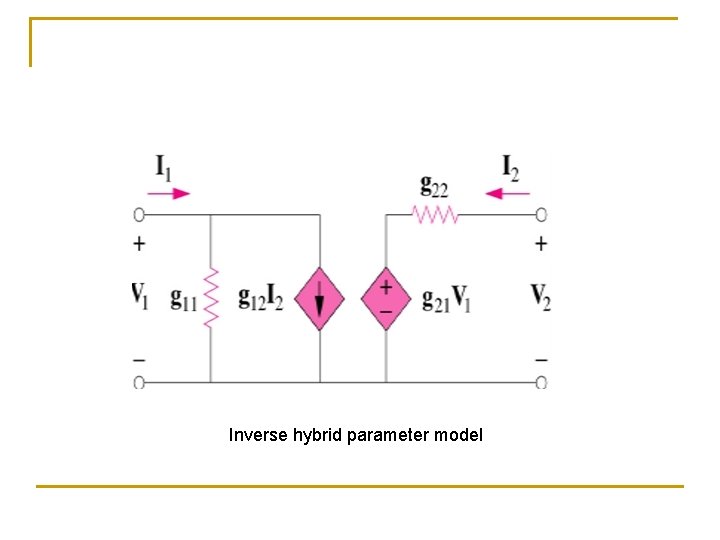
Inverse hybrid parameter model
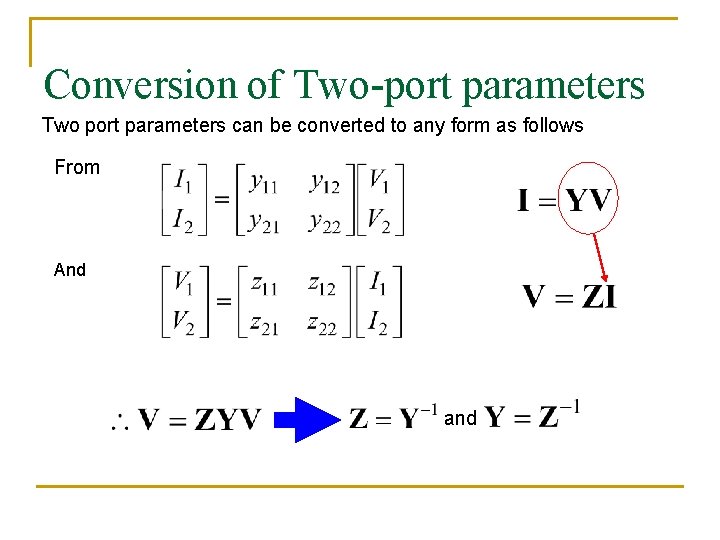
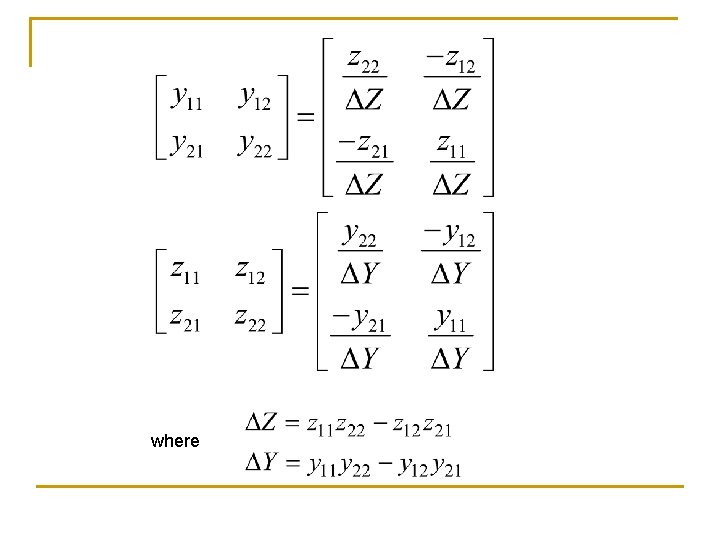
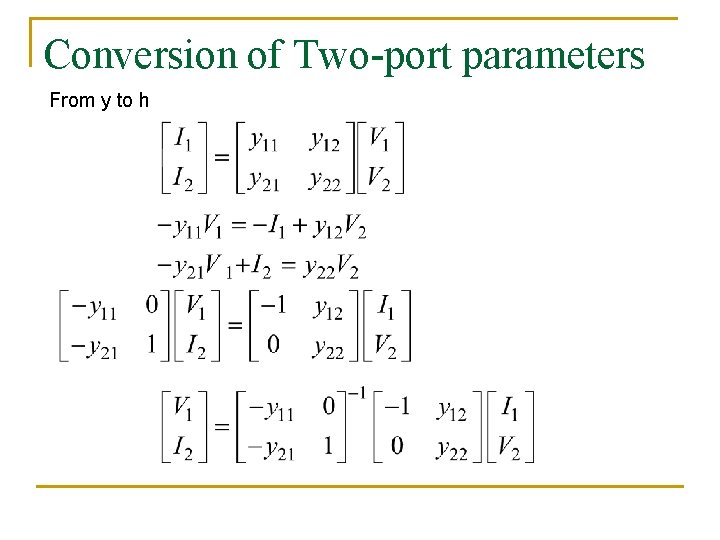
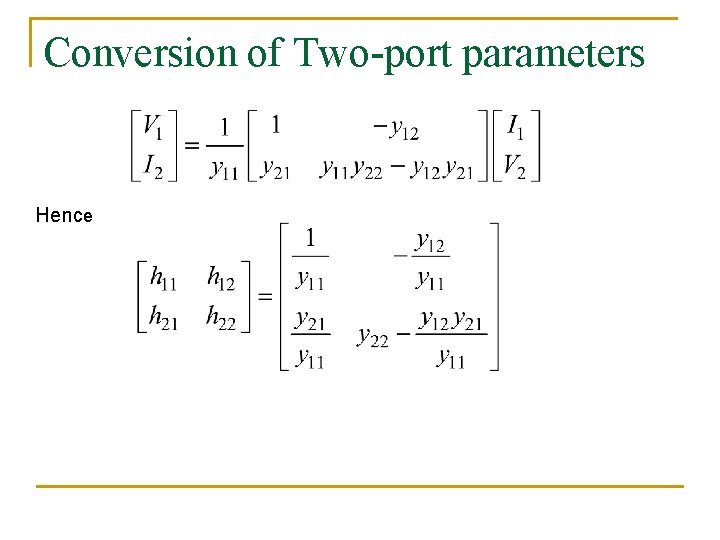
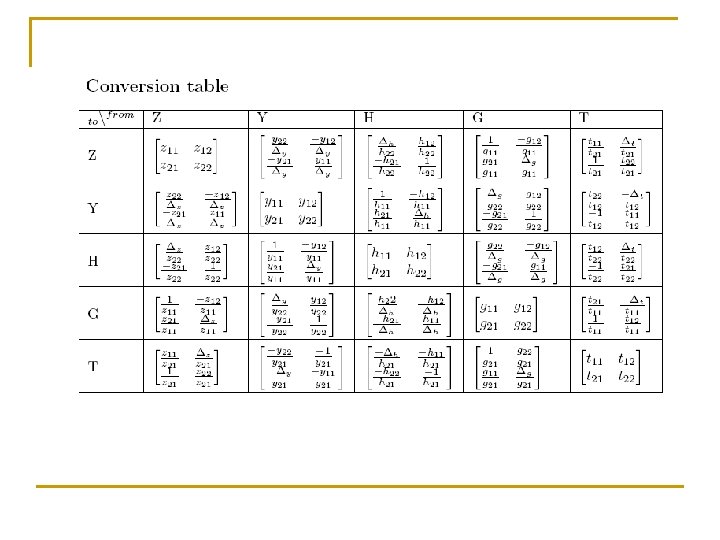
Conversion of Two-port parameters Two port parameters can be converted to any form as follows From And and
where
Conversion of Two-port parameters From y to h
Conversion of Two-port parameters Hence
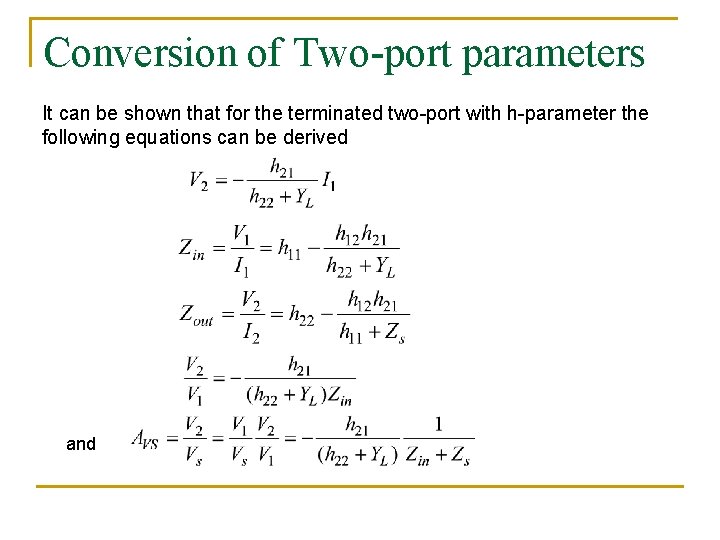
Conversion of Two-port parameters It can be shown that for the terminated two-port with h-parameter the following equations can be derived and
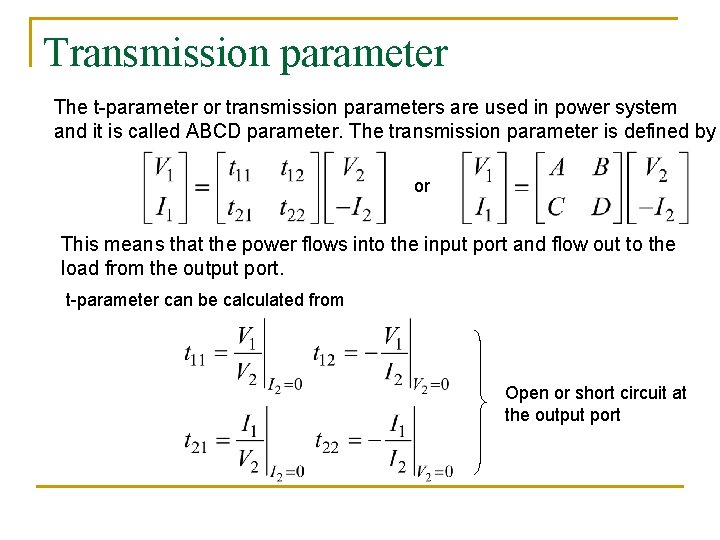
Transmission parameter The t-parameter or transmission parameters are used in power system and it is called ABCD parameter. The transmission parameter is defined by or This means that the power flows into the input port and flow out to the load from the output port. t-parameter can be calculated from Open or short circuit at the output port
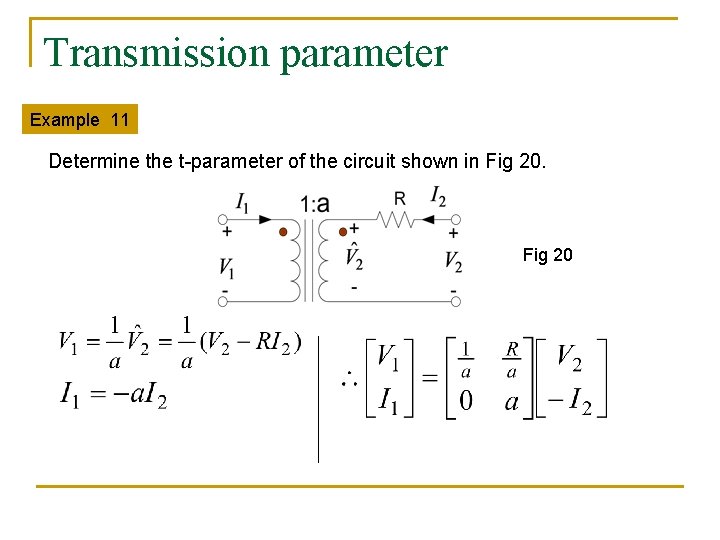
Transmission parameter Example 11 Determine the t-parameter of the circuit shown in Fig 20
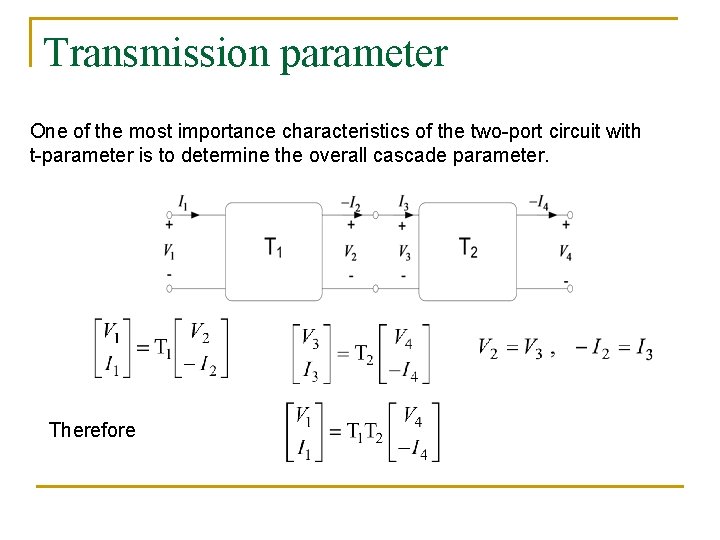
Transmission parameter One of the most importance characteristics of the two-port circuit with t-parameter is to determine the overall cascade parameter. Therefore
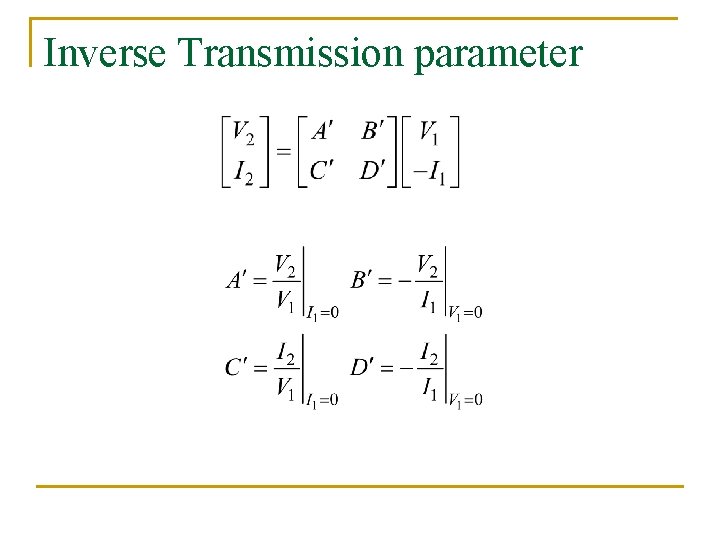
Inverse Transmission parameter
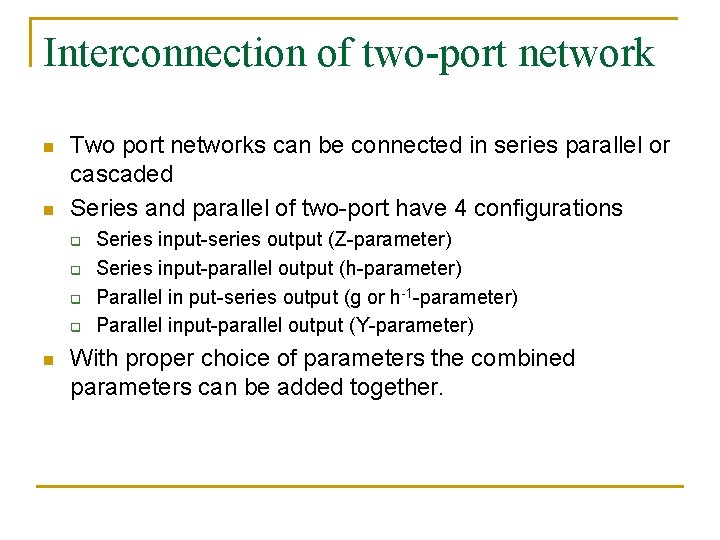
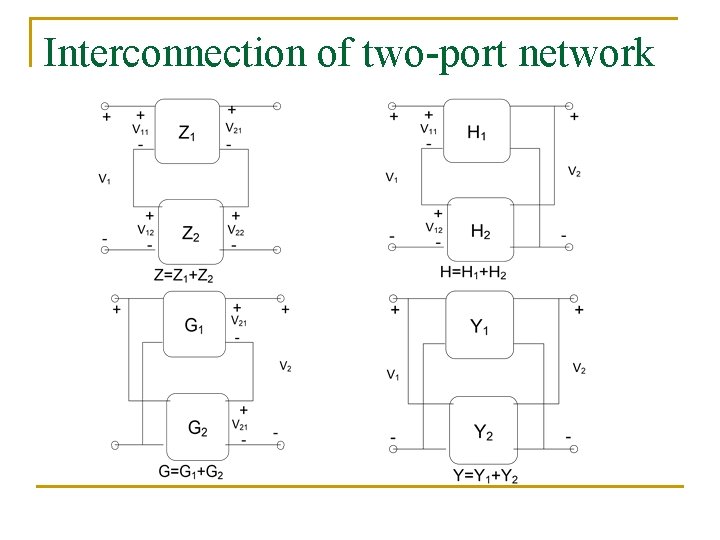
Interconnection of two-port network n n Two port networks can be connected in series parallel or cascaded Series and parallel of two-port have 4 configurations q q n Series input-series output (Z-parameter) Series input-parallel output (h-parameter) Parallel in put-series output (g or h-1 -parameter) Parallel input-parallel output (Y-parameter) With proper choice of parameters the combined parameters can be added together.
Interconnection of two-port network
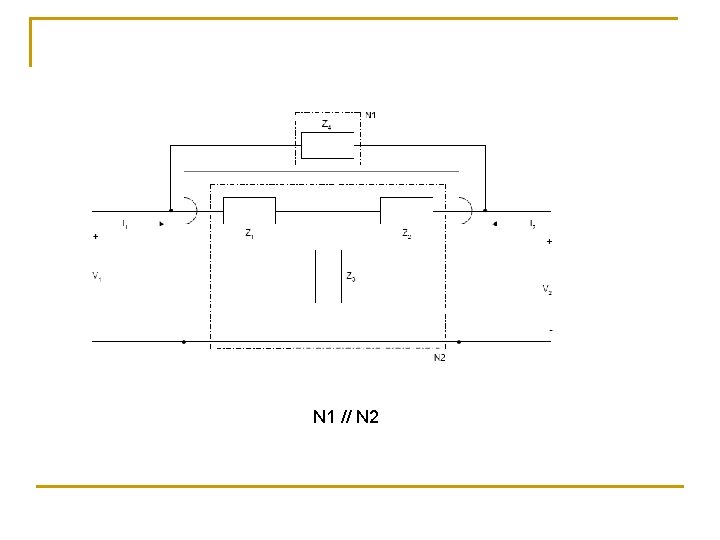
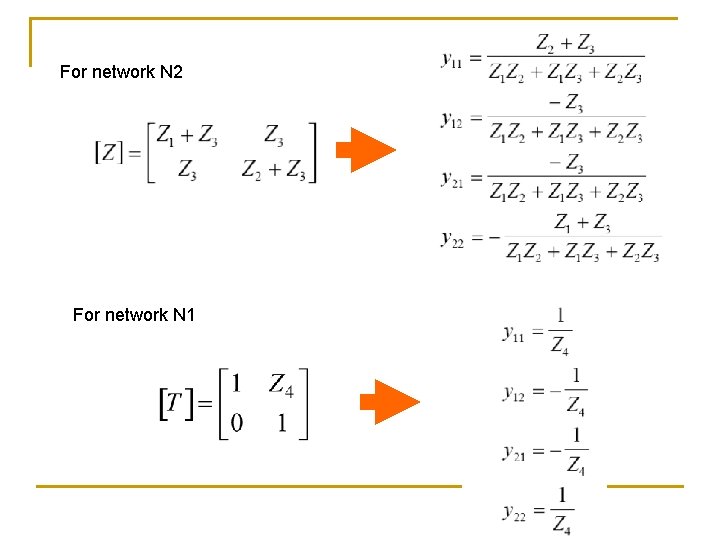
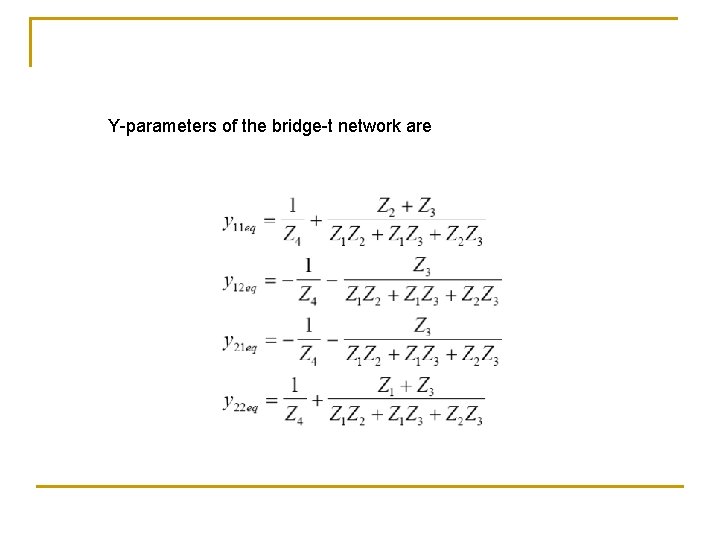
Example Bridge-T network
N 1 // N 2
For network N 2 For network N 1
Y-parameters of the bridge-t network are