The value of EARIP 12 Kjeld Hansen Motivation


- Slides: 26
The value of EARIP (1/2): Kjeld Hansen Motivation: • Offers a new practice in asthma research and innovation projects • Patients are involved from a very early stage through surveys and patient advisors • Patients are involved on multiple levels and with multiple stakeholders • Patients are involved throughout the entire project
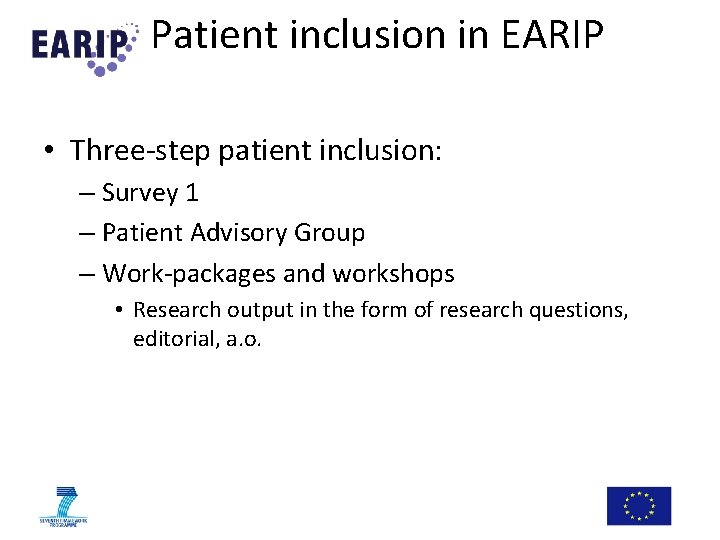
Patient inclusion in EARIP • Three-step patient inclusion: – Survey 1 – Patient Advisory Group – Work-packages and workshops • Research output in the form of research questions, editorial, a. o.
Survey 1: Participation The research priorities of people with asthma, their families and primary care doctors/nurses can result in different priorities than those of researchers and the industry. • Respondents: 1, 904 • Distribution: 22 countries • Outcome: 15 priorities were identified as important or very important by ≥ 95% of respondents
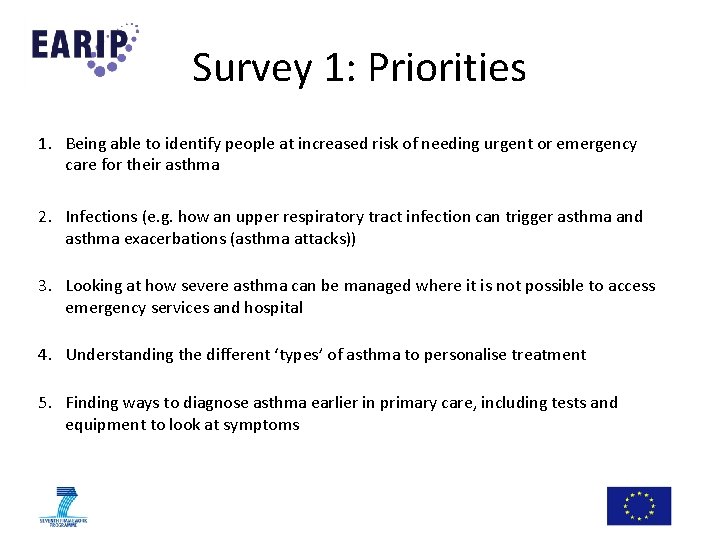
Survey 1: Priorities 1. Being able to identify people at increased risk of needing urgent or emergency care for their asthma 2. Infections (e. g. how an upper respiratory tract infection can trigger asthma and asthma exacerbations (asthma attacks)) 3. Looking at how severe asthma can be managed where it is not possible to access emergency services and hospital 4. Understanding the different ‘types’ of asthma to personalise treatment 5. Finding ways to diagnose asthma earlier in primary care, including tests and equipment to look at symptoms
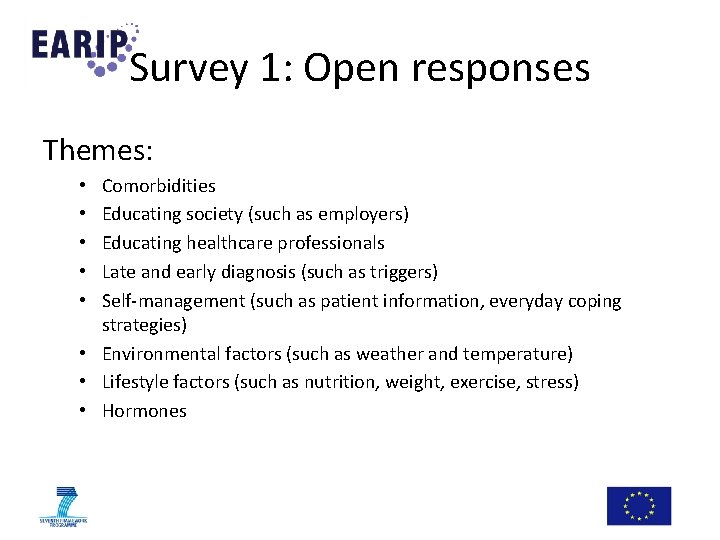
Survey 1: Open responses Themes: Comorbidities Educating society (such as employers) Educating healthcare professionals Late and early diagnosis (such as triggers) Self-management (such as patient information, everyday coping strategies) • Environmental factors (such as weather and temperature) • Lifestyle factors (such as nutrition, weight, exercise, stress) • Hormones • • •
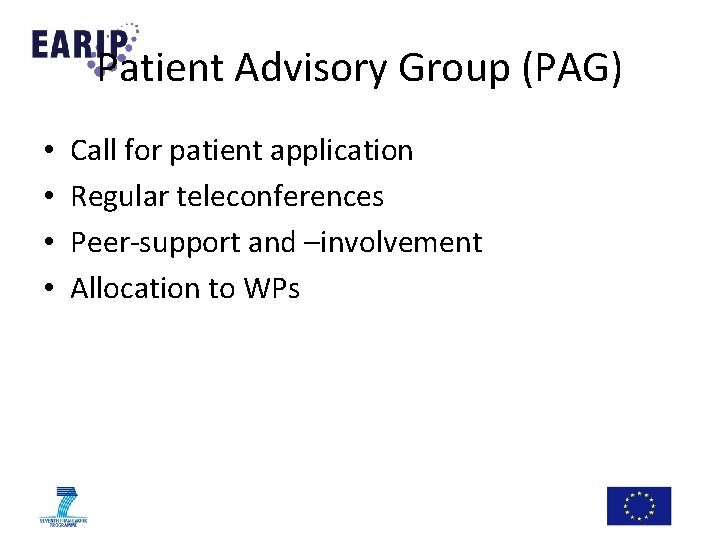
Patient Advisory Group (PAG) • • Call for patient application Regular teleconferences Peer-support and –involvement Allocation to WPs
Influence • How these findings have influenced EARIP and the roadmap: – All WP reports addressed relevant patient priorities – Patient advisors assigned to each WP – Patient priorities included in survey 2 – Patient advisors included in the consensus workshop
Impact • Consensus workshop on asthma self-management • Workshop with Members of European Parliament (MEPs) • Consensus workshop on asthma diagnosis and monitoring • Consensus workshop on top 15 priorities • Developing research questions for future research funding calls •
Consequences • • Evolvement of patient involvement Reality check Recognition of other dimensions Patients, practitioners and other stakeholders are redefining their relationship
The value of EARIP (2/2) • Better reflection of patients’ realities • Increased relevance of research might lead to more impact • Reflects a more sustianable distribution of responsibilities and duties bt. stakeholders • The challenges in the intensification of collaboration bt. stakeholders might lead to more innovative ideas
Outcome • Reinforces patients’ conviction of the value of their expertice in own condition • Increased momentum to drive and support this development • Produce a mandate for the research community and stakeholders • Enforces commitment to the responsibility of patients as stakeholders
The asthma roadmap: Pippa Powell Aim: To produce a roadmap of what research is needed and should be prioritised to reduce asthma deaths and hospitalisations across Europe, and improve asthma control and quality of life for people of all ages with asthma
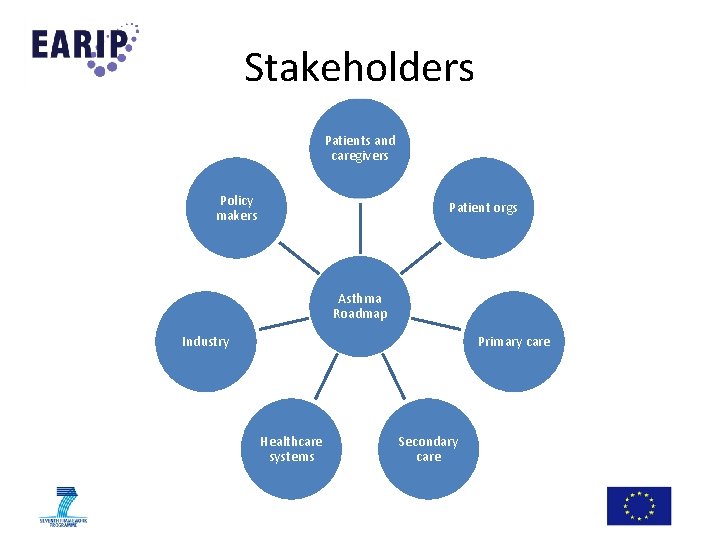
Stakeholders Patients and caregivers Policy makers Patient orgs Asthma Roadmap Industry Primary care Healthcare systems Secondary care
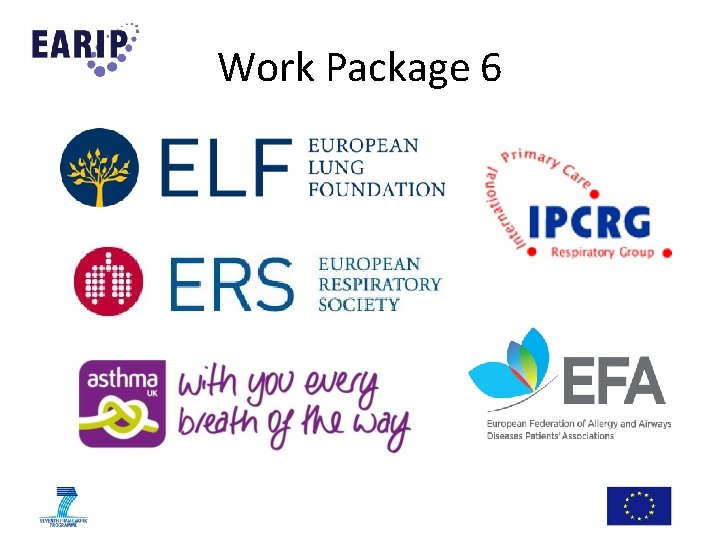
Work Package 6
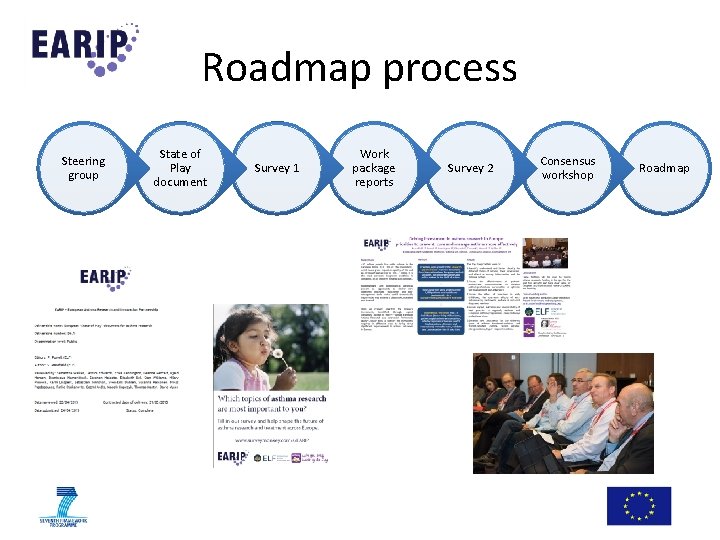
Roadmap process Steering group State of Play document Survey 1 Work package reports Survey 2 Consensus workshop Roadmap
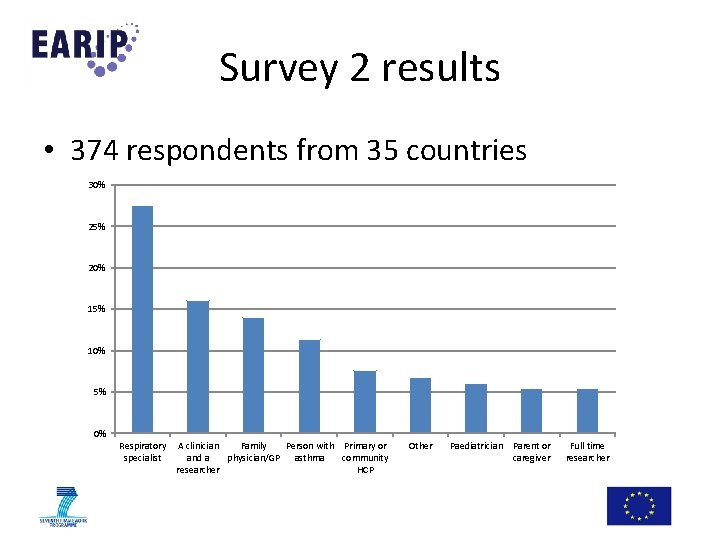
Survey 2 results • 374 respondents from 35 countries 30% 25% 20% 15% 10% 5% 0% Respiratory A clinician Family Person with Primary or specialist and a physician/GP asthma community researcher HCP Other Paediatrician Parent or caregiver Full time researcher
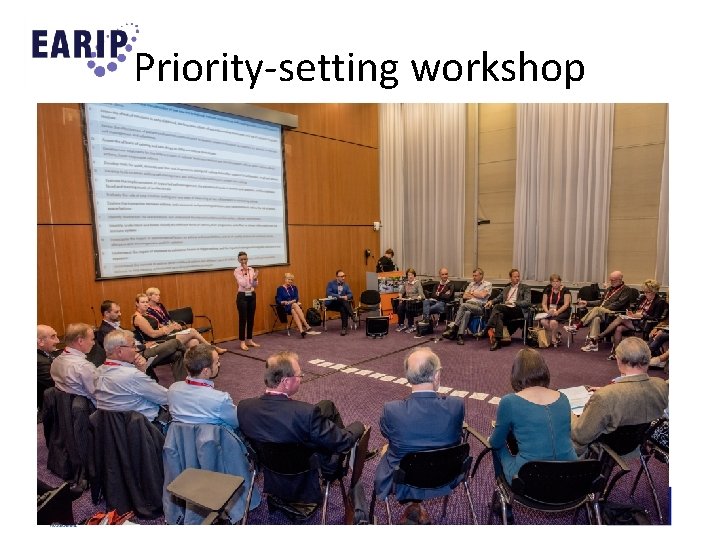
Priority-setting workshop
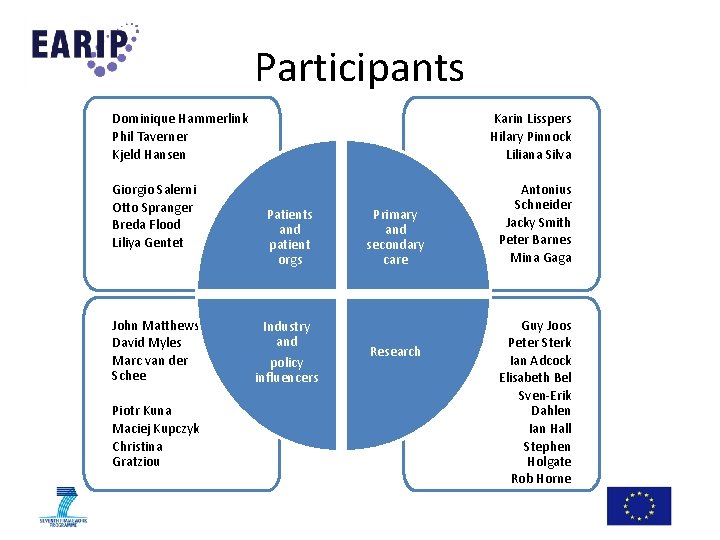
Participants Dominique Hammerlink Phil Taverner Kjeld Hansen Giorgio Salerni Otto Spranger Breda Flood Liliya Gentet John Matthews David Myles Marc van der Schee Piotr Kuna Maciej Kupczyk Christina Gratziou Karin Lisspers Hilary Pinnock Liliana Silva Patients and patient orgs Industry and policy influencers Primary and secondary care Research Antonius Schneider Jacky Smith Peter Barnes Mina Gaga Guy Joos Peter Sterk Ian Adcock Elisabeth Bel Sven-Erik Dahlen Ian Hall Stephen Holgate Rob Horne
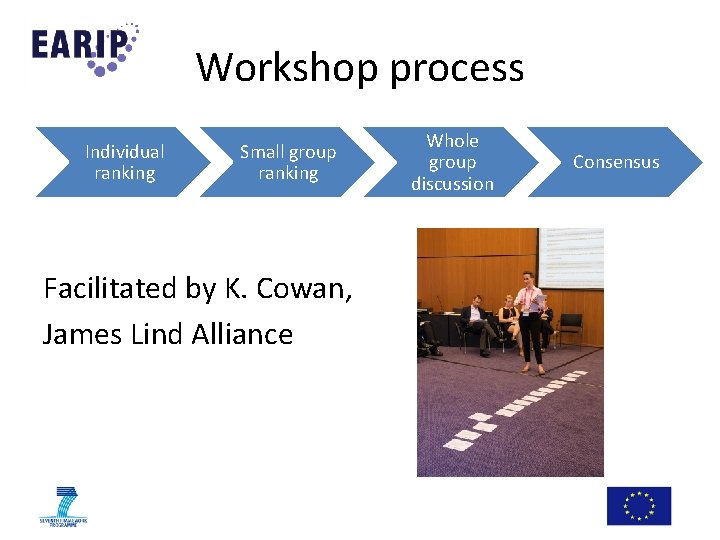
Workshop process Individual ranking Small group ranking Facilitated by K. Cowan, James Lind Alliance Whole group discussion Consensus
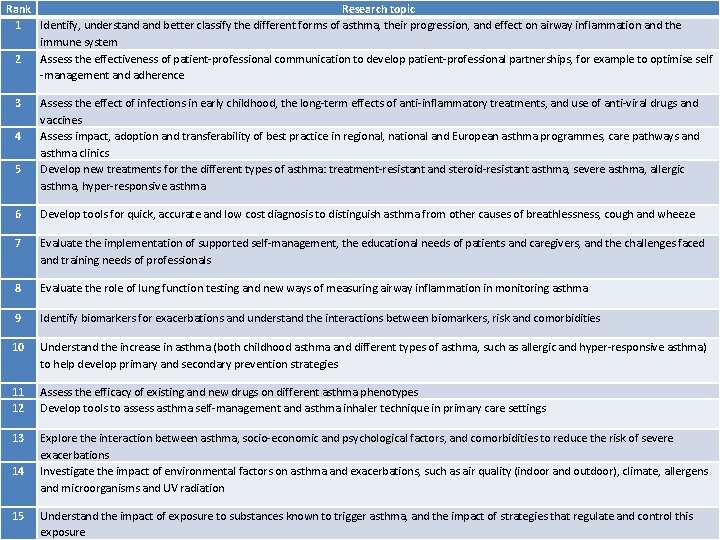
Rank Research topic 1 Identify, understand better classify the different forms of asthma, their progression, and effect on airway inflammation and the immune system 2 Assess the effectiveness of patient-professional communication to develop patient-professional partnerships, for example to optimise self -management and adherence 3 4 5 Assess the effect of infections in early childhood, the long-term effects of anti-inflammatory treatments, and use of anti-viral drugs and vaccines Assess impact, adoption and transferability of best practice in regional, national and European asthma programmes, care pathways and asthma clinics Develop new treatments for the different types of asthma: treatment-resistant and steroid-resistant asthma, severe asthma, allergic asthma, hyper-responsive asthma 6 Develop tools for quick, accurate and low cost diagnosis to distinguish asthma from other causes of breathlessness, cough and wheeze 7 Evaluate the implementation of supported self-management, the educational needs of patients and caregivers, and the challenges faced and training needs of professionals 8 Evaluate the role of lung function testing and new ways of measuring airway inflammation in monitoring asthma 9 Identify biomarkers for exacerbations and understand the interactions between biomarkers, risk and comorbidities 10 Understand the increase in asthma (both childhood asthma and different types of asthma, such as allergic and hyper-responsive asthma) to help develop primary and secondary prevention strategies 11 12 Assess the efficacy of existing and new drugs on different asthma phenotypes Develop tools to assess asthma self-management and asthma inhaler technique in primary care settings 13 Explore the interaction between asthma, socio-economic and psychological factors, and comorbidities to reduce the risk of severe exacerbations Investigate the impact of environmental factors on asthma and exacerbations, such as air quality (indoor and outdoor), climate, allergens and microorganisms and UV radiation 14 15 Understand the impact of exposure to substances known to trigger asthma, and the impact of strategies that regulate and control this exposure
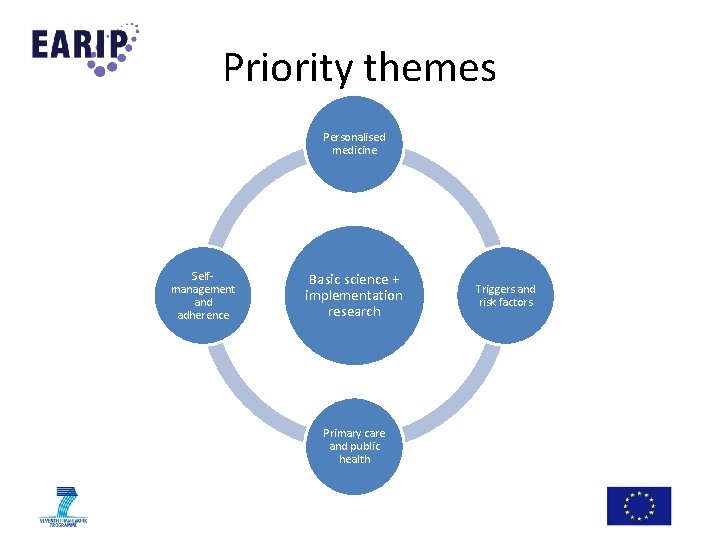
Priority themes Personalised medicine Selfmanagement and adherence Basic science + implementation research Primary care and public health Triggers and risk factors
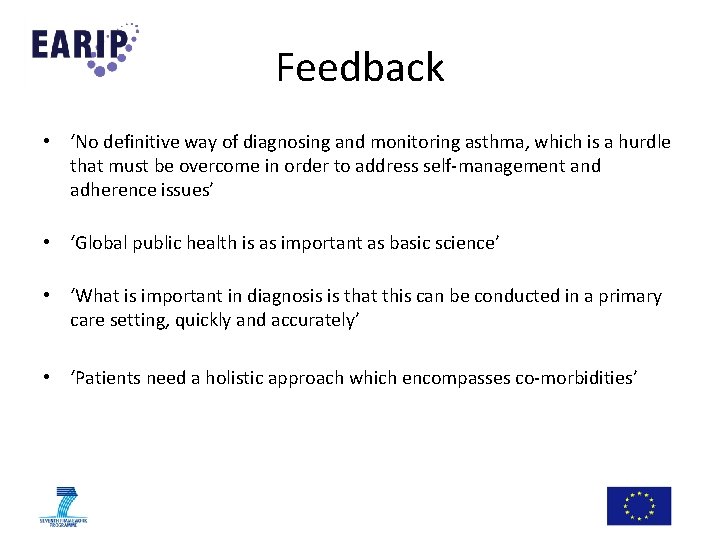
Feedback • ‘No definitive way of diagnosing and monitoring asthma, which is a hurdle that must be overcome in order to address self-management and adherence issues’ • ‘Global public health is as important as basic science’ • ‘What is important in diagnosis is that this can be conducted in a primary care setting, quickly and accurately’ • ‘Patients need a holistic approach which encompasses co-morbidities’
Research questions • 80 research questions developed • To ensure the translation and implementation of the priorities • 3 -7 per priority • Using PICO format • Collaboration between experts in each topic (professionals, patients and patient orgs) • Available at www. EARIP. eu/roadmap
Example – priority 1 • • • Identify, understand better classify the different forms of asthma, their progression, and effect on airway inflammation and the immune system Developed by: Dr Sven Erik Dahlen and Prof Ian Adcock Research questions (PICO format): 1. In adults and children with severe asthma on high dose optimal therapy, can multi-omic analysis in sputum improve classification and indication of possible responders to Ab therapy compared with clinical symptoms, Fe. NO and eosinophil counts? 2. In adults and children with severe asthma, can non-invasive biomarkers of breath and urine predict responders/non-responders to omalizumab, compared with blood eosinophilia and Ig. E levels? 3. In adults and children with severe asthma, can urinary doping lab assessment provide signatures of compliance and drug (in)action of triamcinolone or OCS better than Fe. NO and eosinophil counts?
Example - priorities 2 • • • Assess the effectiveness of patient-professional communication to develop patient-professional partnerships, for example to optimise self-management and adherence Developed by: Rob Horne / Patient Advisory Group Research questions (PICO format): 1. How can patients/carers and HCPs be supported to develop effective partnerships to meet the patient’s changing requirements over time and across conditions? 2. In adults, can supporting HCPs to better communicate with patients achieve better asthma control through effective partnerships that facilitate optimal adherence and self-management? 3. In adults, does using a patient-centred approach (i. e. written personalised asthma action plans) result in cost savings, as compared to usual care? 4. In adults, can developing a better understanding of the psychosocial factors determining outcomes (e. g. depression, emotional stress) improve asthma outcomes compared with usual care?
For more information • Flyer on seats and at EARIP hotdesk • EARIP website: www. EARIP. eu • Abstracts: – Masefield S, Metcalf L, Powell P et al. What is important to people with asthma: Maximising research impact? Eur Respir J, Sep 2015, 46 (suppl 59) OA 4479 – Masefield S, Powell P, Kennington E et al. Driving Investment in Asthma Research in Europe: Priorities to Prevent, Cure and Manage Asthma More Effectively. Am J Respir Crit Care Med 193; 2016: A 2668