The Elusive Internet Flattening 10 Years of IXP



- Slides: 26
The Elusive Internet Flattening: 10 Years of IXP Growth T. Böttger 1, G. Antichi 1, E. L. Fernandes 1, R. Lallo 23, M. Bruyere 4, S. Uhlig 1, I. Castro 1 1 QMUL 2 Roma Tre University 3 Consortium GARR 4 University of Tokyo
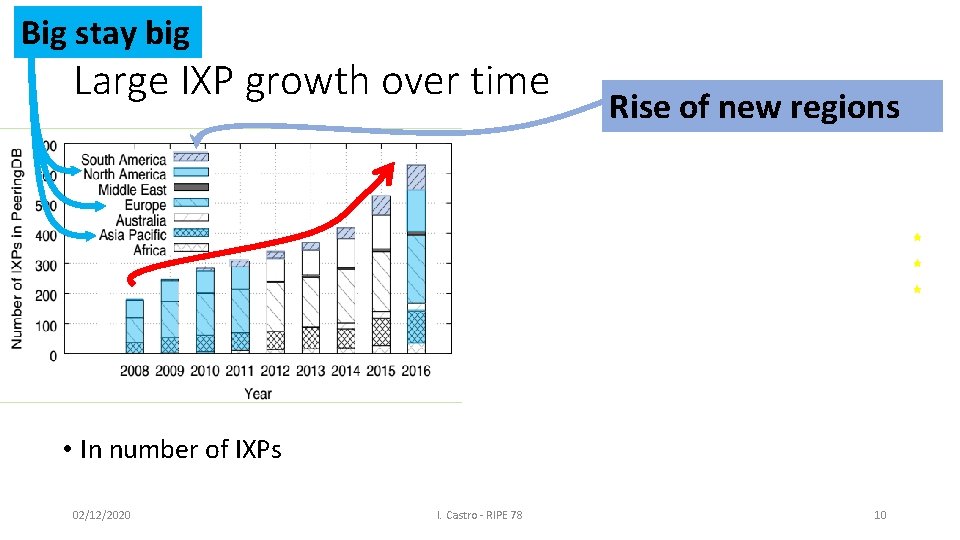
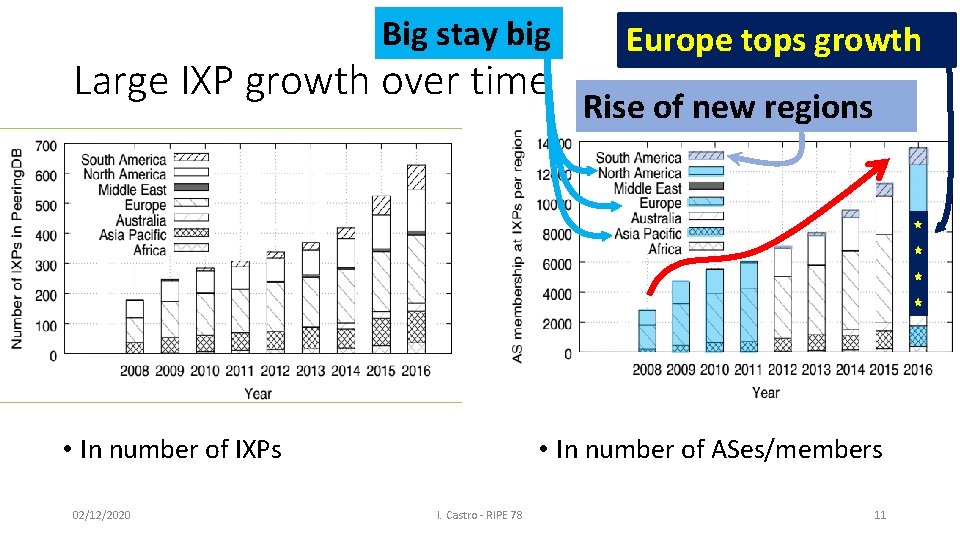
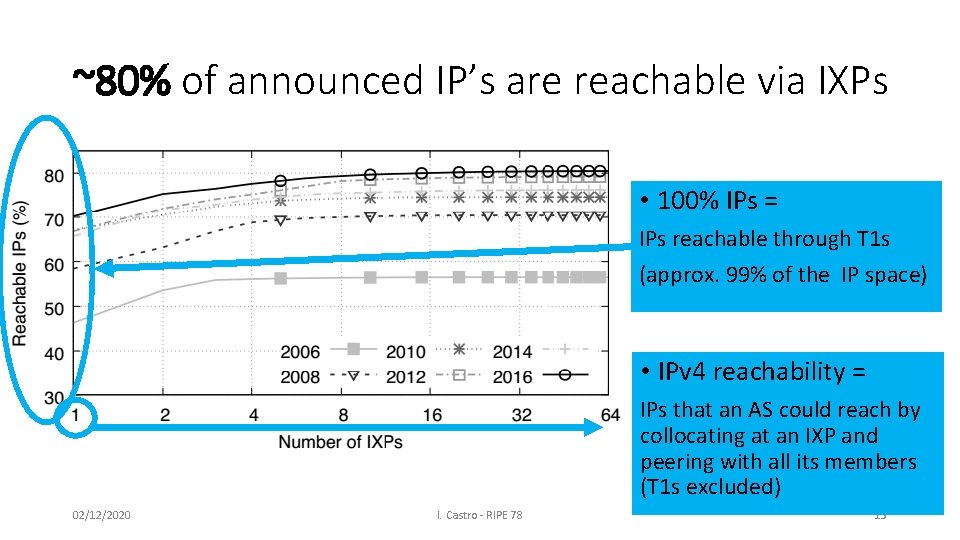
Spoiler • IXP evolution: • Large growth: # IXPS and members tripled in 2008 -2016 • Reachability stagnation: % IPv 4 addresses reachable through IXPS has stabilised around 80% • Macroscopic impact? • Little path-shortening: not one-hop away • Hierarchical flattening: less transit dependence 02/12/2020 I. Castro - RIPE 78 2
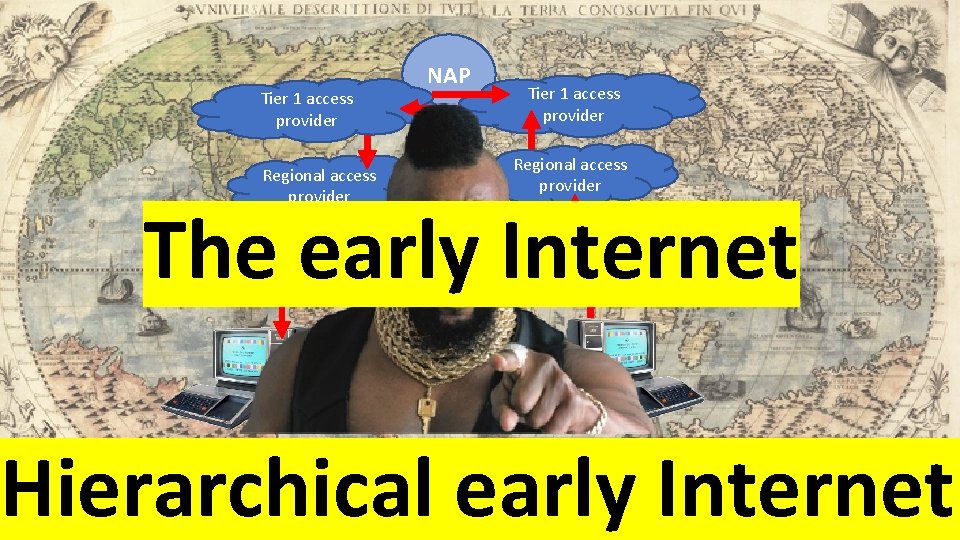
Tier 1 access provider Regional access provider NAP Tier 1 access provider Regional access provider The early Internet Local access provider Hierarchical early Internet 02/12/2020 I. Castro - RIPE 78 3
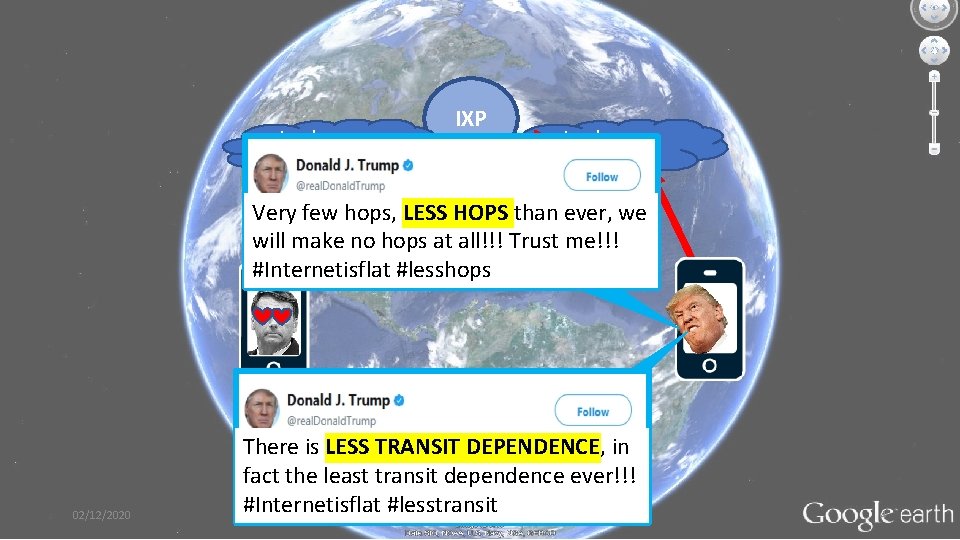
Local access provider IXP Local access provider Very few hops, LESS HOPS than ever, we will make no hops at all!!! Trust me!!! #Internetisflat #lesshops 02/12/2020 There is LESS TRANSIT DEPENDENCE, in fact the least transit dependence ever!!! #Internetisflat #lesstransit I. Castro - RIPE 78 4
Are there that many IXPs to “flatten” Internet paths? ? Historical growth of IXPs: 1. Number 2. Size 3. Reachability 02/12/2020 I. Castro - RIPE 78 8
Big stay big Large IXP growth over time Rise of new regions • In number of IXPs 02/12/2020 I. Castro - RIPE 78 10
Big stay big Large IXP growth over time • In number of IXPs 02/12/2020 Europe tops growth Rise of new regions • In number of ASes/members I. Castro - RIPE 78 11
What about reachability? 02/12/2020 I. Castro - RIPE 78 12
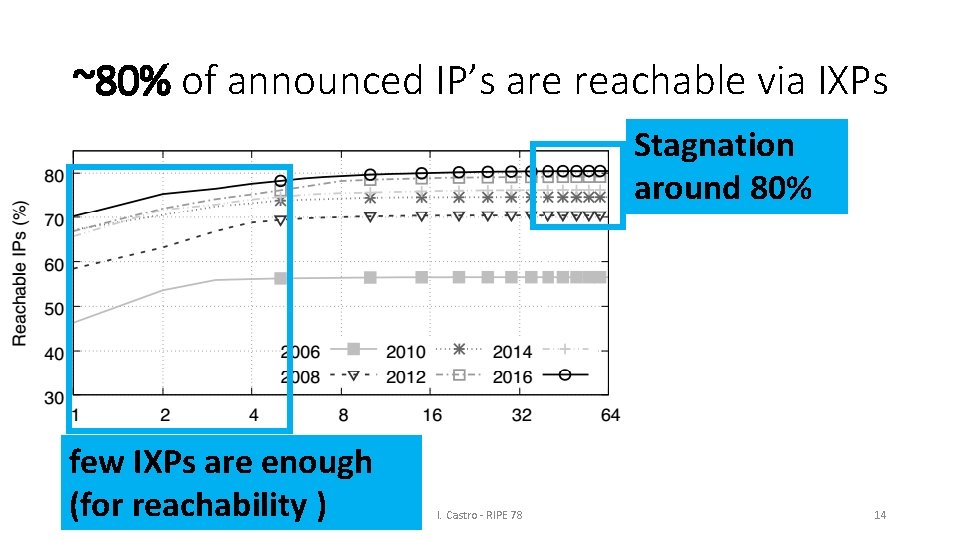
~80% of announced IP’s are reachable via IXPs • 100% IPs = IPs reachable through T 1 s (approx. 99% of the IP space) • IPv 4 reachability = IPs that an AS could reach by collocating at an IXP and peering with all its members (T 1 s excluded) 02/12/2020 I. Castro - RIPE 78 13
~80% of announced IP’s are reachable via IXPs Stagnation around 80% few IXPs are enough (for reachability ) 02/12/2020 I. Castro - RIPE 78 14
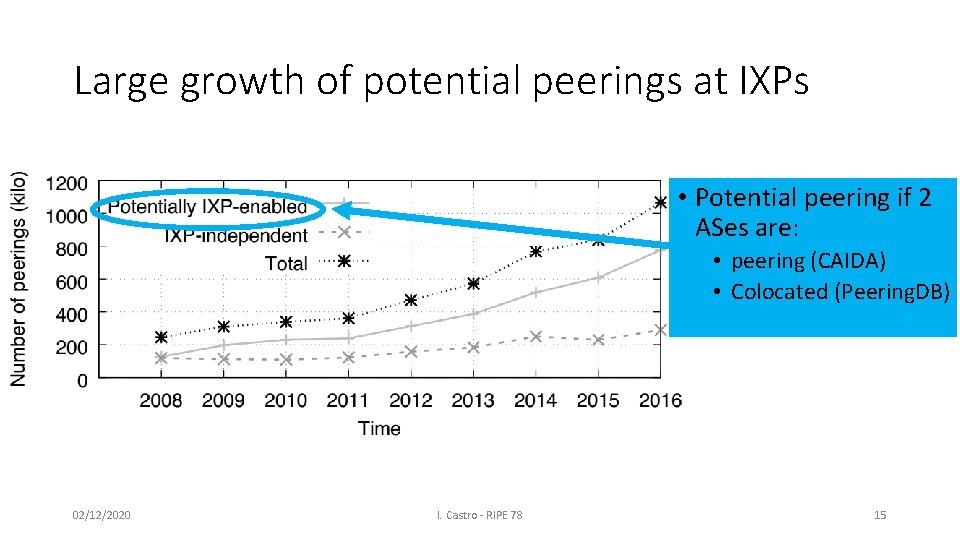
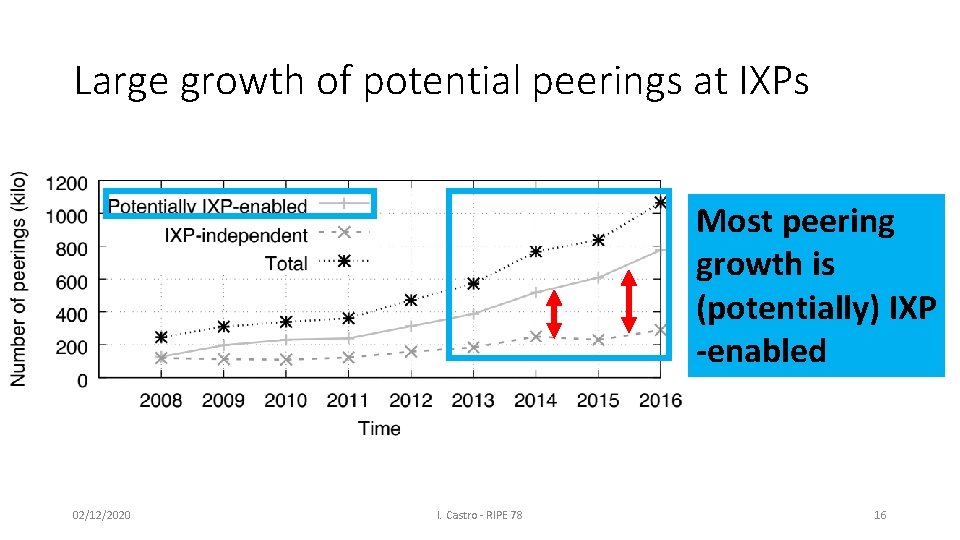
Large growth of potential peerings at IXPs • Potential peering if 2 ASes are: • peering (CAIDA) • Colocated (Peering. DB) 02/12/2020 I. Castro - RIPE 78 15
Large growth of potential peerings at IXPs Most peering growth is (potentially) IXP -enabled 02/12/2020 I. Castro - RIPE 78 16
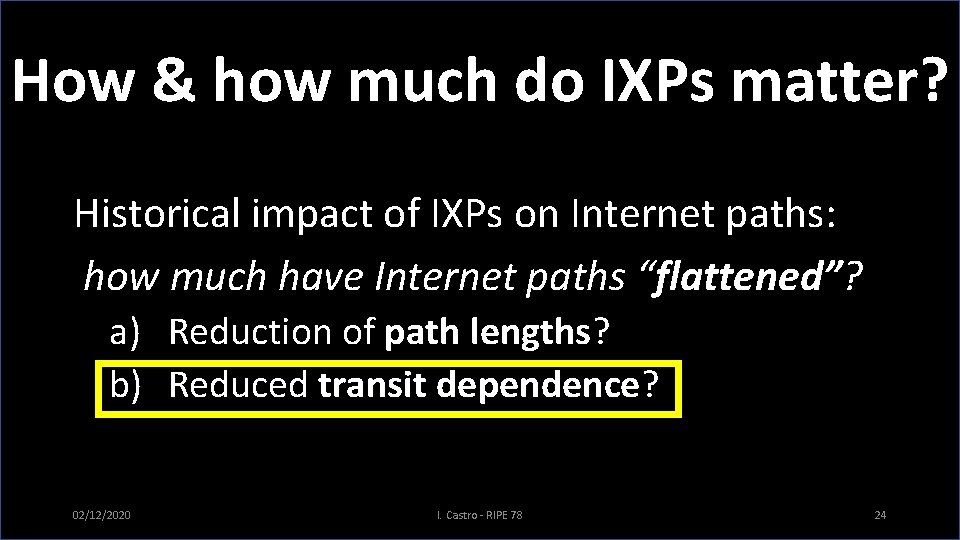
How & how much do IXPs matter? Historical impact of IXPs on Internet paths: how much have Internet paths “flattened”? a) Reduction of path lengths? b) Reduced transit dependence? 02/12/2020 I. Castro - RIPE 78 17
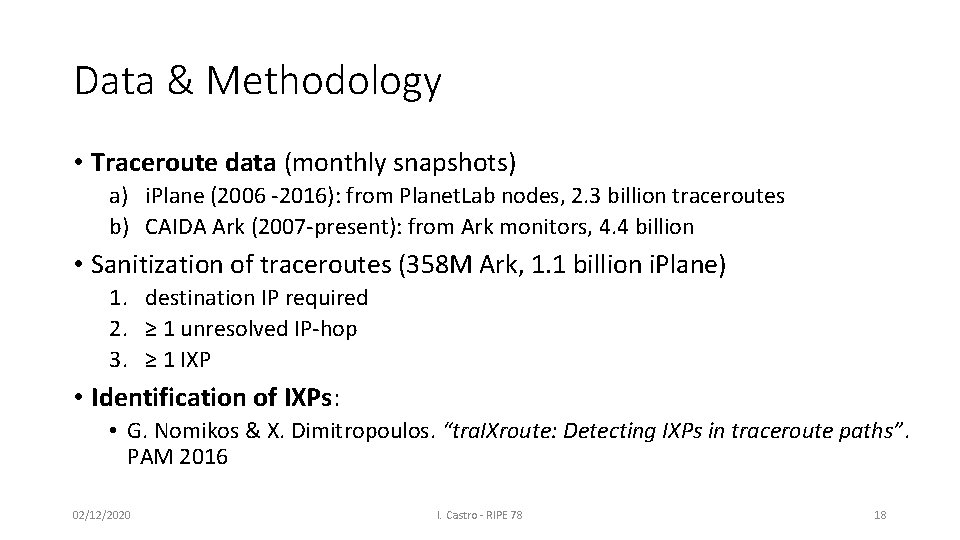
Data & Methodology • Traceroute data (monthly snapshots) a) i. Plane (2006 -2016): from Planet. Lab nodes, 2. 3 billion traceroutes b) CAIDA Ark (2007 -present): from Ark monitors, 4. 4 billion • Sanitization of traceroutes (358 M Ark, 1. 1 billion i. Plane) 1. destination IP required 2. ≥ 1 unresolved IP-hop 3. ≥ 1 IXP • Identification of IXPs: • G. Nomikos & X. Dimitropoulos. “tra. IXroute: Detecting IXPs in traceroute paths”. PAM 2016 02/12/2020 I. Castro - RIPE 78 18
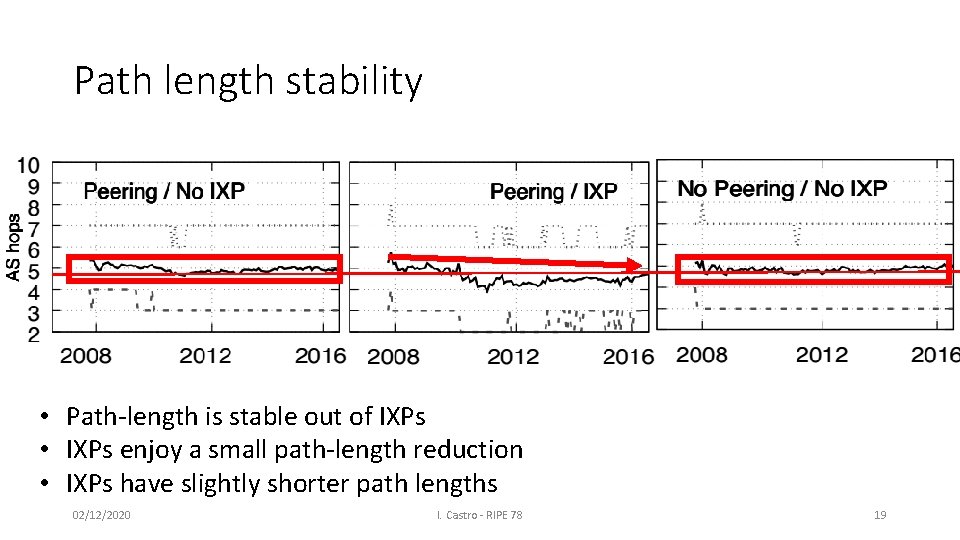
Path length stability • Path-length is stable out of IXPs • IXPs enjoy a small path-length reduction • IXPs have slightly shorter path lengths 02/12/2020 I. Castro - RIPE 78 19
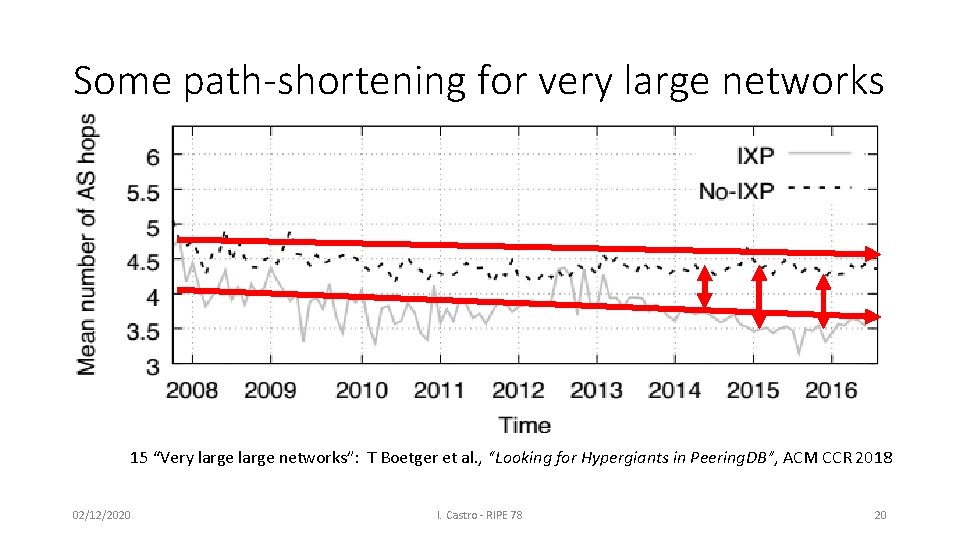
Some path-shortening for very large networks 15 “Very large networks”: T Boetger et al. , “Looking for Hypergiants in Peering. DB”, ACM CCR 2018 02/12/2020 I. Castro - RIPE 78 20
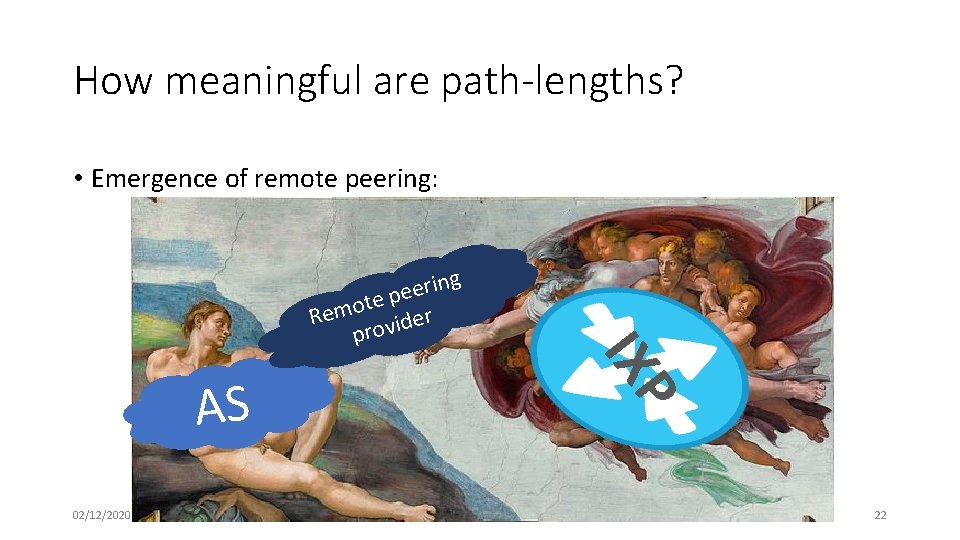
How meaningful are path-lengths? • Emergence of remote peering: IXP AS 02/12/2020 I. Castro - RIPE 78 21
How meaningful are path-lengths? • Emergence of remote peering: AS 02/12/2020 I. Castro - RIPE 78 IXP g n i r e pe e t o Rem vider pro 22
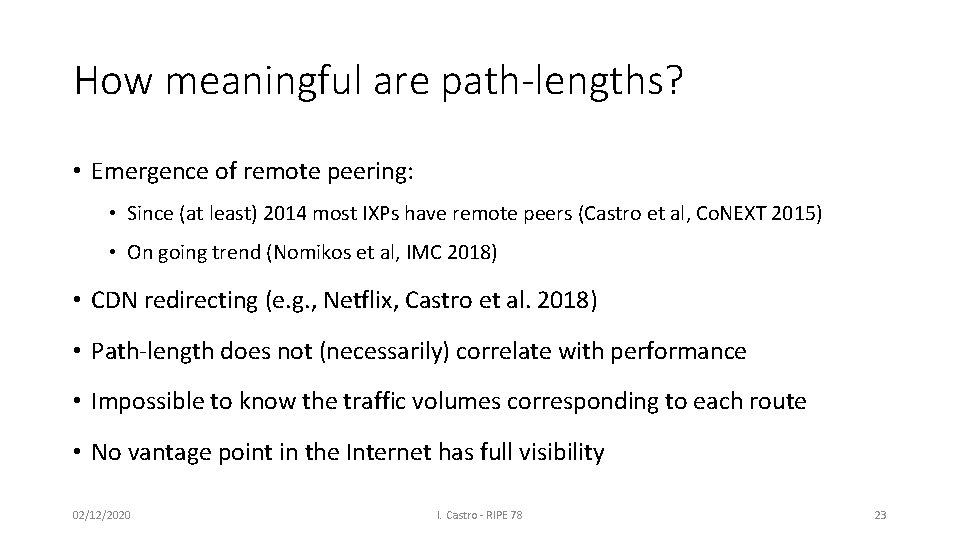
How meaningful are path-lengths? • Emergence of remote peering: • Since (at least) 2014 most IXPs have remote peers (Castro et al, Co. NEXT 2015) • On going trend (Nomikos et al, IMC 2018) • CDN redirecting (e. g. , Netflix, Castro et al. 2018) • Path-length does not (necessarily) correlate with performance • Impossible to know the traffic volumes corresponding to each route • No vantage point in the Internet has full visibility 02/12/2020 I. Castro - RIPE 78 23
How & how much do IXPs matter? Historical impact of IXPs on Internet paths: how much have Internet paths “flattened”? a) Reduction of path lengths? b) Reduced transit dependence? 02/12/2020 I. Castro - RIPE 78 24
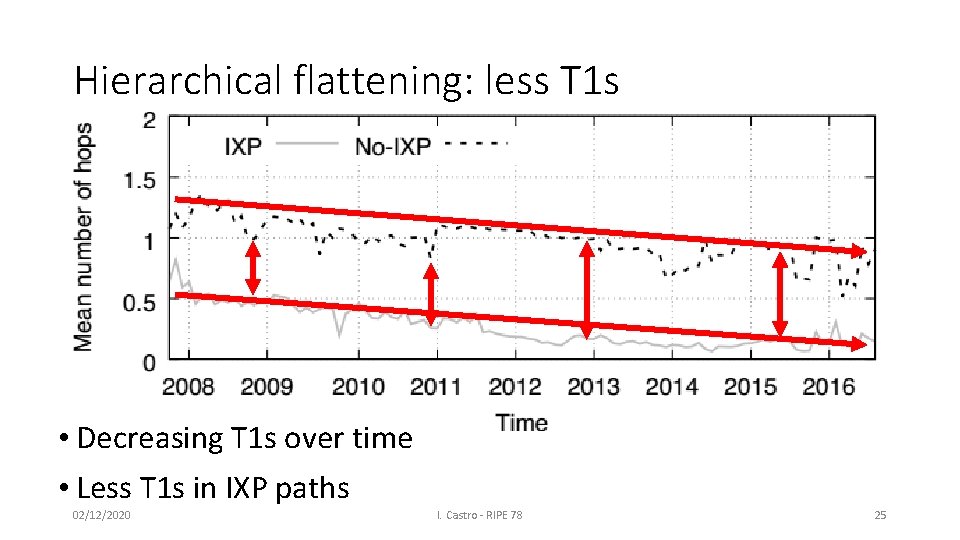
Hierarchical flattening: less T 1 s • Decreasing T 1 s over time • Less T 1 s in IXP paths 02/12/2020 I. Castro - RIPE 78 25
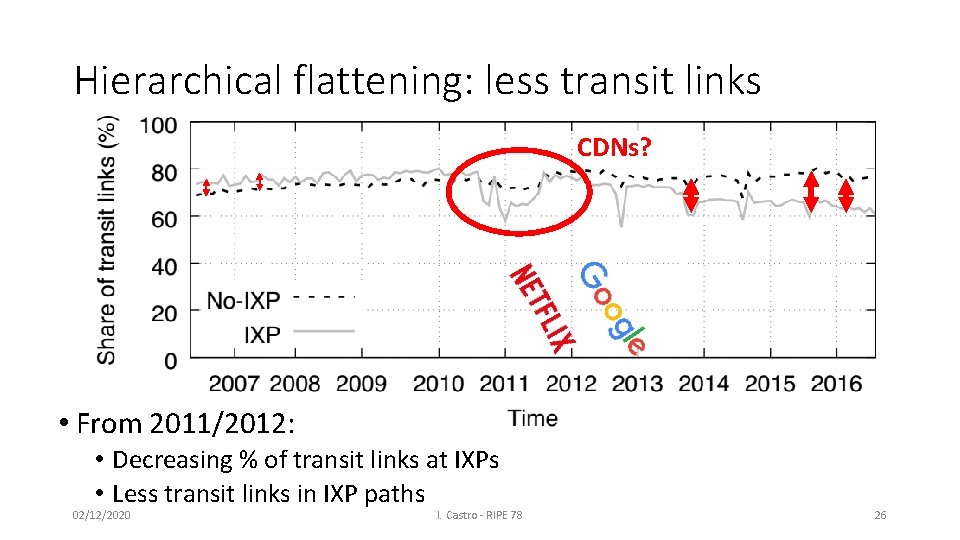
Hierarchical flattening: less transit links CDNs? • From 2011/2012: • Decreasing % of transit links at IXPs • Less transit links in IXP paths 02/12/2020 I. Castro - RIPE 78 26
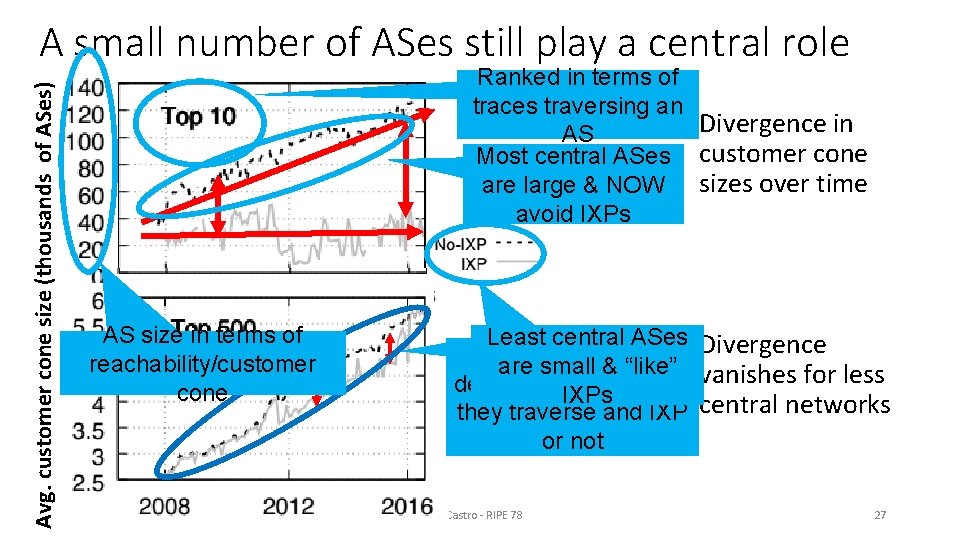
Avg. customer cone size (thousands of ASes) A small number of ASes still play a central role Ranked in terms of traces traversing an • Divergence in AS Most central ASes customer cone are large & NOW sizes over time avoid IXPs AS size in terms of reachability/customer cone 02/12/2020 Least central ASes • Divergence Traces separated are small & “like” vanishes for less depending. IXPs on whether they traverse and IXP central networks or not I. Castro - RIPE 78 27
Next things to look at • More data/data bias • CDN emergence • Specific impact of IXP emergence on reduced transit dependence: • Local benefit of creating an IXP (and its growth) • Local benefit of the creation of abroad IXPs • Model/predict the emergence/growth of IXPs • Current draft: https: //arxiv. org/abs/1810. 10963 02/12/2020 I. Castro - RIPE 78 28
Questions? Thoughts? … i. castro@qmul. ac. uk 02/12/2020 I. Castro - RIPE 78 29
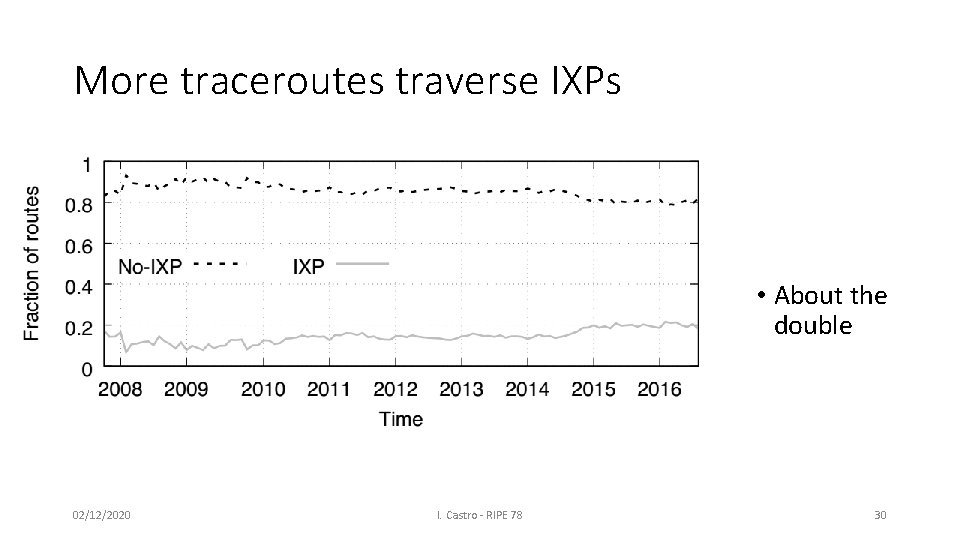
More traceroutes traverse IXPs • About the double 02/12/2020 I. Castro - RIPE 78 30