Systematicity in Language Learning Gareth Gaskell University of

- Slides: 39
Systematicity in Language Learning Gareth Gaskell University of York, UK
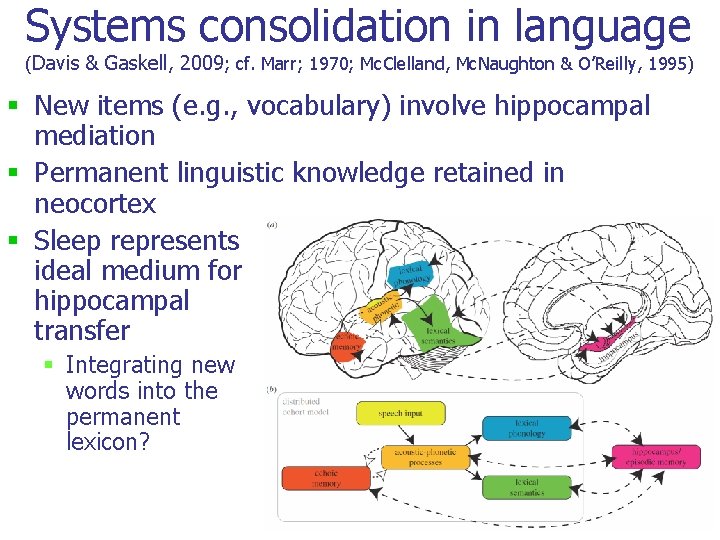
Systems consolidation in language (Davis & Gaskell, 2009; cf. Marr; 1970; Mc. Clelland, Mc. Naughton & O’Reilly, 1995) § New items (e. g. , vocabulary) involve hippocampal mediation § Permanent linguistic knowledge retained in neocortex § Sleep represents ideal medium for hippocampal transfer § Integrating new words into the permanent lexicon?
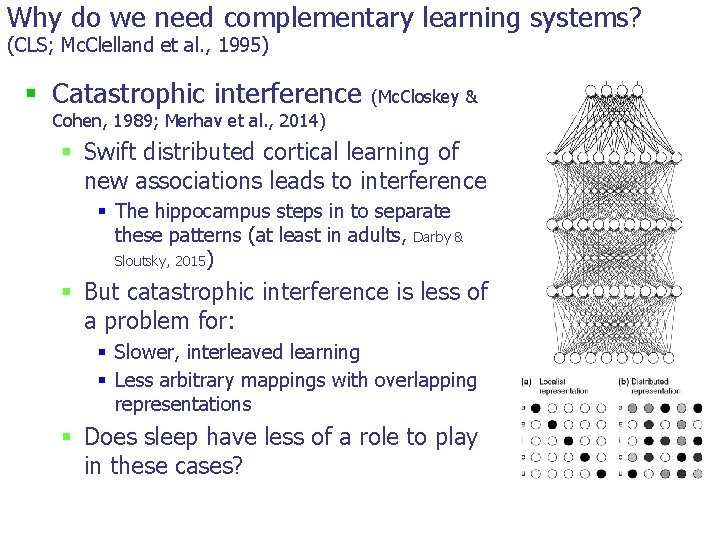
Why do we need complementary learning systems? (CLS; Mc. Clelland et al. , 1995) § Catastrophic interference (Mc. Closkey & Cohen, 1989; Merhav et al. , 2014) § Swift distributed cortical learning of new associations leads to interference § The hippocampus steps in to separate these patterns (at least in adults, Darby & Sloutsky, 2015) § But catastrophic interference is less of a problem for: § Slower, interleaved learning § Less arbitrary mappings with overlapping representations § Does sleep have less of a role to play in these cases?
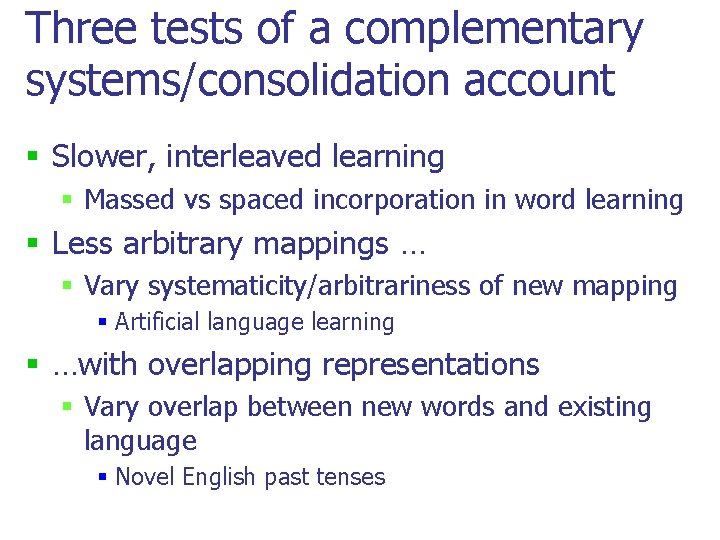
Three tests of a complementary systems/consolidation account § Slower, interleaved learning § Massed vs spaced incorporation in word learning § Less arbitrary mappings … § Vary systematicity/arbitrariness of new mapping § Artificial language learning § …with overlapping representations § Vary overlap between new words and existing language § Novel English past tenses
Three tests of a complementary systems/consolidation account § Slower, interleaved learning § Massed vs spaced incorporation in word learning § Less arbitrary mappings … § Vary systematicity/arbitrariness of new mapping § Artificial language learning § …with overlapping representations § Vary overlap between new words and existing language § Novel English past tenses
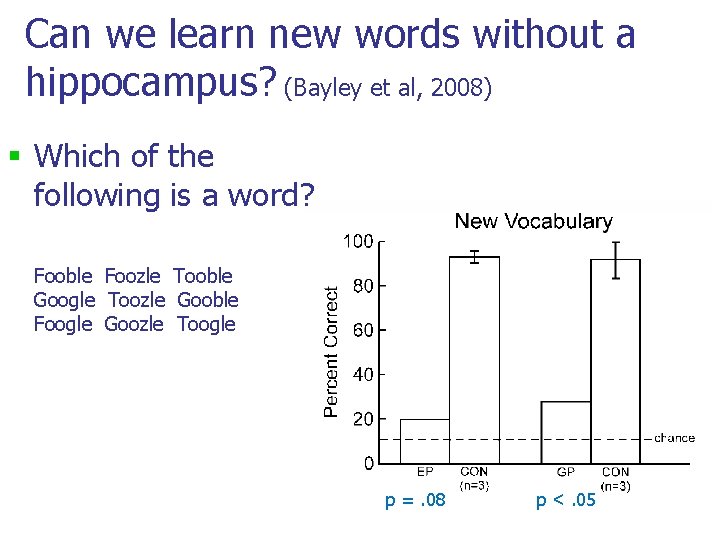
Can we learn new words without a hippocampus? (Bayley et al, 2008) § Which of the following is a word? Fooble Foozle Tooble Google Toozle Gooble Foogle Goozle Toogle p =. 08 p <. 05
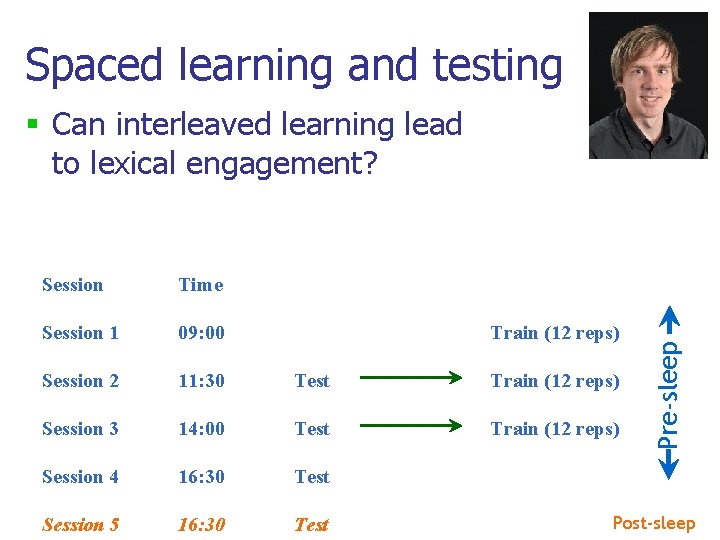
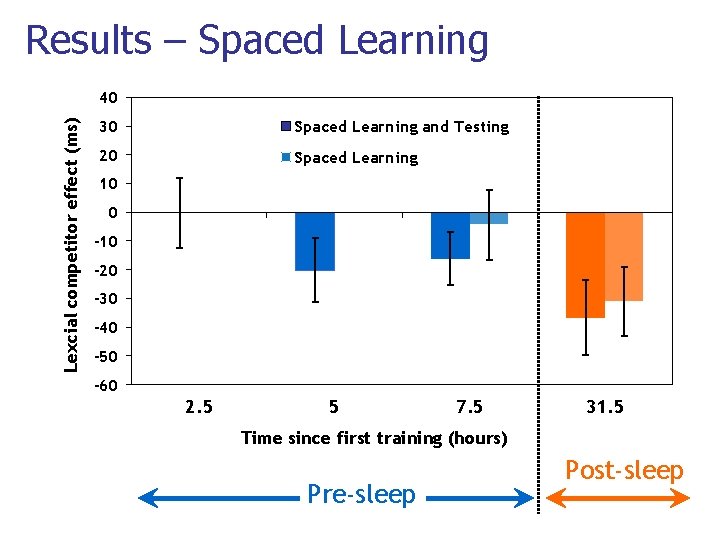
Spaced learning and testing Session Time Session 1 09: 00 Session 2 11: 30 Test Train (12 reps) Session 3 14: 00 Test Train (12 reps) Session 4 16: 30 Test Session 5 16: 30 Test Train (12 reps) Pre-sleep § Can interleaved learning lead to lexical engagement? Post-sleep
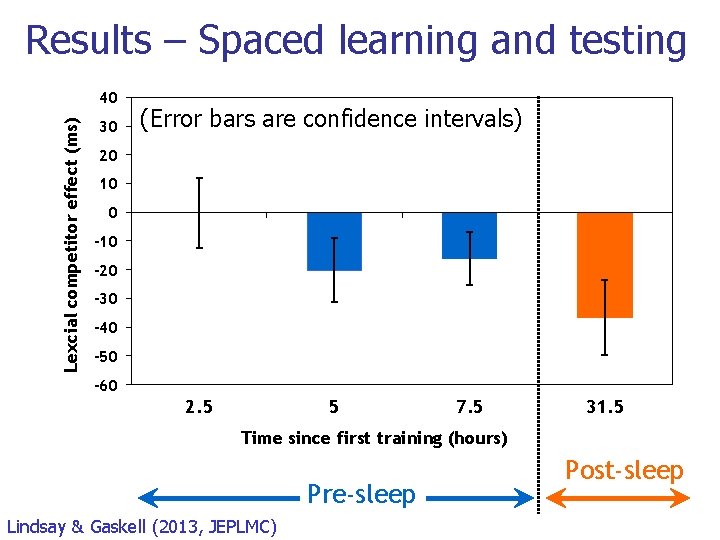
Results – Spaced learning and testing Lexcial competitor effect (ms) 40 30 (Error bars are confidence intervals) 20 10 0 -10 -20 -30 -40 -50 -60 2. 5 5 7. 5 31. 5 Time since first training (hours) Pre-sleep Lindsay & Gaskell (2013, JEPLMC) Post-sleep
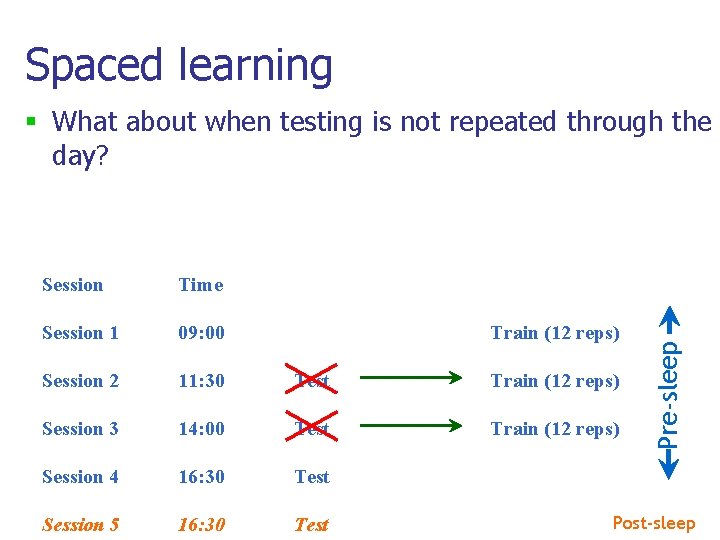
Spaced learning Session Time Session 1 09: 00 Session 2 11: 30 Test Train (12 reps) Session 3 14: 00 Test Train (12 reps) Session 4 16: 30 Test Session 5 16: 30 Test Train (12 reps) Pre-sleep § What about when testing is not repeated through the day? Post-sleep
Results – Spaced Learning Lexcial competitor effect (ms) 40 30 Spaced Learning and Testing 20 Spaced Learning 10 0 -10 -20 -30 -40 -50 -60 2. 5 5 7. 5 31. 5 Time since first training (hours) Pre-sleep Post-sleep
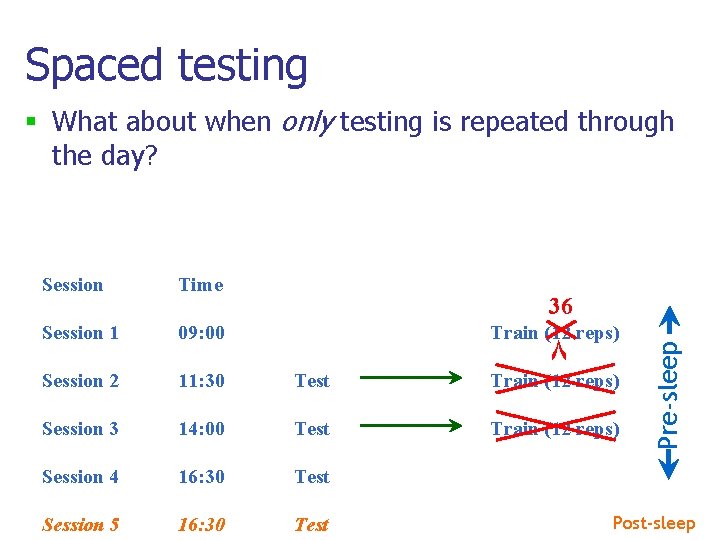
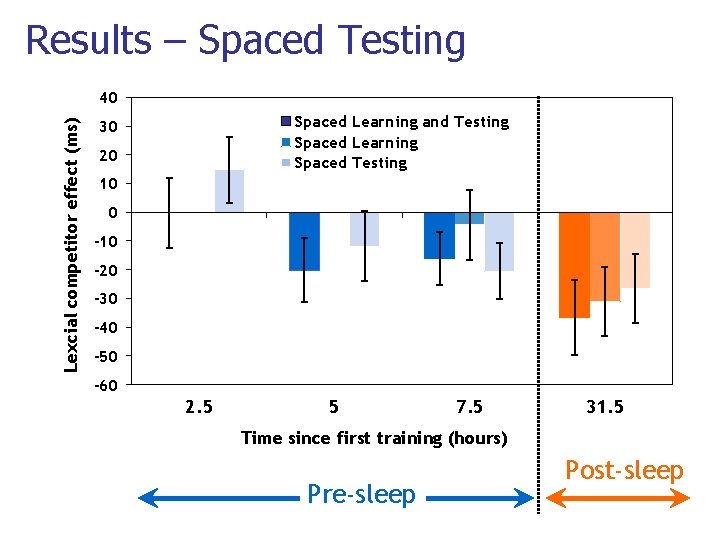
Spaced testing § What about when only testing is repeated through the day? Session Time Session 1 09: 00 Session 2 11: 30 Test Train (12 reps) Session 3 14: 00 Test Train (12 reps) Session 4 16: 30 Test Session 5 16: 30 Test Train (12 reps) ۸ Pre-sleep 36 Post-sleep
Results – Spaced Testing Lexcial competitor effect (ms) 40 Spaced Learning and Testing Spaced Learning Spaced Testing 30 20 10 0 -10 -20 -30 -40 -50 -60 2. 5 5 7. 5 31. 5 Time since first training (hours) Pre-sleep Post-sleep
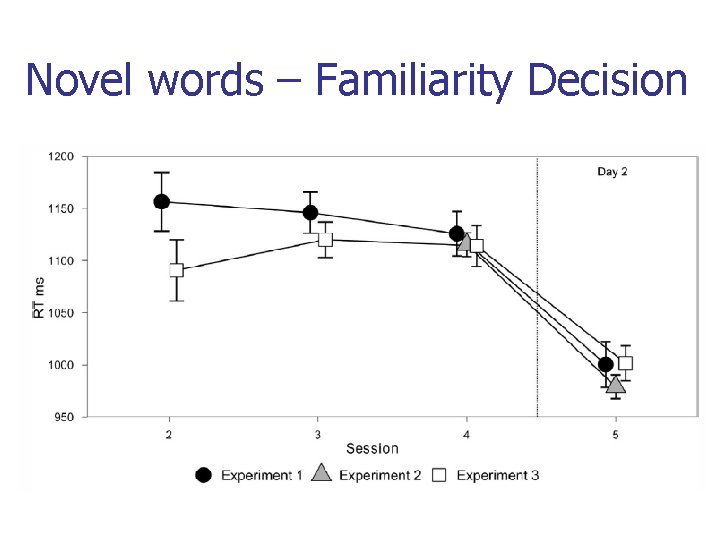
Novel words – Familiarity Decision
Three tests of a complementary systems/consolidation account § Slower, interleaved learning § Massed vs spaced incorporation in word learning § Less arbitrary mappings … § Vary systematicity/arbitrariness of new mapping § Artificial language learning § …with overlapping representations § Vary overlap between new words and existing language § Novel English past tenses
Test 1 § Slower, interleaved learning can lead to integration of new words, prior to sleep § Spaced testing (or retrieval practice) is particularly useful § Can be explained in terms of learning properties of cortical network in a complementary systems account (Mc. Clelland et al. , 1995) § Although recent model argues that retrieval practice is a form of consolidation (Antony et al. , 2017)
Three tests of a complementary systems/consolidation account § Slower, interleaved learning § Massed vs spaced incorporation in word learning § Less arbitrary mappings … § Vary systematicity/arbitrariness of new mapping § Artificial language learning § …with overlapping representations § Vary overlap between new words and existing language § Novel English past tenses
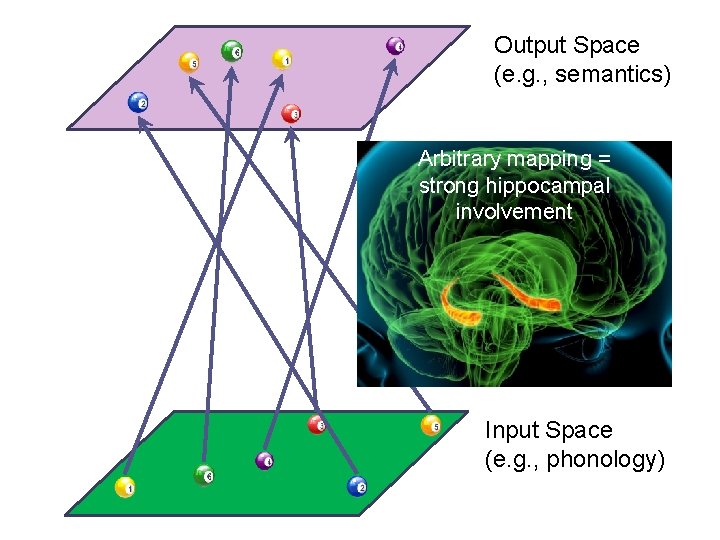
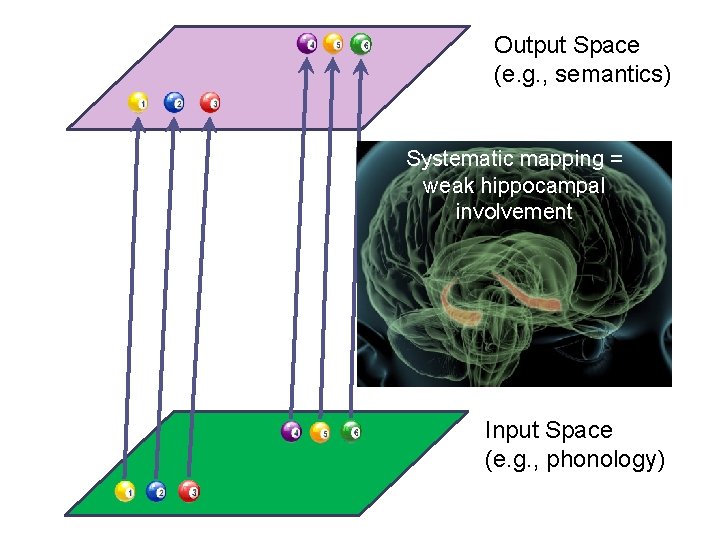
Output Space (e. g. , semantics) Arbitrary mapping = strong hippocampal involvement Input Space (e. g. , phonology)
Output Space (e. g. , semantics) Systematic mapping = weak hippocampal involvement Input Space (e. g. , phonology)
Predictions of complementary systems approach § Hippocampal reliance will depend on level of systematicity (high systematicity = low reliance) § Consolidation effects depending on hippocampal replay will also depend on systematicity § Unsystematic or arbitrary associations will show the strongest sleep effects § Test these predictions in linguistic domain § Learning of a new artificial language
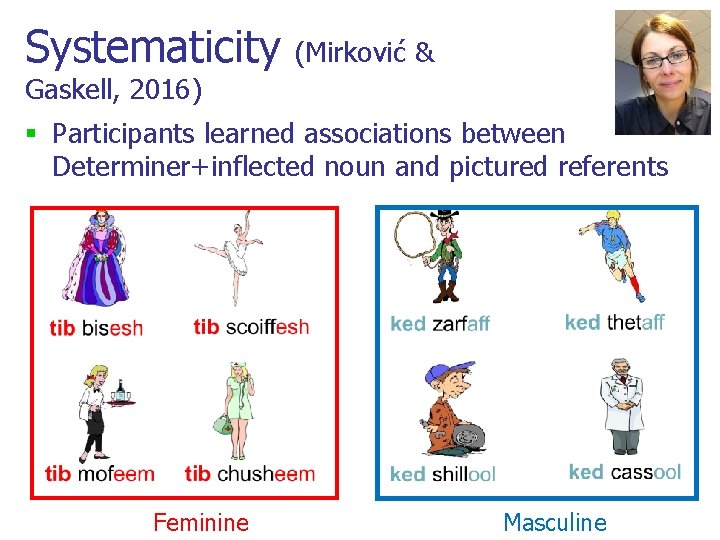
Systematicity (Mirković & Gaskell, 2016) § Participants learned associations between Determiner+inflected noun and pictured referents Feminine Masculine
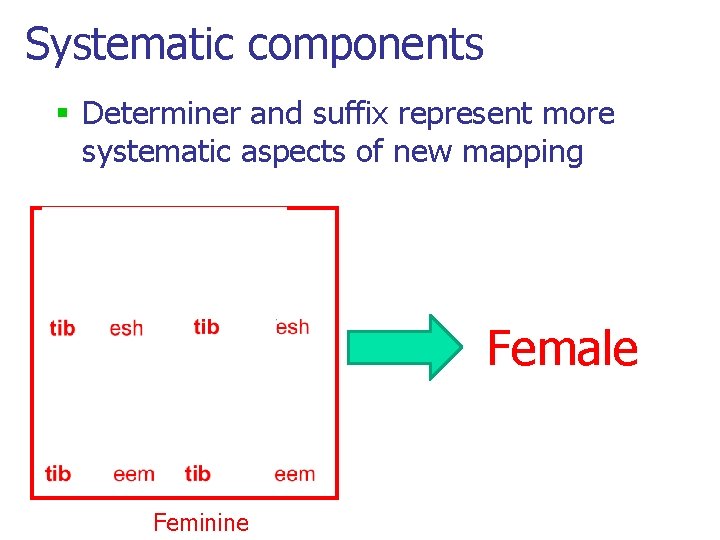
Systematic components § Determiner and suffix represent more systematic aspects of new mapping Female Feminine
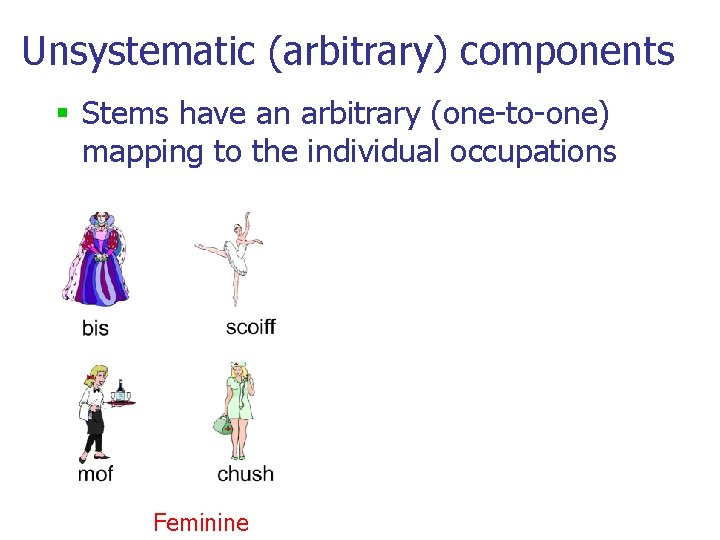
Unsystematic (arbitrary) components § Stems have an arbitrary (one-to-one) mapping to the individual occupations Feminine
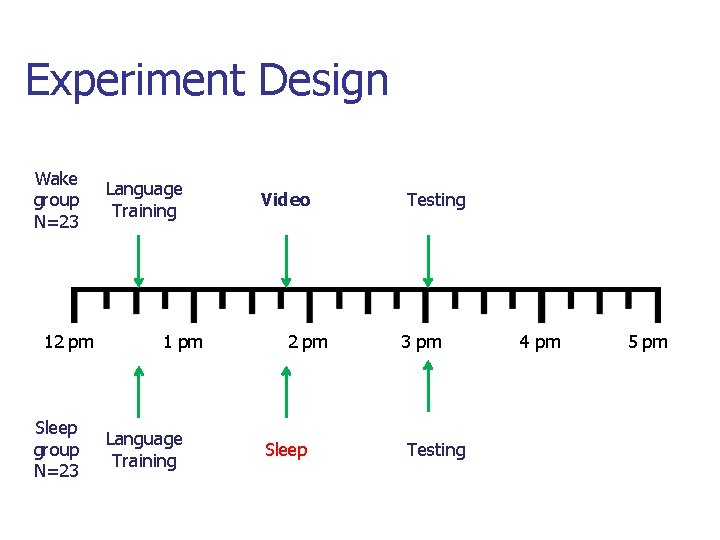
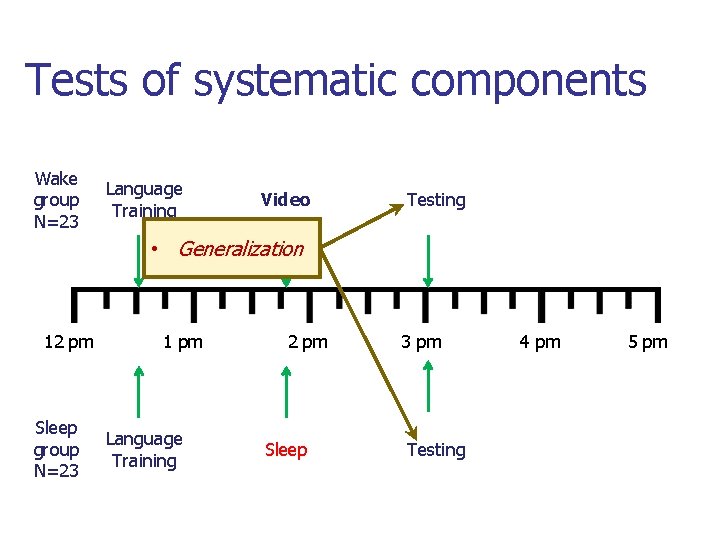
Experiment Design Wake group N=23 12 pm Sleep group N=23 Language Training 1 pm Language Training Video 2 pm Sleep Testing 3 pm Testing 4 pm 5 pm
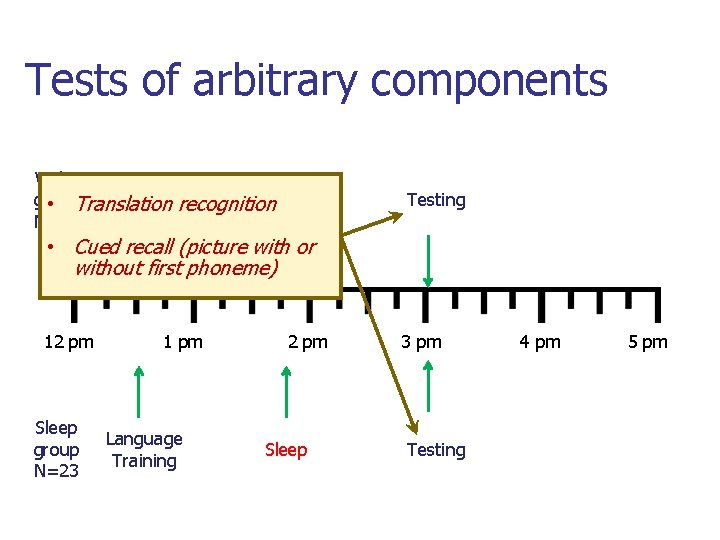
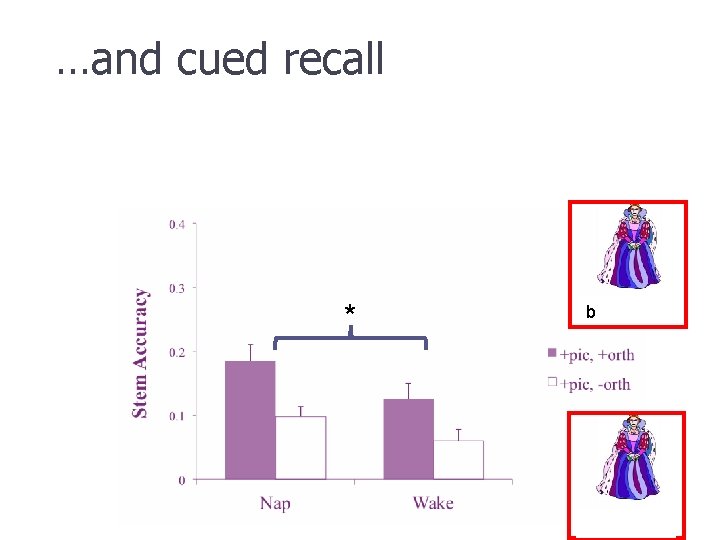
Tests of arbitrary components Wake Language Video group • Translation Training recognition N=23 Testing • Cued recall (picture with or without first phoneme) 12 pm Sleep group N=23 1 pm Language Training 2 pm Sleep 3 pm Testing 4 pm 5 pm
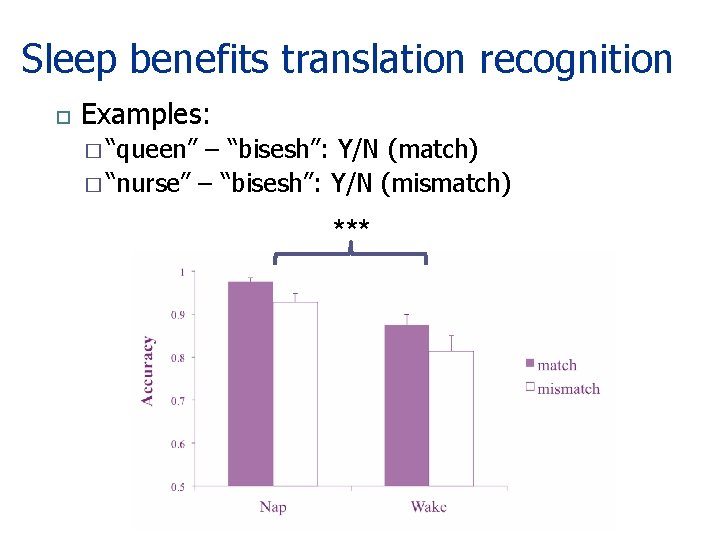
Sleep benefits translation recognition Examples: � “queen” – “bisesh”: Y/N (match) � “nurse” – “bisesh”: Y/N (mismatch) ***
…and cued recall * b
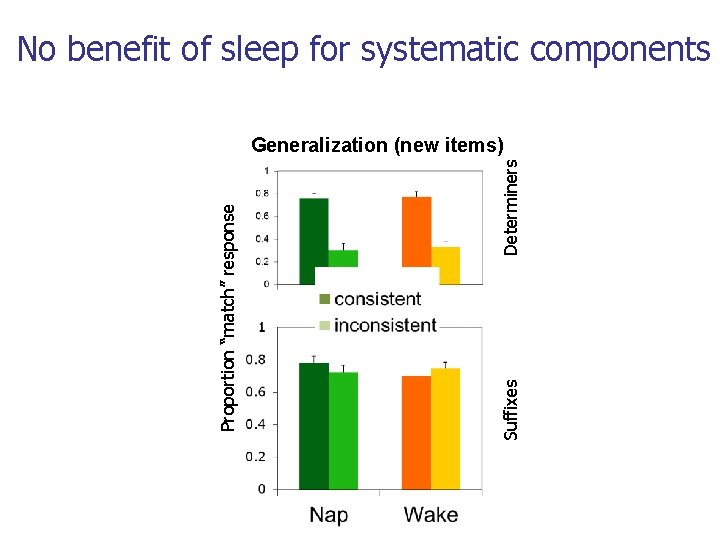
Tests of systematic components Wake group N=23 Language Training Video Testing • Generalization 12 pm Sleep group N=23 1 pm Language Training 2 pm Sleep 3 pm Testing 4 pm 5 pm
No benefit of sleep for systematic components Determiners Suffixes Proportion “match” response Generalization (new items)
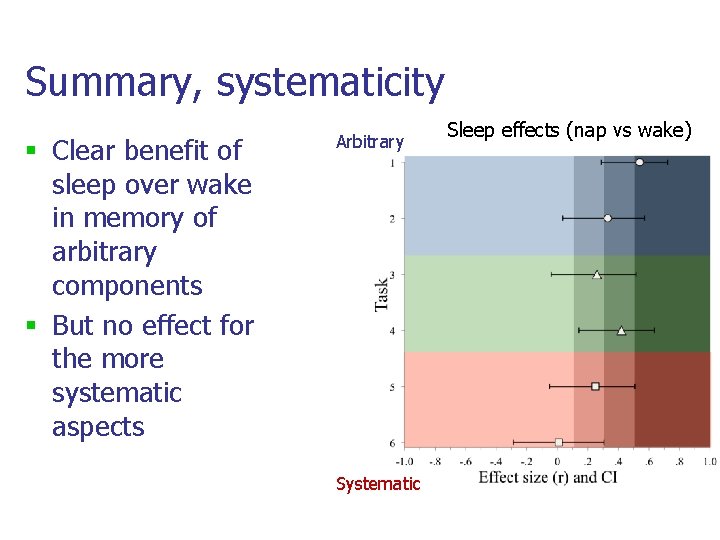
Summary, systematicity § Clear benefit of sleep over wake in memory of arbitrary components § But no effect for the more systematic aspects Arbitrary Systematic Sleep effects (nap vs wake)
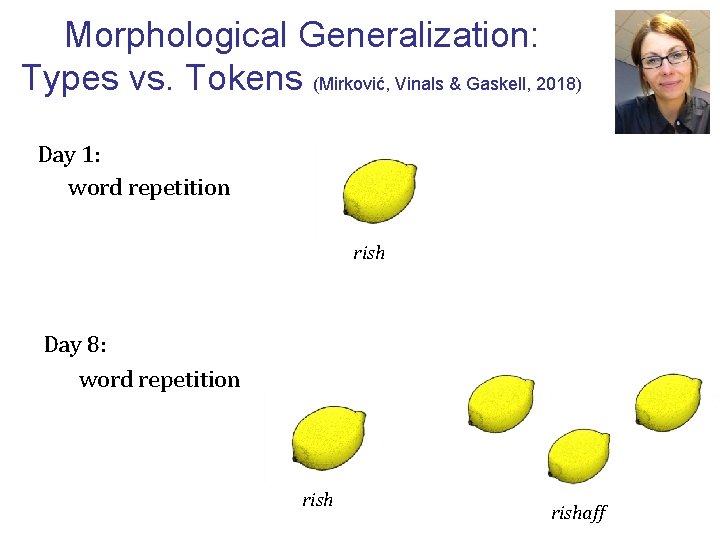
Morphological Generalization: Types vs. Tokens (Mirković, Vinals & Gaskell, 2018) Day 1: word repetition rish Day 8: word repetition rishaff
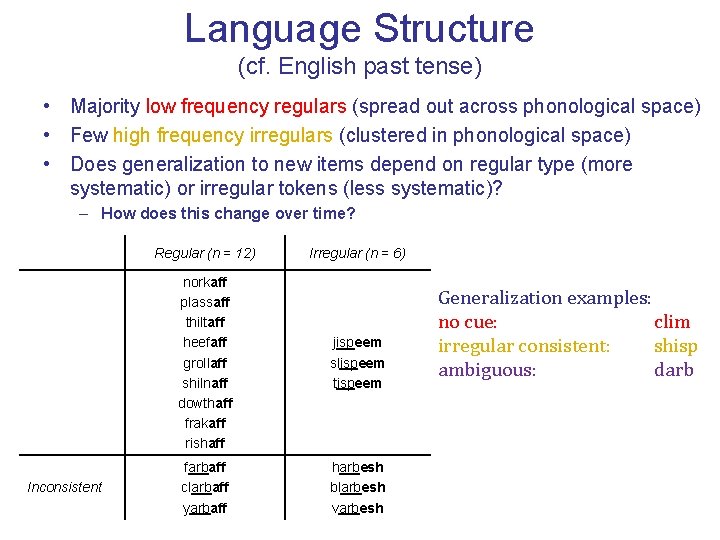
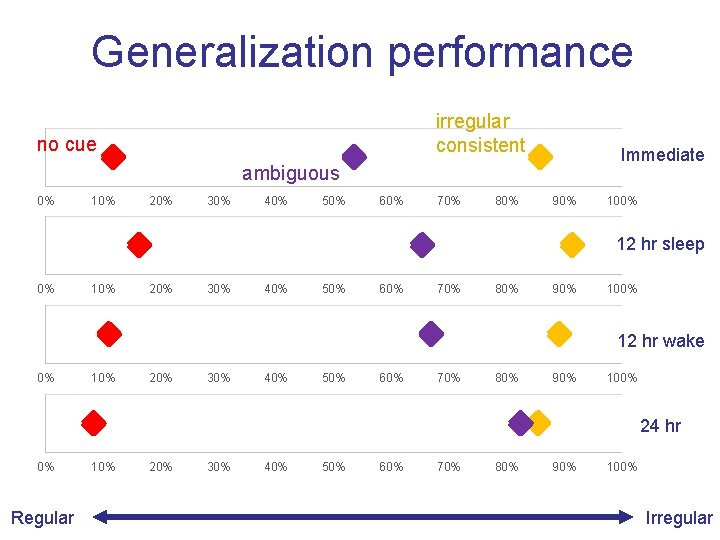
Language Structure (cf. English past tense) • Majority low frequency regulars (spread out across phonological space) • Few high frequency irregulars (clustered in phonological space) • Does generalization to new items depend on regular type (more systematic) or irregular tokens (less systematic)? – How does this change over time? Regular (n = 12) Inconsistent Irregular (n = 6) norkaff plassaff thiltaff heefaff grollaff shilnaff dowthaff frakaff rishaff jispeem slispeem tispeem farbaff clarbaff yarbaff harbesh blarbesh varbesh Generalization examples: no cue: clim irregular consistent: shisp ambiguous: darb
Generalization performance irregular consistent no cue Immediate ambiguous 0% 10% 20% 30% 40% 50% 60% 70% 80% 90% 100% 12 hr sleep 0% 10% 20% 30% 40% 50% 60% 70% 80% 90% 100% 12 hr wake 0% 10% 20% 30% 40% 50% 60% 70% 80% 90% 100% 24 hr 0% Regular 10% 20% 30% 40% 50% 60% 70% 80% 90% 100% Irregular
Three tests of a complementary systems/consolidation account § Slower, interleaved learning § Massed vs spaced incorporation in word learning § Less arbitrary mappings … § Vary systematicity/arbitrariness of new mapping § Artificial language learning § …with overlapping representations § Vary overlap between new words and existing language § Novel English past tenses
Test 2 § As predicted by a complementary systems account: § Consolidation tends to favour the arbitrary over the systematic § Be careful when interpreting the results of artificial language learning paradigms § Performance on newly learned material may not reflect final state
Three tests of a complementary systems/consolidation account § Slower, interleaved learning § Massed vs spaced incorporation in word learning § Less arbitrary mappings … § Vary systematicity/arbitrariness of new mapping § Artificial language learning § …with overlapping representations § Vary overlap between new words and existing language § Novel English past tenses
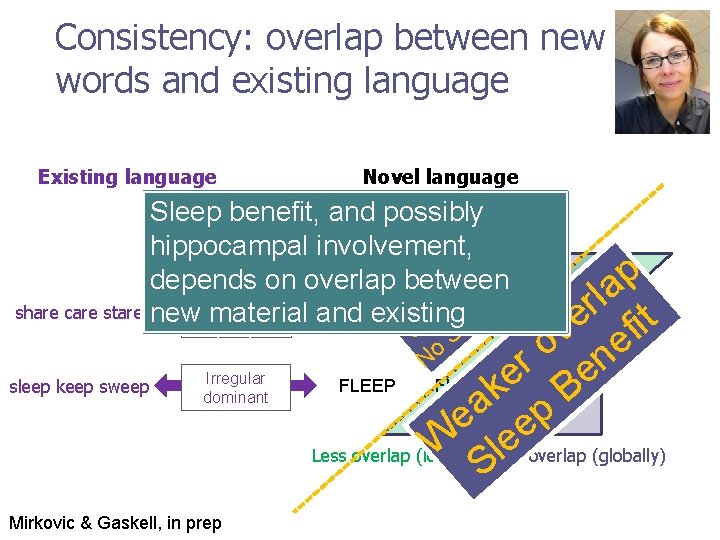
Consistency: overlap between new words and existing language Existing language Novel language Sleep benefit, and possibly Past tense present p tense Local Neighborhoods hippocampal involvement, lr a fit e ne v p depends on overlap between o Be a g p l Regular n r PLARE PLORE share care stare new material and e existing ro. PLARED t dominant e fit e S Sl v knowledge o e No sleep keep sweep Irregular dominant Mirkovic & Gaskell, in prep n r e FLEEPEDe FLEPT k B ea ep e overlap (globally) W Less l Less overlap (locally) S
Test 3 § Overlap with existing knowledge provides support for cortical learning § Consolidation effects stronger for more novel, harder to integrate material
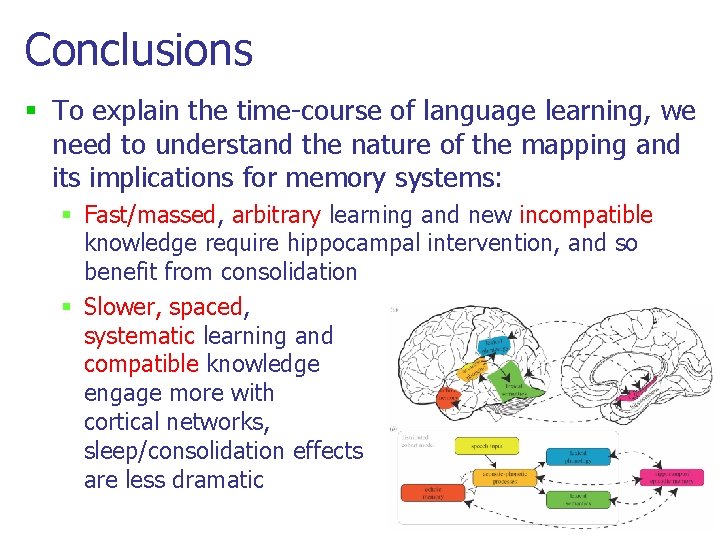
Conclusions § To explain the time-course of language learning, we need to understand the nature of the mapping and its implications for memory systems: § Fast/massed, arbitrary learning and new incompatible knowledge require hippocampal intervention, and so benefit from consolidation § Slower, spaced, systematic learning and compatible knowledge engage more with cortical networks, sleep/consolidation effects are less dramatic
Thanks to. . . Lisa Henderson Jenni Rodd Justyna Sobczak Jill Warker Sarah Walker Vic Knowland Fay Fletcher Hua-Chen Wang Jelena Mirkovic Shane Lindsay Matt Davis Jakke Tamminen Faye Smith Nicolas Dumay Meesha Warmington Courtenay Norbury Anna Weighall