Strategies to Reduce the Incidence of Central LineAssociated








- Slides: 36
Strategies to Reduce the Incidence of Central Line-Associated Bloodstream Infections Wendy Kaler MPH, CIC Manager of Infection Control Saint Francis Memorial Hospital San Francisco, CA
Saint Francis Memorial Hospital
Team involvement…. .
ICU Rounding • Active daily interaction of IC as part of the ICU PI team – Focus on NEED for indwelling central line – D/C of femoral lines – Catch early indications of infection
ICU Rounding Photo here
Celebrate milestones
Process Improvements…….
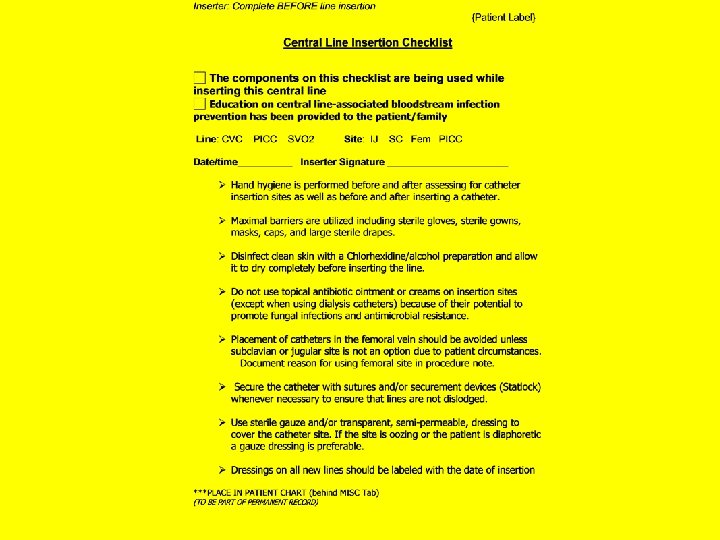
Insertion of Central Lines • Bundles – IHI – Provonost (NEJM Dec 28, 2006) – Joint Commission NPSG#7 – CA SB 739 • Early use of PICC in neonates
12 Steps to Prevent Antimicrobial Resistance: Hospitalized Adults Prevent Infection Step 2: Get the catheters out Fact: Catheters and other invasive devices are the # 1 exogenous cause of hospital-onset infections. Ø Link to: NNIS Online at CDC
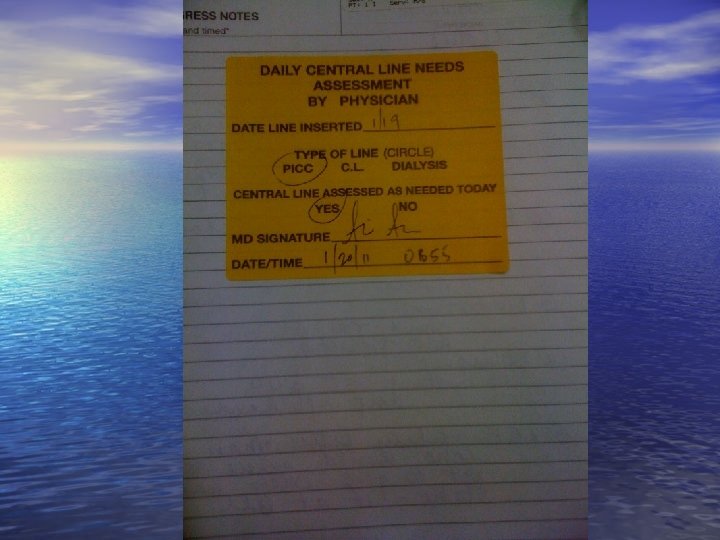
Central Line Needs Assessment • During daily rounding • Sticker in Physician Progress Notes • EMR mandatory field
Maintenance Bundle for Central Lines • Most CL-BSI occur > 5 days after insertion • Stabilized lines • Timely dressing changes per policydressings dated • Skin antisepsis at insertion site • Dressings dry and intact • Cleaning of port prior to accessing
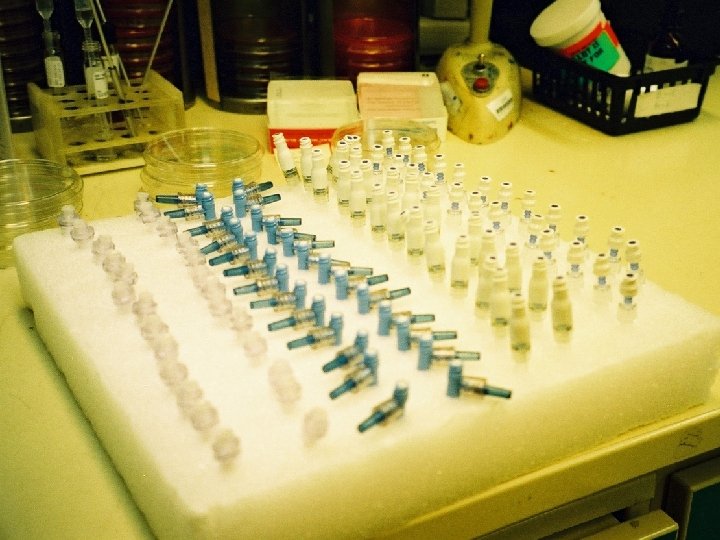
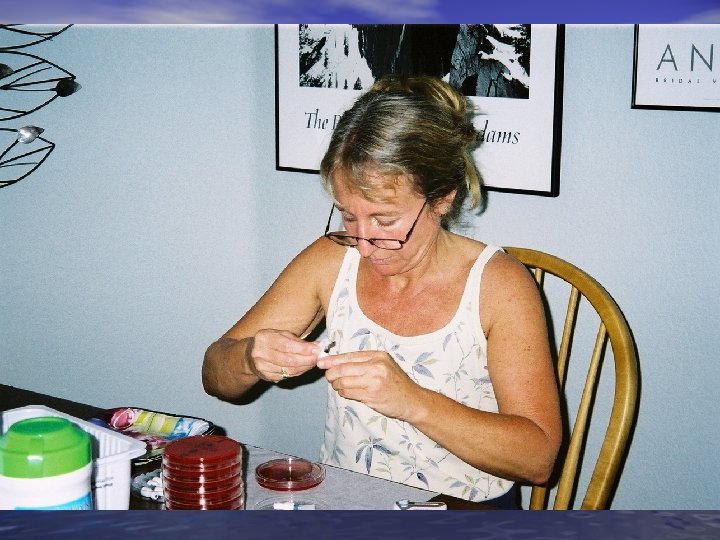
Successful Disinfection of Needleless Mechanical Valve Access Ports: A Matter of Time and Friction Kaler, W. , Chinn, R. JAVA 12(3) Fall 2007 Rady Children’s Hospital Sharp Memorial Hospital
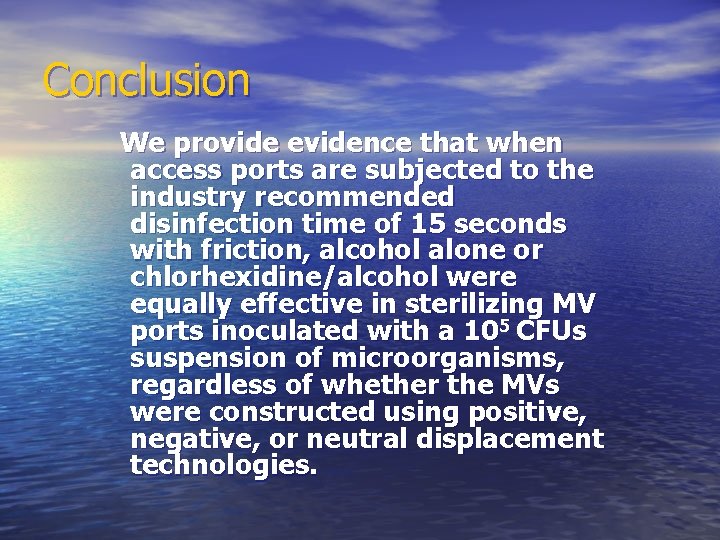
Conclusion We provide evidence that when access ports are subjected to the industry recommended disinfection time of 15 seconds with friction, alcohol alone or chlorhexidine/alcohol were equally effective in sterilizing MV ports inoculated with a 105 CFUs suspension of microorganisms, regardless of whether the MVs were constructed using positive, negative, or neutral displacement technologies.
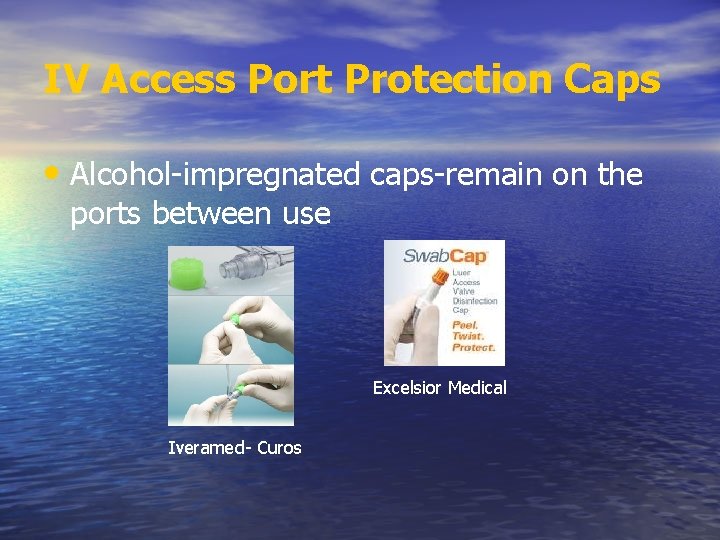
IV Access Port Protection Caps • Alcohol-impregnated caps-remain on the ports between use Excelsior Medical Iveramed- Curos
Port Protection Caps Advantages • Decreases nursing time required to comply with • • “port disinfection policy” (NPSG#7) Allows for monitoring of compliance with port disinfection policy (NPSG #7) Potential reduction of contaminated line-drawn blood cultures – Appropriate antibiotic use – Accurate CLABSI rates for PUBLIC REPORTING/CMS Reporting
Nursing Attitude & Focus on Infection Control Practices • Barriers to following good infection control practices include: – Not enough time – Not enough resources – Not enough information – It is really not that important – Not able to focus on task at hand due to many distractions
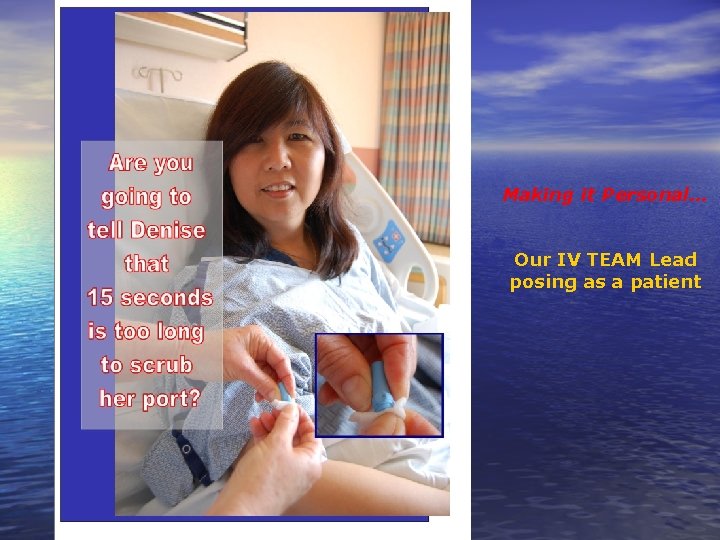
Nursing Attitude & Focus on Infection Control Practices • Possible solutions: - Get staff level nurses involved in designing solutions - Make it personal - Provide evidence of effectiveness of methods - Provide local data/risk - Feedback of poor outcomes
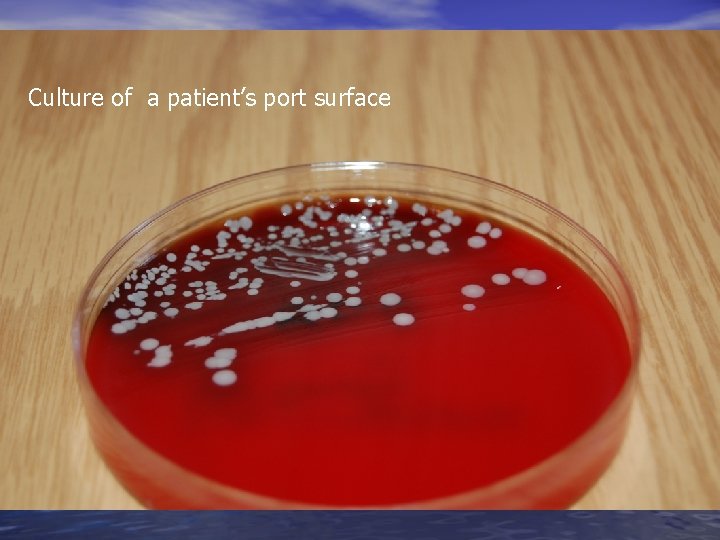
Culture of a patient’s port surface
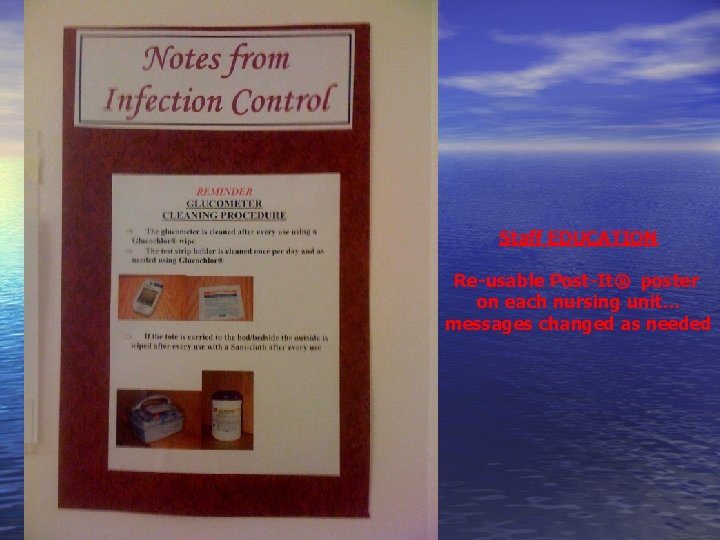
Staff EDUCATION Re-usable Post-It® poster on each nursing unit… messages changed as needed
Making it Personal… Our IV TEAM Lead posing as a patient
Infection Control It’s an ATTITUDE… Provide care as if it were YOU in that bed……
How do you know it’s a CLA-BSI? Are you involved in the RCAs?
Specimen Collection • Garbage in = Garbage out Public Reporting Antibiotic Resistance
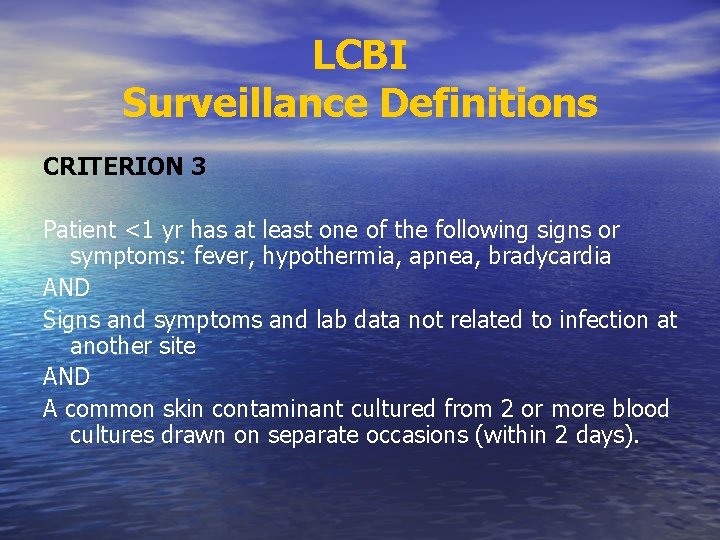
LCBI Surveillance Definitions CRITERION 3 Patient <1 yr has at least one of the following signs or symptoms: fever, hypothermia, apnea, bradycardia AND Signs and symptoms and lab data not related to infection at another site AND A common skin contaminant cultured from 2 or more blood cultures drawn on separate occasions (within 2 days).
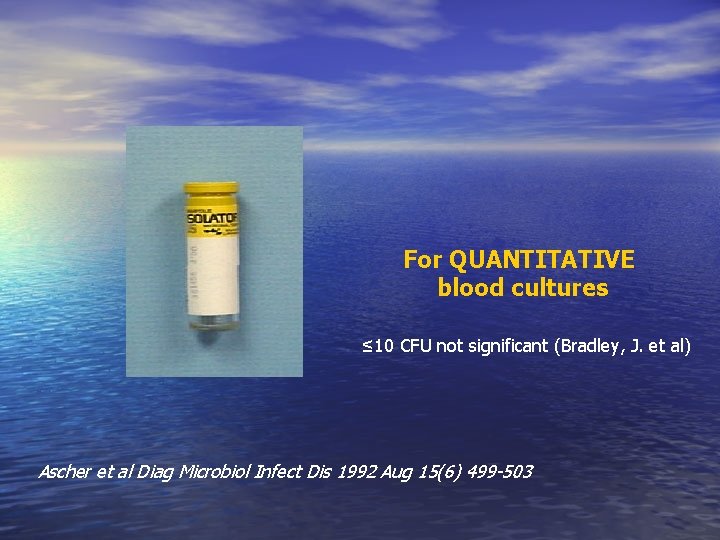
For QUANTITATIVE blood cultures ≤ 10 CFU not significant (Bradley, J. et al) Ascher et al Diag Microbiol Infect Dis 1992 Aug 15(6) 499 -503
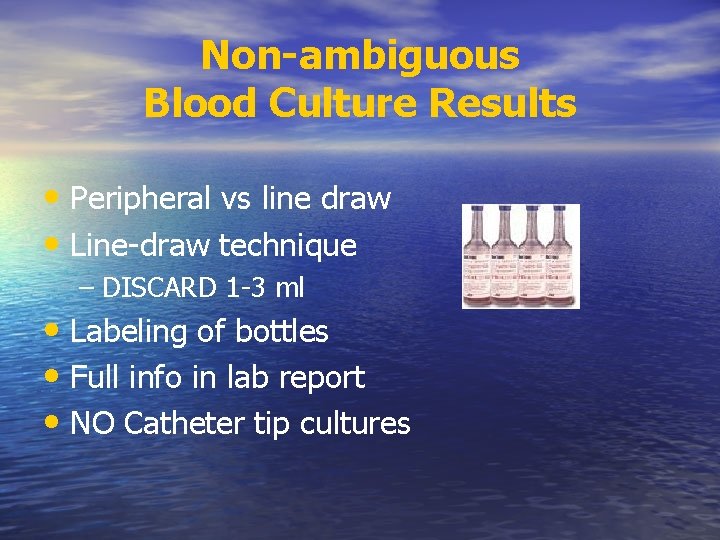
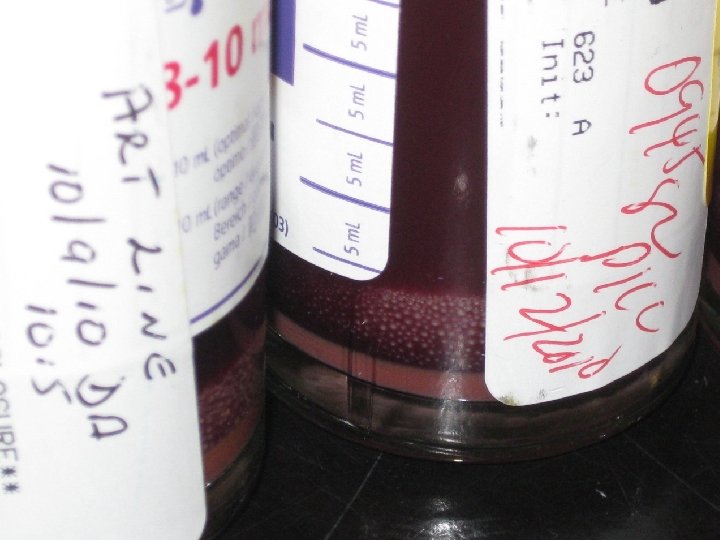
Non-ambiguous Blood Culture Results • Peripheral vs line draw • Line-draw technique – DISCARD 1 -3 ml • Labeling of bottles • Full info in lab report • NO Catheter tip cultures
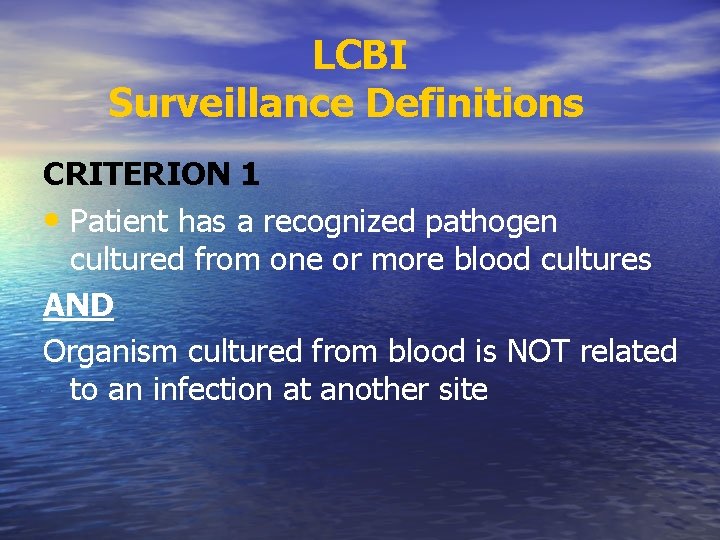
LCBI Surveillance Definitions CRITERION 1 • Patient has a recognized pathogen cultured from one or more blood cultures AND Organism cultured from blood is NOT related to an infection at another site
LCBI Surveillance Definitions CRITERION 3 Patient <1 yr has at least one of the following signs or symptoms: fever, hypothermia, apnea, bradycardia AND Signs and symptoms and lab data not related to infection at another site AND A common skin contaminant cultured from 2 or more blood cultures drawn on separate occasions (within 2 days).
ZERO is the goal…. . Process and teamwork (good relationships) get you there…. .