Strategic marketing Tony Proctor 1 Factors impacting on











- Slides: 70
Strategic marketing Tony Proctor
1
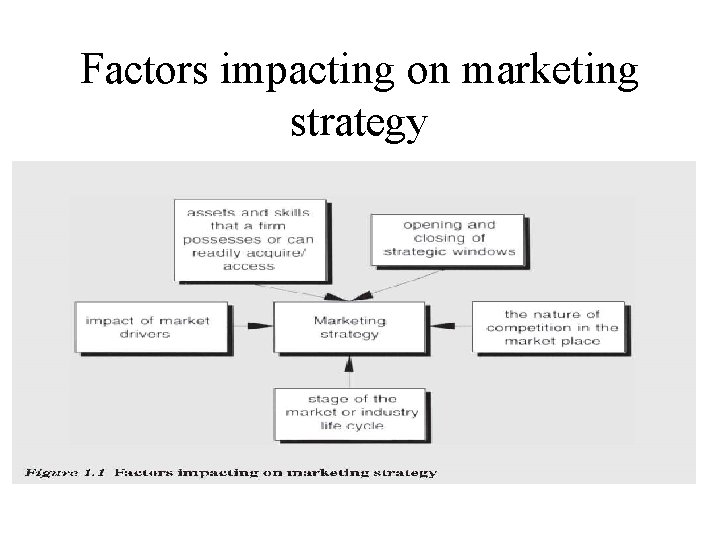
Factors impacting on marketing strategy
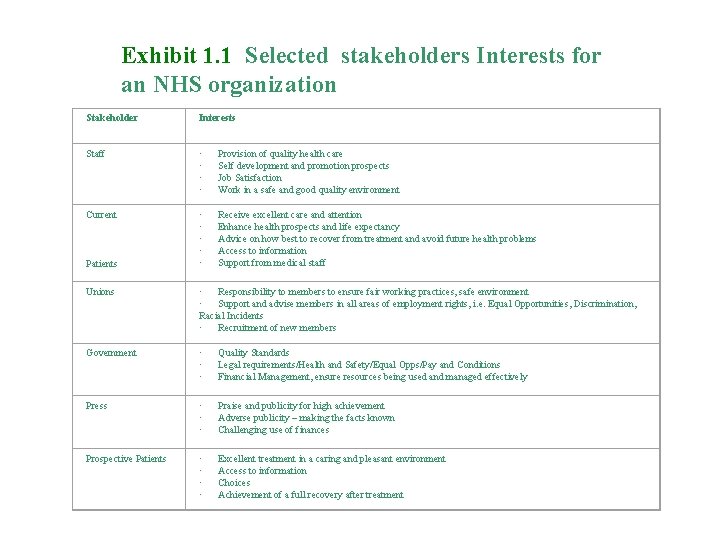
Exhibit 1. 1 Selected stakeholders Interests for an NHS organization Stakeholder Interests Staff · Provision of quality health care · Self development and promotion prospects · Job Satisfaction · Work in a safe and good quality environment Current · Receive excellent care and attention · Enhance health prospects and life expectancy · Advice on how best to recover from treatment and avoid future health problems · Access to information · Support from medical staff Patients Unions · Responsibility to members to ensure fair working practices, safe environment · Support and advise members in all areas of employment rights, i. e. Equal Opportunities, Discrimination, Racial Incidents · Recruitment of new members Government · Quality Standards · Legal requirements/Health and Safety/Equal Opps/Pay and Conditions · Financial Management, ensure resources being used and managed effectively Press · Praise and publicity for high achievement · Adverse publicity – making the facts known · Challenging use of finances Prospective Patients · Excellent treatment in a caring and pleasant environment · Access to information · Choices · Achievement of a full recovery after treatment
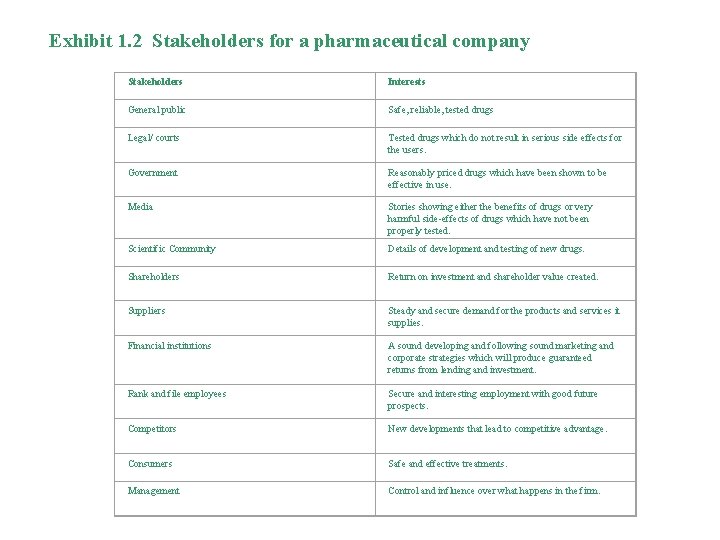
Exhibit 1. 2 Stakeholders for a pharmaceutical company Stakeholders Interests General public Safe, reliable, tested drugs Legal/ courts Tested drugs which do not result in serious side effects for the users. Government Reasonably priced drugs which have been shown to be effective in use. Media Stories showing either the benefits of drugs or very harmful side effects of drugs which have not been properly tested. Scientific Community Details of development and testing of new drugs. Shareholders Return on investment and shareholder value created. Suppliers Steady and secure demand for the products and services it supplies. Financial institutions A sound developing and following sound marketing and corporate strategies which will produce guaranteed returns from lending and investment. Rank and file employees Secure and interesting employment with good future prospects. Competitors New developments that lead to competitive advantage. Consumers Safe and effective treatments. Management Control and influence over what happens in the firm.
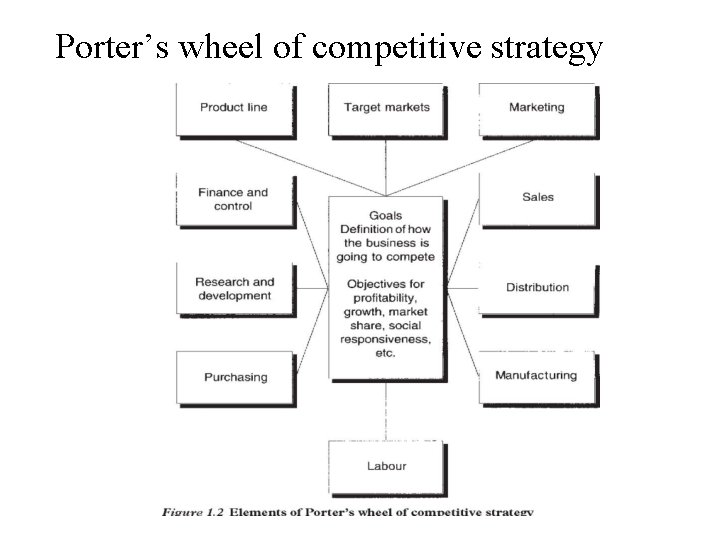
Porter’s wheel of competitive strategy
2
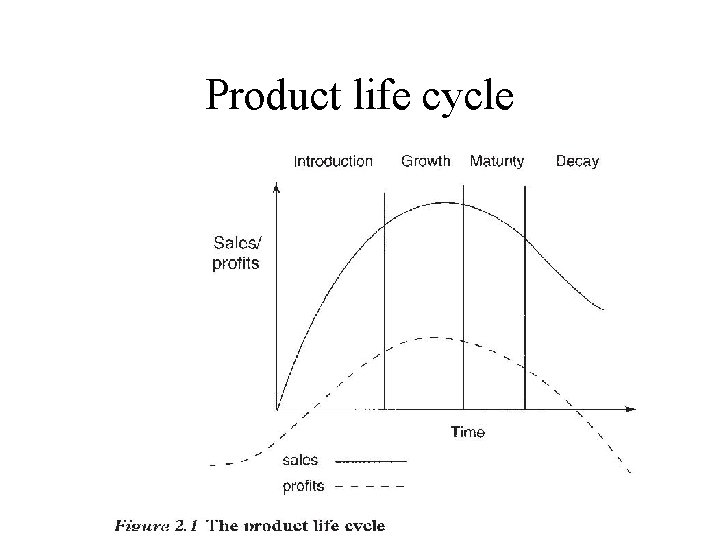
Product life cycle
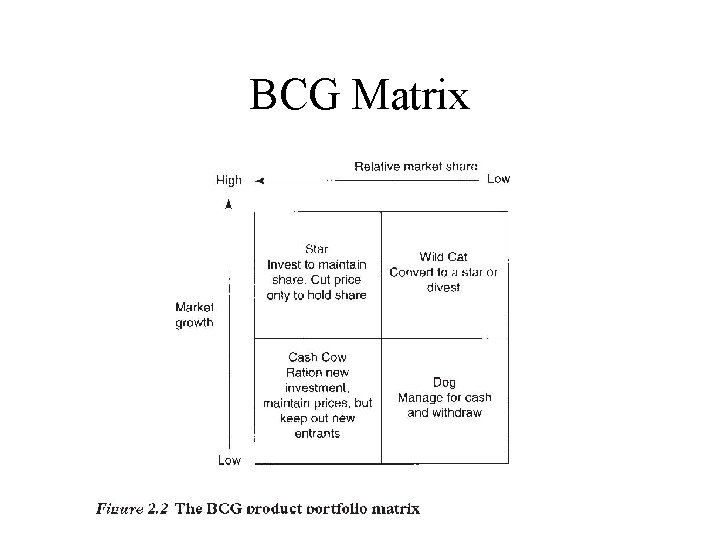
BCG Matrix
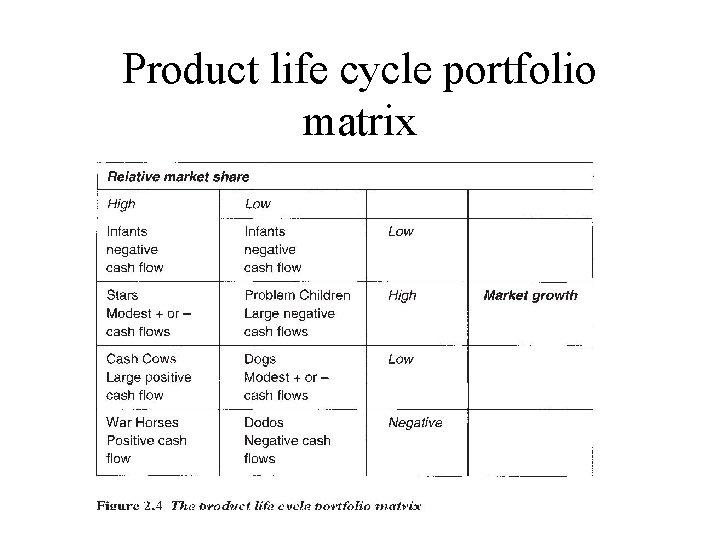
Product life cycle portfolio matrix
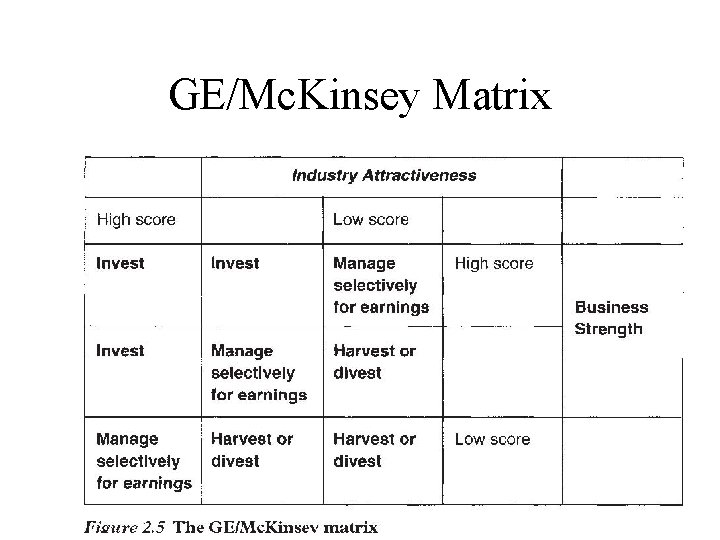
GE/Mc. Kinsey Matrix
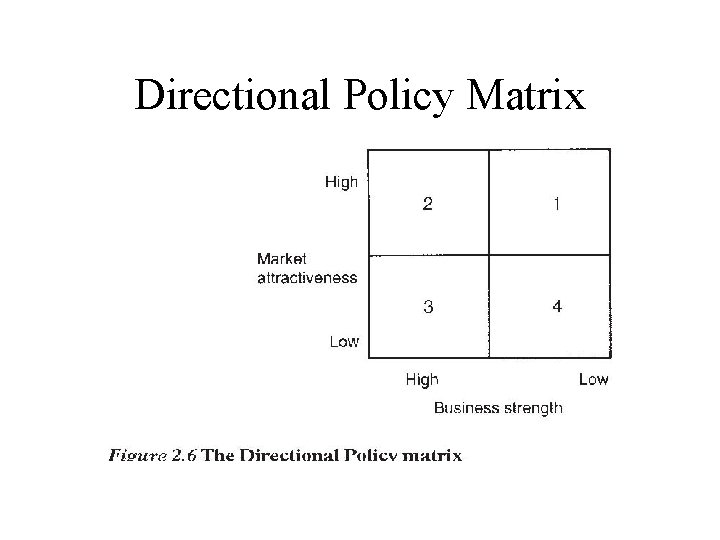
Directional Policy Matrix
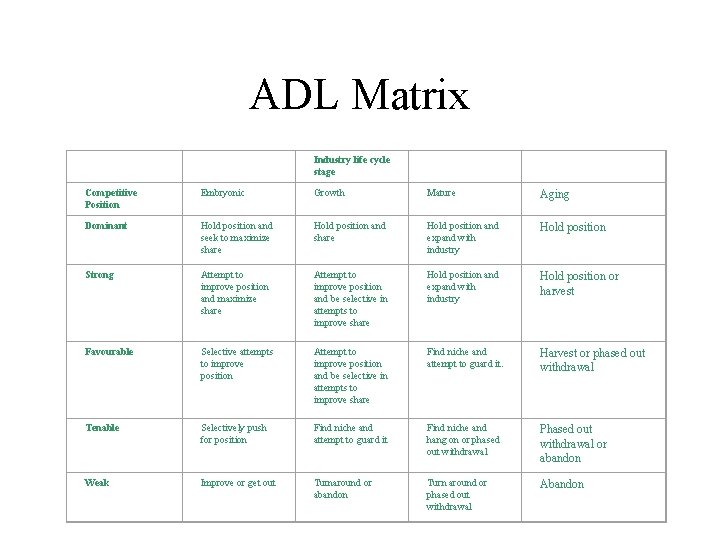
ADL Matrix Industry life cycle stage Competitive Position Embryonic Growth Mature Aging Dominant Hold position and seek to maximize share Hold position and expand with industry Hold position Strong Attempt to improve position and maximize share Attempt to improve position and be selective in attempts to improve share Hold position and expand with industry Hold position or harvest Favourable Selective attempts to improve position Attempt to improve position and be selective in attempts to improve share Find niche and attempt to guard it. Harvest or phased out withdrawal Tenable Selectively push for position Find niche and attempt to guard it Find niche and hang on or phased out withdrawal Phased out withdrawal or abandon Weak Improve or get out Turnaround or abandon Turn around or phased out withdrawal Abandon
3
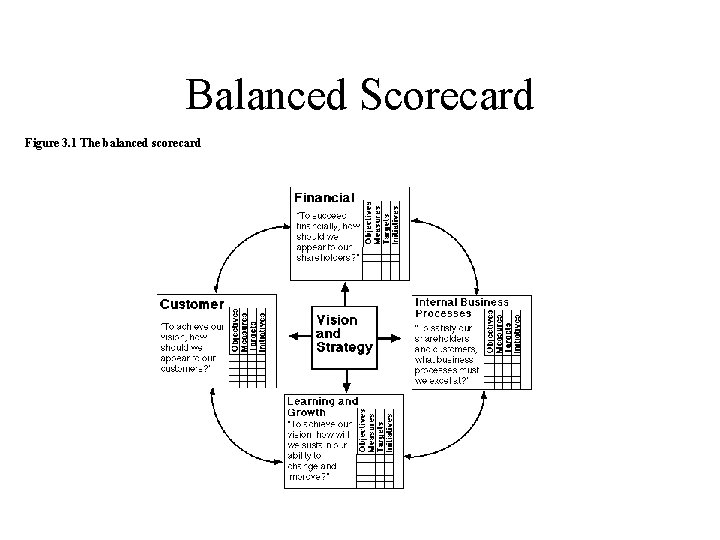
Balanced Scorecard Figure 3. 1 The balanced scorecard
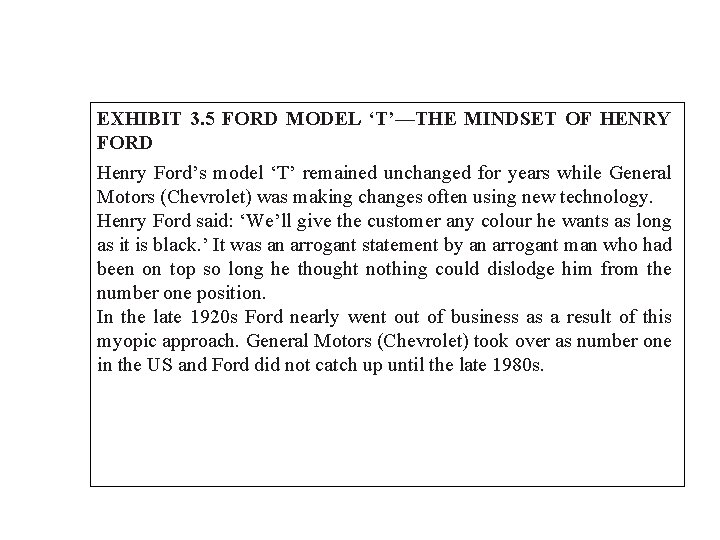
EXHIBIT 3. 5 FORD MODEL ‘T’—THE MINDSET OF HENRY FORD Henry Ford’s model ‘T’ remained unchanged for years while General Motors (Chevrolet) was making changes often using new technology. Henry Ford said: ‘We’ll give the customer any colour he wants as long as it is black. ’ It was an arrogant statement by an arrogant man who had been on top so long he thought nothing could dislodge him from the number one position. In the late 1920 s Ford nearly went out of business as a result of this myopic approach. General Motors (Chevrolet) took over as number one in the US and Ford did not catch up until the late 1980 s.
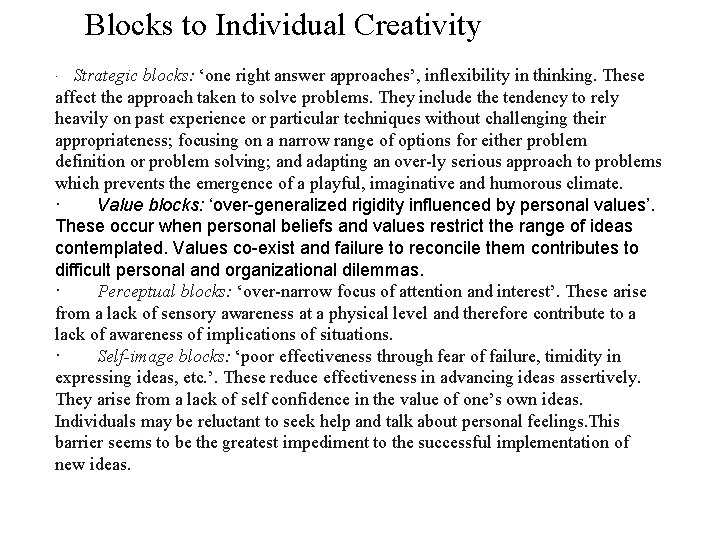
Blocks to Individual Creativity · Strategic blocks: ‘one right answer approaches’, inflexibility in thinking. These affect the approach taken to solve problems. They include the tendency to rely heavily on past experience or particular techniques without challenging their appropriateness; focusing on a narrow range of options for either problem definition or problem solving; and adapting an over ly serious approach to problems which prevents the emergence of a playful, imaginative and humorous climate. · Value blocks: ‘over-generalized rigidity influenced by personal values’. These occur when personal beliefs and values restrict the range of ideas contemplated. Values co-exist and failure to reconcile them contributes to difficult personal and organizational dilemmas. · Perceptual blocks: ‘over narrow focus of attention and interest’. These arise from a lack of sensory awareness at a physical level and therefore contribute to a lack of awareness of implications of situations. · Self-image blocks: ‘poor effectiveness through fear of failure, timidity in expressing ideas, etc. ’. These reduce effectiveness in advancing ideas assertively. They arise from a lack of self confidence in the value of one’s own ideas. Individuals may be reluctant to seek help and talk about personal feelings. This barrier seems to be the greatest impediment to the successful implementation of new ideas.
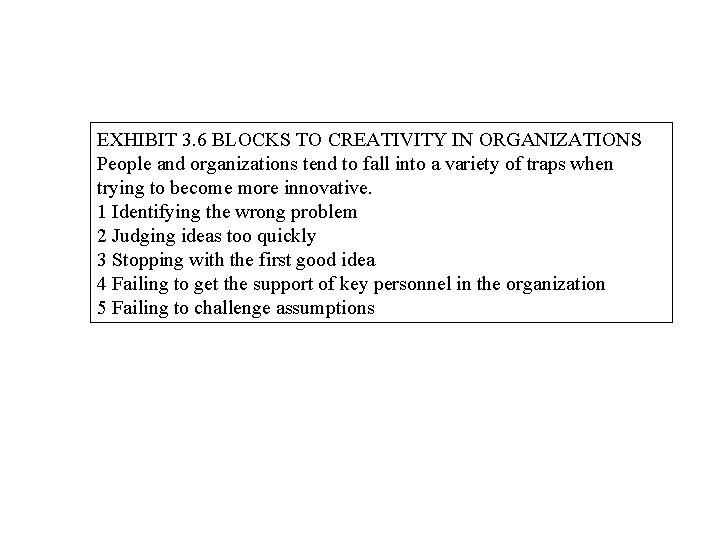
EXHIBIT 3. 6 BLOCKS TO CREATIVITY IN ORGANIZATIONS People and organizations tend to fall into a variety of traps when trying to become more innovative. 1 Identifying the wrong problem 2 Judging ideas too quickly 3 Stopping with the first good idea 4 Failing to get the support of key personnel in the organization 5 Failing to challenge assumptions
4
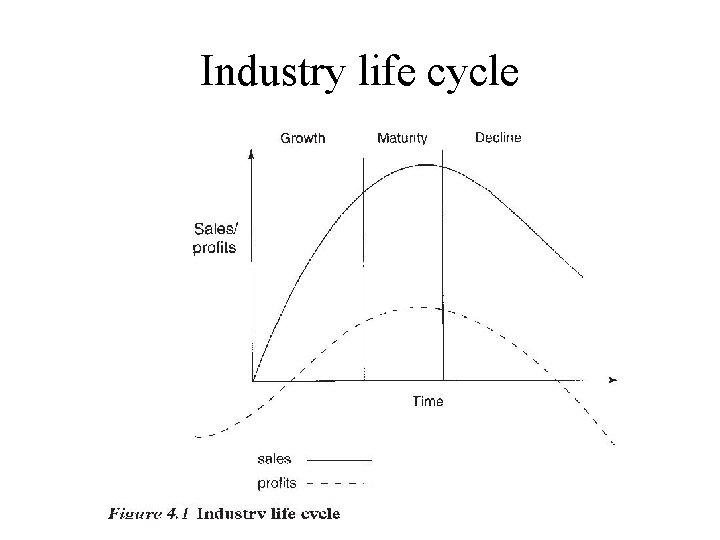
Industry life cycle
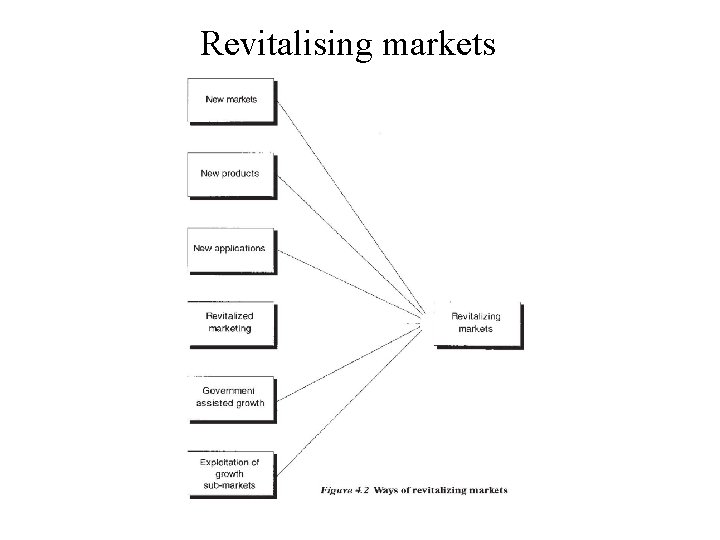
Revitalising markets
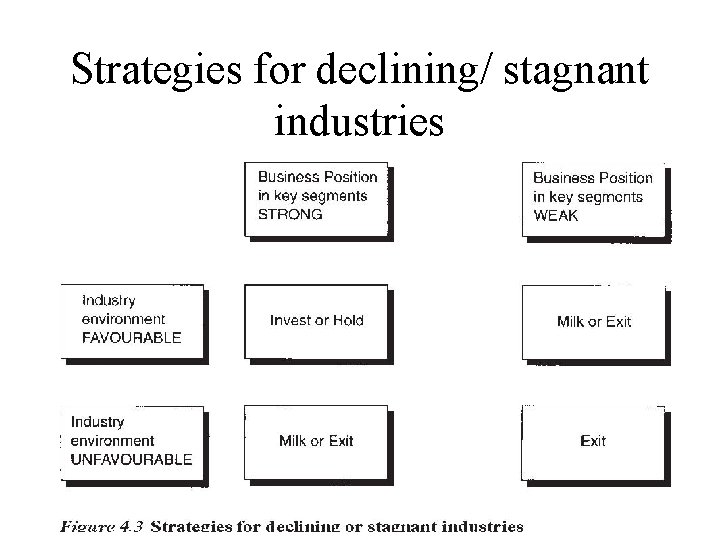
Strategies for declining/ stagnant industries
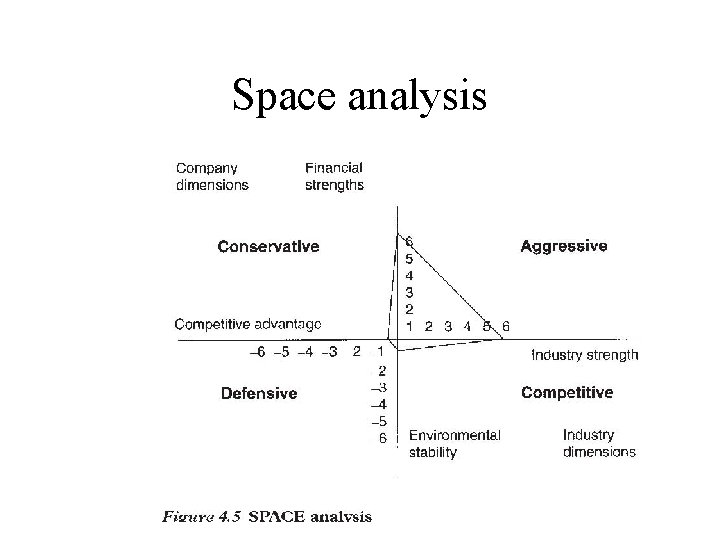
Space analysis
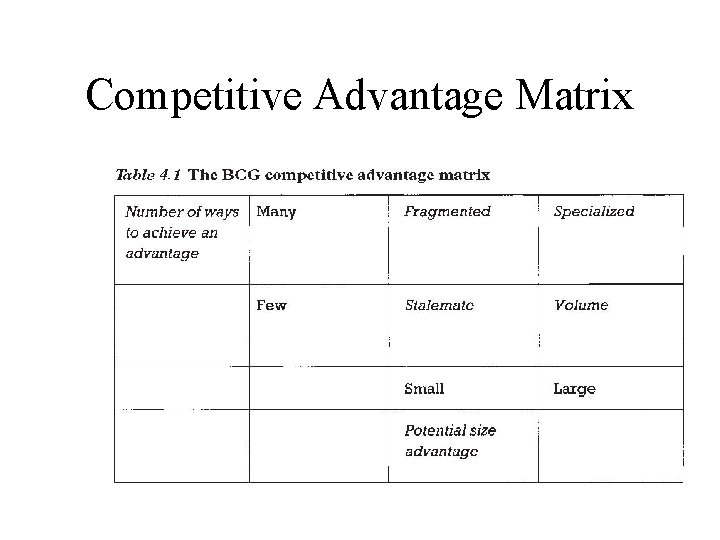
Competitive Advantage Matrix
5
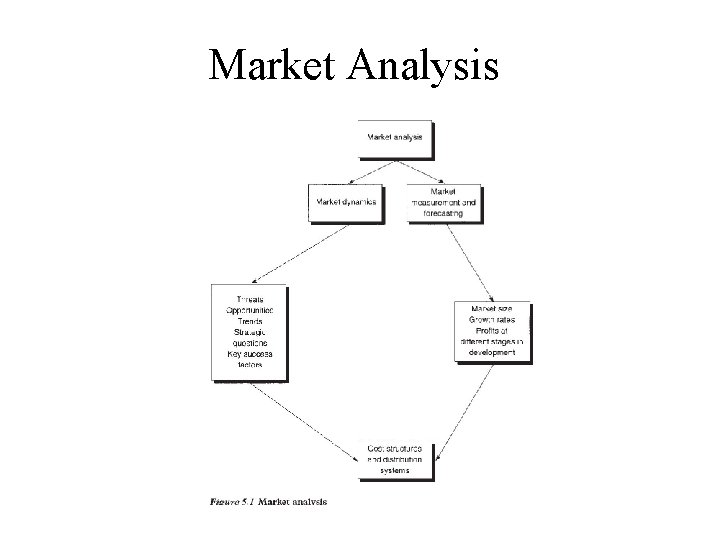
Market Analysis
6
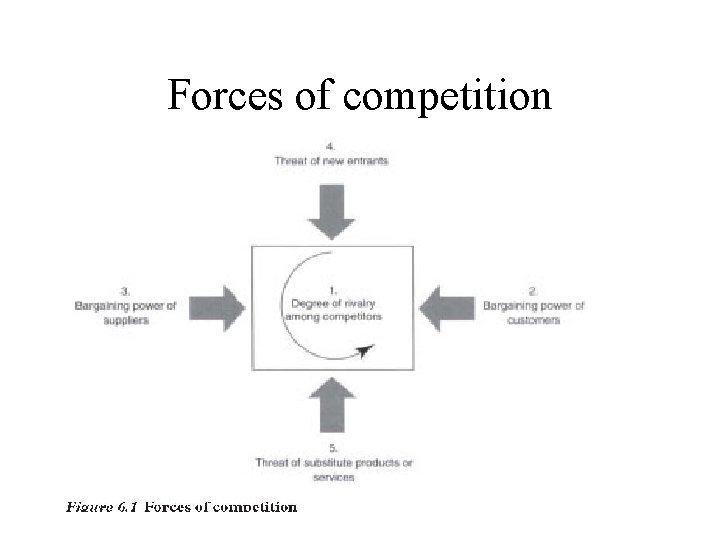
Forces of competition
7
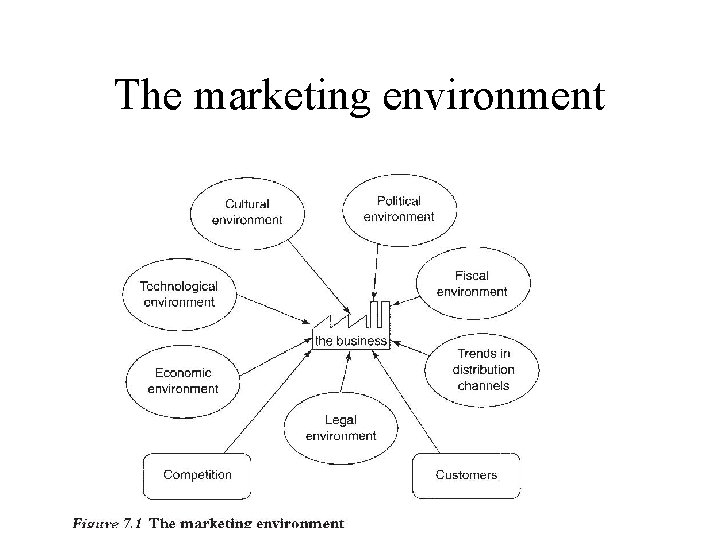
The marketing environment
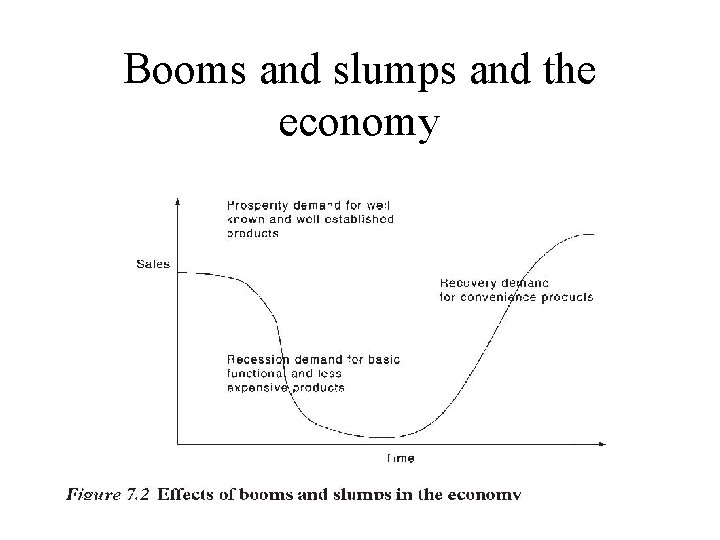
Booms and slumps and the economy
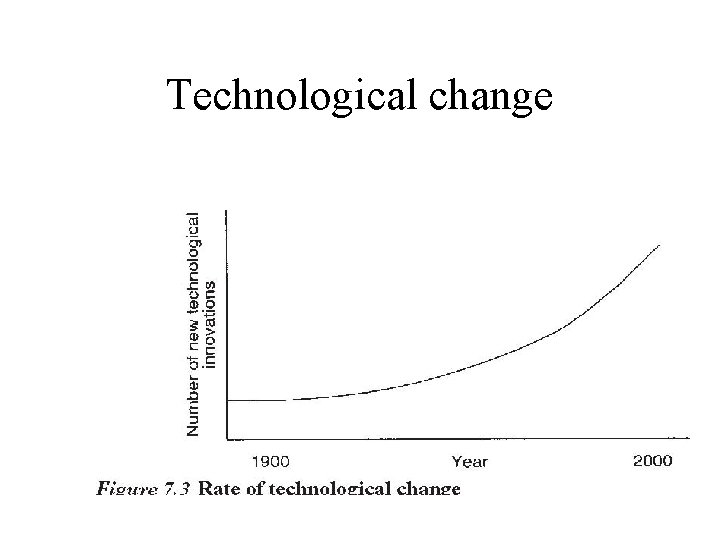
Technological change
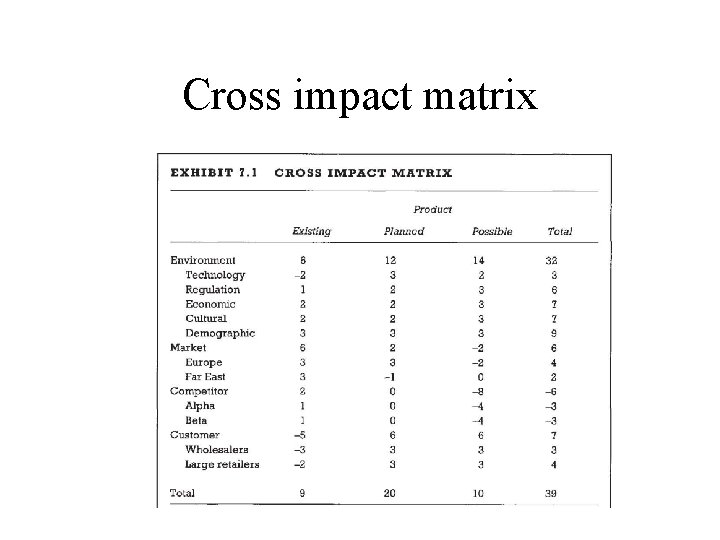
Cross impact matrix
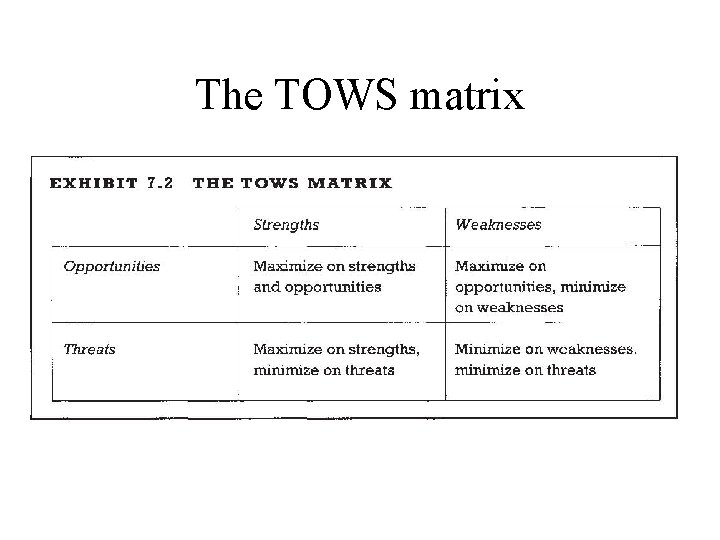
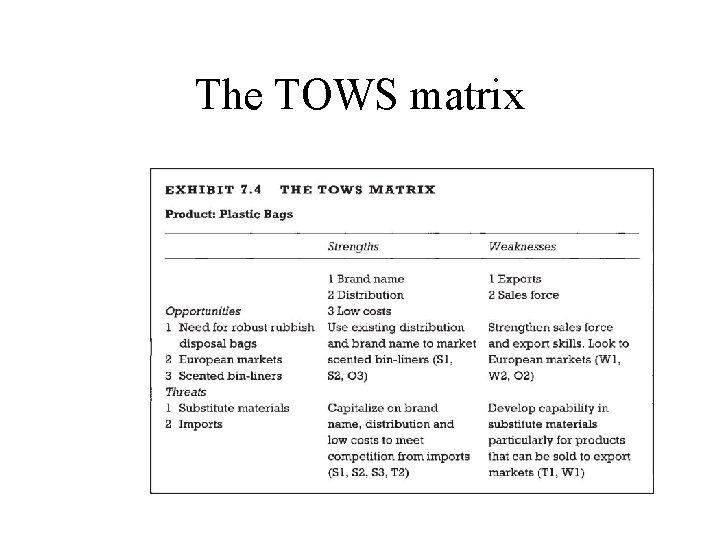
The TOWS matrix
The TOWS matrix
8
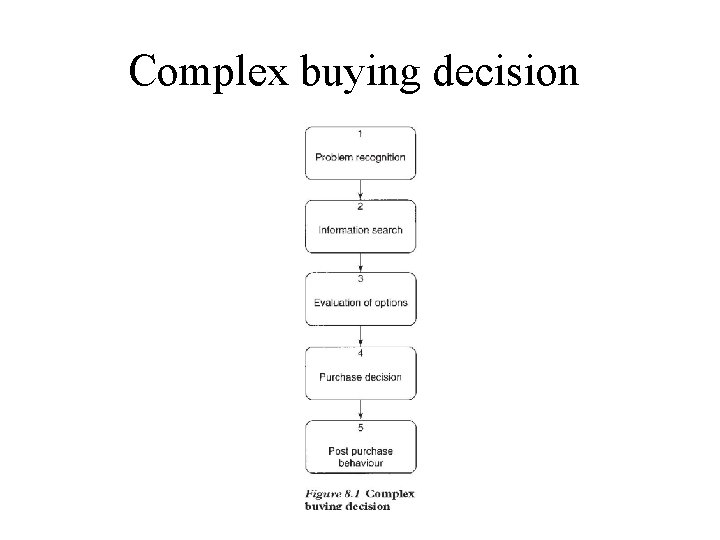
Complex buying decision
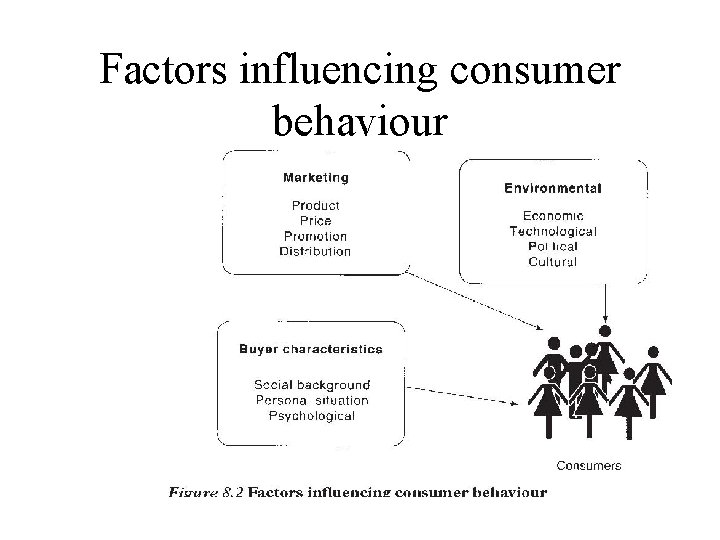
Factors influencing consumer behaviour
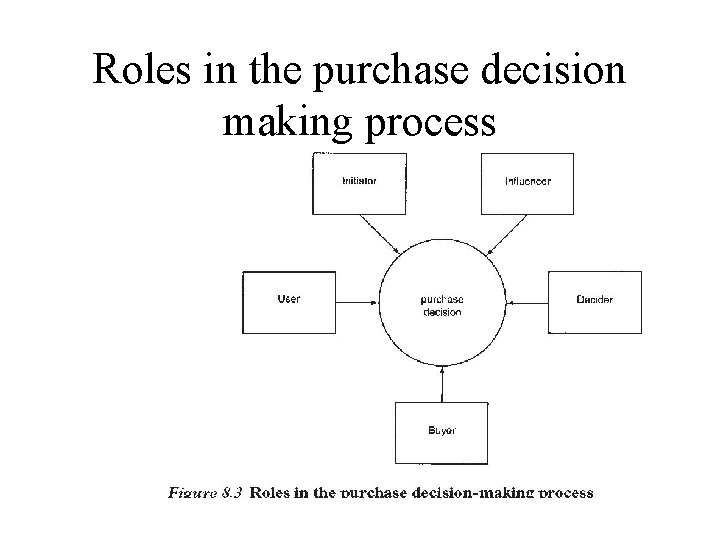
Roles in the purchase decision making process
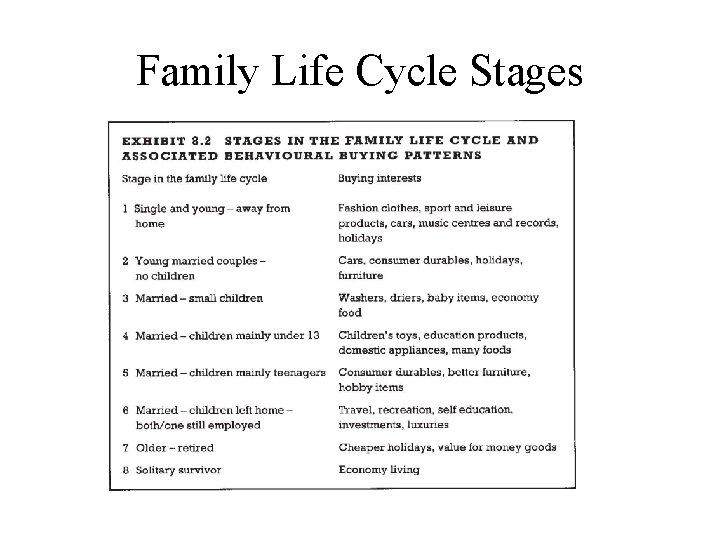
Family Life Cycle Stages
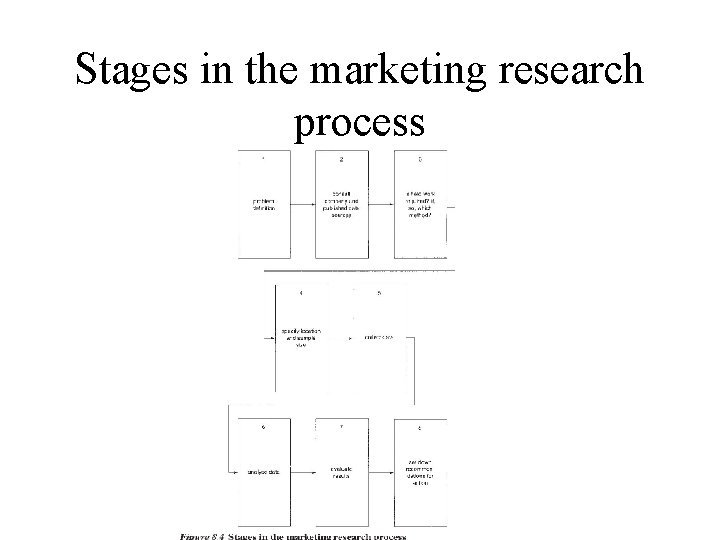
Stages in the marketing research process
9
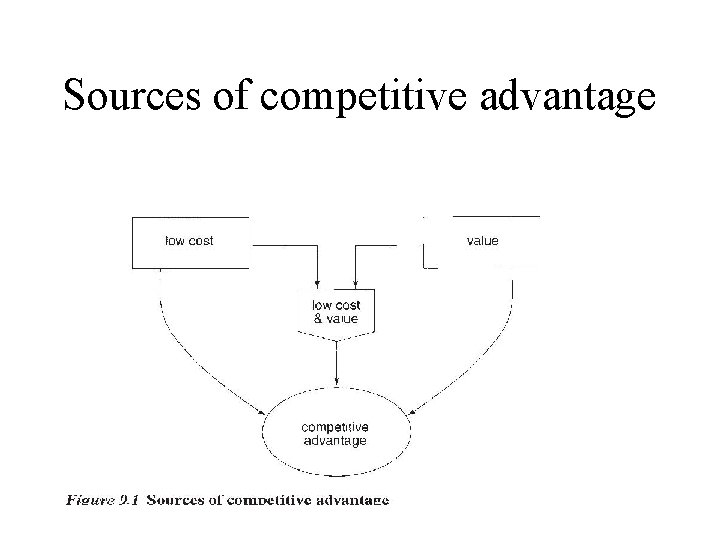
Sources of competitive advantage
10
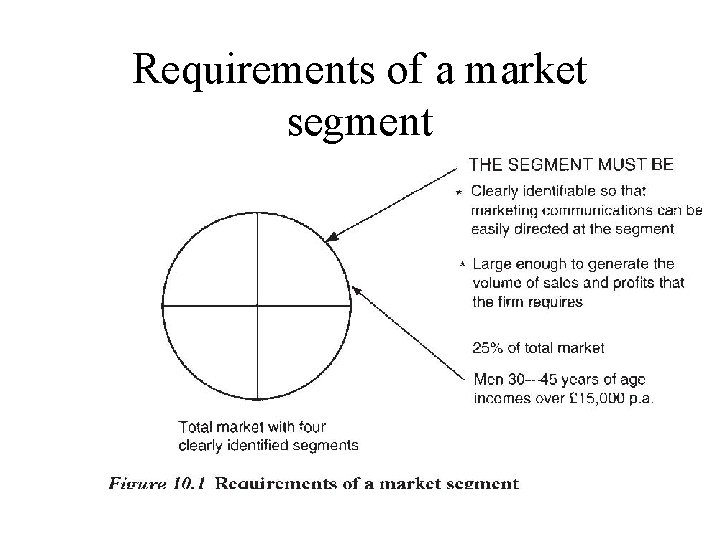
Requirements of a market segment
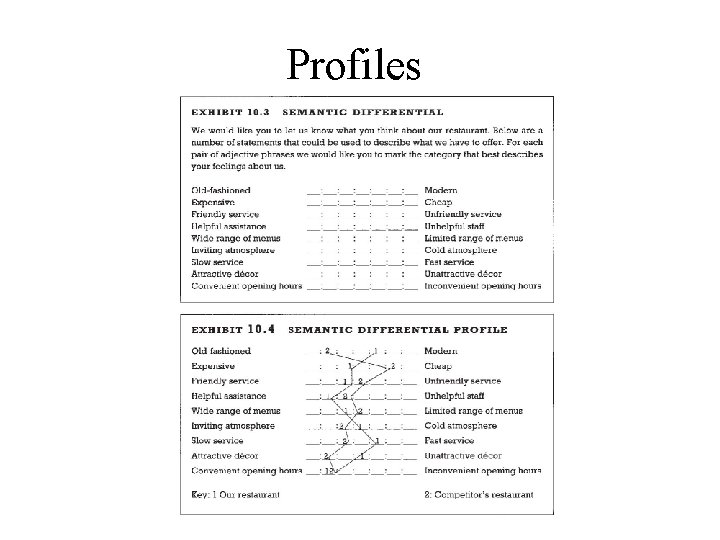
Profiles
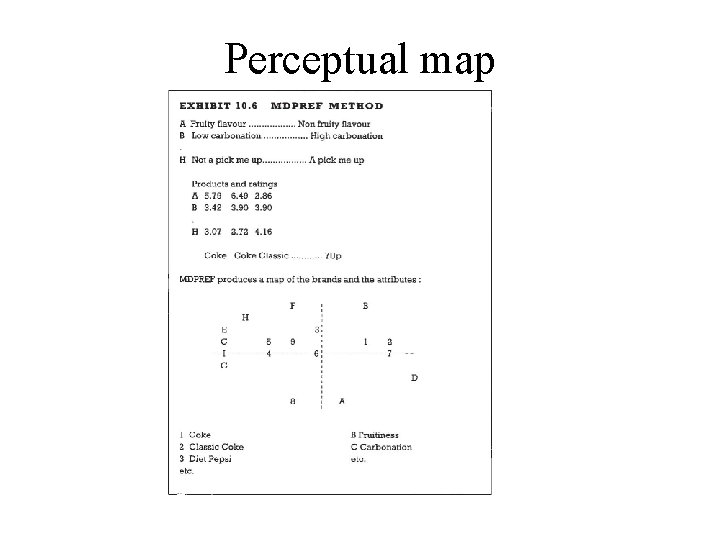
Perceptual map
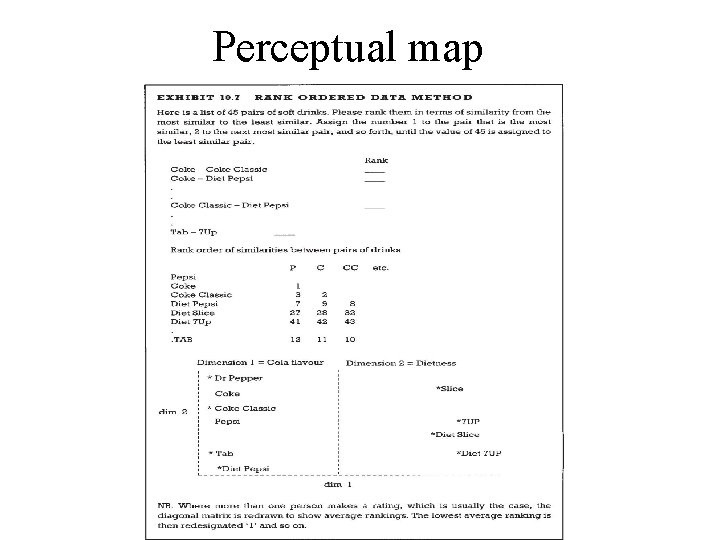
Perceptual map
11
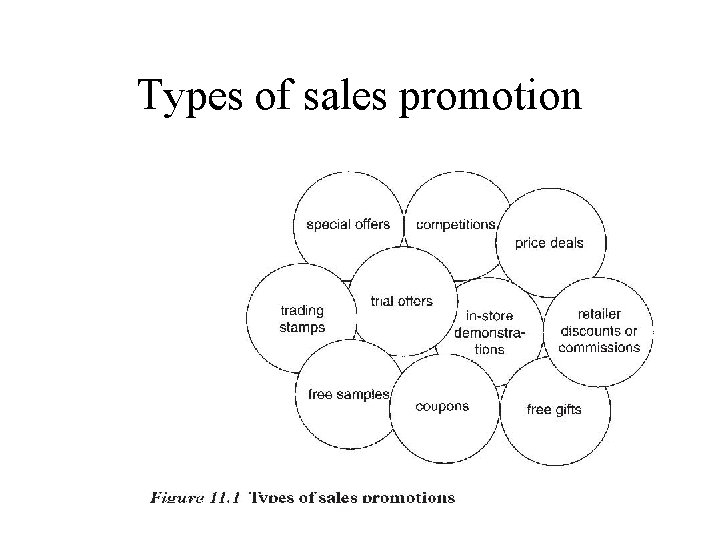
Types of sales promotion
12
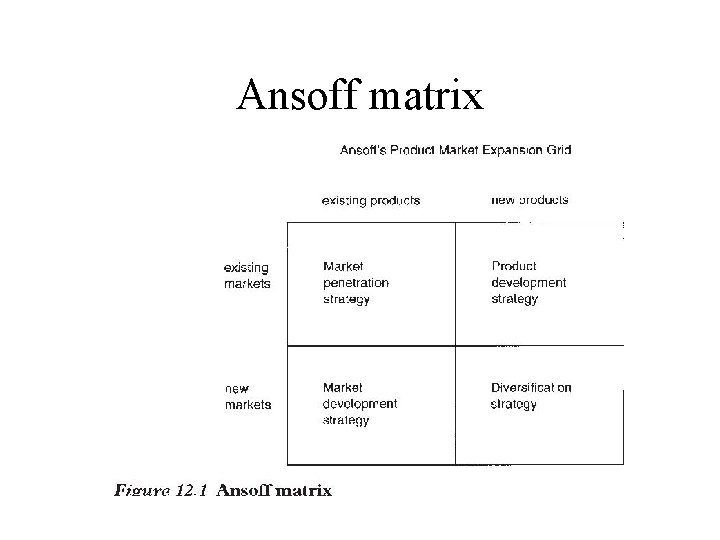
Ansoff matrix
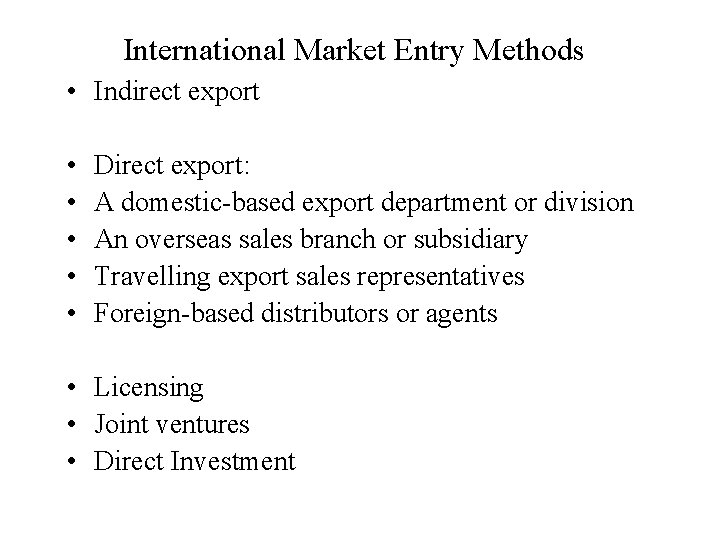
International Market Entry Methods • Indirect export • • • Direct export: A domestic based export department or division An overseas sales branch or subsidiary Travelling export sales representatives Foreign based distributors or agents • Licensing • Joint ventures • Direct Investment
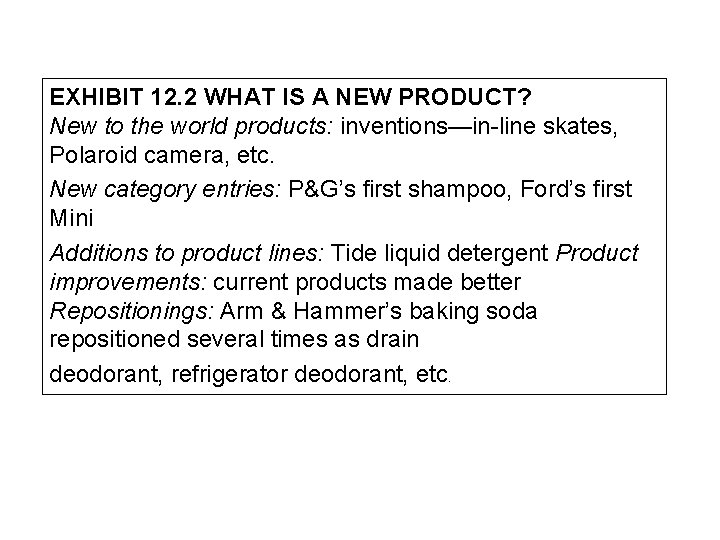
EXHIBIT 12. 2 WHAT IS A NEW PRODUCT? New to the world products: inventions—in-line skates, Polaroid camera, etc. New category entries: P&G’s first shampoo, Ford’s first Mini Additions to product lines: Tide liquid detergent Product improvements: current products made better Repositionings: Arm & Hammer’s baking soda repositioned several times as drain deodorant, refrigerator deodorant, etc.
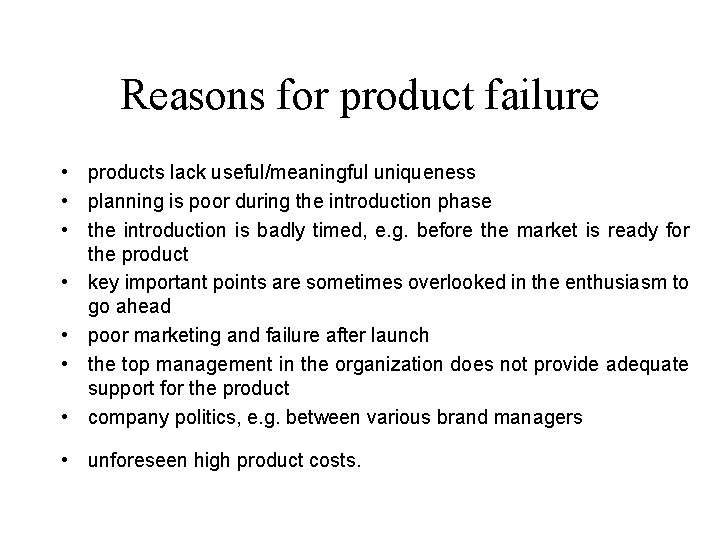
Reasons for product failure • products lack useful/meaningful uniqueness • planning is poor during the introduction phase • the introduction is badly timed, e. g. before the market is ready for the product • key important points are sometimes overlooked in the enthusiasm to go ahead • poor marketing and failure after launch • the top management in the organization does not provide adequate support for the product • company politics, e. g. between various brand managers • unforeseen high product costs.
New product development phases
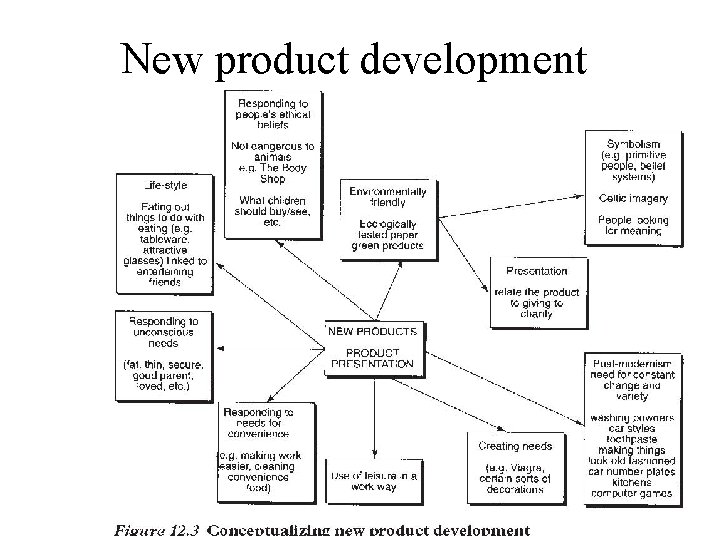
New product development
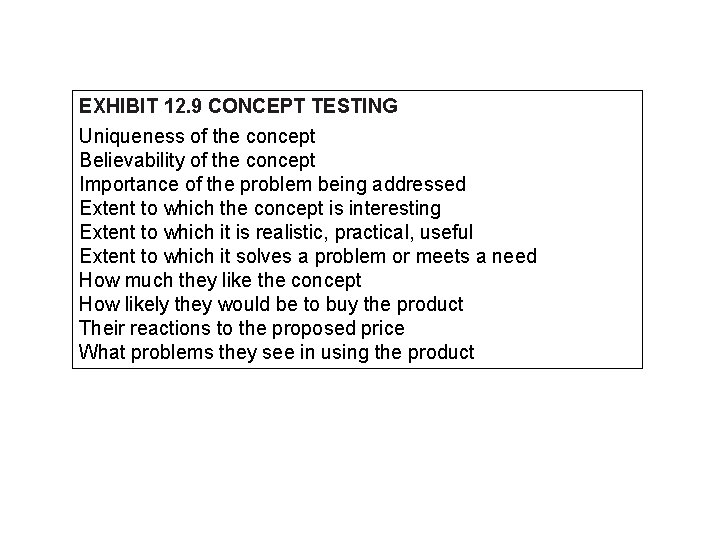
EXHIBIT 12. 9 CONCEPT TESTING Uniqueness of the concept Believability of the concept Importance of the problem being addressed Extent to which the concept is interesting Extent to which it is realistic, practical, useful Extent to which it solves a problem or meets a need How much they like the concept How likely they would be to buy the product Their reactions to the proposed price What problems they see in using the product
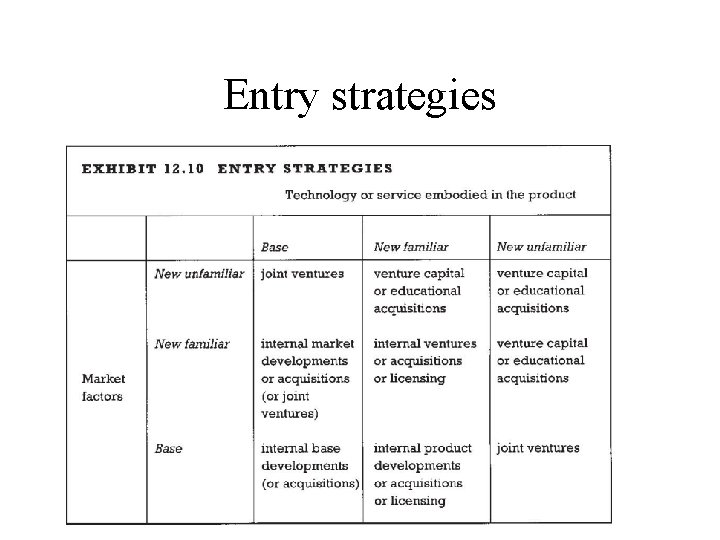
Entry strategies
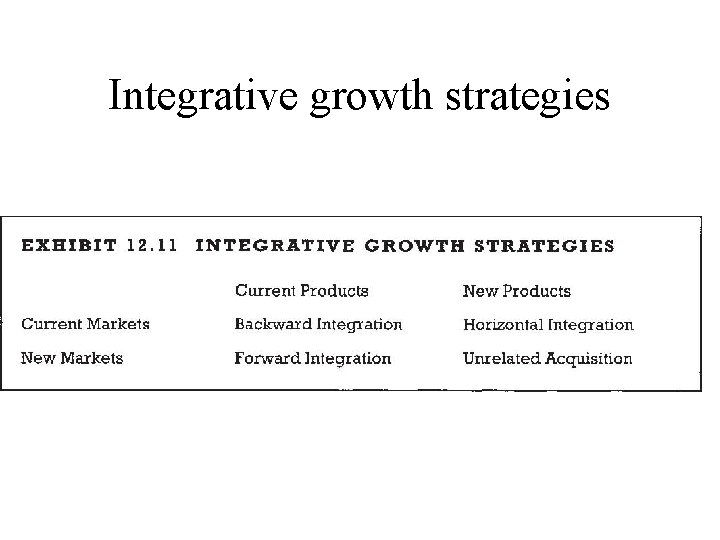
Integrative growth strategies
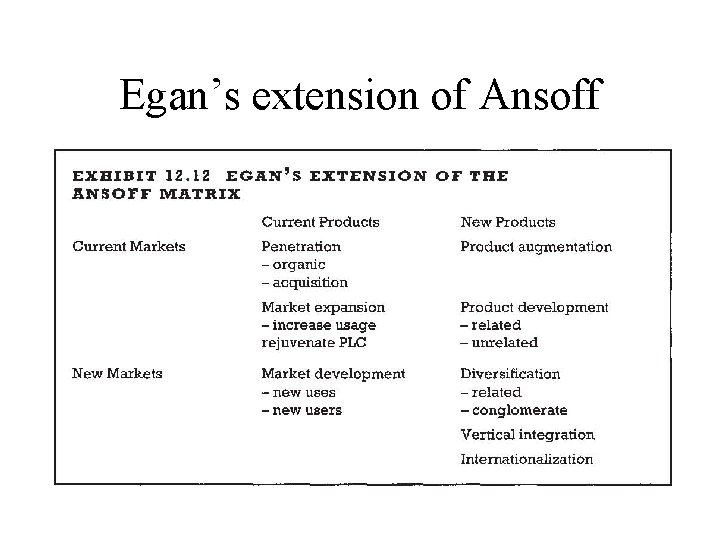
Egan’s extension of Ansoff
13
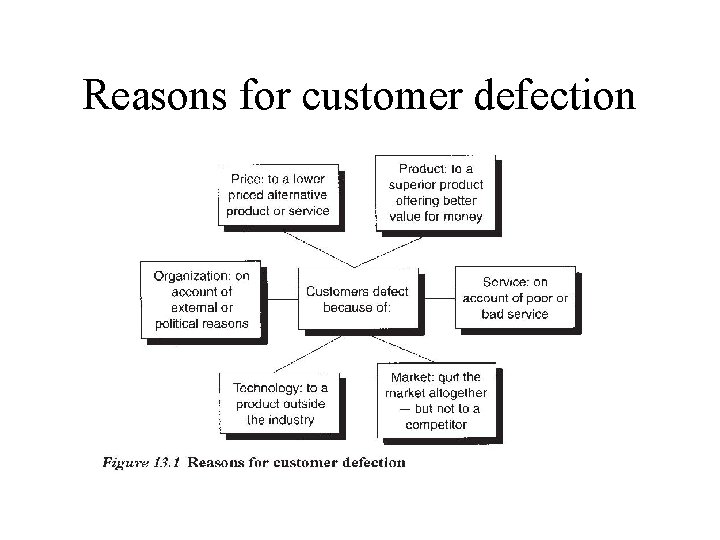
Reasons for customer defection
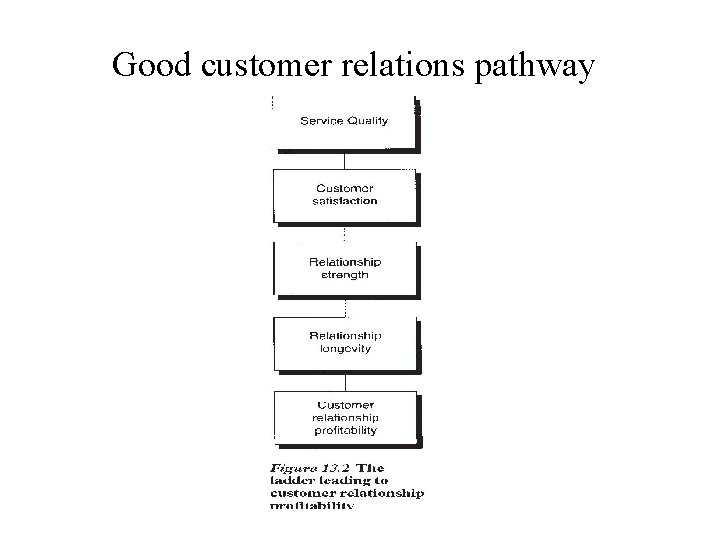
Good customer relations pathway
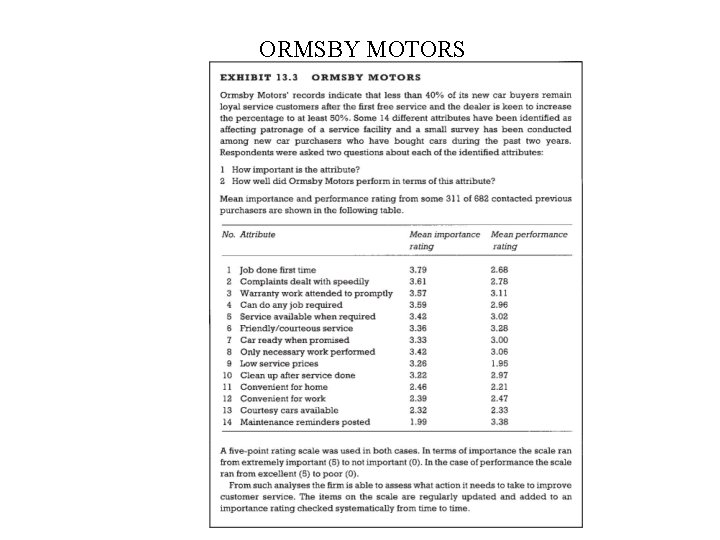
ORMSBY MOTORS
14
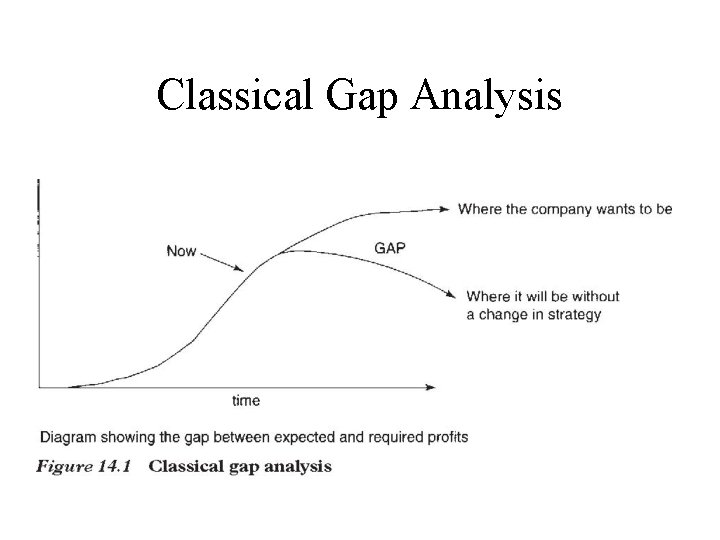
Classical Gap Analysis
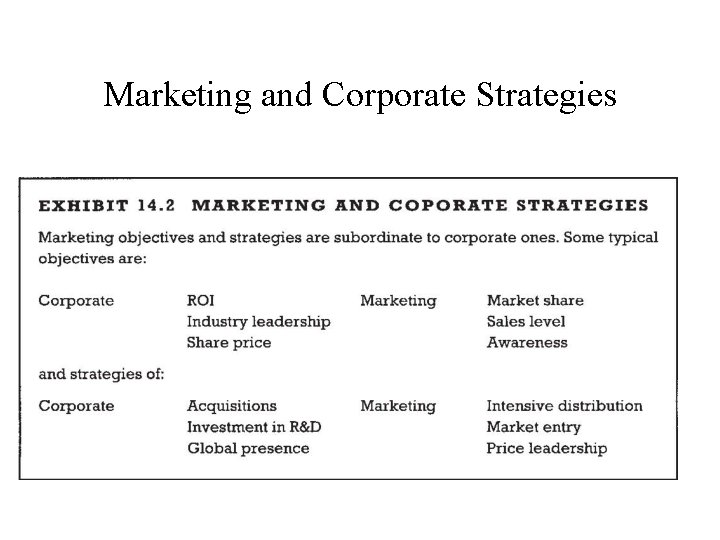
Marketing and Corporate Strategies