
Chapter 1 Strategic Planning and the Marketing Management
- Slides: 29
Chapter 1 Strategic Planning and the Marketing Management Process Key Terms Marketing Concept, Customer Needs, American Marketing Association, Customers, Employees, Investors, Strategic Planning, Mission Statement, Organizational Objectives, Organizational Strategies, Competitive Advantage, Organizational Portfolio Plan, The Marketing Management Process, Marketing Planning, Implementation and Control of the Marketing Plan, Marketing Information Systems and Marketing Research, Cross-functional Strategic Plan Mc. Graw-Hill/Irwin © 2009 The Mc. Graw-Hill Companies, All Rights Reserved
The Marketing Concept • An organization should seek to make a profit by serving needs of customers • Purpose of marketing concept is to rivet attention of marketing managers on serving broad classes of customer needs • Principal task of marketing function operating under marketing concept is to find effective and efficient means of making the business do what suits interests of customers Mc. Graw-Hill/Irwin © 2009 The Mc. Graw-Hill Companies, All Rights Reserved
What is Marketing? • “The process of planning and executing conception, pricing, promotion and distribution of ideas, goods and services to create exchanges that satisfy individual and organizational goals” – The American Marketing Association Mc. Graw-Hill/Irwin © 2009 The Mc. Graw-Hill Companies, All Rights Reserved
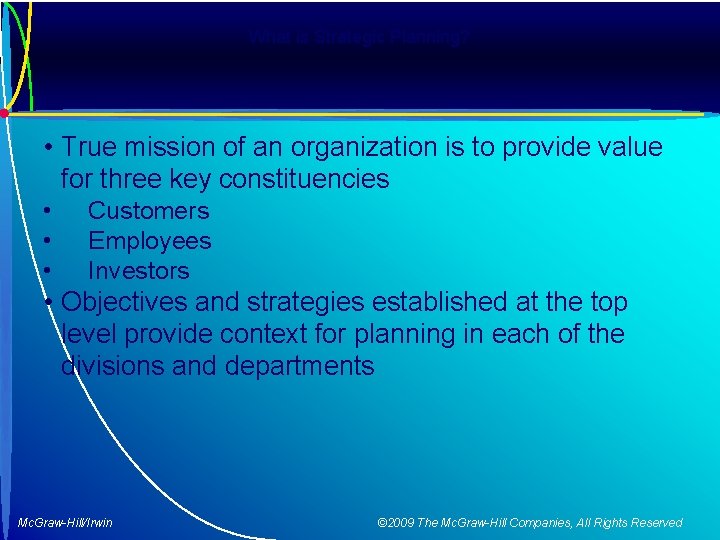
What is Strategic Planning? • True mission of an organization is to provide value for three key constituencies • • • Customers Employees Investors • Objectives and strategies established at the top level provide context for planning in each of the divisions and departments Mc. Graw-Hill/Irwin © 2009 The Mc. Graw-Hill Companies, All Rights Reserved
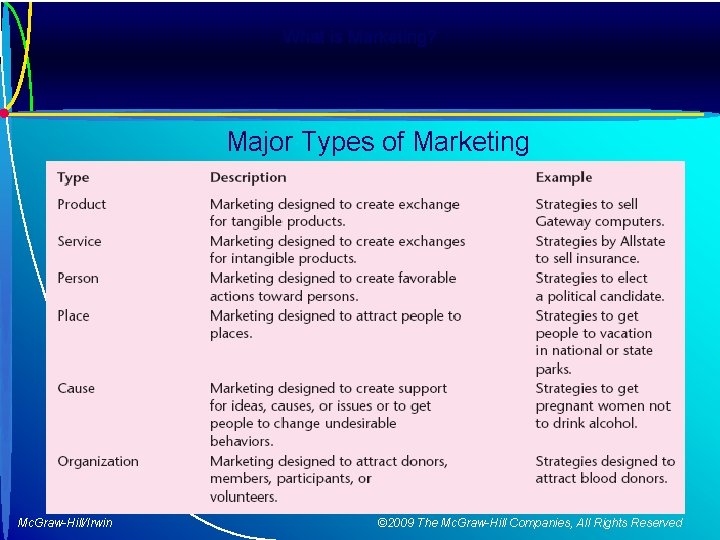
What is Marketing? Major Types of Marketing Mc. Graw-Hill/Irwin © 2009 The Mc. Graw-Hill Companies, All Rights Reserved
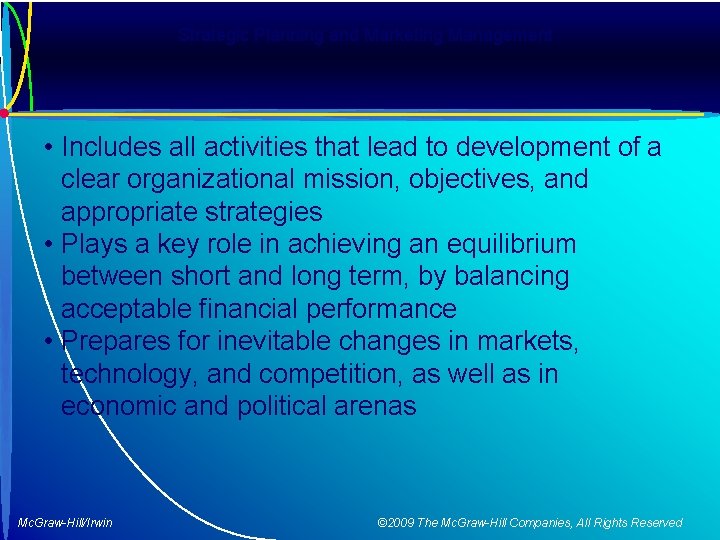
Strategic Planning and Marketing Management • Includes all activities that lead to development of a clear organizational mission, objectives, and appropriate strategies • Plays a key role in achieving an equilibrium between short and long term, by balancing acceptable financial performance • Prepares for inevitable changes in markets, technology, and competition, as well as in economic and political arenas Mc. Graw-Hill/Irwin © 2009 The Mc. Graw-Hill Companies, All Rights Reserved
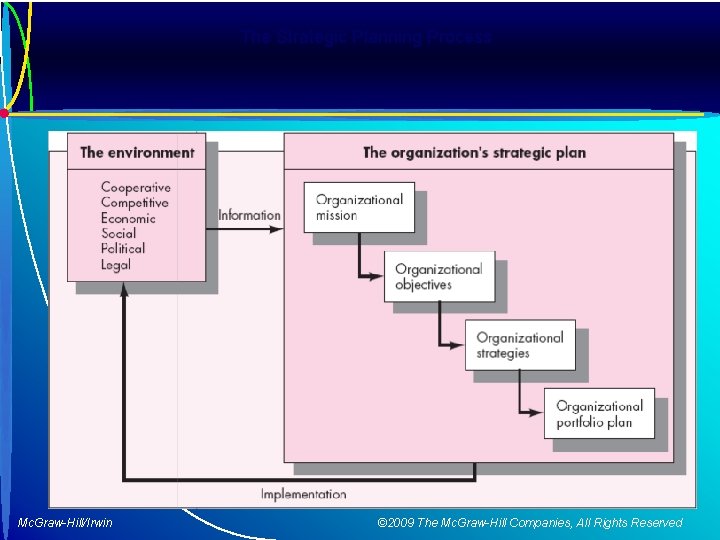
The Strategic Planning Process Mc. Graw-Hill/Irwin © 2009 The Mc. Graw-Hill Companies, All Rights Reserved
The Strategic Planning Process • Mission statement – In developing a mission statement, management must take into account • • • Organization’s history Organization’s distinctive competitiveness Organization’s environment • Mission statement should be • • Focused on markets rather than products Achievable Motivational Specific Mc. Graw-Hill/Irwin © 2009 The Mc. Graw-Hill Companies, All Rights Reserved
The Strategic Planning Process • Organizational objectives • End-points of an organization’s mission and are what it seeks through on-going, long-run operations • Organizational strategies • Involves choice of major directions organization will take in pursuing its objectives Mc. Graw-Hill/Irwin © 2009 The Mc. Graw-Hill Companies, All Rights Reserved
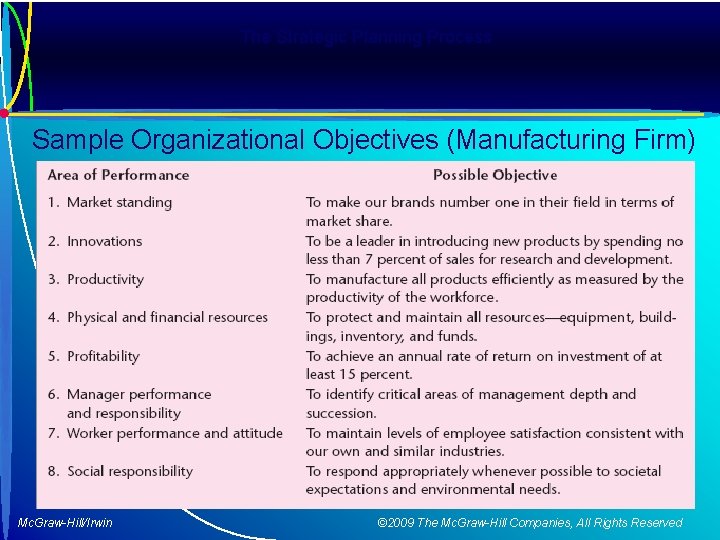
The Strategic Planning Process Sample Organizational Objectives (Manufacturing Firm) Mc. Graw-Hill/Irwin © 2009 The Mc. Graw-Hill Companies, All Rights Reserved
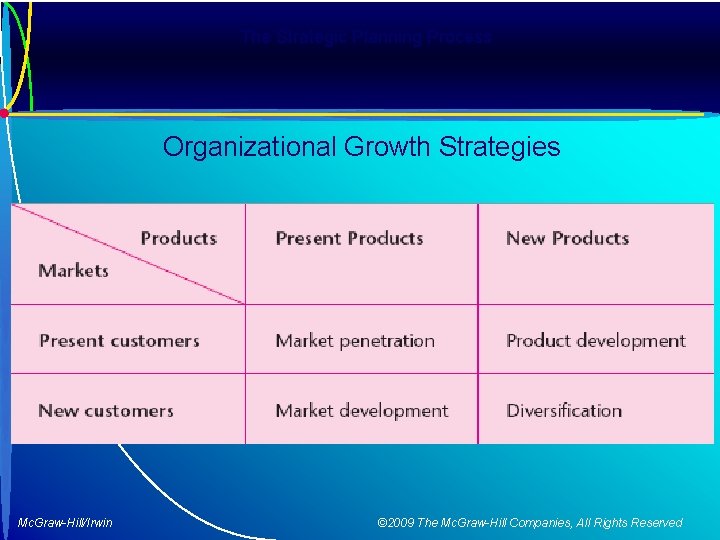
The Strategic Planning Process • Organizational growth based on products and markets • • Market penetration strategies Market development strategies Product development strategies Diversification • Organizational strategies based on competitive advantage • • Ability to outperform competitors in providing something that the market values Porter suggests strategies based on cost leadership and differentiation Mc. Graw-Hill/Irwin © 2009 The Mc. Graw-Hill Companies, All Rights Reserved
The Strategic Planning Process Organizational Growth Strategies Mc. Graw-Hill/Irwin © 2009 The Mc. Graw-Hill Companies, All Rights Reserved
The Strategic Planning Process • Organizational strategies based on value • • “Customer value” has become critical for marketers as well as customers Firms must seek to build long-term relationships with their customers by offering unique value Mc. Graw-Hill/Irwin © 2009 The Mc. Graw-Hill Companies, All Rights Reserved
The Strategic Planning Process • Choosing an appropriate strategy • • • Management should select those strategies consistent with its mission and capitalize on the organization’s distinctive competencies Sustainable competitive advantage can be based on either the assets or skills of the organization Key to sustaining a competitive advantage is to continually focus and build on the assets and skills that will lead to long-term performance gains Mc. Graw-Hill/Irwin © 2009 The Mc. Graw-Hill Companies, All Rights Reserved
The Strategic Planning Process • Organizational portfolio plan • • • Organizations at a particular time are a portfolio of businesses – product lines, divisions, schools Management must decide which businesses to build, maintain, or eliminate, or which new businesses to add Organizations can create strategic business units (SBUs) which could be a single product, product line, or division Mc. Graw-Hill/Irwin © 2009 The Mc. Graw-Hill Companies, All Rights Reserved
The Marketing Management Process • Complete Strategic Plan • • Facilitates development of marketing plans for each product, product line, or division of the organization Marketing plan serves as a subset of strategic plan Mc. Graw-Hill/Irwin © 2009 The Mc. Graw-Hill Companies, All Rights Reserved
The Marketing Management Process • Defined as “the process of planning and executing the conception, pricing, promotion, and distribution of goods, services, and ideas to create exchanges with target groups that satisfy customer and organizational objectives” Mc. Graw-Hill/Irwin © 2009 The Mc. Graw-Hill Companies, All Rights Reserved
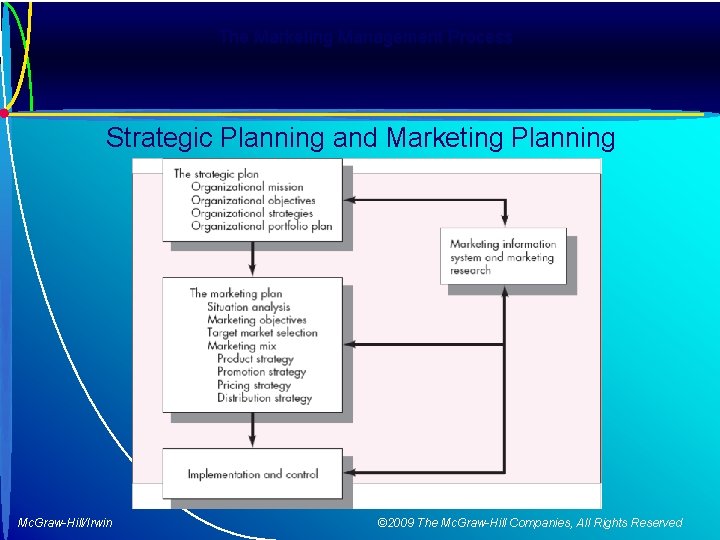
The Marketing Management Process Strategic Planning and Marketing Planning Mc. Graw-Hill/Irwin © 2009 The Mc. Graw-Hill Companies, All Rights Reserved
The Marketing Management Process • Situation analysis • • • Cooperative environment Competitive environment Economic environment Social environment Political environment Legal environment Mc. Graw-Hill/Irwin © 2009 The Mc. Graw-Hill Companies, All Rights Reserved
The Marketing Management Process • Marketing planning • • • Establishing marketing objectives Selecting the target market Developing the marketing mix Mc. Graw-Hill/Irwin © 2009 The Mc. Graw-Hill Companies, All Rights Reserved
The Marketing Management Process • Implementation and control of marketing plan • • Implementation involves putting the plan into action and performing marketing tasks according to the predefined schedule Controlling involves three basic steps • • • Measuring results of implemented marketing plan Comparing results with objectives Making decisions on whether plan is achieving objectives • Marketing information systems and marketing research • Need for current, reliable, and valid information Mc. Graw-Hill/Irwin © 2009 The Mc. Graw-Hill Companies, All Rights Reserved
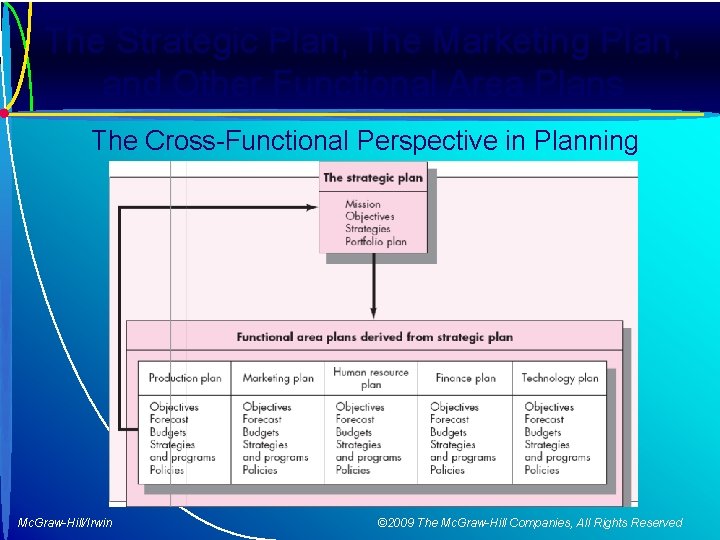
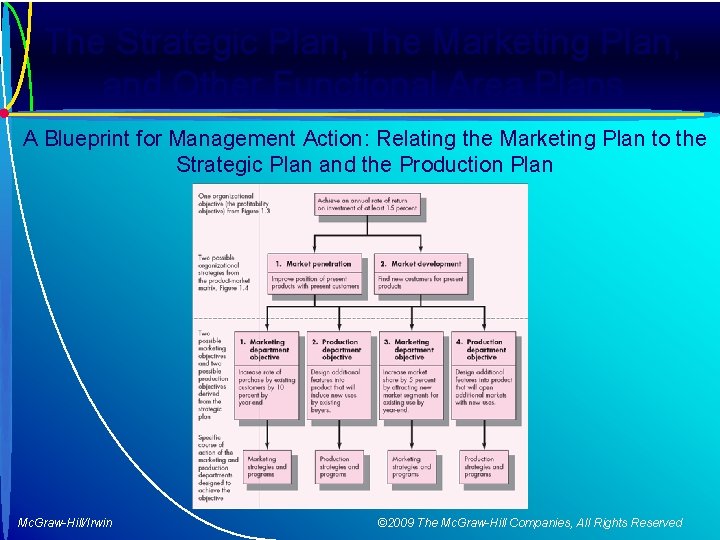
The Strategic Plan, The Marketing Plan, and Other Functional Area Plans • Strategic planning is a top-management responsibility • All strategic planning has marketing implications • Marketing objectives and strategies must be derived from the strategic plan • Planning done in all functional areas of the organization should be derived from strategic plan Mc. Graw-Hill/Irwin © 2009 The Mc. Graw-Hill Companies, All Rights Reserved
The Strategic Plan, The Marketing Plan, and Other Functional Area Plans The Cross-Functional Perspective in Planning Mc. Graw-Hill/Irwin © 2009 The Mc. Graw-Hill Companies, All Rights Reserved
The Strategic Plan, The Marketing Plan, and Other Functional Area Plans A Blueprint for Management Action: Relating the Marketing Plan to the Strategic Plan and the Production Plan Mc. Graw-Hill/Irwin © 2009 The Mc. Graw-Hill Companies, All Rights Reserved
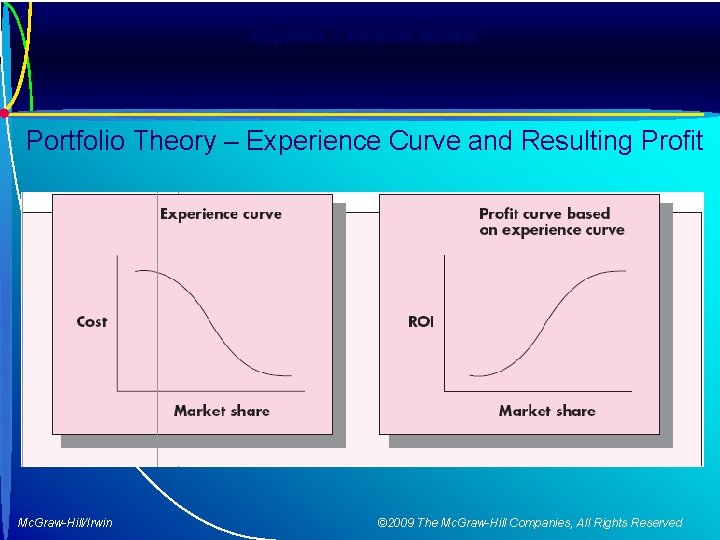
Appendix – Portfolio Models Portfolio Theory – Experience Curve and Resulting Profit Mc. Graw-Hill/Irwin © 2009 The Mc. Graw-Hill Companies, All Rights Reserved
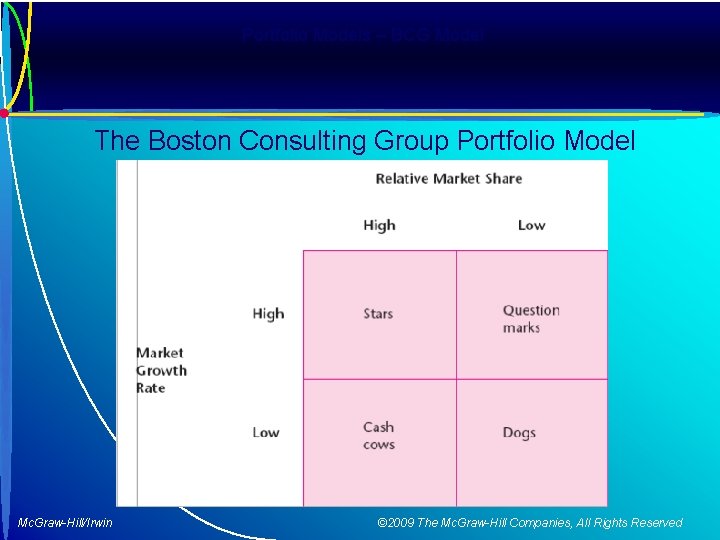
Portfolio Models – BCG Model The Boston Consulting Group Portfolio Model Mc. Graw-Hill/Irwin © 2009 The Mc. Graw-Hill Companies, All Rights Reserved
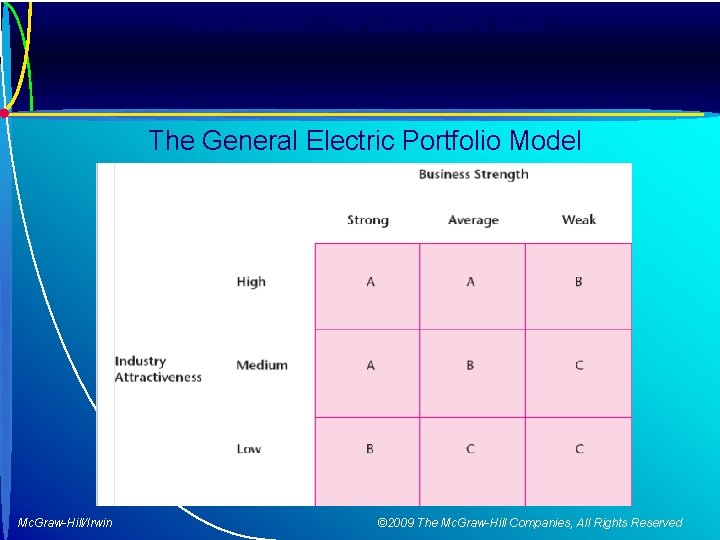
Portfolio Models – The General Electric Model The General Electric Portfolio Model Mc. Graw-Hill/Irwin © 2009 The Mc. Graw-Hill Companies, All Rights Reserved
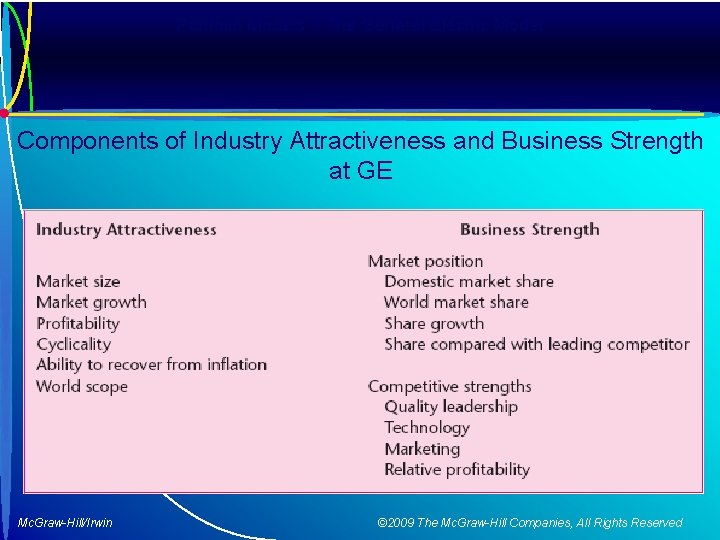
Portfolio Models – The General Electric Model Components of Industry Attractiveness and Business Strength at GE Mc. Graw-Hill/Irwin © 2009 The Mc. Graw-Hill Companies, All Rights Reserved