CHAPTER 2 CONTIGENCY FRAMEWORK FOR STRATEGIC SPORTS MARKETING
- Slides: 6
CHAPTER 2 CONTIGENCY FRAMEWORK FOR STRATEGIC SPORTS MARKETING
Overview of the Contingency Framework for Strategic Sports Marketing • Foundation of any sports organization is to design and maintain a sound, yet flexible strategic framework • Strategic framework that is suited to the sports industry is the contingency framework. Why? • Flexible and adaptable to changes in the marketing environment
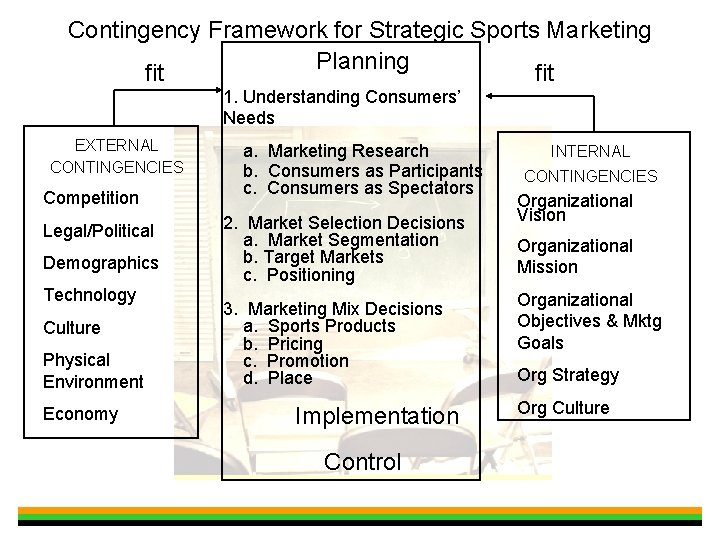
Contingency Framework for Strategic Sports Marketing Planning fit 1. Understanding Consumers’ Needs EXTERNAL CONTINGENCIES Competition Legal/Political Demographics Technology Culture Physical Environment Economy a. Marketing Research b. Consumers as Participants c. Consumers as Spectators 2. Market Selection Decisions a. Market Segmentation b. Target Markets c. Positioning 3. Marketing Mix Decisions a. Sports Products b. Pricing c. Promotion d. Place Implementation Control INTERNAL CONTINGENCIES Organizational Vision Organizational Mission Organizational Objectives & Mktg Goals Org Strategy Org Culture
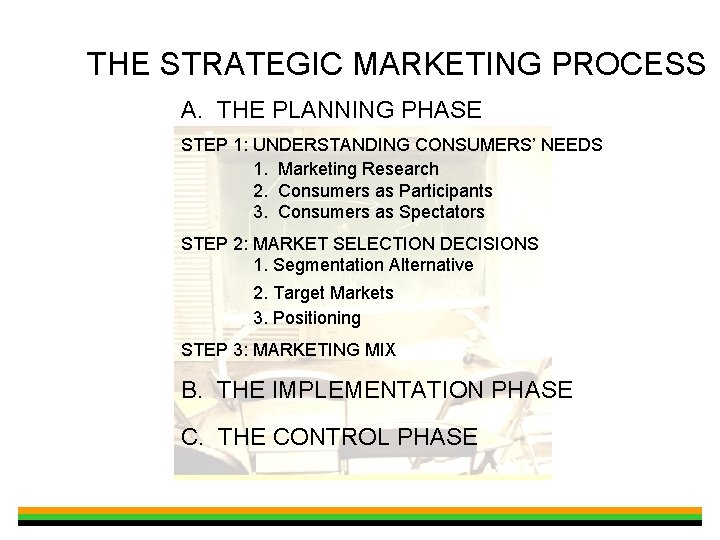
THE STRATEGIC MARKETING PROCESS A. THE PLANNING PHASE STEP 1: UNDERSTANDING CONSUMERS’ NEEDS 1. Marketing Research 2. Consumers as Participants 3. Consumers as Spectators STEP 2: MARKET SELECTION DECISIONS 1. Segmentation Alternative 2. Target Markets 3. Positioning STEP 3: MARKETING MIX B. THE IMPLEMENTATION PHASE C. THE CONTROL PHASE
Activities Associated with Implementation • • • Organizing Leadership and Interaction Resource Acquisition and Allocation Coordination and Timing of Activities Information Management
Control Phase • • Sales Analysis Profitability Analysis Customer Satisfaction Marketing Audit