Spray Drift Management Joanna E Radford Ag Extension


- Slides: 45
Spray Drift Management Joanna E. Radford, Ag. Extension Agent, Surry County Center Wayne Buhler, Ph. D, Extension Specialist, NC State University
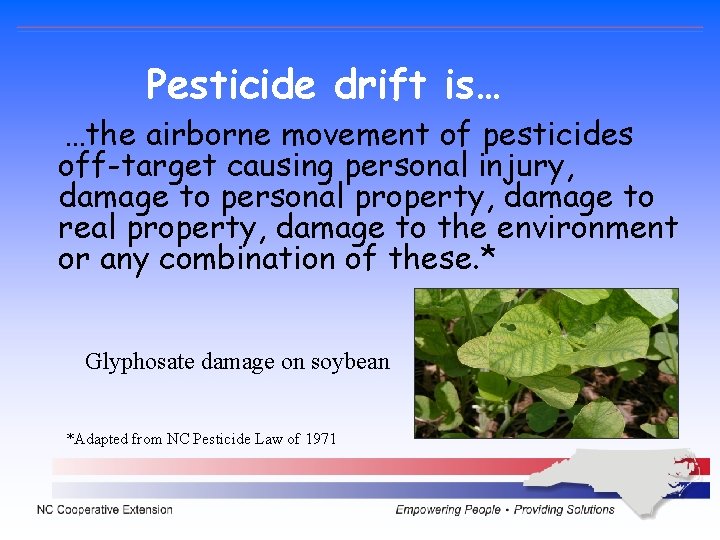
Pesticide drift is… …the airborne movement of pesticides off-target causing personal injury, damage to personal property, damage to real property, damage to the environment or any combination of these. * Glyphosate damage on soybean *Adapted from NC Pesticide Law of 1971
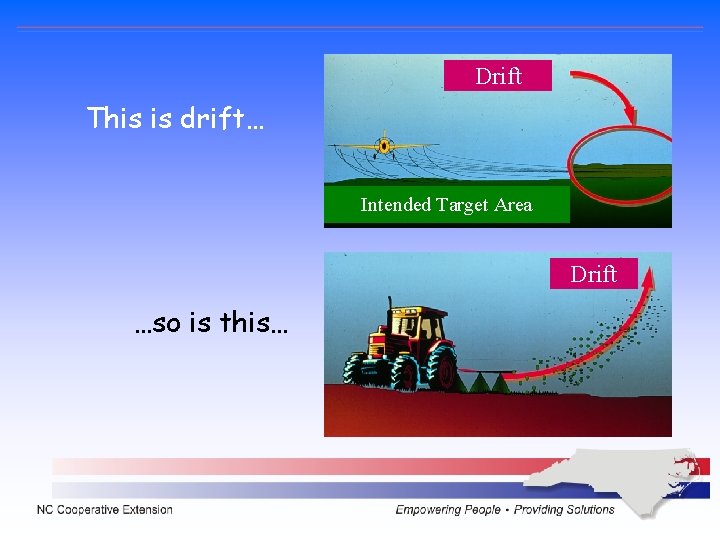
Drift This is drift… Intended Target Area Drift …so is this…
ay Target crop Ov ers pr Non-target crop This is not drift… Applicator Error Equipment Problems Overspray Target crop Non-target crop …and neither is this.
Why is drift a problem? • • Poor Pest Control Wasted Chemicals Damage to Off-Target Sites Environmental Concerns – Water Quality – Air Quality • Public Awareness
Should YOU be concerned about spray drift? • Are there drift-susceptible, or organic, crops nearby? • Are you using highly active or nonselective herbicides? • Are there sensitive areas (rural homes, schools, honeybee colonies, surface streams, etc. ) close by that you should protect from drift? • Are you trying to avoid litigation or an appearance before the NC Pesticide Board?
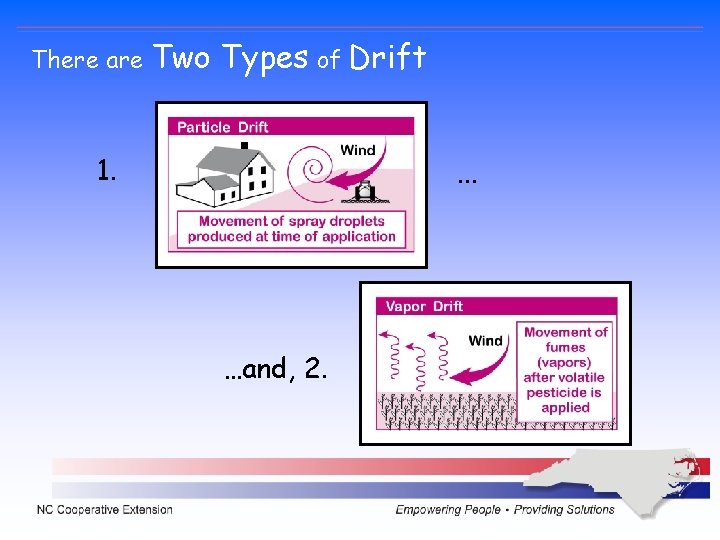
There are Two Types of Drift 1. … …and, 2.
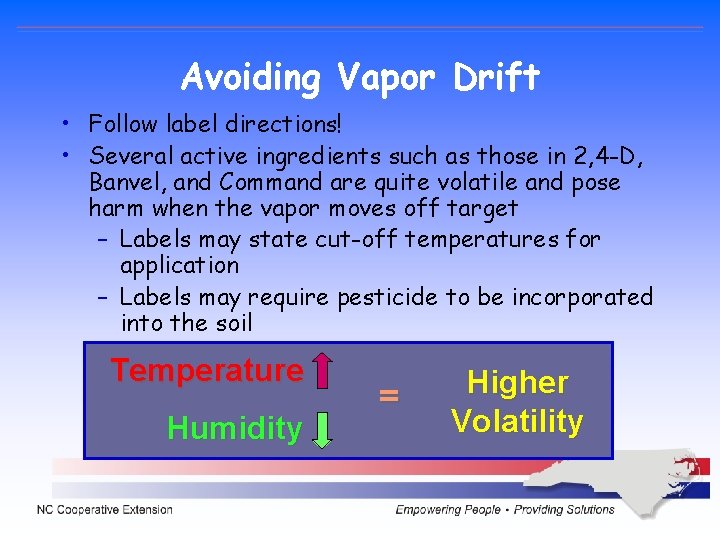
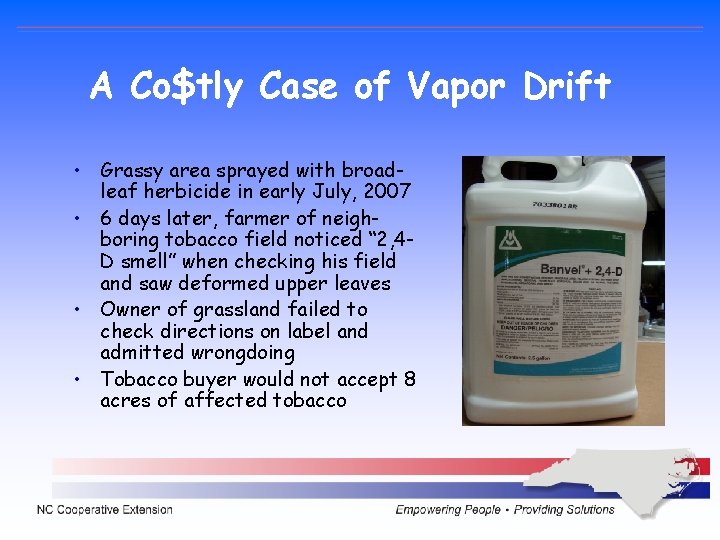
Avoiding Vapor Drift • Follow label directions! • Several active ingredients such as those in 2, 4 -D, Banvel, and Command are quite volatile and pose harm when the vapor moves off target – Labels may state cut-off temperatures for application – Labels may require pesticide to be incorporated into the soil Temperature Humidity = Higher Volatility
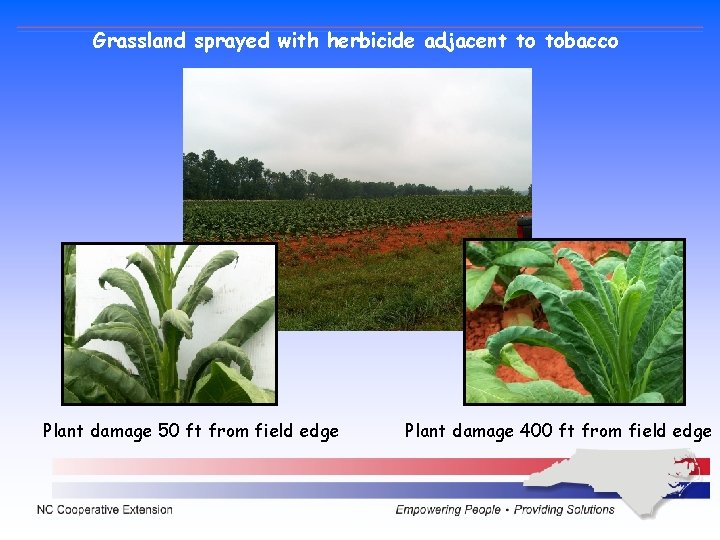
A Co$tly Case of Vapor Drift • Grassy area sprayed with broadleaf herbicide in early July, 2007 • 6 days later, farmer of neighboring tobacco field noticed “ 2, 4 D smell” when checking his field and saw deformed upper leaves • Owner of grassland failed to check directions on label and admitted wrongdoing • Tobacco buyer would not accept 8 acres of affected tobacco
Grassland sprayed with herbicide adjacent to tobacco Plant damage 50 ft from field edge Plant damage 400 ft from field edge
Factors Affecting Particle Drift • Equipment and Application – Nozzle Type – Nozzle Size – Nozzle Pressure – Boom Height
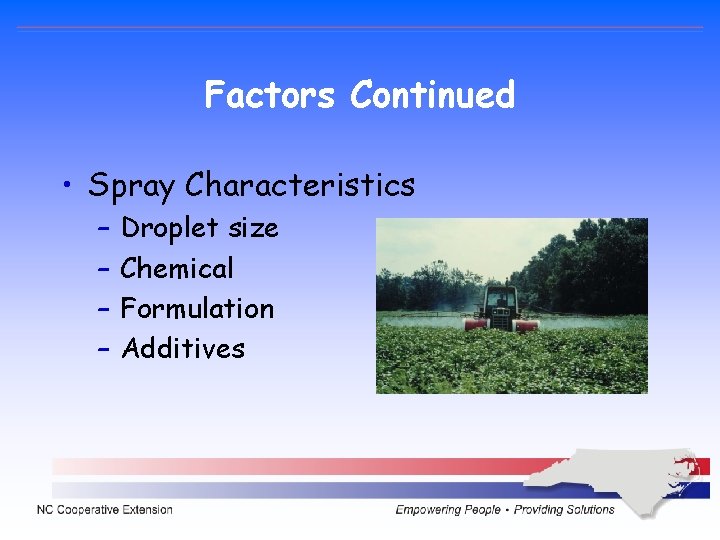
Factors Continued • Spray Characteristics – – Droplet size Chemical Formulation Additives
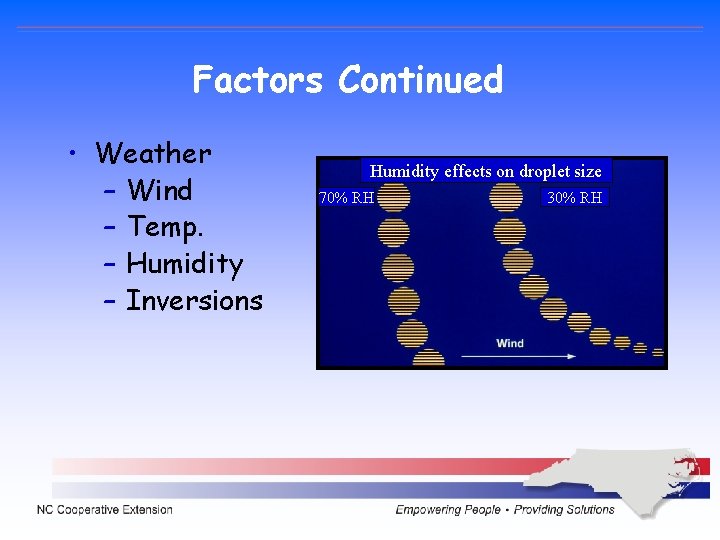
Factors Continued • Weather – Wind – Temp. – Humidity – Inversions Humidity effects on droplet size 70% RH 30% RH
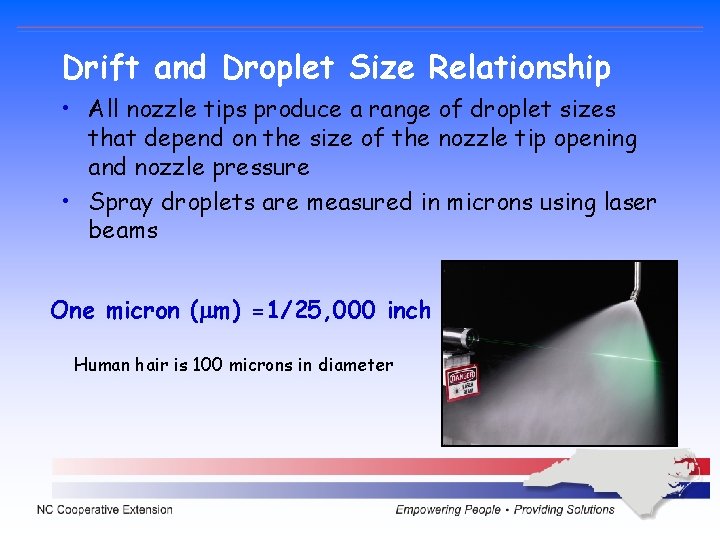
Drift and Droplet Size Relationship • All nozzle tips produce a range of droplet sizes that depend on the size of the nozzle tip opening and nozzle pressure • Spray droplets are measured in microns using laser beams One micron ( m) =1/25, 000 inch Human hair is 100 microns in diameter
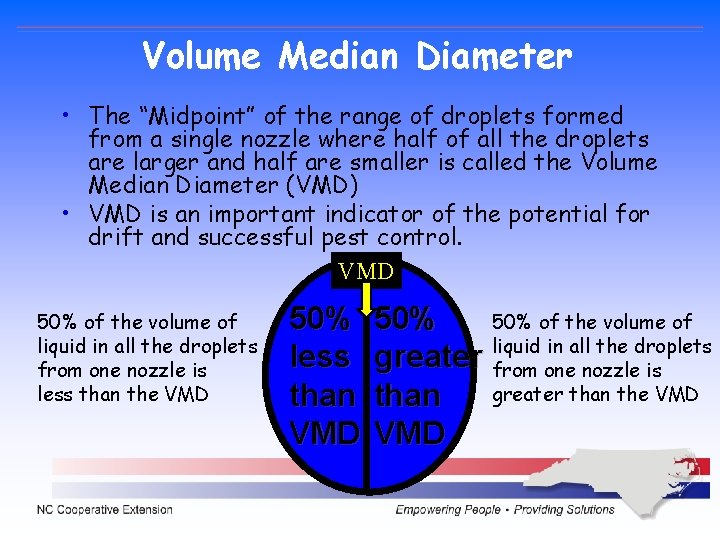
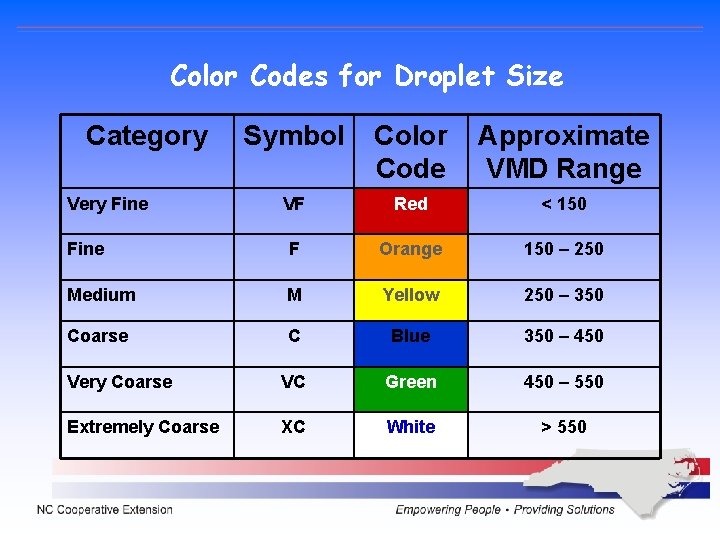
Volume Median Diameter • The “Midpoint” of the range of droplets formed from a single nozzle where half of all the droplets are larger and half are smaller is called the Volume Median Diameter (VMD) • VMD is an important indicator of the potential for drift and successful pest control. VMD 50% of the volume of liquid in all the droplets from one nozzle is less than the VMD 50% less than VMD 50% of the volume of in all the droplets greater liquid from one nozzle is greater than the VMD than VMD
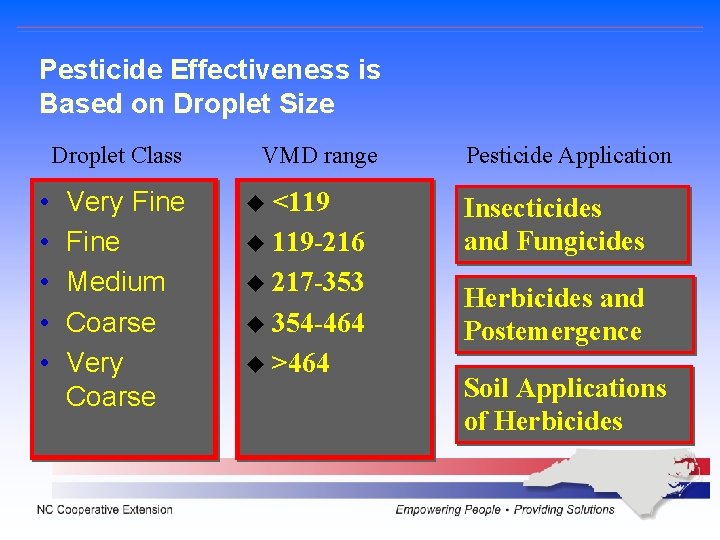
Pesticide Effectiveness is Based on Droplet Size Droplet Class • • • Very Fine Medium Coarse Very Coarse VMD range u <119 u 119 -216 u 217 -353 u 354 -464 u >464 Pesticide Application Insecticides and Fungicides Herbicides and Postemergence Soil Applications of Herbicides
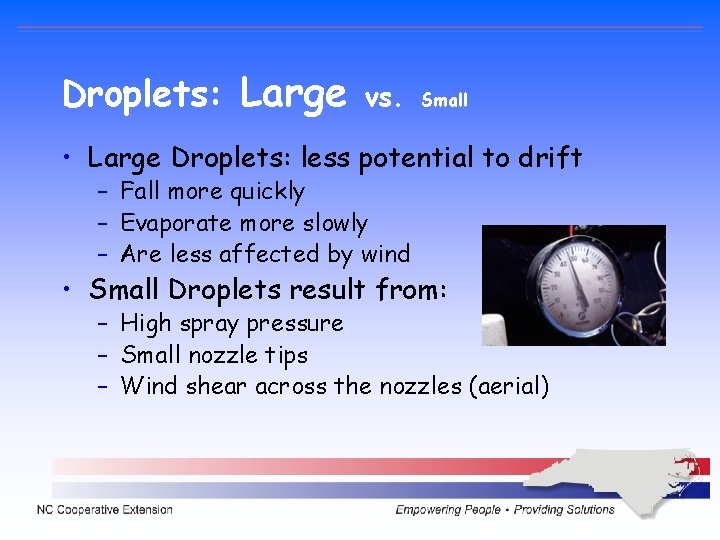
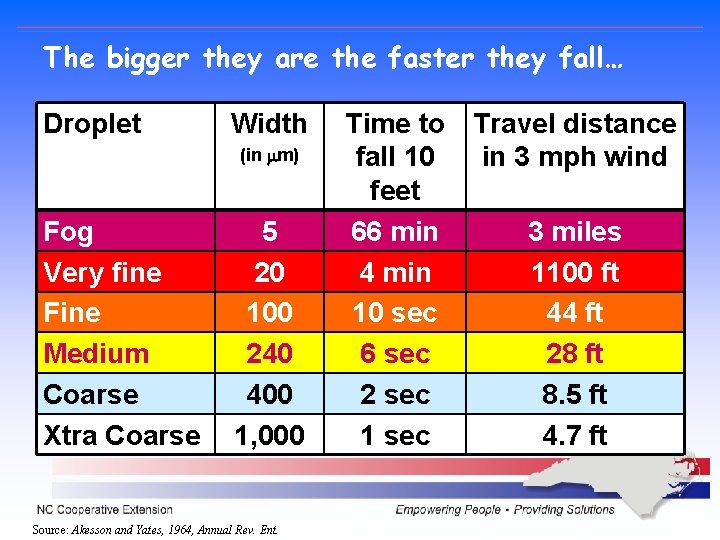
Droplets: Large vs. Small • Large Droplets: less potential to drift – Fall more quickly – Evaporate more slowly – Are less affected by wind • Small Droplets result from: – High spray pressure – Small nozzle tips – Wind shear across the nozzles (aerial)
The bigger they are the faster they fall… Droplet Width (in m) Fog Very fine Fine Medium Coarse Xtra Coarse 5 20 100 240 400 1, 000 Source: Akesson and Yates, 1964, Annual Rev. Ent. Time to fall 10 feet 66 min 4 min 10 sec 6 sec 2 sec 1 sec Travel distance in 3 mph wind 3 miles 1100 ft 44 ft 28 ft 8. 5 ft 4. 7 ft
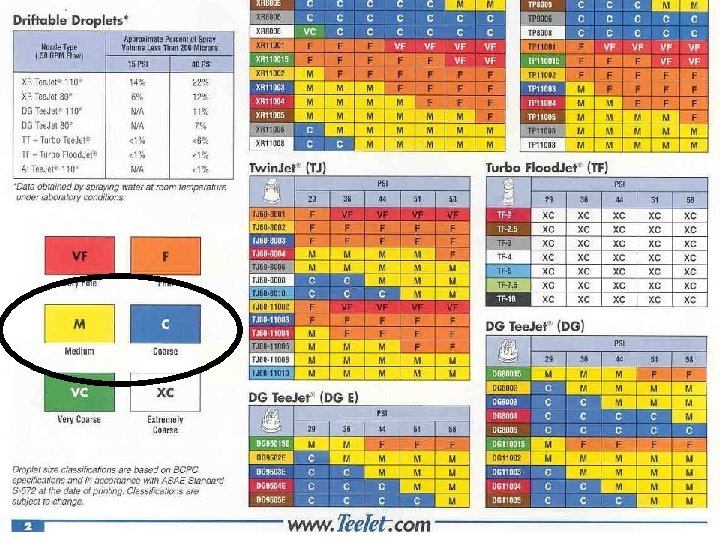
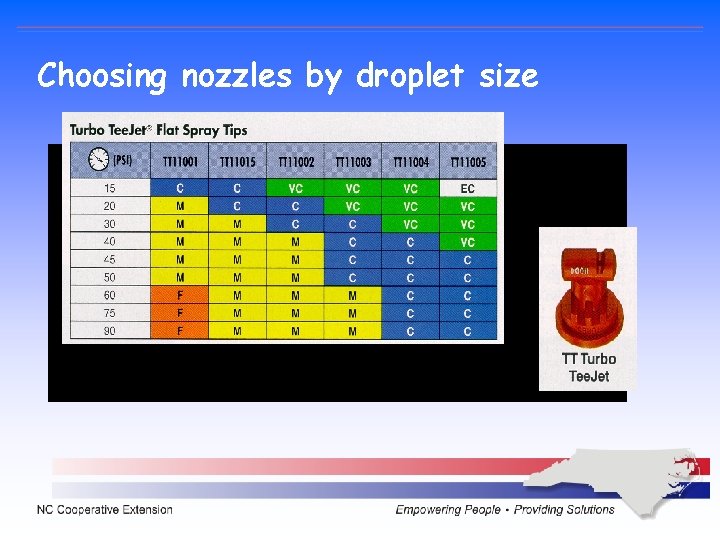
Color Codes for Droplet Size Category Symbol Color Code Approximate VMD Range VF Red < 150 Fine F Orange 150 – 250 Medium M Yellow 250 – 350 Coarse C Blue 350 – 450 Very Coarse VC Green 450 – 550 Extremely Coarse XC White > 550 Very Fine
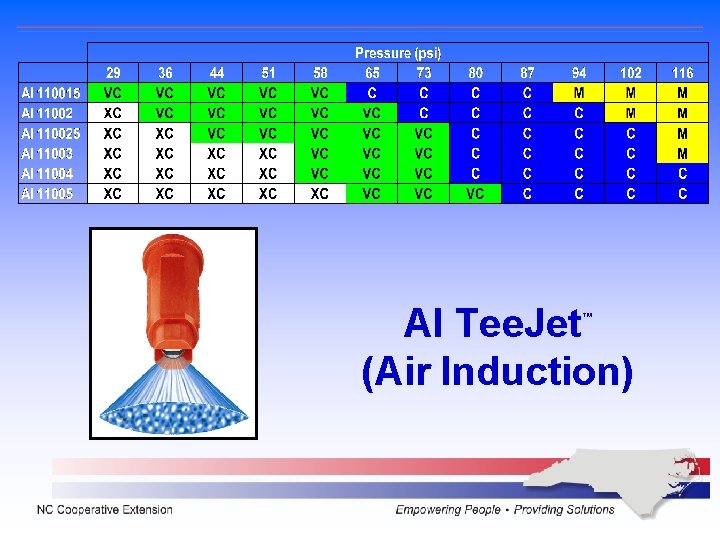
AI Tee. Jet (Air Induction) ™
Choosing nozzles by droplet size
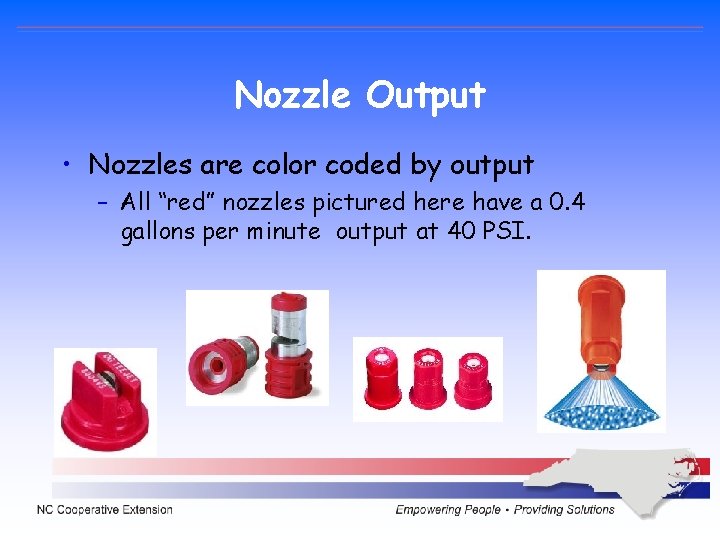
Nozzle Output • Nozzles are color coded by output – All “red” nozzles pictured here have a 0. 4 gallons per minute output at 40 PSI.
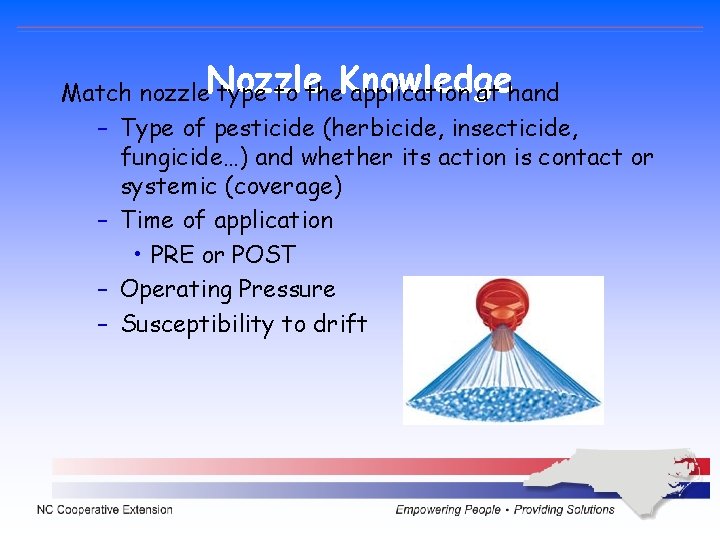
Match nozzle. Nozzle type to the. Knowledge application at hand – Type of pesticide (herbicide, insecticide, fungicide…) and whether its action is contact or systemic (coverage) – Time of application • PRE or POST – Operating Pressure – Susceptibility to drift
Choose Nozzles to Manage Pests & Drift The “Nozzle Compromise”: Using nozzles and pressure to produce the largest droplet size possible (> 150 microns) while achieving good target coverage sometimes involves a tradeoff.
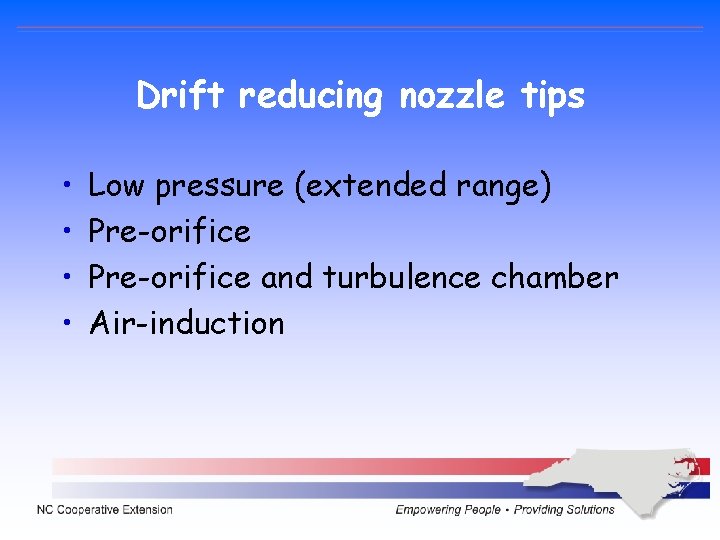
Drift reducing nozzle tips • • Low pressure (extended range) Pre-orifice and turbulence chamber Air-induction
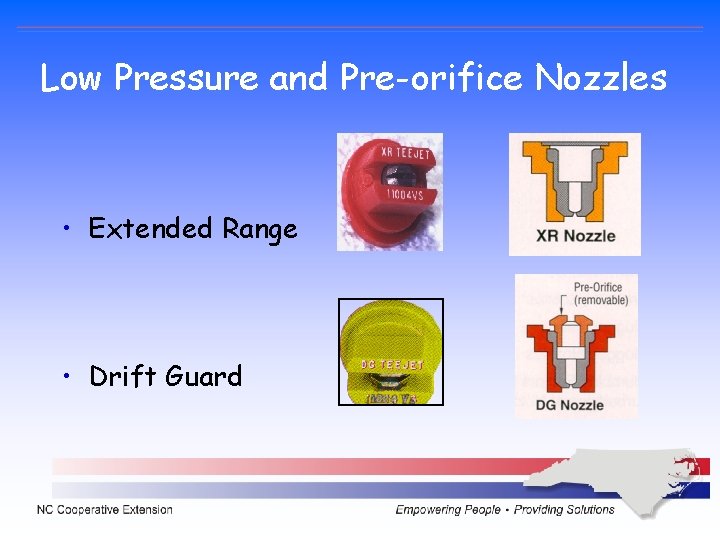
Low Pressure and Pre-orifice Nozzles • Extended Range • Drift Guard
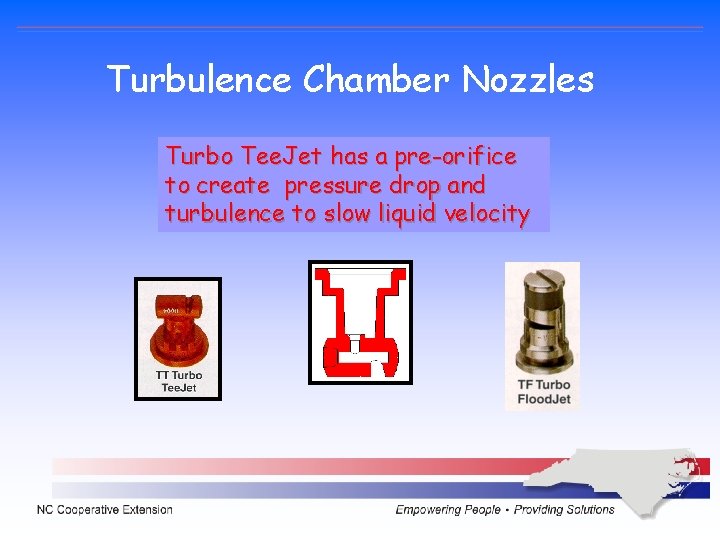
Turbulence Chamber Nozzles Turbo Tee. Jet has a pre-orifice to create pressure drop and turbulence to slow liquid velocity
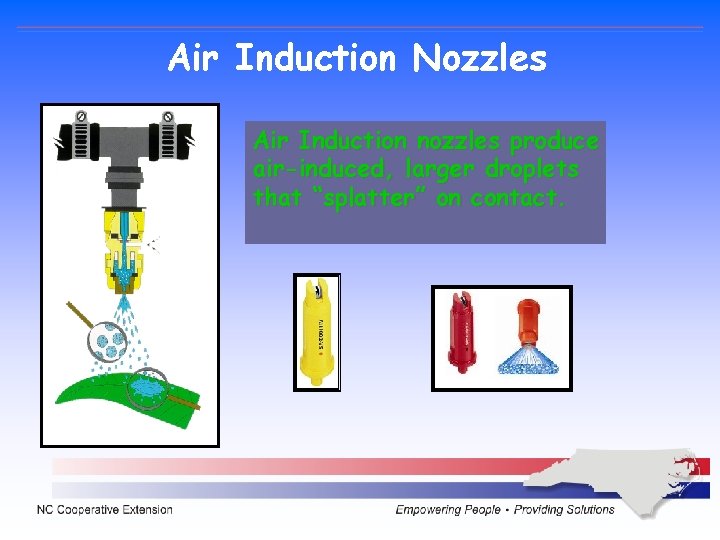
Air Induction Nozzles Air Induction nozzles produce air-induced, larger droplets that “splatter” on contact.
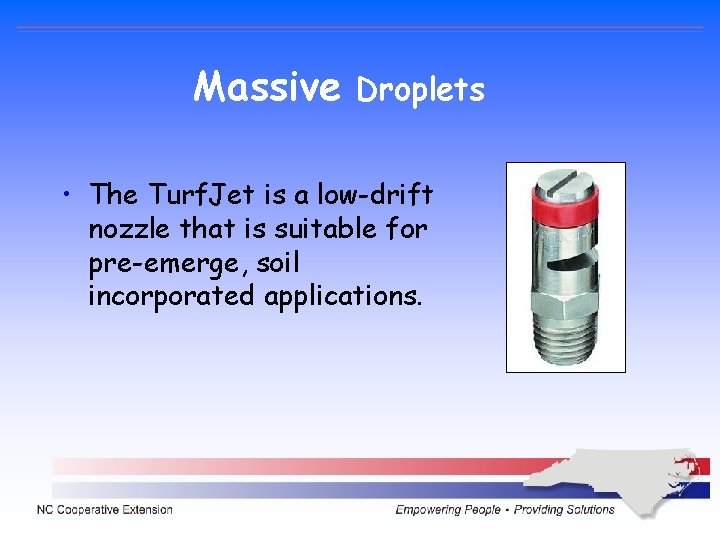
Massive Droplets • The Turf. Jet is a low-drift nozzle that is suitable for pre-emerge, soil incorporated applications.
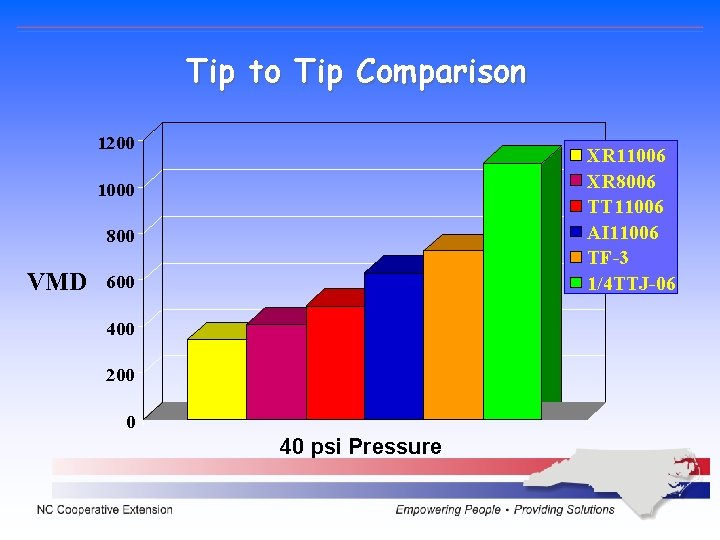
Tip to Tip Comparison 1200 XR 11006 XR 8006 TT 11006 AI 11006 TF-3 1/4 TTJ-06 1000 800 VMD 600 400 200 0 40 psi Pressure
Chemical Drift Retardants • • Drift control agents Check on compatibility May affect nozzle pattern Effective?
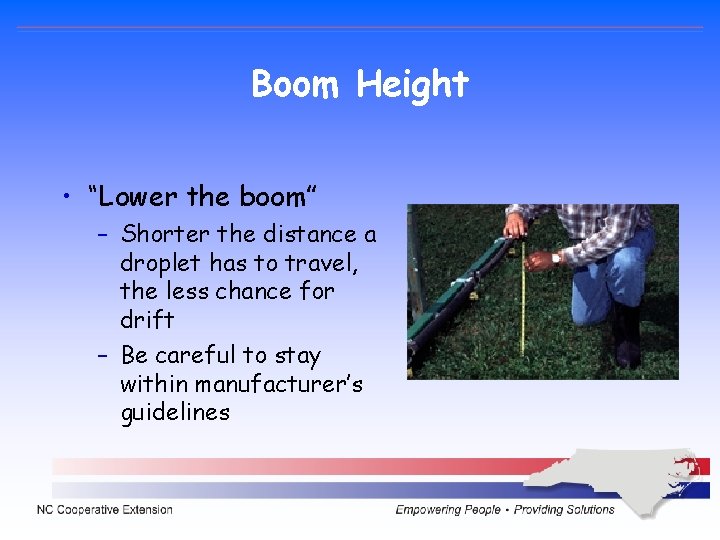
Boom Height • “Lower the boom” – Shorter the distance a droplet has to travel, the less chance for drift – Be careful to stay within manufacturer’s guidelines
More Keys to Drift Management • Avoid adverse weather conditions – Wind speed and direction – Inversions – High temps. • Know the location of all sensitive areas – No-spray buffer zone
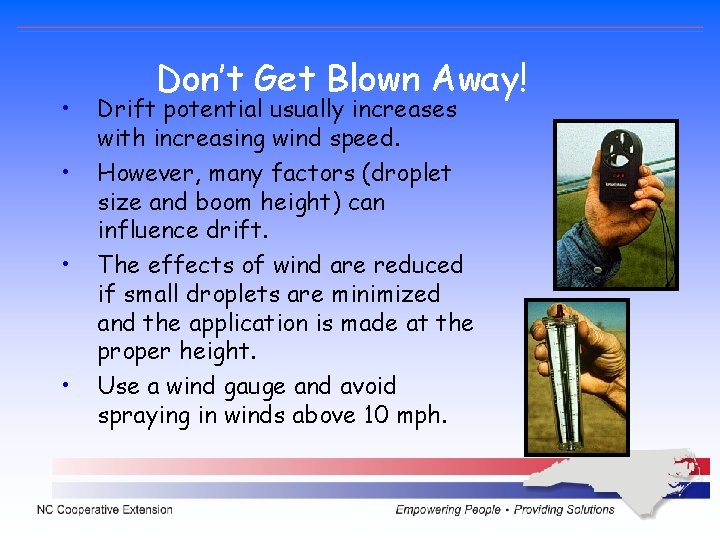
• • Don’t Get Blown Away! Drift potential usually increases with increasing wind speed. However, many factors (droplet size and boom height) can influence drift. The effects of wind are reduced if small droplets are minimized and the application is made at the proper height. Use a wind gauge and avoid spraying in winds above 10 mph.
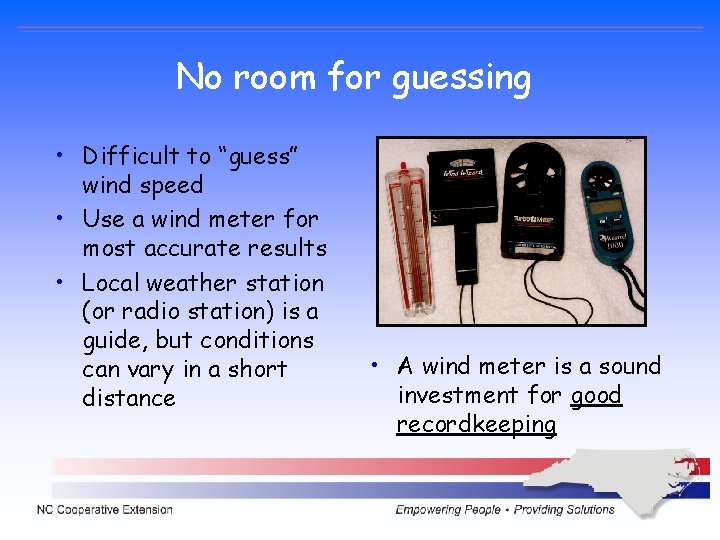
No room for guessing • Difficult to “guess” wind speed • Use a wind meter for most accurate results • Local weather station (or radio station) is a guide, but conditions can vary in a short distance • A wind meter is a sound investment for good recordkeeping
Which way is the Wind Blowing? • Wind direction is very important • Drift potential is lowest at wind speeds between 3 and 10 mph (gentle but steady breeze) blowing in a safe direction away from sensitive areas. • “Dead calm” (0 -3 mph winds) conditions are never recommended.
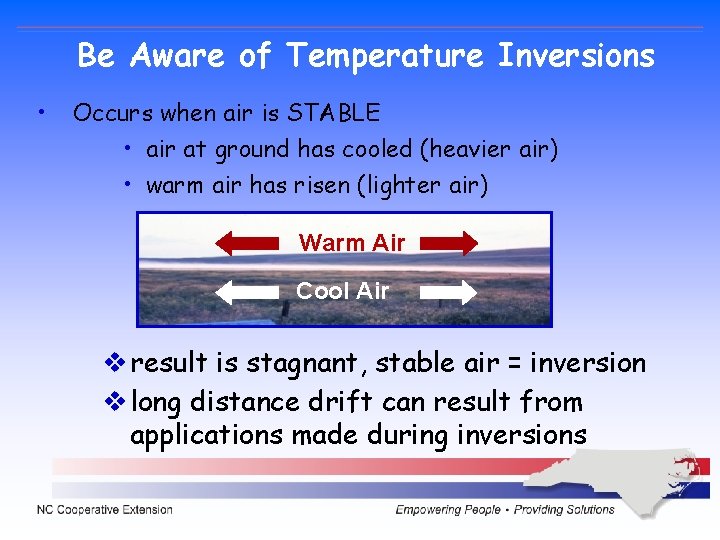
Be Aware of Temperature Inversions • Occurs when air is STABLE • air at ground has cooled (heavier air) • warm air has risen (lighter air) Warm Air Cool Air v result is stagnant, stable air = inversion v long distance drift can result from applications made during inversions
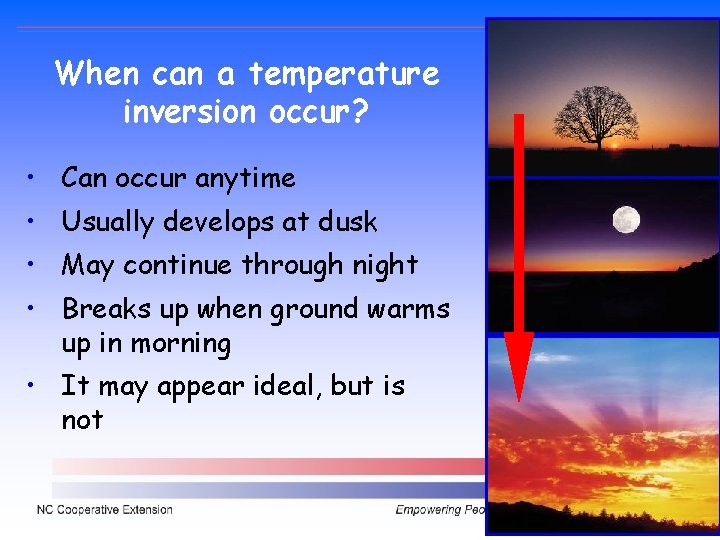
When can a temperature inversion occur? • Can occur anytime • Usually develops at dusk • May continue through night • Breaks up when ground warms up in morning • It may appear ideal, but is not
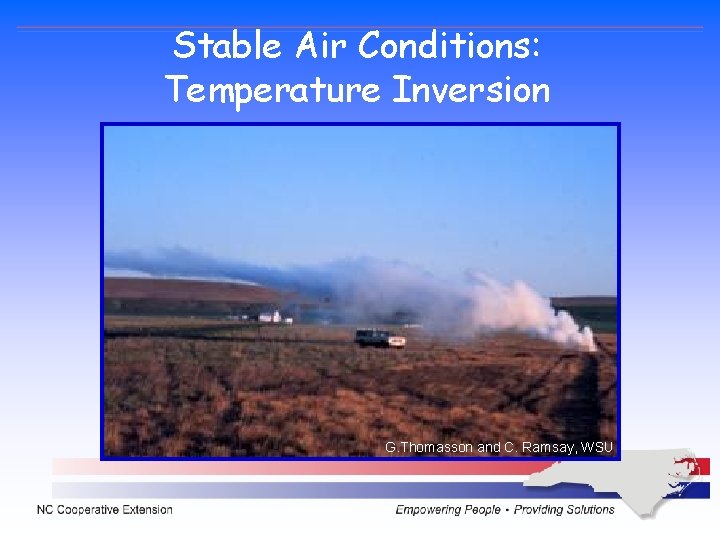
Stable Air Conditions: Temperature Inversion G. Thomasson and C. Ramsay, WSU
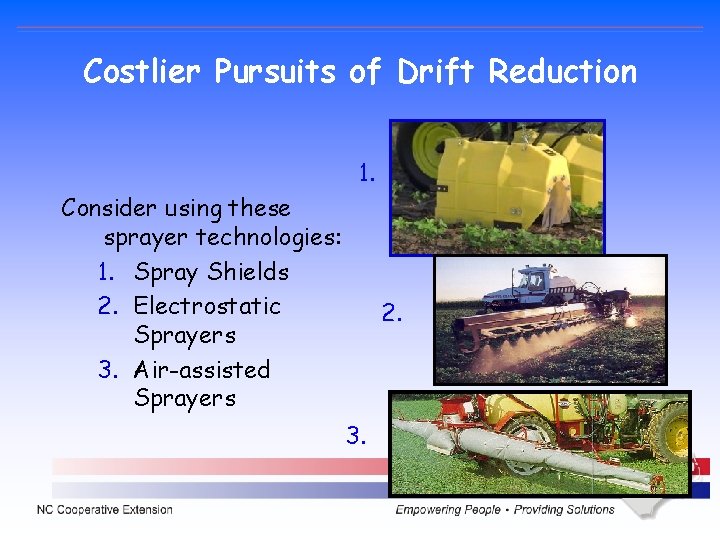
Costlier Pursuits of Drift Reduction 1. Consider using these sprayer technologies: 1. Spray Shields 2. Electrostatic Sprayers 3. Air-assisted Sprayers 2. 3.
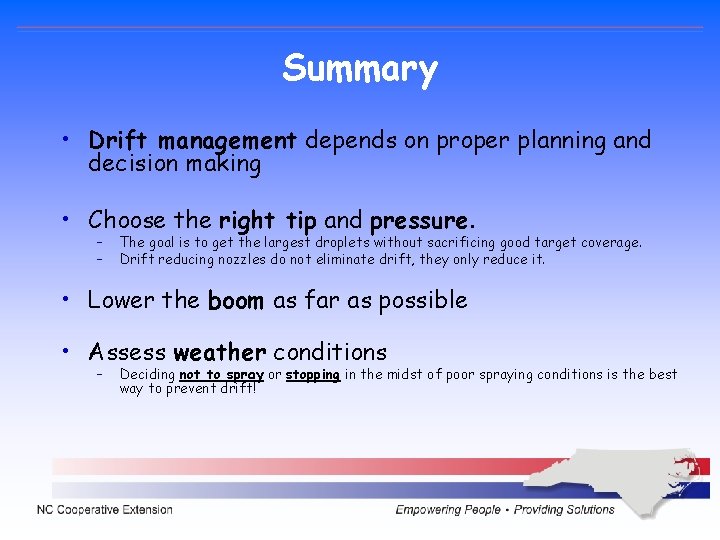
Summary • Drift management depends on proper planning and decision making • Choose the right tip and pressure. – – The goal is to get the largest droplets without sacrificing good target coverage. Drift reducing nozzles do not eliminate drift, they only reduce it. • Lower the boom as far as possible • Assess weather conditions – Deciding not to spray or stopping in the midst of poor spraying conditions is the best way to prevent drift!
In Conclusion You have the most important role in lessening spray drift problems. Do your part to keep agrichemical applications on target.
Acknowledgments – National Coalition for Drift Minimization and training materials prepared by R. Wolf, Kansas State University – Spraying Systems Co. – Brent Prignitz, Iowa State University – Carol Ramsay, “Applying Pesticides Correctly” training materials, Washington State University – Choosing Drift-Reducing Nozzles, Vern Hoffman and Jim Wilson, South Dakota State University
Disclaimer • Brand names appearing in this presentation are for identification and illustration purposes only. • No endorsement is intended, nor is criticism implied of similar products not mentioned.