
Business Analytics and Optimisation Shane Radford Global Business
Business Analytics and Optimisation Shane Radford Global Business Service Associate Partner Business Analytics and Optimisation Lead October 1, 2009 • Johannesburg, South Africa
Why now for Business Analytics? 2
A new imperative has emerged for enterprises to aggressively pursue business analytics and optimize their businesses in order to address important and complex business and societal opportunities. Business Analytics and Optimization brings together the comprehensive services and leading edge industry solutions that enable organizations to make and act upon critical decisions. We help our clients realize their strategies through information management, advanced analytics and process management while leveraging the power of smarter technology.
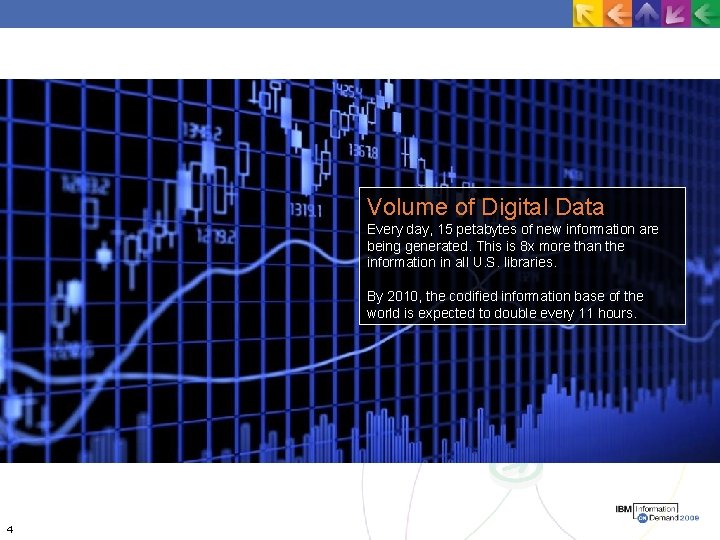
Volume of Digital Data Every day, 15 petabytes of new information are being generated. This is 8 x more than the information in all U. S. libraries. By 2010, the codified information base of the world is expected to double every 11 hours. 4
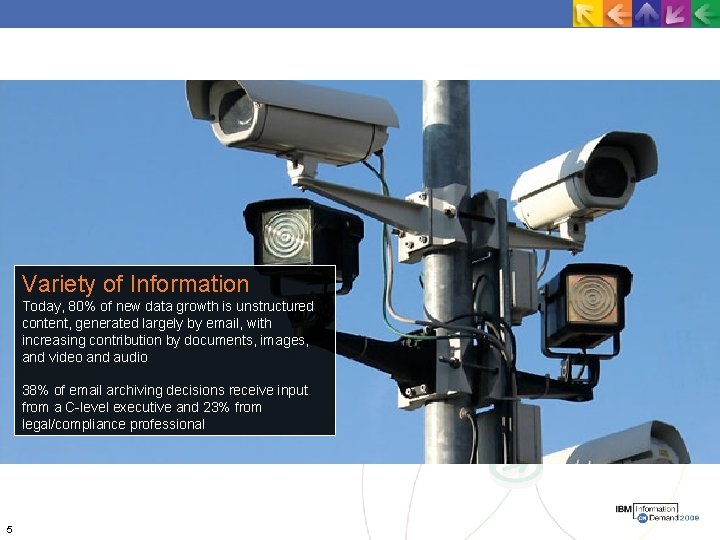
Variety of Information Today, 80% of new data growth is unstructured content, generated largely by email, with increasing contribution by documents, images, and video and audio 38% of email archiving decisions receive input from a C-level executive and 23% from legal/compliance professional 5
Velocity of Decision Making 70% of executives believe that poor decision making has had a degrading impact on their companies’ performance Only 9% of CFOs believe they excel at interpreting data for senior management 6
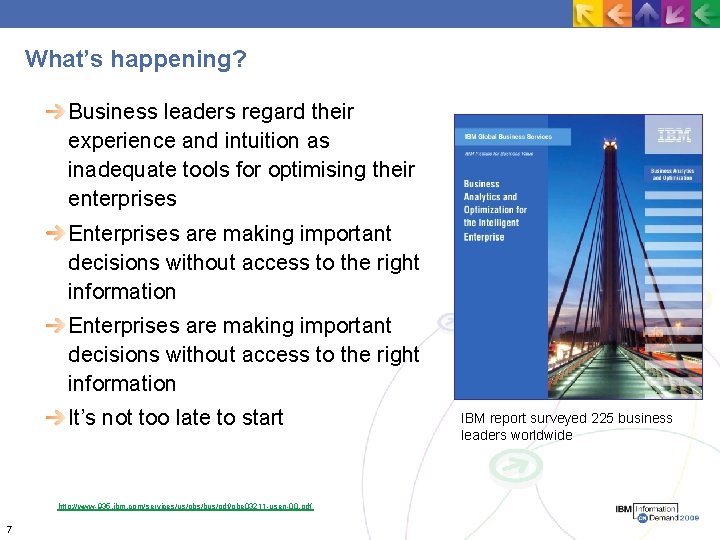
What’s happening? Business leaders regard their experience and intuition as inadequate tools for optimising their enterprises Enterprises are making important decisions without access to the right information It’s not too late to start Source: Business Analytics and Optimization for the Intelligent Enterprise , April 2009. http: //www-935. ibm. com/services/us/gbs/bus/pdf/gbe 03211 -usen-00. pdf 7 IBM report surveyed 225 business leaders worldwide
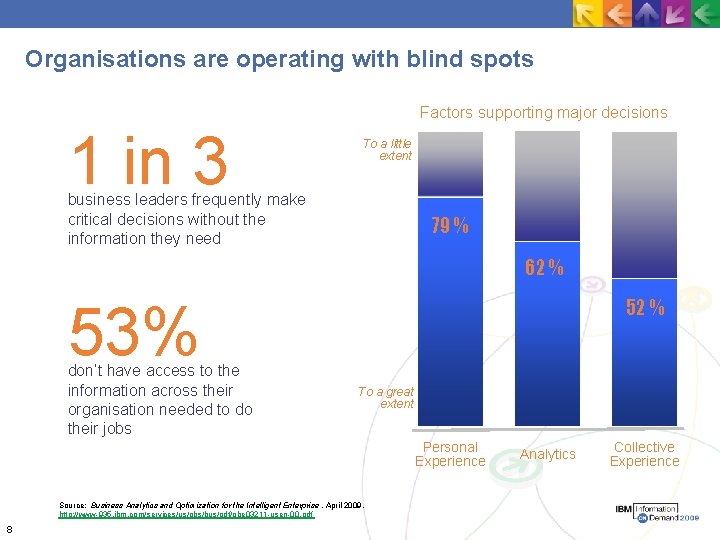
Organisations are operating with blind spots Factors supporting major decisions 1 in 3 To a little extent business leaders frequently make critical decisions without the information they need 79 % 62 % 53% don’t have access to the information across their organisation needed to do their jobs To a great extent Personal Experience Source: Business Analytics and Optimization for the Intelligent Enterprise , April 2009. http: //www-935. ibm. com/services/us/gbs/bus/pdf/gbe 03211 -usen-00. pdf 8 Analytics Collective Experience
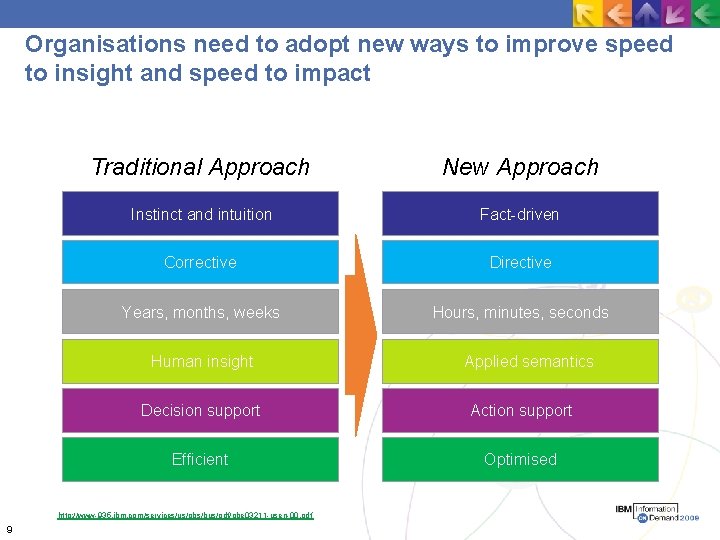
Organisations need to adopt new ways to improve speed to insight and speed to impact Traditional Approach New Approach Instinct and intuition Fact-driven Corrective Directive Years, months, weeks Hours, minutes, seconds Human insight Decision support Action support Efficient Optimised 2009. http: //www-935. ibm. com/services/us/gbs/bus/pdf/gbe 03211 -usen-00. pdf 9 Applied semantics
What is an Intelligent Enterprise? 10
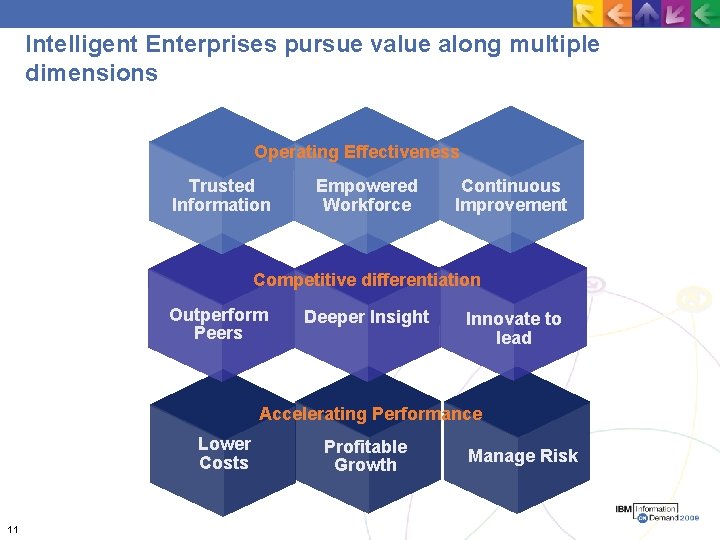
Intelligent Enterprises pursue value along multiple dimensions Operating Effectiveness Trusted Information Empowered Workforce Continuous Improvement Competitive differentiation Outperform Peers Deeper Insight Innovate to lead Accelerating Performance Lower Costs 11 Profitable Growth Manage Risk
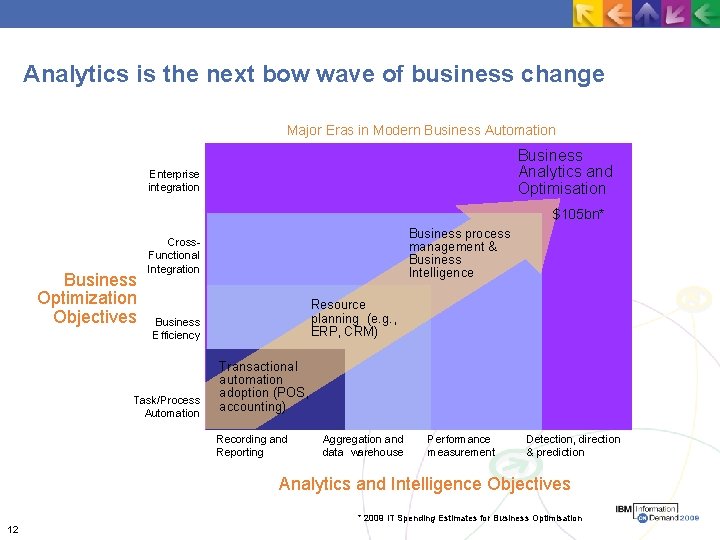
Analytics is the next bow wave of business change Major Eras in Modern Business Automation Business Analytics and Optimisation Enterprise integration $105 bn* Business Optimization Objectives Business process management & Business Intelligence Cross. Functional Integration Resource planning (e. g. , ERP, CRM) Business Efficiency Task/Process Automation Transactional automation adoption (POS, accounting) Recording and Reporting Aggregation and data warehouse Performance measurement Detection, direction & prediction Analytics and Intelligence Objectives * 2009 IT Spending Estimates for Business Optimisation 12
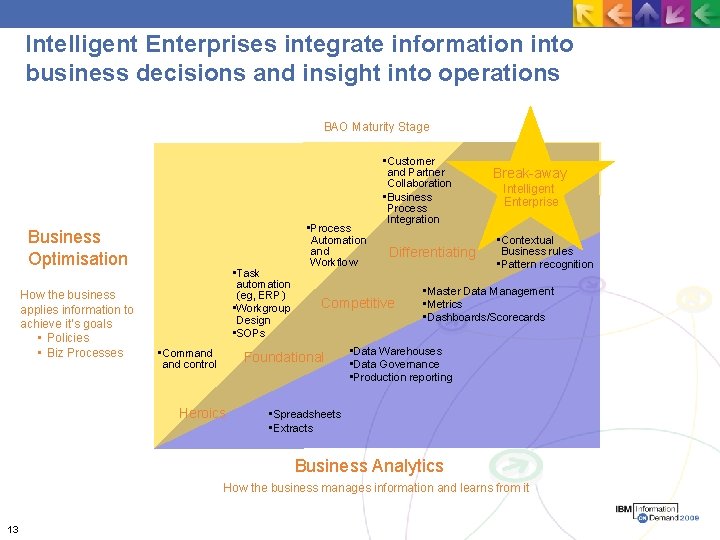
Intelligent Enterprises integrate information into business decisions and insight into operations BAO Maturity Stage Business Optimisation How the business applies information to achieve it’s goals • Policies • Biz Processes • Task automation (eg, ERP) • Workgroup Design • SOPs • Command control • Process Automation and Workflow Differentiating Competitive Foundational Heroics • Customer and Partner Collaboration • Business Process Integration Break-away Intelligent Enterprise • Contextual Business rules • Pattern recognition • Master Data Management • Metrics • Dashboards/Scorecards • Data Warehouses • Data Governance • Production reporting • Spreadsheets • Extracts Business Analytics How the business manages information and learns from it 13
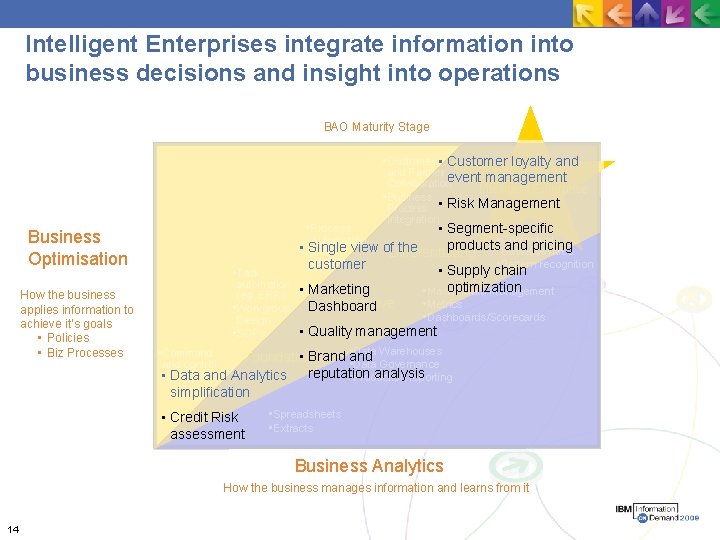
Intelligent Enterprises integrate information into business decisions and insight into operations BAO Maturity Stage Business Optimisation How the business applies information to achieve it’s goals • Policies • Biz Processes • Task automation (eg, ERP) • Workgroup Design • SOPs • Customer loyalty and Partner Break-away event management Collaboration Intelligent Enterprise • Business • Risk Management Process Integration • Segment-specific products • Contextual and pricing of. Differentiating the Business rules • Pattern recognition • Supply chain optimization • Marketing • Master Data Management • Metrics Competitive Dashboard • Process Automation • Single view and Workflow customer • Dashboards/Scorecards • Quality management • Data Warehouses • Brand Foundational • Data Governance reputation analysis • Data and Analytics • Production reporting simplification Heroics • Spreadsheets • Credit Risk • Extracts assessment • Command control Business Analytics How the business manages information and learns from it 14
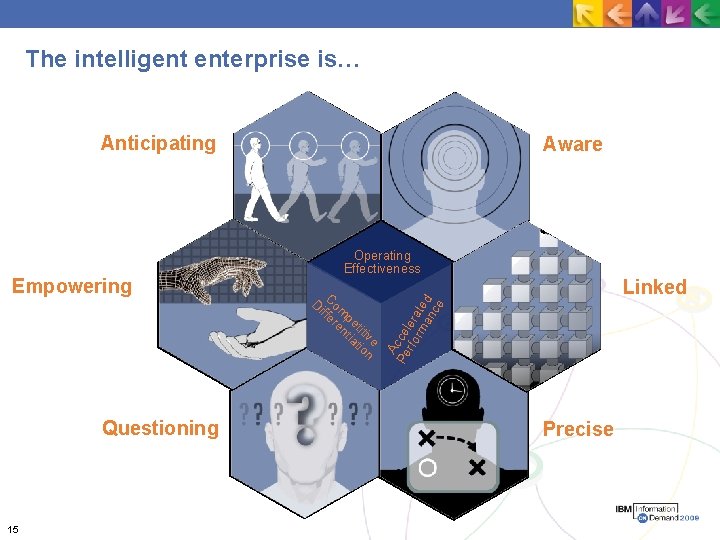
The intelligent enterprise is… Anticipating Questioning 15 Operating Effectiveness D Com iff er pe en ti tia tive tio n Linked A Pe cce rfo lera rm te an d ce Empowering Aware Precise
Where to start? 16
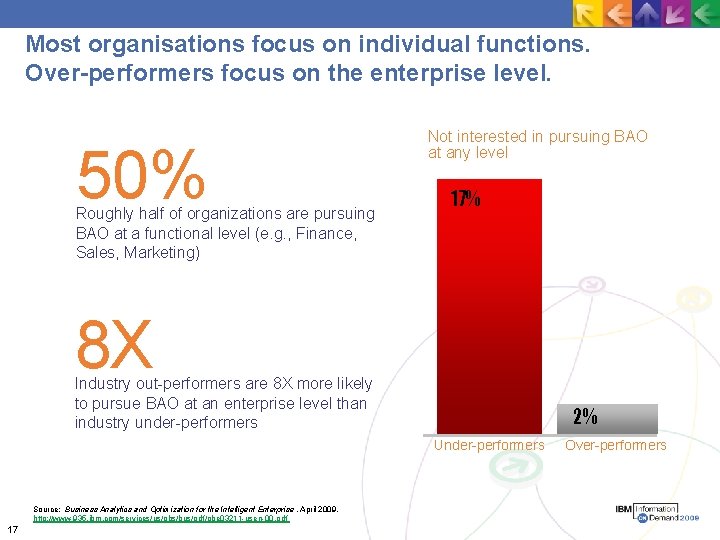
Most organisations focus on individual functions. Over-performers focus on the enterprise level. 50% Roughly half of organizations are pursuing BAO at a functional level (e. g. , Finance, Sales, Marketing) Not interested in pursuing BAO at any level 17% 8 X Industry out-performers are 8 X more likely to pursue BAO at an enterprise level than industry under-performers 2% Under-performers Source: Business Analytics and Optimization for the Intelligent Enterprise , April 2009. http: //www-935. ibm. com/services/us/gbs/bus/pdf/gbe 03211 -usen-00. pdf 17 Over-performers
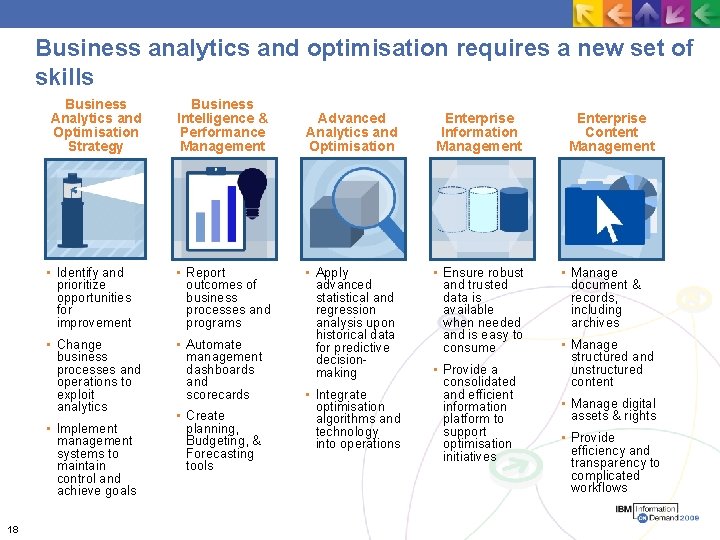
Business analytics and optimisation requires a new set of skills Business Analytics and Optimisation Strategy Business Intelligence & Performance Management • Identify and prioritize opportunities for improvement • Report outcomes of business processes and programs • Change business processes and operations to exploit analytics • Automate management dashboards and scorecards • Implement management systems to maintain control and achieve goals 18 • Create planning, Budgeting, & Forecasting tools Advanced Analytics and Optimisation Enterprise Information Management • Apply advanced statistical and regression analysis upon historical data for predictive decisionmaking • Ensure robust and trusted data is available when needed and is easy to consume • Integrate optimisation algorithms and technology into operations • Provide a consolidated and efficient information platform to support optimisation initiatives Enterprise Content Management • Manage document & records, including archives • Manage structured and unstructured content • Manage digital assets & rights • Provide efficiency and transparency to complicated workflows
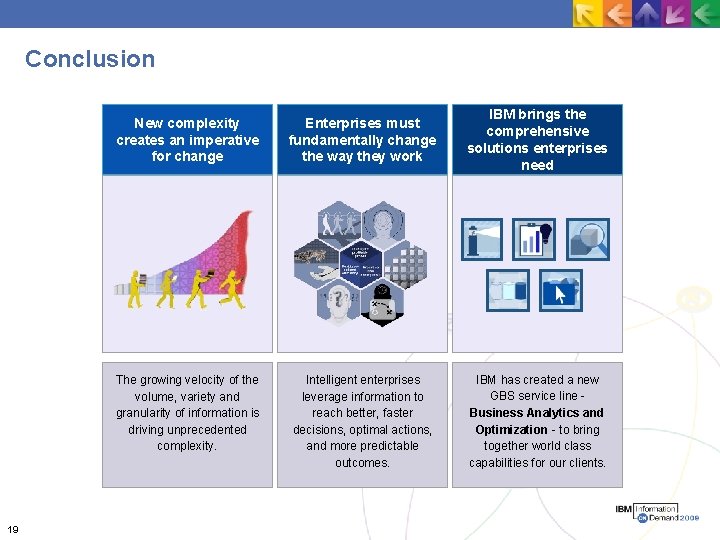
Conclusion 19 New complexity creates an imperative for change Enterprises must fundamentally change the way they work IBM brings the comprehensive solutions enterprises need The growing velocity of the volume, variety and granularity of information is driving unprecedented complexity. Intelligent enterprises leverage information to reach better, faster decisions, optimal actions, and more predictable outcomes. IBM has created a new GBS service line Business Analytics and Optimization - to bring together world class capabilities for our clients.
- Slides: 19