Some organisms have a CELL WALL Plants cellulose




- Slides: 70
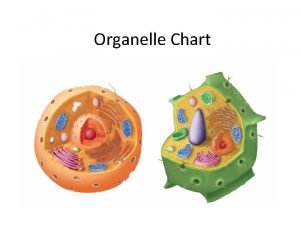
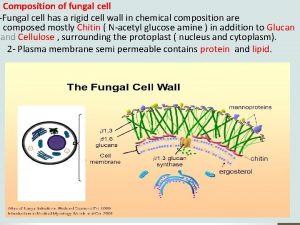
Some organisms have a CELL WALL • Plants (cellulose) • Algae (polysaccharide) • Fungi (chitin) • Prokaryotes(peptidoglycan)
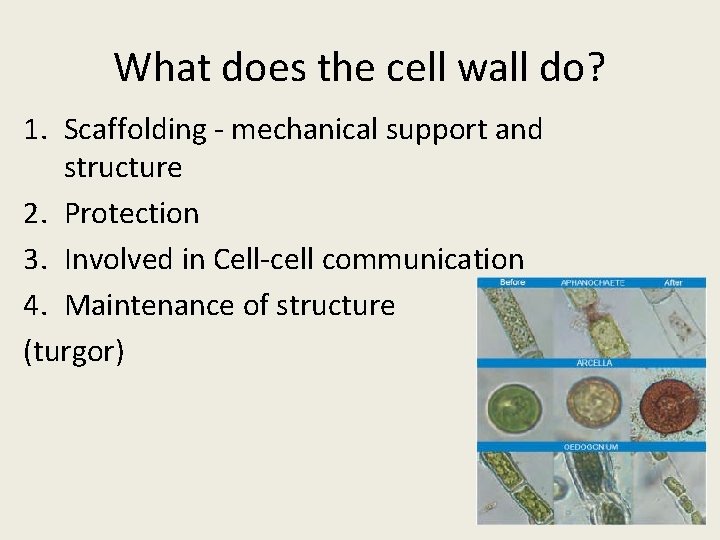
What does the cell wall do? 1. Scaffolding - mechanical support and structure 2. Protection 3. Involved in Cell-cell communication 4. Maintenance of structure (turgor)
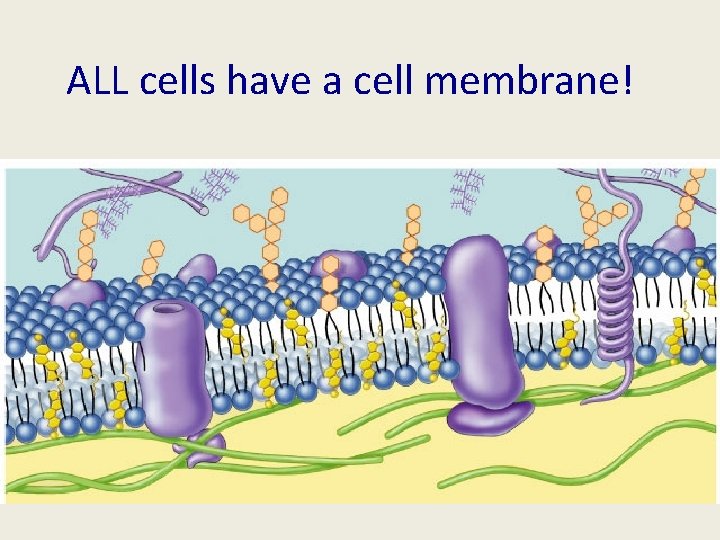
ALL cells have a cell membrane!
What do membranes do? 1. Protective barrier 2. Cell-Cell signalling 3. Transport of nutrients, products and waste products 4. Localisation of function within organelles Cell membrane function
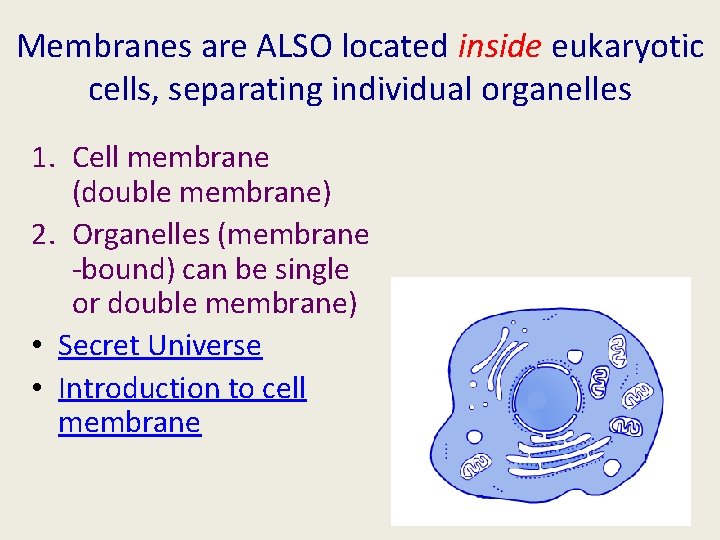
Membranes are ALSO located inside eukaryotic cells, separating individual organelles 1. Cell membrane (double membrane) 2. Organelles (membrane -bound) can be single or double membrane) • Secret Universe • Introduction to cell membrane
What do membranes do? All cells live in an aqueous environment (surrounded by water, ions and molecules) • …they must control what gets in (nutrients) and out ( waste products and signalling molecules) • they need to communicate with each other… How is this achieved? . .
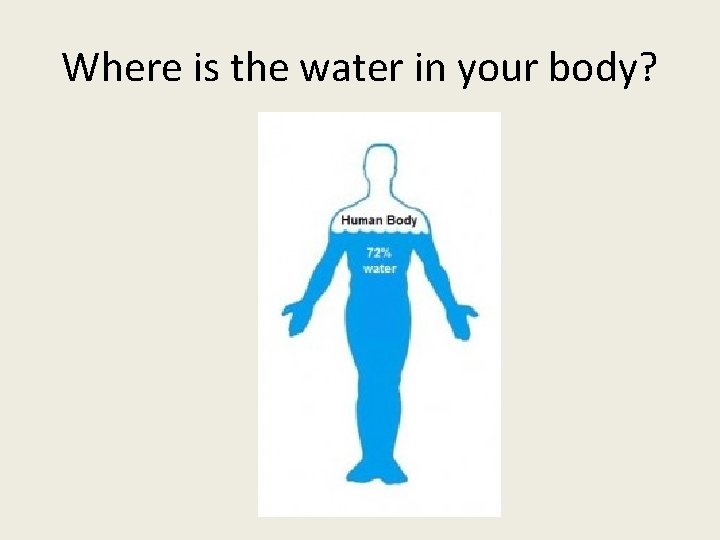
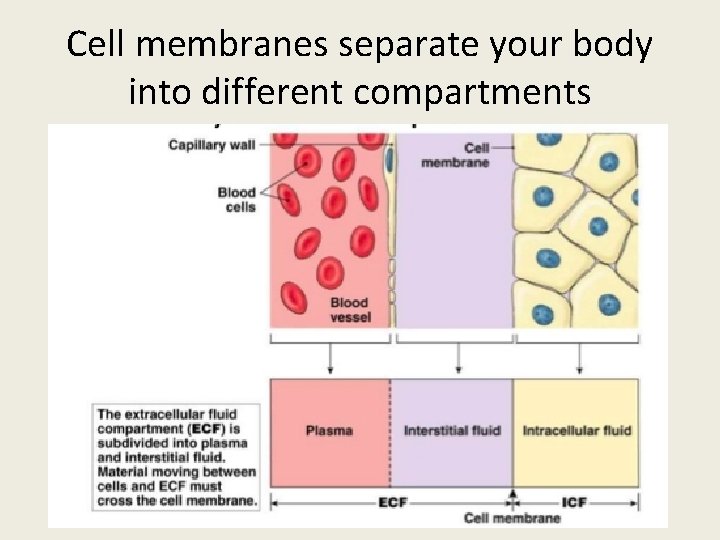
Where is the water in your body?
Cell membranes separate your body into different compartments
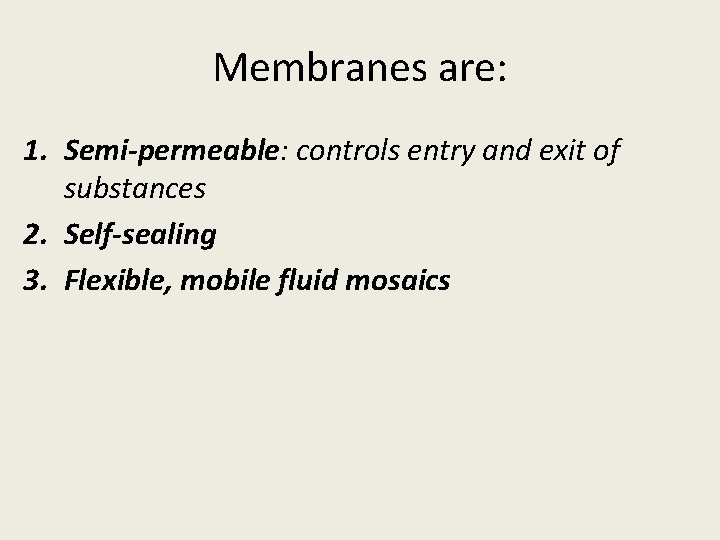
Membranes are: 1. Semi-permeable: controls entry and exit of substances 2. Self-sealing 3. Flexible, mobile fluid mosaics
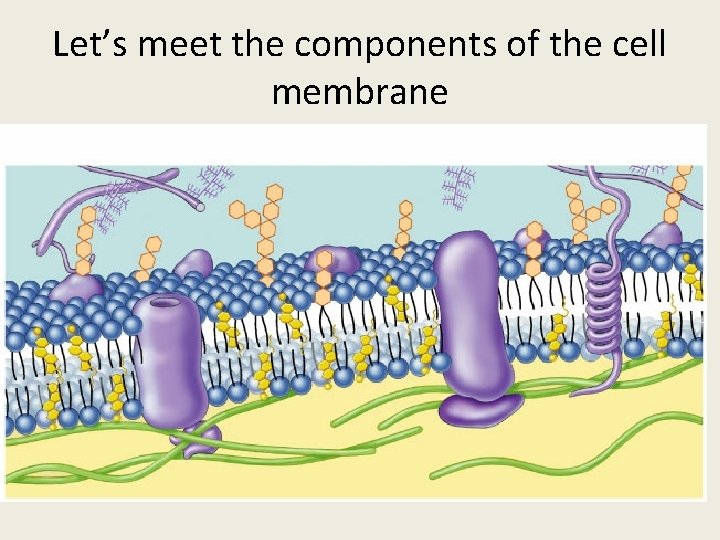
Let’s meet the components of the cell membrane
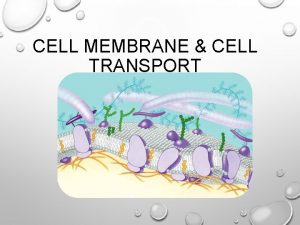
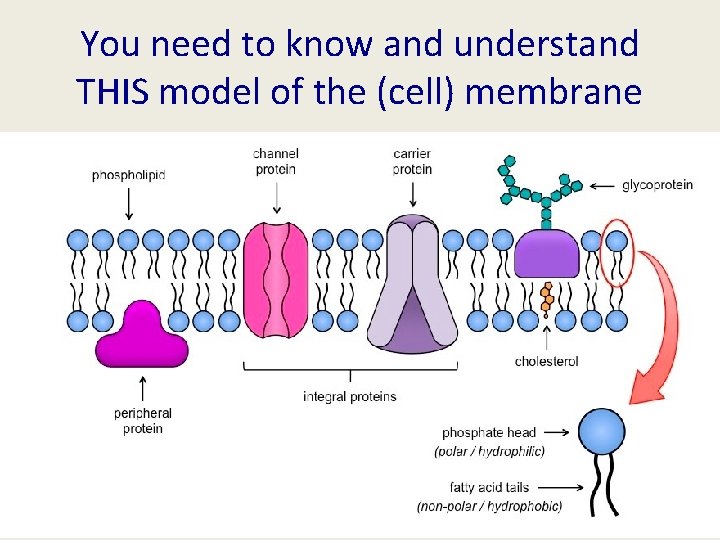
You need to know and understand THIS model of the (cell) membrane
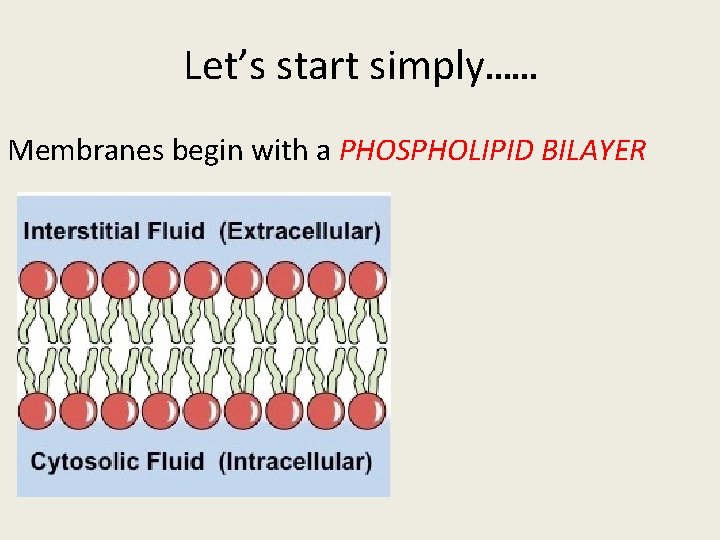
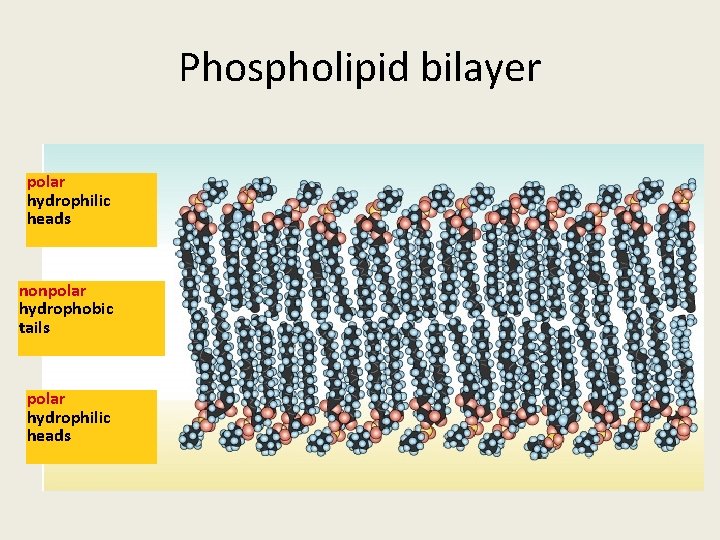
Let’s start simply…… Membranes begin with a PHOSPHOLIPID BILAYER
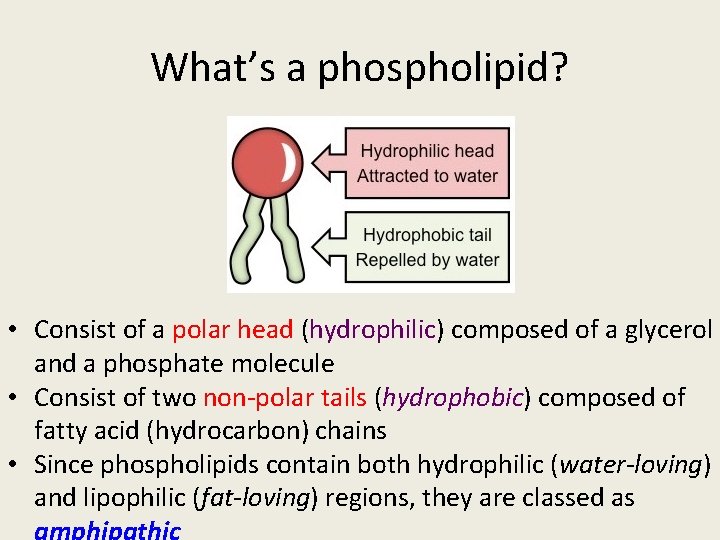
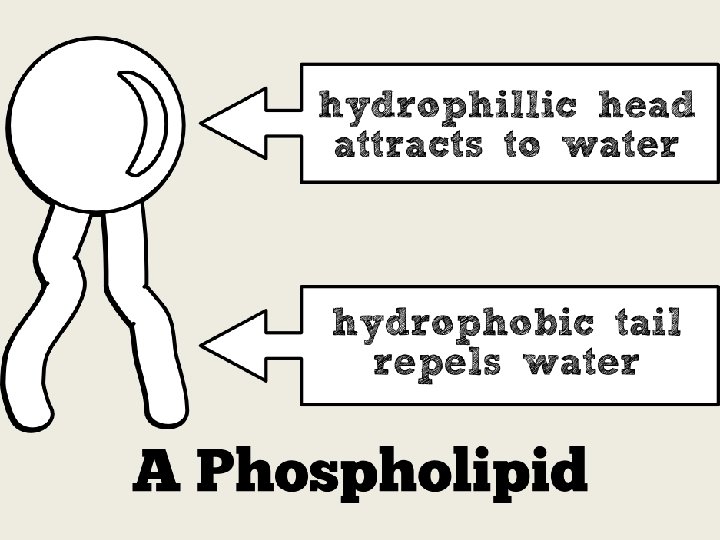
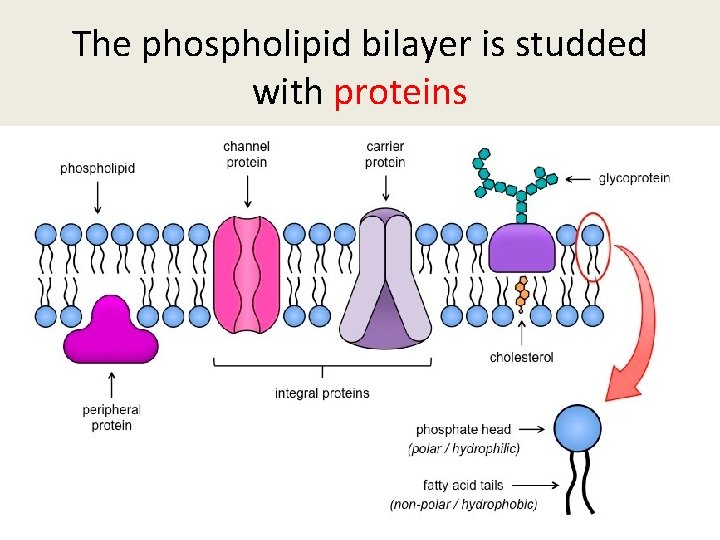
What’s a phospholipid? • Consist of a polar head (hydrophilic) composed of a glycerol and a phosphate molecule • Consist of two non-polar tails (hydrophobic) composed of fatty acid (hydrocarbon) chains • Since phospholipids contain both hydrophilic (water-loving) and lipophilic (fat-loving) regions, they are classed as
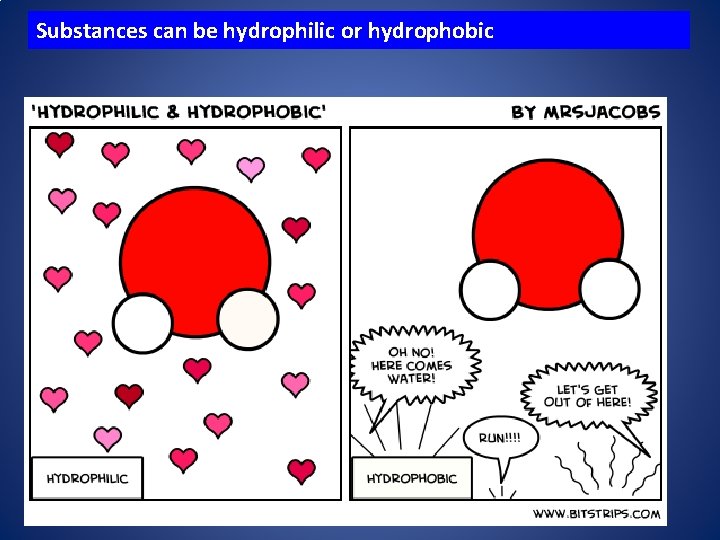
Substances can be hydrophilic or hydrophobic
Phospholipid bilayer polar hydrophilic heads nonpolar hydrophobic tails polar hydrophilic heads
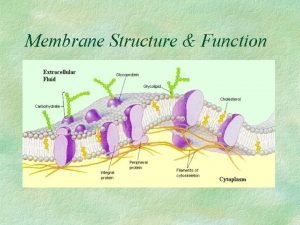
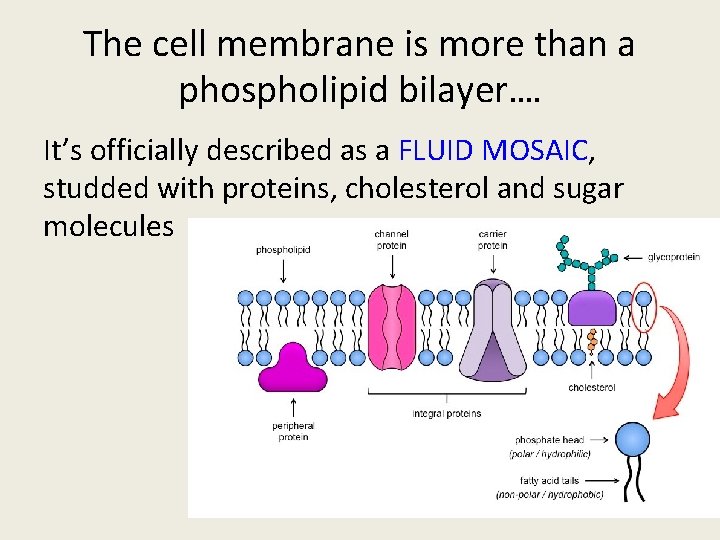
The cell membrane is more than a phospholipid bilayer…. It’s officially described as a FLUID MOSAIC, studded with proteins, cholesterol and sugar molecules
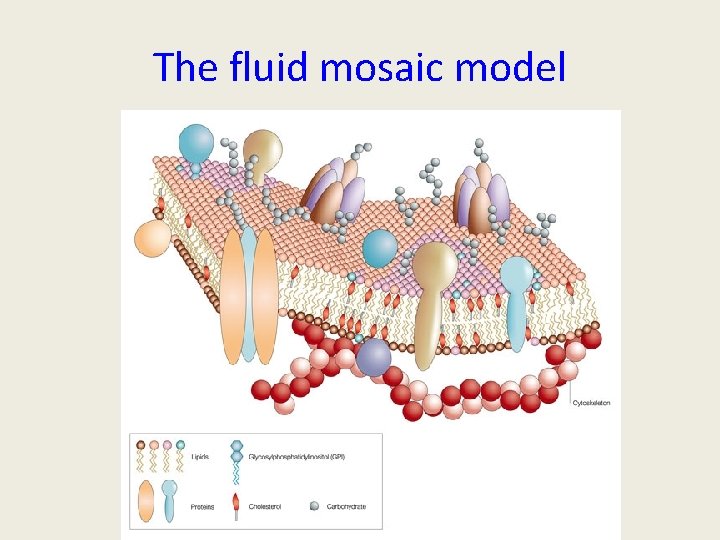
The fluid mosaic model
Why fluid mosaic? Cell membranes are represented according to a fluid-mosaic model, due to the fact that they are: • Fluid – the phospholipid bilayer is viscous and individual phospholipids can move position • Mosaic – the phospholipid bilayer is embedded with proteins, resulting in a mosaic of components
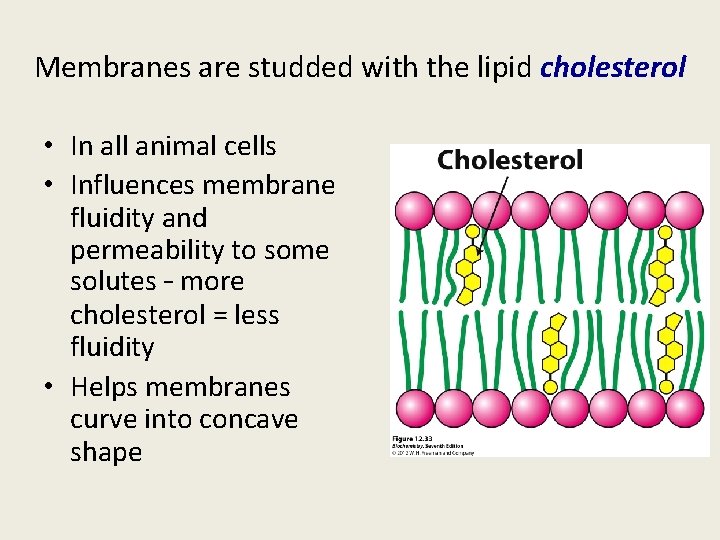
Membranes are studded with the lipid cholesterol • In all animal cells • Influences membrane fluidity and permeability to some solutes – more cholesterol = less fluidity • Helps membranes curve into concave shape
The phospholipid bilayer is studded with proteins
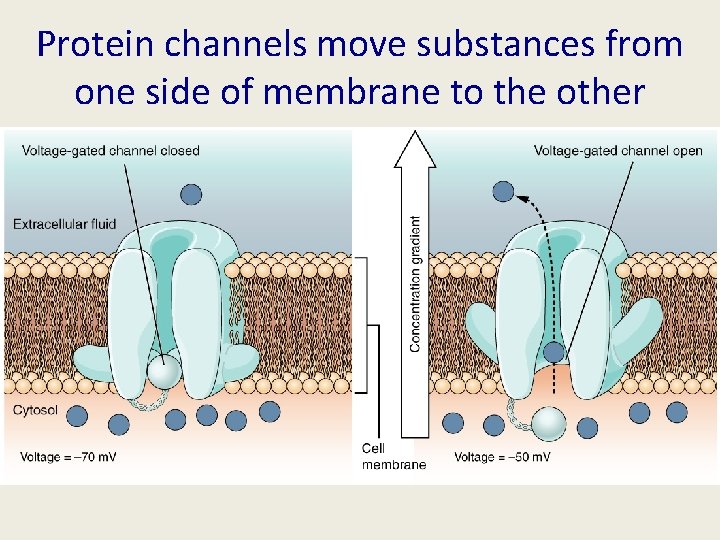
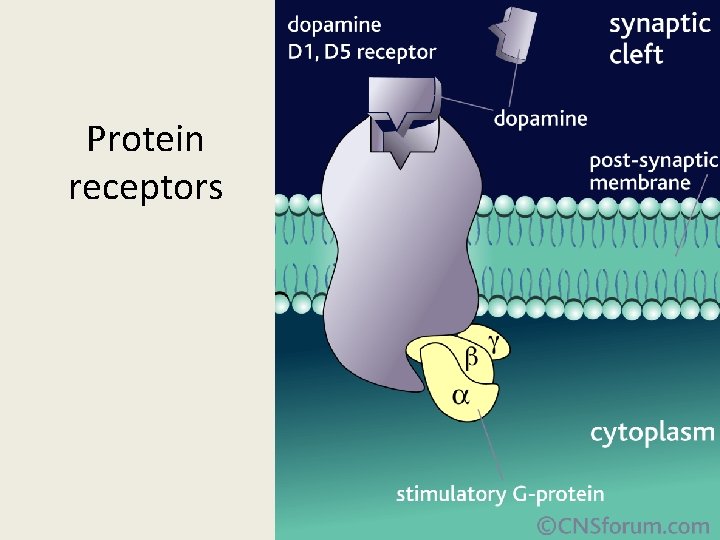
We can classify proteins based on their LOCATION or their FUNCTION LOCATION • Integral – spans the whole membrane • Peripheral – only located in one or other layer of the phospholipid bilayer • • FUNCTION Carrier proteins (PUMPS) – move substances through membrane using energy Channel proteins - move substances through membrane with no need for energy Glycoproteins – used for cell signalling Receptor proteins – used to respond to information form the outside
Protein channels move substances from one side of membrane to the other
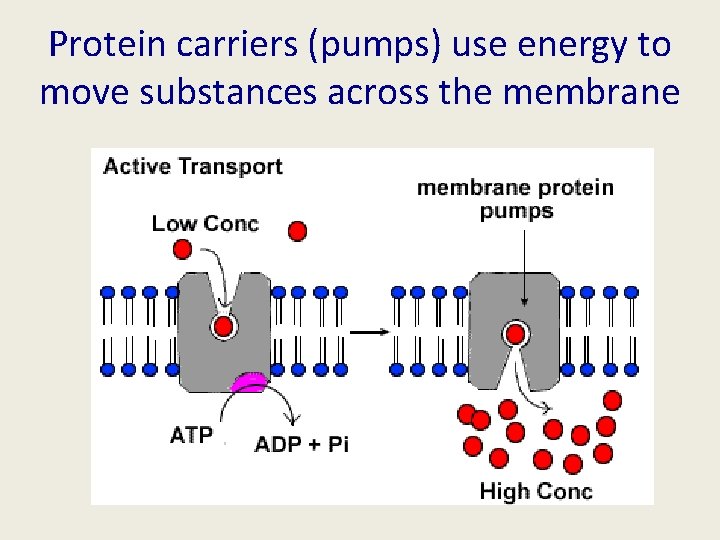
Protein carriers (pumps) use energy to move substances across the membrane
Protein receptors
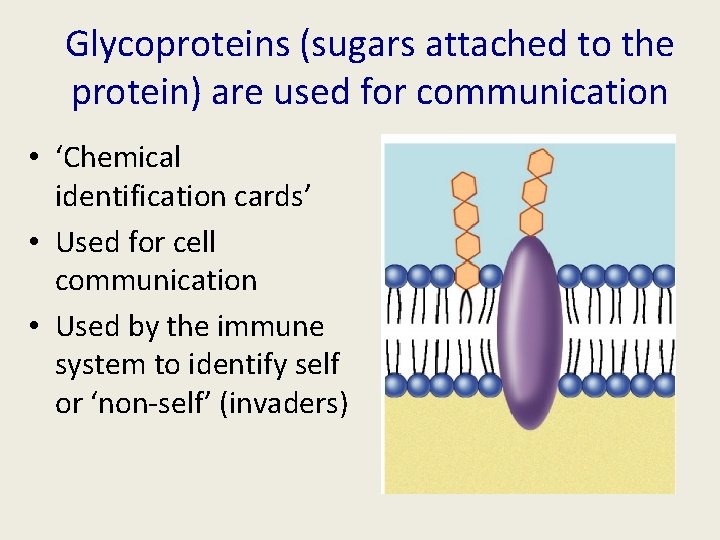
Glycoproteins (sugars attached to the protein) are used for communication • ‘Chemical identification cards’ • Used for cell communication • Used by the immune system to identify self or ‘non-self’ (invaders)
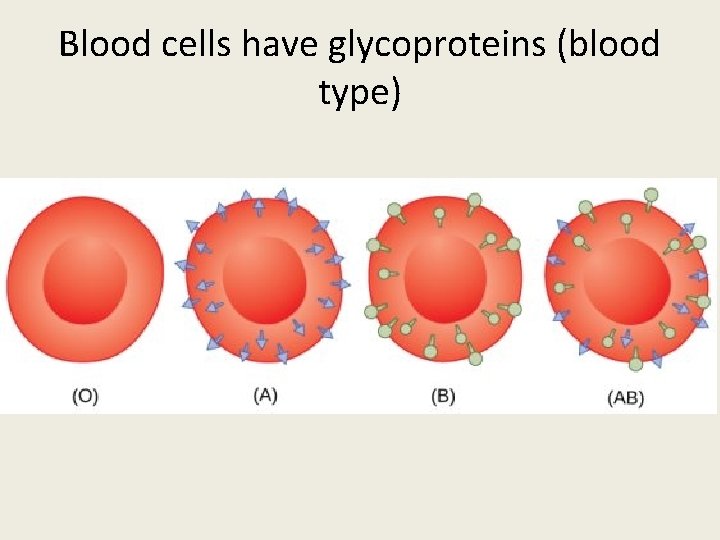
Blood cells have glycoproteins (blood type)
Let’s Review… Let's build a membrane from scratch… And now…let’s make a membrane!
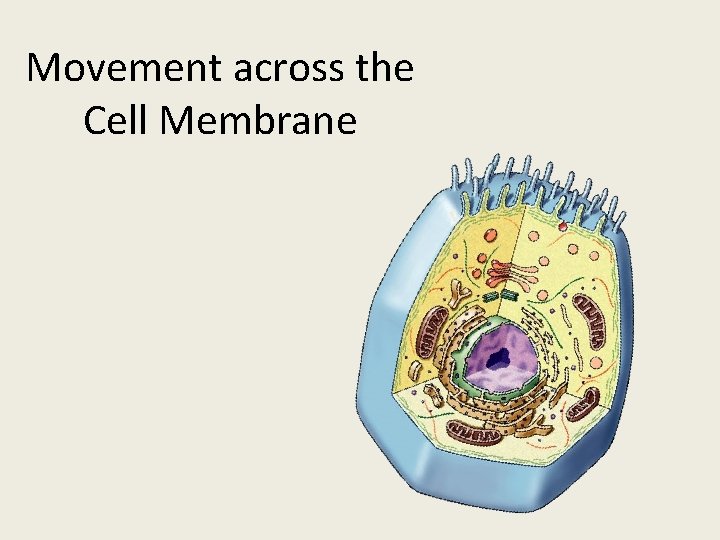
Movement across the Cell Membrane
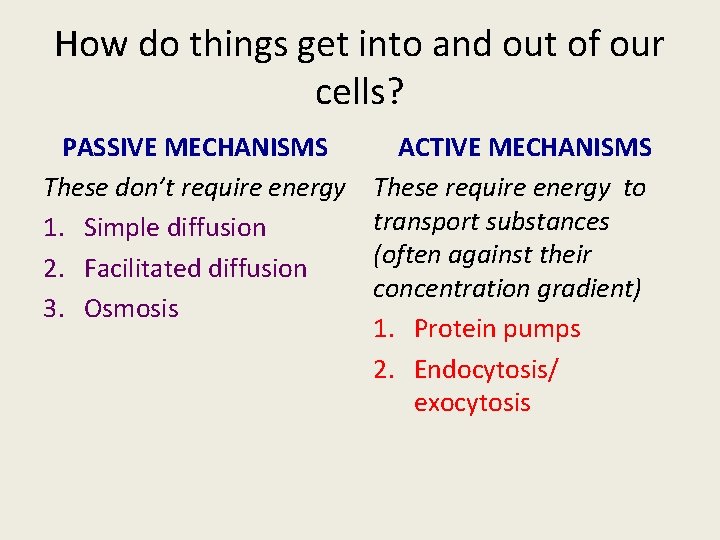
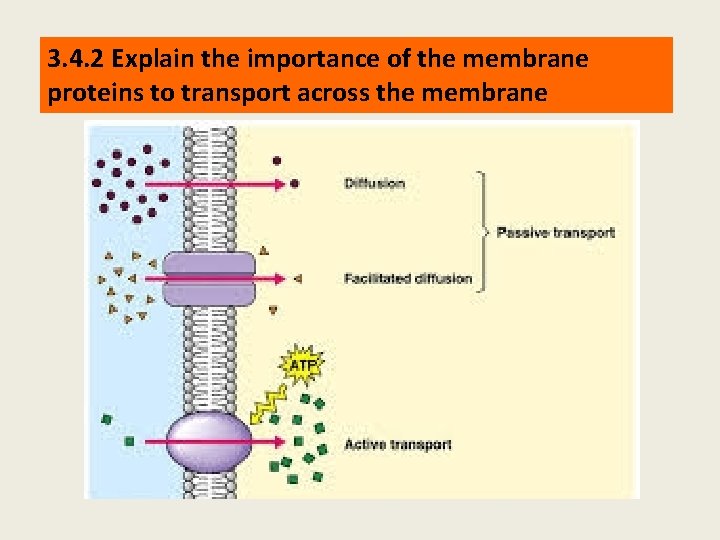
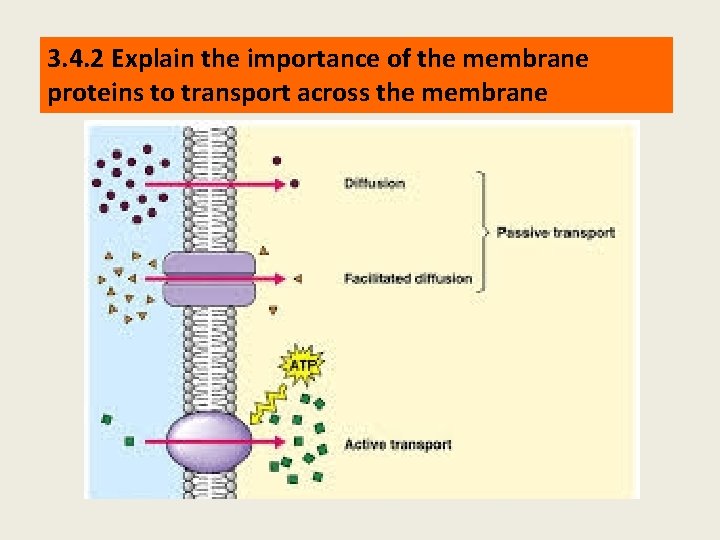
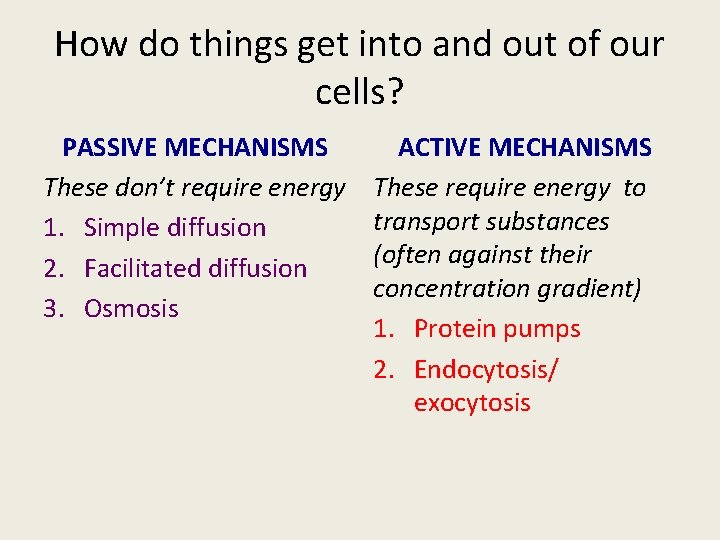
How do things get into and out of our cells? PASSIVE MECHANISMS These don’t require energy 1. Simple diffusion 2. Facilitated diffusion 3. Osmosis ACTIVE MECHANISMS These require energy to transport substances (often against their concentration gradient) 1. Protein pumps 2. Endocytosis/ exocytosis
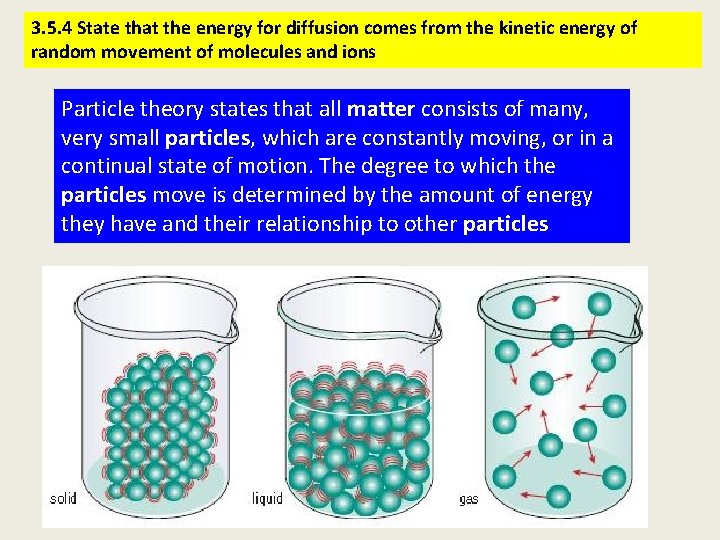
3. 5. 4 State that the energy for diffusion comes from the kinetic energy of random movement of molecules and ions Particle theory states that all matter consists of many, very small particles, which are constantly moving, or in a continual state of motion. The degree to which the particles move is determined by the amount of energy they have and their relationship to other particles
3. 4. 2 Explain the importance of the membrane proteins to transport across the membrane
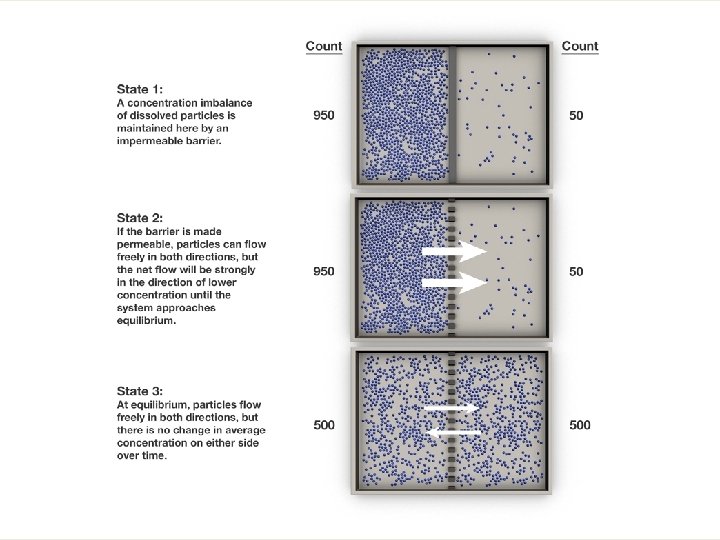
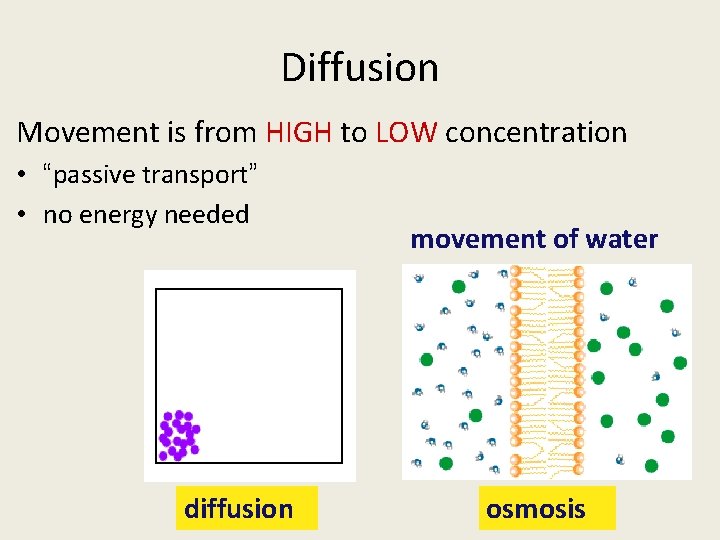
3. 5. 1: Diffusion: Definition • Diffusion is the net movement of particles from a region of their higher concentration to a region of their lower concentration down a concentration gradient, as a result of their random movement • Works for small particles
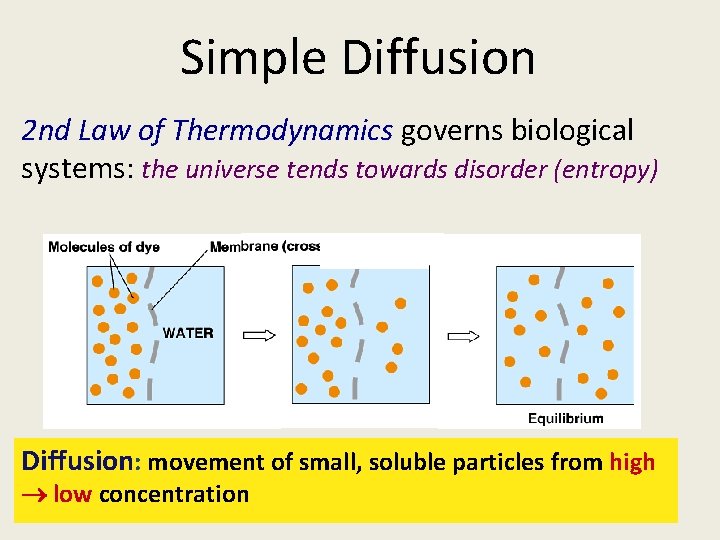
Simple Diffusion 2 nd Law of Thermodynamics governs biological systems: the universe tends towards disorder (entropy) Diffusion: movement of small, soluble particles from high low concentration
Diffusion Movement is from HIGH to LOW concentration • “passive transport” • no energy needed diffusion movement of water osmosis
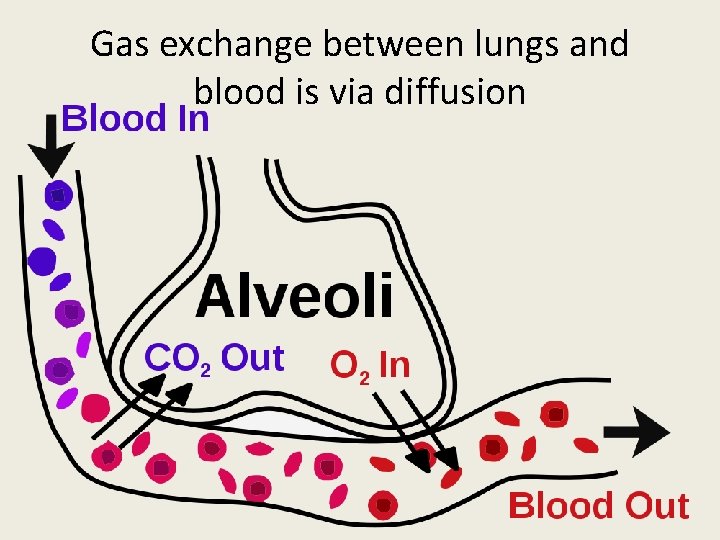
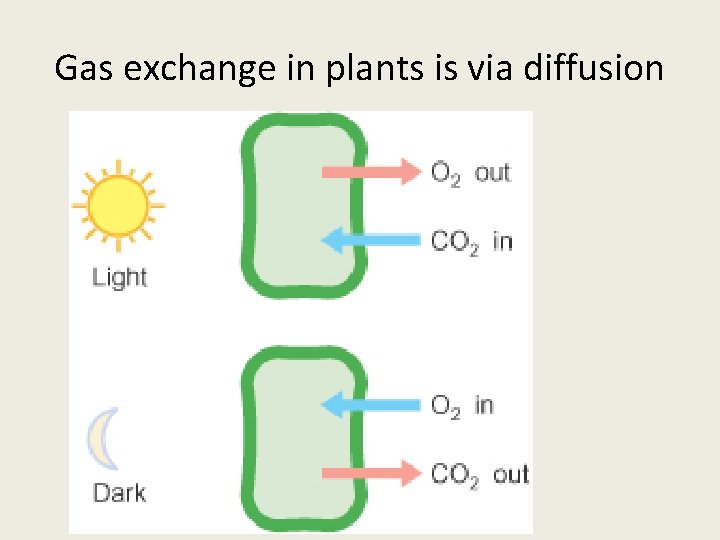
3. 5. 3 substances move into and out of cells by diffusion through the cell membrane; this is a dynamic process (always happening) • Gas exchange in the lungs • Gas exchange in plants
Gas exchange between lungs and blood is via diffusion
Gas exchange in plants is via diffusion
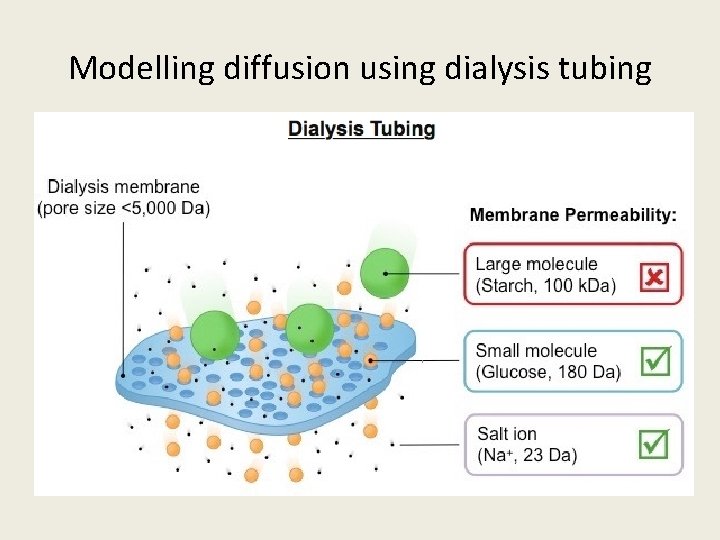
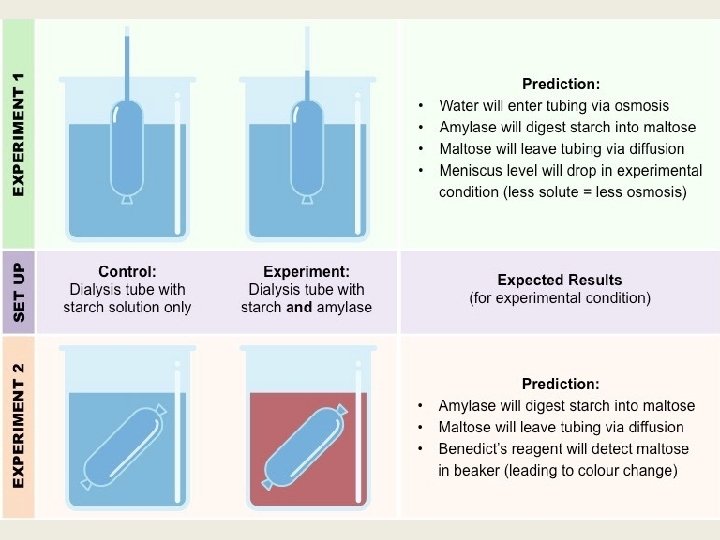
Modelling diffusion using dialysis tubing
3. 4. 2 Explain the importance of the membrane proteins to transport across the membrane
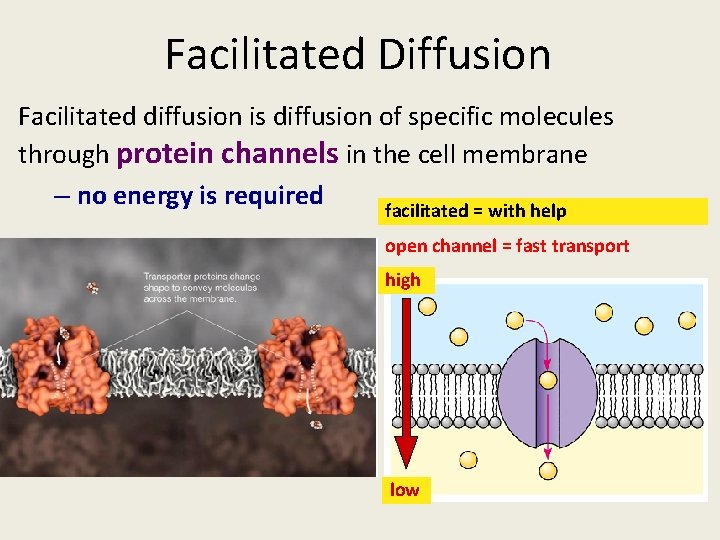
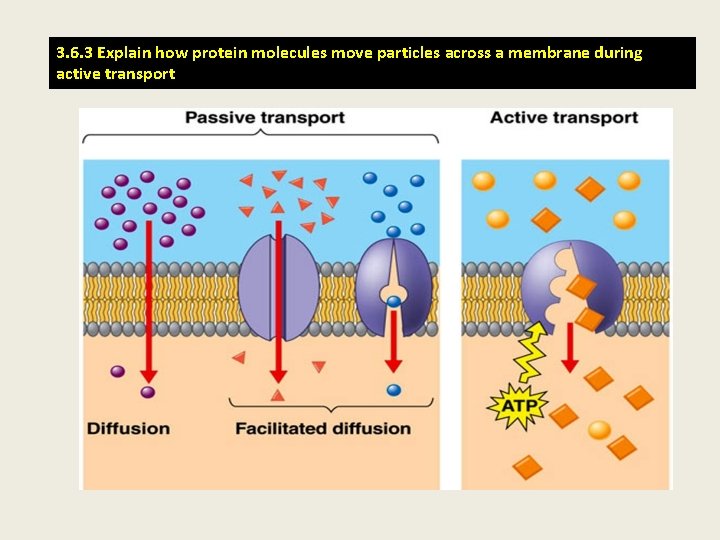
Facilitated Diffusion Facilitated diffusion is diffusion of specific molecules through protein channels in the cell membrane – no energy is required facilitated = with help open channel = fast transport high low
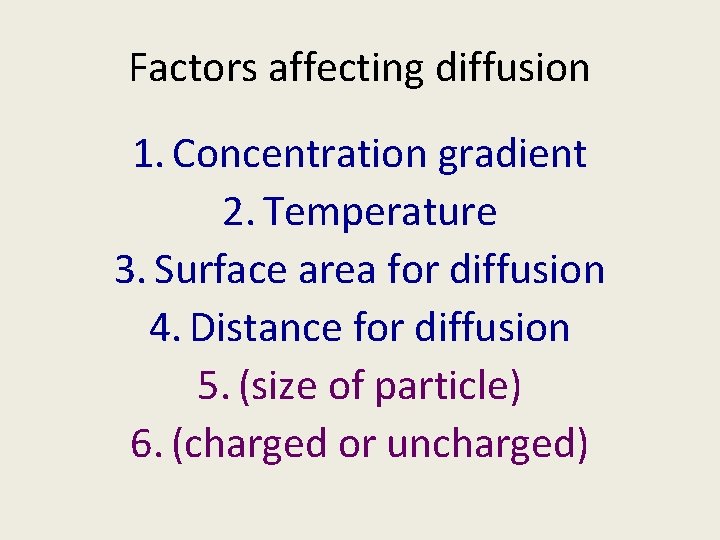
Factors affecting diffusion 1. Concentration gradient 2. Temperature 3. Surface area for diffusion 4. Distance for diffusion 5. (size of particle) 6. (charged or uncharged)
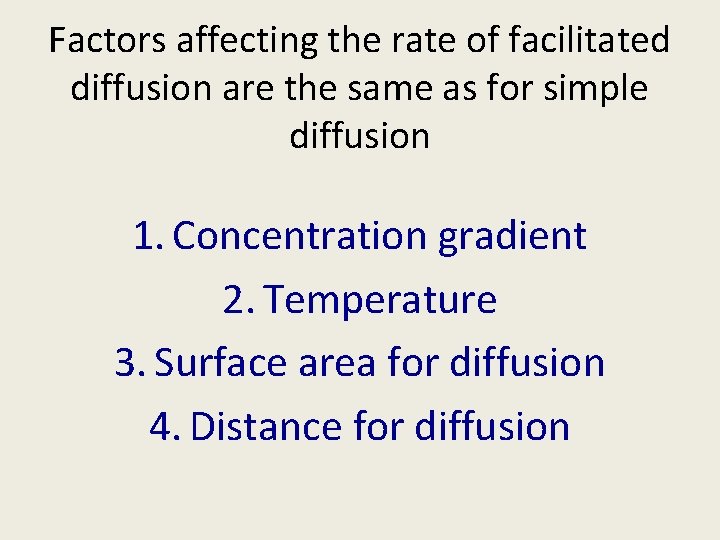
Factors affecting the rate of facilitated diffusion are the same as for simple diffusion 1. Concentration gradient 2. Temperature 3. Surface area for diffusion 4. Distance for diffusion
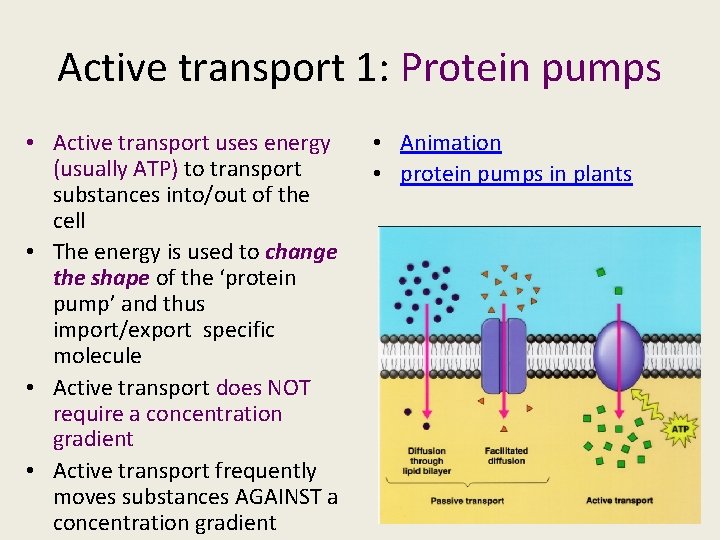
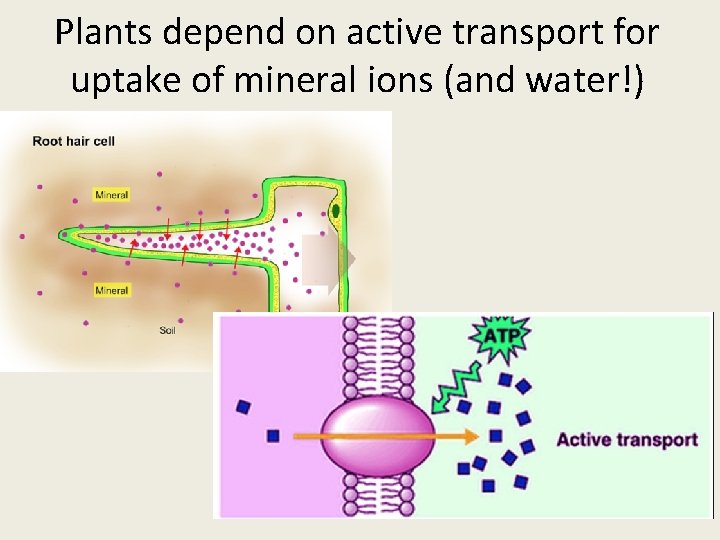
Active transport 1: Protein pumps • Active transport uses energy (usually ATP) to transport substances into/out of the cell • The energy is used to change the shape of the ‘protein pump’ and thus import/export specific molecule • Active transport does NOT require a concentration gradient • Active transport frequently moves substances AGAINST a concentration gradient • Animation • protein pumps in plants
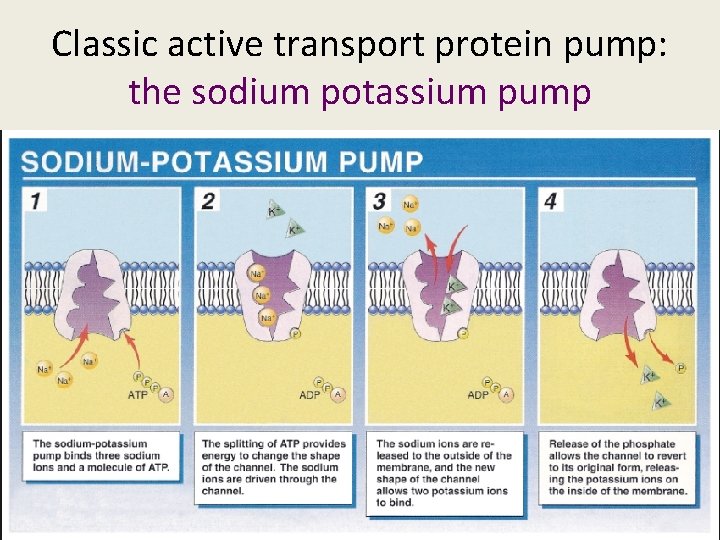
Classic active transport protein pump: the sodium potassium pump
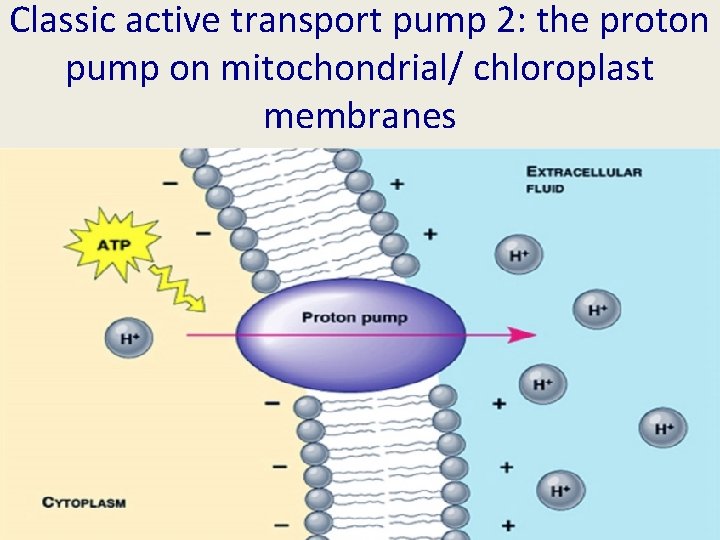
Classic active transport pump 2: the proton pump on mitochondrial/ chloroplast membranes
Plants depend on active transport for uptake of mineral ions (and water!)
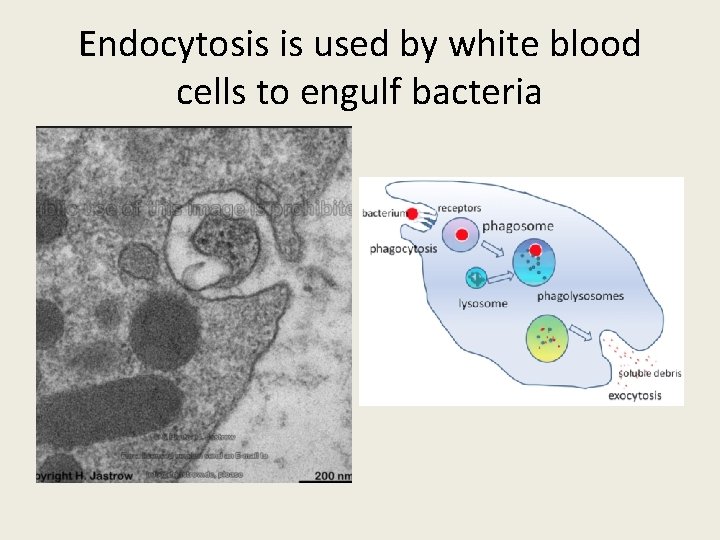
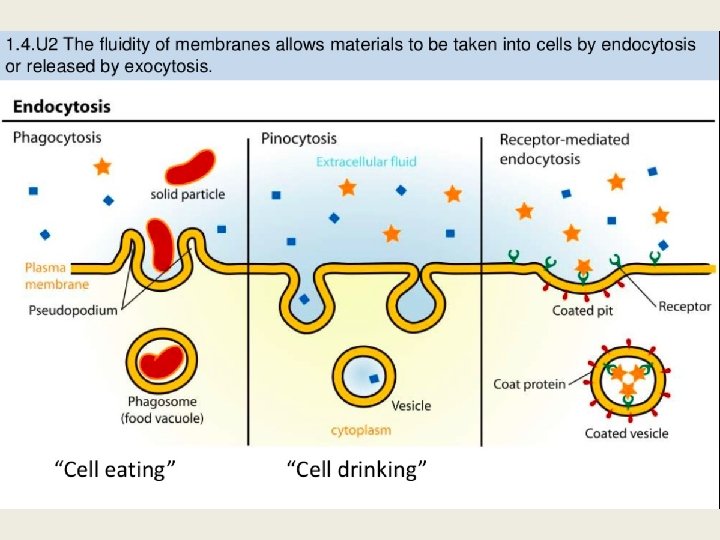
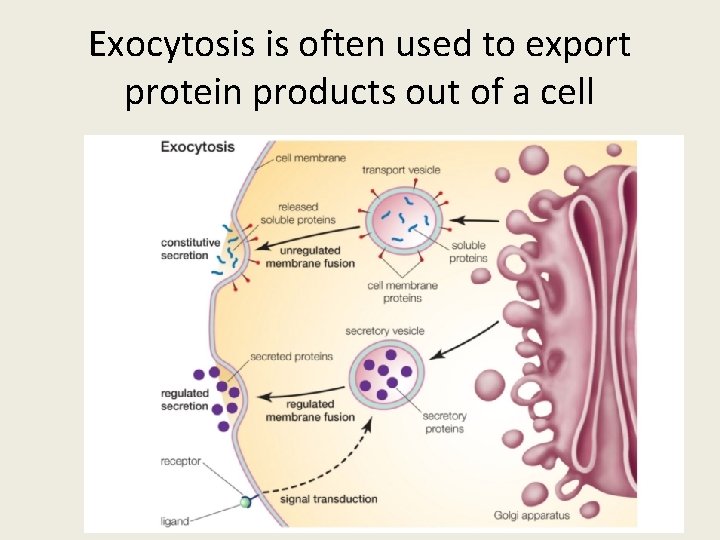
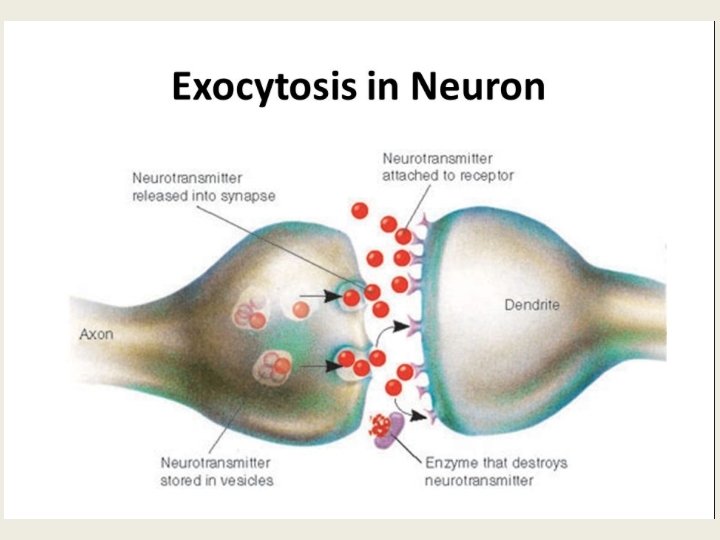
Active Transport 2: Endocytosis and Exocytosis • A simple one. . . • Animation 2 • Endocytosis/ exocytosis are import/export of materials by infolding/outfolding of the cell membrane • Cells use this for BULK transport
Endocytosis is used by white blood cells to engulf bacteria
Exocytosis is often used to export protein products out of a cell
3. 6. 3 Explain how protein molecules move particles across a membrane during active transport
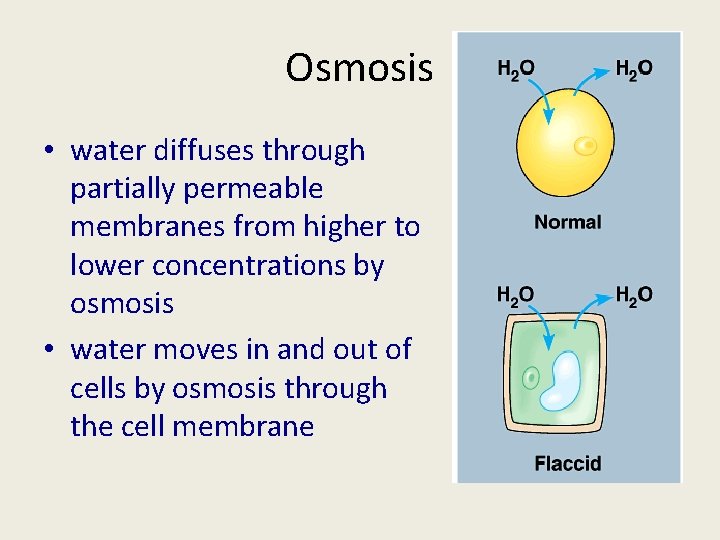
Osmosis • water diffuses through partially permeable membranes from higher to lower concentrations by osmosis • water moves in and out of cells by osmosis through the cell membrane
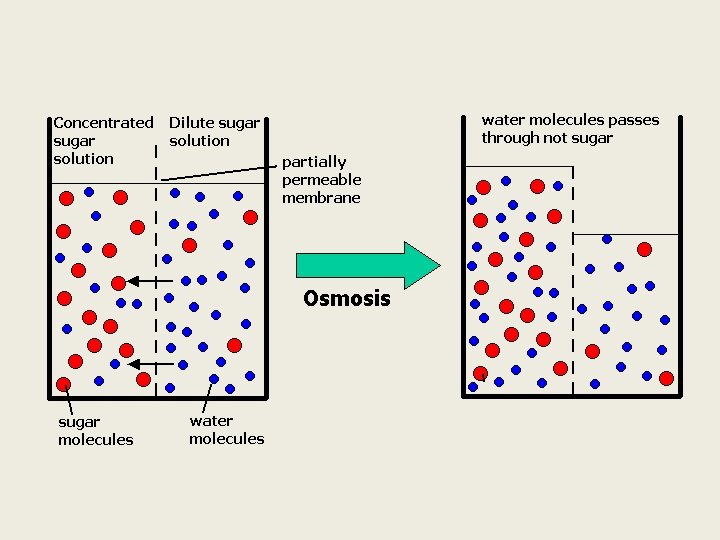
Osmosis: Definition • Osmosis is the net movement of water molecules from a region of higher water concentration [potential] (dilute solution) to a region of lower water concentration [potential] (concentrated solution), through a partially permeable membrane • Like other types of diffusion, osmosis is a dynamic process [achieves balance (equilibrium) but never stops]
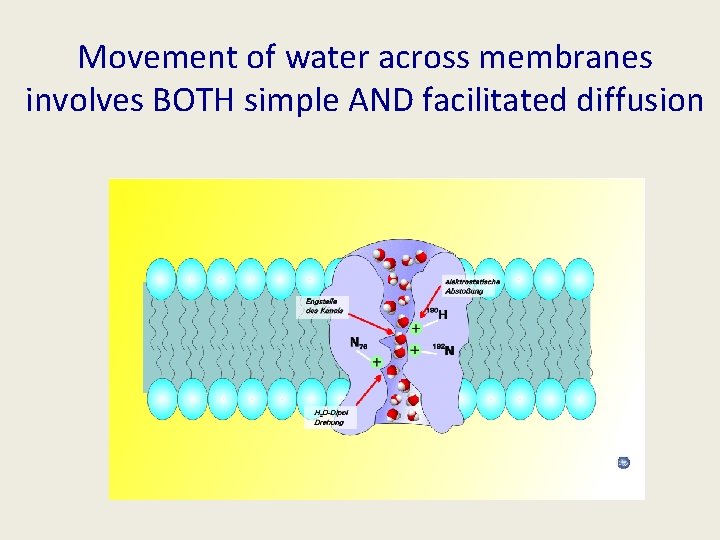
Movement of water across membranes involves BOTH simple AND facilitated diffusion
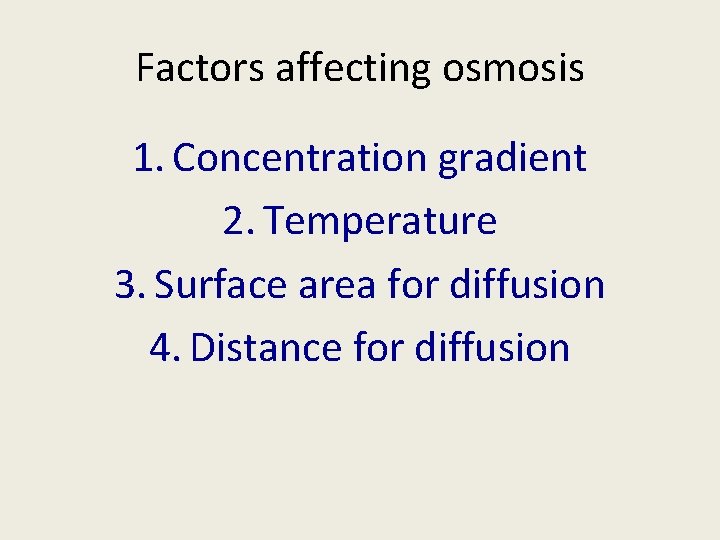
Factors affecting osmosis 1. Concentration gradient 2. Temperature 3. Surface area for diffusion 4. Distance for diffusion
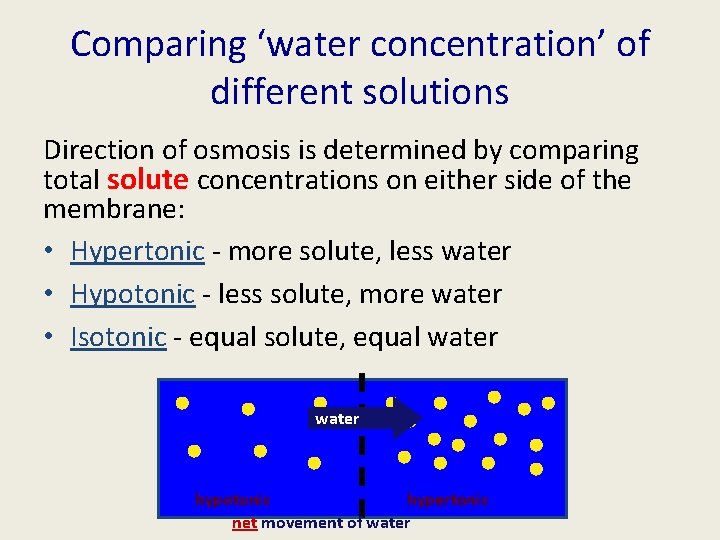
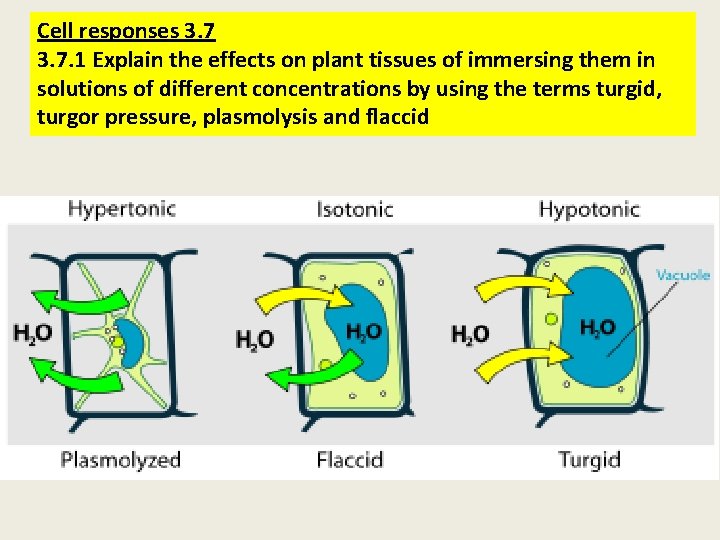
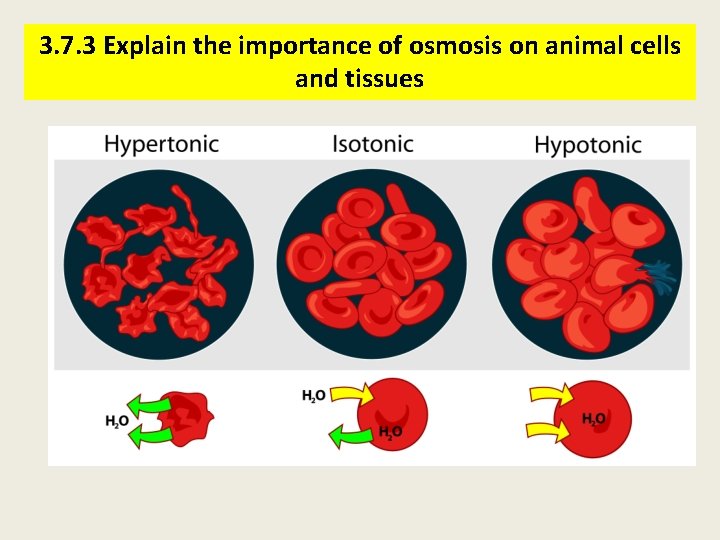
Comparing ‘water concentration’ of different solutions Direction of osmosis is determined by comparing total solute concentrations on either side of the membrane: • Hypertonic - more solute, less water • Hypotonic - less solute, more water • Isotonic - equal solute, equal water hypotonic hypertonic net movement of water
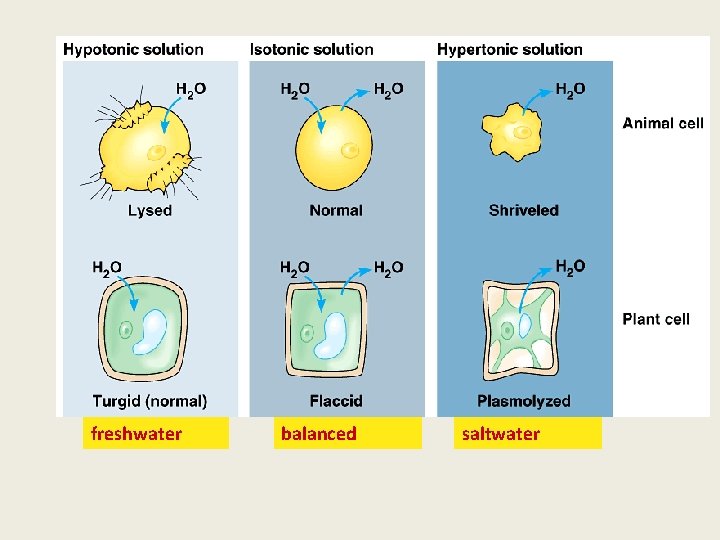
freshwater balanced saltwater
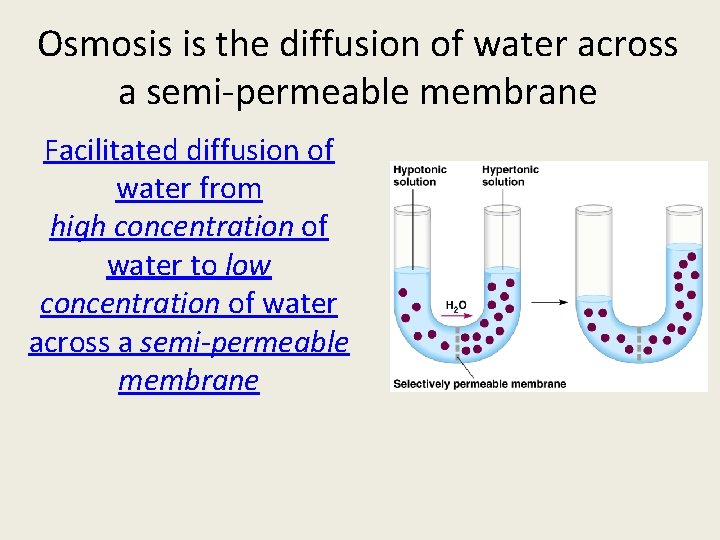
Osmosis is the diffusion of water across a semi-permeable membrane Facilitated diffusion of water from high concentration of water to low concentration of water across a semi-permeable membrane
Examples of Osmosis in Biology • Absorption of water by plant roots. • Re-absorption of water in the kidney. • Re-absorption of tissue fluid into blood capillaries. • Absorption of water in the GI tract
Water moves across a membrane from the hypotonic solution to the hypertonic solution • Animation of osmosis 1 • Animation of osmosis 2: why water balance matters
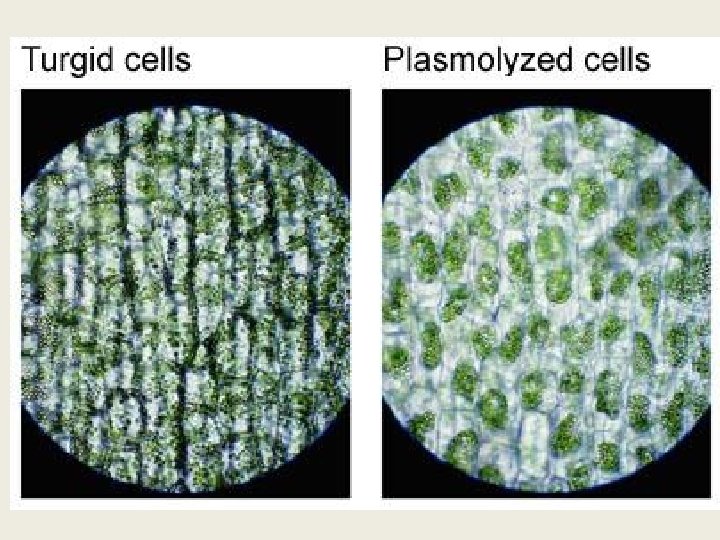
Cell responses 3. 7. 1 Explain the effects on plant tissues of immersing them in solutions of different concentrations by using the terms turgid, turgor pressure, plasmolysis and flaccid
3. 7. 3 Explain the importance of osmosis on animal cells and tissues
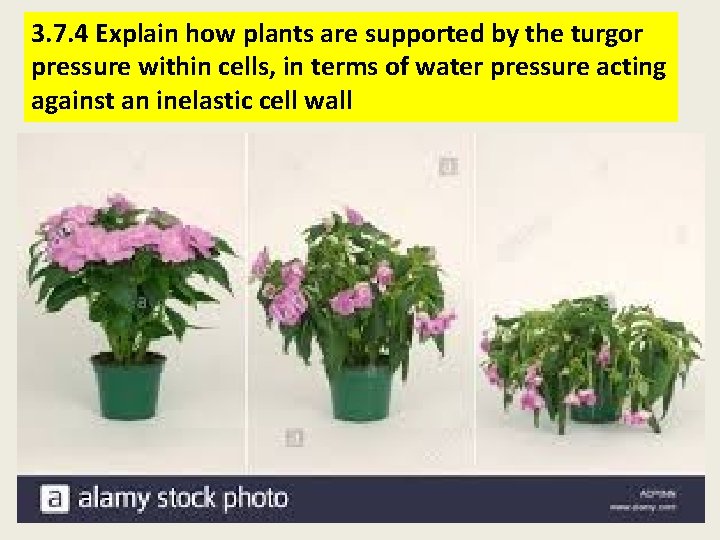
3. 7. 4 Explain how plants are supported by the turgor pressure within cells, in terms of water pressure acting against an inelastic cell wall
How do things get into and out of our cells? PASSIVE MECHANISMS These don’t require energy 1. Simple diffusion 2. Facilitated diffusion 3. Osmosis ACTIVE MECHANISMS These require energy to transport substances (often against their concentration gradient) 1. Protein pumps 2. Endocytosis/ exocytosis