Soils Mr Gust Soil Definition A layer of


- Slides: 34
Soils Mr. Gust
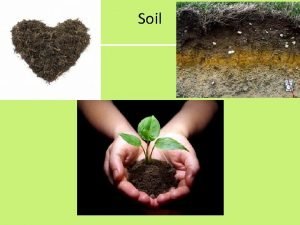
Soil Definition A layer of natural materials on the earth’s surface containing both organic and inorganic materials and capable of supporting plant life.
Why is Soil Important? Gives plants something to grow in Holds nutrients Home to microorganisms Holds water Provide us with a food source
Soil Formation Factors Five factors control soil formation: Parent material-Source of mineral matter 1. 1. 2. 3. 4. 5. Limestone, sandstone, shale, basalt Time-longer forming, thicker soil Climate-greatest effect on rate. Hot wet climate goes fastest Vegetation- More vegetation, increased soil forming Topography-slope. Erosion elevated, less soil formed
Physical properties of soil: Soils are made up of four substances: 1. Small mineral particles – from the breakdown of rocks – about 45% 2. Organic matter – plant and animal material, both dead and living, microbes – about 5% 3. Water 4. Air Percentages of water and air can vary greatly
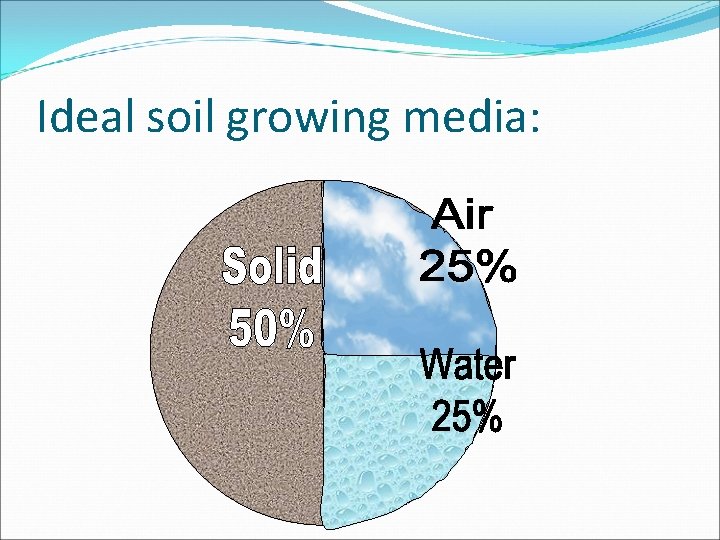
Ideal soil growing media:
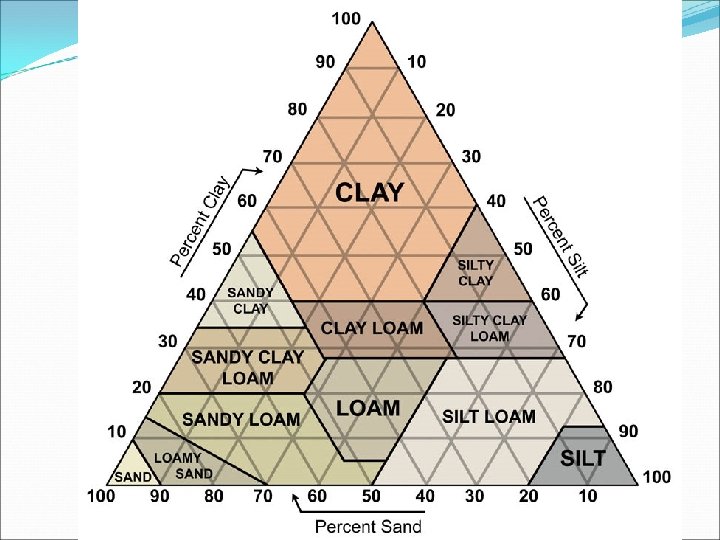
Soil textures: Large particles: stones, cobbles, gravel Mineral particles in soil: Sand (largest particles) Silt (smaller) Clay (smallest) Soil texture refers to the amount of sand, silt and clay in the soil.
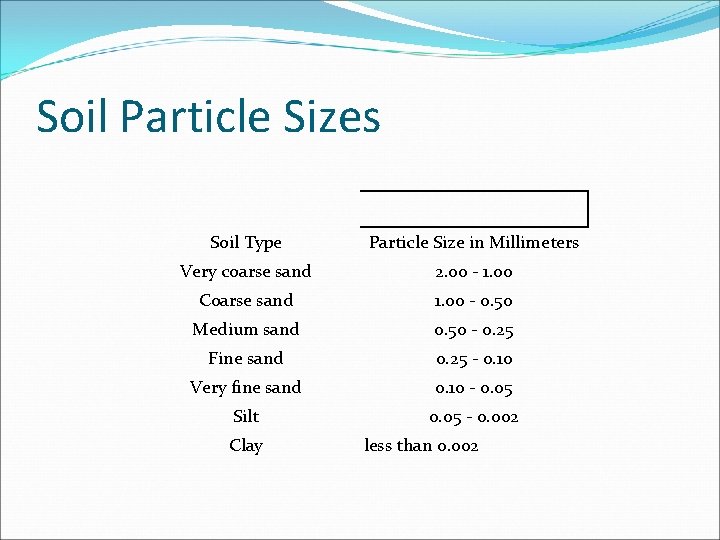
Soil Particle Sizes Soil Type Particle Size in Millimeters Very coarse sand 2. 00 - 1. 00 Coarse sand 1. 00 - 0. 50 Medium sand 0. 50 - 0. 25 Fine sand 0. 25 - 0. 10 Very fine sand 0. 10 - 0. 05 Silt 0. 05 - 0. 002 Clay less than 0. 002
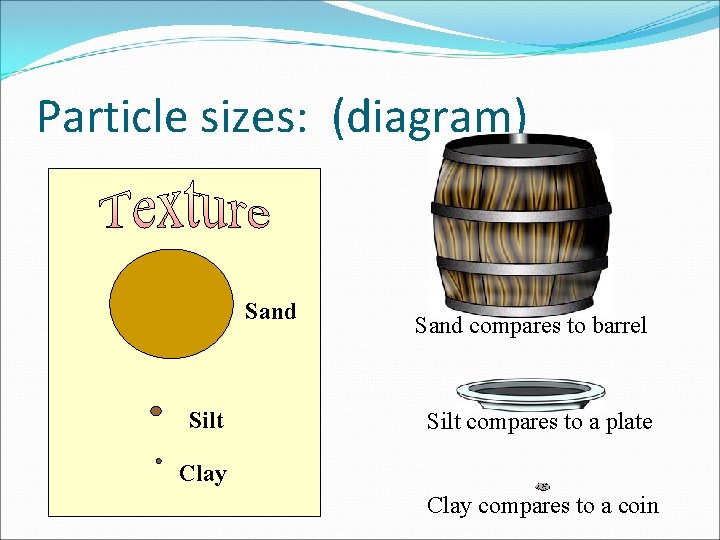
Particle sizes: (diagram) Sand Silt Sand compares to barrel Silt compares to a plate Clay compares to a coin
How can you tell what soil texture you have? Sand can be seen with the naked eye. Feels gritty. Silt is intermediate in size. Visible under microscope. Feels like talcum powder. Clay is smallest particle. Feels slick and sticky when wet, firm when moist and hard when dry. Size of particles affects moisture-holding ability, plowing, which crops can be grown.
Hydrometer Method Largest particles fall out first Measure amount (mm) of each particle size Use chart to determine soil type
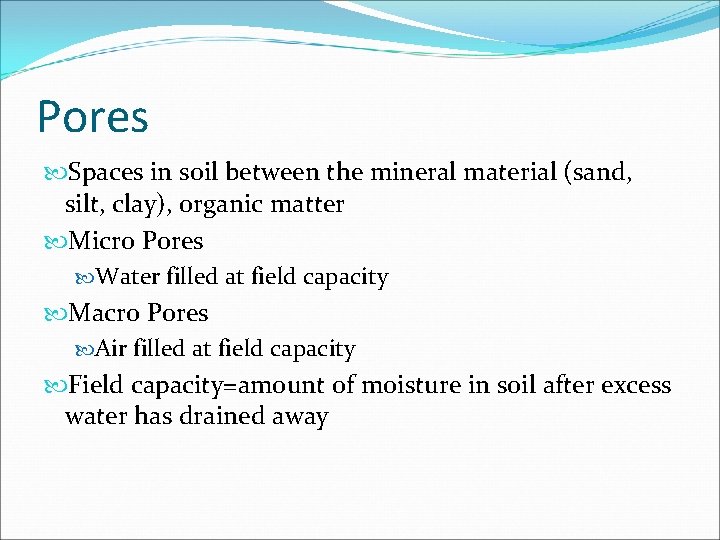
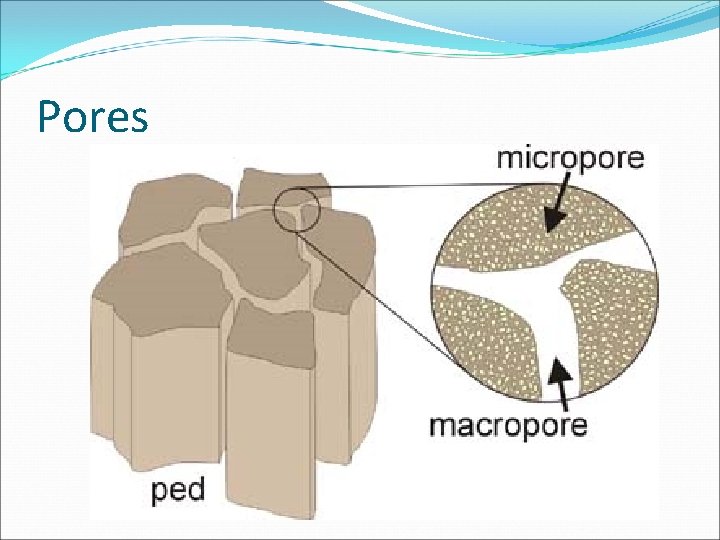
Pores Spaces in soil between the mineral material (sand, silt, clay), organic matter Micro Pores Water filled at field capacity Macro Pores Air filled at field capacity Field capacity=amount of moisture in soil after excess water has drained away
Pores
Soil/water relationships: Water drainage depends on soil pore size Large pores in the soil can take in water more rapidly than fine pores. Sandy soils drain fastest Clay soils retain water longer
Soil/Water Relationships Saturation Can take no more water, water starts to puddle on top Field Capacity Moist Wilting Point Plant can not uptake any more water, starts to wilt
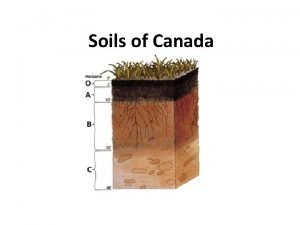
Soil profile (horizon) is … The arrangement and properties of the various soil layers Topsoil (A Horizon) Organic material, dead plant/animals, roots, humus Subsoil (B Horizon) Clay that has moved (leached) down over time Parent material (C Horizon) Rock
More about topsoil: Surface, top layer of soil From a few inches to several feet thick Darker, contains organic material Softer, more easily worked than underlying areas. Also called the A horizon Farmland
More about subsoil: Layer just under topsoil Lighter in color – may be red, brown, yellow or gray in color Little or no organic material Usually higher in clay content than topsoil Firmer, more difficult to penetrate Also called the B horizon
More about parent material: Lower soil layer Material from which topsoil and subsoil developed Very firm and difficult for roots to penetrate Also called the C horizon
What does soil color indicate? Drainage Brown or dark brown surface soil layers indicate the presence of organic matter. Subsoils are often reddish brown, red, yellowish brown, yellow or gray, indicating how wet the soil is at certain times. Gray means poorly drained and clay Red, brown or yellow colors means well drained Light/dark color can affect heat too
Soil depth is: The total depth of topsoil, subsoil and parent material for plants to grow. Can cause the yield of a crop to be high or low. Deep rooted plants, such as alfalfa, will not grow well when planted on a shallow soil. Deep soil= 35 inches plus Moderately deep soil=20 to 34 inches deep Shallow soil= 10 to 20 inches deep. Very shallow soil is 10 inches or less.
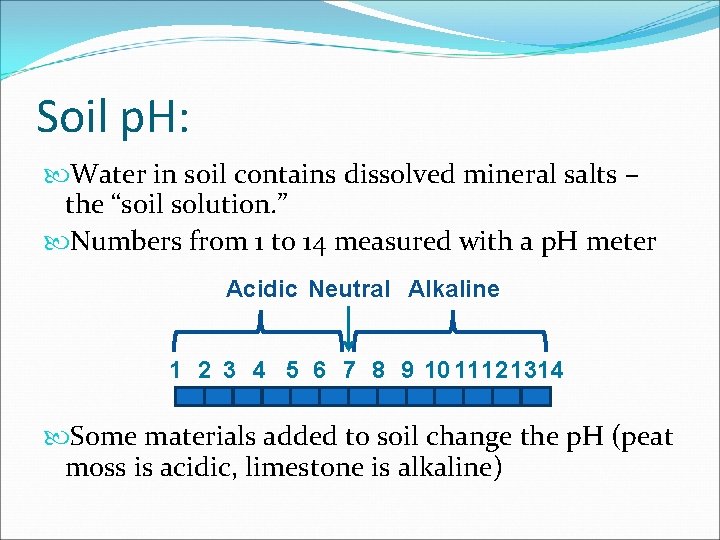
Soil p. H: Water in soil contains dissolved mineral salts – the “soil solution. ” Numbers from 1 to 14 measured with a p. H meter Acidic Neutral Alkaline 1 2 3 4 5 6 7 8 9 10 11121314 Some materials added to soil change the p. H (peat moss is acidic, limestone is alkaline)
Cation exchange capacity (CEC): The total number of exchangeable cations a soil can hold (the amount of its negative charge) is called its cation exchange capacity or CEC. The higher a soil's CEC, the more cations it can retain. Cations include Phosphorus, Potassium CEC increases as organic matter/clay increases.
Organic matter improves the soil: Soil organic matter consists of plant and animal residues in various stages of decay. The 4 benefits of organic matter: Improves physical condition and structure Increases water infiltration Decreases erosion losses Supplies plant nutrients (increased CEC)
Soil Erosion is the process of wearing away or removing Water Splash Sheet Rill Gully Stream bank Wind Surface creep Saltation Suspension
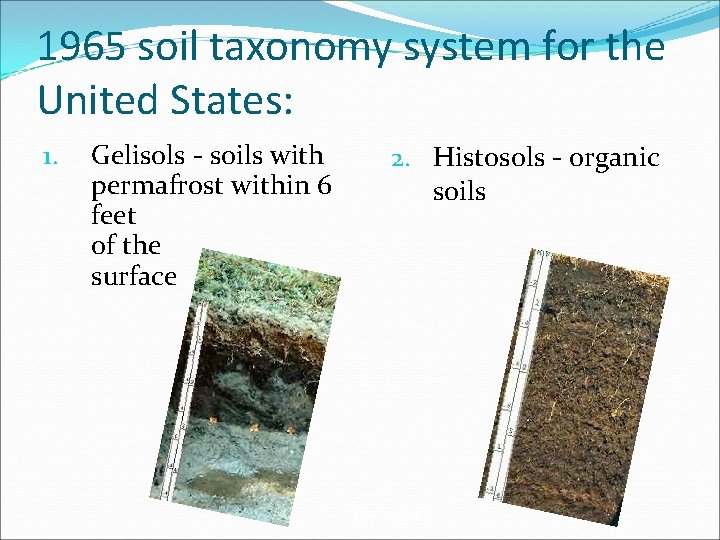
1965 soil taxonomy system for the United States: 1. Gelisols - soils with permafrost within 6 feet of the surface 2. Histosols - organic soils NRCS photos
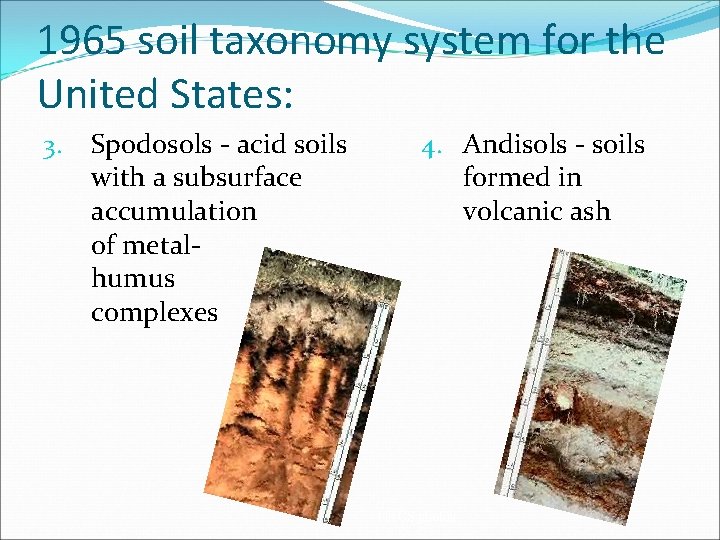
1965 soil taxonomy system for the United States: 3. Spodosols - acid soils with a subsurface accumulation of metalhumus complexes 4. Andisols - soils formed in volcanic ash NRCS photos
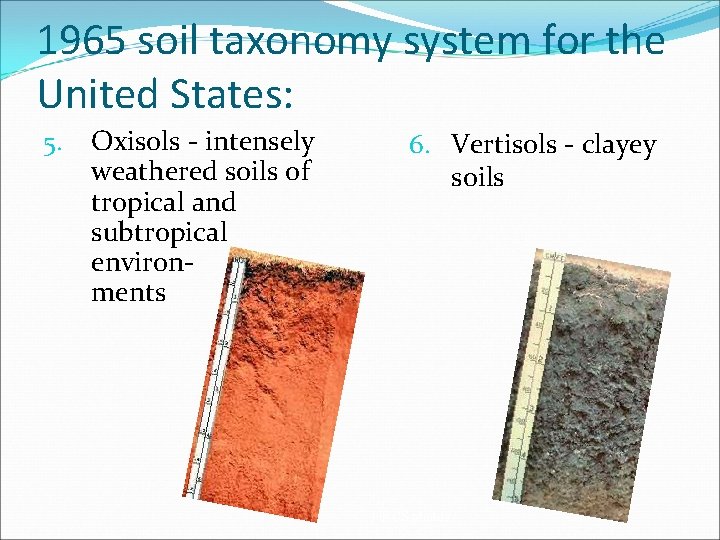
1965 soil taxonomy system for the United States: 5. Oxisols - intensely weathered soils of tropical and subtropical environments 6. Vertisols - clayey soils NRCS photos
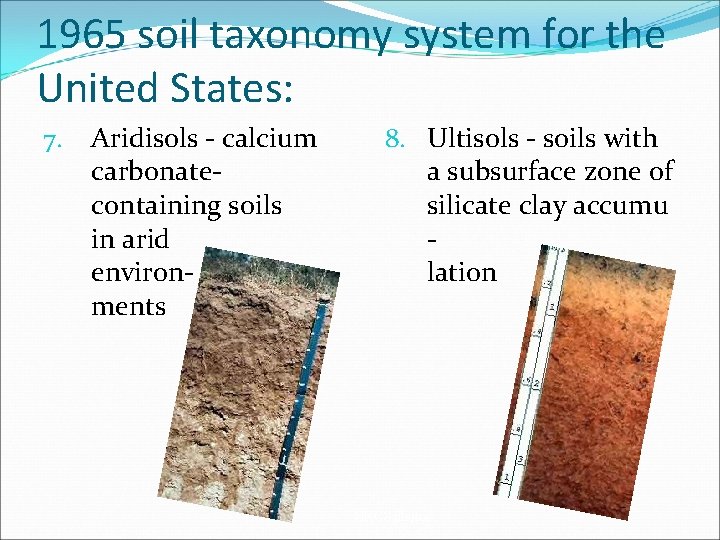
1965 soil taxonomy system for the United States: 7. Aridisols - calcium carbonatecontaining soils in arid environments 8. Ultisols - soils with a subsurface zone of silicate clay accumu lation NRCS photos
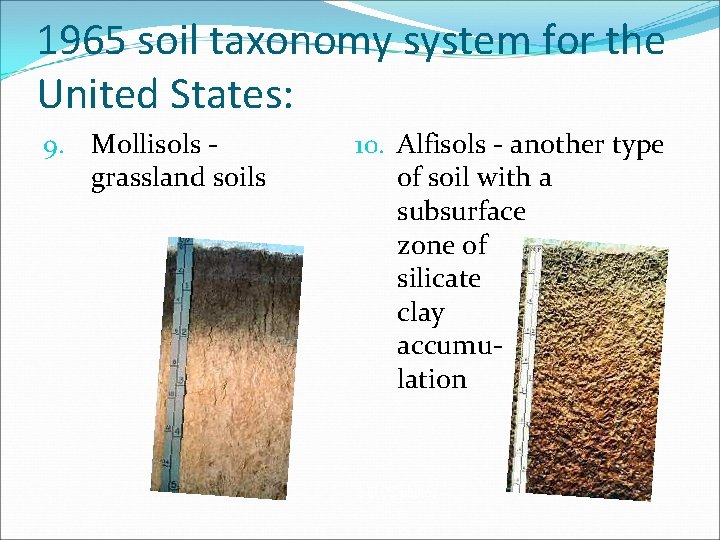
1965 soil taxonomy system for the United States: 9. Mollisols grassland soils 10. Alfisols - another type of soil with a subsurface zone of silicate clay accumulation NRCS photos
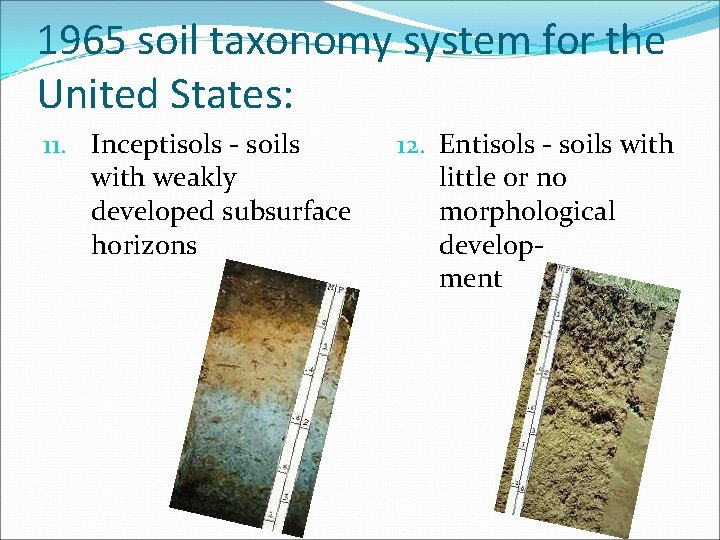
1965 soil taxonomy system for the United States: 11. Inceptisols - soils with weakly developed subsurface horizons 12. Entisols - soils with little or no morphological development NRCS photos
Wrapping it all up: Soil is the soft outer covering of the earth. One of our most important natural resources Necessary for plants to grow Provides food for plants, which in turn furnish food for humans and animals Stores much of the water that plants use