
How Do Soils Form CLORPT for short CLORPT

- Slides: 28
How Do Soils Form? CLORPT for short
CLORPT for short Soils differ from one part of the world to another, even from one part of a backyard to another. They differ because of where and how they formed. And over time, five major factors control how a soil forms. These factors are climate, organisms, relief (landscape), parent material, and time. That is CLORPT for short!
Factors of formation • Climate • Organisms (Vegetation/Biology) • Relief (Topography) • Parent Material • Time
Climate
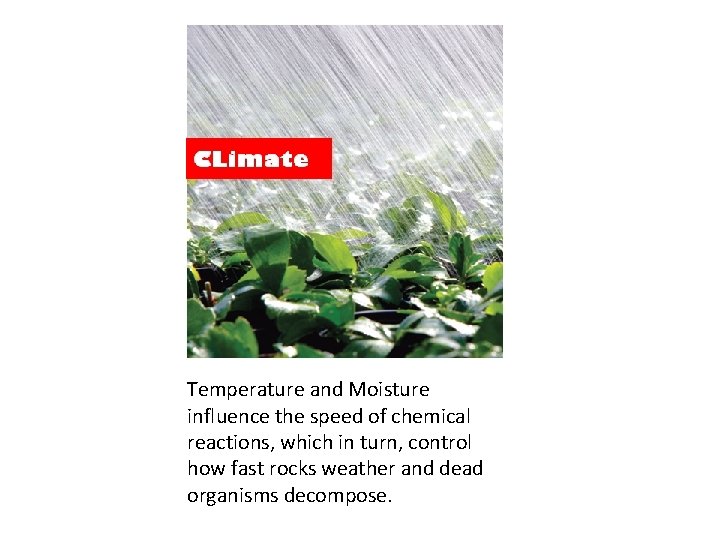
Temperature and Moisture influence the speed of chemical reactions, which in turn, control how fast rocks weather and dead organisms decompose.
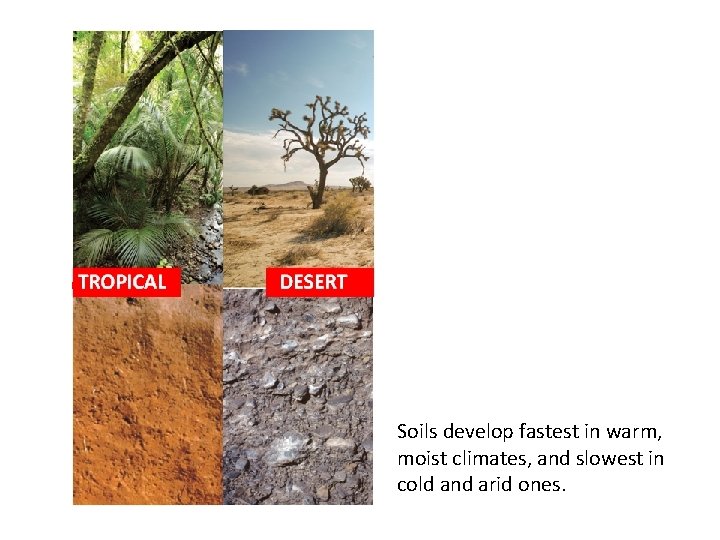
Soils develop fastest in warm, moist climates, and slowest in cold and arid ones.
Organisms aka biology or vegetation
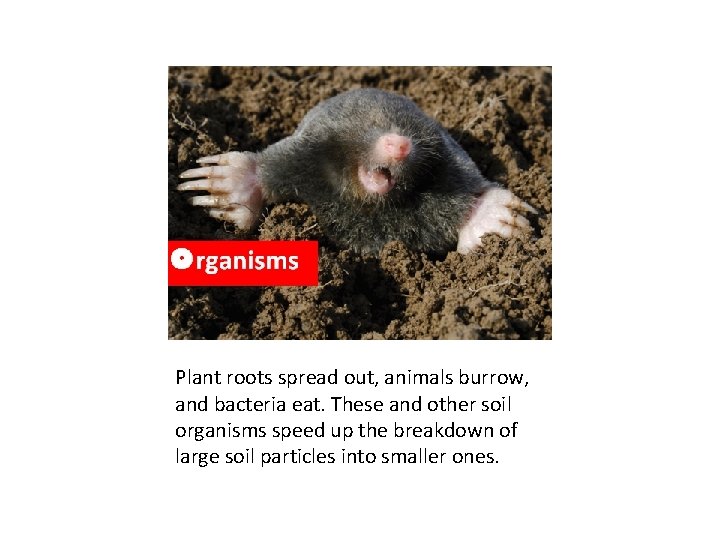
Plant roots spread out, animals burrow, and bacteria eat. These and other soil organisms speed up the breakdown of large soil particles into smaller ones.
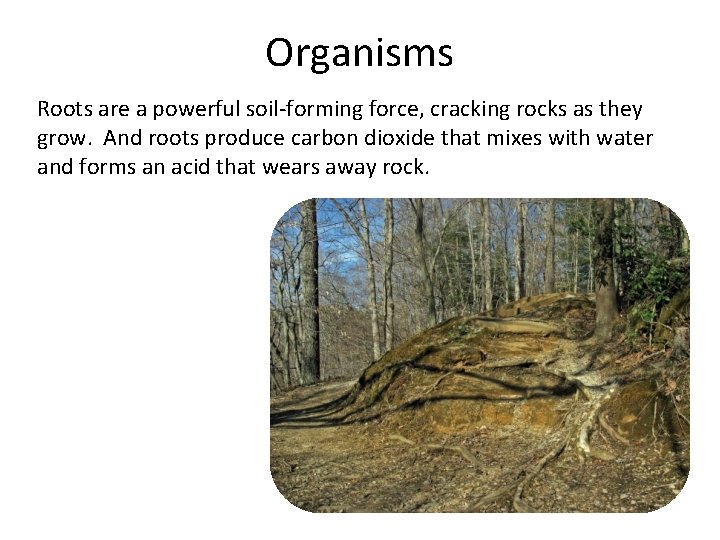
Organisms Roots are a powerful soil-forming force, cracking rocks as they grow. And roots produce carbon dioxide that mixes with water and forms an acid that wears away rock.
Relief Topography
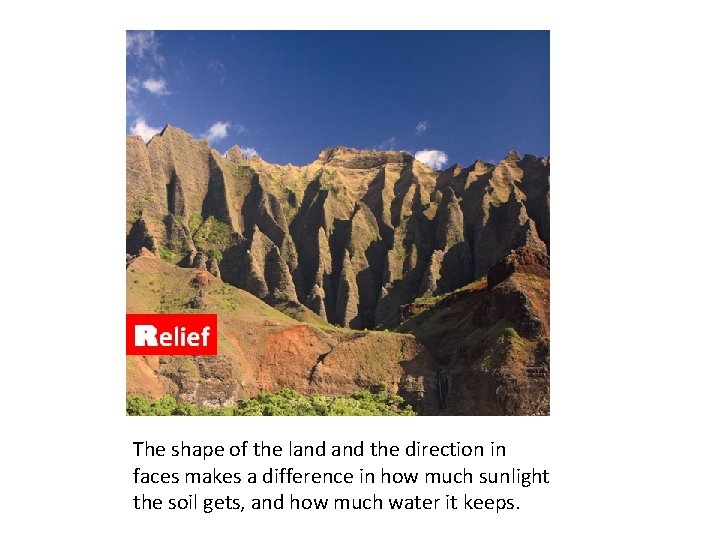
The shape of the land the direction in faces makes a difference in how much sunlight the soil gets, and how much water it keeps.
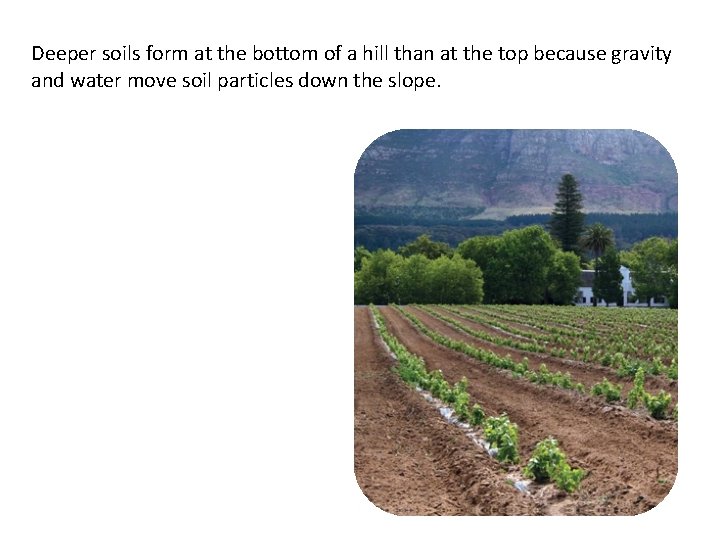
Deeper soils form at the bottom of a hill than at the top because gravity and water move soil particles down the slope.
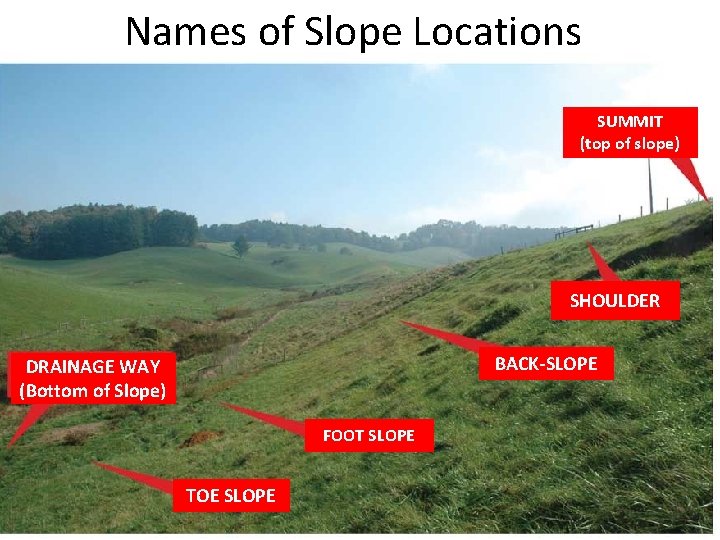
Names of Slope Locations SUMMIT (top of slope) SHOULDER BACK-SLOPE DRAINAGE WAY (Bottom of Slope) FOOT SLOPE TOE SLOPE
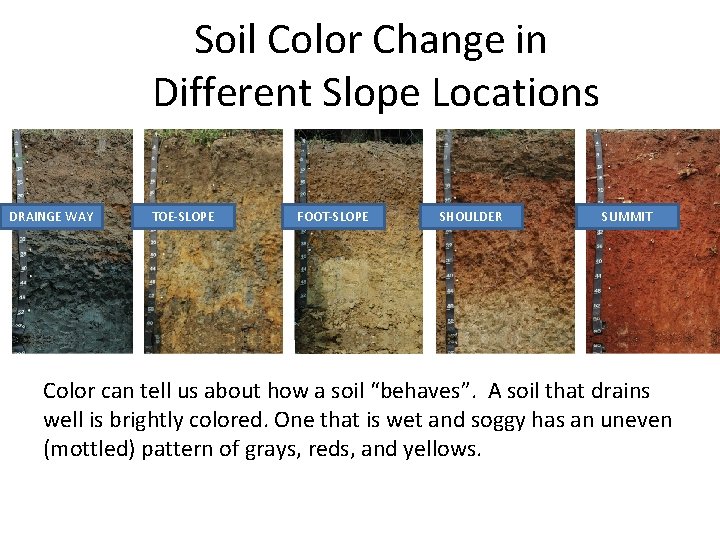
Soil Color Change in Different Slope Locations DRAINGE WAY TOE-SLOPE FOOT-SLOPE SHOULDER SUMMIT Color can tell us about how a soil “behaves”. A soil that drains well is brightly colored. One that is wet and soggy has an uneven (mottled) pattern of grays, reds, and yellows.
Parent Material
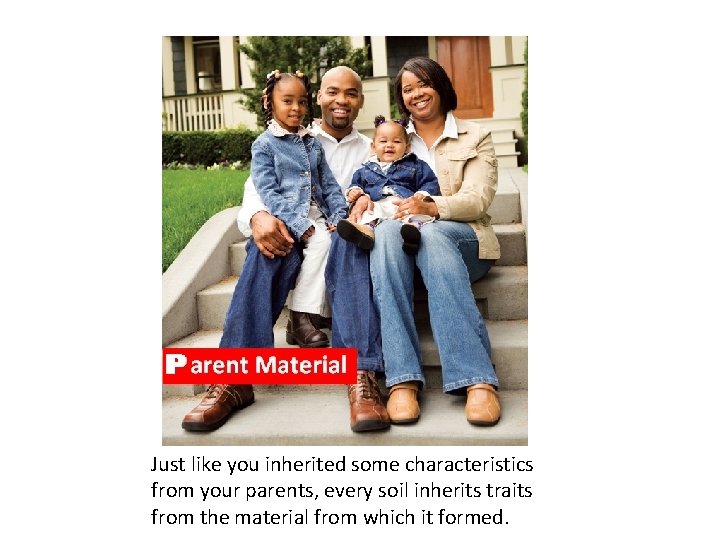
Just like you inherited some characteristics from your parents, every soil inherits traits from the material from which it formed.
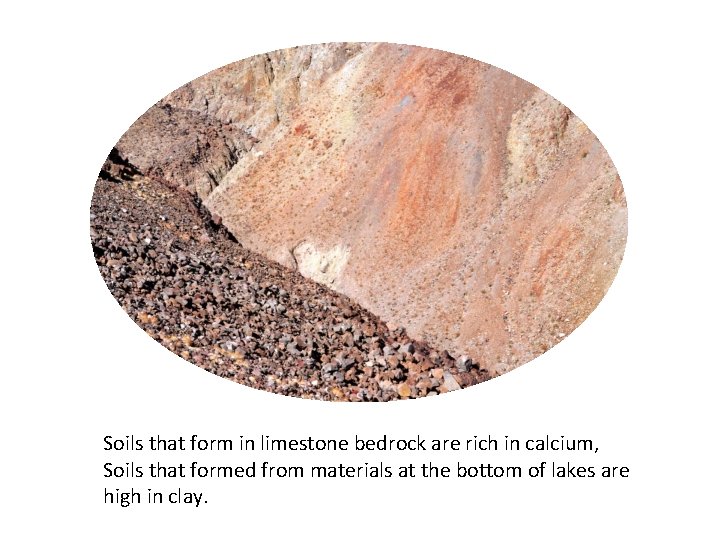
Soils that form in limestone bedrock are rich in calcium, Soils that formed from materials at the bottom of lakes are high in clay.
Parent Material • Transported materials • Bedrock or residual material • Organic materials
Transported Sediments • Water transported or deposited – Marine – Fluvial – Lacustrine • Wind transported – Aeolian (loess) • Gravity transported – Colluvium • Ice transported – Glacial
Marine • Deposited in a marine environment • Variable texture dependent on energy of depositional environment – Low energy – fine textured – High energy – coarse textured
Fluvial • Sediments deposited in rivers or floodplains • Texture coarsest near active channel
Bedrock or Residual Material • Properties related to mineral present in parent rock and weathering – Clay mineralogy – Inherent fertility • Particle size variable
Time
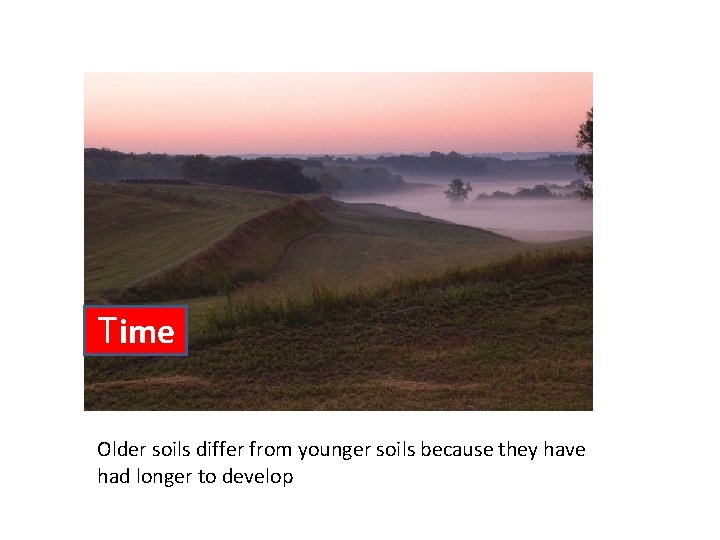
Time Older soils differ from younger soils because they have had longer to develop
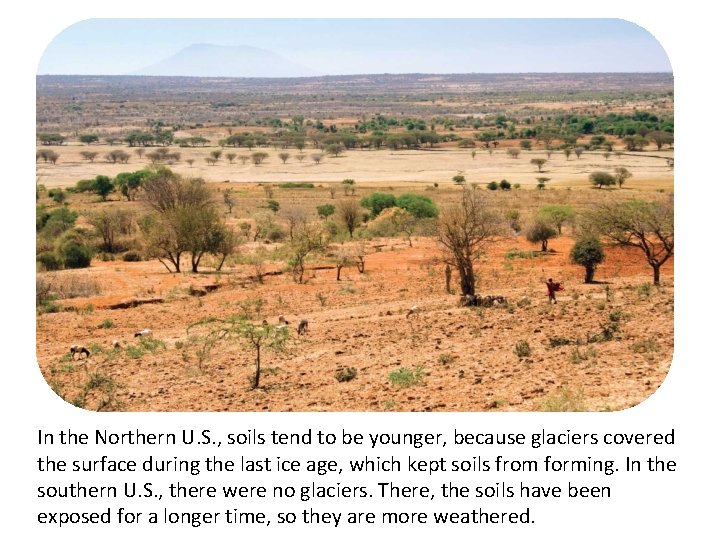
In the Northern U. S. , soils tend to be younger, because glaciers covered the surface during the last ice age, which kept soils from forming. In the southern U. S. , there were no glaciers. There, the soils have been exposed for a longer time, so they are more weathered.
Each soil has its own history. Charles Kellogg, Former Director, Soil Survey Division, USDA
Vocabulary • • • Bedrock CLORPT Developed soil Organism Organic Matter Parent Material Sediment Slope Relief Weathering
Vocabulary • • Time Climate Topography Vegetation Precipitation Conifer Deciduous Aspect