What is the composition of soil Essential Question
- Slides: 23
What is the composition of soil?
Essential Question: How is soil formed? Standard: S 6 E 5 h. Describe soil as consisting of weathered rocks and decomposed organic material.
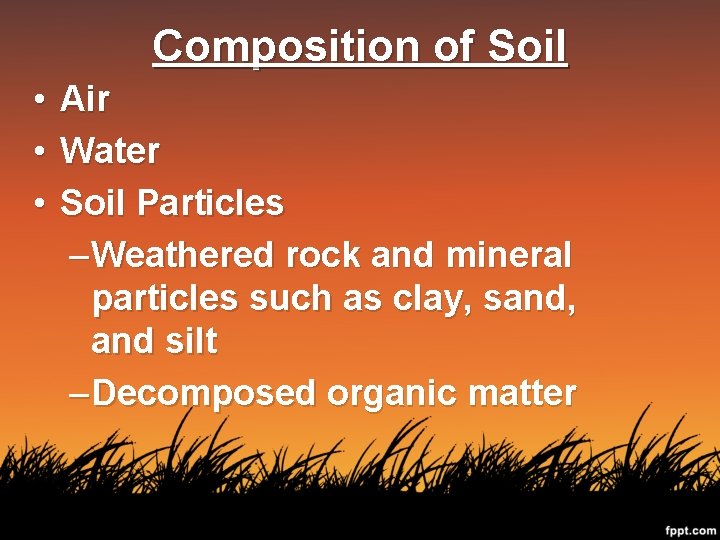
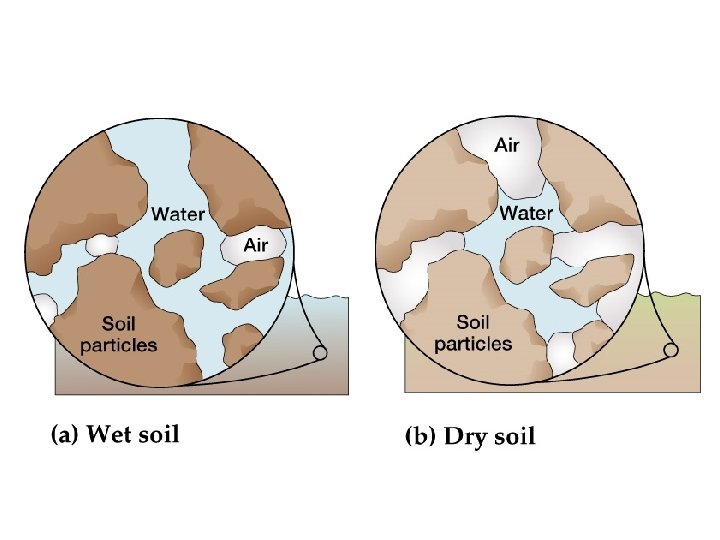
Composition of Soil • • • Air Water Soil Particles – Weathered rock and mineral particles such as clay, sand, and silt – Decomposed organic matter
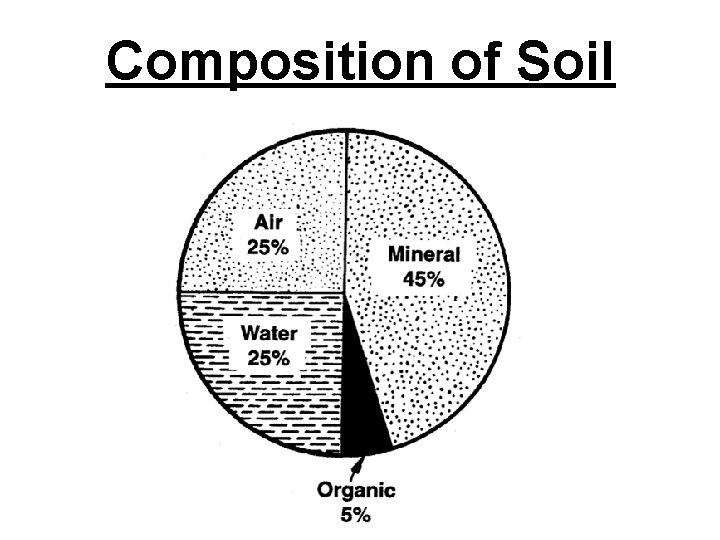
Composition of Soil
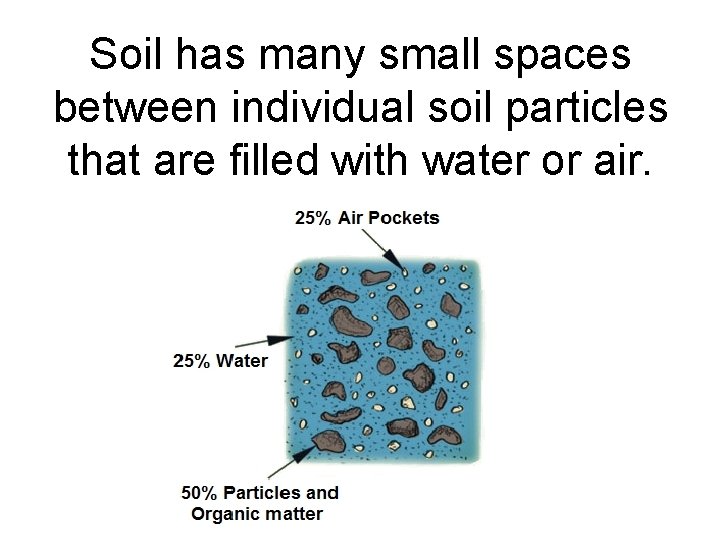
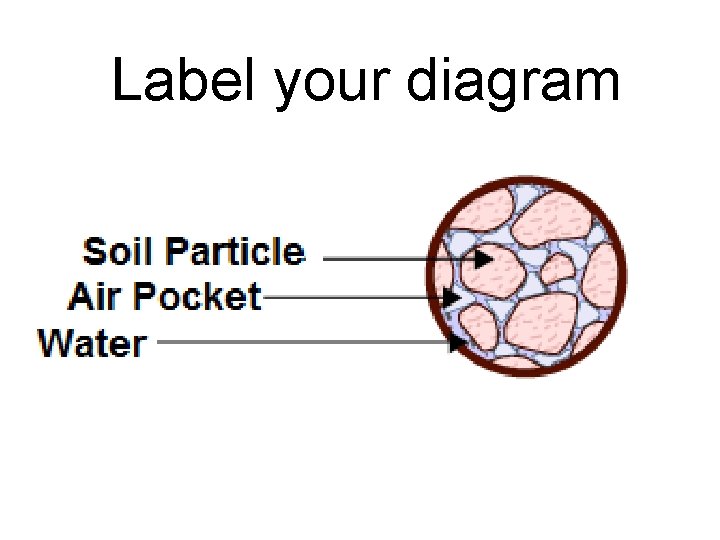
Soil has many small spaces between individual soil particles that are filled with water or air.
Label your diagram
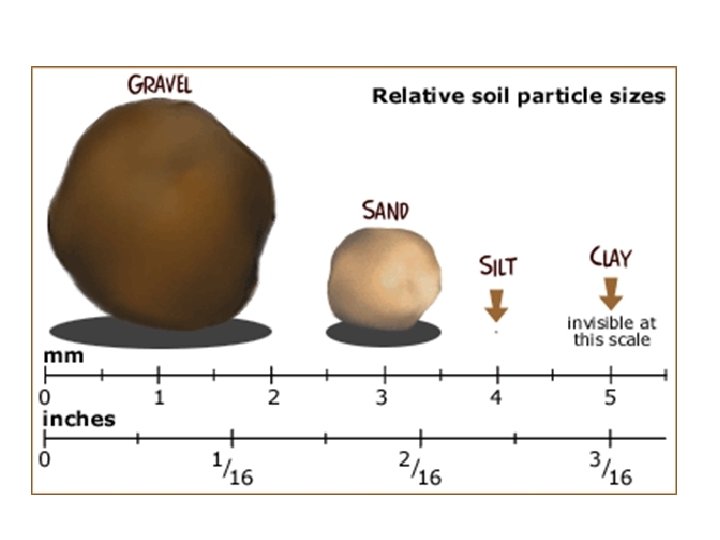
The rock and mineral fragments come from rocks that have been weathered. Most of these fragments are small particles of sediment such as clay, silt, and sand.
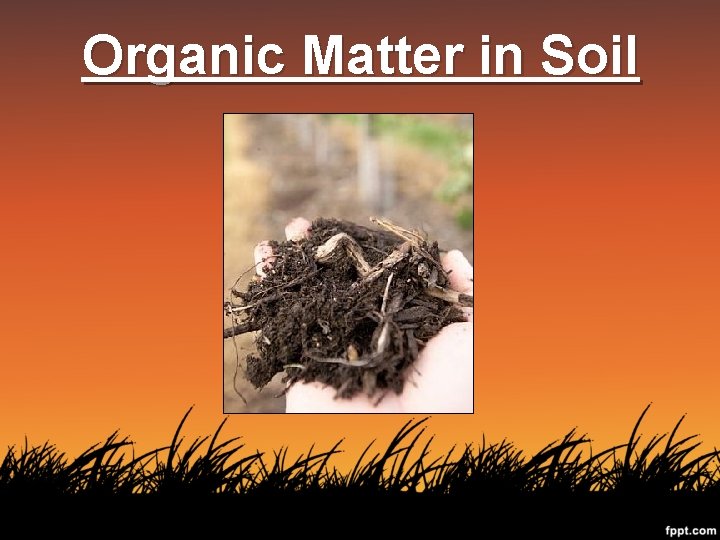
Organic matter is the remains of once living organisms. Organic matter can come from plant leaves, stems, roots, animals, and microorganisms.
Organic Matter in Soil
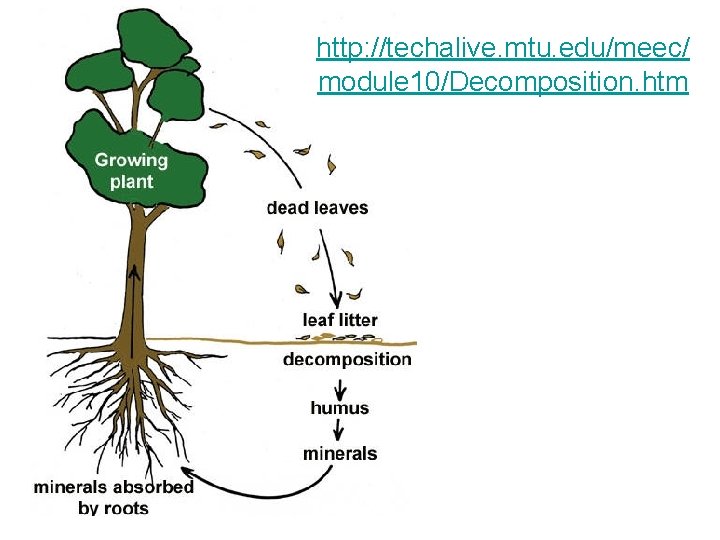
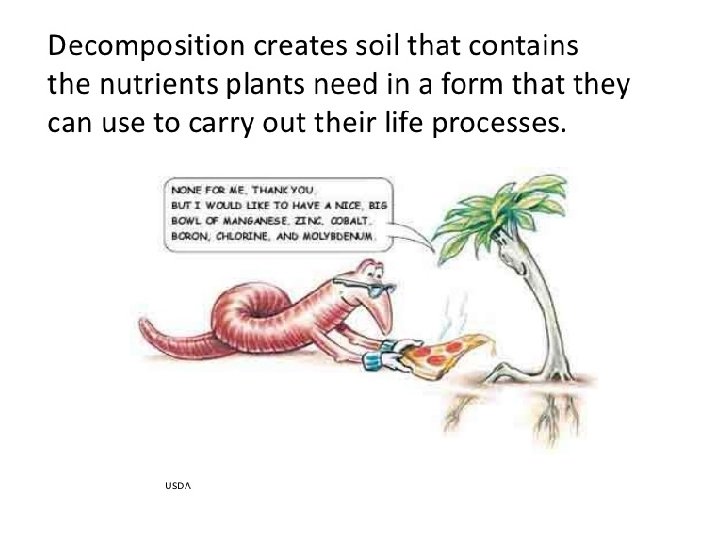
After organic matter gets into soil, fungi and bacteria cause it to decay (decompose). The decayed organic matter turns into humus, a source of nutrients for plants.
http: //techalive. mtu. edu/meec/ module 10/Decomposition. htm
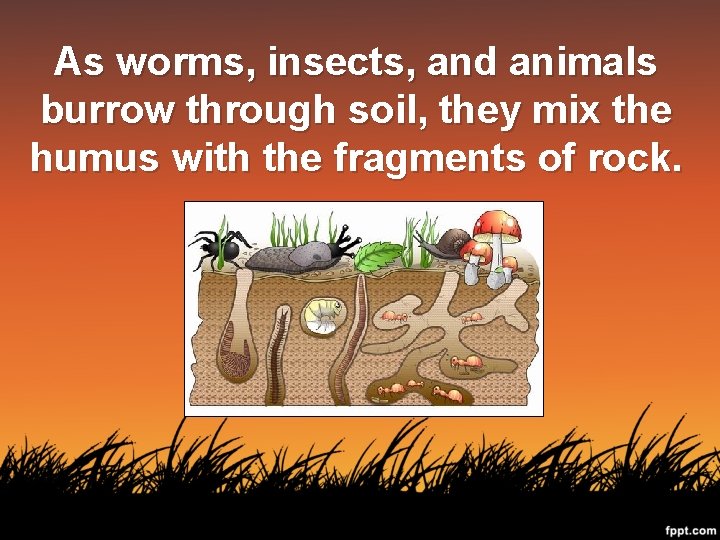
As worms, insects, and animals burrow through soil, they mix the humus with the fragments of rock.
Turn to an elbow Good quality soil has equal partner and discuss amounts of humus and why living organisms weathered rock. Living are important organisms help tofor mix good soil. humus around in soil.
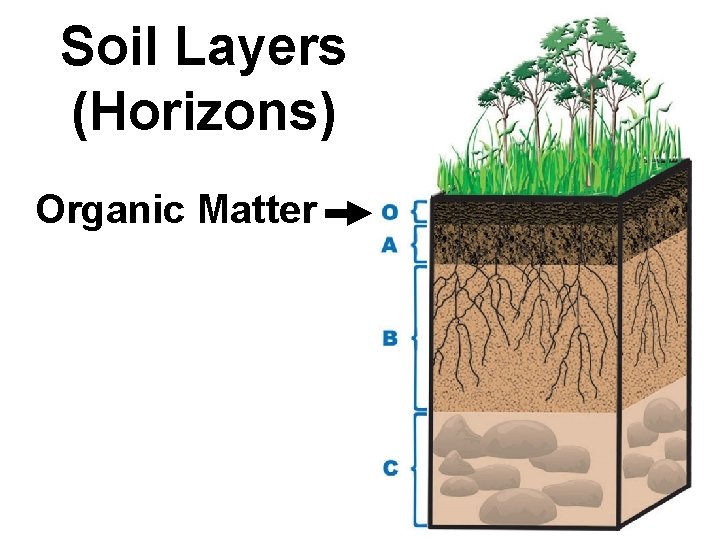
Soil Layers (Horizons) Organic Matter
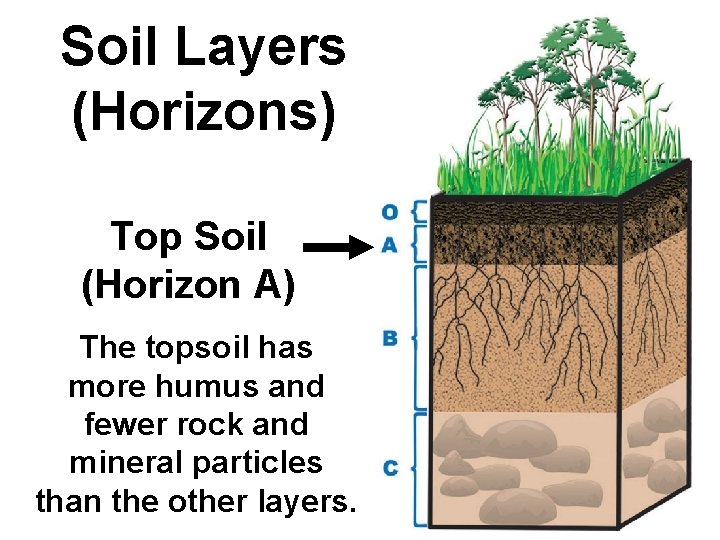
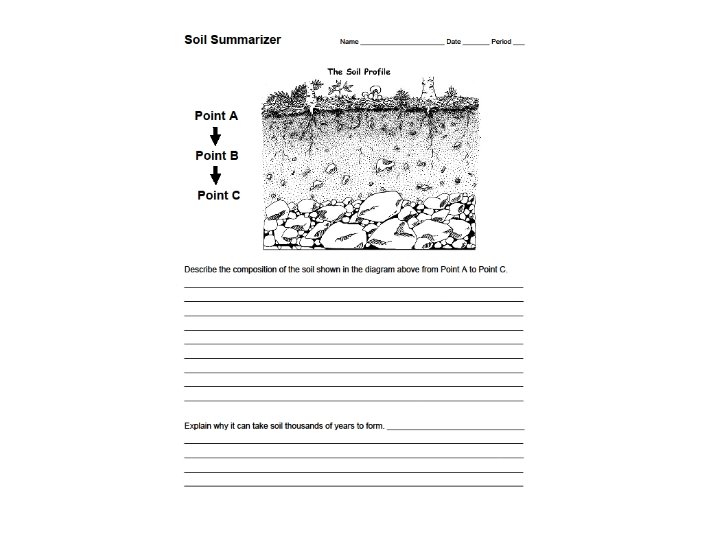
Soil Layers (Horizons) Top Soil (Horizon A) The topsoil has more humus and fewer rock and mineral particles than the other layers.
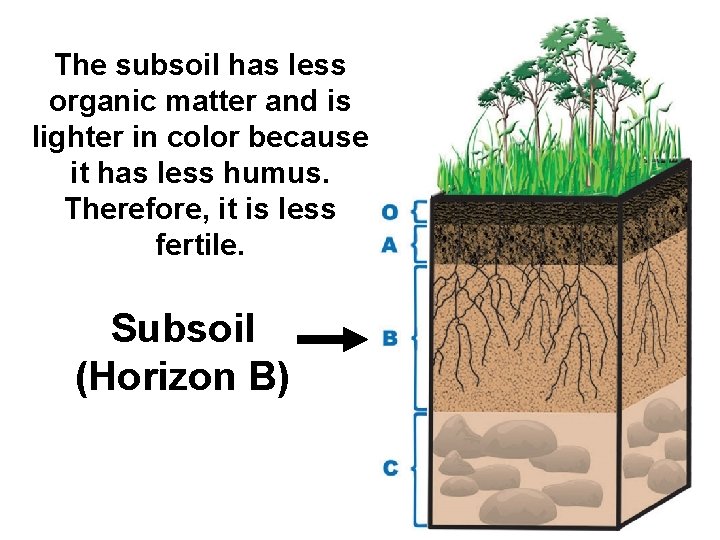
The subsoil has less organic matter and is lighter in color because it has less humus. Therefore, it is less fertile. Subsoil (Horizon B)
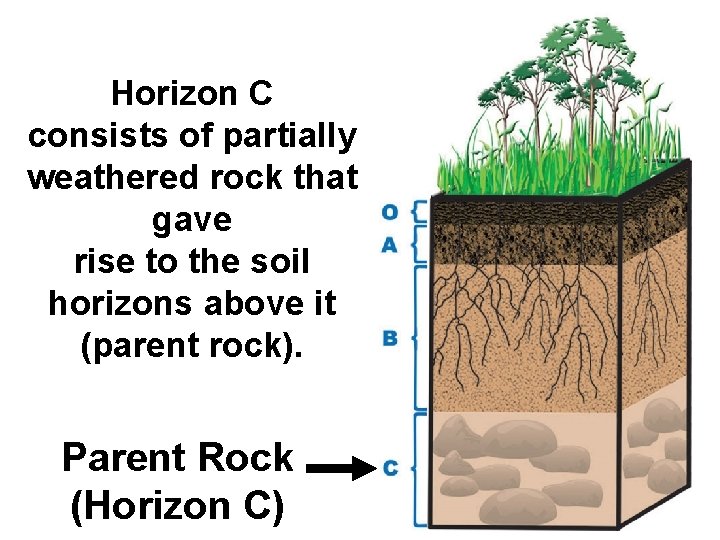
Horizon C consists of partially weathered rock that gave rise to the soil horizons above it (parent rock). Parent Rock (Horizon C)
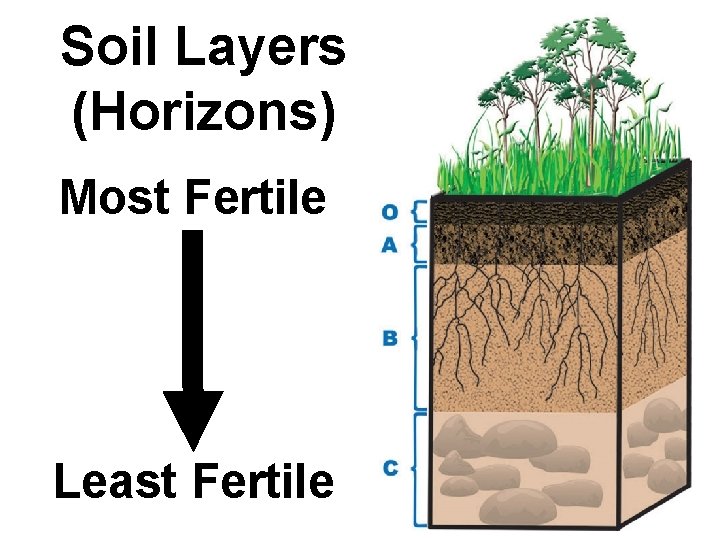
Soil Layers (Horizons) Most Fertile Least Fertile
Soil can take thousands of years to form and is different depending on where it is formed.