
Soil Its Alive What is soil Soil is


- Slides: 30
Soil It’s Alive!!!!!!
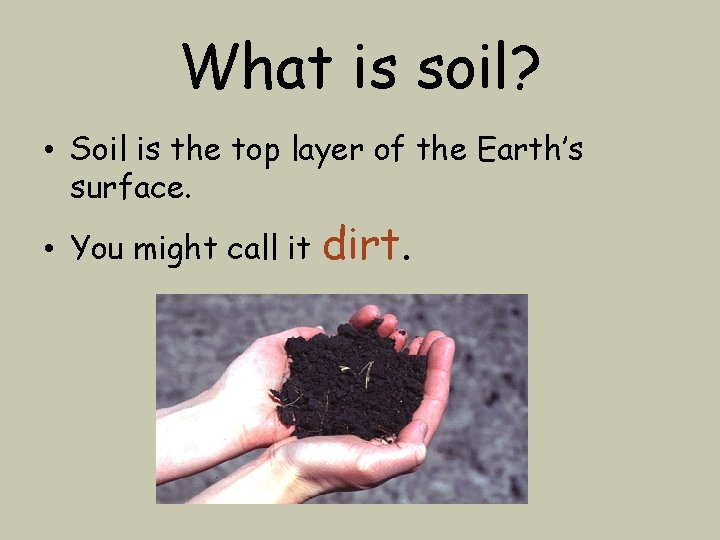
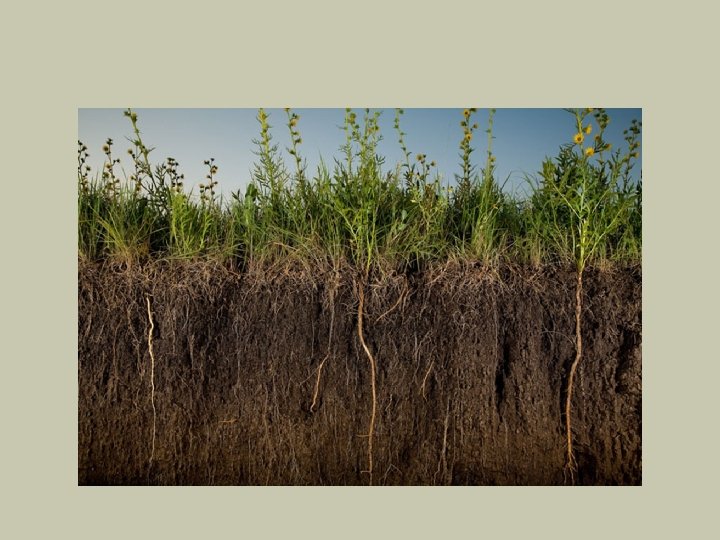
What is soil? • Soil is the top layer of the Earth’s surface. • You might call it dirt.
What is soil? • Soil is made up of particles of rocks, dead plants, and lots of organisms. • Some organisms are big enough to see and others are too tiny. • It also has water and air in it.
What does soil do? • It holds plants up. • Makes food for plants. • Helps rain and snow soak into the ground.
What does soil do? • Provides a home for lots of organisms. • In most ecosystems, more life and diversity lives underground than above.
Soil organisms • Help cycle nutrients through the environment. • Decomposition – help rot dead plants and animals to recycle nutrients. • Degrade pollutants before they reach groundwater or surface water.
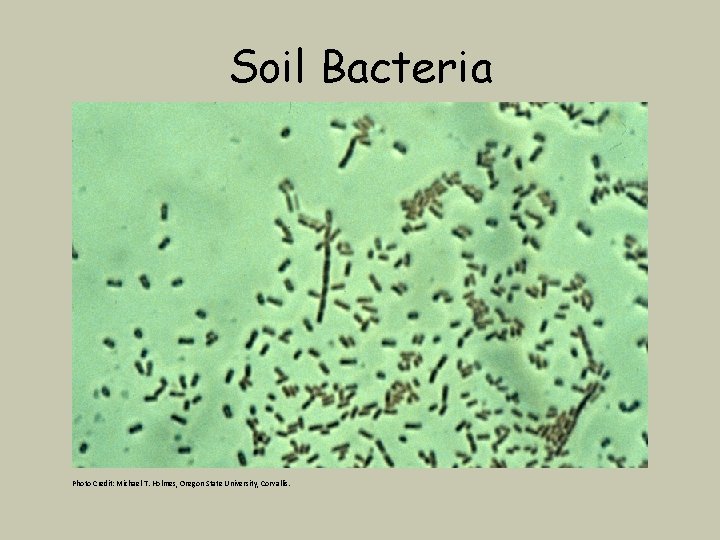
Bacteria • Bacteria are tiny one-celled organisms that aren’t plants or animals. • You need a microscope to see them.
Soil Bacteria Photo Credit: Michael T. Holmes, Oregon State University, Corvallis.
Bacteria • Bacteria help rot dead plants and animals to recycle nutrients into plant food. • They help make nitrogen (a plant food) for plants. • Some live free in the soil; others grow on the roots of plants (legumes).
Bacteria • One cup of soil can hold as many bacteria as there are people on Earth That’s over 6 billion! • The weight of all bacteria in 1 acre (about the size of a football field) can equal the weight of one or two cows.
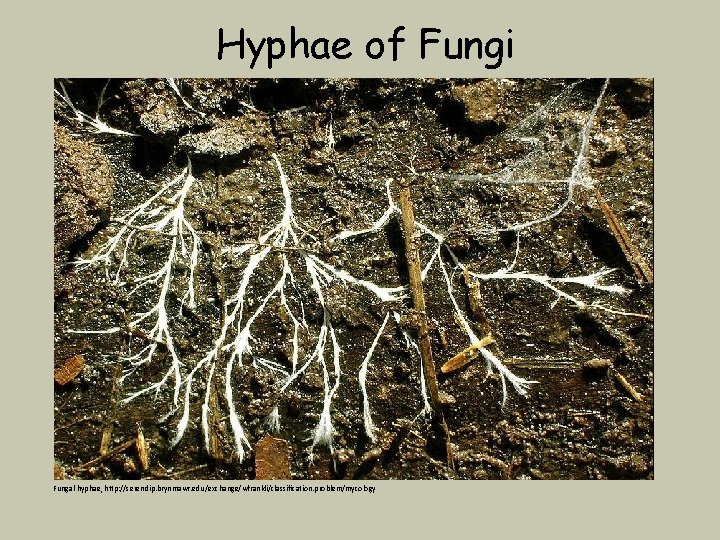
Fungi • Grow in long threads called hyphae. • Fungi help plants get food and water from the soil. • Other fungi help rot dead plants to recycle nutrients.
Hyphae of Fungi Fungal hyphae, http: //serendip. brynmawr. edu/exchange/wfrankli/classification. problem/mycology
Fungi • A teaspoon of farm soil or grassland may contain tens of yards of fungi. • The same amount of soil from a coniferous forest may hold tens of miles of fungi.
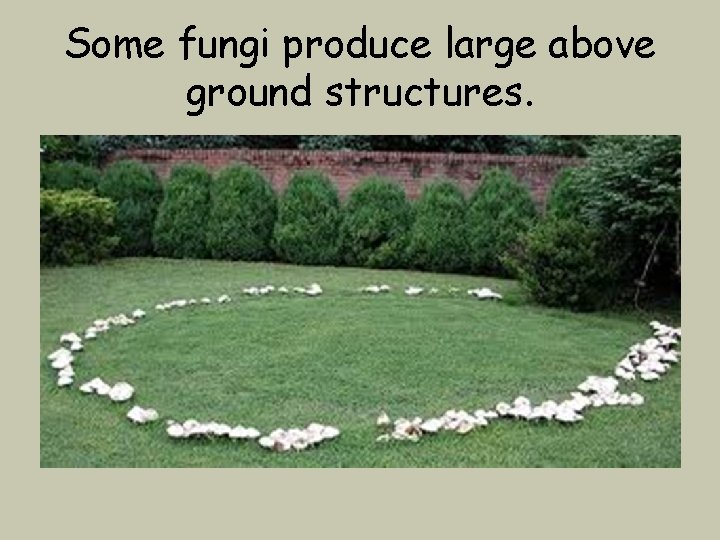
Some fungi produce large above ground structures.
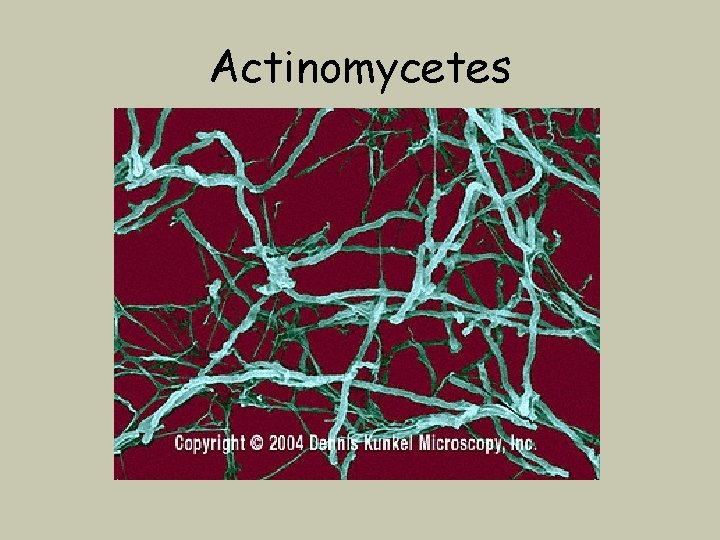
Actinomycetes • Have cells like bacteria, but grow in threads like fungi. • Help degrade tough materials, like cellulose, for bacteria to further degrade.
Actinomycetes • Source of the antibiotic Streptomycin. • Produce geosmin – that wonderful “earthy” smell of fresh plowed ground.
Actinomycetes
Protozoa • Are tiny animals that feed on bacteria and move through the soil. • When they eat bacteria, they help release nutrients for plants to use. • Some live in termite guts and help digest wood fibers.
Protozoans Flagellate soil protozoa. Photo credit: Wilhelm Foissner, Institute of Zoology, University of Salzburg Ciliatesoil protozoa eat tens of thousands of bacteria daily.
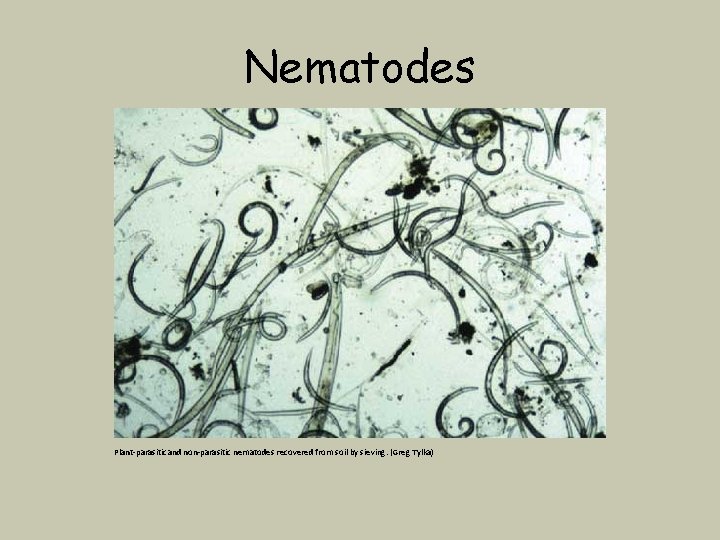
Nematodes • Tiny roundworms that are common in farm or grassland soils. • Some are serious pests, but many help provide plant food for plants • They help mix up the soil. • 5, 000 soil species have been described.
Nematodes Plant-parasitic and non-parasitic nematodes recovered from soil by sieving. (Greg Tylka)
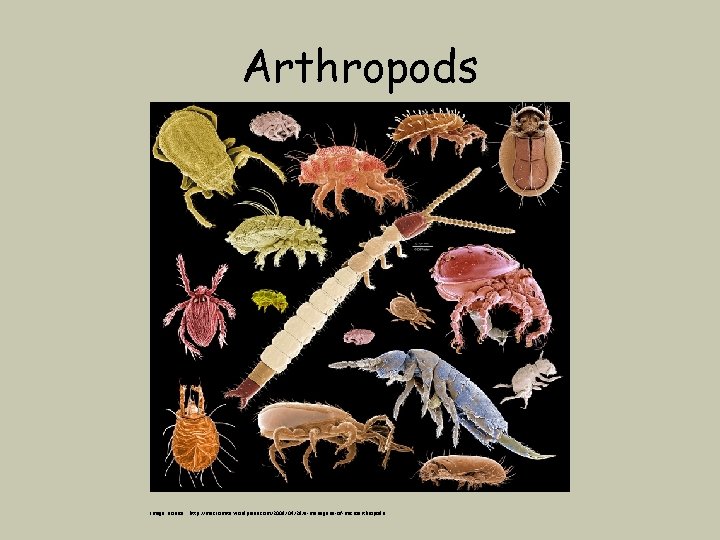
Arthropods • Don’t have a backbone, but do have jointed legs. • They include ants, termites, spiders, mites, centipedes, millipedes and many others. • They stir up the soil so it gets more air and moves nutrients around.
Arthropods • They chew up dead plants into tiny pieces for bacteria and fungi. • When you take a step in a forest, you are being held up on the backs of thousands of bugs. How cool is that? !!!!!!!
Arthropods Image source : http: //macromite. wordpress. com/2009/04/29/a-menagerie-of-microarthropods
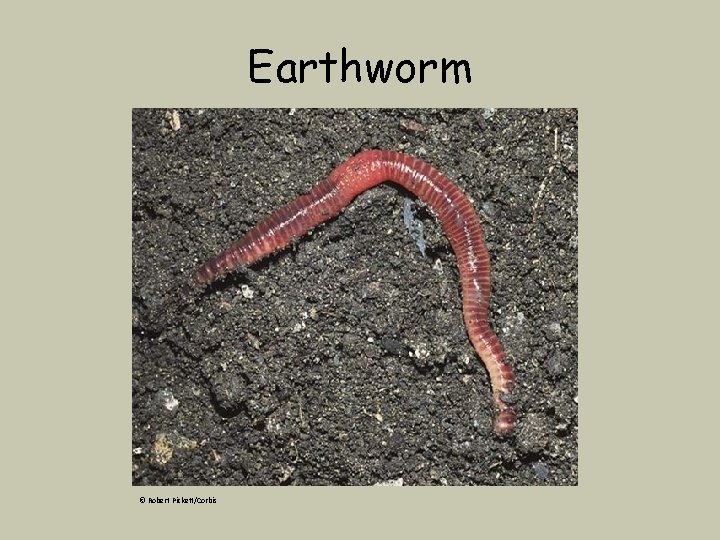
Earthworms • Some live on the surface in leaf litter, some lie just beneath the surface, some burrow deep in the soil. • As they move around, they move organic material from the soil surface to the lower layers.
Earthworms • They also create cavities for air and water to move. • Where earthworms are active, they can turn over the top 6 inches of soil in 1020 years.
Earthworm © Robert Pickett/Corbis
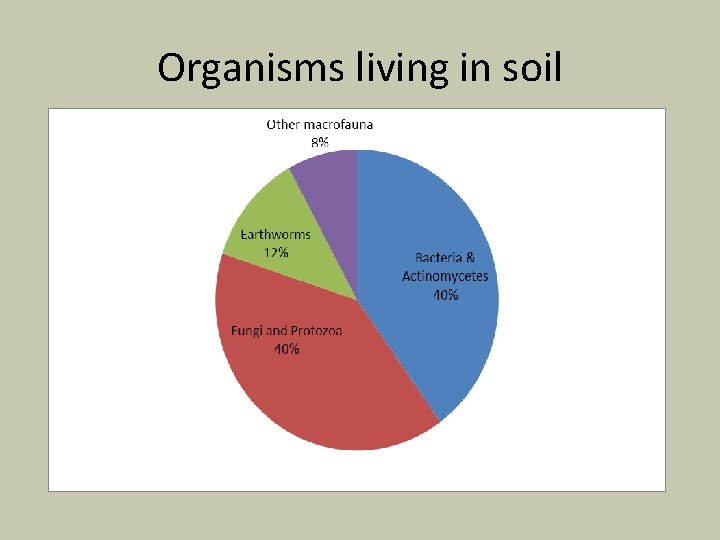
Organisms living in soil
The End Thank you!