Reference Handout for CERT Traffic Management SLOW DOWN



- Slides: 34
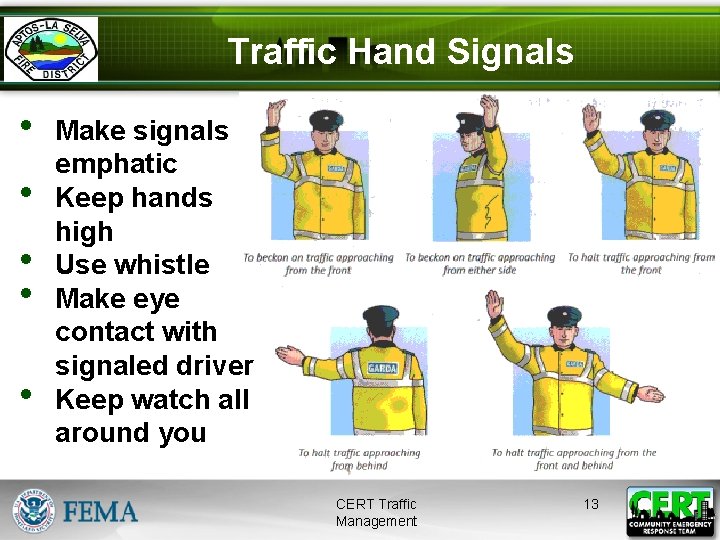
Reference Handout for CERT Traffic Management SLOW DOWN Movement of hand, flag or light Is good way to get attention. Note that change of direction signals should start in center and emphatically point to movement direction desired. CERT Supplemental Module #2 -- Traffic Management 0
Traffic Management CERT Supplemental Training Module 2
Module Objective To provide CERT members with skills needed to manage traffic in planned and emergency situations v Hand Signals v Organization v Team Safety CERT Traffic Management 2
What Do You Think? ● When might CERT assist in the management of traffic? v. Unplanned Incidents like traffic accident, weather hazard, or natural or manmade disaster v Planned Events like parades, funeral procession, or training exercise CERT Traffic Management 3
Management vs. Control ● CERT manages traffic and crowds – CERT members provide coordination and regulation for drivers and pedestrians to facilitate movement. ● CERT does not control traffic or crowds -- control implies the use of force, and CERT members are not trained to exert force over drivers or pedestrians. CERT Traffic Management 4
CERT Role in Traffic Management ● Direct safe flow of traffic with hand signals and traffic control devices ● Provide safe passage for pedestrians ● Communicate and coordinate with team members ● Keep team leaders and chain of command informed about situation ● Maintain personal and scene safety CERT Traffic Management 5
Personal Safety ● Remain alert at all times; stay aware of the traffic at your back and your buddy’s back ● Actively seek eye contact with drivers ● Be sure you can see workers next to you and make sure radios are working and hand signals understood by all ● Wear correct attire to be highly visible ● Do not give signals against a traffic light or wave hands or flag other than for signal CERT Traffic Management 6
Personal Safety (cont’d) ● Do not have unnecessary conversation with workers, pedestrians, or drivers ● Clear, respectful communication can prevent negative encounters ● Back away from dangerous situations ● Watch out for out-of-control vehicles or confused drivers ● Recognize personal limits and ask for help or relief before you are stressed out CERT Traffic Management 7
CERT Leaders and Scene Safety ● Keep team members and IC/TL aware of what is going on around them ● Recognize signs of a dangerous situation – if it feels wrong, it probably is ● Have backup available; pay attention to personal limitations ● Watch for signs of stress and relieve team members regularly (1 to 3 hours) ● Be respectful and courteous with drivers CERT Traffic Management 8
CERT Worker Attitude ● You are the person in charge § You must manage the operation in a clear way to avoid confusion and chaos § Be courteous, calm, and precise ● Do not be intimidated § Directing crowds and traffic relies on clear vision, common sense, good judgment, and good communication § Most people want to cooperate CERT Traffic Management 9
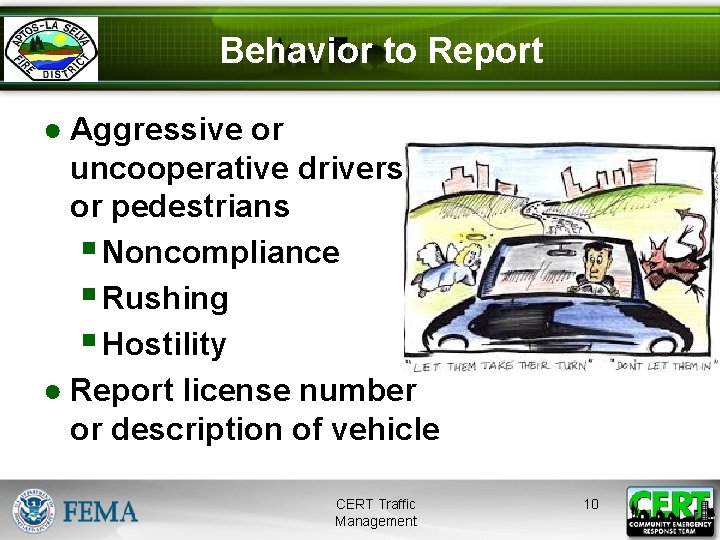
Behavior to Report ● Aggressive or uncooperative drivers or pedestrians § Noncompliance § Rushing § Hostility ● Report license number or description of vehicle CERT Traffic Management 10
Local Rules and SOP ● Insert local ordinances and state statutes that pertain to traffic and crowd management here. CERT Traffic Management 11
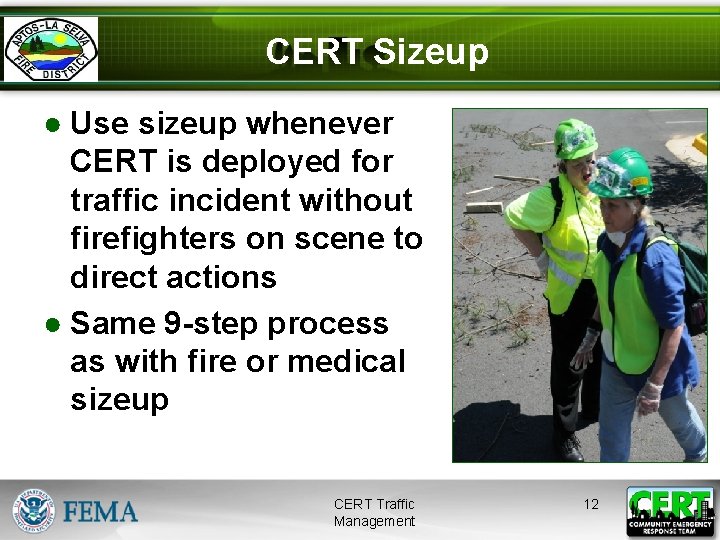
CERT Sizeup ● Use sizeup whenever CERT is deployed for traffic incident without firefighters on scene to direct actions ● Same 9 -step process as with fire or medical sizeup CERT Traffic Management 12
Traffic Hand Signals • • • Make signals emphatic Keep hands high Use whistle Make eye contact with signaled driver Keep watch all around you CERT Traffic Management 13
Exercise Practicing Hand Signals Stop Go ahead Slow down Move to the right Turn left CERT Traffic Management 14
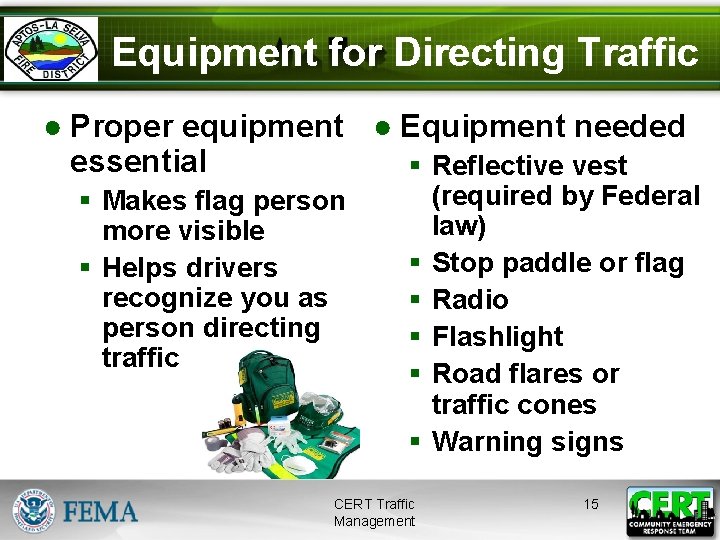
Equipment for Directing Traffic ● Proper equipment ● Equipment needed essential § Reflective vest § Makes flag person more visible § Helps drivers recognize you as person directing traffic § § § CERT Traffic Management (required by Federal law) Stop paddle or flag Radio Flashlight Road flares or traffic cones Warning signs 15
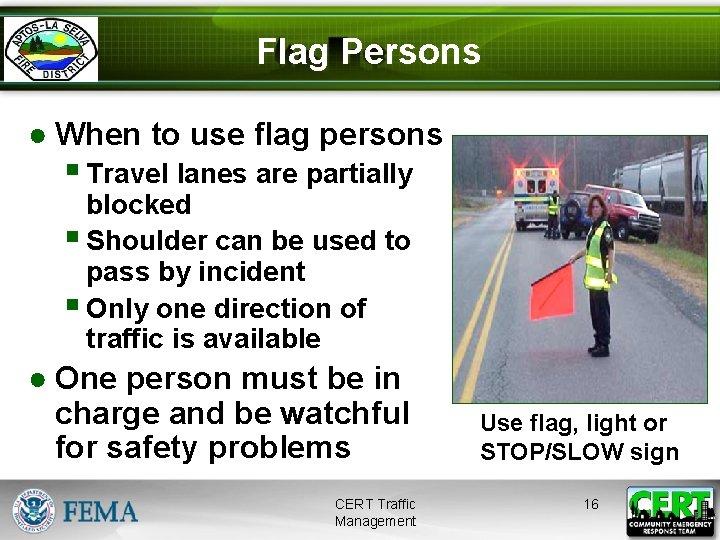
Flag Persons ● When to use flag persons § Travel lanes are partially blocked § Shoulder can be used to pass by incident § Only one direction of traffic is available ● One person must be in charge and be watchful for safety problems CERT Traffic Management Use flag, light or STOP/SLOW sign 16
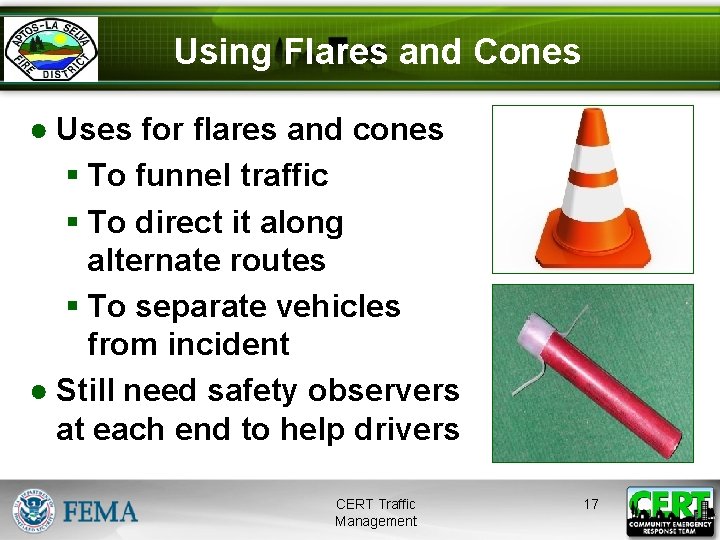
Using Flares and Cones ● Uses for flares and cones § To funnel traffic § To direct it along alternate routes § To separate vehicles from incident ● Still need safety observers at each end to help drivers CERT Traffic Management 17
Using Flares CERT Traffic and Crowd Management 18
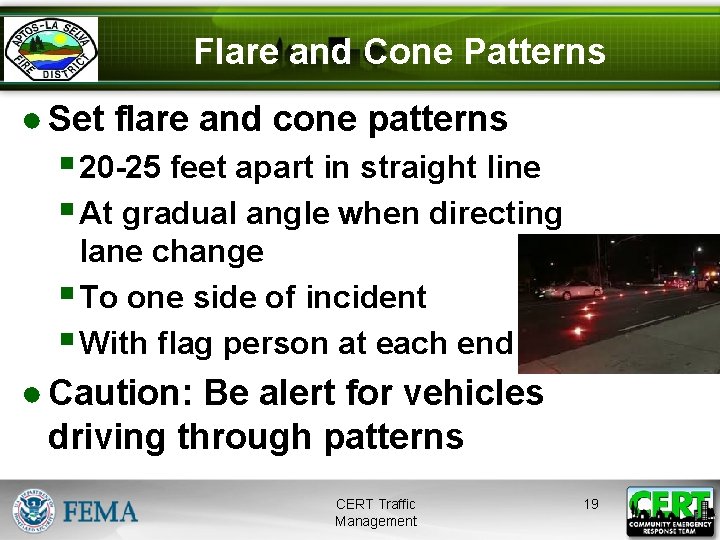
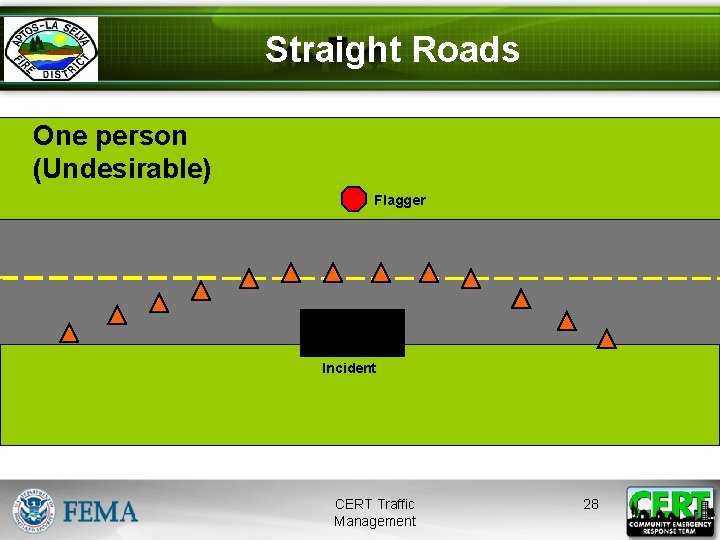
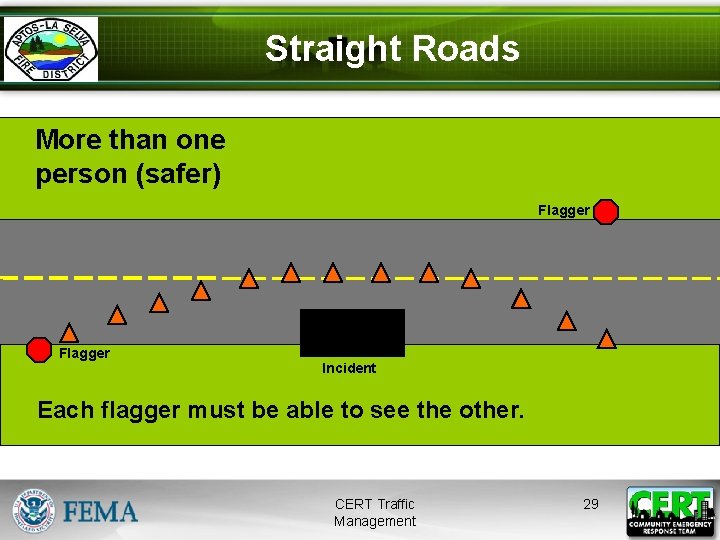
Flare and Cone Patterns ● Set flare and cone patterns § 20 -25 feet apart in straight line § At gradual angle when directing lane change § To one side of incident § With flag person at each end ● Caution: Be alert for vehicles driving through patterns CERT Traffic Management 19
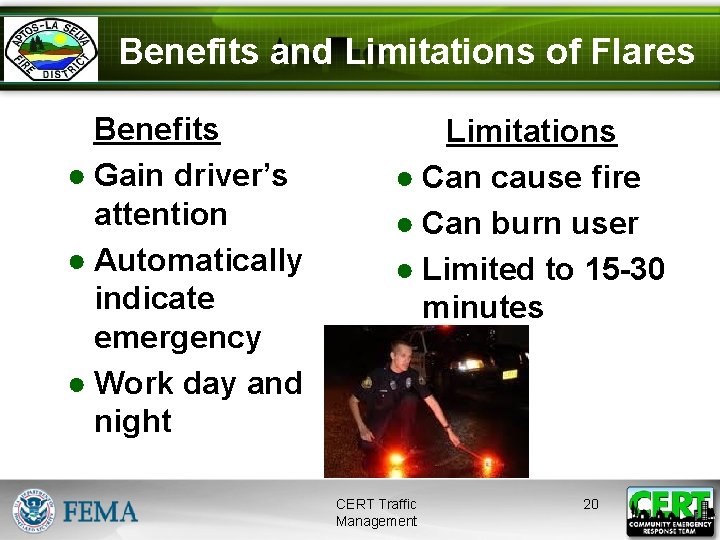
Benefits and Limitations of Flares Benefits ● Gain driver’s attention ● Automatically indicate emergency ● Work day and night Limitations ● Can cause fire ● Can burn user ● Limited to 15 -30 minutes CERT Traffic Management 20
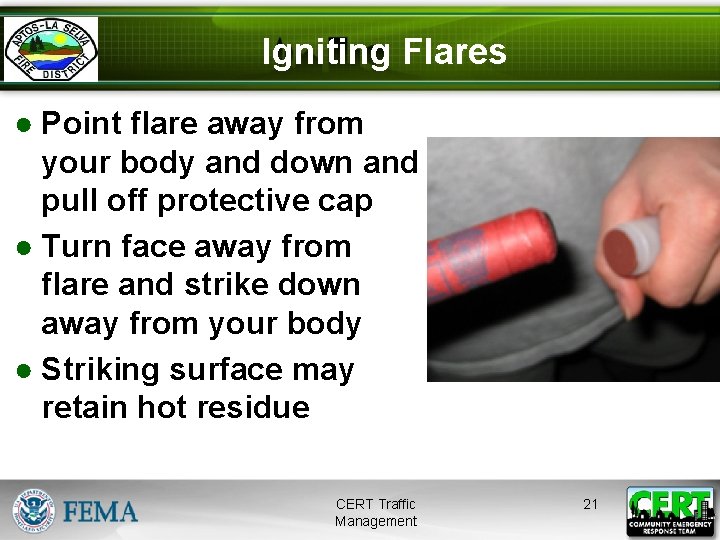
Igniting Flares ● Point flare away from your body and down and pull off protective cap ● Turn face away from flare and strike down away from your body ● Striking surface may retain hot residue CERT Traffic Management 21
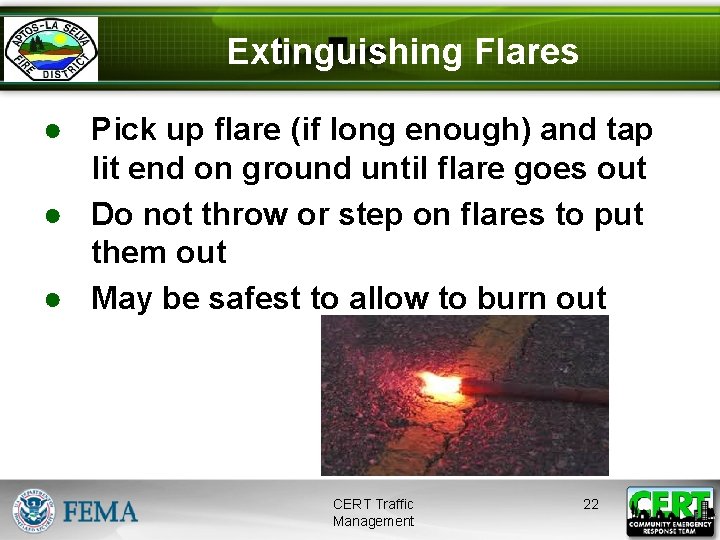
Extinguishing Flares ● Pick up flare (if long enough) and tap lit end on ground until flare goes out ● Do not throw or step on flares to put them out ● May be safest to allow to burn out CERT Traffic Management 22
Flare Safety Tips ● Always wear protective equipment such as gloves and goggles ● Do not light flares near fire hazards such as leaking gas, hazardous materials, dry grass or when windy ● Never hold flare above your head and shoulders, as molten material drips from end of flares and can cause burns CERT Traffic Management 23
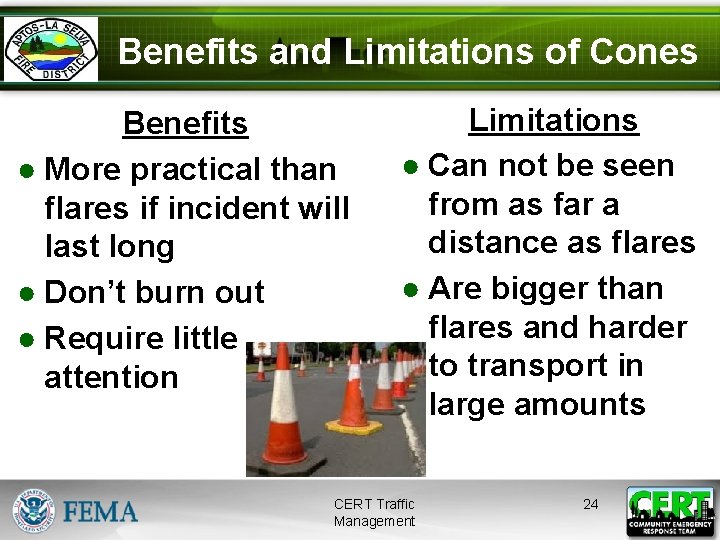
Benefits and Limitations of Cones Benefits ● More practical than flares if incident will last long ● Don’t burn out ● Require little attention Limitations ● Can not be seen from as far a distance as flares ● Are bigger than flares and harder to transport in large amounts CERT Traffic Management 24
What Do You Think? ● While managing traffic as squad leader, what can you do to keep your team safe? • What should you do if some driver refuses to follow your directions? • How long should any one person be on duty at the center of an intersection? CERT Traffic Management 25
Scene Safety at Traffic Incident ● Have one person in charge of the situation ● Make sure all members are in communication ● Don’t start traffic until you communicate with other end of traffic control scene ● Don’t leave your station until properly relieved ● Keep traffic slow past incident ● Look out for inattentive drivers ● Give clear, concise hand signals ● Be polite but decisive to drivers ● Use verbal orders as little as possible CERT Traffic Management 26
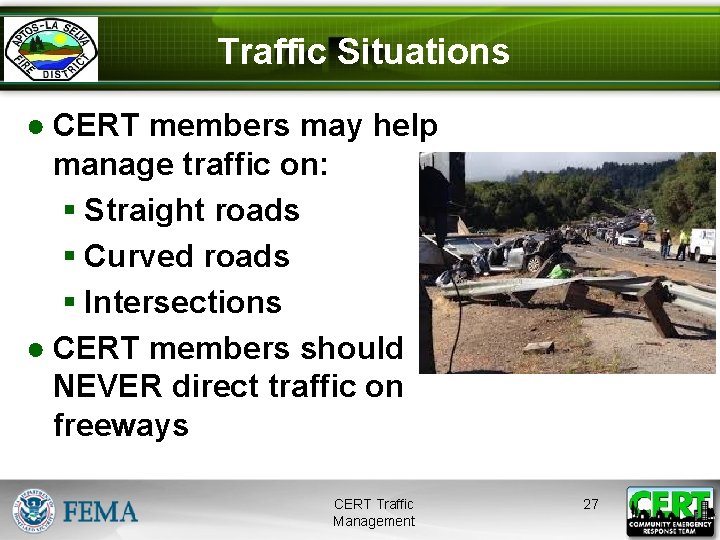
Traffic Situations ● CERT members may help manage traffic on: § Straight roads § Curved roads § Intersections ● CERT members should NEVER direct traffic on freeways CERT Traffic Management 27
Straight Roads One person (Undesirable) Flagger Incident CERT Traffic Management 28
Straight Roads More than one person (safer) Flagger Incident Each flagger must be able to see the other. CERT Traffic Management 29
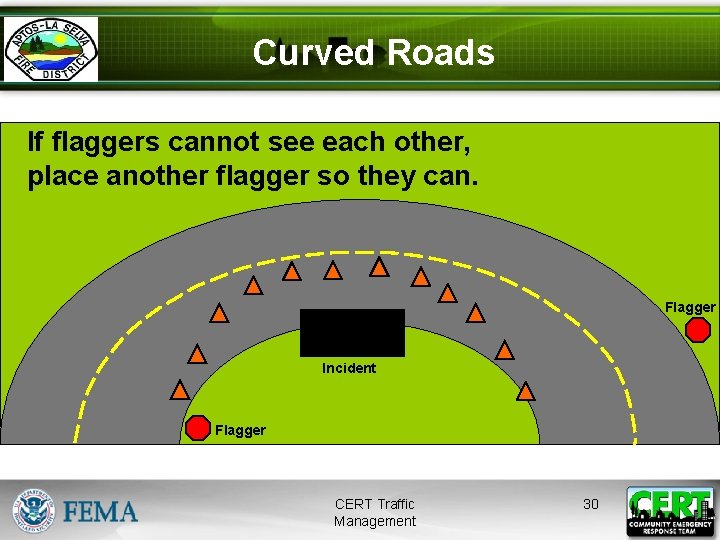
Curved Roads If flaggers cannot see each other, place another flagger so they can. Flagger Incident Flagger CERT Traffic Management 30
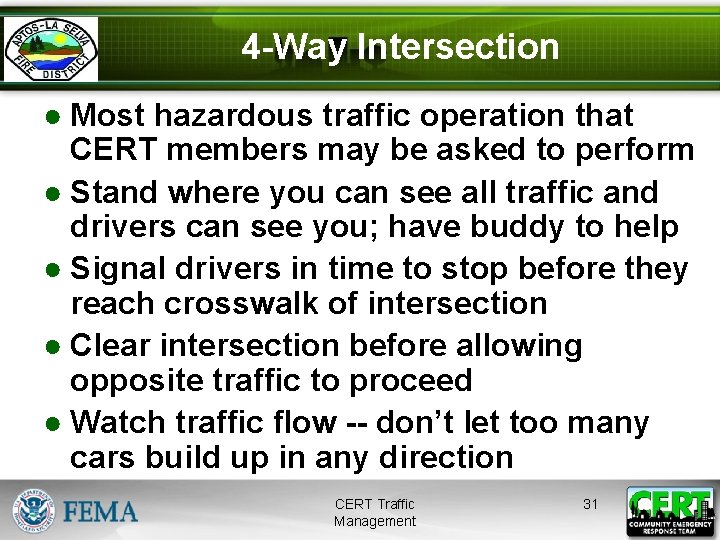
4 -Way Intersection ● Most hazardous traffic operation that CERT members may be asked to perform ● Stand where you can see all traffic and drivers can see you; have buddy to help ● Signal drivers in time to stop before they reach crosswalk of intersection ● Clear intersection before allowing opposite traffic to proceed ● Watch traffic flow -- don’t let too many cars build up in any direction CERT Traffic Management 31
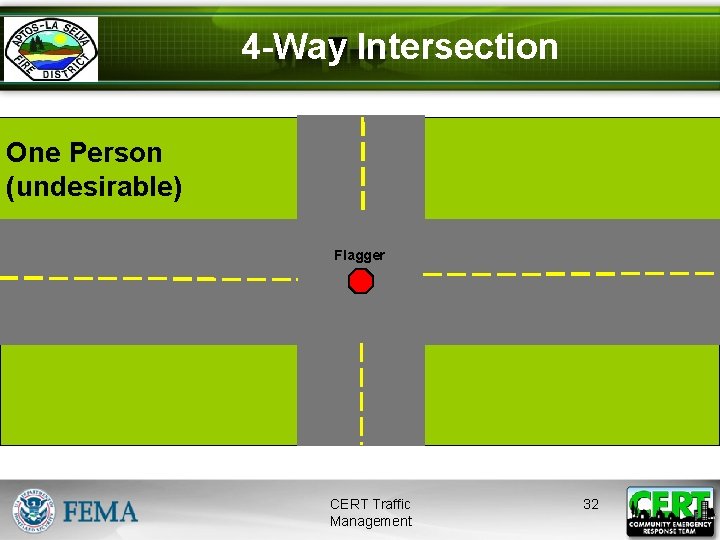
4 -Way Intersection One Person (undesirable) Flagger Incident CERT Traffic Management 32
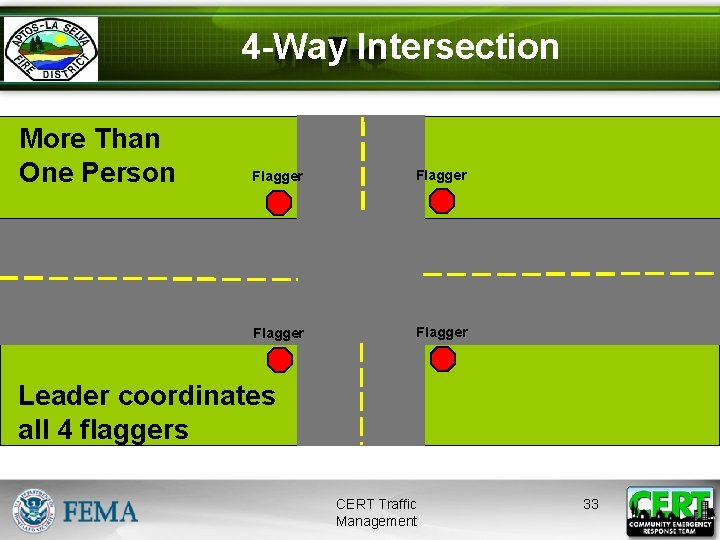
4 -Way Intersection More Than One Person Flagger Incident Leader coordinates all 4 flaggers CERT Traffic Management 33